Southwest

Floatplane crash injures 4 people

Four people were seriously injured after a de Havilland Beaver float plane crashed Monday afternoon on Mirror Lake, south of Kokhanok, 35 miles south of Iliamna.

There were no fatalities.

The Beaver had six passengers and a pilot and taking off after a day’s fishing on Moraine Creek.

The crash “occurred during the airplane’s takeoff run,” said Mitchell Gallo, a senior air safety investigator with the National Transportation Safety Board. “It ended up on shore, that’s where it impacted, not too far in. We’re going to be talking to the pilot and passengers at some later point.”

The Beaver crashed upright, Gallo said

“We’re going to be looking at the wreckage and hopefully we’ll get some good data if any, if there was a GPS available on board, so we can use that for any performance calculations,” he said.

The Rescue Coordination Center launched an HH 60 Pave Hawk helicopter and an HC-130 fixed wing aircraft out of Joint Base Elmendorf-Richardson, which arrived on scene a little after 8 p.m., about four hours after the crash.

One of the four injured passengers was flown directly to Providence Hospital in Anchorage, and the other three taken back to the joint base.

A representative of Rapids Creek Lodge in King Salmon said the crash happened after guests were being picked up from a standard day of sport fishing on Moraine Creek.

The lodge said they believed one of the four injured had already been released, and the others were listed in stable or better condition.

Mirror Lake is in a remote area of Katmai on the Alaska Peninsula in between Iliamna Lake and King Salmon.


Earlier story: ILIAMNA — A floatplane crash 35 miles south of Iliamna left four people seriously injured.

Staff Sgt. Ed Eagerton of the Alaska Air National Guard says the airplane with seven on board crashed as it attempted to take off from a body of water near Mirror Lake.

The airplane was a de Havilland Beaver owned by Rapids Camp Lodge Inc. of King Salmon.

The Air Guard sent a helicopter and airplane to assist the injured. The airplane refueled the helicopter in the air and the aircraft reached Iliamna at 8:20 p.m.

The helicopter transported the injured people to Iliamna. Three were transferred to the Air Guard’s HC130 King airplane and flown to Anchorage. The helicopter flew the fourth directly to Providence Hospital in Anchorage.

Iliamna is 225 miles southwest of Anchorage.

Associated Press

Anchorage summit kicks off ferry management study

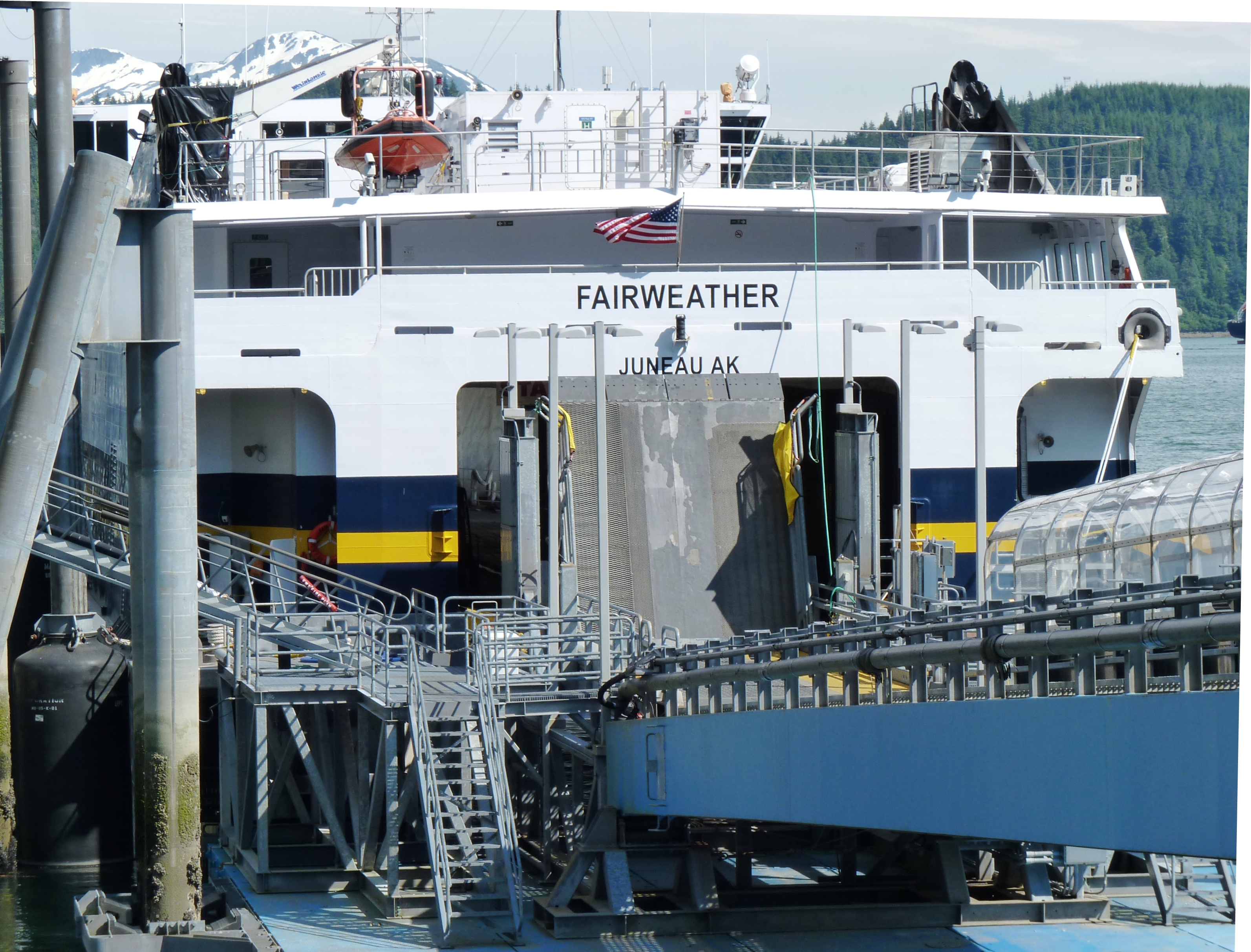
The fast ferry Fairweather docks at Juneau's Auke Bay Ferry Terminal in 2013. (Photo by Ed Schoenfeld/CoastAlaska News)
The fast ferry Fairweather docks at Juneau’s Auke Bay Ferry Terminal in 2013. It’s one of several ships with an uncertain future as the marine highway system’s budget shrinks. (Photo by Ed Schoenfeld/CoastAlaska News)

An effort to restructure the Alaska Marine Highway System begins this month with a summit in Anchorage.

The Aug. 20 event will be the first for a 12-member steering committee established to oversee the effort.

Robert Venables will coordinate the summit for the Southeast Conference, a Juneau-based regional development organization.

“Really, it’s intended to be a listening session for hearing what Alaska’s vision is for the marine highway system,” Venables said.

The restructuring effort began in May, when Gov. Bill Walker signed an agreement with Southeast Conference officials. It calls for the steering committee to work with a contractor to come up with a new operating plan.

Seattle-based Elliott Bay Design Group was awarded the $39,000 contract. It’s already produced a governance study for Washington State Ferries.

The first phase will focus on management changes, Venables said.

“Whether it takes administrative orders from the governor or it whether it’s statutory changes that the Legislature would consider and adopt into law, those are the type of things that Phase 1 will bring out in time for the next (legislative) session,” he said.

Further work will consider route and vessel changes, partnerships and new revenue sources.

Venables also chairs the state’s Marine Transportation Advisory Committee, which has examined similar issues, but has no power to change policy. Several of its members are on the restructuring steering committee.

Most state ferries operate in Southeast Alaska, though some sail Prince William Sound and Southwest Alaska.

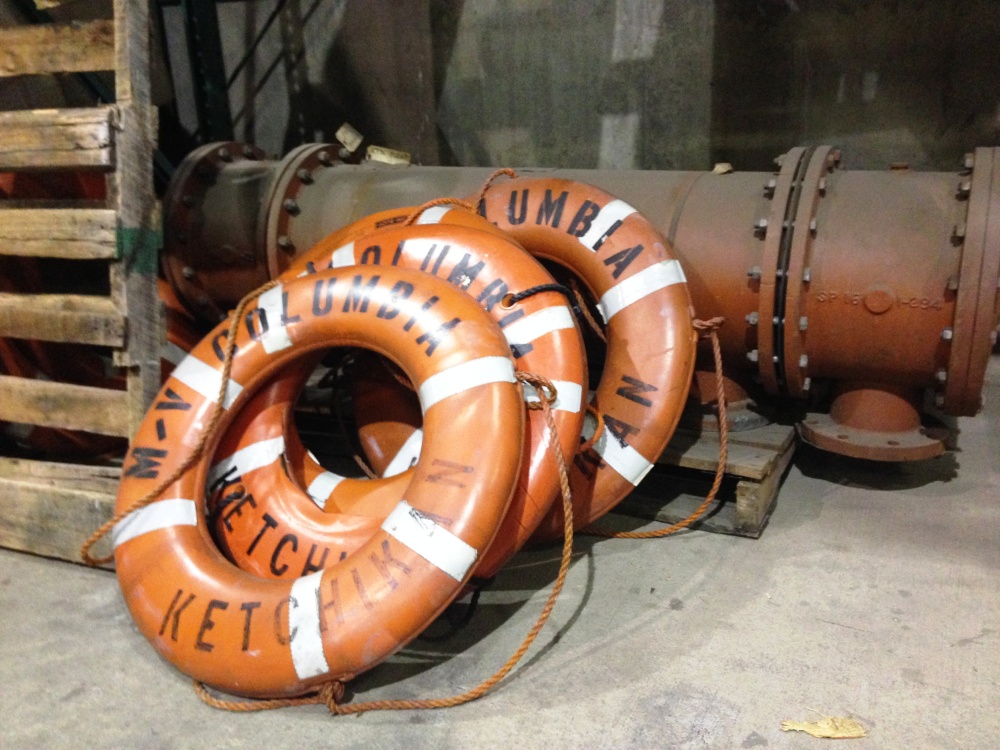
Extra ferry life rings lean against other spare parts at the Ketchikan Marine Engineering Facility at Ward Cove last January. (Photo by Ed Schoenfeld/CoastAlaska News)
Extra ferry life rings lean against other spare parts at the Ketchikan Marine Engineering Facility at Ward Cove in 2014. (Photo by Ed Schoenfeld/CoastAlaska News)

Anchorage was chosen for the summit because of its central location, Venables said.

It will make it easier for Railbelt lawmakers, tour businesses and trucking companies that use ferries to be involved, he said.

“The marine highway system is really important to all of the state and it’s important that this effort is not just a Southeast effort, it’s not just a Southeast Conference project,” he said. “It’s a statewide project, so we want to make sure that we give everyone an opportunity to participate.”

The statewide ferry summit will be from 9 a.m. to 3 p.m. Saturday, Aug. 20, at the Atwood Building.

The Marine Transportation Advisory Committee will meet at 1:30 the previous afternoon. Both events will be teleconferenced.

Steering committee members are:

  • Dennis Watson, Craig Mayor and CEO of the Inter-Island Ferry Authority, committee chairman.
  • Elizabeth Bolling, staff to Rep. Dan Ortiz.
  • Dan Kelly, general manager of Alaska Marine Trucking (Lynden Inc.).
  • Dave Kensinger, owns a regional produce business based in Petersburg.
  • Greg Wakefield, owner of AAA Moving and Storage in Anchorage.
  • Shannon Adamson, representative, International Organization of Masters, Mates & Pilots.
  • Josh Howes, president of Premier Alaska Tours.
  • Will Ware, transportation manager, Central Council Tlingit and Haida Indian Tribes of Alaska.
  • Sharon Hildebrand, Assistant to the Director of Development and Alumni Relations for UAF.
  • John Whiddon, Kodiak City Council, owner e-commerce fish market.
  • Michael Anderson, Cordova artist.
  • Denny Bousson, 30-year employee of AMHS, Skagway.

Oil spill cleanup demo coming to Dillingham

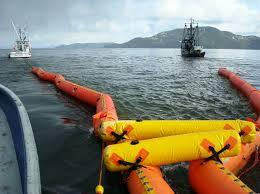
Officials from the Department of Environmental Conservation will explain how to use spill response equipment like oil booms. (Department of Energy Conservation)

State officials will be in Dillingham next week to demonstrate oil cleanup equipment and techniques.

A two-hour presentation will be Tuesday at the Bingo Hall, Dillingham, with more hands-on activities at the Harbor afterward.

Rick Bernhardt, the scientific support unit manager at the Department of Environmental Conservation, will discuss spill response and demonstrate how to use items in containers of cleanup materials.

“On average, we have about 2,000 spills reported to the Department of Environmental Conservation every year, and most of those are just teeny-tiny spills.”

A recent spill occurred at the Drift River Terminal on the West Side of Cook Inlet.

Most spills are small, but compounded a couple thousand times, they add up to a lot of environmental damage. DEC has shipping containers across the state stocked with cleanup materials ready to respond to spills. The containers contain absorbent and containment booms, storage tanks and the implements.

“We have 56 of these containers throughout the state,” Bernhardt said. “We like to consider them regional resources. We have two in Dillingham, but if a neighboring community had an oil spill, they are available for regional use.”

Northern Alaska Peninsula has strong 2016 sockeye returns

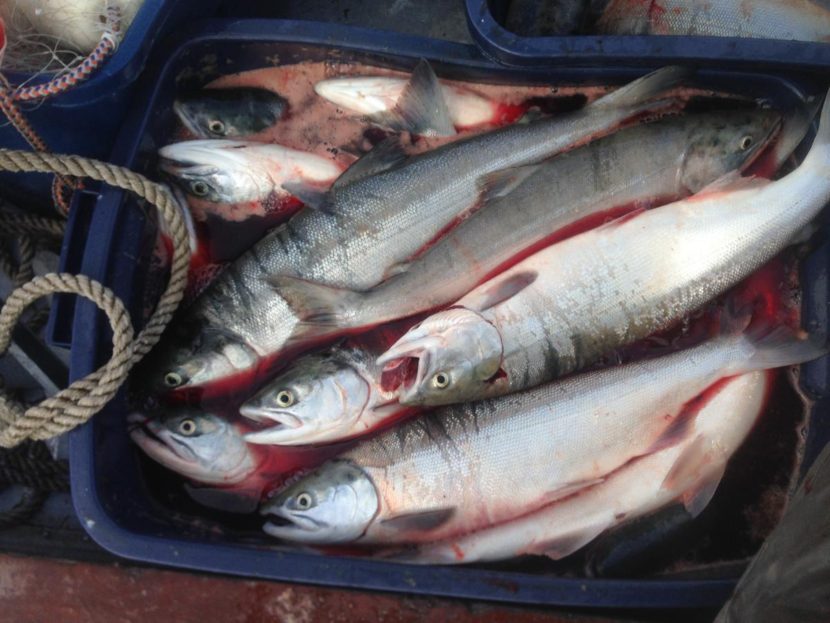
Wood River sockeye are pictured in this June 2016 photo. CREDIT KDLG NEWS
Wood River sockeye are pictured in this June 2016 photo.
(Photo by KDLG Staff)


Bob Murphy, the Area Management Biologist at Port Moller, said the North Peninsula has had a strong harvest so far this summer, with a little more than 3 million sockeye hauled in for the entire North Alaska Peninsula management area, including Nelson Lagoon and the Northwestern District harvests. That’s more than the 2.2 million sockeye harvest forecast.

Area M fishermen have hauled in nearly 9 million salmon so far this summer, including almost 5.5 million sockeye. Most of that catch comes from the North Alaska Peninsula.

The catches were strong enough to prompt processors to limit fishermen’s daily deliveries for most of July; a move that Murphy said has been common in recent years. Murphy said most rivers also went over their escapement goals.

But not every section performed as well. The Outer Port Heiden section is at the northwest end of the North Alaska Peninsula fishery, and genetics last spring showed that many of those fish are headed on to the Ugashik District in Bristol Bay. Despite a good year in Ugashik, Murphy said it was not a particularly strong year at Outer Port Heiden.

“Overall, the harvest in the Outer Port Heiden section this year was not as strong as we typically see it,” Murphy said. “We had about 585,000 fish harvested in the OPH section to date. That’s probably average or actually maybe even below average, considering that we did have pretty strong runs throughout the North Peninsula and Bristol Bay this year.”

The last Outer Port Heiden fishing period closed at 6 p.m. July 27. Elsewhere in the North Peninsula, catches will continue through August and beyond. The late Bear River sockeye run typically begins around August 1 and continues through mid-September, depending when processors stop buying.

“It’s not as strong as the early run at Bear River, but it is a significant run and in some years has produced catch and escapement of over a million fish,” Murphy said.

Alaska Peninsula volcano spews steam, ash, but no lava

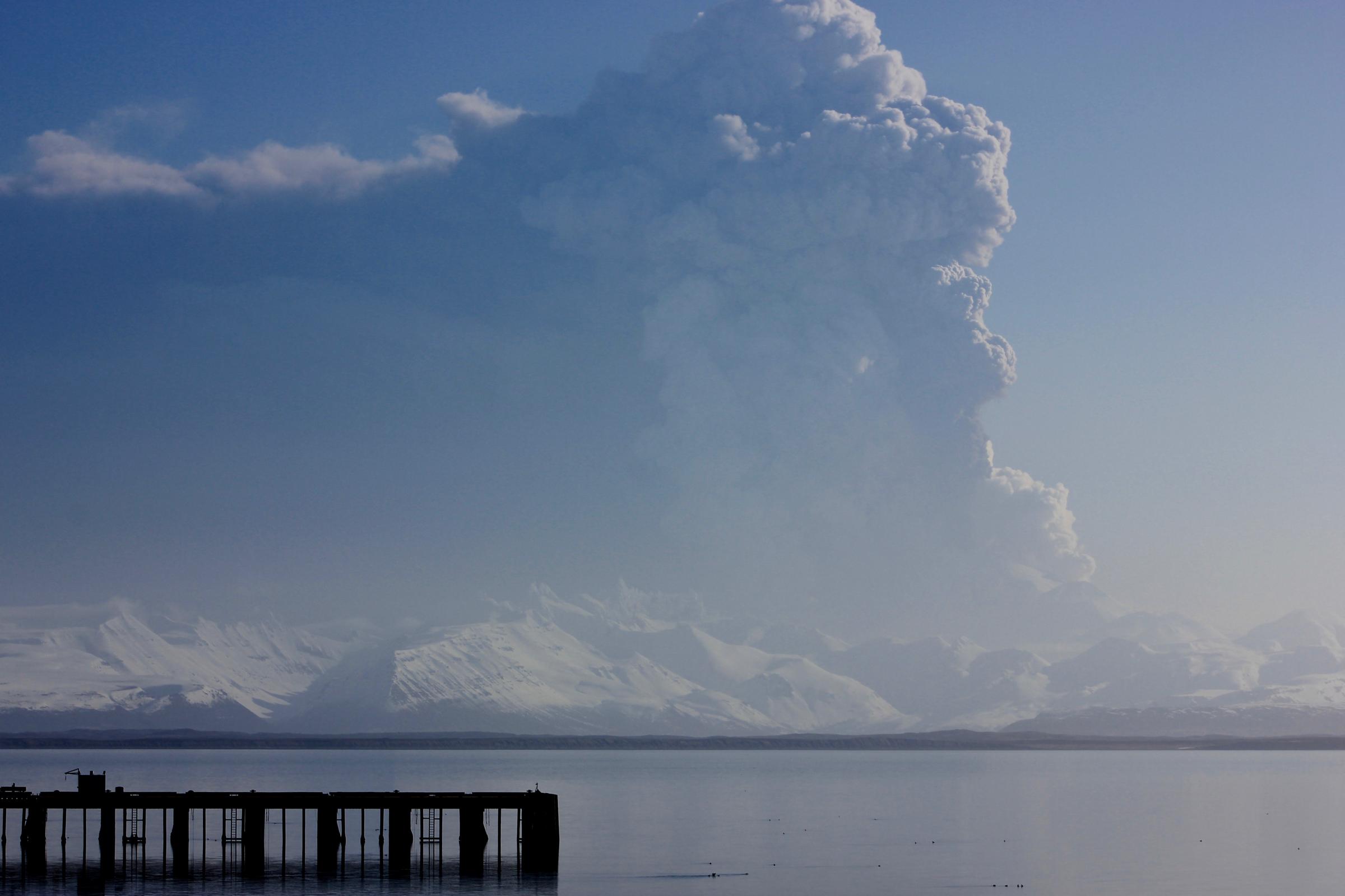
Pavlof Volcano erupted in March 2016, releasing a plume of ask. The current eruption is smaller. (Photo by Candace Shaack/courtesy KUCB)
Pavlof Volcano erupted in March 2016, releasing a plume of ash. The current eruption is smaller. (Photo by Candace Shaack/KUCB)

Scientists have increased the alert level for Pavlof Volcano for the second time this month. On Thursday, the Alaska Peninsula volcano showed signs of low-level eruptive activity, prompting officials to raise its alert level from “advisory” to “watch.”

Dave Schneider is a geophysicist with the U.S. Geological Survey at the Alaska Volcano Observatory.

“We saw pretty vigorous de-gassing of steam in our web camera images, and we got some detections of volcanic ash in satellite views,” Schneider said.

But that doesn’t necessarily mean there will be an eruption.

Schneider said Pavlof’s current activity is “quite a bit lower” than in March when the volcano erupted, spewing ash 37,000 feet into the atmosphere and causing dozens of flights to be canceled. He also said thermal signals have not indicated that new lava is rising to the surface.

But thanks to its ongoing seismic activity, Schneider said are scientists are monitoring Pavlof closely.

“This is a very slippery volcano,” Schneider said. “It can go from low-level activity and ramp up without a lot of precursory activity.”

For now, scientists will keep an eye on Pavlof’s temperature and ash emissions by satellite and webcam.

Bethel granted extension of site reviews for wetland building

CREDIT ADRIAN WAGNER / KYUK
The city of Bethel received an extension on a regional general permit to allow city to review citizens building permits in wetlands. (Adrian Wagner/KYUK)

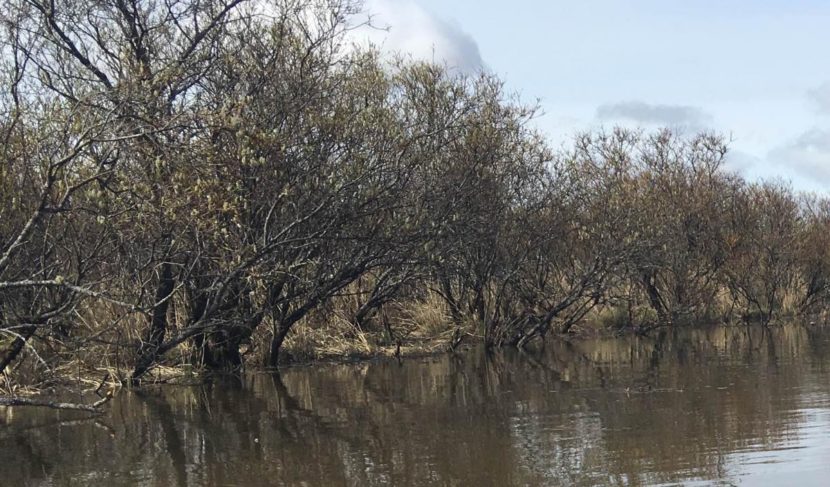
The city of Bethel has gotten an extension on its regional general permit from the Army Corps of Engineers that will allow the city to review permits for citizens building in a wetland, a designation which encompasses much of Bethel.

Mayor Rick Robb addressed corps representatives at a city council meeting Tuesday with a clear message.

“It is definitely the intention of this community and the intention of this council that we want to work and extend this general permit and have it authorized for another five year period, and we want to make sure the corps of engineers understands that,” he said.

The permit, set to expire at the end of August, will be extended for six months as per the council’s request. In that time, city administration will work with the corps to renew the city’s permit on a long-term basis, but the renewal is not guaranteed. State and federal authorities still have to weigh in on the process, and will have the option to veto its passage.

Sheila Newman, one of the corps representatives, pointed out that despite public concern for widespread construction holdups, the permit was used just a handful of times last year and affected only six out of 75 total projects in Bethel.

Site notifications
Update notification options
Subscribe to notifications