Transportation

Juneau Assembly delays changes to Capital Transit bus plan

(Photo by Kelli Burkinshaw/KTOO)
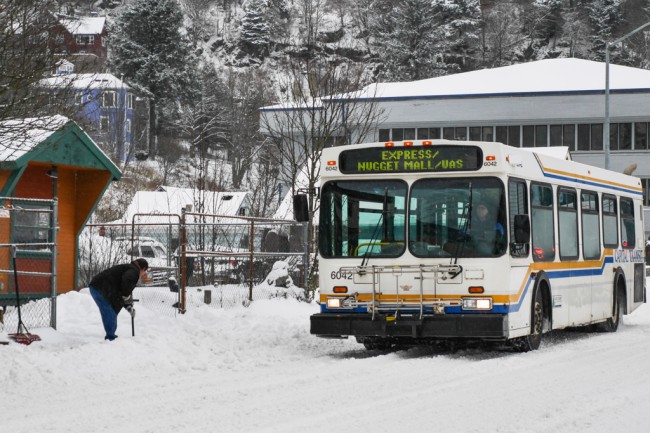
A Capital Transit express bus. (Photo by Kelli Burkinshaw/KTOO)

The Juneau Assembly has decided to delay changes to the Capital Transit bus plan. Public comments on the proposed changes to bus routes were largely negative.

Around 200 people attended seven public meetings on the proposed Capital Transit plan last week. Some were concerned that their comments wouldn’t be taken seriously. Public works director Kirk Duncan oversaw the sessions and says every comment was included in a thick binder handed to the Juneau Assembly on Monday. The comments were categorized by consulting firm DOWL HKM.

“It just seemed important that we actually really looked at the public comments we got and we treated them with a certain degree of respect, if you will,” Duncan says.

The proposed plan met the short-term goals of saving money, increasing reliability, providing earlier service and putting buses on Riverside Drive, Duncan says. But, the vast majority of the roughly 160 comments received were negative.

“People were passionate about keeping the Nugget Mall. People were passionate about keeping service into (the University of Alaska Southeast). People were passionate about downtown service, and the overall feeling is it’s better to keep the service the way it is now than to change it according to how we’ve proposed to make the changes,” says Duncan.

Assemblywoman Karen Crane says Capital Transit service does need to be altered, but the proposed plan isn’t quite right.

“As much as I want to see some of the changes that were made, I’m not ready to adopt the plan that was put before us at this point,” Crane says.

The Assembly cut $100,000 from Capital Transit in the most recent city budget. Crane says she’d be willing to look at putting money back to provide better service. Other Assembly members, like Kate Troll, echo that sentiment.

“In the next iteration that staff goes through I would like for them to have the leeway of looking outside the $100,000 cut and come back to us with solutions that might actually still have a fiscal note and let us wrestle with the pros and cons of addressing that,” Troll says.

Deputy City Manager Rob Steedle says before staff starts the process over again, they need more direction from the Assembly.

“I think it’s time for you as a body to state what is most important to you, what goals you’re trying to achieve and then get back to the drawing board,” Steedle says.

Duncan says he’ll work with bus drivers to look at route structures and possibly moving away from 30-minute intervals in the schedule.

Full disclosure: Kirk Duncan serves on the KTOO Board of Directors.
New Hoonah dock could boost tourism numbers

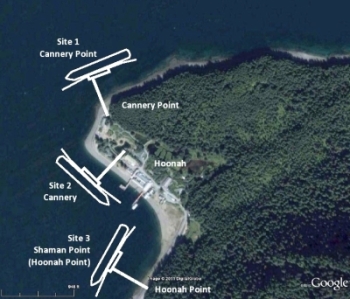
This image from the 2012 Hoonah Berthing Facility Site Alternative Analysis Report shows thee possible dock locations. (Courtesy PND Engineers)
This image from the 2012 Hoonah Berthing Facility Site Alternative Analysis Report shows three possible dock locations. (Courtesy PND Engineers)

Hoonah’s Icy Strait Point tourist attraction will see more visitors once a new cruise ship dock is built. That’s according to officials, who expect it to attract more cruise lines to the town 50 miles west of Juneau.

But critics worry the location will not help the rest of the city.

The Huna Totem village Native corporation opened Icy Strait Point back in 2004.

Its main attraction is a renovated salmon cannery that houses a museum and gift shops. It’s a base for bus tours, wildlife-watching excursions and a mile-long zipline.

Over the years, tens of thousands of tourists have arrived at the point via cruise ship. But those ships have anchored nearby and brought passengers ashore via small boats called tenders.

That will soon change.

“Having the dock will make a difference,” says Ruth Banaszak, Huna Totem Corp.’s marketing manager.

She says the new dock will allow more and different ships to deliver passengers.

“For instance, Disney can’t tender. The ship that comes to Alaska does not have tender boats on it. So we have talked to Disney about stopping in once we have the dock,” she says.

Disney did not immediately respond to a request for confirmation. Banaszak said another line that only uses tender boats occasionally may also be interested.

Huna Totem, the city of Hoonah and the state recently formed a partnership to oversee the dock’s design and construction. But it hasn’t always been that friendly.

The city of Hoonah wanted another location, closer to town and easier for fishermen and other locals to use. The former mayor and city council members cited a study showing the current site to be too windy in the winter.

“Considering the kind of weather they get there, I’m sure it’s going to take a hell of a beating,” says Bob Prunella, a former interim Hoonah city administrator who lives in Wrangell.

“That spot that the city picked, it’s just more protected because, quite frankly, the ships anchor in a little deeper water right there anyway,” he says.

Other former city officials didn’t return calls asking for comment.

The cruise industry opposed the city-backed site. Officials said it would only use the one now slated for construction. And the state said it would only pay for a site cruise lines would use. Then, elections changed the balance on the city council.

Now, a $23.7 million contract is going to Anchorage-based Turnagain Marine Construction.

The state contributed about $14.5 million, which is passing through the city. Banaszak says the remaining $10 million or so will come from Huna Totem.

“Nothing can be done strictly just by Huna Totem or just by the city, it really is a partnership and everyone working together to do this, because it’s quite a huge opportunity,” she says.

She says construction will begin by March and finish by the end of August. She also says the 400-foot floating pier is large enough to accommodate all ships that sail Southeast.

Former city administrator Prunella says he hopes the site decision will reduce community tensions, even if he doesn’t like the location.

“I think the important thing is, one, they’ll get the dock, and two, maybe there won’t be so much infighting in that little community,” he says.

Huna Totem estimates more than two-thirds of last summer’s 140,000 cruise passengers left their ships to explore Icy Strait Point. It expects about 20 percent more to visit the attraction with the new pier in place.

State files for Juneau Access construction permit

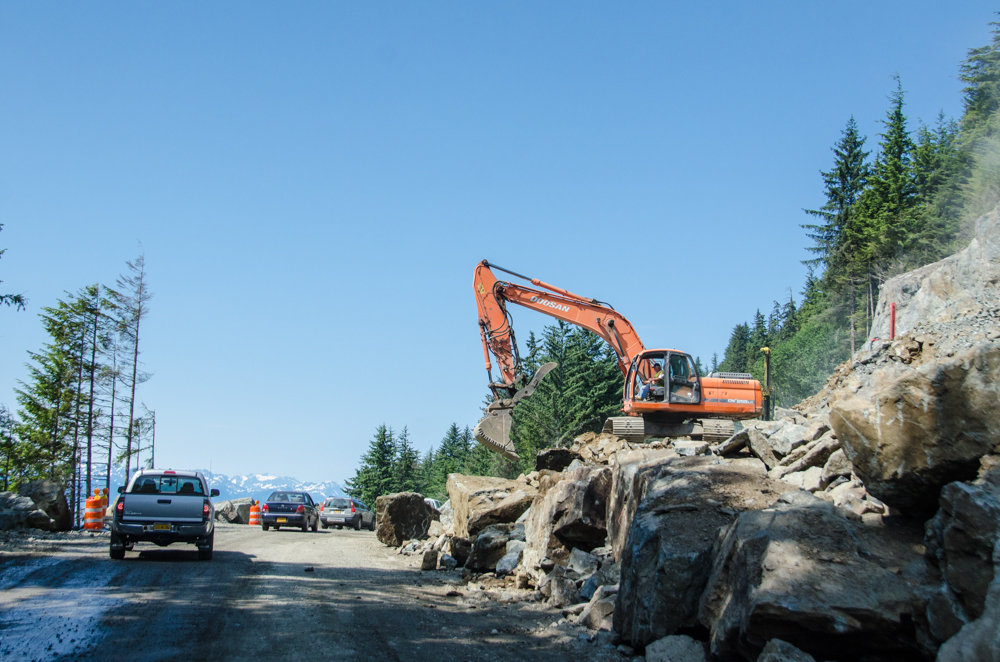
Construction has extended Glacier Highway to Cascade Point. Here crews are shown working on widening parts of the existing road in June of 2013. (Photo by Heather Bryant/KTOO)
In 2013, crews widened part of the existing Glacier Highway north of Juneau. The state recently submitted an application for a construction permit to extend the road to a proposed Katzehin River ferry terminal. (Photo by Heather Bryant/KTOO)

The Alaska Department of Transportation has applied for a permit allowing for construction in wetlands and tidal areas along the preferred route of the controversial Juneau Access Improvements Project.

In a public notice Monday, the state said the application had been submitted to the U.S. Army Corps of Engineers. The nearly 51-mile road would go up the east side of Lynn Canal to a new ferry terminal at the Katzehin River. From there, ferries would transport vehicles and passengers to and from Haines and Skagway. The total estimated cost of the project is more than $570 million. The Federal Highway Administration would pay for the bulk of the road construction, and the state would pick up the cost of the new ferry terminal and vessels.

Transportation Department spokesman Jeremy Woodrow said the permit is contingent on a final environmental impact statement and record of decision from the Federal Highway Administration, due in fall 2015.

“No work would move forward until a record of decision is made on one of the alternatives,” Woodrow said.

Since the permit can take over a year to process, Woodrow said the state is applying now to allow work to move forward once a record of decision is issued.

“If that record of decision is made in favor of the preferred alternative, Alternative 2B, then we aren’t delaying the process of the project any further by having to then wait for the permit to go through,” Woodrow said.

Woodrow said the permit would be unnecessary if another alternative is chosen, and department would then have to apply for other permits.

The permit application is for proposed construction along Lynn Canal in 61 acres of wetlands, 32 acres of unvegetated inter-tidal or sub-tidal habitat, and 3 acres of stream channels. Woodrow said a good example would be the proposed ferry terminal at Katzehin.

“That would be some fill work and dredging work that would be required in the Katezhin Delta area,” Woodrow said. “That would be one of those areas that the Corps is going to review and either approve or deny as part of the permit process.”

Former Gov. Sean Parnell consistently supported the Juneau Access project. A spokeswoman for new Gov. Bill Walker issued a statement saying “Gov. Walker is assessing all projects, including the Juneau Access project. It’s too soon to say exactly what his decision will be on those projects.”

Capital Transit meeting at UAS draws criticism, concern for disabled

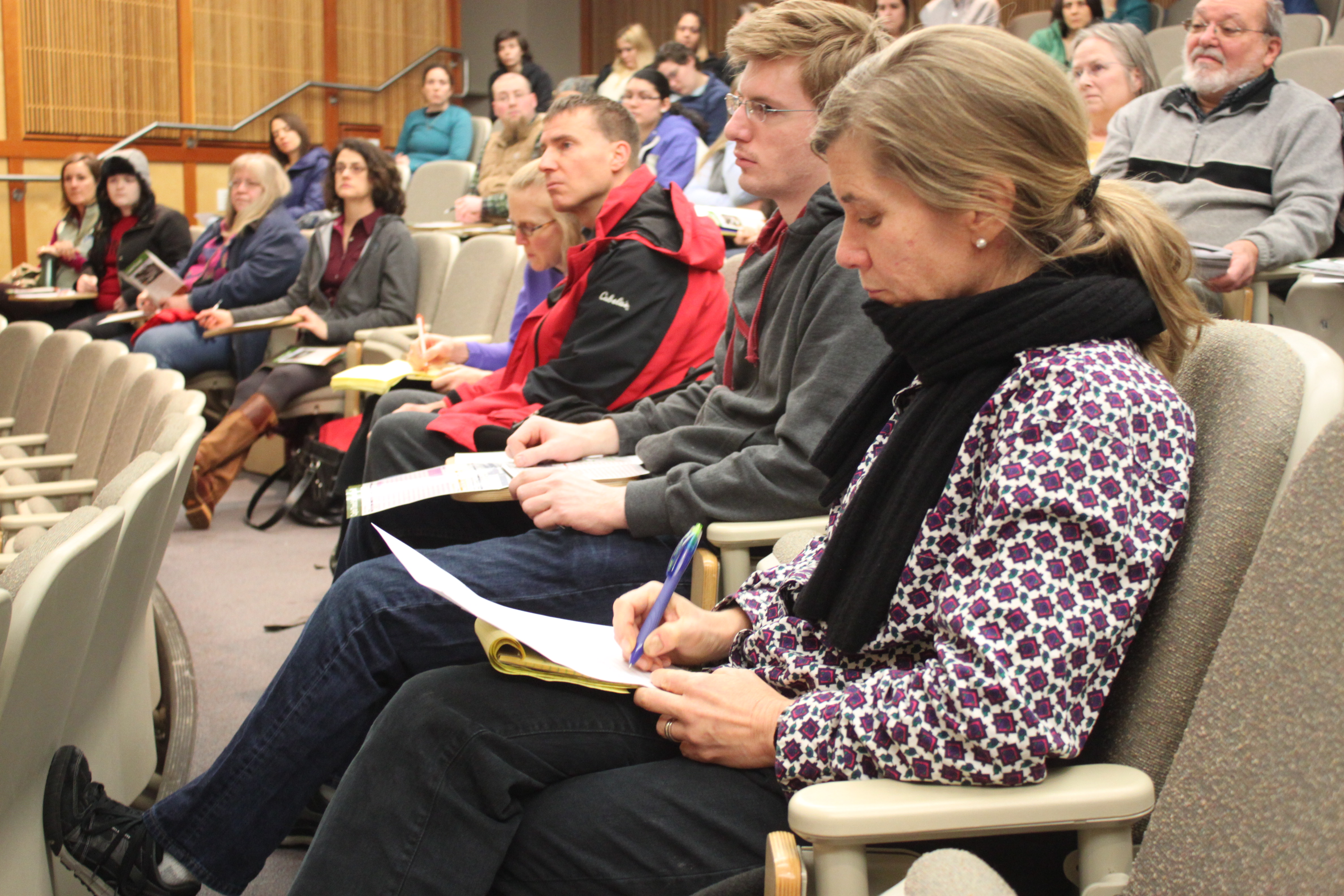
Many at the public meeting wrote comments down, often filling a page. (Photo by Lisa Phu/KTOO)

Around 80 people showed up at the Capital Transit public meeting at University of Alaska Southeast yesterday. Only one person spoke favorably about proposed changes to the bus plan, which includes taking away service onto the university campus.

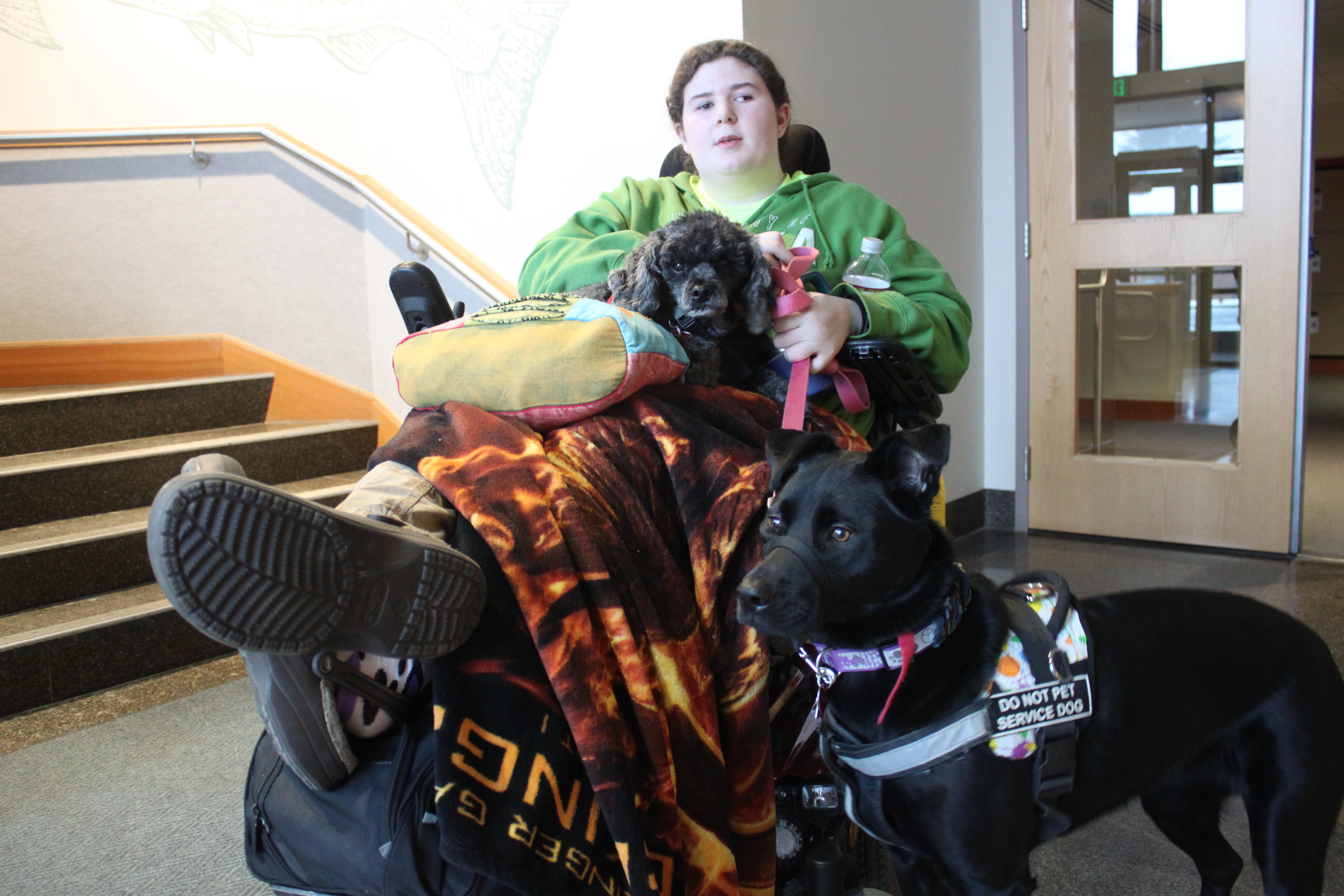
Tasha Hansen is a student at University of Alaska Southeast. Several years ago she was diagnosed with degenerative disc disease and a couple neurological conditions. She now gets around in a wheelchair. Hansen relies heavily on Capital Transit most of the year.

“I’m not even sure what to say. With these changes, getting to and from school – it’s going to make it hard,” Hansen says.

Tasha Hansen often takes the bus to UAS and  downtown. (Photo by Lisa Phu/KTOO)
Tasha Hansen often takes the bus to UAS and downtown. (Photo by Lisa Phu/KTOO)

Capital Transit is proposing eliminating service onto the UAS campus. Instead, bus service can be accessed on Back Loop Road. This change is supposed to save three minutes each way on the schedule.

Hansen says her wheelchair can get to Back Loop Road via a paved path when it’s not icy. But she feels safer waiting on campus versus on the side of the road.

“Already being disabled, I’m kind of leery of being that close to traffic,” Hansen says.

Others at the meeting lamented losing express service from downtown Juneau to the university. A faculty member says she’s in a one-car household and finds commuting on the bus convenient:

“But with now having to walk an extra third of a mile, having to transfer on my way back and being maybe not able to make the transfer at the skate park due to the times, that convenience factor is completely lost, and I think that will be the case for a lot of employees here and I think that’s very sad.”

Several at the meeting said the proposed plan doesn’t take the needs of people with disabilities into account.

Thomas Smith lives at St. Vincent de Paul housing on Teal Street, a block away from the Nugget Mall. This is the bus stop that he and the roughly 100 other residents access. Under the proposed plan, the bus would no longer stop at the Nugget Mall. The new transfer stop would be at the Pipeline Skate Park.

“It’s hard enough for me to get my wheelchair to the present stop. If you’re going to move it a mile away, you’re disfranchising me,” Smith says.

The city’s Public Works Director Kirk Duncan is overseeing all the Capital Transit public meetings. He encouraged everyone who spoke to submit comments in writing, either on comment sheets provided at the meeting or through email.

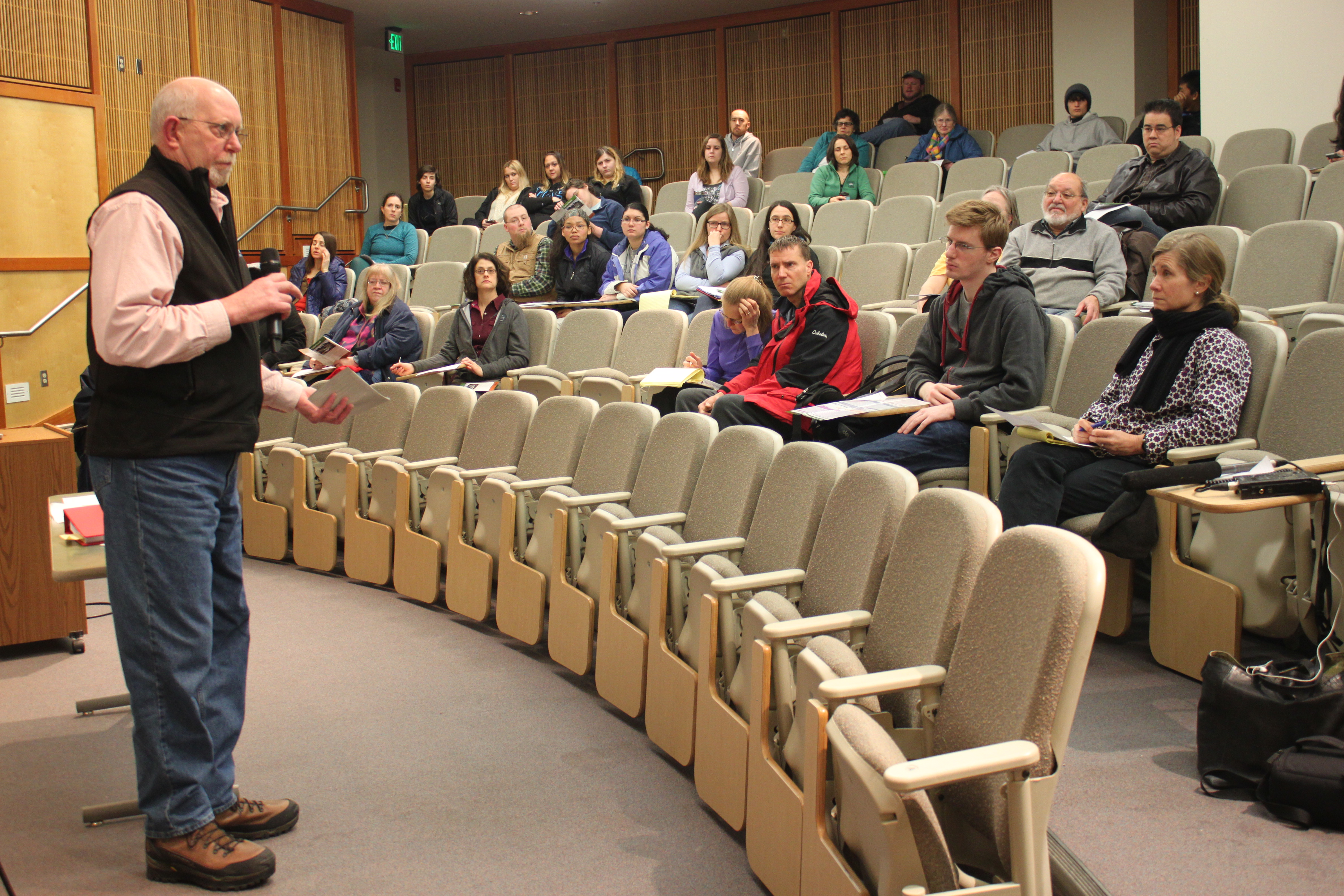
CBJ Public Works Director Kirk Duncan answers questions during a Capital Transit public meeting at UAS. (Photo by Lisa Phu/KTOO)

Some at the meeting were confused about why oral comments weren’t being taken into consideration. UAS employee Gloria Merry says she’s disappointed.

“I was under the impression that this was supposed to be a public comment period and then I come here and find out they’re not actually taking comments and we still have to submit written comments,” Merry says. “If they’re not listening to these, how much are they actually going to listen to our written comments?”

According to pamphlets being distributed around town and on the buses, the public meetings are available for asking questions and commenting.

Duncan says he will show all written input to the Assembly at a Dec. 8 work session.

“What I plan to do is take all these comments – they’re going to be verbatim comments – and categorize them and hand them to the Assembly. I don’t plan on filtering this stuff,” Duncan says.

So far, the string of public meetings this week has been well attended, he says. Duncan has already received more than a hundred written comments and anticipates getting a couple hundred more.

Capital Transit has two more public meetings on the proposed bus changes – noon today at the Mendenhall Valley Library and Saturday, 1:30 p.m. at Dzantik’i Heeni Middle School Library.

Editor’s note: An earlier version of this story said the Assembly work session is on Dec. 9. The Assembly Committee of the Whole meeting is actually on Monday, Dec. 8. 

Update: First big snow of season expected in Southeast Alaska

NWS snow graphic
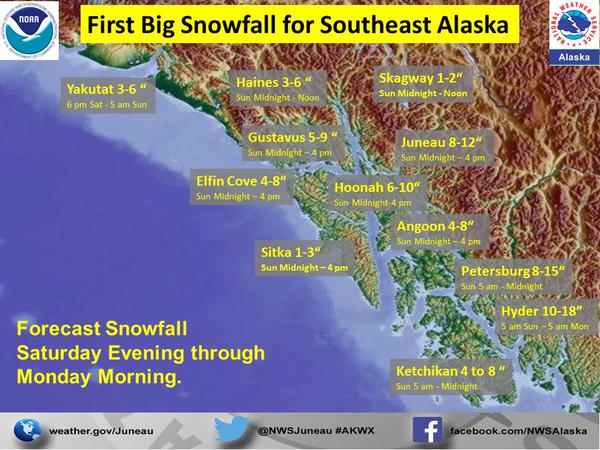
(Graphic courtesy National Weather Service)

Update | Nov. 30, 2014 – 7:40 p.m.

The National Weather Service called off the winter storm warning for Juneau and northern Southeast Alaska on Sunday at 7 p.m.

As of 3 o’ clock Sunday afternoon, the storm had produced nearly 10 inches of snowfall in Juneau. The snow started to taper off in the early evening.

More scattered snow showers were expected overnight Sunday. Monday’s forecast calls for partly cloudy conditions, and a slight chance of snow in the evening. By Tuesday, the weather service says to expect rain and snow mixed.

Update | Nov. 29, 2014 – 9:15 p.m.

Snow has started to fall in Juneau, and the winter storm warning remains in effect for the capital city and much of Southeast Alaska.

In other parts of the region the warning has been downgraded to a winter weather advisory. That includes Hoonah, Gustavus, Haines and Skagway, where snow is still expected overnight, though not as heavy as previously forecast.

The most up-to-date conditions are available from the National Weather Service.

Original Post | Nov. 29, 2014 – 7:34 a.m.

The National Weather Service has issued a winter storm warning for Southeast Alaska this weekend. Heavy snow is expected throughout the area, from Ketchikan to Yakutat.

Forecasters predict 8 to 12 inches of snow in Juneau, starting at midnight Sunday and lasting through 4 p.m. Hoonah is expected to get 6 to 10 inches, Angoon 4 to 8 inches and Sitka 1 to 3 inches. Gustavus will see 5 to 9 inches of snow, Haines 3 to 6 inches and Skagway 1 to 2 inches.

The storm is expected to move down the panhandle Sunday morning, with southern Southeast communities seeing snow from 5 a.m. to midnight. Petersburg is forecast to get 8 to 15 inches, Hyder 10 to 18 inches and Ketchikan 4 to 8 inches.

The National Weather Service says the storm “will result in difficult travel conditions.” However, it is expected to taper off early Sunday evening.

This is a developing story, check back for details.

Public meetings on Juneau’s proposed Capital Transit plan start Monday

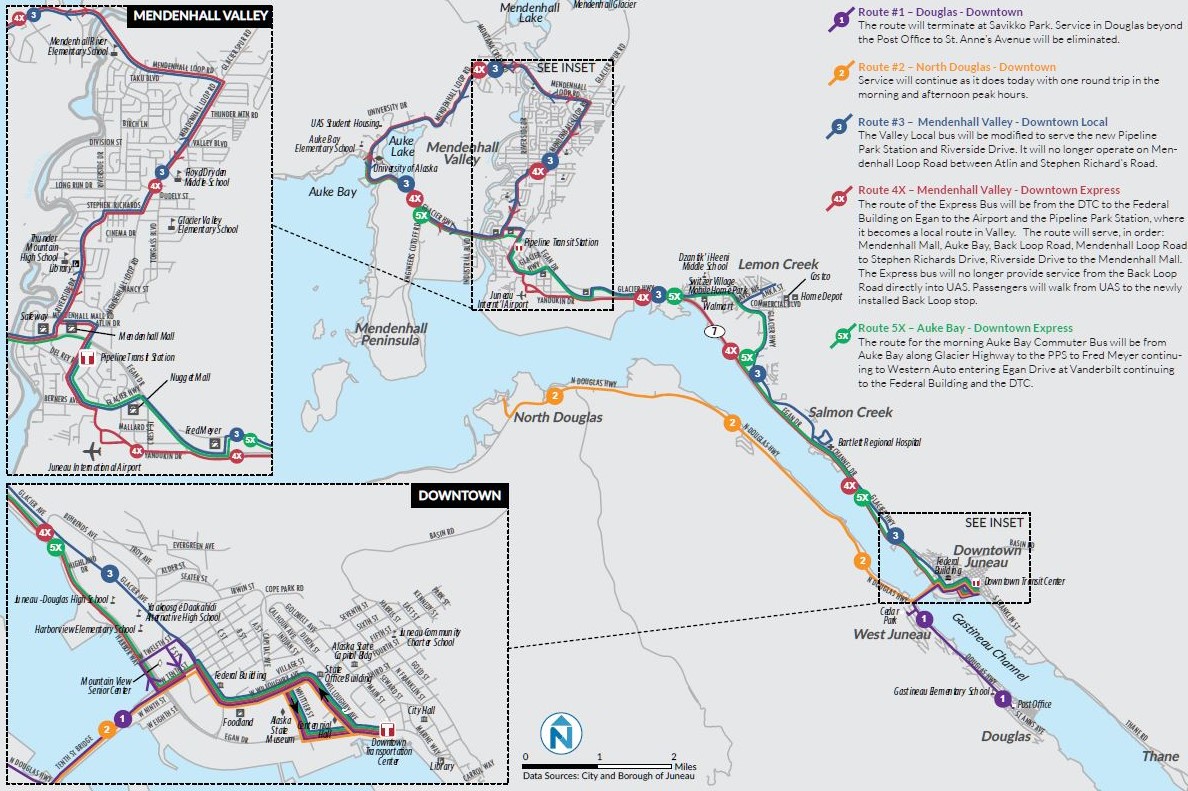
New Capital Transit  routes under the proposed plan. (Map courtesy City and Borough of Juneau)
New Capital Transit routes under the proposed plan. (Map courtesy City and Borough of Juneau)

Capital Transit riders can weigh in on a new proposed bus plan in a series of public meetings that start Monday.

Kirk Duncan, public works director for the City and Borough of Juneau, says he’ll describe the route and service changes at the meetings and people can fill out comment sheets.

“We’re going out and we’re explaining what the plan is. We’re not going back out and saying, ‘Well, do you like Plan A better, or Plan B better or Plan C?’ We’re asking you to comment on this plan,” Duncan says. “And we’re going back to the Assembly on Dec. 8 to say, ‘This is what we heard.’ Because it’s really about, do we implement these plans or do we keep the system that we’ve got?”

Public meetings on Capital Transit route and schedule changes:

  • Monday, Dec. 1, 12 p.m. – Downtown Library
  • Monday, Dec. 1, 4:45 p.m. – Downtown Library
  • Tuesday, Dec. 2, 6:30 p.m. – Valley Library, Mendenhall Mall
  • Wednesday, Dec. 3, 12 p.m. – UAS Egan Lecture Hall
  • Wednesday, Dec. 3, 6:30 p.m. – Douglas Library
  • Thursday, Dec. 4, 12 p.m. – Valley Library, Mendenhall Mall
  • Saturday, Dec. 6, 1:30 p.m. – Dzantik’i Heeni Middle School Library

If you can’t attend, you can be heard by calling 586-BUS1 or emailing capital.transit@juneau.org.

Last week, bus drivers started handing out pamphlets outlining the proposed route and schedule changes to riders. Buses also have signs advertising the public meeting times.

Duncan says changes may mean longer walks to a bus stop. For instance, buses won’t go onto the University of Alaska Southeast campus under the new plan, which a UAS advisory group protests. Instead, riders will have to catch the bus on Back Loop Road, about a third of a mile away.

“Another thing, in order to put time back into the schedule on the Back Loop, we’re moving the transfer center from Nugget Mall to the (Pipeline) Skate Park, and we’re asking people’s comments about that because people at the Nugget Mall will have to walk out to Shell Simmons, so it’s a little bit further walk for them to catch the bus,” Duncan says.

The proposed changes may also mean longer wait times. Right now, a person in downtown Douglas trying to get to the hospital waits 3 to 5 minutes for a transfer at the Federal Building. That would change under the new schedule.

“If you want to go from Douglas to the Valley Local so you can go to the hospital, you’ve got a 23 minute wait. And that’s why it’s important that people read these schedules and understand that. We’re not trying to slip that by anybody; that’s just the way the schedules are structured,” Duncan says.

Changes also include eliminating service through Juneau’s downtown core, adding new service on Riverside Drive and earlier hours.

Capital Transit bus driver Greg McLaughlin says he and other drivers don’t like the new plan.

“It’s got a lot of things that, we know, aren’t going to work and if they implement this schedule, it’ll fall apart,” McLaughlin says.

He says the proposed plan doesn’t provide good service to the community and fears Capital Transit may lose ridership if it goes into effect.

Full disclosure: Kirk Duncan serves on the KTOO Board of Directors.
Site notifications
Update notification options
Subscribe to notifications