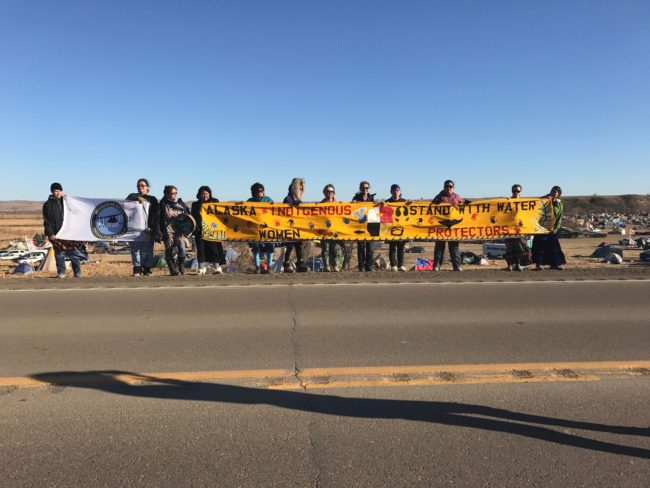
A delegation of indigenous women from across Alaska traveled to the Standing Rock Sioux Reservation in North Dakota this week. The group brought gifts and resolutions from their communities to support the ongoing protest of the Dakota Access Pipeline project.
The Obama administration is set to issue a decision on whether to approve the pipeline route in the next few days.
Kari Shaginoff traveled to Standing Rock on Nov. 7, carrying gifts and a resolution from the Chickaloon tribe. During a dinner of moose stew, salmon patties and fry bread a few days later, Shaginoff and other members of the Alaska delegation presented a beaver fur hat and jars of salmon from Alaska to Standing Rock Sioux Tribal Council Chairman Dave Archambault II.
Archambault thanked the group for the dinner, gifts and resolutions. He said his tribe has received a lot of support from other tribes across the nation.
“The response was overwhelming,” Archambault said. “I’d say there’s over… 350 tribes or organizations who wrote letters of support or who passed resolutions by their nation’s government”
About 16 Alaskans are camped at the Oceti Sakowin Camp next to where the proposed pipeline project is underway. The group is stationed in a part of the camp set up by the Indigenous People’s Power Project, a nonviolent, direct-action support network of Indigenous trainers.
The Alaska delegation is setting up tents for others to use during the winter months and helping in the camp’s kitchen, cleaning and preparing meals.
Shaginoff, a member of the Chickaloon Tribal council, shared her experience fighting a proposed coal mine across from the school in Chickaloon. She worries about having to take similar actions as the tribe in Standing Rock.
“Everything we’ve been seeing here, I feel like we are watching things happen that we are going to have to do,” Shaginoff said.
Lisa Wade is from the village of Chickaloon. She spent election day at Standing Rock and was disappointed to hear the national election results. She said she doesn’t know what platform President-elect Donald Trump has regarding indigenous people.
“For me personally, I was concerned about my home community and how they might be feeling today,” Wade said.
Wade plans to return to Alaska this weekend.
She wants to take what she learned at Standing Rock back to communities in Alaska to rally support.
“Everybody has some way they can contribute to helping down here,” Wade said.
Faith Gemmill, of Anchorage, said the group is at Standing Rock to bring their love, blessings, and prayers to the camp. She said a majority of the delegation from Alaska are also from communities affected by resource development.
“We live up there in the north, a traditional-based lifestyle that is based on the land and the waters. We hunt. We fish. We gather to survive,” said Gemmill.
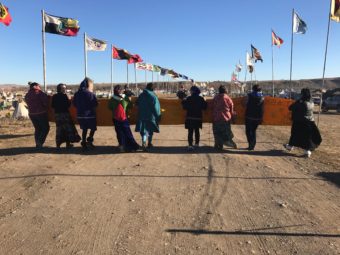
The Alaska delegation delivered a banner to the main protest camp that keeps a fire burning around the clock. The banner was decorated with hand prints and various animals and food that many Alaskan communities rely on.
“You see our children’s hand prints,” Gemmil said. “All of these little hand prints are our children. They gave their hand prints. That’s why we’re protecting our lands and fighting for our waters.”
Most of the group will return home to Alaska this weekend. Gemmill plans to stay until next week to help another group from Alaska set up at camp.