North Slope

Washington and other Democratic-led states drop lawsuit against Arctic Refuge oil drilling in Alaska

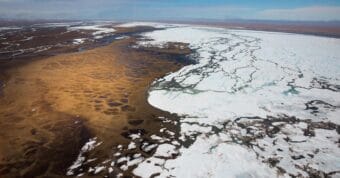
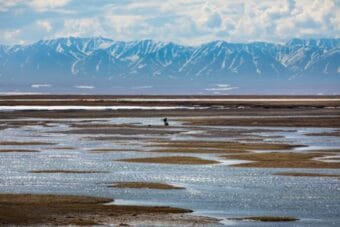
A tundra landscape half covered in ice
The Arctic Coastal Plain. (Department of Interior)

Fifteen Democratic-led states have dropped a six-year-old lawsuit challenging the legality of a federal plan that allowed oil and gas drilling in the coastal plain of the Arctic National Wildlife Refuge in Alaska.

The states announced their plans in a notice filed Monday in the U.S. District Court for the District of Alaska, where the lawsuit was filed in February 2020.

The state of Washington was the lead plaintiff. Mike Faulk, deputy communications director for the Washington State Attorney General’s office, confirmed that the states are dropping their case but said they will continue their opposition to ANWR drilling.

“Washington is proud to have led the multistate lawsuit challenging the 2020 actions regarding the Arctic Refuge,” he said. “New congressional and administration actions require a new course of action on our part. We are evaluating the best path forward to continue to advocate for a clean and healthy Arctic, including supporting the litigation of Alaska Native organizations and community groups.”

The coastal plain is to the east of the vast Prudhoe Bay oil deposits and is believed to hold similarly large amounts of oil and gas. The Trump administration has made drilling in the refuge a top priority as it seeks to expand American oil and gas production.

The other participating states were California, Connecticut, Delaware, Illinois, Maine, Maryland, Massachusetts, Michigan, Minnesota, New Jersey, New York, Oregon, Rhode Island and Vermont.

A group of environmental and tribal groups had filed suit in 2020 at the same time as the Democratic-led states. Last month, that coalition renewed their suit.
Faulk declined to say whether the Democratic states would be siding with the coalition.

While two oil and gas lease sales have taken place in the refuge and additional sales are expected, no oil drilling or seismic surveying has occurred to date.

The Alaska Industrial Development and Export Authority, Alaska’s state-owned investment bank, won several leases in the first lease sale, which took place in 2021, and is seeking to keep the refuge’s coastal plain open to development.

Last year, Judge Sharon Gleason ruled that the Biden administration had illegally canceled AIDEA’s leases. That ruling has since been appealed to the 9th U.S. Circuit Court of Appeals.

Those cases are separate from the lawsuits challenging the overall legality of the oil and gas program in the refuge.

Investigation continues over massive oil rig toppling on North Slope as Nuiqsut residents raise concerns

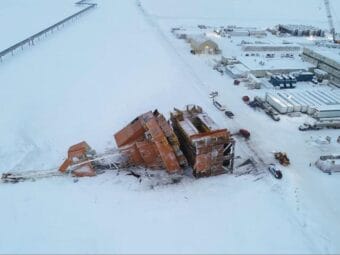
Doyon Rig 26 after it toppled over on Jan. 23, 2026.
Doyon Rig 26 after it toppled over on Jan. 23, 2026. (Photo from the Alaska Department of Environmental Conservation situation report.)

The oil rig that crashed into the frozen ground on the North Slope near Nuiqsut Friday remains too unstable for responders to access the scene, state officials said. While no serious injuries were reported, days after the incident, there were still many unknowns for the companies involved and the nearby community.

Doyon Rig 26 was commissioned in 2016 by ConocoPhillips and built, owned and operated by Doyon Drilling, a subsidiary of Doyon, a regional Native corporation based in Fairbanks. The 10-million-pound machine, also known by the nickname “The Beast,” was being moved on a gravel road on Friday afternoon, when it suddenly toppled over, 6 ½ miles from Nuiqsut, an Iñupiaq village of about 500.

ConocoPhillips said in a statement that no one was seriously hurt. Two workers, who were on the rig when it crashed, as well as six responders, were taken to nearby clinics, treated and released.

The company also said there was no damage to community infrastructure, with no impact to oil pipelines and fuel deliveries.

The Department of Environmental Conservation said in a situation report that the rig had a capacity of 8,400 gallons of diesel on board. But DEC said it has been unable to get close to the wreckage, due to worries that metal from Rig 26 might fall on response team members.

“Structural hazards continue to limit access,” the report said. “A safety team has been dispatched to evaluate concerns.”

The cause of the accident remains unknown, officials said. According to the DEC report, the wreck happened near a tributary to the Colville river.

ConocoPhillips said Doyon is in charge of a unified command that is managing the response. Neither company agreed to an interview about the incident.

Neither ConocoPhillips nor Doyon have said what can be salvaged from the wreckage – or whether it’s a total loss. It is believed to be one of the largest mobile land drilling rigs in North America.

Community concerns and a lawsuit

The North Slope Borough released a statement about the incident, and a local tribe, Inupiat Community of the Arctic Slope, sent out an alert about it to residents.

But Nuiqsut resident Colleen Sovalik said she did not receive any official communication about it for many hours, and when she did, it did not bring her reassurance.

“Unfortunately, that was not any information that allowed community members to feel at ease and only heightened concern because we didn’t know if there was more that was happening, and nobody told us about it, or what to expect,” she said. “Also, it didn’t give us any reassurance with any information provided that they were going to do any assessments, independent of what industry was reporting.”

Sovalik said she was also concerned about whether the conditions were too warm to move the rig. The temperatures in the area were around and above freezing on the day of the incident.

“The weather was real warm,” Sovalik said. “I don’t know where that rig was headed… If it was moving (on) the ice, it was not a good decision.”

Rosemary Ahtuangaruak, a former Nuiqsut city mayor and a long-time environmental activist, lives in the community. She said the event highlights the worries some have had about the development in the area.

“We’re very concerned about what this means to our community and whether or not we’re safe in our lands and waters where they’re developing,” she said.

Last month, an environmental law organization Earthjustice filed a lawsuit, challenging the winter-exploration program near Nuiqsut. The lawsuit centered around concerns over how the project will affect subsistence activities and ecological resources, especially near Teshekpuk Lake.

Ian Dooley, an attorney with Earthjustice, said the Doyon rig was being moved for the exploration program.

“One thing that this points to is a concern that we’ve raised from the very beginning about the agency rushing to permit this project without proper or adequate process, without considering the comments and the concerns that have been raised,” Dooley said.

The plaintiffs requested a preliminary injunction to halt the program and are awaiting a legal ruling.

Dooley also said there were also immediate concerns about contamination because the wrecked rig, with diesel on board, is so close to the Colville river tributary.

Record-setting oil rig

In 2022, ConocoPhillips and Doyon set a new long distance drilling record of almost seven miles with Rig 26. Tim Bradner, publisher of the Alaska Economic Report, said both companies were proud of the rig, which they designed and built especially for the Arctic drilling. Bradner said the module was a huge success story for both companies.

“It was significant because it was very specialized for the drilling of these long-distance extended reach wells,” Bradner said. “That enabled a lot of pockets of oil and reservoirs that were difficult to teach from the surface.”

Bradner said Drill 26 was an important milestone for Doyon, capping decades of hard work.

In a court filing over the pending environmental lawsuit, ConocoPhillips said the accident wouldn’t impact its winter drilling plans. It said it would use a substitute drilling rig from Doyon.

Editor’s note: The link to the DEC incident report has been updated with a more permanent webpage. 

Lawsuit challenges Trump administration approval for Arctic Alaska oil exploration plan

A caribou in the Teshekpuk herd is seen on June 27, 2014, in the National Petroleum Reserve in Alaska. A lawsuit filed Thursday claims the U.S. Bureau of Land Management approved ConocoPhillips' winter oil exploration plan without adequately considering damages to habitat used by caribou and other wildlife.
A caribou in the Teshekpuk herd is seen on June 27, 2014, in the National Petroleum Reserve in Alaska. A lawsuit filed Thursday claims the U.S. Bureau of Land Management approved ConocoPhillips’ winter oil exploration plan without adequately considering damages to habitat used by caribou and other wildlife. (Bob Wick/U.S. Bureau of Land Management)

Environmental and Native organizations on Thursday sued the Trump administration to try to overturn last month’s approval of an expansive oil-exploration program on the North Slope.

The lawsuit, filed in U.S. District Court in Anchorage, said the U.S. Bureau of Land Management violated federal laws when it gave the go-ahead to a ConocoPhillips plan for seismic surveys and exploration drilling this winter on federal lands in Arctic Alaska.

ConocoPhillips’ plans call for seismic surveys in the National Petroleum Reserve in Alaska, along with four exploration wells and associated development. The exploration work is planned near ConocoPhillips’ huge Willow project, which is in development, and its Greater Mooses Tooth Unit, which is already producing oil.

The plaintiffs bringing the lawsuit are Sovereign Iñupiat for a Living Arctic, the Center for Biological Diversity and The Wilderness Society. They are represented by the environmental law firm Earthjustice.

The lawsuit argues the approval violates the Naval Petroleum Reserves Production Act, a 1976 law that mandates environmental protection in the reserve, and the Administrative Procedures Act, which concerns the public process for government decision and actions.

The planned program will cause serious environmental damage that will last for several years, including in areas around Teshekpuk Lake, the North Slope’s biggest lake, and the Colville River, known for its raptor populations and paleontological resources. Previous presidential administrations established protections for those sensitive habitats, including the calving site for the caribou herd named for the lake.

“The record shows the exploration program is likely to cause long-term harm to vegetation and soils that provide crucial habitat to caribou, birds, and a host of other wildlife in the Reserve, including to those within the Teshekpuk Lake and Colville River Special Areas,” the lawsuit said. “The exploration program is also likely to cause population-level impacts to the Teshekpuk Caribou Herd, and long-term harm to subsistent hunters and the communities that rely upon them for food security and health and wellbeing.”

The lawsuit faults the BLM and U.S. Department of the Interior for limiting public information about the proposal and, once the proposal was announced, restricting public comment to a mere seven days before concluding that the exploration work would pose no significant environmental harm.

Both the lack of public information and the conclusion were wrong, the plaintiffs said. In their lawsuit they cited expert testimony from Martha Raynolds, a University of Alaska Fairbanks scientist, who said the seismic program would scar the tundra for more than 15 years.

“The company’s plans would crush sensitive Arctic tundra under 95,000-pound thumper trucks, disrupt caribou migration patterns and destroy our ability to enjoy these magnificent lands,” Matt Jackson, Alaska senior manager for The Wilderness Society, said in a statement. “With an administration bent on ignoring the public, our only choice is to turn to the court to defend these public lands for generations to come and ensure that our rural communities remain free to sustain our Alaskan way of life.”

Seismic surveys use sound waves to help map underground geologic structures. The work is done with vehicles that crisscross the surface. UAF experts have warned for years about the threats to tundra and permafrost from seismic surveys.

Nauri Simmonds, executive director of Sovereign Iñupiat for a Living Arctic, said the areas targeted for exploration are sensitive and should be protected from development.

Even among our own Iñupiat relatives who support oil development, there is recognition that some places are too important to risk, too vital to our way of life to be sacrificed. ConocoPhillips’ exploration program is not only an assault on caribou and tundra — it is another chapter in the enfoldment of our people into systems designed to fracture us from within,” she said in the statement.

A spokesperson for the Department of the Interior declined to comment on the lawsuit, citing a policy concerning pending litigation.

Dennis Nuss, a ConocoPhillips spokesperson defended the approvals and criticized the plaintiffs.

“These actions by the same groups that have historically used legal maneuvers to delay exploration and development in the Petroleum Reserve jeopardize hundreds of local jobs and adds unnecessary risk to investment in Alaska,” Nuss said. “We remain confident in the robustness of our plan and BLM’s permits and look forward to completing our work within Alaska’s limited winter exploration season.”

He did not comment on whether ConocoPhillips had started the winter program.

The Willow project, with an estimated 600 million barrels of oil reserves, is expected to start producing oil in 2029. It is slated to be the westernmost producing oil field on the North Slope. The development has been controversial, but its approval by the Biden administration in 2023 has survived legal challenges. Projected revenues to the state from Willow production are now far more modest than previously estimated, according to Alaska Department of Revenue officials.

Production at the Greater Mooses Tooth site started in 2018.

What does a North Slope ‘renaissance’ mean for Alaska’s state budget?

The Trans-Alaska Pipeline runs alongside the Dalton Highway near the Toolik Field Station on June 9, 2017, in the North Slope Borough. (Photo by Rashah McChesney/Alaska's Energy Desk)
The trans-Alaska Pipeline runs alongside the Dalton Highway near the Toolik Field Station on June 9, 2017, in the North Slope Borough. (Photo by Rashah McChesney/Alaska’s Energy Desk)

Industry leaders say a “renaissance” is underway on the North Slope. Major projects are well on their way to production, and oil companies say they’re planning to expand even further, helping to reverse a long-running decline in production in the Arctic.

Construction is well underway on high-profile oil development projects like ConocoPhillips’ Willow and Santos and Repsol’s Pikka. Both of those stand to substantially boost the amount of oil flowing south.

At the Alaska Oil and Gas Association’s annual conference last month, ConocoPhillips’ Donald Allan said Willow remains on track to start production in 2029.

“It’s a super exciting time for Alaska,” he said. “We have big projects happening right now. We have a whole new play ramping up, and there’s more to come with our exploration season and future projects.”

Meanwhile, Santos VP of Business Development Peter Laliberte shared the news that the Pikka project is running months ahead of schedule and is more than 90% complete. It’s on track to produce its first barrel of oil in the first quarter of next year, he said.

“Once we start up, we’ll ramp up about mid-year,” he said. “We’ll ramp up to 80,000 barrels a day, and by then, we’re going to be looking on for the next project.”

An additional 80,000 barrels a day would boost North Slope production by nearly 20% from where it is right now.

What does that mean for the state’s economy — and the state’s stretched budget?

“I look at it as all positive,” said Sitka Republican state Sen. Bert Stedman, one of the top budgeters in the state Legislature. “Quite frankly, this is just the beginning. There’s going to be probably a decade of build-out going on on the Slope.”

It’s a boon for the economy, he said, and a welcome source of relief for the state budget. Pikka — which, importantly, is on state-owned land, and thus generates more state revenue than projects on federal land — is likely to yield more than $200 million for the state in its first year, according to an analysis from the state revenue department.

That’s a significant, though not life-changing, chunk of change for the state, Stedman said. For comparison, the education funding boost lawmakers approved this session cost about $170 million.

“It’s not going to be, you know, you’re in euphoria because you have massive surpluses in your budget or anything like that, but it’s definitely positive,” he said. “You want to take multiple steps like this forward, then they all add up to definitely helping the state balance its budget.”

Higher-than-expected oil prices are also providing a lift to the budget, he said.

Sen. Bill Wielechowski, an Anchorage Democrat, said the surge in North Slope activity is, indeed, good news. But not as good as it could be.

“Absolutely, $200 million, of course, happy to see it. It will help the budget,” he said. “But when you compare it to what other jurisdictions are getting, it is nowhere near what we should be getting.”

He pointed to oil-producing states like Texas and North Dakota, which have substantially higher tax and royalty rates than Alaska. Of course, the fact that most of Alaska’s oil comes from the remote North Slope, where costs are high, complicates the picture.

“We can’t even afford to fund our schools. We’ve got schools falling in the ocean. We’ve got communities that still have honey buckets. We can’t maintain our roads, we can’t plow our roads,” he said. “We have colossally mismanaged our oil wealth in the state of Alaska.”

Wielechowski said lawmakers should make changes to the state’s tax and royalty system to take advantage of the surge in activity. For one thing, he said he’d like to prevent companies from deducting investments on federal land — like Willow — from the state taxes they owe on other projects. State revenue officials recently cut the state’s projected income from Willow by half.

“Why should we subsidize that?” he said. “Why should the state of Alaska be subsidizing hundreds of millions to billions of dollars for production, for exploration costs, drilling costs, for which we get zero royalties, for which we get very little in production taxes?”

Wielechowski has backed a number of bills that would stiffen the state’s oil and gas taxes, though they have yet to advance to a final vote.

Utqiagvik residents gather to share joy and loss during this year’s whaling festival

Quincy Adams prepares to jump on a sealskin blanket during Nalukataq festival in Utqiagvik in June, 2025.
Quincy Adams prepares to jump on a sealskin blanket during Nalukataq festival in Utqiagvik in June, 2025. (Photo courtesy of Sarah Betcher/Farthest North Films)

Back in June, whaler Quincy Adams soared above a seal blanket at Simmonds Field in Utqiagvik, with a bag of candy in his hands. He leaped even higher and tossed the kaleidoscope of sweets, as the children around him whooped with joy and caught treats.

Quincy and his wife Bernadette Adams are the captains of the Aaluk whaling crew. They were among those who landed a bowhead whale this spring and threw a feast for the community – especially for elders and widows who can’t hunt for themselves.

“It’s all for the community, not just for us or our crew,” Quincy Adams said. “It’s to make sure everybody gets a bite to eat, to make sure that nobody goes hungry.”

Several coastal Arctic communities – including Utqiagvik, Point Hope, Wainwright, Nuiqsut and Kaktovik – hosted festivals throughout June to celebrate a successful whaling season. The event is often called Nalukataq, or blanket toss in Iñupiaq.

The Brower family enjoys muktuk during the 2025 Nalukataq in Utqiagvik. (Photo courtesy of Sarah Betcher/Farthest North Films)

In Utqiagvik, the festival this year spanned four days and included feasts, prayers, dance and a traditional blanket toss. Each day, the whaling crews served several courses of subsistence dishes: caribou, duck and geese soup, doughnuts, boiled whale meat, muktuk, akutaq, and a delicacy – fermented whale meat and blubber, or mikigaq.

Everyone on the crew had a task, even teenagers and children who helped serve coffee and tea. Flossie Nageak celebrated her 70th birthday on one of the Nalukataq days and said that having children participate helps them learn Iñupiaq traditions.

“We work together, trying to teach them our tradition,” she said. “We need to let them get into subsistence. They’ll be next in the future.”

When the feast was over, the whalers stretched a sealskin blanket, inviting everyone to jump on it. Then, the crowd moved indoors and continued with Iñupiaq dancing and drumming throughout the night.

Several whaling crews join in a traditional Inupiaq dance during Nalukataq. (Photo courtesy of Sarah Betcher/Farthest North Films)

This year’s Nalukataq also had an emotional side for Adams. A young member of his crew died by suicide earlier this year, and the crew dedicated their whaling season to him. They also opened one of the days of Nalukataq with a prayer and a message of hope.

Adams said it is still hard for him to process the loss of the crew member who was hardworking and always eager to learn.

“He always liked to learn, always asking, ‘What’s next?'” Adams said. ” He was a young man just starting his life out.”

Adams said his sons were friends with the young man and are struggling too, so he is encouraging them to share their feelings.

Historically, suicide rates in the North Slope region have been high compared to more urban areas and Alaska as a whole, according to data from the borough. Adams said he is worried about young people who have a hard time seeking out help.

“It’s just something we wanted to get out to the other people and to the young people and the teens, tell them that there is hope, there is family that loves them,” Adams said. “If they need to talk to somebody, talk to somebody.”

Nalukataq festival in Utqiagvik in June, 2025. (Photo courtesy of Sarah Betcher/Farthest North Films)

Whaling captain Herman Ahsoak said that dedicating Nalukataqs to those who passed is not new. He said the event is about the community coming together.

“We put on the blanket and jump,” he said, “and let it all out on the blanket and just jump for joy.”

If you or someone you know is in crisis, contact the 988 Suicide & Crisis Lifeline via call, text or chat.

New Alaska Bitcoin mine would use as much power as the state’s largest coal plant produces

An above-ground section of the Trans-Alaska Pipeline System near the Toolik Lake Research Station in the North Slope Borough. (Photo by Rashah McChesney/Alaska's Energy Desk)
An above-ground section of the Trans-Alaska Pipeline System near the Toolik Field Station in the North Slope Borough. (Photo by Rashah McChesney/Alaska’s Energy Desk)

A startup company is proposing to build a large Bitcoin mining operation on Alaska’s North Slope later this year that’s expected to be powered by the region’s abundant natural gas — a test of an operation that it wants to grow into the largest in the nation.

The project from Wasilla-based Stax Capital Partners would be the first of its kind for the state, and the company wants to “create the playbook for sustainable, at-scale Bitcoin mining in Alaska,” said chief executive Sparrow Mahoney. She said Alaska is “the only place this makes sense, long term, for the industry.”

Stax recently applied for a permit with state land managers to set up shipping container-like pods housing natural gas generators and computers at a site some 30 miles south of the massive Prudhoe Bay oil field. The generators would be fueled by the basin’s huge stores of “stranded” natural gas — an industry term for gas that doesn’t have a pipeline connecting it to potential customers.

Bitcoin mining doesn’t have the same type of impact as hard rock mining — it’s a digital process that uses computers to create valuable cryptocurrency.

Nonetheless, the rapid proliferation of Bitcoin mining operations and other data centers is drawing increasing public opposition tied to their demand for electricity and property in Lower 48 communities.

Alaska policymakers have recently been pitching companies on the state’s ample unsettled land and, potentially, the ability to generate power using the large quantity of stranded gas at the North Slope oil fields, which is otherwise reinjected underground.

But developing new industries in the region is challenging due to its remote location and steep construction costs. And oil companies on the North Slope haven’t ever sold large quantities of gas for Alaska-based data centers or Bitcoin mining, so it’s not yet known whether their asking price would be low enough to offset the higher costs of building and operating infrastructure in the Arctic.

Stax’s gas generators would have the capacity to produce 50 megawatts of electricity — about the same amount as Alaska’s largest coal plant, in the Interior community of Healy. The company is “in conversation” with a number of potential natural gas suppliers on the North Slope, Mahoney said, though it has not yet signed a contract with any of them.

The company’s plans dwarf another test Bitcoin project on the North Slope that was proposed last year — a 1.4-megawatt partnership between oil company Hilcorp and a small infrastructure firm. Mahoney declined to reveal the exact cost of Stax’s project, but confirmed it would exceed $10 million.

Mahoney also would not say how Stax expects to move the gas the 30 miles from the oil fields to its proposed site — located at the Franklin Bluffs pad, which was built during construction of the trans-Alaska oil pipeline. But one option could be to tap into a small, existing gas line that runs along the oil pipeline, which carries fuel used by the oil pipeline’s pumps.

The proposed Bitcoin mine comes as numerous Alaska lawmakers are separately pushing the construction of an enormous new gas export project that would connect the North Slope oil fields to a port on the Kenai Peninsula. There, the fuel would be liquefied and transferred to cargo ships that would deliver it to buyers in Asia.

While that project has drawn renewed political support from President Donald Trump’s administration, it’s also struggled to draw investors in part because of its price tag of $44 billion or more.

Stax’s project would be an “innovative” way to profit from North Slope gas without requiring construction of the export project, according to Phil Wight, an energy historian at the University of Alaska Fairbanks.

But the Bitcoin mine could also come with significant impacts, he added: further industrialization of the environmentally sensitive Arctic region, as well as the carbon emissions that stem from burning natural gas.

“It just gets into this really problematic situation where, suddenly, we are burning gas that we wouldn’t otherwise burn, and we are not executing an energy transition,” Wight said.

Mahoney said her project would require “no new drilling” and that its location 30 miles south of the main North Slope oil fields is aimed at avoiding additional air pollution there.

Mahoney grew up in Alaska, graduated from Wasilla High School and once worked for Frank Murkowski when he was a U.S. senator. She has worked in the cryptocurrency industry before, helping the Iditarod develop its own “Iditacoin.”

Stax was only established a year ago. But it’s working with multiple established players in Alaska, Mahoney said.

Anchorage finance firm McKinley Alaska Private Investment has committed the money needed for the pilot project, she said, and another advisor to her company is Brian Murkowski, an energy consultant and brother of current U.S. Sen. Lisa Murkowski. Jim Shine, an attorney and former high-level official at the state’s land management agency, is handling some of the permitting work.

Stax aims to begin construction by the end of 2025, Mahoney said. If the initial, temporary project is successful, the company aims to expand; it’s eyeing power generation with a capacity of a gigawatt, or 20 times the size of the initial development.

But even the pilot 50-megawatt project would be considered significant in the Lower 48, where a New York Times analysis of what it called the nation’s 34 “largest” Bitcoin mines only examined operations larger than 40 megawatts. The country’s biggest mine, currently, is a 700-megawatt facility in Texas run by a company called Riot Platforms.

Mahoney said that Alaska could benefit from Stax’s proposed project by selling its own gas to the company; the state owns a royalty share, typically at least 12.5%, of gas produced by companies operating on the North Slope.

“What we’re doing is showing that there’s a large, viable, commercial opportunity based on infrastructure and resources that exist today,” Mahoney said. “We can monetize this together, today. And it represents an opportunity of tremendous magnitude for the state and for everyone.”

This piece was originally published in Northern Journal, a newsletter and news website. Subscribe here.

Site notifications
Update notification options
Subscribe to notifications