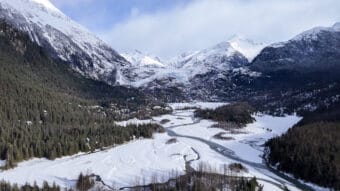
The forest on Douglas Island dusted with snow on Nov. 25, 2025. (Photo by Clarise Larson/KTOO)
The U.S. Forest Service officially kicked off its public process for the Tongass National Forest Plan Revision on Wednesday, with an initial 30-day public comment period intended to guide a draft plan and environmental review.
The Tongass National Forest is the largest national forest in the U.S., with more than 16 million acres covering 80% of Southeast Alaska, including more than a thousand islands.
Forest-wide decisions made at the federal level shape the environment and the lives of Southeast residents — from industrial uses like mining and timber, to tourism and recreation, to the health of ecosystems and quality of subsistence harvests.
The last forest management plan was completed in 2016. That plan phased down the amount of old-growth available for logging over several years. The revised plan will set the stage for how the agency intends to manage the forest over the next 10 to 15 years.
In its public notice released Tuesday, the agency outlined six proposed goals for the updated plan that address land use designations; economic uses of the forest; the rise in cruise ship visitors, collaboration between different groups; subsistence hunting, fishing and gathering needs; and Indigenous knowledge.
The public notice said the agency will ensure the plan is consistent with two of President Trump’s executive orders aimed at maximizing mineral extraction and logging in the Tongass.
The agency also noted that a long-term timber demand analysis underway at the Pacific Northwest Research Station will inform projected timber sale quantities. The last analysis, published in 2016, estimated demand for Tongass forest products would range from roughly 41 to 76 million board feet per year between 2015 and 2030.
The public comment period for the scoping phase ends March 19 at 11:59 p.m. The agency expects to publish a draft revised plan and draft environmental impact statement this fall, followed by a 90-day public comment period. The final plan is expected next May.
Rev. Michael Burke of St. Mary’s Episcopal Church speaks at a news conference on Tuesday, Feb. 17, 2026. (Matt Faubion/Alaska Public Media)
Immigration enforcement agents swarmed a Soldotna home Tuesday morning and took a family of four, including a kindergartner, into custody.
Sonia Arriaga, from Jalisco, Mexico, has lived in Alaska since 2023. Her husband, Alexander Sanchez-Ramos, said agents arrived in about five vehicles and pulled her from her car when she returned from driving her middle child to school.
“I’m not talking about nicely, either. I’m talking about aggressively grabbing her and pulling her out. You know, she’s still in her pajamas, for crying out loud,” he said.
Sanchez-Ramos is an American citizen, born in Seward. He said masked agents placed him in handcuffs as he stood outside in temperatures hovering in the teens, wearing gym shorts and sandals. They questioned him about who else was at home. A relative brought the youngest child out.
“He was upset. He was crying, asking for his mom,” Sanchez-Ramos said.
Arriaga and her three sons, ages 5, 16 and 18, were eventually taken to Anchorage. The oldest son was put in jail, Sanchez-Ramos said, while the younger sons and their mom were detained in a hotel.
The story of their arrest reached a group of church leaders in Anchorage who told reporters the case raised grave moral concerns.
“How could anyone possibly claim to support family values when they are willing to stand by and be silent when a five year old is taken into detention?” said Rev. Michael Burke, senior pastor at St. Mary’s Episcopal Church.
He said the incident could traumatize a child for the rest of his life.
Burke said he isn’t disputing the lawful enforcement of immigration restrictions. But, he said, federal agencies are trampling the law and violating the pledge that stepped-up enforcement would target criminals and the “worst of the worst.”
“As faith tradition leaders, grounded in the Hebrew Scriptures, in the gospel of Jesus Christ, we say that there is something deeply wrong here,” he said from his church pulpit, with eight pastors representing different congregations behind him. “There is a moral crisis in America where we detain and arrest families and small children.”
Sanchez-Ramos said Arriaga was in the country legally and was seeking asylum based on threats of violence in Jalisco. She had legal authorization to work, he said. She missed a hearing date in January, he said, but their lawyer assured them all the paperwork had been filed to revive her claim.
They met at a Mexican restaurant where they both worked and married earlier this month, he said.
Immigration and Customs Enforcement has not yet responded to an emailed query about the case.
Audience listens to testimony Feb. 9, 2026, at the North Pacific Fishery Management Council meeting in Anchorage. Subsistence fishers from the Yukon and Kuskokwim river basins were among those attenting the meeting and giving public testimony about bycatch of chum salmon in the Bering Sea pollock fishery. Also attending the meeting were people involved in the pollock industry. Public testimony on the issue to the full council stretched over four days. (Photo by Yereth Rosen/Alaska Beacon)
Federal fishery managers have approved the first-ever mandatory caps on at-sea interception of chum salmon, a fish species critical to Indigenous communities along Alaska’s river systems.
The North Pacific Fishery Management Council on Wednesday voted in favor of new limits for the pollock fleet to reduce the amount of chum salmon accidentally caught in trawl nets, a phenomenon known as bycatch.
North Pacific Fishery Management Council member Nate Pamplin, Diana Evans, the council’s executive director, and council chair Angel Drobnica listen to testimony on Feb. 7, 2026, at the February meeting in Anchorage. (Photo by Yereth Rosen/Alaska Beacon)
The compromise, approved at the end of a 10-day council meeting, addresses a yearslong conflict that pitted the in-river salmon fishermen and their Indigenous cultures against the economically important harvesters of Alaska pollock, the top-volume U.S. commercial seafood.
Achieving effective safeguards for Western Alaska chum salmon while balancing needs of all parties amid environmental factors that are out of managers’ control was difficult, Angel Drobnica, the council’s chair, said just before the vote was taken.
“This is the most challenging issue I’ve worked on during my time in this process,” she said, referring to her three years on the full council and six years on the group’s advisory panel. “I believe this motion is durable and enforceable and reflective of input from both sides and has maintained a clear focus on Western Alaska salmon.”
Salmon bycatch is a hot-button issue in Alaska fisheries. Total amounts of chum salmon accidentally caught in the trawl nets used by the pollock fleet can number in the hundreds of thousands — though the vast majority of the chum salmon intercepted in the Bering Sea in this manner is not of Alaska origin, according to council data.
While bycatch limits have been in place for several years for Chinook salmon, this is the first time managers have imposed limits for chum salmon. Both Pacific salmon species are important to the Yukon and Kuskokwim river system communities, and both have collapsed in recent years, at times prompting complete fishing closures all the way into Canada’s Yukon Territory.
A list of people signed up to testify at the February meeting of the North Pacific Fishery Management Council is taped to a William A. Egan Civic and Convention Center room door on Feb. 9, 2026, The room, down the hall from the rooms where the council was convened, was reserved and used for the duration of the meeting by tribal oroganizations, including the Kuskokwim River Inter-Tribal Fish Commission and the Tanana Chiefs Conference. (Photo by Yereth Rosen/Alaska Beacon)
The measure imposing chum bycatch limits, years in the making, included several elements:
It sets an annual bycatch cap of 45,000 Western Alaska chum salmon.
It apportions the cap among the different pollock-fishing sectors: at-sea processors, catcher ships that deliver to onshore plants, catcher vessels that deliver to “motherships,” which are vessels that collects harvests; and Community Development Quota organizations, which represent rural and Indigenous communities have invested in the fisheries and are assigned shares of annual groundfish harvests.
It applies the cap to corridors in the Bering Sea that are known to be used by migrating Western Alaska chum salmon and to the summer months when bycatch of Western Alaska chum is concentrated, then when Alaskans are most affected. The use of corridors is intended to address the fact that the vast majority of chum salmon netted as bycatch in the Bering Sea are fish from Asian hatcheries rather than fish that swim though and spawn in Alaska rivers.
The approved measure contains triggers that would enforce area-specific pollock trawling shutdowns if bycatch levels are reached.
The approved measure mandates the use of bycatch-reduction technology and practices that are currently voluntary in the industry. Those include employment of salmon-excluding devices that allow salmon to swim free of nets holding pollock and enhanced communication and record-keeping to broaden knowledge among the fleet, tribal organiziation and members and the general public about potential bycatch hotspots and how to avoid them.
Signs seen Feb. 7, 2026, at a room in the William A. Egan Civic and Convention Center used by tribal organizations attending the North Pacific Fishery Management Council meeting. (Photo by Yereth Rosen/Alaska Beacon)
The measure is set to go into effect in 2028.
Managers approved it by an 8-3 vote. One of the dissenters, Seattle-based Jamie Goen, executive director of Alaska Bering Sea Crabbers, said the cap was too high.
“This motion is a license to kill 45,000 Western Alaska chum when we have information showing that every salmon that comes back to Western Alaska rivers counts,” she said Wednesday just before the vote was taken. “Every female salmon holds the potential to release thousands of eggs that can grow exponentially to feed in-river communities and keep their cultures alive.”
The reduction in pollock harvesting that would result from a lower cap would be “negligible,” compared to the losses suffered by river communities, she said.
Goen’s comments mirrored a slogan imprinted on wristbands, buttons and other items distributed by tribal groups attending the meeting: “Every Salmon Counts.”
Council member Jon Kurland, who is also director of the National Oceanic and Atmospheric Administration’s Alaska fisheries service, said that while the salmon crash has had “devastating effects” in Western Alaska with details that are “heartbreaking,” the socioeconomic benefits of the pollock harvests also need to be considered.
Wristbands and buttons bearing the slogan “EVERY SALMON COUNTS” are displayed on a table on Feb. 9, 2026. The wristbands and buttons were being distributed by tribal organizations attenting the North Pacific Fishery Management Council meeting in Anchorage. The slogan references the argument that every salmon that avoids bycatch and is able to swim to river spawning grounds is important to the population and to the people who depend on salmon runs. (Photo by Yereth Rosen/Alaska Beacon)
Those include “the family businesses that operate catcher boats, the seafood processing capacity in many remote areas that really needs a steady flow of pollock to process other species for smaller-scale fisheries and the ways that the community development quotas improve people’s lives in 65 Bering Sea communities,” he said.
After the vote, tribal representatives attending the meeting had mixed reactions to the council’s action. In some ways, it was a positive movement, they said.
“It’s a start,” said Charlie Wright, secretary and treasurer of the Tanana Chiefs Conference.
“The pressure is on,” said Eva Burk of Nenana, a tribal representative on the council’s advisory panel.
But Wright, from the Yukon River village of Rampart, and Burk said they were disappointed that the numerical cap was not lower and that the geographic area to which it will apply was not broader.
An organization representing the pollock industry said the council’s action was fair, decision was fair, even though it puts some more burden on pollock harvesters.
“The Council’s decision reflects the seriousness of the challenges facing Western Alaska chum salmon and the complexity of managing a dynamic fishery,” said a statement released by the Alaska Pollock Fishery Alliance. “The pollock industry respects the Council process and remains committed to working within this new framework while continuing to invest in science-based, real-time avoidance tools that have already delivered meaningful reductions in Western Alaska chum bycatch.”
Alaska pollock, shown here from a harvest, make up the nation’s top-volume single-species commercial seafood catch. Each December, the North Pacific Fishery Management Council sets the next year’s harvest levels for pollock and other groundfish. Those decisions are based on scientific analysis that could be compromised this year by the federal government shutdown. (Photo provided by the National Oceanic and Atmospheric Administration)
Wednesday’s vote came after four days of often impassioned public testimony sessions that started on Saturday and ran through Tuesday afternoon. An estimated 170 people attending the meeting addressed the council during those days. They included subsistence fishers and leaders of tribal originations along the Yukon and Kuskokwim basins, small-scale pollock harvesters, representatives of fishing companies, Indigenous organizations with investments in the pollock fishery and others.
One of the tribal leaders testifying was Brian Ridley, chief executive of the Tanana Chiefs Conference, an organization of Interior Alaska Athabascan tribal government. TCC and other tribal groups have been seeking the strictest limits possible, he told the council.
For Yukon River communities, salmon fishing closures over the past years have resulted in “food insecurity, starvation, diabetes, cancer and cultural loss,” he said in testimony Saturday.
“Let me be clear: We’re not asking to shut down the pollock fishery. We’re asking for the first real step in sharing the burden of conservation, the same step Yukon fishers began taking decades ago. Our communities have carried the burden alone for more than 20 years. Today, we’re asking the pollock fleet to finally share the burden,” Ridley said.
There were more personal accounts, like one delivered Saturday by Julia Dorris of Kalskag, a village on the middle section of the Kuskokwim River.
“My dad had a dog team. Because of less chum and the restrictions, he no longer had his team. And had to get rid of all the dogs. It was heartbreaking to see a strong person quietly fading,” Dorris said.
The pollock trawl fleet had its defenders as well.
Those included Frank Kelty, a former mayor of Unalaska, and Victor Tutiakoff Sr., the Aleutian Island city’s current mayor. Tutiakoff mentioned that he himself is a subsistence fisher, so he understands subsistence needs. Kelty mentioned the Community Development Quota groups that, under a program established in 1992, comprise villages in different Western Alaska regions that have banded together to invest in Bering Sea and Aleutian Islands fisheries.
“The pollock fishery, as we all know, is the economic engine of Unalaska and other fishery-dependent communities in the Bering Sea region, including the six CDQ groups. A closed or reduced pollock season is devastating,” Kelty told the council.
Unalaska is “a one-horse town” completely dependent on commercial fishing, with the local government highly dependent on fishing-related taxes, he said. “If you have reduced or closed seasons, you see impacts throughout the community. The population reduces, employment at the plants goes away, the school population drops, clinic — it’s just a bad situation,” Kelty said.
Defenders of the pollock industry included Native organizations. One was the Qawalangin Tribe of Unalaska, which presented a recently passed resolution warning that hard caps on chum bycatch could cause “significant economic risk for Tribal members and for fishery-dependent communities.”
Although they sometimes disagreed about the role of bycatch, speakers on both sides of the debate agreed that the problems facing Western Alaska chum salmon, as well as the faltering runs of Chinook salmon, are myriad.
Climate change, with effects in both the ocean and in freshwater systems, is a major factor, speakers said. For example, Jacob Ivanoff of Unalakleet, representing the Nome Eskimo Community tribal government, described the masses of fish found dead of heat stroke in rivers in 2019, along with water temperatures that ranged up to 85 degrees during that year’s marine heatwave.
The growing presence of Asian hatchery chum salmon in the Bering Sea is a complicating factor. The flood of new fish, aside from competing with Alaska fish for food and potentially crowding Alaska fish out of the habitat, are dominant in the bycatch numbers.
In past years, genetic testing shows that only about a fifth of the chum salmon netted as bycatch by the Bering Sea pollock fleet has been from Western Alaska, council members said. Most of the rest is from Asian hatcheries, including hatcheries in Russia, though a small portion has also been composed of chum salmon from the state’s more southern Gulf of Alaska waters or from the Pacific Northwest region even farther south.
The total chum salmon bycatch in the pollock fishery in 2025 was about 151,000 fish, according to a report presented to the council early in the meeting. Most of that was hatchery fish. The percentage of bycatch that was fish from Western Alaska rivers was low, but it fluctuates from year to year and even from week to week during harvest seasons, according to genetics information presented by the Bristol Bay Science and Research Institute.
Bycatch concerns go beyond salmon. The term refers to any accidental netting, hooking, entaglement or crushing of an untargeted species. Several types of fish, birds and marine mammals are killed or injured through bycatch in different fisheries. NOAA keeps track of annual bycatch totals.
Eva Burk, Jessica and Rory Black, Ariella Bradley, Fatima Lord-Minano and Charlie Wright cut salmon during an August 2025 cultural camp held in Nenana. The youth and adults in the camp were able to harvest and process a few chum salmon in 2025, for the first time in several years. Burk, who is from Nenana, is a tribal representative on the North Pacific Fishery Management Council’s advisory panel. Wright is secretary and treasurer of the Tanana Chiefs Council. Both have argued for tighter restrictions on at-sea interception of Western Alaska chum salmon. (Photo provided by Eva Burk)
Congressman Nick Begich in his Washington, D.C. office last year. (Liz Ruskin/Alaska Public Media)
WASHINGTON — Alaska Congressman Nick Begich said it’s just common sense to require a photo ID to vote and to make sure that only citizens can register.
“For years, there have been questions levied, on both sides of the aisle, about the integrity of elections,” he said in an interview Tuesday. “We can’t have that. That’s not healthy for our democratic republic to be questioning the nature of elections.”
The SAVE America bill will restore trust in election integrity, he said.
The U.S. House passed it on Wednesday. It requires people to show proof of citizenship to register to vote and to show photo ID to get a ballot.
Begich signed on as a co-sponsor Monday, though the bill’s requirements for proving citizenship asks more of voters than he first thought.
Also called the SAVE Act, the legislation is a huge priority for Republicans. President Trump, Elon Musk and a host of right-wing influencers are pressuring the Senate to pass it. They say the survival of American democracy depends on ensuring that non-Americans don’t cast ballots.
Many surveys and audits show illegal voting by noncitizens is rare. Democrats say what the SAVE Act will really do is prevent millions of eligible people from voting.
Begich cites polling that shows more than 80% of Americans want to require photo identification at the polls. The bill won’t be hard to comply with, he said.
To vote, he said, Alaskans could just show their REAL ID card at their polling place, or another type of photo identification listed in the bill.
Where a person would have to prove citizenship is when they register. Begich said that requirement, too, is as simple as showing a REAL ID.
“The REAL ID was acquired in a manner that is demonstrative of your citizenship status,” he said in an interview Tuesday.
But that’s not correct, as a Begich staffer acknowledged in an email after the interview. States issue REAL ID cards to noncitizens, such as green card holders, who are not allowed to vote.
If the SAVE bill becomes law, a person would have to bring other documentation of citizenship, like a passport or a birth certificate, with them when they register to vote. Technically, the bill doesn’t end registration by mail or online, but the applicant would still have to present documents “in person to the office of the appropriate election official” before the registration deadline.
“The Congressman’s view is that for most Americans, including most Alaskans, this is documentation they already possess and use for other routine purposes (employment verification, travel, obtaining a REAL ID, applying for benefits, etc.),” the email from Begich’s office says.
Voting advocates say the bill imposes several requirements that will discourage people from participating in elections, like requiring that mailed ballots include a photocopy of the voter’s ID card.
“This is creating incredible barriers to voting,” said Michelle Sparck, director of Get Out the Native Vote.
It would be especially hard on communities off Alaska’s road system and those that are far from government services, she said.
“It’s just asking way too much of a lot of demographics and pockets in the state,” she said.
Sen. Lisa Murkowski calls the bill federal overreach. The Constitution gives states the authority to determine the “times, places and manner” of federal elections, and Murkowski said states know best the on-the-ground realities.
“I’m not saying you shouldn’t have identification,” she said. “I’m saying that it is left to the states to determine how you provide that proof.”
Begich and other sponsors of the SAVE Act say the Elections Clause in the Constitution leaves a lot of authority to the states but not everything.
“It continues,” Begich said, reading the end of the clause. “‘… But the Congress may at any time, by law, make or alter such regulations.'”
That, Begich said, gives Congress the power to impose the SAVE Act.
The bill, so far, does not have the 60 votes it needs to pass the Senate.
Fortyeight Republicans are co-sponsors, including Sen. Dan Sullivan. He did not respond to an interview request. His office sent a statement saying the bill wouldn’t disenfranchise Alaskans.
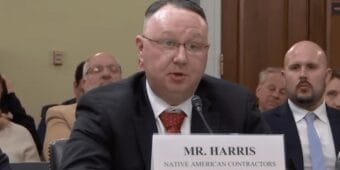
Juneau Police Chief Derek Bos speaks about Immigration and Customs Enforcement activity in Juneau during an Assembly Human Resources Committee on Monday, Feb. 9, 2026. (Photo by Clarise Larson/KTOO)
Federal officers detained three Juneau men for immigration enforcement and removed them from the community last year.
The Juneau Police Department says its knowledge of these incidents and its involvement with U.S. Immigration and Customs Enforcement activity in Juneau is very limited.
Listen:
Alaska Department of Corrections spokesperson Betsy Holley confirmed that three men were held at Lemon Creek Correctional Center in Juneau under federal charges for immigration detention purposes in 2025, and were then released to federal custody. They are no longer in Alaska’s correctional system.
Last May, one of the men was charged with driving without a license or insurance, according to Alaska court documents.
Juneau Police Deputy Chief Krag Campbell said his files say ICE officers detained the man. This happened in October without JPD knowledge or involvement.
“During an unrelated investigation, JPD learned that one of the individuals had been deported by ICE,” Campbell said in an interview.
Juneau police arrested one of the other men for driving under the influence in November. According to DOC, this man then went into federal custody, though Campbell said there is no record of immigration enforcement in JPD files.
Juneau police officers arrested the third man in December for a DUI. When officers later went to his residence and tried to serve a warrant, people there said he had been deported.
This is the first time police have confirmed immigration enforcement activity in Alaska’s capital city during the Trump Administration’s nationwide crackdown. As recently as Monday, Chief Derek Bos said he was not aware of any federal immigration activity in the area.
Holley said once the three men were in federal hands, DOC didn’t track what happened to them next. JPD doesn’t know where they are either. ICE has not responded to requests for more information.
At Monday’s Juneau Assembly human resources committee meeting, Bos said federal agents are not required to notify local police of their activities.
“In essence, they do not have to tell us if they’re doing anything in Juneau or not,” Bos said. “We have a great relationship with our federal partners, and so most of the time we do know if they’re coming or whatnot.”
He said the people he knew of that had been detained for immigration reasons had criminal records.
“By and large, all of those that I’m aware of, not to say there aren’t others, but that I’m aware of, who have been deported from our community have been convicted of crimes, and that has been the basis of why they’re leaving,” he said. “There may be exceptions, but I don’t know of those.”
Nationwide, thousands of ICE officers have entered cities, going door to door to detain and deport people – some children, some with legal residency status. Protests have erupted, and last month, federal officers shot and killed two people in Minneapolis.
Assembly member Maureen Hall said at the meeting that she has heard from residents about possible ICE activity in Juneau and that immigrants in the community are afraid.
“Just from awareness of what’s happening all over the country, they are pretty terrified, so (they’re) reluctant to report minor fender benders or engage in any way,” she told Bos. “So if you have any suggestions on how we can help reassure them that Juneau Police Department is not ICE.”
Bos said Juneau residents can trust police to protect them.
“If you’re the victim of a crime, you have a lot of protections, and our job is to enforce those protections,” he said. “So especially as victims, we encourage people to still come to us and talk to us. We don’t have to report that you’re a victim to a crime and you’re illegal in the country. We don’t have to report that to ICE.”
That is, unless that person has a criminal detainer order, which is like a warrant from the federal government, Bos said.
“We do have certain requirements where we have to notify, you know, if there’s a person that we contact who’s on a criminal detainer, we have to notify them, and we do,” he said. “That’s federal law, so we follow that.”
Campbell said there is no indication in police files that JPD alerted ICE about any of the three men who were detained. The files don’t mention immigration status, he said.
He said people do have to comply with any orders from federal officers.
“Anytime you have law enforcement coming into town, whether they’re local, state or federal, they have a mandate,” he said. “You have to comply with it. Especially if they have things like warrants.”
KTOO requested records related to the three men from JPD, but has not yet received them.
Even though Juneau has not seen immigration enforcement like larger cities in the Lower 48 have, Assembly member Hall said in an interview that residents still need to be informed about what’s happening here.
“It gives the opportunity for those in the community that are involved in this to review our readiness to deal with potential full scale ICE activity,” she said.
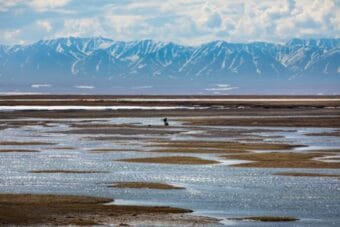
The Arctic Coastal Plain. (Department of Interior)
Fifteen Democratic-led states have dropped a six-year-old lawsuit challenging the legality of a federal plan that allowed oil and gas drilling in the coastal plain of the Arctic National Wildlife Refuge in Alaska.
The states announced their plans in a notice filed Monday in the U.S. District Court for the District of Alaska, where the lawsuit was filed in February 2020.
The state of Washington was the lead plaintiff. Mike Faulk, deputy communications director for the Washington State Attorney General’s office, confirmed that the states are dropping their case but said they will continue their opposition to ANWR drilling.
“Washington is proud to have led the multistate lawsuit challenging the 2020 actions regarding the Arctic Refuge,” he said. “New congressional and administration actions require a new course of action on our part. We are evaluating the best path forward to continue to advocate for a clean and healthy Arctic, including supporting the litigation of Alaska Native organizations and community groups.”
The coastal plain is to the east of the vast Prudhoe Bay oil deposits and is believed to hold similarly large amounts of oil and gas. The Trump administration has made drilling in the refuge a top priority as it seeks to expand American oil and gas production.
The other participating states were California, Connecticut, Delaware, Illinois, Maine, Maryland, Massachusetts, Michigan, Minnesota, New Jersey, New York, Oregon, Rhode Island and Vermont.
A group of environmental and tribal groups had filed suit in 2020 at the same time as the Democratic-led states. Last month, that coalition renewed their suit.
Faulk declined to say whether the Democratic states would be siding with the coalition.
While two oil and gas lease sales have taken place in the refuge and additional sales are expected, no oil drilling or seismic surveying has occurred to date.
The Alaska Industrial Development and Export Authority, Alaska’s state-owned investment bank, won several leases in the first lease sale, which took place in 2021, and is seeking to keep the refuge’s coastal plain open to development.
Last year, Judge Sharon Gleason ruled that the Biden administration had illegally canceled AIDEA’s leases. That ruling has since been appealed to the 9th U.S. Circuit Court of Appeals.
Those cases are separate from the lawsuits challenging the overall legality of the oil and gas program in the refuge.
Close
Update notification options
Subscribe to notifications
Subscribe
Get notifications about news related to the topics you care about. You can unsubscribe anytime.