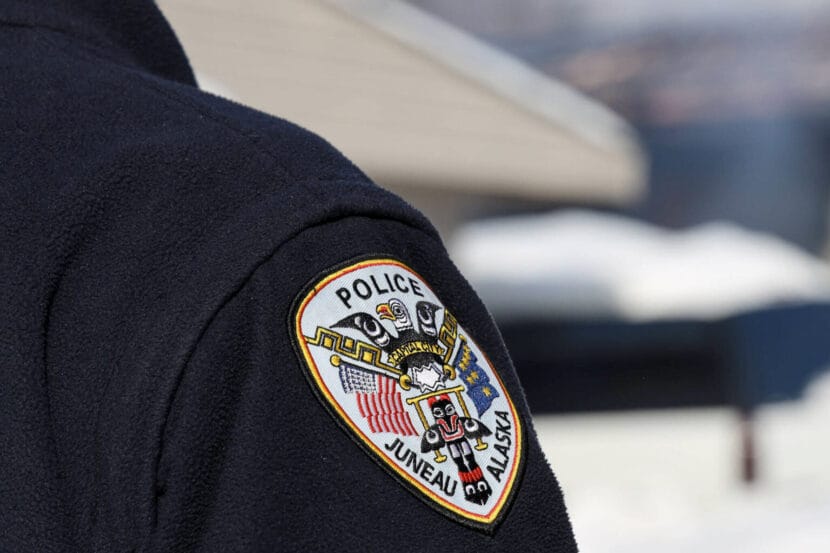
The Juneau Assembly may mandate a timeline for the release of body-worn camera footage when a police officer shoots someone.
On Monday during a committee meeting, Assembly members discussed a proposal that would require the police department to release footage 30 days after an incident with little wiggle room for exceptions.
Assembly member Ella Adkison said the change is long overdue.
“This is a delayed response to a community ask, and I do want to see this move forward and not stall more than it has already,” she said.
Juneau Police Department officers have been wearing body-worn cameras since 2017. But there’s nothing on the books that dictates when body camera footage must be released to the public.
Juneau residents have been pushing for the department to change that since last July when police publicly shot and killed a man downtown. Then in December, an officer shot and killed another resident who was wielding a hatchet in the Mendenhall Valley.
In both cases, the police department did not release body-worn footage until the state’s Office of Special Prosecutions ruled whether the officers involved were justified in their use of lethal force or would face any criminal charges. The officers were cleared of criminal charges for both deaths.
Last year the Anchorage police department enacted a similar body camera policy following a similar public outcry after a string of police shootings. Its policy now mandates footage of police shootings be released within 45 days of the incident.
Angie Kemp, the director of the Criminal Division of the Alaska Department of Law, spoke to the proposed ordinance at the meeting. She said state investigations are often riddled with delays. She warned the Assembly that enacting hard-mandated timelines with little to no exceptions could taint the investigations if they’re still ongoing.
“From my standpoint and the way that this is currently drafted, I do believe that it’s going to affect criminal prosecution in the community of Juneau — and I don’t say that lightly,” she said. “I don’t say it because I have some interest in keeping body-worn cameras from being released, other than the effect that it might have on our ability to do our jobs.”
City Attorney Emily Wright said it’s up to the Assembly to decide what policy they think is right for the community.
“It is a balance of that public need for transparency and the effect on that investigation,” she said. “There are a lot of communities and states that have said ‘We think it is worthwhile to provide that transparency to our public even if there is a risk to the future prosecution.’”
The Assembly will discuss the proposed rule once more as a committee before a vote. Residents will have a chance to give public testimony on the ordinance in the coming months.