Juneau voters will decide in this fall’s municipal election whether to exempt essential food and residential utilities from local sales tax. Economists say that taxes on food hit low-income people the hardest.
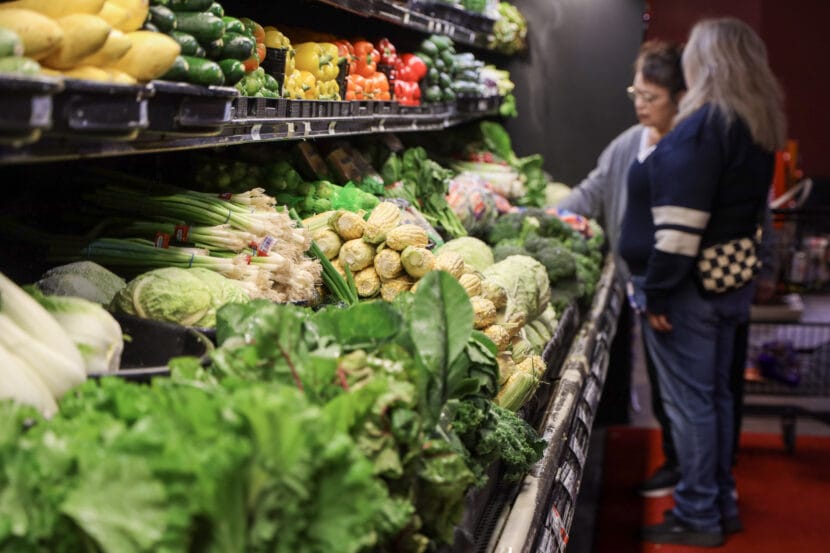
Whether you head to Costco, Foodland or Fred Meyer or any other grocery store in Juneau, you pay a 5% tax on most of the food you buy. And, when you go to pay your water or heating bill, you’re taxed the same on that, too.
Right now, Juneau’s city government taxes food and utilities like just about everything else – at 5%. But, if voters choose to pass Proposition 2 on the local ballot this year, that tax would drop to zero percent for everyone, regardless of their income.
Daniel Parks, the executive director of the Southeast Alaska Food Bank, said food insecurity is impacting more and more Juneauites every year.
“On a local level, we’re facing the highest amount of demand that we’ve ever faced here,” he said. “More and more people that you would have once thought of as firmly in the middle class are sliding into food insecurity.”
Park said he thinks the proposition could have a positive impact.
The proposed food exemptions would apply to items under the same definition as the Supplemental Nutrition Assistance Program, better known as SNAP or food stamps. It would also apply to residential electricity, heating oil or propane, water and sewer and garbage and recycling. Senior citizens are already able to apply for these exemptions.
Angela Rodell is the treasurer of the Affordable Juneau Coalition, a group of advocates who gathered enough signatures to put the question on the ballot. She says Juneau should have removed the tax a long time ago.
“This is probably one of the most regressive tax things we have here in Juneau,” she said.
She said the change would be immediately felt by residents and would make Juneau more affordable.
“I think when you start to feel like costs are coming back your way, when you feel like you have just a little bit of extra money, you feel better about participating in the community, participating with the nonprofits, supporting churches and trails and arts and all of those things,” she said.
Juneau Assembly member Neil Steininger is an economist, and he supports the concept.
“We don’t have the supply chains that can provide us lower-cost food, like a lot of areas down south do,” he said. “That really impacts your day-to-day living, because you got to eat every day.”
According to city estimates, the average person would save approximately $300 per year.
But there’s a flip side to the change. The current 5% tax on food and utilities brings in quite a bit of revenue to the city — to the tune of a combined $9 to $11 million annually.
“That is huge. That is a big number. Just to give some context,” said Assembly member Christine Woll.
She said removing that tax would leave a serious hole in the city’s budget.
“There is no way that we could exempt food and utilities without significant reduction to what the city provides its citizens,” she said.
It’s unclear what services the Assembly might choose to cut. It would make those decisions after the election.
But, in hopes of offsetting those decisions before they come to fruition, the Assembly is asking voters to implement a new seasonal sales tax system to neutralize the estimated revenue loss. The proposed system is meant to take advantage of the summer tourists while also giving some winter relief to year-round residents.
“The seasonal sales tax basically will make up for that $9 to $12 million revenue loss by shifting the tax burden from residents to our summer visitors,” she said.
Rodell disagrees. She said a reduction in revenue will force the Assembly to pay closer attention to how it spends taxpayers’ money — something she doesn’t think they’ve been doing a good job at.
“I’m a strong no on the seasonal sales tax because of the way it needs to go back to the drawing board,” she said. “They need to do a better job about defining how it’s going to help the residents of this community.”
The last day to vote in Juneau’s by-mail election is Tuesday, Oct. 7.
Find the latest local election coverage at ktoo.org/elections.