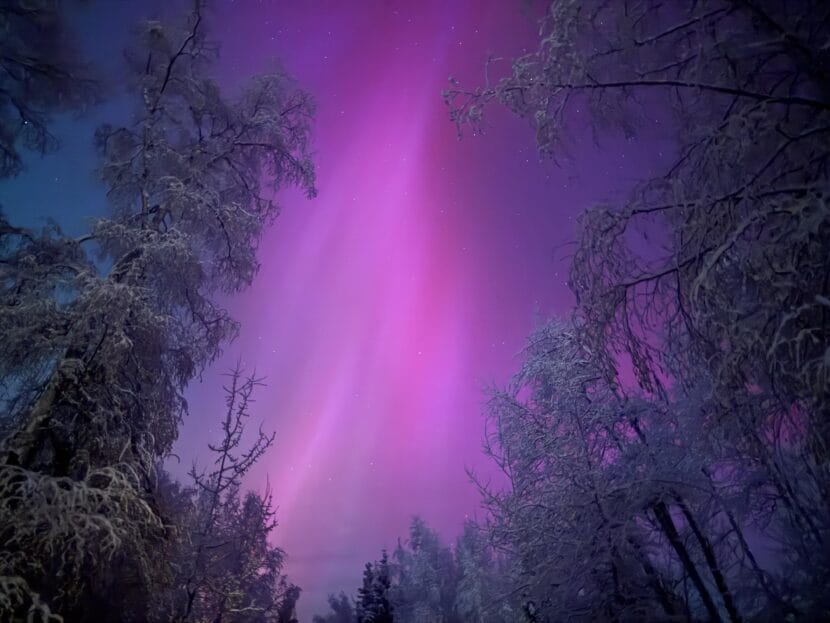
It was ten below in Fairbanks on Tuesday night. Undeterred, a crowd of people flocked to a popular overlook at the University of Alaska Fairbanks campus to watch for the aurora.
Fatin Pasha stood outside his car shivering, with a fur trapper hat pulled down over his ears. He said he’d just moved to Fairbanks from Missouri, and the lights were part of what brought him here.
But in the early hours of the night, Pasha said he could only see the faintest blush of color in the skies.
“It’s just a tad reddish,” he said. “Not a whole lot, yet. I’ve seen some beautiful pictures, though. So, I’m hanging around in this negative weather, hoping to catch a glimpse.”
At first, it was hard to tell if the faint glow was the aurora, or just a trick of the city lights, the exhaust from our cars, or the fog of our breath. But about a half hour later, the pink haze deepened into scarlet, and pillars of light danced across the sky.
Those same lights were visible all over the country — as far south as the Florida panhandle.
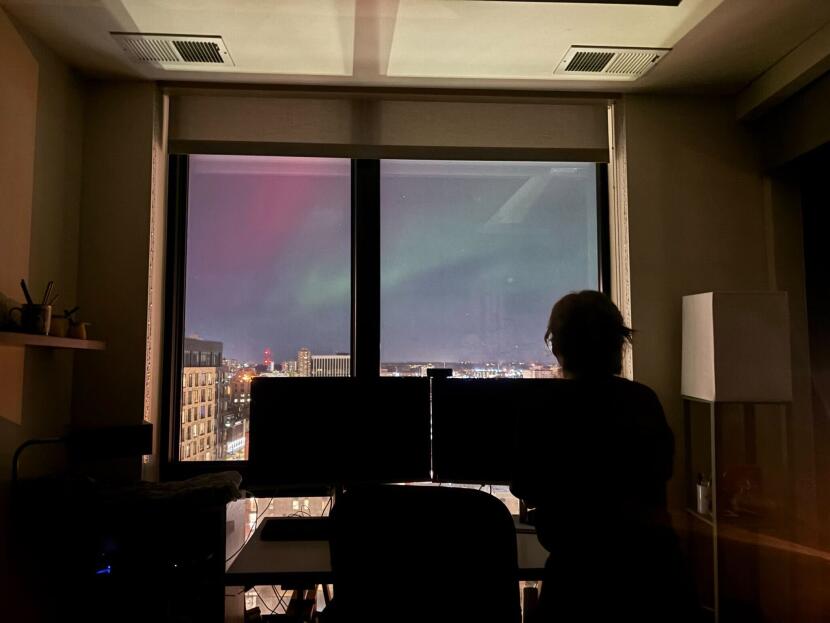
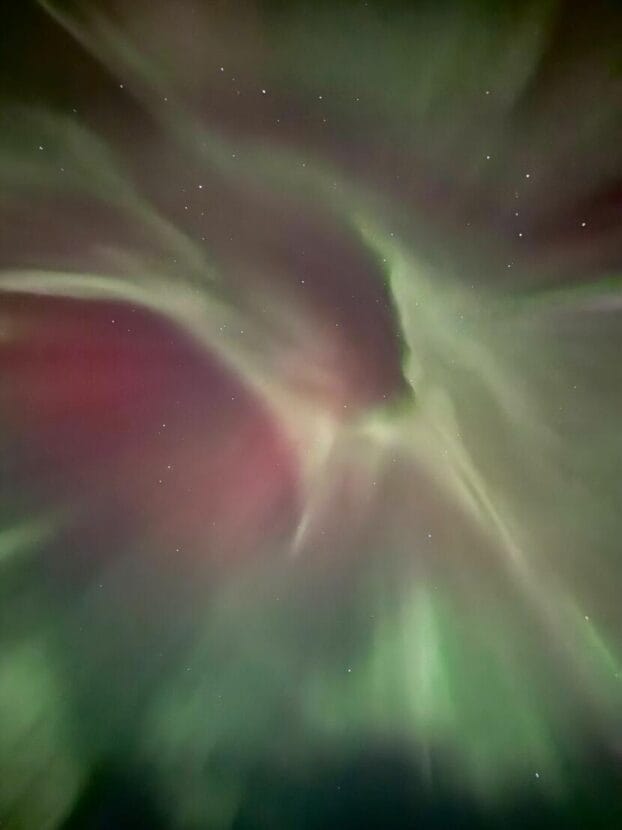
The light show is part of what UAF scientists are calling an unusual series of x-class solar flares that started on Monday, sending out an enormous plasma cloud called a coronal mass ejection, or CME.
The event produced one unsettlingly named “cannibal” ejection, so named because it caught up to and merged with other clouds of plasma.
These x-class flares are the most intense ones — and potentially the most destructive. According to the National Oceanic Atmospheric Administration, they can disrupt satellite communications, GPS systems, power grids, and even trigger radio blackouts.
Mark Conde, a space physicist at UAF, said this three-fold hit is one of the most significant solar events he’s observed in his career. The third wave hit at around 11 a.m. on Tuesday, during Conde’s interview with KUAC. He said it disrupted the monitoring systems he was looking at and briefly prevented him from sharing data.
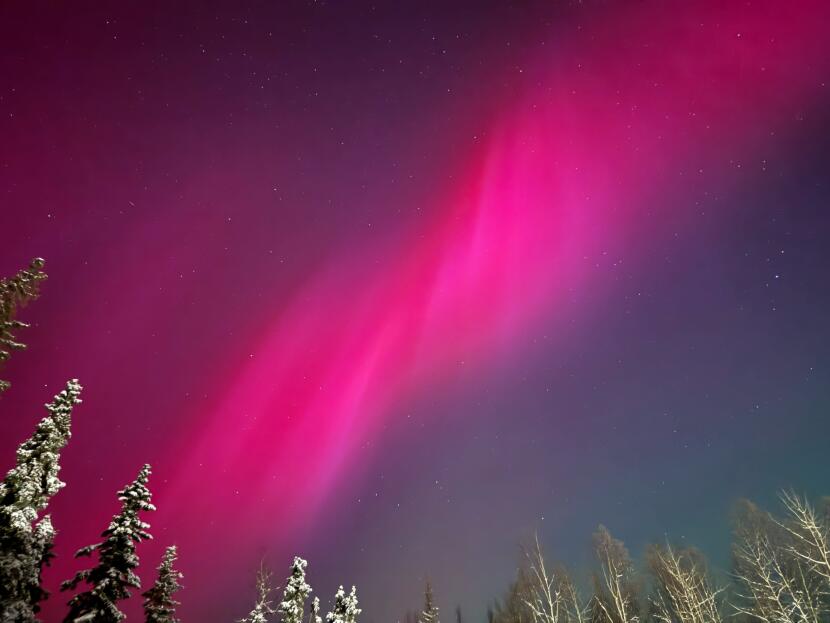
Conde said a smaller storm than this knocked out about 40 SpaceX satellites in February of 2022.
“They were unlucky,” Conde said. “They put them in this low altitude orbit first. And they happened to experience a storm right when the satellites were most vulnerable.”
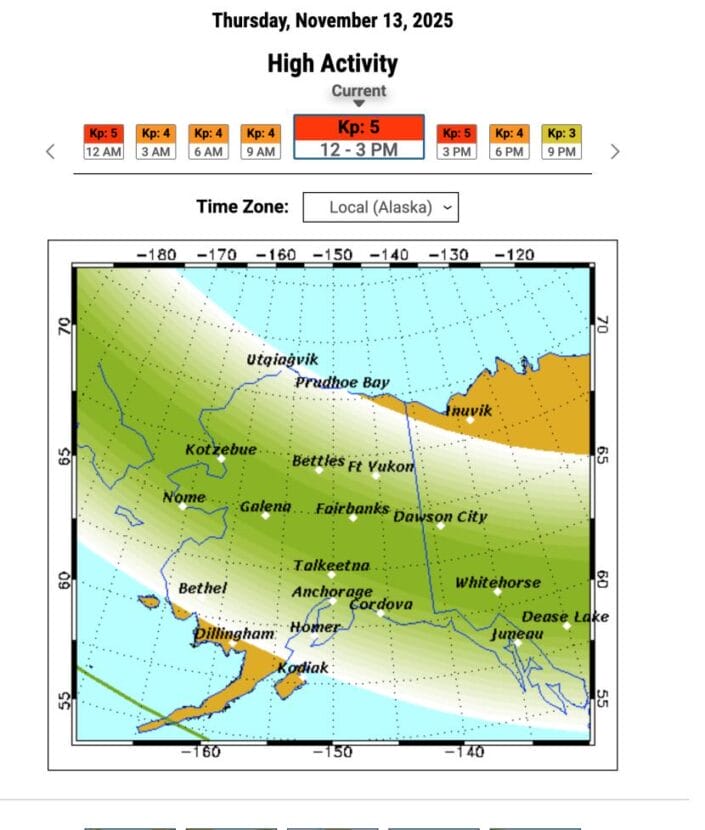
The predicted speed of the third coronal mass ejection in the series was the highest he’d ever seen: about 870 miles per second. Conde said that although the best auroras were forecast for Tuesday and Wednesday, the lights could continue to shine for the next few days.
“We might get another one or two of these before the solar cycle calms down,” he said. “Then we have to wait another 11 years to get the next one. So the event we’re experiencing right now is certainly not an everyday event by any stretch of the imagination.”