Alaska school districts consistently build budgets based on many uncertainties, but a bill that aims to stabilize the budgeting process moved out of the House Education Committee Wednesday.
House Bill 261 would change how students and certain schools are counted under the state’s education funding formula. This would allow school districts to budget with more certainty and to smooth out the effects of declining enrollments.
The bill would allow school districts to use known numbers instead of projections to build their budgets. That means districts can take the student count from the prior year, or a three-year average of prior years.
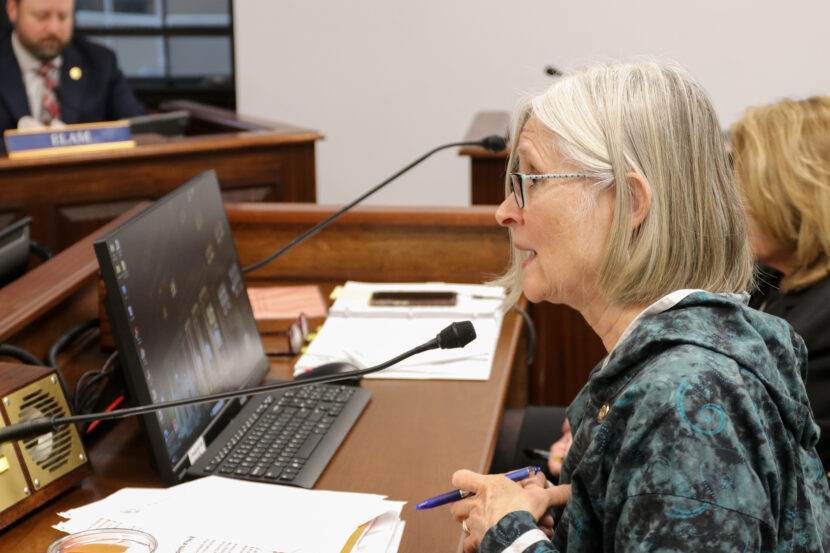
Since the bill’s introduction, Rep. Andi Story, a Juneau Democrat and the bill’s sponsor, added another option districts could use. If the current year’s student count is at least 5% greater than the other two options, that can be used instead. Story explained why during a March 20 committee meeting.
“If they get a 5% bump in a smaller district, it’s significant revenue to them, and it helps them very much plan a curriculum, because in smaller schools, that is significant,” she said.
The revised version also changes another major piece of the bill that addresses how the state counts students who receive intensive services. Those students are counted 13 times in the state’s funding formula. It removed an option that Story said could inflate the actual number of students who require those services. That leaves school districts able to use the previous year’s count, the current year’s count in October or in February.
In the most recent fiscal note for the bill, the Department of Education and Early Development estimated the bill would cost the state more than $100 million. The note does not account for district’s intensive student counts in February.
Most districts would end up receiving more funding as a result of the bill passing. Some districts would also lose funding, including the Bristol Bay Borough School District. The department estimates it would lose $473,462, or more than 40% of its state funding.
But the bill passed out of the education committee with two more amendments that would change how much money districts receive. A new fiscal note hasn’t come out yet, but Lori Weed, the School Finance Manager for DEED, told KTOO that it would increase the cost to the state.
One amendment from Anchorage Democrat Rep. Ted Eischeid would prevent DEED from taking money away from a district if a student with intensive needs leaves.
“The idea there is a lot of times staff have been hired already and under contract to deal with that student, and so it’s meant to kind of hold harmless the district that takes in an intensive needs student initially,” he said.
Another amendment from Rep. Rebecca Himschoot, a Sitka Independent, brings back language that would allow alternative schools to be counted in a way that brings the district more funding. Story had initially taken that language out to reduce the cost of the bill. But Himschoot said that funding is important for students.
“We’re all aware that those students generally require at least as much support as students in all the other schools. So this is saying that we’re going to support them at the same level,” she said.
The bill passed out of the education committee and will be taken up by the House Finance Committee next. If it’s passed by the House, it will head to the Senate for further consideration. The legislative session is scheduled to end May 20.