Douglas Island Pink and Chum celebrates its 50th anniversary this year. The Juneau hatchery – commonly known as DIPAC – was founded in 1976. That was shortly after the Alaska Legislature passed a bill allowing private nonprofits to operate salmon hatcheries as a way to rehabilitate low salmon runs.
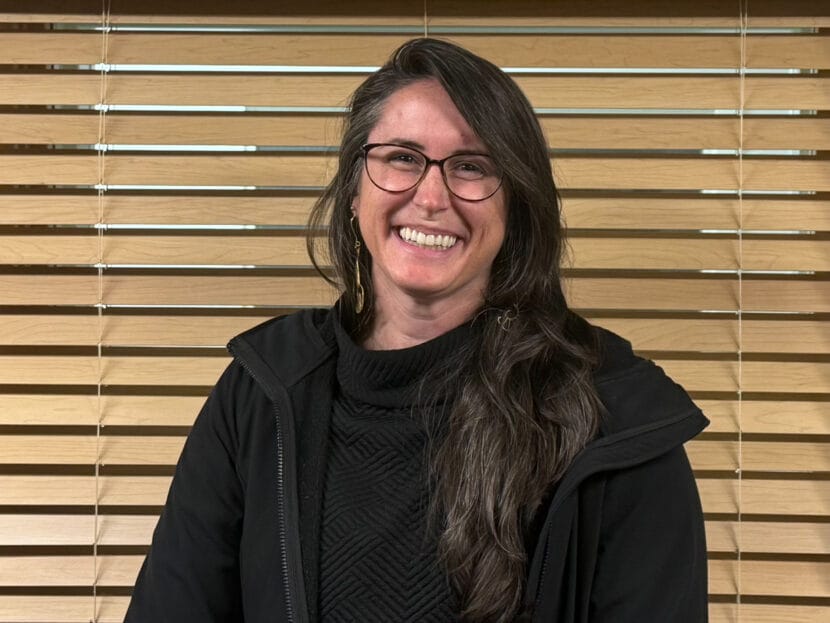
KTOO’s Mike Lane talked with Executive Director Katie Harms about highlights from the last five decades and what’s ahead.
Listen:
The following transcript has been lightly edited for clarity.
Mike Lane: So where was the original hatchery?
Katie Harms: (The) original hatchery was on Douglas Island, on Kowee Creek with a K, right across the bridge, yeah.
Mike Lane: Okay, it’s moved a couple of times. Hasn’t it?
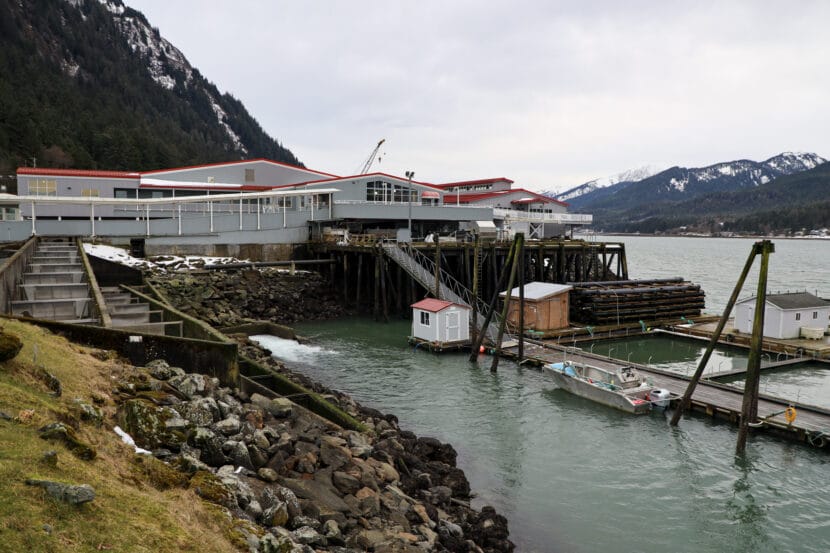
Katie Harms: Not necessarily moved. We had multiple hatcheries for a while, yes, so good question there. And that was one of the Macaulay family member’s backyards at the time where this hatchery was started. So yes, yeah. So we’ve had a few hatcheries since inception, that little hatchery didn’t last long. Sheep Creek Hatchery was built in 1980 just south of downtown in the Thane neighborhood, which is no longer active. That was our second hatchery, and the current active hatchery, built and maintained by DIPAC, is the Macaulay Salmon Hatchery. Previously, Gastineau Hatchery was built in 1989.
Mike Lane: I see, how many release sites were there originally, and how many are there now?
Katie Harms: Yeah, originally, it was just Gastineau Channel right from Kowee Creek. They started rearing salmon in net pens at Sheep Creek in the early 80s. That was the beginning, and then in the 90s, we started expanding a little bit more. In 1990, Amalga Harbor was our first year releasing out there for chum salmon, and we started expanding our chinook and coho program in the late 80s, early 90s as well. So that growth period really was in the late 80s, early 90s. We currently operate five chum salmon release sites, none of which are new since 1990, those are all the same. Limestone inlet is the furthest south. Sheep Creek’s still active. That hatchery is not active, we still have a net pen site down there. Right at the hatchery, of course, is one of our release sites on at the Macaulay Salmon Hatchery, then Amalga Harbor and then Boat Harbor on the Chilkat Peninsula, about halfway between Juneau and Haines. We also have five Chinook sites, three of which are different than some I just mentioned, two coho release sites, both in Gastineau Channel. And we also operate Snettisham hatchery, that’s a state-owned facility south of town, so we operate that at no cost to the state. So that’s a sockeye program there.
Mike Lane: Now you brought up growth. So when did the visitor center open? And how has that grown since?
Katie Harms: So 1989 was the beginning of the visitor center and we started local education programs in 1990 for the school district, as well as opened our doors for tourism. So actually, our tourism education program, the education programs, have stayed very stable over the course of the program, and tourism actually has started to go down a little bit. There’s so many more activities in town. So we still have around 70,000 visitors a year. So it’s not super small, but we did, in the peak, see close to 100,000 visitors.
Mike Lane: When you think about the timeline of the life of DIPAC, what are some of the highlights to you?
Katie Harms: I’d say the late 80s, early 90s, when we expanded and built that Gastineau hatchery at the time, that really was an expansion period, and getting us to where we are today, with the production at Amalga Harbor, which supports the cost recovery efforts to fund the program. In 2012, DIPAC was able to pay off all its debt to the state of Alaska, and is now operating, self-sustaining, on the sale of salmon. So from 1976 to 2012 we had a total of $42 million we owed back to the state of Alaska. So that was a momentous occasion. We were able to start some scholarship and fellowship programs with some of that revenue at that time.
Mike Lane: Now this is the 50th year in operation. What does the next 50 years of DIPAC look like?
Katie Harms: Yeah, we hope to see stability in our operations. Obviously, we’re significantly impacted and changing climate — salmon don’t like warm water, so it’s nice to see a cold year, but I know that’s not the necessary trend. So we’re continuing to be a part of salmon research in Alaska to try to determine what’s best for the environment, these salmon, and continue these programs into the future financially for everyone that is supported by them, as well as culturally and emotionally attached to salmon.
Mike Lane: Katie Harms, thank you for joining us.
Katie Harms: Yes, thanks for having me.