Just more than 24 hours after powerful earthquakes struck a large island in southwest Japan, an even stronger quake has hit the same area.
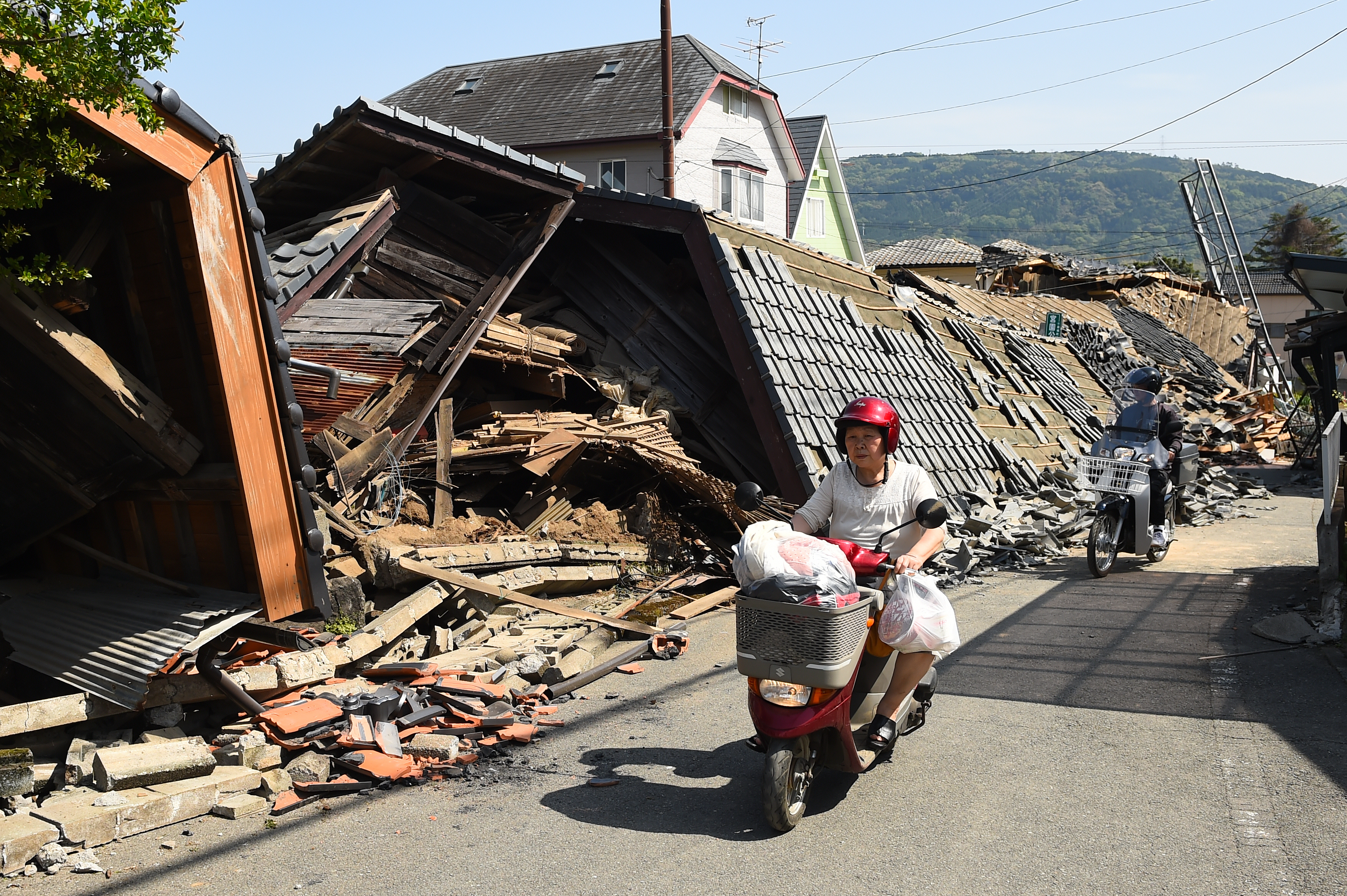
On Thursday evening local time, magnitude 6.2 and 6.0 quakes shook the city of Kumamoto and the surrounding area. They were followed by more than 100 smaller temblors, according to Japanese broadcaster NHK — including several registering 5.0 or stronger, the U.S. Geological Survey says. The series of quakes shattered buildings and killed nine people. Hundreds of others were injured.
Then at 1:24 a.m. on Saturday, a magnitude 7.0 quake hit nearly the same location, according to the USGS. It was quickly followed by aftershocks of magnitude 5.8 and 5.7. (Japan is 13 hours ahead of the U.S. East Coast.)
The latest earthquake isn’t considered an aftershock; instead, the quakes yesterday were foreshocks of the 7.0 quake, NPR’s Nell Greenfieldboyce explains. She tells our Newscast unit that according to the USGS, the new quake “is six times larger than the biggest one yesterday and released 16 times more energy.”
The USGS also says the 7.0 earthquake, like those on Thursday, was shallow — which is unusual for the region and can increase the degree of shaking and damage.
Japan’s Meteorological Agency issued a warning for a possible small tsunami, up to 1 meter in height, but has since lifted the warning.
The 7.0 earthquake hit as Kumamoto prefecture was working on repairing damage from Thursday and bracing for bad weather.
NHK reported that even before Saturday’s massive quake, officials with the meteorological agency had been concerned about forecasts for heavy rain and strong winds this weekend.
“The agency says the quake and aftershocks may have loosened the ground, and the stormy weather could trigger landslides and other disasters,” NHK reported.
9(MDEwMjQ0ODM1MDEzNDk4MTEzNjU3NTRhYg004))