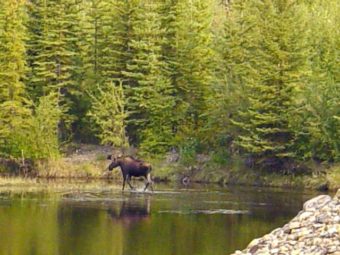
Natural factors are credited with growing the moose population in the Yukon-Charley Rivers National Preserve. Preserve wildlife biologist Mat Sorum said the latest data from moose population surveys conducted every three years, show more moose in a 3,000 square mile corridor along the Yukon and Charley Rivers.
“There was a 13 percent increase since the last survey and on average 38 percent more moose over the long term average throughout the park,” said Sorum.
Sorum said the survey area is far from areas where the state conducts predator control and he attributes the moose population increase to major wildfire and flood activity last decade.
“Good quality moose habitat often occurs 10 to 30 after a fire because of the regrowth and regeneration of the willows or birch,” Sorum said. “Secondly, there was a large flood about five years ago and there was a lot on the river bed and so that’s probably promulgated new growth of willows.”
Sorum says there’s been a similar increase in the adjacent Yukon Flats Refuge, cautioning that although conditions are conducive to more moose, the Yukon-Charley Rivers Preserve population is still considered low density, well less than one moose per square mile.