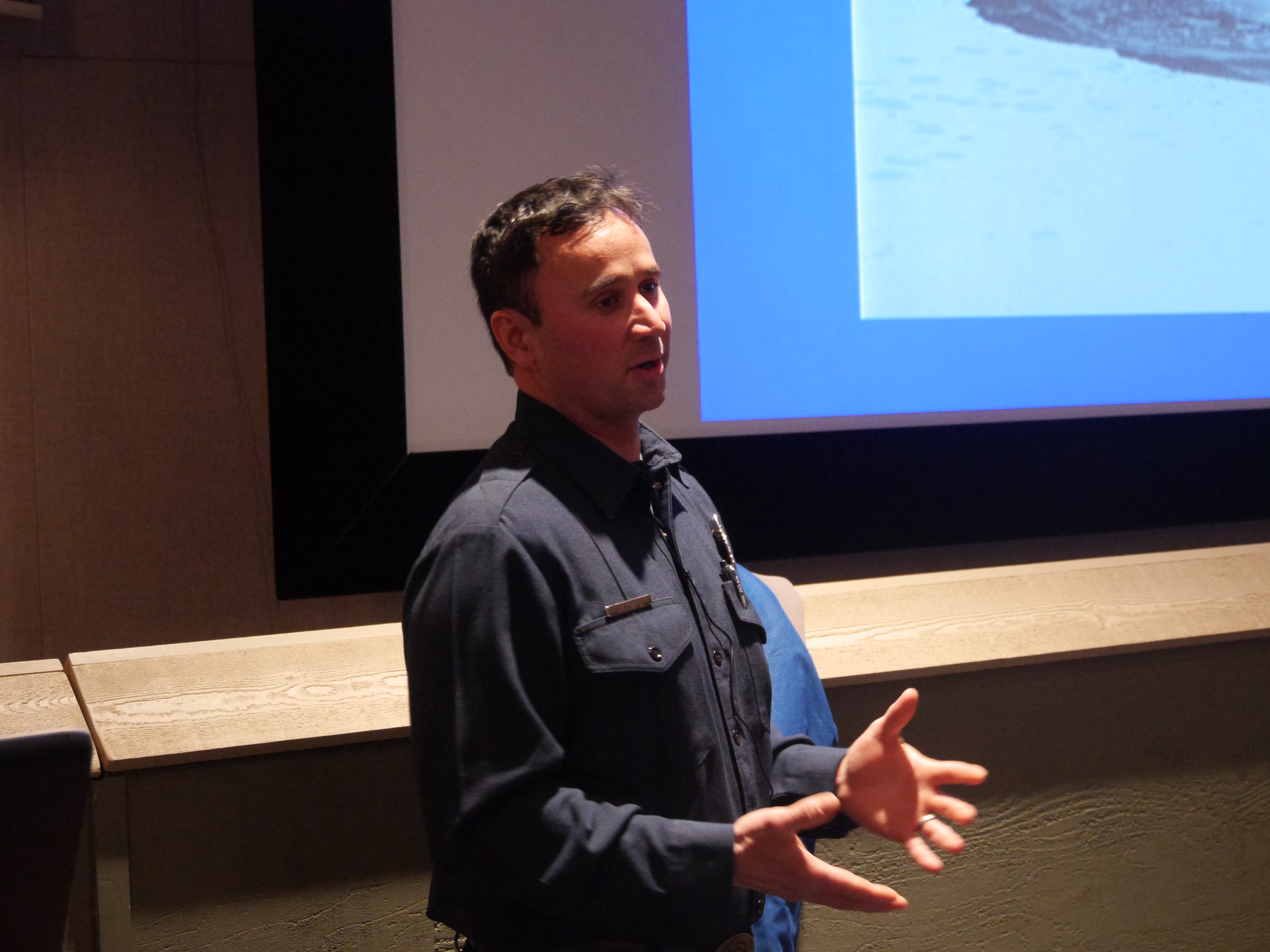
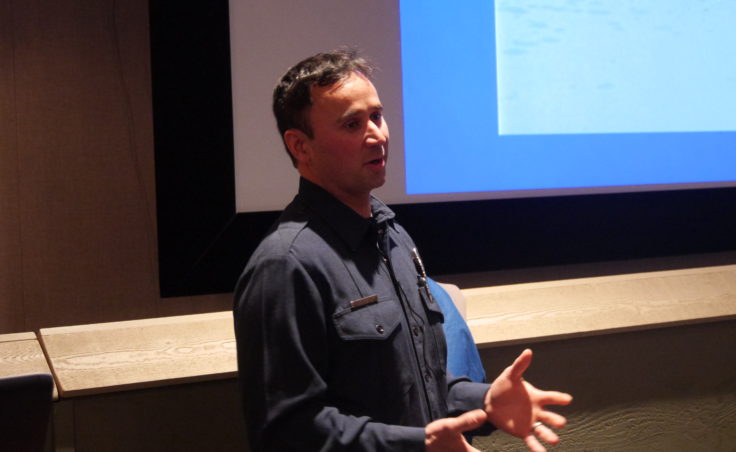


Avoid thin ice. That’s the first piece of advice. But if you do fall through and find yourself in ice water, Capital City Fire/Rescue Engineer Jayme Johns wants you to keep a cool head.
“Stay calm. It is very hard to stay calm, especially in that water, it’s going to take your breath away,” Johns said. “If you remain calm, your chance of survival is a lot better for rescue to come get you if you’re still conscious.”
He relayed this to a full auditorium inside the Mendenhall Glacier Visitor Center on Saturday afternoon.
Thin ice is a common danger during winter and surviving a fall through it isn’t as simple as just pulling yourself out.
For at least the past five years, Juneau’s Capital City Fire/Rescue has used a special workshop to warn people about walking over frozen water and they’ve demonstrated how to escape a fall.
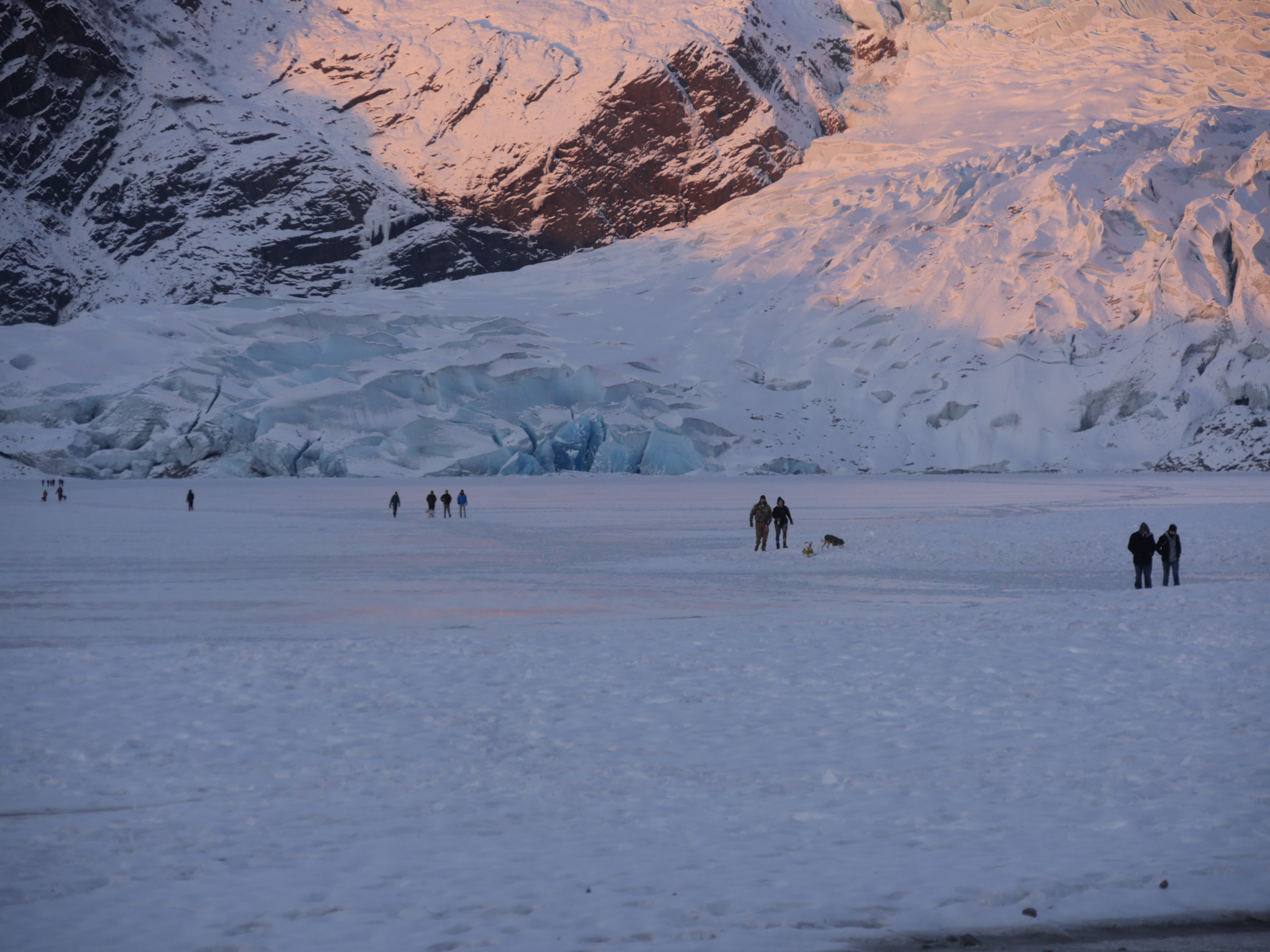
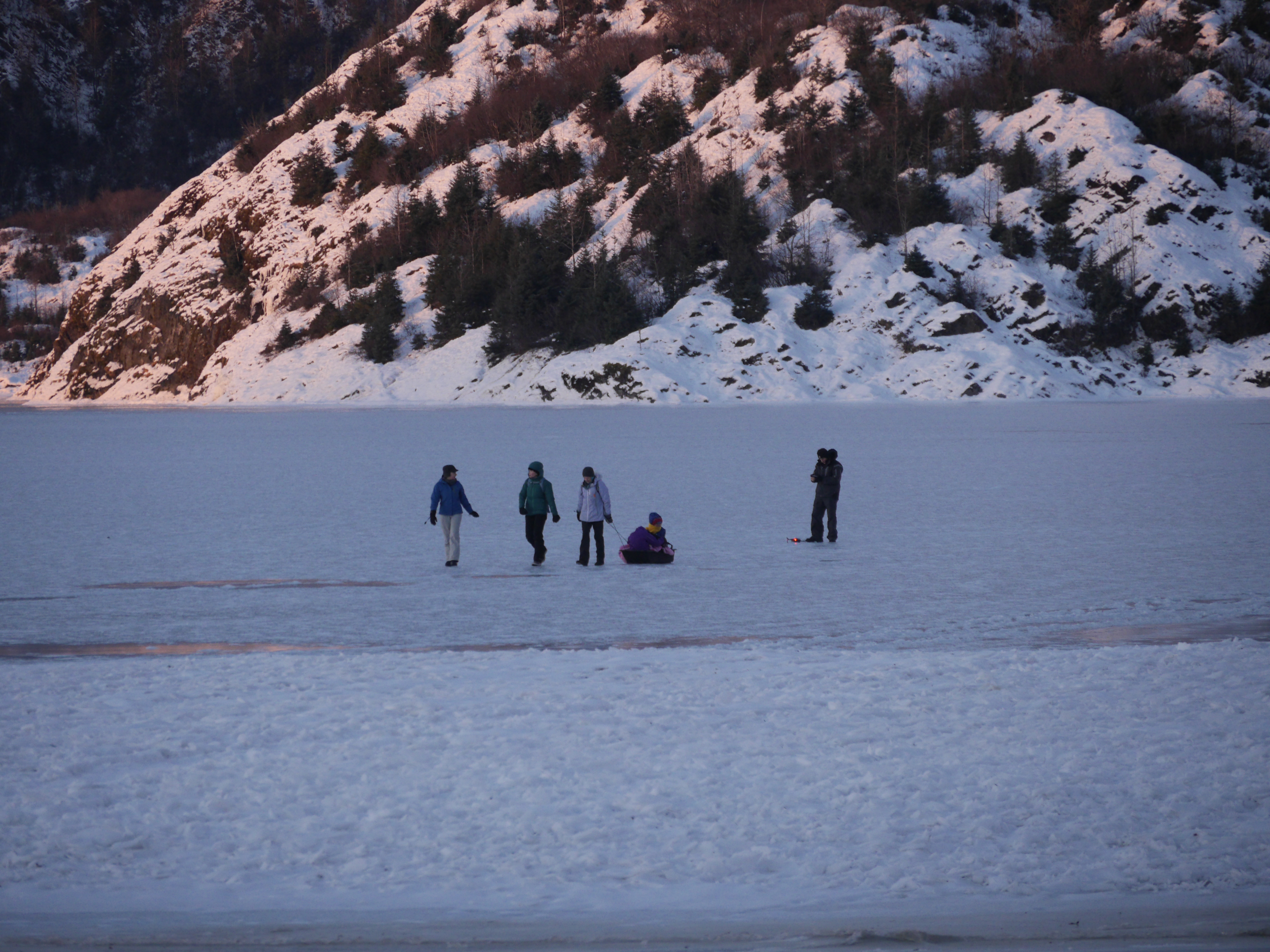
In the dead of winter when the water looks frozen solid, crossing Mendenhall Lake outside the visitor center is a tempting shortcut to an up close look at Mendenhall Glacier and its stunning blue ice caves.
But, it can also be a perfect nature-trap.
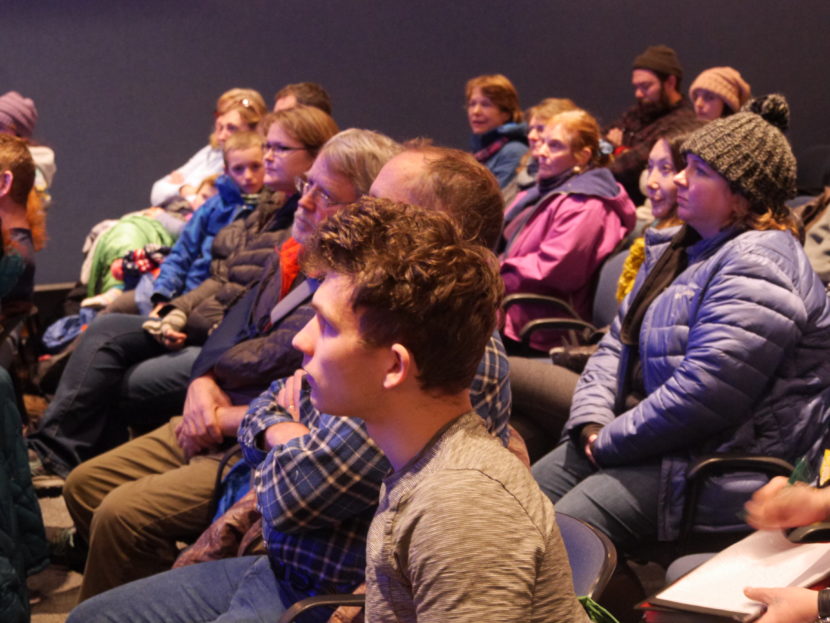
During the presentation, the audience learned they have just a few minutes to escape freezing water under their own steam before their energy is drained.
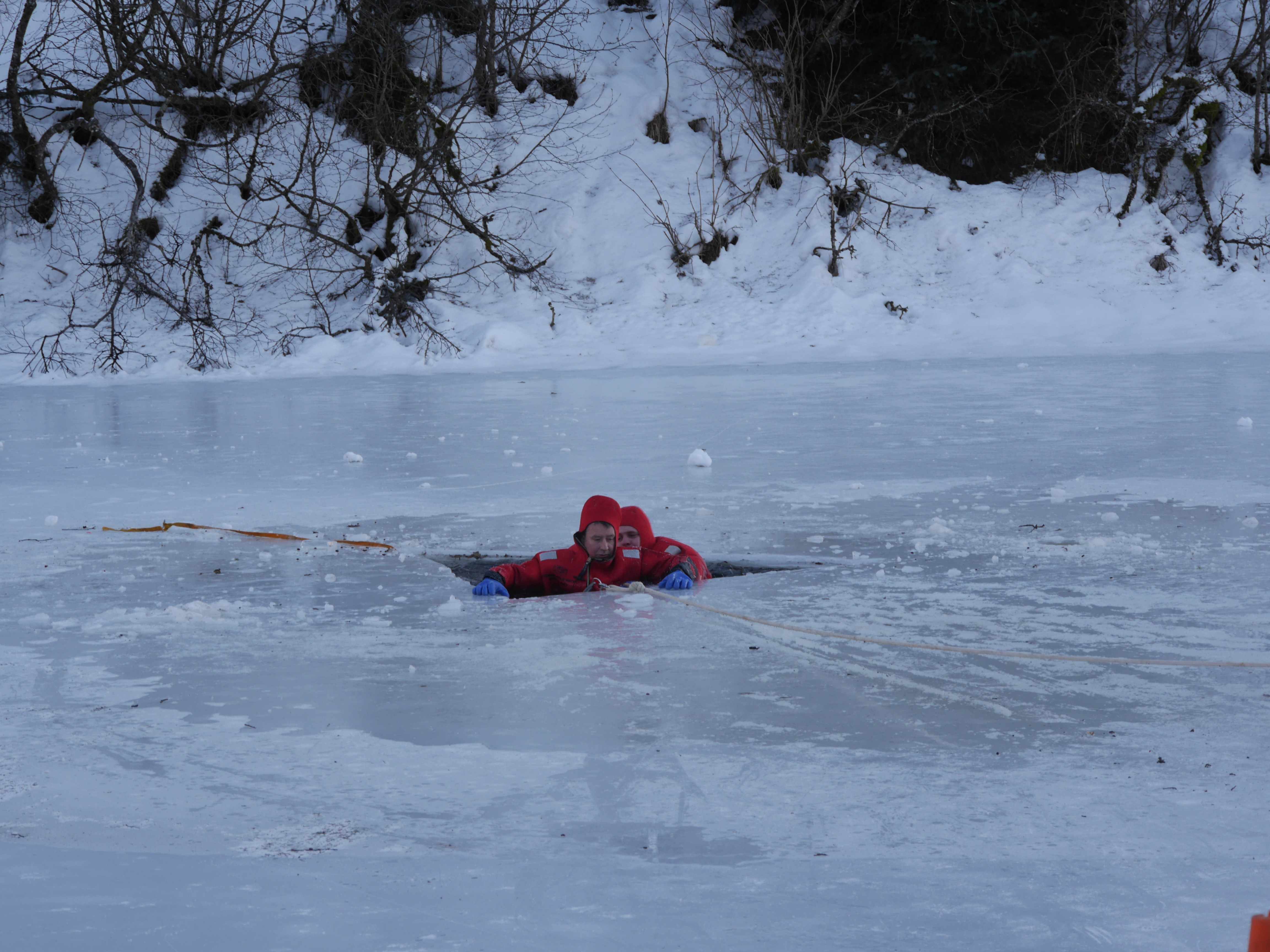
They were advised to return to the place they fell in, level out their bodies, kick the water hard to help push themselves onto solid ice and roll away instead of standing up immediately.
But Johns said if someone can’t escape by themselves, they should focus on staying above water and waiting to be rescued.
“(The) state of Alaska has numerous cases of people that have been submerged in water or hypothermic for hours — clinically hypothermic, core temperature way down in the low 90s and they made a full recovery,” he said.
Johns said this winter, CCFR has heard several reports of people breaking through ice, but the department hasn’t come out to rescue anyone, yet.
Recently one Juneau man watched his dog fall through the lake ice and disappear. Another man fell through but was able to climb out.
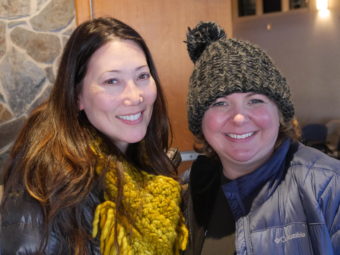
Karen Smith came to the workshop with a friend and she wasn’t too embarrassed to admit she’s been rescued by CCFR. Twice.
“Trying to get to the ice caves, unfortunately. Once our boat turned over and once (because) our daughter has a heart condition,” Smith said. “So, I always want to learn as much about safety as I can, because they’ve helped us a lot. Alaska can be a very dangerous place for sure.”
In both of those rescues, Smith said the lake wasn’t frozen but the water was still cold.
“I think it was still 30 something, maybe 40 degrees. It was very cold. I can see why people could die very quickly,” she said.
Smith and her friend Sheila Fullbright were both impressed by the amount of useful information they got from the workshop.
Fullbright said, “I didn’t know about when you get out, rolling out and going the direction that you came. That’s a really good thing because I would’ve been like, ‘Yeah, (I’m) just getting out.”
Smith added, “Also about watching for the layers of ice and about how it’s really unsafe, I knew at the face of the glacier, I knew at the waterfall, but I didn’t know that Skater’s Cabin was really unsafe, with the rocks heating up from the sun.”
“She just made me go to Skater’s Cabin, like last week,” Fullbright said.
“I was like, ‘Girl …!’”
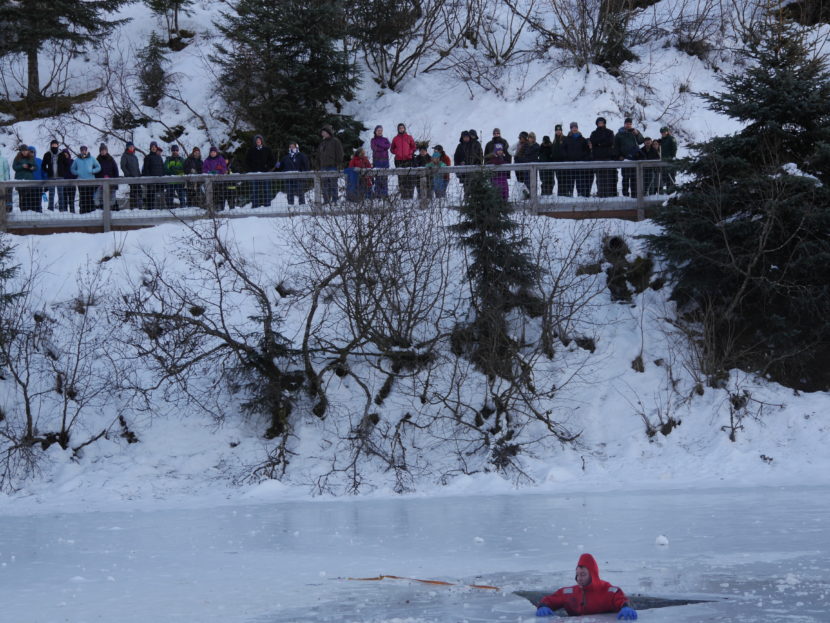
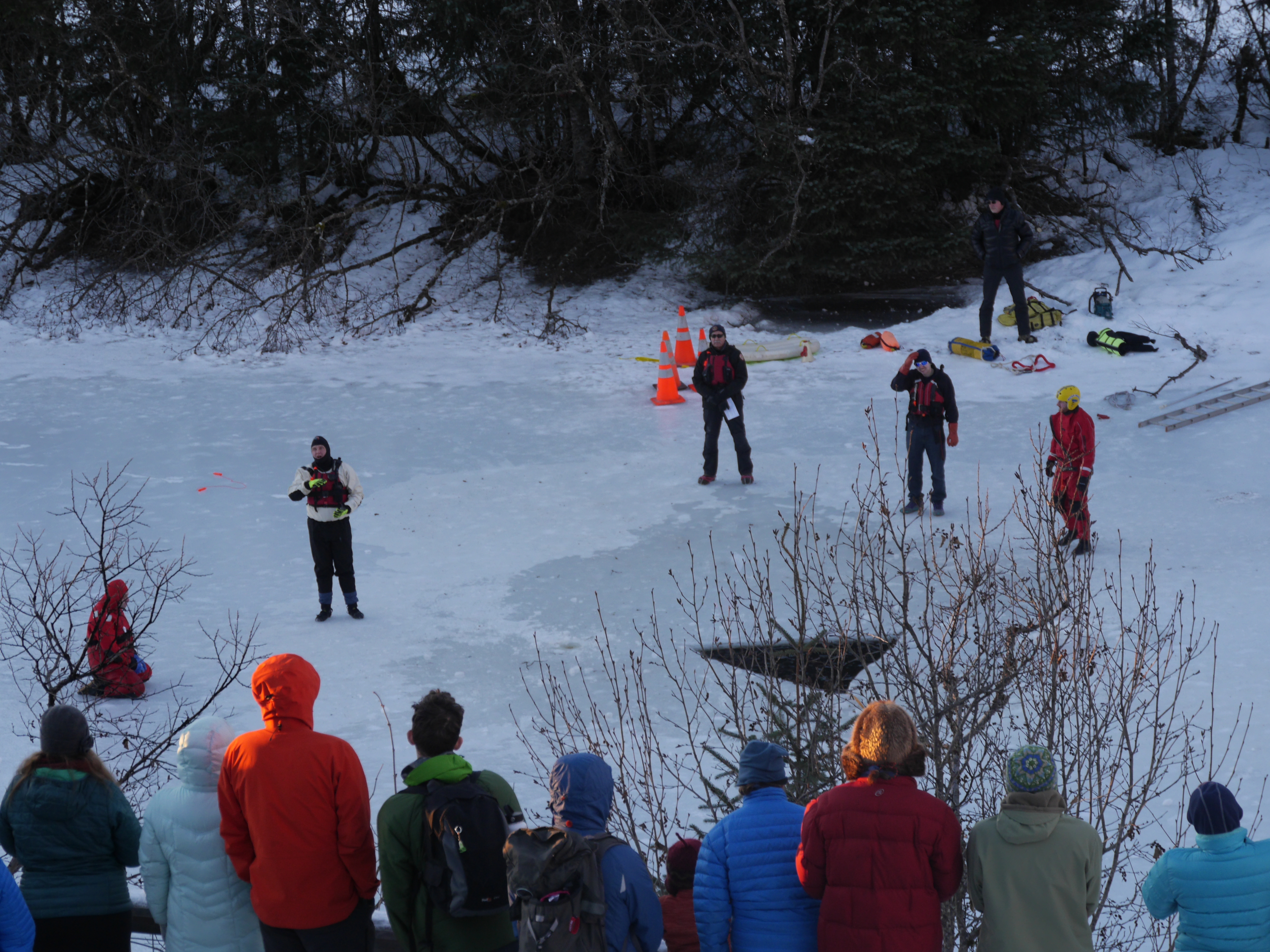
Outside the visitor center, a CCFR water rescue team demonstrated how to escape a hole in an icy pond alone. They also showed how others can help by using rope or a long object like a branch.
As a parting piece of advice, Johns asked people to stay away from weak ice.
“The ice is always unsafe at the face of the glacier, at Nugget Falls, and out by the lake where it dumps into the Mendenhall River,” Johns said.
He said if you’re unsure about a patch of ice, trust your gut and turn back the way you came.
When asked if she would keep walking on the ice after attending the workshop, Karen Smith laughed and said, “I did this morning.”
She said it was her fourth attempt but she finally made it out to the ice caves.