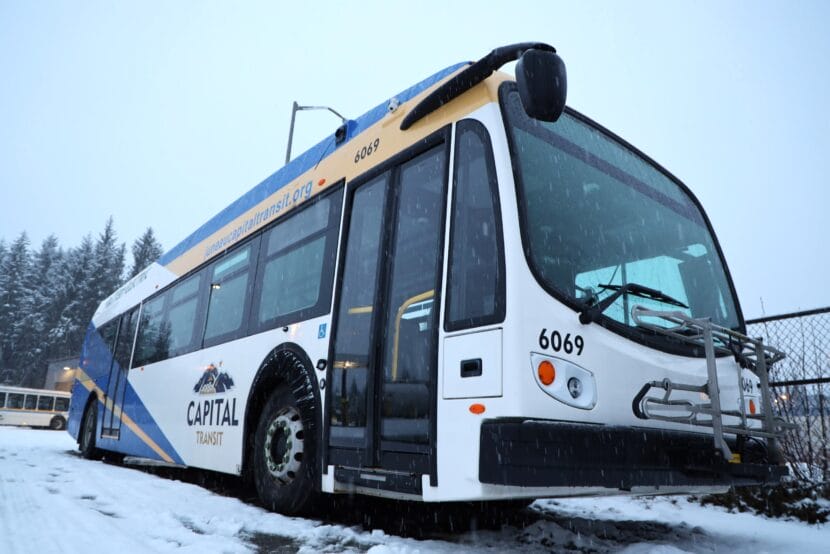
The city’s only electric bus hasn’t hit the road in more than a year.
Instead, it’s been sitting in a parking lot in the Mendenhall Valley since November of 2022. Throughout the past year, it has undergone numerous repairs but remains out of commission.
Capital Transit Superintendent Rich Ross says the bus’s problems have been a disappointing start to an exciting plan to electrify Juneau’s bus fleet.
“Being early adopters of new technology, we expected some hiccups along the way,” he said. “We definitely did not expect them to be this significant.”
Juneau’s electric city bus began to run regular routes in the spring of 2021. At the time it was considered groundbreaking as one of the first municipally operated electric buses in the state. It cost about $1 million along with charging infrastructure and was paid for using a federal transportation grant and a state settlement fund.
Ross said the bus first went out of commission because of issues with its wiring harness. He said it took the Southern California manufacturer, Proterra, until May of this year to source the needed repairs. But, after that fix was done – another problem surfaced.
“We were test-driving the bus to verify the repairs and one of the transmissions exploded on it,” he said.
The replacement for that transmission didn’t arrive until this November. Ross said that was due in part to Proterra filing bankruptcy this summer, which delayed the process a bit. He said the transmission problem has now been fixed, but there are still a multitude of other issues keeping it idled this winter. The additional repairs are expected to take at least another six months and have all been paid for by Proterra.
Despite the problems with the bus, seven more electric buses are on their way to Juneau next year. They are manufactured by a different company, Gillig, which is the same brand that makes Capital Transit’s diesel fleet. Ross said that will hopefully mean easier maintenance and more reliable buses than the first one – but that isn’t a guarantee.
Ross said moving forward with newer technology is always a process, but he thinks the benefits will outweigh the problems that may arise.
“It’ll greatly reduce emissions,” he said. “It’s one of the Assembly’s goals to reduce emissions and one of the low-hanging fruit to being able to do that is transportation.”
The new buses were purchased with funding from the Federal Transit Administration and were supposed to arrive early next summer. However, Ross said the build date for the buses got delayed, meaning they won’t likely be shipped to Juneau until late fall.