Listen to this story:
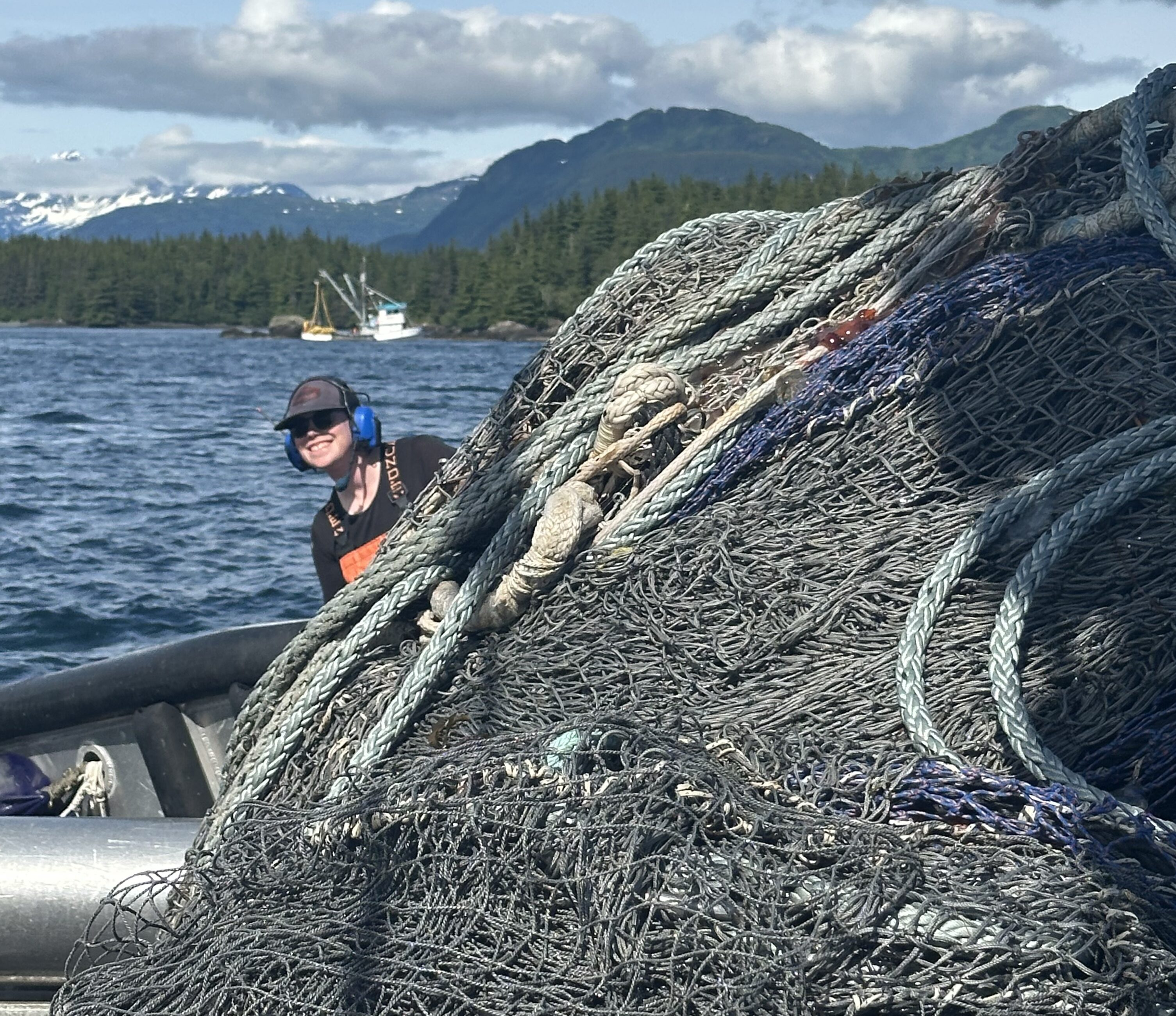
Seventeen-year-old Quinn Branch was among the young fishermen socializing at the Hangar on the Wharf ballroom in downtown Juneau on Tuesday evening as part of the Alaska Young Fishermen’s Summit.
Branch traveled to the summit from Kodiak because she said her dream is to spend the rest of her life setnetting on the Island.
“So my grandpa, who I’ve been fishing for for three years now — we’re a setnet site out in Kodiak — he sent me here pretty much because I want to take over the family business one day,” she said.
Branch said she’s got the fishing part down, but wants to understand the behind-the-scenes work, including filing taxes, applying for loans and hiring staff.
She said she’s also connected with role models at the summit.
“Just getting to see other women who are doing the same thing, you know, the same passion and the same desires as I is pretty cool,” she said.
One of those women is Rowan Miller, a 24-year-old from Valdez who’s starting her own fishing business. Miller said she’s spent half of her life fishing for salmon on her dad’s boat in Prince William Sound.
Now, she’s buying a 50-foot steel seiner from a family friend. She said people keep asking why she doesn’t just take over her dad’s boat when he retires.
“I’m like, ‘No, I’m not going to wait that long,'” Miller said. “He’s, you know, he’s 58 now. I’ve got another 25 years to wait ‘til he retires, so why would I do that?”
She said some skippers she knows have fished well into their 70s and even into their 80s.
Alaska’s fishing fleet is aging out, and that’s one reason why Alaska Sea Grant hosts the summit — to support the next generation of Alaskan fishermen. The organization started the summit in 2007 and hosts it every other year.
The average age of a permit holder in 2014 was 50 years old. That’s a decade older than it was in 1980. Between 1980 and 2013, the number of young people holding permits dropped significantly. After the state limited entry into the fishing industry, hundreds of high-cost permits drained out of Alaska and were sold to out-of-state operators. That left many rural villages that relied on fishing without a fleet to support their local economies.
Miller said seeing other young people at the summit is a good sign for the industry. But she said there are other obstacles outside of her control that make buying into the industry feel like a gamble.
“Between climate change and uncertain fish runs and uncertain markets with global things like tariffs and whatnot — there’s just a lot of uncertainty going on,” she said. “So it’s a big leap of faith.”
Along with learning how to run a business, Miller said she’s also interested to learn more about what she could have a say in: fisheries policy. She said she wants to have a hand in shaping the future of the industry.
That’s another goal of the summit, said Gabe Dunham, fisheries specialist at Alaska Sea Grant and chair of the event: “How to engage with the public processes that influence their business, like the council process and the Board of Fish, and also how to interpret the science and the management around them.”
Dunham said older, experienced fishermen volunteer to host sessions and pass on their knowledge. But he said fewer people attended the summit this year — around 20 — compared to the 30 to 60 people who typically go.