Juneau’s pools, Dimond Park Field House and reductions to social service grants are off the Juneau Assembly’s chopping block — for now. The Juneau-Douglas City Museum, Mount Jumbo Gym and Douglas Fire Station are still in limbo.
The Assembly spent five hours Wednesday night honing in on what services and facilities it believes the city should continue to fund and what it should cut as it grapples with a multimillion-dollar budget shortfall.
And, as Assembly member Ella Adkison points out — these decisions aren’t sunshine and lollipops.
“If it were about what the community values and what is good for the community, I wouldn’t be looking at cutting any of this stuff — that’s not what we’re looking at,” she said.
The Assembly is tasked with making difficult budget decisions this year as the city faces an estimated $10 to $12 million recurring budget hole. That’s after voters passed a tax exemption on food and utilities and a cap on the city’s property tax rate last fall.
At the meeting, the Assembly spent the time deliberating on a list of more than 40 potential service cuts and facility closures. And they decided which ones they’ll consider moving forward with and which ones they’ll take off the table — for now.
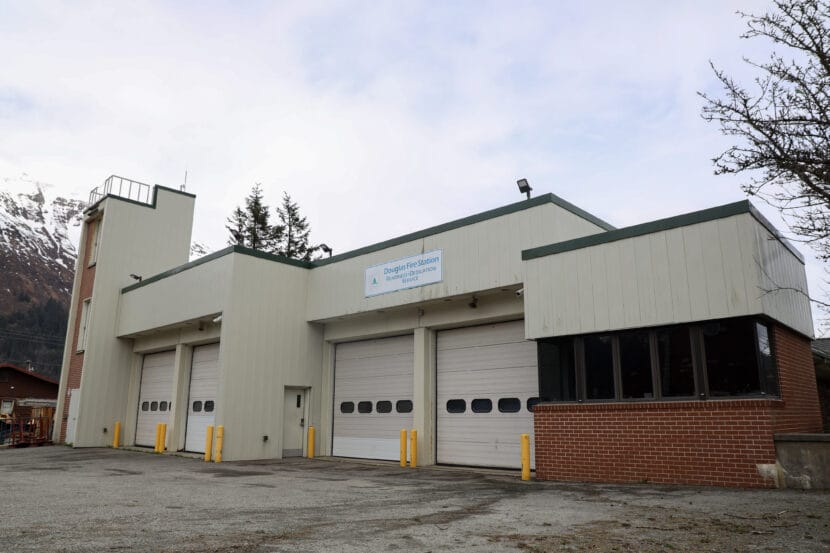
They dug deeper into ideas like potentially closing the Juneau-Douglas City Museum, the Mount Jumbo gym and the Douglas Fire Station. But they voted against closing Juneau’s pools, the city field house and slashing grants for social service providers.
Mayor Beth Weldon said residents have made it clear that pools are a priority.
“I think we need two pools. We have high usage, and we are surrounded by water,” she said. “We just did a whole bunch of renovations to Augustus Brown and the voters have shown time and time again that they want two pools.”
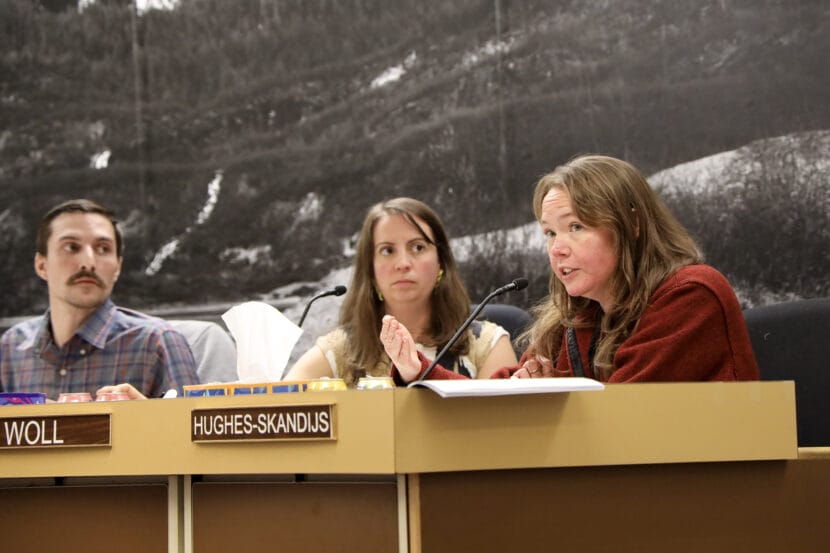
The decision to keep the city museum on the chopping block narrowly passed in a 5-4 vote. Weldon and Assembly members Adkison, Christine Woll, Alicia Hughes-Skandijs, and Neil Steininger voted in favor and Deputy Mayor Greg Smith and members Nano Brooks, Paul Kelly and Maureen Hall voted against.
Hall said she doesn’t support cutting back the public’s access to Juneau’s history.
“I know we don’t have the hordes coming out to support it, but I think it’s really important to preserve our history and to make it available to the public,” she said.
But Woll said she’d support it because of what else is at stake if they don’t make significant reductions.
“When I look at the numbers, we have to be talking about a facility, and when I hear the feedback from the public of which things really get them to come here and stay here, the museum simply falls lower on the list of facilities,” she said.
The Assembly also moved forward with potentially reducing the amount it puts into its affordable housing fund, the Juneau Arts and Humanities Council, the Jensen-Olson Arboretum and city landscaping, and potentially cutting city staff’s travel and training budget.
But, even with all those potential reductions and closures, some Assembly members worry it’s not enough to close the budget gap. The Assembly looked at several options to bolster city revenue, including revising the city’s sales tax cap on some higher-priced items and services, and lowering the property tax hardship exemption income level.
The Assembly also voted to give Eaglecrest Ski Area a nearly $1.7 million general fund subsidy for the next fiscal year. The subsidy would allow it to stay open on a barebones budget, but would cut its staffing level nearly in half. Smith, who voted in favor of the funding, said it would give the ski area a fighting chance to figure out its future now that the gondola project is likely dead in the water.
“I believe we need to support them so we don’t go into a revenue death spiral and people stop buying passes and they can’t staff … and collapsing Eaglecrest,” he said.
But Woll said she didn’t support funding Eaglecrest in light of the other reductions they’re considering.
“It’s just so hard for me to sit here and say that it’s worth us doubling our investment when we are looking at cuts tonight to arts and to recreational facilities in underserved areas of our community and housing,” she said. “When I have to prioritize cuts, I just can’t justify that.”
All the decisions made on Wednesday are preliminary and could be subject to change. The Assembly plans to further hone in on potential cuts and closures again next Wednesday.
Residents will have another chance to testify on the budget at another meeting on June 8. The Assembly is expected to approve the final budget on June 15.