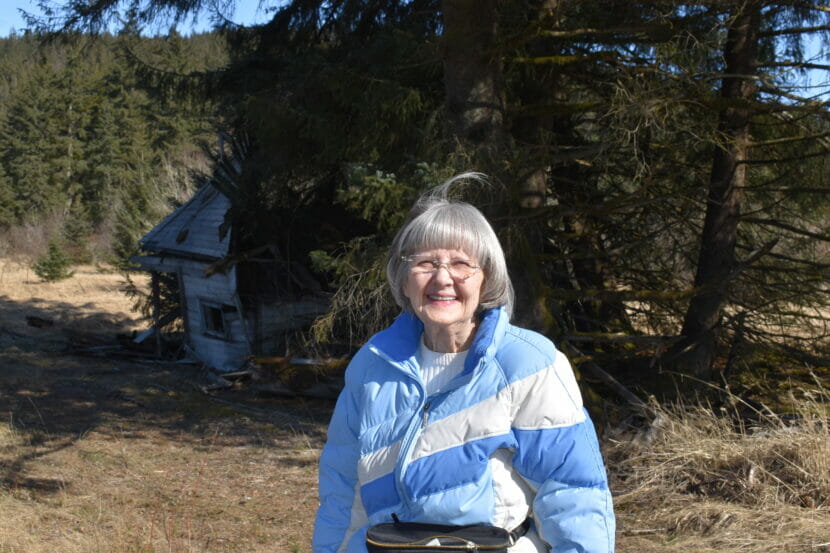
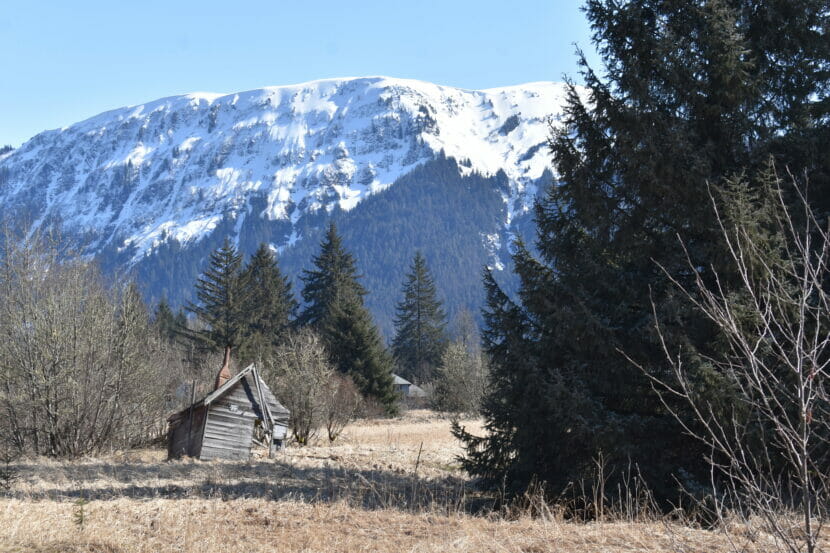
The ruins of two wooden houses stand about 30 feet off Glacier Highway, north of Kaxdigoowu Héen Dei, or Brotherhood Bridge Trail. One building has a rusted metal chimney on one side. The other, a diamond-shaped window overlooking the road.
The houses are tucked in a grove of trees, with some small evergreens sprouting up inside them. Driving by, Tony Sholty always wondered what they were. He’s stopped to photograph them so he can remember them when they’re gone.
Sholty says he wondered if the buildings were from before statehood — perhaps even before Juneau’s dairy industry temporarily took over the area.
He was partly right. The buildings are from before statehood. But it turns out they’re actually what’s left of one of Juneau’s original dairy farms.
A Mendenhall Valley childhood
In 2020, someone posted a photo of the old buildings on Facebook along with the joke, “perfect air b&b, mostly air.” Elizabeth “Koggie” File replied that it was her childhood home.
File was born in Juneau in 1935, and she’s lived in the Mendenhall Valley her entire life. In 1907, her Norwegian immigrant grandparents, the Pedersons, built a house in a big field and started a dairy farm.
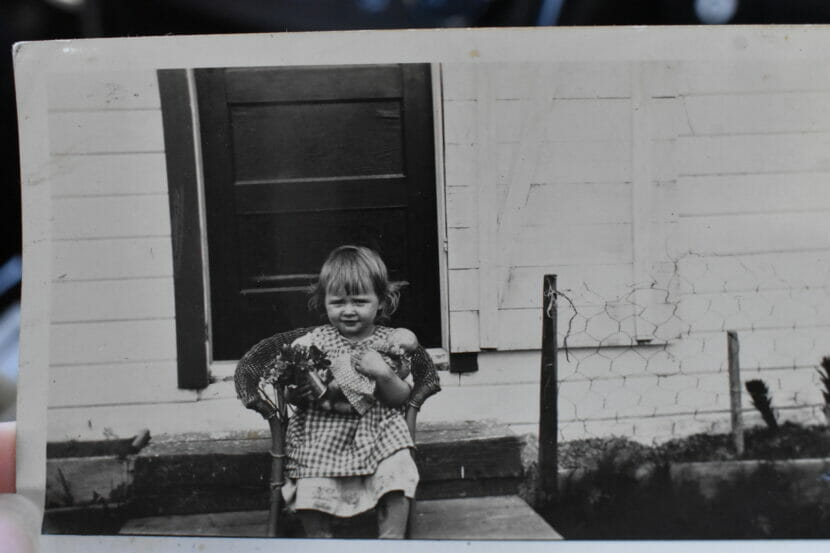
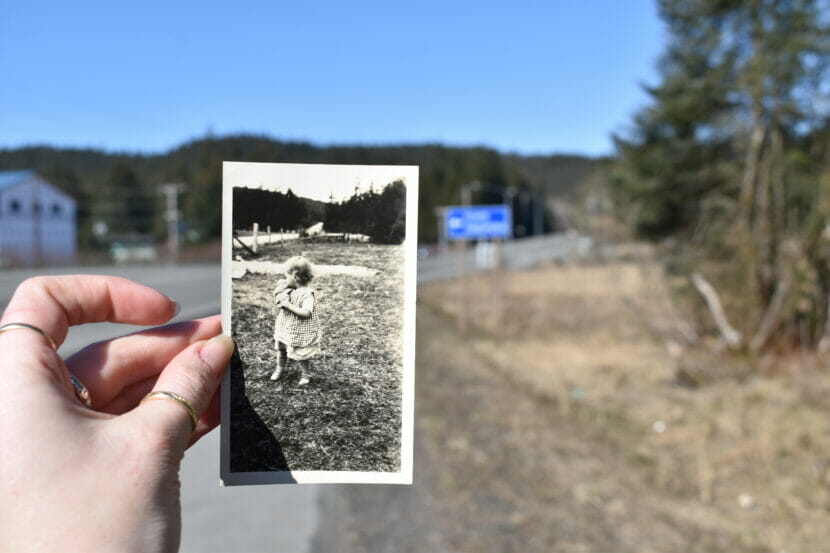
When File met KTOO at the farm, she brought photos her parents took of her as a child in the late 1930s.
“The first five years of my life I lived in that house,” she said. “And this now is me playing right out here, where we’re sitting.”
File says her dad would row across the river each day when he was a kid to get to school and back. And her grandmother, Jensine Pederson, helped make sure the school stayed open in its early days. When Jensine approached then-Gov. Alexander Parks with concerns that the school would close without enough students, he told her it would stay open as long as at least one child was there each day.
Local legend also credits Jensine with the first bridge over the Mendenhall River. The story goes that she rescued an engineer who was sick with pneumonia. When he asked how he could repay her, she asked for the bridge.
“He said once they put a bridge, no matter how small it is, that they will always replace the bridge if something happens,” File said. “And that is what happened.”
In 1956, Jensine was one of the first women to be accepted into the Sitka Pioneers Home, where she lived until her death three years later.
‘Not great dairy country’
Juneau historian Richard Carstensen has researched dairy farms like the one File’s grandparents ran.
The industry began in earnest in the early 1900s, with most farms popping up along the wetlands in what’s now called the Mendenhall Valley and Lemon Creek areas. Many were started by homesteaders and then sold as businesses in the 1920s through the 40s. That’s what happened to the Pederson farm, which became the Sherwood Dairy.
Carstensen says their heyday came not long after the Files sold it.
The industry played an important role at a time when it was harder to get meat and dairy from Outside, Carstensen said. And the farm families pioneered the infrastructure in the area, like schools and bridges.
During World War II, the military took over some of the farmland. And in the postwar era, the airport began using more and more of that land as well.
Juneau’s last dairy closed in 1965. While land encroachment contributed to the industry’s decline, Carstensen said the farms were bound to die out.
“I mean, this just is not great dairy country,” he said.
Between the environment and the cost of supplies, dairies across the state have long struggled to stay open.
Colonial history
Carstensen points out that these farms also played a part in the area’s colonial history.
“Those early homestead claims, realizing that they just plop right down on the most important of the old village sites and fish camps, and everybody wants the same real estate,” Carstensen said. “So there was a lot of shoving aside of Lingít culture going on.”
He says this is something he’s becoming more aware of lately, and it shapes the ways he sees Juneau’s history.
“We might look back on those families romantically,” Carstensen said. “And they were very much can-do people who provided for themselves, but they were part of a generation who just came in and shoved aside the original inhabitants.”
But Carstensen said he’s grateful for stories like File’s.
“In spite of all my reservations about the dairy industry, I feel like it’s really worth understanding because there’s got to be some nuggets in there that are valuable to anyone trying to think about rational ways to live here and take care of ourselves and not exhaust the country,” he said.
File says most days, she drives past the slowly collapsing ruins of her childhood home.
“I’m surprised if it continues to stand,” she said. “I’m expecting someday when I go to church, on my way home, that that building is not going to be standing much longer.”
Curious Juneau
Are you curious about Juneau, its history, places and people? Or if you just like to ask questions, then ask away!