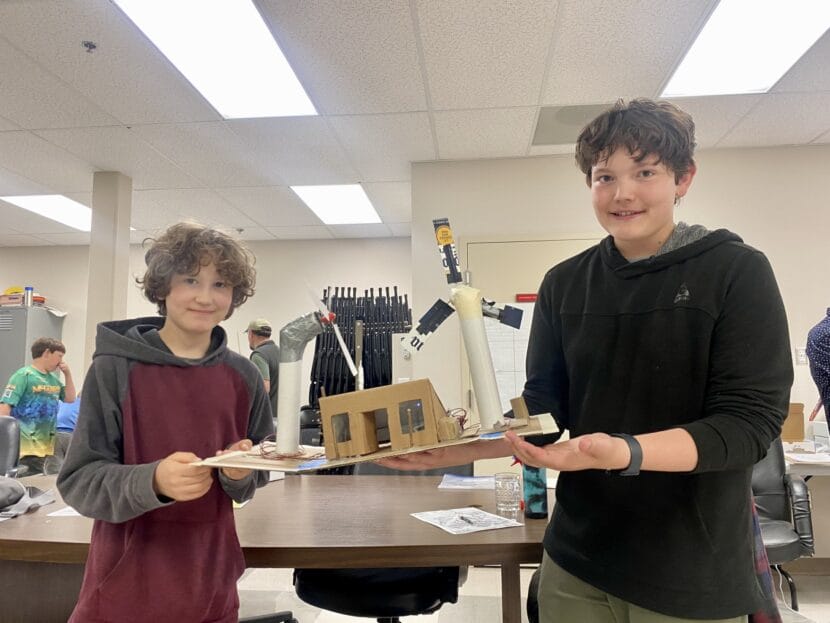
In the Alaska Electric Light and Power office last Friday, a half dozen middle schoolers constructed a village of model homes. Felix Dean and his cousin Sterling Stark stood beside a small ranch-style house with cardboard walls and small plastic windows.
“This house is supposed to be as energy efficient as possible,” Dean said. “It has two big windmills that can change to the direction of where the wind is coming from.”
In this case, the wind came from a fan that turned the turbines’ cardboard blades. Inside the house, a little blue LED glowed.
“The lighting is controlled by the solar panels that we installed on the roof,” Dean said.
The panels actually worked. Red and black cables carried real solar and wind power into the model.
Dean and Stark spent the week building it while learning about renewable electricity during Discovery Southeast’s “Nature of Energy” summer camp.
The week-long camp was modeled after a similar camp that happened in Sitka last summer, led by Renewable Energy Alaska Project’s Energy Educator Clay Good. This year, Good brought it to Juneau.
The camp featured classroom lessons on wind and solar power and field trips to hydropower sites like Salmon Creek Dam. Campers also took a tour of diesel generators with AEL&P’s staff, to see how electricity can be generated with fossil fuel.
“So the students have seen the full range,” Good said. “Part of it got the kids outside in nature, and part of it was inside learning how we use energy in our society.”
To combat human-caused climate change, experts say technologies that burn fossil fuels — like internal combustion engines and gas-boilers — need to be replaced with things like electric vehicles and heat pumps, a transition that’s known as electrification.
“We’re obviously using more electricity these days as we use less fossil fuels,” Good said. “So where are we going to get our new electricity when we need more? And so having the next generation think about the new generation was sort of the idea.”
Campers also learned about ways to conserve electricity with things like energy efficient appliances or rooftop gardens – known as green roofs — which can reduce flood risk, clean up air pollution and insulate buildings to reduce energy demand for heating and cooling.
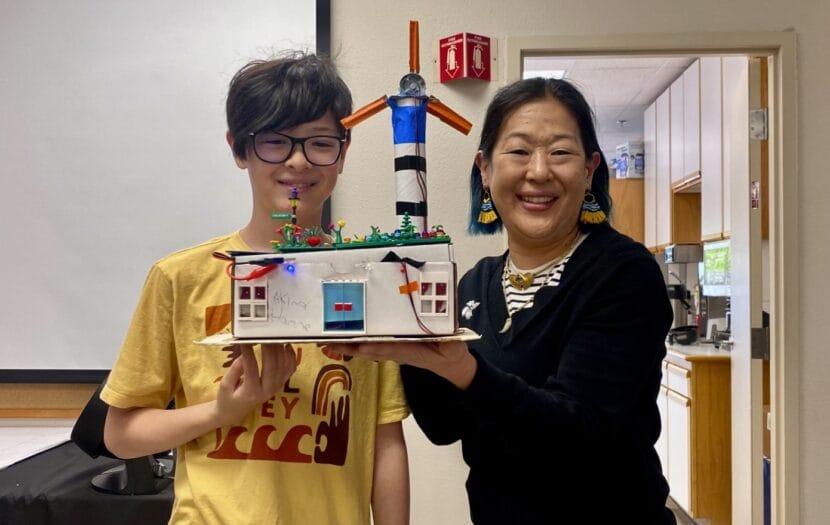
Twelve-year-old Akira Schaefer’s shoebox home featured a Lego green roof with colorful plastic fruits and flowers. His mother, Lyndsey Schaefer, said the camp was perfect for her son.
“Because he’s very interested in architecture and tiny homes and nature,” she said. “He got to learn about using what we have here — with the abundance of rain and sun and Taku winds — to power our homes. That’s the future — sustainability.”