Listen to this story:
The City and Borough of Juneau’s planning commission approved Juneau Hydropower’s permit to build its Sweetheart Lake hydroelectric project at a meeting on Tuesday night.
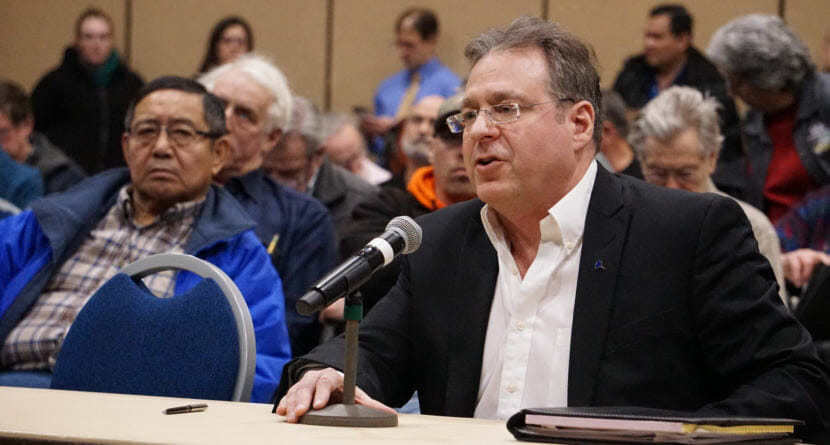
Duff Mitchell is the managing director of Juneau Hydropower. He said in an interview that this is one of the last permits the new utility needed before breaking ground.
“This is very strong momentum for us, for us meeting our timeline of being in construction next year,” Mitchell said.
It’s been a long time coming. Mitchell started the process more than 15 years ago.
The proposed Sweetheart Lake hydroelectric project would grow Juneau’s hydropower capacity by 19.8 megawatts. That’s enough to increase the borough’s electricity by around 20%. It would bring renewable energy to rural parts of Juneau — including Coeur’s Kensington Mine, which burns roughly 4.5 million gallons of diesel per year.
Mitchell said at the meeting that getting the mine on renewable power benefits Juneau.
“We got mines that want lower-cost power,” he said. “Those mines create not only the jobs, but they also pay our schools through the property tax, and so extending the lives of those mines through lowering their cost of power helps our community.”
He said the project will also provide the capital city with energy security and room to expand industries.
Next steps
Mitchell estimates it will cost $270 million to build.
“So the fun part starts now, which is completing our financing,” he said.
He said that he’s seeking a loan through the U.S. Department of Agriculture’s Rural Utility Service that could finance 75% of the project, if approved. He’s also pursuing investment tax credits, which can be sold for cash and could finance a portion of the project.
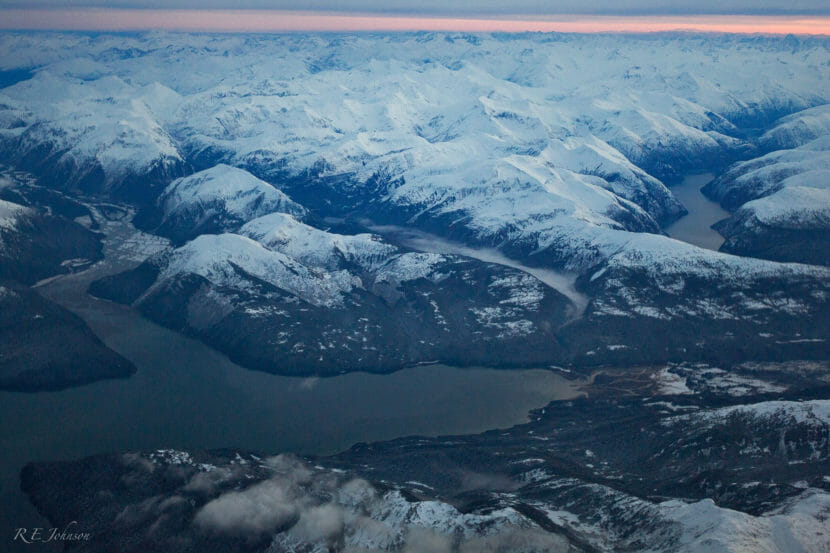
To shuttle power to Kensington Mine, the company must build several pieces of major infrastructure. Mitchell said the company will start by digging a tunnel that starts near the outlet of Sweetheart Creek at Gilbert Bay and runs up to Lower Sweetheart Lake, around 35 miles southeast of downtown Juneau.
“We will drive equipment and man and gear and everything else up there to build the intakes, to build the dam, to build the diversion tunnel, and all of the equipment and everything that we need to operate Sweetheart Dam in the Sweetheart Lake,” he said.
Then, he plans to use the tunnel to convey water to the turbines that generate electricity. The company plans to install substations, transmission lines and submarine cables simultaneously. He also plans to build a battery energy storage system to serve as a backup power source if an avalanche or other interruption cuts electricity. It would be charged by surplus hydropower.
Juneau Hydropower is contracting with Ameresco, a company that builds energy infrastructure, and David Burlingame, an electrical engineer with companies based in Anchorage, to design and construct it. Mitchell said around 200 workers will be needed to build it, and he would prefer to use local labor.
Energy needs
Juneau Hydropower’s only contracted customer so far is Kensington Mine. But Mitchell has a “build it and they will come” mentality, so he’s confident that more customers will emerge.
“So every interruptible customer is an unmet demand — they can be burned onto diesel,” he said at the meeting. “For every dock that’s not electrified, that is an unmet demand.”
Mitchell said he could also supply power to the proposed ferry terminal at Cascade Point, if that comes to fruition, and to any cell service company that wants to bring to life the dead zones at the northern end of the borough.
But Juneau Hydropower and Alaska Electric Light & Power each have their own service territories where they are allowed to sell electricity. To electrify a cruise ship dock, mine, or other customer within AEL&P’s territory, Juneau Hydropower would have to enter into an agreement with the utility and sell them the energy.
The only commissioner, out of eight, who voted no to approving the conditional use permit was Nina Keller. She said she isn’t sure there is demand for more hydropower.
“I just am not convinced that where we are now, and looking at any forecasts that we have seen that recently came out with where Juneau is going in terms of population, I just don’t see the need, as (of) like today, for it,” she said.
The permit that the city issued has two conditions. First, the company needs to submit photo proof of a barrier to block sound and light from the powerhouse near Sweetheart Creek to protect local wildlife and recreational users. Second, the company needs to get a flood zone development permit. Mitchell said he’s confident he will fulfill both requirements.
He said Juneau Hydropower could start offering electricity as early as 2028.
Correction: a photo caption has been updated to remove a former funder that is no longer part of the project.