Listen to this story:
A Canadian company proposing to reopen a gold mine in British Columbia plans to drive a large boat up Alaska’s Taku River this summer to see whether it can ship construction materials to the site. Some locals worry it could run aground or damage property along the banks.
Canagold Resources plans to use a 98-foot-long, steel-hulled landing craft called the Inlet Raider. The route is up the Taku River, south of Juneau, to where it meets the Tulsequah River, just over the U.S.-Canada border.
The company is going through British Columbia’s environmental review process to reopen the long-abandoned Polaris Taku mine, which closed in 1951 after a barge loaded with gold concentrate sank off the coast of British Columbia in a storm.
Chris Pharness, the senior vice president of sustainability and permitting at Canagold, said the company plans to do six test runs to the New Polaris site this summer, starting at high tide the night of June 10.
“There’s a lot of skepticism around it, for sure, but you know, we have to try,” he said.
This isn’t the first time a mining company has decided to ship materials up the Taku River. News outlets reported in 2008 that several tug boats ran aground and one nearly capsized while Redfern Resources tried to revive the Tulsequah Chief Mine. That’s located across the Tulsequah River from the proposed New Polaris mine, and it’s been leaching acid mine drainage into the watershed since it closed in 1957.
Pharness said the test runs will help prove whether it’s feasible to bring a large landing craft up the river to transport construction materials and machinery to reopen the underground mine.
“Otherwise, we’ll have to, you know, seriously consider, you know, an alternative, if there is one,” Pharness said.
There are no roads to the remote area. He said the company wants to use more nimble boats during the actual construction phase.
“So this boat is just for the trial,” he said. “We looked everywhere. We looked in Alaska and British Columbia, and this was the only boat that we could find that was similar to what we’re looking for.”
On Earth Day last month, Pharness visited Juneau and met with more than 20 Alaskans who own property downstream from the proposed gold mine.
Garrett Paul is president of the Taku River Recreation Association and helped organize the meeting to share cabin owners’ concerns. He grew up in Juneau and has been boating up the Taku, one of Southeast’s most productive salmon streams, to fish and hunt his whole life.
Paul worries the Inlet Raider could get stuck.
He said there is “the potential for a catastrophe with that barge like, you know, it grounding or getting swept into a log jam, or, you know, somehow becoming disabled and being fixed around the river.”
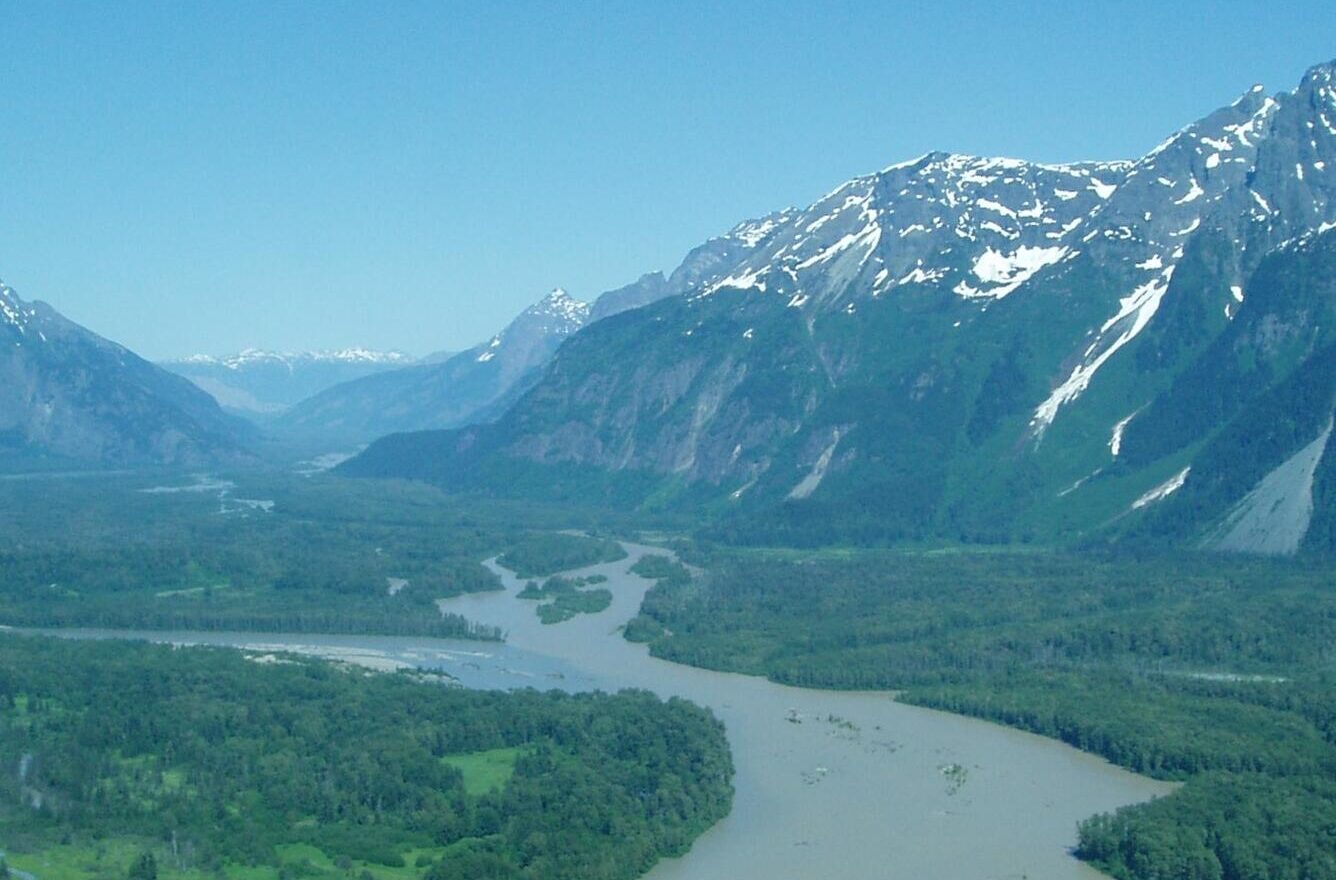
The Taku is a dynamic, glacial river that moves tons of sediment.
Paul said the mainstem of the river could be deep enough, but there are areas he thinks a large boat would have trouble maneuvering — including narrow sections where people have docks that could be damaged by a big wake and across sandbars in the delta.
“It’s a complicated delta to cross,” Paul said. “It’s all sand. It’d be a soft grounding. But it’s shallow. The channel changes all the time, and it’s about 4 miles in length.”
Paul said he’s not against industry, but he doesn’t want the mining operation to harm the river or private property along the banks.
Canagold filed its application with British Columbia’s Environmental Assessment Office at the end of March. In it, the company said it would haul freight using barges during the construction phase, which could require about 75 trips per summer. But when the mine is operating, the company said it would transport gold concentrate, people and materials mostly by plane and would barge about 10 trips per summer.
Canagold estimates construction could take around three years, and once operating, the mine could produce around 1,000 tonnes of ore per day, with an initial lifespan of about eight years.
The company hopes to open the mine in 2028.