Eric Keto, Alaska’s Energy Desk

Video: Life after the spill

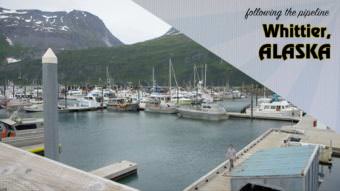
Shrimp fisherman Gordon Scott has seen plenty of changes in his thirty-plus years on the water in Prince William Sound. His personal history has been intertwined with the trans-Alaska pipeline since he arrived in the state.

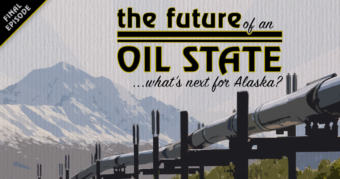
The future of an oil state: What’s next for Alaska? | MIDNIGHT OIL: Episode 08

When the giant oil field at Prudhoe Bay was discovered in 1968, it held more oil than anyone in Alaska had dared to imagine. But today, Prudhoe and the other legacy fields on the North Slope aren’t producing oil like they used to. That’s an economic problem for the state — but it’s also an engineering problem. So, what’s the future of the pipeline — and the state that depends on it?

Today, the trans-Alaska pipeline is carrying a little over half a million barrels of oil per day – that’s a quarter of what it did in its heydey. And that’s creating some challenges.

To learn what kind of challenges, exactly, I dropped by the Anchorage offices of Alyeska Pipeline Service Company, where some engineers showed me a surveillance video from a pump station along the pipeline.

We’re watching footage of a giant hunk of thick, black wax that’s been pushed out of a section of the pipeline like toothpaste squeezed from a tube. And it is huge: 20 feet long, 4 feet tall. Guys in protective suits and respirator masks are hacking away at it with picks and shovels.

This is technically called a “wax event.”

But pipeline engineer Tom Marchesani has a different name for it.

“The big tootsie roll we like to call it,” he says.

It’s an extreme example of what can happen as less oil moves down the trans-Alaska pipeline. With less oil, it moves more slowly — and starts to cool. As it cools, wax in the oil solidifies and drops out, gunking up the pipe and sometimes forming the world’s biggest, most unappetizing tootsie rolls.

And that’s just one of many things that start to go wrong.

Alyeska engineer Rob Annett says as the amount of oil drops, it starts to raise some existential questions.

“Is there some sort of, potentially, a tipping point where the way you’ve always done it doesn’t work any more?” he asks.

Alyeska thinks there is a tipping point. A 2011 study put it somewhere around 300,000 barrels a day. Below that point, they’re not sure how the pipeline will work — or if it will work.

State and federal forecasts predict that we’ll approach that threshold in the next decade. So a couple of years ago, the company called in Annett, and told him to form a team.

Their task: figure out how to keep the pipeline going.

For the past few years, Annett and his crew have considered all kinds of crazy ideas — even the craziest idea of all – building a whole new, smaller, oil pipeline. The current pipeline is four feet wide – built for the state’s boom times. A smaller line would let today’s lower volumes run faster and stay warmer.

“So, mother may I have, you know, a gagillion dollars to do that, right?” says Annett. “So, as you might imagine that one didn’t really land well.”

Obviously, a new pipeline doesn’t pencil out, so they’re exploring other ideas — like super high-tech pipe scrapers that might remove wax more efficiently. Or maybe injecting some kind of anti-freeze. Other ideas they couldn’t even tell us about.

The team hasn’t found their silver bullet yet. And the clock is ticking. But in the end, Annett says, the future of the pipeline isn’t up to engineers.

“I think the end game is not going to be strictly technical,” he says. “I think it’s going to be an economic viability for the people who own the pipeline.”

The people who own the pipeline are the top three oil companies in Alaska: BP, Conoco Phillips, and Exxon Mobil.

All the solutions Annett’s team dreams up come at a price. Someday, someone in an office building somewhere, will run the numbers and decide there’s just not enough oil flowing to justify the cost to keep the pipeline running.

That reality — coupled with a dive in oil prices — is forcing Alaska to confront an uncomfortable question: What happens when we can’t count on oil money any longer?

Larry Persily is a close observer of the oil and gas industry. He doesn’t think the pipeline is going to shut down any time soon, but he does believe that as production declines, Alaska will shrink.

“Not geographically,” he says, “but in terms of jobs and population and size of the economy. I just don’t see a way out of it.”

But when you talk to people in the oil industry, and to plenty of Alaska’s elected officials, there is a way out of it: find more oil.

And they could be right. In the past year, there have been three potentially major oil discoveries in Alaska. One company, Caelus Energy, thinks it’s found 6 billion barrels of oil on the North Slope.

I spoke to Caelus’s CEO, Jim Musselman, right after his company announced the discovery last October.

“There’s just lots of oil yet to be discovered here,” he said. “And that’s what I want to make sure and reiterate to the people to Alaska. Don’t give up, there’s just a lot to be found. And if you just work with us we’ll find a lot more oil for you yet.”

But developing a new oil field in the Arctic is risky and expensive. This spring, Caelus put off its next steps, citing low prices and changes to the state’s oil taxes. Alaska can’t ignore the possibility of new discoveries. But the state can’t count on them, either.

So some Alaskans are betting on a different kind of future. There’s a new start-up culture in Alaska with more interest and support than ever before.

Jon Bittner heads up the Alaska small business development center. He acknowledges that today’s start-ups aren’t likely to be the next BP and ConocoPhillips.

“I mean individually no none of these industries is going to replace oil. It can’t. But in aggregate this is how you transform an economy,” he says.

Bittner says we should see the oil years as a gift.

“We got a jumpstart that that nobody predicted,” he says. “And now it’s up to us to run with it.”

Ultimately, Bittner says, it’s Alaskans who have to decide if this is the beginning of the end — or the prelude to a transformation.

Video: Pipeline boom and bust in rural Alaska

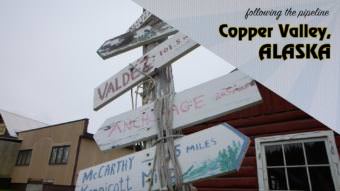
Bob and Jeanne Sunder arrived in Copper Center nearly five decades ago. Their plan: buy a small grocery store, raise their four kids, and enjoy rural Alaska living. Little did they know, an army of workers would soon descend on their small town to help build the trans-Alaska pipeline.
Foretold Disaster – the Exxon Valdez oil spill | MIDNIGHT OIL: Episode 07

The Exxon Valdez oil spill in 1989 killed hundreds of thousands of seabirds and brought commercial fishing in some of Alaska’s most productive waters to a standstill. It’s often talked about as an unprecedented, unthinkable event. But it was, in fact, thinkable and people tried to prevent it.
Twenty years before the pipeline was even built, Ross Mullins was already warning about an oil spill in Prince William Sound.

Mullins is in his 80s now and lives surrounded by history – literally. His house in Cordova is piled with stuff. He was a hippie and photographer who came up to Cordova from the Bay Area in the early 60s. He didn’t mean to stay, but he got sucked into fishing.

When he first heard the plans for the trans-Alaska pipeline to end in Valdez, he says, he saw the risk right away.

In the 60s and 70s there was a series of well-publicized oil spills all over the world. Mullins says he knew that if Alaska’s oil was transported by tanker, a disaster was inevitable.

So, he rallied the local fishermen’s union. They levied a penny per fish tax on themselves to hire a law firm to challenge the pipeline in 1971.

“Well, we called ourselves the Mighty 500,” he said, adding with a laugh “We probably didn’t have five hundred.”

But they went up against the oil industry and the state, and they won. Their lawsuit, along with one from national environmental groups, halted the pipeline.

Their victory was short-lived though. In 1973, Congress exempted the pipeline from the lawsuits. So Mullins and the fishermen switched gears. They pushed for the highest safety standards possible.

He remembers one trip to Washington D.C., standing in Senator Ted Stevens’ office.

“One of the things I remember distinctly him saying was, ‘I can assure you that not one drop of oil will touch the waters of Prince William Sound’,” said Mullins.

It was one of many promises made in the ‘70s, as lawmakers and industry tried to get the pipeline moving.

They promised that tankers operating in Prince William Sound would have double hulls. They promised a state-of-the art system to track vessels through the sound, and a world-class oil spill response system.

But one by one, the promises made by industry, the state and the federal government failed to materialize – or the safeguards simply eroded.

In the end, the system failed more quickly than even Mullins had imagined it could.

“It was a hell of a lot sooner than I thought it would be,” he said. “The oil had only been going through the pipe for 12 years. You know it’s not a long time for something that’s supposed to be state of the art to function.”

Flying over the Sound today, the pilot points out a white and red navigational marker sticking up out of an unassuming patch of water. From 1,000 feet up it doesn’t look any bigger than a camera tripod.

“See this post right here?” he said. “That’s Bligh Reef. That’s where the Exxon Valdez ran aground. Right there.”

In the distance are the icebergs calving off the giant Columbia Glacier. It was these same chunks of ice that the Exxon Valdez was trying to avoid when it collided with the reef.

This is the spot where all systems failed: The tanker’s crew made a series of inexplicable mistakes. The captain had been drinking that night and left an overtired 3rd mate in charge. Inadequate tracking didn’t pick up the ship as it headed off-course. The shallow reef sheared right through the tanker’s single hull.

Today, things have changed. Congress passed a raft of reforms after the Exxon Valdez. Things like requiring new tankers to have double hulls, better vessel tracking and escort tug boats.

Prince William Sound is now guarded by an elaborate system to prevent future spills.

But for years, the Exxon Valdez loomed over the fishing town of Cordova like a dark shadow. The spill coincided with plunging fish prices, and in the 90s, the town dropped into a depression. People lost their boats. They lost their livelihoods. Many worried there was no future for Cordova.

Today, that fear is lifting. There’s a whole new generation of fishermen, who were just kids during the spill.

Mike Mickelson was five years old when the tanker struck Bligh Reef.

“Most of us — if not all of us — got told in school, ‘Well, whatever you do don’t go fishing and go to college and make something of yourself’,” Mickelson said. “And everybody went to college and quite a few of us came back and bought into fishing, so…”

Today, he owns two fishing boats. And now, he says, there’s a community of young people, all taking a chance on Prince William Sound.

It’s a big chance. Getting into fishing means taking out a loan to buy a permit, another loan to buy a boat.

“You know I had a couple friends that talked me into buying into seining,” he said. “It’s like oh, yeah, hundreds of thousands of dollars no problem! You’ll be fine. It’s been a hard road. But but you know I’m going to make it. And that’s and that’s the great thing.]

Mickelson and his peers are making a big commitment to this place. It’s a bet that fishermen can still make a living in Cordova. And that there won’t be another Exxon Valdez.

Listen to the full series at ktoo.org/midnight-oil.

Audiogram: Foretold disaster

The Exxon Valdez oil spill in 1989 killed hundreds of thousands of seabirds and brought commercial fishing in some of Alaska’s most productive waters to a standstill. It’s often talked about as an unprecedented, unthinkable event, but it was, in fact thinkable, and people tried to prevent it.

Site notifications
Update notification options
Subscribe to notifications