Juneau World Affairs Council

Juneau World Affairs Council

The Success of British Columbia’s Carbon Tax and What It Means for Alaska

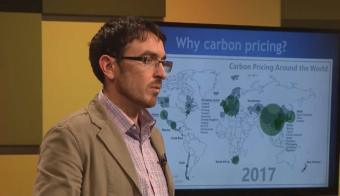
From Juneau World Affairs Council: “The Success of British Columbia’s Carbon Tax and What It Means for Alaska” with Eion Madden

Eion Madden (pronounced “Owen”) grew up in Ireland where he witnessed a drastic shift in the climate, from mild and rainy to one of extremes. He trained as a lawyer, serving firstly as a corporate attorney to an international diamond company, and then as a criminal prosecutor for the Irish State. In 2009, he traded in his career as a criminal lawyer to complete a post-graduate degree in climate change and moved to British Columbia. He came “straight off the boat” to work as a legal assistant at Ecojustice, Canada’s only national environmental law charity, where he tracked applications to Canadian regulatory bodies, before joining Wilderness Committee as their Climate Campaigner. For the last three years he has worked with British Columbians to stop harmful resource projects and move toward real action on climate change. His latest work is on climate solutions and the potential power of effective carbon pricing in North America.

Recorded September 15, 2015

Juneau World Affairs Council

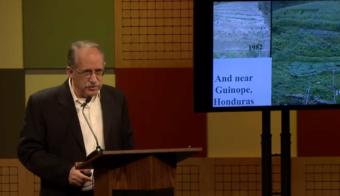
The Gathering Crisis of Food Security in Africa: Its Nature, Geography and Possible Solutions

Roland Bunch has worked as a consultant in agricultural development for over 40 NGOs and governments in 50 nations, including Cornell University, the Ford Foundation, several of the Oxfams, Save the Children, CARE, and the governments of Guatemala, Honduras, Swaziland, Laos and Vietnam. In 1982, he authored the second of his four books, Two Ears of Corn, A Guide to People-Centered Agricultural Improvement, which was eventually published in ten languages and became one of the all-time best-sellers in agricultural development.

He has also, over the last 30 years, been one of several worldwide leaders (along with a half-dozen Brazilians) in developing green manure/cover crop technologies and spreading them around the world. Roland has been nominated for the Global 500 Award, the US President’s End the Hunger Prize, and the World Food Prize.

Recorded August 26, 2015

Juneau World Affairs Council

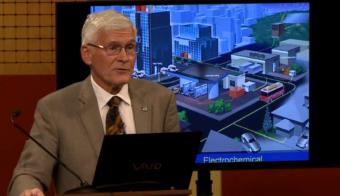
Arresting Climate Change: Transforming the World’s Largest Industry

Ever wanted to have a better understanding of our energy usage and its effect on climate change?

Bill Leighty explains carbon dioxide emissions, possible energy sources, and climate change in a clear, concise way.

“Climate Change” is our vernacular for five imminent dangers caused by humanity’s unrestrained combustion of fossil fuels: Rapid climate change (warming), ocean acidification, sea level rise, species extinctions, and violent human conflict. Arresting climate change will require nothing less than transforming the world’s largest industry: Energy – from 85% fossil to 100% renewable energy resources, as quickly as we prudently and profitably can. We can do this, but we need to hurry.

Bill was (and still is) a high school science fair nerd, holds two degrees from Stanford including a BS in Electrical engineering, serves on multiple boards, and is a principal with Juneau’s Alaska Applied Sciences, Inc. which is a renewable energy R&D and science education company.

Sponsored by the Juneau World Affairs Council

Recorded May 12, 2015

Juneau World Affairs Council

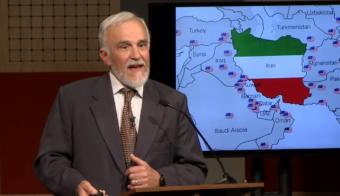
Finding a Future in the Middle East

When the Middle East is in the news, it can be hard to understand the context. Paul Barker traces the history of Iran and their relations with the United States with remarkable clarity and optimism.

Paul Barker was most recently Country Director for Save the Children International in Afghanistan. He will share insights about opportunities for improving relations between Iran and the U.S. in the context of popular feelings towards America by most Iranians, negotiations over the Iranian nuclear program, the threats and opportunities posed by ISIS, and U.S. desire to end its military engagement in Afghanistan.

Recorded May 4, 2015

Juneau World Affairs Council

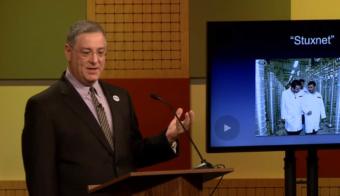
Cyberwar and Warfare

What is cyberwar? Why doesn’t mutually assured destruction work with cyber threats? And why did all the computers in an underground nuclear facility start playing rock music at 3:00 in the morning?

A fascinating exploration of how cyber attacks happen and how it affects governments and private enterprise.

Lawrence Husick is Co-Chairman of the Foreign Policy Research Institute’s Center for the Study of Terrorism where he concentrates on the study of terrorist tactics and counterterrorism strategies, with a particular focus on technology leverage as a defining characteristic of the modern terrorist.

Juneau World Affairs Council

Greenland and the Changing Arctic: Climate, Culture and Self-Determination

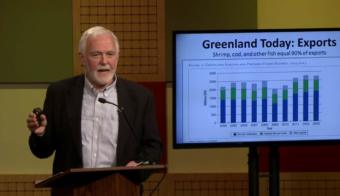
The Juneau World Affairs Council presents “Greenland and the Changing Arctic: Climate, Culture and Self-Determination” with Richard Caulfield. Caulfield is an author and the provost of the University of Alaska Southeast. His doctoral dissertation focused on aboriginal subsistence whaling in Greenland and cultural dynamics of natural resource use in the Arctic.

This presentation was recorded April 15, 2015 @360.

Site notifications
Update notification options
Subscribe to notifications