State Government

Alaska Statehood Pioneers: In Their Own Words

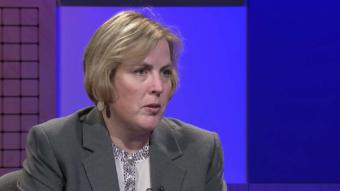
Episode 8: George Sundborg

Episode transcript

George Sundborg: It was true, it was a great time to be in Alaska. Things were improving. Statehood was coming, it was in sight you know. We were winning.

Opening Titles.

Narrator: George Sundborg was an Alaska Constitutional Convention delegate who chaired the the style and drafting committee. His professional life meandered in and out of civil service, politics and journalism for decades. He was a longtime ally of renowned Territorial Governor and U.S. Senator Ernest Gruening.

George Sundborg: Well I was born in the great city of San Francisco in 1913 and lived there for a few years and then we moved in 1914 to Berkeley, California, which is famous as the site of University of California main campus. And when I was 10 years old my father and mother with their two children, the older of whom was I, moved to Seattle. He was a salesman for United States Glass Company …
I lived here for – through the last two years of grade school and through the high school, Queen Ann High School here and through the University of Washington

Oh, it was a deep depression, yes. I had had all kinds of short-term jobs you know just to try to keep alive. I had been a logger and I had gone to sea on a ship, and I had worked in a print shop and that kind of stuff, but they were just – they were never considered career moves.

I was an usher at the Paramount Theater for about a year for one thing I did. I worked in a super market called Piggly Wiggly and as you say we did anything that we were – we felt very lucky to get any kind of a job.

Intertitle: Journalism

George Sundborg: Now you started to ask me well how did you happen to get a journalism career. My mother was I think largely responsible for that. She said, “Oh George you write so well, you would write, you should be a writer you know. And got that in my head when I was very little. And so I always had only that in mind and I did get a degree with a major in journalism from the University of Washington.

And the University was very useful to its graduates in finding jobs for them. That is how I got my job on the Gray’s Harbor Daily Washingtonian at Hoquiam and I became – I had an employee there – I became the city editor and I had an employee named Murray Morgan, who had just graduated from the University and he became quite a famous author here as you know.

In 1938 I was contacted by the owner of the Daily Alaska Empire in Juneau. The owner of the newspaper at that time was the governor, John W. Troy and the paper was in the hands of his daughter, Helen Troy.
He was ill and he was far past his prime. He had been a very active publisher and he had been a very active politician. And Franklin Roosevelt had appointed him governor on the recommendation of the Democratic Party in Alaska. But he was an invalid.

And they decided for some reason to employ me. I don’t know whether it was a really great move at the time. I had been making $80 a month working for the Washingtonian and I was able to go to Alaska because they offered the magnificent salary of $50 a week, you know, and that was a big step up in the world. And so I went to Juneau and worked on that newspaper for several years.

Anyway Helen was sort of running things and it became obvious and a point was made of it that John Troy every time he took an oath or signed anything he had to sign a statement that he would not benefit individually from whatever the contract was. And the fact was that all of the printing of the territory of Alaska was being done by the Daily Alaska Empire, which he owned. And so Harold Ickes made a point of this and was going to fire him and they were going to prosecute him. And Ernest Gruening at that time was the Director of the Division of Territories and Island Possessions in the Interior Department. And he intervened on behalf of Troy and said just why don’t we just let him retire. Don’t make a big fuss about it. Well they did that. It was good advice and then Harold Ickes who didn’t get along with Gruening and vice versa thought oh I know what I’ll do with Gruening. I’ll send him to Alaska to be governor and that is how Gruening arrived there in December of 1938.

Well I met him right at the gangplank of the ship he came to Alaska on. I think it was the Baranoff. He and Dorothy arrived one evening in December of 1939. And I interviewed him briefly as he stepped off the boat. And then I saw him daily thereafter. He was on my beat for the Empire.

I stayed there until September of 1941. That was a period of about three years. Why did I leave? Well again I was offered an increase in salary and my whole career has been sort of an upper, upper spiral from job to job, each one a little better. But there was a deeper reason and that was that I found that the Empire was then, I don’t think it is anymore, but it was very much a tool of the vested interests and I’m talking about mostly nonresident interests, the so-called Alaska Salmon Industry, which was consisted of a lot of men who lived here in Seattle and in Bellington and in Astoria. And the mining interests, the Alaska Juneau Mine, which was a big mine in Juneau. And the Alaska Steamship Company, which had very high rates and so on. Well I became fed up with the way the economy was going and I was told by Helen [Troy] Monson at the time she notified me that I was to be the man that they wanted up there that if I ever had any kind of a question or a problem about affairs in Juneau or Alaska, I should just go to the office of H. L. Faulkner, Bert Faulkner, who was the most powerful lawyer in Alaska I would say in those days and he would straighten me out on things you know. And what I really found was that he was just an apologist for the status quo and for not changing anything in Alaska, not putting more money into health care and into education and things that Gruening very much championed and felt were necessary. And then that’s why the terrible schism arose. I think the biggest issue in Alaska in all the years I lived there you could say it was Ernest Gruening. There was a pro-Gruening group of people in Alaska and there was an anti-Gruening and he fought in the middle of that. I became involved in it.

The subsequent history showed that the Empire was very anti-Gruening, but became that over a period of time and it was because of his policies and his efforts to change things governmentally in Alaska, which they didn’t think were appropriate.

Intertitle: After the Empire

George Sundborg: The National Resources Planning Board, which was part of the executive office of the President and was run by the uncle of Franklin D. Roosevelt decided to open a regional office in Alaska and they began to set it up and Gruening said well you can’t just send up a bunch of economists here to run this thing. You should have somebody in there that knows something about Alaska. And so he made the case to the Chairman of the National Resources Planning Board and I was appointed as a senior planning technician for them. My first salary was $3,800 a year…

After World War II involved the United States with the attack on Pearl Harbor it was decided by the Alaska War Council, which was mostly a military personnel that federal employees whose work did not require them to physically be in Alaska to do it should be moved outside of Alaska. And that also the families of federal employees ought to be moved out of Alaska. And the reason for that was to lessen the burden on transportation facilities…

By that time I had three children. We lived in Juneau and we were notified that we were going to be moved Outside

Well anyway we were moved to Portland, Oregon. … And at that time the joint – what do they call it, Joint Economic Board of the United States and Canada decided that there should be a study made of problems that were going to arise when the war ended.
I was the assistant director of the United States portion of that board and study. …

One thing that we studied was the feasibility of having a what has since happened a ferry system throughout southeast Alaska where it is really unlikely or almost impossible to build roads to connect the towns. And the territory after it became a state took that in hand and made it happen .

Well the war had just ended and I was in Portland.
And I was working at that time for the Bonneville Power Administration. Our study of postwar needs for Alaska had ended.
I was doing serious work, trying to find a market for the federal dams that were coming on to use. A whole series of them you know. It was called Bonneville, but the big one was Grand Coulee Dam.

… and I had the impulse to write a book that would tell about things that people could do if they wanted to move to Alaska. And I called it Opportunity in Alaska and it is just sort of a – it’s a discussion of the resources there and things about Alaska that are different and so on. … Right after the war there was a great shortage of paper and it was limited by the government how much they could have and so on and so I think they published only 10,000 copies and they sold out right away. And by the time the paper situation eased up the demand for it had evaporated.

Intertitle: Returning to Alaska

George Sundborg: In 1946, the Secretary of the Interior made a trip to Alaska and he had a large group of assistants with him.
…I received a call from Ernest Gruening in Juneau saying that Henry W. Clark, who had been the first General Manager of the Alaska Development Board, had much to Gruening’s dismay resigned.

And they were looking all over for someone to be the general manager. And there weren’t a whole lot of candidates at that time and they offered the job to me and I said well I’ll come up there, but you’re going to have to pay me the same salary that you were paying Henry Clark. Oh boy that was $12,000 a year and they tried to get me to come up for less and I said, well I’m well fixed here and I just don’t feel that I should come up there unless I get the same pay as the man I’m replacing. And so they finally agreed to it. And the result of it was, except for the governor and the four federal judges, I was the highest paid federal employee in Alaska.

I mentioned to you that the biggest problem if you want to put it into just a couple of words for half a dozen years in territorial Alaska was Gruening. Not that he was a problem, but the struggle between Gruening and his ideals and the situation, which preceded Gruening. And he was trying to make a place that – where people would want to live and remain.

Gosh, we only had – when I went to Alaska in 1938 they took a census the next year and they found that Alaska had 72,000 inhabitants. And I remember being at a meeting of the Juneau Chamber of Commerce where this was announced by the director of the census. And there was great applause broke out. That was a big improvement. And you know of those 72,000 an overwhelming majority of them were Eskimos, Indians, and Aleuts you know. We hadn’t really done much with settling Alaska.

And of course the real objective was statehood. And the legislature repeatedly defeated efforts by Gruening to do any of these things. It was a long struggle.

Well he was very different. He was – he had a classical education. He was really a very – he was not only a learned man, but he was a man that had a whole lot of get up and go about him you know. And he stirred things up considerably in Alaska.

There was a vote taken among Alaskans, I believe it was in 1946 for the first time they voted on do we want statehood? And the Alaska Statehood Committee, which was not an official body of the territory but was a voluntary committee they employed me for a thousand dollars to write a critique or write a thing that would be called the truth about statehood. And anyway I was supposed to summarize the arguments for and against …

That was published as a supplement of every newspaper in Alaska. And they all agreed to circulate it. It was an insert. You know it was like a tabloid in their papers. And that went out to every subscriber of any newspaper in Alaska. That was in 1946 and the outcome of the vote was in favor of statehood, not overwhelmingly but sufficiently.

Intertitle: New President, New Governor, New Newspaper

George Sundborg: Frank Heintzleman became the governor and he sent down one day a word to my office, which was in the same building, that he wanted to talk to me and I went up there. And he said he was kind of very ill at ease about this, but he said George, “I’m sure you’re going to understand, but I have to have you retire, have to have you resign as General Manager of the Alaska Development Board.” He says, “You can probably understand that. You’re such a well-known Democrat and now we’re in a Republican administration here and I just can’t have you doing that,” you know. I said, “Well I do understand Frank and yeah, I’ll quit.” And I did.

Frank Heintzleman of course when he was governor he was in a very difficult position because there was a large group at Anchorage, which had most of the population of Alaska. It was all for statehood. And they were just beating the drums for it you know. And Frank was trying to soft pedal that. And Eisenhower, the President, came out with a proposal to partition Alaska and only let certain part of Alaska be admitted as a state. And people blamed Heintzleman for this and so on.

There were three other guys who had started a little newspaper called the Juneau Independent. And they had big ideas. They thought they were going to build it into a big newspaper and they did pretty well to get it going well and so one of them dropped out and I joined up.
And not after too long the other two quit.

I had become editor because the other ones that were co-editors with me they all fled because it didn’t make any money and it was costing money you know. And I borrowed on my insurance, maximum I could, and I put it into the paper sort of week by week to keep it going right. And I did that mainly to have a voice in Juneau which would be pro-statehood. Because the Daily Alaska Empire was so bitterly against and the Sitka newspaper was against it. And Sid Charles’ newspaper in Ketchikan was very anti-statehood. And the Anchorage Daily News was very anti-statehood.

Their total circulation was by far … it was larger than those that were for statehood. The three newspapers in Alaska that were most influential for statehood were the Anchorage Times, the Fairbanks Daily News-Miner, and the Juneau Independent. And their role was critical.

Well the Juneau Independent was deep into these things and we were making fun of Heintzleman and kind of making his life miserable while he was governor. And he had been a bureaucrat all his life. He was a very able man and he ran things well, but he had his own way of doing things.

Intertitle: Becoming a Constitutional Convention Delegate

George Sundborg: The opportunity came up to be a delegate to the Constitution Convention. And I eyed that very eagerly and I decided that I could get a whole lot of publicity by being the first one to sign up as a candidate to be a delegate.

I got my papers in and I did get some publicity from the fact that I was the first one.

And I deliberately picked the particular office that I wanted…. They had one group of seven delegates that were elected from the territory as a whole.

I think 53 people ran for one of those seven offices then, but I was one of the ones elected.

My total expenditures were less than $100 you know and nobody runs for anything in Alaska any more for anything like that.

Intertitle: The Constitutional Convention

George Sundborg: We got into the electing of a governor and I didn’t vote for Bill Egan, which I should have done. Bill Egan proved to be a wonderful presiding officer. He was so thoughtful of everybody there and all of his decisions were right and I was so impressed with him. But even though I hadn’t supported him for president, he appointed me chairman of the committee on style and drafting. And I’m sure it was because I’ve had a journalistic background and could put words together. And it proved to be a very enjoyable role. It was hard work that we did. We worked long hours through a very bitter winter and we worked Sundays and holidays and all other times because we were running out of time.

There was a daily what they called a plenary session which is a session where all 55 delegates are together and took up things that were the business of the convention and then they would work as separate committees. …

We had great advisors. We had people who knew about state government and what they ought to provide you know and so anyway the committees that were set up were a committee on the legislature, committee on executive, committee on the judiciary, committee on public lands and so on. And they all met as committees for several months and drew up an article for that part of the constitution. And they would bring it before the plenary session when it was finished and we would discuss it upstairs and downstairs and all around and finally pass it. And we – after we had passed all of the articles. I think there are 12 of them of the constitution, they turned the whole thing over to the committee on style and drafting.

Your assignment is not to just write something that has in provisions of this agency and that agency and so on, but you should make this constitution sing by means of its language. And so we kept that in view and we tried to use straightforward and simple and still elegant language.
2

And it was quite unified. It was like something that had been written by Thomas Jefferson you know?

And we finally succeeded and signed the constitution in February of 1956.

It was very special. And I think everybody who had served as a delegate was emotionally moved by it. We were all crying you know as we went up to sign the constitution. It was a great victory.

There was sort of the leader of the consultant was a man named John Bebout – B-E-B-O-U-T and he was on the staff of the state governors. They have a governor’s council or something that works for all the states and he was great. He made a statement that the Alaska Constitution is by far the best of all state constitutions.

Well the fault of many state constitutions, and they have suffered from this, is that they have locked into place provisions that the people have never been able to change. They say in states – a state constitution is of the quality it is quite as much as from it is left out as for what is left in. And it should be just a basic document for the formation of a state so that the state can change its provisions without having to get a two-thirds vote of the people and so on, as is required in most constitutions to get through an amendment. And so we kept away from all of those traps and it is really just a really great basic document.

One criticism I’ve had of it now is that the amendments which have been made to the constitution. There have been I don’t know how many of them, about twenty or something like that, they are not as well written. They are kind of shaggy, compared to the constitution.

But I believe just on its – the grounds of self-government, statehood was a tremendous worthwhile goal and had they not discovered petroleum up there, we would have made it by somehow.

If we go broke it is going to be our own fault. And that’s very good for a democratic society.

Intertitle: Fairbanks Feud
George Sundborg: You know I had a falling out with the publisher of the News-Miner
I was working for the News-Miner as editor when statehood was voted by the Congress on June 30, 1958.

Well Bill Snedden was a great asset to the cause of statehood. He was a hard-nosed Republican, very party motivated, but he was all for statehood, which many Republicans were not and so the influence of the News-Miner in favor of statehood was great.

Text: Clarence William Snedden was the owner and publisher of the Fairbanks Daily News-Miner from 1950 to 1989.

George Sundborg: And Bill telephoned me from Washington, DC, where he was and he said the Senate has just voted for statehood and now we’re going to be a state and so on so you know get it in the paper….
Well we got it in there and all was well.

Well the situation at the time was that the division between the Democrats and the Republicans in the Congress was like today – very close. And here were two new Senators coming in and would they be Republicans or Democrats and not only that but right behind them it is obvious that a Hawaii has got to come in and there will be four more Senators and some more Congressmen. And so it became a matter of great contest between the two parties as to who was going to be elected Senator.

Snedden was well you know you shouldn’t have George Sundborg editing your paper at this time. We want to elect …

Stepovich, yeah and we’re building him up and so on. So anyway Stepovich persuaded and he called me into his office one day and like Heintzleman had done some years earlier, he said George I don’t like the way you’re running the paper. And I want you to resign. This was shocking to me because I didn’t sense anything like that and I had had nothing but praise from him about the way I was running the paper. But he was trying to have a way of getting rid of me and he was very – he said I’ll let you make up the reason that you’re leaving. I’ll let you set the timing for it, but do it within a couple of months….

So I had no choice but to do it and about a week after I had assured Snedden that I was going to leave, Gruening came to town and he said George I wish you would resign from the paper and run my campaign for the U. S. Senate.

Well that worked out fine you know. And so I did and I went to work and Snedden said to me, oh don’t go to work for Gruening. Gruening is not going to make it you know. He’ll never be elected senator. Why don’t you work for Butrovich, who is running for governor at that time. And I couldn’t see that and I said no, I’m – you’ve told me to leave and I’m going to leave and I’m going to pick whatever job I want and I want to work for Gruening. And that infuriated him. And he thought it was not important really at the time because he didn’t think Gruening had a chance. But when Gruening finally beat Stepovich, he became very bitter toward me personally.

And the first time I came to Fairbanks after the election I went up there to attend the graduation ceremonies of high school … And my daughter, who had just moved there within the last year was the number one graduating student in the senior class.

Well I came into the hall at the Lathrop High School and I saw Bill Snedden across the floor and I walked over and I put up my hand to shake with him. He wouldn’t take my hand and then he turned his back on me you know. And that was it and they didn’t mention my name for years in the paper and he was very bitter toward me. He blamed me for having – I think he had a guilty feeling himself for having fired me.

Intertitle: “Garbage Man of the Fourth Estate”

George Sundborg: Before the election where Gruening beat Stepovich, again Snedden was in Washington, DC, and he phoned me one day, another time, and he said, this was before he fired me obviously. And he said I want you to cancel the Drew Pearson column. It used to appear on the front page of the News-Miner every day. And I said well, why do you want to do that? It’s the most popular column nationally from Washington, DC and it is very – it is a great asset to the paper to have it. He said no, I want you to cancel it and I want you to write an editorial which will be headed “Drew Pearson, Garbage Man of the Fourth Estate”.

Yeah, I wrote a column and he had told me what to put in it you know and how to head it and so on and it appeared.

I didn’t know what this was all about. But I looked up the dispatch of Drew Pearson which was going to appear the next day and it was so congrat – it built up Gruening. It says the man who is really – you know responsible for statehood for Alaska which has just been voted by the United States Senate is Ernest Gruening and he has done this and he has done that. Well that was more than Snedden wanted to say on the front page of his paper where he was supporting Stepovich.

After a few years Pearson sued the News-Miner for libel calling him the garbage man of the fourth estate. And so I was working away in Washington, DC as Gruening’s assistant and I had a telephone call from Drew Pearson. And he said we’re subpoenaing you to go up as a witness in this lawsuit.

And I told the story of how we came by that phrase garbage man of the fourth estate and that it was in a telegram to me from Mr. Snedden. And oh he was – he was terribly bitter toward me for that. And they claimed – their side claimed that there never had been any exchange of telegrams. There was no record in the files of the News-Miner of any such telegrams going back and forth between Sonborg and Snedden and they kept that up for days.

They questioned me at length you know about it. And they said isn’t it true that there were no such telegrams and that you’re just making this up for political purposes for an election that is about to occur in which Gruening was running against Stepovich. And I said no that wasn’t true. And so well they had it all over the News-Miner for a week. This stuff kept up about Sonborg’s is lying about this stuff and so I returned to Washington, DC, and went to my job.

And I had another call from Drew Pearson or no, from his lawyer in Juneau and he said isn’t there someone else who could corroborate your story that there were these telegrams. And I said well, yes, there is a young woman who worked on the staff of the News-Miner and she was the one that used to mark up the Pearson column for appearance every day.

They subpoenaed her and when she came into the court and they saw her about to take the stand the lawyer for Snedden popped up and he said we have just found in our files the two telegrams about the garbage man of the fourth estate. And it was Mr. Snedden who sent a telegram to George Sonborg ordering that that be done. And they were very quiet in there you know – they had had columns of stuff about it, my lying, lying, lying.

They found in favor of the News-Miner in the suit on the grounds that Drew Pearson was a man who had made himself a public figure and so he had – there was a right of people to criticize him, which I believe is a good decision. But they said that the News-Miner will not be paid any lawyer’s fees in the suit and the lawyer’s fees must have been terrific because of the matter of the telegrams, which made Bill Snedden even madder at me. Oh, boy.

Intertitle: Working for Senator Gruening

George Sundborg: The statehood act was signed by the President on January 3, 1959 and by that time I was in Washington, DC and we were in business.

There were several questions to be decided. One was which of the two senators from Alaska that had been elected was going to be the senior senator. And Gruening expected that Bartlett would step aside and said well you’re really very much senior to me and you can be the senior. But I suppose Bartlett in his mind thought well Gruening ought to step aside because I’ve been serving here in the house you know for 15 years as delegate and I should be. So anyway they went into a closet, a coat closet, in Gruening’s office, just the two of them, and they drew lots and it turned out that Bartlett was the senior senator.

You know, the Tonkin Gulf Resolution was passed by, every single member of the House voted for it. And 98 senators voted for it. And the only two persons in the world who voted against it were Gruening and Wayne Morse.
Of course he talked on the floor almost everyday about it, floor of the Senate. He and Wayne Morse were, they were deaf on our involvement in Vietnam. And he incurred the wrath of President Johnson, I’ll tell ya. He always thought President Johnson had a hand in his defeat by Mike Gravel. Had some money or something. Could be.

Intertitle: Campaigning with Gruening

George Sundborg: And I ran all three statewide campaigns for Gruening. One in ’58, one in ’62, and one in ’68. And we won the first two of them and we lost the third one in the primary to Mike Gravel.

And I found that I was traveling around with him all over Alaska you know and we would go into a place like Kenai and he’d be invited to a luncheon and he’d give a great speech you know. And I find he was changing the speech at every place we stopped for my sake. He didn’t want to bore me with just giving a set speech you know. And he was able to – he was so good at it that he was able to make it a little different.

…The third campaign of Gruening; he was 81 years old and he was running for a six-year term. And people just wouldn’t go for that. So he was defeated by this young guy in the primary. And he took it very hard. Had he been elected, he would have died in office, which would not be a good thing, you know. Alaska did well by really not electing him again.

And I said I want to call Mike Gravel and congratulate him and tell him we’ll do anything we can to help get him elected in the general election. And Gruening thought it over, and said, “All right, do that George. Go down to Juneau tomorrow.” Gravel was there. And he said, “Call him ahead of time and tell him you’re gonna do it.” I called him and told him…

And then Gruening was persuaded by people, “Well, you ought to run as a write-in.” And I told him, you shouldn’t do that. “You weren’t able to get nominated in the primary, how can you hope to be elected in the write-in, when you’re gonna have two people running against you?” So anyway, he did it. And I said, I don’t want to have anything to do with it. And I didn’t. And he took Herb Beaser, who was his legislative assistant, went to Alaska, and kind of honchoed the write in. But it didn’t get anywhere.

Somebody once said that, “Well George you must realize you’re about the only one in Juneau that Gruening can converse with on his own terms.” I don’t know if that was – it wasn’t a kind thing to say .

Intertitle: Ernest Gruening and Bob Bartlett

George Sundborg: There haven’t been any great heroes as legislators, you know, who are like Gruening or like Bartlett. Who were men who could really stand up and do things.

Well, it was a long relationship. Bartlett was already secretary of Alaska at the time Gruening came as governor in 1939. And they got along swimmingly, they were great buddies and workers together. And Gruening said I’m going to give you real assignments to do, you’re not just going to be somebody who takes a salary here and has a position. I’m gonna build you up. And he did. They worked together on everything. And Gruening was clearly the leader of the two during that time. Well now, after Bartlett had been — Gruening had to talk him into filing for delegate, you know, he didn’t think he could beat Henry Roden who was an opponent of his in the primary. HE thought Roden would wipe him out, and Gruening did everything he could to help Bartlett, and he especially persuaded him to please run, you know? And Bartlett did, he was surprised I suppose he won the primary, and he won the general election.

And from the time he got back to Washington D.C., you know, he began to feel more and more important, as they all do when they get there, and he grew away from Gruening a little bit. And he finally came to resent Gruening. He called me several times to complain about things that Gruening was taking credit for that were something that happened for Alaska, and Gruening had telephoned the newspapers up there with a story about it, and Bartlett felt he should have had the publicity. But they, the two of them agreed they would always give way to the next one who was coming up for election. And Gruening could have all the favorable publicity from federal actions during the time when he was heading into a — but Bartlett broke that agreement and became quite anti-Gruening toward the end. Gruening thought that Bartlett was helping Mike Gravel to some extent, I don’t know that it was true, I hope it wasn’t. Bartlett was a great guy, he was always great with me, he finally broke his pick with me. But it was years later.

He uh, I aspired to be appointed assistant secretary of the interior for Public Land Management late in Gruening’s term. The first one I went to was Bartlett, and I said, “Will you support me in this.” And he said, “Well, do you think there’s any possibility you might be appointed?” He said, “President Johnson who will make the appointment is deaf on Gruening.” I said, “Well, I’ve been told, I have already six senators from the Senate interior committee who are supporting my bid to be appointed to that and I think I can make it.” He said, “Well, I’ll be for you,” he said. And he publicly came out for me. And uh, lo and behold when we got up close to the appointment to be made, I read in all the Alaska newspapers that Gruening was, that Sundborg was aspiring to be appointed to this, but Bartlett said well, also a contender for it and I support them equally for it was Hugh Wade. Hugh Wade was a great personal friend of Bob’s, and he was a nice guy. I went to Bob after that and said, “You said you’d support me, and here you’re, you’re saying you’d be for either one of us. How can you do that?” He kind glossed it over, but I felt he had let me down. But I wasn’t appointed. Instead they fired me!

Intertitle: Closing thoughts

George Sundborg: I’ve had a marvelous life. I’ve had a very busy, successful life. You know, it’s been up up up, pretty much, and my health has been good and I’ve been a very fortunate fellow.

Credits:
Recorded October 7, 2003, at George Sundborg’s home in Seattle, Washington.
Died February 7, 2009


Full interview transcript

George Sundborg
Interviewed by Dr. Terrence Cole

George: All under cover.

Terence: Yeah.

George: Because in public they act like they were best friends.

Terence: Yeah, yeah.

George: And at one time when Gruening and Bartlett were very close and for many years.

Terence: Yeah, yeah.

Terence: I wonder if it is true of all states, George? I mean did you ever notice that with other

Terence: What were we talking about, well anyway, shoot? My memory – I think – so what day is today?

Man: It’s the 7th.

Terence: 7th of October.

George: 2003.

Terence: 2003. The day Arnold is running for governor, so it’s a notable day in American political history. And we’re in Seattle at the home of George and Mary Sonborg out in Magnolia, beautiful sunny day. And George thanks first of all for welcoming us into your home.

George: Thank you.

Terence: And I thought we’d just start about if you just maybe tell us a little bit about your early life, where you were born, and where you went to school and your early experiences.

George: Well I was born in the great city of San Francisco in 1913 and lived there for a few years and then we moved in 1914 to Berkeley, California, which is famous as the site of University of California main campus. And when I was 10 years old my father and mother with their two children, the older of whom was I, moved to Seattle. He was a salesman for United States Glass Company, which didn’t deal with windows, but it dealt with pictures and plates and you know vases and that kind of thing. So anyway I lived here for – through the last two years of grade school and through the high school, Queen Ann High School here and through the University of Washington. And then I lived for four years in Hoquiam, Washington, which is on the coast at Gray’s Harbor, as a reporter on a daily newspaper.

Terence: George, how did you get interested in journalism? What was your start in that –

George: Oh, you know this is garbage pickup day and they have these great big trucks going around and at every house they stop and they have a mechanical thing that lifts up the garbage and dumps it and that has got to be happening.

Terence: George, when the sirens come, the first siren – I never noticed this but there is often a second one cause – there is seldom just one truck you know, so the timing is good. But so how did you – but you went to grade school and University here at Seattle.

George: Yes.

Terence: Grade school, high school, and University of Washington?

George: Yes.

Terence: What year did you graduate, George?

George: From the University?

Terence: Yeah.

George: 1934.

Terence: Okay. Oh right in the middle of the depression.

George: Oh, it was a deep depression, yes. I had had all kinds of short-term jobs you know just to try to keep alive. I had been a logger and I had gone to sea on a ship, and I had worked in a print shop and that kind of stuff, but they were just – they were never considered career moves.

Terence: Where did you go to sea, what was that, what was –

George: I was on the crew of a ship called the Keanni, which was an oil tanker and it went up and down the – it belonged to the Associated Oil Company, which has since been probably bought out by others and it doesn’t exist any more. It was a large one at the time and it – the ship was what they call a product ship. That is it didn’t carry crude. It carried gasoline and kerosene and all kinds of fuels that had been through a – anyway we went up and down the coast and we also went across to Hawaii. And I was in Hawaii and we delivered a whole load of stuff to Pearl Harbor in 1933. That was eight years before Pearl Harbor became a common known name all over every house in the United States.

Terence: Yeah, no kidding, well, so and in the depression you basically had to do anything to survive, that was it right?

George: I was an usher at the Paramount Theater for about a year for one thing I did. I worked in a super market called Piggly Wiggly and as you say we did anything that we were – we felt very lucky to get any kind of a job.

Now you started to ask me well how did you happen to get a journalism career. My mother was I think largely responsible for that. She said oh George you write so well, you would write, you should be a writer you know. And got that in my head when I was very little. And so I always had only that in mind and I did get a degree with a major in journalism from the University of Washington.

And the University was very useful to its graduates in finding jobs for them. That is how I got my job on the Gray’s Harbor Daily Washingtonian at Hoquiam and I became – I had an employee there – I became the city editor and I had an employee named Murray Morgan, who had just graduated from the University and he became quite a famous author here as you know. And another one that worked there with me was a great basketball player Pete Anginsich. A great big tall giant of a man.

But anyway in 1938 I was contacted by the owner of the Daily Alaska Empire in Juneau. The owner of the newspaper at that time was the Governor John W. Troy and the paper was in the hands of his daughter Helen Troy. And she came to Seattle to interview several people who had been recommended to her by the University, which I was one. And they decided for some reason to employ me. I don’t know whether it was a really great move at the time. I had been making $80 a month working for the Washingtonian and I was able to go to Alaska because they offered the magnificent salary of $50 a week you know and that was a big step up in the world. And so I went to Juneau and worked on that newspaper for several years.

Terence: That’s great, yeah, that’s real interesting. So you went from $80 a month to $50 a week, huh?

George: Yeah.

Terence: What was it – did the old governor have any hand at all in the paper when you got there anymore, I mean did he –

George: No. Plain answer is no. He was ill and he was far past his prime. He had been a very active publisher and he had been a very active politician. And Franklin Roosevelt had appointed him governor on the recommendation of the Democratic Party in Alaska. But he was an invalid.

Terence: Was he in a wheelchair, George. I mean in other words did he – was he able to walk around and stuff still? I know he had a drinking problem is what everyone says.

George: Oh I don’t know that. Everybody in Alaska had a drinking problem. John Troy I don’t think he was a lush. Anyway Helen was sort of running things and it became obvious and a point was made of it that John Troy every time he took an oath or signed anything he had to sign a statement that he would not benefit individually from whatever the contract was. And the fact was that all of the printing of the territory of Alaska was being done by the Daily Alaska Empire, which he owned. And so Harold Ichies made a point of this and was going to fire him and they were going to prosecute him. And Ernest Gruening at that time was the Director of the Division of Territories and Island Possessions in the Interior Department. And he intervened on behalf of Troy and said just why don’t we just let him retire. Don’t make a big fuss about it. Well they did that. It was good advice and then Harold Ichies who didn’t get along with Gruening and vice versa thought oh I know what I’ll do with Gruening. I’ll send him to Alaska to be governor and that is how Gruening arrived there in December of 1938.

Terence: ’38 – ’39 you mean or is it ’39?

George: Yeah ’39.

Terence: ’39 I think is right.

George: Yeah ’39, yeah ’39.

Terence: So did the Troy was he, cause he still stayed after – around town I guess did he or did he move outside? I don’t know if you – he had anything?

George: John Troy?

Terence: Yeah, yeah.

George: Well he died soon after.

Terence: He did. Okay. Yeah. No, that’s really amazing George cause actually I didn’t know that Gruening intervened on Troy’s behalf, especially considering –

George: Yes.

Terence: – the way relations went later I guess you know.

George: The subsequent history showed that the Empire was very anti-Gruening, but became that over a period of time and it was because of his policies and his efforts to change things governmentally in Alaska, which they didn’t think were appropriate.

Terence: Do you think – so, we’ll talk more about Gruening in a second, but you – how long did you stay on the Empire then after what happened after?

George: I stayed on the Empire about two years.

Terence: And what kind of things did you cover? We were talking before about Bob Henning – oh, that was it, yeah.

George: All right.

Terence: Yeah, about Bob.

George: The two principal reporters for the Empire were Henning and Sonborg. Bob Henning, who later became publisher you know of note and I. And I covered the what was called then the Federal Building, which is now called the State Capitol. It was transferred to the ownership of the state in the statehood act. I covered –

George: It had all of the government buildings. It had all the federal offices and it had all the territorial offices in it and I made a daily round of all of them and got to know all the people and gathered a lot of stories out of there.

Terence: What was your deadline, George? How did you – what was your –

George: It was a daily paper, an afternoon paper, and the deadline was one o’clock in the afternoon, which was not real handy because you’d have to go out early and find an office that was open and go in and talk awhile with the official in there, get some kind of a story and then you’d have half a dozen of these and you’d have to dash down to the newspaper and put them into print. And so it was difficult.

Terence: Now what was Henning’s beat? You covered the Federal Building, what did Bob Henning cover?

George: He covered the rest of the town. He was in you know with the sawmill and with the hotel and other places that generate news.

Terence: So how long then did you stay at the Empire, George? What was your –

George: I stayed there until September of 1941. That was a period of about three years. Why did I leave? Well again I was offered an increase in salary and my whole career has been sort of an upper, upper spiral from job to job, each one a little better. But there was a deeper reason and that was that I found that the Empire was then, I don’t think it is anymore, but it was very much a tool of the vested interests and I’m talking about mostly nonresident interests, the so-called Alaska Salmon Industry, which was consisted of a lot of men who lived here in Seattle and in Bellington and in Astoria. And the mining interests, the Alaska Juneau Mine, which was a big mine in Juneau. And the Alaska Steamship Company, which had very high rates and so on. Well I became fed up with the way the economy was going and I was told by Helen Monson at the time she notified me that I was to be the man that they wanted up there that if I ever had any kind of a question or a problem about affairs in Juneau or Alaska, I should just go to the office of H. L. Faulkner, Bert Faulkner, who was the most powerful lawyer in Alaska I would say in those days and he would straighten me out on things you know. And what I really found was that he was just an apologist for the status quo and for not changing anything in Alaska, not putting more money into health care and into education and things that Gruening very much championed and felt were necessary. And then that’s why the terrible chiasm arose. I think the biggest issue in Alaska in all the years I lived there you could say it was Ernest Gruening. There was a pro-Gruening group of people in Alaska and there was an anti-Gruening and he fought in the middle of that. I became involved in it.

Terence: Cause he was so – he was a polarizing figure to say the least, right?

George: Yes, he was.

Terence: What was it about him that – well maybe before we get to that maybe we should in September ’41 where did you go from there?

George: All right. The National Resources Planning Board, which was part of the executive office of the President and was run by the uncle of Franklin D. Roosevelt decided to open a regional office in Alaska and they began to set it up and Gruening said well you can’t just send up a bunch of economists here to run this thing. You should have somebody in there that knows something about Alaska. And so he made the case to the Chairman of the National Resources Planning Board and I was appointed as a senior planning technician for them. My first salary was $3,800 a year in the federal. And after that time until my retirement in 1963, could that be right? No.

Terence: ’73.

George: ’73, about half my time was spent on newspapers and the other half of the time was spent in various government offices.

-break-

George: Or we had the same amount of authority and the same amount of salary. It was a very small office. There were only three men in it and a couple of girls you know stenographers. So it wasn’t a big deal.

Terence: About the Natural Resources Planning Board, maybe you could say a little bit about – is it John Reddy, did I see his name?

George: Jim Reddy, yeah. Jim Reddy was a great big fellow, very erudite, fine man, great public servant. And when he left Alaska he eventually was employed at the Interior Department as one of the top men there.

Terence: And did he have an economics background you were saying?

George: Yes. He was an economist. He was – I don’t know what his undergraduate school was, but London School of Economics, where everybody who wanted to be an economist would like to go.

Terence: Okay, we were talking a little bit, George, about the Natural Resources Planning Board.

George: National Resources.

Terence: National Resources Planning Board and your experience with that.

George: Yes, and after World War II involved the United States with the attack on Pearl Harbor it was decided by the Alaska War Council, which was mostly a military personnel that federal employees whose work did not require them to physically be in Alaska to do it should be moved outside of Alaska. And that also the families of federal employees ought to be moved out of Alaska. And the reason for that was to lessen the burden on transportation facilities because in those days at least and very likely still most of what Alaska consumes originates somewhere else and they have to maintain quite a transportation system to get materials and food even to Alaska. And so by that time I had three children. We lived in Juneau and we were notified that we were going to be moved Outside and they didn’t know when, but some day a boat would appear and we’d be taken out. And eventually after a couple of months of being on the hot seat and wondering about it the boat did appear. It was a very ancient wooden Army transport and we went aboard and because of a series of special trips that it had to make between ports in southeast Alaska it took us 10 days to get to Seattle. And we had a little baby, our eldest daughter, was at that time only six months old. She and my wife were the only females aboard. And it was an interesting trip.

Terence: No kidding, on a wooden ship.

George: Yeah, right.

Terence: Little kids.

George: It was very old too. There was no railing around the deck. And so either Mary or I had to mount guard at the door of our stateroom which just opened right out onto the deck, to keep two little boys and a toddler.

Terence: Oh, man, what an exhausting trip.

George: Well anyway we were moved to Portland, Oregon. Reddy and Fisher and the rest of the office were too. And at that time the joint – what do they call it, Joint Economic Board of the United States and Canada decided that there should be a study made of problems that were going to arise when the war ended. And what would we do with the ports that were being built and the Alaska Highway and Canold (?) Pipeline and a string of airports that were taking airplanes from where they were manufactured in the middle of the United States and flying them by stages to Nome from where they were transferred to Russians after – toward the end of the war when they were an ally and they became active on the western front in France.

Terence: So the Joint Economic Committee you were doing the research.

George: Yeah and I was the assistant director of the United States portion of that board and study. And we did a number of reports, some of which I think you have mentioned. We may – one thing that we studied was the feasibility of having a what has since happened a ferry system throughout southeast Alaska where it is really unlikely or almost impossible to build roads to connect the towns. And the territory after it became a state took that in hand and made it happen.

Terence: Did the – so when you went to the National Resources Planning Board, and then those studies and so when did you come back to Alaska or what was the –

George: All right. In 1946, the Secretary of the Interior made a trip to Alaska and he had a large group of assistants with him. And I was working at that time for the Bonneville Power Administration. Our study of postwar needs for Alaska had ended and I was working for the Bonneville Power Administration. I received a call from Ernest Gruening in Juneau saying that Henry W. Clark, who had been the first General Manager of the Alaska Development Board, had much to Gruening’s dismay resigned. And the reason he had is that he had courting a woman who finally agreed to marry him but she said provided that we don’t have to live in Alaska. And so he you know explained that to Gruening and he quit.

And they were looking all over for someone to be the general manager. And there weren’t a whole lot of candidates at that time and they offered the job to me and I said well I’ll come up there, but you’re going to have to pay me the same salary that you were paying Henry Clark. Oh boy that was $12,000 a year and they tried to get me to come up for less and I said, well I’m well fixed here and I just don’t feel that I should come up there unless I get the same pay as the man I’m replacing. And so they finally agreed to it. And the result of it was, except for the governor and the four federal judges, I was the highest paid federal employee in Alaska while I was head of the Development Board. And that created a lot of antipathy you know. You know how in a small town like Juneau everybody is measuring people against one another you know. What did they make and how come and so on and so, it became difficult.

But anyway I came up with that and I mentioned to you that the biggest problem if you want to put it into just a couple of words for half a dozen years in territorial Alaska was Gruening. Not that he was a problem, but the struggle between Gruening and his ideals and the situation, which preceded Gruening. And he was trying to make a place that – where people would want to live and remain. It used to have such a turnover of population, almost annually. Most of the people in Alaska, aside from the Eskimos and Indians and Aleuts, used to just go up there and work in the summer and move out. And it didn’t encourage a stable lasting economy, which he knew would be necessary for Alaska, if it were to be a state.

Terence: Did – some people sort of say that the big issue, sort of the resident versus nonresident interests right, could you maybe say something about that George about the –

George: Yes, there was that problem. All – practically all of the employees of the salmon industry were nonresidents. They used to go up to isolated points on Bristol Bay and throughout southeast Alaska where there would be nothing on shore except a cannery. There would be no town there except for that. And all of those people were participating in the work and using the resources of Alaska and not paying any taxes at all.

Terence: What were the taxes that they would have paid?

George: There was a – they called it a school tax. It was $10 a year per person who was employed in Alaska. Well, that didn’t support any kind of programs up there. And that was what the struggle was about mainly.

Terence: And so in a way the struggle was about enacting a tax system?

George: Yeah. And of course the real objective was statehood. And the legislature repeatedly defeated efforts by Gruening to do any of these things. It was a long struggle.

Terence: What was he sort of maybe like we should – we could talk a little bit about Gruening personally – when was the first – you must have met him obviously when you were working on the Empire when he first came I suppose?

George: Well I met him right at the gangplank of the ship he came to Alaska on. I think it was the Baranoff. He and Dorothy arrived one evening in December of 1939. And I interviewed him briefly as he stepped off the boat. And then I saw him daily thereafter. He was on my beat for the Empire. I was still working for the Empire. And it wasn’t until several years after that that I left the Empire.

Terence: Was it clear to you from the start though that he was a you know different kind of guy from you know –

George: Well he was very different. He was – he had a classical education. He was really a very – he was not only a learned man, but he was a man that had a whole lot of get up and go about him you know. And he stirred things up considerably in Alaska.

Terence: And wherever he went.

George: And wherever he went, yeah. I don’t think we would have had statehood as early as we did without him. He just kept plugging away for it.

Terence: George, in your opinion is he – I mean if one imagines that he is not there, would statehood have eventually come, I mean is it possible that we might have never gotten statehood if –

George: It is possible. You know every area of the United States, which once was what they call –

Terence: I know what you’re trying to think of the name.

George: Yeah.

Terence: Go ahead and you can say that again, every area –

George: Every area that was ever an organized territory became a state and so I think it was probably inevitable that Alaska sometime would be a state, but he sure helped it along in the timing. And it became the 49th state, the first state ever since I think 1918 or something like that.

Terence: Maybe like 1912 – I can’t remember. It’s Arizona or New Mexico. I don’t remember what years it is, yeah. That’s right, yeah. So now did you know when you first met him too his newspaper experience was very important to him. Did he talk about that at all or –

George: Well, he did some, yeah, he did. But his – I saw him daily and he became a good friend and he was always very good to me. He did things for me that you just wouldn’t believe. For instance, after I became his assistant when he was senator I went with him and a group of senators on a trip to Europe and we went to Scandinavia –

Man: Can we start this story over, my battery just –

George: I guess he’s happy in his University of Alaska Press position, huh?

Terence: He’s going to step down next year.

George: Is he?

Terence: It’s good for him. Oh, yeah, he has got to get out of there, so he can travel more. They love to travel and he is still healthy enough to do that.

George: Yeah. Uh-huh.

Terence: He’s in good shape you know and he has had those health problems but he is taking care of himself so.

-break-

George: I don’t know where we were.

Terence: Where were we at?

Robert: I don’t know. Talking about Gruening, a lot of get up and go.

Terence: Oh, yeah, okay.

Robert: We would have had statehood soon.

Terence: Without him, okay.

Robert: And it’s possible but it was you think eventually it was inevitable.

Terence: Right, okay. But George let’s talk a little bit about the road to the constitution and – cause we have heard from several people, including Tom Stewart who say that the – speaks very highly of you and the style committee and that in fact it is because of your ability as a wordsmith that the constitution reads as well as it does.

George: Well that’s nice of Tom. I really think Tom Stewart is the guy that ought to have the big credit for the successful Constitutional Convention. He worked for several years to get it set up and get it right you know and have the right people there as advisors and all. So he’s very generous if he gives me much credit, but.

Well I worked hard there in it you know. When I was living in Juneau and I had a small weekly newspaper called the Juneau Independent of which I had become editor because the other ones that were co-editors with me they all fled because it didn’t make any money and it was costing money you know. And I borrowed on my insurance, maximum I could, and I put it into the paper sort of week by week to keep it going right. And I did that mainly to have a voice in Juneau which would be pro-statehood. Because the Daily Alaska Empire was so bitterly against and the Sitka newspaper was against it. And Sid Charles’ newspaper in Ketchikan was very anti-statehood. And the Anchorage Daily News was very anti-statehood. I was almost unbelieving when I heard that the Times was going to give up and retreat from the field you know and that the News would take over. There was a time when that would be just on thought of. The Anchorage Times was so dominant. Well anyway –

Terence: For the whole territory, wasn’t it? I mean it was the dominant paper that’s right, yeah.

George: Yeah. So anyway –

Terence: So you were running the Independent?

George: I was running the Independent and I was doing the whole thing.

Terence: George did that start after Gruening left office cause did you – were you out with the Development Board when Gruening –

George: Oh yeah.

Terence: – was dumped okay or when he was replaced?

George: Frank Heintzleman became the governor and he sent down one day a word to my office, which was in the same building, that he wanted to talk to me and I went up there. And he said he was kind of very ill at ease about this, but he said George, I’m sure you’re going to understand, but I have to have you retire, have to have you resign as General Manager of the Alaska Development Board. He says you can probably understand that. You’re such a well-known Democrat and now we’re in a Republican administration here and I just can’t have you doing that you know. I said well I do understand Frank and yeah, I’ll quit and I did.

Let’s see that was the question you asked?

Terence: Yeah, that was in ’53 or so when –

George: Was that ’53?

Terence: I think so, yeah.

George: Something like that, so anyway there were three other guys who had started a little newspaper called the Juneau Independent. And they had big ideas. They thought they were going to build it into a big newspaper and they did pretty well to get it going well and so one of them dropped out and I joined up. And I became, as I just explained not only active in it but I was practically keeping it going with my money.

Terence: And that was generous of you, George.

George: So eventually and not after too long the other two quit and one of them was Jack Doyle, who was the head of the I don’t know what the agency was called, but it was – well it was the legislative – anyway it was a year round –

Terence: Oh, the Research Council – the Legislative Council, is that what they called it?

George: No, but anyway it had to do with the legislature. Anyway they were all gone and I was there alone and the (phone ringing) opportunity.

Terence: Well, so we were talking about the Independent and the other two so basically you’re funding it out of your savings basically.

George: I had gone into the Independent because I had to have a living from something and I wanted to stay in Juneau and anyway I got into the Independent and I kept it going. And the problem – the opportunity came up to be a delegate to the Constitution Convention. And I eyed that very eagerly and I decided that I could get a whole lot of publicity by being the first one to sign up as a candidate to be a delegate.

And I deliberately picked the particular office that I wanted. As you probably know it was the first time that they had ever had people elected from areas according to the population thereof. But they had one group of seven delegates that were elected from the territory as a whole. There were seven of us elected and I picked that race to be in and I had to get sign up sheets signed by so many people from each of the judicial divisions and so on and anyway I got my papers in and I did get some publicity from the fact that I was the first one.

On that – on the run for that my total expenditures were less than $100 you know and nobody runs for anything in Alaska any more for anything like that. And I bought an ad in the Anchorage Times and I bought an ad in Jessin’s Weekly in Fairbanks and I put a free ad from myself in the Juneau Independent. And that was about the extent of my electioneering. And I was fortunate enough to be one of the seven who were elected. I think something like I think 53 people ran for one of those seven offices then, but I was one of the ones elected. And I went to the convention.

Terence: Do you remember George where you came in –

George: Yeah, I came in sixth.

Terence: Oh that was good. Close enough in horseshoes.

George: The only one who had fewer votes than me was Army Armstrong, who was a Presbyterian minister, who had – he had been a minister at churches in three or four places and that’s how you would get a bigger vote for yourself then if you had just been in Juneau all the time, well –

Terence: But you were a Juneau – mostly you were centered in Juneau so you really hadn’t lived in Anchorage/Fairbanks?

George: No.

Terence: But they probably knew you from the Development Board a little bit I guess?

George: Yeah, I was in the paper quite a bit you know.

Terence: Who were –

George: Usually being cursed or cussed.

Terence: Who were some of the other people who were –

George: Well the people that ran best were – the best one by far was Ralph Rivers. Ralph Rivers was a lawyer in Fairbanks and had lived his whole life in Alaska in various towns with his family and then he ran for Attorney General and became Attorney General of Alaska. So he was well known in Juneau and he had a good following. He was number two.

Number three was Mildred Herman who was a lawyer in Juneau who had been active in women’s clubs throughout the territory. And let me see, I don’t know, well I don’t remember just off hand now who the others were.

Terence: That’s okay. That’s all right. It’s okay.

George: We’re getting down to her.

Terence: Yeah, that’s too specific anyway. So you were elected and were making the preparations. So what happened after the election, what was – well were you surprised at I mean –

George: At being elected?

Terence: Yeah, yeah.

George: No, I was expecting it. Anyway it happened and I was very hard up financially at that time and I had trouble getting somebody to take over the paper while I was going to be out of town for 75 days, but it all worked out and I went to the convention and I was buttoned holed on my arrival by not Ralph Rivers, but his brother Vic, who was an architect who lived in Anchorage. And he said he wanted to be the President of the Constitutional Convention and would I support him? And I said well, yeah, you’ve always been good to me I’ll support you.

So anyway we got into the electing of a governor and I didn’t vote for Bill Egan, which I should have done. Bill Egan proved to be a wonderful presiding officer. He was so thoughtful of everybody there and all of his decisions were right and I was so impressed with him. But even though I hadn’t supported him for president, he appointed me chairman of the committee on style and drafting. And I’m sure it was because I’ve had a journalistic background and could put words together. And it proved to be a very enjoyable role. It was hard work that we did. We worked long hours through a very bitter winter and we worked Sundays and holidays and all other times because we were running out of time. And we finally succeeded and signed the constitution in February of 1956.

Terence: Where were you living that winter George? Where did you stay at?

George: Okay. I was living in the attic of gee I should remember his name better than this. The Democratic chairman of Alaska who was part owner of a hotel right across the street from Wally Hickel’s hotel in Fairbanks. Oh, anyway, it’s terrible to be old.

Terence: Yeah, I can’t remember his name either.

Terence: Alex Miller.

George: Alex Miller.

Terence: Yeah, right, okay, yeah.

George: He had a big family. They had a big house.

Terence: Okay, we’ll do that –

Terence: Where did you live that winter George, where were you staying at?

George: Well I was living in the attic of the home of Alex Miller. Alex Miller was sort of the Democratic boss of Alaska, very influential guy politically. I stayed there rent free, which was practically it had to be because I had no money. And I used to walk over to the Nordale Hotel every morning in order to catch the bus, special bus, which took the delegates from there to the University of Alaska where we met in what they now call Constitution Hall.

Terence: Was there any sort of work done. Did you get together with the delegates after hours and stuff like that? Did you know I mean in hotel rooms or you know –

George: Well the committees had sort of a life of their own and they had to have time to meet as a committee. There was a daily what they called a plenary session which is a session where all 55 delegates are together and took up things that were the business of the convention and then they would work as separate committees and we did a lot of that most of it out on the grounds of the University, but there was some of it done I suppose, yes I know there was. I remember one weekend when our committee met practically night and day to finish up some – on some of the articles of the constitution.

Terence: What was the procedure George a committee would – one of the other committees would draft a proposal and then get it to you – how would they?

George: No. What happened was that there were – we had great advisors. We had people who knew about state government and what they ought to provide you know and so anyway the committees that were set up were a committee on the legislature, committee on executive, committee on the judiciary, committee on public lands and so on. And they all met as committees for several months and drew up an article for that part of the constitution. And they would bring it before the plenary session when it was finished and we would discuss it upstairs and downstairs and all around and finally pass it. And we – after we had passed all of the articles. I think there are 12 of them of the constitution, they turned the whole thing over to the committee on style and drafting and our instructions were to make this a unified document and go through it and improve it but don’t change anything, which a hard task but it can be done you know.

Terence: So you basically didn’t get anything – you didn’t get one article at a time or did you?

George: Well we had already had one article at a time in the plenary session.

Terence: Oh, okay.

George: So we knew what it was going to contain, but then we were handed the whole thing and we just plain – we went through it article by article and we reported it back to the whole group as we finished each one and then we would have plenary session of several days in which I would explain the changes we had made and why we did it and so on and there was a lot of discussion of that. We usually prevailed and eventually they had the whole thing finished up. It was quite unified. It was like something that had been written by Thomas Jefferson you know and it held together and it has served Alaska well.

Terence: George did you – do you think – can you remember any instances where they didn’t go along with the drafting committee and that you know you wish they did or ones where you were particularly delighted that they went along with you either way on that?

George: Well I would say we by the time we had finished with several articles we had whipped them into submission and they realized that what we were doing was a necessary thing and it really did improve the constitution.

One criticism I’ve had of it now is that the amendments which have been made to the constitution. There have been I don’t know how many of them, about twenty or something like that, they are not as well written. They are kind of shaggy, compared to the constitution.

Terence: Well that speaks well of the constitution doesn’t it or poorly of the amendments I guess.

George: We were well organized to accomplish that.

Terence: Yeah, cause it is like you said, I mean Tom Stewart was out there beating the bushes at these PAS guys, what was your impression of the – did you have contact with any of those consultants or any of them?

George: Oh, yeah. We had a consultant to our committee who was a wonderful guy named Kim Olin. He lived in New Orleans and he was I guess suggested to the Constitutional Convention by you know the guy who developed or suggested –

Terence: Oh Lehleitner.

George: George Lehleitner.

Terence: Lehleitner, yeah.

George: Who lived in – who lived many years in New Orleans to be a consultant. And he was just a great help, wonderful man. He had worked for several states which had had amending conventions and the poor guy I think it was within a day or two of the ratification of the Alaska Constitution that he was killed in an airplane crash in Louisiana.

Terence: I didn’t know that, huh, well that’s but he did live to see the passage?

George: Oh yeah.

Terence: He did, oh that’s great.

George: I think he was there for the final signing.

Terence: Yeah, did – what was the procedure just take us through when you had either the article or the whole thing – did you use a chalk board, how did you – what did you do this? You know did you just pass out copies?

George: Yeah, oh, yes, we passed out – we did it as I mentioned article by article and we would of course pass out the article showing the amendments that were proposed by the committee on style and drafting to the original language.

Terence: But I mean that when you were in your committee.

George: Oh.

Terence: How did you – I mean was it necessary to use like a blackboard or a chalk board or I was just curious on were you just sitting around a table basically or?

George: Yeah, sitting around a table and we did that not with the whole committee only consisted I think of six or eight people, but we usually worked in groups of about three and we would work it through and all you know discuss it and finally agree on something we would recommend to the plenary session.

Terence: So then when you got to the plenary session you passed out –

George: We passed out and I was on my feet I would say 95 percent of the time of the convention in its less month. You know getting agreement on this language.

Terence: Cause isn’t that – George I can’t remember this now. Is the picture of you when you fell asleep is that – do you know that picture?

George: Yeah, I know it well.

Terence: That’s you.

George: That was –

Terence: They all saw that picture – who took that?

George: Steve McCutcheon, who was a professional photographer and he sat in the front row of delegates there. I was in the front row too. And one lazy afternoon I fell asleep in the chair and he took great delight in standing up and he got everybody’s attention and I kept on slumbering and he took a picture of me sound asleep at the session, but I got even with him. We had several reunions of the Constitutional Convention delegates and at a reunion in Juneau I caught him asleep in the row of delegates that were – was supposedly working on some weighty matter and I sent him a copy of it and he responded with good humor.

Terence: Well, it’s a great pict – cause I think in the background of that picture Egan is also smiling and everybody – it’s a great – I think it’s my favorite photograph of the entire thing.

George: Not mine.

Terence: No I’m sure it’s not yours, but it shows you were working. You know a guy doesn’t fall asleep unless he’s working so – so it’s a pretty – it speaks well for you George not the other way around. So what about the consultants, any of the other ones that you had dealings with or –

George: Oh, yeah. There was sort of the leader of the consultant was a man named John Bebout – B-E-B-O-U-T and he was on the staff of the state governors. They have a governor’s council or something that works for all the states and he was great. He made a statement that the Alaska Constitution is by far the best of all state constitutions and it – for its area and its time it is the greatest state constitution. He died about a year ago.

Almost everybody has died you know. There are still five of our delegates alive. They were among the younger delegates. I was the eldest – I’m the eldest of the five who survive. I’m 90 and a half.

Terence: Who was the – who was the youngest at the time even I don’t know.

George: At the time. I’d have to look at that.

Terence: That’s okay.

George: I know him well and I picture him but I can’t pick up his name, but he was a young guy and he was the first to die. And one of the first to die was a young lawyer in Anchorage who – oh, he was so wonderful in the convention, especially in the development of the article on the judiciary. But they were dying like flies for several years and we have gotten down to where there are only five embittered old men you know. And we have had three meetings within the past year where we got together you know at the request of some – two in Anchorage and one in Juneau.

Terence: Did you go to that thing of Hickel’s?

George: I didn’t go because I had another engagement – I was in New Hampshire at the time and I just sent him my regrets. Did you hear anything about that?

Terence: Heard it was really great and Vince Ostrum was there and we want to talk to him. He’s still alive and he send a nice note to Tom Stewart about you know hoping that Tom would sort of write a mem – and write something to about his thing so.

George: You don’t mean a delegate?

Terence: No, I don’t mean delegate but I mean Stewart was there as he was the secretary.

George: Tom was there of course.

Terence: But who now George who were the delegates still alive are?

George: Okay. There is Judge in Anchorage whose name is – he’s a southerner with a strange name I’ll think of it in a minute. There is pain with palpation

Terence: Vic Fisher.

George: Vic Fisher, who was very influential in the convention. You know it is sort of his field. He was a city planner.

There is a preacher who lives in St. Paul I believe. He’s the only one except – besides me who lives outside of Alaska now.

And there was Seabord J. Bucheleu is the lawyer and the preacher’s name is almost like mine – Londborg – Maynard Londborg. I believe he lives in St. Paul.

Let’s see is there one other.

Terence: Burke –

George: Burke Riley, yeah Burke Riley, who lives in Juneau.

Terence: Oh, and Coghill was –

George: Oh yeah, Coghill.

Terence: Jack.

George: Jack Coghill.

Terence: Yeah.

George: That makes five. He lives now in Fairbanks.

Terence: Yeah.

George. He did live in Nenana at the time.

Terence: Yeah. We’re hoping through the course of the project anyway to interview – obviously we should have done this a long time ago, but we didn’t in a formal way even though there are other –

George: You don’t have any good ones left you know. They’ve all died. Slim pickings.

Terence: That’s not true. That’s not true. Okay and so if – what about Vic Fisher? His role was on the local government article – that’s what he –

George: He was and he was also a member of the style and drafting committee and very active on it. He was a great guy. Mildred Herman –

-break-

George: Go on in our committee. Our cast were numbered to Al Lusana, Judge Davis, I guess that was about it. They were all hard workers.

Terence: Well if we had let’s see – let’s talk a little George about writing the book and the Opportunity in Alaska book anyway. The Hail Columbia that was before or after – which book came first in your –

George: Opportunity in Alaska was –

Terence: Okay. How did you come to write that? What was the –

George: Well the war had just ended and I was in Portland as I mentioned working for the Bonneville Power Administration and I had the impulse to write a book that would tell about things that people could do if they wanted to move to Alaska. And I called it Opportunity in Alaska and it is just sort of a – it’s a discussion of the resources there and things about Alaska that are different and so on. It went very well. It sold out at a time when publishers could not get paper. Right after the war there was a great shortest of paper and it was limited by the government how much they could have and so on and so I think they published only 10,000 copies and they sold out right away. And by the time the paper situation eased up the demand for it had evaporated.

And then I wrote a book about the Columbia Basin Project and the Grand Coulee Dam, called Hail Columbia.

Terence: How did – in writing Opportunity Alaska that was before you became head of the Development Board right?

George: Yes, I had been in Alaska working first for the Empire and then for the National Resources Planning Board. And we were moved outside department I worked for the giant committee United States and Canada and then I looked for employment and I found it with Bonneville. And I was very happy there. I was doing serious work, trying to find a market for the federal dams that were coming on to use. A whole series of them you know. It was called Bonneville, but the big one was Grand Coulee Dam. And then there were others like Hungry Horse Dam up on the Kalis – Kalispell and so on. And I was out trying to develop power markets.

Terence: And during that time you got the idea because obviously you had been captivated by Alaska I mean to write this book.

George: Right. I wrote it evenings and weekends.

Terence: And did it – was it something that you had hoped to even when you were doing it hoped to go back. I mean did you think or did you think you’d stay outside?

George: Oh I thought I’d go back yeah. I always thought that. And I finally did as head of the Development Board. It was sort of a stalking horse for me for the Development Board job because that is what it talks about you know. And it made me a natural candidate to be the general manager.

Terence: And I think as a sort of summary that was really written before the income tax was passed in 1949. So maybe I don’t know if you –

George: No, you mean in Alaska?

Terence: The state income tax – the territorial income tax yeah.

George: In ’49, well –

Terence: I think your book came out in ’46, I’m not sure.

George: Oh did it?

Terence: Yeah, yeah.

George: Okay.

Terence: Well it doesn’t matter George – how about the basic thing I was thinking about the I don’t know if you have any memories from the tax –

George: The tax struggle?

Terence: Fight, yeah.

George: Yes, I do indeed. I was working for the Empire then. And Gruening, Ernest Gruening, he persuaded several experts on taxation to come to Alaska at various times and to meet with the legislature and to urge that Alaska develop some kind of a tax system which would tax people according to their means and so on, get a good system going. And I covered those meetings for the Empire and I was flattered to have one of the experts, the most important one, call me the very day that I wrote the story and it was published about what his suggestions were and he said he had never heard of anybody who was able to put down on paper in a concise way the proposals that he made and get into publication the same day, which was kind of flattering.

Frank Heintzleman, you want me to just – you want to do on with just most anything?

Terence: Frank, yeah, yeah.

George: All right. Frank Heintzleman of course when he was governor he was in a very difficult position because there was a large group at Anchorage, which had most of the population of Alaska. It was all for statehood. And they were just beating the drums for it you know. And Frank was trying to soft pedal that. And Eisenhower, the President, came out with a proposal to partition Alaska and only let certain part of Alaska be admitted as a state. And people blamed Heintzleman for this and so on.

Well the Juneau Independent was deep into these things and we were making fun of Heintzleman and kind of making his life miserable while he was governor. And he had been a bureaucrat all his life. He was a very able man and he ran things well, but he had his own way of doing things. And one day while I was running the Independent my former boss from the Bonneville Power Administration came to Juneau and he – his name was Ivan Block. He was the son of the famous composer named Block, who was probably the greatest composer of modern music of all Americans. But anyway Ivan was a very jolly fellow and very able. He came in and he went to see the governor. And he stayed and talked with Frank until noontime. And Frank said let’s go down to Baranoff Hotel and have lunch. And so they were walking down Seward Street in Juneau and I was walking up toward the Federal Building. And I saw them about a block ahead and I was looking forward to greeting Block when Heintzleman, as reported to me later by Block, who was a great personal friend of mine, Heintzleman said oh there’s that dam George Sonborg coming up the hill, let’s cross the street so we don’t have to encounter him. And they did.

I attended Frank Heintzleman’s funeral. There were only two people there who knew anything about Frank Heintzleman and his career and that was Mary Lee Council, who was the Administrative Assistant of Bob Bartlett and me, Administrative Assistant of Ernest Gruening. And we drove up from Washington, DC, where we were both working then to a part of Pennsylvania which is inhabited by what kind of Dutch do they call them?

Terence: Oh, Memonites or –

Terence: Pennsylvania Dutch?

George: Yeah, Pennsylvania Dutch people, which Frank was from. He was born into a Pennsylvania Dutch family and all the people in charge of his funeral and present there were people who only knew him as a little boy you know many, many years previously. And Mary Lee and I knew what a great influence he had been in Alaska and what he had accomplished. Fired me for instance. One thing in his favor.

Terence: Yeah, everybody has got to do something right, huh?

George: Right.

Terence: Well did – what about the sort of knock on him of being anti – oh, go ahead were you going to say something?

George: I remember what it was we dropped.

Terence: What was that, okay go ahead?

George: I was telling about how Gruening – he was so friendly with me and one time we went with a subcommittee of the senate to Scandinavia and we went all around Norway visiting power plants. And the reason for doing that was that Gruening was proposing the development of a power site at Rampart on the Yukon River. And he thought it would be useful to find out how – what they did in the same latitudes in another continent. And so we were in Stockholm and we’re about to leave to fly. We had an Air Force plane, which was taking the committee around Europe and we were about to fly to Paris and the other senators who were along on the trip. There were about, oh maybe 10 of them, and they could care less about power plant at Rampart in Alaska you know and they used to sort of make fun of Gruening. They said oh, he said Gruening has a funny look on his face, it looks like he has just smelled another fertilizer plant. You know, anyway, their hearts were not very much on the – or their heads on the business. They were in Europe for a good time and boy they were most of all anxious to get to Paris. And the US Embassy in I don’t know maybe it was consulate, it was an embassy in Stockholm who was supposed to pick us up at our respective hotels and take us to the plane. And somehow they overlooked me and I was waiting – I was the only one in the particular hotel where I was staying of the group. And so they all got at the field and they were anxious to get flying to Paris and so Gruening didn’t know why I hadn’t arrived, but I just hadn’t. And so he stood at the bottom of the ladder that you climb to get into the airplane in those times with his foot on the rung of the ladder and he engaged the chairman of the committee who was a tough old guy from Indiana I believe in conversation and kept his foot there so that they couldn’t take the plane away before I got there. And I got there and got aboard and all was well. And he said he would have stood there for a week in order to be sure that I would be taken out of town.

Terence: That’s a great story.

– Break –

George: Committee on Judiciary would read 48 other constitutions, what they said about the legislature or judiciary.

– Break –

George: Experience with him. He was always very supportive and very wonderful to me. Somebody once said that that well George you must realize you’re about the only one in Juneau that Gruening can converse with on his own terms. I don’t know if that was – it wasn’t a kind thing to say.

Terence: Not overloaded with minutia I guess.

George: Oh, yes. We didn’t really get into that did we before we went off?

Terence: No.

George: Well the fault of many state constitutions and they have suffered from this is that they have locked into place provisions that the people have never been able to change. They say in states – a state constitution is of the quality it is quite as much as from it is left out as for what is left in. And it should be just a basic document for the formation of a state so that the state can change its provisions without having to get a two-thirds vote of the people and so on, as is required in most constitutions to get through an amendment. And so we kept away from all of those traps and it is really just a really great basic document.

Terence: George, did – this is switching gears a little bit because that is a very good answer.

Robert: Can I ask one question follow-up? And look at Terrence when you answer because he is the guy that –

George: All right.

Robert: But you know you said something about making it sing. How did you as a writer feel about the final document?

Terence: Now just pretend I asked that question.

George: Yeah, all right. Yes, in fact one of – I mentioned one of our advisors as a young man named Kim Olin, the one who was killed in an airplane accident. And very early on when he was meeting with our committee, he said your assignment is not to just write something that has in provisions of this agency and that agency and so one, but you should make this constitution sing by means of its language. And so we kept that in view and we tried to use straightforward and simple and still elegant language.

Terence: It’s like I heard this old joke one time about John C. Calhoun, you know the great southern orator and he wrote poetry well I mean the joke was and one of his famous poems said whereas, and start whereas you know, that was the poem.

George: There’s the baby.

Terence: There’s the baby.

George: I think he has been exported.

Terence: Yeah, he has been, whereas. Okay, that is what you wanted to get Robert.

Robert: Yeah, yeah, I mean it was just cause you’re a writer and I think you know the chance to work on a document that will stand through time must be really gratifying in a way books don’t, this will be a document that you know.

Terence: Or it is right now.

George: Well it has succeeded up to this time. It has been you know 48 years now and it has proved to be a very workable document. There are many states whose for instance the judges in the states they have told people from Alaska who attend the conventions boy if we only had a state constitution like yours that would make it so much easier to govern and operate.

Terence: Okay, George sort of a general overview of the newspapers and statehood. I know Gruening in his correspondence I don’t know if you ever heard him use this term or if you did, referring to the axis press he used to say in this letter between him and Bartlett about the anti-statehood papers. And the importance of the newspapers in the fight you know the campaign?

George: Well it was very important. I mentioned a number of newspapers that were anti-statehood and they were – their total circulation was by far the larger than that of the newspapers that were – did I say proceeded, anti-statehood, it was larger than those that were for statehood. The three newspapers in Alaska that were most influential for statehood were the Anchorage Times, the Fairbanks Daily News-Miner, and the Juneau Independent. And their role was critical. There was a vote taken among Alaskans, I believe it was in 1946 for the first time they voted on do we want statehood? And the Alaska Statehood Committee, which was not an official body of the territory but was a voluntary committee they employed me for a thousand dollars to write a critique or write a thing that would be called the truth about statehood. And anyway I was supposed to summarize the arguments for and against and I’ve been told by many people that I was much more eloquent in talking about those that were for than for those that were against. But anyway I worked hard on it and I had the help of Tony Dimond, who was then the delegated congress and others and that was published as a supplement of every newspaper in Alaska. And they all agreed to circulate it. It was an insert. You know it was like a tableau in their papers. And that went out to every subscriber of any newspaper in Alaska. That was in 1946 and the outcome of the vote was in favor of statehood, not overwhelmingly but sufficiently.

Terence: It was like three to two at least.

George: Three to two I think.

Terence: Yeah, that’s right.

George: And then subsequently there have been several other. There was for instance in the ratification we had to approve the constitution and it was approved by a very good vote.

Terence: George what about a little bit like about fish traps? Why were fish traps so – such an issue, such a big –

George: Well everybody who fished for a living on a boat hated fish traps because they were very efficient, cheap method of providing salmon for canning. And so other states do not – of course there are not a lot of states that have salmon but the State of Washington, Oregon, California and so on, they don’t allow fish traps and they never did. Alaska had most of its salmon at the time caught in fish traps and so it became a very sore subject for instance in southeast Alaska and the public was against fish traps because most of them were fisherman or many of them were or they knew fisherman or they knew the effects of the fish traps on the runs. The runs of the salmon were really going down, down, down, down every year in that era. And so this man named George Lehleitner from New Orleans he had the idea and he got it first when he was a Naval officer stationed in Hawaii. And he said you know this territory ought to be a state and he had the idea that first Hawaii and then he got into same thing for Alaska. Should go right ahead and elect two senators and a congressman the way Tennessee when they came in. They did it without any approval by the Congress. And so we adopted as one of the – it is not a part of the constitution but it was voted on at the same election. What we call the Alaska Tennessee Plan where we did that. And we did elect those officials and sent them down there. They were not seated officially but they were able to do a whole lot of talking in favor of statehood in Washington, DC and they were influential.

Terence: What did Bartlett think of the Tennessee Plan, what his view on that, did he see them as a hindrance to his efforts, a help, what do you –

George: Well I can’t really speak for him, but sure he was fearful of it you know. He was Alaska’s man in Washington. What would be the effect of sending down three more you know? Would they be working at cross-purposes and so on and so it is only human to have that fear. But he didn’t make any public criticism of it.

Terence: And it ends up being a Democratic slate anyway I mean.

George: Yeah, it was pure Democratic.

Terence: With Gruening, Egan, and Rivers, right?

George: Rivers, Gruening, and Egan.

Terence: Yeah, what did I say, yeah. Did you know how do you think that they said this I guess a little bit that Egan sort of leadership was so important. And everybody always comments on his phenomenal memory and maybe George you want to make – I don’t know if you have any anecdotes about him or particular memories of him or things that come to mind?

George: Well he was just great. I was told by one of the delegates and I can’t remember now who it was but when they got into something that he was espousing a certain way of doing things that Bill Egan in the chair who didn’t like to speak. He was going to be a presiding officer and not somebody who is speaking on the matters. He recognized that the fellow was getting into territory which was delicate and so he called a – what’s the word I want – to stop the proceedings.

Terence: A recess of –

George: He called for a recess and he talked – he went down and talked with this delegate and told him about the danger of going on with that and the fellow instantly realized that he was right and he changed his direction. But he was just right – he was wonderful in every respect. And he was trying hard to make it be the best constitution there ever was.

Terence: You know one thing just occurred to me too George and anything else, cause I’m going to remind you – you said you were going to tell a story afterwards, but one thing that Lou Williams, Jr. had told me he said and he didn’t remember when this started but that for years Helen Monson refused to mention Gruening’s name in the paper. I don’t know if you – but anyway he said the story would say the governor and wouldn’t even say his name.

George: Oh, yeah, I suppose that happened yeah. Similarly, you know I had a falling out with the publisher of the News-Miner.

Terence: Oh, Snedden.

George: Bill Snedden. After I was long gone and they refused to mention me. I was working at that time for Gruening and they would try very hard to avoid mentioning me.

Terence: Not repeating your name at all huh? Not even mentioning it?

George: No mention.

Robert: Well didn’t you work for the News-Miner though?

George: I was the editor and I got along fine with him, but what happened well it’s an interesting story and I don’t know if you want it.

Terence: Yeah, yeah, cause this is important, yeah. Yeah.

George: Are we on again?

Terence: Yeah.

George: Okay. Came a time a few years after statehood when I’m not getting into this very well, but anyway.

Terence: George about the lawsuit, the Pierson thing or is it not?

George: Well that was one part of it.

Terence: Well I think you went to work for Snedden before statehood though, right or after the constitution?

George: Oh, yeah, before. I was working for him when statehood arrived.

Terence: Okay. So let’s start there maybe in a way if you – because – but he was a Republican. I mean that is part even though you’re both pro-statehood I guess maybe.

George: Yeah.

Terence: You know.

George: Well Bill Snedden was a great asset to the cause of statehood. He was a hard-nosed Republican, very party motivated, but he was all for statehood, which many Republicans were not and so the influence of the News-Miner in favor of statehood was great. I was working for the News-Miner as editor when statehood was voted by the Congress on June 30, 1958. And Bill telephoned me from Washington, DC where he was and he said the Senate has just voted for statehood and now we’re going to be a state and so on so you know get it in the paper. Which we had it, I had it all prepared. I had written and edited a whole section that would be put in the paper of the day that we got statehood and it had the history of Alaska up to that time and something about all of the territorial governors and so on. But we got it in there and all was well.

Well the situation at the time was that the division between the Democrats and the Republicans in the Congress was like today – very close. And here were two new Senators coming in and would they be Republicans or Democrats and not only that but right behind them it is obvious that a Hawaii has got to come in and there will be four more Senators and some more Congressmen. And so it became a matter of great contest between the two parties as to who was going to be elected Senator and in that fight Gruening was persuaded by Republicans most of whom lived in Fairbanks, but also by people like the then Secretary of the Interior –

Terence: Seeton.

George: Eaton.

Terence: Seeton

George: Seeton, Seeton.

Terence: Now you mean Snedden was –

George: Snedden, who did it say?

Terence: You said Gruening.

George: Oh, no, no. Snedden was well you know you shouldn’t have George Sonborg editing your paper at this time. We want to elect what’s his name?

Terence: Stepovich.

George: Huh?

Terence: Stepovich.

George: Stepovich, yeah and we’re building him up and so on. So anyway Stepovich persuaded and he called me into his office one day and like Heintzleman had done some years earlier, he said George I don’t like the way you’re running the paper. And I want you to resign. This was shocking to me because I didn’t sense anything like that and I had had nothing bu praise from him about the way I was running the paper. But he was trying to have a way of getting rid of me and he was very – he said I’ll let you make up the reason that you’re leaving. I’ll let you set the timing for it, but do it within a couple of months and so one.

Well, he was getting ready for a campaign to elect Stepovich at the behest mostly of Seaton and of Ted Stevens, who was an assistant to Seaton. He’s now the senator you know. And so I had no choice but to do it and about a week after I had assured Snedden that I was going to leave, Gruening came to town and he said George I wish you would resign from the paper and run my campaign for the U. S. Senate.

Well that worked out fine you know. And so I did and I went to work and Snedden said to me, oh don’t go to work for Gruening. Gruening is not going to make it you know. He’ll never be elected senator. Why don’t you work for Butrovich, who is running for governor at that time? And I couldn’t see that and I said no, I’m – you’ve told me to leave and I’m going to leave and I’m going to pick whatever job I want and I want to work for Gruening. And that infuriated him. And he thought it was not important really at the time because he didn’t think Gruening had a chance. But when Gruening finally beat Stepovich, he became very bitter toward me personally. And the first time I came to Fairbanks after the election I went up there to attend the graduation ceremonies of high school, what’s the name of it? It’s named for Cap – Lathrop. And my daughter, who had just moved there within the last year was the number one graduating student in the senior class, highest average.

Terence: The valedictorian, right?

George: Valedictorian and I was up there for that purpose. Well I came into the hall at the Lathrop High School and I saw Bill Snedden across the floor and I walked over and I put up my hand to shake with him. He wouldn’t take my hand and then he turned his back on me you know. And that was it and they didn’t mention my name for years in the paper and he was very bitter toward me. He blamed me for having – I think he had a guilty feeling himself for having fired me and having me go over and work for Gruening you know. And that was more than he could stand. Well, but he was great for statehood.

Terence: I mean it meant a lot when he switched the paper’s position, didn’t it? I mean from Fairbanks being a Bastian –

George: Of Cap Lathrop, yeah, which was anti. Yeah, he was good. Eventually got you know into the lawsuit.

Terence: Oh, yeah, we should maybe, well –

Terence: Maybe we should say a little bit about the lawsuit cause that’s pretty important, cause that was the Johnny Come Lately right – it was Drew Pearson, right, wasn’t that it?

George: Drew Pearson, yeah.

Terence: Yeah.

George: Well are we on?

Terence: Yeah.

George: Before the election where Gruening beat Stepovich again Snedden was in Washington, DC and he phoned me one day, another time, and he said this was before he fired me obviously. And he said I want you to cancel the Drew Pearson column. It used to appear on the front page of the News-Miner every day. And I said well, why do you want to do that? It’s the most popular column nationally from Washington, DC and it is very – it is a great asset to the paper to have it. He said no, I want you to cancel it and I want you to write an editorial which will be headed “Drew Pearson, Garbage Man of the Fourth Estate”. And I didn’t know what this was all about. But I looked up the dispatch of Drew Pearson which was going to appear the next day and it was so congrat – it built up Gruening. It says the man who is really – you know responsible for statehood for Alaska which has just been voted by the United States Senate is Ernest Gruening and he has done this and he has done that. Well that was more than Snedden wanted to say on the front page of his paper where he was supporting Stepovich.

So anyway I called him back. Oh, I sent him a telegram. And I said of course I will do what you order Bill, but as a loyal employee I think I should warn you that canceling the Drew Pearson column under those circumstances will have an opposite affect to what you would like and it is going to be a big story that Snedden canceled the Drew Pearson column because he said something nice about Gruening. And Bill thought it over and he sent me a telegram later that day saying all right, but cancel it at the end of the month, which I did.

The – where am I?

Terence: Did you write that column about the garbage man what was the –

George: Yeah, I wrote a column and he had told me what to put in it you know and how to head it and so on and it appeared. And after a few years Pearson sued the News-Miner for liable calling him the garbage man of the fourth estate. And so I was working away in Washington, DC as Gruening’s assistant and I had a telephone call from Drew Pearson. And he said we’re subpoenaing you to go up as a witness in this lawsuit that is going to be held on a certain day and so on. Well I was served with a subpoena and I flew as far as Seattle and they were calling my name in the airport. And again it was Drew Pearson and he said the judge has just postponed the lawsuit for a month or something, so don’t go on to Fairbanks at this time, come back to Washington, DC and I did.

But eventually I did go up there and I was a witness. And I told the story of how we came by that phrase garbage man of the fourth estate and that it was in a telegram to me from Mr. Snedden. And oh he was – he was terribly bitter toward me for that. And they claimed – their side claimed that there never had been any exchange of telegrams. There was no record in the files of the News-Miner of any such telegrams going back and forth between Sonborg and Snedden and they kept that up for days. And Snedden may have really believed that there weren’t telegrams or he persuaded his lawyer that there had not been and they finally said – they questioned me at length you know about it. And they said isn’t it true that there were no such telegrams and that you’re just making this up for political purposes for an election that is about to occur in which Gruening was running against Stepovich. And I said no that wasn’t true. And so well they had it all over the News-Miner for a week. This stuff kept up about Sonborg’s is lying about this stuff and so I returned to Washington, DC and went to my job.

And I had another call from Drew Pearson or no, from his lawyer in Juneau and he said isn’t there someone else who could corroborate your story that there were these telegrams. And I said well, yes, there is a young woman who worked on the staff of the News-Miner and she was the one that used to mark up the Pearson column for appearance every day and she would remember our getting that telegram and so on. So they subpoenaed her.

– Break –

George: Bass voice.

Terence: Do you sing George?

George: I try.

Terence: Really.

George: But I’ve never had any training.

Terence: Does Steven sing? I wonder a lot of time priests have to sing, I mean they have to, does he?

George: Yeah, well. Steve has a voice just like mine.

Terence: Does he, yeah.

George: My wife can’t tell which of us is on the telephone for instance.

Terence: Is that right, huh.

Man: We’re ready.

Terence: And we were up to –

Robert: Up to Drew Pearson.

Terence: Oh, yeah, yeah. Oh, the secretary, the lady who marked up the Pearson column.

George: Yeah, a young woman whose name was – I can’t think of it.

Terence: Okay.

George: Anyway they subpoenaed her and when she came into the court and they saw her about to take the stand the lawyer for Snedden popped up and he said we have just found in our files the two telegrams about the garbage man of the fourth estate. And it was Mr. Snedden who sent a telephone to George Sonborg ordering that be done. And they were very quiet in there you know – they had had columns of stuff about it, my lying, lying, lying. I wrote to the judge about – I wrote to the presiding – the chairman of the state – what’s the high court?

Terence: Oh, Supreme Court.

George: Supreme Court about it and he said that we just have no provision for the protection of witnesses. And that is just something they have to withstand and so on, but anyway.

Terence: Well George how did that I mean you must have been very how did you feel about this whole thing being ensnared with him in these things. That must have been pretty tough.

George: To be honest with you I felt vindicated, which made me feel good. And I was kind and I was mad at Bill Snedden for his attitude toward me because he had been so supportive of me all through my tenure there, poor Bill. There was something else you wanted to get into.

Terence: Yeah, let’s see.

George: Oh, let me say one more thing about the trial. They found in favor of the News-Miner in the suit on the grounds that Drew Pearson was a man who had made himself a public figure and so he had – there was a right of people to criticize him, which I believe is a good decision. But they said that the News-Miner will not be paid any lawyer’s fees in the suit and the lawyer’s fees must have been terrific because of the matter of the telegrams, which made Bill Snedden ever madder at me. Oh, boy.

Terence: Well did he – was Pearson – did he file this suit in a way to help out Gruening I mean is that – did he think this would help Gruening or what was his –

George: This was long after Gruening was serving in the senate. No, I don’t know why he did it. I guess he just wanted to.

Terence: I just wonder if it was the later campaign that was all.

George: No, it wasn’t near a campaign I mean.

Terence: Let’s see we did the paper.

Robert: Resources.

Terence: Oh, yeah, George, the general sort of idea of the – maybe as expressed in the constitution too, the resident versus the nonresident interests of who would gain from the exploitation of Alaska resources. I don’t know if there is anything you could say about that.

George: I’m not up to date on that.

Terence: Okay.

George: I’m not up to speed.

Robert: And you know now we of course enjoy the Permanent Fund Dividend check and I know oil development wasn’t as high a profile resource element as it is today, but would you speculate a little bit on what if statehood had been delayed, what the outcome might have been in terms of our oil and gas resources?

George: It would be hard for me. Of course all of the land, practically all the land in Alaska was federally owned and controlled and there would never have been a North Slope discovery of petroleum had we not obtained statehood and be given the right to select from the federal holdings in Alaska a specified number of acres or townships of land. And so they had a director of resources in the state government named Phil Holzworth and he deliberately picked out areas up there on the North Slope which were oil bearing, he thought, hadn’t been discovered yet. But it has paid the way for statehood you know by the money they get from the pipeline.

Terence: The oil discovery, sure, yeah. I mean even because Alaska it was really a tenuous economic situation in a way wasn’t it I mean?

George: Yes.

Robert: Well people said well when Bob D’Armand was mentioned there were people who at the time said well it’s a broke territory and if we make it a state, it will be a broke state.

George: Yeah. Did you –

Terence: We talked to D’Armand, yeah.

George: That’s interesting.

Terence: Yeah, he’s doing well, you know, Dale, his wife, she has Alzheimer’s so she’s –

George: He’s older than I am I believe.

Terence: Yeah. I think he’s 92.

George: Uh-huh.

Terence: 92 and a half and you know he’s still sort of skeptical about statehood I guess you know.

George: Well it was a fortunate thing that they discovered oil when they did. It has paid the way. Well, –

Terence: George, do you think though it’s a thing that if I guess that’s sort of the question that it was really an act of faith creating this state, wasn’t it?

George: Yes, it was.

Terence: That something was going to happen.

George: Right.

Terence: Even if you couldn’t see it right now, something will happen I mean.

George: Sure.

Terence: So, it was really quite an idealistic the whole act of making the constitution and everything, did you come away – I mean how did you feel like on that date you signed the constitution? That must have been pretty special?

George: It was very special. And I think everybody who had served as a delegate was emotionally moved by it. We were all crying you know as we went up to sign the constitution. It was a great victory. But I believe just on its – the grounds of self-government, statement was a tremendous worthwhile goal and had they not discovered petroleum up there, we would have made it by somehow. We’d be the poorest state but what of it you know. We’d be able to run our own show, which we weren’t able to do under territorialism. It was a big step.

Terence: What – was that meant like cause even in your book I think you talk about that in there at least the problems and you certainly must have faced it as head of the development board the problems of getting development going.

George: Yeah.

Terence: I mean what was – was there any like one or two big real difficulties? I mean what were the biggest obstacles that you faced in running the board, what was the – getting people to invest in Alaska? I don’t know was there any way of summarizing what the biggest issues were?

George: No territory has ever operated successfully. It is only after they became states that they amounted to something. And most of them had very small populations at the time they got statehood and they have all you might say succeeded. We’re going through a hard time now but at least we’re in command of our legislatures and if we go broke it is going to be our own fault. And that’s very good for a democratic society.

So it was a great state and I think statehood has proved itself in Alaska. Gosh, we only had – when I went to Alaska in 1938 they took a census the next year and they found that Alaska had 72,000 inhabitants. And I remember being at a meeting of the Juneau Chamber of Commerce where this was announced by the director of the census. And there was great applause broke out. That was a big improvement. And you know of those 72,000 an overwhelming majority of them were Eskimos, Indians, and Aleuts you know. We hadn’t really done much with settling Alaska and that only came with statehood. What do you have now 650,000 or so?

Terence: Yeah between 600 and 700,000 yeah, so it is ten times grown.

George: Yeah.

Terence: Of course the war had a big impact too though didn’t it.

George: Oh, yeah.

Terence: War economically I guess changed a lot of things.

George: Yeah.

Terence: And this outside control of resources that was something that you known was a major issue I suppose?

George: Yes, it was. The fisheries were really hurting and they had been revived quite well. Of course salmon isn’t worth anything any more, but that’s a different – that’s not statehood’s fault.

Terence: That’s right. That’s a different issue. What was the – cause you going to tell – say something else – you were going to say was there something else Robert that we should?

Robert: No, I think we’ve got yeah.

Terence: Okay. Well, George, there was another thing you said you wanted to say and I interrupted you.

George: Yeah. I just wanted to say a few little things.

Terence: Sure.

George: About when I first went to Alaska. I knew Frank Waskey, who was the first delegate in Congress from Alaska. They had an election I think in 1912.

Terence: 1906.

George: 1906 and he ran for what they called the short term, which would just be a matter of several months serving Alaska in the Congress and somebody else ran for the long term and was elected. But Frank Waskey, at the time that I lived in Washington, DC, lived in rural Maryland just out across the DC border and often Gruening or Bartlett wanted to have Waskey come in and have lunch with them. And you know and talk about old times. So I was always the chauffeur. I had a Volkswagen Bug and I ran out into the country and picked up Frank and we’d visit about old times you know all the way both ways. He was a great guy and very old – older than I am now.

I wanted to say when I first went to Alaska one of the first things that happened I was living in the Gastineau Hotel in Juneau. The Baranoff had not yet been built and the Gastineau was the best hotel, it wasn’t very good. I woke up one morning and to my surprise when I got down to the street here was a great commotion and there were fire hoses everywhere and in the night a fire had broken out in the Gold – what was – it was a Jewish name – Charlie Goldsmith – Goldsmith Building.

Terence: Goldsmith or Goldstein?

George: Goldstein – Goldstein Building and it burned it up. You know had destroyed it and all the fire engines had been there all night and I slept soundly. There was this wide-awake reporter, didn’t know anything about it. That was just one little thing.

Terence: That was when you were the reporter?

George: Yeah.

Terence: You were a reporter George with a clear conscience.

George: I got up early to go over to the paper and up to the Federal Building to try to see if I could find some news and here it – any way.

Robert: Burning right behind you.

George: About a year after that something happened that impressed me very much. I was sent an invitation, my wife said it was an engraved invitation. It really wasn’t engraved, it just was fancily printing invitation to be an official witness at the first hanging that had been held in Alaska in a many, many years –

– Break –

George: A Native from Ketchikan named Nelson Charles, who had been tried and found guilty of killing his stepmother – his mother-in-law, his wife’s mother while everybody was drunk. And he was going to be hanged and the Marshall’s office there was – they were, oh, boy, they were greatly upset by the fact that they were going to have to stage a hanging and they didn’t know what to do. And they had to get books out of you know from somewhere and read up on it. And they finally made all the preparations and the day of the hanging I and other witnesses were enclosed below a stairway in the then court building. It was an old wooden building that stood where the state office building is now, across from the library and across from the State Capitol Building as they call it. And they nailed up sides there. They had them all made and they nailed him there and they finally brought in this poor Native and he was duly executed with some difficulty because they couldn’t get the cap to go on over his ears and so on. And it was sort of a mess. But they succeeded in dropping him in a way that it did break his neck and killed him instantly. And when they took off the plywood and we got out into the open air, it was by that time daylight. This was in the winter and the days were short. And to our surprise every point all around the whole area was occupied by Natives who had come there to witness the execution of one of their members. I don’t know why I told that, but anyway.

Terence: No, that’s an interesting story. That’s amazing.

George: And I ran right down to the paper and told the story.

Terence: Told the story, yeah, yeah. Cause I don’t think they – I guess that is a problem sometimes when they would hang people and they wouldn’t die right away or something.

George: That is right. Sometimes they just kind of strangled you know.

Terence: Yeah, yeah, so that’s.

George: And they were very afraid of that. They did a number of tests. They didn’t test it on any living person, but they tested it on sand bags and so on and –

Robert: But they didn’t get any volunteers?

George: No.

Robert: You can test it on me, yeah, that would be fine.

Terence: I think one thing George one thing we haven’t talked about though is working with Gruening as administrative assistant. What were those years like? That was from ’50, well after the election was ’58?

George: ’58 yeah.

Terence: To ’68 basically.

George: The statehood act was signed by the President on January 3, 1959 and by that time I was in Washington, DC and we were in business. It caused quite a disturbance in the senate because there had been only 48 states for all these years since about 1912 when Arizona and New Mexico came in and there were only really office spaces in the building for 48 senators. So what are you going to with the 49th you know? And so they made a kind of a temporary provision for us and we were in very cramped quarters for quite a while.

Terence: You must have been pretty exciting though wasn’t it? I mean.

George: Oh, it was great. It was marvelous. We had a lot of work to do in passing laws to bring all the statutes up to be workable in Alaska, as well as the other 48 states. And this was at a time when they were building a new senate office building and so it was no problem after that.

I’ll tell you another little story that most people don’t know about. Along about the middle of Gruening’s tenure there, two men came up from the State Department and they said we have discovered the desk which William Seward stood at and where he signed the article – the check to Russia for $7,200,000 or whatever it was when we bought Alaska and that it is in some famous painting that was made at the time and here was the very desk and would Senator Gruening like to have that for use as his desk. And I asked Gruening, oh well, by all means you know. So they did send it up and it was a beautiful big old desk. And he coped with it for a few months but he found it wasn’t very modern and useful and it didn’t have quite what he wanted to be able to use nowadays.

So he said well I’m going to send this one down to the whatever the fellow that was in charge of the furnishing of the office buildings and have him send up a modern desk and we did. And so the desk for years stood in a corridor, which was full of old desks, underneath the old Senate Office Building. And about the time that Gruening was leaving there we had a request somebody wanted to get a hold of this desk. And they initiated a search and they were never able to find it. It was somehow discarded and probably taken out to the dump and burned you know. And that was a priceless you know antique, which we should have in Alaska. And I feel very guilty about it myself, although I wasn’t responsible for its destruction.

Terence: Yeah, cause they probably wanted it for the centennial in 1867 you know, somebody was wanted it at the museum or –

George: Sure.

Terence: That painting Voce is very famous, like the guy who did Washington Crossing The Delaware, same guy. Well that’s – so what was it like the first time you went – cause you with Gruening the first time he – when he was sworn in?

George: Oh, yeah.

Terence: What was that day like? Was that right on January 3rd – was it right after?

George: I think it was January 3rd, maybe the night of the 4th. It was the day that Congress convened after the holidays. That was an interesting thing because there were several questions to be decided. One was which of the two senators from Alaska that had been elected was going to be the senior senator. And Gruening expected that Bartlett would step aside and said well you’re really very much senior to me and you can be the senior. But I suppose Bartlett in his mind thought well Gruening ought to step aside because I’ve been serving here in the house you know for 15 years as delegate and I should be. So anyway they went into a closet, a coat closet, in Gruening’s office, just the two of them, and they drew lots and it turned out that Bartlett was the senior senator.

Then on the day that they were, which had happened really before that, the day that it was – they were going to be sworn into the U. S. Senate it turned out – there had been 48 senators –

Terence: Or 96 you mean.

George: 96 senators from 48 states that that’s a number that is divisible by six. So every senator had a six-year term you see and it came out even and they were in three classes. There was a class that would be elected this year, then six years later be another class, or maybe two years later, two years and two years. And they didn’t know which class to put these guys in. So they had a drawing right on the floor of the senate down in the well of the senate where Bartlett and Gruening went and each of them reached into an antique box and pulled out a slip of paper. And Bartlett got into what they call the class of 1962, 72, wait a minute.

Terence: It was ’62 I mean.

George: Yeah ’62, yes.

Terence: When he would come up for re-election you mean?

George: Yeah, yeah.

Terence: Oh, I see.

George: Class of ’62 and Gruening got the slip that said class of ’64. Nobody got the long term of ’66. So in the first election as a result of the first elections, Bartlett served two years, Gruening served four years and then they had to run again. And I ran all three statewide campaigns for Gruening. One in ’58, one in ’62, and one in ’68. And we won the first two of them and we lost the third one in the primary to Mike Gravel.

Terence: What was Gruening like as a campaigner or for you as the guy running the –

George: Well, he was great. He was a very eloquent speaker. I don’t know if you ever heard him. Oh, he was just great. And he was so good at it you know and he would just keep everybody spellbound. And I found that I was traveling around with him all over Alaska you know and we would go into a place like Kenai and he’d be invited to a luncheon and he’d give a great speech you know. And I find he was changing the speech at every place we stopped for my sake. He didn’t want to bore me with just giving a set speech you know. And he was able to – he was so good at it that he was able to make it a little different.

He was a great employer. Never bothered me. Only one time did he criticize me. He went to the Army Hospital in Washington, DC, what’s the name of it? They’re bringing –

Terence: Walter Reed?

George: Walker Reed. And he was going to have an operation. And I had a call from the Washington Post and they said we noticed that Senator Gruening has entered Washington – Walter Reed Hospital. What’s it for? Is he seriously ill? What is it? And I said no, he is just having an operation for correction of a –

Terence: Hernia.

George: Hernia and they published that. Gruening said George you shouldn’t have revealed that. That is personal you know. You just shouldn’t have mentioned it. You should have just said he went in for an operation, that would be all right, but don’t say it was for a hernia. That’s the only time he ever criticized me for anything I did or didn’t do.

But when he ran the third time he was already 81 years old and he was running for a (phone rang).

Alaska Statehood Pioneers: In Their Own Words

Episode 7: Katie Hurley

Episode transcript

Katie Hurley: Bob Bartlett said I had a Ph.D. at the College of Ernest Gruening. He wrote me that when we were all going out of office.

Opening Titles

Narrator: Katie Hurley, born Kathryn Torkelson in 1921, was the daughter of Norweigan immigrants who met in Juneau. She was a long-time staffer to territorial Gov. Ernest Gruening, and chief clerk of the Alaska Constitutional Convention. In 1960, she remarried and moved to Wasilla. She was the first woman in Alaska to win a contested primary election for a statewide seat and is a member of the Alaska Women’s Hall of Fame.

Intertitle: Growing Up in Juneau

Katie Hurley: My parents were Norwegian immigrants who met in Juneau and my father was a fisherman and a carpenter. He had worked in the AJ Treadwell Mine as a carpenter, but he had fished – I think he was fishing when I was born, but he – halibut fisherman.

My oldest sister was Helen and my youngest sister was Ruth. And my mother named me Kathryn, but my first name was Olga. And I don’t know how come I had enough sense when I went to school to say my name was Kathryn. Olga, and I was Olga until I started school and there are some of my contemporaries who used to give me – tease me by calling me Olga in school.
And I think that my mother named me that because my father’s name was Olof and I think that was the closest she could get to that.

And he died when I was only a freshman in high school. But he had been working for the city when he died. He was – they were very education was utmost and we couldn’t goof off at all, my sisters and I, had to toe the line. I came home with a C in citizenship and my mother had a fit. She didn’t look at all those other grades. She wanted to know why? And I had told her I had talked too much.

I think there were only 35 in my graduating class, but my sister who was just a year behind me there were 70 in hers. That happened to be a big class. So there were only about 150 to 200 in the whole high school.

Because my father had died and my mother said well wouldn’t be any money to go more than one year so I’d go to business college and I would have done better to have just had one year of college, but that was the way she figured it out. It was to help my sister because my sister was married to a medical student and so I had to live with them so that my mother paid them and that was a big help for them. It was not very good for me, but living with your older sister isn’t the greatest.

Binky Walker Business College and it is defunct now. But I made some wonderful friends and loved living in Portland. In fact I had a job that my mother was very strong-willed and I didn’t dare go against what she wanted me to do. And she insisted I came back – come back to Alaska, which I blessed her for because in Portland I was going to work in an insurance office, which it certainly would have been a dead end.

Intertitle: Working for Territorial Gov. Ernest Gruening

Katie Hurley: But when I came back to Juneau, why it was 1940 and there was the beginning the build-up of not in Juneau but around the state for like Fort Richardson and they were building something over in Sitka. And there was a lot of activity, but there weren’t very many jobs for secretaries. So I went through the employment service and I got a temporary job working in the Game Commission, cause my eighth grade teacher was working in the Game Commission then and he gave me a good job referral. And then they ran out of money or I would have stayed there. It was just amazing how things worked out.

So I went to the employment service. I had gotten to know the guy there in charge and he sent me up to the Governor’s Office. They had a call out for a stenographer. And there were three or four other women and some of them I knew from high school and I knew how good they were. I knew they were way better than I was, so I didn’t really think that I would get the job. But because I – the mother of one of my classmates was working there and someone else knew me and the Governor had only been in Alaska a year and his secretary had come from Washington, DC and she had only been there a year but she was the one who did the hiring. And afterwards she told me that those women had made me out that I was such a goodie-goodie that she almost didn’t hire me.

Her name was Estella Draper. And she was from Maine and she was a pistol. She liked off-color jokes and I’ll tell you people would come in to tell her these jokes and I was sitting across the desk from her and I just laughed you know with her and then afterwards I’d say, what was that all about? Then she would tell me and so I got quite an education. My mother was not very keen on my working there. She thought she was a little fast, you know, that was a good word in the 40’s.

But she taught me a lot and she was very clear as to you know how I should stand up for myself, that Ernest Gruening was very – he was not easy to work for she said because he had such an education he expected everybody else to be up to that level. And she said whenever he says something you don’t understand just stop and ask him. Well that was kind of scary you know. Here he was Governor of Alaska, graduated from Harvard, medical doctor.

He had been working in the Interior Department and he was I think when he first came here felt pretty isolated and that is when he – Bob Bartlett was the Secretary of Alaska, which is like the Lieutenant Governor when Gruening came. He was a holdover. And they became good friends because of this bond of both having been newspapermen before they went into governmental service.

And anyway the first day I went – for the test I had to take letters from him. And his letter – he was getting rid of all of his correspondence and the letter I got was written to the Governor of Puerto Rico and it had all of these Spanish names and talking about something that I’d never heard of. And I was amazed that I passed that test, but that was my beginning.

And the next day he was starting on his message to the legislature in 1941. This was December of 1940 that I started. So he was already working cause it was going to be his first session and he had me bring my typewriter in and he would dictate to me on the typewriter and I was a very fast typist. And then with triple space and rip it out and then he would take it and work it over. So that was a new experience I had never even done that before and I was very pleased that I could do that.

But for the first six months every time the buzzer rang at my desk to come in I would shake. I can remember I was so afraid that I wouldn’t get it right or wouldn’t be able to understand him. You know he had a very Eastern New York accent you know when I first met him and being raised in Juneau I certainly had not been exposed to anyone who had been from the East.

He was very wonderful cause I would stop him a lot of the times and ask him what the word meant and he would take the time and it was like I was his daughter. He had just three sons and I was kind of that age and he was so patient with me. And I think it was because I was so enthusiastic about everything. I knew it was a big adventure you know every day was not like going to work.

That was the thing that was so amazing was how patient he was with me and I think it was because he – I really realized that I was making history, that I was part of history.

I guess I started calling him Governor you know and then other people called him Ernest, but I told him I couldn’t I didn’t think that was – I just couldn’t call him that so I – he always signed his personal notes EG and that’s how I – it just kind of – I never asked him. I just started, but mostly I referred to him that way when I was talking to people – EG.

But it was so amazing after about a year how I could think of him as more of a friend. But I’ll tell you for those first six months it was and I would on all of the women in the office were about twice, not twice, but they were in their 40’s and I was like 20 years old with very little life experiences. But we had lots of fun.

Intertitle: 1941 – Gruening’s Income Tax Bill

Katie Hurley: You know the legislature was so anti — it was – they didn’t want him to be governor in the first place and then he had all these ideas about taxation and making the fishing industry pay more taxes and the gold mine industry pay more taxes and they would – but there were a few people who realized how good he was going to be for Alaska and they – he made good friends with them. But he was fixated. If he got something in his head and he kept going and no matter if he had maybe only one vote that for him he wouldn’t give up with it you know.

He had an income tax bill introduced in that 1941 session and it failed and it was the last, almost the last week in the session it had gotten through.

The house was very good. It was Democratic and there were 16 members, but there were only eight senators and so it only took to stop something it only took four people.

There were four divisions, the judicial districts and you know the people in Nome had as much representation as the people in Juneau in the Senate. There were two senators from the Nome area, two senators from the Anchorage area, two senators from Fairbanks, and two senators from Southeast and that was it.

And they killed it in the Senate and so he decided to introduce it in the other house and I had to type that bill and I had to stay there all night long typing the bill because it had to be typed in a way that they could make – it would match their typewriters. We had elite type and they had pica type and so I had to and the other women in the office fixed all. We had carbon paper. I had to make three copies and it was all numbered paper. They had to set up these sheets of paper and I had to remember to be sure to put it in the typewriter the right way.

And I had to type that bill and I remember going home and the birds were singing. It was about six o’clock in the morning that I – all alone in that building, except for the when I think about that and I was like 20 years old. Nobody else was there except me.

That was how determined he was about and there was no hope that he was going to get that bill passed but he was not going to let it go by without another chance at it.

He was so angry about the way the legislature had acted
And they were getting by with very little taxation on the crop, you know the canned salmon, and the fact that they were also handpicking legislators and financing them.

Well he was outraged that they didn’t pay – that it was a resource that was you know a renewable resource but that they weren’t paying their fair share. It was you know something like the constitution says it belonged to all the people of Alaska

And he – and there had been very little coverage of the session because in those days they didn’t send reporters down to cover and the Juneau Empire was so anti-Gruening that they wouldn’t print – you know they’d just print the negative stuff.
And he realized that was the only way he was going to let the people know what had happened.

He sent a message to the people. I have a copy of that.
Right up there on the shelf. And that — he couldn’t get it. The Chamber of Commerce in Fairbanks refused to – I guess the News-Miner refused to print it.

And of course we did mail it out, but that was the first release. And there is a wonderful alliteration in there that I use all the time. Penny pitching pretended patriots. That is what he referred to the people who wouldn’t support having a National Guard Building built. He loved alliterations, but that one I have never forgotten.

And after the 41st session he started working with Tony Dimond to see if they couldn’t increase the size of the legislature and that bill passed so that in 1944 there were six – they doubled the size of the senate and there were 24 in the house and I think it was 16 in the senate. And that’s when change came. In 1945 session was like night and day between ’43.
So this way there was more chance for the legislation to get through.

Intertitle: Anti-Discrimination Act

Katie Hurley: The discrimination law that he put forth the first session in 1941 and you know Elizabeth Peratrovich gets a lot of credit for passing it, but it was – he had put it in in ’41 and in ’43 and that was a plan. I mean we all knew that she was going to be there and he had worked behind the scenes to be sure that she would be recognized so that she could do that. But he was very generous in his book to give her credit too so I have soft pedal my feeling about the fact that he didn’t really get the recognition for having fought for that.

He was just stunned that people had signs up. Oh the one that got him the most was No Dogs or Natives you know. That really – when he saw those he’d go in and shake it at the – but it was pretty sad commentary on Alaska still.

And he went over to the bar – I remember him going over to the bar in Douglas and talking to the guy there and he was Italian and he said how would you like it if somebody put up a sign and said No Italians Allowed. And he did it with a Greek restaurateur in Anchorage the same thing. And he was not afraid to call it to their attention, how wrong that was. But it was a different era. But it was at such a different kind of campaigning that you know there wasn’t the money being thrown around like it is today. It was a pretty much one on one and I’m not sure but what they would have used that against him that he was too sophisticated too much from New York.

You know when he was out in the Bush those Native people just adored him because he really was very much down to earth with them and he was the one who to me brought this message back about how well educated – I mean they just had education from within and some of their talents that they could – I remember his first tale saying how they could take motors apart and put them back together and make them go and no one else could. And he was so fascinated by the people out there.
They called him the Great White Father or something like that.

Intertitle: Hostile Press

Katie Hurley: We got all the papers. That was one of my jobs was clipping those newspapers and my kids thinks that’s my fixation. I’m still doing it. Because I had to – Estella would mark the stories. He had kept wonderful scrapbooks. They must be up in the archives up there because all that stuff was put in a scrapbook and you know the pros and the cons. Oh, yeah, he – it was – it sort of rubbed off, but I know it couldn’t help but get to him you know when everybody would be so negative.

It was hard to think that people could be so mean. I mean they were on him. They were just – they were really – even when he first came up here there was a lot of anti-Semitic approach you know. Jew from New York and I didn’t even know what that there were what Jews were when I was growing up in Juneau. My father was working with the Mayor of Juneau, who was a Jew, but nobody ever talked about it in a negative way.

Cap Lathrop hated him and Murium, his secretary. …
Murium Dickey, she was not – we didn’t care much about her either….

I mean some people I found out you know later on they were really quite nice people, but EG – they were the enemy because they didn’t support his programs. Or they influenced people in the legislature to oppose, but Cap Lathrop was oh, my he used the power of his newspapers to – and he still owned the News-Miner.

He had the power of the press and he used it very well, very well.

Chuck Herbert was sent down to Juneau. He told me this story himself that he was sent down to Juneau by the people in Fairbanks to fight Gruening. And when he came down and met him and talked with him he realized that they were all wrong. That this person was somebody who could make Alaskan’s realize that they had a voice and he became very supportive of his program.

When Chuck Herbert came down he had no idea you know until he talked with him what a person of vision he was and depth as far as knowledge of government. And but that was what everybody had been fed.

I don’t know what happened to him when he got back home, but they probably, I think he tried very hard to convince them otherwise, you know the people, the chambers – the Chambers of Commerce were notoriously against taxation and they were against EG’s program but it was – he just never gave up.
And I mean they had nasty editorials even when it was at the end you know.

Thanks, good-bye, good riddance or something like that you know. We’re glad you’re going.

Intertitle: “A Ph.D. at the College of Ernest Gruening”

Katie Hurley: I was just a clerk stenographer a couple of years and then I was the assistant secretary and then I became his secretary, which was like chief of staff. … It was in May of 1945 that I became his secretary. By that time you know we had been through a lot of battles. …

But he had such a wonderful gift of using words, as you know. That was what was so exciting about when I finally got over my nervousness was just the way – just taking his dictation was a pleasure because he knew exactly how he wanted to say something. And he oftentimes would walk around and when especially he was writing speeches. He smoked cigars and he’d walk around smoking a cigar.

Text: Her first husband was a Juneau photographer named Joseph Alexander.

Katie Hurley: And when I became pregnant with my son while I was working, my husband was in the service, and he said well how long can you work? I said I have to work. And so I worked up until the day before my son was born which was unheard of because you weren’t supposed to be in public when you were showing.

I’ll never forget when I told him that I was pregnant and I said you know I really hadn’t planned to get pregnant you know. I wasn’t exactly ready for that but anyway I said I was pregnant and he said, was it the Immaculate Conception? And that’s the first time that’s – but it was just blew me away you know. I thought what do I say now? But he realized that – and he had this twinkle in his eye you know. And that was in the next breath he said, how long can you work? And then he said does this cigar bother you, you know? And I said oh, no, I wasn’t having any problems like that.

And that was the thing that always made me so unhappy when people criticized him as not being very human, but it was just his way he had been raised you know. And he just couldn’t it was hard for him to be – show his emotions.

And you know the other thing that he did which I thought was – says something about his personality. His term was four years every time and when Eisenhower came in he was inaugurated you know in January and he wanted to – he was ready to appoint the new governor. The governor said my term doesn’t end until April 13th and the legislature they were so angry because they wanted their own governor there then because the Republicans had been a big sweep in the legislature too. But he stayed there and we all stayed there until the 13th of April right in the midst of the session they had to make the change. Of course they didn’t do much cause they held all the legislation until he couldn’t do any of his mischief.

Bob Bartlett said I had a Ph.D. at the College of Ernest Gruening. He wrote me that when we were all going out of office.

Intertitle: Writing State History Pre-Statehood

Katie Hurley: He started working on it while he was in the – still governor. He was writing some things and I worked on it at home.

He was reading a lot of stuff doing research in all that time and getting stuff from the library there in Juneau and you know he told me that he was going to call it the State of Alaska.

I typed those chapters and sent them to the – worked at home and did those and he was living out at his cabin.

And then it was during the Constitutional Convention that his son committed suicide.

Oh, it was very hard and especially hard because he was in a down time in his career. There was nothing going on. He had – of course he was – how old – he was in his 60’s.

And yeah, it was very tough. And I know that EG wanted to be the National Committeeman for the Democratic Party and he was very upset with me because I didn’t support him for that because it was not good for the party. He was not experienced in that. And Alex Miller, he was doing a good job. I mean that’s the kind of a person you need in that job and it was very upsetting to him and it was just sort – it was doubly bad for me because he had this tragedy of Peter. And so, but I just – it was hard for him to understand why I didn’t think that he would be and I think that’s part of the reason why he hung around the convention quite a bit too. He was just at loose ends.

Intertitle: The Alaska Constitutional Convention

Katie Hurley: Commons, it was the Commons. It was a very new building. And the bookstore was there and they just gave the bottom part over to the delegates. And they had made a stage so that Bill Egan was one level above, but he was the only person up on that level and I was right below him. I have a picture. It is very primitive. It is not fancy. It is just this table and everybody smoked who smoked. Can you believe it? You can see everybody smoking during the session. Bill Egan was a chain smoker and I never smoked, but I certainly breathed enough smoke during that convention.

I was the Chief Clerk. And that meant that I was the person who took the minutes of the Plenary Sessions. Plenary I guess everybody knows that that is when everyone was together and all 55 delegates were there. And I had been the secretary of the senate in the 1955 legislature and had a similar role of taking action minutes and I worked 12 years for Ernest – territorial Governor Ernest Gruening. And I had – I was in charge was what they call the boiler room which was where the stenographers and typists took care of committee reports and so forth, but we had a very small staff I think of about six people.

One thing that I had an advantage that I had met or knew of all but one of the delegates before I got there.

You know everybody when they came through town on — in those early 40’s it was – the boat would be in town for a short time and people from up North would always come to the governor’s office. It was a busy place and that’s how I got to know so many people around the state that when I went to the convention I knew almost all of the delegates.

And also Bill Egan was a very good chair and he would call them by name and so I could you know get that down fast, but also, yes, it was – I had to concentrate.

The election of the president was pretty – there was one person who really wanted it badly, Vic Rivers, and he had been a very good legislator and he would have been an adequate chair but he would not have been the kind of chair that Bill Egan was and really bringing people together. And that was so amazing how people – they may have come there some of them with an agenda. But they certainly – they never showed because it was just so much – but there were some real healthy debates and it good to see and good that it was cause the results were much more effective because they had debated them so heartily.

He didn’t care about being a star himself I guess is the best – the reason why he – and he was so willing to look at people individually and not be judgmental. And yet you know there were people who he had worked with and I think were on opposite sides but he saw his role, just did it, and much more – much better than anyone could have imagined that he had a very you know just a gentle way.

My favorite is when he would stop – he’d see somebody who was inexperienced, hadn’t been in a legislative body or hadn’t served on a city council or had any kind of experience and he could tell that they wanted to make a motion or make an amendment and he’d stop and call a recess and motion to them to come up and he’d say yeah. Cause I could hear him cause he was – they were right beside me and he’d say did you want to have – say something or did you want to make a motion. And he’d help them write it and that’s a real gift in a presiding officer.

He would call a recess when he thought that people just needed to cool off and but Style and Drafting Committee was getting very irritated that their work was being – like they had lost – that the members had – were so critical of their changes and what they were doing was trying to make the language simple and straightforward and it did turn out that it is, but they had to go through some battles like that, but and they were – in fact Mr. Davis did resign. Nobody would let him go I mean he was ready to walk away. …

They could work those things through and you never could do that in the legislature. …

They were long days at the end.

And I had an apartment in Northward Building and they provided me a typewriter there because there was only one bus a day out and one bus a day back and I didn’t have a car and we all rode out most – a lot of people didn’t have cars. So I would bring my notes back that I wasn’t able to do while we were still at the University back to my room and type away. And sometimes until four o’clock in the morning towards the end, but I was always up and ready to go at eight o’clock.

You know we had just the basic things that we still had to do and there was no way that you could rush just typing and that kind of thing. It takes so much time to do certain things.

Then the minutes were – I just did a rough draft and then I brought it in the next morning to the staff and then they cut stencils. Do you know what that is?

Well in order – they had mimeograph machines and in order to print the stuff on the mimeograph to make more than one copy. They were blue and you had to readjust the typewriter so it didn’t – there was a lever on the typewriter where it would not be ribbon typing and it would set the thing down and then they would type up and then they had to run the copies off on a mimeograph machine.

Oh, yeah, one of my little pet peeves is with the Rules Committee that adopted that the – my minutes would be – I wouldn’t get to sign my minutes. They were signed by Tom Stewart as the Secretary and he wasn’t even there. They were my – but that’s the difference I mean as a woman now I would have screamed my head off, but then I was just so glad to be there that wasn’t important but historically it is important. But the minutes then when he was out of town I got to sign the minutes as the Chief Clerk.

During the signing everything was – it wasn’t you know it wasn’t – it was exciting, but it wasn’t as emotional as after that they went back over to close the thing sine die and that when I called the roll the last time I got so choked up saying their names that when I looked up there are these guys that I never would think that they had tears in their eyes, the ones that were sitting like Steve McCutcheon and Herb Hillshire. I mean those are hard-nosed guys and I had – oh, it was – it’s on the tape, the official tape and somebody sent me that from I couldn’t believe how choked up I was, but it was – we had been together and been – it was like Jim Hurley gave the presentation. He was just a very outstanding delegate at that time. I had not ever dreamed that I would be married to him, but he gave this little talk of giving – honoring Bill Egan and he said it was something like being in a battle with your fellow soldiers and having won and that you always would be close because of having done that. …

It was so emotional at the end.

Because it was like we had been through – I mean starting out with 55 different individuals who had such – so many of them such wide backgrounds and that they could – they did come together so well.

Just the other day I said it was the biggest thrill of my life looking back to have had that opportunity to be there in that capacity because holding that position was way better than what – in my book – then what Tom Stewart was because he wasn’t present on the floor but rarely and then he had – he was gone during some of the most exciting debates in December when they were debating the judicial article and so forth.

I felt that I had witnessed statesmanship that I’ve never seen since.

Intertitle: “The Day That We Became a State”

Text: After voters approved the convention’s constitution, Alaska’s statehood bill gained traction in Congress.

Katie Hurley: And during the convention I don’t think anyone had any conception that it would happen so quickly. Looking back it is amazing that it was just two years and they thought – that’s why hardly anybody of the lobbyists came to the convention. They thought it was an exercise in futility. Too bad those guys are so carried away that they are spending all that time writing it – the constitution.

Bob Bartlett had called to let me know that this was going to be the day, some time that day he was sure it was going to be the vote cause they had been arguing it and he was quite sure. And so I had called Bill and said I want to come by and we had connected and I volunteered during election to help with counting and stuff. So we were out there and it came on and we – I think I was even driving and Thane it was about three or four miles and we dashed in. I parked the car and ran up the steps, two at a time, I was so excited to get up there. Cause I knew I wouldn’t see all of it but David was so excited, too, about it. And we got up there and saw the –

Saw it coming over the Teletype. They were calling the role. I still – by the time we got there I guess there was some argument I knew I was able to get there cause you know in the senate they still – they don’t use automatic they still call the role and it takes a while to call. At that time of course there were 98, no 96 senators because Hawaii came in after us.

To me that was the day that we became a state because there had been no much work and we had been so long. I had been in Washington in 1950 when the house had passed the state – I was in the gallery. I was with Mary Lee Council. Bob had seen to it that we were there when they passed the statehood bill in 1950. So this is like eight years later. So that was very exciting to be there.

Intertitle: Moving On

Katie Hurley: I served through the first state legislature and then I married Jim Hurley and moved here in 1960 – in the summer of 1960. So I got out of things sort of cause I had a couple of young kids.

Everybody always wanted to know why I didn’t go to Washington with Gruening. Well I didn’t want to leave Alaska then and so I didn’t want to go with him and anyway I was going to marry Jim and moved up here. And he was on the Central Committee and doing things and I was just taking care of kids. And you know we were living on a farm and I loved it. It was such a change from Juneau. My friends in Juneau couldn’t believe that I was living on a farm and we had a cow and I had a vegetable garden. I didn’t milk the cow. I said I’m not doing that. But then I got you know I was doing things with PTA and things like that with my school.

Text: In 1968, Mike Gravel beat Gruening in the Democratic Senate primary election. Gruening tried to get reelected as a write-in candidate.
Katie Hurley: I had a sign – we went to the ballot box and I knew it was futile but of course I had to do it and we had a lot of fun. It was a cold day, but he was pretty crushed by Bob Bartlett’s endorsement of Gravel. And I was shocked and I think that Bob was not well. He was dying you know and I think he was on drugs and so forth. I don’t think he would have done that if it hadn’t been because I remember hearing it. His voice was not very strong but it was hard for EG because he talked to me – he did talk to me about that.

He couldn’t understand why he did and I just – I really told him that I just thought that Bob was not in his right senses when he did it. I thought he needed to have some closure to it because it really had bothered him. What did I do you know? Well I knew what he had done. It was just his – there were plenty of times that he certainly got in the way of Bob and he was just because of his personality and I don’t think he realized how hurtful that was for Bob you know so.

Text: In 1972, Gruening discovered he had cancer. After his autobiography “Many Battles” was published in 1973, he made one last trip to Alaska.

Katie Hurley: And he knew that he didn’t have much more time. And you could tell from his demeanor that he went around to see everybody. Came out here to see me and you know spent time and he was very mellow and reminiscing and that was at Christmas time and then he died in June I think it was.

I was there in Washington and had gone over to see him and while I was there or when I had called ahead of time and someone said that he wasn’t doing well, but for me to come on out. And Mrs. Gruening was there and so I went in the ambulance with him and she went in a car. And we got over there and who should be there but George McGovern. And then I stayed a little while and then I left, but he died that night. But he was in terrible pain and cause he had – I forget what his cancer was, but he was on – and he was ranting – he was just railing against all the powers that be. And you know Nixon he had been the impeachment came shortly after he died and all I could think of was that oh, if EG had only lived that long so he could see that he was right. He called him a crook you know when he was campaigning for McGovern when he was up here in Alaska. Never could see Nixon.

Intertitle: Playing Politics

Katie Hurley:In ’71 when or ’70 when Bill was elected again, I said to my friend Alex Miller I said you know how come Bill hasn’t appointed me to anything? I thought he would think of me and he said have you asked? And I said no, I didn’t know I had to ask. I thought he’d think of me. So I told him I wanted to be on the State Board of Education and so I got appointed to the State Board of Education. So then I said to Alex I said well you know I think the best thing to do is to be the president. I said how do you do that? He said you have to ask. You have to do your ward. You have to go and call all those people and tell them you want to be the president. Well that was a new role for me. I’d never – everything had been handed to me before. I never had to have an interview you know for to go to work at the senate or to do any of that stuff. So I – anyway I got to be the president of the State Board of Education and I did that for eight years. And they never had an election so after I got – I don’t know how come we never had an election but anyway I just continued to be the president.

So my husband said to me you know he said you ought to run for lieutenant governor and I said I’ve always been a king maker. I’ve never been – I’ve always been behind the scenes. He said well you got the experience I think he had another reason for wanting me to run.
He was beginning to be called Mr. Katie Hurley and he didn’t like that. And it was very sad in a lot of ways because he was – I still loved him and it was hard, but anyway some of the teachers asked me you know would I – that they looking for somebody to run and I said, oh, I don’t have any money so what am I going to do? Oh, we’ll get the money and so forth. Anyway I decided to file and Jim was very supportive. In fact we had to mortgage our house to get some money cause they weren’t giving women candidates much money in those days.

I didn’t have much money so I wasn’t able to travel to as many villages, but I had those seven years on the State Board of Education and I had no idea that so many people knew me.

I wasn’t very good in the beginning I know that. It was tough for me to have make speeches and as I said I really felt like I was you know over my head for a while until I met some of the other candidates and watched them.

Text: She soundly won the Democratic primary, but she and her gubernatorial running mate took third in the general election. She lost to incumbent Republican Gov. Jay Hammond’s ticket and former Gov. Wally Hickel, who ran as a write-in.

Katie Hurley:I – it was downhill – it was just terrible because there were so many, the write-ins started and I – there was no way we were going to win I could see that, but had to be a good soldier and act like we were going to win, but it was pretty much of a disaster.

Even though I spent a lot of time paying off the debt, but it was worth it. I mean I really did have fun. And I learned a lot too. It was good experience.

So then I ended – as a result I got a job – I was asked to head up the Alaska Women’s Commission. And so I got that in 80’s and I enjoyed that very much. That was three years. And then I was tired of commuting to Anchorage. It was really tough to do that and my girls were in college and I was – Jim was over in Kodiak and wasn’t coming back.

So anyway I – somebody said there was going to be an open seat here in the valley. So I decided to file and I had just token competition so it wasn’t so difficult, but I was running against a Republican who didn’t spend one cent and he didn’t do very much, but – except he was at all of the places nettling me about my position on abortion and my position on gay rights and my position on what was the third thing? Anyway every time and you know this is such a conservative – I won by 120 votes and he hadn’t spent one cent. So when I ran for re-election, my son said – well when I ended he said you know mother they didn’t know how liberal that you were when they voted for you in the first place and of course when they saw my record. I thought it was a good record, but they didn’t think it was – they didn’t think I was patriotic enough cause I voted against saying the Pledge of Allegiance every day. Cause I said we already have a prayer and I don’t think that makes you any more patriotic to say the Pledge of Allegiance. And my knowledgeable Democratic friends came up to me and said Katie you should change your vote. I said why? Well you’re going to get crucified in the valley and I said well, so be it. I’m not changing my vote when I believe what I said cause I don’t. And when you watch people saying it like that it is just like so many words. And they used it, not publicly but whispering type of thing. They didn’t attack me publicly on it so.

It really was fate because I developed cancer that next year and I would never have paid attention to my own health like I did because of what I was doing so. And I caught it. It was not a mammogram that caught it. I’d had mammograms. I discovered the lump myself and so I always said that it was fate that I should not have had that career.

Credits:
Recorded February 4, 2004, at Katie Hurley’s home in Wasilla. .
Conducted by Dr. Terrence Cole, UAF Office of Public History


Full interview transcript

Katie Hurley
Interviewed by Dr. Terrence ColeTerence: Okay, so today is February 4th, is it 4th? I’m pretty sure it’s the 4th, yeah, 2004 and we’re really proud, pleased to be at Katie Hurley’s house right off of Lake Wasilla. Is it Lake Wasilla?

Hurley: Yes. Lake Wasilla.

Terence: Okay. And so Katie, thanks for letting us come in here and take over your life here for a day. So actually let’s talk a little bit about that Constitutional Convention. Let’s just like – what was your role at the Constitutional Convention? What did you do there?

Hurley: I was the Chief Clerk. And that meant that I was the person who took the minutes of the Plenary Sessions. Plenary I guess everybody knows that that is when everyone was together and all 55 delegates were there. And I had been the secretary of the senate in the 1955 legislature and had a similar role of taking action minutes and I worked 12 years for Ernest – territorial Governor Ernest Gruening. And I had – I was in charge was what they call the boiler room which was where the stenographers and typists took care of committee reports and so forth, but we had a very small staff I think of about six people. I think I have a picture of that maybe they could take a look at.

Terence: Who were the people on the staff? Do you remember everybody’s name?

Hurley: My assistant was – oh, I should have written these down.

Terence: Well is D.A.

Hurley: No Doris Ann was a historian. Doris Ann Bartlett and she wasn’t ever – she was up in the library taking care of the delegates questions and so forth. And a black woman, wonderful smart, was my assistant and we became great friends and I still communicate with her although her health isn’t very good now. And then the other people were typists. And those people all came from Fairbanks and I hadn’t known them before, but we found them. And some days they you know they were long days at the end. And I had an apartment in Northward Building and they provided me a typewriter there because there was only one bus a day out and one bus a day back and I didn’t have a car and we all rode out most – a lot of people didn’t have cars. So I would bring my notes back that I wasn’t able to do while we were still at the University back to my room and type away. And sometimes until four o’clock in the morning towards the end, but I was always up and ready to go at eight o’clock.

Terence: Oh, man –

Hurley: We had to be out there by eight o’clock so.

Terence: So you went out well with –

Hurley: With the bus. I didn’t have any extra time because of the transportation thing and there was no way to stay late because the buses didn’t run except that one special bus for the delegates. And it was really tough when the weather was cold. It was 60 below day after day in January. I think even in December. It was one of the coldest winters Fairbanks had had.

Terence: Was that a manual typewriter or an electric?

Hurley: Oh, yeah, it was a Royal. In fact I have one down in my basement. It is exactly like the typewriter that I had when I was working for Ernest Gruening and when they had a surplus sale I got one of them and I have kept it all these years. Every once in a while I’ll go back, but it’s hard to type on a regular one after you’ve been typing on an electric you know, but yeah that is what it was.

And then the minutes were – I just did a rough draft and then I brought it in the next morning to the staff and then they cut stencils. Do you know what that is?

Terence: No, how does that work?

Hurley: Well in order – they had mimeograph machines and in order to print the stuff on the mimeograph to make more than one copy. They were blue and you had to readjust the typewriter so it didn’t – there was a lever on the typewriter where it would not be ribbon typing and it would set the thing down and then they would type up and then they had to run the copies off on a mimeograph machine. Sort of like – oh it’s so different it’s hard. I like to every once in a while some of the kids at school and trying to explain to them what a mimeograph machine is or a Royal typewriter cause everybody now is on computers.

Terence: Yeah, they might know what a Xerox machine is but they don’t know what a mimeograph machine is right?

Hurley: Uh-huh.

Terence: And so in essence did everything have to be typed twice?

Hurley: Yeah. Well, I just – mine was a rough draft. I mean I typed off from my shorthand and they had to cut the stencils and those stencils were destroyed after the copies were run off. And I have the copies that you could take a look at of those journals. Then the delegates checked it over and corrected by giving the wrong motion to somebody and so forth, but there were not very many mistakes that were substantive, but maybe somebody wanted a comma some place that I hadn’t put in.

Terence: And you sat right below the president. Where did you sit?

Hurley: There was all of the people were in the hall that is now called Constitution Hall and at that time it was the what do you call a gathering place? They ate there and –

Terence: Like the Commons?

Hurley: Commons. It was the Commons. It was a very new building. And the bookstore was there and they just gave the bottom part over to the delegates. And they had made a stage so that Bill Egan was one level above, but he was the only person up on that level and I was right below him. I have a picture. It is very primitive. It is not fancy. It is just this table and everybody smoked who smoked. Can you believe it? You can see everybody smoking during the session. Bill Egan was a chain smoker and I never smoked, but I certainly breathed enough smoke during that convention.

Terence: Did – so your clothes must have smelled like cigarette – well in those days you didn’t notice that so much.

Hurley: I don’t know. It was pretty big room and I know a lot of the people who smoked sat in the back and Bill was right behind me and I think there might have been Bob McNeely smoked, but there were not too many of them. There were only six women and I think – I don’t remember them smoking during the session, although I know Kathryn smoked but I don’t think she did during the session.

Terence: Did you know in a way you must have had to concentrate?

Hurley: Oh, yes because one thing that I had an advantage that I had met or knew of all but one of the delegates before I got there. And also Bill Egan was a very good chair and he would call them by name and so I could you know get that down fast, but also, yes, it was – I had to concentrate. But I was only let me see 34 years old, but I had had several years of experience of working for Ernest Gruening was an education in itself because I had only had one year of business college and I had a wonderful high school education. My son said that after he went to college and he learned what I had taken in high school he said you had the equivalent of two years of college in that high school course that you took.

Terence: Well, let’s talk about that. Where did you go to high school, where was that?

Hurley: In Juneau.

Terence: Okay, so –

Hurley: It was about – it was a very I think there were only 35 in my graduating class, but my sister who was just a year behind me there were 70 in hers. That happened to be a big class. So there were only about 150 to 200 in the whole high school.

Terence: Now you were born in Juneau, right?

Hurley: Uh-huh.

Terence: And did your parents work for the mine or the government or what was that?

Hurley: My parents were Norwegian immigrants who met in Juneau and my father was a fisherman and a carpenter. He had worked in the AJ Treadwell Mine as a carpenter, but he had fished – I think he was fishing when I was born, but he – halibut fishing. And he died when I was only a freshman in high school. But he had been working for the city when he died. He was – they were very education was utmost and we couldn’t goof off at all, my sisters and I, had to toe the line. I came home with a C in citizenship and my mother had a fit. She didn’t look at all those other grades. She wanted to know why? And I had told her I had talked too much. And I think that was true.

Terence: Okay, right.

Hurley: Somebody was always turning around whispering and the teacher was always having to call me down. That was when I was in the early grades not so much in high school. They had music and art and chorus and four years of English with Shakespeare and very – languages. We had French and Spanish.

Terence: Now that’s in high school?

Hurley: Yeah, in high school and then because my father had died and my mother said well wouldn’t be any money to go more than one year so I’d go to business college and I would have done better to have just had one year of college, but that was the way she figured it out. It was to help my sister because my sister was married to a medical student and so I had to live with them so that my mother paid them and that was a big help for them. It was not very good for me, but living with your older sister isn’t the greatest.

Terence: Now you and you had two, what your sisters’ names?

Hurley: My oldest sister was Helen and my youngest sister was Ruth. And my mother named me Kathryn, but my first name was Olga. And I don’t know how come I had enough sense when I went to school to say my name was Kathryn. Olga, and I was Olga until I started school and there are some of my contemporaries who used to give me – tease me by calling me Olga in school.

Terence: How do you spell Olga?

Hurley: O-L-G-A. And I think that my mother named me that because my father’s name was Olof and I think that was the closest she could get to that.

Terence: And what was your dad’s last name?

Hurley: Torgelson.

Terence: That’s not Norwegian.

Hurley: Torgelson, no.

Terence: Hardly, right.

Hurley: He was –

Terence: Olof Torgelson.

Hurley: Olof Torgelson, right. And one of my grandsons is Jewish and my daughter named him Jacob Olof. It is like greatest – I just love it of the David, the Rabbi was going to do the (inaudible) and he gave the history of the names. It was like everybody was just tickled to death. And my other grandson is named Adan Torgel. So they’re blessed with the Norwegian names.

– Break –

Terence: Okay, so. Let’s see where were we?

Hurley: Too much personal stuff.

Terence: No, no, that’s okay. So you went to after graduating from high school you went to business college out –

Hurley: In Portland, Oregon.

Terence: What was the name of the school?

Hurley: Bakke Walker Business College and it is defunct now. But I made some wonderful friends and loved living in Portland. In fact I had a job that my mother was very strong-willed and I didn’t dare go against what she wanted me to do. And she insisted I came back – come back to Alaska, which I blessed her for because in Portland I was going to work in an insurance office, which it certainly would have been a dead end.

But when I came back to Juneau, why it was 1940 and there was the beginning the build-up of not in Juneau but around the state for like Fort Richardson and they were building something over in Sitka. And there was a lot of activity, but there weren’t very many jobs for secretaries. So I went through the employment service and I got a temporary job working in the Game Commission, cause my eighth grade teacher was working in the Game Commission then and he gave me a good job referral. And then they ran out of money or I would have stayed there. It was just amazing how things worked out.

So I went to the employment service. I had gotten to know the guy there in charge and he sent me up to the Governor’s Office. They had a call out for a stenographer. And there were three or four other women and some of them I knew from high school and I knew how good they were. I knew they were way better than I was, so I didn’t really think that I would get the job. But because I – the mother of one of my classmates was working there and someone else knew me and the Governor had only been in Alaska a year and his secretary had come from Washington, DC and she had only been there a year but she was the one who did the hiring. And afterwards she told me that those women had made me out that I was such a goodie-goodie that she almost didn’t hire me.

– Break –

Terence: Where were we? Oh, Gruening, so Gruening.

Hurley: So I got the job –

Terence: And whose the –

Hurley: And the first day –

Terence: Who was his secretary?

Hurley: Her name was Estella Draper. And she was from Maine and she was a pistol. She liked off-color jokes and I’ll tell you people would come in to tell her these jokes and I was sitting across the desk from her and I just laughed you know with her and then afterwards I’d say, what was that all about? Then she would tell me and so I got quite an education. My mother was not very keen on my working there. She thought she was a little fast, you know, that was a good word in the 40’s.

Terence: Racy or fast.

Hurley: Yeah, fast, yeah. But she taught me a lot and she was very clear as to you know how I should stand up for myself, that Ernest Gruening was very – he was not easy to work for she said because he had such an education he expected everybody else to be up to that level. And she said whenever he says something you don’t understand just stop and ask him. Well that was kind of scary you know. Here he was Governor of Alaska, graduated from Harvard, medical doctor.

And anyway the first day I went – for the test I had to take letters from him. And his letter – he was getting rid of all of his correspondence and the letter I got was written to the Governor of Puerto Rico and it had all of these Spanish names and talking about something that I’d never heard of. And I was amazed that I passed that test, but that was my beginning.

And the next day he was starting on his message to the legislature in 1941. This was December of 1940 that I started. So he was already working cause it was going to be his first session and he had me bring my typewriter in and he would dictate to me on the typewriter and I was a very fast typist. And then with triple space and rip it out and then he would take it and work it over. So that was a new experience I had never even done that before and I was very pleased that I could do that.

But for the first six months every time the buzzer rang at my desk to come in I would shake. I can remember I was so afraid that I wouldn’t get it right or wouldn’t be able to understand him. You know he had a very Eastern New York accent you know when I first met him and being raised in Juneau I certainly had not been exposed to anyone who had been from the East, but.

Terence: Do you remember any words that he said that you couldn’t figure out, I mean like you say?

Hurley: Oh, this one word that I thought I’d never forget it.

Terence: Well when he talked with his accent like what did he say?

Hurley: Oh one time when he was dictating to me, this has nothing to do with his accent I don’t think, I think it was just me and my typewriter, but he was talking about muskeg, the muskeg in Petersburg or something and it came out musket. And he laughed about it, but the “t” and “g” you know it is just not too, you know they’re – one is on the third level and one is on the middle level and it was just I think I thought I heard him say musket but it didn’t make any sense. But he got a big charge out of that telling me about that. But I had to really listen to get to be sure that he – I can’t think of the word, any words that I had – I wish I had kept a journal of those years because every day.

I do remember that I had a list of words when I came out that I wrote down and looked up in the dictionary for their meaning. Every you know words that I would spell out in your shorthand. You know you can do with all the characters and so forth. But I would look them up to get the meaning and it was a real education.

Terence: I mean cause he had – so you took shorthand right?

Hurley: Uh-huh.

Terence: And then you did the typing?

Hurley: Yeah. Uh-huh.

Terence: Or did Estella do the typing at all or did you?

Hurley: No, she looked over my letters before she took them in and if she saw something that she thought I might have, she would help me that way. But he very often just changed his mind and wanted to emphasize something. It wasn’t necessarily that I had made a mistake. He was very wonderful cause I would stop him a lot of the times and ask him what the word meant and he would take the time and it was like I was his daughter. He had just three sons and I was kind of that age and he was so patient with me. And I think it was because I was so enthusiastic about everything. I knew it was a big adventure you know every day was not like going to work.

And we got the New York Times by mail and there would be a whole week of the New York Times that would come in on the boat. I knew the next day that I would have letters cause he knew so many people and he would come in and I’d have my notebook would be just filled and it would take me the whole day to type up all those letters that he had. People – somebody who had died that he knew or somebody was you know there wasn’t much direct radio at that time. You know you had to have a short-wave radio to get really much news, national news and it cost a lot to talk on the telephone. So we were pretty isolated. Took a couple of weeks or 10 days at least for a letter. There wasn’t airmail service then. So you’re kind of isolated and he had been working in the Interior Department and he was I think when he first came here felt pretty isolated and that is when he – Bob Bartlett was the Secretary of Alaska, which is like the Lieutenant Governor when Gruening came. He was a holdover. And they became good friends because of this bond of both having been newspapermen before they went into governmental service.

Terence: But Gruening must have been an intimidating guy for somebody don’t you think for –

Hurley: Oh, in the beginning he you know to me, but it was so amazing after about a year how I could think of him as more of a friend. But I’ll tell you for those first six months it was and I would on all of the women in the office were about twice, not twice, but they were in their 40’s and I was like 20 years old with very little life experiences. But we had lots of fun.

Terence: Did he have – I mean what the hardest thing about working with him would you say? You know did he have like a big temper?

Hurley: No.

Terence: Was he somehow not explaining things I mean what was –

Hurley: No, he was – to other people he seemed that way but that was the thing that was so amazing was how patient he was with me and I think it was because he – I really realized that I was making history, that I was part of history and that this was. And I also you know the legislature was so anti. It was – they didn’t want me to be governor in the first place and then he had all these ideas about taxation and making the fishing industry pay more taxes and the gold mine industry pay more taxes and they would – but there were a few people who realized how good he was going to be for Alaska and they – he made good friends with them. But he was fixated. If he got something in his head and he kept going and no matter if he had maybe only one vote that for him he wouldn’t give up with it you know.

He had an income tax bill introduced in that 1941 session and it failed and it was the last, almost the last week in the session it had gotten through. And they killed it in the senate and so he decided to introduce it in the other house and I had to type that bill and I had to stay there all night long typing the bill because it had to be typed in a way that they could make – it would match their typewriters. We had elite type and they had pica type and so I had to and the other women in the office fixed all. We had carbon paper. I had to make three copies and it was all numbered paper. They had to set up these sheets of paper and I had to remember to be sure to put it in the typewriter the right way.

And I had to type that bill and I remember going home and the birds were singing. It was about six o’clock in the morning that I – all alone in that building, except for the when I think about that and I was like 20 years old. Nobody else was there except me.

Terence: Was that the third –

Hurley: That was the 1941 session.

Terence: What floor of the –

Hurley: We’re on the third floor and the legislature was on the second. And there was a watchman in the place, but that was. session.

Terence: What floor of the –

Hurley: We’re on the third floor and the legislature was on the second. And there was a watchman in the place, but that was.

Terence: But it is still the same spot where it is today?

Hurley: Yeah. Uh-huh. Governor’s office suite, well it is very much more grand than it is now, but that was how determined he was about and there was no hope that he was going to get that bill passed but he was not going to let it go by without another chance at it.

Terence: Do you know – do you remember if he got any votes at all in the house or the other body, whichever one that you know did it ever –

Hurley: Oh, this is senate that was he – the house was very good. It was Democratic and there were 16 members, but there were only eight senators and so it only took to stop something it only took four people.

Terence: So that was it? It was just a –

Hurley: And there were two – there were equal representation from each of the – there were four divisions, the judicial districts and you know the people in Nome had as much representation as the people in Juneau in the senate. There were two senators from the Nome area, two senators from the Anchorage area, two senators from Fairbanks, and two senators from Southeast and that was it. And after the 41st session he started working with Tony Dimond to see if they couldn’t increase the size of the legislature and that bill passed so that in 1944 there were six – they doubled the size of the senate and there were 24 in the house and I think it was 16 in the senate. And that’s when change came. In 1945 session was like night and day between ’43.

Terence: Yeah, because I mean –

Hurley: Because they were –

Terence: One was only just four – two people from Nome and two people from Fairbanks could block anything, right?

Hurley: Yeah. Uh-huh. And so anybody, so this way there was more chance for the legislature to get through.

Terence: But what do you think about Gruening cause that was the issue right if Gruening felt someone wasn’t with him I mean that’s the difference isn’t it? Do you know what I mean for the people he thought like Judge Arnold or? Do you remember Judge Arnold?

Hurley: Oh, yes, he was a good friend. He became a very good friend and you know the thing about Judge Arnold is that people we liked him because you always knew exactly where he was and he would come up to the Governor’s office. But then and he would tell you know where he was going to be, but some of these other lobbyists would just you know pretend to your face that they were and they would be working against you. And we found out who those people were. But Judge Arnold was – he was very powerful, but it wasn’t as if you didn’t know it ahead of time.

Terence: I mean Gruening sort of said somewhere maybe it is in one of the messages to the people that you know – it must be in like the autobiography you know that basically Arnold would tell the legislature how much the salmon industry would –

Hurley: Oh, that was –

Terence: Was it – go ahead take drink.

Hurley: That was in his first I think he was speaking about that the first session, 1941 session, that he – they didn’t become friends that early. But there were certain group of legislators who were like Stan McCutcheon was always somebody that you could count on and also Bill Egan and oh, he was a graduate of the University of Alaska in Mining, oh why I can’t say his name. He became Commissioner of –

Terence: Oh, Chuck –

Hurley: Chuck Herbert. Chuck Herbert was sent down to Juneau. He told me this story himself that he was sent down to Juneau by the people in Fairbanks to fight Gruening. And when he came down and met him and talked with him he realized that they were all wrong. That this person was somebody who could make Alaskan’s realize that they had a voice and he became very supportive of his program. And I guess he got, I don’t know what happened to him when he got back home, but they probably, I think he tried very hard to convince them otherwise, you know the people, the chambers – the Chambers of Commerce were notoriously against taxation and they were against EG’s program but it was – he just never gave up.

Terence: What did – did you call him in his office, Gruening, I think that was a clock, Tim, that was just striking.

Tim: I heard a little, yeah, okay.

Terence: Did you call EG?

Hurley: Yes, I called him EG. Uh-huh.

Terence: How did that start? What was the –

Hurley: I don’t – I guess I started calling him Governor you know and then other people called him Ernest, but I told him I couldn’t I didn’t think that was – I just couldn’t call him that so I – he always signed his personal notes EG and that’s how I – it just kind of – I never asked him. I just started, but mostly I referred to him that way when I was talking to people – EG.

Terence: Did – so he arrives and Gruening’s wife was –

Hurley: Dorothy.

Terence: Dorothy, what was she like?

Hurley: Well she was pretty New England – Boston proper and she had ideas of her own, but she wasn’t too politically astute and she would kind of – I remember sometimes people telling about how he – she would start talking about something and he would have to tell her that – he would just tell her that she better change the subject that she didn’t know much about that. But they had a very – he had to order and he was very proud of her painting and so forth and they had a very – he worried that she spoiled the children cause he would talk to me later on about that because I was close to the age of his youngest son who was a problem because he was not adherent to some of – he didn’t take care of his money and was quite spoiled. And he would talk to me about that later on you know how would I react to something like that.

But I said I can’t tell you that because I didn’t have the kind of background that he had. He went to a private school and he was away from home at a young age and it taught me a lot about that I didn’t want to do that with my children, just send them, no matter what the education was I certainly didn’t want to send them away from parental guidance. Cause I had a daughter that school was quite elementary here, wasn’t very challenging and my husband wanted to send her out to a private school and I talked to some of the teachers and I didn’t want to do it. But this one teacher who had gone to Marquette and had studied for the priesthood and was really a highly educated, he said to me, what she has living here and in this family is way more important than what she might learn for college prep. And he said she’ll do okay. She’ll get to college and she will catch up on the things that she missed and she did.

Terence: Now on Gruening’s – so that had a big impact on you, seeing that with Gruening’s kids and the boarding school?

Hurley: Uh-huh.

Terence: And his kids were Huntington?

Hurley: Huntington. Well his first child died and his first child was Ernest, Jr. and he was at prep school and got an infection. It was mastoid and he died before and the irony was that his father was – Ernest Gruening’s father was a specialist in Ear, Nose & Throat in New York City. But it was before the use of –

Terence: Penicillin.

Hurley: Penicillin, which of course if they had it. That was a great tragedy for Ernest Gruening. He was 15 years old. And as a result he wrote absolutely the most sensitive beautiful letters to people who lost children. I remember my sister’s oldest boy was killed when he was 18 and Ernest Gruening was no longer – he was a senator but he heard about it and he remembered my sister and he wrote her a beautiful letter because he would empathize but he had such a wonderful gift of using words, as you know. That what was so exciting about when I finally got over my nervousness was just the way – just taking his dictation was a pleasure because he knew exactly how he wanted to say something. And he oftentimes would walk around and when especially he was writing speeches. He smoked cigars and he’d walk around smoking a cigar. And when I became pregnant with my son while I was working, my husband was in the service, and he said well how long can you work? I said I have to work. And I worked up until the day before my son was born which was unheard of because you weren’t supposed to be in public when you were showing. I hope I’m not moving around too much, I just realized.

Terence: You’re doing great Katie. Well that’s so interesting. So when he dictated he’d pace back and forth. Did he move his arms around? How – what did he look like?

Hurley: Well he would kind of just think – you could tell that he was you know in deep thought but he would move – no he wouldn’t move his arms, but he would – and then he would sometimes it would be a story you know and then he’d kind of explain to me what – why you know the background of something. Of course that was always fun when he took that time to tell me why he was writing or talking about this particular issue.

Terence: So in a way for you that was kind of like your college, right?

Hurley: Right. Bob Bartlett said I had a Ph.D. at the College of Ernest Gruening. He wrote me that when we were all going out of office.

And you know the other thing that he did which I thought was – says something about his personality. His term was four years every time and when Eisenhower came in he was inaugurated you know in January and he wanted to – he was ready to appoint the new governor. The governor said my term doesn’t end until April 13th and the legislature they were so angry because they wanted their own governor there then because the Republicans had been a big sweep in the legislature too. But he stayed there and we all stayed there until the 13th of April right in the midst of the session they had to make the change. Of course they didn’t do much cause they held all the legislation until he couldn’t do any of his mischief.

Terence: Cause I think some of that session was particularly bad, the ’53 session, do you remember that one?

Hurley: Oh, yeah, it was.

Terence: What was wrong with it?

Hurley: The leadership. I think – I can’t remember. I have books to tell me that.

Terence: There was a lot of drinking and you know, I heard it, alleged, I don’t know if this is true that they never actually adjourned when things came to an end. Do you know that story that the speaker might have gotten a little drunk?

Hurley: Oh, I was gone. I don’t know that was.

Terence: That was maybe after you left?

Hurley: Yes, see I was in town but I wasn’t around the halls you know because we were persona non grata, you know, they didn’t want any of us around there.

Terence: So you worked for Gruening I think from December of 1940 to April 195 –

Hurley: 1953.

Terence: 3 – 53.

Hurley: And then I typed his book. I worked for him personally his history of –

Terence: The state of Alaska.

Hurley: The state of Alaska. I typed those chapters and sent them to the – worked at home and did those and he was living out at his cabin. And then he – and then it was during the Constitutional Convention that his son committed suicide.

Terence: What impact did that have? I mean that must have been awful.

Hurley: Oh, it was very hard and especially hard because he was in a down time in his career. There was nothing going on. He had – of course he was – how old – he was in his 60’s cause he was 50 when he became governor in 1939. I think he was born in 1887 and so in ’56 he would have been close to 70. Cause I think he was in his 70’s when he ran the first time for the senate. I mean those facts, I mean if I did my subtraction I could figure it out right now, but.

Terence: So he was at least – he was over 80 by 1968, I remember that. So he was over 80 by then, so you’re right. So he is in his high 60’s or low 70’s for sure.

Hurley: Uh-huh. I know he was 70 the first, past 70 when he first ran in 1959.

Terence: ’59.

Hurley: ’58.

Terence: ’58 I guess.

Hurley: I think he would have been just 71.

Terence: You know I think you’re right. I think he was born in 1887, I think you’re right. Well, but so do you remember when – was he in Fairbanks when he got the news about the suicide or where did you hear about that? Do you remember where you were, you may not?

Hurley: I think it was –

Terence: Was it during the time of the convention?

Hurley: I think it was during the convention cause or else it was during the Democratic Convention because I think it was in the spring, but I remember that he didn’t go down there. He sent his son Huntington down to take care of things cause he didn’t want to leave Dorothy because it was very devastating. But he had been having – he knew that Peter was having problems. He had a marriage that hadn’t worked out and he had gotten this job I think he was working for United Press or something. And yeah, it was very tough. And I know that EG wanted to be the National Committeeman for the Democratic Party and he was very upset with me because I didn’t support him for that because –

Hurley: – was doing a good job. I mean that’s the kind of a person you need in that job and it was very upsetting to him and it was just sort – it was doubly bad for me because he had this tragedy of Peter. And so, but I just – it was hard for him to understand why I didn’t think that he would be and I think that’s part of the reason why he hung around the convention quite a bit too. He was just at loose ends.

Terence: He would have a terrible.

– Break –

Hurley: No, he was – but Kathryn was a National Committeewoman I think after the Constitutional Convention, but she might have been one during that time, but I don’t think so. You know, the bios are in the Dick Fisher book)

Terence: That’s okay. Here.

Hurley: No, I don’t need to go and get it. I was just going to show you something.

Terence: Well, what’s that, pictures or the?

Hurley: In – oh, the book, up on the top shelf there, there’s a book, paperback that says Dick Fisher State of Alaska Constitutional Convention.

Terence: Oh, yeah, right here.

Hurley: It has got a whole bunch of papers in it, yeah, bring me that. This is what I use to check up on people. I think – I must have just done this a few years ago because this book was published in the fall of 1954.

My autographed copy was presented to me by the author Ernest Gruening, November 29th 1954. My son was eight years old. The following year on Alaska Day, October 18, 1955 I sent him to school with the book. The passage marked which relates what happened in Sitka, October 18, 1867, he was to read it to his class. He was eager to share the story. He had a keen interest in history and Ernest Gruening was not only the Governor of Alaska, he was my boss and friend. I had typed the manuscript at home the summer and fall of 1953. We had also visited Washington, DC the summer of 1955.

I would send the book with him each year. It was a different story when I told my oldest daughter, Susan, she was to read the passage on Alaska Day in 1967, but I also made them take it every day and I told them that they better read it because I was going to call the teacher and check on whether they did it or not. Oh, they would just roll their eyes when I did that but it is a very short paragraph because there is still ignorance as to the difference between Seward’s Day and Alaska Day and I find even reporters calling Seward’s Day, Alaska Day and otherwise. And so I thought well this is my chance to educate a few kids.

Terence: What was the passage?

Hurley: It’s right in the first part of Russian occupation. I can’t believe I don’t have it marked.

Terence: Especially if you have to read it every year.

Hurley: Here it is.

Terence: Mom, –

Hurley: I don’t have my glasses on. I think.

The ceremonies attending the formal transfer of Russia America to the United States took place on October 18, 1867. Sitka Harbor, beautiful with its backdrop of steep forested mountains, was crowded with shipping, which had ridden patiently at anchor for 10 days. On the morning of the 18th the USS Ossopy arrived with Brigadier General Lowell H. Rossaw, United States Commissioner, aboard. At mid-afternoon of a “bright and beautiful day” the Russian troops numbering a hundred formed in front of the house of the governor.

I don’t where he found all this but anyway this I don’t need to read all of that.

Terence: That’s okay. Just that tape of it that’s the idea. What page is that on?

Hurley: It’s on page 25.

Terence: Oh, that’s great.

Hurley: But you could almost picture it from his description and of course there are some paintings and so forth of that, but my son was really interested in history. And he had gotten to go to the Constitutional Convention too when he was nine, ten, I brought him up for a visit and he loved it.

Terence: Well we’ll talk about that in a second. Let me just finish one thing with Gruening. When you said about that he – just went out of my head now, oh, the first message to the – remember after the 1941 session.

Hurley: He sent a message to the people. I have a copy of that.

Terence: Right.

Hurley: Right up there on the shelf and that he couldn’t get it. The Chamber of Commerce in Fairbanks refused to – I guess the News-Miner refused to print it. The only way the message got out was Senator, oh he had a dress shop, I can’t think of his name.

Terence: Nerland.

Hurley: Huh?

Terence: Was it – not Nerland?

Hurley: No, no.

Terence: Nerland?

Hurley: No. He was a Democrat and he took the speech to the Chamber of Commerce and read it and that’s the only way that the people in Fairbanks heard about that. And of course we did mail it out, but that was the first release. And there is a wonderful alliteration in there that I use all the time. Penny pitching pretended patriots. That is what he referred to the people who wouldn’t support having a National Guard Building built. He loved alliterations, but that one I have never forgotten.

Terence: And did – do you remember anything about Gruening’s relationship with Lathrop cause obviously he was running the –

Hurley: Oh, he hated – Cap Lathrop hated him and Murium, his secretary.

Terence: Dickey, Murium Dickey.

Hurley: And Murium Dickey, she was not – we didn’t care much about her either. I learned about – I mean it was so – I mean some people I found out you know later on they were really quite nice people, but EG – they were the enemy because they didn’t support his programs. Or they influenced people in the legislature to oppose, but Cap Lathrop was oh, my he used the power of his newspapers to – and he still owned the News-Miner. But of course when Snedden, he – it was a different story because he really cared about statehood.

Terence: I mean that changed dramatically when Snedden came in, right?

Hurley: Oh, Fairbanks.

Terence: Was that important when Snedden sort of shifted the paper’s politics?

Hurley: Oh that was – because it was a very popular newspaper. It was one of the best papers in the – it was a much better paper than the Juneau Empire and it was bigger than the Anchorage Times until Bob Atwood took over that paper.

Terence: Yeah, and that –

Hurley: And actually it wasn’t until Bob Atwood came into money that they really did a lot more than what – well I guess he got some help from Elmer when he –

Terence: Oh, from Elmer’s dad, E. A.

Hurley: Elmer’s dad, yes.

Terence: Did you ever meet E. A. Rasmuson? Do you remember Elmer’s father or you never met him?

Hurley: I knew of him when he was a figure in southeast Alaska from Skagway when I was a child, but I never – I think I met him when he came to the office because I think he was still alive when Ernest Gruening became governor and I think he had served on the Board of Regents or else – I know that –

Terence: Well he was on the regents, but he was the Republican Committeeman a long time.

Hurley: He was a big, yeah. I know that one of the things that the Democrats were very upset with Ernest Gruening when he appointed Elmer Rasmuson to the Board of Regents and because he was a Republican and the Democrats were furious with him that he couldn’t find a good, but EG knew what he was doing because Elmer, huh, just think of what he did. And he knew that he would because of his background would be what the University needed. And he also tried to appoint Louise Kellogg from here to the Board of Regents and the Democrats turned her down. And then of course she became a Regent for the Pacific Alaska Methodist University and gave all of her – I mean the University could have had because she would have done that if she had serving on the Board of Regents. So they were not very practical in that, but there were too many Democrats that wanted to be on the Board of Regents.

Terence: You know did you – did Lathrop ever come down to the governor’s office? I don’t know if you ever seen him down there, did he ever –

Hurley: I don’t recall that he ever, but it was a very – we had all of the you know everybody when they came through town on those early 40’s it was – the boat would be in town for a short time and people from up North would always come to the governor’s office. It was a busy place and that’s how I got to know so many people around the state that when I went to the convention I knew almost all of the delegates.

Terence: Now you said you had either known or heard of everyone except one. Who was the one that you –

Hurley: Tommy Harris from Valdez, who was elected by having only – I think he only needed – he was 29 votes or something is all he had and he was elected, but I hadn’t heard of him. I think he was – is it all right for my kitty to be here?

Terence: Is that okay for the camera?

Terence: She’s cute, yeah.

Hurley: She can go down. Kitty, you don’t need to be up here now. Go down, okay.

Terence: How come he only had 29 – he only had 29 votes total or?

Hurley: I think, well that’s another thing that we can check that right in here, but the legislature when they drafted that bill they wanted to have as wide a representation as possible and so they set up election districts that were so that all areas would be represented and that was before the one man, one vote. Nowadays it is not possible, which is why they could never have the same makeup in the constitution and that’s why it would never be brought forward because of the fact that was so representative. And some people you know who ran statewide they had to have over I think 7,000 votes is what elected Ralph Rivers and so it was when you look at the – there was an imbalance in that – in the number of votes, but for dividing up representation it – but it didn’t work out in the villages and that was too bad and they thought that it would. But the people who were in – very few people you know Natives got elected. Lonborg was from Unalakleet and he got elected whereas a Native Alaskan or Eskimo. One of the things that I want to do is to look at in hindsight to look at who actually was running and have to get those from the archives to see how many people filed for those particular out of the way places. Cause Frank Peranovich was the only Alaska Native and he had been a Senator so he had name recognition.

Terence: But there were some other former Native legislators that could have been I mean like from – I forget now. Weren’t there some from Nome or –

Hurley: Oh, yes, Bill Beltz for instance. And I don’t know whether I think he had run, but you know I think that was Bill got a brain tumor and was not able to run and died very young from that. But I was going to check to see whether he had even tried because he certainly had been in the legislature already.

Terence: Well you know Katie let me double back to one thing. One thing that I wanted to ask you about with message to the people.

Hurley: Yeah.

Terence: From Gruening, that was kind of radical thing that he did, wasn’t it?

Hurley: Oh, yes. He was so angry about the way the legislature had acted and he – and there had been very little coverage of the session because in those days they didn’t send reporters down to cover and the Juneau Empire was so anti-Gruening that they wouldn’t print – you know they’d just print the negative stuff. And he realized that was the only way he was going to let the people know what had happened.

Terence: Lou Williams I think said that at some time Helen Monson stopped using Gruening’s name and would refuse to use his name, do you remember that – the stories just said the governor and they would never mention Gruening’s name?

Hurley: Oh, yeah. Oh, yeah. They – well they had –

Terence: Why did she hate him so much?

Hurley: When he – when there was the – when his term was up and President Truman had taken over and his – there was such a movement to not have him re-appointed that a special plane was – Steve, I mean Steve and Stanley, I think Stanley McCutcheon was behind it and people paid their own way to go to Washington, DC to a hearing to be sure that he was re-appointed.

Terence: That’s okay. Because there was that big effort to blocking him, right?

Hurley: Oh, yes.

Terence: Because they thought first of all Dewey was –

Hurley: Go home, get, oh, the negative editorials were terrible. They were just. It was hard to think that people could be so mean. I mean they were on him. They were just – they were really – even when he first came up here there was a lot of anti-Semitic approach you know. Jew from New York and I didn’t even know what that there were what Jews were when I was growing up in Juneau. My father was working with the Mayor of Juneau, who was a Jew, but nobody ever talked about it in a negative way. We knew that – I knew that – I guess I realized that there was any religious – there were no synagogues or religious Jews in Juneau at that time.

Terence: And did that – what was Gruening’s response to these like if he got the News-Miner and would come down in the mail I guess and how would that be? Would he read the newspaper? Would he read a lot of the paper?

Hurley: Oh yes, we got all the papers. That was one of my jobs was clipping those newspapers and my kids thinks that’s my fixation. I’m still doing it. Because I had to – Estella would mark the stories. He had kept wonderful scrapbooks. They must be up in the archives up there because all that stuff was put in a scrapbook and you know the pros and the cons. Oh, yeah, he – it was – it sort of rubbed off, but I know it couldn’t help but get to him you know when everybody would be so negative.

Terence: Now did he ever say anything or do you remember when – so would he read the paper and then mark the articles or would Estella do that or would he?

Hurley: Oh sometimes he marked them and sometimes she marked them and took them in to him so that he would haven’t peruse the whole paper and I think that was why she marked them and then they would come to me, passed on to me to clip.

Terence: But you think – was Lathrop – it seemed to me it was – got quite personal between – I mean that it was really awful between Gruening and Lathrop, don’t you think?

Hurley: Oh, yes, it was.

Terence: Lathrop was so –

Hurley: Oh, yes, he was, very – he was so powerful and he didn’t take any you know – took – he had the power of the press and he used it very well, very well. Because, as I said, when Chuck Herbert came down he had no idea you know until he talked with him what a person of vision he was and depth as far as knowledge of government. And but that was what everybody had been fed. And I mean they had nasty editorials even when it was at the end you know.

Terence: Do you remember –

Hurley: Thanks, good-bye, good riddance or something like that you know. We’re glad you’re going. But Bob Atwood they raised a fund and bought him a car. I remember when that happened, that was very moving cause EG was hard for him to – for – to show emotion. He was always – I always thought it was because he was born in a very – I think his father must have been terribly cold and he had four sisters and they – he was the youngest. I think they gave him a lot of attention and encouragement, but he didn’t have – his father gave him a lot of wonderful attributes but I think the one thing that he never had was real love shown cause he was – never was demonstrative at all in any way.

Terence: Was it hard for him even you know with his kids I mean to show it – I mean it probably – I guess it was hard for him?

Hurley: Yes it was and you know I thought that – and I think I helped him you know because I would tell him you know after I – after all I had been with him several years and became in 19 – let’s see it was – I was just a clerk stenographer a couple of years and then I was the assistant secretary and then I became his secretary, which was like chief of staff when it was the same in 1945. It was in May of 1945 that I became his secretary. By that time you know we had been through a lot of battles. And that was when I – he would talk to me about Peter you know. And you know I told him that you know I thought it was hard for kids to be so far away from home at such a young age and that it was trusting in them to have – cause of the lack of even telephone service you know. And he never went to school in Alaska. They left him in a private school back when he came here.

And we talked about stuff and I’ll never forget when I told him that I was pregnant and I said you know I really hadn’t planned to get pregnant you know. I wasn’t exactly ready for that but anyway I said I was pregnant and he said, was it the Immaculate Conception? And that’s the first time that’s – but it was just blew me away you know. I thought what do I say now you now, but he realized that – and he had this twinkle in his eye you know. And that was in the next breath he said, how long can you work? And then he said does this cigar bother you, you know? And I said oh, no, I wasn’t having any problems like that. But he was and that was the thing that always made me so unhappy when people criticized him as not being very human, but it was just his way he had been raised you know. And he just couldn’t it was hard for him to be – show his emotions.

Terence: Did you think – some people said that he was really good you know like a lot of people – loving the people in the abstract? I mean you know as far as good causes. Cause you know he was on the right side of a lot of –

Hurley: Oh, yes.

Terence: But that it was difficult for him as far as even a politician taking care of individual people sometime or maybe that’s not –

Hurley: No, I don’t – yes, I think that’s true and you know I never got to see him much in Washington, DC. I always wondered how you know because so much of that constituent work is you know taking time to see people when they come back there. But he had a lot of staff, a lot more staff than Bob Bartlett because I think Bob Bartlett liked – he was a real people person.

Terence: Bob was and not Gruening. I mean Ernest, Bob was. Bob was people.

Hurley: Bob was, yeah, right, yeah.

Terence: Well, so let’s go to the or DA was telling us the other day a little bit about Bob and you know the family and all those family problems you know. The uncles and her dad or the uncle who murders the – do you remember the story? The Molly Walsh story. I don’t know if you know that Bob’s uncle.

Hurley: I don’t.

Terence: Do you guys remember that?

Hurley: I don’t remember that story at all.

Terence: The famous story of Molly. It’s in the thing that was –

Hurley: Is that –

Terence: Bob Dunkel murders –

Hurley: Is that in what’s his name’s book?

Terence: It’s in by P. R. Burton, the Klondike Fever.

Hurley: Oh, is it. I’ve read that book, but I don’t remember.

Terence: Well then Mike Bartlett in there is Bob’s uncle.

Hurley: Oh, really.

Terence: And anyway, so when DA was a kid, Mary told us this and so we brought it up to DA and she explained how Bob never told them the story. They didn’t know that. And this was a very famous story I guess in Alaska during the Gold Rush Days cause the uncle had killed this Molly Walsh. It is a very, you know, murdered her in a state of heat I guess.

Hurley: Up in the Klondike?

Terence: It was in Seattle. She had been with this other guy and then anyway he was then found innocent by version of insanity and went six months in the pen and Morningside or maybe it was pre-Morningside. And then he later committed suicide. So there were all kinds of bad things and then DA said when Bob went to the senate he refused to have a genealogy done because he didn’t want them you know.

Hurley: That he –

Terence: Right and the whole and all the uncles cause apparently all the brothers at one time or another served time or were committed to the insane asylum even his dad Ed Bartlett, briefly. I don’t know if he ever went, but I think he was you know back in those days of course they sent everybody to the insane asylum. So what do you think about sort of his, Bob, and kind of his you know his personality, his makeup you know, what was he like? Cause you saw him sometimes in DC right I guess, right?

Hurley: Yes, I lived with them when in 1948 I went back with Ernest Gruening and there was only money for plane fare and so I had to – I lived with Mary Lee and her mother for part of the time and then I stayed with Bob and Vie. They had – Doris Ann was in college I think. So I was able to have her room so anyway I stayed with them.

Terence: Now was that the 19 – that was the time when he was battling for re-appointment in ’48, was that when you went back or was that after? Had he already been re-appointed, do you remember?

Hurley: ’48 –

Terence: Cause he was re-appointed.

Hurley: Well it must have been – he had been re-appointed by Roosevelt cause he was appointed in – he came to Alaska in ’39 and four years would have been ’43 and or ’44 and Roosevelt was still alive. So it was in Truman’s sort of end of Truman’s term the second time. And I think it was ’49 when they went back for my memory is, but it might have been.

Terence: I think it was ’48, cause by ’49 was the income tax. It might have been. I can’t –

Hurley: ’49 was the legislature, yeah, it would have been ’48 and it was in ’48 in the spring so.

Terence: Probably (inaudible) or something.

Hurley: All I know is that –

Terence: Well how did you go back, Katie? Did you guys drive?

Hurley: Oh, no, flew. I flew in a plane where you had to stop in Nebraska and get out and buy your own lunch you know. They didn’t – it was like a DC3 or something that went across country. It was a long trip I remember that. And see what were we talking about.

Terence: You were going back to DC.

Hurley: Oh, I was going and he –

Terence: And –

Hurley: Had trouble having secretaries back there. I think the new director of the Division of Territories wasn’t very cooperative and so he wanted me to – he just felt that he just needed to have somebody there to do his work. While it was the easiest job I ever had it was nothing like working in Alaska. Because he would be up on the hill and then he would be in the office a short time, so I didn’t have much to do and it was a chance for me to really see and learn about the city. It was very – I had a great time, but I was so shocked at the way the place was run. Ichy’s blew whistles or bells went off when you were supposed to be at your desk and bells went off when it was time to quit. Wouldn’t dare be in the hallway or you might be knocked down. And I had to stay until the governor got back from the hill so I didn’t have very regular hours, but it was very educational.

Terence: Now that –

– Break –

Terence: Oh, it’s beautiful. I love it. Well DA said that you drove back across country. Do you remember that? It was a trip I think right before the convention. Was there a trip that you –

Hurley: It was in –

Terence: ’53 maybe, ’54.

Hurley: Fifty, it was after – it was like ’54 because – no, it was between I think it was the summer of the ’55. I had worked in the legislature and they took my son and Biddy had invited me to come and drive cross-country with her. It was a fabulous trip because we went to see some of his relatives in Wisconsin, who lived on a farm and David, my son, was just fascinated with them because they had interesting names. He can still – I can’t remember them now, but –

Terence: These are Biddy’s relatives?

Hurley: No, they were Bob’s aunts and they were sisters of his mother, on his mother’s side of the family, but it was quite a trip with Susie and Doris Ann and David and Biddy and me. And we drove up the highway and went to Juneau first and then later that summer I worked for Bob. I went up there and worked for him part of that summer.

Terence: Was that the first time you had driven on the highway that trip?

Hurley: No, my husband and I, first husband and I had taken a trip to Seattle and had bought a car and had come back up the – just as far as Juneau, but that was not – I had never done it from the back East and we came up through Montana, I think, where we went across. No we went clear to Spokane before we went – yeah we stopped in Spokane to see some relatives. And then we came up to you know – went into the Alaska Highway. It was pretty primitive still then, not many places to stop I remember.

Terence: Did you have – so you went – after you left Gruening left office, April of ’53, and then at that time had he already started working on the State of Alaska?

Hurley: Oh yeah he started working on it while he was in the – still governor. He was writing some things and I worked on it at home.

Terence: Did he ever talk about it much about what he was doing and –

Hurley: Oh, yeah.

Terence: What did he – what was his you know –

Hurley: He was reading a lot of stuff doing research in all that time and getting stuff from the library there in Juneau and you know he told me that he was going to call it the State of Alaska. He was very –

Terence: Did he say why – what was his – how did he –

Hurley: He was thinking of it you know he was oh, something that I wanted to find to show you was this letterhead of – while he was governor he formed the Statehood Committee you know in 1949. And then he got a national honorary Statehood Committee of 100 people from Hollywood and writers and so – have you ever seen that stationery that has all those names in red, white, and blue’s letterhead? Well I had one of those and I was going to show it to you, but there should be some of it in the papers up there in the statehood stuff.

Terence: Yeah.

Hurley: But he didn’t have any – you know he could write Al Jolson and tell him all about it and everybody was eager to join and that was one of and of course he was doing lecturing across country. I don’t how he got away with that because he accepted fees and maybe he took leave. I don’t remember the details of that, but some people criticized him for that, but he loved doing it.

Terence: What was he like as a speaker – Gruening? I mean when you hear him give a speech, was he – how effective was he?

Hurley: Well he was so eloquent and he never had a note and people would just you know to me it was amazing that – tell him anything and he could give a whole speech on you know whatever without writing it down, although when he did the messages to the legislature he wanted so many facts that he had to. But he had a very quick mind for remembering statistics once he had written facts that he didn’t need them when he was lecturing across country about Alaska. And he had slides too I think sometimes. He had taken a lot of you know kind of slides that 35mm and he used those I think on when he was lecturing. I never saw him but I had a lot of people – my husband Jim Hurley had aunts who went to his lectures at Berkeley and were just fascinated by his eloquence.

Terence: So but did you ever help he had to give a speech locally – did he ever speak in Juneau?

Hurley: Oh yeah, but he never wrote those out, no. He did very little – seldom did he have to write those kind of speeches. It was mostly when he was going to be giving his address to the legislature that I remember now.

Terence: They had to be printed too.

Hurley: Yeah, right.

Terence: But in a way he really did this policy of trying to bypass the legislature, didn’t he? Cause when the program was stymied in the legislature in a way wasn’t this addressed to the people sort of a way of putting pressure on them to change their ways? Is that a fair characterization, would you say?

Hurley: Oh, yeah, that was certainly calculated that he would and he would go well for instance when the legislature in ’48 I think it was ’49, no it wasn’t ’49, must have been ’47. Yeah, it was ’47 they did away with the Development Board. And George Sonborg had been the Director of the Development Board. So what does he do? He gets a position in our office. It was open, somebody had left and he hires George Sonborg to be there. But George Sonborg was doing the work of the Development Board. I mean that’s the way he carried on the work of the Development Board was he just moved it to our office and was doing that same thing in the office, but that kept that space because it was under the governor’s office.

Terence: You know if how would you characterize Bartlett as a speaker? What was he like? We were talking a little bit about him when you first heard him in the –

Hurley: Oh, well, when he ran you know it was Ernest Gruening who pushed him to – encouraged him to run for delegate the first time. Vie was not crazy about that. I don’t if Doris Ann said that, but she wasn’t crazy about going to Washington, DC at first. And – but his first speech when we heard him on the radio and everybody was cringing because it was so bad. And yet it was beautifully written, but nobody would pay you know you have to able to project and so it was really great when he could send speeches and they were printed and people could read them. But I don’t think he ever really – I think he had to me he had a slight speech impediment and it got in the way. But he was not – he was very even. He wasn’t – he didn’t project like EG just had a natural talent for it. I think just because of his education. And the fact that he had just been – I mean he had you know seen and gone to the theater for years and had that probably had taken what they call elocution lessons even. I’m sure his father saw to that.

Terence: And Bob didn’t have those advantages.

Hurley: And he didn’t have those advantage – he went to the University of Washington, but he didn’t ever grad – I don’t think he graduated but he didn’t have that background, but he certainly wrote very well and in a way that he got his points across very well. And on the floor he – I think he was very good in the congress.

And he had such a personality with people that – it is something that I told Mary that we really should try to do something about for his 100th birthday because he was able to get bills passed and get money for Alaska and he had nothing to trade. He was a vote less delegate you know. And it was all because of the great friendships that he had with the leaders.

I mean he was very close to Lyndon Johnson for instance and he was very close to the senator from Montana who was a powerhouse – Mike Mansfield. They were personal family. You know the wives and you know they had dinners together and you know. Washington wasn’t as social, high social in those early days during the war.

I don’t know if this cat is bothering this wire. Is it?

Terence: She’s okay.

Hurley: Kitty, kitty.

Terence: You know if and he ended up on the Appropriations Committee.

Hurley: Bob.

Terence: Bob.

Hurley: Yeah.

Terence: Which was pretty amazing for being on the appropriations.

Hurley: But that’s because he was so close to the power you know and Ernest Gruening was not Lyndon Johnson’s friend after the Tonkin Resolution.

Terence: What about Gruening and the Tonkin Gulf? Did you ever talk to him about that or hear him talk about that? I know you weren’t working for him.

Hurley: Oh, yes, he talked about, yes. When years later, but you know the interesting thing to me is that he doesn’t – they mostly mention the senator from Oregon. They don’t mention Ernest Gruening very much in connection with that.

Terence: Morris.

Hurley: Wayne Morris. And I don’t know why that is but he wasn’t Mr. –

Terence: Congeniality.

Hurley: Yeah. He knew what he wanted to do and he did it and he – I think he stepped on a lot – he wasn’t very good at going through the steps that you’re supposed to. He saw the target and he went there and he didn’t want to go around it like in the real true political way and made I think you know I’m sure he was a thorn in Bob’s side a lot of the time because of that. And yet it was just his – I think it was he couldn’t help it. It was just his personality and he was – he was so eager that he could see that it could be done and he just wanted to get it done.

Terence: You know and if it is something that I guess with Gruening’s this thing of his personality, could he ever have been elected governor of Alaska in the 40’s do you think? Would he ever – if there had been an elected governor you know was that something that would ever have been possible do you think or given the you know –

Hurley: I don’t know because the way he enjoyed you know when he was out in the Bush those Native people just adored him because he really was very much down to earth with them and he was the one who to me brought this message back about how well educated – I mean they just had education from within and some of their talents that they could – I remember his first tale saying how they could take motors apart and put them back together and make them go and no one else could. And he was so fascinated by the people out there that –

Terence: But they –

Hurley: I think that they would have voted – they called him the Great White Father or something like that you know because of the fact that he had gotten – well first place the discrimination law that he put forth the first session in 1941 and you know Elizabeth Pradovich gets a lot of credit for passing it, but it was – he had put it in in ’41 and in ’43 and that was a plan. I mean we all knew that she was going to be there and he had worked behind the scenes to be sure that she would be recognized so that she could do that. But he was very generous in his book to give her credit too so I have soft pedal my feeling about the fact that he didn’t really get the recognition for having fought for that.

And he went over to the bar – I remember him going over to the bar in Douglas and talking to the guy there and he was Italian and he said how would you like it if somebody put up a sign and said No Italians Allowed. And he did it with a Greek restaurateur in Anchorage the same thing. And he was not afraid to call it to their attention, how wrong that was. But it was a different era. But it was at such a different kind of campaigning that you know there wasn’t the money being thrown around like it is today. It was a pretty much one on one and I’m sure but what they would have used that against him that he was too sophisticated too much from New York.

Terence: And it really was something that with the anti-discrimination act that he was passionate about that, wasn’t he?

Hurley: Oh, he was. He was absolutely. He was just stunned that people had signs up. Oh the one that got him the most was No Dogs or Natives you know. That really – when he saw those he’d go in and shake it at the – but it was pretty sad commentary on Alaska still.

Terence: And it really was like you say an orchestrated campaign by him with the Alberta Shink, the woman in Nome. I don’t know if you remember that in the movie theater.

Hurley: Well no I remember the telegram when it came in that day.

Terence: What was – what happened?

Hurley: Well you know we knew – you didn’t get telegrams all the time you know and it was very expensive –

Hurley: – and well he got the details from the mayor. I think it was Ed Anderson at the time, who was not exactly fighting for – I think he was discriminated himself but he was outraged at that girl. It was wonderful that she had the guts to send him the telegram. I don’t know who was behind that but he was very moved by it and he did. We had a hot line to – a direct line to General Buckner during the war and he really read him out about that they ought better do something about it.

Terence: Do you remember – did the telegram was brought up and you brought it in to him or how did that work? Do you remember and if not, that’s okay?

Hurley: I saw the telegram and I do think I took it right in to him because it was – no, I wasn’t in that position yet I don’t think. But I remember taking the – cause he wrote several letters about it that it was –

Terence: But I think –

Hurley: But it was happening right in Juneau too you know, but the discrimination.

Terence: It was just that this case in Nome was so stark and then she went to jail.

Hurley: Yeah.

Terence: And that was the whole deal refusing to move and stuff so.

Hurley: Yeah.

Terence: It was a perfect case for him to make.

Hurley: Well he was –

Terence: It wasn’t Elizabeth Peratrovich in a way I mean you know. It doesn’t seem to me – she’s important but it is mostly symbolic.

Hurley: No, yeah, that but it’s – I don’t ever talk you know I don’t ever say anything because –

Terence: No, I’m just saying that. No, because I think it is absolutely true. If you look at the record it’s a little bit –

Hurley: It would never have happened if it hadn’t have been for her to scream.

Terence: It wasn’t because she was in the audience that day and stood up and he set the whole thing up.

Hurley: Oh, yeah.

Terence: And he was in a sense –

Hurley: But I think that they knew that Mr. Shaddock would probably get up and be – I don’t know that they thought it would be about her wonderful response was terrific. But she was ready for it you know. They knew –

Terence: Were you going to say you didn’t know quite so dumb.

Hurley: Yeah, that would be so stupid as to get up and say what he said, but not surprising.

Terence: Do you remember – ask one more question and then let’s talk about the convention specifically, but you know who was the Democratic senator that Gruening felt so betrayed by I can’t remember the guy’s name? I think it begins with a “D”, Norm. No, not Norm.

Hurley: Where was he from?

Terence: I don’t remember. Had to have been from Nome or the west some place. No, no, it begins with a “D” his last name I think, is there –

Hurley: There’s a Democrat Ed Coffey.

Terence: No, it wasn’t Coffey.

Hurley: Because he wasn’t any special friend. He was a Democrat.

Terence: Doc somebody?

Hurley: Oh Doc Walker.

Terence: Doc Walker.

Hurley: From Ketchikan.

Terence: Yeah, yeah, okay, he’s from Ketchikan, yeah. What about – I mean cause they seemed to have a really bad relationship with him, right or maybe am I mis-remembering?

Hurley: Well I think it’s because he had promised something and then he voted the other way because he got money or something you know. Nobody knows what people do. In those days they could promise him – I think he had a drinking problem – Doc Walker and whether somebody took advantage of him when he was in his cups and he made some kind of a commitment, but anyway I know EG didn’t trust him any more after that.

Terence: Yeah, and he –

Hurley: And I guess he was a pharmacist is where he got his nickname Doc. I think he ran a – but I think it was maybe he hadn’t really been a friend all along you know it’s hard to say. But I think he was counting on him and then –

Terence: Is there something can you sort of summarize why was the fishing – why did Gruening sort of target the fishing interests as kind of his – is it safe to say – fair to say that they were kind of his main antagonists in a way or –

Hurley: Well he was outraged that they didn’t pay – that it was a resource that was you know a renewable resource but that they weren’t paying their fair share. It was you know something like the constitution says it belonged to all the people of Alaska and they were getting by with very little taxation on the crop you know the canned salmon and the fact that they were also handpicking legislators and financing them to elect and be there so that – it was really his taxation plan I think that made him and then after Bill Arnold retired from lobbying. There was Pete, he was from Ketchikan also, and his brother was a lawyer and old family in Ketchikan. I can’t say it right now; the name doesn’t come forward. I can just him but he was not like Bill Arnold. He was sneaking around you know making all of his moves behind the scenes and EG didn’t cotton to him very well. He was also he didn’t like Ernest Gruening either. He was part of the friendly with the Empire.

Terence: So Arnold – does he represent the canned salmon industry, right?

Hurley: Uh-huh.

Terence: So how did he I mean you know did he come by often to talk to Gruening in the office?

Hurley: Oh, yeah, he’d come up to the office and they’d chat and so forth, in fact –

Terence: Sort of measure each other up, is that –

Hurley: Yeah. I think that he enjoyed sparring with him you know, Arnold did with – I think he recognized his ability and I think given you know he was being paid and he couldn’t very well be a supporter and being paid by the canned salmon industry, but I think he respected him, a lot more than people thought.

Terence: Maybe we can use the voice over, we don’t have to use that picture. So that’s good. So I think that so that the fishing industry are really the core, right?

Hurley: Well it was the fish traps.

Terence: Why were the fish traps such a big problem? Why were they such you know –

Hurley: Because it was the big industry people owned most of the fish traps and it was taking some of the biologists and so forth didn’t think it was – I believe that they didn’t think it was very good for sustaining yield to have them because there wasn’t much monitoring of them. And sometimes they would put them right close to creeks and by the time they found out about that they were there there would have been no escapement and that was one thing I believe. But the other thing was that it was taking jobs away from people who had individual boats. It was a wonderful way to get a lot of fish and I think that that was a very, very, very clever thing that the constitutional delegates did was to make that an ordnance to go on the ballot at the same time that the constitution was to be voted on because it was a very, very popular issue and would get out the vote, which it did. And of course it was they were dead as soon as the day that we became a state because they didn’t have to wait for the legislature to meet.

Terence: I mean it’s fair to say isn’t it that that was probably the most popular. I mean that approach is like people’s love of the dividend today, the hatred of fish traps, don’t you think?

Hurley: Oh, yeah. I think so. Oh, yes, it was and my friend who I went to school with was a delegate from Petersburg, Elder Lee, was a very quiet person and did not get the credit that he should have for his presenting that to the convention and arguing for it and then the going along with the – cause he was a fisherman, long time father before him. And then the genius of Buckalou and Burke Riley and a couple of others in not having it in the constitution but having the ordinance so that it would – that they would be able to – the public would be able to vote on it and also read – take more interest in the constitution itself.

Terence: Why though not have it in the constitution? I guess I don’t understand that. Why not have it cause they’re voting on the constitution as well?

Hurley: Cause one of the things that they had decided in the beginning was that they – the constitution was to be broad concepts and not legislation. And that’s one criticism that – he wasn’t my husband then, but Jim Hurley said of the resources article the day that they voted on it he pointed out that he thought that there was – that just because there were so many issues that people couldn’t get together on that there is more language in the resources article that should really have been legislation, but he said he was not going to vote against it at – because of the it was too late. It had just come to him in studying it that he felt basically that they should have taken some of the language out and left it for legislation.

Terence: So the idea –

Hurley: And I think that he thought that there were certain things that were going to make it difficult as the years go on.

Terence: Let’s wait – stop right there to change his tapes.

Hurley: Excuse me.

Terence: That’s okay.

– Break –

Hurley: They have no vision.

Terence: Yeah, right, yeah.

Hurley: They just are seeing today and maybe tomorrow.

Terence: No, the distant horizon is the next election. That’s it, you know. Of course, the national scene isn’t any different. We were talking as we grew up –

Hurley: Oh, golly, I hope I live long enough to see change.

Hurley: God, isn’t it sick. You know what before you start – I want to say –

Man: It was a perfectly dry all the way out –

Hurley: That day George Sonborg was the editor.

Terence: The day the bill was passed. Let’s do that story. You were (inaudible) right. Your son was fishing.

Hurley: My son, my son was what 1957 – he was born in 46.

Terence: So it was ’58.

Hurley: ’58, he was like 12 years old and he wanted to go fishing and this friend of mine liked to fish and she had promised to take him fishing. And so I knew that it was Bob Bartlett had called to let me know that this was going to be the day, some time that day he was sure it was going to be the vote cause they had been arguing it and he was quite sure. And so I had called Bill and said I want to come by and we had connected and I volunteered during election to help with counting and stuff. So we were out there and it came on and we – I think I was even driving and Thane it was about three or four miles and we dashed in. I parked the car and ran up the steps, two at a time, I was so excited to get up there. Cause I knew I wouldn’t see all of it but David was so excited to about it. And we got up there and saw the – to me that was the day that we became a state because there had been no much work and we had been so long. I had been in Washington in 1950 when the house had passed the state – I was in the gallery. I was with Mary Lee Council. Bob had seen to it that we were there when they passed the statehood bill in 1950. So this is like eight years later. So that was very exciting to be there.

Terence: And did you see it come over the Teletype?

Hurley: I was it coming over the Teletype. They were calling the role. I still – by the time we got there I guess there was some argument I knew I was able to get there cause you know in the senate they still – they don’t use automatic they still call the role and it takes a while to call. At that time of course there were 98, no 96 senators because Hawaii came in after us.

But you know it was so exciting because there hadn’t been since 1912 you know and during the convention I don’t think anyone had any conception that it would happen so quickly. Looking back it is amazing the it was just two years and they thought – that’s why hardly anybody of the lobbyists came to the convention. They thought it was an exercise in futility. To bad those guys are so carried away that they are spending all that time writing it – the constitution. But it was I think because it was such a good constitution and the planning had been so good and having those consultants who were so well established too that – and yet they didn’t write it but they got into it too I think. I think they didn’t realize how emotional it would be for people to recognize that what they were doing was once in a lifetime.

Terence: It was a pretty emotional experience for everybody wasn’t it? Was it for you I mean how you know –

Hurley: Oh I knew it was all those years that I worked with Gruening as I said I never felt I was going to work. I thought I was the luckiest person alive to be there and that was the way I felt every day and I never was – I never was tired. I mean I must have been but I don’t have any memory of it getting to me and I just had a lot of energy and knew what – and the fact that they got it done and so well. But those – they worked not just when they were out there. Some people I guess didn’t but I know a lot of them when they went home at night were reviewing what they had done and what was going to be coming on and studying those – I have the copies of those work pages that the Statehood Committee had done.

And it was such – the other thing I think about having another convention that is that nobody was there thinking that they were going to be making a big career from having been there or it was – and they had such respect for each other, even though there were lots of Republicans and although there were more Democrats in nominally at least then, but even the people who had served in the legislature I think acted different.

– Break, phone rings –

Terence: That’s right, exactly, and worrying. Let’s see; cause you thought nobody was anticipating a career out of it.

Hurley: No, I never got the feeling about it, although I think that you know there was the election of the president was pretty – there was one person who really wanted it badly, Vic Rivers, and he had been a very good legislator and he would have been an adequate chair but he would not have been the kind of chair that Bill Egan was and really bringing people together. And that was so amazing how people – they may have come there some of them with an agenda. But they certainly – they never showed because it was just so much – but there were some real healthy debates and it good to see and good that it was cause the results were much more effective because they had debated them so heartedly.

Terence: Why was Egan good at you know at chairing?

Hurley: It was just a gift. You know I had seen him as speaker of the house but I hadn’t been in the room. I mean he was speaker of the house when I was still in the governor’s office I believe or else he was when I was in the senate, but I think it was before that. But he was – he wasn’t – he didn’t care about being a star himself I guess is the best – the reason why he – and he was so willing to look at people individually and not be judgmental. And yet you know there were people who he had worked with and I think were on opposite sides but he saw his role, just did it, and much more – much better than anyone could have imagined that he had a very you know just a gentle way.

My favorite is when he would stop – he’d see somebody who was inexperienced, hadn’t been in a legislative body or hadn’t served on a city council or had any kind of experience and he could tell that they wanted to make a motion or make an amendment and he’d stop and call a recess and motion to them to come up and he’d say yeah. Cause I could hear him cause he was – they were right beside me and he’d say did you want to have – say something or did you want to make a motion. And he’d help them write it and that’s a real gift in a presiding officer. And of course it was informal enough that you could do that too.

Hurley: Was a largely forgotten Democratic senator from Alaska named Ernest Gruening, whom I came to know not by covering his campaigns but by the accident of living next door to him when I first moved to Washington in the early 1960’s. He was already in his late 70’s, a small man, pot-bellied, slightly stooped, and appearing myopic. He had been sent to the senate by the voters of Alaska in 1958 as the final stop of a long career in public service that had included a significant role in achieving statehood.

He had a remarkable history. The son of a Jewish physician. He graduated from Harvard Medical School in 1911, but decided he didn’t want to practice medicine after all. He had too many other interests he once told me and he needed more time to pursue them then a career in medicine would allow. So he went into journalism starting out as a reporter in Boston and eventually serving at different times as editor of several of the many newspapers then published in Boston and New York. He was twice editor of The Nation, once running it by himself and at another time as a member of a board of directors and he wrote what for years was considered the definitive archeological history of Mexico.

But he turned from writing and public service when President Franklin D. Roosevelt chose him in 1934 to be Director of Territories, a post that put him into continuing conflict with notoriously testy Secretary of the Interior Harold Ichies.

One of Gruening’s claims to fame or at least notoriety was his policy of preaching birth control to Puerto Ricans as a first step in having themselves out of poverty. That initiative evoked such a stern reaction from the Roman Catholic hierarchy that Jim Farley, the Democratic National Chairman, asked FDR to call off Gruening or risk losing the Catholic vote in 1936.

Did you know all this?

Ernest’s commitment to birth control continued throughout his public service – public career producing one memorable press photo of him holding up a birth control coil during a senate hearing in an era when the topic was rarely discussed in public. When I came to know him, Ernest’s distinction was as one of the two maverick liberals in the senate. The other was Wayne Morris of Oregon, who were the first to oppose President Lyndon B. Johnson on the war in Vietnam. Because the president wanted unanimity behind the Gulf of Tonkin Resolution the pressure on Gruening was intense, but he seemed to accept it with equanimity that comes from genuine self-confidence. I would be cutting the grass on a hot day in the summer of 1964 when Ernest would appear in his back yard in shorts and sandals balancing precariously on his stringy legs.

I can imagine what he looked like.

That looks like hot work he would call out, time to take a break. So I would abandon the mower and accept a cold beer, then listen for an hour while Gruening brought me up to date on LBJ’s attempt to change his mind on Vietnam. What we are doing is worthwhile Ernest would say because as long as there are even a few dissenters he will feel some restraints on his freedom of action. I liked Lyndon he would say, but he tends to get stubborn about things like this. Eventually he would say the whole country will realize this war is a mistake.

Ernest Gruening wasn’t short of serious politician acting on his convictions, not only on Vietnam but on a whole list of issues on which he became a leading spokesman for the left. He didn’t last long in the senate, however. In 1968, after 10 years he was defeated on a Democratic primary by a younger, slicker candidate who ran clever commercials and once elected was never heard from again. It might have been the beginning of a trend.

Gruening was not silence by defeat. He continued to take a prominent role on liberal issues and he was particularly outraged by Richard Nixon. Campaigning for George McGovern in 1972 when he was 85 years old and assailing Nixon on matters as diverse as his Supreme Court appointments and his attempts to intimidate the press. What made him special was that he cared about getting something done, not just getting elected. There isn’t enough of that going around.

And I was there the night he died. I went with him to the – I was visiting Washington, DC and I’d called on him and while I was there he’d say –

– Break, phone rings –

Hurley: Even writes a column any more does he?

Terence: I don’t think – I think he is retired, yeah.

Hurley: I was so stunned when I was reading this book and I came to that point. I couldn’t believe it.

Terence: Is that a pretty good estimate do you think of what you admired about Gruening?

Hurley: Uh-huh. Yeah. I think it’s amazing that he – that as a newspaper person that he recognized those things in him. Yeah, that was – they called the ambulance and –

Terence: Yeah, you said you were that night.

Hurley: I was there in Washington and had gone over to see him and while I was there or when I had called ahead of time and someone said that he wasn’t doing well, but for me to come on out. And Mrs. Gruening was there and so I went in the ambulance with him and she went in a car. And we got over there and who should be there but George McGovern. And then I stayed a little while and then I left, but he died that night. But he was in terrible pain and cause he had – I forget what his cancer was, but he was on – and he was ranting – he was just raling against all the powers that be. And you know Nixon he had been the impeachment came shortly after he died and all I could think of was that oh, if EG had only lived that long so he could see that he was right. He called him a crook you know when he was campaigning for McGovern when he was up here in Alaska. Never could see Nixon.

Terence: What was he railing in the ambulance?

Hurley: Yeah, he was railing in the ambulance. It didn’t make any sense but he was on very high pain Morphine and it was – but he knew me when I came there. Mrs. Gruening said this was the governor’s – she was telling everybody I was the governor’s secretary.

Terence: And so he was just like saying things but it was like complaining about stuff right?

Hurley: Yeah, just – he was shouting you know I can’t remember exactly but it seemed to me he was saying Nixon’s name or something. Yeah, it was quite a trip. I just didn’t – it was quite by accident that I happened to be when I was on the State Board of Education and I think I was at a meeting there.

Terence: Did you go back when they dedicated this stature in the Statuary Hall? Were you there that time or?

Hurley: That was something that my brother-in-law – I was very upset. My sister was having heart surgery in Boston and my mother had given me a ticket to go back there to be with her and she had had the surgery and my son was in Washington, DC and he had worked – he had been working for one of the – he had been working on the program for that and he told me when it was. I wanted to go down and my brother-in-law said he needed me there and my sister you know wasn’t in very good shape and so. But I thought I could go down and come back but I stayed and I resented it for the rest of his life that he did that to me cause he didn’t need me any more than he needed anybody you know. It was a crutch and made me miss and I think he did it deliberately because he never thought Gruening was very great. But I would have loved to have been there.

Terence: Did you think that when he was defeated in ’68 about the write-in, what did you think about – what were you doing in ’68, Katie, and were you at that time?

Hurley: I was here. Oh, I went out and I knew he couldn’t make it, but I went with, I went – I met with a whole lot of good people that day because I had to sign – we went to the ballot box and I knew it was futile but of course I had to do it and we had a lot of fun. It was a cold day, but he was pretty crushed by Bob Bartlett’s endorsement of Gravel. And I was shocked and I think that Bob was not well. He was dying you know and I think he was on drugs and so forth. I don’t think he would have done that if it hadn’t been because I remember hearing it. His voice was not very strong but it was hard for EG because he talked to me – he did talk to me about that.

Terence: What did he say? Do you remember what he said?

Hurley: He just you know couldn’t understand why he did and I just – I really told him that I just thought that Bob was not in his right senses when he did it. I thought he needed to have some closure to it because it really had bothered him. What did I do you know? Well I knew what he had done. It was just his – there were plenty of times that he certainly got in the way of Bob and he was just because of his personality and I don’t think he realized how hurtful that was for Bob you know so. Gravel – I mean it was – for me it was because it was Gravel who I knew was a real jerk. I guess he’s still living, but he didn’t do much for Alaska while he was there.

Terence: And you know –

Hurley: And then the tragedy that Clark ran such a good campaign, but didn’t make it.

Terence: Yeah, in 1980.

Hurley: Yeah.

Terence: Or won the primary.

Hurley: The primary, well he won the primary.

Terence: Primary but lost the general to Murkowski.

Hurley: Yeah, gee how history might have been different. I think somebody had mentioned that, was in this morning’s paper, yeah, I think it was. It was talking about Anchorage News talking about the conference and what a smart decision that was for Murkowski to appoint Clark to that committee.

Terence: Yeah, he’s a sharp guy.

Hurley: Yeah. Complimentary.

Terence: But do you think that Gravel – wasn’t Bartlett worried that Rasmuson might win the election, wasn’t it that a Republican might win I mean don’t you think that’s?

Hurley: Oh, I’d forgot that Rasmuson was.

Terence: Remember he was the nominee you know and I mean I had just had the idea. I mean it shows how loyal you were really were loyal to Ernest, I mean weren’t you?

Hurley: Oh, yeah.

Terence: I mean.

Hurley: Uh-huh.

Terence: But Bartlett I looked in this correspondence he was furious that Ernest did it you know, ran the campaign you know – or ran the write-in I mean to say.

Hurley: Yeah.

Terence: Cause of his age and all that other stuff I guess.

Hurley: Uh-huh. Well I didn’t think he would you know he should have either but I didn’t think he’d win either and write-ins are almost impossible to win and but that film was such a bunch of false information.

Terence: What film was that, what was that about?

Hurley: The film that is what he alludes to in the story about the Gravel and the primary had this – that was the first time that anyone had done a very elaborate television campaign and he had a film produced of his life and it looked like he had been in the underground during World War II and all kinds of pictures that couldn’t possibly have been true because he was too young. And you know films can – and that’s the beginning of what you can do with a good film to make a candidate look entirely different from what they are. It can just depend on and that is what has been happening with a lot of campaign since then but that was the first one and boy did it pay off. Because people did think he was too old.

Terence: That Gruening was too old?

Hurley: Gruening was too old and he was old, but he was how old – 80.

Terence: He was above 80.

Hurley: Uh-huh.

Terence: Ted Stevens is now –

– Break –

Hurley: He had got sick during the nomination – during that convention and they took him to – and he had what they talked about was a blocked intestine, but that’s when they discovered the cancer and he made a last trip up here after many battles as – and he knew that he didn’t have much more time. And you could tell from his demeanor that he went around to see everybody. Came out here to see me and you know spent time and he was very mellow and reminiscing and that was at Christmas time and then he died in June I think it was.

Terence: That was ’74, right?

Hurley: Uh-huh.

Terence: Yeah, that’s the only time I ever saw him. I saw him in April that year at the University. I remember he came in and he was – I thought he was a great guy.

Hurley: Well that was in –

Terence: A young guy was shepherding him around. I don’t know who that was.

Hurley: That was when he made that trip I think it was maybe. I had the feeling that he had been here in the winter, but it might have been April, but.

Terence: He was complaining about the D-2 lands and he was campaigning against you know Andrews and stuff. What did – did he ever mention anything what he thought of Gravel giving that speech at the convention in ’72? Do you remember? You didn’t go to the convention that year though?

Hurley: No. No.

Terence: But remember when Gravel –

Hurley: Oh, I know everybody was so embarrassed. Gravel reading the Pentagon Papers kind of acting – I mean somebody had already revealed them you know and it was just – it was I think everybody just thought it was poor taste, but I don’t –

Terence: You mean the nominating themselves or the Pentagon Papers?

Hurley: Oh, nominating himself and yeah.

Terence: Remember he nominated himself as president.

Hurley: Oh, I forgot about that too, yeah. He had a great ego.

Terence: But I wonder cause Gruening would have been at that convention so I wonder – if you probably didn’t see him though, but that –

Hurley: But that convention, was that in –

Terence: ’72.

Hurley: ’72, yeah that was down in Florida and I’m sure I don’t know it could have happened when – cause he got ill during the convention, so I don’t know how much he saw you know, but.

Terence: That would have surely made him sick. Since he compared Gravel to Joe McCarthy you know in the memoir you know so. But okay so –

Hurley: We left the conv – we were at the convention and now we are –

Terence: You said one thing I thought this was a very good point, you said that many of the people, even the legislators, acted differently in Fairbanks, is that – do you know what I mean? They didn’t act quite the same as they did in Juneau that they were acting on a different –

Hurley: To me there was such camaraderie you know that oh when they disagreed they disagreed you know not personally at all and seemed to me that there was such a high level of states – I called them all statesmen as far as to me. You know I was talking with someone or writing something the other day that I said that I felt that I had witnessed statesmanship that I’ve never seen since.

Terence: Yeah, how do you rank being there at that convention for all those months and –

Hurley: Just the other day I said it was the biggest thrill of my life looking back to have had that opportunity to be there in that capacity because holding that position was way better than what – in my book – then what Tom Stewart was because he wasn’t present on the floor but rarely and then he had – he was gone during some of the most exciting debates in December when they were debating the judicial article and so forth.

And oh, yeah, one of my little pet peeves is with the Rules Committee that adopted that the – my minutes would be – I wouldn’t get to sign my minutes. They were signed by Tom Stewart as the Secretary and he wasn’t even there. They were my – but that’s the difference I mean as a woman now I would have screamed my head off, but then I was just so glad to be there that wasn’t important but historically it is important. But the minutes then when he was out of town I got to sign the minutes as the Chief Clerk, so.

– Break –

Terence: This is so much fun. I mean I think this is just I’ve just enjoyed this whole project so much just cause I learned so much and it’s so fascinating.

Hurley: Oh, it’s so good to get this – people – it’s so sad that it wasn’t started a long time ago.

Terence: I know.

Hurley: Cause you know my friend Burke Riley has Alzheimer’s and it is just killing me. I went to see him when I was there. God, it’s so hard because he was so sharp and he just was that resources articles and working with that. He was up here and he was so upset that he couldn’t see Burke too and talk with him.

Terence: Oh, Ostrem?

Hurley: Yeah, Ostrem. You ought to get him.

Terence: We’re going to try to get him, yeah.

Hurley: Oh, he’s fabulous. He is just –

Terence: He is really the key sort of the –

Hurley: Yeah and the funny thing is that he was a replacement that the guy that was first to be – was first – Burke told me this some time ago. That the guy who was the first consultant for the resources didn’t work out. He was just – anyway they had to get rid of him. He just wasn’t up to what they had expected. And it was just by accident that Ostrem was somebody they had heard about but he was in between jobs or something and was able to get up and oh he feels that you know what – how wonderful those people were and he had worked with Burke so closely to help. Burke would call him and send his drafts and so forth so he had a chance to really help them come to a good decision. So I hope you do get a chance to talk with him.

Terence: Well you know I’ve seen –

Hurley: He’s very sharp.

Terence: I’ve seen sort of memoir or compilation of things that he compiled for that conference when he was up here I guess Ostrem, just recent, last year or last summer before – last summer I guess it was and it is clear in there that Riley and Ostrem were corresponding and that they gave Bartlett the idea for that keynote address that he gave about natural resources.

Hurley: Yes.

Terence: So anyway we talked though to Wally Hickel, who didn’t remember it quite that way, so surprisingly.

Hurley: Oh, Wally Hickel was the National Committeeman at that time and I don’t think he was paying that much attention to the convention. He came up there once and there is a picture I have that have him with Alex Miller and so forth. But I never saw him around the convention very much at all and whether he was following it you know that was – well it was soon after that that he did run for office for governor, but I can’t remember.

Terence: Well he was in the running for territorial governor but then it was passed over in favor of Heintzleman.

Hurley: Yeah.

Terence: But and Burke Riley, I worked with him in 1979. I never asked him about any – I never even knew about any of this though I was a kid and I didn’t – worked in this Division of Forest –

Hurley: Oh, really.

Terence: With him, yeah –

Hurley: When he was –

Terence: Must have been his last job you know I don’t know.

Hurley: When he was with the Field Committee.

Terence: No, this is after he worked for the state and I didn’t even know who he was. I mean I knew he was –

Hurley: Oh, he was working – I think he was working –

Terence: In DNR. It was a DNR job.

Hurley: And the limited – he was on the Limited Entry Commission.

Terence: Yeah, yeah.

Hurley: Yeah.

Terence: But and I never really –

Hurley: Well it’s too bad.

Terence: Yeah.

Hurley: Yeah, that you didn’t have that.

Terence: I didn’t know who he was – I was –

Hurley: And he would never ever have tooted his own horn. Burke was so modest about everything.

Terence: Yeah.

Hurley: He knew Gregg shorthand and he – when his first job in Alaska was working for the Clerk of the Court in Fairbanks in the 30’s when he came here out of college and he wrote so perfect characters just like the Gregg shorthand textbook that I could read his shorthand better than my own. And he still sends notes to me – even in his condition he can still write the shorthand. It is fascinating.

Terence: Even with Alzheimer’s?

Hurley: Yes.

Terence: Isn’t that something.

Hurley: Well he’s in the past and he has some days that he is you know just sharp as can be and then other days he calls me and he calls a lot and – cause he relates me to the past I think and he wants to remember something. And last time it was his kids phone numbers and I said I don’t even know their names you know, but.

Terence: Do you think we could talk to him or not? Would it be I don’t know – I don’t want to embarrass him or record anything –

Hurley: I would talk with his daughter. He has a daughter or I’ll talk to her and ask her if there would be some short – if there would be a possibility of something that would be – cause I think his memory of the convention is still great. But he looks you know he was always so proper about the way he dressed and that is the thing that is –

Terence: So maybe –

Hurley: People have seen him downtown unshaven and walking around and I just hate seeing – for people to remember him that way and I wanted him to go to the Pioneer’s Home where I thought he would be protected a little bit but he doesn’t want to go. He has that much sense.

Terence: So he’s staying at home is that right?

Hurley: He lives by himself and his daughter lives in Juneau and she was staying with him, but she was – she needed – she had done it for a year and needed a relief. She is living and taking care of somebody’s house, but she goes over there every day, but he doesn’t – he’s looking for everybody. He needs to have somebody live – he has a big enough house, but to find somebody it is really hard.

Terence: Well you can have the daughter call us that would be –

Hurley: Yes.

Terence: If you could talk to her and maybe –

Hurley: Yeah, I’ll talk to her and ask her if you could call her and talk to her.

Terence: That would be great.

Hurley: Yeah.

Terence: That would be wonderful.

Hurley: Cause I’d like to give her some background about who you are and so forth. She is Doris Ann’s daughter.

Terence: Okay, okay. Doris Ann’s daughter.

Hurley: And she is very – she is just doing great with him but it is so sad. Are we taping all this?

Terence: This is all right.

Hurley: That’s okay.

Terence: That’s not for – we won’t use that for anything, but just for information for me cause I do want to talk to him, so. Let’s see, so we were talking about natural resources.

Hurley: Yeah.

Terence: And you know so why was this an emotional thing for you? Were you there at the day of the signing of the thing? Do you remember that day, the signing?

Hurley: You should listen to the tape of that. The signing, oh, yeah, I was there until the very end and during the signing everything was – it wasn’t you know it wasn’t – it was exciting, but it wasn’t as emotional as after that they went back over to close the thing and (inaudible) and that when I called the roll the last time I got so choked up saying their names that when I looked up there are these guys that I never would think that they had tears in their eyes, the ones that were sitting like Steve McCutcheon and Herb Hillshire. I mean those are hard-nosed guys and I had – oh, it was – it’s on the tape, the official tape and somebody sent me that from I couldn’t believe how choked up I was, but it was – we had been together and been – it was like Jim Hurley gave the presentation. He was just a very outstanding delegate at that time. I had not ever dreamed that I would be married to him, but he gave this little talk of giving – honoring Bill Egan and he said it was something like being in a battle with your fellow soldiers and having one that you always would be close because of having done that. Only he did a better job of the words but it is in the those volumes too how he – how everybody that this very wonderful warm feeling about Bill as a person. And it was really hard for Bill and he Irish as Irish you know and could I’m sure but he only could say a few words and that was it because it was so emotional at the end.

Because it was like we had been through – I mean starting out with 55 different individuals who had such – so many of them such wide backgrounds and that they could – they did come together so well. And there were some funny nights when they got a little hot and that story is in Fisher’s book.

Terence: What was that?

Hurley: The – it was on the Bill of Rights one of the – they had drafted it in the committee and I think that was the committee on – oh, it had gone to Style and Drafting, which is the last place. And Style and Drafting had the authority to you know make the English flow better or make changes and this particular article is the one – oh, dear I should just stop for a minute so that I could get – because it would be a better story if I could tell you which one. Can you stop for just a minute?

Man: Sure.

– Break –

Hurley: Anyway – it was like 60 below that – it was a late session and they had been going all day. And the Style and Drafting had made a lot of changes and people were getting a little irritated because they thought they had already done all of the work and they thought they were doing too much. And Helenthal, who was a lawyer from Anchorage, John Helenthal, and Buckalew, who was Judge Buckalew Seaborn. He was a young – he was like in his early 40’s, one of the younger member’s maybe late 30’s. Oh, he was more like 35 and he had been on the ordinance and what do you call – the Bill of Rights only they had a another name – he had been on that committee and anyway, they thought you know they had used basically the language of the Bill of Rights of the United States Constitution. Well they got so agitated between the lawyers and it is the first time that all the lawyers were arguing and so forth about these changes.

And Ed Davis, who was a lawyer, was on the Style and Drafting Committee and he was ready to throw in the sponge and resign because people were getting so upset. And John Helenthal and Buckalew had a wonderful sense of humor and he liked to needle Helenthal and this happened quite a bit during the convention and it was kind of good because it would sort of take away from the tenseness and everybody would have a good laugh. And Bill Egan didn’t ever stop that sort of thing. He let it go and then he’d call them to order you know but he was grinning at the same time.

Well, this night it got so hot that Bill hit the gavel and said it is so cold out the temperature has fallen so badly that people better get out and put in their headbolt heaters. Only the language is fantastic because it has to do to the tempers in the hall too. But so they took a recess and came back and everybody was cooled off and making – but they were just mad because they wanted that special language the same and Helenthal and some of them and so Buckalew comes back and he gets up and he makes a motion to change – to go back to the original language and he said and then Mr. Helenthal can read that to his son with the background of the – I missed the punch line – oh –

Terence: That’s all right.

Hurley: No the song that – Battle Hymn of the Republic and everybody exploded in laughter and –

Terence: Say that again, so he said Mr. –

Hurley: Mr. Helenthal, who had been complaining the most about wanting to keep this original language, he moved that we go back to – that they amend the Style and Drafting to go back to the original language so that Mr. Helenthal could read it to his son to the tune of – to the strains of the Battle Hymn of the Republic. And everybody just cracked up and that was – but it was a tense night.

But there were several tense things like that, but Bill had the – he could – he would call a recess when he thought that people just needed to cool off and but Style and Drafting Committee was getting very irritated that their work was being – like they had lost – that the members had – were so critical of their changes and what they were doing was trying to make the language simple and straightforward and it turn out that it is, but they had to go through some battles like that, but and they were – in fact Mr. Davis did resign. Nobody would like him go I mean he was ready to walk away, but so –

Hurley: What I mean about the fact that they you know did overcome those is that they could work those things through and you never could do that in the legislature. It was because of Bill’s handling and 55 people is a lot more than – I mean it was before statehood it was like 24 and 16 you know and in those – so it could be more personal too maybe. But they were so differential to people who had, except for – well they were even differential to him but they gripe out you know afterwards. The guy from Homer Yul Kilcher, cause he liked to talk and sometimes he’d talk things to death, but Bill was – he would somehow get him to move on in a very gentle way cause time was important towards the end. It was really – they were working long hours and you know we had just the basic things that we still had to do and there was no way that you could rush just typing and that kind of thing. It takes so much time to do certain things.

Terence: What impact did it have when what’s his name resigned, you know?

Hurley: Beg pardon.

Terence: When what’s his name resigned –

Hurley: Oh, well, they called a recess and talked to him and –

Terence: Oh, you mean Davis?

Hurley: Davis.

Terence: No, I mean the guy at the end who refused – Robertson?

Hurley: He didn’t –

Terence: Okay, one thing I want to ask you about the ’78 campaign but seeing that picture of Gruening in that party. Why don’t you describe that part, what was that party – it was a party in –

Hurley: Oh, it – you know there was a newspaper called the Independent that struggled to compete with the Empire and after we were out of office. Hugh Wade and Kathryn and I, we would go down and help get the paper out, just for free and we’d have – it was so much fun, lots of laughs and struggle and then afterwards we’d go to dinner. And this was celebrating that – somebody was leaving. I think it was the editor who was kind of in the center of the paper – Jack – he went to Kodiak. He got – the poor paper was just you know it was really good. George was writing. Nobody was getting paid hardly anything to keep it going, but we had such fun and it was between – before 19 – it was after the convention I think. Could have been ’55, but it was after ’53. It was like ’54 and in the summer we had this celebration out there at Gruening’s cabin and kind of a potluck dinner or something.

Terence: Those were all Gruening loyalists in that picture, right? Isn’t that fair to say the photograph of the party?

Hurley: It was Bartlett – it could have been Bartlett’s campaign for the congress cause he isn’t in the picture and Hugh had lost out you know he lost an election too because of Republicans. And that was in the summer of I think ’55.

Terence: You know Tim’s dad, BG Olson, ran the Independent.

Tim: Briefly.

Terence: Briefly after George Sonborg left.

Hurley: Who?

Terence: His father was BG Olson, who worked – he worked for the University then later.

Hurley: Oh, really.

Terence: He –

Hurley: Did he run – did he take over the –

Terence: Yeah, for about –

Hurley: Last – not very much longer?

Terence: Right, exactly, yeah.

Hurley: Cause George took it over from Jack –

Terence: Wasn’t Pegkeys?

Hurley: Jack, Jack, Jack – huh?

Terence: Wasn’t Jack Pegkey?

Hurley: No. Uh-uh. No. It was – he went to Kodiak and I think his son – I think I saw his – I think his son has been mayor of Kodiak. I mean he was born in Juneau. I mean that makes sense. It is just hard to believe that his son would be old enough to be mayor. But we had – it was a party you know. We just had lots of laughs and Bob would come by when he was in town and have coffee. And it was one of those but we had to get the paper out. We had to stamp you know addresses on those for the mail and –

Terence: What was the theme of the Juneau Independent? What was the whole idea? It was independent of what? What’s the –

Hurley: Well I think it was just to give a political picture that wasn’t absent you know like the Empire you know.

Terence: And what did the Empire sort of stand for? I mean what would you say you know – what’s the –

Hurley: Well the Empire when Mr. Troy had it was a very – it was a Democratic philosophy and caring about all of Alaska and development and everything and the Empire just became because of the daughter who she was so possessed with hate that you know because Gruening was partly responsible for her father having to resign from the governorship and it wasn’t the governor’s fault but it was his staff person who didn’t watch out for you know you had to sign a waive if you accepted a contract or you had to explain it and they hadn’t done that and so you know the government in those days complained. You know somebody found out and – but Bartlett, I mean Gruening was the head of the Division of Territories and Island Possessions and he wasn’t – didn’t do it expecting it to be governor of Alaska.

That was the last thing actually Roosevelt appointed him without even checking with Ichies and so to answer to question directly I don’t know why – I just know that the paper was started to get another voice in and a lot of people in Juneau you know who cared. You know gave some money to get it going but they didn’t much advertising and you know that is what it takes is advertising to keep a paper going. But they had – they covered the legislature better because George Sonborg was writing for them for nothing. And a lot of people were working there and not getting paid.

Terence: Cause it really was like a part of the cause of the statehood –

Hurley: Yeah, exactly.

Terence: Combination of the statehood cause, right?

Hurley: Yeah, right, it was. That was I think that kept it going.

Terence: And did they see the Empire as a mouthpiece of the absentee interests sort of –

Hurley: Yes.

Terence: – is that fair to say?

Hurley: Yeah.

Terence: I mean.

Hurley: We always thought that they spoke for canned salmon. Outside interest was mostly Alaska Steamship and canned salmon in Seattle actually was the Seattle interests, but that’s people – a lot of people in Juneau you know in the olden days before they changed the times so that we had that they adhered to. The fact that there was a different time zone. Juneau used to keep – to be always on Seattle time. When I was a kid we had our clocks set to deal with Seattle not to deal with the rest of Alaska and it was always an hour’s difference between Anchorage and Juneau, even when I was in the governor’s office and we were still on Seattle time.

Terence: You mean just –

– Break –

Hurley: But when I started working in the governor’s office before the war and I was in charge of – I remember that the population of Anchorage was like 3,500 before the war – before World War II. And then the war came and it really increased because of the military buildup and construction. And then in the 50’s you know they had that homesteading in this area in ’51 and that brought a lot of people here, but it was mostly the soldiers who served here –

Terence: The day of Pearl Harbor – cause that was Gruening tells that story of him –

Hurley: Oh, this is a great story because I was organist at the Lutheran Church and I was the person who was in charge of the code – military code that we had to send messages with and I was the only person in the office who coded and decoded. We had somebody from the Base had come down and trained me and I had to be – do it in a secret place. And I was playing and I heard the phone ringing in the office during church, which was very unusual that the phone would ring and I didn’t think anything of it until after church somebody came up to me and said Estella called and said for you to call the office right away.

So I went to the – this little Lutheran Church and the office was all part of the – where the church was open. Went in there and called her and she said, as I told you, she used pretty rough language sometimes and she said get your up here. We’re at war and I said I thought – I couldn’t believe what she was saying. I said what do you mean? Get up here, you’ve got to send a telegram and get up here. And so I went up there and she told me that Pearl Harbor – you know that they had gotten the message, even though we had a direct line to Buckner, he hadn’t called to let us know. And he – somebody called the – somebody who had a short wave radio had called the governor on Sunday morning. See it was about eight o’clock, no, noon here. It was eight o’clock – there was a big time change because of our being on Seattle time. And I know that Pearl Harbor was at eight o’clock in the morning and I know it must have been – well church started at 11 and it was in the middle of the ser – must have been you know like 11:30 when she got the message. And I didn’t get until it was close to noon when I got it.

And the church was just a block away from the capitol building so I went up there and spent – I don’t know when I went home because there was all kinds of stuff that we had to do and we had black outs and everything else started then.

Terence: Were you – was there ever any – you weren’t asked to leave because you had a job I mean during the war?

Hurley: Well, I was – the only people who were asked to leave were wives of military and I wasn’t married then. And – but they immediately – they had had practice for some reason there had been some talk about you know not like what they call homeland but they had a citizens –

Terence: Militia?

Hurley: Militia type of thing. And I know my stepfather was called upon to go down and guard the cold storage and they called it some kind of guard, civilian guard I guess it was. And so they had known enough or were organized enough that they had people out right away and everybody was pulled their shades and got all – but it was – it was unbelievable you know until you know we didn’t have – unless you had short-wave you didn’t get direct broadcasts. And so we didn’t know too much but of course the paper had news the next day. But we were – governor was in daily touch with Buckner.

Terence: I think I remember reading his diary. He was on his way outside. He was taking a ship outside and then he stopped because of the news or something. I remember something like that. Cause it occurred to me you know did you traveled to Anchorage – did you ever during the war did you ever leave Juneau with the governor?

Hurley: Oh, I went on – I had planned a vacation for the summer of ’42. I was going to visit a friend of mine who was in college and I got to go, but I couldn’t – almost couldn’t get back in. I had – they weren’t going to let me back in when we went to get on the ship or called to check our reservations. And I had to call the governor’s office and they had to you know give me clearance and I was a resident because nobody – women were not allowed into the territory – even if we were resident and I was a resident. And yet because of the war and actually it was when I came back it was – they had bombed Dutch Harbor just a few days before. And I think that was why they were just being so careful then, but the governor had to call – they called and got clearance and we got home.

Terence: Now you never traveled out to the Aleutians with him did you?

Hurley: No. I never traveled around at all, except to Anchorage one time. It was a free trip. We flew in a CAA plane, jump seats, that was in ’47, during the war.

Terence: Was that your first time?

Hurley: To Anchorage.

Terence: So that was your first trip to Anchorage right ’47?

Hurley: Yes.

Terence: So what was that – cause Anchorage was still of course you had never seen it before the war – that was your first trip to the Westward, right?

Hurley: To the Westward right.

Terence: So what was that –

Hurley: Oh, it was very exciting because they were – Bob Atwood was wanting to impress anybody who came up here from Juneau you know and of course he knew that I was such a Juneau – he and Fred Axford who was the president of the Chamber of Commerce took me on a tour and showed me all the stuff. This is where they are going to have a new federal building and there – and oh, and out here they’re going to build this University and you know there was only one paved street still you know and out of town Stanley McCutchen took and his wife took me out to Fort Starns. I don’t know why all these names I can remember when I can’t remember something else, but that was outside of the city limits and so there were all night bars and go-go girls and all real night life like I’d never seen and. But he was – they were both working during the day. They were – the Chamber of Commerce really telling me how much more progressive they were. And of course they were and Ernest Gruening loved going to Anchorage because Evangeline and she always loved having him and showing him off and had parties and they were living then on L Street. It was just a little cottage. I remember that, but she had a great party and everybody dressed up. I didn’t even know I was supposed to bring a formal to come up here but I didn’t have one so I just had to go. But she always liked everybody to wear long dresses.

Terence: Is that right a formal dress is that right, no kidding.

Hurley: Yeah.

Terence: That’s what all the other women had those on except you?

Hurley: Yeah. Yeah. Uh-huh. Every time she’d – and especially when she moved to that bigger house they – she had a party when they dedicated the house and I was living here then. That was in the 60’s and she invited Jim and me and you had to wear – the women all had to wear black dresses. Nobody could wear anything but black. I remember I had to make something to wear because I didn’t have an appropriate dress. I think the reason for that is that she was wearing a white, gorgeous white dress. But all the men were to wear tux and it was a black and white party she called it. It was a wonderful evening I mean. But people – she had so many guests that they were having to set up tables in the bedrooms even you know. It was quite a party.

Terence: Now that was the house that went down in the earthquake?

Hurley: Yeah, that’s –

Terence: That was the log cabin – log house?

Hurley: The log house.

Terence: That must have been like the fence. Is the log cabin ever built –

Hurley: No it wasn’t in the log house that she had the black and white party was dedicating their new house.

Terence: Oh, after the earthquake.

Hurley: After the earthquake.

Terence: Oh, with the circular staircase?

Hurley: Yeah. Uh-huh. Oh, yeah.

Terence: That was like quite a house.

Hurley: Oh, wow, that was fun. And one night we were – there was – every year there was – she was in charge or was very active in a – they had a ball and I can’t think of the name of it. Oh, it was the World Affairs Ball. It was a big money raiser and the first time that we were invited to go and be in their party I wore my Norwegian costume. My Norwegian country dress and we – it snowed that night and they closed the road to Wasilla and Palmer. We were living in Palmer then.

So she invited us to spend the night and the next day she was having a fancy brunch and I didn’t have anything to wear except that Norwegian dress I was still wearing. And Jim was in his tux and nobody around I think Bob Atwood he was a lot slighter guy than – I think Bob Atwood gave him a shirt or something anyway. At least he didn’t have to wear coat, but she was very nice to me and surprisingly that she was pretty high society. But she was somewhat part of it she never talked much about being Swedish but I think she kind of liked that I was Norwegian or something that she could.

But Elmer, I always thought he was such a stuffed shirt, but you know when I think of what he has done for this state was amazing how lucky the University is to have had him on that Regent Board to do what he did. I guess they just – did they pay for the renovations and so forth of the library or was that local.

Terence: No, but they made big contributions of millions of dollars you know and they put five million into that new museum.

Hurley: Yeah.

Terence: Up there.

Hurley: Is the museum finished?

Terence: Under construction now still so. But yeah, so that was probably the best appointment Gruening ever made I suppose with him to the Board of Regents. And like you said the Democrats got really upset about it right. I mean they –

Hurley: Oh, yeah. He was – oh, yeah, they really were. There was no excuse for doing that in their book and especially then – but he got confirmed you know but one of Louise Kellogg, which was a terrible mistake.

Terence: Yeah, the partisanship on the Board of Regents in the 50’s, remember, weren’t there some Democrat nominees that the legislature refused to.

Hurley: Oh, yeah.

Terence: I forget who that was now, but there were some other Democratic – right that –

Hurley: I think one of them was a woman who had been serving and she was up for re-appointment – Etta, she had a clothing store I think. She was a real heavyset gal, woman.

Terence: I don’t remember her. Well, but so that little bit of that first trip do you think Gruening feel more at home in Anchorage because Juneau was so relatively anti-statehood, was that – I mean.

Hurley: I was so – there was always – there was such camaraderie for him with Bob Atwood you know and he was so supportive and pushing all at that time because of the statehood and there were a lot of other people here. And there were more people here and it was – there was more social things than in Juneau wasn’t very formal and they didn’t have too big a budget, but they did do a lot of entertaining.

Terence: The Gruening’s did?

Hurley: Uh-huh.

Terence: What about you know we talked a little bit to Bob D’Armand you know who worked for Heintzleman.

Hurley: Uh-huh.

Terence: And didn’t you know he said so let me ask you about this is what he said that he thought that Gruening might have done more to hinder statehood than to bring it along so.

Hurley: Oh, there are a lot of people that think that and I don’t know what he based that on because in the beginning certainly he was the one who knew the people outside of Washington, DC who were – who he got to support which was part of the movement that they wanted to get people writing letters from small towns and to get their congressmen and senators in the fold. But all I remember about Bob D’Armand is that he was going to take over my job and the day after I was up in the halls and outside they had thrown out all of the governor’s annual reports and all of the messages to the legislature from the past years. They were in the trash and I remember grabbing a few of them to take home. They couldn’t throw away files because we had to send those to the archives and I had done a lot of that but I thought that was pretty chintzy because those were public documents too and people still would write and ask for old reports, but they threw them all out.

Terence: Well it sort of signified the change of regime I guess.

Hurley: This is it. We don’t want anything that has Ernest Gruening’s name on it in this office. That’s what I felt it said.

Terence: Because you know Heintzleman really was either opposed to statehood, lukewarm to statehood, what would you – what’s the you know – the people say I mean I heard statement people –

Hurley: Oh, I think it was really bothered people that he got to make an address at the Constitutional Convention cause he had not been supportive of statehood, but after all he was the governor and I think he signed the bill in ’55.

Terence: That’s right –

Hurley: That created the convention.

Terence: Now D’Armand didn’t come up though with him did he? I don’t –

Hurley: I never saw him there.

Terence: Yeah.

Hurley: But I don’t think Bob traveled very much with him. He’s you know he’s a very good historian and has done and when I’m in Sitka I go and see him and his wife because and he has softened in his old age too and –

Terence: Well he was a pretty tough customer?

Hurley: Yeah.

Terence: The guy was going to get rid of you know the Gruening’s appointees or weed them out or something.

Hurley: Beg your pardon?

Terence: What they said was that he would get rid of the Gruening appointees or weed them out or at least that is what I’ve heard alleged you know that he was really you know –

Hurley: Oh. There’s a lot of that going on right now.

Terence: But I think if – so let’s talk a little about after you –

Hurley: After I left the governor’s office?

Terence: Well after you –

Hurley: The convention.

Terence: And then you were back in the legislature in the staff. How long did you?

Hurley: Well I served through the first state legislature and then I married Jim Hurley and moved here in 1960 – in the summer of 1960. So I got out of things sort of cause I had a couple of young kids.

Terence: What was that – say in that first session – what was the financial state of the state in that very first session? What was that like? You know the first session.

Hurley: Well I tell you one thing that the people who were elected they didn’t have any staff. There was no staff for the members cause and if they wanted to write letters, if they couldn’t do it themselves, they had to pay somebody and get a private secretary to come up and do any secretarial work. There was no – and well you saw the staff. There wasn’t much staff either for to run the senate. And it wasn’t any bigger than it had been under territorial days.

Terence: It was like ten people or so?

Hurley: Yeah. I think there was maybe ten on that –

Terence: On that photograph.

Hurley: On that photograph and some of those were pages. I mean they were not secretarial staff. And – but it was also the first time and you could people to come and work because it was an adventure and even those first legislators they didn’t mind having to do that but and they set the salary at $2,500 a year and all – and the per diem wasn’t much more than it had been and of course there wasn’t a lot of money. Everybody felt that they wanted to balance the budget and get things going but and they had the holdover of the income tax you know that had been passed in ’49 so that there was income but there hadn’t been a big jump in the population or in development at the beginning of statehood. There was lots of people coming up here as a result. A lot of good young people came to Alaska at that time.

Terence: And the costs were –

Hurley: Beg your pardon?

Terence: The costs were rising weren’t they/

Hurley: Yeah.

Terence: Because the state was going to cost a lot more than the territory?

Hurley: Yeah. We were taking over a lot more functions that the federal government had taken but there – you know they got – Bob Bartlett got a very good bill through so that we got that land, but it wasn’t too long before – well they had discovered oil I think in ’58, wasn’t it?

Terence: ’57.

Hurley: ’57, so they knew there was something you know some of the development would eventually pay off but –

Terence: So, Katie, so then you and you settled then here and a couple of young kids here?

Hurley: Yeah. Uh-huh. And I didn’t ask – everybody always wanted to know why I didn’t go to Washington with Gruening. Well I didn’t want to leave Alaska then and so I didn’t want to go with him and anyway I was going to marry Jim and moved up here. And he was on the Central Committee and doing things and I was just taking care of kids. And you know we were living on a farm and I loved it. It was such a change from Juneau. My friends in Juneau couldn’t believe that I was living on a farm and we had a cow and I had a vegetable garden. I didn’t milk the cow. I said I’m not doing that. But then I got you know I was doing things with PTA and things like that with my school.

But in ’71 when or ’70 when Bill was elected again, I said to my friend Alex Miller I said you know how come Bill hasn’t appointed me to anything? I thought he would think of me and he said have you asked? And I said no, I didn’t know I had to ask. I thought he’d think of me. So I told him I wanted to be on the State Board of Education and so I got appointed to the State Board of Education. So then I said to Alex I said well you know I think the best thing to do is to be the president. I said how do you do that? He said you have to ask. You have to do your ward. You have to go and call all those people and tell them you want to be the president. Well that was a new role for me. I’d never – everything had been handed to me before. I never had to have an interview you know for to go to work at the senate or to do any of that stuff. So I – anyway I got to be the president of the State Board of Education and I did that for eight years. And they never had an election so after I got – I don’t know how come we never had an election but anyway I just continued to be the president.

And then in ’78 –

Terence: Well what made you decide to run –

Hurley: That’s – then I had – so my husband said to me you know he said you ought to run for lieutenant governor and I said I’ve always been a king maker. I’ve never been – I’ve always been behind the scenes. He said well you got the experience I think he had another reason for wanting me to run, but and the –

Terence: What was that?

Hurley: I think he wanted to get rid of me. I think – he was beginning to be called Mr. Katie Hurley and he didn’t like that. And it was very sad in a lot of ways because he was – I still loved him and it was hard, but anyway some of the teachers asked me you know would I – that they looking for somebody to run and I said, oh, I don’t have any money so what am I going to do? Oh, we’ll get the money and so forth. Anyway I decided to file and Jim was very supportive. In fact we had to mortgage our house to get some money cause they weren’t giving women candidates much money in those days.

Terence: This house –

Hurley: This house.

Terence: – you lived in this house, yeah?

Hurley: Uh-huh.

Terence: Okay. So you mortgaged and then you ran –

Hurley: And I ran and –

Terence: Who did you –

Hurley: Against seven men.

Terence: And you came in last, right?

Hurley: I came in first.

Terence: Oh, first.

Hurley: The worst thing that happened to me was that I got more votes in the primary than the three candidates for governor because that was that election with Wally Hickel ran against –

Terence: Hammond.

Hurley: Yeah, Hammond.

Terence: I think Hammond was –

Hurley: And he only lost by 100 votes so he had that write-in in the general and it was downhill after the primary. I had my glory day at the night of the – oh, it was so much fun. My mother was still living and she was like – oh, she must have been close to 90. And there was this one candidate who was from Haines I think and he came door to door in Juneau and my mother let him in. And he sat there at the dining room table and was handing her the literature and she said, well my daughter is running for this same job. And he tried to grab the literature back and she wouldn’t give it back to him when she told the story. And boy was he embarrassed – you know of course he was out of there like a flash she said. But she just loved that story. Of course I loved it too.

My mother was very much interested in politics from the time that I started working for Gruening and she loved Bill Egan and she got really involved in you know doing the kind of things that were so surprising to me like really watching how and she’d watch the TV and she would tell me what she thought of the candidates and she was always right. She didn’t know much about it, but she always – she had a good sense of people.

Terence: So what was it like for you making speeches and stuff, cause you were the first woman –

Hurley: I wasn’t very good in the beginning I know that. It was tough for me to have make speeches and as I said I really felt like I was you know over my head for a while until I met some of the other candidates and watched them.

Terence: Who were the other candidates, I forget?

Hurley: Oh –

Terence: Was Red Swanson?

Hurley: Red Swanson was one and Bob, the young fellow. He had been in the legislature – Bob – but there were some that were more credible. Well Red Swanson I think had been in the legislature at least, but I had done you know I hadn’t been elected to office before. And I really think that it was just because of – it wasn’t – I think most people didn’t think that I had a chance and so they voted for me you know. And as it turned out you know there were so many people that got into the other race. You know we didn’t have the open primary then. You had to vote on one side or the other I think.

Terence: I can’t remember. I remember – I think maybe we might have –

Hurley: Oh, I think it had changed, yeah, I know it had changed because it turned out that several of the people that worked in the – told me that there were a lot of ballots that said Hammond – Hurley. They voted for Hammond and they voted for me. So you know it was – if it had been a straight party ballot I probably wouldn’t have made it because you know a woman. It was – I – they didn’t hold that against me. At least it didn’t show that in the – but it was really hard for me.

What really was hard was that there was a recount by Ed Merdes and Ed Merdes called for a recount because he was close to Croft. And during that time I had to go around and make speeches and Croft hadn’t told me you know they hadn’t had much connection with me to tell me you know his positions or anything and I had to wing it and that was so embarrassing. I was so mad at them for not giving me the information. At one time I had to go to Sitka with the Chamber of Commerce and be on the podium with –

Terence: Terry Miller?

Hurley: Hammond – oh, what was that?

Terence: Terry Miller, wasn’t it him?

Hurley: No, Terry Miller wasn’t there, but he was – it was all the governor candidates, except me. It was Hammond and the guy the Independent –

Terence: Joe Vogler?

Hurley: Huh?

Terence: Joe Vogler?

Hurley: No, he was a very handsome guy from Kelly – what’s his name – his name was Kelly?

Terence: Tim, no not Tim.

Hurley: No. No.

Terence: I don’t –

Hurley: But there was a woman running on the Republican ticket too and she was a friend of mine. She had been a Democrat but she ran on that Independent ticket with Kelly. She was from Kodiak and now I can’t say her name. And there was a woman running – Mike Dalton was running on the Republican ticket, but Terry Miller of course got way more votes than anybody.

Terence: But you were the first woman to –

– Break –

Hurley: Partisan.

Terence: Partisan election.

Hurley: Yeah.

Terence: Yeah, but not in the convention, I mean.

Hurley: Because the convention had women and that was a nonpartisan and also there had been a woman who ran but it was not a contested election, who ran against –

Terence: So Katie, so you were the first woman to a contested statewide election is that it?

Hurley: Partisan, yeah.

Terence: Contested –

Hurley: Partisan.

Terence: So you must be proud of that?

Hurley: Oh I am. It was – and it was so much fun as I said. I didn’t have much money so I wasn’t able to travel to as many villages, but I had those seven years on the State Board of Education and I had no idea that so many people knew me. And the other – what was the governor – he was in the legislature and he ran for congress – he was – then he ran for governor and made it. He had been in the legislature.

Terence: Oh, Cowper.

Hurley: Cowper. And he – when I filed, he told me that I should have a poster that was in color cause he said it will stand out. Everybody just has black and white and that was the best advice. And I went up to Fairbanks and had my poster made and the picture taken. I took it up there and they did such a good job in the News-Miner.

Terence: Commercial Printing, yeah.

Hurley: Yeah, Commercial Printing. And it did and the people out in the villages they loved having that poster and they were up for a long time afterwards and some of them they were just – but they you know when they saw my picture they knew me more than my name. And so that was a very big help for and with so many men it stood out too. And the picture that I had was taken right out here in my yard by one of the birch trees and I was – but –

Terence: So were you disappointed –

Hurley: But it was –

Terence: – did you expect to win the general, what did you think? I mean I guess –

Hurley: I – it was downhill – it was just terrible because there were so many, the write-ins started and I – there was no way we were going to win I could see that, but had to be a good soldier and act like we were going to win, but it was pretty much of a disaster.

Terence: Because you guys came in third, right. Didn’t you come in third?

Hurley: Yeah, yeah. I believe so.

Terence: Well I voted for you. It’s all right.

Hurley: Were you voting then?

Terence: Oh, yeah, I voted for you, but I think that was such a seesaw election – Hammond, then squeaked it out, right. That was the –

Hurley: He just squeaked out by a hundred votes.

Terence: Yeah.

Hurley: And then Wally – then Wally immediately started talking about the write-in and actually what happened in Juneau the Democrats there they were more afraid of Wally Hickel then they were of you know Hammond was very popular and even though they were loyal to the party, they – we got word the night before that they were – that the Democrats had decided that they were afraid that Hickel was going to win and so they – so it was pretty sad results. And – but I – it was even though I spent a lot of time paying off the debt, but it was worth it. I mean I really did have fun. And I learned a lot too. It was good experience.

So then I ended – as a result I got a job – I was asked to head up the Alaska Women’s Commission. And so I got that in 80’s and I enjoyed that very much. That was three years. And then I was tired of commuting to Anchorage. It was really tough to do that and my girls were in college and I was – Jim was over in Kodiak and wasn’t coming back.

So anyway I – somebody said there was going to be an open seat here in the valley. So I decided to file and I had just token competition so it wasn’t so difficult, but I was running against a Republican who didn’t spend one cent and he didn’t do very much, but – except he was at all of the places nettling me about my position on abortion and my position on gay rights and my position on what was the third thing? Anyway every time and you know this is such a conservative – I won by 120 votes and he hadn’t spent one cent. So when I ran for re-election, my son said – well when I ended he said you know mother they didn’t know how liberal that you were when they voted for you in the first place and of course when they saw my record. I thought it was a good record, but they didn’t think it was – they didn’t think I was (inaudible) enough cause I voted against saying the Pledge of Allegiance every day. Cause I said we already have a prayer and I don’t think that makes you any more patriotic to say the Pledge of Allegiance. And my knowledgeable Democratic friends came up to me and said Katie you should change your vote. I said why? Well you’re going to get crucified in the valley and I said well, so be it. I’m not changing my vote when I believe what I said cause I don’t. And when you watch people saying it like that it is just like so many words. And they used not publicly but whispering type of thing. They didn’t attack me publicly on it so. And then I voted – and my opponent also was handicapped and he was a young man and I was getting older then, not feeling older, but I was.

Terence: Who were you running against?

Hurley: Dr. Menard. He was a dentist and he had lost his hand by a foolish climbing up – anyway, caused – he was doing something without turning off the power. And he lost his hand and so he used – you know he was always running and showing that he could still – and he went back to dentistry and so forth. And then he was in there a year and then he became a Democrat. He ran as a Republican and was elected as a Republican. Then he changed his party and he served a few years after that, but it was the greatest – it really was fate because I developed cancer that next year and I would never have paid attention to my own health like I did because of what I was doing so. And I caught it. It was not a mammogram that caught it. I’d had mammograms. I discovered the lump myself and so I always said that it was fate that I should not have had that career.

Terence: We have a great attitude for all these things that people – you know what I mean, I just think there’s something that when people you know expect good things sometimes good things happen. You know what I mean you know.

Hurley: Uh-huh. Well I had my music and that was a greatest gift my mother gave me.

Terence: So what’s your –

Hurley: Piano. Well I play the piano and I play the organ and it was my mother who we didn’t have much money but she saw to it that we all had piano lessons and it has filled a big – whenever – it is just so much for my life just that love of being able to be not a performer but just what it does for me inside and I volunteer at the Episcopal Church now and I’ve done it for 20 years. My only caveat is that when I’m gone I don’t get to substitute, they have to find a substitute because it is too hard to find them and I don’t want that responsibility. But I do it now because it is good for my mind and it is good for my hands and it is just – I just like the music that much, doing it and feeling like it keeps me going every day.

Terence: Do you play still now?

Hurley: Oh, yeah.

Terence: Every day?

Hurley: Oh, yeah. I always have music on the piano and I just play for my own enjoyment, old songs. One of the things that we did at the Constitutional Convention was not much entertainment cause everybody was you know pretty pooped out and there weren’t – it wasn’t a real partying crowd like at legislative sessions. Because they had to come into town and everybody lived around, but frequently I would have a potluck at my apartment. People would bring or I’d cook and it wasn’t a very big apartment. But Bill would always come and we would end up singing, you know, just old songs and he had a very good voice and he knew all the words. I was – I thought I knew all the words to the songs, but you know more than I do. And we had – that was just fun thing that we did.

Terence: Was there a piano in your apartment?

Hurley: No, there was no accompaniment. No, I didn’t have a piano. That was what was so amazing is that Bill would be the one who would lead off. He’d think of some song and then he would start singing. We didn’t have any words so you had to have known the songs, but –

Terence: Do you remember any particular that he particularly liked? Was there any particular song or anything? If not, that’s okay.

Hurley: Oh, I can’t think of them now, but it was like songs from the 40’s you know – 30’s mostly. I think those good old songs from musicals and things that we had heard in the theater. But not necessarily barber shop type. They were just popular songs. You know Sweet Adeline or Goodnight Sweetheart or you know, mostly those.

My class is having – the Juneau High School is having 100 years of Juneau High School, because the first class graduated in 1904. So I’m in the group of the 30’s class because I graduated in ’39. So I’ve been looking through my music for the songs that were popular. They’re in the 30’s and I’m realizing now that some of the songs that we thought were so popular were even older than the 30’s.

Terence: At the convention did they play the Alaska Flag Song? Did they or sing it or sing the flag song, what was the –

Hurley: The choir at the college sang it at the graduation – at the graduation – at the signing and there was a very fine artist who was in charge of the – and she played a little kind of a portable keyboard it seemed to me. It was a very small looking piano that she directed from. It was in the old gym. It was not much place for very many people either. They were hanging from the rafters. Cause a lot of the families came up and – of the delegates and their kids and –

Terence: Now you said that your child – your son had come up.

Hurley: I had him come up a couple of times. I think he came up at Thanksgiving and then he came up – his birthday was in February and so I – I think he came up for the signing because he was very interested in history and he had a very good time.

Terence: And did he –

Hurley: He was very precocious. He was going around getting autographs and talking to everybody. He was not shy at all.

Terence: And he walked around among the desks?

Hurley: Oh, yeah. Well they didn’t have desks. You know they just had those tables and so forth and well he had to – no, I made him stay in the visitor’s room. I didn’t want him to be a brat, but he was very good.

Terence: You know you said one thing at the luncheon at the Chancellor’s house about Dennis Egan?

Hurley: Yeah.

Terence: So that song – do you know what the song was?

Hurley: Yeah.

Terence: Can you sing some part of that song – Constitution Hall?

Hurley: Let’s see how was that melody?

Terence: Constitution Hall –

Hurley: Constitution Hall. Constitution Hall. All the people talk too much in Constitution Hall. Something like – he had – it was just a melody he made up. And I – the other verses are some place, but I can’t remember them but I do remember and he waved – he was – he moved his body, I mean he was kicking and you know he was about two years younger than David and I remember him just – Bob was just – get that cat down. Kitty.

– Break, cat walking through –

Hurley: Yeah that was – but I think he did right in the – I think we got him to sing it right in the hall and we were so amazed. You know Neva hardly had a chance to come up because she was running the store and you know it was really hard time for them. And she did come up that one time and he was there and I thought it was such a great observance for a kid you know because everybody was – he was there during some of that hot time when people were really vying for position and trying to get the president’s attention and – the other verses I was wondering where they were. Neva said she doesn’t have a copy of it and I said I can’t believe that it must be on the tape someplace because I know he sang it. And I think during a session one time.

Terence: Did you say or someone – maybe Neva said that maybe he actually participated in some of the votes?

Hurley: Oh, he might have – voice votes – I wouldn’t be a bit surprised because he was pretty – he was quite – I wouldn’t have let my kid behave at all like that, but he was –

Terence: He was the president’s son so –

Hurley: So I guess everybody, but he was pretty much of a little devil.

Terence: Because in voice votes you just go yay or nay, is that right, so is that what the voice vote is if you had a voice vote?

Hurley: Voice vote is just yeah.

Terence: Yay or nay.

Hurley: Yay or nay. They don’t call the roll on a voice vote so, yeah. He probably did cause he would be that you know he wouldn’t even think about it that it would be illegal.

Hurley: Really cause the voice – see finish up.

Terence: Something else, right. I had – just give me a second, wasn’t about that.

Hurley: Well you know the 55 Club –

Terence: Don’t film me.

Hurley: The 55 Club was something that was kind of a surprise.

Terence: Now what is that all about? What’s that?

Hurley: Well when they finished you know and ended somebody said well, you know maybe someday we should have a reunion you know. And everybody sort of rolled their eyes you know about that because after all they were pretty mature people and reunion, not like college. And then they decided to have a pin made with 55 on it and they all put in some money for the pin and I don’t know whatever happened to the money, whether that – I think they found it some place in some bank that the treasurer was this guy named W. W. Laws, Chief Laws was his name and he was – they all thought that he ran off with the money cause he never made any accounting when they had a reunion a few years later. But the but – pin is a jade – it’s a small lapel and it has 55 in the center of it and I think George Sundborg had his on when he was there cause he is one that he didn’t – my husband lost his so he didn’t have it. There is a picture of Jim signing the constitution, my daughter got it for me from the museum not long ago.

Terence: But did –

Hurley: One thing I wanted to tell you that really just really amused me is that the oldest person at the Constitutional Convention was E. B. Collins and he was 82 years old. And I thought he was so old and this year when I turned 82 I thought, ah, I don’t feel old at all. I wonder if E. B. Collins felt like I do. What a disgrace that I thought that he was so old, but –

Terence: That’s right, because he was a member of the first –

Hurley: First territorial legislature in 1913 and he was a lawyer and he was still sharp, but he was kind of – he didn’t get around too well, but he was the oldest and the youngest was 27 I think.

Terence: Who was –

Hurley: No, I think the next to the youngest was Jack Coghill and the youngest was Tommy Harris.

Terence: The guy – 29?

Hurley: He was the one who got in about 29 or maybe it was 45, but it was a very small number.

Terence: I know what I wanted to do. I wanted to ask you and I don’t know if you guys can do this but to play something on the piano for us? Could you do that? Could we shoot something?

Man: Sure.

Terence: That is what I wanted to ask you. I kept thinking now wait, wait.

Hurley: Oh, sure. I don’t want to play Alaska’s Flag Song.

Terence: No, no, you can play whatever you want.

Hurley: Play something that I like.

Terence: Absolutely.

Hurley: I used to be able to sing with it you know and now it makes me so mad that I didn’t make some tapes for fun for my kids because my singing voice is getting scratchy. That’s one thing about aging it does not do well for your vocal cords. Neva Egan used to sing the Alaska Flag Song wherever we went you know when she was and at the reunion or with the 25 years of statehood somebody was supposed to from the University was coming up and was supposed to play for her, but I used to play for her. She’d have the music folded up in her purse cause she knew somebody was going to ask her and she knew I couldn’t play without music. And that night when that person didn’t show up they came to me and I said well I can’t – I don’t – I haven’t memorized it. I can’t play it. Neva comes she has got the music in her purse. And so she sang it that night but that’s about the last time that she sang it cause she said she didn’t want to sing when she couldn’t be up to par.

Terence: Well I can –

Hurley: But we had such a good time.

Terence: Cause you love to sing though too, right?

Hurley: Oh, yeah. I love that. Oh, yeah, the singing part you know those old songs.

Terence: So just what kind of music was your favorite? What was your favorite kind of music for you, you know, Katie, from you what music?

Hurley: Oh, playing, you know playing or popular songs?

Terence: Playing or listening?

Hurley: Oh, I got them right out there. I was playing them last night. How deep is the ocean, Irving Berlin I think wrote that.

Terence: But I mean you have a lot of opera here, so you enjoy opera?

Hurley: Oh, I listen to opera. I don’t ever sing opera.

Terence: Do you listen to the Saturday – the Texaco?

Hurley: Yeah, I used to – I think that’s where I got it was as a child listening to the Saturday when we finally got radio and I listened to that. I love going to the symphony and the Judicial Council I was on, they gave me a gift of season tickets to symphony this year and they gave me two tickets, which I thought was so nice and so each time I take one of my grandchildren with me cause they’re getting into music and I want them to love it and appreciate it and I don’t care what they do with it, but just for themselves.

My son is so upset because I quit – I got too tired of making them practice and so he quit piano lessons. He said why did you let me do that? I said you remember how you were about it? I didn’t have the patience and I was tired of arguing with you. He said well some day I’m going to have piano, cause he remembers enough of it. He had enough lessons, but my daughters, one of them really continued with it and she now has a daughter who is – because she works with her, is just doing wonderful things. And that’s one of the great things that I finally got to be a grandmother when I was 71. And now I’m so glad that I’m able to you know still be active so I can enjoy them.

Terence: And share it with them, how wonderful thing.

Hurley: Yeah. I’m aiming to live as long as my mother did at least, so hopefully my health will stay with me.

Terence: You know okay I got to ask you one more question. This goes back hours ago. Was there anybody else in Juneau besides Ernest Gruening who got a subscription to the New York Times? You said Ernest Gruening got the New York Times.

Hurley: Oh, yeah. No I doubt it.

Terence: Did anyone else ever read the New York Times I mean – had you ever seen the New York times before that?

Hurley: No, no, no, no. That’s one of the things I remember telling – that’s one of the things that Estella Draper taught me was the New York Times and do you know my daughter tells a story or my son – I love getting the New York Times and there was a time when they actually delivered the Daily out here in the valley. Can you believe that? Well they don’t do it anymore, but I can get the Sunday New York Times without going to Anchorage, but before that my daughter said that I on the snowiest day of the year I drove into Anchorage to get the – they were furriest with me because it was so chancy but I wanted to get the Sunday New York Times on the day but they expanded – and he also the Nation Magazine of course I learned about that and the Progressive and all of those. And I became a member of the ACLU because one of the things he was attacked by – when he came up here was he was a card-carrying member of the ACLU and that was – you were almost a communist, you know, in the 30’s you know to be carrying – being a member of the ACLU.

Terence: Especially in the 50’s, right with the –

Hurley: Yeah, in the 50’s it was really bad.

Terence: Well, Katie I’m so – thank you very much and we will close this up and I would like you to play us something – you want –

Alaska Statehood Pioneers: In Their Own Words

Episode 6: George Rogers

Episode transcript

George Rogers: I said I want to get an island that the things that are brought in and out are defined, that I can simple enough that I can grasp how the whole thing operates and then I got to Alaska and said… This is my island.We were building a state and it just inspired all kinds of people and all kinds of people came here.

And I think that statehood sort of lifted us from the colonial status because we had rights, we had things that we could enforce, we could control our own destiny.

So that was bringing together Alaskans that had never had a voice before. That’s what made it so remarkable.

Narrator: George and Jean Rogers came to Alaska in 1945. They built a home, raised a family and were very active community members in Juneau, where they lived.

George’s academic background and advanced degrees allowed him to work as an economist, professor and researcher. During his long career he held local public office, worked for the federal and territorial governments and started an academic institute. He was one of those who helped pen the state constitution and was a Pioneer of Alaska Statehood.

George Rogers: I was born in San Francisco in the Patrilla District. If you know San Francisco, you know what that is, in 1917
I went through the usual school system, which in those days was not the sort of thing we have. The Patrillo District was a place where new Americans came in – Irish and Italian. And my mother was Australian and my father was of Cornish descent. So I spoke with an Australian accent which they assumed was English, which gave me trouble on the playground, but I became an Italian and I survived.

The Irish bullies move around in a group, but one thing about a bully he never stands alone. And they would pick out someone like myself who was different than the others and the whole thing was that they make a circle and knock you down and kick you. And then if you fought back then they could really clean up on you, say well he hit me first. Well this time I landed and my hand fell on a rock and I stood up and swung up – his name was Glen Noland, I hit him on the left temple. And head wounds bleed and all of a sudden blood was squirting and I dropped the rock, stood there, he started crying. Everybody was horrified. The playground monitor grabbed me, walked me into the school and I had to stand in front of the class this is a vicious person stay away. Well, the next thing I knew I was put in a speech correction class. And I came in and there were just Italian boys there and I said what are we doing here. He said well you talk funny too. So we became very good friends and it was a long story. I’d go into about how the head of the Italian boys – they had the poor young woman who was the only lessons she had was for stutters. So she went through this whole thing of having us sit at desks, pull down the blinds, and we said slow speech is easy. She said now imagine you’re in some sort of situation very peaceful and you’re walking along into the woods and it is all quiet and then she said now one of you tell what is happening. And the leader of the Italian says I was walking along and the birds were singing and I walked into this river and all of a sudden there was a rustling and a tiger lept out at me. And we all started laughing and she said no, no and she burst into tears. That was the last speech correction class I was in, but I had bonded with the Italians so I could stand over with the Italian boys with my hands on my hips and say okay you Irishmen come over here we’ll take care of you. So at that point I had an escort home. I was never bothered and I also had the reputation of being a very vicious person, but I have loved Italians ever since.

At age 12 we moved out of the district into the Sunset District and unfortunately this high school was a polytechnic high school and the name tells it all. I majored in mathematics, architectural drafting, and physics. The rest of it was Mickey Mouse work or working on the lathe or in a foundry or something like that. But that gave me the basis for my future education, the math particularly. I had inspiring teachers, two of them. And I never forget Ms. Worman, who was an old lady said children mathematics will make it possible for you to see the unknown or the unseeable, invisible. And that stuck with me all these years. Yes, that’s right. So I really rolled up my sleeves and went all the way through calculus before I went to college. I was into college in mathematics.

That’s 1934 I graduated, after the depression. My dad was only working part time. I had two younger brothers. So my job was to go out and find a job and that was very difficult. But I wandered into Standard Oil Company in their downtown office. I was answering an ad for messenger boys, Western Union messenger boy. I didn’t have a bicycle. I didn’t know the difference. But I walked across there thinking I might get a job in a service station. And the man behind the desk said well son this is the headquarters, but let me see your high school transcript. And he looked at it. I had straight A’s in math. He said if you don’t have anything to do we’d like to give you some tests and that was the beginning of my whole career. I took two hours of tests. I got home and my mom said they want you.

So I put what they call the Economics Department. I didn’t know what economics was, but was part of a human computer. There were half a dozen kids like myself that were picked up because of our aptitude and analytical abilities and we processed statistical data. And I was there until 1939. The war started. My dad was working in the shipyards. My two brothers were drafted and so I said now I can go to college.
I actually started the spring semester which was in 1940 and the courses they were still teaching post Kings, I mean pre Kings and as a matter of fact it was almost as though they were forbidden to talk about Kings in economics. I had already read his books so I knew what they were. We were back at the turn of the century neoclassical economics. And I thought this is ridiculous. Fortunately, the only thing that kept me is they opened up an Institute of Business Economic Research and I applied for a job. Well they said you’re a freshman, we’re looking for graduate students, but I showed them my Visa and it happened that if a freshman was doing an in-depth study of the Pacific Coast Petroleum Industry. So I was hired as one of the first – one of their first research assistants to work on this three volume study of the Pacific Coast Petroleum Industry. So I leaped frogged into graduate work right there. Then I got to talk to the faculty on a person-to-person basis and because of my architectural drafting ability I could make beautiful charts and diagrams for their learned articles. So I was in great demand for that too. Everything I did I was able to use later on. And then the next professor that took over was a young graduate Ph.D. from Columbia who had done studies of business cycles and broken down into sub national levels. And they didn’t even have a course in business cycles at that time and he instituted that. So he became my mentor for the rest of the time that I was at Berkeley. He went to the office of price administration. He pulled me over there with him and that is how I got into the war work with Office of Price Administration.

What happened at Berkeley you had no student housing provided by the state or by the federal government except if you were foreign student you had international house. So that the only alternatives you had was to go to one of the Greek houses, the flats for the sororities or you were at the mercy of the private sector so called which were little old ladies who had rooming houses and they were pretty tough little old ladies.

Well during the 30’s some of the students that were there before decided to set up a student co-ops and the ones that we were in one was the Methodist Church were into what they call social action Christianity so they decided that co-ops were the way to go, the middle wave (inaudible) and that sort of stuff. Good old days before people were scared away by being branded as a communist because you thought of something different. Once they did they turned their recreation dining area which wasn’t being used anyhow to the student co-op. They found themselves the Three Squares. And there was an eating co-op and then they picked up houses. The boys were in a what had been a frat house back in the 1870’s and 80’s. And they went to work and fixed it up. We all did chores and so that is where we got by. But I became – because I knew double entry bookkeeping I became the treasurer for both the co-ops. Kept the books. I didn’t have to do any work shifts. I was a white-collar worker. I was part of management.

George Rogers: And Jean arrived from Idaho. She sent her money in early and she –

A $10 deposit.
They had a get together you know the way they do to introduce everybody around and there were a lot of junior transfers to Berkeley. They encouraged that and when I met George I said isn’t it fun for you to put the faces to those ten dollars you got? And he said yes.

And of course the way he tells it he made up his mind to marry me early on but my – the girls at the girls house think I just chased him right down into a corner. You see he was a mutual thing, been kind of a mutual thing ever since.
And when she walked in, I said to my roommate. He said well what was she like? I said well she has the body of a high-class model. I’m sorry Jean. She has the best looking legs this side of Marlena Dietrich and she has a smile that lights up the whole room. And Vernon said to me, George, I think you’re in love. And I was. Then we got to know each other-
I had my studies all worked out. I was going to do it in two years. The reason I could do it – is I thought I could do it, is if you read the fine print if you maintain a B plus, A minus average you can take as many credits as you could work in, but you are supposed to get your faculty advisor to approve this. Well my faculty advisor was a dolt, he said he took my thing, I was taking chemistry. He scratched it out and he said astronomy for non-major. And I said why? He said well it is a snap course and it is full of sorority girls. I said well that is not exactly what I was looking for but okay I’ll do that. And sure enough it was full of sorority girls. Jean kept saying George why are all these pretty girls talking to you, but that’s another story.

But I had put as my minor not political science cause I read some of the things this is Mickey Mouse. I took English literature. He said why are you taking English lit? Because I want to get an education while I’m getting my degree. And I had signed up for the course – it was a survey course for majors. It was a five-minute course and Jean was a junior transfer from Idaho. She had decided she better audit that course. So I came into chemistry auditorium and a huge crowd there and I looked around for a seat. And Jean was wearing a purple sweater and a big smile and she had a seat next to her so I went right there and sat down. Then so after class she would sit – my class is a (inaudible). Well mine is too. Well her class was down at the other end but she walked up with me and from that point on we got closer and closer. I said I had already pretty much made up my mind.

But I was interested in getting away from economics that was being taught. I said I want to get an island that the things that are brought in and out are defined, that I can simple enough that I can grasp how the whole thing operates and then I got to Alaska. I said this is my island. Because everything that came in and out was measured and then I can just concentrate on understanding how the thing operated. How it adjusted to these forces and it was a very abnormal thing.

One of my professors said to me that you don’t want to study the normal, the successful economy, you learn nothing from that. Study the malfunctioning economy because you learn from what’s going wrong. And that’s exactly, yes right, but my idea of Alaska I knew after the war it is going to change. It was going no place before. Over 80% of the value of output was canned salmon and gold. The rest of it was just like miscellaneous stuff like halibut and a few a things. It was a two-crop economy, which is not a very stable economy. And it was dominated by absentee interests and it was sort of a traditional colony.

George Rogers: I was sent to Alaska because they had discovered that I could understand accounting, I could read what the Ph. D.’s couldn’t, so I had to teach them how to read balance sheets and that sort of thing. Then I was a troubleshooter. I went all over the Pacific Coast, took Jean alone, so we visited her parents in Phoenix and so on. And my final assignment was to go to Alaska. They said George the Department of the Army said we have a lot of Catholic boys in the Army, they want fish for Friday, you haven’t put a ceiling price on raw fish. We can’t afford to provide raw fish. Do something about it. So they said George go to Alaska and roll back the ceiling price, roll back the price of raw fish. Well fortunately for me I arrived and it was January 7th, wasn’t it Jean?

Jean: Uh-huh.

1945

George Rogers: So we came up with the Princess North, which was a lovely experience. It was like going back in the last century. The war was on but they had all the food that they used to have in the P&O, the Pacific and Orient. And they had full staff of the servants. The silverware was spread out and we had a wonderful time. And you got to know everybody on board.

That was a wonderful experience. By the time we got to Juneau we had learned a lot about Alaska just talking to all the other Alaskans that were going home.
Well it was a wonderful adventure and we thought we were doing we were doing our war duty and actually got here and there was all sorts of things that we hadn’t seen in Berkeley for a long time. Like steaks and eggs and whipped cream and even if it was Abescet.

Well we had signed on for two years, like all government employees do you know. And we found out that not only was it a (inaudible) town, although it was only about 6,000 people you know, but it had a flavor to it and besides as you know George found this to be an ideal spot to do this research was wanting to do. So it was just a terrific happenstance. We thought we were just really fortunate. And Mildred Herman took right a hold of me and said now just because you’re going to be housewife and a mother doesn’t mean that you can’t do public duties and volunteer your time and so on and so I’ve been doing that ever since.

But the streets weren’t paved. There were wooden sidewalks. We had a volunteer fire department, which we still have. And the way the volunteers were called is having at the top of City Hall there was a big horn that blasted out and they had a code you could tell where you were supposed to go. That’s where the fire was. You all jumped into your cars or you ran on foot to that place and you became a fireman.

We built our first house ourselves and we came back to Alaska with a book that George had that said How to Build Your Own Home for $3,000. And he can do anything he can read about, except plumbing. He said he wasn’t going to do the plumbing. So we managed to pay for the plumber to come, but he did all the wiring and he did it right. And I was only allowed to hammer things where it didn’t show because I was not very good with a hammer. Second under coatings but never anything on the surface that was going to show.

But let’s see when I went North at Anchorage the plane it was a Fairchild Load Star two engine. It landed – we had land at Yakutat. We had to land at Cordova. And each time we landed we had to stay for about an hour while the pilot got up his nerve to fly on to the next thing. We flew past the Fairweather Range and had to look up at the mountains. We thought we landed in the middle of town and we stopped right in front of a pie bakery. I hope they weren’t raising anything in the way of souffles and things. But that’s the way it was. The military establishment was there and they had their stuff, but this was a civilian thing. There were still 1930 vintage planes being flown.

And then from there I flew up to Fairbanks. I could have taken the railroad, but that was – took too long and besides it was the roadbed wasn’t too reliable. Fairbanks was just like landing in – back in the last century some place. The gold was closed down but the big dredges were all like a bunch of pasture full of dinosaurs sitting out there waiting to start chewing again.

George Rogers: The idea of a University in Alaska was one that appealed to me. Sure you could as one of the (inaudible) you could afford to give an area kid scholarship to any University of his choice and it wouldn’t cost as much as having a University and somehow we needed the University. I still believe that.

’45 I came up there – came into the main building and I was looking around for – and there was an old man with a push broom pushing and he had overalls on and I said I’m trying to find Dr. Bunnell and he said well he said you go down to the end of the hall there and turn left and that’s his office. So I went down the hall and turned left and here was this janitor sitting behind the desk. I was flabbergasted he said, well he said I’m trying to save money by doing the janitor work you know. But it was that sort of operation.

Well he was very impressed and I was impressed too because he was the governor. You could talk to him. He was a brilliant man. There is no question about it. And he convinced me that Alaska needed statehood and second reply was what the economic consequences of that were. And so what he wanted me to do is to work on a tax system with the territory. There are three taxes. He wanted income tax, property tax, and business license tax. The income tax he said this is the last one. I can’t get this passed. It was 120 pages long. I read the thing. I said governor you have been taken. This took the federal regulations and almost verbatim made them Alaska’s income tax.

I said why don’t we do this. Your income tax will be X percentage of what the federal tax would be on the income you are earning within Alaska. And I reduced it to 12 pages. It took two tries. The second try was passed by the legislature. I said no legislator in his right mind is going to pass a tax bill that is that thick that he can’t understand. And the governor bought that idea and it worked. It was written up in the Harvard Law Review. It was challenged. It went to the San Francisco Court and the judge there said this is a brilliant idea. And he said all the states should learn something from this. And a number of states have done versions of that.

When I went to work for Gruening it was with the understanding I would work for just three years to get the revenue program underway. I did other jobs too, odd jobs you know. Like the Mafia hires a hit man that’s the sort of thing I did. No, I didn’t, but basically he said to me George what are you going to do after this? I said I’m going back to Berkeley to get my doctorate. He said don’t do that. I’ll give you a recommendation to Harvard. They have a program of the Littower Foundation has a program that you could use. So I said okay. I’ll switch. I can go – where do you go from Berkeley, you go to Harvard. That’s pretty good. Then I went from Harvard to Cambridge, England and the Sorbohn too.

But the thing is that he did, but he didn’t want me go when the time came. And he was very reluctant to let me go. He said there is a lot of work here. I said well I’ll come back.
I got what they call a joint degree and it was called Doctor of Political Economy. And in Cambridge, England they don’t have economics they have political economy because they look upon economics not as a stand-alone science but as a means of managing things which makes a lot more sense.

Well Frank was a career man. He was highly ethical in everything he did. I have nothing but greatest respect for him, but he did everything by the book, which drove me crazy sometimes when I had worked for him. But he was a very principled man and he was dedicated to the beliefs of Gilford Pinchot and brought the tablets down from heaven. But yes I had nothing but respect for Frank.

In a way he was – I worked for him briefly for about two or three years. That’s another story, but he said that he was afraid that we couldn’t afford to support statehood. I said I agree with you, but that we are not going to be able to afford statehood until we get it because we don’t have control over our own destiny. So the legislature absolutely everything they did had to be approved by the congress. We couldn’t incur any indebtedness. There were lots of things we couldn’t do and you were in a straight jacket. You had to get rid of that. We had no lands that we could draw upon to get revenues from. So statehood would bring those things in. So I tried to argue with him that statehood would make it possible to afford statehood. He didn’t quite buy that.

For a while there was a commonwealth idea that was circulated. And Puerto Rico was a commonwealth and he said George research this for me. I have some friends who think we should become a commonwealth. So I did. I went to the (inaudible) and they said well what they do Frank is that you have charge – the local people have charge of everything. Defense is provided by the federal government. Everything else and he said well does that mean that the Forest Service would become a local? I said yes. That changed his mind immediately.

He was Republican and the Republicans as a whole were anti-statehood. Although during the Constitutional Convention they – very concerned Republicans worked very well on that..

We referred to Fairbanks as the heart remember, the heart of Alaska and that was sort of a symbolic thing was in the center of the land mass. And I think Juneau is ideal for the capitol because the capitol should be a place like in Australia they put it in Cambera in sheep country and in Brazil they put it in the middle of the jungles some place to get it away from the big centers so they could look at the whole thing.

George Rogers: The University was just beginning to feel its growth going there. When I first saw the University it looked like a Siberian penal institution. We had these wooden structures with a water tower which had a (inaudible) was tape playing up on top there and just reminded me of pictures I’ve seen in Siberian of these buildings. And this was this territorial days so they couldn’t go into debt.

He was very important in the first place in getting the whole thing going cause fair amount Tom Stewart. He had originally he was having been in the war he was looking for a way to eternal peace and he thought – he took up Russian studies. And then he abandoned them when he realized that he was dealing with more than he could handle taking on the Soviet Union. And he came back and he decided to push for statehood

Tom is the one who sort of went into local and territorial politics in order to promote statehood and he did it very systematically and very thorough and he worked very hard on this. He worked up the idea of the convention. He also worked up the idea on staffing it and bringing in a consulting firm that was top flight to tell us. He was determined to have what he considered to be a model constitution. We could learn from what mistakes had been made in the past. So he had devoted a lot of his time to that. When he was in the legislature he worked very hard to get the legislation for the convention, the appropriations, all those sort of things. And it was almost a single-handed job. He did it.

And I say this is what I think the fact that he was overworked. And then when he came to the convention and he was expected to be appointed to the secretary there were a couple of people stepped forward and set themselves up as candidates for this and for a while he thought he might lose out at the last moment, but that didn’t happen. He had that anxiety too.

But he did a terrific job on putting the convention together and this sort of thing was just overexertion. The doctor said to him he said you don’t have a heart attack. He described like there were iron bands across my chest. I couldn’t breathe. And he said what you should do is marry Jane. Jane Stewart he was sort of courting her and so he proposed to marry her and he came back and was a whole man.

Well actually the first month Tom Stewart had what they thought was a heart attack and Egan and Brovonovich appointed me to take over as acting secretary while he was gone. So it turned out it was just overworked himself to the point of collapse and then he was in good shape to finish up with his term but so I had part of the organization of it, the household things. The liaison with the military about providing color guard to come and open the sessions and things. I knew just exactly who to appoint to do that for me. I didn’t do it. Kept them out of my hair, but you pick out the ones that are going to be a nuisance and give them jobs to do and they are just delighted. When Tom came over it was all the nitty gritty stuff was put together, then the thing really went it and the second month is when things got done.

He was president and he was an unusual politician. He had this phenomenal memory. He would meet you in a crowd and come back 10 years later and say he remembered oh you had kids and how is so and so doing. He could remember these details. He didn’t have somebody prompting him. He was just incredible. When he was governor he would dress up like Santa Claus and go down to the supermarket and greet everybody. Things like this. He was the common man. He had a lot of good common sense and on the whole he was very trustworthy. He was just right for the job. He had his shortcomings too. We all do, but they weren’t – he was not corrupt in any way, just a – that to me is the bottom line with this guy. Real, this guy is honest, and he is ethical and he met all those things.

But Bill was able to let everybody speak their piece and he also knew when bring the – his gavel down and say you’ve had your talk now. Let’s move on to somebody else. He ran a very good show.

George Rogers: I was working for Frank Heintzleman. He just turned me over to them and said do whatever they want. And I did a lot of work on the natural resources provision on the apportionment (inaudible) because I was also – well I didn’t take any formal courses in geography, but I did a lot of reading on that. So I had this little handbook, regional handbook, which I designed, had reproduced for the legislators so they could – most people who were Alaskans only thought of the area in which they lived. Then they went outside. There was no sense of how we fit into this – the rest of Alaska. And bringing these people together because on the basis for the election to the legislature the distance for the judicial district – the Fourth Judicial District, which meant that the dominant city or town in each of the divisions voted everybody in, except for Bill Egan. He was voted from Valdez instead of Anchorage. There were exceptions, but for the most part it was like Juneau, Anchorage, Fairbanks, and Nome. So this was the first time that the rural population was represented in any body like this. The people from Dillingham. You had a mix of people from the Eskimo community and Frank Baronvich was the vice president and the Tlingits are great orators. They know how to speak formally and he was – he added dignity to the whole proceeding.
So that was bringing together Alaskans that had never had a voice before. That’s what made it so remarkable.
not everybody at the convention was in favor of Alaska becoming a state but they went along with this idea because it was an opportunity to examine what was possible here and I got some very interesting feedback from some very conservative people on that. That was what that whole experience was just marvelous.

Statehood proponents were looking at the history of how other states came in. Tennessee, what they did – they didn’t wait for congress to act. They wrote a constitution. They elected their delegation to congress, sent the delegation to Washington, DC and demanded that they be seated. And then while congress recovered from this blow, they lobbied individual members of congress and it worked. They got it. So we decided that we would try that and it did work.

We had Ernest Gruening, Ralph Rivers, and Bob Bartlett. And they were all very good. Bob Bartlett was particularly good at politics you know. He was a master politician. Ernest Gruening was a showboated quite a bit and offended some people but nonetheless he was brilliant and when he spoke people listened. He was worth listening to. Ralph Rivers went along with the other two and he was okay. He was a common man out there. He could relate to a lot of people. We had a good delegation, a good mix of types.
this was before we had achieved statehood. We wrote the constitution at first and then use that as a gimmick to elect the convention delegation and sent them back demanding that they be seated. And then they hung around and were lobbyists for the – and it worked.

The field people for the most part that I knew managed the rules and a few other people like that were very sincere in trying to manage the fisheries. But when their recommendations were sent to back to Washington, DC representatives of the processors went back there and between them and the bureaucrats back there they determined what the management plan would be, regardless of what the biological research said about the resources. So they over fished and it was because of the federal mismanagement and I say I exempt the people that were working at the field level because they were totally frustrated by this being overridden by somebody who was making a profit from over fishing.

George Rogers: The other thing I was interested in that was why this was the management was by the federal government. There was no input from Alaskans in the fish management program in those days. So that gave me sort of a symbol of what Alaska was like under territorial operation.
This was a very efficient way of harvesting the fish. In fact, in my view it was the only way that salmon should have been harvested because the fish worked out to the runs. You could manage. You knew what was coming and going. You could control the escapement of the fish. You could then control the harvest. You didn’t have to chase mobile gear all over the place. And it was just perfect, but the trouble with the fish trap was that it was owned by the processors, the canners, and they were all outside interests. they were putting resident fisherman out of work.

Their – if they weren’t there my father could be fishing and that money would come to us not somebody back there. The trap was impersonal. It caught the fish and they referred as fish killers, well the fishermen were too, but it was a little bit rubbed off on them and they got a little bit of money from us, but the trap was too automatic.

It is interesting that when they repealed the – when they outlawed the fish trap, they let the Indians retain their traps. Traditionally Indians used the equivalent of a trap. They built a dam across the river that salmon would school up and when they had what they wanted, they then let the salmon out. Of course the Indians gave this a mythical sort of thing. These were the salmon people. If we didn’t allow some of them to go up, they wouldn’t come back again. So they went up to some never-never land where they became human, took human form. And so they had a sense of this and the fish trap that would be operated the same way. It would corral the fish into the stream. They would all sort out. You knew where they were going. It was ideal for management, but it was the ownership of the traps that made them mad.

The fish trap therefore is looked upon by most Alaskans as the dipper with which the large absentee owner appeared to skim with relative ease the cream of one of the regions most valuable natural resources and then carried away to the outside the fullest part of the wealth so guarded. That’s pretty poetic.

The theme of absentee ownership on the means of production and control over natural resources and the intended resident, nonresident conflict and resentment is a classic one inevitable in any area with natural resources to be developed and without local capital adequate to the job. This frequently as rational as it is inevitable for without the outside capital and the intended control of influence with local affairs there would be no development. And it is unlikely that even the alleged half loaf would be available to the residents. But it is nonetheless a real force in regional affairs in southeast Alaska this broad and almost abstract conflict has been given a sharp focus by the existence of a tangible object – the fish trap, which has come to represent the very quintessence of absenteeism.

The traps had long been the principal bete noire of Alaskan political demonology. The anti trap case has been emotionally elaborated and distorted to the point where even Alaskans who had never seen one really would readily brand them as fish killers. And at times would seem to look upon them as a very embodiment of the evil in this world. The story of the repeated efforts of Alaskans through their territorial legislature and territorial delegate to congress to have fish traps abolished as illegal gear or to equalize the alleged private and social costs through a differential taxation may not be decided here. The measurement of the popular sentiment regarding this controversial gear was taken by a referendum at the 1948 general election, which resulted in a territorial wide vote of 19,712 to 2,624 for trap abolition. The ratio of almost eight to one.

But now what is bete noire anyway?

Well that’s a black –
Black sheep or black –
Black – Raven a little bit.

No, that’s a terrible – that’s a beast – black beast.

Cause George says it is the Betenwah of Alaska.

I was showing off that I understand French.

Interviewer: I mean, did you think that there was a federal you know it was sort of incompetence on some of the agencies or what was you know like your view or Gruening’s view on because so many Alaskans want to blame out the feds.

George Rogers: Yes, yeah.

Interviewer: Do you think any of that is fair I mean that idea about the.

George Rogers: It’s one of the things you can’t generalize on. My first book, what I was studying there was the operation, the rule a bureaucracy plays in economic change and development. And I took the southeast region because it was one of the most bureaucratic ridden. Practically all the mining resources were under the forest service. The fisheries were under the Fish & Wildlife Service and then the Bureau of Land Management picked up the rest of it. So then the people, the Indians were all under Bureau of Indian Affairs. In those days they were a minority, but they are a very large minority, as you know.

So that representing – by studying those bureaucracies each one was totally different. Totally different in the way they were structured, in what their ideology was. The forest service wore Smoky the Bear uniforms you know. On the other hand they were the most decentralized. The regional forest was the one where the buck stopped. The Fish and Wildlife service they had agents in the field but everything was done in Washington, DC. The Bureau of Indian Affairs was organized on the basis of well most of their employees were former schoolteachers and their whole objective was to keep the Natives on the other side of the counter. I remember the first Native employees were brought in they were struck up in the balcony of the store front office so they would be out of sight.

So you had these different type bureaucracies all working at counter to each other. And so I couldn’t generalize on that. Actually I questioned it. I think the Forest Service were the best organized because they were organized on military grounds.

Also Gilford Pinchot was a saint. He knew what he was doing. He organized the whole resource thing with the working circle concept which was you look at the resource that this – at the hub there would be a community and this would be harvested so that by the time you finished the circle the new growth had come in so there would be a perpetual source of support for that hub. That’s the ideal and you did – had to do primary processing within the region. You couldn’t export logs. Exceptions were made later and – but it had an objective. You looked at the forest resource, it’s an old growth forest, which means that it is a mix of stands and so in order to really get at the good timber you couldn’t harvest it, you had to have a pulp mill which would use anything. That cleared it up and then you could harvest – you could afford to harvest the timber. At least that was the theory.

Phil Holtz and I were working at the Constitution Convention and he says, George, it is a good thing we’re doing – we’re writing this article now when the oil industry comes on the scene, they’d we writing the article. I think that would have been true.

If Alaska hadn’t become a state, the oil industry would have just come in and negotiated with the federal government with their buddies and they would have got a much better deal than they had here. They wouldn’t have to worry about taxation. They wouldn’t have an income tax on their earnings. They would have cut a better deal on the royalties and their leases. I doubt whether the Natives would have gotten anything out of this. Statehood did provide because they were citizens. They got a better status that many indigenous peoples under a territory. So I think it was beneficial. It created – well my dissertation at Harvard was the creating of an American polity. My faculty advisor suggested that title politic brings in the Aristotle and all the rest of it. But the idea that we created a government up here, a community up here, rather than just leaving it just a place you came up like a warehouse and took things out as you needed them, which is what we would have been.

George Rogers: When I was working for Standard Oil Company in the 1930’s the oil companies knew about the oil at Prudhoe Bay and I spoke to my boss about this. Why aren’t we developing that? He says George that is like having – saying that there is oil on the moon. We don’t know how to get it out of there. The seas would be frozen. The sea is too shallow for a tanker to come in to shore, which we discovered. I don’t know why they didn’t know that in the first place before they had that tanker come around and anchored miles offshore. They said it is there. We know it’s there and then we know that it is very rich. The Navy withdrew, but they always do when there is some new discovery, withdrew their reserves, but again that was just to be in case of an emergency. We’ll figure out how to get it out later.

And after 1950 something I decided that I would run for the local government. I was involved in local government for about 17 years. People just ignored local government in those days. It was and there weren’t a lot of things about government because it wasn’t as dominant as it became.
This was right after the statehood Constitutional Convention. I decided we’re not paying enough attention to local government. That’s where the government is as far as most people are concerned. And generally you had people who had – they were merchants they wanted to be sure that they didn’t put a no parking zone in front of their store and things like that, very earth shaking things. So I decided I would run. I got elected. Jean, took $25 out of her grocery fund so I could buy an ad.

And that’s when I discovered they didn’t have a double entry bookkeeping system. Literally the clerk had shoeboxes. And then the other thing I discovered is that they had – they didn’t have – I had more personal liability insurance than the city had. And the reason was that they wanted to do it on the cheap.

Well I made a few major changes there. I got a double entry bookkeeping. And they said well George we always have it audited every year. So I said let me see the audits. Well the first page says we cannot really do a proper audit on this with the records that you have on hand. We recommend that you institute you know. I said didn’t anybody read this. Oh, no, we just assumed that they signed off on it.

But again the state and then we had borough government too. And I also Mildred Herman with my boss at OPA insisted that we draft a charter, a proper charter, which I worked on the charter commission too. So I was in the business of designing of the local government also. And then we became the city and borough. I came from San Francisco which the city and county of San Francisco. So I knew how that worked and we could do the same thing here, which we did. So then I went on the borough assembly too. But it was total of about 17 years of local government I put in. And I said okay now it is time for some young person to come in and take over. I was still a young person but I felt somebody should take a turn. I had urged – I came out in public and said that any Alaskan who has any time should get into local government and make a contribution. And I think we have had pretty good government since then. And it was good. We have grown a lot. We had to become better.

It was right after statehood and the legislature directed me and the University to set up an institute of both business and economic research. So they turned to me and said would you do that? I said sure. So I designed this thing and for a while I ran it by myself. And I transferred the grant that I had from Resources for the Future with their approval to the University. And so we set up a pattern that I would bring in research money for my own research, they would take their overhead which was like 40 percent of what I brought in and I would be a faculty member.

That was an interesting experience too, but it was the University in transition. We just got Wickersham Hall that was built for the girls and then we had Chena Ridge was where the students would go and dig a hole in the hill and put a sod roof on it and they’d come in and use the gymnasium to take their showers and do their laundry and it was – but there was a sense of people trying to get an education there in that sort of rough situation, which I liked very much.

I retired at full retirement. I became an adjunct officio which was I would be paid when I worked on a piece basis.
They gave me an emeritus status, which was an honorary status as you know.

The term colony is a very tricky thing. You could say that the West today is a colony of the continent – of the rest of the United States and would be only partly true. A true colony is one in which the indigenous people had no say in what is being done to them and to their land.

George Rogers: In Alaska that’s not true. We have a lot to say, particularly with statehood. And I think that statehood sort of lifted us from the colonial status because we had rights, we had things that we could enforce, we could control our own destiny. A true colony was one which you simply go in and I use the idea of warehouse, pull it out, forget about the people who were there. They don’t count. They are just part of the wallpaper, but Alaska was never that sort of colony.

Under Russian rule, under the initial US rule, it was probably true because the indigenous peoples base of survival was wiped out or seriously damaged by the harvesting of salmon for example. It wasn’t until the White Act was passed – I think it was 1923 that the salmon resource was managed on the basis of its going to its source and coming back again, otherwise it was simply treated like a wasting resource, which it was. It was mined in other words, not harvested.

The big change came when we got the big money from the oil – Prudhoe Bay and it just all of a sudden things started changing. We lost our idealism. We lost the idea that we were working together, conservatists, liberals, everybody, creating a beautiful state and it became money grubbing on the natural element. You had the greed taking over in the 1990’s. You saw what happened to accounting. That sacred thing that I started with is no longer sacred. They know how to cook the books.

The state needed the natural resources economics, as well as special corner of the economic studies and there you look at a resource, renewable resources is one that you grow it back again – fisheries, forest, and so on and that sort of thing.

And minerals, petroleum, that sort of thing is a wasting resource. When you dig it out, you get rid of it, it is gone. It doesn’t reproduce itself. But if you look upon it when you sell the resource, not as income but rather a changing of the resource, a crude oil in the ground or metal to a resource cash that you invest and then the income from the investment becomes your income. And of course that is the basic underlying theory of a Permanent Fund, although it got all screwed up with other things like rainy day fund and a lot of other things, but as a economist I looked upon it as that it gave petroleum a life after death. And in theory at least if you knew how to manage your money it could go on in a permanent way. It became a permanent asset rather than a wasting asset. That’s the basic difference between a renewable and a wasting asset.

Well of course it was really fun when we adopted our first little girl. It was really fun when we adopted our last little boy. I don’t know I think there’s a state of mind in which you decide to be happy with what you have and I was certainly of that state of mind. Besides he’s a great guy.

Well he’s thoughtful. He’s courteous. He’s kind. He’s loving. He’s smart. He’s talented you know. He’s just a great guy. And he likes me. We still like each other.

Oh, it was a time of real thrill because we were building a state and it just inspired all kinds of people and all kinds of people came here. We met all sorts of interesting people here and I must have invited a lot of them to dinner. It was just a great and glorious time.


Full interview transcript

George and Jean Rogers
Interviewed by Dr. Terrence ColeTerence: Okay, today is, what day is today? September 22nd, right. Tomorrow is my birthday. Okay. And so we’re in Juneau at the home of George and Jean Rogers, where they have graciously allowed us to invade and talk with us. So first we’re talking to George Rogers. George, maybe you could just tell us a little about where you were born, where you grew up and …..George: That’s dangerous to ask an old man a question like that because we’ve become very garrulous when we get old.

Terence: That’s okay.

George: I was born in San Francisco in the Patrilla District. If you know San Francisco, you know what that is, in 1917 – April 15th, which used to be the Ides of – no that wasn’t the Ides of March that’s tax day, like the same thing.

Terence: Ides of April, yeah, right. And so you grew up in the San Francisco area right?

George: Yes, right.

Terence: How long did you stay – what was your early your education and stuff?

George: Well I went through the usual school system, which in those days was not the sort of thing we have. The Patrillo District was a place where new Americans came in – Irish and Italian. And my mother was Australian and my father was of Cornish descent. So I spoke with an Australian accent which they assumed was English, which gave me trouble on the playground, but I became an Italian and I survived.

But the other thing is that at age 12 we moved out of the district into the Sunset District and unfortunately this high school was a polytechnic high school and the name tells it all. I majored in mathematics, architectural drafting, and physics. The rest of it was Mickey Mouse work or working on the lathe or in a foundry or something like that. But that gave me the basis for my future education, the math particularly. I had inspiring teachers, two of them. And I never forget Ms. Worman, who was an old lady said children mathematics will make it possible for you to see the unknown or the unseeable, invisible. And that stuck with me all these years. Yes, that’s right. So I really rolled up my sleeves and went all the way through calculus before I went to college. I was into college in mathematics.

That’s 1934 I graduated, after the depression. My dad was only working part time. I had two younger brothers. So my job was to go out and find a job and that was very difficult. But I wandered into Standard Oil Company in their downtown office. I was answering an ad for messenger boys, Western Union messenger boy. I didn’t have a bicycle. I didn’t know the difference. But I walked across there thinking I might get a job in a service station. And the man behind the desk said well son this is the headquarters, but let me see your high school transcript. And he looked at it. I had straight A’s in math. He said if you don’t have anything to do we’d like to give you some tests and that was the beginning of my whole career. I took two hours of tests. I got home and my mom said they want you.

So I put what they call the Economics Department. I didn’t know what economics was, but was part of a human computer. There were half a dozen kids like myself that were picked up because of our aptitude and analytical abilities and we processed statistical data. And I was there until 1939. The war started. My dad was working in the shipyards. My two brothers were drafted and so I said now I can go to college. And that’s the nutshell of my getting up to that point.

Terence: So and it was just like you say a human computer (inaudible).

George: Uh-huh.

Terence: Doing the calculations, that’s interesting.

George: Well for example I learned all my economics there because we didn’t make models. We didn’t even touch a model. We just started with raw data, processed it, and worked out all of the (inaudible) variations and other things so that you got what basic trends of these statisticals. We didn’t know what they were but then we plotted them on semi log paper and we had stacks of these. And then the analysts came into the room and we watched as they put these all up. They looked for patterns that were similar by association and then they say what’s the connection between these two? What they were searching for were what were the things that were causing the economy to change. And from that they got some insights into what was happening, which I have always kept that became part of my education in economics.

Terence: Looking for the pattern.

George: The patterns, yes. And looking for strategic factors. Most economists – well I think they’re coming to that now. They have caught up with what I was doing back in the 30’s. And it was very important for me to do that because I also realized that we have a free enterprise system. It’s a market economy, but as I said later in my life it was a designer’s market. It was the major oil companies sat down and we gave them information that they sat down and negotiated. They looked long term. They weren’t interested in maximizing a profit but expanding the demand for petroleum products.

Terence: So not maximizing immediately?

George: Immediate profits, that’s right, yes. They would sell things. For example they kept the price of crude down at $3 a barrel until right just before the pipeline was built. Now that was unusual to do that, but it meant that they were in control. Then they divided the market up.

Terence: Well after you – this early experience, you went to UC Berkeley, right?

George: Berkeley, that’s right, yes. That’s where I wanted to in the first place but by this time I thought well I probably missed the boat I’ll be drafted. Of course I wasn’t, I was a 4F, but I went there and I came in.

Terence: What did you get the exemption for, George?

George: My eyes.

Terence: Yeah. Do you know what your eyesight was, what was it?

George: Well I was – if I took my glasses off, I had trouble seeing. I could see that you were there but you were a glob. I put my glasses on and that helped a bit, but I was never going to be a sharpshooter. I wouldn’t be very much use. In those days they actually shot rifles.

Terence: That wouldn’t be so great.

George: I took one semester of ROTC and then they decided I was hopeless. We were using World War I equipment and I loved the Springfield rifle. We had to learn how to take it apart blindfolded and put it back together again. Things that are very helpful in the sort of war that we were fighting then.

Terence: Yeah, the Army is always looking ahead isn’t it and they were fighting the last war.

Terence: I forgot, how did you become an Italian?

George: Oh, that was very interesting. The Irish bullies move around in a group, but one thing about a bully he never stands alone. And they would pick out someone like myself who was different than the others and the whole thing was that they make a circle and knock you down and kick you. And then if you fought back then they could really clean up on you, say well he hit me first. Well this time I landed and my hand fell on a rock and I stood up and swung up – his name was Glen Noland, I hit him on the left temple. And head wounds bleed and all of a sudden blood was squirting and I dropped the rock, stood there, he started crying. Everybody was horrified. The playground monitor grabbed me, walked me into the school and I had to stand in front of the class this is a vicious person stay away. Well, the next thing I knew I was put in a speech correction class. And I came in and there were just Italian boys there and I said what are we doing here. He said well you talk funny too. So we became very good friends and it was a long story. I’d go into about how the head of the Italian boys – they had the poor young woman who was the only lessons she had was for stutters. So she went through this whole thing of having us sit at desks, pull down the blinds, and we said slow speech is easy. She said now imagine you’re in some sort of situation very peaceful and you’re walking along into the woods and it is all quiet and then she said now one of you tell what is happening. And the leader of the Italian says I was walking along and the birds were singing and I walked into this river and all of a sudden there was a rustling and a tiger lept out at me. And we all started laughing and she said no, no and she burst into tears. That was the last speech correction class I was in, but I had bonded with the Italians so I could stand over with the Italian boys with my hands on my hips and say okay you Irishmen come over here we’ll take care of you. So at that point I had an escort home. I was never bothered and I also had the reputation of being a very vicious person, but I have loved Italians ever since.

Terence: Naturally. Okay. So you went to – go back to Berkeley, so you were there after your distinguished military career –

George: Yes, one semester.

Terence: – and so did you graduate in econ?

George: Yes. I graduated with (inaudible). I actually started the spring semester which was in 1940 and the courses they were still teaching post Kings, I mean pre Kings and as a matter of fact it was almost as though they were forbidden to talk about Kings in economics. I had already read his books so I knew what they were. We were back at the turn of the century neoclassical economics. And I thought this is ridiculous. Fortunately, the only thing that kept me is they opened up an Institute of Business Economic Research and I applied for a job. Well they said you’re a freshman, we’re looking for graduate students, but I showed them my Visa and it happened that if a freshman was doing an in-depth study of the Pacific Coast Petroleum Industry. So I was hired as one of the first – one of their first research assistants to work on this three volume study of the Pacific Coast Petroleum Industry. So I leaped frogged into graduate work right there. Then I got to talk to the faculty on a person-to-person basis and because of my architectural drafting ability I could make beautiful charts and diagrams for their learned articles. So I was in great demand for that too. Everything I did I was able to use later on. And then the next professor that took over was a young graduate Ph.D. from Columbia who had done studies of business cycles and broken down into sub national levels. And they didn’t even have a course in business cycles at that time and he instituted that. So he became my mentor for the rest of the time that I was at Berkeley. He went to the office of price administration. He pulled me over there with him and that is how I got into the war work with Office of Price Administration.

Terence: Who was that George? Remember his name?

George: That was Frank Kidner. He became –

Terence: How do you spell that – K-I-N-

George: You know Frank, good old Frank with a K. Like Frank Murkowski only without the Murkowski. And the Kid was K-I-D-N-E-R, yeah.

Terence: Okay.

George: And his great thing was that he was a labor economist. He became the great mediator that they used him a lot in labor disputes. He became a vice chancellor and he tried to get me to come back to Berkeley. In fact I was planning to come back and get my Ph.D. under him, but fate determined differently. I was going to do this. But I was interested in getting away from economics that was being taught. I said I want to get an island that the things that are brought in and out are defined, that I can simple enough that I can grasp how the whole thing operates and then I got to Alaska. I said this is my island. Because everything that came in and out was measured and then I can just concentrate on understanding how the thing operated. How it adjusted to these forces and it was a very abnormal thing.

One of my professors said to me that you don’t want to study the normal, the successful economy, you learn nothing from that. Study the malfunctioning economy because you learn from what’s going wrong. And that’s exactly, yes right, but my idea of Alaska I knew after the war it is going to change. It was going no place before. Over 80% of the value of output was canned salmon and gold. The rest of it was just like miscellaneous stuff like halibut and a few a things. It was a two-crop economy, which is not a very stable economy. And it was dominated by absentee interests and it was sort of a traditional colony. It outgrew that later. It became like one of the mountain states afterward, with oil and other things.

Terence: George, what is it – why was it like a traditional colony?

George: Well it was exploited. The indigenous people their basis of subsistence, which was primarily salmon, and fish was being completely exploited and actually people starved to death up river because the salmon didn’t get up to the interior and it wasn’t until the White Act. I think it was 1924 came in that the management of the resources so that the whole resource was managed not just the coastal fishing of it. And it left the Native people what the Russians didn’t do United States finished. And they just almost wiped them out because their resource base was wiped out.

Terence: How did it when you first came up, what year did you first arrive, I mean with OPA a little bit and then cause I wanted to ask you something about fishing and the difference the way the territory treated fishing and mining? Because I looked at the tax statistics, fish production versus mining was three to one.

George: Uh-huh.

Terence: By 1959, but taxing fish to mining was nine to one. Fishing was taxed at a rate three times I mean so but anyway before we get to that let’s a little bit about OPA and what was it?

George: I’ll back up.

Terence: Okay.

George: I was sent to Alaska because they had discovered that I could understand accounting, I could read what the Ph. D.’s couldn’t, so I had to teach them how to read balance sheets and that sort of thing. Then I was a troubleshooter. I went all over the Pacific Coast, took Jean alone, so we visited her parents in Phoenix and so on. And my final assignment was to go to Alaska. They said George the Department of the Army said we have a lot of Catholic boys in the Army, they want fish for Friday, you haven’t put a ceiling price on raw fish. We can’t afford to provide raw fish. Do something about it. So they said George go to Alaska and roll back the ceiling price, roll back the price of raw fish. Well fortunately for me I arrived and it was January 7th, wasn’t it Jean?

Jean: Uh-huh.

George: 1945. I just had time to do a quick study of the existing fishing industry, which this was completely new territory. I got a quick grand tour of Alaska and I settled down. I said oh my God, but they dropped the two bombs so the war was over so I didn’t have to admit that I couldn’t do it. But Ernest Gruening then picked me up and wanted me to stay on for three years as his economist and work on a revenue program for the territory.

Terence: So let’s when did you and Jean leave, we should go back and talk about Gruening and the economy. You guys met in 19 – you were married in ’42 is that right?

George: ’42, yeah. And –

Terence: Well how did you first meet?

George: Well this is a long story too. All my stories are long. Old men do this. And it is just one of those things, you can cut this out later. But what happened at Berkeley you had no student housing provided by the state or by the federal government except if you were foreign student you had international house. So that the only alternatives you had was to go to one of the Greek houses, the flats for the sororities or you were at the mercy of the private sector so called which were little old ladies who had rooming houses and they were pretty tough little old ladies.

Well during the 30’s some of the students that were there before decided to set up a student co-ops and the ones that we were in one was the Methodist Church were into what they call social action Christianity so they decided that co-ops were the way to go, the middle wave (inaudible) and that sort of stuff. Good old days before people were scared away by being branded as a communist because you thought of something different. Once they did they turned their recreation dining area which wasn’t being used anyhow to the student co-op. They found themselves the Three Squares. And there was an eating co-op and then they picked up houses. The boys were in a what had been a frat house back in the 1870’s and 80’s. And they went to work and fixed it up. We all did chores and so that is where we got by. But I became – because I knew double entry bookkeeping I became the treasurer for both the co-ops. Kept the books. I didn’t have to do any work shifts. I was a white-collar worker. I was part of management.

And Jean arrived from Idaho. She sent her money in early and she –

Jean: A $10 deposit.

George: A $10 deposit and there was something about the way she wrote that little thing. This sounds like an interesting lady. And when she walked in, I said to my roommate. He said well what was she like? I said well she has the body of a high-class model. I’m sorry Jean. She has the best looking legs this side of Marlena Dietrich and she has a smile that lights up the whole room. And Vernon said to me, George, I think you’re in love. And I was. Then we got to know each other –

Jean: In an English class.

George: In an English class, yeah. I took English as my minor because my –

Terence: Did you take that class intentionally?

George: No, no. This was part of my – when I had my studies all worked out. I was going to do it in two years. The reason I could do it – is I thought I could do it, is if you read the fine print if you maintain a B plus, A minus average you can take as many credits as you could work in, but you are supposed to get your faculty advisor to approve this. Well my faculty advisor was a dolt, he said he took my thing, I was taking chemistry. He scratched it out and he said astronomy for non-major. And I said why? He said well it is a snap course and it is full of sorority girls. I said well that is not exactly what I was looking for but okay I’ll do that. And sure enough it was full of sorority girls. Jean kept saying George why are all these pretty girls talking to you, but that’s another story.

But I had put as my minor not political science cause I read some of the things this is Mickey Mouse. I took English literature. He said why are you taking English lit? Because I want to get an education while I’m getting my degree. And I had signed up for the course – it was a survey course for majors. It was a five-minute course and Jean was a junior transfer from Idaho. She had decided she better audit that course. So I came into chemistry auditorium and a huge crowd there and I looked around for a seat. And Jean was wearing a purple sweater and a big smile and she had a seat next to her so I went right there and sat down. Then so after class she would sit – my class is a (inaudible). Well mine is too. Well her class was down at the other end but she walked up with me and from that point on we got closer and closer. I said I had already pretty much made up my mind.

Terence: Because of the bookkeeping?

George: Yes.

Terence: With the bookkeeping?

George: Yes, right.

Terence: The whole expression of your life, bookkeeping.

George: Yes, double entry bookkeeping, I’m for that. And I’ll give a little plug, LaSalle International Correspondence School.

Terence: Because that is how you learned it?

George: That’s right, I learned it. Very good.

Terence: When you were still a teenager, right?

George: Yeah, I was only out of diapers.

Terence: So let’s talk about – so when you came to – so you guys were married in ’42?

George: Yeah.

Terence: And then your first trip – was that your first trip to Alaska in January ’47?

George: Yes, that’s right, ’45.

Terence: ’45. So and did you and Jean come up on the boat together?

George: Oh, yes.

Terence: So by then did the rules against women sending them outside were relaxed and stuff?

George: That’s right.

Terence: Okay. So you came in on January ’47 – why don’t you tell us about coming up on the ship?

George: January and in those days the military had the preference of air – flying machines and we were stuck with ground and water transportation. So we came up with the Princess North, which was a lovely experience. It was like going back in the last century. The war was on but they had all the food that they used to have in the P&O, the Pacific and Orient. And they had full staff of the servants. The silverware was spread out and we had a wonderful time. And you got to know everybody on board because you were thrown together for a week wasn’t it, huh, three days. I thought it was longer than that, it just seemed like it. But we wanted it to go on.

Terence: So it was three days?

George: My wife says three days, it must have been three days. It was a very fast boat, but that was a wonderful experience. By the time we got to Juneau we had learned a lot about Alaska just talking to all the other Alaskans that were going home. They went on across the gulf and on up the railroad and so on.

Terence: Did you do any studying before you came up? I mean you know have to do any reading or background work for?

George: Well I did a little. There wasn’t much time. This was a fast thing. In 1937, the Natural Resources Committee was asked by congress to it an appraisal of Alaska and its resources and what the prospects were. That was the most valuable book I read. It was a really hardhearted look at Alaska and they sum it all up. The conclusion was that Alaska is no place and it is not going any place in the foreseeable future. And they were against trying to subsidize any growth. They said just leave it there. Let the market and normal economic forces to take care. Don’t provide any subsidies.

Well interestingly right after the war the successor to the Natural Resources Committee was directed by the President and the Department of Defense by that time to consider Alaska as a critically important outpost and that we should develop Alaska immediately as a national security thing. Now I’m getting way ahead of the story, but that is what they were going to do, use subsidies necessary.

Terence: But what was the successor to the National Resources Planning Board? That wasn’t the (inaudible)?

George: No, no, no. That was different entirely. This was one that – now my memory – it was the Natural – I think it was called the Natural Resources Committee. I can look it up but it was about in 19 – the war was still on when they came on so before ’45.

Terence: Okay.

George: But they changed totally they flip flopped from the ’37 report to this report. This is in the interest of national defense. We should subsidize the development of Alaska.

Terence: Right. Yeah.

George: As a strategically important thing.

Terence: Well you know even if – well let’s talk about the – you arrived in January ’45 and what were the conditions like when you arrived? Just tell us about the blackout and situations.

George: Yeah. Most of that had been over by that time because the war had changed dramatically, as you know. In fact the war was over back here. So that a lot of those restrictions were gone, but you still were in the sense of a wartime. This was a rest and recreation for the troops area and you had a very lively line down here, the red light district, which by the way was run by the city. All pimps were kicked out and the girls had to report every Wednesday to the medical clinic and they were allowed to operate openly.

Terence: Was there a tax up here? Did they have a city tax like they do –

George: They did a property tax, yes.

Terence: No I mean no prostitution?

George: No, no. They were considered as an asset to the community because they kept the boys away from the girls that were not prostitutes, but that’s part of it. But the streets weren’t paved. There were wooden sidewalks. We had a volunteer fire department, which we still have. And the way the volunteers were called is having at the top of City Hall there was a big horn that blasted out and they had a code you could tell where you were supposed to go. That’s where the fire was. You all jumped into your cars or you ran on foot to that place and you became a fireman.

And after 1950 something I decided that I would run for the local government. I was involved in local government for about 17 years. People just ignored local government in those days. It was and there weren’t a lot of things about government because it wasn’t as dominant as it became.

But let’s see when I went North at Anchorage the plane it was a Fairchild Load Star two engine. It landed – we had land at Yakutat. We had to land at Cordova. And each time we landed we had to stay for about an hour while the pilot got up his nerve to fly on to the next thing. We flew past the Fairweather Range and had to look up at the mountains. We thought we landed in the middle of town and we stopped right in front of a pie bakery. I hope they weren’t raising anything in the way of souffles and things. But that’s the way it was. The military establishment was there and they had their stuff, but this was a civilian thing. There were still 1930 vintage planes being flown.

And then from there I flew up to Fairbanks. I could have taken the railroad, but that was – took too long and besides it was the roadbed wasn’t too reliable. Fairbanks was just like landing in – back in the last century some place. The gold was closed down but the big dredges were all like a bunch of pasture full of dinosaurs sitting out there waiting to start chewing again.

Terence: What year of that?

George: That trip was almost immediately, wasn’t it Jean?

Jean: (Inaudible)

George: We didn’t know it at the time. We didn’t know anything about the bombs.

Jean: (Inaudible).

George: It was a little tiny (inaudible). Well I did it.

Jean: No, it wasn’t. (Inaudible).

George: Well the 26th was the – what I would do –

Terence: That’s terrible –

George: Well what I would do I would do –

Terence: What kind of advice was that?

Jean: (Inaudible).

George: The general theory – the general theory. And I had that under my belt and they weren’t even teaching it there.

Terence: That’s amazing George of not teaching (inaudible). It just shows how especially by the 1930’s how ridiculous that is you know.

George: I couldn’t believe it when I was asked. I almost dropped out of the whole program, but my friends who were on the faculty said hang around George it is going to change and it did.

Terence: We’re talking about fighting the last war.

George: Yeah.

Terence: You know I mean teaching 19th century economics, the eve of WWII you know. Okay. You mentioned something about being involved in city politics. Did you actually run for office?

George: Yes I did, oh, yes.

Terence: When was that?

George: This was right after the statehood Constitutional Convention. I decided we’re not paying enough attention to local government. That’s where the government is as far as most people are concerned. And generally you had people who had – they were merchants they wanted to be sure that they didn’t put a no parking zone in front of their store and things like that, very earth shaking things. So I decided I would run. I got elected. Jean, took $25 out of her grocery fund so I could buy an ad. Is that right, Jean?

Jean: That’s right. (Inaudible).

George: I think it was on that transportation thing. We were going crazy trying – the scene of the dog team. The jet planes kept flying out, yeah. Do it over again.

Terence: Okay, so you ran after the convention. You had thought about running for city – city council, what was it?

George: City Council at that time. We – this was before we had achieved statehood. We wrote the constitution at first and then use that as a gimmick to elect the convention delegation and sent them back demanding that they be seated. And then they hung around and were lobbyists for the – and it worked.

Terence: The Tennessee Plan?

George: The Tennessee Plan, yes, that was what that was.

Terence: But let’s catch that but let’s talk about the city. So you were elected to the City Council?

George: Yes.

Terence: What year was that, George?

George: Couldn’t say.

Terence: So after ’56 anyway?

Jean: ’48 or ’49.

George: No, no, it was after the convention. So you got the convention date, you’ve got it.

Terence: Yeah ’55.

George: When I came back I said I’m going to run for local government and that’s when I discovered they didn’t have a double entry bookkeeping system. Literally the clerk had shoeboxes. And then the other thing I discovered is that they had – they didn’t have – I had more personal liability insurance than the city had. And the reason was that they wanted to do it on the cheap. And they had the airport – this was a municipal airport by that time and I said this is insane. And fortunately at that time the insurance company that the local agent had bought from, a Texas outfit that went into bankruptcy. So I said let’s get all the insurance agencies together, which I did. We sat down and between them and myself drafted up what the requirements were for a proper bookkeeping system for the city. And then they all bid on that. They told me they said George the only requirement was that we get the cheapest insurance you could get. They never even looked at the policy.

Well I made a few major changes there. I got a double entry bookkeeping. And they said well George we always have it audited every year. So I said let me see the audits. Well the first page says we cannot really do a proper audit on this with the records that you have on hand. We recommend that you institute you know. I said didn’t anybody read this. Oh, no, we just assumed that they signed off on it. So I mean that’s – I had my work cut out for me.

Terence: Story of Alaska government, that’s a local government. So how long were you on the council for a couple of terms or how?

George: Oh, yeah. I went on then –

Terence: We’ll figure out whatever year.

George: Yeah, I can get you the itinerary there, but again the state and then we had borough government too. And I also Mildred Herman with my boss at OPA insisted that we draft a charter, a proper charter, which I worked on the charter commission too. So I was in the business of designing of the local government also. And then we became the city and borough. I came from San Francisco which the city and county of San Francisco. So I knew how that worked and we could do the same thing here, which we did. So then I went on the borough assembly too. But it was total of about 17 years of local government I put in. And I said okay now it is time for some young person to come in and take over. I was still a young person but I felt somebody should take a turn. I had urged – I came out in public and said that any Alaskan who has any time should get into local government and make a contribution. And I think we have had pretty good government since then. And it was good. We have grown a lot. We had to become better.

Terence: Oh, sure, yes, especially going from the shoe box to –

George: Shoe box. Had some cigar boxes too.

Terence: Well that’s much better.

George: All he did was make what we call a trial balance. If the columns added up that was fine.

Terence: Yeah, that’s an awful – well let’s go back to now when Gruening, first, in ’45, so you came with OPA.

George: Yes.

Terence: Was there a guy named Price? Wasn’t he the guy – no that would be too appropriate. He was the OPA. Who was the head of OPA? I forget. Ron Price?

George: No, it wasn’t Price. That was – for a while it was, oh my God I can’t think of the names of them now. There was quite a turnover of heads of the OPA.

Terence: Well there was a guy in Seattle right?

George: The guy in Seattle, yes.

Terence: I can’t remember what his name was.

George: His name might have been Price, yes.

Terence: Yeah, but it just occurs to me now Ron, his name is Price, but you’re right, yeah. But anyway, so you came in ’45. You were with OPA. And so you obviously met Gruening. So what was this – was that the first meeting with him in ’45 then?

George: Yes. Yes.

Terence: So what was that? And you hadn’t been to Harvard yet at that time?

George: No, no.

Terence: Okay. So what was your meeting like with him and your impressions of him?

George: Well he was very impressed and I was impressed too because he was the governor. You could talk to him. He was a brilliant man. There is no question about it. And he convinced me that Alaska needed statehood and second reply was what the economic consequences of that were. And so what he wanted me to do is to work on a tax system with the territory. There are three taxes. He wanted income tax, property tax, and business license tax. The income tax he said this is the last one. I can’t get this passed. It was 120 pages long. I read the thing. I said governor you have been taken. This took the federal regulations and almost verbatim made them Alaska’s income tax.

I said why don’t we do this. Your income tax will be X percentage of what the federal tax would be on the income you are earning within Alaska. And I reduced it to 12 pages. It took two tries. The second try was passed by the legislature. I said no legislator in his right mind is going to pass a tax bill that is that thick that he can’t understand. And the governor bought that idea and it worked. It was written up in the Harvard Law Review. It was challenged. It went to the San Francisco Court and the judge there said this is a brilliant idea. And he said all the states should learn something from this. And a number of states have done versions of that.

So when you’re doing your federal tax before you – while you’re still deep in that go back and change your gross income to represent the income you earned within the state and then use the same regulations and forms. The only thing that was required each year the legislature had to vote on delegating that bit of process to the congress. That was no problem.

So we had a tax that was understandable and it covered everything. The sales tax was voted – didn’t – its purpose was to try to tax income from nonresident seasonal workers. That didn’t pass muster. Oh there was a property tax but that didn’t pass muster because the canning industry knew that they were being targeted because they were outside the city limits. And so that – the business license tax is still on the books by the way so one of them survived.

Terence: The property tax – remember – it was repealed after four or five years. I can’t remember how long, but largely because the salmon opposition right?

George: They said it was unequal taxation or some sort of – lawyers have ways of doing this and they did. They got rid of it. Besides I thought that was a good thing anyhow. That should be reserved for local governments to use and the sales tax the same way too. I was against having a state or territorial wide sales tax.

Terence: Well what was the tax situation you know how could you sort of describe the tax situation that faced you when you first looked at it before we – what did you make of it, cause it looks like it was kind of a mess?

George: It was mess and things were outdated. Like dance halls were taxed on their square footage of the dance floor. Well who the hell had a dance floor these days? Breweries were taxed on the population on the area served by the brewery. And a whole lot of things. Undertakers were taxed on the population of the area. A series of little licenses like that. It just covered parts of the thing. There was no sense to this and there was – the only taxes that were really sensible were the mining taxes and the pack tax on the salmon industry.

And the salmon industry was really the backbone of the whole territorial revenues and Judge Arnold was the one who was – each session that I was there when they came to the final review of the budget they would say – the Judge would be on the stand and they would treat him like he was a member of the legislature. They’d say Judge do you have any suggestions what our budget should be? Yes, I just happen to have in my pocket and he would put it out and they would vote on it with him still sitting on the stand. I couldn’t believe that. But he was a very sharp guy. I kind of admired him in a way. He was able to talk them into almost anything. And he was one of those characters that you admire in spite of what he is doing.

Terence: As far as you mean he had the legislature in his hands?

George: Yes, he did, yes.

Terence: Of course not Gruening certainly?

George: No, no.

Terence: Gruening was –

George: Oh, no, no. He was the Satan of the whole thing.

Terence: Well now I’m curious, this – cause just as these numbers I’ve been looking at so if this doesn’t – wasn’t something you ever thought about or occurred to you. I’m just curious on your reflection on it. I found that the mining taxes were just a fraction of the fish taxes.

George: Yeah.

Terence: I guess it was a three to one total value and I know that’s probably not a fair way of looking at this gross value.

George: No, I think, yeah.

Terence: Because operating expenses were much different. I mean there is a lot of very heavy operating expenses in the mining, but the slight taxes on mining was this gross gold tax put in in 1938 and that these guys squealed like this was the most awful tax in the history of mankind. There was one had – Alaska Miners Association, as you may recall, the gross poll tax is a tax on courage. I thought that was a great thing to tax.

George: Yeah.

Terence: Courage.

George: That’s courage.

Terence: But why would there be they look at this differently. I mean what was fishing seen more as a nonresident occupation, is that fair to say or do you know?

George: Well, it was. I mean there was no tax. There was a head tax. Everybody that came to Alaska that was employed got hit with that, a couple of dollars I think, that was about all. And the mining industry was a hangover from the days when the syndicate ran Alaska, which was primarily mining – the Guggenheims and a couple of other mining operators. And so they had a stranglehold on the territory and on the revenue system. So the fishing industry never was quite organized that way. They also – the fishing industry did have control of the shipping because they were, but the Guggenheims also bought that over too because they were planning to smelt copper in Alaska and then export the ingots from there, but that was frustrated by Teddy Roosevelt who wouldn’t allow them to use the coal areas. That was reserved for the future. That’s a whole another story.

Terence: Right, right.

George: It was a holdover from the days the syndicate ran Alaska.

Terence: Right. But it was clear that the taxes and stuff was out of synch –

George: Oh yes.

Terence: With the economy, right?

George: No. It had nothing to do with the economy at all and it was – there was so many things that we not taxed that should have been taxed.

Terence: And the average person’s tax was just a head – the school tax?

George: Just a school tax about the only tax I think we paid when we first came here.

Terence: Which I think was like $5.

George: Five dollars I think it was.

Terence: So let’s about talk about serving general – we’ve got this sort of issue of federal control. How did you sort of you look and as being a guy who worked for OPA and of course Gruening worked for the Secretary of Interior too?

George: Yes, right.

Terence: But how did I mean did you think that there was a federal you know it was sort of incompetence on some of the agencies or what was you know like your view or Gruening’s view on because so many Alaskans want to blame out the feds.

George: Yes, yeah.

Terence: Do you think any of that is fair I mean that idea about the.

George: Well, I think it – one of the things you can’t generalize on. My first book, what I was studying there was the operation, the rule a bureaucracy plays in economic change and development. And I took the southeast region because it was one of the most bureaucratic ridden. Practically all the mining resources were under the forest service. The fisheries were under the Fish & Wildlife Service and then the Bureau of Land Management picked up the rest of it. So then the people, the Indians were all under Bureau of Indian Affairs. In those days they were a minority, but they are a very large minority, as you know.

So that representing – by studying those bureaucracies each one was totally different. Totally different in the way they were structured, in what their ideology was. The forest service wore Smoky the Bear uniforms you know. On the other hand they were the most decentralized. The regional forest was the one where the buck stopped. The Fish and Wildlife service they had agents in the field but everything was done in Washington, DC. The Bureau of Indian Affairs was organized on the basis of well most of their employees were former schoolteachers and their whole objective was to keep the Natives on the other side of the counter. I remember the first Indian employees were brought in they were struck up in the (inaudible) of store front office so they would be out of sight.

So you had these different type bureaucracies all working at counter to each other. And so I couldn’t generalize on that. Actually I questioned it. I think the Forest Service were the best organized because they were organized on military grounds. Also Gilford Pinchot was a saint. He knew what he was doing. He organized the whole resource thing with the working circle concept which was you look at the resource that this – at the hub there would be a community and this would be harvested so that by the time you finished the circle the new growth had come in so there would be a perpetual source of support for that hub. That’s the ideal and you did – had to do primary processing within the region. You couldn’t export logs. Exceptions were made later and – but it had an objective. You looked at the forest resource, it’s an old growth forest, which means that it is a mix of stands and so in order to really get at the good timber you couldn’t harvest it, you had to have a pulp mill which would use anything. That cleared it up and then you could harvest – you could afford to harvest the timber. At least that was the theory.

Terence: Yeah, well you know if – what was the role of Heintzleman, I mean did you run into – you must have run into Frank Heintzleman in the early years too?

George: Oh, yes, yes.

Terence: So was he the regional Forest Service?

George: He was the regional Forest Service long before we came he was there. I am sure he was appointed by the governor of Alaska by the other Republicans. Well Frank was a career man. He was highly ethical in everything he did. I have nothing but greatest respect for him, but he did everything by the book, which drove me crazy sometimes when I had worked for him. But he was a very principled man and he was dedicated to the beliefs of Gilford Pinchot and brought the tablets down from heaven. But yes I had nothing but respect for Frank.

Terence: George, how would you – is it fair and I was going to ask Bob D’Armand this too – is it fair to say that he was you know opposed to statehood given on the idea that the proponents of statehood of course wanted it right away and that he was one of the guys I think you said not now kind of thing, which is what a lot of the opponents said, but –

George: Yes.

Terence: But was he – so how did he really you know is it fair for the people to say to say he is anti-statehood or?

George: In a way he was – I worked for him briefly for about two or three years. That’s another story, but he said that he was afraid that we couldn’t afford to support statehood. I said I agree with you, but that we are not going to be able to afford statehood until we get it because we don’t have control over our own destiny. So the legislature absolutely everything they did had to be approved by the congress. We couldn’t incur any indebtedness. There were lots of things we couldn’t do and you were in a straight jacket. You had to get rid of that. We had no lands that we could draw upon to get revenues from. So statehood would bring those things in. So I tried to argue with him that statehood would make it possible to afford statehood. He didn’t quite buy that.

For a while there was a commonwealth idea that was circulated. And Puerto Rico was a commonwealth and he said George research this for me. I have some friends who think we should become a commonwealth. So I did. I went to the (inaudible) and they said well what they do Frank is that you have charge – the local people have charge of everything. Defense is provided by the federal government. Everything else and he said well does that mean that the Forest Service would become a local? I said yes. That changed his mind immediately.

Terence: He wasn’t going to trust these guys.

George: No. But of course he was Republican and the Republicans as a whole were anti-statehood. Although during the Constitutional Convention they – very concerned Republicans worked very well on that. That was one of those miraculous pulling together of Alaskans of all opinions and breeds working together and they worked together through this. I was so happy to be part of that process too. It was a wonderful thing.

Terence: George, why would you say – how did that come about – why did it work so well? What were the ingredients?

George: Or the ingredient, first of all, the statehood proponents were looking at the history of how other states came in. Tennessee, what they did – they didn’t wait for congress to act. They wrote a constitution. They elected their delegation to congress, sent the delegation to Washington, DC and demanded that they be seated. And then while congress recovered from this blow, they lobbied individual members of congress and it worked. They got it. So we decided that we would try that and it did work.

We had Ernest Gruening, Ralph Rivers, and Bob Bartlett. And they were all very good. Bob Bartlett was particularly good at politics you know. He was a master politician. Ernest Gruening was a showboated quite a bit and offended some people but nonetheless he was brilliant and when he spoke people listened. He was worth listening to. Ralph Rivers went along with the other two and he was okay. He was a common man out there. He could relate to a lot of people. We had a good delegation, a good mix of types.

Terence: How – what about the convention itself a little bit – why do you think that though worked so well? What role did Egan have to do with that say did he – was that because Borden had him as president?

George: Yeah, he was president and Egan was again he was an unusual politician. He had this phenomenal memory. He would meet you in a crowd and come back 10 years later and say he remembered oh you had kids and how is so and so doing. He could remember these details. He didn’t have somebody prompting him. He was just incredible. When he was governor he would dress up like Santa Claus and go down to the supermarket and greet everybody. Things like this. He was the common man. He had a lot of good common sense and on the whole he was very trustworthy. He was just right for the job. He had his shortcomings too. We all do, but they weren’t – he was not corrupt in any way, just a – that to me is the bottom line with this guy. Real, this guy is honest, and he is ethical and he met all those things.

Terence: And certainly has a well governor later but as head of the convention at first –

George: Yes.

Terence: People thought he was an honest or that he was working – I mean did his role you know was that kind of an important ingredient?

George: Yes, it was.

Terence: Cause if Gruening was running it, say that would have probably would have been such a great idea.

George: No, that would not have worked at all because he would be telling them what they should. When I was working for – with him on that income tax, he would – before I came he would give this speech about the income tax. He would say why we need it. He would say that what – when we had this little meeting when I drafted this thing I said governor just let somebody else introduce it and he did. He picked up two freshmen, legislators, to introduce this thing. Everybody knew he had – it was his bill but he didn’t come up and say – he did recommend that they consider an income tax. He didn’t make a big speech, but he would have been – he would not be suited, he would not be happy in that role.

But Bill was able to let everybody speak their piece and he also knew when bring the – his gavel down and say you’ve had your talk now. Let’s move on to somebody else. He ran a very good show.

Terence: What was your official position with the convention – what did you actually do then, what kind of stuff did you do?

George: I was working for Frank Heintzleman. He just turned me over to them and said do whatever they want. And I did a lot of work on the natural resources provision on the apportionment (inaudible) because I was also – well I didn’t take any formal courses in geography, but I did a lot of reading on that. So I had this little handbook, regional handbook, which I designed, had reproduced for the legislators so they could – most people who were Alaskans only thought of the area in which they lived. Then they went outside. There was no sense of how we fit into this – the rest of Alaska. And bringing these people together because on the basis for the election to the legislature the distance for the judicial district – the Fourth Judicial District, which meant that the dominant city or town in each of the divisions voted everybody in, except for Bill Egan. He was voted from Valdez instead of Anchorage. There were exceptions, but for the most part it was like Juneau, Anchorage, Fairbanks, and Nome. So this was the first time that the rural population was represented in any body like this. The people from Dillingham. You had a mix of people from the Eskimo community and Frank Baronvich was the vice president and the Tlingits are great orators. They know how to speak formally and he was – he added dignity to the whole proceeding.

So that was bringing together Alaskans that had never had a voice before. That’s what made it so remarkable.

Terence: And too, like you say, those judicial divisions are completely artificial.

George: Oh, they were.

Terence: And had no bearing really on the real geography of Alaska did they?

George: No. They were laid out that the federal judge could make the whole circuit within the season. And it was based upon what sort of transportation he could – dog teams, rivers, and that sort of thing. So it had no relation to what they were embraced in there. During the convention when I worked on the apportionment, we broke it down. We used census divisions as our building blocks because they were defined in terms of interaction and put them together as geographic boundaries are very clear. The mountain ranges and so on and so we worked out different districts of the judicial divisions. I think we had some sense of the judicial division still being there that people wouldn’t object to wiping them out entirely. But you didn’t all come – you came from your own local district.

Terence: Which is so – I mean similar to the people worrying about this divide today between the urban areas and the rural areas.

George: Oh, yes.

Terence: But that’s the way it was too before I mean in territorial days the way the legislature was set off like you say, dominated by people from – I mean half the votes came from Fairbanks and Nome so you know so.

George: Exactly.

George: We purify our water with a lot of chorine in it or something.

Terence: I have arsenic in my well.

George: Oh, well you’re tough, you can.

Terence: No, no.

Terence: Taxes I mean.

George: Yeah.

Terence: And then all of a sudden the war comes and mining is over and so in the long range that’s the main reason why I think that the gold mining didn’t, I mean that’s why I guess the accident of the timing that it didn’t pay very much and that fishing continued on for at least a little bit longer, but you know not during the war and stuff too. But so I guess these reports you would have looked at these.

George: Yes, yes, I did. And then I put them aside and said this is not very helpful. This shows what a mess we have and took a clean slate. Of course the gold mining was shut down during the war and when they went and reopened the price of gold was pegged and the cost of mining was up. And mining requires a slave labor workforce and we had attacked before the war – I mean they had a good source. They went from the what used to be Yugoslavia and Serbia and some of the Balkan States and brought them – I think straight from the old country. They were indentured servants. They had to work a certain number of years to pay back their attachment. Then we had the Dukovich, all the rest of the names here that – particularly in Fairbanks, ended up there. They more or less disappeared now. When we were here there was quite a lot of ex-miners or descendants of miners who were in politics and active in the business community.

Terence: That’s right, yeah, I think you’re right. I think the miners had preponderance –

George: Yes.

Terence: In the legislature, of course that goes back to the thing we’re talking about the divisions too, doesn’t it? I mean –

George: Yes, it does, yes

Terence: I mean the overrepresentation of Fairbanks and Nome in the – you know one thing you said in the book in the southeast Alaska region in transition about the fish trap. We should talk a little bit about why a fish trap as a symbol.

George: Oh, yes, yeah, that’s right. I used that in the first book didn’t I? That’s right. And the reason was that it pulls – this was a very efficient way of harvesting the fish. In fact, in my view it was the only way that salmon should have been harvested because the fish worked out to the runs. You could manage. You knew what was coming and going. You could control the escapement of the fish. You could then control the harvest. You didn’t have to chase mobile gear all over the place. And it was just perfect, but the trouble with the fish trap was that it was owned by the processors, the canners, and they were all outside interests. And they were putting resident fisherman out of work.

It is interesting that when they repealed the – when they outlawed the fish trap, they let the Indians retain their traps. Traditionally Indians used the equivalent of a trap. They built a dam across the river that salmon would school up and when they had what they wanted, they then let the salmon out. Of course the Indians gave this a mythical sort of thing. These were the salmon people. If we didn’t allow some of them to go up, they wouldn’t come back again. So they went up to some never-never land where they became human, took human form. And so they had a sense of this and the fish trap that would be operated the same way. It would corral the fish into the stream. They would all sort out. You knew where they were going. It was ideal for management, but it was the ownership of the traps that made them mad.

The other thing I was interested in that was why this was the management was by the federal government. There was no input from Alaskans in the fish management program in those days. So that gave me sort of a symbol of what Alaska was like under territorial operation.

Terence: Is it fair to say that in the 1950’s people blamed the decline of the salmon runs on the federal mismanagement I mean?

George: Yes, that’s true. There was a good basis for that too. The field people for the most part that I knew managed the rules and a few other people like that were very sincere in trying to manage the fisheries. But when their recommendations were sent to back to Washington, DC representatives of the processors went back there and between them and the bureaucrats back there they determined what the management plan would be, regardless of what the biological research said about the resources. So they over fished and it was because of the federal mismanagement and I say I exempt the people that were working at the field level because they were totally frustrated by this being overridden by somebody who was making a profit from over fishing.

Terence: Okay, so maybe like from there.

George: The fish trap therefore is looked upon by most Alaskans as the dipper with which the large absentee owner appeared to skim with relative ease the cream of one of the regions most valuable natural resources and then carried away to the outside the fullest part of the wealth so guarded. That’s pretty poetic.

The theme of absentee ownership on the means of production and control over natural resources and the intended resident, nonresident conflict and resentment is a classic one inevitable in any area with natural resources to be developed and without local capital adequate to the job. This frequently as rational as it is inevitable for without the outside capital and the intended control of influence with local affairs there would be no development. And it is unlikely that even the alleged half loaf would be available to the residents. But it is nonetheless a real force in regional affairs in southeast Alaska this broad and almost abstract conflict has been given a sharp focus by the existence of a tangible object – the fish trap, which has come to represent the very quintessence of absenteeism.

Terence: Okay, good. And then if we go to this thing. I’m glad you went on there longer. I was enthralled.

George: Until you say stop I –

Terence: No, I was thinking I was glad you did. But now what is (inaudible) anyway?

George: Well that’s a black –

Terence: Black sheep or black –

George: Black –

Terence: Raven a little bit.

Jean: No, that’s a terrible – that’s a beast – black beast.

Terence: Cause George says it is the Betenwah of Alaska.

George: I was showing off that I understand French.

Terence: Now read this part with a French accent.

George: Okay. Fish vah. I had the funniest experience when I was up when in Fairbanks and they had a French TV crew coming in to – we had the Natives sitting around there and talking about the Natives and so on and I got quite animated. So I started talking with my hands and all the French crew all started smiling. They didn’t know what I was saying but they knew what I was – okay.

Okay. The traps had long been the principal Betenwah of Alaskan political demonology. The anti trap case has been emotionally elaborated and distorted to the point where even Alaskans who had never seen one really would readily brand them as fish killers. And at times would seem to look upon them as a very embodiment of the evil in this world. The story of the repeated efforts of Alaskans through their territorial legislature and territorial delegate to congress to have fish traps abolished as illegal gear or to equalize the alleged private and social costs through a differential taxation may not be decided here. The measurement of the popular sentiment regarding this controversial gear was taken by a referendum at the 1948 general election, which resulted in a territorial wide vote of 19,712 to 2,624 for trap abolition. The ratio of almost eight to one.

Terence: That’s good, yeah.

George: Betenwah.

Terence: Yeah, we got the Betenwah. That’s good, yeah. Because yeah I wanted you to show off your French, George.

George: Well thank you.

George: French. I couldn’t get a Parisian to understand what I said so that is why Jean along and she would tell the cab driver what I was trying to say.

Terence: Well I think you make a great case in there about and also in the future of Alaska economic consequences of statehood on the resident, nonresident –

George: Yes.

Terence: Battle and so the fish traps had really been the symbol of the nonresident –

George: It was yes. Their – if they weren’t there my father could be fishing and that money would come to us not somebody back there. The trap was impersonal. It caught the fish and they referred as fish killers, well the fishermen were too, but it was a little bit rubbed off on them and they got a little bit of money from us, but the trap was too automatic.

Terence: And it’s the efficiency I know that’s the issue at least that some people sort of have, but like you said the ownership is the key thing, right?

George: That’s right. That’s it.

Terence: I mean if the ownership – if the means of ownership had been changed –

George: Uh-huh.

Terence: It would have been different now. Is there is a chance that – why don’t we treat fish the way we treat oil? Have you ever thought about that and why?

George: Fish is a renewable resource. It can at least in theory be completely reproduced itself. Oil cannot. Oil goes out, it is gone. And you’re left with a hole in the ground and a bunch of diluted soil. But there is quite a bit of difference between the two. You can’t treat them both.

Terence: Well I mean in the sense that the Alaska’s share –

Terence: So George, so when did you first run into Ted Stevens, do you remember?

George: I don’t remember the first time. I remember when he was working with the federal government. I remember when he came to the first Science Conference that Vic Fisher set up for nonbiological sciences and he gave a rousing speech, which really raled me up, but he said we don’t need you outsiders to tell us how to run Alaska. So I got up and apologized for that – our Senator’s outburst. But he was – I got a lot of respect for him. He is one of Alaska’s natural resources. He gets things done for us. And he brings a lot into the state. And he – as I say, but he is a feisty little guy.

Terence: Yeah, that’s right. The – oh when he gave the speech he was already senator then at that time, right?

George: Yeah.

Terence: But you didn’t really run him back when he was with Interior or do you remember?

George: I remember him. I didn’t meet him but I remember seeing him then and he was very, very studious and very quiet.

Terence: And determined?

George: Determined, yes.

Terence: Did you, so and the Secretaries of Interior that you dealt with mostly were well I guess who was Secretary of Interior in ’45? I guess, I mean in your early days it would have been Crew.

George: Crew, yeah I think. Yeah, right after Icchy. Icchy was still Secretary I think when we first came up and then Crew came a little bit later. And he was a sort of a bolt out of the blue because he was reorganizing things. And as I say he set up the idea of the field committee breaking down of the United States into natural regions, river basins actually they were, that he used as his things. And I thought it was a very intelligent approach to this.

Terence: Did that ever work though in Alaska? I mean did that actually –

George: Oh, yeah.

Terence: Come to bear with the interior appropriations for the –

George: Yes, yes. And I say what we did that was the first cut on the appropriation, then they went back to Washington, DC and the various regional units with Bureau of Reclamation – were put together as per the bill. The Bureau of Reclamation was the only one that objected to this and they were the least cooperative when I was field committee chairman. The other one was the general manager of the Alaska Railroad. He had reason to be because he had to leave in the dark of the night. He went down to South America.

Terence: Which one was that?

George: Oh, that was Colonel Johnson. Colonel Olson was –

Terence: Yeah Johnson followed Olson.

George: Yeah, right.

Terence: Well why did he, I didn’t know that story?

George: Well, Felnowsky could fill you in on that cause he kept finding things about he would use railroad property, like barges and things and let his friends use this and then he had the friends pay his sister. You know those sort of things, which you don’t do. But he had done – he had worked on the railroad that went through Persia to Russia into the Gulf. And he got used to dealing with this sort of morality and when I went to see him in his office he had all the trophies that he had collected in Persia. Beautiful rugs and vases and things. Here comes Tom again.

Terence: Okay. So George this is a hypothetical question that I have come up with. What about Alaska if it hadn’t become a state and what about Gruening? You were going to say something about.

George: Oh, about Gruening. Which one do you want first, Gruening?

Terence: Yeah.

George: Well when I went to work for Gruening it was with the understanding I would work for just three years to get the revenue program underway. I did other jobs too, odd jobs you know. Like the Mafia hires a hit man that’s the sort of thing I did. No, I didn’t, but basically he said to me George what are you going to do after this? I said I’m going back to Berkeley to get my doctorate. He said don’t do that. I’ll give you a recommendation to Harvard. They have a program of the Littower Foundation has a program that you could use. So I said okay. I’ll switch. I can go – where do you go from Berkeley, you go to Harvard. That’s pretty good. Then I went from Harvard to Cambridge, England and the Sorbohn too. That’s another story.

But the thing is that he did, but he didn’t want me go when the time came. And he was very reluctant to let me go. He said there is a lot of work here. I said well I’ll come back. I won’t be very long. And Norway (inaudible) is a five-year stint. But I keep saying I had the thesis written. I had done all the research for the thesis and had it organized so that I knew what I was going to do. It is part of the application. You have to write down why are you doing this? Why do you want to come here? So I wrote a nice essay about what I was trying to work out and they obviously liked it, in addition to the recommendation from the governor and I got one year. And then I figured then I’d have to dig for money, but without my realizing it they renewed my fellowship and increased the stipend. So they said we want you to finish your – get your dissertation done and written. We are interested to see that. So I lucked out on that one too.

Terence: So you did your whole Ph.D. in two years?

George: Yes, yes. Again I used things that I had done in the meantime. I never throw anything away in my career. I just pick up and find a use for it and that is what I did. And it was mostly a matter of writing. I had to take a certain amount of resident courses and I took political science at the graduate level rather than undergraduate and I’m glad I did that because that was interesting. I got what they call a joint degree and it was called Doctor of Political Economy. And in Cambridge, England they don’t have economics they have political economy because they look upon economics not as a stand-alone science but as a means of managing things which makes a lot more sense.

Terence: But was that – so were you at Cambridge after Harvard?

George: Yes, I was invited back. After I wrote these two books as a matter of fact. These books – the only fan mail I got was from Australia, from Canada, and from Cambridge.

Jean: Michigan.

George: Michigan too, yes. I forgot about Michigan. So that it was something that appealed – this country we are very ignorant about geography. There are schools that teach geography. They didn’t have a geography course at Berkeley when I went there. They did have one up at Fairbanks though. My oldest daughter took geography at one of the – took a double major at Fairbanks geography and accounting. She wanted to go into planning. That’s another story too.

But the – so I did get very good response from overseas. From the UK, from I say Australia, Canada, and other places. I didn’t – I don’t – so Michigan is the only place that picked up on my books.

Terence: What – you mean somebody wrote in –

George: Wrote in, yes, that sort of thing. And thanked me for this. Also my books also were the first ones that resources – fish got any revenue back on the fact. They went into second printing books and they paid back all the money they paid me on the fellowship that they had given me, so made out on that one too.

Terence: Oh, yeah. Well what about this idea that if we hadn’t become a state, what would – how would events progressed differently – I mean what would be Alaska today be like, I mean, I guess the question maybe would you have been here if that statehood hadn’t come in – could you have been back here or something – what –

George: I don’t know how that would have happened because statehood – we still had less population than we have right now for example. And there was not much growth. Alaska would have been exploited. The oil industry would have taken what they wanted without paying for it or very low fee. Greg Erickson, who called me a little while ago was a young economist and at one of our science conferences wrote a paper which said that Alaska almost gave away the Prudhoe Bay thing. And he pointed out that the Department of Natural Resources in Alaska didn’t know how to compute – how to calculate future income from a resource that hadn’t been developed yet, which is true. They said we can recoup that by taxation. But I forgot where I was going with this little digression, but it was –

Terence: If Alaska hadn’t become a state –

George: If Alaska hadn’t become a state, the oil industry would have just come in and negotiated with the federal government with their buddies and they would have got a much better deal than they had here. They wouldn’t have to worry about taxation. They wouldn’t have an income tax on their earnings. They would have cut a better deal on the royalties and their leases. I doubt whether the Natives would have gotten anything out of this. Statehood did provide because they were citizens. They got a better status that many indigenous peoples under a territory. So I think it was beneficial. It created – well my dissertation at Harvard was the creating of an American polity. My faculty advisor suggested that title politic brings in the Aristotle and all the rest of it. But the idea that we created a government up here, a community up here, rather than just leaving it just a place you came up like a warehouse and took things out as you needed them, which is what we would have been.

Terence: It would still have been a warehouse basically?

George: Yes. It would have been a warehouse just drew things from. And there would have been some management in the interest of keeping the goods on the shelves, but it wouldn’t have been a political entity.

Terence: Well I think I wonder if because I – I mean this is just a theory and I – when I started thinking about this I thought well if we hadn’t got statehood in 1959 and it had been delayed even to 1969. Let’s say until after the oil discovery.

George: Yes.

Terence: I think it is extraordinarily unlikely (a) there would have ever been a state.

George: That’s (inaudible).

Terence: And it probably wouldn’t have been certainly the unrecognizable to what we know now because I don’t know if you agree with this, but it seems to me that the state is an artifact of the 1950’s. I mean it is a development machine.

George: Machine, that’s right. And as I say, said earlier, Phil Holtz and I were working at the Constitution Convention and he says, George, it is a good thing we’re doing – we’re writing this article now when the oil industry comes on the scene, they’d we writing the article. I think that would have been true.

Terence: Because at the time – that’s one good thing about the beauty because the convention came before the oil industry, really, I mean, before even the Swanson River.

George: That’s right.

Terence: It’s a year before, so.

George: When I was working for Standard Oil Company in the 1930’s the oil companies knew about the oil at Prudhoe Bay and I spoke to my boss about this. Why aren’t we developing that? He says George that is like having – saying that there is oil on the moon. We don’t know how to get it out of there. The seas would be frozen. The sea is too shallow for a tanker to come in to shore, which we discovered. I don’t know why they didn’t know that in the first place before they had that tanker come around and anchored miles offshore. They said it is there. We know it’s there and then we know that it is very rich. The Navy withdrew, but they always do when there is some new discovery, withdrew their reserves, but again that was just to be in case of an emergency. We’ll figure out how to get it out later.

What they were looking at that time when I was working for them was down at Cold Bay on the peninsula. But then they decided to go to Barrain Island in the gulf. The oil industry goes wherever they can figure out which is the best deal. So they abandoned Alaska and I might have come to Alaska earlier if it hadn’t been for the opportunity to get in with the Venetian Texas interests in the Barrain Island. In fact they said if you’re interested in going there George this would be a wonderful opportunity. I had done some reading before on that. I didn’t want to go. It was a tribal society, which would have been the worse tribal society to step into, as we’re discovering now. They have all these sheiks running around with their own little bodyguards and people shooting people.

Terence: Yeah, that’s certainly one I mean talk about the – I guess that is one thing still Alaska offers to the oil companies that they don’t have the stability.

George: That’s right.

Terence: I mean, but I think that if that idea about the convention that’s an important one isn’t it?

George: Yes.

Terence: I mean the timing was fortuitous.

George: It was.

Terence: On the various timing is before there is lots of money on the table isn’t it?

George: Yes.

Terence: I mean the oil, even in the Swanson River strike has not yet occurred, so after that occurred it could get very messy?

George: Well it could have been. The other interesting thing about, not everybody at the convention was in favor of Alaska becoming a state but they went along with this idea because it was an opportunity to examine what was possible here and I got some very interesting feedback from some very conservative people on that. That was what that whole experience was just marvelous.

Terence: Were you in Fairbanks for most of the –

George: Yes, I was here for the whole time, yes.

Terence: So did you get sort of an office there in the (inaudible) building or where did you –

George: Well actually the first month Tom Stewart had what they thought was a heart attack and Egan and Brovonovich appointed me to take over as acting secretary while he was gone. So it turned out it was just overworked himself to the point of collapse and then he was in good shape to finish up with his term but so I had part of the organization of it, the household things. The liaison with the military about providing color guard to come and open the sessions and things. I knew just exactly who to appoint to do that for me. I didn’t do it. Kept them out of my hair, but you pick out the ones that are going to be a nuisance and give them jobs to do and they are just delighted. When Tom came over it was all the nitty gritty stuff was put together, then the thing really went it and the second month is when things got done.

So I had that part but then I was also working – I had a little office and a bigger office when I was acting secretary. Little office with desk and a calculator.

Terence: Right in the building there?

George: Yeah, right there.

Terence: What was Tom’s role sort in that? How important was he?

George: He was very important in the first place in getting the whole thing going cause fair amount Tom Stewart. He had originally he was having been in the war he was looking for a way to eternal peace and he thought – he took up Russian studies. And then he abandoned them when he realized that he was dealing with more than he could handle taking on the Soviet Union. And he came back and he decided to push for statehood and other stuff too.

Terence: And (inaudible) you know. So there was such a and I never thought about this until a couple of months ago.

George: Something about that (inaudible) but you’re right. The environmental group and that’s like they have in Canada, that’s right.

Terence: You want soverignment, do you want government control?

George: Government control.

Terence: You were telling me about more indebtedness, they owed more money than there has ever been money you know.

Terence: Well George we were talking about Tom Stewart I think and the convention. I think that is where we.

George: Yeah. Tom is the one who sort of went into local and territorial politics in order to promote statehood and he did it very systematically and very thorough and he worked very hard on this. He worked up the idea of the convention. He also worked up the idea on staffing it and bringing in a consulting firm that was top flight to tell us. He was determined to have what he considered to be a model constitution. We could learn from what mistakes had been made in the past. So he had devoted a lot of his time to that. When he was in the legislature he worked very hard to get the legislation for the convention, the appropriations, all those sort of things. And it was almost a single-handed job. He did it.

And I say this is what I think the fact that he was overworked. And then when he came to the convention and he was expected to be appointed to the secretary there were a couple of people stepped forward and set themselves up as candidates for this and for a while he thought he might lose out at the last moment, but that didn’t happen. He had that anxiety too.

But he did a terrific job on putting the convention together and this sort of thing was just overexertion. The doctor said to him he said you don’t have a heart attack. He described like there were iron bands across my chest. I couldn’t breathe. And he said what you should do is marry Jane. Jane Stewart he was sort of courting her and so he proposed to marry her and he came back and was a whole man.

Terence: Well that’s great.

George: That is. Then he was able to roll up his sleeves and really do – he didn’t have these anxieties any longer. He had recuperated from the stress of putting the thing together.

Terence: Would you – is it fair to say that he sort of – I don’t know, was the convention his idea in a way?

George: Yes, it was. He came in with this idea. It was tied in again as I say with the Tennessee Plan and I wasn’t in on the genesis of that, but Tom was there and it was one that Ernest Gruening may have even suggested. Bob Atwood in those days was in line with Ernest Gruening on this idea of statement. Atwood and Gruening were at that point relatively good friends. They then split a little bit later on party lines. But that was developing in the last we came. There was no two party system. You were either pro or anti-Gruening and yet some of his more severe enemies were Democrats actually. And again it was because he had this Harvard accent approach to things.

Terence: Do you think – is it fair to say how many people were anti-Gruening and pro-statehood? I mean were there people in that case or personally didn’t like him or you know.

George: Well, it’s very hard to say because you can’t get a real statistical measure on that. But there was – it was quite confusing wasn’t it Jean?

Jean: Oh, yes.

George: And if you opened your mouth you weren’t sure who you were talking to, unless you knew who you were talking to, you didn’t bring the subject up. It was –

Terence: People always assume that you were Gruening’s protégé?

George: Oh yes, yes. That’s right. I was one of his fair hand boys, but it was a very interesting relationship, but it gave me a wonderful opportunity to be in on the grounding of these things and then as Klosnowsky said, you should write about cause you were there like on the Tour (inaudible), thing like that. I worked on the formulation of the optimum yield rather than sustain, biological yield. A lot of ideas that – some of them didn’t fly of course, attempts to break through on management.

Terence: Right. George, how about is the Permanent Fund, maybe you can say a word too about that from your experience with it and this sort of issue? Would there be a Permanent Fund if there wasn’t a state, I mean?

George: Well there would be no need for it because it was primary thing of revenue for the state. The state needed the natural resources economics, as well as special corner of the economic studies and there you look at a resource, renewable resources is one that you grow it back again – fisheries, forest, and so on and that sort of thing.

And minerals, petroleum, that sort of thing is a wasting resource. When you dig it out, you get rid of it, it is gone. It doesn’t reproduce itself. But if you look upon it when you sell the resource, not as income but rather a changing of the resource, a crude oil in the ground or metal to a resource cash that you invest and then the income from the investment becomes your income. And of course that is the basic underlying theory of a Permanent Fund, although it got all screwed up with other things like rainy day fund and a lot of other things, but as a economist I looked upon it as that it gave petroleum a life after death. And in theory at least if you knew how to manage your money it could go on in a permanent way. It became a permanent asset rather than a wasting asset. That’s the basic difference between a renewable and a wasting asset.

Terence: But without statehood status of course there would have been no entity to –

George: That’s right and no reason because it would then be the federal government would be just disposing of part of the public domain. And I don’t see that there would be a reason for having a Permanent Fund.

Terence: Well now some people sort of allege or like to believe that Alaska is a colony today and could you – how would – how does it you know –

George: The term colony is a very tricky thing. You could say that the West today is a colony of the continent – of the rest of the United States and would be only partly true. A true colony is one in which the indigenous people had no say in what is being done to them and to their land.

In Alaska that’s not true. We have a lot to say, particularly with statehood. And I think that statehood sort of lifted us from the colonial status because we had rights, we had things that we could enforce, we could control our own destiny. A true colony was one which you simply go in and I use the idea of warehouse, pull it out, forget about the people who were there. They don’t count. They are just part of the wallpaper, but Alaska was never that sort of colony.

Under Russian rule, under the initial US rule, it was probably true because the indigenous peoples base of survival was wiped out or seriously damaged by the harvesting of salmon for example. It wasn’t until the White Act was passed – I think it was 1923 that the salmon resource was managed on the basis of its going to its source and coming back again, otherwise it was simply treated like a wasting resource, which it was. It was mined in other words, not harvested.

Terence: Right. And that is a crucial difference isn’t it?

George: Yes, it is.

Terence: If you – well if there is a case, maybe we could talk about the in your book in the Future of Alaska the economic consequences of statehood, the economic consequences – what – could you summarize those? What were they?

George: Well partner was the fact of transporting some of this Alaska became a sovereign state delegating its sovereignty to the US congress in the federal government just any other state. So that changed that whole status so we had an entity which was more powerful and more – we were in control of our destiny or could be.

The other thing is that we also got our land grant and other things that we didn’t have as a territory. So we owned a natural resources state also that became part of our becoming. The economic consequences were control of our own destiny and then also having resources that we could manage and produce a means of supporting our whole institution, political institutions, social institutions.

So it was – that’s what the basic economic consequences. Without it what we were talking if Alaska were not a state would be an empty place. We would have lost the opportunity of creating which was part of the theory of the western progression, rebuilding – I mean building political as I said polities my thesis in this virgin territory, which were –

Terence: Developed. Well one thing that it is clear that Prudhoe Bay is one of the economic consequences of statehood?

George: Oh, yes, yes, particularly say with Phillips Holstress insisting that we select those lands. If he hadn’t selected them they would have been just like any other federal lands in any other state. You’d get a share of the royalties, but you wouldn’t get the whole thing.

Terence: You would get a share of the federal take eventually.

George: That’s exactly that.

Terence: Which is what we would get on federal lands.

George: Yes.

Terence: You know with the but not the you know –

George: That is what Alaskans don’t see that. Yes, we have more fields, maybe not any more Prudhoe Bay’s, but we have some very substantial fields that have possible but they are on federal lands. We don’t own them. We owned Prudhoe Bay.

Terence: Yeah. And I think that the idea, well you had spelled it out in there pretty clearly that this – that some people questioned why there had been such a rush to have a state, given the fact that the economic picture was pretty dyer in some ways. I mean you know it was anticipatory wasn’t it? I mean I guess statehood was based on the assumption that things were going to grow.

George: Uh-huh.

Terence: And it did but I guess not quite in the way that anybody predicted. I mean nobody could have ever predicted something as rich as Prudhoe Bay, I don’t think really.

George: No. The – what happened there of course was that times have changed. I brought up the 1937 National Resources Committee report and then the successor to that committee’s report, I think it was during the tail end of the war, in which they said Alaska had to be developed and settled in the interest of national defense, which was kind of a strange way of saying okay we’ll put people out there and then we will have to save those people. It has probably been used in a big society when they sent out a village, created a new polity and (inaudible).

But so it was that the change in the rules. Right after World War II we were set to strip Japan of any major industry. And then so much put their bulwark against the spread of communism. So then we turned handsprings and invited them to come in and develop our timber, gave them subsidiaries, and all sorts of things. You ended up by having a colony of Japan and Sitka, where you had technicians and managers living in this little enclave up by a beautiful lake, Japanese lake, provided a beautiful place for their people to live.

And so you had that sort of thing happening. It is a flip-flop and it was a local political considerations that created the change in our view of what Alaska should be. It no longer, I said that earlier, a warehouse, but a place where people – Americans could come to develop and create a community.

Terence: Right. I mean that’s interesting isn’t it about the federal investment was always big, but it became so huge during the war and then sort of a – develop Alaska as a national security issue, right?

George: Yes.

Terence: Yeah. Well I just have one or two more things and I don’t run you into the ground here, but we are also going to talk to George Sonborg. I don’t know in a couple of weeks I guess.

George: Uh-huh.

Terence: So you ran into George I guess.

George: Oh, yes, yes.

Terence: On the development board I guess, right?

George: Yeah.

Terence: So was he there at the same time, that was about –

George: We overlapped. He actually was actually Gruening’s fair head boy and I won’t go any further than saying that, but I always thought he was second string, but that’s okay. But George was – he was picked up by Ernest early on because Ernest Gruening loved journalism and George was a journalist. And he wrote some books. One was singing the praise of Alaska – Coming to Alaska, yes. I was horrified by that book because it didn’t point out that people who read that as a bible really got burned because he didn’t stress the hardships. He didn’t stress the insecurities. After the war a group of veterans went to Port Chilkott, Fort Seward and set up this utopian society and they told me the one said they used George Sonborg’s book was their bible. Well the thing fell apart as all utopian societies do because there are all chiefs and no Indians. And it ended by the few survivors dividing up the property and then going their separate ways. But that was a very interesting experience to follow that history.

But Ernest Gruening had me talk to the – just before I went back to Harvard to representatives. They were people like architects and things like that. They were people who used their hands to build architecture, these architects. They were all designers. But it was sad though because they had this beautiful view of creating like Tom Stewart studying Russian so he could deal with the Russians and realizing that that’s more complicated than I thought it was. As until another Russia was rediscovered (inaudible) the Soviet Union.

Terence: Well you know I think in you know George Sonborg’s book that’s like Gruening’s view though too wasn’t it?

George: Yeah.

Terence: Propagandist. I don’t know what the right word is, but this sort of rosy you know hue of how you know if only.

George: Yeah.

Terence: If only this happens, things would be great you know, having.

George: Ernest Gruening’s book The State of Alaska was a great book, but it is mostly propaganda, but it had a lot of scholarship in it. You probably thought the same thing. Instead of looking at the –

George: But there was a reason for the (inaudible). It was pretty much a peripheral place. It didn’t deserve any more attention than it got probably.

Terence: Well you know George it is interesting you mention the thing about the moon the Standard Oil People.

George: Oh, yeah.

Terence: Because I wrote this thing once I said there was lunatics school of Alaska in our own history.

George: Oh, yeah.

Terence: A lunatics school is you know is like the moon. It’s cold. It’s far away. It’s expensive to get there and there are other places that are not quite so cold, ar away, or expensive to get there, so. But did Gruening – did you ever get any comments from him on this book?

George: No, no. (Inaudible) hadn’t been written. He wasn’t against it. He just didn’t enthused about it the way he did over George Sonborg’s books, but that’s okay. I got a lot of good response from this.

Terence: Well I’m not at all surprised about that George because that is the kind of thing that he would think was just a bucket of cold water.

George: Yeah.

Terence: And that because as you say in there a lot of people questioning what are we going to do now? Now we got this land and stuff and what are we going to do? You know what are we going to do? So I think you raised some very valid questions in your book. The idea of the fiscal gap that Scott Poulsman talks about you know. It is present there too. It’s there, so. But I think if – let’s see I guess you know Tim’s dad, we’re actually going to talk to BG Olson about the press and stuff.

George: Yeah.

Terence: It’s sort of in statehood. Did you run into him at all or I don’t know if you want to make any comment on that or the newspapers? I guess he was running a paper here in Juneau at the time, BG Olson.

George: Yeah. Uh-huh.

Terence: I forget which one now, but did you know Independent, is that right?

George: I didn’t know Independent and George Sonluck was involved in that at one point too. It was one of those trying to be a conqueror offset to the Juneau Empire, but it never got enough financial support and it was – the people who were doing it frequently were not up to doing it as real work was involved in making the point of concern. You had to be really dedicated to do that sort of thing. You just don’t start doing it.

Terence: Especially when you’re going against the established paper. I mean it is –

George: Right. Uh-huh.

Terence: Is there any more difficult thing than doing that you know.

George: Yeah.

Terence: And (inaudible) in each other. What about when at the University George let’s just say a little – you work at the University right or with or how did that work with the institute and stuff?

George: Okay. Hans Jansen was one of the – he was the economics department at the time of the Danish young man, a very good friend of ours, but one – my first book came out he read this and he convinced the University that they should have me come up as a visiting Carnegie Fellow and Carnegie thing. The Carnegies wanted to do something for the University and I suggested that they do them a grant so that the professors the fact that they can go outside and get renewed some place, but they said oh, no, we’ll invite top-flight scholars and so they come up here. Well they couldn’t get anybody to come except me.

When I was up there it was right after statehood and the legislature directed me and the University to set up an institute of both business and economic research. So they turned to me and said would you do that? I said sure. So I designed this thing and for a while I ran it by myself. And I transferred the grant that I had from Resources for the Future with their approval to the University. And so we set up a pattern that I would bring in research money for my own research, they would take their overhead which was like 40 percent of what I brought in and I would be a faculty member.

And – but the institute had to be expanded so they gave me permission to recruit so I recruited Arnold Tussick. You may remember Arnold. Well when I met him down at the Seattle Airport right away I said Arnold you and I could be partners in this. We’ll divide the work between us. You know I’ve had background with oil but I’m interested in renewable resources. I’ll give you the nonrenewable resources, I’ll take the renewable ones. You did some wonderful work in Japan. I read his (inaudible) dissertation which was – he had – he read that and it was interesting. He had taken the major restoration came in. They transformed Japan overnight to a western. Well they just took off their kimonos and put on pinstriped suits and put their Samari swords aside and carried briefcases. That sort of transformation. They were still on their knees, medieval types, but they made a detailed census of everybody in Japan, broken down into all categories. They – Arnold said they had a category for prostitutes, male and female even and things like that.

And so he took a province and took that census and then later on I think about 50 years later they took another census. So he compared the two census reports and showed the transition that took place. He said it was astounding to see how things were classified differently. He wrote his dissertation on this. I was surprised it was never published, but Arnold was given to losing interest in something that he has finally done. He said that’s it.

And, but he spent – he was very fluent in Japanese, which is a difficult language to learn. He spent part of his time in joining a monastery in Japan and spent a year in the monastery. Just an incredible guy, but he was a very strange guy. You knew him. And but he and I did go on to get a partnership. We each respected the other, what they could do. And when Arnold used any of my ideas the footnote gave me credit for the idea. He didn’t, but then when Vic came in with this Ford Foundation Grant, then it blew it all out of proportion. It became a monster thing.

Terence: It did, yeah. So what was his deal. Vic’s thing was the board was that through Wood got that or – Wood was –

George: Oh, no Vic got it himself.

Terence: Oh, he did, okay.

George: He knew. I’m trying to think of the guy’s name, one of the Ford Foundation people. Vic was the Federal Housing Administration in Washington, DC. He wanted to get back to Alaska. And so he came back with a Ford Foundation Grant resources for the future grant. No, no, his was a Ford Foundation. Mine was Resources for the Future which was once removed from the Ford Foundation. For setting up for expanding the institute and that was Vic’s ticket back and mine was having a grant, which I then turned over and then set up this arrangement.

Terence: Did you leave after Vic came back or –

George: No, no. I continued. As a matter of fact the Ford Foundation people came down and asked me if I would be the director. I said, no, this is Vic’s show. Besides I don’t want to be a director. I’m the research person. I want to continue research. So they said okay. And so Vic, his job was to get money. My job was on the small scale to get money (inaudible) research. But most part of the research is done with grants from the Forest Service, from the Fisheries people and that was my career.

Terence: So you did Fish and Forest more didn’t you?

George: Yes.

Terence: And then Arnold –

George: Arnold was –

Terence: Oil and stuff.

George: Oil and stuff, yeah.

Terence: But anyhow, I think that so when, what actual years did you retire from the University, cause you actually were on the University – essentially.

George: Right, I was. Yes I retired at full retirement. I became an adjunct officio which was I would be paid when I worked on a piece basis, but that was in 1983. I just looked it up.

Terence: So you stayed on til then, I mean, or as adjunct?

George: Yeah, I went on for a few and then I sort of petered out. They gave me an emeritus status, which was an honorary status as you know.

Terence: You know another person we’re going to talk to eventually I don’t know if you have any comments on him is Keith Miller, his tenure as governor. I don’t know if –

George: That was kind of a vacant spot in my memory. Keith was governor and he didn’t do anything wrong. He didn’t do anything spectacular. It was a fairly brief tenure and –

Terence: I think it was two years.

George: Two years, yes. It was not a full term. As I say he didn’t do anything wrong or anything outrageous. He didn’t rock the boat.

Terence: Right. Well let’s see one – actually we’re going to try to also talk to Jim Walsh. He’s one of the sons of Mike Walsh.

George: Oh, yes, Mike Walsh.

Terence: So do you remember Mike?

George: Oh, very much so.

Terence: What was he like?

George: Well he was a diamond in the rough type. He was a wonderful guy. And I really enjoyed association with him. He was – but as I say a diamond in the rough. He was able to discuss things on a fairly philosophical level even though he wasn’t necessarily – I don’t know whether he had a college degree or not. I don’t think he did. He was just straight common guy, but had a lot of intelligence, a lot of good common sense and I considered him a very moral person too.

Terence: Yeah, I think everybody liked him.

George: Yes.

Terence: He was on the regents and then he also was a delegate and stuff, so. Any of those other delegates stand out to you that you felt were sharper? I guess there was one – who was the guy who voted – who didn’t vote for the –

George: Robertson.

Terence: Yeah, right. Arrie Roberts, right.

George: But he did then later on came back in. He was a very conservative Republican. He did a lot of good work at the convention but then at the final day there were certain things in which he just couldn’t quite accept. He did accept them later on though, after things got going. But that was kind of – I was quite surprised at that because he – while I was there he was contributing to the process, but he was as I say he was a conservative first and then again one of those people that worked with us, us liberals.

Terence: Well did you think, George, talk for a second just a natural resources article.

George: Yeah.

Terence: What’s unique about that?

George: There is nothing really unique about it, except that there was no special privilege built into it, which most natural resources articles have some special interest (inaudible) into and as far as I know there is nothing built into that. And I credit Phil Holsworth with that cause he knew who he was dealing with. He was in mining professionally, but he was looking at something beyond that. He was not a petroleum man but he also knew and of course I knew from my experience with five and a half years with petroleum industry how they operated and he was always for the general good but of course it benefited us too. I think so.

Terence: Sure. Okay. I think –

Terence: So it was that moral the idealistic part of it.
Terence: So let’s just say that again George and look over towards me and then you won’t be on the camera, but that’s okay. So you’d say how did it change with the – for the first five years?
George: I said roughly. The big change came when we got the big money from the oil – Prudhoe Bay and it just all of a sudden things started changing. We lost our idealism. We lost the idea that we were working together, conservatists, liberals, everybody, creating a beautiful state and it became money grubbing on the natural element. You had the greed taking over in the 1990’s. You saw what happened to accounting. That sacred thing that I started with is no longer sacred. They know how to cook the books and that sort of thing was coming in. There were things like that that came in.
Terence: Now it’s called triple entry bookkeeping.
George: Yes. That’s the sort of thing that really was life of paradise was lost sort of feeling I have
Terence: Because it was a very idealistic –
George: It was a very idealistic thing, it was. I state in the convention that spirit of convention carried over for the first roughly five years in the legislative action.
Terence: Did you think it was important that the convention was held in Fairbanks versus Juneau, did that –
George: Yes, yes because I felt we referred to Fairbanks as the heart remember, the heart of Alaska and that was sort of a symbolic thing was in the center of the land mass. And I think Juneau is ideal for the capitol because the capitol should be a place like in Australia they put it in Cambera in sheep country and in Brazil they put it in the middle of the jungles some place to get it away from the big centers so they could look at the whole thing. But this was just a capitol move.
Terence: But that’s a good reason for the point George because in a way doesn’t the achievement of statehood definitely can see how the oil money soured some people – I mean changed the dynamic, but didn’t the capitol move also do that. The constant proposals to move –
George: Yes. This was one – I credit Bob Atwood for this because he said what do we do now to get – right after the convention; the statement there was sort of a slump. The military was withdrawing. The cold war hadn’t started yet. When the cold war started, everything started churning again. And there was like we are losing and Atwood let’s get the state off dead center. Let’s move the capitol into the Anchorage area where we can really work. And that started but that introduced sectionalism which was a very – that was a very negative thing. And fortunately there were enough people in Anchorage who voted against the move that – we couldn’t have done it by ourselves. We didn’t have friends in Anchorage an area there. But it was constantly being brought up and you had this constant thing are we going to last another few years. And Jean and I just said we’re just going to ride it out. We don’t think this is going to happen. It may happen. It’s being done on a piecemeal basis now of course, but it is a little bit different.

Terence: It doesn’t have quite the tenor of Bob Atwood’s taking the largest newspaper does it?
George: No, it doesn’t.
Terence: And hammering it day after day. But anyway that encouraged me that that’s one issue that was so – that the sectionalism which had always been there was somewhat subdued for the convention.
George: Yes, it was.
Terence: Partly by what you said I think about the apportionment, wasn’t it, that that was so important. So did you work on the apportionment that’s the apportionment article for the elections, is that – did you help?
George: I did work on that too, yes. Then I’ve been on two when they – I was court appointed – what do they call those – trustee to when they – to re-examine the portion that came up politically biased portions. One was Democrat and one was Republican. So I was impartial.
Terence: Did you have you know sort of that, the idea of having it in Fairbanks and on the University campus. Did that sort of help with the tone?
George: Yes it did too because the University was just beginning to feel its growth going there. When I first saw the University it looked like a Siberian penal institution. We had these wooden structures with a water tower which had a (inaudible) was tape playing up on top there and just reminded me of pictures I’ve seen in Siberian of these buildings. And this was this territorial days so they couldn’t go into debt.
The main administration building was a concrete garage – basement with a wooden building on top, which then when they got some money they moved it over to the side and put the superstructure on, just like Alaska building their own home. You couldn’t go into debt. So it was a – and that was such an interesting thing to see that suddenly we can get some money after statehood. I also worked for Alaska Public Works as their financial advisor. That was one that gave all these things – that had a sunset provision then – the Feds poured money into the infrastructure and construction. The University got a big chunk of that and the campus suddenly became a campus, overnight almost. It was an interesting thing to see.
The idea of a University in Alaska was one that appealed to me. Sure you could as one of the (inaudible) you could afford to give an area kid scholarship to any University of his choice and it wouldn’t cost as much as having a University and somehow we needed the University. I still believe that.
Terence: Car – what I was going to say you know President Bunnell always said he didn’t paint the buildings because he wanted the legislature to know that he wasn’t wasting their money, but I mean did you see the University – you must have seen it before Bunnell was still there I guess.
George: ’45 I came up there – came into the main building and I was looking around for – and there was an old man with a push broom pushing and he had overalls on and I said I’m trying to find Dr. Bunnell and he said well he said you go down to the end of the hall there and turn left and that’s his office. So I went down the hall and turned left and here was this janitor sitting behind the desk. I was flabbergasted he said, well he said I’m trying to save money by doing the janitor work you know. But it was that sort of operation.
Terence: It was him with the push broom?
George: Yes, yes, he was doing this but it was incredible. He was a wonderful character and he was no fool either, but he played up that role of being the guy who was not beneath him to take a broom and looks like hell out there. Somebody should clean it up I’ll do that.
Terence: Perfect way of shaming the people who worked for him?
George: It sure is, yeah.
Terence: Because I think that I was did you run into Terrace Moore at all.
George: Oh yes, yes. He was quite different. He was very flamboyant. And he was the one he flew an airplane and he liked to play that up. He was just – his picture on the things looking like (inaudible) bird his head up like this looking to the skies and Bunnell was dressed up with furs looking well a coy. Looking like a banker.
Terence: Who was the banker?

George: Wood.

Terence: Oh Wood, right. Well did you – you didn’t ever live in Fairbanks though did you?
George: Yeah.

Terence: When you were running the institute?

George: Yeah, I was up there. We were there for a year.

Terence: Okay.

George: We came up and we had two – three kids then, four kids.

Terence: Well you’re not far off George only by a factor of what four.

George: That was an interesting experience too, but it was the University in transition. We just got Wickersham Hall that was built for the girls and then we had Chena Ridge was where the students would go and dig a hole in the hill and put a sod roof on it and they’d come in and use the gymnasium to take their showers and do their laundry and it was – but there was a sense of people trying to get an education there in that sort of rough situation, which I liked very much.

Terence: Did you have any contact with Patty, you know?

George: Oh yes, yes.

Terence: During the convention and stuff?

George: Yeah, he was – he was a nice guy. He was – he had a very simple operation. He had the chancellor and he had two deans, Dean of Men and Dean of Women. He said we don’t need any other deans. When Wood came in, he had a half a dozen deans. Everybody in effect had – figured they had a chance to become a dean. So it sort of just completely disorganized the whole faculties.

Terence: George, how come you never became a dean?

George: I wasn’t interested.

Terence: You had more sense.

George: Yes, that’s right, but I wanted to do is pursue doing this research, trying to figure out what was going on and I did work for the Forest Service but in the process I really realized that the Forest Service is not going to survive without a subsidiary. Originally the industry theory of subsidiary this had to be replenished and the Feds weren’t willing to go along with (inaudible), so that’s the end of it. It had nothing to do with conservationists or anybody else. It was viable without a great heavy subsidiary, which they did get.

Terence: You mean now the Ketchikan and Pulp?

George: Yes.

Terence: The operatives?

George: The two operatives, yes.

Terence: Because it is something in 1960, it really wasn’t oil that on the horizon. I mean pulp seemed to be the main thing.

George: Yeah, it was.

Terence: That one could envision, right, is that fair enough?

George: That’s right, yeah. And I always in making my projections the future always had to level off, most other into line continue to go up. I said no, it’s going to stop right there. And it’s not because of concern about preserving the pristine wilderness because it is not viable without a continuing subsidiary and the Feds aren’t going to go on subsidizing this forever. The reason the Sitka mill came in is because we also decided to help Japan re-establish their basic industries too in exchange for being a bulwark against communism. Those sort of tradeoffs. The global politics took over on that too.

Terence: You know one aspect I like always in the future of Alaska you said maybe you might want to say this that the concept of resources is not ecstatic one and a resource actually expands or do you remember?

George: Yeah.

Terence: How you articulated that, I forget it?

George: Well I think as a resource it doesn’t have a value until there is demand for it. So it’s a function of demand. It’s like when I was trying to put together the Mental Health Trust. I said we had to get a value for sand and gravel. So the Department of Natural Resources had people going through the (inaudible). No that’s not the way you approach that. We have sand and gravel any place, what you look for is what the demand for it is going to be. This is what – I couldn’t get that through their thick skulls that you don’t spend staff time trying to evaluate the – cause I said it’s there. It’s everywhere. If you’re going to build a highway in Alaska, you just find a place you can start digging your gravel. You don’t have to go searching for it, but if you’d not building a highway it doesn’t have any value. And I could never get that across.

Terence: Right, right. Okay. Let’s see. Anything else we should cover here for?

Terence: I did. I can’t think of anything else on this that you work on with the field committee.

George: Well the field committee was the Interior Department is sort of a big gigantic miscellaneous file. You put everything in there. You put Indians in there. You put power in there. You put natural resources – recreational resources, the whole mess. And (inaudible) idea was that it didn’t make much sense. And I think I was talking to you about this, he felt he was like a feudal king with all these powerful lords around him. The only way he could figure out of breaking this down was to reorganize the Interior Department on the bases (telephone ringing).

Terence: So George, we were talking about the Federal Field Committee and –

George: Oh, yes.

Terence: And Pat Krug –

George: Well, the Federal Field Committee was an attempt on his part and the successors to have some control. It was secretary – it was have some control. The idea was to break the continental United States and Alaska and Hawaii into regional units, which were defined as combinations of river basins cause he thought in those terms. And then have each of these have a field committee made up of the various divisions of the Interior Department that operated in that region and then the chairman of that committee would be his representative in that region. So I was a direct representative of – in Alaska from that point.

And we would do the day-to-day managing of things. In other words working out conflicts between the Bureau of Mines and the Geological Survey, competing on many things and on road building and things of that sort there. Try to resolve those conflicts at the regional level. Also the first cut of the budget was to be done on that basis. So you could work out again being aware of what everybody else was doing. New York particular especially fitted into the whole. It was a very, very rational and very, very I thought brilliant idea. Naturally I went because I was the chairman.

Terence: Now did that – was this after you got your Ph.D. or what was the time?

George: This was after the (inaudible).

Terence: So it was the early – it’s the last couple of years of Gruening’s tenure?

George: Actually it had nothing to do with Gruening. In fact, Gruening went ahead and had George Sunbrook (?) (inaudible).

Terence: But it was before Eisenhower?

George: Yeah, just before Eisenhower. I was the chairman about two years when Eisenhower was elected and of course because I was before I was protected by Civil Service but in this position I wasn’t. I figured I was ready to receive my Riff notice and I was called back to Washington, but I told you this story earlier.

Frank Hinzleman, is already there being debriefed and when he heard about this he said I want to transfer George Rogers from that position to my staff and they did it. He said when I came back they haven’t set up their political (inaudible) yet and I wanted to act because we need people like you in Alaska, that was his – naturally I loved the man.

Terence: Well I mean it’s a huge compliment.

George: Yeah.

Terence: I mean cause the deal because Gruening obviously was a propagandist and that’s what we really wanted you know.

George: Gruening looked upon the field committee not as a device for rationalizing the operation of the Interior Department, but the means of promoting Alaska. That’s why he wanted George Sumbrook (?) to be the chairman. Ken Kanoo was the chairman before me but they had to get rid of him because what he was doing he thought – he used his position as access to privileged information to feed to developers.

Man: Yeah, you know.

George: Not character. However, he did give me a lot of support on the Mental Health Program.

Terence: Well isn’t that something that they really screwed up.

George: Oh, Jesus,

Terence: Here the Governor gives you a million acres of land and then you say oh it doesn’t mean anything.

George: Yeah.

Terence: You had it in trust. So again that’s more of my argument. Why would anyone want to trust these ding dongs in Alaska with their own state? It’s unbelievable you know.

Man: The reason these ding dongs came along a little later.

Terence: No, I know they did, but I mean if that’s the type of Alaskan mentality, oh let’s just dissolve this whole thing.

George: When I was looking at the (inaudible) correspondence there.

George: Well, lets not talk – I get pretty emotional about that because it just about killed me.

Terence: Yeah.

Terence: We were talking though George about the field committee and did you go back to DC for that too?

George: Yes, I went back and of course not this is terrible I can’t think of the Secretary’s name.

Terence: It’s not Oscar Chapman though you don’t think so?

George: No, no, it was –

Terence: Who did he follow?

George: I hate this.

Terence: There was Chapman.

George: I can’t even think where I can lay my hands on something that would bring this up.

Terence: Chapman. Of course it’s not Seeton. Is it the guy that followed Chapman?

George: It may have been, yes.

Man: I can almost think of it.

George: Well anyway.

Terence: Stop for a second here, look and see if I can.

Lady: (Inaudible) was based here.

Terence: Oh, I see. So you didn’t actually happen to live in Washington?

Lady: No, no.

Terence: Oh, good, okay.

George: Doesn’t give any names here.

Terence: That’s an opportunity. Let’s talk about this though George the – we’ll figure out who the Secretary of Interior was at the time. I don’t who followed Chapman.

George: Darn it.

Terence: Once you did this though your – so you stayed here (inaudible), I’m glad she explained it because I didn’t understand that and cause essentially the Secretary of Interior, you know, like they used to say was the Tzar of Alaska, you know.

George: Yeah.

Terence: Interior is really the biggest thing, so what kind of challenges did that pose I mean giving up the power I mean you know figuring out getting all these people together in the same room.

George: First of all you had to get the people together to agree to come together and like I said we had trouble. The general manager of the Alaska Railroad refused to come. He had good reason because he was not playing the game square, but they got rid of him. Ken Kano had been there before me. He was the first appointee. When I went back to Washington I said I cannot find any files he said. Pretend like the field committee didn’t exist before you came on, this is Chapman. It was Chapman. He said this – you are the first field committee chairman. Ken never acted on anything (inaudible committee chairman.

When I came back from Harvard, Ken – we were at a coffee (inaudible) backed me up. Ken was a great – he was big man. Backed me up against (inaudible) he says George I want you to be my assistant. He said I’m in charge of all the development in Alaska, that’s not the mission of the field committee. And he said I’m very good at (inaudible) up projects but I want somebody to be there to pick up the pieces after I go so I can go make more development and I want you to manage the development that are provided. I said well I got this job with Alaska Public Works. Forget about that. I said I have a commitment to them.

Well, I finally disentangled myself from me, but he was that way. He practically – he always spoke right in your face with a cigar in his hand and a cigar breath. And I just didn’t want to be associated with him. Well then when he disappeared, it was like the same time that Johnson disappeared. They had been working together on this cement plant, which was to be kept secret because the Interior Department was going to provide a cement plant. The limestone was up at the peak of the railroad where you could run supplies down hill both ways and gave the railroad a back haul and things like this. But somebody leaked out what the plans were so some developers from Anchorage came up and filed mining claims on these deposits, which killed the whole project.

But I think that was (inaudible), but anyway so I started from scratch again. There were no reports. There was supposed to be quarterly reports made and there was the annual report, which was – so I had to do the first thing and I knew what I was supposed to do. It was to be representing the Secretary. I was not to go around seeking out development. Of course Gruening also looked upon them as a developer or means of creating development. I said that’s something somebody else has to do. My job was to assist the Interior Department in managing. And so I concentrated on developing a friendship with all the members and we had a lot of fun too. They all got to be on very good friendly terms with each other and I really enjoyed that job.

So it was interesting when Chapman was back there. He says George you’re a young man. Just beware of Drake. He said when I go to one of these meetings or these things I always get a tumbler full of ginger ale and I nurse it along (inaudible) whiskey but it isn’t. He recommended and I followed his advice because it is true there is a lot of drinking going on in these meetings where it is kind of unnerving because you begin to lose your judgment.

It was so funny he just – he felt he was going to save me from this thing, which I accepted that as good advice. But the whole thing was done almost like a family. It was – they all told me that they looked forward to their meetings. When Kato was there he said a quality – he would tell them what was going to happen, then adjourn the meeting. There was never any discussion, but. So I was the first one that was operating as a real committee member. As Jean said we did quite a bit of entertainment. When they were in town Jean we had dinner parties and we had cocktail parties here too and discussed thing informally after the meetings.

That was very important to have these informal meetings off the record. And it was going along great and of course when Eisenhower came in the field committee was continued for a year or so after but it was crippled and abandoned because there were people with special interests who didn’t like the idea. They wanted to control it from Washington.

So it was a nice interlude. It was a think that I look back on with a lot of fondness because I felt like I was doing something really important. I guess I was, but it didn’t last.

Terence: Did the field committee, but from there you went to Governor Hinzelman’s.

George: Hinzelman saved me because I was being ripped and he just grabbed me and picked me up and put on and said – he got a lot of bad criticism for this because the fact that D’Armand was opposed to this, even though he was a friend, we shouldn’t have any Democrats in this critical position here. But Frank said he knew that I would do what I was supposed to do and I tried to, but it was – as soon as I got this opportunity then he was relieved but he was going to stand by me and he did and that wasn’t easy.

Terence: What was D’Armand’s role? Clase told me once that D’Armand, working for Hinzelman was kind of like the I don’t know Chief of Staff plus hatchet man, you member that. He was really the guy fighting off the Democrats.

George: Yeah, he was and that’s what made his job awkward, because here I was a very liberal Democrat sitting in this desk right next to the Governor. Only thing Hinzelman didn’t like about me is that my desk was always messy. That’s because I was doing work. His desk was always clean.

George: I guess a teenager I’ve always lived either in a barracks or in a hotel room. He didn’t know how it would be to live in that house. And so what he did he hired some of the staff from the Baranoff Hotel where he lived to be his houseboy, his cook, and so on. So he brought the hotel with him into the Governor’s Mansion.

Jean: That’s amazing.

Terence: Because he was a bachelor, right?

George: (Inaudible) a real confirmed bachelor.

Terence: Yeah and his – did he leave because was it ill health or what you know I don’t know if you stayed that long.

George: Yeah.

Terence: Cause Stepovich came after.

George: Stepovich came after him and I was trying to think of what was the transition there. I did some work with Stepovich but Stepovich was his own man. He didn’t pay any attention to the party lines at all. And they were an interesting family.

Terence: Really, Mike Stepovich?

George: Yes.

Terence: He was one of your Vitch’s of Fairbanks, yeah.

George: One of the Vitch’s yes.

Terence: Yeah.

George: His father –

Terence: And now there are sons of Vitchs, yeah.

George: Yeah they were good people. His wife was a wonderful person. How many kids did they have Jean?

Jean: Nine.

George: There are nine kids. They were good Catholics.

Terence: Did – what was the work that you did for him? Actually that was just consulting or you –

George: Yeah I did consulting work for him on we needed some demographic studies made. They were pretty much word involved politics but information that he needed for certain things that he was doing.

His wife said when he – he was one of these lawyers she said that he ruined his suits all the time because he would stand on the street and talk and he ripped all the pockets of his coats he was leaning on a parking meter and he walked away with the pocket draped over the meter and ripped – but he was a real interesting guy. And they were a very good-looking couple too. The kids are all good looking.

George: Guarantee you’d be on the varsity next year but I said – I was sitting in the Jacuzzi with a periodic table couldn’t memorize. I said I’ve got other agendas I have to tend to.

Terence: Yeah, no kidding

George: That’s not what I went to college for Jean.

Jean: He also took Art. George is an artist doing.

Man: Really George, is that right?

Terence: Painting or cartoons or what?

George: Mostly – well some of my sketchbooks would survived well George Sidney got them and had copies made. They were burned in smoke but I did a lot of sketching. Also because I wanted to be an architect. When we went to Europe I did drawings of –

Jean: (Inaudible) Alaska. Line drawing.

Terence: Wow.

Jean: He’s very good.

Terence: Because as a child you wanted to be an architect?

George: Yeah, right, yeah. And I did parts of the Grand Tour later in life when we went and other things.

Terence: See what you could have become?

George: Yeah.

Jean: He sings too.

George: Probably tearing these things up again.

Terence: Does it sound okay?
Terence: Oh, yes, just anything else about the D’Armand. I don’t know if you had much dealings with D’Armand then?

Jean: (Inaudible) couple of times and we didn’t do it.

George: Short-term memory.

Terence: Mine too. I have no idea.

George: Maybe we better let Jean talk.

Jean: Talking about the field committee.

Man: D’Armand.

Terence: Oh, D’Armand and Hinzelman’s. George, maybe you can give me some advice what should I ask Bob about, because I know they can go way back, right.

George: Yeah, they do, yes.

Terence: And I don’t know if Bob knew them from being in the fish business or what.

George: I don’t know. In fact I don’t know the ins and outs about why he selected Bob cause you see he was down the hall from me and we didn’t – but afterwards we were very good terms afterward. It was just an awkward thing to have me sitting there and I knew that so I got out as quickly as I could. Well it took a while, a couple of years.

Terence: Where did you go after that?

George: That’s when I got the Ford Foundation grant resources for the future. I keep saying Ford Foundation, it was just (inaudible). And that was to be like a three-year grant and I turned out two books. I didn’t get the third one done, but I did when I did that circumpolar north with two other – Terrance Armstrong and Graham Raleigh. That one was one that took the place of the third one where I put Alaska into a global context and looked at it. And so we did accomplish the three books with interruption.

Terence: Well that’s what I said, I think that (inaudible) of statehood that’s a book that everybody in Alaska should know. The difficulty is like I said it is so grounded in that time and some elements. I mean I don’t know I know some elements you may be able to expound on them use another way, but I just think that it is so interesting there about the questions about it. Because now because the state has been so eked financially successful in a way.

George: Yes.

Terence: We have these fiscal problems but we’re still so incredibly rich that people don’t understand that that’s you know. I don’t know I just think we have the victory disease you know, what they call World War II you know. I mean that’s what we have.

George: Yes, it is and it all started falling apart when we achieved this, like I say financial independence with the oil and then we didn’t know how to handle it, which was a tragedy.

Terence: And but it’s also I guess the opportunity isn’t it. I mean we have still opportunity where we can go I suppose. Let me just one last question. Okay. I know I said that before. How you know sort of looking back is there any sort of one time that the (inaudible) happier for you personally, professionally, as a family you know than any other times. Something that you really enjoyed that.

George: Well the first years were as a whole very happy because we were making progress. Things were changing. Field Committee was a high point. When I lost that I did get a grant so I could go on writing about it and then with statehood I said before there was this period in which the legislature, the political scene was not as ugly and vicious as it has become. And that was a downer. I don’t think we survived – I say the real downer to me was the (inaudible) of the Mental Health Trust lands and it was – I just felt I was betrayed. I was – a lot of things happened to me and I just was very unpleasant.

Terence: Well maybe you should say something about that just for the record, because this is for the future you know so speak up. Because basically there was a million acres and the state was supposed to hold it in trust – the territory right, because it was given to the territory first, right?

George: Yes it was and it was the hold point of it was to get the federal government out of the Mental Health business and up to that point what we did we simply warehoused people who were difficult and had problems. We didn’t differentiate between alcoholism and mental health. There was no concept of what really mental health really meant and we just sent them south to Morningside. There was a saying in the Alaska outside, inside, Morningside, this was the story of coming to Alaska. And it was treated really very crudely. And the idea of the Mental Health Trust lands was to build a resource base on which the money could be used. The flaw in the drafting of it was that it was set up and they make a very (inaudible) as a trust, then they said the resources can be sold. And this gave some of the Department of Natural Resources a peg to say it was not a true trust. But today I’ve told you this thing about what they really intended if you read the record of the drafting of this they were looking at this as a transfer of the raw materials to cash which was then invested. But that was one of the things that we had trouble with.

The other was the defeating that the Secretary of Natural Resources director and the Attorney General both exchange correspondence on which I saw and they said well that’s the Natural Resources people didn’t know how to manage the Trust. Well let’s just get rid of the Trust. The mentally ill don’t know who they are anyhow so we’ll take (inaudible) mental ill have families. And when they did this, then the families and friends of the mentally ill formed the Alaska – now I can’t even think of the name –

Jean: (Inaudible)

George: (Inaudible) this is Juneau lives, (inaudible) Alaska lives. They sprung up all over the state and then we – then as organizations filed suit against the Department – the State for breaking the Trust. And it went all the way to the Supreme Court. The Supreme Court ordered the Trust be established. And they set up and so I was the chairman of the committee that was supposed to do the re-establishment of it. Well I realized that more than 50 percent of the lands had been disposed of in various ways. It would be a lifetime of lawsuits, third parties, innocent third parties who had acquired land that had been sold.

So we came up with the idea of creating an alternative. And what we were going to do is set up the lands that had been selected by the State for parks and other things, whether they were Mental Health or not – Trust or not, until you got a million acres and say this is the new Trust. But then we would trace back the original land trust and see what its value was. This would be the basis for determining how much money that should be transferred from this.

And it was fine because – I thought it satisfied everybody. But then when it came to the point of putting a value on the lands, the Department of Natural Resources refused to use anything except comparable sales. So when you came to (inaudible) had selected mineral lands that were accessible around the highway net near already developed areas so that they could be developed easily. So they put zero value on those lands and I said why? Because we can’t find any comparable sale of mineral lands. I said of course not you don’t sell mineral lands you lease them. I said in other words you would say that Prudhoe Bay had a zero balance and they said yes. I said you must be insane. What you do you would capitalize – they didn’t know what I was saying the future earnings that you will get from the leasing of that land and that becomes the value of the land. I could never get it through their thick skulls.

What I did when I took over this job I realized I got all the textbooks that real estate agents study when they studying for their examinations and I read those books. I got a hold of the – if you had comparable sales you had the discounting from a present value to future earnings and a whole bunch of other things. So I had all this in hand and they refused to do anything but the comparable sales. And in the textbooks they said comparable sales should only be used where there is frequent turnover, like real estate in an urban area. Then you have these other alternative methods for things like mineral lands or lands where your resources are harvested.

Well the thing broke down on that. I couldn’t get anybody to even our lawyers didn’t understand what I was talking about. It was just a complete frustration. We did – then we had the other thing that they said we don’t have any more money, but what they decided to do was to hire a professor from New Mexico who had written a textbook which I had recommended to them on the evaluation of mineral lands, but they didn’t tell me they hired him. He called me up from Fairbanks and said I didn’t realize George that I was getting into the middle of a lawsuit. They didn’t tell me this. But I want to tell you that they wanted him to evaluate what we had done. We couldn’t use their methods so we hired a professor from the London School of Economics to come over and do this for us, you look at other lands like the Rocky Mountain States and get a comparable value. But it was impossible for us – he was appalled when he found out what he had stepped into. He said he was criticizing our work on the grounds that we hadn’t done the right approach. The reason we hadn’t done it is because they wouldn’t allow us to do the right approach.

But they then hired him to evaluate what had been done. And he said the information that the Department gave us was the wrong information. And that was – after I read that I said this is criminal. This is – by that time the legislature got tired of this. They went along with us up to the point where they set up the methodology, but when we tried to apply the methodology well we ended by this long – I finally resigned. Then this long negotiation and they came up with this board to manage these lands. The board members got salaries that are almost comparable to the head of the Department, but they don’t do anything. So any money they might get from those Mental Health lands goes into the running of the management, which means that – the only thing we gained from this was a heightened public awareness of what Mental Health was about. But we did get appropriations, which we didn’t get before. We did get some programs put in place, which we didn’t have before, so it wasn’t a total loss. But it was not what we expected. Not what the federal government expected us to do. Like I said I felt like I was really bushwhacked and a few others things. Lydia Selcreek (?) and I were – fought that battle almost a month.

Jean: And (inaudible).

George: Yeah, she was not on the – she was on something else.

Terence: And I think it is an example some day somebody will have to write about. It was the grossest example of a State mismanagement.

George: Yes.

Terence: Of this land and so that in itself going back on this presupposition without statehood.

George: Uh-huh.

Terence: They can’t just dissolve a million acres and it’s the least able members of society and do – say we don’t have to care of them cause the Feds care for them. The whole idea was to get it off the federal dole that was the whole idea.

George: And it made sense because then you bring it closer to home where you can really manage this sort of thing, but I try to block that out of my mind because I wake up at night thinking about that and get very angry. I did manage to extract from the record for example I found the thing where they were cooking the minutes. I didn’t bother with the minutes. So then I insisted –

But then I had to then – I put a box in the Eagan Library and they have turned that over the archives now. So I assume that is there, but they deliberating were trying to shred the record. So, but it was a long drawn out battle. It was a total losing battle.

Terence: Well I see it’s an embarrassment to the State. It is the biggest mistake because of the fact of what you said. So at least you did your best (inaudible). I mean what a scramble eggs they made of this. As soon as they abolished the thing it probably an impossible situation to really fix frankly looking at it you know.

George: And that’s the reason –

Terence: How do you go back and unscramble it?

George: The court order listed re (inaudible) the land trust. Well we couldn’t do that. Cause third parties were involved in this, but like I say the Mental Health Program has advanced since then because of all the publicity.

Terence: And better than territorial days I would say so.

George: Oh, my God yes.

Terence: Better than Morningside?

George: Well this is the point I mentioned Bill Redding was a great help with this when he realized he got up and said I’m not going to have the State spending money for having people lie on couches being psychoanalyzed. So and I went and said Bill I said you don’t understand mental illness. And one of our daughters went through and I described what we went through and he actually had tears in his eyes. He came to me and apologized and then he became a real champion of the programs. It was with his help and a few other people that we got not the mental health plans but mental health legislation through so I have to give Bill credit for that.

Terence: Well it’s better. I mean that you know and it is more enlightened about some things. It is just that when you mix these Alaskans up with lands and resources.

George: Yeah.

Terence: Since that’s the only capital we have look at the mess it made you know, so. Well, okay I don’t have any more questions for George honestly, but actually I want to thank you for consenting to this. And I know it’s a you know pretty grueling here so I really appreciate it.

George: It was good for me to review in my own mind what was going on here.

Terence: Well I want you to think about this cause I’ll be glad to help you if you want to do that book. I can come down and do that.

George: Well I intend to do this and it will be a – I don’t know where to start it. A few things like that but I want it to be line journeys through these things not just about me, but what happened around me and how things worked. And as (inaudible) said you don’t have to worry about footnotes George, you’re the primary source and anyone who would contradict you is probably dead now.

Terence: That’s exactly right. Okay, thanks George.

George: Okay.

Terence: Okay, today is still September 22, 2003 and we are at Jean and George’s house in beautiful sunny Juneau. So Jean tell us about George’s secret life? You’ve heard all about it, the truth is what we want to know.

Jean: You know he and I – I have done of course we built our first house ourselves and we came back to Alaska with a book that George had that said How to Build Your Own Home for $3,000. And he can do anything he can read about, except plumbing. He said he wasn’t going to do the plumbing. So we managed to pay for the plumber to come, but he did all the wiring and he did it right. And I was only allowed to hammer things where it didn’t show because I was not very good with a hammer. Second under coatings but never anything on the surface that was going to show.

Terence: Did it work out to less than 3,000?

Jean: Well you might – in the end I suppose we had thousands of dollars in it but for long time we put all our fortune in it, as George made it.

Terence: Well tell me a little bit about when you and he met. Where were you from – born? You were born in Idaho, right?

Jean: Yes.

Terence: What part of Idaho?

Jean: Well down in the southern part, the Snake River plain side. I did my high school years in Twin Falls. Then I went to a teacher training college up in Mt. Harrison when Idaho was first a state and you know they had to give so much land to education. They built a teacher training college there thinking that Idaho would be a dry farming state, but that’s too dry. So when irrigation came along everything went the other direction down by Twin Falls and in through there. So Albion was just left up there high and dry, this little school for teacher training. And I had my first two years there. And then I went to the largest university in the world after teaching two years and making a little money.

Terence: So at Berkeley, right?

Jean: And that’s where I met George.

Terence: So what year did you go down to Berkeley, what year was that?

Jean: I guess I came in 1940, 41.

Terence: Was that your ten dollars – your ten-dollar deposit?

Jean: I sent my ten dollar application in and the first thing they had a get together you know the way they do to introduce everybody around and there were a lot of junior transfers to Berkeley. They encouraged that and when I met George I said isn’t it fun for you to put the faces to those ten dollars you got? And he said yes.

George: I managed to say yes.

Terence: You did, yeah.

Jean: And of course the way he tells it he made up his mind to marry me early on but my – the girls at the girls house think I just chased him right down into a corner. You see he was a mutual thing, been kind of a mutual thing ever since.

Terence: And so your – what were you studying at Berkeley? What was your –

Jean: I was an English Major.

Terence: And so what year did you graduate – did you graduate down there?

Jean: Oh, yeah. Uh-huh.

Terence: What year was that?

Jean: 1943-½ I guess it was. I had to take an extra semester. I really should have gone ahead two years but in Berkeley they didn’t let you take technical courses like teacher training until you were at least junior and of course I had all these thousands of education credits so I lost of them so I had to make it up. And I was already married to George by then and we were supporting each other. At one point I made more money than he did.

Terence: An English Major out-earning an economist, now that’s a story. When you came – what was it like, the trip up to Alaska, first trip in 1945?

Jean: Well it was a wonderful adventure and we thought we were doing we were doing our war duty and actually got here and there was all sorts of things that we hadn’t seen in Berkeley for a long time. Like steaks and eggs and whipped cream and even if it was Abescet.

Terence: Now why was that because the rationing wasn’t here or what was?

Jean: Yes, they didn’t – the rationing – they didn’t do any rationing here.

Terence: And so what did you expect to stay for a little bit or?

Jean: Well we had signed on for two years, like all government employees do you know. And we found out that not only was it a (inaudible) town, although it was only about 6,000 people you know, but it had a flavor to it and besides as you know George found this to be an ideal spot to do this research was wanting to do. So it was just a terrific happenstance. We thought we were just really fortunate. And Mildred Herman took right a hold of me and said now just because you’re going to be housewife and a mother doesn’t mean that you can’t do public duties and volunteer your time and so on and so I’ve been doing that ever since.

Terence: Did she kind of show you around and stuff because she was the one that George was working too right, yeah?

Jean: Yes. Uh-huh. And well I guess we stayed with her, didn’t we George?

George: Yes, at the beginning.

Jean: For the first three or four days while we were looking for a house you know. Until very recently housing was always scarce in Juneau. I can remember quite well a few years ago when I saw the first sign that I have ever seen in Juneau, Apartment for Rent.

Terence: Man, that’s something, that’s awful.

Jean: And we – it was all because of this thing of not getting any money you know to rent out the place.

Terence: Sure and it being so constricted.

Jean: Well it isn’t actually constricted. People have that people about it and some people don’t like it because the mountains are so close and they feel constricted, but it’s really we’ve got endless space to build and do things. Good Lord they’re even talking about making a golf course and some extension you know. Fancy that?

Terence: No, I can’t. So the – what kind of things were you involved in Jean. What kind of things?

Jean: Oh the library grabbed me right off to do storytelling and I’ve been volunteering in libraries ever since.

Terence: Was that Gail, was she librarian then?

Jean: Oh gosh no, it was wonderful old lady named Nan Coleman. Gail came along a lot later. The next one was Edna Lohman and that was strictly a political appointment and she didn’t know anything about libraries. In fact I didn’t find out until quite some time later and I helped her a lot. I didn’t have any children then.

I went to the legislature all the time too because it was interesting. It is not interesting any more. But you know everything used to happen on the floor. We were there the famous time that Elizabeth Brodavich made her speech because she actually happened to be a friend of ours too. We took care of their kids once while she and her husband went on a trip.

Terence: Was that – why don’t you describe the speech? Did you know she was going to give it that day? That was about the Civil Rights Bill in 1945.

Jean: Well we knew she was going to make a plea.

Terence: And so you were in the audience that day?

Jean: Yes.

Terence: Oh wow. Yeah. What were some of the most of the most interesting legislators then or was there anybody who comes to mind. I don’t know if there is anybody.

Jean: Oh there were lots of them. They were all kind of – was it Jones from Nome.

Terence: Charlie Jones.

George: Charlie Jones.

Terence: Yeah.

Jean: Then there was that one from Ketchikan.

George: Dr. Walker.

Jean: Yeah.

Terence: Walker, yeah.

Jean: And you know they were good – great talkers and it all happened on the floor like Judge Arnold sitting there on the floor you know doing his bit. You could see it all. So it really was interesting. And I was young and free and you know I could go and watch and I did. I enjoyed it a lot.

Terence: Can we stop for a second?

Man: Yeah I’m hearing something – I think it’s an airplane.

Jean: He was four and they stayed with us for four or five days I think. And we had found a house just down the block from here, a little miner’s cabin and fixed it up and lived in it. And I had a little nursery schooler after a while for the American Women’s Voluntary Services. Then it moved to the top floor of the Governor’s Mansion. That was another volunteer thing I did, but Dorothy Gruening let us have the third floor for a cooperative nursery.

Terence: For all the little kids of –

Jean: By that time I had two – the first two children which we adopted in Boston.

Terence: Tell me what were the names of the kids, what were –

Jean: Well we were fortunate to get girl boy, girl boy and girl boy. And we got two in the 40’s and – in the late 40’s, and two in the mid 50’s and two in the early 60’s and they go Shelly and Jeffrey were the first day. Then it was Sidney and Gavin, and then it was Sabrena and Garth. All very literary names.

Terence: So that’s a broader range of age – 10 years ago maybe or 12 years.

Jean: The oldest – our oldest daughter was 17 when we got Garth at three months. He was three months old. So there is quite a gap. We were at parenting for a long, long time. So I was a volunteer at the school for a very long time. I’m the – I tell them I’m the oldest living volunteer at Harborview School.

Man: I’m hearing another airplane coming into range here.

Terence: Aaron, you rolling?

Aaron: Rolling.

Terence: What kind of stuff did you do at the library, what kind of things, just like reading and storytelling?

Jean: I had you mean at the school library?

Terence: Yeah, yeah.

Jean: The tasks that you know people think librarians don’t have anything to do but reading, but there are a big lot of tasks that go into and one of the things I was quite good at was finding misfiled cards. Of course we don’t have – you don’t do that sort of thing today but and we – I did a lot of reading to the kids. In fact they all – these kids that I call my Harborview kids think I was one of the librarians. So I’m a librarian by acclamation. And I belong to the Library Association and support everything about a library.

Terence: Yeah, it’s like the great American institution isn’t it? I think the Public Library –

Jean: Oh, it isn’t.

Terence: Yeah, yeah.

Jean: And when one of our local borough assemblymen decided that we should charge a dollar every time you took out a book. I tell you my hackles went right up. We gave him to understand that America was built on the free library system.

Terence: That’s great. How did – but talk about the kids were quite verbal cause you and George talk a lot?

George: Oh, yeah.

Jean: Oh, yeah. Uh-huh.

George: We use big words.

Jean: Yes, I think one of the things we were able to give to them was good verbal ability, good number of words they know. They may have failed in other aspects but they all knew words. We read a lot to them. Every evening we read to the children around the table while George and I had our cup of coffee. And we went through volumes. I was still reading when the youngest finally left home and then there wasn’t anybody but George to read to and we found we could read faster to ourselves so that’s when I gave that up.

Terence: Well what was it like sort of in family things Jean like you were saying that you guys often shared a lot of the duties and stuff?

Jean: Oh terrific yes. We would never have managed six children had not we both pitched in on all fronts. And he did his – when we were building the house he used to come home, get into his carpenter’s overalls and –

George: I did it after dinner.

Jean: And worked until dinner and then after dinner he read to the kids while I bathed a certain section of them. They had already – we hadn’t started reading to them at the dinner table when they were really small but we certainly did before the smallest was any more than crawling around on the floor.

Terence: So when you’re at the dinner table you just read books as you were sitting around eating sort of?

Jean: No, no, we ate first.

Terence: Afterwards, okay.

Jean: You can’t eat and read a book at the same time.

Terence: Okay, right.

Jean: But I can drink coffee and read a book at the same time and I did. And then I got interested in various other things. When I was first here I volunteered some for the Health Department. And I remember reading TB tests because TB was such a – and another thing I did for the Health Department was you know in the decade of the 50’s – 50 to 60, the Health Department here almost erased TB. And I did – they did a study about this and in all the villages and gosh there are a lot of villages and what influenced the villages the most. And of course it turned out to be the religious leader and the teacher and if they were big enough a nurse and the impact that it had on them. And I collated that with a little intelligent help from George for the White House Conference. There was a White House Conference on this nationwide. And Egan was Governor and I was supposed to get to go with two people from the Health Department, but at the last minute he said only one person could go from the Health Department so the other person and I never got to go, but it was really interesting.

Terence: TB was the scourge of Alaska wasn’t it?

Jean: Oh, yeah.

Terence: Rural Alaska, yeah.

Jean: But what I found out in going from room to room and testing these TB things was that you could the minute you stepped into the room what kind of a teacher there was there. Having been a teacher of course – I would have probably gone on teaching school here but the superintendent of schools at the time was prejudice against any woman whose husband worked for the government. That was kind of a hangover from the depression I think.

Terence: So if you had a woman who had a government job they just wouldn’t hire them is that right?

Jean: Well yeah, they wouldn’t hire his wife, but so I had to go out and adopt all these kids.

Terence: But and so but reading the TB test was just around here. Did you go to village for that?

Jean: Oh, no, no. There wasn’t the money to do that.

Terence: I see. I see.

Jean: There was some you know the –

Terence: Local people did that?

Jean: Yeah.

Terence: Yeah, yeah, I see, okay. Well tell us about the writing and stuff. How did you – what was your first project?

Jean: Well I always intended to be a writer. I wrote a grubby little book when I was 10 years old in a notebook that I kept in my overalls pocket because I liked to wear overalls. And I remember the looks of it, but I don’t remember anything about what was in it. A lot of misspelling I expect.

Terence: Remember what the title was?

Jean: Oh, no, heaven’s no. I haven’t the faintest memory of what I wrote, but I did know that I – as soon as I found out that writers were humans, just real people, I – that was for me cause I really loved books. And but I really didn’t have – I really didn’t have creative energy left until my last two kids were in high school. And then I started seriously doing it. It took me five years to get a book published and the first one that was published was Good-bye My Island. Although (inaudible) and I had put together A King Island Christmas and sent it off first to the same company that did publish – Green (inaudible). They thought that it was kind of esoteric and maybe would not – there would not be general interest, but they liked Good-by My Island and after that was published it got very good reviews all over and sold well. I never made it out of the mid list of authors however. And so then they took King Island Christmas.

Terence: Tell us about working with Ree Menuse (?) because you’ve known her for a long time, right, when did you first?

Jean: Well I met her when she first came to town in the 50’s and liked her and we’ve been friends ever since. But she had done a year of teaching school with her then husband Juan Menuse. And she had really liked it and she had done a lot of sketches about it and his story about Father Karel coming was a true story and she thought it would make a good picture book and she knew I was sending off stories and she asked if I would do the story. And as far as working with her she did her thing and I did my thing. I did have her read everything I wrote about King Island because it based loosely on her – she’s the Maria in the book, loosely based you know to make sure that I didn’t do what people do so often when they write their first book about Alaska they fill it full of incongruities of one kind or another. So I was very careful not to and I did consider seriously that it was somebody else’s culture. But they weren’t writing the story and I just thought it was a story that should be told.

Terence: And how did you do – did you sort of interview her I mean did she have a tough to read about it? How did you –

Jean: No, if I had been a Catholic girl I would have found a lot more about it than I did, but I didn’t know that the succeeding fathers who had been there had done a lot of writing about it, so I didn’t have that material, but I did look through the newspapers and got as much material as I could. And she had lots and lots and lots of pictures. And I didn’t interview her in any way, shape, or form. I just -it just – I was so interested in what she had to say about it over the years that I had known her you know that it was just all there.

Terence: What about King Island Christmas? You actually said that one came first? You actually did that one first?

Jean: Yeah. Uh-huh.

Terence: So how did that –

Jean: That’s what got me so interested in telling this other story.

Terence: And it’s basically from hearing it – her talk about it in a way right?

Jean: Yes.

Terence: That’s really the inspiration.

Jean: Well the King Island Christmas was because she asked me if I would write the story because I agreed that it was an interesting story. And it would make a good picture book and she had already done some pictures, some pictures of the North Star and the rough seas and so it was just a pure pleasure. My – working with me was mostly to encourage her and tell her that this is a wonderful picture and she is just doing wonderful things and – because she found out that she does not like to do picture books. You know you have to do 23 or 24 pictures all in the same color pad, all about the same people and she is greatly, greatly an artist who wants to look through her sketch book and see what appeals to her. If it doesn’t turn out she turns over the paper and tries it again. If that doesn’t turn out she picks another one, yeah. And that thing of having to do it. Now some artists like that. They like the parameter that is forcing them to do this, but she did black and white’s for the Good-bye Island, little black and white sketches. And then she did – and she had already done King Island Christmas and then she did one of my mittens and she said this is it.

Terence: Well let’s say you know if there is something that you kind of you know looking back what was the happiest time for you kind of being in you know – I asked George about this earlier, is there some kind of time or event or thing you were involved with or thing that was really the most fun?

Jean: Well of course it was really fun when we adopted our first little girl. It was really fun when we adopted our last little boy. I don’t know I think there’s a state of mind in which you decide to be happy with what you have and I was certainly of that state of mind. Besides he’s a great guy.

Terence: Is he a great guy?

Jean: Yeah, he’s a great guy.

Terence: Is he, yeah?

Jean: Yeah.

Terence: So why is he great guy?

Jean: Well he’s thoughtful. He’s courteous. He’s kind. He’s loving. He’s smart. He’s talented you know. He’s just a great guy. And he likes me. We still like each other.

Terence: Well that’s pretty nice. And you’ve been married now for?

Jean: Well it will be 61 years the 27th of this November.

Terence: That’s wonderful.

Jean: And we’re hoping to last a few years and enjoy this nice new house.

George: The house that’s definitely the goal.

Terence: Even more than a few, Jean.

Jean: That’s why you have to feed us.

Terence: That’s right, which is what we’re going to do. Can you think of anything else we should ask?

Robert: Well just one question based on what our premise is. You came up here before it was a state, would you share with Terrence here your impressions of what happened through the process of turning from territory to state?

Jean: You know it was –

Terence: Look towards me though Jean so we can –

Jean: Oh, it was a time of real thrill because we were building a state and it just inspired all kinds of people and all kinds of people came here. We met all sorts of interesting people here and I must have invited a lot of them to dinner. It was just a great and glorious time. I think the only – the most difficult time of our lives was when the kids were teenagers and the difference between teenagers when Shelly and Jeffrey were teenagers and the teenagers when Sydney and Gavin were teenagers was just terrific. Society just fell apart on you. Society used to help support you as a parent. That’s not true, but that wasn’t true any more and that was hard. But we had each other and the kids are loving thoughtful children today. Are grownups and it’s the nicest thing about having kids is that when they grow up you can be friends with them.

Terence: Yeah that’s wonderful. That’s the greatest accomplishment, isn’t it, so?

Jean: It is. Besides I liked my mother-in-law.

Terence: Oh your mother-in-law was?

Jean: George’s mother.

Terence: Okay. So is she still alive now?

Jean: No, when she was widowed she came to spend time with us and then we got to really know her and she was really a great lady. I loved her a lot. My mother had been dead for some years.

Terence: Oh, that’s nice, that’s wonderful.

Jean: My dad used to come and visit us and he was fun too.

Terence: And from Idaho, was he from?

Jean: Uh-huh. They put me in school in Albion you know up in this wild place up in the mountains where there wasn’t any transportation to Albion Teachers College.

George: You put your kids in school and they couldn’t get out.

Jean: So your folks brought you or somebody brought you that had a car and deposited you and there was no way to get out until somebody came and got you. It was really cut off. It was a funny – it was a wonderful little campus, quite pretty. Desired after a New England school all in a quadrangle with red brick buildings around you know. It was really a very pretty place.

Terence: Gosh I wonder if it’s exists or –

Jean: Well it exists but it is not a teacher training college and it hasn’t been for years and the buildings are getting derelict, although the little town tries – has tried to sell it as a – well for a while it was a religious school. And then for a while it was something else. And then they’ve been trying to – it’s good skiing there so they’ve been thinking of trying to make it a ski resort but nothing has actually come of it. I did take George back to it.

George: And that was very interesting.

Jean: Some of my Albion friends.

George: Beautiful, red brick.

Jean: One of the highlights four years ago was when there were eight of us who lived across the hall from each other, roommates you know, so it made eight of us. And we kept in touch and when they were all 80 they all came up to visit except one who was too ill to come. And it was what – Marshall Linn’s wife called Jean among the Q-tips. They were all white haired. But we had such a glorious reunion up here. It was just – it was really lovely to do.

Terence: How wonderful. So all seven of the eight came, isn’t that something? Gosh.

Jean: Seven of the eight of us were together.

Terence: Wow. That’s so interesting.

Jean: One of the things that amazed us all as all of us were dirt poor you know. You didn’t go to Albion if you weren’t dirt poor. And all had prospered and none of us can believe that we are as prosperous today from our really dirt poor beginnings. You know I couldn’t have gone to Berkeley if it cost today what – the kids could do it then you know. You could work your way through.

Terence: Yeah, that’s really remarkable – that is remarkable, I mean it just is and also.

Jean: I didn’t know that George was rich, you know, he had this ability to keep books and stuff so he had money in the bank.

George: That’s right.

Terence: Oh, that’s so interesting, but I like Jean among the Q-tips too. I got to tell Lois about – I got to ask her about that. I just actually was up there –

Jean: Our first date was a play

Terence: Oh, it was, oh.

Jean: It was a Shakespeare play. It was –

Terence: Which one?

George: The Tempest

Jean: The Tempest and we have been going to Shakespeare plays as often as we can since and sometimes George has been in quite a few of them and when we were in England we were considered the couple that went to the most Shakespeare plays that anybody they knew had been to. We really did have a good time there. And for me I went everywhere where Jane Austen had ever trod. How about that for a little girl from Idaho? In overalls and want to be a singing cowgirl.

Terence: Oh, you didn’t tell me about that part.

Terence: What about Jane Austen?

(Inaudible).

George: The German Requiem. That was a very interesting one to work on.

Jean: So we and we sung it in choirs, but that doesn’t do a solo performance. You got to have a chorus.

Terence: So tell us about Jane Austen, so you were as big of hers?

Jean: Yes, I’m a big fan of hers. I – when I had went to grade school in a little town next to Twin Falls called Buhl. And I moved after the eighth grade to Twin Falls and of course when you’re a school kid when you move into a neighborhood a school isn’t on there is not as much chance to get to know the other kids. So my sister and I gloried in the library there because we had just about run out of books in Buhl. And so we went to the library every day when it opened and got books and one day she said to me Jean, read this book you’ll like it. And it was Jane Austen’s Private Prejudice. And I was 13 and I just loved it and she loved it. So when we went and I have read all of her books several times and I’ve read a lot of stuff about her. So I’m something of an authority, more so than some of the people who write about her I think sometimes. But I did go – George and I went everywhere she went.

Terence: Is that right?

Jean: Uh-huh. Yeah.

Terence: To where?

Jean: To – help me out George.

George: You’re talking about Scotland?

Jean: Yeah. Uh-huh. When we were –

Terence: Walter Scott or –

Jean: Yeah.

Terence: Oh, okay, that Scott, okay. Uh-huh. Oh wow.

Jean: He had a very nice study. George was quite envious.

Terence: No, but I think that so in a way libraries have been one of your passions, right, Jean you would say?

Jean: Uh-huh.

Terence: And that has given you a chance to tour a lot around the state would you say?

Jean: Well my books have, not my library volunteering.

Terence: But speaking about them?

Jean: Yes. Uh-huh. Going to schools.

Terence: Yeah.

Jean: Talking about it, but that has been a wonderful opportunity. I’ve been all kinds of places. I used to have a map with the little – on my study door that had pinpoints wherever I had been.

Terence: Well tell us just a little bit in closing about the fire and stuff. I mean what did you guys were in –

George: Berkeley.

Terence: Oh, in Berkeley, okay. So what was the –

Jean: Well we were staying with this friend whose letters I was telling you about and she came in – the phone rang and she came into the room where we were sleeping and she said I don’t know how to tell you this. And George said well just say it. And she said your house – that was Sydney and your house burned to the ground last night. And so George just said to me well guess we’ll just start over. So we did. He started designing a house again. And we’ve been very, very kindly treated by everybody in Juneau I think.

George: Just wonderful.

Jean: We’ve had help in all directions. And we had a very nice contractor and we have a nice head carpenter who is still coming and doing things. As soon as we get the (inaudible) door on the closet and the plate rail up I’d say we’re substantially finished until the outside landscaping gets done.

Terence: What year – when did the house burn down – how many years ago was it now it was two?

Jean: Two.

Terence: Two years ago?

Jean: Uh-huh.

Terence: So and when did you start this house – actually break ground?

Jean: In July.

George: July last year.

Jean: Uh-huh and we moved in on Christmas Eve.

Terence: Oh, nice present.

Jean: Which it was terrible.

Terence: Was it bad?

George: It wasn’t finished. There were two carpenters still working, two plumbers working and one electrician.

Jean: And (inaudible) people all friends of George, young people came and moved us from the Linn’s apartment up here where Marshall and Lois lived and they’re old friends of ours too.

Man: I’m afraid this airplane is really getting loud.

Terence: So you were staying with Marshall and Lois’ house, their apartment?

Jean: Yeah. Uh-huh. And so there was a crew there putting stuff in boxes and a crew here presumably helping me put them away. And I had five – you know it was a small apartment and I had five drawers to keep everything that was meant for a kitchen and here I have 35. So it was – but for days were wondered around saying do you know where this is? Do you know where that is? And searching in boxes for things, but you know we finally got on top of it. But you know one of the worst things about having a fire is that you feel like a displayed person. It was a while before we felt at home here. Besides that everything is gone. We don’t have any fingernail clippers. You don’t have a needle and thread. You don’t have any old rags to wipe up messes with you know. It is just – every day you say well for a long time you say I’m going to get, well no I’m not going to get that. And it’s a big, big tiresome chore, but the results of course are worth it.

Terence: The house is so beautiful now. I guess is there anything part of it that’s kind of liberating and you know you don’t have to make decisions about what to throw out, do you?

Jean: You don’t even have to clean out the closets. I just had begun to do a lot of that.

Terence: I mean obviously awful too but I guess there’s that –

Jean: There are some things that you lose that you can’t replace.

Terence: Can’t replace.

Jean: There is no amount of insurance can replace that.

Terence: That’s right, yeah.

Jean: But I’m not a – one of my philosophies is not to fuss too much about things you can’t help.

George: My philosophy is to keep busy, keep busy and redesigning the house.

Jean: Yeah he had – George did enjoy that part.

Terence: Well you always wanted to be an architect, right?

George: That’s exactly right.

Jean: He designed our first house.

George: Activity and –

Terence: So what’s your review Jean on his architectural skills?

Jean: A1.

Terence: That’s pretty good.

Jean: A plus.

Terence: Seventh career for him.

Jean: Yeah, well, yeah, seven to ten.

Terence: Well I can’t think of anything else – Robert? But you know we’re going to talk to BG Olson tomorrow. So you worked with him on the –

Jean: Oh, yeah. Uh-huh.

Terence: On the public broad (inaudible).

Jean: Went to breakfast with him a lot. I always stayed with somebody when we went on trips to share the expenses. So Lena (inaudible) stayed with a lot and Sharon Gateman. Those were happy days you know. We had money. I didn’t know anything about the technicalities of all that talk you know about this high tech stuff but I was – Bitsey Brennerman and I were the only two people when that crook was hired here – that were against him. We had (inaudible) him out before the rest of them did. So I had some uses there.

And of course we used to go to the national conventions and that was always fun.

Terence: And just one thing about Lois and Marshall. He’s retiring.

Jean: Yes, I just had a note from Lois that they were going to do that.

Terence: Well she’s just delightful. Oh, he is too. I mean they’re both.

Jean: We used to go grocery shopping together when the grocery stores moved out the road you know it was a trip so she’d do the driving and the hauling, take me along. Those were good times. We used to walk with her too. She was one of our walking friends. We walked to Twin Lakes a lot with her.

Terence: And did – George I don’t know if you worked with Marshall?

George: Oh, yeah.

Jean: He was on the Advisory over there as long as the law allowed.

George: Yeah. Marshall said George I’ve hired you to say the things that I’m not allowed to say and the first Marshall cleaned up his mess. We had a guy that they hired as the chancellor whose record was completely false. He was (inaudible). I had nothing against him, but his name was Paradise. It was a strange name.

Terence: Oh, I remember this guy, yeah.

George: And he had –

Jean: Built up quite a name.

George: He had two vice chancellors. He had a basketball team.

Alaska Statehood Pioneers: In Their Own Words

Episode 5: Maynard Londborg

Episode transcript

Maynard Londborg: Oh I learned a lot of things while I was up there and that is that you can debate. You can passionately debate but it doesn’t have to ruin a friendship and it is kind of interesting we started talking about missionary work and that but how many churches do not know how to do that. I mean they’ll end up in a bitter fight or something like that.

Opening Titles.

Narrator: Maynard Londborg was born in Lynch, Nebraska, in 1921, to Swedish homesteaders. He came of age during the Great Depression and found his way to Alaska through mission work with the Covenant Church, which was founded by Swedish immigrants. Through the church, he spent 20 years in Unalakleet running an orphanage, founding Covenant High School, and even introducing basketball to the area. In 1955, he was elected to represent the 2nd Judicial District at the Alaska Constitution Convention. The document he and the other delegates wrote helped pave the way for statehood.

Intertitle: Growing Up in the Great Depression

Maynard Londborg: It was kind of interesting because my father and his four brothers migrated from Sweden and they stuck together and they went up there and homesteaded and they had lived in the southern Nebraska for a few years and then they heard that this military reservation was going to open up for homesteading around Fort Randall.

And they threw their gear and everything into wagons and just had a wagon train on up and the town – the big town south of us, O’Neill, was the land office. And they stopped in there to look and see what land was available and then they said well I think we’ll go on up there. It is another 40 miles and look it over and we will be back in two or three days and file a claim on the land. And the agent said well if you do that, by the time you’re back somebody is going to already have claimed it. So we suggest you pick the land right now. So they picked the land without even looking at it. And the land the five brothers had land that was either adjacent or cornered together and the five particles of land my father picked the worse one and raised the biggest family. So he had to supplement the farm income with – he had a little blacksmith shop. He did a lot of carpenter work.

And I grew up and lived there on that farm during the dry years and dust bowls in the 1930’s – 20’s and 30’s. It was – looked back quite a terrible experience. The crops had come up and before you could get cattle out to eat, if there was any vegetation, these hoards of grasshoppers would come in and they would just mow everything down. So we had dry years, dust bowl, grasshoppers, and of course the depression.

The dust storm when the clouds came in the sun would be obscured. I had about two miles to walk to school. In the schoolroom when a dust storm would come in we would go down to the little pump, well, bring in some water and soak our handkerchiefs in that and we would put that around our nose. We’d sit there in the schoolroom and it was so dark the teacher lit a kerosene lamp and school was just over, virtually over. We just sat there and waited in the schoolhouse. And then were times when they would dismiss us and had about two miles to face the dust on the way home.

You’d hear the dust hitting the side of the building. The – any fence that was somewhat tightly woven like hog fence, acted like a snow fence and the dust would pile up.
And then the farmers, springtime, they say, well I wonder whose farm we’re farming this year. Top soil come from South Dakota all over you know.
It was terrible. And then, like on our buildings, the barn and the house too, it would just peel the paint off from the outside.
We couldn’t raise anything, crops, and the government had what they called idle acres. They paid farmers to let the land stay idle, thinking that would help it.

Then the grasshoppers, when they couldn’t find anything else to eat went to the telephone poles and they creosote on the bottom of the poles they liked that and they would eat through until the pole just was suspended by the telephone line. And so long stretches where all these telephone poles were hanging by the line just dangling and grasshoppers. Neighbor of mine that left a pitchfork and his leather gloves out in the field. When he came back to get them the next day the pitchfork handle was so pitted you couldn’t hardly use it and all that was left of the gloves were little metal grommets. They had eaten all the leather.

So it wasn’t a very promising place to stay. And when I graduated from high school I had a chance to go to college and that turned out to be a good move.

Intertitle: Becoming a Minister

Maynard Londborg: I had gone back to Nebraska. Had surgery that summer and then I was staying with my sister and brother-in-law in – out in Nebraska recuperating and that was in ’41 when they started the draft. That came before the war broke out and there were three of us that we asked to be on the draft board to sign up people. So we signed each other up and then everybody else all day long, just a parade and got everybody registered.

My brother-in-law was the lay leader for the local Methodist Church right near their farm in the town. And he just told me one day that he said well our pastor is going to be gone and he said you’re going to speak. And I said well I haven’t been to seminary or Bible school or anything and he said, yeah, but he said we’re all farmers we haven’t even been off the farm. And he wouldn’t take no for an answer so I said okay. And that’s how I got started you might say in the ministry.

And then about a week or two later a big black car drove into his yard and he called me over and introduced me to the district superintendent of the Methodist Church and he said I’ve got a church I want you to go out and see. And that was out at Royal, Nebraska. So I went out there and when – then he conferred with the people and he came back he said well I’m going to appoint you pastor out there. I think I was 20 years old and went out there and just one thing after another and unknown to me he had written to the draft board and he said now we’re losing ministers and he is covering a big area and so I got – when I got in the mail my classification was 4D and then of course I stayed in the ministry ever since that I was. I tried a couple times to join the service and both times just the last minute something came up and I didn’t.

I wanted to stay at that church through the next year. I mean I really enjoyed it then. A lot of young people and talk about horseback right. Every kid had a horse and that was our outings was to go out horseback riding in the evenings or daytime and I really wanted to stay on there. The district superintendent came and he said well I’m not going to let you stay here. There are too many nice girls. He said I know what happens. You end up and you get married, you don’t have your education complete and he said I’m stuck with a lot of ministers like that. So he said you pick your college and wherever you want to go and I’ll see that you have a church to serve while you’re in the college. And it ended up that I went to Nebraska Wesleyan in Lincoln and they assigned me to a church there in Lincoln. And after a year or two then I wanted to go on to the seminary and that is when I transferred back to North Park Seminary. So I had about a two-year outing then with the Methodist Church, otherwise back in the Covenant.

Intertitle: Mission Work in Alaska

Maynard Londborg: Well my wife Loraine was in nurses training and she graduated in ’44 and we got married in ’45.
She had one year when she attended day school in North Park College before she entered nurses training and I met her that year and it was kind of love at first sight as far as I was concerned, but she was determined to go to nurses training. In those days the nurses couldn’t get married, so that meant a three-year break where we couldn’t do much dating or anything.

And then when I finished seminary I thought I would stay home and go to some college and get my degree. And that summer in ’46 I got a call from the head of the mission department. When he talked to me he said would you go to Alaska for – he mentioned specifically to replace the missionary at Yakutat, who was going to take a furlough. He said it would be about a year to 18 months. I said sure..

Frontier and wide-open space – it just had an appeal, which it still does. I mean I don’t know why I’m in Colorado now when you’d rather be back up there. Well, you know you’re up there.

I knew it was up north some place and so while I was in the seminary serving churches in Chicago area and this field director’s wife – he and his wife had been missionaries in Alaska and she spoke in a church I was serving and made a remark, I said, I think if I ever went to any place in the mission field, I’d like to go to Alaska over Africa or some place like that. And when they were apparently talking about getting somebody temporarily she mentioned that to her husband and somebody called me in. So before we knew it we were on the way into Yakutat.

When I was asked if I would go up there for, I said sure. And he said well you better talk to Loraine first. And I said well I know what she’ll say. And so I came home and I said well I know where we’re going now and she said where. And I said Alaska and she said great. She said, can I call and tell my folks? I said I think I better confirm it so that it isn’t just a rumor, but she was game right from the word go. And has followed or I don’t know if you could say followed but wherever we have been led in the work up in Alaska she is right there with it so.

Intertitle: Yakutat – 1946

Maynard Londborg: Well it was very fascinating, beautiful country, beautiful mountain ranges around there. The town had a military base located there because of the Japanese presence and so forth and that had a tremendous affect on the town. Apparently it was a somewhat quiet, peaceful town before that and the presence of thousands of military just changed the town completely. So it was in a way a very difficult place to do any work.

Then also in ’46 the fresh fish buyers came in. They hadn’t been able to before the war was over. And they stayed out about three and a half, four miles off the coast, which would be international waters and the people would bring their fish out and sell

These people would bring boatloads out there and they would pay them cash but always give them a little liquor besides. And they’d go back out there and buy more liquor. So many of the fishermen ended up in the fall with no money.

And otherwise Libby’s Cannery had gotten the fish over the years.

People could go there and get credit during the winter – Libby’s I think treated the people very good and then when they’d get the fish they’d clear up their debts and then have a little reserve left over and life when on. Until ’46 it just shattered that whole thing.

Liquor and I don’t think there was a young girl that could grow up there and was hardly safe in the area. And I think – I forget I looked at the statistics of the births over that period of time and it was kind of a sad story to read the parentage of the ones that were born.

We would have stayed longer but the church wanted us to move to Unalakleet to help start a children’s home because my wife was a nurse and there was a lot of maintenance and I had a lot of experience with machinery and things like that. So we went on up to Unalakleet then that next summer.

Intertitle: Unalakleet – 1947

Maynard Londborg: Well when we first got to Unalakleet, they did use a translator.
I had a translator who took a lot of time. I’d speak a little, maybe a sentence, and then I’d almost forget where I was at by the time he got done. Asked him what he was doing? He said well I’m giving it in all three dialects here at Unalakleet. And I didn’t know what to do and finally I gave him the whole long paragraph and he pulled on my coat and he said I can’t remember all that. I said well that’s fine, just tell them what you remember and we got along a lot better. He made it pretty short then. But Unalakleet really didn’t need an interpreter by the time I got there. I think he was one of the last ones, but down on the Yukon, Scanlon Bay, Hooper Bay, and Nunivak Island. They were still using interpreters when we’d come down there.

There as an old house that was built around the turn of the century and at the time it was pretty apparently a pretty nice house. It had two story with four kind of bedrooms on the second floor and during the Gold Rush days miners would come through and Unalakleet was the route if they came up from St. Michael or if they over from Kaltag, either way, and they would end up staying. Oh, the visitors list is really long in the old mission house and then they’d always say well if I strike it rich I’ll help you out. And some of them did. They came back and they had enough money and gave them so they – I think that’s how that house got built.

I think we ended up with about 30 and our missionary pilot was flying them in from all the villages.
We almost dreaded seeing the plane come because we knew it would be another kid he’d be bringing.

Oh, it was tuberculosis. There was hardly a family that wasn’t affected by it and many of the children were left with either one parent. If it was the father, he couldn’t take care of them. He had to hunt and trap so that was one of the big reasons the children’s home was started was to take care of these orphans and half-orphans and that was a big enough challenge.

Then of course the village they were supposed to have a government nurse there, but about half the time they didn’t. And then usually if they did have one there then she traveled to other villages. And my wife would end up doing the nursing in the village.
All of her nursing was just gratis.

Well that house got fixed up so many times that it was cold, poor insulation. We’d spill some water on the floor and ice right away. My wife had little mukluks and wool socks made for the kids and they wore them during the daytime in the house, otherwise their feet would be cold. So when they were ready to go out and play why they’d just slip a parka on and take off.

You never knew in the morning what you were going to be doing. And we had a – well and the house was old. We burned wood and then they burned wood in the church. And the people would go out and gather some and we had a hold of a D4 cat that was a Army veteran in itself that had been out on the Aleutians and had a couple of bullet holes through the thick plate behind and we – long story, but got that from Nome…

And I had to learn to drive that thing and maintain it and so I – there was an awful lot of time spent in just staying alive. Hauling wood, hauling water and all of these different things.

We had a little light plant in the basement of that building, a little Onan and it was used during the construction of the building cause it had automatic start soon as you turn a power saw on the light plant would kick in. And it was in the corner of the building, the basement, with the exhaust pipe running out into a big barrel and then there was this exhaust from there about 10 feet up in the air and that was instead of a muffler I mean it was used that way.

And we had a terrible snowstorm one Christmas and the light plant gave out and a friend of mine, one of the Laplanders that was living there he came over and helped me and we overhauled it in the dark with little kerosene lantern and took it all apart and cleaned it out. We got it running and we shut it off and then the next day morning was Christmas day. I think it was Christmas or Thanksgiving, one or the other and we started it up in the morning and one of the girls that was missionary helping and she went with me over to the church and she got called back because the other one got sick and then the kids were sick. We thought it was the flu and went out in the village and everybody said oh they must have the flu in there. They were throwing up and it was just terrible. And we had shut the light plant off then during the daytime and in the afternoon we started it again and everybody got nauseated again. And had a pretty good idea what it was. And I went out and the snowstorm had plastered that side of the building and it literally covered the end of that spout there 10 feet up in the air. And I got a long stick and I poked a hole in the and got the exhaust going out again. But we thought about that and I got it written up in my book here, the guardian angel or something because I could just see headquarters, the newspapers, 18 children orphanage in Unalakleet all suffocate from carbon monoxide poisoning. You look back and it is scary.

Not a lot of time for what you thought you were supposed to be doing you know the mission work – church work and that and but we survived that.

Intertitle: Founding Convenant High School

Maynard Londborg: We had been living down in Marshall on the Yukon and they asked us to go up – back to Unalakleet and the mission station. We got back up there in ’54.

And some of the parents approached us and said that the early missionaries had started a grade school and that is why the old people can read and write so well and then the government took over grade schools and the BIA came in. And they said would you consider starting a high school? And they said we don’t want to send our kids way down to Edgecumbe to 1300, 1400 miles down there and never see them for maybe two or three years.

And thought about it a little while and at that time the territory had a plan where anybody in the village where there was no school could ask the territory to pay for a correspondence courses, high school through the University of Nebraska and the grade school was that was another one, I don’t know, it’s Calvert System or something. But the only thing I could think of was to sign these kids up, have the parents put in applications for correspondence courses and then I would just hold regular classes for them. And I proposed that then to the lady who was head of the educational department in Juneau and territory and she fired a word right back, well if you’re going to do that why don’t you order textbooks from our adopted textbook list and just start a high school and we’ll put you on the approved list. And we couldn’t be accredited then or anything as yet. So I sent word back I said we don’t have any certified teachers and I said I’m not certified to teach. She said well we’ll take care of that. We’ll send you a teacher’s certificate. And so that came in the mail and good for one year and we got our school started.
When we first started they were I guess practically all Unalakleet kids, except one girl who had come from the children’s home through the eighth grade and so she just stayed there and took her high school
Taught all of the sciences, general science, physics, and chemistry, biology. And then almost any math class.

And then the year was over I said now we still don’t have teachers, certified teachers. We have a couple coming next year but that doesn’t take care of the immediate year up ahead. And they said don’t worry about that, we’ll send you a principal certificate that gives you teaching privileges and that’s good for two years.

We had seven students the first year and the first graduating class was nine. That was a pretty good dropout record. And then the second year I think we had 13 and it went up to 17 and then the fourth year when they had the full we were up around 30 so.
They – I don’t know how many of the villages you know represented any given school year, but it was a lot of them from – when you figure that they probably peaked at about 130 students and half of them dorm kids. A lot of them were from the other villages.

Intertitle: Basketball!

Maynard Londborg: Then we introduced basketball at Unalakleet as our builder was in Nome and he sent word down – he said there is some Cullen huts up here we can get and they are 36 feet wide, so bigger than a Quonset and he said how many feet long do you need? And he torn this down. We got it shipped down to Unalakleet. Then we poured cement five foot walls of cement and mounted this on top so that we actually had clearance for basketball in there. But it was only 36 feet wide. So the out of bounds line, which should be four feet, was only two and a half and the town people started coming. They thought it was the greatest thing to see their kids play basketball. And they’d line up on the walls and the kid would take a ball out of bounds he’d just back into the crowd and fire it off.
Yeah, we were the first one out, aside from Nome, and then they started picking it up pretty fast.
And the team, we really developed a good team because the kids started playing in the grade school when they were still in grade school and we had Saturday gym for them. By the time they got high school they were already good players and in 1965 we won the Western Alaska Division of Class C schools and Valdez won the Eastern Division. …

So we invited them up to Unalakleet. We had a three game tournament Thursday, Friday, and Saturday night. And we won the first game and they won the second one and we won the third one. So ended up with being the Class C champs of Alaska.

And the next year it was in Valdez, so we went down there and the same thing happened. They won the first. We won the second, and they won the third. So, but the people of the village just came out en mass and the radio station in Nome that we had, KICY, they sent their announcer down. We were able to run a line through the FAA some way. We made connections anyway and the game was broadcast. And I’ll never forget when the announcer was telling about the gym being packed, he said and he said I want to tell you folks there is standing room only here. Well there wasn’t a chair or bench in the room. They won – they built a high bench you had to climb up with practically a ladder where the scorer and timers sitting up there with – it was just standing room only.

Intertitle: Getting into the Statehood Movement

Maynard Londborg: Well I want to drop back a little bit to –

Our days at Marshall, Alaska.
Which is also Fortuna Ledge. There was a Marshall some place else in Alaska. They couldn’t have two Marshalls in the post office. So the postmaster named it after his daughter Fortuna and that’s how Fortuna Ledge got into it. And that was the post office and it was also the kind of government seat for that whole Wade Hampton Precinct and they had the deputy marshal that lived there, a fellow by the name of Al Balls, who grew up in Unalakleet. He was one of the Laplander family and they were going to close the Marshal’s office there and which they did, but the US Commissioner office was still maintained there. And there was a lady who was appointed US Commissioner and she had it for a little while, then she and her husband moved away.

And I was sitting down in the trading post one evening and the Deputy Marshal flew in to pick up somebody. He was going on the next day down the coast and he said we’ve got to get a commissioner here. He said this is ridiculous he said. I get a notice and I fly clear down to Hooper Bay or Scanlon Bay and I have to bring them clear back to Nome for a trial. And if they’re released right away then they have to get their transportation back and he said we just got to get a United States Commissioner again here. And he was typing on a typewriter in the trading post and finally he said here sign this and I looked at it. And it was a letter to the judge in Nome offering my services as a commissioner if he would consider appointing me.

I don’t know what I was thinking but he gave me the pen and I figured well enough nothing would come of that. And it wasn’t very long until I got the appointment as US Commissioner, Justice of the Peace, Probate Judge, and the whole works. And I told the judge when I had a chance to go to Nome to visit with him I said there is one thing that is not very good. I said somebody out in a village commits what the town may think is a crime and they put in a complaint and the marshal goes down and picks him up and he is a hero coming out of his town. And you know get up before the commissioner I said is there any possibility that we can have a moving court so in other words if there is somebody down the line I can go with the marshal and try the person right there. And he said well I have a fund he said let’s use. So you go with the marshal and try it out.

And that had the best affect on the whole community. We’d go down to a place and this fellow was tried right in front of his own people and what a difference it made. It was probably one of the first moving courts in Alaska. I think Jay Rabinowitz followed it up out of Fairbanks afterwards, he was telling me about it. …
Well I felt that unless we got a constitution and became a state we would always be under the federal government, everything. I mean they appointed the marshals, the commissioners, everything was run by the federal government. And the only way you could get local government get any kind of local voice would be to go the statehood route. So I was pretty sold on the idea of it.

So when they came out with invitation to file for a delegate seat, there were basically two things. One was interest in local government and the law enforcement, like even at Unalakleet. And then the second thing was education so that we got a fair shake out of that. And with that in mind, why, I submitted my petition and I got elected and went to the Constitutional Convention.

I had a good friend that was a pilot that flew. He was the one that got all the signatures for me and pretty much did the campaign for me. I didn’t have time for that.

Intertitle: The Alaska Constitutional Convention

Maynard Londborg: I went there and had some good advice from a fellow that was running the trading post. He said well, be sure you pick up a good copy of Roberts Rules of Order. And he said another thing I think you will find most of the work done in the committee, in the various committees. So it’s real important that you get on the right one and that is where the work is done. Otherwise it is brought into the session as a whole and first reading, second reading and final reading.

Well I suppose I would classify myself as a Republican, but of course at the convention that wasn’t brought out. You didn’t run on party at all. In fact, I didn’t know what party most of them belonged to. They – I think all that were running for president of the convention were from the Democratic Party.

And the way it worked out we – I was with a group that helped get Bill Egan in as the president of the convention.

There was just something about him when I first met him. And those that knew him affirmed that, that he was just very fair type of person and really not a politician.

You hear from ex-delegates now they’ll all – that’s about the first thing they mention is how fair Egan was as a chairman, president of the – there was a lot of us that didn’t know the fancy Roberts Rules backwards and forwards and he could cut us off and just you are out of order you know and you’d stand there bewildered. But he would just like a good schoolteacher he would just draw it out.
So after he was elected then he had to appoint a committee of committees to see that people got on the committee they wanted to get on and he put me on that. …

Everybody put down their first, second, third choice and we tried to accommodate and of course I saw to it that I got on the two committees that I wanted to get on – local government and executive committees.

Intertitle: Executive Committee

Maynard Londborg: Vic Rivers I guess it was the chairman of that committee and he worked for a very, very strong executive, appointed powers and even they didn’t want a lieutenant governor at the time and secretary of state did it, well that was one of the first amendments. They changed that right away.

Right, it was to make the governor stronger. There was no lieutenant governor there. He was it and sensing this coming on in the writing on the Executive Branch the strong governor I held out and got support from enough others to limit the governor to two terms consecutively.
Well I felt very strong, but otherwise you get – if you didn’t have that in there you could get a governor in for 20, 30 years if he wanted to keep running.

Because in the territorial days they had an appointed governor by the United States and then you had your territorial legislature and in a sense the governor was pretty weak and they felt it was kind of a swing from that build up a strong one. Although I think that three branches of the government right now in Alaska from what I can follow do pretty good check and balance.

Intertitle: Local Government Committee

Maynard Londborg: And that was a very interesting committee to be on. Had a good group in there that worked together to come up with the idea of local government and one of the things that we tried to steer away from was where – although that came into the legislative as well, but where you’d have overlapping tax districts. And you could be taxed as this side and that side and the other side and whether this has been the best or not I don’t know but they presented it to the people in one tax package. It was sort of the town Parrish idea of local government.

Oh, that was weird. I mean nobody wanted to call it county and I don’t know that – how many votes were taken and reconsidered and all that but they did not want it to be a county, absolutely they were just memories from other states I guess or something. And then of course what are you going to call it. They ended up with a borough.

We must have covered at least 10 or 20 other names that would come up and they would vote them down and vote them down. And finally ended up the borough.
I think that there’s uh, a lot of the problems that we faced at Unalakleet are handled through the local government organization there. They are a – I was going to say incorporated village and have a lot of clout as local government.

Intertitle: Convention Lessons

Maynard Londborg: Oh I learned a lot of things while I was up there and that is that you can debate. You can passionately debate but it doesn’t have to ruin a friendship and it is kind of interesting we started talking about missionary work and that but how many churches do not know how to do that. I mean they’ll end up in a bitter fight or something like that, but I learned a lesson there. There were two delegates who were just passionately debating on each side of an issue. And this went on for a long time, long speeches and they were debating back and forth and I had something that I wanted to inject and I thought well if I can go to this one fellow and get on his side then you know he might be on my side because he is against that other fellow. And we had a little recess and I went out in the coffee shop and here the two guys were talking about their next hunting trip they were going to take together. And I thought boy oh, you don’t take anything for granted on the way they debated you know.

As a whole they were determined to write a constitution and not bring parties up to the extent that you would get deadlocked on issues that way. And which I believe they were very successful from that standpoint.

But we were not without our humor there. They – one of our delegates sat way in the back and she was always complaining that she couldn’t hear you know the speaker. And so they finally gave her a sign to hold up that said “louder” and she could hold that up and the speaker would amplify his voice. And a fellow got up to speak and he kept dropping his voice and dropping his voice and she grabbed for her piece of paper to hold up and somebody had slipped another one there that said lousy and she held that up you know and then this fellow stopped. You know I have to be insulted like that in this convention or something. It was really pulled that off really slick.

The Dr. Langston in Nome told Loraine you’re going to go to Fairbanks for the signing and he made arrangements for her transportation. So she got to come up there and be there when we went up there and signed the constitution. But that was quite an emotional time and I knew that nobody seemed to want to leave after it was all you know the final gavel went down they just – there had been built up such a close friendship among the delegates.

At that time the territory was very strong Democrat, which was kind of interesting because that was one of the blocks that we thought we’d have a hurdle with the United States Senate was the Republicans didn’t want Alaska in because that would give another solid Democratic candidates that would be in there and senators and representative and it would just add that many more. But it was rather interesting almost after it became a state it swung the other way and in a few years then we had Stevens, Young, and Murkowski just solid Republican representations. Alaska politics is very fascinating from that standpoint.

Credits:
Recorded March 31, 2004, at Maynard Londborg’s home in Denver, Colorado.
Died September 5, 2004.
Conducted by Dr. Terrence Cole, UAF Office of Public History


Full interview transcript

Maynard Londborg
Interviewed by Dr. Terrence Cole

Terence: And today is the day before April Fool’s Day, right. We don’t get this wrong, but it is March 31, 2004 and we’re here in Denver, Colorado at the home of Maynard Londborg. And Maynard, I want you to say your name cause I don’t – how do you spell it and say it just for the camera so we’ll have that.

Londborg: You mean the last name?

Terence: Well both your names?

Londborg: Maynard – M-A-Y-N-A-R-D and Londborg – L-O-N-D-B-O-R-G and there are two O’s in it.

Terence: Now there is a couple of Borg’s as far as I can tell at the Constitutional Convention, right?

Londborg: Yeah.

Terence: How many Borg’s were there?

Londborg: Well there was Sunborg, probably two or three.

Terence: There are a couple other I think, but I know is you and – but you’re Lon how do you say – is it Long, no I have trouble with my – like L-O-N-

Londborg: D.

Terence: So it’s Lond –

Londborg: Londborg.

Terence: Londborg, yeah.

Londborg: Yeah.

Terence: I keep wanting to put a G in there not the D. But anyway why don’t you tell us a little bit about where you were born and are we all right with the dog you guys?

Londborg: I was –

Terence: Yeah.

Londborg: A little farm country home out in Nebraska and right – oh, we had about four or five little towns around us. Gross is the closest one about two miles away. And Bristow is where we did most of our shopping. It was south of us. Lynch southeast was our postal center and then once in a while we would go to a little farther west up to Spencer. So we were kind of in the middle of a few towns there. And I grew up and lived there on that farm during the dry years and dust bowls in the 1930’s – 20’s and 30’s. It was – looked back quite a terrible experience. The crops had come up and before you could cattle out to eat if there was any vegetation these hoards of grasshoppers would come in and they would just mow everything down. So we had dry years, dust bowl, grasshoppers, and of course the depression.

So it wasn’t a very promising place to stay. And when I graduated from high school I had a chance to go to college and that turned out to be a good move, just one thing led after another. Not everybody could get away from the farms and just a lot – and then the young people were all going into the – especially the women, into Omaha to work as housemaids and different jobs. And it actually left just the community of old bachelors up there. And of course they pretty well died off so. But that’s the you know as far as the early days.

Terence: Tell us a little bit do you remember what was a dust storm like? What was that?

Londborg: The dust storm when the clouds came in the sun would be obscured. I had about two miles to walk to school. In the schoolroom when a dust storm would come in we would go down to the little pump, well, bring in some water and soak our handkerchiefs in that and we would put that around our nose. We’d sit there in the schoolroom and it was so dark the teacher lit a kerosene lamp and school was just over, virtually over. We just sat there and waited in the schoolhouse. And then were times when they would dismiss us and had about two miles to face the dust on the way home.

Terence: Was there electricity in the schoolroom? Did it have electricity or?

Londborg: Electricity had not come to that part of the country yet.

Terence: So how about your in your – the farm and stuff, there was no electricity?

Londborg: No. We had just – I grew up studying by kerosene lamp, reading by kerosene lamp. We had oh, some gas lanterns or lights that we could use once in a while, but most of the time it was just little yellow kerosene flame burning.

Terence: When the dust storm though hit the school, what did it sound like? I mean was the wind howling and did the dust come –

Londborg: Oh, the wind just – and you’d hear the dust hitting the side of the building. The – any fence that was somewhat tightly woven like hog fence, acted like a snow fence and the dust would pile up. I know that our church cemetery was out in the country and the dust piled up and the cattle out in the field would like walk right over into the – we had about one day I think there were 18 of us gathered there with horses, wagon, fresnos and plows and moved a lot of the dirt back. It was – it was just unbelievable.

Terence: What was this like on your father? Because it was your father’s farm or you guys did you actually own the land or what was the?

Londborg: Yeah, he did up to that point, but he finally just turned it over to the loan company, about all we could do. And my sisters particularly that had gone into Omaha to work sent money home to keep the payments on the loan and my dad wanted to – didn’t want to owe them anything so he went to the bank and I think he borrowed $2,000 and paid them back and we lost our farm for $2,000. He said I might as well have borrowed 6,000. And that is what the neighbor did right next to ours. He borrowed 6,000 and he lost. What the banks didn’t want – the loan companies didn’t want the land either. So they would turn around and sell it back to re-contract for just practically nothing you know to get it off their hands.

Terence: What did your family do after they lost the farm? Where did they – did he move into Omaha or did they –

Londborg: No that was in 1938 when we moved, the folks moved into town, just the neighboring town and the year then I left for school. My older brothers and sisters were all out on there own so dad said well you’re the only one left what do you want to do? I said well I sure don’t see any future here so I pulled out.

Terence: Did, Maynard, what day were you born on? I didn’t get that exactly and where did you fit in with all your brothers and sisters? What day were you –

Londborg: I was born on May 11, 1921, the youngest of 10.

Terence: And did all the kids live until adulthood or did they all –

Londborg: Yeah. There is – it was kind of interesting because my father and his four brothers migrated from Sweden and they stuck together and they went up there and homesteaded and they had lived in the southern Nebraska for a few years and then they heard that this military reservation was going to open up for homesteading around Fort Randall.

And they threw their gear and everything into wagons and just had a wagon train on up and the town – the big town of us O’Neill was the land office. And they stopped in there to look and see what land was available and then they said well I think we’ll go on up there. It is another 40 miles and look it over and we will be back in two or three days and file a claim on the land. And the agent said well if you do that, by the time you’re back somebody is going to already have claimed it. So we suggest you pick the land right now. So they picked the land without even looking at it. And the land the five brothers had land that was either adjacent or cornered together and the five particles of land my father picked the worse one and raised the biggest family. So he had to supplement the farm income with – he had a little blacksmith shop. He did a lot of carpenter work.

Terence: Did all of his –

– Break –

Londborg: All the brothers –

Terence: Maynard, one thing about your dad and his brothers, he had four brothers, right?

Londborg: Right.

Terence: Now did they all lose their farms too or what happened? Did any of them stay on?

Londborg: They stayed on and pretty much went the same way with them as far as the farms. Most of the farmers up there in that area lost their farms or they refinanced with the loan company or whatever you had to do so.

Terence: Now what’s your of your nine brothers and sisters I guess, what were –

Londborg: Well I say I had five sisters. They each had five brothers so.

Terence: Now wait say that again.

Londborg: Anyway there was 10 of us, a family of five girls and five boys so.

Terence: What were their names?

Londborg: My oldest sister was named Venbla – V-E-N-B-L-A and his married an Arthur Johnson. And then my brother Elmer was next and he had three sons that are still living out in Oregon and his wife’s name was came from Hinderborman family. And then let’s see there was after Elmer then there was Nellie, married a John Holmberg. And Amy married a Elmore Arnold. And Tillie married a Bill Bonderson. And Hilder married an Ivar Larson. And then I had a brother Walter, just about six years older than me. And he married out in California, but they never had any children. So the only children – my oldest brother had three boys and then my sister Tillie Bonderson had three girls. So let’s see there weren’t that many cousins in our family.

Terence: Now are any of the – your brothers and sisters still alive?

Londborg: None of them now.

Terence: None of them now.

Londborg: No.

Terence: Now, okay I was going to guess you – okay, you went off to college. Where did you go to college? Oh, wait before we did that. I want to ask one more question about the dust storm. Did the dust ever come through the cracks in the building?

Londborg: It was terrible. And then like on our buildings, the barn and the house too, it would just peel the paint off from the outside. And I know our barn had cracks between the boards because of the dust just took all the pain off. And the dust would get into all of the feed. Cattle would have to chew on half dust and half hay, whatever.

Terence: I didn’t – I never thought about that. That would be awful. I mean they go after the feed with regular gusto or how?

Londborg: Oh, it was awful. And then we didn’t – couldn’t raise anything, crops, and the government had what they called idle acres. They paid farmers to let the land stay idle, thinking that would help it. On that the thistles grew up, these Russian thistles. And I know one year we – I brought one of my brothers and went over and mowed down a whole field of thistles from another farm or another place. We hauled that home and stacked it and sprinkled a little salt in there and the cattle ate it.

Terence: No kidding. They ate the thistles, wow.

Londborg: Well they were young and tender yet.

Terence: So it wasn’t going to rip them up inside? Did – so what were your chores around the farm? What kind of stuff did you have to do? As the youngest one did you get out of all the work?

Londborg: No, I had my share of it, milking cows and feeding the pigs and with the chickens and all of that, all of the stuff on a farm.

Terence: Did you have sheep? Did you have what kind of –

Londborg: We didn’t have sheep on our farm.

Terence: How many cattle did you have to have?

Londborg: Oh, I think the peak as I recall maybe 25 cattle and some were feeder cattle for selling and some were milk cows.

Terence: And did you learn how to ride a horse?

Londborg: I had a good horse to ride, very good one and –

Terence: What was his name?

Londborg: Peanuts. My –

Terence: What was good about him?

Londborg: Excellent. A horse well trained as a riding horse. Peanuts’ mother was one of the best cattle horses in the country and her name was Spider because of her long legs. And she belonged to one of my older brothers and when she had Peanuts this older brother told my brother Walter, who was immediately older than me, and I that we could have him if we –

Terence: Say that again, that’s okay.

Londborg: He said that you can have him if you take good care of him. So we went out – I don’t know why we named him Peanuts but it is probably the first thing we could find to feed him or something. But he grew up with a lot of the characteristics of his mother Spider as far as being a good cattle horse and very fast.

Man: We are going to turn that refrigerator we need to turn that to off.

Man: Okay, we’re rolling.

Terence: So what – why was Peanuts a good cattle horse? What does that mean?

Londborg: He could practically sit in the saddle and they just know what to do to cut cattle. They – and his mother Spider when people would travel down to another pasture maybe four or five miles away why they’d usually come and get Spider and she could – all you had to do was just be sure you sat in the saddle and stayed in there. Never had to give any directions. That’s really fun to watch a good cattle horse. They know what to do.

Terence: Did you really like enjoy riding and all that kind – or that was every kid had on the farm had to do or –

Londborg: Oh, I enjoyed it a lot and still enjoy it and horses up until just recently as far as going out trail riding around here in Colorado and that. Our banker in town in Bristow, Nebraska was down in the town south about 35 miles at O’Neill when a dust storm came up and he was concerned about his family and everything else. And of course he drove fairly fast, but then with the wind and the dust coming right at him it made it even faster as far as the dust hitting the car. When he got home there wasn’t a speck of pain on the front of his car. There wasn’t any paint left on the license plate. The windshield and the headlights were all pitted. That was – and then the –

Terence: That must have been scary, I mean being in them must have been scary, right?

Londborg: Yeah.

Terence: First time. Do you remember the first one or do you –

Londborg: Oh, not necessarily. Then the –

Terence: What was the sound like? What did it sound like? The sound of the sand, the dust hitting the edge of the barn or at school.

Londborg: A lot like when you get sleet out here you know just sharp sound hitting. Then the grasshoppers, when they couldn’t find anything else to eat went to the telephone poles and they creosote on the bottom of the poles they liked that and they would eat through until the pole just was suspended by the telephone wire. And so long stretches where all these telephone poles were hanging by the line just dangling and grasshoppers. Neighbor of mine that left a pitchfork and his leather gloves out in the field. When he came back to get them the next day the pitchfork handle was so pitted you couldn’t hardly use it and all that was left of the gloves were little metal grommets. They had eaten all the leather.

Terence: So was there something else you were going to say that before I went back and asked you again about the dust storm or?

Londborg: Oh, I think that pretty well covers it.

Terence: Okay.

Londborg: Dust storm, grasshoppers, and –

Terence: No locusts?

Londborg: All those good things.

Terence: Okay. So well when you when you went to college, where was the college at and where you’d – 1938 right?

Londborg: That was at that time it was North Park College. Now it is life a lot of others North Park University. And rather small church school and that’s – but I had in mind that I wanted to pursue some scientific field like either chemical engineering or electrical engineering. So I took practically all the – my courses in math and science, which turned out to be real help in later when we started a school because I had a good background in math and science.

Terence: When you ran the Covenant, let’s just skip ahead just briefly to that? Did you teach all the – there’s a picture of you teaching physics, right?

Londborg: Yeah. Taught all of the sciences, general science, physics, and chemistry, biology. And then almost any math class and the same way later when I was at the teacher or school in Minneapolis. I taught mostly science math classes there.

Terence: Was it sometimes hard to get science teachers than other fields? Was that more difficult sometimes?

Londborg: Probably. And that’s why I was fortunate because, especially when I was at Minnehaha Academy in Minneapolis. They would have their registration day and they’d get all the classes set and there was always a class that was left – they never expected the enrollment. Maybe geology, it might be algebra, it might be physics and then they’d give that to me so. There were times when I didn’t know what I was going to teach until the day before. That didn’t matter.

Terence: Did you – so when you went to college, once again the name of the college you went to?

Londborg: North Park.

Terence: North Park. No, no, but the college you went to as a student originally in 1938?

Londborg: North Park College.

Terence: Oh, it was North Park then, oh, in Chicago. So was the –

Londborg: Chicago.

Terence: Okay. So and so was your family in the Covenant Church back in Nebraska?

Londborg: Right.

Terence: Were they all members I – so you were raised in the Covenant Church?

Londborg: Right.

Terence: Anything that distinguished the Covenant Church from the other Swedish main line because the Covenant was a break off, right, in the – wasn’t that kind of how it started?

Londborg: Well it really had its start in Sweden sort of the pietistic movement over in Sweden and I don’t think they intended to start a separate denomination but it almost came by default because they – when they got over to America they wanted to be separate from the state church of Sweden. It was just they had been with that for time they grew up and so when they came over they wanted to be separate. But it was interesting that the early name of the church was the Swedish Mission or Swedish Evangelical Lutheran. They had tried out different names and then finally I think it was around 1930 they said well let’s pick our own name and they picked it, the Covenant Church then.

Terence: But you grew up in the church and your dad he was a member of – I mean –

Londborg: Yeah.

Terence: How many people were in that church back in Nebraska? What was it – was it a small –

Londborg: Small, probably 50, 60 members at a peak, something like that.

Terence: And did that include all his brothers, their families, were they all in the same?

Londborg: Not all of them. Some of them went to the Lutheran Church in town of his brothers and that. So they weren’t all there, but it is interesting though that these five brothers stuck together and they are all buried in the same cemetery just in one row, which I think is unusual. I don’t think many families had migrated that far and stuck together.

Terence: That’s interesting and do you remember the names of his brothers? If you don’t, that’s okay, but I was just – do you remember their names?

Londborg: Oh, yeah. It was John was the oldest one and then Sam and then Andrew. My dad was Peter and then the youngest one was Charlie.

Terence: And they’re all buried together?

Londborg: Just –

– Break –

Terence: We’re rolling, okay. So the father’s name was – why don’t you just say their father’s name and you said it was Joe Johnson or no, what was it?

Londborg: Johan Swenson was his name and so his children then became whatever their given name and then would be Johnson.

Terence: A son of Johnson basically in other I mean son of John?

Londborg: Well that took on different spellings over the years too and –

Terence: Why don’t you just read the names of what would be the Swedish names of the brothers would have been? That’s kind of interesting, just the five brothers?

Londborg: Swen Johan and Anders Gustaf, Solomon Edward, Peter Alfred, and Carlie August. That became John and Andrew and Sam and Peter, and Charlie. Then they had a little girl that died in infancy, a little sister.

Terence: Well that is remarkable that they stayed together. That much have showed that they you know they got along okay, more than okay. That they stuck it out. One thing – well we can look at that, let me put it down here.

Londborg: Want to hand me the other books.

Terence: Now is that a memoir that you have written there or?

Londborg: Yeah, that’s the story of my life through the college up in Alaska, Matanuska. This is my father’s when he got his citizenship.

Terence: I see. Well we can maybe take a look at that later and then it would be great if we could get a Xerox of that – copy of that too because. I love Hubbard floors but they just get so dusty, okay, that’s sort of – that is kind of like the dust storm, huh.

Londborg: Yeah.

Terence: Is that what reminded of you when you saw that cartoon?

Londborg: Oh, right away. That was the famous remarks of the women when company would come when they say well I just dusted before the dust storm.

Terence: Because it would be covered with dust, right? Yeah. Yeah.

Londborg: And then the farmer’s springtime they say well I wonder whose farm we’re farming this year. Top soil come from South Dakota all over you know.

Terence: You know just one more thing about the farm. Did – was your dad sort of did he feel – how did he feel after they lost the farm? Was that a big sort of sad thing in his life or was he resigned to it or what was the – his reaction?

Londborg: I think it was you know he was expecting it. He saw it around him. Others same thing happening and my brother that went to California started working for Douglas Aircraft Company and he could have you know taken it over easy enough. My dad asked him if he wanted too and buy it or take it and he said well I don’t want a dead horse on my hands so he just washed his hands of it. But then when the folks moved into town why he bought them a house so they could live in.

Terence: And they passed away there? Did they stay in that town or?

Londborg: Yeah. See they moved in in ’38 and my mother and father passed away the same year in – well, it was the year we went to Alaska, so it would be ’46, something like that.

Terence: I see. Well you went to college you went out to 1938 is when you started in college, right, yourself and what year did you graduate then?

Londborg: Well it took me three years to get through the junior college. It was a junior college then because I had to get a job and work and so I took one year of college, summer school, and then the rest of it all through night classes. And I worked in a sewing machine factory.

Terence: In Chicago?

Londborg: In Chicago. And that proved pretty valuable because I learned a lot about machinery there. That big milling machine, drilling machines, and the like.

Terence: Was this a factory that made small sewing machines or was it – what was it?

Londborg: Industrial.

Terence: How big were they?

Londborg: Well I think the biggest one I saw must have had a head of about eight, nine feet. They could sew anything, big canvas and all kinds of things.

Terence: Okay. So what year was that then that you graduated? That was 1941?

Londborg: ’41.

Terence: Okay. So where were you when the war broke out or when the –

Londborg: I had gone back to Nebraska. Had surgery that summer and then I was staying with my sister and brother-in-law in – out in Nebraska recuperating and that was in ’41 when they started the draft. That came before the war broke out and there were three of us that we asked to be on the draft board to sign up people. So we signed each other up and then everybody else all day just a parade and got everybody registered.

Terence: Now so were you on the draft board?

Londborg: Not the draft board, just the actual signing people where they registered so I wasn’t on the draft board.

Terence: So and were you drafted then or did you have a deferment or what was the –

Londborg: Well that’s in the fall of ’41 I was mentioned I was staying with my sister and brother-in-law and they had a farm, oh, here, yeah that my –

– Break –

Terence: Maynard, speaking of that in a way how did you – was there any particular incident that made you hard of hearing or is that working in the factory or do you know? Cause I would say with Tom – Judge Stewart, he said it was pretty clear to him working in the mine and they didn’t have ear protection in those days.

Londborg: I’m not sure what affected my right ear, but that’s – I had the hearing loss there for a long time. I know one time a dentist up in Alaska and he was in there drilling for about two hours and terrible noise and I got out of there and had vertigo for about three weeks. Just you know lose your sense of balance.

Terence: Yeah, so that’s awful, oh man.

Londborg: My left ear is not too bad with a hearing aid I do pretty good with it so.

Terence: Oh, yeah you really do seem to pick up most everything so. But anyway so we were talking about the draft board and you were living on the farm in 1941 or helping out I guess with – not on the farm, but you’re helping with your brother is that right?

Londborg: Well I was staying with my sister and brother-in-law recuperating from surgery and during this time and then I’ll try to make this story short, but my brother-in-law was the lay leader for the local Methodist Church right near their farm in the town. And he just told me one day that he said well our pastor is going to be gone and he said you’re going to speak. And I said well I haven’t been to seminary or Bible school or anything and he said, yeah, but he said we’re all farmers we haven’t even been off the farm. And he wouldn’t take no for an answer so I said okay. And that’s how I got started you might say in the ministry.

And then about a week or two later a big black car drove into his yard and he called me over and introduced me to the district superintendent of the Methodist Church and he said I’ve got a church I want you to go out and see. And that was out at Royal, Nebraska. So I went out there and when – then he conferred with the people and he came back he said well I’m going to appoint you pastor out there. I think I was 20 years old and went out there and just one thing after another and unknown to me he had written to the draft board and he said now we’re losing ministers and he is covering a big area and so I got – when I got in the mail my classification as 4D and then of course I stayed in the ministry ever since that I was. I tried a couple times to join the service and both times just the last minute something came up and I didn’t.

Terence: So from the beginning you were – you basically got sort of drafted into the ministry?

Londborg: I suppose you could almost call it that. It was – and I look back. It’s – I – at the years the way they’ve turned out I probably was able to do through the ministry you know, although in a retirement home like this I imagine 90 percent at least are veterans or more. So not too many of us that things just worked out we didn’t get into the service.

Terence: Well so when you were then in the – you ended up being the pastor of this church, 20 years old. What happened then? Because you obviously didn’t stay a Methodist so you went into the Covenant some how but did you go back to school or what about that?

Londborg: Yeah, see then I wanted to stay at that church through the next year. I mean I really enjoyed it then. A lot of young people and talk about horseback right. Every kid had a horse and that was our outings was to go out horseback riding in the evenings or daytime and I really wanted to stay on there. The district superintendent came and he said well I’m not going to let you stay here. There are too many nice girls. He said I know what happens. You end up and you get married, you don’t have your education complete and he said I’m stuck with a lot of ministers like that. So he said you pick your college and wherever you want to go and I’ll see that you have a church to serve while you’re in the college. And it ended up that I went to Nebraska Wesleyan in Lincoln and they assigned me to a church there in Lincoln. And after a year or two then I wanted to go on to the seminary and that is when I transferred back to North Park Seminary. So I had about a two-year outing then with the Methodist Church, otherwise back in the Covenant.

Terence: You went back on the straight and narrow.

Londborg: Yeah.

Terence: Returned from your wild youthful fling with Methodists.

Londborg: From the string, yeah.

Terence: Yeah, that’s right, yeah. Well what was the – so what year did you graduate from North Park, what year was that?

Londborg: You mean the seminary?

Terence: The seminary I mean.

Londborg: ’46.

Terence: ’46. And so how did you get to Alaska because that was – how did that work out and when did you first hear about the –

Londborg: Well my wife Lorraine was in nurses training and she graduated in ’44 and we got married in ’45. And then when I finished seminary I thought I would stay home and go to some college and get my degree. And that summer in ’46 I got a call from the head of the mission department. When he talked to me he said would you go to Alaska for – he mentioned specifically to replace the missionary at Yakutat, who was going to take a furlough. He said it would be about a year to 18 months. I said sure. And –

Terence: Had you ever heard of I mean have you ever thought about being in Alaska before that?

Londborg: No, not particularly.

Terence: Did you know where Yakutat was?

Londborg: No. I knew it was up north some place and so while I was in the seminary serving churches in Chicago area and this field director’s wife – he and his wife had been missionaries in Alaska and she spoke in a church I was serving and made a remark I said I think if I ever went to any place –

Londborg: I’d like to go to Alaska over Africa or some place like that. And when they were apparently talking about getting somebody temporarily she mentioned that to her husband and that somebody had called in. So before we knew it we were on the way into Yakutat.

Terence: Now why did you say going to Alaska I mean was sort of sounded more interesting or what was the –

Londborg: I just frontier and wide-open space – it just had an appeal, which it still does. I mean I don’t know why I’m in Colorado now when you’d rather be back up there. Well, you know you’re up there.

Terence: That’s right. Well I can’t stand Alaska though. I’m just waiting to get out, sometimes. No I’m only kidding. But let’s back up one thing Maynard how did you meet your wife? You said she was in nurses training, but how did you first meet?

Londborg: She had one year when she attended based in North Park College before she entered nurses training and I met her that year and it was kind of love at first sight as far as I was concerned, but she was determined to go to nurses training. In those days the nurses couldn’t get married, so that meant a three-year break where we couldn’t do much dating or anything.

Terence: Because in those years if she was married she would have to drop out of the nurses training?

Londborg: Right.

Terence: Is that right?

Londborg: Especially that school. There might have been some others, I’m not sure, but not (inaudible) Covenant in Chicago.

Terence: So did she complete her nurses training then?

Londborg: Yeah.

Terence: And then you were married the next year?

Londborg: Right.

Terence: It is too bad it didn’t work out, huh? How long have you been married now?

Londborg: Fifty-nine years.

Terence: Fifty-nine years. Yeah. Isn’t that amazing? That’s wonderful. Fifty-nine or is it or 60. Sixty years next year.

Londborg: Next year.

Terence: That’s right, yeah. So how did it and your wife’s is Lorraine?

Londborg: Lorraine.

Terence: What was her maiden name?

Londborg: Lundstedt – L-U-N-D-S-T-E-D-T was her maiden name.

Terence: That’s a good Irish name, huh?

Londborg: Yeah.

Terence: So she was Swedish too? Her family was Swedish as well?

Londborg: Right.

Terence: Yeah. Did – so what did Lorraine think of going to Alaska when this happened? What –

Londborg: Well –

Terence: Because you were going to go as a team, right? I mean clearly –

Londborg: Yeah.

Terence: And she was going to be the nurse?

Londborg: When I asked or when I was asked if I would go up there for I said sure and he said well you better talk to Lorraine first. And I said well I know what she’ll say. And so I came home and I said well I know where we’re going now and she said where. And I said Alaska and she said great. She said can I call and tell my folks. I said I think I better confirm it so that it isn’t just a rumor, but she was game right from the word go. And has followed or I don’t know if you could say followed but wherever we have been led in the work up in Alaska she is right there with it so.

Terence: Well that’s wonderful. Well tell me about how you’d get to Yakutat? What steamer did you take? What was – did you go to Seattle I guess? Did you take the train out to Seattle or did you fly or how did you –

Londborg: I drove a car for a company to San Francisco, a new car. Those days that cars were being shipped out West and then I think we took the train to Seattle. And then we were supposed to go by boat and we got into Seattle and Alaska Steamship Company was on strike. We stayed there for about a week and they decided that was going to a long strike so they said you better fly up there. So I went up on Pan Am I think it was to Juneau and then Yakutat.

Terence: Did – was that the first time you were ever on an airplane? Had you been on an airplane before?

Londborg: I think that was our first time.

Terence: And that was a big strike that year. I remember – I guess that was – I don’t remember but that was the post-war strike, right because it was ’46?

Londborg: ’46.

Terence: What day – when did you arrive in Yakutat? What time was that? What month of the year was that?

Londborg: Probably August or September something like that.

Terence: So you landed in Yakutat. What did you think when you got there? Did you think oh no?

Londborg: Well it was very fascinating, beautiful country, beautiful mountain ranges around there. The town had a military base located there because of the Japanese presence and so forth and that had a tremendous affect on the town. Apparently it was a somewhat quiet, peaceful town before that and the presence of thousands of military just changed the town completely. So it was in a way a very difficult place to do any work.

Terence: How did it change it, you mean there was a lot of liquor and stuff?

Londborg: Liquor and I don’t think there was a young girl that could grow up there and was hardly safe in the area. And I think – I forget I looked at the statistics of the births over that period of time and it was kind of a sad story to read the parentage of the ones that were born. They had a lot – and then the liquor.

Terence: And no father, basically no one being around, the fathers, yeah.

Londborg: Then also in ’46 the fresh fish buyers came in. They hadn’t been able to before the war was over. And they stayed out about three and a half, four miles off the coast, which would be international waters and the people would bring their fish out and sell and otherwise Libby’s Cannery had gotten the fish over the years. And they were getting I think a dollar twenty-five for sockeye salmon and these people would bring boatloads out there and they would pay them cash but always give them a little liquor besides. And they’d go back out there and buy more liquor. So many of the fishermen ended up in the fall with no money, just – and they had no way to get back into town because Libby’s wouldn’t transport them back on the railroad, Yakutat and Southern.

Terence: Because the railroad was that railroad running then when you got there?

Londborg: Yeah.

Terence: Yakutat and Southern, where did it go from?

Londborg: From Yakutat out to the fishing area.

Terence: About how far was that, about how many –

Londborg: About 16 miles.

Terence: So what kind of railroad was that, that’s a little – was it a narrow gauge kind of?

Londborg: Probably.

Terence: Actually I didn’t remember that was running then.

Londborg: Yeah.

Terence: And was there a cannery there? Did Libby’s have a cannery right there?

Londborg: In Yakutat?

Terence: Yeah.

Londborg: Yeah, Libby’s Cannery.

Terence: So what was that – was that really the main employment in the town?

Londborg: Right. And people could go there and get credit during the winter – Libby’s I think treated the people very good and then when they’d get the fish they’d clear up their debts and then have a little reserve left over and life when on. Until ’46 it just shattered that whole thing.

Terence: And then that was because of the liquor and –

Londborg: The fresh fish buyers. And the government tried to get them to stop it. See they were outside of the boundary – they were in international waters is where they did their business.

Terence: Well now is Yakutat supposed to be a dry village? Was it illegal to have the alcohol in there or was it you know –

Londborg: Oh, I wouldn’t say it was dry. It probably had been pretty dry, but after you know the military in there and this other, it was pretty (inaudible) stated that way.

Terence: Now how long did you stay at Yakutat? How long did that stay –

Londborg: One year.

Terence: One year.

Londborg: And we would have stayed longer but the church wanted us to move to Unalakleet to help start a children’s home because my wife was a nurse and there was a lot of maintenance and I had a lot of experience with machinery and things like that. So we went on up to Unalakleet then that next summer.

Terence: Now how did you get up there? How did you get there?

– Break –

Terence: I think I might have heard that they might have saved a locomotive or something of it, but basically it was a fish hauler. Is that what they used to haul the fish in from the fish – where the ships would have docked?

Londborg: Yeah.

Terence: Because why did they need it or why not bring it right to the cannery? Is it because there is no –

Londborg: Well it was pretty rough waters out around.

Terence: Oh, I see.

Londborg: That area so in other words the fishermen would have to take you know bring them in or out and this worked out a lot better.

Terence: And safer.

Londborg: The town of Yakutat had decided they would like to have some electricity and there was the – around the cannery was the new village and around the corner, way down the coast about a mile was the old village where a lot of the Natives still live down there. And our mission house or compound was right on the edge as you went into the old village. So I had about half mile or three-quarters walk into town to get our mail and stuff. Always had a rain jacket in my backpack because it just rain would come just instantly. And anyway they got a idea and I don’t know where they got this light plant, but it was the one cylinder. It stood vertical and then big flywheels and it had the generator that operated off of a belt and then they had a line that ran down through the new village and anybody wanting electricity could tap onto that. I don’t know how much they had to pay.

One night, I don’t know what exactly what happened. But the belt broke and it whipped around and caught the line that went out and it pulled it into the flywheel. Literally the whole stretch of wire all through the new village was pulled in there and there was a great big ball of wire on that flywheel. There was the China man that had a restaurant, Lin Loe was his name and when the lights went out he had his flashlight right there and he went out and it just whipped it right out of his hand and that wire was going by. It could have taken his hand off, but made quite a story that the electricity went out and they rolled up the wire. Unfortunately, I didn’t have a good camera, but I don’t know if anybody ever took a picture of that big ball of wire on that flywheel.

Terence: I’ve heard of rolling the sidewalks up.

Londborg: Yeah.

Terence: But that’s something.

Londborg: That was something else.

Terence: So what happened? Did they ever get it back on line or what happened?

Londborg: Oh, yeah, eventually they got –

Terence: They’d string it back out?

Londborg: Yeah.

Terence: Was this wire sitting on the ground or was it like on a pole?

Londborg: No, it was up on poles.

Terence: That’s really amazing. When you lived in Yakutat did you live in the house that in the old Swedish – the old teachers’ house or?

Londborg: Yeah. It was an old house, very old house and Yakutat I think they have about 130 inches of precipitation a year. Ketchikan has more, but 130 is plenty and when it would rain water would come under the front door and the back door at the same – I mean it downpour and water would get in both the front door and the back door.

Terence: And would meet in the middle?

Londborg: Yeah, in the middle of the house.

Terence: So what did you – cause you had never lived in such a rainy place before obviously. I mean did you have any idea what the weather was going to be like when you?

Londborg: No, no. Not the way (inaudible).

Terence: And so you always had your boots and your rain jacket with you?

Londborg: Always carried it and usually had boots on as footwear and then a little backpack for groceries and mail and I always had a little rain jacket in there.

Terence: And did you have electricity in the house? You must have I guess of the line.

Londborg: Oh we were out in the old village so we weren’t part of that.

Terence: So you didn’t have any electricity?

Londborg: No.

Terence: And what did you heat with? Did you guys have wood or –

Londborg: Oil. At that place we burned oil.

Terence: Now did – was there any boardwalks connecting the old village or was it just mud or what was the?

Londborg: There were some boardwalks around in placed. I think later when we moved up to lived in (inaudible), Alaska, there they had quite a boardwalk all over and of course Nome had pretty much boardwalks there.

Terence: Well, so when you’re leaving Yakutat and you are going to go out to Unalakleet, church has let you know.

Londborg: Right.

Terence: Did yo know where Unalakleet was?

Londborg: Oh, I found it on the map and –

Terence: Did you know how to spell Unalakleet?

Londborg: No. Not many people do. The – we went to Anchorage and then our missionary pilot met us there with a little Stinson and flew us out to Unalakleet.

Terence: Now that was in ’47, right?

Londborg: Yeah.

Terence: But now so was that your first trip out to Anchorage, because when you went to Yakutat you just stayed in Yakutat basically right?

Londborg: Yeah, pretty much so. I did have one trip up to Unalakleet for a conference. My wife didn’t go along with. I was up there and then she had a couple trips to Juneau to bring in sick children into Juneau and that was some scary flights that she was on. Rain and snow or sleet. I don’t know how those pilots did it around that country.

Terence: Where did they land at Yakutat? They did it on floats or was there a strip there?

Londborg: There was a landing field that part of the military installation. Otherwise a lot of float planes in the bay.

Terence: I guess that is where the planes still land is that military airstrip I think so. Well so you went over to Anchorage. What were your first impressions of Anchorage when you first saw it, that would have been 1947 I guess probably?

Londborg: Pretty small town at the time. I think Northern Lights Boulevard was the southern extremity but then Spenard Road went on angled out to the airport. Otherwise it was a really small town then yet.

Terence: Did you meet cause we talked the other day you met Jenny Rasmuson, but did you meet her that time or maybe that was later on, you know the missionary at Yakutat?

Londborg: I met her – I mentioned that I had gone to Unalakleet and I went through Anchorage and that was when I went in and visited her in the hotel that she was living in.

Terence: And Mr. Rasmuson, was he there I guess because this was ’47, so he was still alive, but I don’t know if he was in Anchorage so if you ever met him?

Londborg: Oh, her husband?

Terence: Yeah, E.A. I’m not sure.

Londborg: I don’t think. She was a widow I believe.

Terence: When you met her?

Londborg: Met her.

Terence: I see, okay. Well, so you went out to Unalakleet in what year that would have been forty –

Londborg: ’47.

Terence: ’47, so what was that like out there? Your wife was going to be the nurse.

Londborg: Right.

Terence: What are the challenges that she faces as a nurse? What was the major health problem?

Londborg: Oh, it was tuberculosis. There was hardly a family that wasn’t affected by it and many of the children were left with either one parent. If it was the father, he couldn’t take care of them. He had to hunt and trap so that was one of the big reasons the children’s home was started was to take care of these orphans and half-orphans and that was a big enough challenge. Then of course the village they were supposed to have a government nurse there, but about half the time they didn’t. And then usually if they did have one there then she traveled to other villages. And my wife would end up doing the nursing in the village.

Terence: Was she actually employed as a nurse too by the mission or who did it work? Were you working for the government?

Londborg: For the church. My wife was never employed by the government or any village. All of her nursing was just gratis.

Terence: So and so basically what income the two of you received was what you got from the church basically?

Londborg: Yeah.

Terence: So it was nothing from the government at all –

Londborg: No.

Terence: They didn’t ever help out?

Londborg: No.

Terence: Man that must not have been very much money. I mean how much you know.

Londborg: Didn’t need much money.

Terence: Well –

Londborg: Just go and get some fish and lot of subsistence that way.

Terence: How much did you get paid, do you remember what the –

Londborg: No, I don’t. I couldn’t figure it out as well – it wasn’t very much. Basically enough to order – we’d order bulk groceries from Seattle and if we would have had to go to the store and buy over-the-counter all our food it wouldn’t have been enough so we usually put in our order for and the ships came up there once or twice in the summer. So you put in your order for the whole year, flour and sugar and milk and whatever.

Terence: What volume, do you remember Maynard, about how much you’d buy for a year and how much you know flour. I mean would it be a whole pallet or how much would the size take when the groceries finally came you know, I guess it would be a lot of room it was a whole year’s worth of supplies?

Londborg: Yeah, it – as far as volume, probably five sacks of sugar, five sacks of flour and maybe 40 cases of milk and that would be the dry milk.

Terence: Not the condensed milk, I mean it was just powdered milk, right?

Londborg: Mostly powdered milk.

Terence: Did you ever get any fruit or stuff like that?

Londborg: Very, very little, except that’s why we grew so fond of the cranberries that we could buy. And we’d usually go out – they’d put in milk cartons, especially the town north of us Shageluk. We’d buy two or three of those and have cranberries all winter and blueberries. That was basically our fruit.

Terence: Did – so you’re in this situation where – but when you got to Unalakleet, did you have to build a house or was there –

Londborg: No, there as an old house that was built around the turn of the century and at the time it was pretty apparently a pretty nice house. It had two story with four kind of bedrooms on the second floor and during the Gold Rush days miners would come through and Unalakleet was the route if they came up from St. Michael or if they over from Kaltag, either way, and they would end up staying. Oh, the visitors list is really long in the old mission house and then they’d always say well if I strike it rich I’ll help you out. And some of them did. They came back and they had enough money and gave them so they – I think that’s how that house got built.

Terence: And that’s the house you moved into?

Londborg: Right.

Terence: Right.

Londborg: But that was pretty old by that time.

Terence: So did you have to fix it up?

Londborg: Well that house got fixed up so many times that it was cold, poor insulation. We’d spill some water on the floor and ice right away. My wife had little mukluks and wool socks made for the kids and they them during the daytime in the house, otherwise their feet would be cold. So when they were ready to go out and play why they’d just slip a parka on and take off.

Terence: Cause they already had their boots on?

Londborg: Yeah.

Terence: So it wasn’t going to remove your boots when you come into the house?

Londborg: Not –

Terence: Put your boots on before you leave the house, yeah. The – so your job is building the home basically for the orphans, right?

Londborg: Well I helped on the construction. I did practically all the wiring in that building and then in 1954 I think it was they were able to get a lease on some government buildings in White Mountain and they moved the children’s home up there.

Terence: So but the children’s home was still run by the Covenant, right?

Londborg: Yeah.

Terence: So that was your primary responsibility was running that home, right? Was that your –

Londborg: Well I had the church to take care of.

Terence: Oh, and the church too, yeah. So you were the regular minister and pastor. Did you do the whole range of stuff that ministers do – funerals, weddings?

Londborg: Everything. You never knew in the morning what you were going to be doing. And we had a – well and the house was old. We burned wood and then they burned wood in the church. And the people would go out and gather some and we had a hold of a D4 cat that was a Army veteran in itself that had been out on the Aleutians and had a couple of bullet holes through the thick plate behind and we – long story, but got that from Nome through Nome and on down and –

Terence: Got it barged down there. Did you bring it down on the barge?

Londborg: Yeah. And I had to learn to drive that thing and maintain it and so I – there was an awful lot of time spent in just staying alive. Hauling wood, hauling water and all of these different things.

Terence: Didn’t offer a lot of time for reflection and you know –

Londborg: No, and not a lot of time for what you thought you were supposed to be doing you know the mission work – church work and that and but we survived that.

Terence: Now when you – when the home was built, how many kids did you say – how many kids did you have in the home?

Londborg: I think we ended up with about 30 and our missionary pilot was flying them in from all the villages.

Terence: Do you remember his name? Who the pilot?

Londborg: Roal Dominson.

Terence: Oh that’s Roal Dominson, okay.

Londborg: And a –

Terence: He was named after the explorer obviously, right?

Londborg: Something like that, yeah. But we almost treaded seeing the plane come because we knew it would be another kid he’d be bringing.

Terence: And probably always the room for one more kind of philosophy, right, I think what you operated on? So were there bunk beds or how was it – was it a big dormitory or what was the?

Londborg: Well in that building that was built for the children’s home we did – I don’t remember just how we got bunk beds in there but probably through Army surplus in Anchorage something like that.

Terence: And you and Lorraine were responsible 24 hours a day for all those kids, right?

Londborg: Just about.

Terence: So you had 30 kids. It was like having a family of 30 children, right?

Londborg: And two of them were youngest two were in diapers and she had to take care of. We had a little light plant in the basement of that building, a little Onan and it was used during the construction of the building cause it had automatic start soon as you turn a power saw on the light plant would kick in. And it was in the corner of the building, the basement, with the exhaust pipe running out into a big barrel and then there was this exhaust from there about 10 feet up in the air and that was instead of a muffler I mean it was used that way.

And we had a terrible snowstorm one Christmas and the light plant gave out and a friend of mine, one of the Laplanders that was living there he came over and helped me and we overhauled it in the dark with little kerosene lantern and took it all apart and cleaned it out. We got it running and we shut it off and then the next day morning was Christmas day. I think it was Christmas or Thanksgiving, one or the other and we started it up in the morning and one of the girls that was missionary helping and she went with me over to the church and she got called back because the other one got sick and then the kids were sick. We thought it was the flu and went out in the village and everybody said oh they must have the flu in there. They were throwing up and it was just terrible. And we had shut the light plant off then during the daytime and in the afternoon we started it again and everybody got nauseated again. And had a pretty good idea what it was. And I went out and the snowstorm had plastered that side of the building and it literally covered the end of that spout there 10 feet up in the air. And I got a long stick and I poked a hole in the and got the exhaust going out again. But we thought about that and I got it written up in my book here, the guardian angel or something because I could just see headquarters, the newspapers, 18 children orphanage in Unalakleet also suffocate from carbon monoxide poisoning. You look back and it is scary.

Terence: Yeah, how close that was, yeah, yeah. And that wouldn’t be a good recommendation for your last job.

Londborg: That would have been my last job too if I would have stayed in that building.

Terence: Yeah because everybody CO poisoning.

Londborg: See I was going out in the village around and talking to people so I missed a lot of it for myself.

Terence: Now when the electric plant was that – did that – so there were hours you didn’t want people to turn on lights and stuff or?

Londborg: Oh, yeah. We had to ration out and just certain hours and they’d do the laundry and ironing and things like that and then we shut it back off. Later when we had the building turned over to the high school I was able to get a diesel light plant and we found that was cheaper to run day and night.

Terence: Because the first one what was the fuel the first one?

Londborg: Gasoline

Terence: It was just a gasoline.

Londborg: Two cylinder.

Terence: It was like a lawn mower basically right?

Londborg: Yeah.

Terence: Boy that would have been noisier than all get out. I mean it must have been I mean.

Londborg: And the problem was that we couldn’t ship in good gasoline, well we could from Seattle, but there was the Army had a lot of gasoline up at a Army post north of us and high water had taken that and washed those barrels way out in the flats and people would go there and put a barrel of that gas on and bring it in and sell it. We bought some of that but that was a high octane for airplanes and they’d run in this little Onan for maybe a couple of months and then you had to stop and clean it all out again.

Terence: Well now during this time the Dew Line comes in, right, the Dew Line or was that already there when you got?

Londborg: No, that came in about the time we started the high school in 1954 and ’55 they built the road up and got the Dew Line in.

Terence: Well, let’s talk about the high school then first because you were telling me how you got your – how you got the school going. So let’s talk about that, what –

Londborg: Well, they had –

Terence: Well, I guess the orphanage moved first, was that right?

Londborg: Right, they moved up to White Mountain and actually had better facilities for a children’s home up there. Those old government buildings and then had been living down in Marshall on the Yukon and they asked us to go up – back to Unalakleet and the mission station. We got back up there in ’54.

Terence: So you went from Unalakleet down to Marshall?

Londborg: Right for about two years.

Terence: Oh, I see, okay and Marshall is on the Yukon River, right?

Londborg: Right.

Terence: Okay.

Londborg: Very interesting village.

Terence: What were you doing down at Marshall? What was that – was the same –

Londborg: Had a mission church and that was had become an old mining town and a lot of old sourdoughs living there. I mean just characters. I’ve got stories about several of them written up. I mean they were just fascinating characters.

And anyway we got back up to Unalakleet and some of the parents approached us and said that the early missionaries had started a grade school and that is why the old people can read and write so well and then the government took over grade schools and the (inaudible) came in. And they said would you consider starting a high school? And they said we don’t want to send our kids way down to Edgecumbe to 1300, 1400 miles down there and never see them for maybe two or three years.

And thought about it a little while and at that time the territory had a plan where anybody in the village where there was no school could ask the territory to pay for a correspondence courses, high school through the University of Nebraska and the grade school was that was another one, I don’t know, it’s Calvert System or something. But the only thing I could think of was to sign these kids up, have the parents put in applications for correspondence courses and then I would just hold regular classes for them. And I proposed that then to the lady who was head of the educational department in Juneau and territory and she fired a word right back, well if you’re going to do that why don’t you order textbooks from our adopted textbook list and just start a high school and we’ll put you on the approved list. And we couldn’t be accredited then or anything as yet. So I sent word back I said we don’t have any certified teachers and I said I’m not certified to teach. She said well we’ll take care of that. We’ll send you a teacher’s certificate. And so that came in the mail and good for one year and we got our school started.

And then the year was over I said now we still don’t have teachers, certified teachers. We have a couple coming next year but that doesn’t take care of the immediate year up ahead. And they said don’t worry about that, we’ll send you a principal certificate that gives you teaching privileges sand that’s good for two years. So when they sent that and –

Terence: Then you were off to the races.

Londborg: Off to the races.

Man: Just a little break here just to –

Terence: Magazine in the back that – that’s amazing.

Londborg: Then in ’56 then we got Al and Gladys White up there.

Terence: Oh, these are the teachers yeah?

Londborg: Yeah.

Terence: Well, that’s amazing. Well we’re about to talk about the convention here a little bit. You want to get up and take a rest or stretch your legs, okay.

Man: We can disconnect here.

Man: I can move this if you want to use the restroom.

Man: I can definitely feel that Terrence, that’s pretty good. Yeah, we’re rolling now.

Terence: It is a – you and Lorraine, is that you and Lorraine?

Londborg: Yeah.

Terence: And what’s that picture of you on the dog sled or what was the –

Londborg: Oh, that’s – that must be Linda down in the sled.

Terence: Linda is in the sled. Your daughter is in the sled, right?

Londborg: Yeah.

Terence: Now is that at Unalakleet, is that –

Londborg: Yeah, that’s the old church there.

Terence: Did you ever do anything with dogs out at Unalakleet I mean I wondered if you ever did you know cause basically with the transportation around you didn’t really – no one really had dogs much back then, right, I mean in the villages, was there any?

Londborg: When we arrived everybody had a dog team. Now they don’t.

Man: Hold on a second.

Terence: So when you first got there did everybody have dogs is that in Unalakleet?

Londborg: Well there were dog teams – practically every family had a dog team and like at conference time where the church is you know and they’d come from far away up and down the coast. You’d have maybe 300 visiting people or a 100 visiting people but three to four hundred visiting dogs, put up a howl.

Terence: And did – had anybody had snowmachines at that time?

Londborg: They were just getting introduced, the snowmachine. Arctic Cat and Ski-Doo and some of those, but I don’t this is when – no they came in quite a bit later around the 50’s something like that.

Terence: But when you first got there the people were still using dogs to get around.

Londborg: To get around, haul their wood and ice and go out hunting and trapping.

Terence: Now did you ever keep a dog team or did you ever need for one?

Londborg: No, my neighbor who was the postmaster Frank Ryan had a beautiful dog team and three days a week he would (inaudible) or a fellow that would handle him would go out and meet the airplane and bring the mail in, passengers and that by dog team into town in the wintertime. And then on the other days the dogs would be idle and his daughter was going to exercise the dogs because they just aren’t getting exercise. And they would take off just like a bolt of lightening, go about two and half three miles up the river and then they’d stop and they’d swing around. And she wasn’t heavy enough on the brake to hold them and the dogs would come into town.

And Frank told me about this and he said that she is going to ruin those dogs. And at that time we were burning wood and I said if I can use the dogs and go out and cut wood, I’ll bring you wood and ice back in and made a deal with me. So there was a young Native boy that usually went with me and we’d hook up those dogs and the first time they went out they pulled the same thing on me, just whirled right around. And I was heavy enough so they couldn’t get started again and I was giving them the commands to turn and get back on the track and they looked at me and who are you? And then they stood there and I think it was 10, 15 minutes that we had a little mental deal going on. Finally kind of sheepishly they turned around and never had any problem after that. But if I had gotten off the sled and tried to run up you know and got the leader to turn around they would have been gone so.

Terence: Do you know why – why did they stop at two and a half miles – was there a certain point there that –

Londborg: They figured out that was a good turning point for them and it was just about the same place every time you know.

Terence: How much farther up the river did you have to go to get the wood? How far was your wood?

Londborg: I think all together we went seven, eight miles and then we’d cut wood and when we would get a sled load or two, then I’d go up with the D4 cat and pull it in.

Terence: Oh, I see so you just used the sled going up there and –

Londborg: And cutting –

Terence: Not for bringing it back basically?

Londborg: Just cutting it.

Terence: Is it a D4 is that what you said?

Londborg: D4.

Terence: Did you have a sled that you could build behind it?

Londborg: Big go devil what they call them and built behind there. Oh, we actually had two of them so I could up four and five cords of wood on each one and get that started down the river went along pretty good.

Terence: How did you handle your drinking water? You didn’t have a well there did you? What did you do with –

Londborg: We had a well under that building but it was brackish water. It was terrible. And so we would go up the river and haul water down in barrels in the summer time and in the winter we would haul ice in. We had an icehouse and then under the children’s home there was about a 5,000 gallon cistern tank it was there and we’d haul water down and fill that up about every couple weeks or so.

Terence: How did you haul water down, with the cat or –

Londborg: Yeah, with the D4 cat.

Terence: And was there a big like tank sitting on one of the sleds?

Londborg: We had gotten a hold of a couple tanks that were each about 500 gallons. We’d roll them up on the sled and we had a pump and we’d go up and chop a hole in the ice and fill them up. Take about four or five trips in a day to fill that cistern.

Terence: And how often would it run dry? Would it be –

Londborg: Sometimes too often. They liked the fresh water rather than the brackish water for everything, but we tried to limit it to you know cooking and maybe rinsing some clothes and things like that.

Terence: But did you have toilets at all in the home or was it just an outhouse or what was the – what did you –

Londborg: You are well acquainted with the term of honey buckets. That is what we started with and after well about the time we were ready to leave Unalakleet the government had put in a septic system through the town and then they had flush toilets and so forth.

Terence: That was in the 1960’s though, right?

Londborg: Yeah.

Terence: 1966 or so.

Londborg: Right about the time we left. Only problem I guess about the first winter the (inaudible) froze up and then they really were in a mess there at Unalakleet. So –

Terence: Did they have like at Nome where you – like a line where you were supposed to dump the garbage out on the ice, did anybody do that or?

Londborg: They did that at first and they had sort of an imaginary line that once you got started people would bring garbage and stuff way out there and dump it and hopefully in the spring why it would wash away. I remember when the health department came up and I was concerned about it. They said well once it gets turning around with the dissolution factor so great so you don’t have to worry about anything. Might be true.

Terence: That’s what the health department said?

Londborg: Yeah.

Terence: I don’t think they do that now. I wonder if DEC or the EPA has the same attitude nowadays anymore. Did – so but hauling that water, what an immense amount of work. What about the ice? Now was the ice kept underground or was it just a shed you stuck the ice in, what was that?

Londborg: It was half underground and built up over it.

Terence: And so that was the drinking water source for the wintertime?

Londborg: Wintertime.

Terence: How big were the chunks of ice that you brought in?

Londborg: The –

Terence: And how did you cut them, Maynard, how?

Londborg: They were probably 18” long and at least 12” wide and four or five deep. At first they were going up there and sawing so the ice would break off and then it would float and they’d pull it out and finally they found that it was better to let the ice get real thick and then we had an excellent co-worker that came up he could just do anything with metal work and he mounted a saw and pulled behind the cat and it would saw ice down to about five, six inches and then it was still solid under that and they’d go both ways and then you’d break up your first piece and after that why they just popped up with the ice pick.

Terence: And these how did you get them on the sled, so you say like –

Londborg: Oh, well that was with an ice tongs and it was manual work pretty much.

Terence: But you know I see what you mean you had to spend many hours a day living right?

Londborg: Living, right.

Terence: That is just what you just living. Must have been exhausting work though I mean.

Londborg: It was on that. I mean there was just no end to it. Ice and water and then fishing and different things like that.

Terence: What about with the fishing? Did you like enjoy that or did anybody have any wheels down there or I don’t know what did they do? What’s the –

Londborg: The people used basically gill nets to catch fish and or else a seine where a school of fish would come in and then you’d drop the seine around them and pull them on in. I got pretty handy at that.

Terence: Did you have a boat at all?

Londborg: Yeah.

Terence: What was the name of the boat?

Londborg: Well the one that I built I don’t think I gave it a name. It was kind of a first job, but it went pretty good in the water. That was –

Terence: But you built your own boat then too?

Londborg: I built one yeah.

Terence: Did you have a kicker with it or –

Londborg: Yeah. Little 10 horse Johnson I think it was.

Terence: So between that – what about hunting? Did any caribou ever down there or what’s the –

Londborg: The hunting was not very good around Unalakleet until there was a big fire in the Interior and moose and caribou started showing up. It drove them over and about the time we were ready to leave why it was pretty decent hunting there.

Terence: But from the 20 years there basically there wasn’t much, right? There wasn’t – did you ever get a moose down there at all or do you remember? Did you ever –

Londborg: Most of my hunting was hunting rather than getting one.

Terence: It was the hunting part?

Londborg: Right.

Terence: None of the bringing back home, yeah, well, that’s good, that’s like missionary work I guess in general or like you say.

Londborg: Everything.

Terence: Amount of labor. Now you had four children, three children, how many?

Londborg: Four.

Terence: And how many were born in Alaska? Who, what was the –

Londborg: Three were born in Nome, Alaska and then the second one was born in Iowa when we were out on leave for a few months. So he doesn’t claim Alaska from that standpoint.

Terence: Now so when Lorraine was pregnant then you brought her up when she was expecting up to the hospital in Nome, is that what you did?

Londborg: Then our missionary pilot usually would fly down and bring her into Nome and had a doctor up there that delivered the two youngest I guess – Dr. Langson and he was a good doctor. But we were living down in the Yukon when I guess both John and Beth were born and they had a flight there from Marshall on up to Nome. And I remember with Beth she gave us a false alarm about a month early and our neighbor got on the radio in the night. He just kept calling. He had Alaska Airline radio phone and finally somebody picked it up and they called and got in contact with Bethel and they sent a Beaver out to get Lorraine and landed in the middle of the night. I went with him to Bethel

Londborg: Strange thing happened but got in there and the labor pains stopped and she stayed down there about a week or so and then our pilot brought her up to Nome and so Beth was born in Nome too.

Terence: Did – what was it like having the kids in the school because well the elementary school was a BIA school, right?

Londborg: Yeah.

Terence: So for the young kids. Were there any other white kids in the school or were they the only ones or what was the –

Londborg: We had – well even when we had the high school we had a mix of quite a few Caucasian, FAA workers and others around the country would send their kids there so we had maybe 10 percent were Caucasian.

Terence: And as elementary school though was a BIA – it wasn’t a church school?

Londborg: No.

Terence: Elementary was the BIA, right?

Londborg: It was under the Bureau of Indian Affairs, yeah.

Terence: And so then let’s talk about founding the school, because that is 1954, right?

Londborg: Yeah.

Terence: And you’re coming back from Marshall and did you use the old orphanage, was that part of the building?

Londborg: Yeah, that was the building that we were able to use for high school.

Terence: And so as you said you didn’t have a certificate so they obliged and mailed you one.

Londborg: Right.

Terence: I should try that. I mean that’s a good idea you know, second career, just ask them. So what was it like what are the challenges of running that school cause you were the principal and the science teacher and what were the other teacher – did Lorraine teach at all or did –

Londborg: She taught a Bible class, but she also was the school nurse and then she taught piano. That was one little benefit the kids had coming there. Anybody that wanted to take piano could get piano lessons. So we had some real good pianists that came out of there and she was a good teacher.

Terence: Did you ever run into Simeon Oliver? Do you know Simeon that wrote that book Son of the Smoky Sea? He wasn’t up at Unalakleet, but you know, remember him? He was a piano player that –

Londborg: Yeah I’ve heard of him and I don’t know if I bumped him or not.

Terence: He wrote that music called the Aleutian Lullaby. I was just curious. So where did the piano come from? Did you have that shipped in or was that already there?

Londborg: There was an old piano that was kind of a relic that we used at first, tuned it up a little bit, but then when I was out to the Lower 48 one of the churches offered to buy a new one and so went into Seattle and made a good deal for a – I think it was a Hamilton studio model and we had that shipped up so we had a real good piano.

Terence: And Lorraine played the piano?

Londborg: Yeah.

Terence: Did you sing or did she play the piano in church?

Londborg: No, I didn’t sing. I still don’t.

Terence: Well, okay, we’ll be the judge of this Maynard, why don’t you sing us a few bars of Amazing Grace here?

Londborg: That would be amazing all right. Yeah.

Terence: But did you ever, so in services – cause actually I don’t know among in the Covenant Church, do they actually sing in services like –

Londborg: Oh, yeah.

Terence: Okay.

Londborg: Singing is a big part of it.

Terence: Where did you get your idea – how did you handle it with you were telling us the other day – did you have a translator? How did that wrote when you had to give your sermons?

Londborg: Well when we first got to Unalakleet, they did use a translator.

Terence: They did or didn’t?

Londborg: They did.

Terence: They did.

Londborg: And I had a translator who took a lot of time. I’d speak a little, maybe a sentence, and then I’d almost forget where I was at by the time he got done. Asked him what he was doing? He said well I’m giving it in all three dialects here at Unalakleet. And I didn’t know what to do and finally I gave him the whole long paragraph and he pulled on my coat and he said I can’t remember all that. I said well that’s fine, just tell them what you remember and we got along a lot better. He made it pretty short then. But Unalakleet really didn’t need an interpreter by the time I got there. I think he was one of the last ones, but down on the Yukon, Scanlon Bay, Hooper Bay, and Nunivak Island. They were still using interpreters when we’d come down there. So I got pretty used to that.

Terence: Did you ever learn any of the Native words at all or I don’t know if that was something that you could ever manage?

Londborg: I learned quite a few words. One winter I went out or a Native pastor went with me when we had the children’s home, went out with the cat out in the woods and stayed out there for about two months cutting wood, try to get a supply ahead. And at night we’d sit there in the tent and he’d teach me words. So I learned quite a few, but I also learned that it was smart not to try to use them. Words sounded so similar that it almost got embarrassing to use them. But it came in handy because I could understand a little what people were talking about and they didn’t know I understood it.

I remember one time there was a bunch of ladies down by the post office and they – actually they were talking in English. When I approached they switched to Native and I listened to them quite a while and then I broke in on the conversation. And one woman said we didn’t know you understand Eskimo. And after that why they didn’t revert to the Eskimo when I came around them.

But our children learned a lot. They were out with the kids playing and they picked a lot of Native words.

Terence: Well now let’s so here it is 1954 or ’55. You just started this school, high school. How many students did you have at first? How many students –

Londborg: We had seven students the first year and the first graduating class was nine. That was a pretty good dropout record. And then the second year I think we had 13 and it went up to 17 and then the fourth year when they had the full we were up around 30 so.

Terence: Well okay you’re running the school, you’re the principal, and this stuff about statehood comes along. So how did you get involved in that and why did you end up, you know whose idea was it that you ran as a delegate to the constitution. What was the –

Londborg: Well I want to drop back a little bit to –

Terence: Sure.

Londborg: Our days at Marshall, Alaska.

Terence: Sure.

Londborg: Which is also Fortuna Ledge. There was a marshal some place else in Alaska. They couldn’t have two Marshalls in the post office. So the postmaster named it after his daughter Fortuna and that’s how Fortuna Ledge got into it. And that was the post office and it was also the kind of government seat for that whole Wade Hampton Precinct and they had the deputy marshal that lived there, a fellow by the name of Al Balls, who grew up in Unalakleet. He was one of the Laplander family and they were going to close the Marshal’s office there and which they did, but the US Commissioner office was still maintained there. And there was a lady who was appointed US Commissioner and she had it for a little while, then she and her husband moved away.

And I was sitting down in the trading post one evening and the Deputy Marshal flew in to pick up somebody. He was going on the next day down the coast and he said we’ve got to get a commissioner here. He said this is ridiculous he said. I get a notice and I fly clear down to Hooper Bay or Scanlon Bay and I have to bring them clear back to Nome for a trial. And if they’re released right away then they have to get their transportation back and he said we just got to get a United States Commissioner again here. And he was typing on a typewriter in the trading post and finally he said here sign this and I looked at it. And it was a letter to the judge in Nome offering my services as a commissioner if he would consider appointing me.

I don’t know what I was thinking but he gave me the pen and I figured well enough nothing would come of that. And it wasn’t very long until I got the appointment as US Commissioner, Justice of the Peace, Probate Judge, and the whole works. And I told the judge when I had a chance to go to Nome to visit with him I said there is one thing that is not very good. I said somebody out in a village commits what the town may think is a crime and they put in a complaint and the marshal goes down and picks him up and he is a hero coming out of his town. And you know get up before the commissioner I said is there any possibility that we can have a moving court so in other words if there is somebody down the line I can go with the marshal and try the person right there. And he said well I have a fund he said let’s use. So you go with the marshal and try it out.

And that had the best affect on the whole community. We’d go down to a place and this fellow was tried right in front of his own people and what a difference it made. It was probably one of the first moving courts in Alaska. I think Jay Rabinowitz followed it up out of Fairbanks afterwards. He was telling me about it, but the need for law and order was one thing.

And then the interest in education was another thing. So when they out with invitation to file for a delegate seat, there were basically two things. One was interest in local government and the law enforcement, like even at Unalakleet. And then the second thing was education so that we got a fair shake out of that. And with that in mind why I submitted my petition and I got elected and went to the Constitutional Convention.

– Break –

Londborg: Trying to thing of the names of some of them.

Terence: Yeah.

Londborg: I think one was Gallagher and there was a Mattson and Sadebanee for a while.

Terence: Oh, that’s okay. I got to ask you too Maynard about the (inaudible), the document in that picture you know remember the one that we saw. You thought that was Yakutat with the pig, remember the –

Londborg: About what?

Terence: About the pig.

Londborg: That’s a goat.

Terence: Oh, I thought it was a pig.

Everyone talking.

Terence: Oh, it is a goat. I thought it was one huge pig.

Terence: We had pigs yeah. Okay. I didn’t look at it very closely. The goat and is there a duck in that picture too or I forget?

Londborg: One of the pictures has a duck and a little dog and I think all four children were there and they each had something in their hands. One was holding a – that’s May of ’53.

Terence: I can’t see unless I take my glasses off you know very well. I’m not used to doing this.

Robert: But Maynard in the future it might make a better story if you did it was a pig you know.

Terence: Right, you ready. That is sort of like the kids playing around there. That’s you and Lorraine, is that Lorraine?

Londborg: I think our co-worker down there, Ellie Aust got a hold of this goat and the idea of having some milk. I don’t know if she ever did give milk or not.

Terence: Maybe that’s why it wasn’t – maybe it wasn’t – like you say maybe it is a pig, but anyway. Okay, so you ran. The announcement came cause you were concerned about education and law enforcement. Really your key issue – local government?

Londborg: Yeah.

Terence: Okay. Did this stuff – talk about statehood did you know in a way you’re so far away from the urban areas I guess but you know had you thought that was a pretty good idea or what was your first feelings about that?

Londborg: Well I felt that unless we got a constitution and became a state we would always be under the federal government, everything. I mean they appointed the marshals, the commissioners, everything was run by the federal government. And the only way you could get local government get any kind of local voice would be to go the statehood route. So I was pretty sold on the idea of it.

Terence: Did you as being a you know mission employee, was it frustrating dealing with the federal authorities, I mean trying to get help for stuff that you needed you know? Was there ever – was that a difficult –

Londborg: You mean like what for instance?

Terence: Well I was just wondering if they ever helped out with the school or the home.

Londborg: Oh, there was like for instance Army surplus, which went through the government. We were in line to get help there. We go make our trips down to the – where they had the Army surplus and you could buy things about four cents on the dollar or something like that you know. We had a couple of big ambulances that we bought and didn’t have to pay much for them. Had them shipped up and used them for transportation. They were pretty good. And a lot of other things, old lumber and so on. We had our high school – Al White had a woodworking shop and went down and must have picked up about four dozen good baseball bats for practically nothing. But I mean we were eligible for getting things like that just like anybody else.

Terence: Did you, about the baseball bats, did you sort of set up a field where the kids could play or did you do anything with them?

Londborg: I used them – I don’t know what he would use them to make rungs for chairs and stuff and had his wood turning lathe. Later he got a metal lathe and really had fun I guess in his shop.

Terence: So the baseball bats weren’t for baseball though, they were for using for other stuff, right?

Londborg: Yeah.

Terence: Oh, I see, yes, so it’s the wood basically.

Londborg: Well we did – we played a little baseball in the summer too so we didn’t let him have all the bats.

Terence: Did the kids at school since it was a boarding school –

Londborg: Yeah.

Terence: You know so you had this additional responsibility constantly, you and Lorraine. Did – before you had the new teachers you didn’t have any help, right? I mean it was just you two basically.

Londborg: We had a fellow that was building the church and his son – he and his wife were living there and she taught English and one other class I believe. Then he taught in the springtime (inaudible) government class then for semester and then he took that time and taught shop to the kids.

Terence: And did the students – how many came from Unalakleet and how many were from outside of that first group of seven?

Londborg: Well when we first they were I guess practically all Unalakleet kids, except one girl who had come from the children’s home through the eighth grade and so she just stayed there and took her high school

Terence: But as time went on it was other – it was from surrounding villages and stuff the kids would come from I mean?

Londborg: Oh, yeah. They – I don’t know how many of the villages you know represented any given school year, but it was a lot of them from – when you figure that they probably peaked at about 130 students and half of them dorm kids. A lot of them were from the other villages.

Terence: From Nome as far north to say Bethel, between Nome and Bethel?

Londborg: Nome and out from Bethel out to the coast, Scammon Bay, Hooper Bay and Nunivak Island, north of Nome up to well I guess as far as maybe Teller and in that area. Then we introduced basketball at Unalakleet as our builder was in Nome and he sent word down – he said there is some Cullen huts up here we can get and they are 36 feet wide, so bigger than a Quonset and he said how many feet long do you need? And he torn this down. We got it shipped down to Unalakleet. Then we poured cement five foot walls of cement and mounted this on top so that we actually had clearance for basketball in there. But it was only 36 feet wide. So the out of bounds line, which should be four feet, was only two and a half and the town people started coming. They thought it was the greatest thing to see their kids play basketball. And they’d line up on the walls and the kid would take a ball out of bounds he’d just back into the crowd and fire it off. Sort of like the – what’s that new football game?

Terence: Oh, arena foot –

Londborg: Yeah.

Terence: Yeah, yeah, yeah.

Londborg: It was about like that.

Terence: So when the ball went out of bounds, people on the stands would just throw it back in play, is that right or?

Londborg: No, the player had to do it.

Terence: Oh.

Londborg: But he just backed into the crowd and throw it up. And the team, we really developed a good team because the kids started playing in the grade school when they were still in grade school and we had Saturday gym for them. By the time they got high school they were already good players and in 1965 we won the Western Alaska Division of Class C schools and Valdez won the Eastern Division. And I had a call from the principal and he said, it’s a shame he said your champions out there and we’re champions here. He said any chance to play he said we’ll meet, if you want to come down to Valdez we’ll give you some money or meet in Anchorage or. He called again, he said well I think it ought to be in one of our villages so that the people get a chance to see them. So we invited them up to Unalakleet. We had a three game tournament Thursday, Friday, and Saturday night. And we won the first game and they won the second one and we won the third one. So ended up with being the Class C champs of Alaska.

And the next year it was in Valdez, so we went down there and the same thing happened. They won the first. We won the second, and they won the third. So, but the people of the village just came out en mass and the radio station in Nome that we had, KICY, they sent their announcer down. We were able to run a line through the FAA some way. We made connections anyway and the game was broadcast. And I’ll never forget when the announcer was telling about the gym being packed, he said and he said I want to tell you folks there is standing room only here. Well there wasn’t a chair or bench in the room. They won – they built a high bench you had to climb up with practically a ladder where the scorer and timers sitting up there with – it was just standing room only.

Terence: Yeah, there’s a good picture. We’ll shoot that of the guy doing the interview for KICY, right?

Londborg: Yeah.

Terence: Yeah. Because basketball became a big thing in the villages. I mean it is now, right? Did you introduce – were there any other villages have basketball before Unalakleet or what –

Londborg: Yeah, we were the first one out, aside from Nome, and then they started picking it up pretty fast. And the Athletic Department had quite a time to figure out how can we get every school a chance to win the state tournament. And they tried different methods. They had the Class D or what it was playoff and then the winner would go to the Class C tournament playoff and then the winner of that to B and A. And but that took a long time before it went through.

So they one year what they decided was that the A and B schools or A and AA whatever it was and then our branch where they had from the east and from the west four teams and we were of course in the Class C. And they went into Fairbanks for the tournament and one of the teams in Anchorage was rated number one. We were rated number eight and then the others in between had this playoff. And they couldn’t believe that we won the first game, won the second game, ended up that third game playing one of the big schools in Anchorage. And they beat us by I think one or two points was all. I remember –

Terence: What year was that, do you think, that was ’65, ’66?

Londborg: I wasn’t there at the time. I was – we had left the area so –

Terence: So it’s ’66, ’67, ’68?

Londborg: It might have been later than that when that particular tournament was excellent. The president of the University called me up and told me about the game. He says you can’t believe it. He said that at half-time all the spectators moved over behind the Covenant High bench. He said I moved over behind the Covenant High bench and he said just about pulled it off.

Terence: Well that’s amazing and also you had cheerleaders too. They had cheerleaders.

Londborg: Oh, we had great ones.

Terence: But when – was any villages – were you the first to have the cheerleaders in the village or?

Londborg: Probably.

Terence: And what was the name of the team? What was the –

Londborg: Our team Wolverines.

Terence: Who picked the name?

Londborg: Well I think the students wanted to name it after the most ferocious animal and that was the wolverine. Size wise they aren’t.

Terence: I remember this old trapper one time telling me the wolverine is a wolf bear. That was the Athabascan name for it was a bear the size of a wolf and you know some combination. Okay, well let’s get back to the convention. So you decided you were going to run.

Londborg: Yeah.

Terence: And what was district? What was the district?

Londborg: My district was the Second Judicial Division so I was a delegate at large from that area. There was a local one from that area – see they had the –

Man: Stop for just a second

Terence: Maynard, just one more thing maybe about the Covenant special thing that we talked about. Tell the story a little bit about that truck and how that came to –

Londborg: That truck was first used in Nome by the road building commission and was a dump truck and dual wheels and double transmission and when they finished the road out of Nome towards Safety then I don’t know how far out it went but they finished that then they figured it was ready for the dump. So it ended up in the Nome dump and our missionary Paul Carlson went down there and he thought it was just too good to be in the dump so he brought it into Nome and did some repair work on it.

And then finally it got barged down to Moses Point and there it was used to bring in a lot of buildings, old Army buildings that were abandoned. And after it was used there for a while then we were able to get it barged down to Unalakleet and we had this truck down there and of course it needed a lot of repairs and Roal Almundson, who was a missionary pilot but he had his A&E license really worked the whole motor over again and honed out the cylinder walls, got an oversize pistons, and it would just – you could push it and start it that way if you wanted to. I mean it was just fired up right away. And then they had to do something about the cab it was pretty rickety. So they took it off, took the windshield off and they build a big seat about I don’t know a seven, eight feet long and 2 x 4 or 2 x 12 planking and that was a pretty sturdy seat there. And then they went out to the Army dump and he got bigger tires. And huge tires in the front and then even bigger ones in the back and it was sort of like a dune buggy and it go over the sand pretty good, but it had so much power that if you didn’t watch it why it would just twist off the axles and they had to replace them every now and then.

But it was a fantastic piece of machinery. And then one winter it was kind of under the snow drift waiting for spring to come and the Air Force came down to open up the road into town and they just plowed right through and they ran over the front end of it and just squashed it. And the radiator was just completely demolished and then it was Don Brockner, another pilot who had his A&E license. He jacked up the front end and welded everything together underneath. And then for a radiator he got a 25 drum and it would hold enough water so short trips in the summer it wouldn’t overheat. If you went very long why it would get boiling, but it then would start steaming out and looked like a Stanley Steamer, you know that steam coming out of that barrel. And it was still serviceable.

Finally, they got a new truck, two seated – or double cab and hauled that in and it was always getting stuck. Whereas the old special could go through almost anything, but they finally hauled the special to the dump again.

Terence: Waiting to be discovered by someone.

Londborg: By somebody else.

Terence: Yeah. Well okay, yeah cause that’s a great paint – line drawing you have there. One of your teachers did it, is that right?

Londborg: Yeah.

Terence: Was it – is that who did – was he an artist?

Londborg: Well he was everything. I mean English teacher, shop teacher. He could letter things like when we give out diplomas he never needed to you know sketch it out first. He could just – excellent on artwork like that. But he started on that sketching type of art. Ever get a chance to go to his apartment at Mercer Island, Covenant Shores, he has got frames for his pictures that he has made that are just classic. Uses the back of a sled or something like that and he has his pictures in there. Sort of like the picture that we have here of the specialty, made it out an old iron frame there.

Terence: Did – and you used it for the high school – not hauling kids but hauling freight and –

Londborg: Hauling freight. Barge would come in. We used that special to meet that and bring the groceries up to the buildings and that was great –

Terence: Was that sort of the backbone of your transportation? Is that in a way is that?

Londborg: It was. Kind of got shared a little bit with the D4 cat but they made pretty good partners.

Terence: Okay, well now so back on that election. You were in the Second Judicial District, which includes Nome, northwestern Alaska sort of? How far south did that go?

Londborg: All of Wade Hampton where I lived before. That was one district by itself and then the way they arranged it in order to get rural representation they divided the whole state into small communities with certain number of people in there and they could have a delegate to the convention. And then the judicial district took in more at large and then let’s see there were four judicial districts. And then they had I think it was seven that were at large over the whole territory that were elected that had brought the total up to 55, which a magical number.

Terence: Why 55, what did they –

Londborg: Well I think that’s how many signed the federal constitution.

Terence: And did you campaign at all or what was the – what were you –

Londborg: Didn’t have much time for that. I had a good friend that was a pilot that flew. He was the one that got all the signatures for me and pretty much did the campaign for me. I didn’t have time for that.

Terence: Who was the pilot? Do you remember who that was?

Londborg: Art Johnson.

Terence: So he was your campaign manager and campaigner?

Londborg: Yeah.

Terence: And how many other people were running? Do you remember who?

Londborg: I don’t remember right offhand.

Terence: But you were an at-large guy from the Second District?

Londborg: Right.

Terence: Second Judicial District, okay. So were the rest of them from Nome or the at-large folks?

Londborg: Yes. McNeese was from Nome and –

Terence: Walsh I guess he –

Londborg: Walsh I think.

Terence: And somebody.

Londborg: Then there was one from – I guess the other ones were pretty much from right around Nome, close in there.

Terence: Well once you got elected, what did you think then? How are you going to do this?

Londborg: What did I get into to, but I went there and had some good advice from a fellow that was running the trading post. He said well, be sure you pick up a good copy of Roberts Rules of Order. And he said another thing I think you will find most of the work done in the committee, in the various committees. So it’s real important that you get on the right one and that is where the work is done. Otherwise it is brought into the session as a whole and first reading, second reading and final reading.

And the way it worked out we – I was with a group that helped get Bill Egan in as the president of the convention. And he knew that so after he was elected then he had to appoint a committee of committees to see that people got on the committee they wanted to get on and he put me on that. And I don’t know I’ve have to look in the book whether I chaired it or not, but it doesn’t matter. But anyway that way everybody put down their first, second, third choice and we tried to accommodate and of course I saw to it that I got on the two committees that I wanted to get on – local government and executive committees.

Terence: Let’s go back to Egan and say why did you support him? Why were you backing him?

Londborg: There was just something about him when I first met him. And those that knew him affirmed that, that he was just very fair type of person and really not a politician, wasn’t a lawyer, wasn’t – I think he was probably a bartender down in Valdez I’m not sure.

Terence: I guess they ran a grocery store.

Londborg: Ran a grocery store.

Terence: When did you first meet him? Did you first meet him when you got to Fairbanks?

Londborg: Yeah. Right.

Terence: So you never met him before?

Londborg: No.

Terence: Had you ever heard of him before?

Londborg: No.

Terence: And he seemed like a good guy to run the –

Londborg: Well the alternatives I didn’t feel I could support them.

Terence: Because it was like the Rivers? They were trying to get –

Londborg: Yeah. And I just thought of the group that were nominated he was – and I – you hear from ex-delegates now they’ll all – that’s about the first thing they mention is how fair Egan was as a chairman, president of the – there was a lot of us that didn’t know the fancy Roberts Rules backwards and forwards and he could cut us off and just you are out of order you know and you’d stand there bewildered. But he would just like a good schoolteacher he would just draw it out.

Terence: Now did you –

– Break –

Terence: The – do you think you were one of the – would you describe yourself as pretty apolitical I mean compared to many of the other delegates? Do you know what I mean? I mean in the sense that you weren’t really actively involved in politics I guess, right?

Londborg: No.

Terence: But were you registered in either of the parties or were you Independent or Republican or Democrat or how – you know?

Londborg: Well I suppose I would classify myself as a Republican, but of course at the convention that wasn’t brought out. You didn’t run on party at all. In fact, I didn’t know what party most of them belonged to. They – I think all that were running for president of the convention were from the Democratic Party.

At that time the territory was very strong Democrat, which was kind of interesting because that was one of the blocks that we thought we’d have a hurdle with the United States Senate was the Republicans didn’t want Alaska in because that would give another solid Democratic candidates that would be in there and senators and representative and it would just add that many more. But it was rather interesting almost after it became a state it swung the other way and in a few years then we had Stevens, Young, and Murkowski just solid Republican representations. Alaska politics is very fascinating from that standpoint.

Terence: Yeah, turned the opposite what they expected, that’s right, yeah. But at the convention you think it was sort of apolitical in the sense – I don’t know if that’s the right word or not, you know, political parties didn’t – the people in the know I suppose knew but you were more apolitical than because you really weren’t involved.

Londborg: What I think that as a whole they were determined to write a constitution and not bring parties up to the extent that you would get deadlocked on issues that way. And which I believe they were very successful from that standpoint.

Terence: Where did you live when you got to Fairbanks? I mean where did you stay? Did you stay with somebody or stay at the Nordale or –

Londborg: No I was in a hotel or motel for a couple of weeks and then I believe it was Warren Taylor who had an apartment and he said if you’d like to rent that he said I’ll rent that. So I moved over there then.

Terence: How did you get out to the convention every day? How did you – did you take the bus or –

Londborg: There was a bus that went every day. And we could ride the bus out and back or some of my friends had developed their – Les Nerland and Lawrence Johnson and a couple others that drove and they always would the night before so they said you want to ride with me in the morning. And I said sure, so I rode with them quite a bit of the time.

Terence: Was this your first trip ever to Fairbanks? Had you been to Fairbanks before?

Londborg: I had yes.

Terence: How about out to the University? Had you been out there before?

Londborg: Yeah, I got out there on my first trip there too.

Terence: So you kind of knew what it looked like and a little bit?

Londborg: Oh, yeah, a little feel for the area. Of course in the wintertime they had the ice bridge across the river freeze up and then you just drive across on the ice.

Terence: Until spring.

Londborg: Until spring.

Terence: So but the convention started and you among people that backed Egan, so were on those two committees, which were local government and education. Let’s talk about those a little bit, which you know what were the certain important like on the local government commission that was the one Dick Fisher was on that one, right?

Londborg: Right.

Terence: I guess he –

Londborg: And that was a very interesting committee to be on. Had a good group in there that worked together to come up with the idea of local government and one of the things that we tried to steer away from was where – although that came into the legislative as well, but where you’d have overlapping tax districts. And you could be taxed as this side and that side and the other side and whether this has been the best or not I don’t know but they presented it to the people in one tax package. It was sort of the town Parrish idea of local government.

Terence: What did you think of the animosity towards counties that came up?

Londborg: That was weird. I mean nobody wanted to call it county and I don’t know that – how many votes were taken and reconsidered and all that but they did not want it to be a county, absolutely they were just memories from other states I guess or something. And then of course what are you going to call it. They ended up with a borough.

Terence: I remember looking through the minutes. Yul Kilcher had proposed what was it now canton. No, I think he might have said cantons, I can’t remember, but there is a list in there of all the terms that they had proposed. Do you remember any of those?

Londborg: I don’t know if – I’d have to almost go back and look over that, but we must have covered at least 10 or 20 other names that would come up and they would vote them down and vote them down. And finally ended up the borough.

Terence: Do you remember what Frank Barr said about that? There’s a thing where he says he didn’t want to be somebody throwing a – that’s what is in the minutes anyway, going down the street and somebody going on because it was a borough, like B-O-R-O or I guess it was also debated how to say it too. Vorough or Borough, like V-U-R-R-O.

Londborg: Borough.

Terence: That’s okay. But so that was really the key thing that came out of the local government article, right, as a strong unified government, is that fair to say?

Londborg: It was sort of the idea and then in the of course you get organized with it then your law enforcement and so many things come under that.

Terence: Well did you ever envision though as being a delegate? Because Unalakleet would still be in what’s called the unorganized borough I guess. I don’t think they have a borough out there, do they, I don’t know? But you know I can’t remember because they have the state divided up into the organized boroughs and then everything else is so-called unorganized borough.

Londborg: Unorganized I think.

Terence: Which is funny way of thinking about it, but did you think that this would solve problems for a place like Unalakleet, I mean the rural areas, did you think it adequately met those needs?

Londborg: Well I think that there is a lot of the problems that we faced at Unalakleet are handled through the local government organization there. They are a – I was going to say incorporated village and have a lot of (inaudible) local government.

Terence: Okay, well about – what about the Education Committee, did that same to work well?

Londborg: Well that was part of the Executive Branch. I knew it was going to be so that is why I wanted to be on the Executive Committee and that was interesting too because they made Fairbanks kind of the state school or I don’t know what they called it but they looked very kind on the University through the little section in the education. But of course we got into the executive part, other than the education, but then where was it I guess it was the chairman of that committee and he worked for a very, very strong executive, appointed powers and even they didn’t want a lieutenant governor at the time and secretary of state did it, well that was one of the first amendments. They changed that right away. But –

Terence: Why did they go for secretary of state, what was the reason to make it a position a little weaker is that the idea?

Londborg: Right, it was to make the governor stronger. There was no lieutenant governor there. He was it and sensing this coming on in the writing on the Executive Branch the strong governor I held out and got support from enough others to limit the governor to two terms consecutively.

Terence: Was that your – some people felt strongly about that, about the two terms I mean?

Londborg: Well I felt very strong, but otherwise you get – if you didn’t have that in there you could get a governor in for 20, 30 years if he wanted to keep running.

Terence: Was this part in mind of the example of Roosevelt? I mean FDR because the –

Londborg: It came about that time, that’s when they – the United States decided two terms are enough. They put it in their constitution.

Terence: So in a way did that inspire you to –

Londborg: I think that had its affect on it because you saw the before the two terms for the president of the United States it just kept on until you died that’s what happened?

Terence: With Roosevelt, that’s right, yeah. So you know how did you think this idea – that’s one of the key things of the constitution isn’t it? A very strong governor, centralized authority in the governor’s office. Was that sort of a response to territorial days too I mean –

Londborg: I think so because in the territorial days they had an appointed governor by the United States and then you had your territorial legislature and in a sense the governor was pretty weak and they felt it was kind of a swing from that build up a strong one. Although I think that three branches of the government right now in Alaska from what I can follow do pretty good check and balance.

Terence: It certainly has not been I mean I think what Hammond said was he said you know he heard so much about how strong the governor was until he became governor and then he thought gee where did all those powers go. That was his take on it but you know cause you are always constrained by reality and stuff.

Londborg: Well they can come up with their cabinet and appointees but it still had to be the department heads approved by the legislature. And the court system is – well I think they’ve done a pretty good job you know through the Judicial Branch in Alaska.

Terence: Now there are just a couple more questions and then we are going to be done here. What about sort of reflections on Gruening? Had you met him before the convention, you must have seen when he spoke to the –

Londborg: I met Governor Gruening on an airplane between Juneau and Anchorage one time, sat and visited with him on the whole trip. He was a very – well he is an old newspaper man I think and there was a lot about Governor Gruening that I liked you know and he was interesting too you know. I think, well he wasn’t the last appointed governor. I think they had was it Stepovich for just a little bit.

Terence: Heintzleman and then Stepovich, that’s right, yeah.

Londborg: So.

Terence: But what was it –

Londborg: But Gruening had a lot of influence in the convention. He was – he gave quite a speech at the convention, but I think he was – had a pretty good understanding of what Alaska needed.

Terence: What were the things – what were the things – what were sort of his limitations though as a leader, cause he obviously polarized a lot of people?

Londborg: Well I hadn’t thought about that so much. He was the one that worked with Muktuk Marsten in developing the National Guard all over Alaska and Marsten went around to every village and everybody got a gun. I got a gun. I mean I happened to be there and here you need a gun. So I had got an old 30.06. And anyway doing that, going around he really solidified the villages, the Native people, in the party, in the Democratic Party. And I think it took quite a while even after statehood then for them to realize that you know we are not that all just a National Guard villager something else.

Terence: Were that there were two parties?

Londborg: Yeah.

Terence: There was another party, yeah. So you had known Marsten – you had met him when you came to Unalakleet?

Londborg: Oh, yeah.

Terence: Had you met him on numerous occasions or what –

Londborg: Numerous occasions. He’d show up Unalakleet and somebody said one time they walked down to the bank and couldn’t figure out what that body was doing down there on the bank and he had gone down there and curled up and went to sleep, sleeping bag. He was something else. I – of the most colorful people I suppose at the convention would be Yul Kilcher and Muktuk Marsten I mean.

Terence: What was Kilcher like? What was he –

Londborg: Kilcher was a very interesting fellow – quite a musician and he’d entertain us there at recesses and stuff with his saw and different things and yeah, he had some ideas that he was pushing for there and pretty persuasive you know when he’d get up to speak.

Terence: He played the saw, did he?

Londborg: Oh yes. He could play anything. He could pick up a chair and make music out of it.

Terence: Now he didn’t sing did he, he was just –

Londborg: Oh, he yodeled and he sang.

Terence: Did he yodel in the convention – did he –

Londborg: Oh yeah. You know there would be little breaks that we’d have you know and he’d get going.

Terence: You know his granddaughter became a famous singer you know?

Londborg: Jewell?

Terence: Yeah, right, yeah.

Londborg: Quite a girl.

Terence: Yeah. And I guess he made some home movies. I don’t know if he did anything of the convention though, right, he didn’t –

Londborg: I don’t think so there. It was an interesting – you know we’d go around Homer and that area is Kilcher country.

Terence: Now, Maynard, what about Bob Bartlett? Had you run into him before – so you met Gruening on a plane sometime before the convention, right, I mean –

Londborg: Yeah.

Terence: Had you met Bartlett before? Did he ever campaign out in Unalakleet?

Londborg: See Bartlett was their delegate for a long time and we worked with Bartlett. This goes back to the education of Natives way back when the first commissioner of education Sheldon Jackson got reindeer and gave commission stations if you would run a school. And also land grants and down at Yakutat we were supposed to get some land there, but also at Unalakleet. The land that was originally intended for the mission encompassed the whole village on both sides of the river and then as people moved in – well they didn’t – the mission didn’t want to keep them out of that area. They invited them to come closer to build. So then when they were surveying the villages they came in and I think we had 11 corners on our little piece of property and we were supposed to get a patent on that. And that wasn’t very easy to get. Bob Bartlett helped us a lot on that. He was very good. So we worked through him. I’d go down to Anchorage to meet him or down to Juneau and visit with him. He was a good delegate there.

Terence: Did he ever come out to Unalakleet or did any of – I don’t know if they ever –

Londborg: As I recall I think he was out there, came out there.

Terence: I think – can you think of something else. Kind of getting late in the day here.

Man: Yeah, I can’t think of it.

Terence: Let me this one final thing. Maynard, after the convention was over –

Londborg: I was tired.

Terence: I bet. But I mean how do you look upon in your life as the convention as the you know – how important has that been in your life?

Londborg: Well it has had I think a lot of perks that has come through that, that we never expected of course and that wasn’t the reason we went there, but that’s all – like the 25th anniversary and there is so many different times when they invited all the delegates back and Katie Hurley was very good at getting transportation. I remember one time when they were going to have something going on in Juneau and she got Alaska Airlines to give the transportation but she also was given so many seats and she said you might as well bring your wives too you know. So Lorraine was able to go to a lot of these functions and when you look back on it, it – why you didn’t make anything as far as being a delegate but we certainly had a lot of perks out of it that have been very enjoyable you know trips like that. So it is good to still be a survivor.

Terence: Did – do you remember the day of signing the – do you remember that?

Londborg: Oh definitely.

Terence: What was that like?

Londborg: That was very emotional and the Dr. Langston in Nome told Lorraine you’re going to go to Fairbanks for the signing and he made arrangements for her transportation. So she got to come up there and be there when we went up there and signed the constitution. But that was quite an emotional time and I knew that nobody seemed to want to leave after it was all you know the final gavel went down they just – there had been built up such a close friendship among the delegates.

Terence: So everybody just stayed around. They just didn’t want to leave.

Londborg: Didn’t want to leave.

Terence: This was after you had gone back over to Student Union Building, the Constitution Hall, I mean –

Londborg: Yeah we were around there then. Oh I learned a lot of things while I was up there and that is that you can debate. You can passionately debate but it doesn’t have to ruin a friendship and it is kind of interesting we started talking about missionary work and that but how many churches do not know how to do that. I mean they’ll end up in a bitter fight or something like that, but I learned a lesson there. There were two delegates who were just passionately debating on each of an issue. And this went on for a long time, long speeches and they were debating back and forth and I had something that I wanted to inject and I thought well if I can go to this one fellow and get on his side then you know he might be on my side because he is against that other fellow. And we had a little recess and I went out in the coffee shop and here the two guys were talking about their next hunting trip they were going to take together. And I thought boy or boy you don’t take anything for granted on the way they debated you know.

Terence: Who were those two guys do you remember?

Londborg: I don’t remember right offhand, but it was really interesting. But I mean that was a good lesson for me.

Terence: No kidding, that’s a great example of being able to do something you know to limit it to the issue at hand. Who was the most fiery debater of the whole group? Was there anybody who stood out or a group of them who stood out? Who would you say?

Londborg: Oh, when I think Buckalew was quite a debater. McLaughlin. There were several that were eloquent. I mean they could debate any place you know. But we were not without our humor there. They – one of our delegates sat way in the back and she was always complaining that she couldn’t hear you know the speaker. And so they finally gave her a sign to hold up that said louder and she could hold that up and the speaker would amplify his voice. And a fellow got up to speak and he kept dropping his voice and dropping his voice and she grabbed for her piece of paper to hold up and somebody had slipped another one there that said lousy and she held that up you know and then this fellow stopped. You know I have to be insulted like that in this convention or something. It was really pulled that off really slick.

Alaska Statehood Pioneers: In Their Own Words

Episode 4: Jack Coghill

Episode transcript

Opening Titles

Narrator: Jack Coghill has spent decades in public service in Alaska as a school board member, a territorial legislator, a constitutional convention delegate, Nenana’s mayor, a state senator, and most recently four years as lieutenant governor during the Hickel administration.

Born in 1925, he had humble beginnings as the youngest of three sons of Scottish immigrants who settled in Nenana. His father opened a general store in Nenana in 1916, which the family still runs today.

Intertitle: Growing up in Nenana

Jack Coghill: Three of us boys and we were raised right here in the store. We – all of us went to high school here. Bill went to the University of Alaska and Bob went to the University and I went in the Army.

When I was four years old I used to go into the fur room and I learned to count to five. …

My first job was counting muskrats. And dad would – because you know I remember that in those days why everything was barter. Up until 1939 dad’s general store was 95% barter. I mean the cash register would only probably ring in maybe $20 a day because it was only the floaters, the people that worked for the railroad that came by that had any money.

These people were all trappers you know. And dad would buy their furs.

So he had three notches in the floor. This was for small, for medium, and this was for large. And you’d sit there and put them in between the lines and if it was one put it over here. Once you got five then you would put another five this way and another five this way, and when you got five bundles of five then you would wrap them up and bundle them. And that’s how I learned to count …

See I was raised in the 20’s and the 30’s, different. Different than it is today. And of course we didn’t have electricity. We had – our power plant would go off at midnight and would start up in the wintertime, start up at six in the morning.

And of course you didn’t have all of the modern equipment that you have today. You didn’t have coal stokers or electric furnaces or electric motors that drove all of our furnaces. We were coal or wood and everything was stoked that way. Nothing was automatic.

But we were a modern town. You went down the river to Tanana or you went down to Ruby and places like that they didn’t have that. It was all log cabins and stuff like that. So you know a lot of the convenience that you and I nowadays are – just take for granted didn’t happen in those days.

See when we were growing up here there were not very many white kids in town. So most of our chums – most of kids were Native kids. And so we all knew how to and learn how to understand and speak the Athabascan Pokatan Native language that was here. Well old John Evan, the Chief came to dad one day and says you know the Elders had a big conference and we’d like to have your kids stop talking our language because the Elders kind of think that you’re mimicking them. So dad says knock it off kids. No more talking about – no more talking, but see we all understood it.

So when these people would come in Toklat or from the Wood River or from their trapping lines, why dad would always make sure that one of us went over and listened to them doing their bargaining. And I’d go over and they’d say Alex Fowler is going to give us little bit more than Coggy is going to give us, so maybe we ought to go to Alex Fowler. Alex Fowler is giving us about 50 cents more on the skins. So we’d go back, dad you ought to raise it up 50 cents. So there was always good ways to be able to use your talents.

Intertitle: Caught Greasy Gloved

Jack Coghill: Dad was a hard taskmaster. I mean he was a Scot. And you could always tell when his patience was – when his patience was taxed why he started rolling his R’s and when he started rolling his R’s why you knew that you were in deep, deep trouble.

One time we at Halloween why we went up to the railroad Marine Ways, which is up there by the bridge and we stole a couple 35 pound pails of wax grease that they put on the track – the ways to pull the ships up. And we went up and we greased the track. And the coal train the next day couldn’t get up over the bridge. And Jim Hagen was the marshal and we could hear this train chug, chug, chug, chug, urrrrr – and they finally had to send another train and a flatcar with a boiler on it to come down and steam the track.

So Jim Hagen, he come into the – in the afternoon to the schoolhouse and of course this was the old Franklin Kaleen School. It was a two-story building.

He come and he says that any of you lads know anything about how the grease got on the tracks on the bridge? Everybody’s halo was out, no, no, nobody knows anything. He reaches in his pocket and pulls out a pair of gloves and he says whose gloves are these? And somebody says those are mine. Full of grease. Second pair of gloves he pulled out were mine. Whose gloves are these? Oh, God, mine.

Guess who got the chores for the next three weeks all by himself. My two brothers got off Scot-free. And they thought that was great and I would have to get up and go do this. And I’d have to sweep the store floor and I had to do all of those things, but you know when you play like that I guess you got to take the consequences. And out of all of that came a good lesson as you grew up and of course when I raised my family of four boys and two girls why I always remembered when they got into trouble I always remembered that. Well now if I were that age when I was that age what was I doing?

Intertitle: Another Undertaking

Jack Coghill: Well, because I was raised in the store, up above the store, I was always helping dad. …

And old French John was the local undertaker at the time. And of course he wasn’t a mortician or anything like that, it was just an undertaker. Come in the store one day and he says Coggie, they called my dad Coggie. Coggie, old John Lunds passed away and I need somebody to help me. He’ll help you. …

So off I went with John Lund – my mom wasn’t very happy about that, but I helped old French John – his name was John Orlette. I helped him two or three times and then he moved away. And when he moved away why the next thing I know old C. C. Hyde came to the store one day. C. C. Hyde was the commissioner. She was the niece of Judge Hyde from the First Division and then she had her little office right here in town. Come in and said to my dad where’s Jackie? Dad thought that kid is in trouble again. Got to be in trouble. And – Jack Devaral has just passed away Jack and you’ve got to go take care of him. ….

And that was the start of my career as the local undertaker and 37 graves later why I ended my career when they passed enough laws that you couldn’t do that any more. You had to be a mortician.

Did a lot of things when I was 15 you know. I had to witness when old Bill Mosher died, Ms. Hyde had to have witnesses and of course I’d already been the undertaker two times when Bill Mosher died. And we went up to his house and took an inventory and I was writing down the inventory for Ms. Hyde.

And she says now I understand there’s a still downstairs. Silence. So there was a trap door. One of the old trap doors opened up like this. Went downstairs and sure enough here was a great big vat and a still right next to it. About a 500-gallon wooden vat and it had foam and yucky stuff on top and Ms. Hyde says, “Boys, destroy it.”

So they went down to the fire hall and they got a couple of the old fire axes with the pick nose on it and stuff like that and started hammering away on this wooden vat. And finally it broke and (pish) – and of course everybody was kind of halfway in tears because they had been drinking out of that for a long time. And down in the bottom of the vat was old shoes and a couple of skeletons of a couple old cats and just all kinds of garbage that had fallen into this vat over the years while it was cooking because all of that stuff didn’t make any difference cause it just went through the still you know and once they got it going. But those guys would come out of there and throwing up and saying, God, to think we’ve been drinking out of that damn thing for five years you know. All of that stuff was just terrible.

Intertitle: “Learning How to Be an Entrepreneur”

Jack Coghill: I remember one time talking about that dad used to right after prohibition was over in 1937, ’38 when we had moved into the new store where we’re at now or not into that new store but in that location. And dad used to get three casks. He’d get a cask of apple cider. A cask of port wine and a cask of Muscatel wine. And a cask was 557 gallons, a cask. …

Well we noticed that when they put these casks in and put them on these bunkers that there was a bung on the other end and the other end was in dad’s warehouse where he kept all of the cigarettes and what we called it a kind of a security room, where he kept shoes and shelves and stuff like that because in those days there was no self-service. Everything was across the counter.

So in the back of the liquor store we noticed that there was the same amount of bungs in the back end as there was in the front end. So being ingenious red blooded American boys we noticed how they pounded those bungs out with a great big mallet and then they’d take and put the bung or the wooden bung right next to the – and drive it in and in would go the plug and the wooden bung would catch and wouldn’t spill a drop. …

So I went back in the back of the store in the warehouse and got a number three washtub, stuck it underneath the cask and we hammered away at it and we got it finally started and of course it got enough pressure that once you got that bung a little bit while it started (swish) like this so you had to really work. So you had your hand over it and you pounded away and we got it in.

We got – we have an old spigot that had been used before. Well they use new spigots each time because you know we have got that thing. We had three gallons of wine in this number three tub. So we bottled it all up and got it all squared around. Got it all cleaned up and we had to take a couple of buckets of water and of course no plumbing in the store. So we had to go get water and so that was no stench of wine or anything. Got the cigarettes back up there and had our spigot in there.

So we took this wine and we had it. …

And that went on all that winter.

Well about the end of March dad’s port wine cask ran empty. It shouldn’t have. He couldn’t figure it out so he went a looking and he moved those cigarette cases away from the back end there and there was a spigot. Guess who was on restriction for six weeks? Cause I was the one that went down to the store and I was the one that banked the store and stuff like that. Well anyway that’s what you call learning how to be an entrepreneur.

One of my first businesses that I had here was I owned the Northland Theater. And when I was just in school why Mr. Fisk, who had bought the machinery from a guy by the name of Gross, whose brother had the theaters in Juneau I believe. And he had a movie house here and he had a movie house in Talkeetna, two or three places and he’d bounce back and forth and bring these films in. They were pretty scratchy and everything, but. So Mr. Fisk bought it out and he was a schoolteacher. Then he went to the FAA in 1939 when they – so I bought the equipment. My dad financed me and it took me about four years. I never seen a penny of the take. My mom was the doorkeeper and I ran the theater until by golly I had her all paid off. And then I had a few pennies in my pocket. And then my brother Bob could see that I was making some money so then he talked me into putting him as a partner and we ran the theater oh up until television became pretty prevailing in the first part of the 60’s.

It was interesting, but it was part of the opportunity of a young person raised in a small community.

Intertitle: 1943, Drafted into the Army

Jack Coghill: When we got done with our basic in Anchorage why they shipped us off to Whittier to be a port battalion and from there why some of them wanted to go on to other things and Major Wakefield, who was from Kodiak knew my dad and he asked me if I was a Coghill from Nenana and I said yeah. And they associated through the Masons.

And he said well I’m going to get you to go into the Tanana River and because that was when they were shipping all of the barrels down – barrels of fuel for the lend lease to Galena and they were rafting it from Nenana down the Tanana River and they were going to a slough just below Tanana. And that is where they would gather the single rafts from the Tanana and they’d bundle them up into several big rafts. And then the people would float them down from there to Galena on the Yukon River.

And so I was taken – I was a supply clerk in Whittier and they said well we’re going to ship you off. So they shipped me off to Galena and I landed in Galena in a Norseman. And the flood had come and I taxied up to the second story of the hangar and they said well there’s no more lend lease coming through Galena. So what are you going to do with us?

So they shipped me off to Nome and from Nome I went up to Project Nan and from Project Nan they shipped me back to Nenana. And Major Wakefield says well I guess we’ll just have to keep you here until we close the river season. So from July until September why I was in charge of the PX here. And then when they got done with that why Major Wakefield says well now you’re going to pay for your being stationed home. They sent me off to Adak.

Cog: They sent me down there and by the time I got there I was a staff sergeant and so I was the head of the motor pool that we had. And we had jitneys, which are little tractors that they use on the dock. And the big push for building Adak had been over with.

And I was on the Aleutians Islands and did the rest of my service there and came back and got out of the service in ’46.

I had learned to fly. I learned to fly when I was in the Army. Of course that was the thing to do in those days and everybody flew. But I found out early in life that was not – that was lots of work, not much pleasure.

Intertitle: Back in Nenana

Jack Coghill: When we got out of the service why I was going to head for school and my father passed away and so Bob and I started to run the store and we’re still partners in the store and we still got it. Still got it running and my brother passed away several years ago.

In fact I was on my way to college in Washington State when my dad passed away and I turned around and came back. And so we, both Bob and I that took care of any higher education, so we became both of us became colleges of the hard knocks.

So after the war when I got out of the service, I met Frances at one of the school dances in Fairbanks and two years later we were married and 55 years later why – I got out of that marriage why we had six children, we got 24 grandchildren and now at the last count I think it was 18 great grandchildren. So we are helping populate the state.

Frances and I got married in 1948.

After Frannie and I got married there was a lady here by the name of Mrs. McNavish and Opal McNavish. And she was married to the roadmaster and his name was Joe McNavish. …

And she was on the School Board. And so when her husband, when Joe died in 1949 they said – they came to me and Billy Monroe was the – had the section, he was the section foreman. Harry was on the School Board and he came up to me in the store and says well Mrs. McNavish is going to leave and we want you to go on the School Board. So they appointed me on the School Board. And I says I’ll go on until the next election. Well the next election nobody ran so here I was and I ran for the School Board and I stayed as a member of the School Board for 10 years until 1959, from ’49 to ’59.

And in those days why you didn’t have a restriction that you couldn’t hold a local seat like you can today. So when I was in the territorial legislature, I was still on the School Board. When I was in the Constitutional Convention they called me Schoolhouse Johnny in those days. In fact the School Board Association bill is one of my bills that I sponsored, wrote and sponsored, got put through the territorial legislature.

I won the ice pool in 1951. I won $18,000. That’s a lot of money in those days. And so what we did was we decided well there was not a good roadhouse or a good hotel in Nenana so I bought a sawmill. And we bought a sawmill and I think we paid $1,800 for it. And we shipped it in and we set it up right here next to where dad’s old store was where the place had burned down. And yarded all of these logs in from Poggie Slough, which was six miles up the river and set them in here and we three sided all of the logs, set them up, let them dry for a year and so we poured the cement foundation. …

We hand mixed all of the cement for the foundation of this building and it is still just as solid as can be so.

Then we had a roadhouse. We had 20 rooms.

Eventually, why we had a restaurant up front.

Then as the world turns and as things evolve why now I’ve got the state court system in the front end of the apartment where the dining room and the kitchen and the lobby used to be. We have over on the north side we have a hairdresser outfit and we have an apartment and we have a Laundromat.

And then over on this side we have part of the judge’s chambers and my little apartment. And I decided that after Frannie had died why I’d sell the house at North Pole and move back here.

Bob passed away and his daughter now is our manager of the store. I – because of families and all the rest of it why my interest in the commerce was that I started what we call Nenana Fuel Company. It was a Union Oil distributor and I started that in 1957 and ran it up until 1988.

We shipped propane bottles up and down the river. And that – the Union Oil Company came in and built – Standard Oil was here and Union Oil came in and built a terminal. And the third year why they said would you like to be our consignee distributor. And so I became their consignee distributor in 1957 and I ran that whole fuel business. And of course in ’57 was just right because Clear started in ’59 and I was – then Anderson came into being, Lehora and Browns Cork and several places out around Clear.

What I would do is I followed the same basic principle that I did when I was in the political arena is that in most of your villages you find that the last person in the village with the bubble gum usually got the votes. So I was the last person in the village with bubble gum to get their orders for their winter fuel. And I got real good relationship with lots and lots of people.

And of course that just blossomed and I had – when I sold it to Earth Resources why I had 39 employees.

Intertitle: Territorial Legislature

Jack Coghill: When I ran for the ’53 legislature, I had my own airplane. I had been a family of traders on the Yukon River and the Kuskokwim River, so my name was known. People didn’t know me but they knew Jack Coghill was Bill Coghill’s son and so he must be all right.

Why I have one of the placards of my original run in the territorial legislature, which was, it said, “A Golden E in ’53″ which was my motto and one with education and economic development. And I had five E’s. I forget what all of them were down here. But the idea behind it is like I say everybody and when I got into the legislature in ’53 why of course the Republicans followed – took over because we came in the wake of Eisenhower, which only lasted that one year. I mean then the D’s came back in the next year. But the idea behind it was that so I became a chairman right off the bat. So I was chairman of the Educational Committee.

It was the Eisenhower sweep as we used to call it when in 1952 when Eisenhower was running for president and so a lot of our people were on the bandwagon and they were getting elected. And the legislature and some of those people that were elected to that first legislature in ’53 should never have been there really, but they came in with the sweep.

You ought to remember that in those days you prayed an awful lot because you had no authority. So every time you wanted some authority you had to right a memorial. And the memorial – the end of the memorial was we the Alaska Legislature on behalf of the people of Alaska pray that you will enact this piece of legislation for our benefit because you had to ask for it you know.

About the only authority we had was around trails and so we had what we called the Alaska Highway Commission, but we had in territorial days we had about five different commissions and the commissions had authority, but the legislature didn’t have any of that authority. The governor didn’t have any of that authority.

There were several reasons why statehood was becoming very imminent. And of course I was an advocate of statehood right off the bat because I felt that we needed to have our own authority.

I had run for the ’55 legislature but the swing was so great, an anti-Eisenhower swing, that everybody that was a Republican or a Conservative had lost in that election.

And I didn’t get elected to the ’55 legislature and I learned an awful lot from that too. That you have to have new and aggressive programs and you have to know your homework. You just can’t try and work off of a rhythm. So then I took that lesson to the Constitutional Convention.

Then in 1955 the legislature nominated – they established the Constitutional Convention bill which created the election of the Constitutional Convention delegates.

I’d spent six weeks – I’d go out eight weeks ahead of the election and I’d spend six weeks flying around in the old Fourth Division and then the last two weeks I’d spend just rent a hotel room in the Nordale Hotel and I’d just spend it all right there at KFAR and KFQD were the two radio stations at the time. And I’d go in and talk to the publisher of the News-Miner all the time.

Well I served and I ran for the Yukon Kuskokwim Tanana River District and I won. And I went – and I served in the Constitutional Convention.

Intertitle: 1955-1956 – Constitutional Convention

Jack Coghill: The thing is that Juneau, and of course there was big push by a lot of the heavies in Anchorage to move the legislature to move the capitol and all of that was a part of it, so Juneau and southeast Alaska didn’t want anything to do with Anchorage. And so Fairbanks, we became the neutral ground. And so the Fairbanks delegation, the Nome delegation, and the Southeastern Delegation ganged up on them and said we’re going to have the Constitutional Convention in Fairbanks.

And of course at that time in 1955 we already had the Tote Road between here and Fairbanks and it would take us five hours to drive from here to Fairbanks. And you had to take a chain saw with you because it was only a Tote Road was just the width of a D8 cat. And as you well know the root system of your Arctic trees is only about six inches deep so every time there was a wind why you’d have a couple more. So we had one of the normal things that we took with us when we traveled to Fairbanks was a chain saw. And the idea if you didn’t have a chain saw you took a bucksaw because you would have to saw a tree out in order to keep going.

I think we went from November until the 20th of December or something like that and then we took a three week break and we came back in January and we finished up in February.

I was second to the youngest and I was 36 years old

A lot of old geezers you know. I was young and still had that drive – I was still the insurrectionist what they called me you know and in the territorial legislature they called me Coghill, the insurrectionist. Cause I didn’t believe in all of this government and I wanted to keep it as simple as possible. I was from the old school, the old prospectors. What they found, they kept you know and that sort of an attitude about it.

And Bill Egan in the committee on committees said well we need to have one conservative so one conservative they picked me as the Chairman of the Administration Committee.

He says I’d like to recommend you to be Chairman of the Administration Committee and it’s kind of a work haul type committee.

You didn’t have staff people like you have today. I mean I think in the Constitutional Convention we had only five staff people and they were all consultants, basically consultants from different organizations.

Well we had $350,000 to run the Constitutional Convention.

As Chairman of the Administration Committee, my target was to make sure that we didn’t spend over $300,000, that we had $50,000 left, that we could give then to the Statehood Committee and the Statehood Committee then created the lobbying group or the group that went out and told everybody about the constitution.

I had to make sure that these guys were wanting to spend all of that money on publicity and stuff like that, that they weren’t going to get away from it. He always said well the only reason why the Constitutional Convention got through the way it was is because they couldn’t get through that hardheaded Scot, Coghill. And it was a lot of fun. It was fun.

We set it up where that they got $20 a day for their subsistence and that was about the size of it. And there were a lot of them – Herb Hilscher was one of them I can remember always wanted to have new promotional things within the constitution.

He wanted to promote the constitution. He wanted to have more things of what we were doing up at the University. He wanted to have PR going and of course we didn’t want to do that. In fact if you’ll see in the constitution itself we have – there is none of the intent is in the constitution, and in the document …

… was to not have speeches or not — just have the yea’s and nay’s and who voted for, who spoke for, who spoke against, that type of thing, but not any of the rhetoric that was put into it, except for some of the amendments and the amendments were put in. But that was to keep people from getting up and talking for hours and hours on things. So once they knew that it was not going to be recorded, it didn’t happen.

Plus the fact is that the media … they didn’t have any negative or positive side to what was going on in the Constitutional Convention preliminary sessions. I mean it was straightforward type. And I think the reason for that is because Bill Snedden from the News-Miner and Bob Atwood from the Anchorage paper were supporters and so you didn’t have organized groups. You didn’t pressure groups coming out there to the University and sitting. And a lot of times a lot of school groups were out. I had school people from Nenana come up and we had one of the gals that was a senior that gave a talk to the Constitutional Convention. We had a lot of visiting firemen that spoke to us and one thing or another, but pretty much left us alone to do the things that we had to do.

In fact the ordinance that we put in abolishing fish traps. We didn’t get the fishing industry out of Seattle or the pressure groups from the fishing industry that were Nick (inaudible) and all of those that were the big fishmongers. They didn’t show up because nobody thought we were serious. Thought we were just a group of people going through an exercise.

And you could always tell when Bill Egan disagreed with ya because he would frown. Whenever he frowned, you’d say oh Christ I’m in trouble now. I’m in trouble now you know, but – and two or three times. One of them was during the article on education that went into the constitution. I was the one that see I was at that time I was Chairman of the School Board Association. And public education was very, very strong with me. Well also there was a tremendous amount of parochial schools going on in the state. And Monroe had just started, but most of them were mission schools. And I was not opposed to them but I was opposed to domination of sectoral attitude and I was a real firm believer in free public education. I have arguments with my son right now John, who is a teacher in his Baptist church school, and there was a teacher over there and he always questioned me as to that because that’s a part of our American way. And it was one of the arguments that we had at the Constitutional Convention.

We had good debate, but see when the constitution when we had a lot of votes that were split but when we finished the document and the Style and Drafting Committee, which was headed by George Sundborg, when they got done putting it all together everybody, all 55 of us, signed the document. Now one fellow got a little bit upset. He was from southeastern Alaska.

Robertson. And he went home, but he did sign the document afterwards when they got down to Juneau why they got – Tom Stewart and the guys got him to relent and to sign the document – the constitution. So different than the United States constitution, which had 55 delegates, only 30 what – 38 of them signed the United States constitution. So there was a lot of dissenters.

And when we got done arguing there was no minority reports, no majority reports, except what was done by the committees. …

The only way we could keep these people like Herb Hilscher and some of the other orators from expounding and expounding is that if you had a proposition and you put it up and it failed, you couldn’t put it up again. There was no parliamentary procedure. We blocked all of that so that there was no delaying.

The only reason why we got through the constitution and we made the constitution as brief as we possibly could, that was part of the – Bill Egan’s thrust with his committee chairmen was keep everything simple. Don’t get legislative intent into the middle of the constitutional structure. And of course that followed through and so we actually in my estimation and a lot of other people that this is out still the best state constitution in the 50 states.

When we signed the constitution in Signers Hall it was not the elaborate structure it is now. We had to kick the basketballs out of the way in order to put the seats in for the general public to come and watch us sign the document. …

It was the University gym.

Intertitle: Statehood

Jack Coghill: The fish trap issue in my estimation was the thing that created the biggest push for statehood, push for ratifying our constitution. See our constitution was ratified in ’58 before we were a state. It had to be ratified by the people of Alaska and then we took it and we sent it to Washington.

Economically the big structure in Alaska was the Guggenheims, which had the mining interests and the FE Company and all of the rest of them. And it was – the only reason why we became a state to be real frank with you was because of World War II and because there was enough people that were coming in from Washington and Oregon and California and Ohio and all of the Lower 48 that saw the great opportunities in the north country that finally we got enough that we had more people in Alaska from those states that were not beholden to the special interests of the fishing industry or the mining industry. And it was out of that you know because the people in Nome, a lot of the people in Fairbanks that were part of the institution of the FE Company. And it was tough. It was tough. And you just had to and finally that measure of percentages started creeping away from them and by the mid-50’s, by the end of the 50’s when we had our first vote on statehood why it was two to one.

The thing that really promoted our constitution and promoted the statehood was the other articles that were put in in the transition when we endorsed and put into the program the Tennessee Plan where we elected a house member and two senators and we sent them back. And the reason why it was called the Tennessee Plan is because back in 1832 I believe it was Tennessee cut away from Virginia and became a state and when they became a state they went down to or up to Washington, DC and moved onto the floor and said we’re here, we want to be admitted. And they were admitted. So we thought well we got Ernie Gruening and Egan were our Tennessee senators and Ralph Rivers was our Tennessee representative.

We sent them back to Washington with the explicit instructions to go demand a seat on the floor. Well they got themselves bounced pretty fast. So what happened in 1830, didn’t happen in 1950. So we set up offices for them and they went around and they lobbied and they took material to every legislator, every senator and every staff person, every house member. And they lobbied the statehood thing. Well it was coming that Hawaii was doing the same thing because Hawaii had had their Constitutional Convention and they were getting ready and they wanted to have statehood. Well the thing was that the reason why we’re the 49th state and they are the 50th state is that in those days Hawaii was very Republican. It was the Dole Company and the big farmers and stuff like that. And we were a very strong Democrat state at the time. So we became the 49th state. That’s how and the next year why Hawaii became – was elected and they became the 50th state.

Intertitle: 1959-1964, State Senator Coghill

Jack Coghill: Jack Wise and I were the only two Republicans. And in the first session why Bow Smith from Ketchikan and Tom Stewart from Fairbanks or from Juneau and the people they organized state government and they’d kick us out of the assembly and they had their caucuses in the senate chambers. And it just shows you that that’s a good lesson for people in this democracy. The next year they split nine/nine. Guess who had balance of power? Neither one of their sides could do anything unless they had Jack Wise, who was a Republican from Bethel and myself. And we kind of worked that to our advantage.

In 1959 I have a picture and I’ll show it to you. We had during statehood because we were working off of grants and we didn’t have much money and we had to keep it down. We spent $87M and we called it the $87M Committee, cause it was unheard of that we spent that much money.

And I think it was the third session of the legislature or something like that. I’ve got a picture of it. Frank Chapados was the Chairman – the Co-Chairman and he was from the house side and Bill Noland, yeah Bill Noland from – was the Chairman from the senate side. But it was interesting and what we’d do is every time somebody increased the budget they had to put a dollar into the pot. And we had a big jar in the middle of the table and at the end of the session we took that money and we had a party for just the Finance Committee. It usually was pretty (inaudible) because at that time why there was a lot of drive to increase that and increase that.

Oh, we were struggling. We were struggling I mean and with all of the requirements and you see during statehood we had $400,000, no $4 million was given in what they called transitional grants from the statehood and that went on for six years.

The federal government was pretty stingy, but it was taking over the Johnson O’Malley Schools. Johnson O’Malley was the act that took Bureau of Indian Affairs schools and put them into the public school system you know. And you had that and so you used all of those transition type funds to keep things rolling, keep things going you know. And it was tough, it was tough.

I was on the Finance Committee and I could show you where you know we really had some knockdowns and drag outs, but we had a joint committee between the house and the senate, which after I got out of the senate why they broke away from that because they didn’t want the unicameral type system. But we had to do that in order to keep things going because we had it down where I think the first session of the legislature we adjourned it in 87 days or something like that. And then it just kept creeping up and creeping up and it got to the point where they had to put a trigger on it because it was going way beyond 120 days.

Intertitle: Looking Back

Text: Coghill served as Nenana’s mayor from 1962 to 1985, becoming the longest serving mayor in Alaska history.

Jack Coghill: That was probably and I think that probably the most satisfying time was my tenure as Mayor because it was local, because you were affecting people on a local basis and I think that my most frustrating time was being Lieutenant Governor.

You couldn’t get anything done. I mean bureaucracy had gotten to the point where it was – if, you know, I had dot charts put together. The first year I was in there when I was still in favor you know we put these dot charts together to reorganize state government.

And the charts were color-coded so that it showed the different categories of people and how you could cut through all of that and where you could take. And I figured that we could take 25% of government structure tomorrow and I still believe it in today’s structure. You could take 25% of government and do away with it if you had the will.

Territorial law, state law, and the things that you got done or amended are molded or twisted to accommodate contemporary time. Constitutional law is something that should be short, sweet, and direct. And that’s the reason why the people that put the amendment in for the Permanent Fund Dividend and the Permanent Fund Account really got out of their element when they started getting too wordy. They could have put that document together with 10 or 12 paragraphs or sentences, not 10 or 12 paragraphs.

The thing that I remember the most about the Constitutional Convention was the camaraderie that happened after we decided that the document was the best we could do. And so when we signed those documents we had a hundred of them. The first five copies of the constitution went to government, went to the United States Government. And then the next 60 went to the Constitutional Convention delegates and then the others were distributed to the different archives. And – if you go into the Signers Hall at the University of Alaska in the hallway that goes from Signers Hall into the next building you will see a whole series of pictures and those are my pictures that I have collected of different delegates and all of the delegates to the Constitutional Convention. I think I had a copy of the constitution and the whole bit there.

Closing titles

Recorded January 26, 2004, in Nenana.

Conducted by Dr. Terrence Cole, UAF Office of Public History


Full interview transcript

John B. “Jack” Coghill:
Conducted by Dr. Terrence Cole, UAF Office of Public History

Coghill: Single family owned store in Alaska now.

Terence: Is that right? No kidding, oh wow, okay.

Terence: Okay. Am I all right? Can I slide over tiny bit? I was just thinking that way.

Terence: So that was the only question is if they’re up to it, you know Jack.

Coghill: Well it is just like when we had the with the interview we had with the court group you know Buckalew, he just got up and said hello, I’m Buckalew and sat down because he just can’t bring things in.

Terence: Yeah. Yeah. So I don’t know, well we’ll see. I think we are going to get people to talk about them and –

Coghill: Get a hold of Tom Stewart.

Terence: Yeah, yeah.

Coghill: And see how Burke Riley is doing.

Terence: Is doing, yeah.

Coghill: And Tom can – will give you a good assessment.

Terence: Right and just ask Tom to give us the thing. Well let me say today is – make sure we have it for the record is January 26th and we’re here in beautiful windy Nenana, where it is 20 below down here Jack. What’s your temperature down here, are you guys warmer?

Coghill: No, it’s only about five below.

Terence: Five below. Okay, so it is actually.

Coghill: The wind chill factor is probably about 40.

Terence: Yeah, right, that’s exactly right, yeah, probably easily a 40 below wind chill. But anyway Jack Coghill: in Nenana. So Jack, thanks for letting us come in and bug you today.

Coghill: Anytime.

Terence: And so basically maybe we’ll start out talking a little bit about your dad coming over here from Scotland. How did that happen? What was his –

Coghill: Well dad when his father passed away why he went into an apprenticeship program as a printer in order to provide money for the family. And when he graduated from his apprenticeship, then he took – he was assigned to a print shop. This was in Shrewsbury in Shropshire County in England. And he wanted to get away from the family so he took a job down in Swansea in the lower part of Wales. That is where he met my mother. In fact, he found an advertisement in the paper where they were advertising for an extra room for somebody. So dad applied for it and my grandfather was a train master for the railroad system and dad was – let’s see, dad was about 12 years older than mother and this was now we’re talking about 19 – probably 1905, ’05 I think it was. And mom was 11 or 12 years old and they got a friendship and started writing to each other.

And when dad decided that the print shop that he was in and assigned to that the person across the table from him had been at the same shop for 30 years and he said this isn’t the end of the line for me. So he saved up his pennies and shekels and went to Liverpool.

And in 1907 why he booked passage from there to Canada. Then he worked his way across Canada and got into Vancouver in the fall of ’07 and went down to – it’s a long story, but went down and three of them – three Scots got together in Seattle and decided that the news was the big strike in Fairbanks, Alaska. And so off they went. He booked storage to Valdez and it took them 18 days to go from Valdez to Fairbanks. The three of them they had their rucksacks and their stuff and they put it on a double ender. You know what a double ender is?

Terence: Why don’t you describe –

Coghill: The double ender is a sled that is pulled by a single horse and the reason why they call them double ender is because it has got the sloped skis on the front, just like it has on the back. So then you can hook two or three of them together. And every night why’d they’d stop at a roadhouse and unload the stuff.

Well they got into Fairbanks and the next day why he said – (clock bong) that in his memos he says it took him four different steam baths to get rid of all the lice that he had picked up on the road going from Valdez to Fairbanks. But – he landed in Fairbanks and went to the print shop and it was the Miner-News. It was a fellow by the name of Swarthout. And he went to work immediately because he was the only union typist that came in – all of the rest of them were kind of roughnecks. And he said the one thing they liked about it was that when he threw his type and you’re a printer so you know what I’m talking about.

Terence: Well let’s describe that –

Coghill: Throwing your type – well we know type – the problem with type is that you have your easel and you do everything backwards. And you start from the end and you come across and then you come across and then you come across. So in other words you read everything backwards and you print everything backwards in throwing your type. Well a lot of people would make an awful lot of mistakes doing that and but because of his perfection why he was really good at it and Swarthout had just really enjoyed that quite a bit. Well then –

Terence: And that was – was that Roy Swarthout.

Coghill: Swarthout.

Terence: Right, yeah, yeah.

Coghill: Swarthout and Roy Swarthout and he – Roy Swarthout and he had the Miner-News. Well then a printer that was working for him by the name of W. F. Thompson. Huh?

Terence: Oh, yeah he was drinking my water. That’s okay.

Coghill: Well we can get you another one.

Terence: It’s all right, baby, I know who comes first in this house. I know that. I’m going to watch my plate. That’s like the whole thing though isn’t it Jack about the mind your P’s and Q’s. Always heard that’s where that saying came from. I don’t know if it did or not but that they –

Coghill: That’s right.

Terence: Because they’re backwards and stuff.

Coghill: Yeah, everything is backwards.

Terence: So he must have been very gifted because that’s a real skill isn’t it I mean?

Coghill: Very skilled. And he used – I used to watch him (clock) because when he moved to Nenana –

Terence: (Inaudible) to know for whom the bell tolls, right.

Coghill: We have 11 o’clock chime.

Terence: So Jack does your clock –

Coghill: I haven’t been able – when I brought it down here I set it and I set it I screwed up the chimes and it doesn’t chime any more, just –

Terence: Anyway so where were we – talking about setting the type.

Coghill: Setting the type and of course you had racks – you had regular typeset racks and you had the different denominations or the different or what did he used to call – the different typesets. The high type – I used to know all of that –

Terence: Fonts.

Coghill: Fonts. The different fonts, type and dad would sit there and he just go like this and he always had a – looked like a pencil, but it wasn’t a pencil. It was a wooden stick with a sharp point on it and that is what he would adjust everything. Then he’d get it all into the rack, set it over, and put it in there and then he’d clamp it together. I learned what printer’s lice was when I was just a boy. And a lot of people don’t know what printer’s lice is. But that is when after he would get done running the type you open up the set. You release the set and then you take a brush and kerosene and you scrub the ink off of the type and all of the ink with the kerosene goes to down below and then you take each one of those and you take and put them in a bucket and you swill them off and put them back into the different boxes.

Well I used to have – my two brothers and I we would do that. We would take the type and we would put them back into the box. And boy I’ll tell you if we made a mistake, we were in real deep trouble because old dad when he had to reset something why it was automatic with him. It was just like running a typewriter, but printer’s lice is when you get that all scrubbed off then before you start taking the type out why somebody would take and re-crank it back so that it was – so the type was set again and all that of that kerosene would come (psst) up like that and it would come all over you and you’d have black spots all over you. Well that was printer’s lice. Now did you learn something or you knew that?

Terence: I did – no, I had never heard that before. That’s great. So was this Jack something that when he was printing up here in – was this when he was printing the Nenana paper or this was down in Fairbanks?

Coghill: This was down here in Nenana.

Terence: When you were a kid?

Coghill: When I was a kid, because dad then went with W. F. Thompson and W. F. Thompson – William F Thompson they called him Wrong Font Thompson because he was always screwing up the font on the paper. And he always had it messed up. Well he went up to Ridge Top, which is now up on the highway just – Fox, where the roadhouse is, well just down the hill from that is where Ridge Top was. Well that was when the railroad – when the Tanana Railroad went from Fairbanks to Chena and up through the Goldstream Valley up to Fox. And they had a paper at Ridge Top because then it served all of the different creeks. Dad went up there for one year. And then when that was over with why he moved back to Fairbanks and that is when he bought the one-cylinder Brush car.

Terence: Well tell us about that. It was – how many cars were in Fairbanks before that?

Coghill: Three. Bobby Sheldon’s car that he built himself and a fellow – oh, what was his name? The fellow that had a dredge going out to Salcha. I want to say Briggs, but I don’t think that’s right. But anyway dad had a race with him one time. They raced and that is when dad broke the axle on his car and said that’s enough of that foolishness. I’m not going to do that any more. He bought that one-cylinder Brush in 1909. In 1910 he bought his second car, which was a Model T, which was much better because when he – I got to back up a little bit because what Thompson and the printers – the Swarthout said Coghill: if you want to come back.

He said I don’t want to go back into the print shop. He says I want to do something else. He says well so he offered him 300 subscriptions, he said you go and sell 300 subscriptions at Ester Creek and at Berry and at Chena, I’ll give you 300, but you got to sell 300 first. Well he went out and sold the 300 and actually sold all 600.

And that gave him enough money to buy himself a horse and a buggy. And I have a picture of dad and his horse and his sleigh. Cause he was then starting his tour of being an express service between Fairbanks and the creeks. And that is when he bought the one-cylinder Brush. Found that it was not heavy enough or not scucom enough to get over the hill at College. So what he’d have to do he’d always offer somebody a free ride to the creeks but they had to get out and push him over the hill at College.

And when he got the Model T why then he didn’t have to have that push, so that’s when his revenue got a little bit better. And of course dad followed that and created quite a following in merchandising. And Bob Bloom, who had the haberdashery store in Fairbanks became a good friend of dad’s and they – and he was one of dad’s suppliers for all the stuff that he’d take. That’s how he kind of got into the merchandising business.

So in 1912 when the railroad decided that they were going to build the railroad from Seward to Fairbanks instead of from Valdez to Fairbanks. And you probably know the whole background of that where the Guggenheims lost the election in 1912 and the Democrats took over and McKinley said well we’re not going to build the railroad from Cordova through Chitna –

Terence: And give it to the Guggenheims, that’s right, yeah.

Coghill: Into Fairbanks because we’re not going to honor the people that didn’t support us. So they built – they bought the railroad from Seward. There was a railroad that was starting from Seward to Portage and they bought that and then the next thing you know why they shipped up all of the equipment from the Panama Canal and they brought it up the Tanana River to a place called Tokanishna, which was the beginning of Nenana. And they put all of the equipment off here at the mouth of the Nenana River and started pushing the railroad from the Tanana River watershed south through the canyon and that is how Nenana got started.

Well that and the boom city and of course dad started a haberdashery down here with a fellow by the name of Gus Lashore and bought him out the next year, but Gus – dad – so 1916 dad opened the store in the spring of 1916 and we have had it going ever since. We are the oldest family-owned store and general mercantile store in Alaska today.

Terence: Now Jack was that and the store basically was the center of town in a way wasn’t it. I mean that’s the store – cause you had like the roadhouse and all that stuff right. I mean didn’t the store support other things too.

Coghill: Well, yeah, (inaudible) at that time Nenana was the northern terminus. So the roundhouse was here. The commissary was here. The dormitory was here. In fact, there was a general hospital here that was all owned and operated by the railroad. And we had six, eight commission houses where all of the different superintendent of the railroad lived and all of that. In fact, there is still several of those buildings still in Nenana. They’ve been moved from where the railroad used to be – the railroad houses used to be. In fact, when you came over the bridge, the highway bridge, and down the embankment right over here right behind the lodge is where the railroad commission houses used to be.

Terence: And are any of them – the ones that they built they’re still standing somewhere around town?

Coghill: Yes.

Terence: Maybe one thing we could do later on is just drive around town – if you see one, we can just film or something.

Coghill: Sure, sure. The one because my dad when Nels Peterson, who was my wife’s grandfather, when he retired from the railroad in 1937, he sold his house, his commission house, to dad because we had lost everything in the fire. This block that we’re sitting in right now burned to the ground in October 3rd of 1936. It was one of those nice windy Nenana days. The grease trap in the bakery, which was Dutch Rodekite’s terminal café, and it got away from him and the wind and it just burned the whole block in a matter of hours. And so we were – and we lived above the store. So we lost our home and lost everything. Dad, the next year why we moved into a railroad house down on the commission row for the winter and next year why we bought Nels Peterson’s. And that was a long association with his family because I remember pulling Frances’ hair when she was just about five years old and she always thought that we were rough boys in Nenana you know. And so after the war when I got out of the service, I met Frances at one of the school dances in Fairbanks and two years later we were married and 55 years later why – I got out of that marriage why we had six children, we got 24 grandchildren and now at the last count I think it was 18 great grandchildren. So we are helping populate the state.

Terence: You’re doing your share. You did your share.

Coghill: But this building that we are sitting in right here is when Frannie and I – when we were – our family was growing and I went – I won the ice pool in 1951. I won $18,000. That’s a lot of money in those days. And so what we did was we decided well there was not a good roadhouse or a good hotel in Nenana so I bought a sawmill. And we bought a sawmill and I think we paid $1,800 for it. And we shipped it in and we set it up right here next to where dad’s old store was where the place had burned down. And yarded all of these logs in from Poggie Slough, which was six miles up the river and set them in here and we three sided all of the logs, set them up, let them dry for a year and so we poured the cement foundation.

I went into Fairbanks and George Cooper had the gravel – sand and gravel thing out there just north of Ladd Field. And I bought a carload of cement from him and we brought it in here and we hand mixed all of the cement for the foundation of this building and it is still just as solid as can be so.

Then we had a roadhouse. We had 20 rooms, had this apartment (clock) and eventually why we had a restaurant on Front.

Terence: How many – say that again Jack, how many rooms did you have in this roadhouse?

Coghill: Twenty. Twenty rooms. We had 20 rooms and the apartment. And as things changed why we reconstructed it two or three times. The one time what we did was that it was after the flood in 194 –

Terence: Eight.

Coghill: Eight, 1948, the first flood. You see that’s why our elevation of our building is as high as it was because we took and figured that was the 100-year flood. It wasn’t. It was the ‘68 flood that was a 100 year flood.

Terence: Or ’67 flood.

Coghill: ’67 flood. And the ’67 flood right now the height of the flood is about here in this building. Well after the flood Frances said I’m not going back into the roadhouse. So we bought a trailer. We set it up out on the hill south of Nenana, sand dune, that we had purchased about two years before and decided well now is the time to build a house up there. And we built a home out there. That is where we raised the kids and we changed this into six apartments. And then as the world turns and as things evolve why now I’ve got the state court system in the front end of the apartment where the dining room and the kitchen and the lobby used to be. We have over on the north side we have a hairdresser outfit and we have an apartment and we have a Laundromat.

And then over on this side we have part of the judge’s chambers and my little apartment. And I decided that after Frannie had died why I’d sell the house at North Pole and move back here. And when I refurnished this apartment after it had been rented for years and years and years and years. I spent more money redoing this apartment than it cost me to build the whole bloody building in the first place. But that shows you how things. But I’m comfortable here and it is a nice place and I got lots of books and I just really don’t have the space that I wish that I did have, but I’ll do. It’ll do. It’ll work.

Terence: That keeps the amount of junk down a little bit when you don’t have too much space you know.

Coghill: Well yeah and what I did was that – so I had a 20 foot cono box and when I started moving well I said I need to have another cono box so I bought a 40 foot cono box and by golly I filled that up too. So I’ve got plenty of storage space.

Terence: Jack, let’s talk a little bit about how are we on time boys? Are we okay? The tape?

Terence: Okay. Jack, so tell me a little about when you were born and your brothers and sisters and stuff like that.

Coghill: Well I was born in 1925. Bob was born in 1924 and Bill was born in 1923. Dad went over – dad corresponded with mother all that time and after World – and the only reason why she didn’t come over here in 1912 or 1913 was because of World War I. And they couldn’t get – couldn’t leave Europe or England.

Terence: All right so he started corre – met her when she was 12, is that right?

Coghill: Yeah.

Terence: Yeah when he was down in Wales or the south of England.

Coghill: That’s right.

Terence: And then – so when did she finally – and he corresponded with her since the time she was 12?

Coghill: That’s right. And they – and he said well I’ll go to New York if you’ll come to New York and I’ll marry you. And Grandpa Fortune said if Winnie, that was her name, if Winnie is worth having you got to come get her. So over to England he went and he had a fellow by the name of Walt Tieland. Walt Tieland was working for the Alaska Railroad here and he was just a young fellow and dad taught him everything that was necessary to run the store.

And he headed over for England and they were married. He went over there in December of 1918 and they were married in June the 18th, 1919. And it took them a month and a half to come back. They came back via the Canadian Railroad and up to Skagway and up to Whitehorse and down the Yukon River and up the Tanana River. It was because there was no railroad at that time. That’s the only way they could get other than to take a ship all the way around from and so they – we had a sister that was born in 1921 and she passed away with the flu and then Bill came along in July of ’23, Bob came along in August of ’24, and I came along in September of ’25. Bang, bang, bang. And three of us boys and we were raised right here in the store. We – all of us went to high school here. Bill went to the University of Alaska and Bob went to the University and I went in the Army.

And when we got out of the service why I was going to head for school and my father passed away and so Bob and I started to run the store and we’re still partners in the store and we still got it. Still got it running and my brother passed away several years ago.

Terence: Now that was Bill passed away several –

Coghill: No Bob.

Terence: Bob did, okay, yeah.

Coghill: Bob passed away and his daughter now is our manager of the store. I – because of families and all the rest of it why my interest in the commerce was that I started what we call Nenana Fuel Company. It was a Union auto distributor and I started that in 1957 and ran it up until 1988.

Terence: Where did you distribute oil? Are we okay on time?

– Break –

Terence: Okay. You want to stop that one then? Yeah, the big experts are the people who never do anything. That’s what I’ve found in life you know. You want an expert opinion ask somebody who has never accomplished anything.

Coghill: Or never tried to do anything.

Terence: Exactly, yeah. Let’s see what were we talking about – we were talking about when you were born. You were born in 1925 and then you went to the Army. What year was that? What year did you enlist?

Coghill: I was drafted.

Terence: Drafted, excuse me. That’s right. Yeah, it would have the war.

Coghill: ’43.

Terence: Okay. So right when you were 18 basically.

Coghill: 18 or 19. There was Al Wright, Bob Hopbreck, Bill Burke, a whole bunch of us kids and we did our basic in Anchorage. In fact, when we got done with our basic in Anchorage why they shipped us off to Whittier to be a port battalion and from there why some of them wanted to go on to other things and Major Wakefield, who was from Kodiak knew my dad and he asked me if I was a Coghill: from Nenana and I said yeah. And they associated through the Masons.

And he said well I’m going to get you to go into the Tanana River and because that was when they were shipping all of the barrels down – barrels of fuel for the lend lease to Galena and they were rafting it from Nenana down the Tanana River and they were going to a slough just below Tanana. And that is where they would gather the single rafts from the Tanana and they’d bundle them up into several big rafts. And then the people would float them down from there to Galena on the Yukon River.

And so was taken – I was a supply clerk in Whittier and they said well we’re going to ship you off. So they shipped me off to Galena and I landed in Galena in a Norseman. And the flood had come and I taxied up to the second story of the hangar and they said well there’s no more lend lease coming through Galena. So what are you going to do with this?

So they shipped me off to Nome and from Nome I went up to Project Nan and from Project Nan they shipped me back to Nenana. And Major Wakefield says well I guess we’ll just have to keep you here until we close the river season. So from July until September why I was in charge of the PX here. And then when they got done with that why Major Wakefield says well now you’re going to pay for your being stationed home. They sent me off to Adak. And I was on the Aleutians Islands and die the rest of my service there and came back and got out of the service in ’46.

Terence: Did – so you ran the PX Jack up here in Nenana or down in Whittier?

Coghill: Here.

Terence: In Nenana, oh my gosh, that was something, wow. But so what was it like out at Adak? What was the – everything had been pretty much cleared up by then, right? It was just –

Coghill: Oh, no, it was booming, yeah.

Terence: Was it?

Coghill: Yeah, and I was – they sent me down there and by the time I got there I was a staff sergeant and so I was the head of the motor pool that we had. And we had jitneys, which are little tractors that they use on the dock. And the big push for building Adak had been over with, but – and that’s where I met George Sullivan.

George Sullivan was the first sergeant for the engineering company. And he used to get all of his transportation needs from our transportation company. So I got to know him real well down there, argued with him. When I heard he was going to be assigned to the US Marshal to Nenana, I thought oh man I’m in trouble now. And we became very good friends.

Terence: Yeah, because he ws born in Valdez. Was he born in Valdez, right?

Coghill: He was in Valdez. Uh-huh. Yeah, I met him the first time before we were in the service in Fairbanks at one of the basketball tournaments that they had up there. And we didn’t have enough to have a team, but we’d go in and scream and holler at the old gym there in the Main School in Fairbanks. Yeah. And so George was here I guess from ’48 through ’54, something like that and then he went to work for Alaska Freightlines.

Terence: Jack, tell me when you were a kid did you ever go to Fairbanks much. I mean what was Fairbanks like for a kid growing up in Nenana?

Coghill: Oh, it was going to the big town. I mean you’d get on the railroad. The only way you could there was by railroad and we used – the thing that we always looked forward to was the Fairbanks Winter Carnival. You know they didn’t have Golden Days in those days cause everybody was working on the mine. And you see you got to remember that prior to 1939 Fairbanks or Alaska was basically a natural resource development type country. It was not military. It wasn’t until ’39 when they started building the – actually they didn’t it – well they called it Ladd Field, but Ladd Field was not necessary a military base. It was a coal weather test station. And from there why it developed into what it is today.

But, yeah, as a kid we used to go into Fairbanks and that was like going up town you know. And of course we stayed at the old Pioneer Hotel on the Chena River and it was – got to know all of us wild kids from Nenana.

We’d go in and then of course Mr. Oldroyd, who was the extension service guy at the University of Alaska Extension Service out the University Farm was the head of the 4H Program and we became members of the 4H Club. And we’d go in Fairbanks. They’d take us into Fairbanks and we’d go out there and bivwack. In fact I remember one year living in the Hess Hall in the basement of the Hess Hall for a week and a half when we had a 4-H rendezvous. And all of the kids from the Matanuska Colony were all in Fairbanks, and we from Nenana. A lot of that stuff has gone by the wayside now.

Terence: So, but it might be only a couple times a year. I mean it wasn’t a regular thing going down there, right, I mean?

Coghill: Oh, in Fairbanks, oh no, no. We’d maybe make one or two trips and that was it. Everything was pretty much self-sufficient here at that time. Of course you had – you didn’t go in and do any shopping sprees or anything like that. I mean it was you’d go in because of an event. The winter carnival and they had the dog races and stuff like that and then you had – you’d go in for 4-H roundup or something like that.

But most of our time was spent providing our own entertainment. We have a fish creek out the railroad out here at Milepost 408 which we’d walk out to all the time, then do all of our fishing and Grayling fishing and the recreation that we did.

Terence: But it was – when you were growing up Nenana was a little town, wasn’t it? I mean it was pretty small I mean –

Coghill: It was a small town, but it was a compact town. It was more compact than it is today. Today because of the highway and people will jump in their car and in an hour they can be go in and go to a movie.

One of my first businesses that I had here was I owned the Northland Theater. And when I was just in school why Mr. Fisk, who had bought the machinery from a guy by the name of Gross, whose brother had the theaters in Juneau I believe. And he had a movie house here and he had a movie house in Talkeetna, two or three places and he’d bounce back and forth and bring these films in. They were pretty scratchy and everything, but. So Mr. Fisk bought it out and he was a schoolteacher. Then he went to the FAA in 1939 when they – so I bought the equipment. My dad financed me and it took me about four years. I never seen a penny of the take. My mom was the doorkeeper and I ran the theater until by golly I had her all paid off. And then I had a few pennies in my pocket. And then my brother Bob could see that I was making some money so then he talked me into putting him as a partner and we ran the theater oh up until television became pretty prevailing in the first part of the 60’s.

Terence: Did you guys sell popcorn and stuff like that?

Coghill: We had a popcorn machine and of course that made the janitorial service rather easy because the more popcorn you sold the easier it was to sweep it out. Because you know you’d put plenty of imitation butter. It wasn’t butter. It was I forget what they called it. It was coconut oil is what it was. It made popcorn look yellow like if there was lots of butter on it. Get a lot of salt on it you know and then we’d sell pop and stuff like that. And we had the one machine and after we paid off the machine with dad, then I bought the second Bell and Howell. So then we had continuous movie, but when we only had the one machine why then we’d have an intermission in the middle when we’d have 15 minutes and that is when popcorn, you know, and all of the rest of it.

It was interesting, but it was part of the opportunity of a young person raised in a small community.

Terence: Which building was that in, Jack, which one?

Coghill:: That was in the old Pioneer, well it originated in the Northland Theater was in a old theater building which was that Warren Thompson had next to his drug store. And I did that in the summertime, but in the wintertime you just couldn’t heat that old building cause there was no insulation or anything in it. So we then leased the Pioneer Hall and we’d have movies in there and then we’d have to take all of the equipment out because they used it for other things.

Terence: It is the Pioneer’s of Alaska Hall you mean?

Coghill: Yeah, yeah.

Terence: That still stands, right?

Coghill: No.

Terence: No. Did that burn down or –

Coghill: No, it fell down.

Terence: Oh, is that right, oh yeah.

Coghill: It had – it didn’t – it had all rough lumber trusses in the ceiling and the snow load one winter just collapsed it.

Terence: Took it down, yeah. Do you remember any of the movies that you showed in that thing or what was the first – do you remember the first one or do you remember

Coghill: No. I remember Tom Mix and a lot of cowboy movies and a lot of singing movies with Bing Crosby and Bob Hope and Hedy Lamar and I just don’t want to date myself you know.

Terence: That’s right, yeah, yeah. No, that’s great. I didn’t know you ran – I knew Gross, yeah, I mean I know who that guy was so.

Coghill: Yeah. So we ran the theater and it was one of the things that we did and we’d use the equipment in the summertime we’d use the equipment for our PA system when we ran the 4th of July program. In fact, this year I will have done the 4th of July – I started doing the 4th of July program for the kids, announcing, in 1946. I missed one year so this year why it will be something like 55, 56 years that we have been doing it and we have a real program that we put on. We start at 11 o’clock and we finish about four. We have pie-eating contests and we have foot races and everybody gets a quarter. And the thing is that all of these kids and I’ve got third generation people coming and saying do you still give a quarter. And I says you come and you’ll hear me and everybody gets a quarter. And so that way nobody got left out. Cause I can remember when I was a kid and the rail road commission had the 4th of July program and they’d give first and second prize. And it was really a let down for you to go there and not get something so everybody gets a quarter.

Terence: Well, that’s wonderful.

Coghill: And we still do that. So you’re invited to come down, bring your camera crew. Come down the 4th of July. And in fact we even have a beer race for the men.

Terence: What’s the beer race? What’s that?

Coghill: Well we take two or three cases of beer and we set it out on the – down by the railroad station depot and line up the men, 21 and over, and they have to run down. They can scoop up as many beers as they can get. And we do that for the kids. We have potato races and we have three legged races and we have sack races. And when the railroad used to sack up coal and send it down to the Public Health Service Hospital in Tanana, they had a coal stoker. And of course the only way they could get coal was by sacking it up and shipping it down on the barge. And so we’d get all of these old sacks. Well we still got some of those old coal sacks and they’re getting – every year why we get kids will push their foot through two or three more of them. So we’re going to have to find some place where we can get some good gunnysacks, put the kids in them. We have pie eating contests and the whole thing and it’s something that families enjoy.

Terence: That’s wonderful. Well Jack in a little town like this so you got involved even as a kid in a lot of businesses, running the film – what else did you do as a kid? I mean that was the first business you got involved in?

Coghill: Well that was the first business, but I of course after my dad died why I was in the store for several years and finally we started the propane business. And we shipped propane bottles up and down the river. And that – the Union Oil Company came in and built – Standard Oil was here and Union Oil came in and built a terminal. And the third year why they said would you like to be our consignee distributor. And so I became their consignee distributor in 1957 and I ran that whole fuel business. And of course in ’57 was just right because Clear started in ’59 and I was – then Anderson came into being, Lehora and Browns Cork and several places out around Clear. And of course that just blossomed and I had – when I sold it to Earth Resources why I had 39 employees.

Terence: And did you deliver down the river too?

Coghill: Oh, yeah.

Terence: And – but you never ran like your own boat did you – I mean did you use with Utana or what was –

Coghill: I used Utana and I used Weaver Brothers. Weaver Brothers had what they called Inland River, which was started by Binkley. And I used them and they’d come into town and of course Utana was pretty much connected with Standard. So I was connected pretty much with Weaver Brothers and they would stop day and night, fuel up here and fuel up their barges and got them to buy all the Useral fuel, fuel that came in over the pipeline. They’d truck it down to north Nenana and they’d fill their barges and take it on down to Galena. And so that, along with – I just had a regular trade business.

And what I would do is I followed the same basic principle that I did when I was in the political arena is that in most of your villages you find that the last person in the village with the bubble gum usually got the votes. So I was the last person in the village with bubble gum to get their orders for their winter fuel. And I got real good relationship with lots and lots of people.

And I at that time the railroad was in the process of going into the 20-gallon – 20,000 gallon tankers, the bigger ones and getting out of the 10,000 gallon. So I would buy the 10,000 tankers, because they were real heavy steel. I’d bring them in here to Nenana and I cut the wheels off of them and put them on skids and we’d skid them down and put them in. In fact there are several villages who have still got tank farms of oil Alaska Railroad 10,000 tankers as their storage facilities.

Terence: Did you skid those down on the ice or how did you do that?

Coghill: No we put them right on the barges.

Terence: Oh, on the barge in the summertime.

Coghill: We built – we had the fellows over here at north Nenana and they built wooden skids for us and we’d take them off and put them on wooden skids or regular and they would last until such time as – in other words you got tankers in place and everything and now you go down there you’ll see that they’ve got them concrete blocks or something or other that they have them on foundation because the wooden skids have all deteriorated.

Terence: So Jack when your dad died in 1946, right?

Coghill: ’48.

Terence: ’48. And so –

Coghill: No, ’46, ’47.

Terence: ’47. Now you had been planning on going to go to college basically?

Coghill: Yeah.

Terence: And that kind of derailed that – because somebody had to take over the business?

Coghill: That’s right. In fact I was on my way to college in Washington State when my dad passed away and I turned around and came back. And so we, both Bob and I that took care of any higher education, so we became both of us became colleges of the hard knocks. And it has done me well. I mean I can’t you know I can’t complain. I served a good number of years as the territorial and state legislator and –

Terence: Did you ever get an honorary degree from the University?

Coghill: It is coming at me in May.

Terence: Is it, oh good, okay.

Coghill: I’m going to be – I’ll have an honorary doctorate in May of this year.

Terence: Well that’s wonderful, yeah, that’s a great honor.

Coghill: Yeah.

Terence: Did – so you came to take over the store. I mean was your – before we get that, was your dad sort of an easy guy cause you know sometimes it is difficult with fathers and sons you know? How was that working with you?

Coghill: Oh, dad was a hard taskmaster. I mean he was a Scot. And you could always tell when his patience was – when his patience was taxed why he started rolling his R’s and when he started rolling his R’s why you knew that you were in deep, deep trouble.

Terence: What’s that sound like when he rolls his R’s, what do you mean?

Coghill: R – and he was – but he was a kind man, but he was firm. I mean everything was black and white with him. And he didn’t you know if you – we all had our chores in the store. We all had to put coal into the basement or wood into the basement. We all had to stock shelves. We all had to do and when we got into trouble, which I did several times. One time we at Halloween why we went up to the railroad Marine Ways, which is up there by the bridge and we stole a couple 35 pound pails of wax grease that they put on the track – the ways to pull the ships up. And we went up and we greased the track. And the coal train the next day couldn’t get up over the bridge. And Jim Hagen was the marshal and we could hear this train chug, chug, chug, chug, urrrrr – and they finally had to send another train and a flatcar with a boiler on it to come down and steam the track.

So Jim Hagen, he come into the – in the afternoon to the schoolhouse and of course this was the old Franklin Kaleen School. It was a two-story building.

Terence: Is that building still there – that’s not still there is it?

Coghill: No, no. I’ve got pictures of it, but part of the foundation is under that porch but –

Terence: Right here, is that right?

Coghill: Right under that porch.

Terence: Oh, yeah.

Coghill: Pillars that were and got four of them when we tore the building down. But he come and he says that any of you lads know anything about how the grease got on the tracks on the bridge? Everybody’s halo was out, no, no, nobody knows anything. He reaches in his pocket and pulls out a pair of gloves and he says whose gloves are these? And somebody says those are mine. Full of grease. Second pair of gloves he pulled out were mine. Whose gloves are these? Oh, God, mine. We all got restricted. But because everybody, all the kids in the school knew about it why they took their lumps on it, but – so don’t grease tracks, especially when a coal train is trying to get to Fairbanks.

Terence: That’s so funny, oh God.

Coghill: Bunch of mischief. I mean stuff like that I mean – you’d think that was a Tom Sawyer type story, but we –

Terence: So the R’s were rolling that day.

Coghill: Oh, boy were they rolling. And of course the superintendent he told us all that he was going to put us in the custody of our family and oh, man, guess who got the chores for the next three weeks all by himself. My two brothers got off Scot-free. And they thought that was great and I would have to get up and go do this. And I’d have to sweep the store floor and I had to do all of those things, but you know when you play like that I guess you got to take the consequences. And out of all of that came a good lesson as you grew up and of course when I raised my family of four boys and two girls why I always remembered when they got into trouble I always remembered that. Well now if I were that age when I was that age what was I doing? So you know taking cans and putting rocks in them and throwing up on the superintendent’s roof in the middle of the night you know so bang, bang, bang and stuff like that. Creative but it was good fun.

Terence: Did that make it easier you know were you easier on your kids as a result of that, Jack, your own kids, or harder? What would you say?

Coghill: It all depends. If you talk to them, they’d say it was hard. I thought I was pretty easy with them.

Terence: Especially compared to your dad?

Coghill: Yeah, well, yeah, I mean he was raised from the old school you know. And you know I remember my mom standing in the doorway several times saying don’t you go hit him. Don’t you go hit him. But that I mean I think that the old-timers in those days – back in the 20’s and the 30’s you know – see I was raised in the 20’s and the 30’s, different. Different than it is today. And of course we didn’t have electricity. We had – our power plant would go off at midnight and would start up in the wintertime, start up at six in the morning. But he didn’t run that old Henry Kaiser, he didn’t run the power plant. It was a one-cylinder Fairbanks Morse and it blew big smoke rings. And you could tell that because the exciter on that – on his system was that it struck every third piston stroke and so the lights would go – just constantly had a little grip to it until that was all – after the war why of course they put in regular diesel engine caps and stuff like that.

Terence: When you were a little kid –

– Break –

Terence: Well Jack you had mentioned that as a kid you didn’t have electricity. When was it would go off at midnight, was that now before the war? What was that situation?

Coghill: The Alaska Railroad had built this town. Nenana was an Alaska Railroad town and they had the roundhouse here and they had the commissary and they had all of the offices and the administrative buildings and they had a hospital and they had a power plant. And of course the power plant was all coal fired. And they brought the coal in from Healy.

Well when they closed all of that down in the early 20’s why a fellow by the name of Henry Kaiser, who was a WAMTTCC, Washington Alaska Military Telegraph and Cable Company. And he had hurt himself and so he, being a veteran, why they financed him and they bought him a diesel one cylinder Fairbanks Morse power plant. I think it was 30 KBW generator on the back of it. He had to heat it with a blowtorch in order to get it going every morning. And he’d heat the top of the structure so that it would vaporize and once it got vaporized why then he had an air compressor. Then he had an air tank that would run the flywheel and got it going. It was a beautiful big flywheel, about that thick and about that wide.

In fact I think at Alaskaland is part of the machine is up there. But it was part of the original electrical stuff that they used and he had that well he’d start it off. And in the wintertime he would start it off at seven o’clock in the morning and he’d run it until midnight. And at midnight he’d give two or three blinks to tell you if you are going stay up later why you better get your kerosene lamp out or your candles because I’m shutting her down.

And of course you didn’t have all of the modern equipment that you have today. You didn’t have coal stokers or electric furnaces or electric motors that drove all of our furnaces. We were coal or wood and everything was stoked that way. Nothing was automatic.

In fact, I know when we moved into the commission house after the ’36 fire, why dad bought a little 5KW generator and he charged up batteries and that is what he used for lights and stuff like that we’d have and at the store because you had to have some kind of lights. You couldn’t have kerosene lamps running around. So you’d have a little battery light, a little night light, and every morning why’d he have to start up the generator to charge up the batteries again. But it then after the war, and of course in those days why –

Terence: Now what about in the summer, Jack, did he run the power plant in the summer at all?

Coghill: No, in the summertime he’d – in the summertime he’d run the power plant from six in the evening until midnight. And on Monday mornings he ran it from seven in the morning until noon. Give the ladies time to get their washing done. And on Thursday he ran from seven in the morning until noon and that’s when you did your ironing. So you did your ironing. So you did your ironing and did your washing according to Kaiser time not according to your own schedule. So that was part – that’s the way that worked in the early days here.

But we were a modern town. You went down the river to Tanana or you went down to Ruby and places like that they didn’t have that. It was all log cabins and stuff like that. So you know a lot of the convenience that you and I nowadays are – just take for granted didn’t happen in those days.

Terence: And did anybody – people didn’t have refrigerators though did they? Did you have refrigerators?

Coghill: Icebox. We used to – that’s one of the things that we used to get when we were kids. We used to get five dollars a ton for cutting ice on the Tanana River. We’d go up there right below the Alaska Railroad Bridge and you’d scribe out on the ice and you’d start and you had to be real careful. I mean you’ve have ice tongs and you’d put these big chunks of ice and you’d cut them. You saw down the line this way and then all you used was a slick. A slick is a big chisel. It’s a wooden what they call the old-timers call slicks that they made and that is how they would level off a log when they were making a log cabin or something and they had these big chisels and they were slicks. And you’d take that slick and you’d pop it and it would bust the ice. Take it and you’d pull it out of the river. You’d push it down about three times until you got momentum going and then you’d pull them right up and get on the ice. And we’d get $5 a ton. And they estimated the tons and I know darn well that they were always cheating us but the thing is that we still got $5 a ton. And you’d say well I got five tons out of the ice out there, got $25 worth. $25 in the 30’s was pretty good money.

But that didn’t last very long. So what they would do is that Billy Heinz and George Hubbreck had an icehouse. And the railroad had an icehouse. And an icehouse was a building that was insulated with sawdust and you’d stick the ice in there and then they would put layers of sawdust on top of it and that would hold it all summer long. In fact we used to go in in the middle of the summer and be able to get a piece of ice and take it out and chop it up and make ice cream. But you didn’t have ice machines or stuff like that, but all of that was stuff that you learned how to do.

Terence: Did – was – did George Heinz did they have like a little horse drawn car or how did they deliver it around town?

Coghill: Yeah, they had a little, well they had two or three and they had two Model A’s and they had a regular winch jack on the back of the car where they would lift the ice up and then they’d take it around to places people that had iceboxes and you’d get a chunk of ice and they’d chisel it off right there from the front.

Terence: What did you do with the ice? Was the icebox outside or in the ground?

Coghill: Inside.

Terence: Was it inside and so what did you do then? You’d just stuck the ice in the box?

Coghill: Stuff the ice in the box. It is just a regular refrigerator instead of the freezer being on the top, why that was where you stuck the ice and that kept the rest of the box cool. And we had two different services in those days. We had a guy by the name of Bill Elwell, who was Turd Head Bill because he had – he was the guy that went around collecting the honey do buckets out of the – and you didn’t have flush toilets and stuff like that. So behind every house in town you couldn’t dig a hole and have it like you did out where you didn’t have the population you’d have. So he would come up to an outhouse and he’d bang on the thing like that and if somebody didn’t holler why then he’d open up the trap door and pull out the bucket and take it to his horse – and dump in his barrel and put the bucket back.

Terence: And so what did they call him?

Coghill: What did they call him?

Terence: Yeah, yeah. You said – what was his nickname?

Coghill: His name was Bill Elwell. You would call him Horse Shit Bill cause you could smell him coming. He was the Honey Do Wagon.

Terence: But he is also the guy who delivered the ice too though?

Coghill: Yeah. He helped Bill Heinz and George Hubbreck deliver the ice. So you had to make damn sure that he had the right wagon when he was delivering the ice. So, but in those days you know they had – that was when we were a five horse town. We had Nels Anderson, Con Peterson, Tommy Jones, and Bill Herman – all had horse teams here and of course in those days the main thrust of heat was wood and they’d go up an cut wood and haul it in and of course you had – when you had horses why you’d have to have hay and it was kind of a self-sustaining type business.

But until the automobile came along and of course most of your automobiles – my dad always had a Model T and he had a Model T with a Rucksell gear, which was the first shifting gears that they had and he used to haul coal, was a coal agent here with the store for Healy Coal Company. But it was a novelty, because you (inaudible) on gasoline. You didn’t go to a gas station.

In fact out in my yard is a gas pump where you pumped up the five gallons to the ten gallons in the dome and then you opened the nozzle. That used to be behind our store and I’ve got it now. It is not hooked up or anything. It is just out there because it reminds you of what used to be. And I used that for a long time, a lot of years. In fact, old Cy Heathington had it down there in Manley Hot Springs for several years. Used those things to dispense this stuff and of course in the early days you didn’t have all of that. When I was a kid we used to get five drums of gasoline from the Standard Oil Company in Fairbanks and then ship them down. We’d get 55-gallon drums and they were all – it was real heavy duty galvanized barrels with rims around them and roll them in. In fact I have one of them as a water barrel I managed to hang onto. Had – the thing is we’d – the people would come up with their motors and of course in those days you didn’t have outboard motors. You had one cylinder putt-putts in the inboards. And they’d come up from Minto and from Tolovana and we’d siphon off gasoline into their five-gallon cans and they’d take them back to their boats.

Terence: But the motor boats were pretty early right I mean they – the little tiny with the little putt-putts, right, wasn’t that even in the 20’s didn’t they have it back then, I don’t know?

Coghill: Yeah, they had little putt-putts, but in those days it was just like dad’s car in Fairbanks was called Coggie’s Benzine Buggy because in those days it wasn’t called gasoline. It was called Benzine. That was the nomenclature for gas in those days.

Terence: And so when your dad had the car here was he the only guy in town with a car too, I mean in Nenana?

Coghill: No, when he had his car –

Terence: First one here in Nenana?

Coghill: Yeah, when he had his car here Al Gazzi’s dad had a haberdashery here, he had a car. George Hubbreck had two Model A’s. Dad had his two Model T’s. He had a Model T Runabout and then the truck that he bought for delivering coal. And it had – the Model T’s had a wishbone in the front. And the front part of the axle was held against the engine at the back side of the engine with a T like this that came out to where the spring was and the spring was not this way on the – the spring was this way. The spring was from wheel to wheel on the axle not part of and so the wishbone. And when that cup that held that wishbone in would break, why the front axles would go (swish) up like that. And I know that happened a couple of times and dad would always say I’m going too fast. You’re going too fast.

So you’d have to go in there and jack the thing up and put that cup back. And it had two bolts held it on right in front of the bands. You know in the early days those engines didn’t have gears. They had bands. And when you wanted to go into low why you pressed the one – there were three pedals on the floor. One was for low. One was for high and the middle one was for reverse. And if you wanted – when you went you held your foot on that pedal because that kept the band around the flywheel that would drive the axle when you left it up, why then there wasn’t any drive to the back wheels and so that was that if you did it too much why you’d burn the bands up. So you always used horse webbing. The webbing that they use for making horse harnesses and that is what you’d line the bands with. Every now and then why you’d have to take and put a new band on. So everything was self-sufficient you know. Just like – in the early days if you didn’t go to the store and buy a new part. You went to the local machine shop and had them cast one. And they’d have these bellows you know and the fellow’s name was Jack McClain that had the old machine shop here. In fact, I bought it from his estate after he died and we messed with it for a while and that is where we got the garage and then we made it into a fire hall and that goes on as a whole other story.

Terence: Well you know Jack, one thing that’s one more thing about the ice before we’re done with that talking about politics a little bit. But what ice in the store. I mean what about perishables and stuff and then how did the stuff from the store come in? Did it come in by boat or by train? How did you – how did your dad get the stuff for the store?

Coghill: Dad would get – we had a basement in the bottom of the store, in the old store that burned. We had a full basement. And what he’d do is he’d get a carload of groceries in October and that would last him until spring and if he needed other things why West Coast Grocery had a store in Fairbanks and that store is where that Pizza Parlor is now on the corner – Samson Hardware.

Terence: Oh, across from the News-Miner, yeah.

Coghill: Across from the News-Miner that used to be the old West Coast Grocery Store. And they would bring stuff in and dad would bring in once a week he would bring in perishables on the Alaska Railroad. It would come up by steamboat to Seward and then on the passenger train that would leave Seward on Tuesday – no, Saturday morning, go to Curry and it stayed overnight at Curry the next day and they would have what they called the express car. Wasn’t the baggage car, it was the express car. And it had a stove in it. It had a charcoal burning type stove.

And what they’d do is when they got to Curry they’d stick it into the roundhouse and keep it warm and that’s how they got the perishables from Seward – from Seattle to come up five days on the boat and then two days it’d have to come and they’d stop here and the next day it would stop here about seven o’clock in the night. And we’d have to go down with our sled and pick up how many boxes or whatever it was that he would have. And we’d get fruit and you’d get vegetables and stuff like that. That’s how we’d get.

Terence: Eggs. Would you get eggs or –

Coghill: Well, no eggs that’s another story. What dad would do right after the fire yes, but during when I was a kid one of my first jobs – well, second job. My first job was counting muskrats. And dad would – because you know I remember that in those days why everything was barter. Up until 1939 dad’s general store was 95% barter. I mean the cash register would only probably ring in maybe $20 a day because it was only the floaters, the people that worked for the railroad that came by that had any money.

Terence: The guys with jobs?

Coghill: Yeah.

Terence: Yeah, with cash jobs, yeah, right.

Coghill: These people were all trappers you know. And dad would buy their furs. Then he’d buy their furs and it was – he had four methods. He’d say all trade, highest price. Half cash – half trade. Next price. All cash a little bit lower. And then he’d say or I’ll give you an option. I’ll advance you 25% of my value of the fur and I’ll send it out and I’ll consign it for you. The Seattle Fur Exchange or one of the fur exchanges. And most of the people would take half cash – half trade. And so he would always get their trade cause that’s how he – because the NC Company and Northern Commercial Company and those people that would buy furs they didn’t have all of the ability, the flexibility that dad had.

And so I’d get that and he had a fur room. And his fur room was about as big as this living room. And he’d just throw the muskrat skins and he had wire and the foxes, wolves, wolverine, coyotes, lynx would all hang on these wires. And of course different times of the year you had different types of furs. In the fall your first fur catches were ermine, mink, and marten. And of course the long hairs, the fox and stuff like that. Because once the sun started coming up the fox would rub themselves and when they were mating they’d rub against the – and when they did that why then they would destroy their furs.

But Dad would throw all of these things and hang all of these furs and he’d ship them out. But we’d do when I was four years old I used to go into the fur room and I learned to count to five because he had three marks on the floor. He had a mark that size, which was for the smaller muskrats. Cause a muskrat skin is you’d grade the skin from the inside out not from the outside in. Most furs are graded by the primeness of the skin and the mat of the fur. But with a muskrat it is just the prime of the skin. So all your muskrats are always bought inside out with the skin side out. And he had three. So he had three notches in the floor. This was for small, for medium, and this was for large. And you’d sit there and put them in between the lines and if it was one put it over here. Once you got five then you would put another five this way and another five this way, and when you got five bundles of five then you would wrap them up and bundle them. And that’s how I learned to count because not 25 – I mean that too much of a mental thing when you were that young you know. Five’s why and he’d come in every now and then open the fur room door, us three boys would be in there arguing whether that was a medium or a large or you know. And that’s how we learned to grade furs for dad and that’s how we did all that.And then we’d take and he’d bundle them up into gunnysacks and we’d ship them off.

Terence: Now did you have to grade, but muskrats you’re not, because there is no evaluation of the value but with fox and stuff like that your dad would have to figure out what the quality was. Would he judge it that way?

Coghill: Well yeah you’d take a skin and you grabbed it by the nose and you’d grab it under the tail and you whack them like that. And if the guard hair stood up and there wasn’t a dent in it, why that was a good skin. That was a good fur, but if there was a dent in it, why then it had been what we call robbed – not robbed – rubbed. And that would be set off to one side. And you’d always have your quotes that would come in and dad would get them in by telegraph. They would come in on Morse Code at the railroad station and he’s have a quotation for different furs and it was all in code and it was done by Morse Code and so nobody could tell what was going on.

But we had several friends of his who were fur buyers and of course old Sammy Shuckling was one of them. And he was quite a guy. Used to call him Muskrats Johnny. Johnny Shlegler, that was Johnny Shlegler, Muskrat Johnny. And they would come by and they would always promote and have dad sell them their furs. Oh, no, no he says I’ll take my chances at the market because he had five markets that he worked. And he had the New York market, the London market, St. Louis market, San Francisco market, and the Seattle market. And he’d get quotes from each one of them. Bad times in the United States was good times in Europe. And when you had good times, long-haired furs were a lot higher. And so during the depression years when things were slow in the United States, they were good in Russia and in Germany and then England. And the big fur exchange was the London Fur Exchange. Dad would send all of his stuff over there.

Terence: Well your dad must have been quite a haggler when the guys came in with their furs, right? Didn’t he have to sort of – he knew how to bargain I suppose?

Coghill: Oh, bargain, you bet. I mean that is where we all learned the trade from. I mean you didn’t give away anything you know. In fact, one of the things that dad – see when we were growing up here there were not very many white kids in town. So most of our chums – most of kids were Native kids. And so we all knew how to and learn how to understand and speak the Athabascan Pokatan Native language that was here. Well old John Evan, the Chief came to dad one day and says you know the Elders had a big conference and we’d like to have your kids stop talking our language because the Elders kind of think that you’re mimicking them. So dad says knock it off kids. No more talking about – no more talking, but see we all understood it.

So when these people would come in Toklat or from the Wood River or from their trapping lines, why dad would always make sure that one of us went over and listened to them doing their bargaining. And I’d go over and they’d say Alex Fowler is going to give us little bit more than Coggy is going to give us, so maybe we ought to go to Alex Fowler. Alex Fowler is giving us about 50 cents more on the skins. So we’d go back, dad you ought to raise it up 50 cents. So there was always good ways to be able to use your talents.

Terence: Well I think but the whole thing cause with furs is such a – got to know the business right?

Coghill: Oh, that’s right, yeah. You had to know what you were doing. In fact, during the war dad had a whole bunch of mink and martens in the London Fur Exchange and they got froze. I mean the money during all of the assets that were in Britain got froze and you couldn’t get your money out. And dad about $28,000 worth, a lot of money in those days, in the fur market over there and it just wasn’t there until 1949 that finally mother – after dad passed away, why we sent her over there. Sent her over there to visit her folks and to visit all of the people, but to get the money. She come back with the money.

Terence: So –

Terence: Okay. I never heard about prices, right. That’s kind of how you did it.

Coghill: Well in those days you know and in those days the pensioners you know they only got $90 every three months. They didn’t $30 a month. So a lot of the old-timers that I knew in those days you know they’d have on the first of each quarter they would get $90. In January they’d get –

Terence: Yeah, no, no. Where was your dad from? No, no, no. Let me ask you though about the store. That’s a good thing, like you said you could still buy moose skinned out?

Coghill:: Yeah, we can buy it. We sell moose skins, but the only place we get them from – tanned moose skins is from the Peace River country in Canada. You very, very seldom will you get – but what we used to buy moose hides for $40 a skin, now they’re around $900 a skin. And I can take you down there and show you. We have them. And they’re basically smoke hides. They smoke them. And what they use is they use urine to tan the hides with and then they smoke them. We sell that at the store. We sell beaver skins. We sell unborn calves – calf skins so black and white or the brown and white kacker that goes around the mukluk. That’s what that is called is unborn calf. We sell that.

Terence: And what about the Babee? You said that has disappeared.

Coghill: The Babish has disappeared, but Babish is moose hide in the raw, before it’s hung up and stripped and it is just – and then it is put in skeins. And you put it in a skein and you wrap it. And they used to bring that in. We’d buy that. We’d have a whole bin full of Babish. But the mail carriers and the people that were delivering mail why they would be building new sleds and repairing sleds and they always needed Babish. Because what you do is you tie that together with that rawhide and then you’d wet it and once you wet it why when it dried it would – you’d stretch it and get it wet and then you’d stretch it. And when it dried why it would tense up – tension up.

Terence: So it would be real tight and they use that for lashing and stuff.

Coghill: Lashing and putting in the baskets of the sleds and what not.

Terence: Jack, so Nenana really was a central place as far as where the Bush kind of met the modern ways, isn’t that sort of true?

Coghill: Well that’s true you know. When air mail first started in Alaska, Pan Pacific Airways, which was the forerunner of Pan American Airways, got the contract to put –

Terence:Go ahead, Jack, we were talking about –

Coghill: Pan Pacific Airways and they had four or five airplanes stationed on the river here and Millegun and some of the old mail carriers that used to carry mail went to work for Pan Pacific Airways and later for Pan American Airways. And they were all part of that. But that all started right here because we were the fourth class distribution city for the interior and all of the mail that went to McGrath and went to Bethel and went to the old mining camps like Iditarod and Flat were all – all of that stuff central right out of here.

And so I can remember when I was a kid looking out the window and you’d see Mike Coonie going by with two full sleds with maybe 15 dogs heading for Diamond City. Diamond City was the turning point on the Kantishna where the mail carrier from McGrath would meet and that is where they transferred their mail.

So it was a network. In fact, when I was in the senate and we were doing the RS 2477, very, very few people knew all the mail carrier routes and when I introduced that why the federal government almost came unglued because we had trails that went back to 1912 and 1914 where they were hauling mail out of Seward over to Farewell and from Farewell to McGrath and places like that. So all of those trails in fact we have 1300 certified trails on the RS 2477. I don’t know how many they’ve got total as far as actual right-of-ways but right-of-ways I know we have around 115 that have been certified from the old mail trails.

Terence: Yeah, you’re right the trails went everywhere didn’t they?

Coghill: Oh, yeah. In fact, one time I really got the ire of the conservationists when I was making a speech one day and I says when we get all of the RS 2477 trails in Alaska it will be just like a plate of spaghetti. And man I’ll tell you they came unglued. But that’s true because wherever there was the RS 2477 said wherever there was a route where more than two people traveled that became a right-of-way. So it was interesting.

Terence: Before we get into politics one other thing I thought of. When was the first time you went Outside?

Coghill: I went Outside my dad being a Scot my brother Bill was going to turn 12 in 1935, so he says mom you got to take the three boys and take them back to England and show them their relatives. So in 1934, let’s see, I had my ninth birthday in the middle of the Atlantic Ocean going over. And that was in 19 – that would have been in 1934, yeah. So we loaded on and it took us a month and a half to get to England. And what we did we went from here to Seward. Dad went with us down.

We got on one of the old Alaska steamship boats and of course it was in the fall so it was right at salmon season and we stopped at every cannery to fill up the holes with canned salmon. I can remember going in the hall and pulling all of the stuff and putting them in the hole and we finally got a full load and off we went and it was down to Seattle. And then so we stopped there and went up to Vancouver where some of dad’s buddies when he came over from England why – that stayed in Vancouver. And so he – we went up there and that was our first stop.

Then we went from there to a place called Bingingham, New York where we had another rest stop because can you imagine mother taken three of us boys and of course we were not necessarily the most demure. I mean we were full of mischief and we all full of excitement. And you know I’d seen big cities. And we got into the port in Seattle and here was the Smith Tower you know. Gosh what a big place – thing that was. Now you can’t even find it amongst the skyscrapers.

Then we drove – we took the train across the United States – no we took the train across Canada, going over. And then we got on the Majestic, the liner Majestic, and went to South Hampton and spent that whole year traveling around in England.

Terence: Did you sail from New York or from up in Canada?

Coghill: We sailed from New York.

Terence: Well that must have been an experience just getting into New York I mean.

Coghill: Oh, yeah, it was, yeah. Coming back was even worse.

Terence: Before we get to that. You spent a whole year in just in England and Scotland?

Coghill: England and Scotland we spent New Year’s – Christmas and New Year’s in Glasgow. And I remember I had an Uncle Jack. Uncle Jack had a soap factory over in Edinburgh and he said well, how would you like to come visit that factory. He was in Glasgow and I said I am all game. Well none of my two brothers they didn’t want to go. They wanted to stay with mom. So I’ll go with you. True Scot he went up to the station and waited until the train was just getting ready to leave and he said excuse me and he got through the gate and I was right beside him and he got all the way through the gate, got into the last compartment of the car, sat down. Did you buy a ticket? No, no, don’t buy tickets on the train. We got all the way to Edinburgh and we get on the streetcar and he says and he gave the guy and he says well how about the lad. And of course I was nine years old. He’s just a babe in arms, he’s on my lap. So away we went. One of the things that you learned about that was that there was more than one way to skin a cat, huh.

And we spent that whole year we went down and my uncle – my mom’s brother was the general manager of an iron foundry and over in the Cumberlands and we went and spent some time with him. Learned how pig iron was made from – how they loaded all of the material into the top side of a blast furnace and it melted down and melted down. And they’d open up the gate and this molten iron would come out and into the sand and they’d make these tracks in the sand and that is what they called pig iron. And then they’d send it off to another factory.

And we went to Windsor Castle. And I can remember going to the Tower of London and to the Wax Works and several of the things. And then just decided that we would come back.

When we came back we went down to Liverpool and we came across to New York. And when we got to new York why I remember as a kid in this great big warehouse on the wharf. And the custom guy going through mom’s trunks that she had regular wardrobe trunks. And went through and just lifted everything. I mean it was inspected like as if we were some kind of – that was the experience that I had to authority. What are you doing all that for, that’s our stuff you know? But yeah we came across the United States by train and Seattle and Sammy Shuckling, one of dad’s friends and one of the salesmen was there and took us around and took us up to the Tower.

Oh, when we were in New York we went up to the skyscraper or the top of the Empire State Building, put our initials up on something. I’m sure that those initials are not there. It has probably been scraped off a dozen times since then.

Terence: Yeah, that’s when it just opened.

Coghill: Yeah, just opened, barely opened. And you went up so many floors and then you had to get off and go to another layer and then you went up so many more floors and then you went over to another elevator and went up and it was brand new, yeah.

Terence: So that must have been something for a kid from Nenana to spend a year over there?

Coghill: Oh, yeah.

Terence: I mean were you hesitant about this at first or excited about going? I mean what did you think, you guys think?

Coghill: Oh, yeah, no, we were really excited. I mean going over there, plus the fact is that you see when we left here of course in Alaska you didn’t wear knickers. You didn’t wear short trousers like they did over in England. So when we got over there, why here we were three foreigners from Alaska wearing long trousers you know. And people looking at us you know. A kid, until you’re out of school, why you didn’t wear – you always wore knickers or shorts you know. That was one of the things that kind of set us aside. And of course there was – they wouldn’t let us go to school over there so Grandpa Fortune was our schoolmarm, schoolteacher and we had certain lessons and mom had gotten a lesson books and stuff from the school here so that we didn’t lose a full year, but it was interesting.

Terence: But that’s pretty great too, yeah you got to go out of school for a year.

Coghill: Yeah, oh that was one part of it you know and yeah we had a good time.

Terence: Jack, I should ask you about the – what about the school here as a kid? Where was the school and what was the school like?

Coghill: Well the school was a Franklin Kaleen School and Franklin Kaleen was the Secretary of Interior for the United States when the railroad was built, when Wilson – when they built the railroad he was the Secretary of Interior and that is what they called it. The name was named after him.

It was a three-room school, had first, second, third, and fourth grades in one room. Fifth, sixth, seventh, and eighth in another room. High school downstairs in another room. I think that at that time the high school, I could show you a picture, I think there are pictures of the high school. There was seven kids in high school.

I think that – you see you got to remember Terrence in those days about, only about eight percent of Alaskans were married. Most of the people in Alaska were bachelors. Most of the working force were people that didn’t have a family, hadn’t settled down. They were people that were shooting for their fortune in mining or they were up here Gandy dancers or they were you know they sent their money back home because this was the North Country. It was harsh you know. So population and school here was –

– Break –

Coghill: We had maybe 55 kids in it. Fairbanks was probably about the same way you know. You got pictures of the old Main School. Before Main was built, before the concrete building was built when it burned down and they had – they replaced it. When they replaced it they replaced it with a concrete building. In fact it is still standing. Still serves as the borough –

Terence: City Hall.

Coghill: City Hall.

Terence: So would you characterize yourself as a good student, mediocre, horrible?

Coghill: Horrible.

Terence: What’s that Jack?

Coghill: Horrible. I was a horrible student. I’d until, until it took off, until it made sense that it was my advantage to learn. Before that why -why should I learn when I was counting furs or why should I learn when I was hauling ice or why should I learn when you know it was hard. And the teachers in those days are three teachers you know. The teacher for the four grades so you’ll really didn’t have too much and I had a hard time in reading. I wasn’t dyslexic but I was almost you know. And so – but I got off of that about when I was about in the seventh grade. Then I figured well I guess I better get the Scot blood of mine going in the right direction and so then it turned – kind of turned around. I guess that’s probably true with a lot of people how that works.

Terence: Well and so here you are you come back you’re running the store. Your dad had died and you had started a family. When did you and Francine get married? What year did you guys get married?

Coghill: Frances and I got married in 1948.

Terence: ’48.

Coghill: Yeah.

Terence: So you had just been running the store.

Coghill: I was in the store and running the theater and I was one of the things that I had learned to do early on when I was a kid was develop film and I had at the store why we had where people would bring in their roll of film and three days later I’d give them their prints. Down in the basement of the family home I had a dark room and I’d do that. And dad also had at one time had selling newspapers on the train when the train would stop. And when they had to back up to get water, when the old 600 series automotives were on the railroad they couldn’t get from Healy to Fairbanks on one shot of water. So they’d stop and I could get on the train and I could sell newspaper while they backed down and got water and then they came back to the station.

Terence: Would that be the News-Miner or what would you be selling? What newspapers – Outside ones or?

Coghill: Outside ones, yeah, yeah. And because the News-Miner wouldn’t come down until the next day you know, come down in the mail. So it wasn’t the News-Miner, although I have sold News-Miners on the streets in Fairbanks when Bill Berry and some of the kids up in the 40’s just before I went in the service were friends of mine that I had met during 4-H Clubs or 4-H roundups, why’d we go to Fairbanks. And what’d we do is we’d get on the streets and of course they had regular delivery routes and then they had what you call temporary routes where people could go in and you’d buy 20 papers for a nickel a paper and you’d sell them for a dime. And that was the incentive that we had. And I did that and that was not like dad always said well there’s the old Coggie is out there doing — getting his start just like I had my start, selling the newspapers for Miner News at that time.

Terence: Well so Jack so here you are – why’d you go into politics and how did that start – in Nenana or in the legislature first? Which was it?

Coghill: How I got started was that after Frannie and I got married there was a lady here by the name of Mrs. McNavish and Opal McNavish. And she was married to the roadmaster and his name was Joe McNavish. In fact, I still have – I’m still quite close to their daughters. In fact she just passed away here just recently. She was over – almost 99. Anyway, when – and she was on the School Board. And so when her husband, when Joe died in 1949 they said – they came to me and Billy Monroe was the – had the section, he was the section foreman. Harry was on the School Board and he came up to me in the store and says well Mrs. McNavish is going to leave and we want you to go on the School Board. So they appointed me on the School Board. And I says I’ll go on until the next election. Well the next election nobody ran so here I was and I ran for the School Board and I stayed as a member of the School Board for 10 years until 1959, from ’49 to ’59.

And in those days why you didn’t have a restriction that you couldn’t hold a local seat like you can today. So when I was in the territorial legislature, I was still on the School Board. When I was in the Constitutional Convention they called me Schoolhouse Johnny in those days. In fact the School Board Association bill is one of my bills that I sponsored, wrote and sponsored, got put through the territorial legislature.

Terence: What does that bill do, Jack?

Coghill: What that did was that that brought together school board members into an association so that they could further their educational process. I mean it was the forerunner. It was kind of a part of the movement by the Alaska League of Cities, which was the forerunner to the Municipal League where now you have all of the local governments that can get together. Well this was the local School Boards to get together and to refine and to help define. In fact they were very helpful during the Constitutional Convention when we wrote the articles for education (inaudible).

And then during that time of course I served on the Constitutional Convention, which is a great, great thing and there is only out of the 55 delegates you know there are only six of us left, and two of them are in pretty tough shape. So it is going to be interesting to see how this whole reunion thing comes together and the new structure that they put together for looking at the constitution. I hope they just don’t run off and go over the cliff with it because we still, in my estimation, have the best constitution of the 50 states because we kept it short. In fact, the longest article in there is when the legislators put in the article onthe permanent fund. I mean you can just see what would happen if they tried to redo the constitution today.

Terence: Well, so you ran for the senate in ’53, right?

Coghill: No, no, territorial house.

Terence: Territorial house in ’53?

Coghill: Yeah.

Terence: So what was your step going from the School Board to that? How did you –

Coghill: Well that was my model and I have some place in my – when I moved from my big house in Lakoley here why I have one of the placards of my original run in the territorial legislature, which was it’s at a golden E in ’53 with my motto and one with education and economic development. And I had five E’s. I forget what all of them were down here. But the idea behind it is like I say everybody and when I got into the legislature in ’53 why of course the Republicans followed – took over because we came in the wake of Eisenhower, which only lasted that one year. I mean then the D’s came back in the next year. But the idea behind it was that so I became a chairman right off the bat.

So I was chairman of the Educational Committee. And – but you ought to remember that in those days you prayed an awful lot because you had no authority. So every time you wanted some authority you had to right a memorial. And the memorial – the end of the memorial was we the Alaska Legislature on behalf of the people of Alaska pray that you will enact this piece of legislation for our benefit because you had to ask for it you know and the only thing we had authority to do was we didn’t have authority to regulate our own fisheries. I mean the fish traps were you know – there were several reasons why statehood was becoming very imminent. And of course I was an advocate of statehood right off the bat because I felt that we needed to have our own authority.

And so then in the Constitutional Convention which was the first apportionment of people in Alaska. And I ran for a seat which represented the Yukon and Kuskokwim River. The Constitutional Convention had I believe different types of elections. They had elections of people at large, people elections from the four judicial districts and then certain amount of us from election districts representing an apportionment of the people of Alaska. And so during the Constitutional Convention why of course we argued very adamantly for an apportionment structure and of course there are lots of good tales about all of the things that happened in the Constitutional Convention. One of them was that John Hellenthal, who was from Anchorage was not in favor of giving –

Terence: Right, right, but even you ran for the house in 1953 and that is an important legislature, the two of them because they sort of set the foundation for the –

Coghill: Yeah, it was the ’49 legislature that set the statehood thing in motion to bring it to Alaskans because it was the statehood committee that was formed during the ’49. Then in the ’51 legislature cause you got to remember that we only had a legislature for 60 days every two years. And it was – so it was the momentum that Mildred Herman and Bill Smeden and Atwood. I could go on and on and on, but they were the people that really started the statehood movement going. And of course we gave them plenty of ammunition and gave them the support that they needed when we were in the legislation. Then in 1955 the legislature nominated – they established the Constitutional Convention bill which created the election of the Constitutional Convention delegates. In three different – I think we already said that, but there were three different basic structures. It was the at-large by the four judicial districts and then by a separate act that established the election districts.

Terence: And what was the purpose of that Jack?

Coghill: By population.

Terence: What was the purpose of that?

Coghill: The purpose was by population. Because the old Fourth Judicial Districts were establishing districts that were out of touch. I mean the Third Division had the same amount of members as the First Division or the Second Division or the Fourth Division. So there was no apportionment and there was no structure. When I ran for the ’53 legislature, I had my own airplane. I had been a family of traders on the Yukon River and the Kuskokwim River, so my name was known. People didn’t know me but they knew Jack Coghill was Bill Coghill’s son and so he must be all right you know. And Bob Reeve was running for the delegate to Congress against Bob Bartlett, who almost beat him. If it wasn’t for the debate in Wasilla, why he would have been.

Terence: What about that? What was the debate in Wasilla? What happened?

Coghill: It was a statehood bid, but you know Bob Bartlett was a pretty smooth talker. He was a pretty laid-back and old Bob Reeve was an entrepreneur, hard charger type thing. Well you know

– Break –

Coghill: That was quite an election.

Terence: Oh, yeah, yeah. Well let’s save that Jack until we get – because I have something I want to tell you about that election that I thought was funny.

Coghill: Those flukes up there. Those are the Hickel Coghill inaugural flukes, the glasses.

Terence: Oh, those things, right, oh yeah, yeah. That was really something when you guys won that time. Okay.

Coghill: We took them by storm.

Coghill: Dimond was secretary for years so you know he was groomed well for that job. And Bob Reeve just came on like gangbusters and of course it was the Eisenhower sweep as we used to call it when in 1952 when Eisenhower was running for president and so a lot of our people were on the bandwagon and they were getting elected. And the legislature and some of those people that were elected to that first legislature in ’53 should never have been there really, but they came in with the sweep. And Bob Reeve would have beat Bartlett if it hadn’t of been for the Wasilla debate. And it was one of those debates that Auggie Hebert and Kap Lathrop was the Fairbanks – was the Midnight Sun Broadcasting Company put on statewide. And Bartlett just creamed him because he was a hard charger and didn’t have a lot of his facts together and old Bartlett was soft spoken and just moved forward and it was one of those things that you listen to that and you learn an awful lot. I did.

Terence: Did you think that – would he have been even though he was a Democrat would he have been your choice or Reeve? I mean would you – you were backing Reeve or Bartlett?

Coghill: I was backing Reeve because he was part of our team. And of course I was young but I – Bob Bartlett and I were good friends. Good friends afterwards. And you know he understood that. He understood the whole thing, but he said I just had to set a few traps for him and he did. But I learned an awful lot from that one.

You know and because you see in the ’53 legislature a lot of us guys that were elected the swing went the other way. And I didn’t get elected to the ’55 legislature and I learned an awful lot from that too. That you have to have new and aggressive programs and you have to know your homework. You just can’t try and work off of a rhythm. So then I took that lesson to the Constitutional Convention.

Terence: Well now Jack do you think in – cause I remember Tom Stewart telling us a little bit about the ’53 and that was the one where Miscovich was –

Coghill: Well, he was the president or he was the speaker of the house and old George Miscovich and old George was a miner and the problem is that he got down with a whole bunch of his cohorts that came to Juneau when and got into lunch one time and of course in those days the territorial house why the speaker of the house set up on a kind of a small podium with a desk in front of him and of course there wasn’t that much room around him. And George happened to be downtown that one lunch and instead of drinking coffee why he had a few brandies and he went to get on the podium and he walked right off of the podium and went crashing. Oh, it was rather a funny thing, but the Democrats made real big story about that one. And you know it was one of those things that just he – they captured him you know. He didn’t go back to the legislature.

Terence: Because that was his last time, right?

Coghill: Yes.

Terence: He was in there early – was that his only time?

Coghill: No, no, he’d been in there. He was elected. He was elected I think in ’49 and then again in ’50 or I mean ’49 and ’51 and ’53, yeah. Of course you got to remember that a lot of people don’t remember that back in 1940 census, I took the census here in 1940 and I had the sheets and everything, but there was only 130 some thousand people, the whole state, in ’40. Well you take and the legislature was always figured on the census prior to that so the 1940 census you know – the 1930 census controlled everything up until the ’40 census was published. So you know there wasn’t too much – there was not too much change in the population base until after the war. And then after the war we went in ’53 I think we were up to around 185,000 and then it was escalated since then and you know every year we figure that we’re gaining about 12,000 people.

Terence: Well now how did you take the census in 1940? What district – what was your district that you covered? What would you –

Coghill: My district was the United States Commissioner’s district and that included the Bonnifield and included McKinley Park, Healy, and I just had this big tablet and what I would do is I would interview people. I’d go and get all of the information. It was just blocks that I had to fill in and a lot of them like your people that lived out in Diamond City, Kantishna, I would do a lot of that by reference. Who’s out there? Well there’s this guy and there is his brother and there is the Herman brothers and there’s the Hanson brothers and there are these people. And so you’d mark them all down and then you’d go – one of them would come into town by dog team and you’d say well do you know Bill Herman? Oh yeah I know Bill Herman. Well how old is he? Oh he’s about this old. Okay, so we put that down. What’s he do? Well he’s a trapper and he’s a miner. And so you didn’t even go to the people themselves. You just figured out who was there. And old C. C. Hyde, the commissioner that was here, she was the one that got me appointed as the census taker in 1940. It was a lot of fun.

Terence: Cause you were only 15 then?

Coghill: Yeah, yeah. Did a lot of things when I was 15 you know. I had to witness when old Bill Mosher died, Ms. Hyde had to have witnesses and of course I’d already been the undertaker two times when Bill Mosher died. And we went up to his house and took an inventory and I was writing down the inventory for Ms. Hyde.

And she says now I understand there’s a still downstairs. Silence. So there was a trap door. One of the old trap doors opened up like this. Went downstairs and sure enough here was a great big vat and a still right next to it. About a 500-gallon wooden vat and it had foam and ucky stuff on top and besides this – boys, destroy it. So they went down to the fire hall and they got a couple of the old fire axes with the pick nose on it and stuff like that and started hammering away on this wooden vat. And finally it broke and (pish) – and of course everybody was kind of halfway in tears because they had been drinking out of that for a long time. And down in the bottom of the vat was old shoes and a couple of skeletons of a couple old cats and just all kinds of garbage that had fallen into this vat over the years while it was cooking because all of that stuff didn’t make any difference cause it just went through the still you know and once they got it going. But those guys would come out of there and throwing up and saying, God, to think we’ve been drinking out of that damn thing for five years you know. All of that stuff was just terrible.

So that was one of the experiences of making sure that when you got that good stuff but they told us later on well you guys don’t have to pay too much attention to that because it has got to go through the still. And when it goes through the still why it’s the vapors that is boiled off and the vapors settle that give you the good alcohol, so, we didn’t – but we learned our lessons you know.

I remember one time talking about that dad used to right after prohibition was over in 1937, ’38 when we had moved into the new store where we’re at now or not into that new store but in that location. And dad used to get three casks. He’d get a cask of apple cider. A cask of port wine and a cask of Muscatel wine. And a cask was 557 gallons, a cask. And what they would do is they would take the front end of the liquor store completely out and they’d roll these things in and put them on bunkers and then put the shelving back in and all the rest of it. Well when all this was done you see you got to remember two years after prohibition and so there was not too much. You could buy Seagram’s Five Crown and a couple of the other whiskeys that they had at that time, so you’d this thing.

Well we noticed that when they put these casks in and put them on these bunkers that there was a bung on the other end and the other end was in dad’s warehouse where he kept all of the cigarettes and what we called it a kind of a security room, where he kept shoes and (inaudible) and stuff like that because in those days there was no self-service. Everything was across the counter. You sit there and you’d take their order and you’d say well I want 10 pounds of sugar. Well you’d go to the bin and you’d scoop up 10 pounds and weigh it out and that was how you – there was no packaging in those days. If they wanted three pounds of Jersey cream crackers or pilot bread, why you went to the bin and you got – then you weighed it out you know.

The same way with the – so in the back of the liquor store we noticed that there was the same amount of bungs in the back end as there was in the front end. So being ingenious red blooded American boys we noticed how they pounded those bungs out with a great big mallet and then they’d take and put the bung or the wooden bung right next to the – and drive it in and in would go the plug and the wooden bung would catch and sniff a drop. Boy that was pretty good.

So we would have to go down to the store and in those days it was all wood fire stoves. So during the wintertime why we’d go down and fire up the stove, get it good and warm and then bank it and that would last for five or six hours when it was 30 below or so. Of course we had winters in those days you don’t have them like that any more. I mean it went down to 30 below in October and didn’t come back up until March you know. But so we’d have to go down there and the colder it got why the more you would have to do that. So as we would go down there we’d move the cigarette cases out and we’d get our hammer and we’d bang, bang, bang away at the bung and we’d get it a little bit further and a little bit further and a little bit further. And well two of the three local boys would help us. I would say help us, I was the only one in the Coghill family that was involved in this. The other ones their halos were way too high for – to do anything like that. So when we got that to the point where we figured it was sweating pretty good. So I went back in the back of the store in the warehouse and got a number three washtub, stuck it underneath the cask and we hammered away at it and we got it finally started and of course it got enough pressure that once you got that bung a little bit while it started (swish) like this so you had to really work. So you had your hand over it and you pounded away and we got it in. We got – we have an old spigot that had been used before. Well they use new spigots each time because you know we have got that thing. We had three gallons of wine in this number three tub. So we bottled it all up and got it all squared around. Got it all cleaned up and we had to take a couple of buckets of water and of course no plumbing in the store. So we had to go get water and so that was no stench of wine or anything. Got the cigarettes back up there and had our spigot in there.

So we took this wine and we had it – in those days why people would bring their gallon jugs to the store and you’d get your vinegar or you’d get your wine you’d get it in the gallon jugs. Seventy-five cents for a gallon jug of wine. And so we had several of those. Well, old Louie Hammel, who had his store right up the street here had a liquor store. And they swore up and down that Louie Hammel was selling us kids wine. Just swore up and down he was selling us wine. Old Louie Hammel was – I don’t know, I don’t know and of course in those days that is when the CCC – the conservation crew people were first starting to come in to Alaska. And so they were accusing these guys of buying this wine from Louie Hammel and feeding it to us kids. And that went on all that winter.

Well about the end of March dad’s port wine cask ran empty. It shouldn’t have. He couldn’t figure it out so he went a looking and he moved those cigarette cases away from the back end there and there was a spigot. Guess who was on restriction for six weeks? Cause I was the one that went down to the store and I was the one that banked the store and stuff like that. Well anyway that’s what you call learning how to be an entrepreneur.

Terence: I bet the R’s were rolling.

Coghill: Oh, they were rolling real good you know. I had my butt kicked a couple times on that one. Got restricted. Nobody would talk to me. They put this silent treatment on me cause as if I was Peck’s bad boy or something. But it was just one of those little mischief things.

Terence: But you know Jack it is interesting because I guess modern – there are no packaging, right, so pilot bread it wouldn’t be in a box like you’d buy pilot bread today, you’d buy a jug of pilot bread, I mean a cask?

Coghill: No.

Terence: You would come in –

Coghill: Pilot bread would come in a wooden barrel. It would be probably 200 pounds of pilot bread and you’d just open it up and you’d take – cookies were the same way. You’d get cookies – you’d get Nabisco cookies would come in a 30-pound box and there would be rows of Jersey Creams, rows of different kinds of the different types of cookies there were. And people would – dad would take and put a glass – piece of glass over them and you could buy them – the glass has hinges that would just hook onto those. Different merchandising altogether different than it is today.

Terence: Well let met just say one thing cause you mentioned this off camera we should get this about the undertakers, how you became that? How you became the undertaker?

Coghill: Well, because I was raised in the store, up above the store, I was always helping dad, always downstairs you know and of course that was where the action was because dad would have you store open until ten or nine o’clock at night. And of course a lot of people working on the railroad and stuff like that would come in there and old French John was the local undertaker at the time. And of course he wasn’t a mortician or anything like that, it was just an undertaker. Come in the store one day and he says Coggie, they called my dad Coggie. Coggie, old John Lunds passed away and I need somebody to help me. He’ll help you. Well when dad says you do, you say – when he says jump, you don’t say how high, you just jump as high as you can. Cause that’s the way we were trained. So off I went with John Lund – my mom wasn’t very happy about that, but I helped old French John – his name was John Orlette. I helped him two or three times and then he moved away. And when he moved away why the next thing I know old C. C. Hyde came to the store one day. C. C. Hyde was the commissioner. She was the niece of Judge Hyde from the First Division and then she had her little office right here in town. Come in and said to my dad where’s Jackie? Dad thought that kid is in trouble again. Got to be in trouble. And – Jack Devaral has just passed away Jack and you’ve got to go take care of him. Cause I’m the one that had been the student of John Orlette. And so I went and I got old Al Linder, who was the president of the Pioneer’s at the time. Came up and he was in the store at the time and said I’ll help you. So we went up to his cabin and we took him out and dressed him up and shaved him and called Hose Ross in Fairbanks. Hose Ross sent down a casket, got the casket and put him in it, took him down to the Pioneer Hall and had a service. All gals got up and sang two or three hymns and we buried him out on the – and that was the start of my career as the local undertaker and 37 graves later why I ended my career when they passed enough laws that you couldn’t do that any more. You had to be a mortician.

Terence: And so could you bury guys in the winter up here, I mean?

Coghill: Oh, yeah. I buried one guy – yeah I could tell you – we could go on all day on that, but old Henry Knight passed away on the road between Knight’s Roadhouse out on the Toklat River and Nenana. And Al Wright went up and there was no smoke coming out of his cabin and been gone and when Al came back Al was doing a lot of flying in that area at the time. And come back and so he followed and found where he had camped between here and there and his dogs – had to shoot two of his dogs in order to get close enough to him. He was frozen in his sack.

And so I went out with Al and we climbed him into a – I had learned to fly. I learned to fly when I was in the Army. Of course that was the thing to do in those days and everybody flew. But I found out early in life that was not – that was lots of work, not much pleasure. So, but anyway I went out with him and we got old Henry Knight stuck in the back end of my Super Cub. And the problem was that he was curled up in a fetal position and I had him sitting in the back seat and every time I would go over a bump, why Henry Knight’s whiskers would come up against my neck. And I said come on Henry back, get back. So we got him into town and here he was on the back of the pickup, all wrapped up in this sheepskin robe that he had and he was frozen and he was frozen in this fetal position. So we got a piece of barbwire or a piece of chicken wire and we made a hammock and we put it over the top of the old wood stove in the fire department, in the fire hall. And we cooked Henry and every day I’d go in there and he thawed a little more and I’d stretch him out until – because we had to keep stretching him out because rigor mortis would set in. And once rigor mortis set in why then you couldn’t – you’d have to wait until rigor mortis had gone through its cycle. So I’d stretch him out and finally we got enough that we could – we were able to get him in a box and we got him a casket. We took all the stuffing out and I can go on, but I could tell you several stories.

Terence: Well maybe we’ll do that one for another time.

Coghill: Stop that one for another one. I can tell you about the time that we – one of our old-timers died – well they were on a drunk and there was about five or six of them and they were staying in a cabin just about two blocks up here. And he stumbled and it was about 60 below and the stumbled and he set down on a red-hot Yukon stove. And he burned himself from his buttocks and down to his knees. And they were all in a stupor and so he just fell over onto the bed and went into shock and stayed there.

And it was a real mess and we finally, somebody came by and said you know those guys – those four or five guys are all drunk. They got one guy that is really in touch shape and he smells horrible. So I went up there and sure enough, the only medical treatment you had in town was the mission nurse. So took the mission nurse up there and she says we’ve got to get him to Fairbanks. Well the next day six o’clock or seven o’clock in the morning why the train was coming through. So five o’clock why we all went over to Bill Hare’s house and got him and go him on a stretcher and oh, he was in horrible shape and groaning. And you know he was in real tough shape. Got him down to the depot and that turning him shock and everything, he died before the train came.

So what do we do? Well better take him over. So we took him over to the parish hall, St. Mark’s Mission parish hall. Set up a couple of the Sunday school tables and got a stretcher and set him on it. And one of the things that you do with a cadaver is that you always make sure that their head is high because the fluids, body fluids and stuff. So I stuck a couple of his coats and stuff underneath, but I should have gone back and taken those out before he froze in position because it was 60 below out and we didn’t put any heat in there. Well I went back that afternoon and it was still too late, he had frozen into position. So when we got the casket the next day coming down from Fairbanks, took all of the stuffing out of the bottom of the casket. Doing all right yet?

Terence: Let’s finish this story that you were saying about the guy – cause he froze after you had the stuff –

Coghill: Yeah, he froze and of course he was frozen to the point where that I couldn’t get his shoulders and his head back down. So when we got the casket why we took all the stuffing out of the bottom of the casket and when his head was down, his toes were up. And we thought well, we’ll build a fire. Nah, we don’t build a fire. We’ll just go ahead so what we did is we secured – he was a World War I veteran and we secured the casket by squishing him down and taking a pair of pliers and there is a little clip on the lids of the casket and you could take a side cutter and you could just clip it. And it won’t come open. So we got it and clipped it.

Father Stratmon was the Episcopal Priest here. So we veterans we all got together and we had a good VFW Club and we got him over to the little church and got the flat set and all of the congregation was there. The town was plumb full. We were just going at it and in the middle of the service why the American Flag were bong – and everybody went (noise) you know. And the clip had come loose and old Father Stratmon just kept on a going with the service. He went around (clip) and just kept on a going and that’s how we planted Bill Hare.

Terence: Well that’s a great story. Well Jack so let’s go back to politics. You didn’t get elected in ’55. You lost in the ’55 and the ’55 legislature was when they set up the terms for the constitution. So what made you decide to run in ’55, cause you really wanted to get another taste of it I mean?

Coghill: Well because the ’53 you got to remember that when you got elected for two years you only served for 60 days. And there were other things that we wanted to get done. So I had run for the ’55 legislature but the swing was so great and anti-Eisenhower swing that everybody that was a Republican or a Conservative had lost in that election. So when the constitutional – when the 1955 legislature put together the Constitutional Convention they selected three methods. The at-large statehood at large, state people at large, a certain amount of the delegates came from one of the four judicial districts and the rest of us came from election districts that were established within the judicial districts according to population. Well I served and I ran for the Yukon Kuskokwim Tanana River District and I won. And I went – and I served in the Constitutional Convention.

Terence: Did you campaign at all and do you remember if you – did you spend anything on campaigning?

Coghill: Oh, yeah, I had my own airplane. So I went from village to village, went all the way around and made every village and told them I was running. I ran against a guy that was from Bethel and he was at the other end of the district and I beat him.

Terence: Do you remember how much you paid, you spent on it?

Coghill: Probably not very much because probably most of my expenses were cause I didn’t run out of Fairbanks. I didn’t have any big newspaper expenses or any radio, of course didn’t have TV in those days. It was credible you know and we and I just made the rounds and of course all of the people that I talked to were traders and people that – in the different villages that I had known and it was – I had won all of that in the ’55 election. I won that area big time. It was the Fairbanks area that I defeated. Then I won that and then I went on from that. And of course –

Terence: Let’s talk a little bit about the convention itself Jack what was that like?

Coghill: Well it was great. And see I was not the youngest, I was second to the youngest and I was 36 years old and Bill Egan in the committee on committees said well we need to have one Conservative so one Conservative they picked me as the Chairman of the Administration Committee. Well that was kind of like the old legislative structure where they had the minority group always took care of the administration of the territorial days and the different things that we had to do and see we did all of our own style and drafting. We did all of those things. We did the certifying the bills between the two houses and all that. You didn’t have staff people like you have today. I mean in the Constitutional Convention we had only five staff people and they were all consultants, basically consultants from different organizations.

Terence: And you were – he made you chairman – Bill Egan made you Chairman of the Administration Committee.

Coghill: Yeah. Well you see it was quite a fight between Bill Egan – it was a fight within the brotherhood of the Democrat Party. I mean it was Ralph Rivers, the River boys, several of the attorneys like from Fairbanks were all kind of interested in who gets what and so I kind of figured well gee whiz I’m out mastered here, but Bill came to me and he says that would you like to serve on the Administration Committee? And I says well I’d sure like to get on Reapportionment because that was my thing. I wanted to make sure that we had a new system of house districting because in the territorial days you had to run for the whole district – Fourth District and so that was basically my interest was apportionment, reapportionment and the election on the suffrage type thing. And he says I’d like to recommend you to be Chairman of the Administration Committee and it’s kind of a work all type committee.

Well we had $350,000 to run the Constitutional Convention. We were mandated to have the 55 delegates would work for 90 days to put the constitution together and we had $350,000 which was a lot of money in those days to do the whole thing. And so what we did was we set it up where that they got $20 a day for their subsistence and that was about the size of it. And there were a lot of them – Herb Hilshire was one of them I can remember always wanted to have new promotional things within the constitution.

Got to remember that the only reason why we got through the constitution and we made the constitution as brief as we possibly could, that was part of the – Bill Egan’s thrust with his committee chairmen was keep everything simple. Don’t get legislative intent into the middle of the constitutional structure. And of course that followed through and so we actually in my estimation and a lot of other people that this is out still the best state constitution in the 50 states.

Terence: Now when you say Hillshire wanted to put promotional stuff, what do you mean Jack? What do you mean by that? What kind of stuff – economic development stuff you mean?

Coghill: No, no, no. He wanted to promote the constitution. He wanted to have more things of what we were doing up at the University. He wanted to have PR going and of course we didn’t want to do that. In fact if you’ll see in the constitution itself we have – there is none of the intent is in the constitution and in the document and I wish I had it here. My son John has got my volumes of the Constitutional Convention proceedings that I had put together. It was to not have speeches or not just have the yea’s and nay’s and who voted for, who spoke for, who spoke against, that type of thing, but not any of the rhetoric that was put into it, except for some of the amendments and the amendments were put in. But that was to keep people from getting up and talking for hours and hours on things. So once they knew that it was not going to be recorded, it didn’t happen.

Plus the fact is that the media, they didn’t have – they didn’t have the what do I want to say – they didn’t have any negative or positive side to what was going on in the Constitutional Convention preliminary sessions. I mean it was straightforward type. And I think the reason for that is because Bill Snedden from the News-Miner and Bob Atwood from the Anchorage paper were supporters and so you didn’t have organized groups. You didn’t pressure groups coming out there to the University and sitting. And a lot of times a lot of school groups were out. I had school people from Nenana come up and we had one of the gals that was a senior that gave a talk to the Constitutional Convention. We had a lot of visiting firemen that spoke to us and one thing or another, but pretty much left us alone to do the things that we had to do.

Terence: Now does that include the no lobbyists? Did any lobbyists come and –

Coghill: Very, very few. In fact the ordinance that we put in abolishing fish traps. We didn’t get the fishing industry out of Seattle or the pressure groups from the fishing industry that were Nick (inaudible) and all of those that were the big fishmongers. They didn’t show up because nobody thought we were serious. Thought we were just a group of people going through an exercise.

In fact the thing that really promoted our constitution and promoted the statehood was the other articles that were put in in the transition when we endorsed and put into the program the Tennessee Plan where we elected a house member and two senators and we sent them back. And the reason why it was called the Tennessee Plan is because back in 1832 I believe it was Tennessee cut away from Virginia and became a state and when they became a state they went down to or up to Washington, DC and moved onto the floor and said we’re here, we want to be admitted. And they were admitted. So we thought well we got Ernie Gruening and Egan were our Tennessee senators and Ralph Rivers was our Tennessee representative. We sent them back to Washington with the explicit instructions to go demand a seat on the floor. Well they got themselves bounced pretty fast. So what happened in 1830, didn’t happen in 1950. So we set up offices for them and they went around and they lobbied and they took material to every legislator, every senator and every staff person, every house member –

Coghill: – The statehood thing. Well it was coming that Hawaii was doing the same thing because Hawaii had had their Constitutional Convention and they were getting ready and they wanted to have statehood. Well the thing was that the reason why we’re the 49th state and they are the 50th state is that in those days Hawaii was very Republican. It was the Dole Company and the big farmers and stuff like that. And we were a very strong Democrat state at the time. So we became the 49th state. That’s how and the next year why Hawaii became – was elected and they became the 50th state.

Terence: Would you think that the – let me back up and put it this way. During the convention what any sort of specific incident stands out about personality of the different people you know because it must have been unusual, very cold winter, you guys are all stuff there in Fairbanks you know?

Coghill: Well yeah and there was – I’m trying to think of several you know – Marsten, Mukluk Marsten was a great orator and he’d get up and tell us all of the fineries of World War II and he was the commander of the Alaska Native Troops. We’d have stories on that and we’d have stories where people would relate – I know that the big turning point as far as I was concerned was that when we did the election districts and we set out all of the election districts we made them social economically combined and we call them geographically, socially, economically combined. And so we used watersheds because that’s the way economics were by the watershed. And Bob, the guy that was from Fairbanks, he was an aviator –

Terence: Or Barr, Frank Barr.

Coghill: Frank Barr. He wanted to have Livengood into the Fairbanks District because he says I fly in there all the time and it is an economic structure of Fairbanks and I argued it wasn’t. It might have had an economic structure in Fairbanks but it was economically it was part of the watershed of the Tanana Valley and I won. And that stopped all of the – and that was the beginning and when we did that why then everybody that was trying to get their own little piece of neighborhood in stopped because you know it was just not socially economically geographically possible. And so we beat them on that. And old Barr he came over and he says boy he says you’re – he says I understand why they call you the silver tongued orator from the north and Buckalew hung that one on me.

Terence: Now why did he say that? What was Buckalew – what was the –

Coghill: Well because of the – I was always tooting or touting the other social economic structure. I was always in favor of independence structure economically not held to any one working group or to a trade group or to Anchorage or to Seattle or a philosophy like that and so Buckalew was always – he and I are good friends, but he’d say well, you’re still a silver tongued oratory aren’t you from the north country? And I says well I consider that a compliment.

But we had good debate, but see when the constitution when we had a lot of votes that were split but when we finished the document and the Style and Drafting Committee, which was headed by George Sonberg, when they got done putting it all together everybody, all 55 of us, signed the document. Now one fellow got a little bit upset. He was from southeastern Alaska.

Terence: Robertson?

Coghill: Robertson. And he went home, but he did sign the document afterwards when they got down to Juneau why they got – Tom Stewart and the guys got him to relent and to sign the document – the constitution. So different than the United States constitution, which had 55 delegates, only 30 what – 38 of them signed the United States constitution. So there was a lot of dissenters and so we used that. Well as Chairman of the Administration Committee, my target was to make sure that we didn’t spend over $300,000, that we had $50,000 left, that we could give then to the Statehood Committee and the Statehood Committee then created the lobbying group or the group that went out and told everybody about the constitution. In fact, I remember putting together the packet for the delegates so that we could get them out.

Terence: Jack, do you think that the – because you’re so concerned about the suffrage aspect of it, that the tariff oil legislature the way it was set up was quite weak and not very representative was it of the people of Alaska?

Coghill: No, it wasn’t and the territorial legislature you got to remember we didn’t have any authority. About the only authority we had around trails and so we had what we called the Alaska Highway Commission, but we had in territorial days we had about five different commissions and the commissions had authority, but the legislature didn’t have any of that authority. The governor didn’t have any of that authority. And so what the legislature could create was that they had to be able to also pay for and that they also had to give the authority or because the territorial governor was pretty much established by the Organic Act, which was passed in – well the first one was in 1886 and the second one was in 1912. So it was – that was the Organic Act that really established in 1912 was basically taken from the Oregon law.

Terence: So, but do you think that the – because it was so unrepresentative of – I mean Nenana your case is an excellent one – that you basically had to win in Fairbanks in order to represent the Fourth Division, right, isn’t that?

Coghill: Oh yeah, yeah and in the territorial days what I did was that I’d have to spend – I spent six weeks – I’d go out eight weeks ahead of the election and I’d spend six weeks flying around in the old Fourth Division and then the last two weeks I’d spend just rent a hotel room in the Nordale Hotel and I’d just spend it all right there at KFAR and KFQD were the two radio stations at the time. And I’d go in and talk to the publisher of the News-Miner all the time. Cap Lathrop was a good friend of our family, but he didn’t run the paper. It was run by –

Terence: Well Snedden had taken over by then in the 50’s. I think Bill took it over it over in 1950 maybe or ’51, yeah. But the idea that – let me – another sort of topic that we broach with a lot of people, the idea – the outside interests controlling Alaska. How was that sort of addressed in the constitution?

Coghill: Well basically it was addressed head on with the repeal of the fish traps. And economically the big structure in Alaska was the Guggenheims, which had the mining interests and the FE Company and all of the rest of them. And it was – the only reason why we became a state to be real frank with you was because of World War II and because there was enough people that were coming in from Washington and Oregon and California and Ohio and all of the Lower 48 that saw the great opportunities in the north country that finally we got enough that we had more people in Alaska from those states that were not beholden to the special interests of the fishing industry or the mining industry. And it was out of that you know because the people in Nome, a lot of the people in Fairbanks that were part of the institution of the FE Company. And it was tough. It was tough. And you just had to and finally that measure of percentages started creeping away from them and by the mid-50’s, by the end of the 50’s when we had our first vote on statehood why it was two to one.

Terence: And the fish traps particularly that was the most passionate – weren’t people mostly –

Coghill: Yeah, because the fishermen I mean that – the fish trap issue in my estimation was the thing that created the biggest push for statehood, push for ratifying our constitution. See our constitution was ratified in ’58 before we were a state. It had to be ratified by the people of Alaska and then we took it and we sent it to Washington and when we sent it to Washington of course we also sent three delegates to the congress and of course that is what they were doing.

Terence: With the Tennessee Plan? That’s right, yeah. But now do you think if – so there is not many lobbyists there?

Coghill: No, there was no lobbyists.

Terence: So then having it out at the University was a lot better wasn’t it than having it in Juneau, I mean was it?

Coghill: Well yeah and you know there was the thing is that Juneau and of course there was big push by a lot of the heavies in Anchorage to move the legislature to move the capitol and all of that was a part of it so Juneau and southeastern Alaska didn’t want anything to do with Anchorage. And so Fairbanks, we became the neutral ground. And so the Fairbanks delegation, the Nome delegation, and the Southeastern Delegation ganged up on them and said we’re going to have the Constitutional Convention in Fairbanks. They had just finished the Student Union Building and the president of the University Patty and he was a mining engineer and had a mining up there on the Yukon River. And he was a big supporter and he turned over the first part of the Constitutional Convention we still ate in the cafeteria in the old dorm one downstairs in the basement and then when we came back from our break we went – I think we went from November until the 20th of December or something like that and then we took a three week break and we came back in January and we finished up in February, but during that time why then they changed and they had the cafeteria in the second floor, I guess it would be the first floor – first floor cafeteria. I don’t know what is in there now. But we were down in the basement and then the third floor was where we had all our offices.

Terence: And so where did you live –

– Break –

Terence: What were you saying Jack, it seems like yesterday, what were you going to say?

Coghill: I think the Constitutional Convention and all the things that went on in the Constitutional Convention, just seems like yesterday. Time flies so fast.

Terence: If you had one memory of it overall, what would that be? You know –

Coghill: I think the one memory that I would have of the Constitutional Convention was that everybody wanted a good document for the state of Alaska and when we got done arguing there was no minority reports, no majority reports, except what was done by the committees. But when the document was finally finished, even old Bill Law, who voted against just about every proposition that went in, see because the only way we could keep these people like Herb Hillshire and some of the other orators from expounding and expounding is that if you had a proposition and you put it up and it failed, you couldn’t put it up again. There was no parliamentary procedure. We blocked all of that so that there was no delaying, no delaying action.

Terence: No reconsideration?

Coghill: No reconsideration at all. So that was one of the reasons that we were all pushing for 18-year-old voting.

Terence: Now why was that, explain that, Jack? I don’t understand.

Coghill: Well, because we were a (inaudible) territory the federal government law was that you had to be 21. Well we were a young vibrant state. Well our argument was hey if you were old enough to go into the Army at 18, by golly you were old enough to vote. And so we pushed for 18 and we lost, couldn’t bring it back up again. They said well let’s go for 19. I said no, no, let’s go for 20. We went for 20 and lost. So there was only one way we could go, was either go to 19 or back to 21. We went to 19 and we won.

Terence: What was the argument against – I mean what was the –

Coghill: Maturity. A lot of old geezers you know. I was young and still had that drive – I was still the insurrectionist what they called me you know and in the territorial legislature they called me Coghill:, the insurrectionist. Cause I didn’t believe in all of this government and I wanted to keep it as simple as possible. I was from the old school, the old prospectors. What they found, they kept you know and that sort of an attitude about it.

But the thing that I remember the most about the Constitutional Convention was the camaraderie that happened after we decided that the document was the best we could do. And so when we signed those documents we had a hundred of them. The first five copies of the constitution went to government, went to the United States Government. And then the next 60 went to the Constitutional Convention delegates and then the others were distributed to the different archives. And – if you go into the Signers Hall at the University of Alaska in the hallway that goes from Signers Hall into the next building you will see a whole series of pictures and those are my pictures that I have collected of different delegates and all of the delegates to the Constitutional Convention. I think I had a copy of the constitution and the whole bit there.

Terence: Did you take any pictures yourself during the convention or you didn’t – I mean you were busy obviously?

Coghill: No.

Terence: So where were you living at Jack or who did you stay with?

Coghill: I stayed with Bob Hubbridge. Bob Hubbridge, who was the school buddy of mine born and raised here in Nenana and he was working for Alaska Freightlines at the time. And he had an extra room and I rented from him. And I would catch Paul Grinman’s bus and in those days why of course all you had to say was I’m living on College Road, I forget the number of it right now, when you come by just toot the horn and I’ll come climb on. I’d climb on the bus. Nowadays you can’t do that. Right where the overpass is, is where their building was.

Terence: And so you rode that bus back and forth everyday?

Coghill: Back and forth.

Terence: Was there any kind of social things at night or after hours or getting together with the other guys or…

Coghill: Well most of the guys – most of the people lived either in the Nordale Hotel or in the Northward Building and there was a lot of camaraderie that went on in the Northward Building and a lot of the guys, but I was not a part of that. And of course at that time in 1955 we already had the Tote Road between here and Fairbanks and it would take us five hours to drive from here to Fairbanks. And you had to take a chain saw with you because it was only a Tote Road was just the width of a D8 cat. And as you well know the root system of your Arctic trees is only about six inches deep so every time there was a wind why you’d have a couple more. So we had one of the normal things that we took with us when we traveled to Fairbanks was a chain saw. And the idea if you didn’t have a chain saw you took a bucksaw because you would have to saw a tree out in order to keep going. In those days if you see as you travel between here and there you’ll see the different cuts on the hill.

Well when we first got the survey and of course that’s another story where a fellow by the name of Allen Brown was the engineer for the Public Works for the Federal Highway Administration. And I got $85,000 appropriated to build a Tote Road between Fairbanks and Nenana. And Allen came to me and he says well what was your intention was it to follow the old railroad or was it to follow the Wood Road. And I said it was to follow the Wood Road. So it was the Saulich Wood Road that went up over Ester Hill and went around and that is where you see the old – where you travel and it says Old Nenana Highway. Was that was the old Saulich Wood structure and that was the original road that we had to Nenana.

And he ran out of money 16 miles up so there’s a turn off 16 miles up the road and that is where we had a turn out and so he ran out of money why a bunch of us guys got together and we bought five barrels of diesel oil and that was in the winter of ’53, ’54.

We bought and the Olson brothers who had just come out of the Bonnifield country with their D6 cat. So we took it across the river with a barge and we followed the Old Mail Trail until we were across from Berg and then we cut across to the railroad and we followed the railroad telegraph line down and we followed – we just made a road in between the tripods of the – got to a Little Goldstream and then we followed Little Goldstream and we went up on the hill and hooked into the survey line. So that’s how we ran the road until 1950 – and the first appropriation was in 1957 when we finally got more money to put into the – and then when we became a state why it was one of the first things that we got.

And by that time Clear had sprung and 1959 was when they started Clear. Well what we did in the meantime in order to get the railroad or to get the road put together. There was a general by the name of George Jones, who was the head of the Alaska Command at Ladd Field. And he was a good friend of mine and I said why don’t you put together your winter and your summer exercises down at Clear because Clear is going to be a part of the – we need to put the road in to Clear.

And so for three years why George Jones had the D8 cats and tanks and all kinds of equipment coming and going and we build the Tote Road so the Tote Road was actually a refined Tote Road for about three years before we finally got some federal money to it.

Terence: And that’s from Nenana to Fairbanks or Fairbanks –

Coghill: Nenana to Fairbanks to Clear.

Terence: I see, yeah, yeah. Well so when you know thinking about that, the military was a vital part of the economy, wasn’t it?

Coghill: Oh yeah, yeah.

Terence: I mean –

Coghill: That was it.

Terence: I mean even for Nenana, right?

Coghill: Yeah. Well Nenana’s basic economy was the river. Our basic economy even today is basically what goes on and around the docks at Nenana, because we are the port of entry for the Interior and although bypass mail where people now you can you know ship a case of – when I was in the fuel business, why I could ship a case of motor oil from here to Holy Cross and it cost me on the barge it cost me around $9 to ship that. I could ship it by parcel post for $1.20. The same thing goes on in Fairbanks today.

You take a lot of the Bush planes that go out of Fairbanks they don’t have passengers on them. All they’ve got is bypass mail. And when Ted Stevens gets out of office that may very well go away cause he has been able to have a hammer lock on that. There is a lot of things that Alaska is getting from old Ted that might just disappear once he disappears.

Terence: Yeah, what did Ted Stevens sort of mean to – you know I know he was an attorney during back in the Interior Department and stuff, but what he has sort of meant to Alaska? I mean do you know anything about his role during statehood or anything like that?

Coghill: No, he was not involved in that at the time. He was involved because he was the solicitor for Fred Seaton. He was high up in the Interior Department and how – and then after he – actually he comes from the East Coast. I think he was from one of the smaller states there in the Lower 48. And when he became a solicitor and he became a part of Fred Seaton’s program and everything that’s what introduced him into Alaska. And so after that all disappeared well he came up here and practiced. In fact he run for the state senate a couple of times before he was appointed you know. He was never elected for the first time. He was appointed when Bob Bartlett passed away and he has been there ever since that. He has done a good job for all for Alaska.

He and I have had a couple two or three scrabbles. When he got hardheaded, people – I’m not going to agree with everything that you do and you’re not going to agree with everything that I do. And that has been one of the things. Oh, he’s a hardheaded Scot he says. Well, I’m not a hardheaded Scot, I’m a hardheaded Alaskan. Believe what’s good for Alaska is what really counts. And I think that’s true of a lot of the old-timers. And yet if you are pushing for something and it gets accomplished then you only got two-thirds of a loaf. It is better to take that then to go forward with it then it is to try and defeat the whole thing.

Terence: Then to go hungry.

Coghill: Then to go hungry.

Terence: Well what about Gruening, what was your sort of impressions of him?

Coghill: Well Gruening was a good friend of mine. He always told me he says I don’t know where you came from but it must have been that hardheaded Scot father of yours that put you where you’re at. And I says well I think that was part of it. I think part of it was the training that I got. Ernie and I we could argue and whenever it came down for something good, I could go to him and he’d say have you thought this out son? That was his – have you thought this out? And he’d ask me again. Okay, I’ll back you, but he always said have you thought it out you know?

Terence: Well about Egan, what’s your cause you had a lot of contact with him over the years?

Coghill: Oh yeah lots of contact. And we had good times and there were a lot of times that he disagreed with me. And you could always tell when Bill Egan disagreed with he because he would frown. Whenever he frowned, you’d say oh Christ I’m in trouble now. I’m in trouble now you know, but – and two or three times. One of them was during the article on education that went into the constitution. I was the one that see I was at that time I was Chairman of the School Board Association. And public education was very, very strong with me. Well also there was a tremendous amount of parochial schools going on in the state. And Monroe had just started, but most of them were mission schools. And I was not opposed to them but I was opposed to domination of sectorial attitude and I was a real firm believer in free public education. I have arguments with my son right now John, who is a teacher in his Baptist Church School, and there was a teacher over there and he always questioned me as to that because that’s a part of our American way. And it was one of the arguments that we had at the Constitutional Convention.

Terence: And what was Egan’s? He differed – you guys were on the opposite sides on that one?

Coghill: Yeah and he’d frown at me, frown at me and of course I was in the front row. Right here was the podium and my – the three of us we didn’t have chairs or anything or desks or anything like that. We had just folding tables.

Terence: And whose the three? You mean Jack who do you mean?

Coghill: Three of us delegates were sitting there. I was sitting way over in the corner. And the two that were sitting with me was – he was president of the senate, the second president of the senate – Native from –

Terence: Peratrovich.

Coghill: Peratrovich sat next to me and then next to him sat the fellow from Anchorage or from Juneau, the…

Terence: Robertson?

Coghill: No, no.

Terence: Stewart?

Coghill: No, the one that had the hotel down there – I’ll think of his name. But anyway, then we’d all if you see the picture of the plenary session of the constitution was just tapes. Three of us were sitting at each table.

Terence: You said you had folding tables, right?

Coghill: Yeah, it was folding tables. It was not a table. It was just a folding table and you had folding chairs. And Patty put that thing together. I mean you know it was – I get a kick out of seeing the University. There was an article where the University was patting their selves on the back of being of the founders of the constitution. It was – the reason why it was there is because Fairbanks delegation in the territorial legislature teamed up with the southeastern delegation to make sure that it was not in Anchorage. And the delegation from Nome came right in and helped us. That is how is came and we had – when we signed the constitution in Signers Hall it was not the elaborate structure it is now. We had to kick the basketballs out of the way in order to put the seats in for the general public to come and watch us sign the document. I have a picture of my signing the document.

Terence: Because it was the gym I mean it was the gym?

Coghill: It was the gym. It was the University gym.

Terence: And most of the campus was pretty ratty looking, wasn’t it I mean at that time? I don’t know how the – of course you were in the newest building.

Coghill: Well it wasn’t ratty. I mean it was typical I mean the old – the dormitories. The two dormitory one and dormitory two and we ate in the basement of dormitory one. I mean it was part of the old School of Mines. And the old central building was the Bunnell Building was still there.

Terence: Oh, the main building?

Coghill: Yeah. And the only concrete structure was the museum. I think they called it the Eielson Building.

Terence: Eielson was there and then it was the museum and Signers Hall.

Coghill: Eielson Building and then the gym and the gymnasium. It is the only structure that is still standing.

Terence: Well Brooks was there too. The Mines Building. They built that in ’52 I think so.

Coghill: Yeah.

Terence: So, but I think if – so Egan you were telling a story about Egan you were sitting at the folding table he’s up there on the podium.

Coghill: And I’d get up and he’d look at me and I’d okay, okay. I’d just say it is okay I wasn’t going to be – I would just wave at him and say you know I’m going to be constructive. This is not going to be destructive. I’m not going to get into your chain – I’m going to you know. Then he’d look at me and cause I was his Chairman of the Administration Committee and had to make sure that these guys were wanting to spend all of that money on publicity and stuff like that, that they weren’t going to get away from it. He always said well the only reason why the Constitutional Convention got through the way it was is because they couldn’t get through that hardheaded Scot Coghill:. And it was a lot of fun. It was fun.

Terence: Do you think that you know sort of looking back, how does that rank in your life experience I mean cause all these years in the legislature. You’re the longest serving mayor in Alaskan history, right? How long were you Mayor?

Coghill: Twenty-two years. Served from 1962 until 1985.

Terence: So you had all those years as Mayor and how many years total in the legislature, probably 15?

Coghill: Well I had six, 12, 13 and then of course the Constitutional Convention.

Terence: And four years –

Coghill: Yeah I had 20 and four years. I have 22 years of public- of state service and I have 20 – I have 22 years as Mayor and 10 years as School Board. So I’ve served my public.

Terence: But I mean with all that how does being on the constitution rank in your life –

Coghill: Number one.

Terence: – looking back?

Coghill: Number one, because territorial law, state law, and the things that you got done or amended are molded or twisted to accommodate contemporary time. Constitutional law is something that should be short, sweet, and direct. And that’s the reason why the people that put the amendment in for the Permanent Fund Dividend and the Permanent Fund Account really got out of their element when they started getting too wordy. They could have put that document together with 10 or 12 paragraphs or sentences, not 10 or 12 paragraphs.

But that was probably and I think that probably the most satisfying time was my tenure as Mayor because it was local, because you were affecting people on a local basis and I think that my most frustrating time was being Lieutenant Governor.

Terence: Why was that Jack? What – just cause of the wheels of bureaucracy?

Coghill: You couldn’t get anything done. I mean bureaucracy had gotten to the point where it was – if, you know, I had dot charts put together. The first year I was in there when I was still in favor you know we put these dot charts together to reorganize state government. The problem is that you’ve got a level of government and you still have it and you’ll always have it unless you’ve got people at the top end that want to do something about it. But if you take a look at your government about 12% at the top is your administrative directive heads. Down at the bottom you’ve got about 30% that is your work-a-bees, your working people. From 30% or 40% you got about a 40% in the middle there that is pass-thrus. They are passing through their paper. They are doing this. They are doing that, but there is really – they’re not policy makers. They are not work-a-bees. What are they? They are the bureaucracy that keeps that wheel turning. And that is what we tried to get at. And I had these dot charts made. And I – and the charts were color-coded so that it showed the different categories of people and how you could cut through all of that and where you could take. And I figured that we could take 25% of government structure tomorrow and I still believe it in today’s structure. You could take 25% of government and do away with it if you had the will.

Terence: We should stop for just a second. I just basically have two more questions for you and then we’re done on the tape.

Man: About three minutes.

Terence: Okay, Jack, I wanted to ask you because you were in that first state legislature, right? Weren’t you in ’59?

Coghill: Yes.

Terence: Was it in the senate or the house, I forget?

Coghill: Senate.

Terence: Senate.

Coghill: Jack Wise and I were the only two Republicans. And in the first session why Bow Smith from Ketchikan and Tom Stewart from Fairbanks or from Juneau and the people they organized state government and they’d kick us out of the assembly and they had their caucuses in the senate chambers. And it just shows you that that’s a good lesson for people in this democracy. The next year they split nine/nine. Guess who had balance of power? Neither one of their sides could do anything unless they had Jack Wise, who was a Republican from Bethel and myself. And we kind of worked that to our advantage.

Terence: I bet. Well what was the financial picture in 1959? Statehood is achieved. What –

Coghill: In 1959 I have a picture and I’ll show it to you. We had during statehood because we were working off of grants and we didn’t have much money and we had to keep it down. We spent $87M and we called it the $87M Committee, cause it was unheard of that we spent that much money.

And I think it was the third session of the legislature or something like that. I’ve got a picture of it. Frank Chapados was the Chairman – the Co-Chairman and he was from the house side and Bill Noland, yeah Bill Noland from – was the Chairman from the senate side. But it was interesting and what we’d do is every time somebody increased the budget they had to put a dollar into the pot. And we had a big jar in the middle of the table and at the end of the session we took that money and we had a party for just the Finance Committee. It usually was pretty (inaudible) because at that time why there was a lot of drive to increase that and increase that.

I remember one time Bill Egan got so mad at me cause when we put together the local government they had an office called Local Affairs Agency and it was in the governor’s office and I cut it completely out. And I’ll remember that guy going up and Bill Egan and Bill Egan called me into his office and he was shaking and he was shaking and he says and you know that we have it in the constitution. We had a provision where that we had to take care of local government. I said you got local government. You got the local government agencies and you got – you don’t need to have somebody in your office telling the mayors what to do. The mayors know what they can do. We argued and argued, went back in and he had enough votes that he turned it around, but that was kind of the things that we did. We kind of tried to keep a break on moving. And of course then what really happened –

– Break –

Coghill: Discovered and that is when government just (pish).

Terence: Took off, yeah. Well, let’s just talk about that a little bit and then I think we’re done in here. Maybe we can go outside because we wanted to get a shot of you maybe walking into the store.

Man: Well I have a couple of thoughts on that if we can get it before it gets too dark.

Coghill: I was going to buy you guys lunch too, but you’re talking too much.

Terence: We’ll save you a few bucks.

Terence: But that’s right at statehood you know some people said, even Gruening said if oil hadn’t have come along the state might have gone bankrupt. Do you think that would have been possible?

Coghill: Oh, we were struggling. We were struggling I mean and with all of the requirements and you see during statehood we had $400,000, no $4M was given in what they called transitional grants from the statehood and that went on for six years. Well that got us from until 1964, ’65, ’66 you know. And then boom here comes you know and of course that whole thing changed and government just grew by leaps and bounds.

Terence: But there was the transitional grants and I think then there was the earthquake though too.

Coghill: Yeah.

Terence: That was a big, wasn’t that?

Coghill: Yeah.

Terence: I mean the earthquake had a big –

Coghill: Well sure because we got a lot of federal money from that too, but it was you know and of course you didn’t have – the federal government was pretty stingy, but it was you know taking over the Johnson O’Malley Schools. Johnson O’Malley was the act that took Bureau of Indian Affairs schools and put them into the public school system you know. And you had that and so you used all of those transition type funds to keep things rolling, keep things going you know. And it was tough, it was tough. I was on the Finance Committee and I could show you where you know we really had some knockdowns and drag outs, but we had a joint committee between the house and the senate, which after I got out of the senate why they broke away from that because they didn’t want the unicameral type system. But we had to do that in order to keep things going because we had it down where I think the first session of the legislature we adjourned it in 87 days or something like that. And then it just kept creeping up and creeping up and it got to the point where they had to put a trigger on it because it was going way beyond 120 days.

But the more you had to have a drive by the leadership of the legislature and of course then after statehood and then after the oil and then after all of that stuff then came along the Permanent Fund.

And then came along the savings account that we’ve got you know and then when the oil started dropping from the Slope and you started getting into a compressed area. Now they’re looking at redoing the formula for the Permanent Fund and taking a certain amount of that and putting in. But people don’t remember that the oil revenue from the North Slope that three-quarters of it already goes to government and nobody talks about that. The only thing that really fuels our state government and now they want to get into that other quarter. And they’re changing that. And I keep telling my son who is in the legislature gee John you got to remember that you’re already getting three-quarters of that money you know. What do they want the whole thing?

Terence: Well what would you say – I know you had your differences over the years with Wally – Wally Hickel, but what would you say about him as sort of as you know a guy to work with or what it was like, cause that was a big thing in 1990 when you guys got elected you know?

Coghill: Yeah. Well I think that Wally means well. I think he is too much of a socialist. And I don’t say that in the sense of socialism from the standpoint of the Soviet’s socialist. I’m talking about that he is a strong advocate of this owner state business. Well when we became an owner state we didn’t become an owner state for state government to become the king of the road. We just didn’t want the entrepreneurs from the Lower 48 to be controlling us. And so his philosophy is a sound philosophy if you want to follow that, but I’m not a member of that school of thought. I’m more of the school of thought that people that are entrepreneurs – I mean how did he make his money? You know how did he become where he is at? It is because he had the forethought and the foresight to put the hotels in. But do you think he could have done that under the owner state system? When the state was going to be a part of the hotel business, no. So opportunity still has to knock for the next generation that is coming along and that is where my basic difference in the philosophy is. And he’s a good friend of mine and we can holler at each other all we want to, but I’ll never buy the owner state system.

Terence: The two old wolves, right. No, what do they say? Two old dog – what is it?

Coghill: Yeah.

Terence: Two old dogs, what was the thing they said about you guys?

Coghill: Oh, yeah, yeah.

Terence: I forget what it was, was it dogs or wolves?

Coghill:Yah, no, two old dogs howling at the moon. In fact I’ve got a picture of it – dog howling at the moon – two dogs, Wally and I. That was some cartoonist in Anchorage put that together and called us two old dogs.

Terence: No, Kelly – Jim Kelly, remember. Yeah you’re right.

Coghill: Jim Kelly that hung that one on us, but you know and the thing that is nice about all of this is that for a country that is one-third the size of the rest of the United States, we still have a population where that I can go into any village and know people. You can’t do that in the Lower 48. You walk down the street in Seattle and people you say hello to somebody and they think you were strange. Huh. Here I can go down in Anchorage and I’ll bet you that the third person that I meet or in Fairbanks the third person that I see I’ll know. I’ll know who they are. I know them enough to say hi. That’s what is so nice about being an Alaskan.

Terence: That’s perfect. Robert, do you think of something we should?

Robert: No. There is one thing you mentioned earlier. We’re kind of thinking about future programs on this breaking out social, political, and economic and you talked a little bit earlier about how the watersheds acted as a social economic concern, would you finally kind of reflect a little bit how regions and play in the political and economic equation. You know we talk a lot about –

Coghill: Because there’s social economically tied.

Robert: But what does that mean for – I mean like for example in rural communities that don’t have the infrastructure and what – how does all of that play when you get into the legislature and you know you have this urban rural split that has developed?

Coghill:: Yeah, well, the Supreme Court you’re talking about that. The reapportionment article that we put together in the constitution made the senate districts permanent. Like the United States government had in saying that every state had two senators. We took that philosophy. Supreme Court of the United States said that they didn’t like because the one man, one vote rule that apparently was for the – but we set the structure together so that the people in the Copper River area for example are socially and economically together. And we didn’t want you know and the reapportionment committees have failed to look at this totally. Because now you got reapportionment where they got districts cutting down the middle of a road you know and that’s wrong you know. They should move out of that neighborhood and bunch it together because that neighborhood or that settlement or that village has got, although they might fight like dogs and cats, they still have an economic social function that they like to put together, that they hold together. And that was the reason why we had the way we had the reapportionment put together and the reason why I’d be – Frank Barr when he tried to put Livengood into the Fairbanks District because it was socially, economically, geographically not located. And it had to take all three of those units to put the thing together because what we did is we followed hilltops and that is how we you know you had because when you or I were walking in the Tolovana Valley we knew that on the top of that ridge another district was over on the other side but on this side wherever that water fell and that’s the reason why you call it watersheds was in your district. And that was tough because when you got down into the Anchorage and you got down to Bristol Bay and in that area there why you had to follow that fundamental structure. And the same in southeastern Alaska.

Terence: Well maybe to follow-up on Robert’s question for you, Jack, ask it this way. You know obviously a lot about rural Alaska, right, and your family made its living for now almost a century, this trading.

Coghill: We still do.

Terence: But, right, you still do, but isn’t there a big problem in Alaska today with the people, particularly Anchorage I suppose, but also I guess Fairbanks not understanding the rural areas, what about that issue that people talk about all the time? What do you – cause you have far more knowledge about it than most people do so?

Coghill: Well and I think that is a real problem that we have in Alaska because so many people and take a look at the population center. I don’t call it Anchorage. I call it the Cook Inlet. You take the Cook Inlet’s section of Alaska, which includes Homer, includes Palmer, Wasilla, that whole area cause out of the 650,000 people we have in the state you can say that probably 450 or 500 of it comes from that area. The rest of us are scattered throughout the rest of the state.

A lot of those people that live in Fairbanks or live in Anchorage and in that area have never been into the Interior. There is no reason for them to come to the Interior, just like southeastern Alaska. They go south, they go to Seattle. No reason for them to come to Fairbanks. So they don’t know how you and I live you know.

And the problem that we have and all stems from that – the problem we have is that the state administration does not follow through on getting economic development out into the woods and it is not welfare, it is not handouts, it open the bloody country up. Get the timber sales going. Get the mining going you know, instead of having so much about not being able to turn a shovel of dirt or to sink a mineshaft or to – and it takes money, money. And you know it is not the entrepreneur any more. It’s the big companies that are outside of Fairbanks that can take a whole mountain and move it is where your economic development is and you’re going to see that. Pogo Mine down there next to Delta is going to be one of the same things. It is going to be a big mine. They have a mine and I don’t know how they are going to do it, but it is going to eventually happen down at behind Aniak in the Flat area where this big – one of the biggest mines in the world is going to be established. And how are they going to get electricity there. Are they going to take it in? They can’t barge in enough diesel to do that. They are talking about a power line from the coal mine at Healy and go down to Rex and then from Rex down over into the Innoko and from the Innoko over into that district. That is going to happen. I don’t know when it will happen, but it is going to happen because people have got to have the desire to have economic development and one of the things that we’re missing in Alaska is that we have the best photosenticity (?) of any of the Lower 48 states. We don’t have the temmate clim or the climate change and stuff like that, but during the summer time our sun comes up and it doesn’t go down until in September and that photosensitivity is twice as much as what the normal states in the Lower 48 get and we’ve got to get our farming program going. We’ve got to get that attitude but you can’t do it by subsidizing people. We got to open up the land. You go out into the clear area right now and there are homesteads all in the back there and those people are scratching a living back there. Some of them have to work on the slope or some of them have got jobs at Fort Wainwright or some place like that, but they are out there because they believe in developing their piece of land. And I think that’s what made America great was that people could own something. They could be a part of it. That is what we got to create.

Terence: Well thanks very much Jack. I think is that okay.

Alaska Statehood Pioneers: In Their Own Words

Episode 3: Tom Stewart

Episode transcript

Tom Stewart: But the net result was that the convention was the most representative body that had ever been assembled in a governmental function in Alaska. We had people from Ketchikan, Wrangell, Petersburg, Juneau, Haines, Valdez, Cordova, Kodiak, Seward, Dillingham, Palmer, Unalakleet, Nome, Kotzebue, far and away – the most representative group that had ever assembled for a governmental purposeOpening Titles

Narrator: Tom Stewart was the fourth of five children born in Idaho, who found his was to Alaska through his father, a mining engineer who worked the gold mines in Juneau. As a young man he was a ski bum, but because of his role later on in turning the territory of Alaska into the 49th state, friend and fellow judge Walter Carpeneti once likened him to “Alaska’s Ben Franklin.”

Intertitle: Growing up in Juneau

Tom Stewart: My father was a mining engineer and a graduate of the first class at the University of Montana Missoula. And worked initially for the US Geological Survey. …

And he came here in 1910 engaged by Fred Bradley. Mountain across the channel is named Mt. Bradley.

Tom Stewart: Fred Bradley had been the Superintendent of the – he was at the time the Superintendent of the Treadwell Mines which was the big operating mine, but they were about to develop the Alaska Juneau Gold Mine.

And he contracted with my father to come up here and spend a year or two and re-survey their mining claims to prove the claims that they owned against competing claimants at the Perseverance Valley.

In 1919, governor at the time I think it was Riggs I’m not sure appointed him to be the Territorial Mine Inspector and for the next 30 years until 1949 that was the position that he held.

Intertitle: “Chief Engineer on a No. 2 Shovel”

Tom Stewart: Well I had a scholarship to the Colorado School of Mines, but I decided I didn’t want to be a mining engineer. So the State of Washington offered Alaskans from the Territory of Alaska the same terms going to their state school as residents of Washington. So it was a much more developed facility than the school at Fairbanks and so I went to the University of Washington and I took a degree there. I started out in ’36, but I didn’t have enough money so I came home and I worked in the mine here, not underground but in the mill. I had – my father distinguished my job as saying I was chief engineer on a number two shovel – I moved muck. I lost my hearing working along side the grinding machines. And I was graduated finally in April of ’41 I took the little extra credit hours and finished a quarter early.

I took my degree at the University of Washington in April, late March early April and in the meantime the last two years my grade average rather dropped. I had a pretty decent grade average. Because I took up skiing and I would go skiing right after five o’clock on Friday and come back at eleven o’clock Sunday night and skied at Mt. Baker and I had a wonderful life skiing, but my academic record suffered.

Intertitle: Ski Bum to Ski Trooper

Tom Stewart: When I got my degree at the University I went to Sun Valley. I got a ride with a friend. And I stayed until I had ten cents left to my name.

It’s 3500 feet up there and I used to ski it 10 times a day, that’s 35,000 downhill feet, but vertical feet. I got back to Seattle and walked down the street to the draft office and said I’m ready to go. This was in April of ’41 about eight months before Pearl Harbor. So I joined the Army and sent me over to Fort Lewis and got basic training.

So I was chosen for this detail. There were three of us. A sergeant, a corporal, and buck private Stewart. And we were guards on a secret shipment on a little freighter that sailed out of Tacoma for Sitka where the new Naval base was being built. I later learned that that secret shipment was the first radar machine coming to Alaska. And we stood 24-hour guard, four on and eight off on the bow of that ship. It took 14 days to go from Tacoma to Sitka cause we went on the outside and run into a big storm, rolled 40 degrees, made four knots an hour, but we got to Sitka and that was a casual and I was assigned to the West by God Virginia National Guard, which was guarding – the assignment was to guard the base shore units to protect against the Japanese invasion.

I decided I really didn’t belong there for the war. We were in the war after Pearl Harbor and a cadre of officers came through examining soldiers for officer candidate school. And I was selected to go with a master sergeant and a buck sergeant and we went to Fort Benning, Georgia and I became a 90-day wonder. Second lieutenant in 90 days. And fortunately I had a shirttail relative, a colonel who was second in command at Fort Benning, was a nephew of a woman who was married to my uncle and she wrote him and he and his wife invited me to their home when I came and he said this is a tough program but if you make it you tell me where you want to go and I’ll see that you get there. And I did make it and I said I want to go to the ski troops. There was one battalion called the First Battalion 87th Mountain Infantry Reinforcement at Fort Benning, I mean at Fort Lewis and that is where I was assigned and I spent the rest of my career in what became the 10th Mountain Division. …

I was seldom on the front line. I was usually about 300 yards back cause I was a company commander of First Battalion Headquarters Company. …

My job was to protect, to provide parameter defense for the battalion headquarters which was the communications central and the battalion headquarters was usually about 300 yards back of the actual fighting front. I got into some pretty hot action, especially crossing the Po River, a lot of shrapnel splattering around. My communications sergeant was lying in a ditch next to me and the shrapnel was – the shells were exploding in the trees above us and he gave a yelp and a piece of shrapnel just about severed his wrist. And his wrist – his hand was about a foot from my head. If it had been another foot, it would have gone – that would have been the end of me.

And a lot of them when they came back from the war became instructors at Sun Valley and many other resorts. The 10th Mountain people set up a lot of ski areas like Aspen, Vail, a lot of the Colorado resorts had their background in the 10th Mountain Division.

Intertitle: And in Alaska?

Over on Douglas Island. The bridge had been built in 1935 and right behind the knoll that we’re seeing across the channel from where we’re sitting there is something called the Douglas ski bowl.

And we – I bought a rope tow. When I got out of the Army in the fall of ’45 I had never been in the interior of Alaska. I wanted to do that. I was still in uniform on terminal leave. I was a Captain at the time and I met my brother who was the head of the Valdez District of the Road Commission. We drove up to Glennallen, down the new Glenn Highway into Anchorage, took the train to Seward and on the dock in Seward I found sort of a homemade ski tow that some soldiers had developed. They had a Dodge truck engine and several hundred feet of one-inch rope and wooden wheels for the pulleys. I bought the whole outfit for $50 and shipped it to Juneau. And we manhandled it up the hill and set up the rope tow there and it operated for 25 years.

Intertitle: Red Flag

After I got a Masters Degree of the School of Advanced International Studies, I was aiming for Russian studies. I went to Yale Law School and I was graduated from the Yale Law School in 1950 and I went to the State Department to present my credentials. I had the summer of ’49 in Middlebury College in the Russian School and I could speak Russian, not fluently but acceptably. And they said we loved to have somebody like you but we don’t have any money for Russian Studies. This was at the very beginning of McCarthyism. Anybody involved in Russian Studies was suspect. And the man that interviewed me for a position in the State Department on the Russian Desk, which I was aiming for, said if I were you I’d go back to Alaska.

So I did. I came home, lived in this house with my father and my stepmother.

Tom Stewart: And he [DAD] was a very close friend of Ernest Gruening who was the Governor and just lived down the street and his son – he had three sons; Ernest, Jr. who was killed in the war, Peter who was the youngest son who committed suicide out in Australia, and the middle son was named Huntington – Hunt Gruening. And he and is wife were living in the mansion and we were contemporaries and got to be very dear friends. So I used to spend a lot of time with the Gruenings and my parents spent a lot of time with the Gruenings and of course Bob Bartlett the delegate to Congress, lived right in the house next door and was a very dear friend of mine and of my parents.

Intertitle: Adlai Stevenson and Alaska

Tom Stewart: In the meantime I became very active in the Democratic Party and I became the chairman in southeast Alaska. Adlai Stevenson had been the candidate for president. And after he lost to Eisenhower the first time he made a highly publicized trip to the Soviet Union, spent about six weeks over there getting acquainted with the Soviet leadership and making up his own mind about what that was all about.

And when he returned there was a meeting, a national meeting of the Democratic National Committeemen, Committeewomen, and the state chairpersons of the party at each state. It was held in Chicago in the fall of ’43, no ’53. And I learned that nobody from Alaska was going.

So I got proxies from all of those people and I went to Chicago on my own. And Gruening was a good friend of Stevenson’s, so I had an audience with Stevenson after the meeting was completed. I was supposed to have 15 minutes with him and he was quite interested because I was talking to him about statehood trying to enlist his support to support our move. And I had a whole half an hour with him and invited him to come to Alaska and see for himself. I couldn’t officially authorize the trip cause I was an Assistant Attorney General and didn’t have any position in the government to do that, but I had some good friends in Gruening and Bartlett and told them that I had made this invitation and they needed to make it official from their positions as Governor and of course Bartlett was the delegate to Congress.

So they did and Stevenson came here the summer of ’54, stopped in Juneau and I met him in Prince Rupert and came on the ship with him.

There were more people supporting statehood by far than were opposed. The opposition came mainly from the canned salmon industry because they feared local control of the fisheries. They had had a favorite position with the federal agencies in the fisheries field and they were opposed and the gold mining industry was opposed because they feared that statehood was going they forgot it was going to bring more taxes and make their operations more difficult economically. And so the newspapers here in Southeast, which was the center of the fishing industry, except for Bristol Bay, the local paper in Juneau opposed and one of the two papers in Ketchikan was opposed.

…In territorial days the major resources were indeed controlled by nonresidents. Salmon industry, canned salmon because the salmon was marketed by being canned. It was before the days of the freezer ships and sending fresh frozen materials out.

And the same with the mining industry. The mining industry if it is going to be large it requires a lot of capital and the capital basically was not very much available to Alaskans, still isn’t today. You have to go outside the state to get big money by and large, unless your name is Elmer Rasmuson or something like that.

There was a man named Allen Shattuck who was a Democrat but he was an anti-Gruening Democrat and he was an insurance man, retired, living in a beach home across the airport. And so when I got to Juneau I got – and he had written a pamphlet called the Case Against Statehood. I arranged for Stevenson and a couple of the men that were with him to sit down with Allen Shattuck and his son Curtis Shattuck, who was a Democrat also but anti-Gruening. And they had a visit with him and then Stevenson went to Anchorage and gave a speech to 5000 people present. They had it at the ballpark, Mulcahey Stadium, largest crowd ever assembled for a political event and gave a rousing speech in favor of statehood.

Intertitle: McCarthyism and Whiskey

Tom Stewart: But in any event that’s how I got in the business and in 1954 the 53 session of the legislature was a debacle. It reflected what was happening in the nation, McCarthyism. They formed a legislative investigating committee to search out Communists in the government. They found one Communist. He was a longshoreman in Skagway and he had an idealistic view of Communism as something that was good for the common people.

And those years there was no such thing as the Legislative Affairs Agency. So the Assistant Attorney General served the legislature by writing bills for them. The legislators would come to our offices and say we want a bill on such and such a subject and here’s what we – the idea of it and so I and my compatriot who was John Dimond, the son of Tony Dimond, a very dear friend, wrote legislation. And I spent a lot of time in the legislature.

The last night I was down just outside the chamber, went into the men’s room and there was a wastebasket about three feet high and a foot and a half in diameter, filled to the brim with whiskey bottles. The Speaker of the House, it was a man from Fairbanks named George Miscovich, had his coffee cup in his desk and full of whiskey. And the house never did adjourn, they just walked off. It was a debacle. It was – there were I think about 20 Republicans and 4 Democrats in the House. The Senate was evenly split. There were 16 members on the Senate – 8 Republicans and 8 Democrats. It took them three weeks to organize and choose a President of Senate when they finally compromised.

That session was a debacle. And the people of Alaska sensed that and so in the next election, which took place in 1954, there was a complete shift. There were I think 21 members of the house were Democrats and three were Republicans. In the senate there were about 12 or 13 members who were Democrats and three Republicans.

And right after the election when the new complex of the legislature was known there was an assemblage of Democratic leaders in Fairbanks in the home of a man named Alex Miller who had grown up in Juneau. I had known him since he was a child. And we kind of parceled out functions for the upcoming session. We were going to reorganize the legislature. Cut down the number of committees, have parallel committees in the house and the senate so they could communicate better, and we assigned jobs to various people. Some of the people from Fairbanks were assigned particularly to the reorganization of the body and I drew the job of preparing for the holding of the Constitutional Convention.

So when the legislature convened in January of ’55 I was the chairman of the house committee on statehood and federal relations. And a fellow named Bill Egan was the chairman of the senate committee on statehood and federal relations.

Intertitle: Memorializing the Territory

Tom Stewart: As a territory if we wanted some official expression to the President or the Congress we had to write a memorial asking them to do something and it isn’t very long – maybe I should read it. It is House Joint Memorial Number 1 passed by the House January 25, 1955 and by the Senate February 8th. It is addressed to the Honorable Dwight D. Eisenhower, President of the United States who was not especially in favor of statement and to the Congress of the United States.

In memorial of the legislature of the Territory of Alaska in 22nd Session assembled respectfully submits that:

We representatives of the citizens of Alaska again appeal to you the duly constituted representatives of all the people of the United States that you may recognize us and our constituency as equal citizens under the democratic flag of America. We remind you again that the people of Alaska have demonstrated with all their history their territorial status, their inherence to the principles upon which the government of the United States was founded and remind you by referendum and by acclamation through our land an overwhelming majority of our people have declared unequivocally their desire for statement and the right of a free people to govern themselves. We recall to you that your own electors through the platforms of the major political parties and by their popular accord have given you a mandate for statement for Alaska and therefore we ask that you collectively and as individuals dismiss all partisan concerns, look only to the merits of our cause, recognizing correctly injustice we suffer in not being allowed to govern ourselves or participate in the election of the President or having voting representation in the Congress, all of which may be cured by enabling immediate statehood for Alaska your memorialists ever pray.

I wrote that – that’s the way I felt at the time.

Intertitle: “How do you set up a convention?”

Tom Stewart: But in the meantime after that meeting I resigned my job as Assistant Attorney General and on my own, spent my own money. I was not married. I decided that there wasn’t really anybody in Alaska who knew much about how to set up structure and operate a Constitutional Convention. So I made a six week long trip across the country. I went to the University of Washington. I went to the University of Chicago. I went to Public Administration Service in Chicago. I went to the University of Illinois, Evanston I think it was. I went to Harvard. I went to Yale, which was my school. I went to Columbia. I went to Princeton and then New Jersey I went to Trenton and met with Mrs. Katzenbach who was a Vice President of the New Jersey Convention of ’46, which was a very successful convention. And I met with her and some other people that had been delegates. I met with a professor named John Sligh at Princeton, who was a distinguished figure in the academic world in state government, state constitutions. And I went to Washington, DC and I met with people at the legislative reference service of the Library of Congress. I met with the officers of the American Political Science Association.

And everywhere I went I said how do you set up a convention? How do you get qualified advisors to help you work on the substance of a constitution? And I got some excellent advice from Mrs. Katzenbach, whose son Nick Katzenbach had been in the law school a year or so ahead of me and later became the Attorney General of the United States under Johnson. She said hold your convention at the State University. I said we don’t have a State University. We have something called the Alaska Agricultural College and School of Mines. Well hold it there instead of in the capitol. Because the capitol has entrenched lobbying interests and they will be lobbying for their pet projects. If you go to the University you will have a library facility. It is a much better scene. …

It was an unpopular decision in Juneau because there were a lot of people in Juneau who were concerned even in those days about the possibility of moving the capitol. And I remember going to a Chamber of Commerce luncheon and Curtis Shattuck, whom I already described to you, was an anti-Gruening Democrat, sitting across the table from me. Underneath the table he kicked me severely in the shins because I had promoted the idea of having the convention at the University.

When we organized it because of the background that I had acquired on this trip across the nation Bill Egan and I met. We had been good friends politically and otherwise and decided that I should be the chairman of the joint house and senate committee. He was the chairman of the senate committee and that we would meet together rather than separately to build a bill to call the convention. And that’s what we did. We wrote this bill. This is just Chapter 46 of the session laws of 1955. And it was critical to the success of the convention.

For one thing in that 53 session of the legislature in the First Judicial District, Southeast Alaska, I think there were six members. Five of them were from Juneau. One was from Petersburg. Nobody from Ketchikan, Wrangell, Sitka, Haines, Skagway. Second District they were all from Nome. Nobody from Kotzebue. Nobody from Unalakleet. Third District there were 10 members of the house. All ten of them were from Anchorage. Nobody from Kodiak. Nobody from Cordova. Nobody from Valdez. Nobody from Palmer. So we determined that there should be representation from every community in Alaska that had about a thousand people or more.

And so we created special election districts, 22 of them.

Intertitle: “The most representative body that had ever been assembled”

Tom Stewart: And we decided on a convention of 55 members because that would give us an opportunity to have better spread. Forty-eight of those members were elected from those 22 – from those districts, but there was one district at large. So seven of the members ran at large over the whole territory. They were people like Ralph Rivers and his brother Vic Rivers, who were well known. Ralph had been the Attorney General elected territorial wide and Vic had been the President of the Senate. And there were four or five others that ran at large, but the net result was that the convention was the most representative body that had ever been assembled in a governmental function in Alaska. We had people from Ketchikan, Wrangell, Petersburg, Juneau, Haines, Valdez, Cordova, Kodiak, Seward, Dillingham, Palmer, Unalakleet, Nome, Kotzebue, far and away – the most representative group that had ever assembled for a governmental purpose. Today you couldn’t do that because the Supreme Court decision in Baker vs. Carr determined that for an election to state legislatures one man – one vote. The districts have to have drawing of equal populations within a small percentage and it would not be possible to have that kind of a body assembled, but at that time it was and that was a critical function – a critical aspect of the success of the convention because the people at large knew that they had representatives participating in the decisions that were made there.

In light of this bill and I basically wrote it, I was dealing with a man named Ken Johnson. Ken Johnson was the chairman of the house committee on finance. We had to get money and I worked closely with him. And he said we can get you $350,000 and there was $80,000 left in the coffers of the statehood committee.

So he went to Bob Atwood and said look I’ll give you $350,000; you can use the $80,000 that you have, if you make Stewart the Executive Director of the committee and let him set up the pre-convention studies. So I became the Executive Director of the Statehood Committee and my office – I say my office, I had one secretary, oversaw the preparation of the pre-convention studies. I wanted to go out and hire people that we selected from this University or that University, people that we – I could feel were going to work with Alaskans. Atwood had a different idea.

And I had a telegram from him, representative from Public Administration Service in Chicago will be in Juneau next week and they are going to do the pre-convention studies. Well in retrospect Bob Atwood was right and I was wrong cause we would have had the time and the expertise together with that group of people. PAS was in the business of doing this kind of thing. They had done it for states. They had done it for cities. They had done it for other nations.

And the man they sent was a man named John Cochran, who was very experienced. And John and I immediately hit it off and he assembled a staff, some people from Brookings, from various Universities. For example he had a man named – I don’t remember the name at the moment. I’ll think of it in a minute. And set them to work July, August, September, October drafting this three-volume set of studies of state constitutions. In the meantime they wrote articles to newspapers detailing what the convention was going to face so that the populace in March would have a better idea of what a Constitutional Convention was about and how they would function.

Intertitle: Alaska Constitutional Convention, November 1955 – February 1956

Tom Stewart: When it came to the organization of the convention in November I had not anticipated – I of course was executive officer of the statehood committee and I hadn’t anticipated being an officer of the convention. I was not a delegate. My father was a delegate, but I was not. And Cochran came to me and he said you should be the secretary of this convention, in charge of its administration.

And I was elected to be the secretary of the convention so I resigned as executive officer of the statehood committee and served as the secretary of the convention in charge of all the administrative aspects – getting these consultants to come, arranging their travel, arranging all the physical space, all the details and structure of that convention.

Looking back on it and I don’t think it had been seriously talked about having the convention in Fairbanks. When I came back from New Jersey and after that discussion with Mrs. Katzenbach I was quite convinced and I took to the committee let’s have the convention in Fairbanks at the University.

It was the remoteness, the middle of the winter. It was a cold winter – 50 below zero.

There were no lobbyists in Fairbanks, except one and what do you suppose that was? I’ll show you – the only organized group that came and lobbied the convention Article 7 – Health, Education, and Welfare. It is one, two, three, four short paragraphs. The education lobby. The school superintendents came to represent their representatives to Fairbanks and they had a three-page detailed article on education.

The constitution says about education there are three sentences. The legislature shall by general law establish and maintain a system of public schools open to all children of the state and may provide for other public educational institutions. Schools and institutions so established shall be free from sectarian control. No money shall be paid from public funds for the direct benefit of any religious or other private educational institution.

That’s the whole constitution on education. Fundamental basic concept. The details are left to the legislature.

Tom Stewart: And when the convention assembled we had published this three volume set of studies and it was done on an old A. B. Dick mimeograph machine, bound in a paper cover.

There was a question about consultants. On the way back from Hawaii I went to the University of Colorado at Boulder. There was a national meeting of the American Political Science Association. And I had the names of several of the leaders of that organization. And I said I would like to find the names of people that can be consultants for natural resources, for elections, for the executive branch, for the legislative branch, for the judicial branch and so forth. So I canvassed about 30 or 40 people at that meeting. And said now I don’t have any authority to hire you, but would you be willing to consider coming to Alaska in the middle of winter and spending a week or two or three or more as a consultant to the committee in your specialty. And I got a list of about 30 or 35 names. And I brought back and was able to give that to the committees and let them take their choice from people that had promised yes they would come if the convention decided to hire them.

Virtually all the committees got expert academic people to come and consult with them for a week or two or three as the case may be.

Intertitle: Article 8, Enshrining Sustainability

Tom Stewart: Common Use. Wherever occurring in their natural state, fish, wildlife, and waters are reserved to the people for common use. General authority. The legislature shall provide for the utilization, development, and conservation of all natural resources belonging to the state, including land and waters for the maximum benefits of its people.

You won’t find that in any other constitution.

You know the consultant to that committee was a professor from – I have forgotten what school he was from then. He is now had a career in Indiana State University named Vincent Ostrum. And because my father was a member of that committee and dealing with him on especially the mining aspects of it – mineral rights. They were having a tough time putting together an article, so they had a Sunday session. It was in the basement of a church in Fairbanks and I went to it just as an observer. I think I was the only person other than the committee members who were there. And Ostrum was up at a blackboard and getting suggestions from various delegates, people that represented Alder Lee in the fisheries and I can’t remember his name now, the fellow who ran the F. E. Company, the Fairbanks Exploration, ran the big gold dredges. My father of course who was the – who would have been the mine inspector, Commissioner of Mines for years.

They all had a lot of background in the management of the resources that their professional lives had been concerned with and kind of pooled together their thoughts and helped that in an outline of this article, which he did on the blackboard that day. …

Ostrum told me that working with that committee to him was almost a spiritual experience. The depth of understanding that they expressed about the use of the resources remained through his life impressed by that as one of the unique experiences professionally that he has ever had.

Intertitle: The Alaska Tenessee Plan

Tom Stewart: There was an unlikely individual by the name of George H. Lee Lehleitner. George Lee Lehleitner had been a Naval commander in World War II assigned in Hawaii and he had gotten to know Joe Farrington, who was the delegate to Congress from Hawaii as Bartlett was from Alaska and become friends with him.

He knew that Hawaii was aspiring for statehood. He didn’t know anything about Alaska.

He got the legislative reference service of the Library of Congress to research the history of the admission of states and he found that the last seven territories on the way to becoming a state each of them had elected a provisional delegation to the Congress – two senators and a representative to go to Washington sponsored by the territorial government to lobby for statehood.

He recognized that the process by which legislation gets enacted is – especially in the senate but also in the house is one in which somebody has something they want to do and they contact other members who are their friends and say now if you’ll vote for this proposal for me, you can be sure that I’ll support what you want. And that’s he envisioned these people would do. And he tried to persuade the Hawaiians when they wrote their constitution their convention of 1950 to elect a provisional delegation, then send them to Washington. They could call in every senator and every house member and say I am the duly elected provisional senator or house member from my territory and if you vote for statehood for us, you can be sure that I’ll be back here as a full-fledged member and I’ll support your cause. Vote trading. He tried to persuade the Hawaiians and they determined not to do it.

He never had anything to do with Alaska, but he heard that Alaska was going to have a constitutional convention.

He got acquainted with Bob Bartlett and he said to Bartlett I’d like to go to Alaska and try to persuade the Alaskans to do that. And so Bartlett gave him an introduction. He gave him an introduction to me in Juneau and I had – I collected all the people that were running to be delegates to the convention in this room.

And I was at the, I think you might call it a smoke-filled room but it was the session that really decided on specific things to do and there were about 20 of us in that room. Most of them were delegates but I was there. I was an elected officer of the convention. And we discussed it back and forth and we decided yes, let’s do it.

So when the convention sent questions to the people to be voted on there were three questions. The first one was shall the constitution as drafted by the convention be adopted? The second one was called the Alaska Tennessee Plan because Tennessee was the first territory to use this device and shall we elect provisional senators and a house member and send them to Washington as official lobbyists of the Territory of Alaska? Number three shall fish traps be abolished? Because the fish – involved in the invention is a fellow from Petersburg particularly by the name of Elder Lee, who was desperate that – to get rid of fish traps because the fish traps had been mismanaged and were seriously damaging the fishery.

Those three propositions went to the voters in April of ’56 and I don’t remember it was something like 65 to 35 the vote in favor of each of them.

And then there was an election. An Ernest Gruening was elected as provisional senator and Bill Egan was elected a provisional senator. He in the meantime had been the president of the convention and Ralph Rivers, former Attorney General and former member of the legislature was elected to the house.

It was not a foregone conclusion. And there had to be a lot of persuasion. The southern senators of course were like Stevens.

The south was Democrat and once they got in office they stayed there. And their power in the senate derives from tenure. The longer they are there, the more powerful they become. And they were jealous of that power and they were suspicious of it being invaded by people rom a new entity. Well it had an obvious effect of making each vote a little bit less effective cause there were more votes in the senate. No, I don’t think it was a foregone conclusion. I don’t think it would have happened if it hadn’t been for the energy of the likes of Ernest Gruening and Bob Bartlett and people that worked on it.

Intertitle: Unconventional Heartache: Marrying Jane

Tom Stewart: I met her [Jane] probably in about 19 – late ’53 or early ’54. I was interested in renewing the ability to play the piano a little bit and she was the most prominent piano teacher in Juneau. So I talked with her about taking some piano lessons and I got some other lessons. I had not been married before. She had been married previously and she had four children. So for the next year or so we dated and did things with the children and I enjoyed the children and they seemed to enjoy being with me.

A doctor in Fairbanks told me that he thought that I might have a heart problem because I was working long hours, a lot of stress, and I began to get pains in my chest. I had a very dear friend, a first cousin, at the Virginia Mason Hospital in Seattle.

And so I went to the Virginia Mason Hospital and they did a lot of tests and my cousin said to me your heart problem is that lady. So I came back and I asked her to marry me and she decided that she should consult with the four children. And she had been dating another fellow as well, as a matter of a fact a couple of them. One of them is the fellow who did the Stewart bowl. So she asked the children if she were to remarry, she’d already accepted me basically. If she were to remarry, should it be I or the other fellow. And the oldest girl said Tom, the second girl said the other fellow, and the third girl said Tom. Those three girls were 9, 7, and 5. And the three-year-old boy, when she asked him, said Gene Autry.

So I came down, I was in Fairbanks of course for the convention and Ernest Patty, the President of the University, who had been an old friend, I had worked with him closely in getting the physical arrangements for the convention in that building, which is now called Constitution Hall. It was built to be as kind of a student union building. And so we planned to be married at the convention while it was still in recess and he gave us the use of his home, beautiful home of the President, because he was very well to do and he had a similar home in Seattle and he and his wife were going to go to Seattle where they had a son for the Christmas holidays.

So I came down here and spent Christmas with my – with those children and Jane and then she and I traveled to Anchorage. And we were to be married by a man named Fred McGinnis. Fred McGinnis had been the Pastor of the Methodist Church in Juneau, very, very competent, bright fellow.

So we got on the train, went to Fairbanks and our friend Fred McGinnis was stuck in Kodiak. And I don’t remember the name of the man that did the wedding in the President’s home. My parents were there and my sister, a very dear friend from here that I had been skiing with and had been living with me before Jane and I courted. That was the wedding party and we stayed in the home for a week. And she came back to take care of the four children and shortly after the convention ended I arranged with the ex-husband to adopt them and he didn’t object. So I adopted them in the spring of ’56. And reared from that point.

Intertitle: Closing the Book on Statehood

Tom Stewart: Well this is the book called The State of Alaska and on the dust jacket it says a definitive history of America’s northern most frontier by Ernest Gruening, Governor of Alaska 1939 to 1953. …

I believe that he gave me this copy. And I was moved by his inscription, which says For Tom Stewart. Who has done more than any other of Alaska’s young men to bring the state of Alaska into being. With high esteem and affection and regard the author Ernest Gruening. So I rather value that book.

Credits:

Recorded September 23, 2003, at Tom Stewart’s home in Juneau, Alaska.

Died December 12, 2007.


Full interview transcript

Judge Tom Stewart
Interviewed by Dr. Terrence ColeTerence: Okay today’s September 23, 2003 and we’re had Judge Tom Stewart’s house in Juneau, Alaska on a nice sunny –Judge: Pleasant day.

Terence: – day in Juneau. But anyway Judge maybe if we just start sort of talking about your mom and dad and growing up in Juneau and tell us a little bit about that.

Judge: My father was a mining engineer and a graduate of the first class at the University of Montana in Missoula. And worked initially for the US Geological Survey. One of his major projects he was the Assistant Chief of a party that spent two summers in Death Valley and determined the depth of Death Valley (inaudible) was a desert and he went to work as a mining engineer for the Sunshine Mine. It was a famous coalmine between Wallace and Kellogg, Idaho. And he lived in Wallace and my mother, who was from north central Missouri, a little place called Fayette. She had been a Professor of English at the college there, was spending the summer with one of her sisters who was married to the county physician in Wallace. My father had a room in their home and that’s how they met. And married I’m not sure some time around 1908. And he came here in 1910 engaged by Fred Bradley. Mountain across the channel is named Mt. Bradley. Fred Bradley had been the Superintendent of the – he was at the time the Superintendent of the Treadwell Mines which was the big operating mine, but they were about to develop the Alaska Juneau Gold Mine.

And he contracted with my father to come up here and spend a year or two and re-survey their mining claims to prove the claims that they owned against competing claimants at the Perseverance Valley. And he did a very successful job for them until they kept him on to engineer the main tram tunnel to which the ore was going to moved from the mining site to the mill which was on the side of the mountain above the beach. It was a major project that the tunnel had to have double track that were 40-car trains 10-ton cars so there were 400 tons an hour moved through that process. And they surveyed that. It is about a three-mile tunnel and they surveyed it from both ends, drove it from both ends simultaneously. He told me that he – in order to establish that survey he had to chain level, that is the measuring tape, steel tape, called a chain always had to be level. And the land was so steep they were going up that he would get three feet of chain and eight feet of plump bob to the last marker. And he went over the mountain, back, and over again three times. And in that distance they had to take account of the curvature of the earth among other things. And he told me more than once I guess that the drilling superintendent called him about two o’clock one morning and said we’re going to break through. And they did and the floor was only an inch apart, three-mile tunnel.

So he did a very successful job for them and until 1919 he was – after he had left working for the AJ on contract, he was a private mining engineer who went around the country and did geological and mining surveys as a – for hire for people that wanted that work done.

In 1919, governor at the time I think it was Riggs I’m not sure appointed him to be the Territorial Mine Inspector and for the next 30 years until 1949 that was the position that he held.

And they – my family had five children, actually there was a stillborn child at the beginning of the marriage and then I had an older brother Ben, Ben Jr. My father was Ben who went to Reed College for a year and then to the Alaska Agricultural College and School of Mines, now the University of Fairbanks. And made a career, a lifetime career as an engineer for the Alaska Road Commission during territorial days and then we became a state he worked for the federal government and was the US Aide Mission Chief in Laos to teach the Laotians how to build roads and to build a road that would serve the American military needs in the Vietnam War and he retired from that.

My second brother also went one year to the school in Fairbanks. I don’t know whether it was because his older brother who was a little big bigger or bully tossed him out in the snow at 70 below zero.

Judge: – where the bursar when he came to borrow some money asked him for his passport cause he was from the Territory of Alaska and he was graduated from Harvard Medical School and about a three or four year medical career technically in the Navy but serving the Marines. And when he came back he went back to Boston and became an orthopedic surgeon training at Massachusetts General Hospital in Harvard and at Peter VanBrigham.

And I have an older sister who is still alive. My oldest brother died. My second older brother who is now 90 lives in the Seattle area, but he is no longer practicing of course at age 90. As a matter of fact he’s crippled. He has to move on crutches. My sister is 89 and she is an interesting lady. She had a terrible illness when she was 14 years old. She hasn’t heard a sound since then. Destroyed the auditory nerves, both of them. And she got a degree in botany, but couldn’t make a living because she couldn’t teach and eventually got a degree in librarianship and was a catalog librarian for the Library of Congress and then moved out and became a catalog librarian for the Oregon Historical Society and had a full career there and wound up her professional work as a librarian for the Portland School District as catalog librarian.

Terence: All without being able to hear. I mean she couldn’t.

Judge: And she doesn’t sign. She lip reads. She is an expert lip reader. She can read a shadow. And she can read across a big room. So if people have private conversations she knows what they’re talking about.

Terence: Better now talk about her.

Judge: And then I was the fourth child born to that family. And I had a younger sister who had a very interesting career. She –

Terence: And what’s her name, Judge?

Judge: Mary.

Terence: Mary.

Judge: Mary Elizabeth. She was about three and a half years younger than I. And she eventually – she married a man named Robert Fellows, who was the head of the Alaska Branch of the US Geological Survey. And in the summer of ’48 and ’49 they were living in what was still called Mt. McKinley Park and he was doing the geology of the park. And one day in the summer of ’49 they had a suspenseful female child. He didn’t come home. And they went looking for him and they found his body lying alongside the railroad track at the age of 35 he had a heart attack and collapsed and died. So she came back here and lived with me for a year with a child and traveled in Europe for a year with her parents.

And then eventually she was hired by a (inaudible) Stephenson, the Arctic explorer to – he sold his collection of 20,000 of Arctic literature to Dartmouth College and his wife was to be the librarian. And they hired my sister, who was working at the library in Swarthmore College outside of Philadelphia to be the assistant librarian. And so she moved to Hanover and with her baby who was about four years old by that time and worked there and lived with the Stephenson’s for two or three years.

And she met a very prominent British Antarctic explorer by the name of Charles Swidenbank and Swidenbank whose career stemmed from the Antarctic studies at Cambridge University came to Dartmouth to research in the Stephenson Collection and met and married my sister and took her back to England and she lived the next 40 years of her life in Cambridge and died about three and a half years ago of breast cancer. Had two more children and so that’s where my family history.

My mother –

Terence: Before we go there – so she worked with Stephenson for a couple of years or at least-

Judge: At least, yeah. I got to know him well in addition and –

Terence: And what your impressions of him?

Judge: Well he was a very intelligent perceptive man and of course he had vast experience in the Arctic not the Antarctic. He wrote the book called the Friendly Arctic in 1911, in I think, which documented the year that he spent living as an Eskimo in an Eskimo family in the Arctic. And the first time I met him I was a young lieutenant in what was known as the Ski Troops, the 10th Mountain Division and we were – this was after we had – my regiment had made the landing on Kiska to drive off the Japanese. And we came back to Camp Hale in Colorado to retrain to go into the war in Europe. And he came and showed us how to build an igloo. It was the first time I ever saw an igloo, first time I saw one built, and the last time also.

And then I got acquainted with him a little bit further after World War II I went to something called the School of Advanced International Studies, SAIS, which is now the Graduate School of International Studies for the John Hopkins University, but its campus has always been in Washington, DC. And Stephenson wrote a book in collaboration with the professor I had in political geography named Hans Likert. They wrote a book called Compass of the World that outlined their theory that in generations to come the polar route, air route, was going to the main commerce potential between the countries of Europe, including the then Soviet Union and America. And it has fairly much developed that way. I’ve read recently that FedEx is establishing their main base in Anchorage because they can fly their planes there and service them and take them onto Asia or Europe.

Terence: Yeah, actually I love that book Compass of the World.

Judge: Hans Likert wrote it and Stephenson collaborated with him on it. It is a – as you know, it’s a symposium of articles by a variety of people who have had experience in the Arctic.

Terence: And it has that good map. I show it to my class he has several maps in there but one of the short line distance between Seattle and Tokyo is going through –

Judge: Dutch Harbor.

Terence: – Dutch Harbor. So I always ask the students well what harbor – and they always of course Pearl Harbor you know. I say no it was bombed by the Japanese during World War II and it’s the shortest –

Judge: My mother died of an infectious ailment in 1933 when she was about 55 years old. I was a freshman in high school and my younger sister was grade school year. Five of us were at one time the largest family to go through all the grades of the general school system. And my father remarried in 1935 about two years after my mother had died. A very interesting woman named Doris Scott and her father was a man named Temple Scott, who was a dealer in rare books and she had been reared with her sisters in London and never went (inaudible) to school but was a very well read individual. And when my father married her in ’35 she was acquainted with his sister and her daughters in New York City and he was visited there and she had never been west of Philadelphia. She came and spent the rest of her life in Alaska in Juneau.

Man: Sorry to cut you guys off, but we got a reel change here.

Terence: Okay. She really did it when she decided to go west.

Terence: Judge, you were talking a little about your sister who went to work for the Stephens, the collection.

Judge: She married as I told you Charles Swidenbank who still today although he’s retired is one of the best known Antarctica British Antarctica explorers at the British Antarctic survey at Cambridge University. He wrote four books. One is the first one was called an Alien in Antarctica. The second was called Forty Years on Ice. The third was called A Foothold on Antarctica. It was his first trip. He went with the first joint expedition, the Norwegians, the Swedes, and he represented the British. And they’re the people that proposed and promoted British – the Antarctic Treaty by which all the countries that have research stations down there said they would not make any territorial claims. So that no nation claims land as their own. They have their own research stations, but they don’t claim that land. And that was that trip that established that principle. And then his final book was called Vodka on Ice. He spent a year with the – as the only non-Russian with the Soviet Russian expedition to Antarctica.

So she had quite an experience. For example, he was honored and she went with him and they guests of the King of Sweden. And she described the party she went to at Buckingham Palace with Queen Elizabeth and Prince Phillip and where they were, some private guests. And a little anecdote of that experience she and other ladies went to the ladies rest facility which was a bench with 13 holes and a stream of water running beneath it, right out about the fifth century or something.

She had a little conversation with the Queen at the top of the stairs and she said to the Queen I saw you on the tele, which is a British label of the television, and you looked and it was your birthday, your official birthday party aboard the battleship and you looked a little bit upset. And the Queen said indeed I was. I wanted to take some pictures and my husband wouldn’t let me.

Terence: What’s the use of being Queen then.

Judge: She said to the Queen I understand that you keep a daily journal. How in heaven’s name in your busy life are you able to manage that? And the Queen said it’s true. I do keep a daily journal. When we retire in the evening my husband reads and I write in my journal. At least I can keep things straight instead of the way the newspaper puts them.

Anyhow she had a very interesting life and their youngest child was a Down syndrome victim and she spent the last years of her life promoting care facilities for Down syndrome people in Cambridge where she lived.

Terence: Judge, did she have anything that comes to mind about working with Stephenson, ever say what that was like at all or anything comes to mind?

Judge: Well they were very dear friends, but no. I visited there in Hanover with the Stephensons and my sister in their home, but I don’t have any per recollection.

Terence: Sure, okay. Well let’s get back now to your sort of experience. You went to school here in Juneau, the high school. What did you –

Judge: Well I had a scholarship to the Colorado School of Mines, but I decided I didn’t want to be a mining engineer. So the State of Washington offered Alaskans from the Territory of Alaska the same terms going to their state school as residents of Washington. So it was a much more developed facility than the school at Fairbanks and so I went to the University of Washington and I took a degree there. I started out in ’36, but I didn’t have enough money so I came home and I worked in the mine here, not underground but in the mill. I had – my father distinguished my job as saying I was chief engineer on a number two shovel – I moved muck. I lost my hearing working along side the grinding machines. And I was graduated finally in April of ’41 I took the little extra credit hours and finished a quarter early. They were on a quarter system there.

Terence: What was your degree in, what field did you study?

Judge: Well I suppose you could say pre-law, although I had no intention to go to law school at that moment. It was literature and history.

Terence: Had your dad wanted you to become a mining engineer or was that you know –

Judge: He never pushed in that direction so I didn’t do that. I had a good friend, for example, Earl Beistline, whose father was the chief carpenter for the Alaska Juneau Gold Mine and he grew up here. We have been dear friends over the years. And he of course became a mining engineer and taught at the University for many years and is still active in it – in the field.

Terence: We are going to talk to him and I know him pretty well so.

Judge: But in any event I took my degree at the University of Washington in April, late March early April and in the meantime the last two years my grade average rather dropped. I had a pretty decent grade average. Because I took up skiing and I would go skiing right after five o’clock on Friday and come back at eleven o’clock Sunday night and skied at Mt. Baker and I had a wonderful lift skiing, but my academic record suffered.

Terence: How did you get up to Baker, was it a – could you get a train up there – how did you?

Judge: No, we drove. I had friends and we belonged to the Mt. Baker Ski Club, which was a Bellingham organization. Took us five hours in the road systems in those days to drive up there.

Terence: Was there any lift or how did you get up the mountain?

Judge: There was a rope tow, but we did a lot of climbing and skiing back down.

Terence: Had you ever gone skiing – did anyone ever ski in Juneau when you were a kid?

Judge: As a matter of fact the way I got into skiing I had come home to work for a year to save money to go back to school and there was an Austrian ski instructor and a German ski instructor and they had been part-time instructors at Sun Valley and there was some Juneau people oh when it first opened in about ’36, ’37 and there was a couple of Juneau people with the means took a ski vacation at Sun Valley and met these two fellows and urged them to come to Juneau. And they did and they spent that winter and a friend, who is still a dear friend here of mine, had become a skier and we skied with those two fellows. And they taught us the Arborg technique. We were the only people in Juneau that knew the Arborg technique.

Terence: Could you describe that, what was that?

Judge: It was developed by a man named Hanna Schneider, who taught in the Arborg Country in Austria. And it is what enabled modern skiing. You bend your ankles and your knees, thrust them forward so that your balance is towards the tip of the skis and you can turn. You can make beautiful flowing turns. There are many refinements of it but nowadays but basically it is what is known as the Arborg technique because it was in the Arborg Region that Hanna Schneider developed this anyhow.

Terence: What part of – where did you go down, what hill or what was the spot here in Juneau?

Judge: Over on Douglas Island. The bridge had been built in 1935 and right behind the knoll that we’re seeing across the channel from where we’re sitting there is something called the Douglas ski bowl. And we – I bought a rope tow. When I got out of the Army in the fall of ’45 I had never been in the interior of Alaska. I wanted to do that. I was still in uniform on terminal leave. I was a Captain at the time and I met my brother who was the head of the Valdez District of the Road Commission. We drove up to Glennallen, down the new Glenn Highway into Anchorage, took the train to Seward and on the dock in Seward I found sort of a homemade ski tow that some soldiers had developed. They had a Dodge truck engine and several hundred feet of one-inch rope and wooden wheels for the pulleys. I bought the whole outfit for $50 and shipped it to Juneau. And we manhandled it up the hill and set up the rope tow there and it operated for 25 years. But then that’s getting ahead of the story.

Terence: But that’s over on Douglas where you used to ski – I mean before it was there.

Judge: Not where it is now. There’s a developed facility called Eagle Crest and there’s a road up to it and there are three chair lifts over there or two chair lifts and a pomolift (?), but that’s all much more recent.

Terence:In the early days you just bushwhacked up there and then skied down basically, right?

Judge: We had this rope tow and it went up the mountain about 900 feet and it was a very good facility.

Anyhow when I got my degree at the University I went to Sun Valley. I got a ride with a friend. And I stayed until I had ten cents left to my name, but I had bought a ticket to come back on the train. I came back on the train after about two weeks at Sun Valley.

Terence: You mean you skied your life savings away?

Judge: A lot of skiing.

Terence: On the big mountain –

Judge: Mt. Baldy.

Terence: Baldy okay.

Judge: It’s 3500 feet up there and I used to ski it 10 times a day, that’s 35,000 downhill feet, but vertical feet. I got back to Seattle and walked down the street to the draft office and said I’m ready to go. This was in April of ’41 about eight months before Pearl Harbor. So I joined the Army and sent me over to Fort Lewis and got basic training.

Terence: Did you expect that – cause you were drafted – cause the draft was just instituted like the year before I guess so.

Judge: October of ’41.

Terence: Yeah.

Judge: The original draftees were told they would be in for a year. Had a saying Ohio – Over the hill in October. I wasn’t quite in that group but I expected to be in for a year. Then it lasted closer to five. Anyhow.

Terence:So from Fort Lewis you had basic training and where did you –

Judge: Well I had read that General Simon Bolliver Buckner, who was the head of the military services in Alaska was going to develop a ski area at McKinley Park. So I wrote him – I was a buck private, so I wrote him a letter, General Buckner. I understand you’re going to develop a ski area and I’m a certified ski instructor of the Pacific Northwest Ski Association and I’d like to help you develop that and teach. I got a nice letter back, Dear Private Stewart. I had in writing to him I mentioned my father’s name because I knew that they were acquainted. My father persuaded him and the powers at be in the military to develop electric power for the military bases being built – Elmendorf, Richardson, Ladd Field in Fairbanks with coal fired steam plants because of the coal resources available on the railroad and the lack of oil resources and the lack of sufficient shipping to move oil up here. And so they did. They developed the coal plants at all those places and they’re still operating. They are still developing power for those bases from the Healy River coal primarily.

Anyhow I mentioned to him and he said well the letter that he wrote back to me he said I would like to have you up here for that but you’re not in my command. General DeWitt’s command on the Pacific Coast and you get yourself transferred up here to Alaska and then let me know. So I saw a notice on the bulletin board at Fort Lewis volunteers wanted to go to Alaska and I turned up for the interview. It was a Major what became to me to be known as the West by God Virginia, National Guard. And this Major was a West Virginia coal miner and he was interested in what I could tell him about coal mining in Alaska. And so I was chosen for this detail. There were three of us. A sergeant, a corporal, and buck private Stewart. And we were guards on a secret shipment on a little freighter that sailed out of Tacoma for Sitka where the new Naval base was being built. I later learned that that secret shipment was the first radar machine coming to Alaska. And we stood 24-hour guard, four on and eight off on the bow of that ship. It took 14 days to go from Tacoma to Sitka cause we went on the outside and run into a big storm, rolled 40 degrees, made four knots an hour, but we got to Sitka and that was a casual and I was assigned to the West by God Virginia National Guard, which was guarding – the assignment was to guard the base shore units to protect against the Japanese invasion.

Terence: Is that the Naval Air Station at Sitka, right?

Judge: Right. It was being built at the time. Well Pearl Harbor came.

Terence: Where were you at the time of Pearl Harbor? What were you doing that morning? Do you remember that what happened that day?

Judge: I don’t particularly. I remember there was a very dramatic incident a few days before that right around Thanksgiving. There was a dynamic storage shed and it was a Sunday and I with some others had volunteered to go out and do some work on a machine gun in placement. And the first sergeant of the company was up in the front of the truck and there were eight or ten of us in the back and pulled up alongside of this dynamite shed and it was on fire on the inside. And we stopped the first sergeant thought maybe we could fight the fire but we didn’t have any tools so fortunately we drove on and around the point of a little ridge got out of the truck and the fire department from the Army Base at Alice Island on the south end of Japonsky where the base was being built before the bridge to out there, came and started to fight the fire. And the captain who was in charge of the unit maybe he was a major, I’m not sure, realized that they couldn’t stop it and ordered them to move out of there but before they could move it blew. So he and the other men were killed, except one who got down under the truck and was protected, shielded by the fire truck, but it was a pretty traumatic time. Every window in Sitka facing the shore was broken by the force of that blast.

And anyhow I decided I really didn’t belong there for the war. We were in the war after Pearl Harbor and a cadre of officers came through examining soldiers for officer candidate school. And I was selected to go with a master sergeant and a buck sergeant and we went to Fort Benning, Georgia and I became a 90-day wonder. Second lieutenant in 90 days. And fortunately I had a shirttail relative, a colonel who was second in command at Fort Benning, was a nephew of a woman who was married to my uncle and she wrote him and he and his wife invited me to their home when I came and he said this is a tough program but if you make it you tell me where you want to go and I’ll see that you get there. And I did make it and I said I want to go to the ski troops. There was one battalion called the First Battalion 87th Mountain Infantry Reinforcement at Fort Benning, I mean at Fort Lewis and that is where I was assigned and I spent the rest of my career in what became the 10th Mountain Division.

Terence: How did you first hear the ski trip – because of the ski did you, was that well known to you?

Judge: Well at that time most of the people in it were volunteers. They had to get letters of recommendation about their experience as skiers or mountain climbers and the battalion was about a thousand men roughly. It was heavily peopled with people with that kind of background and eventually as the organization enlarged ours was the first battalion of the 87th. It grew to the 87th Mountain Infantry Regiment. Then they cadred the 86th Mountain Infantry Regiment and then the 85th in that order chronologically and they took specialists from our unit and made them the core of the next unit and so forth. So eventually the people that had the mountain background were spread out through the whole division which is about 10,000 men.

Terence: Were a lot of those early folks, the ones from Sun Valley. Did a lot of those you must have known?

Judge: There was a very prominent ski instructor ran the Sun Valley Ski School named Freda Fifer and he was in our organization. The last push that we had in northern Italy I went to the aid station and he came in with a piece of shrapnel in his lung. I had known him but not well but quite a few ex-patriot Austrians, anti-Hitler people, anti-Nazi that were in the outfit. And a lot of them when they came back from the war became instructors at Sun Valley and many other resorts. The 10th Mountain people set up a lot of ski areas like Aspen, Vail, a lot of the Colorado resorts had their background in the 10th Mountain Division.

Anyhow in June of 1942 the Japanese Navy wanted to destroy the American Navy and the tactic that they had determined was to send a task force to the Aleutians. What they didn’t know was that the Americans had broken the Japanese code and knew what the Japanese were up to and so the Navits and Hawsley, the admirals in command of the American Navy engaged the Japanese fleet at Midway and that was the turning point of the war in the Pacific. They were not fooled by this diversionary fleet which had one or two carriers, couple of cruisers, and some destroyers. And they went to Dutch Harbor and bombed Dutch Harbor in June of ’42. And then they had a troop ship or more than one with them and they went out and established bases at Attu and Kiska. Well the American military was not very happy about their taking American soil. They didn’t make much publicity about it. A year later almost a year, late April or May of ’42 I mean of ’43 they sent a unit out to take Attu. And some of our advisors on equipment and clothing and footwear advised them to equip those men with the proper foot gear for the conditions they would meet out there on the snow, wet snow, rain and wind, not severe cold but severe conditions. And there were more casualties at Attu from trench foot then there were from Japanese action. When I say casualties I mean people that were injured, not necessarily killed. And men lost their toes, lost their feet because they would spend three weeks in wet shoes and socks, never changed them.

Well of course they wiped out the Japanese garrison, about 3000 men, but Kiska was their major base. Kiska they had three missions. They had men who trained in submarine warfare. They had two man submarines. They were going to intercept American ship traffic along the Alaskan coast. They had engineers. They were building an airstrip so they fly planes off Kiska and they had radiomen and they were jamming American radio signals. I had a good friend who was in the Alaska Communications System, the old ACS, which was the only communication – long distance communications that we had in Alaska. And he said they had a lot of trouble. He was based in Nome and the Japanese on Kiska were quite successful in jamming their signals.

Well the Americans blockaded the island. They had two cruisers, five destroyers that circled around the island for that whole year from ’42 to ’43 to keep any resupply from occurring. One Japanese ship attempted to resupply and it was detected by an American PPY, sent a message to American submarine and sank it off of Amchitka with a thousand men on board.

Anyhow because of the tragedy at Attu for lack of proper training and equipment to be in snow and cold and rough country away from roads, they determined to send our regiment, the 87th to spearhead the attack on Kiska, which we did. We landed on Kiska on the 15th of August 1943. It was kind of spooky because the landing fleet had two battleships, six heavy cruisers, and about 50 destroyers and DE boats and all those ships were firing big guns on the island and as we went ashore and moved up the mountain. Ridge is about 3000 feet high. These big explosions were taking place right in front of us, but we were not getting any small arms fire. No ground resistance. And it was about 36 hours before we finally determined that there were no Japanese on the island. They had gone. And the Americans had not seen them go. Writings about it have indicated that the high command were suspicious that this might have happened, but made the deliberate decision to land our Regiment anyhow. They thought maybe they had retreated into the tunnels that they had built on Kiska. They had their headquarters in a tunnel, hospital in a tunnel, as many as possible men underground because of the American (inaudible) there.

And anyhow it is kind of an interesting story how they escaped. There was a sergeant in my company by the name of Sherman Smith and he was an (inaudible) souvenir hunter. And when we landed he went into the Japanese tunnel after we knew they were gone looking for souvenirs. He didn’t even have a flashlight. He had a plumber’s candle. And he detected trip wires on the floor of the tunnel so he knew it was booby trapped, but he saw a Japanese sun flag three or four feet long, two or three feet high with some writing on it. So he took it off the wall and folded it up and put it in his gear, brought it back to Seattle and left it there when we sailed for Europe.

Terence: Okay, have to change tape. Attu either committed suicide or whatever that had some relative or something in San Diego. I never did see this program. I don’t know if you had seen it.

Judge: No.

Terence: They had called me up. It was NBC

Judge: We got this sun flag and in the meantime we went back and retrained at Camp Hale and then I went to Italy and fought the war against the Germans (inaudible). That was a bloody war. We had a thousand men killed and 4000 wounded out of our regiment or our division of 10,000 men.

But anyhow when he got back from Germany, I mean from Italy, 1983, 40 years after we got left Kiska, he took the sun flag out of his gear back home and it had writing on it and it said it belonged to a man named Carl Kassucarba, who was a mountaineer. So he wrote to a mountaineering organization in Tokyo and asked if they knew the man and they got an answer yes, that he was the secretary of the organization and he spoke good English. So Smith and his wife went to Tokyo, went to Japan and gave him back his flag. And he was so enamored of this process that they had six presentations. They went to his original village. They went to another village, gave him back the flag and gave it to him again.

And then there was a reunion of our 10th Mountain Division in Seattle in 1986 and I spotted Smith. He had been transferred to another unit after Kiska so I hadn’t seen him during the war in Italy. I saw him in the crowd and I walked up to him and I said, hi, you’re Sergeant Smith. I’m Tom Stewart and stuck out my hand. And he gave me a steely look and he said I hated all officers. Turned on his heel and marched away. Didn’t want to talk to me.

But we had a banquet at the non commissioned officers club at Fort Lewis in the course of that reunion and I told a little funny story about our commanding officer who was in the crowd and Smith walked up to me afterwards and he says Stewart you’re all right. We became very good friends after that.

But anyhow he invited Kassucarba to this reunion so I got acquainted with him and in 1992 my wife and I were in Seattle and we went to a banquet of the American Alpine Club. Kassucarba spoke good English and Smith after this banquet – at that banquet sat – which was in the fall of 1992 said what do you think about our return to Kiska. And I said oh that sounds like it might be interesting. Well he said it has to be organized in Alaska and you live in Alaska and so we need your help. Well it turned out that we got 10 veterans from the 87th Mountain Infantry and I led the operation. And we got two Japanese veterans, Kassucarba and another man named Toroterra Sudano. Then we had a Japanese photographer to take pictures of the operation and an American newsman and a medic from Adak because people at Elmendorf that were supporting our effort it wasn’t a good idea for 12 men over the age of 75 to be out on the island without a medic. So they assigned a young hospital corpsman from Adak to go out with us on the Coast Guard cutter. And I had asked them for handheld radios so when the Coast Guard cutter came back to get us it was going to be a different ship than the one that took us out there. I could talk with them and tell them where we were and they called me and said we don’t think that’s a sufficient communication. We’re going to send a tech sergeant with portable satellite equipment you can talk anywhere in the world.

So there were 16 of us went out to Kiska in August of 1993. And Kassucarba told me what happened, how they got away. He was manning the radio and radar equipment up on top of the ridge above Kiska harbor. And they were desperate to leave. This was late July and that time of year they have lots of fog and rain, bad weather. And the skippers of all of the seven American blockade fleet, two cruisers and five destroyers spotted moving targets on their radar between their position down at sea and the island and they fired hundreds of rounds of ammunition, rushed over there because it was over the horizon, not in their line of sight but within radar range and found nothing. They communicated in English between among themselves and Kassucarba was sitting up on top of the island listening to the communications and we’re going to withdraw for 12 hours to rearm and resupply, we’ll be off the blockage for 12 hours. So they went back to an American base back down the Aleutian chain to do that and they had a Japanese rescue fleet, two cruisers and four destroyers standing about 300 miles off shore. They sent them a coded signal. They rushed in at full speed into the harbor at Kiska and in 55 minutes they moved 5500 men from the beach onto those ships. They had landing craft and they dropped them over the side, went ashore and got the soldiers who had their rifles, went back out and they boarded ship by clambering up a cargo net, tossed their rifles in the bay, sank –

Terence: We have a couple of – I mean it’s all essential but they referring to is that for a short-term in November by sort of launching of this project there are a couple of questions that we’re asking sort of everybody about the sort of overall thing of the convention and stuff.

Terence: Are we ready, okay. Well let’s just finish this first Judge.

Judge: Kassucarba heard this communication, sent a coded signal just two letters A B something like that to the Japanese fleet. They came rushing in at full speed, 55 minutes they took 5500 men off the beach, loaded the ships, and left. And this was actually about 10 days or two weeks before we got there, but the high command Admiral Kincaid I think was the ranking officer. He and Buckner determined that they would land us anyhow, not tell us if the Japanese might be gone. They thought they might have gone into their tunnels and be laying in ambush. So that’s what happened.

Terence: What was it like then going ashore? Did you guys go down in cargo nets or how did you go ashore?

Judge: We went down cargo nets into the landing craft. Nowadays they have marine assault landing vessels that can open up the stern and the water comes in and they have the landing craft inside the ship and you can board them inside the ship and drive them out to the ocean. But they didn’t have that we went down in cargo nets and came as close to the beach as we could and jumped out of the ship and waded ashore up to our chest level in the surf with full gear. Took us a week – took us a full day to get dried off after we got on Kiska.

Terence: Was a lot of guys sick in the landing craft or how did that –

Judge: I don’t remember that. It was you know a heightened anticipation of this battle because they had estimated we would be 75% casualties, the first wave, which we were. And I was a platoon leader and the platoon leader is the ones that get it first, but fortunately the Japanese were gone.

Terence: Did any of the guys in your platoon get hit by friendly fire – I know there was some casualties?

Judge: Well that was in another battalion. There were three battalions in our regiment. I was in the First Battalion and the Second and Third Battalions had landed a few hours earlier, a little bit down the shoreline and they were told don’t move at night. They were told not to move at night. If it moves, it’s a Jap, shoot it. Well some poor kid got up to take a leak and somebody else in the other unit saw him and shot him and the major who was in command of that battalion at the time decided there must be Japanese out there so he sent out a patrol. I had a captain friend who tried to dissuade him from doing that because of this order from higher headquarters. Sent out the patrol and they got into a big firefight between the two battalions. They killed 15 or 16 men fighting amongst themselves in the middle of the night and the fog and the rain. That didn’t happen in my battalion, but I am very well aware of it.

Then we had casualties from booby traps. The Japanese had some crude booby traps. They had a 75-mm Howitzer in a tunnel, a cave up near the top of the mountain. You could bore sight that gun on the beach that we had landed on. That would have been tough because the tunnel wasn’t much of a target unless a shell landed right in the opening and wouldn’t take them out.

And that first night it was wet and rainy and cold and windy and miserable and the communications squad of my battalion went in there and the colonel said don’t touch that gun. Well there wasn’t enough room to be their sleeping bags down in the cave to stay dry so someone grabbed a hold of the spooks of the wheel and had a pressure release type booby trap underneath the wheel and it blew and killed two of the men and shell shocked the others. So we had – it was kind of a bloody mess, but that’s the story of the Kiska operation.

Terence: How long did you stay on the island?

Judge: We were there from August to December because they didn’t you know those landing ships that they took us in there with didn’t stick around. They needed to use them elsewhere in the Pacific. So they left and I think the first ship that sailed was probably a month after we got there, a ship that came in, one of the old Alaska steamship vessels. They had some liberty ships; two or three of them came and took out some specialists that they wanted for other assignments. But we came back in December and went back to Camp Hale, spent about three weeks at Camp Carson in Colorado Springs and then went back to Hale and retrained up there. And then in the fall of ’44 we were assigned over to Italy.

Terence: Okay, well we’ll talk about that later about the Italy cause I do want to ask you about the over there. But now let’s skip ahead. One thing maybe you could tell us a little bit about the – is this sort of statehood movement the desire in general and the people who were pro and con about it, just sort of set the scene.

Judge: Well my own role devolved initially from the fact that I – after I went – after I got a Masters Degree of the School of Advanced Interactol (?) Studies. I was aiming for Russian studies. I went to Yale Law School and I was graduated from the Yale Law School in 1950 and I went to the State Department to present my credentials. I had the summer of ’49 in Middlebury College in the Russian School and I could speak Russian, not fluently but acceptably. And they said we loved to have somebody like you but we don’t have any money for Russian Studies. This was at the very beginning of McCarthyism. Anybody involved in Russian Studies was suspect. And the man that interviewed me for a position in the State Department on the Russian Desk, which I was aiming for, said if I were you I’d go back to Alaska.

So I did. I came home, lived in this house with my father and my stepmother and before long I got involved in Democratic politics. Went to the local meeting and got involved in the statehood issue.

Terence: Now had your father been a Democrat, had he been involved at all?

Judge: Yes.

Terence: Okay.

Judge: And he was a very close friend of Ernest Gruening, who was the Governor and just lived down the street and his son – he had three sons; Ernest, Jr. who was killed in the war, Peter who was the youngest son who committed suicide out in Australia, and the middle son was named Huntington – Hunt Gruening. And he and is wife were living in the mansion and we were contemporaries and got to be very dear friends. So I used to spend a lot of time with the Gruenings and my parents spent a lot of time with the Gruenings and of course Bob Bartlett, the delegate to Congress, lived right in the house next door and was a very dear friend of mine and of my parents.

Terence: Bartlett lived right next door to you, right down here, that one there?

Judge: White house about 20 feet from mine.

Terence: Did he own it or did the –

Judge: No. He was the Secretary of Alaska, secretary which is what is now called the Lieutenant Governor. And he was a newspaperman, as well as a gold miner. And he came there to live while he was the secretary. It was an elected position and he was very much involved in the statehood movement, as was Ernest Gruening. And I became involved and I –

Judge: There were more people supporting statehood by far than were opposed. The opposition came mainly from the canned salmon industry because they feared local control of the fisheries. They had had a favorite position with the federal agencies in the fisheries field and they were opposed and the gold mining industry was opposed because they feared that statehood was going they forgot it was going to bring more taxes and make their operations more difficult economically. And so the newspapers here in Southeast, which was the center of the fishing industry, except for Bristol Bay, the local paper in Juneau opposed and one of the two papers in Ketchikan was opposed.

The governor before Gruening was John Troy and he owned the Empire. And Gruening came here when they fired Troy because he was a lush and had trouble with drinking. And Gruening – this was an interesting story I got from Stephenson. I drove him from his farm in Bethel, Vermont to Peterboro where I was in school, studying with the migrant (?) and coming back on that drive he said did you know how Gruening got to be the governor of Alaska? And I said oh he was director of the Division of Territories and Island Possessions in the Interior Department and they had to fire Troy so they sent him here. And that’s not quite the story.

The story that Stephenson said was that of course Harold Ictcos (?) was the Secretary of the Interior and Gruening was the head of the Division of Territories and Island Possessions, which he had persuaded Roosevelt to establish. He wrote a very well known book called Mexico and Its Heritage and he was very familiar with the Caribbean area and so of course Puerto Rico was a principle territory. And so Ictcos came to Roosevelt and said he is insubordinate. Three times Ictcos discovered that Gruening had been in Roosevelt’s office. What Ictcos didn’t know that he was going there. He said I can’t tolerate this SOB. Got to get rid of him. And Roosevelt was friendly towards Gruening so they compromised. They sent him to Alaska to be the governor.

Anyhow he was a very active proponent of statehood and he got the first legislature, see he started in ’39 as governor and the legislature, either the House or the Senate, had been Republican and he couldn’t get the legislation passed that he thought was needed. For example an income tax. The ‘49 session of the legislature was the first time that he got a favorable legislature and they passed this bill, Chapter 108 of the Session Laws of ’49 establishing an Alaska Statehood Committee. And it had some 14 members I think. They had 11 residents and ex-officio of the governor and a delegate to Congress. And the committee was directed to get a necessary qualified person to do research, act as executive to represent the committee, have ready in preparation for a constitutional convention, other detailed studies and so forth.

Well the chairman of the committee was Robert Atwood, who was the editor and publisher of the Anchorage Times. And Bob Atwood was a publicist and his view of what the committee should focus on was to advertise statehood. They chartered a D-6 sent about 65 people to Washington to lobby the Congress for a week. They had a very active organization in Anchorage called Operation Statehood and they promoted this trip. They did hire a professor I think at the University whose name I have forgotten in Anchorage, I mean in Fairbanks, to do the job as the executive of the committee, but they didn’t follow through on that. So they did none of the studies in preparation for a convention.

In the meantime I became very active in the Democratic Party and I became the chairman in southeast Alaska. Adali Stevenson had been the candidate for president. And after he lost to Eisenhower the first time he made a highly publicized trip to the Soviet Union, spent about six weeks over there getting acquainted with the Soviet leadership and making up his own mind about what that was all about.

And when he returned there was a meeting, a national meeting of the Democratic National Committeemen, Committeewomen, and the state chairpersons of the party at each state. It was held in Chicago in the fall of ’43, no ’53. And I learned that nobody from Alaska was going. The National Committee man was not going, the committee woman was not going, the state chairman, a fellow named Frank Marr in Fairbanks was not going and I thought it was a shame that we wouldn’t have some representation at that meeting.

So I got proxies from all of those people and I went to Chicago on my own. And Gruening was a good friend of Stevenson’s, so I had an audience with Stevenson after the meeting was completed. I was supposed to have 15 minutes with him and he was quite interested because I was talking to him about statehood trying to enlist his support to support our move. And I had a whole half an hour with him and invited him to come to Alaska and see for himself. I couldn’t officially authorize the trip cause I was an Assistant Attorney General and didn’t have any position in the government to do that, but I had some good friends in Gruening and Bartlett and told them that I had made this invitation and they needed to make it official from their positions as Governor and of course Bartlett was the delegate to Congress.

So they did and Stevenson came here the summer of ’54, stopped in Juneau and I met him in Prince Rupert and came on the ship with him. And interestingly enough it was in July as I recall, nice weather, and he and I were out playing shuffleboard with some of the people he had with him. And he said let’s sit down and talk. So we went over and propped our feet up on the rail and we talked for two hours. And among other things he said you know I have only heard proponents of statehood. I’ve talked with you and with Bartlett and Gruening. There must be somebody opposed. I said yes, indeed there are. Would you like to talk to somebody that is opposed? Yes I would.

There was a man named Allen Shaddock, who was a Democrat but he was an anti-Gruening Democrat and he was an insurance man, retired, living in a beach home across the airport. And so when I got to Juneau I got – and he had written a pamphlet called the Case Against Statehood. I arranged for Stevenson and a couple of the men that were with him to sit down with Allen Shaddock and his son Curtis Shaddock, who was a Democrat also but anti-Gruening. And they had a visit with him and then Stevenson went to Anchorage and gave a speech to 5000 people present. They had it at the ballpark, Malkey Stadium, largest crowd ever assembled for a political event and gave a rousing speech in favor of statehood.

So that’s sort of when I got started in the statehood effort. And there was a committee from the Senate interior I believe. The Senate was Republican and the chairman was a man named Butler, a senator from Nebraska and several other senators. And I testified before that committee. Butler had been up here previously and determined that we weren’t ready for statehood for reasons A, B, and C. So when I testified I said here’s how we have satisfied A, B, and C, we’re ready. You’re the chairman of the Senate Committee. You have tremendous influence in what the committee says. Unless you change your mind we’re not going to get it. So I’m here to tell you, you’ve got to change your mind. And I had sort of a confrontation with him.

Terence: Did he – what were like the basic you know the pros and cons, I mean it was largely on taxes is that the main issue you’d say, I mean?

Judge: I think so. I don’t really remember that detail. That’s a good many years ago, 50 years ago, but I don’t retain that detail.

Terence: Okay.

Judge: But in any event that’s all I got in and in 1954 the 53 session of the legislature was a debacle. It reflected what was happening in the nation, McCarthyism. They formed a legislative investigating committee to search out Communists in the government. They found one Communist. He was a longshoreman in Skagway and he had an idealistic view of Communism as something that was good for the common people.

And those years there was no such thing as the Legislative Affairs Agency. So the Assistant Attorney General served the legislature by writing bills for them. The legislators would come to our offices and say we want a bill on such and such a subject and here’s what we – the idea of it and so I and my compatriot who was John Dimond, the son of Tony Dimond, a very dear friend, wrote legislation. And I spent a lot of time in the legislature.

The last night I was down just outside the chamber, went into the men’s room and there was a wastebasket about three feet high and a foot and a half in diameter, filled to the brim with whiskey bottles. The Speaker of the House, it was a man from Fairbanks named George Miscovich, had his coffee cup in his desk and full of whiskey. And the house never did adjourn, they just walked off. It was a debacle. It was – there were I think about 20 Republicans and 4 Democrats in the House. The Senate was evenly split. There were 16 members on the Senate – 8 Republicans and 8 Democrats. It took them three weeks to organize and choose a President of Senate when they finally compromised.

Terence: Three weeks –

Terence: So I think we were talking about the –

Judge: The political scene in the legislation. That session was a debacle. And the people of Alaska sensed that and so in the next election, which took place in 1954, there was a complete shift. There were I think 21 members of the house were Democrats and three were Republicans. In the senate there were about 12 or 13 members who were Democrats and three Republicans.

And right after the election when the new complex of the legislature was known there was an assemblage of Democratic leaders in Fairbanks in the home of a man named Alex Miller, who had grown up in Juneau. I had known him since he was a child. And we kind of parceled out functions for the upcoming session. We were going to reorganize the legislature. Cut down the number of committees, have parallel committees in the house and the senate so they could communicate better, and we assigned jobs to various people. Some of the people from Fairbanks were assigned particularly to the reorganization of the body and I drew the job of preparing for the holding of the Constitutional Convention.

So when the legislature convened in January of ’55 I was the chairman of the house committee on statehood and federal relations. And a fellow named Bill Egan was the chairman of the senate committee on statehood and federal relations.

But in the meantime after that meeting I resigned my job as Assistant Attorney General and on my own, spent my own money. I was not married. I decided that there wasn’t really anybody in Alaska who knew much about how to set up structure and operate a Constitutional Convention. So I made a six week long trip across the country. I went to the University of Washington. I went to the University of Chicago. I went to Public Administration Service in Chicago. I went to the University of Illinois, Evanston I think it was. I went to Harvard. I went to Yale, which was my school. I went to Columbia. I went to Princeton and then New Jersey I went to Trenton and met with Mrs. Katzenbach, who was a Vice President of the New Jersey Convention of ’46, which was a very successful convention. And I met with her and some other people that had been delegates. I met with a professor named John Sligh at Princeton, who was a distinguished figure in the academic world in state government, state constitutions. And I went to Washington, DC and I met with people at the legislative reference service of the Library of Congress. I met with the officers of the American Political Science Association.

And everywhere I went I said how do you set up a convention? How do you get qualified advisors to help you work on the substance of a constitution? And I got some excellent advice from Mrs. Katzenbach, whose son Nick Katzenbach had been in the law school a year or so ahead of me and later became the Attorney General of the United States under Johnson. She said hold your convention at the State University. I said we don’t have a State University. We have something called the Alaska Agricultural College and School of Mines. Well hold it there instead of in the capitol. Because the capitol has entrenched lobbying interests and they will be lobbying for their pet projects. If you go to the University you will have a library facility. It is a much better scene. So –

Terence: And did that help? Could you say that using the University sort of as the forum? I mean did that really help do you think in a way in the tone and tenor with the way it actually –

Judge: No question. I’d say no question. It was an unpopular decision in Juneau because there were a lot of people in Juneau who were concerned even in those days about the possibility of moving the capitol. And I remember going to a Chamber of Commerce luncheon and Curtis Shaddock, whom I already described to you, was an anti-Gruening Democrat, sitting across the table from me. Underneath the table he kicked me severely in the chins because I had promoted the idea of having the convention at the University.

When we organized it because of the background that I had acquired on this trip across the nation Bill Egan and I met. We had been good friends politically and otherwise and decided that I should be the chairman of the joint house and senate committee. He was the chairman of the senate committee and that we would meet together rather than separately to build a bill to call the convention. And that’s what we did. We wrote this bill. This is just Chapter 46 of the session laws of 1955. And it was critical to the success of the convention.

For one thing in that 53 session of the legislature in the First Judicial District, Southeast Alaska, I think there were six members. Five of them were from Juneau. One was from Petersburg. Nobody from Ketchikan, Wrangell, Sitka, Haines, Skagway. Second District they were all from Nome. Nobody from Kotzebue. Nobody from Unalakleet. Third District there were 10 members of the house. All ten of them were from Anchorage. Nobody from Kodiak. Nobody from Cordova. Nobody from Valdez. Nobody from Palmer. So we determined that there should be representation from every community in Alaska that had about a thousand people or more.

Terence: What happened to the Fourth Division? Was that similar as well?

Judge: All Fairbanks.

Terence: Fairbanks.

Judge: And so we created special election districts, 22 of them.

Terence: How did you decide those Judge? How did you draw those boundaries and how did you?

Judge: We had to use in order to mechanically operate an election we had to have governmental representatives. So we chose them according to districts. We had number one was the Ketchikan and Hyder. Number two was Wrangell and Petersburg. Number three was Sitka. Number four was Juneau. Number five was Haines and Skagway and so forth, 22 of them, blanketing the state.

And we decided on a convention of 55 members because that would give us an opportunity to have better spread. Forty-eight of those members were elected from those 22 – from those districts, but there was one district at large. So seven of the members ran at large over the whole territory. They were people like Ralph Rivers and his brother Vic Rivers, who were well known. Ralph had been the Attorney General elected territorial wide and Vic had been the President of the Senate. And there were four or five others that ran at large, but the net result was that the convention was the most representative body that had ever been assembled in a governmental function in Alaska. We had people from Ketchikan, Wrangell, Petersburg, Juneau, Haines, Valdez, Cordova, Kodiak, Seward, Dillingham, Palmer, Unalakleet, Nome, Kotzebue, far and away – the most representative group that had ever assembled for a governmental purpose. Today you couldn’t do that because the Supreme Court decision in Baker vs. Carr determined that for an election to state legislatures one man – one vote. The districts have to have drawing of equal populations within a small percentage and it would not be possible to have that kind of a body assembled, but at that time it was and that was a critical function – a critical aspect of the success of the convention because the people at large knew that they had representatives participating in the decisions that were made there.

And then other critical aspects of this bill and if you want to understand the convention you really need to be familiar with Chapter 46 of the session on (inaudible). And compare its terms with terms of the bill for statehood that had been pending in the congress and had been written by staff people in Washington that didn’t really understand political situation in Alaska.

This – well for example that bill that had been pending in the congress would have had the convention only 60 days. No opportunity for a recess to go back and talk with the constituents. And it would have convened in about three months. There wouldn’t have been time for pre-convention studies. There wouldn’t have been time to assemble a staff of consultants to sit with the delegates and help to educate them on possibilities. Not on what they should do but what they could do, what had been done in other jurisdiction. And we scheduled the convention to convene in November after this bill became law in March. So there was about eight months to do the preparation.

In light of this bill and I basically wrote it, I was dealing with a man named Ken Johnson. Ken Johnson was the chairman of the house committee on finance. We had to get money and I worked closely with him. And he said we can get you $350,000 and there was $80,000 left in the coffers of the statehood committee.

So he went to Bob Atwood and said look I’ll give you $350,000; you can use the $80,000 that you have, if you make Stewart the Executive Director of the committee and let him set up the pre-convention studies. So I became the Executive Director of the Statehood Committee and my office – I say my office, I had one secretary, oversaw the preparation of the pre-convention studies. I wanted to go out and hire people that we selected from this University or that University, people that we – I could feel were going to work with Alaskans. Atwood had a different idea.

And I had a telegram from him, representative from Public Administration Service in Chicago will be in Juneau next week and they are going to do the pre-convention studies. Well in retrospect Bob Atwood was right and I was wrong cause we would have had the time and the expertise together with that group of people. PAS was in the business of doing this kind of thing. They had done it for states. They had done it for cities. They had done it for other nations.

And the man they sent was a man named John Cochran, who was very experienced. And John and I immediately hit it off and he assembled a staff, some people from Brookings, from various Universities. For example he had a man named – I don’t remember the name at the moment. I’ll think of it in a minute. And set them to work July, August, September, October drafting this three-volume set of studies of state constitutions. In the meantime they wrote articles to newspapers detailing what the convention was going to face so that the populace in March would have a better idea of what a Constitutional Convention was about and how they would function.

Cochran went to Atwood and said I think you better send Stewart to Hawaii because the Hawaiians had written a constitution in 1950 when they thought they were going to be admitted that year. They did get their bill did pass the house, but it got stymied in the senate. But they had a convention. So I went out there. They had an old fashion wire recording. Some of their leading delegates critiquing their convention. I met with those people in Hawaii.

When I got off the plane the whole committee, Hawaiian Statehood Commission it was called, was out on the tarmac to greet me. And their first question was you’re not trying to get ahead of us are you? They expected to be the 49th state.

Terence: And Judge just to let you know it is about twenty-five to one so we will 15, 20 minutes and then we will. Okay.

Judge: Well, as I say, they sent me to Hawaii and I was out there for about 10 days meeting with the leaders of their convention. And I learned some useful things. I learned for example don’t establish a committee except for a major element of the constitution. If you have committees that don’t focus on the basic structure of the constitution you get material in the document that doesn’t belong there or be left to legislation. I was able to come back and tell the delegates don’t create too many committees. Anyhow –

Terence: And that probably helped keeping it trim, I mean, right?

Judge: It did.

Terence: That’s the basic goal.

Judge: And when the convention assembled we had published this three volume set of studies and it was done on an old A. B. Dick mimeograph machine, bound in a paper cover. And the committees – I’ll say one other thing

Cochran was a very perceptive, knowledgeable man. He is no longer alive. And he and I went to Fairbanks about a week before the convention because one of my responsibilities was to see that the facilities were there and I had been dealing with Ernest Paddock, who was a mining engineer and worked for my father and I had known him for many years. And they were building what was a student union building that seemed to be well adapted to the convention and open space on the ground floor and second floor it had the food serving facilities and it had small offices upstairs so that those were committee rooms and office of the president and my office as the secretary.

So Cochran and I had a room together downtown in Fairbanks in the Polaris Building. And he said you know we should – the convention should have a whole set of rules. I said well John I don’t have any time and the ability to sit down and draft the rules. So he sat down and drafted a proposed set of rules. And he drafted 11 motions elected a temporary president, temporary vice-president, forming a committee on committees and various additional motions. And we passed them out to people that we knew among the delegates so they quickly organized. They organized very rapidly. And then when the committees were determined each committee took the volume – those three volumes and focused on the material in them that dealt with the subject matter of that particular committee. So the delegates got a good overall view of what they had to do instead of coming in there wringing their hands and saying I want to talk about this in a very disorganized fashion. It was well organized and within a week the whole convention was organized, structured, and ready to go.

There was a question about consultants. On the way back from Hawaii I went to the University of Colorado at Boulder. There was a national meeting of the American Political Science Association. And I had the names of several of the leaders of that organization. And I said I would like to find the names of people that can be consultants for natural resources, for elections, for the executive branch, for the legislative branch, for the judicial branch and so forth. So I canvassed about 30 or 40 people at that meeting. And said now I don’t have any authority to hire you, but would you be willing to consider coming to Alaska in the middle of winter and spending a week or two or three or more as a consultant to the committee in your specialty. And I got a list of about 30 or 35 names. And I brought back and was able to give that to the committees and let them take their choice from people that had promised yes they would come if the convention decided to hire them.

I ran into opposition from a man named George McLaughlin. George McLaughlin was a lawyer that I had known for years in Anchorage, prominent lawyer. The McLaughlin Juvenile Center is named for him. And he was the chairman of the committee on the judiciary and one of the members of the committee on the judiciary was a man named Irvin Metcalf, who was a man he and his wife had a small mom and pop grocery on the outskirts of Seward.

But Irv had been the United States deputy marshal and as an Assistant Attorney General I had some business out in that part of the world, Kenai Lake. And Irv and I got well acquainted. He had gone two years to the University of Washington Law School, but he didn’t complete the program. He had to come back. And he came to me and he said our committee on the judiciary is discussing whether we should have a consultant, what do you think? I said well Irv would you read a book about judicial administration and the organization of courts? And he said of course I would. Well I said the man who is listed here whose name is Shelton Elliott co-authored with the Chief Justice Arthur T. Vanderbilt of New Jersey a book called Modern Judicial Administration. How would you like to have the author of the book here to tell you why he wrote this instead of that? And he said well you put it that way yes. And McLaughlin had come with a draft judicial article and he thought he knew it all and was objecting and he knew that I was promoting bringing in a consultant. The committee voted four to three to hire the consultant. So I got in touch with Joe Donnelly and told him to come ahead at such and such date.

And when he was coming I went to George McLaughlin and I said George you don’t know Shelton, but I do and he is a lovely man and he is a fine gentleman and why don’t we both go to the airport and I’ll introduce you. We got there and I said – I introduced them and I said I’m sorry gentleman but I’ve got something else I’ve got to do and so you two can talk and I’ll leave. So I left George with Shelton Elliott and within the hour they were like that.

And Shelton had a great deal to do with the ultimate structure of the judiciary, which is modeled basically after the New Jersey system that Arthur T. Vanderbilt had engineered when they had their convention in 1946. And that sort of broke the ice and virtually all the committees got expert academic people to come and consult with them for a week or two or three as the case may be.

Terence: And all in addition to the PAS reports, right. I mean this additional to that?

Judge: Yes.

Terence: I mean you had your PAS report on this?

Judge: Oh, yes.

Terence: That’s right, yeah.

Judge: But these were not the people that had written that document. These were other people that came to deal with it. And one of the leaders was a man named John Bebout. John was a specialist in local government. And I took him and there was another specialist in local government named Welton Cooper from the University of West Virginia. And I traveled around the territory with him in the summer of ’55. We went to Kotzebue. He wanted to go to a village to see how they operated local government there. at Nome; of course Anchorage and Fairbanks, and talked with the majors and members of the city councils, got an idea of what was in their minds about local government. And Bebout stayed for the whole convention and he had with the national organization for local government. I’ve forgotten the title of it now and was very influential. Talked to Vic Fisher and I think Vic was the chairman of the committee on local governments and Bebout was his right-hand man.

So all of these factors which we put into this bill could happen in my judgment were critical to the ultimate success of that convention, which was a smashing success. We had given them 75 days instead of 60 days, so they could have a 15 day recess over the Christmas/New Year’s holiday, go back to their home communities and talk with their local constituents about what they were doing and it met an acceptance of the ultimate work product that might not otherwise have happened as successfully.

When it came to the organization of the convention in November I had not anticipated – I of course was executive officer of the statehood committee and I hadn’t anticipated being an officer of the convention. I was not a delegate. My father was a delegate, but I was not. And Cochran came to me and he said you should be the secretary of this convention, in charge of its administration.

Well another person also ran, a woman named Kathryn Payly Hurley. She wasn’t Katie Hurley. She was Katie Alexander at that time. She had been the secretary of the senate and so she ran too. And I was elected to be the secretary of the convention so I resigned as executive officer of the statehood committee and served as the secretary of the convention in charge of all the administrative aspects – getting these consultants to come, arranging their travel, arranging all the physical space, all the details and structure of that convention.

Maybe this is a good time to take a break.

Terence: Okay.

Judge: You might be interested in this Terrence, this over here.

Terence: Yeah I think Judge we were talking about the organization of the convention and you mentioned that Katie Hurley – what exactly then was her position?

Judge: I had hired her to be the chief clerk and basically what the chief clerk did was sit at the plenary sessions where everybody was there and kept a record of their actions. What propositions were submitted. What the votes were on them. About like what the secretary of the senate would do which she had experience at that. She wasn’t Katie Hurley. She was married to a man named Joe Alexander and then Hurley was one of the delegates to the convention. He was from Palmer and they romanced and she might have been divorced from Alexander and married Jim Hurley.

Terence: Now you know just to sort of backtrack just briefly. Maybe you could just tell us a little bit too when you met your wife cause you got married about that time, right? What the time of the convention?

Judge: Well, during the convention. I met her probably in about 19 – late ’53 or early ’54. I was interested in renewing the ability to play the piano a little bit and she was the most prominent piano teacher in Juneau. So I talked with her about taking some piano lessons and I got some other lessons. I had not been married before. She had been married previously and she had four children. So for the next year or so we dated and did things with the children and I enjoyed the children and they seemed to enjoy being with me.

When I asked her to marry me, which was probably in well maybe George Rogers told you, that a doctor in Fairbanks told me that he thought that I might have a heart problem because I was working long hours, a lot of stress, and I began to get pains in my chest. I had a very dear friend, a first cousin, at the Virginia Mason Hospital in Seattle. His name was Caleb Stone and when I was at the University I had spent a lot of time with him and his wife. And he had a doctor friend who was a heart specialist. As a matter of fact he had come up here and taken the electrocardiogram of a whale as part of his research on hearts and stayed with me.

And so I went to the Virginia Mason Hospital and they did a lot of tests and my cousin said to me your heart problem is that lady. So I came back and I asked her to marry me and she decided that she should consult with the four children. And she had been dating another fellow as well, as a matter of a fact a couple of them. One of them is the fellow who did the Stewart bowl. So she asked the children if she were to remarry, she’d already accepted me basically. If she were to remarry, should it be I or the other fellow. And the oldest girl said Tom, the second girl said the other fellow, and the third girl said Tom. Those three girls were 9, 7, and 5. And the three-year-old boy, when she asked him, said Gene Autry. Anyhow –

Terence: So I guess she didn’t married to Gene Autry?

Judge: No, not to my – she might have been better off, certainly would have been far better off financially.

Terence: You won the election, that was good.

Judge: So I came down, I was in Fairbanks of course for the convention and Ernest Patty, the President of the University, who had been an old friend, I had worked with him closely in getting the physical arrangements for the convention in that building, which is now called Constitution Hall. It was built to be as kind of a student union building. And so we planned to be married at the convention while it was still in recess and he gave us the use of his home, beautiful home of the President, because he was very well to do and he had a similar home in Seattle and he and his wife were going to go to Seattle where they had a son for the Christmas holidays.

So I came down here and spent Christmas with my – with those children and Jane and then she and I traveled to Anchorage. And we were to be married by a man named Fred McGinnis. Fred McGinnis had been the Pastor of the Methodist Church in Juneau, very, very competent, bright fellow. And he and his wife were good friends of Jane’s and he was a good friend of mine too. And made the arrangements for him to do the wedding. Flew to Anchorage, there was a big snowstorm, and he was isolated in Kodiak. So we called the Methodist minister in Fairbanks and said there is this couple that I would like you to perform the wedding for them. And the man said well I haven’t had any opportunity to counsel with them and the woman has been divorced. I’m the Superintendent of the Church, you perform the wedding. So we got on the train, went to Fairbanks and our friend Fred McGinnis was stuck in Kodiak. And I don’t remember the name of the man that did the wedding in the President’s home. My parents were there and my sister, a very dear friend from here that I had been skiing with and had been living with me before Jane and I courted. That was the wedding party and we stayed in the home for a week. And she came back to take care of the four children and shortly after the convention ended I arranged with the ex-husband to adopt them and he didn’t object. So I adopted them in the spring of ’56. And reared from that point.

Terence: And what are the names of the kids?

Judge: Rebecca was the eldest and Donna and Elizabeth and Stephen – S-T-E-P-H-E-N. And he lives in Anchorage. He was chief pilot for Rust Air Service and then he wanted to get with the FAA as a flight inspector, but he had to have the qualifications that flying Beavers and Otters didn’t give him. Instrument rating, multi-engine rating. So about four years ago he went to work for Northern Air Cargo. He was co-pilot on a DC-6 and got an instrument rating and a multi-engine rating and about a week after September 11, 2001 the FAA offered him a job and he has been a flight inspector since then.

Terence: What about Donna? I went to school with her just briefly. She was in school at Fairbanks, right, wasn’t?

Judge: Yes, she used to play a flute in the orchestra up there and she was kind of a perennial student. She was there for about six years. She and I are quite close. She lives in Mill Valley, California and I – every summer she comes up and I take her on little trip. Let’s see three years ago we went to Glacier Bay. Two years ago we went to – down to Petersburg and to the Laconte Glacier. Went out on a boat with a former principal of a high school down there who was well known for his productions of Shakespeare plays and he had a trawler and he trawled for shrimp and he – the boat was also rigged for gill netting. We went out on the boat and hauled his traps and trawled for a load of shrimp and then cooked them on the boat and ate them right out of the sea. Donna and I had a good time there.

And then this last year, this last June, I gave her an alternative. We could – I have begun a good friend of Jay Hammond, former governor. We were different political parties so we weren’t that friendly when we were both in the legislature, but the man next door here – his name is Kent Dawson. He’s a former chief of staff for Hammond when Hammond was governor and Jay would come down and stay with him. Well the general symphony was doing a production of Copeland’s Portrait of Lincoln. You know what that music is?

Terence: No.

Judge: Well, it’s music and – but there has to be a speaker who recites writings of Lincoln’s and they wanted Jay –

Terence: Is that Carl Sandberg, is that?

Judge: Pardon.

Terence: Is it Carl Sandberg? Does he use some of Carl Sandberg’s biography? I think I’ve heard that recited though. I think I’ve heard it on the radio or something similar.

Judge: Anyhow the symphony here wanted Jay Hammond to do it because he has a resonant booming voice and makes a good recitation. They wanted to rehearse with him and my neighbors who were good friends ordinarily house him but they were doing some renovation and so she called me – Mrs. Dawson – Jennie Dawson and said can you house the Hammonds for a week? And I said sure I’d be delighted. So they came and we became great friends.

And so I’ve been out there and stayed with him at their house at Lake Clark. He has a magnificent layout there, 11 structures, including a beautiful home, all log structures that he built with his own hands. And so whenever he comes to Juneau now he stays here. And I gave Donna the opportunity of going to Lake Clark and spending a few days with the Hammonds or going to Dillingham cause I had not been to Bristol Bay and she had not been. And she opted for the Dillingham. So we went to Dillingham for – and the trip from here was five days up and back.

And we – I have a good friend – you might know him – Mike Davis. He represents the University in Dillingham. But he also has a set net and fishes for sockeye when the run comes in and he brings adult classes here and he asked me and other people to talk about government and I talk with him about the constitution and about the court system and so – and to his class. And so he invited me to come out to Dillingham and stay in a home next to one he has, which we did. And I chartered a plane and we flew all around the Dillingham area, which is pretty scenic to the northwest from it. And the flight around Bristol Bay with where all the seine boats were out. And then she went out fishing with him one day in his boat and helped him haul in sock – fresh sockeye. So we had a good visit in July.

Terence: Well that’s wonderful – that’s great. You’re so lucky with the kids too, that’s really.

Judge: Yeah.

Terence: That’s pretty much of a great blessing in your life I guess.

Judge: I have the oldest daughter here right now because my youngest daughter, who was born to our marriage, Jane and I had three children. The oldest of them is my youngest daughter. Her name is Mary and she is clerk in the governor’s – personnel clerk in the governor’s office for many years. And she has – she lived in Manfriend. She is divorced from her husband by whom she had two children. And he is moose hunting out of Anchorage right now and my oldest daughter came to stay with her while he was away. And our second child is the boy who built this stairway. He is a fine, fine carpenter. He went to law school for one term and he didn’t like it. He liked carpentry. So I encouraged him to stick with carpentry.

Terence: Did you tell him to get an honest trade – that’s not what you told him was it?

Judge: He and I are going to rendezvous in Paris this coming Monday and travel through – we’re going to spend two or three days in Normandy and then go down to northern Italy and tour through the Northern Apennines, across the Po Valley and up into the Alps on the route where I fought in World War II. And –

Terence: Will this be Judge – will this be the first time you’ve been back there since the war, the part –

Judge: No, actually I wanted to take my wife there. It’s beautiful country and I was very interested when I was there for six months in the war and so I rented a car from the Budget people here to pick up in Florence. This was 1989 and we arrived in Florence and I called the Budget office and the woman said, yes, sir, we have your car. So I went down there and she said may I see your license, driver’s license and I said of course. And handed it to her and she got a funny look on her face, walked over to her compatriot, came back and said I’m sorry we can’t rent you a car. I said what’s the problem? She says you’re 70 years old and our insurance only goes to 69. She said but there is a place down the street where you can rent a car for $15.00 a day more for insurance. Well $15.00 a day wasn’t bad for what we’re going to be four or five days, so I went down there and I told them I wanted to rent the car and drive it up to Bologna over to Venice, up to Lake Garda and through the hill country in the Apennines and end up at Milan. I wanted to take my wife to LaGasla and turn in the car in Milan. The man said you can’t do that. You have to bring the car back to Florence. Well, I didn’t have time for that. So we had Eurorail passes that I had purchased so we went by train, which was not very satisfactory because in the Northern Apennines the trains go through tunnels. You can’t see the countryside and you can’t stop where you want to stop.

Then about six years ago the Justice of a Supreme Court, who is a resident in Juneau, his name is Carpanetti, Walter Carpanetti and he practiced in my court before he went on the

Judge: I had opportunities to do that but I didn’t like that kind of work. I much preferred working with live people, live cases, rather than sitting up in an office writing opinions. Too much like going to law school. So – but he and his wife are dedicated – they’re devotees – they’re of Tuscany of Northern Italy. He did – about 10 years ago he did a sabbatical there. Took his family and spent a whole year and the children went to their school and learned Italian and he perfected his Italian. He is very fluent in Italian and he wanted to go over the battleground.

Well I had a journal that was written by a very bright corporal in my company named Oliver Andrews. Ollie Andrews taught Latin and French in a girl’s school back East. He didn’t want to be an officer. He wanted to be an enlisted man, but we got to be good friends and he kept a daily journal. And when we – when the hostilities ended on the 2nd of May of ’45, we spent a week or two there and then we moved over to what is called Venezia Giulia. That’s the region between Venice and Trieste. And it used to be Yugoslavia. But in World War II the Yugoslavs were our enemies and the Italians were our allies and the settlement after the war the Italians acquired Venezia Giulia. But Tito’s troops were on the boundary, which was called the Azonzo River. And we were sent over there to keep Tito from coming across the river and taking back that land.

But in the treaty after World War II where the Italians were are enemies, along with the Germans, and the Yugoslavs were our allies, the new treaty gave that land back to Yugoslavia. Anyhow we settled in a little village there called Pudzo to hold off, which is right on the edge of the river, to hold off the Yugoslavs from coming across it. And this corporal sat down and got a hold of a typewriter and typed up this journal, complete journal, very well written, very detailed. So Bud Carpanetti, Justice Carpanetti and I went back there about six years ago. I had the journal in my lap and he was driving the little car that we rented and we followed day by day the route that we fought through northern Italy. And he wants very much to show that to his wife and his daughters.

At the same time there’s a lieutenant from my company named Rocko Sacilliano and you can make some evaluation of Rocko’s status. He lives on North Rodeo Drive in Beverly Hills, been very successful in his career. He was a personal assistant to Eisenhower when Eisenhower was the President and he was the Assistant Secretary of Labor in the first Eisenhower administration and then he was the Undersecretary of Commerce in the first Nixon administration, but he got out before Watergate and became Chief Executive Officer and Chairman of the Board of a company called Tycor – T-Y-C-O-R, which was a nationwide title insurance company. He ran that company and did other successful things, but he has never gone back.

And so we made an agreement to go back in May when the Tet Mountain Veteran Association made its every third year return to Italy and just about the time we were ready to leave his wife became seriously ill and he had to cancel so I canceled. And now he is going to join us on this trip. He and his son, my son and I, are going to meet him in Paris and spend three days in Normandy, driving around the scenes of the landing there, then rendezvous with the Carpenetti party in Milan – fly from Paris to Milan and spend six days driving again the routes that are battalion fought through the North Apennines, across the Po Valley. My battalion was the first unit to cross the Po River, just shortly before the surrender. We got across the river and there were 250,000 Germans behind us and we were going up the highway to the Brennar Pass to seal off their escape route. And we got up to the head of them, along with the Guard, Lake Garda, which is a beautiful alpine lake and that is where the surrender came.

Terence: When did you arrive Judge – when did your unit arrive in Italy in December of ’44, is that right at the time of the –

Judge: Yeah, it was either the last two or three days of December or the first two or three days of January.

Terence: And where did you ashore I mean lower Italy had been sort of pretty well controlled by then, right, I mean, where did you go?

Judge: Oh, yeah, yeah. The Germans had after they gave up the line in Rome they pulled back to the Apennines and fortified the Apennines all the way across from the Adriatic to the other sea and very strong fortifications. And the Americans tried two or three times unsuccessfully to break that line and then we came in there and we did break the line. We had an excellent general, won the Congressional Medal of Honor in World War I and –

Terence: What was his name?

Judge: Hays. George Hays – H-A-Y-S. And one of the key points that the Germans had fortified and twice the Americans took it and the Germans counterattacked and took it back from them. There is a feature called Mount Balvadere and it sets athwart two of the main routes from south of the Apennines through the Apennines to the Po and of course the Germans were using the Po because it was great farmland and they were getting a lot of their food supplies from there. And Mussolini had gone up and had a new capitol as it were in a place called Salo, on the west bank of Lake Garda. And so that – it was controlled by the axis powers and Mount Balvadere sits here and over here there’s a ridge called Riva Ridge. It is very steep and rocky on the face of it. And the Germans occupied that ridge and it had perfect observation of the face of Balvadere. So when the American troops went up Balvadere, the Germans could call down there artillery, seeing exactly where the Americans were. And Hays recognized that situation and we had some pretty good rock climbers. So in the middle of the night they climbed the rocky cliffs of Riva Ridge and totally surprised the Germans that were on top and wiped them out; 75 to 100 men up there – Germans. And this battalion from the 86th Infantry Mountain Men Regimen of our division climbed that rocky face, which the Germans thought was impossible. Climbed it at nighttime quietly, fixed ropes so that the troops that weren’t climbers could make their way up and secured it and the next day we went up Balvadere without that observation. And the Germans counterattacked again, but we were successful in driving them off.

Judge: You asked me if I had been back. I went back with my wife, with Carpanetti and now he wants to show his wife and his daughter and my son wants to see it and my lieutenant friend and his son, who is a bank president in San Diego, want to see it, so.

Terence: Well I can understand why. It sounds like it is going to be really great. You guys –

Terence: So Judge so what does it feel like though going back I mean you must view with really usually emotions isn’t it, in a way, seeing that and stuff is that?

Judge: Well, it is of course I was seldom on the front line. I was usually about 300 yards back cause I was a company commander of First Battalion Headquarters Company and I had a communications platoon that maintained our communications out to the rifle companies in the battalion and I had a weapons platoon that had had 75-mm Pack Howitzers that you could break down and load in pieces on new packs that could go where they couldn’t take cars and that was the platoon that my friend who was the lieutenant commanded and then I had a supply – we distributed the supplies to the units- food, ammunition, and so forth.

My job was to protect, to provide parameter defense for the battalion headquarters which was the communications central and the battalion headquarters was usually about 300 yards back of the actual fighting front. I got into some pretty hot action, especially crossing the Po River, a lot of shrapnel splattering around. My communications sergeant was lying in a ditch next to me and the shrapnel was – the shells were exploding in the trees above us and he gave a yelp and a piece of shrapnel just about severed his wrist. And his wrist – his hand was about a foot from my head. If it had been another foot, it would have gone – that would have been the end of me.

But I didn’t – I was not like a platoon leader who was out in front of his platoon on the front line. I saw a lot of blood and gore in the course of our progress, but I wasn’t in as bloody a situation as the rifle companies.

Terence: Did – is it easy or difficult to talk about it with like your son and stuff? I mean do they – I mean how is it –

Judge: It’s not difficult for me but I haven’t talked with them a great deal about it. They haven’t asked about it.

Terence: I bet they will after this trip.

Judge: My son might yeah a little more.

Terence: So did – I don’t know much about your – the mountain divisions operations in Italy so did you – wasn’t there some part that did involve some skiing in high up?

Judge: Only one action on skis. It is a place called Gratigliano and there is a fairly steep wall narrow valley kind of like the Gold Creek up here, but not quite as steep as Mt. Juneau. And at the head of it there is an area called I’m not certain whether the correct pronunciation in Italian is Abitone or Abitone’ and it’s rocky mountainous countries. As a matter of fact it is where the Duke of Abruzzi (?) – The Duke of the Abruzzi was a famous Italian mountaineer in the early part of the 20th Century, who made the first climb of Mt. Saint Elias. That book there is about him. And he did a lot of his climbing in the region of Abitone. And the Germans occupied the high ground and our operation was what you call a combat patrol. That’s to be distinguished from a reconnaissance patrol.

Reconnaissance patrol is usually about a squad of men, 8 to 10 or 12 men, who go out at night and crawl around or sneak around and try to locate enemy positions close at hand and spot them so that efforts can be made to eliminate them with artillery or whatever, mortars. Combat patrol is a patrol in strength, a whole battalion is – goes out prepared to fight in the daytime and approaches the area that the enemy is known to occupy and probes that strength with strength on our side too.

Well this was in February, early February of ’55 and the mountain side was pretty well covered with snow, about three feet of snow and the troops moved out, battalion close to a thousand men in white uniforms, on skis, and moved up this valley on this slope. I was on the opposite slope. There was a villa over there, four story villa, privately owned structure, and the regimental commander was there, full colonel and my battalion commander or lieutenant colonel and numbers of the staff officers from the battalion and from the regiment. There must have been a dozen of us up on the top floor of that building with field glasses watching this operation.

The Germans had observers dug in the snow. Our people skied right over them and they called down artillery fire from behind. They could tell exactly where the – by radio they could tell exactly to the artillery people – their artillery people where their shells were landing, what they needed to do to adjust their range. And we got the pants beaten off of us. We found out where the strength was, but we didn’t take it.

Terence: And then in operation was that the only one really on skis that –

Judge: The only one I ever saw on skis.

Terence: I see.

Judge: The more spectacular one was that night climb of Rever Ridge, which was – went down in the annuls of mountain fighting.

Terence: Well let me ask you this Judge, switch gears a little bit. How did this – these experiences in the war shape your feelings about you know life and what you wanted out of life, you know when you came back I mean?

Judge: Life is fragile. It can end at any moment from an accident. If you’re in war from the metal flying around in the air. I don’t worry about death. I saw lots of death. Happens to everybody. Not long from now it’s going to happen to me and it doesn’t bother me. I don’t grieve. My youngest son was killed in a skiing accident in 1986 down in – he was going to Southern Oregon State College at Ashland skiing on Mt. Ashland. He was a good skier, powerful skier, 24 years old and he came down a north facing slope in the springtime in March and the sun was warm but it wasn’t hitting directly on that slope, so it was fast, dry snow. He got to the bottom and there was a road that led back to the lift. And it was in the sun and the wet heavy spring snow. He came to the mountain too fast – came down the mountain too fast, swung his turn and couldn’t quite make it and went off into the trees and it killed him. Not instantly, he was – he skied off the trees.

I was there the next day and I could see the marks where his skis had cut the tree bark. When he hit (smack) tremendous force that his brain was shaken inside the skull and bruised throughout. I had seven neurosurgeons look at him, independent neurosurgeons, all said no chance; he’ll never come out of the coma. I spent the next month trying to persuade the hospital to let – to take the life support away and let him go. And I had a hard time persuading. This was before the Karen Quinlan case before the Supreme Court ruled that it was legitimate to do that and the hospitals were afraid that we might sue them or something, which we didn’t have any intention of doing. Then after they finally agreed to – of a regimen that would let him go, he was so young and strong that it took three weeks before he died. So we sat there almost three months and watched him die.

You know and it is not easy but I saw so many people die and it wasn’t that bad. I watched my wife die. She was seven years, almost seven years in the Pioneer Home and I fed her every day lunch and at supper. She didn’t know how to use a fork or spoon. She had dementia and so I watched her go. And it doesn’t disturb me. It’s a natural part of life to die.

Terence: But it has certainly given you a different perspective on valuing life when you have it, so right, that’s the – how did your wife take your son’s death? That must have been really tough for her.

Judge: I think she took it harder. That’s about the time that the dementia began to develop.

Terence: Yeah, well I guess the experience like the war obviously changes people doesn’t it though? I mean you were a different person when you came back weren’t you, is that fair to say?

Judge: Why sure. I’m sure.

Robert: I’m wondering to kind of going back you know how it is has been said World War II Veterans are the greatest generation, but it seems to me that some of the spirit, can do spirit that informed the war effort must have gone into the statehood effort as well that the people involved there maybe had seen so much but had realized they had the can do attitude to make a state.

Judge: Could be you know. I guess it could be said I threw myself into that effort. And as a result you saw what Gruening wrote. I wrote something.

Terence: Tom, could we have you – let me.

Judge: You know we used to as a territory if we wanted some official expression to the President or the Congress we had to write a memorial asking them to do something and it isn’t very long – maybe I should read it. It is House Joint Memorial Number 1 passed by the House January 25, 1955 and by the Senate February 8th. It is addressed to the Honorable Dwight D. Eisenhower, President of the United States who was not especially in favor of statement and to the Congress of the United States.

In memorial of the legislature of the Territory of Alaska in 22nd Session assembled respectfully submits that:

We representatives of the citizens of Alaska again appeal to you the duly constituted representatives of all the people of the United States that you may recognize us and our constituency as equal citizens under the democratic flag of America. We remind you again that the people of Alaska have demonstrated with all their history their territorial status, their inherence to the principles upon which the government of the United States was founded and remind you by referendum and by acclamation through our land an overwhelming majority of our people have declared unequivocally their desire for statement and the right of a free people to govern themselves. We recall to you that your own electors through the platforms of the major political parties and by their popular accord have given you a mandate for statement for Alaska and therefore we ask that you collectively and as individuals dismiss all partisan concerns, look only to the merits of our cause, recognizing correctly injustice we suffer in not being allowed to govern ourselves or participate in the election of the President or having voting representation in the Congress, all of which may be cured by enabling immediate statehood for Alaska your memorialists ever pray.

I wrote that – that’s the way I felt at the time.

Terence: Now that’s very eloquent too cause that sort of – cause that’s an idealistic cause isn’t it, I mean it really was.

Judge: It was.

Terence:It was a great sense of mission.

Judge: Right.

Terence: That you obviously felt too.

Judge: But you know there are some aspects of what the convention did. There was an unlikely individual by the name of George H. Lee Lehleitner – L-E-H-L-E-I-T-N-E-R. George Lee Lehleitner had been a Naval commander in World War II assigned in Hawaii and he had gotten to know Joe Farrington, who was the delegate to Congress from Hawaii as Bartlett was from Alaska and become friends with him.

And after the end of the war, World War – I say the war, World War II, he decided that his country had been very good to him. He was a successful businessman in New Orleans. He was a board member of the Armstrong Cork Company and had a kind of a monopoly on the distributorship of Armstrong flooring products through the whole state of Louisiana. And he was a friend of the Long family. Huey Long and his brother who was a -I’ve forgotten his first name, member of the senate.

Terence: Is it Russell Long, is that?

Judge: No. No. You’re thinking of Senator Russell.

Terence: Yeah.

Judge: I’m sure he knew him too.

Terence: Yeah.

Judge: It slipped my mind for a moment what his first name was. But so when he got back to Louisiana he wanted – he knew that Hawaii was aspiring for statehood. He didn’t know anything about Alaska. And he through – it was Earl Long – through Senator Earl Long he got the legislative reference service of the Library of Congress to research the history of the admission of states and he found that the last seven territories on the way to becoming a state each of them had elected a provisional delegation to the Congress – two senators and a representative to go to Washington sponsored by the territorial government to lobby for statehood.

He recognized that the process by which legislation gets enacted is – especially in the senate but also in the house is one in which somebody has something they want to do and they contact other members who are their friends and say now if you’ll vote for this proposal for me, you can be sure that I’ll support what you want. And that’s he envisioned these people would do. And he tried to persuade the Hawaiians when they wrote their constitution their convention of 1950 to elect a provisional delegation, then send them to Washington. They could call in every senator and every house member and say I am the duly elected provisional senator or house member from my territory and if you vote for statehood for us, you can be sure that I’ll be back here as a full-fledged member and I’ll support your cause. Vote trading. He tried to persuade the Hawaiians and they determined not to do it.

He never had anything to do with Alaska, but he heard that Alaska was going to have a constitutional convention. So through Joe Farrington, the delegate or rather Farrington had died and through his widow who became the delegate for Hawaii after his death. They were the publishers of the major newspaper in Honolulu. Through her he got acquainted with Bob Bartlett and he said to Bartlett I’d like to go to Alaska and try to persuade the Alaskans to do that. And so Bartlett gave him an introduction. He gave him an introduction to me in Juneau and I had – I collected all the people that were running to be delegates to the convention in this room. There were about 12 or 14 people throughout the northern part of southeast Alaska that came here and he outlined this idea. Well, it was a very novel idea. And people were interested but not particularly persuaded but when the convention assembled he went to Fairbanks, rented quarters and stayed at the convention and promoted this plan. And I was at the I think you might call it a smoke-filled room but it was the session that really decided on specific things to do and there were about 20 of us in that room. Most of them were delegates but I was there. I was an elected officer of the convention. And we discussed it back and forth and we decided yes, let’s do it.

So when the convention sent questions to the people to be voted on there were three questions. The first one was shall the constitution as drafted by the convention be adopted? The second one was called the Alaska Tennessee Plan because Tennessee was the first territory to use this device and shall we elect provisional senators and a house member and send them to Washington as official lobbyists of the Territory of Alaska? Number three shall fish traps be abolished? Because the fish – involved in the invention is a fellow from Petersburg particularly by the name of Elder Lee, who was desperate that – to get rid of fish traps because the fish traps had been mismanaged and were seriously damaging the fishery.

Those three propositions went to the voters in April of ’56 and I don’t remember it was something like 65 to 35 the vote in favor of each of them.

And then there was an election. An Ernest Gruening was elected as provisional senator and Bill Egan was elected a provisional senator. He in the meantime had been the president of the convention and Ralph Rivers, former Attorney General and former member of the legislature was elected to the house.

Well they didn’t have any money to do that so they had to wait for the 57 – this was in April of ’56 the people approved the Alaska Tennessee Plan, but it was a mandate to the legislature of ’57 to appropriate the money to send them. So they did and about April those three went to Washington and set up shop and did exactly what Lehleitner contemplated. They called on all the senators, some of them more than once and all the house members and said you give us statehood and you can be sure that I’ll vote for what you want.

After we became a state I asked Bob Bartlett one day how effective was the Alaska Tennessee Plan? He had never been very enthusiastic about it because those fellows were kind of treading on his toes. That was his territory was to work with the congress and so here came a contingent of three men doing what his job was. He was never very enthusiastic about it. But I asked him the question how effective was it? And his reply was very interesting. He said the Alaska Tennessee Plan neither helped nor hurt the statehood cause. Alaska got statehood when Sam Rayburn changed his mind. Well Sam Rayburn was a very, very powerful Speaker of the House, a southerner, and the southern senators listened to him.

Truman was the first president to advocate statehood for the territories. When he was elected in his own right to be the President in 1948 his State of the State address to the congress included give statehood to these territories. He was a good friend of Sam Rayburn’s and they worked closely together. And I, you know I can’t evaluate it but it is an interesting little aspect of it.

Terence: Well so that’s really fascinating. He was just telling me to stop shaking, not making the camera shake. I didn’t shake it that much did I?

Man: No.

Judge: Let me tell you a couple of little –

Terence: Oh, great, go –

Judge: Let me tell you a couple little anecdotes about the convention that aren’t terribly significant to the substance of it, but they’re kind of interesting.

You know there is no single original copy of the Alaska Constitution. The way – there was a committee, which I sure the legislature had, on style and drafting and after each proposal was adopted by the substantive committee that proposed it, that proposal went to the committee on style and drafting. And they had a wonderful man who was a professor from the Louisiana State University. His name was Kimbrough – K-I-M-B-R-O-U-G-H Owen.

Terence: Maybe if you could just say that again because we might have lost that on with the car.

Judge: His name was Kimbrough Owen and he was the consultant to the committee on style and drafting and the chairman of the committee was a delegate named George Sunborg, who had been the editor of the Fairbanks News-Miner. And he had published a paper of his own here. He was a journalist and (inaudible) books. There is a couple of them up there. He wrote a book about Bonneville Dam and about the biggest dam –

Terence: Grand Coulee.

Judge: Grand Coulee. And he was an expert with the language. So they polished the language and made the language of each article consistent. Where you were talking about a similar kind of action you got the same language in each article. And I can hear him now in his southern accent, the language of the constitution must sing. And so what they did was they worked over these proposals and then they would hand them to me and I would take them to the News-Miner and the News-Miner would print them in galley proofs. And the next morning I would pick up the galley proofs and take them back. So the whole constitution was prepared in print by galley proofs. And when it came time to sign it, over a 100 copies made, identical copies. There were 55 delegates and each of the delegates wanted to take a copy home with them, but there were five copies that were intended for the President, the senate, the house, the Governor’s office, and archives.

And so I lined 60 signature pages on long tables in the planuria – in the hall where they held the planaria sessions. And the delegates lined up alphabetically and walked down the line and signed their names 60 times, actually 61 times because the paper that it was printed on was a very high quality paper, but they wanted a copy done in calligraphy on sheepskin parchment. So we had this signature sheet for that copy as well. And signed their names 60 times. And then I went through all the signature pages –

Terence: That’s – this is great. Copy Judge.

Judge: I’ll tell you about that.

Terence: And I thought one thing too if we get a chance I’d like you to read this too, just read the inscription to Gruening’s book and we might talk a little just more about him too as the –

Judge: Okay.

Judge: Signed copy plus the 61st that sheet genuine sheepskin. And there was a little bit of money left over from the budget and they approved spending $10,000 to have that sheepskin calligraphic copy made. And so I went to I think it is Concord, California right next to Walnut Creek and there was a man whose name it slips my mind at the moment but he was the retired chief calligrapher for the United States Government. And he used to do the Christmas cards for the Roosevelt family. And I took the copy of the constitution and he did the whole thing in calligraphy on sheepskin parchment and it’s in the State Museum here.

And then there were I guess this is good – there were a 100 copies run off. Is there another one down there? There were a 100 copies run off.

Terence: Go ahead and start.

Judge: And so.

Terence: Say how many of the copies are run off.

Judge: I went through all of the signature pages and picked the best one because as they wrote their signatures – there were smudges and blotches of ink and things like that. I picked the best one and the News-Miner ran photocopies of that and so there are 40 copies of the original constitution like that, identical to the ones that were signed except that the signature page is a photocopy page. My signature is on it down there. My father’s signature is on it.

There was some (inaudible) warfare going on in the Democratic Party and the chairman of the committee on administration was Jack Coghill. And we were good friends. We did a lot of work together during the convention, but they decided that only delegates should get the constitution.

One delegate Ralph Robertson, R. E. Robertson, senior partner of the law firm known as Robertson, Monagle and Easton was unhappy with two or three provisions. He was unhappy with the fact that they didn’t put the designation of Juneau as the capitol in the body of the constitution. It was in something called the Schedule of Transitional Measures and he is unhappy with the abolition of fish traps because he represented the companies that processed the fish and he was unhappy with the provisions for direct action, initiative and referendum. He thought initiatives made bad law. They don’t get the consideration that legislation does. In the legislature they don’t have committees that study it, that suggest changes, improvements. None of that happens. Some Joe Blow comes up with an initiative, goes out and gets the signatures and that’s the way it goes if it is adopted. He was unhappy with those things. So about three days before the convention adjourned he wrote a letter of resignation and left town. Came back home to Juneau where he lived.

And the committee on administration made the decision that only delegates should get original copies even though my signature is on it. They didn’t want to give Katie Hurley one, who had worked with the plenary session every day while I was up in my office and they decided not to give me one. The convention adjourned and I stayed on for three or four weeks to wind up the affairs and set up the mechanism for the election, the votes on the propositions, the three propositions. And I said to Bill Egan, Bob Robertson’s copy is here, do you suppose I could have it? He said sure. So I took it and brought it home. And about two years later one of the delegates from Juneau came to my door and rang the doorbell. She said do you have Bob Robertson’s copy of the constitution? And I said yes, the president said that I could have it. She said well he’s going to sign it, which he did. He signed several copies. Several delegates were in town. I think he signed the parchment copy and he signed the copy that I didn’t – the Robertsons were good friends. I didn’t want to anger them so I gave it to them. But my father gave me his. So this is the original signatures.

Terence: That’s beautiful. That’s great. It really is.

Judge: Well that’s the story of why there is no single original constitution there. There are 61 signed copies and there were 40 that were put together that photocopy page.

Terence: Judge, did Robertson sign your dad’s? Did he sign that one?

Judge: I don’t think so, no. I didn’t have it in my possession then and my father gave it to me after that incident occurred.

Terence: What was it like having your dad in the – on the – you must have been very proud of you for sure but –

(Click)

Judge: If I could find it, but he – Bill never presented it to the delegates and they never acted on it. The delegates never voted on whether his resignation should be accepted so I was pleased that the family had brought him around.

Terence: So what was it like with your dad was that –

Judge: Well it was very nice to have him there. He was elected from Sitka. He had – after he retired I think I told you my brothers and I gave him some money.

Terence: Tell that story though that’s really a great story. So that was after he – in 1949 he retired, right?

Judge: He retired in ’49 and as a matter of fact I wrote – I was an Assistant Attorney General in the summer of ’47 I think it was. I came home from law school and worked for the Attorney General’s office, I guess it was probably ’48. And I wrote a piece of legislation creating the first retirement system. And one of the commissioners, head of one of the departments, fellow by the name of Hank Harmon wasn’t very happy about the way it was financed and got another one. My father retired under the first one and when the second one came out, he and about a dozen others were listed in a bill passed by the legislature that they got X dollars for retirement. Wasn’t very much, like $150 a month or something.

Anyhow my father retired and I came home from law school and lived with him and my stepmother here. I sensed that he was vegetating. Didn’t have something constructive to do. And so I got together with my two brothers. My sisters were not in a situation to be involved and went down to the bank and got a thousand dollar bill and put it on the Christmas tree with a note from my brothers and me saying this is for you to make a trip to Europe. He had never been to Europe.

And so in March of ’51 he and my stepmother went to Halifax and got on a ship and went to Liverpool and they swore they would be back in six months. I saw them the week after they returned and it was two and a half years later. They had a wonderful time. They traveled all over Western Europe. They spent a winter in Spain in a villa that they got for $75 a month which included a couple that cleaned and cooked for them. It was cheaper to be in Spain than it was to be here in this house by far.

And then when he came back it was ’51, ’52, it was the fall of ’53 and the apartment house over in Sitka – one of those apartments that were – there was one built here called the Mendenhall. There were a couple in Anchorage. One is L Street Apartments and one is a building that has been kind of a derelict building down on Fourth Avenue.

Terence: McKay Building?

Judge: McKay Building, yeah Neil McKay bought it at one point. And there was a building like that in Sitka not quite as big. And the people – they got RFC money, that’s the Reconstruction Finance Corporation, federal money, and they defaulted. And they had a year’s opportunity to try and go out and raise the money to pay it off. And so a judge appointed my father to be the receiver on that apartment building in Sitka. So he and my stepmother moved over there in 1954 and he ran the apartment for a year and oversaw a sale of it to different owners. They liked in Sitka so they bought a house and they lived there for the next 12 years, until they (click) at the age of 80 something he was tired of shoveling snow and they moved to Sequim and he lived out his life in Sequim and died at the age of 97-½. But the mind was still functioning.

When he was 95 there was a feature story about him in the local paper in Sequim cause every morning he would walk five miles at the age of 95 and this story featured Ben the walker. Well he got a cancer of the prostate and it rendered him not only incontinent but it disturbed his ability to walk and my stepmother couldn’t handle the situation alone and so she put him in a little nursing home. And it was a neighborhood home not far from their little house in Sequin and my son was taking his flying lessons. The one who is with the FAA now in Anchorage, at Snohomish. And they had a cross-country trip. They flew from Snohomish to Port Angeles, which is about 15 miles north of Sequim. And he drove down to that nursing home and he told me my stepmother was wheeling my father down the corridor in a wheelchair and a rather hefty nurse came from the other direction. And when she got opposite him she made some teasing remark and my son said my father hauled off and whacked her on the bottom. And she said you got pretty good aim and his reply was how could I miss. If you’re doing that at 97-½ there’s still a bit of life there.

Terence: Boy is there ever. That’s great. That’s wonderful.

Judge: Anyhow.

Terence: So he what was – there was a couple other anecdotes you wanted to tell about the convention too besides no single copy, there was –

Judge: Well I wanted to tell you about that and I wanted to tell you about handwritten telegraphic copy.

Terence: I wanted to ask you too though Judge what date did you get married?

Judge: December 30, 1955.

Terence: And was the ceremony in the president’s house, is that where it was, did they have the ceremony?

Judge: The president’s home.

Terence: Okay.

Judge: In front of his fireplace and my wife and I had memorized our vows. The preacher didn’t have to read it off to us. And as I say it was quite private. It was just my father and my stepmother and my sister, my older sister. My younger sister was in school at Mount Holyoke College. It was too much of a trip for her. And my older sister was living in Portland and she came. And then I had a best man who was a dear friend here, still a dear friend here, and –

Terence: Who was the best man, who was that?

Judge: His name is Arthur Kimball. And my wife’s what do you call it – not the best lady, there’s another name for it.

Terence: Maid of Honor.

Judge: Yeah, that was Doris Ann Bartlett, Bob Bartlett’s daughter, who I had hired to be the librarian for the convention and she was maintaining the library collection for the use of the delegates.

Terence: Where was the library located – that was in Constitution Hall?

Judge: Yeah. Uh-huh. It was just a small library but it had materials that we had assembled about state constitutions.

Terence: Have you been back to the President’s house since then? Have you been –

Judge: I think so and I think there’s a new one now. I don’t think it’s the old –

Terence: He has been up there in Fairbanks.

Judge: He’s retiring now (inaudible).

Terence: Are you going to be in the state in November, are you going to be –

Judge: I’ll be back the 31st (inaudible) of October.

Terence: As (inaudible) mentioned you’ll get this letter from President Hamilton and if you’re able to come on up they’ll pay for the trip and stuff. It would be really – we should do something.

Judge: What will be the event?

Terence: Well essentially it is an advisory group for this project that we’re working on with commemorating the passage –

Judge: I probably would arrange to do that if they paid my way.

Terence: They will, no doubt absolutely.

Judge: I don’t want any money but I don’t want to spend it out of my pocket.

Terence: Absolutely. We’ll hit President Hamilton up for special events, but we’ll maybe we can arrange something at the Jamper’s house too.

Judge: Excuse me.

Terence: Judge, one thing I wanted to ask you was about D. A. Bartlett, George, or Sam, what kind of things, cause we were going to talk to her and she teaches of course she still teaches English up at the University. I don’t know if you’ve seen her in recent years, but she –

Judge: She was a very dear friend of my wife’s and of course she married Burke Riley, who was one of the delegates to the convention and the marriage didn’t sustain. As a matter of fact I think I processed the divorce as a judge. I haven’t seen her for many, many years, but she grew up in the house next door in some of her formative years. And she had a younger sister named Susie. I don’t know where – what has become of Susie, but as I say I haven’t seen her. But if I were to come to Fairbanks I would make it a point to have lunch with her or something.

Terence: We’ll set that up. We’ll make sure. One thing you know we’re going to try to talk to George Sunberg in Seattle in a couple weeks, so did he help. I guess he was the head of you said the which committee was he head of the –

Judge: Well on drafting.

Terence: So, and did that help a lot with his –

Judge: Oh, it helped greatly. It was a very important function and it improved the language I’m sure materially that I think some of the other committees were a little concerned about their making changes, but they attempted never to make substantive changes, only in the matter of expression so that stylistically the constitution came out much better.

Terence: And so everyone sort of appreciated him as a wordsmith I guess?

Judge: I think so.

Terence: Yeah. Let’s talk about Gruening just for a second. And I thought Judge if you might want to read that inscription and –

Judge: Well this is the book called The State of Alaska and on the dust jacket it says a definitive history of America’s northern most frontier by Ernest Gruening, Governor of Alaska 1939 to 1953. One of the last – no not the last – one of the last circumstances that I dealt with him while he was still governor. It was right at the end of the legislative session of ’55. In those days the session was only 60 days long. It was limited by the Organic Act. And they used to have a curious practice of stopping the clock so that the clock didn’t show that 60 days had passed, but usually it would only occupy a day or two.

Well Ernest Gruening wanted to address the senate, make a farewell statement to the senate because Eisenhower had been elected, excuse me. Hinzeman had been appointed and was about to take office and as I say I was an Assistant Attorney General and writing legislation and he got in touch with me and he said would you let me know when I might be invited to speak. Well as I say there was this schism in the Democratic Party. And one of the anti-Gruening Democrats was a man by the name of Howard Lyng – L-Y-N-G from Nome. And he was allied with Helen Monson, the daughter of John Troy who was publishing the Empire and a note was passed to the president of the senate who was a lawyer named Paul Robinson to the effect that Gruening wanted to give a farewell address to the senate and Howard Lyng got up and objected, didn’t think we should do that.

Robinson saved the day. It was about eight o’clock in the morning. They had been meeting all night long. So I called Ernest and said the senate had just voted to ask you to come and speak to them. And so he did. And that was his final message. Anyhow –

Terence: Well –

Judge: After he left office he and his wife had a home which is now a state park. It is about 23 miles out the highway from downtown, a place called right next to what is called Amalga Landing. There is a boat launching facility there. And they had built what was a summer home really. It didn’t have insulation, didn’t have running water, didn’t have central heat, but they lived there for about – they lived there until he became – until he went to Washington as a provisional senator under the Alaska Tennessee Plan. And that had to be in –

Terence: ’56 or ’57.

Judge: ’57 I guess it was yeah, ’57. And he wrote this book out there. He was a scholar. He was a real student and if you read the book you will see it is fully annotated with many references that he studied. But when – I believe that he gave me this copy. And I was moved by his inscription, which says For Tom Stewart. Who has done more than any other of Alaska’s young men to bring the state of Alaska into being. With high esteem and affection and regard the author Ernest Gruening. So I rather value that book.

Terence: Can you tell us Judge why do you think that people hated him so much – I mean the people who did you know?

Judge: Well he was a very outspoken individual you know. After he published this book he published a book which is titled Many Battles because he had many battles with people with a differing political persuasions not necessarily different parties because there was a strong core of anti-Gruening Democrats in Alaska. He was viewed as a – having been sent here by Harold Iccus. When the Stephenson story was true, he wasn’t Iccus wanted him the heck out of town. But he was – he fought the steamship companies, he fought the canneries, and people that were allied with those interests hated him. He was a fine, fine speaker, extemporaneously or when he prepared it, very literate, extremely well read, great command of the language. And if he became your opponent, watch out.

Terence: Well, do you think that you know cause he was obviously in a way a man of modest means wasn’t he you know. When he left the governorship –

Judge: I’ll tell you how he got some of his money. When he went to Washington he lived in a very interesting, not elaborate, but interesting and beautiful stone home in Rock Creek Park, which is a replica of the house in which Corwallis surrendered to Washington, built no nails, dowels, put the wood together with dowels. The way he got that home was when he wrote Mexico and its heritage, which portrayed the revolutionaries in Mexico in a very good light. He was an outspoken liberal and the revolutionaries you know might have had some relationship to communists in the Soviet Union, I don’t know, but his book treated them favorably and the Chicago Tribune, owned by Colonel McCormick, accused him of being a communist sympathizer and the Hearst papers where they were published across the nation also accused him of being a communist sympathizer. And he sued them for libel and he won $50,000 from the Tribune and he won $75,000 from the Hearst papers. But he told me one time that he couldn’t – a lot of that he didn’t collect because he had to have lawyers in every town where the Hearst paper was published and the legal bill was pretty horrific. But this was in the early 1930’s when that kind of money was – meant a lot more than it does today.

Judge: He –

Terence: Oh he kind of got his –

Terence: Judge, if – maybe we could talk a little bit about the natural resources article and the impact that becoming a state has made – you know the difference of our control, maybe the issue of resident versus nonresident control of the resources too if that’s relevant, I’m not sure.

Judge: Well that has been a very significant change, that thing that you mentioned, the resident versus nonresident control because in territorial days the major resources were indeed controlled by nonresidents. Salmon industry, canned salmon because the salmon was marketed by being canned. It was before the days of the freezer ships and sending fresh frozen materials out.

And the same with the mining industry. The mining industry if it is going to be large it requires a lot of capital and the capital basically was not very much available to Alaskans, still isn’t today. You have to go outside the state to get big money by and large, unless your name is Elmer Rasmussen or something like that.

So there have been many, many changes and of course one of the significant ones is senior status of our delegation in the Senate and in the House. Although I’m a Democrat and have been I believe in the two party system being at the root of our democracy, it is undeniable that the seniority that a fellow like Ted Stevens has gained has been tremendous economic boom to Alaska.

Terence: Do you recall the first time you met Ted Stevens when –

Judge: Oh, not specifically, but he was here as a member of the legislature and I didn’t know much about him. I’ve gotten to know him better because after the airplane accident in which his long-time wife and mother of his children was killed, not the mother of all of his children, he married Kathy Bittner and the Bittner family, Bill and Ellie Bittner, were very dear friends of ours. Jane and I and our family lived in Anchorage for about six years, from ’61 to ’67. My wife operated a bookstore there and I was the state court administrator before I was appointed to the bench here. And we made a lot of friends in Anchorage and the Bittner’s were among our very dear friends and still are and I’ve gotten to know Ted better because of his marriage to Kathy Bittner. You know, he was appointed by Hickel when Bob Bartlett suddenly died and been there a long time.

Terence: Do you – could you ever have imagined something like that during territorial days, having a guy like Ted Stevens with the influence that he has gained could that have been imaginable?

Judge: No, but that’s why I wrote that memorial. We need statehood. We need to have representation in the congress.

Terence: I heard one person, one of the other congressmen, once said of Bartlett they said well that’s got a voice, Bartlett’s, but no vote. So was that –

Judge: Well that’s kind of interesting. When I was at law school at Yale, I met a professor in the undergraduate school who – I’ve forgotten his name now, but he wrote a book about the House of Representatives. And he told me that Bob Bartlett was probably the single most popular member of the House of Representatives, 435 people. And it was a good measure due to Bob’s personality. He was a very likable individual and a very capable individual.

He and Gruening really didn’t get along very well. See he was the Secretary – elected Secretary of Alaska, which is tantamount to what is now called the Lieutenant Governor. But he didn’t have power like the Lieutenant Governor now doesn’t have power. Runs the Office of Elections, that’s about it. But I don’t think he and Gruening hit it off very well when he was Gruening’s second in command. And I don’t think he hit it off very well when he was the Tennessee Plan provisional senator invading Bartlett’s territory. And I don’t know after he became a senator you know he was pretty independent of Bartlett. He and Wayne Morris were the only two senators that voted against the Gulf of Tonkin resolution that authorized Johnson to go into Vietnam. And he elegantly opposed that, Gruening did. He was hugely able man, but feisty and ready to take on a battle if he didn’t agree and was effective at it too.

Terence: How did you sort of feel about when after Heintzleman replaced Gruening, I mean as a Democrat. I mean I always wondered was it – remember the people opposed the statehood. I mean is it fair to say that Heintzleman was opposed to statehood or lukewarm or how would you character –

Judge: He certainly was lukewarm, no more than lukewarm.

Terence: And what sort of rationale behind the people who sort of were opposed to it or were lukewarm, what was their sort of feeling you know?

Judge: Well, as I said, quite a bit of the opposition stemmed from the independence of the canned salmon industry from local control and the mining industry that was financed from outside. The Alaska Juneau Gold Mine, one of the principal financiers was – I can’t remember his name. He was a famous New York stockbroker. The money behind the mining was outside money. The profits left Alaska.

Terence: Would it be any possibility of anything like the Permanent Fund obviously under territorial days there really wouldn’t –

Judge: No. Gruening had a big battle with the Alaska Steamship Company. He felt that their rates were overcharging and it made the high cost of living in Alaska because of the cost of shipping food and finished goods that had to come from outside the state, outside the territory. He details that in his book. I’m sure you know that.

Terence: You know what about the – we’re going to talk a little bit about the natural resources article you said that was unique that talk a little bit about that one.

Judge: Article 8. Common Use. Wherever occurring in their natural state, fish, wildlife, and waters are reserved to the people for common use. General authority. The legislature shall provide for the utilization, development, and conservation of all natural resources belonging to the state, including land and waters for the maximum benefits of its people.

You won’t find that in any other constitution. Sustained yield, fish, forests, wildlife, grasslands and other replenishable resources belonging to the state shall be utilized, developed, and maintained on the sustained yield principle subject to preferences among beneficial uses.

Now that language was the subject of Supreme Court decision in State versus McDowell where the court outlawed –

Terence: Rural preference?

Judge: The rural preferences which guaranteed that rural peoples, who are largely Native peoples, subsistence. Look at that last clause. Subject to preferences among beneficial uses. And Jay Rabinowitz was no doubt the finest judicial presence Alaska has ever had dissented in that case. Saying that that clause subject to preferences among beneficial uses was justification, constitutional justification, for the legislature to establish a preference for rural peoples for the uses of fish, wildlife, so forth.

I don’t think when the court made that McDowell decision they sensed the division between the whites and the Natives that was generated by its impact. And if it were to be considered again today, I think they might take a look at Rabinowitz’ dissent and hang the decision on that clause.

Well I don’t know that I need to go through the titles of the sections – State Public Domain, Leases, Sales and Grants, Public Notice. No disposals or leases of state land or interest therein shall be made without prior public notice and other safeguards of the public interest that may be prescribed by law.

Mineral rights, mineral leases, water rights, access to navigable waters.

Terence: Do you think the experience of Alaskans in territorial days is what helped energize that language and make that –

Judge: No question. You know the consultant to that committee was a professor from – I have forgotten what school he was from then. He is now had a career in Indiana State University named Vincent Ostrum. And because my father was a member of that committee and dealing with him on especially the mining aspects of it – mineral rights. They were having a tough time putting together an article, so they had a Sunday session. It was in the basement of a church in Fairbanks and I went to it just as an observer. I think I was the only person other than the committee members who were there. And Ostrum was up at a blackboard and getting suggestions from various delegates, people that represented Alder Lee in the fisheries and I can’t remember his name now, the fellow who ran the F. E. Company, the Fairbanks Exploration, ran the big gold dredges. My father of course who was the – who would have been the mine inspector, Commissioner of Mines for years. I can’t remember whether Bert Riley was on that committee too. And he had been in Gruening’s office and worked with natural resources. I don’t remember whether George Sonborg was on that committee or not. I could find out, not in here.

They all had a lot of background in the management of the resources that their professional lives had been concerned with and kind of pooled together their thoughts and helped that in an outline of this article, which he did on the blackboard that day. And he has told me – I saw him when they came up. He was honored by Hickel’s big banquet for the Institute of the North about six weeks ago. He told me it was virtually a spiritual experience for him to see those men sit down and make his expressions that got codified in the article.

Terence: Judge, can you tell us that again, how Ostrum was describing the experience a little bit.

Judge: Ostrum told me that working with that committee to him was almost a spiritual experience. The depth of understanding that they expressed about the use of the resources remained through his life impressed by that as one of the unique experiences professionally that he has ever had.

Terence: And since natural resources were –

Judge: Hard core –

Terence: – hard core of the state right weren’t they? So in a way I mean I don’t know is that fair to say that in a way that article is at the core of the state?

Judge: I think that’s a fair proposition, yes.

Robert: With all the work you guys did and you were talking about that idea of sending you know proxy representatives to the senate, US, do you think Alaska statehood was a foregone conclusion? Do you think it just had to be or were the political –

Judge: It was not a foregone conclusion. And there had to be a lot of persuasion. The southern senators of course were like Stevens. The south was Democrat and once they got in office they stayed there. And their power in the senate derives from tenure. The longer they are there, the more powerful they become. And they were jealous of that power and they were suspicious of it being invaded by people from a new entity. Well it had an obvious effect of making each vote a little bit less effective cause there were more votes in the senate. No, I don’t think it was a foregone conclusion. I don’t think it would have happened if it hadn’t been for the energy of the likes of Ernest Gruening and Bob Bartlett and people that worked on it.

Terence: How about Judge what do you think would have happened if we hadn’t have gotten statehood? Can you imagine what Alaska would be like to today? I mean what would –

Judge: Puerto Rico is still a territory.

Terence: And how do you think for the average Alaskan, cause of course for now we take it for granted.

Judge: The people by and large I think the bulk of the Alaska population doesn’t have any sense of the limitations of territorial status. I was in a position as – in the Attorney General’s office to perceive it day by day. And vicariously by knowing people like Gruening and my father and Bartlett and I knew Tony Dimond well and his son John Dimond was my contemporary and a very dear friend. We were in law school at the same time. He was at Catholic University in Washington and I was at Yale, but I was – the year that I was taking my Masters in International Studies in Washington, John and I saw a lot of one another.

Terence: What would you say of all those men and yourself, what was the thing that probably was the most grading limitation of territorial life versus now? I don’t know was there any one thing or a couple of things that seem to be lacking, you know, what would it be?

Judge: Well, there is in my view there is considerable lack of depth of understanding of the political process. Failure to recognize the history of American government and how it has been dependent upon basically the two-party system. You have only to look at France before DeGalle, the South American countries, multi-party systems. They can’t summon a majority to govern the country. To get a clear-cut majority if you have a two-party system. It’s a failure to understand that people like the Ralph Nader’s of the world. They would be more effective if they operated within the framework of the party system then trying to establish an independent party that doesn’t command anywhere near a majority.

I once wrote a paper for the use of party members and Bartlett particularly on improving the party system, on making the drafting of platforms a more studied effort to be done by professional people and then to be considered by the party delegates at large for amendment, change, agreement, disagreement. But the drafting process ought to be in the hands of professionals. It doesn’t men you have to be persuaded by their end product but it does mean that the end product is a quality product. And I recommended to them that the party should be reorganized better to produce quality products so that the parties could establish a more independent identity. We stand for A, B, and C and the other party stands for D, E, and F. And distinguish it and the people rather than voting for the popularity or personalities can depend upon the party going to execute this policy, vote on policies rather than on personalities.

Terence: And in a way that is what you were able to achieve with the way the convention was set up?

Judge: That’s right.

Terence: Isn’t that basically that you were able to make the policies more than the personalities cause obviously Gruening with the personality offended so many people, just rubbed them the wrong way obviously you know. I think that is very well put. Judge, what about with Mr. Smeden, C. W. Smeden, did you run into him at all in –

Judge: Yes, I knew Bill Sneden because he owned and ran the Fairbanks News-Miner and they produced this document so I dealt with him and people in his office in getting this printed day by day the gallery proofs to take back to the committee on style and drafting that they could polish up and correct so that when they finished their job there was a finished product. And I worked with Bill and Bill became a very avid proponent of statehood. And he got to be a very good friend of George Lehleitner, the fellow that proposed the Alaska Tennessee Plan. To the end of their days they were good friends.

Terence: Did – that brings up another – Lehleitner did – were you convinced by him right away when you first had that meeting?

Judge: No, the meeting here I was interested but I wasn’t necessarily convinced and when we had that meeting in the smoked filled room in the Polaris Building in the apartment of Barry White, who was a very strong advocate of statehood, used to the President of a group in Anchorage called Operation Statehood that did a lot of work promoting the statehood cause. One of the people there was Hugh Wade and he Hugh Wade was the last Democrat – Secretary of Alaska and he was a very close intimate friend of Bob Bartlett’s. And he spoke against the proposal at that gathering. He was not a delegate. This was not an official body. It was just a group of gathered leaders. What the heck should we do? And he thought that it was kind of a cheap shot like the Hawaiians did and didn’t use it. I suspect myself that it had more effect than Bartlett gave it credit for.

Robert: Do you think your generation in some ways values citizenship more than you know for a lot of Alaskans we don’t even show up to the polls and for us probably the most driving interest is the Permanent Fund dividend check.

Judge: Yeah.

Robert: Talk – can you just talk a little bit about that tie of the responsibilities of citizenship and –

Judge: Well, I think in our education system there isn’t enough focus on the political process. People have become enemies of government instead of accepting their individual responsibility to make it work better. You know I think our public today doesn’t really understand government and the suspicions of actions of people that hold office.

Robert: Do you think we would have fought as hard for statehood today?

Judge: Peg you pardon?

Robert: If statement had been delayed let’s say. Let’s say the southern senators had had their way delayed Alaska’s entry, do you think our generation would have been up to the task – I mean we wouldn’t have a Prudhoe Bay would we and I mean what would we have fought as hard for statehood?

Judge: Cause we didn’t have a Prudhoe Bay. We were skating on pretty thin ice on how we were going to pay for – pay the bill. Well, I don’t whether I want to make a judgment about that. You know I can’t quote to you the individual, but many people say basic decisions come about because of leadership of an individual here or there who stands out and pursues a cause. Like Gruening did and Bartlett did too. And effective government is – effective governmental action is dependent upon leadership and we don’t have really very good examples of it I don’t believe in our political life today. There is a lack of strong leaders.

Terence: Well in that –

Judge: Well I told him I would give it serious consideration.

Terence: I hope you do.

Judge: Maybe do it next fall. I don’t have – I’m not in a situation to do it before then. I’ve made commitments for the winter and the spring and the summer.

Terence: But you know he’s absolutely right. I mean I honestly don’t think anyone has thought about this as much as you have. Anyone, no I’m serious about that and they just have not and so I think that would be really valuable.

Judge, if we could talk a little bit about the idea in the Convention of the every 10 years in the Constitution every 10 years – how about that?

Judge: Well, the origin of that concept came before Baker vs. Carr. You’re familiar with Baker vs. Carr? Well, I mentioned it before. That’s the Supreme Court decision that voting for representation in bodies has to be based on one –

Terence: Yeah one – yeah. Yeah, okay, right.

Judge: And the history of the states prior to that and the history of the states at the time that this provision for 10 years was one in which, especially in the senatorial bodies of the bicameral legislatures. The rural population with the geographic representation rather than one man one vote dominated the legislatures and prevented constitutional conventions that would change the apportionment or the rights of members of legislatures. And the large populations of the cities oftentimes were frustrated by the inability to get legislature to go along with what the interests of the majority of the people was and the inability to have a constitutional convention and rewrite their constitutions to enable better representation.

And so our delegates, thanks much to the work done by the consultants saw that they didn’t want our state to be bound up with an impossibility of rewriting a document if it became necessary because of the shifting populations and so they put that provision in there that that problem might not reoccur in Alaska. But one of the big differences is they didn’t have (inaudible) like this one.

California, a thousand pages in their constitution, impossible. California has almost been destroyed as an economy and as a political entity. By Proposition 13, they eliminated their tax base. Now they’re faced with this circus of recall because of the failure of the budget, they can’t tax adequately. This is the danger of direct legislation of initiatives that don’t – that if promoted by money interests, special interests and the people don’t have a chance to contribute.

Terence: Well what would the danger be today if – because it is every 10 years we face this question of having another convention, do you think if we had voted last time to have a convention, what would have been the outcome of that? What do you –

Judge: I’d be very concerned. You couldn’t get the rural representation because of Baker vs. Carr. You go back to just having people just from Anchorage and Fairbanks and Juneau and Ketchikan and Nome.

Terence: Which essential model that to the legislature, almost?

Judge: Yeah.

Terence: Right.

Judge: And the significance of the constitution to the operation of the government would be I think more widely recognized and acted upon by economic interests. Nominating economic interests. Ours didn’t have that domination. There were no lobbyists in Fairbanks, except one and what do you suppose that was? I’ll show you – the only organized group that came and lobbied the convention Article 7 – Health, Education, and Welfare. It is one, two, three, four short paragraphs. The education lobby. The school superintendents came to represent their representatives to Fairbanks and they had a three-page detailed article on education.

The constitution says about education there are three sentences. The legislature shall by general law establish and maintain a system of public schools open to all children of the state and may provide for other public educational institutions. Schools and institutions so established shall be free from sectarian control. No money shall be paid from public funds for the direct benefit of any religious or other private educational institution.

That’s the whole constitution on education. Fundamental basic concept. The details are left to the legislature. The educators who came there would have a three closed typed pages and you can imagine the problems that you would run into if that kept the legislature because it was in the constitution from being able to address the changing scene in the educational world.

There is a separate one and this is partly because of the fact that the convention was sitting in Fairbanks entitled State University. The University of Alaska is hereby established as the State University and constituted a body corporate, shall have title to all real and personal property now or hereafter set aside for or conveyed to it. Its property shall be administered and disposed of according to law and provides for a Board of Regents.

Terence: Why did you say that that sort of way because of it being held there, that gave more –

Judge: Yeah, there were Fairbanks people that were really concerned about the future of the university and wanted to get it written into the fundamental law.

Terence: Like the Juneau people with the capitol, right.

Judge: A little bit like that.

Terence: Judge –

Judge: At that point that was the only higher education institution in Alaska.

Terence: I’m surprised that the miners weren’t there though. Wasn’t the Alaska Miners Association – there was no – they didn’t come?

Judge: Not visibly, nothing like happened with the legislature. Didn’t have high paid lobbyists walking the halls and entertaining the figures.

Terence: But there was no rule against it?

Judge: No, no rules.

Terence: Just –

Judge: It was the remoteness, the middle of the winter. It was a cold winter – 50 below zero. My father walked out – he walked – he was living downtown and he walked to the campus every morning.

Terence: He walked all the way, is that right?

Judge: Yeah.

Terence: No, kidding. Well, that’s right, he’s walking –

Judge: He had a big parka and I don’t know that he was waring mukluks. In 1933, when – just about the time my mother died, maybe it was ’34. He was in Nome and the town burned and they didn’t have any other engineers so he had a woman that came and stayed with me and my sister, my younger sister, cause we were in high school. She was in grade school I guess. And he stayed up there and re-surveyed the whole town. And Nome was now laid out with straight streets, wide sidewalks, wide streets, and the people there got together and contributed their old property lines. They drew a whole new map and everybody got a squared off block and more room and the design of Nome stems from that engineering job that my father did after the fire. People contributed their properties and made the community a better place.

Terence: I know you can still see where the fire ended because the streets go down back to 10 feet wide.

Judge: Yeah.

Terence: What do you – we’re actually going to go talk to Jim Walsh, Mike Walsh’s son.

Judge: Yeah.

Terence: Do you have any memories of Mike at all at that?

Judge: Oh, I certainly do. Mike was a very dear friend of my father’s as a result of my father having been out there for several months and helping them. And you know Mike was elected by a write-in. There was a man out there that was running as a recall for the – to be a delegate to the convention and some how or other he dropped out and I think Mike was elected by about five votes. Something like that. I don’t – that’s not an accurate description but it is accurate as the general happening.

Terence: By a landslide. What did the role of Bill Egan have as far as the president? How would you talk about him?

Judge: Bill was a kind of – Bill was not an intellectual, although he did a lot of reading. He did not have a college education. He was a small town grocer, but he was kind of a consummate politician in a sense. He had an amazing memory for personalities. And he could meet somebody just once and he’d remember. The next time he saw, well hi Jack you know. He was in that sense a consummate politician and he was a very effective presiding officer. People got recognized and heard. He was fair. And occasionally where he had some strong feeling about a proposition I guess he would go down and turn the chair over to somebody else and speak to the proposition in a way that appealed to people. He was a very fair-minded understanding leader and he knew the parliamentary process because he had gone through several legislatures. He had that background in operating within parliamentary rules.

Terence: Was he president of the senate, was that – was he president?

Judge: He was never president of the senate that I know of. He served in the house, then he served in the senate and we were good friends. As I say, we sat down together and decided because of the background I had accomplished traveling to universities and finding out how you structure, how you should run a convention. He was quite amiable to my being the overall chairman of the joint committee, house and senate joint committee on statehood and federal relations. And we had a good working relationship during the convention, but I was seldom downstairs in the plenary sessions. My job was administrative, in the office, organizing as I say bringing in the consultants and getting committee space and getting printed up and so forth.

Terence: Did you ever consider when talking with Dean Patty holding it any other place on campus? Did you think about other buildings or was that the only –

Judge: No, this building was being built. It was brand new and there was a question of whether or not it was going to be ready in time for the convention. But the fact of it was Patty had it clearly in mind that this was where that thing should take place and it was quite admirably suited to a group operating in that way and of that size.

Terence: Whose – who had suggested that it be held there. Do you know? I mean in Fairbanks. Was it Patty? Was it your suggestion?

Judge: I was – I went to Trenton and talked with that delegate, that woman.

Terence: Tell us again cause when you said it before you called it Alaska Agriculture – it was that. It wasn’t that anymore, so you might tell us that again though just –

Judge: Well she said hold your convention at the state university. And I said we don’t have one. We have Alaska Agriculture College and School of Mines. Well she said we had our 46 convention, we had rewrote the New Jersey constitution specially completely reorganized the court system, made a far better –

Judge: Court system then they had had before. And it was a very successful convention and rewriting their constitution and she said it was because we were at the university we were at Rutgers, which is the State University in New Jersey. Instead of in Trenton where they’re entrenched lobbying interests. It should be operating in a more intellectual atmosphere away from those special interest groups.

Terence: Almost like a retreat in a way, wasn’t this?

Judge: Yes.

Terence: I mean in a way.

Judge: Yes. An extended retreat.

Terence: Was this one of the most interesting intellectual challenge in your career would you say I mean in a way or satisfying or is that –

Judge: Looking back on it and I don’t think it had been seriously talked about having the convention in Fairbanks. When I came back from New Jersey and after that discussion with Mrs. Katzenbach I was quite convinced and I took to the committee let’s have the convention in Fairbanks at the University. And they bought it.

Terence: They didn’t complain that it would be in the middle of winter and fifty below, huh?

Judge: Well the delegates weren’t the one that did it. It was the legislative session.

Terence: They were glad to send them up there. Let’s see we did talk with George Rogers yesterday. Would you tell us a little about him and your experience with him in this stuff? What –

Judge: Well George and Jean and I have been very dear friends – see they came here in 1945 when he came as an economist for the Office of Price Administration. It was administering the price controls during and immediately after World War II. And when I came back from the war the fall of ’45, I immediately became acquainted with them and we got to be good friends. They were also very good friends with my wife before I ever knew her. Cause her husband, her first husband, had come here also for the Office of Price Administration and they had social times together. But George has always been a very good friend.

At one point when I was in private law practice he shared my office with me because we were – we had a year long large project, the reorganization of the plywood mill that had been operating here and had gone broke. Henry Roedin, does that name mean anything to you? Well, Henry Roedin was the senior lawyer and he was technically the attorney for the trustee in bankruptcy, but I did the detailed work. And George and Henry shared my office and George and I have had a mutual I would say regard and respect for many, many years.

An interesting incident twice – two different summers, the summer of ’48-’49 and the summer of ‘49-’50. I hiked the Appalachian Trail along the Presidential Range from Canon Mountain over Mount Lincoln, Mount Jefferson, Mount Adams and to Mount Washington. It’s about a 75-mile hike. And one of those two trips my brother was with me and we met two young women on Mount Washington, you know that trail has a hut system and you don’t have to carry food and supplies. You can just take a change of underwear and a swimming suit and 15 pound pack and go off for a 75 mile hike cause every night you arrive at one of these huts that are manned and they have hot food and beds and they send you off with a hot breakfast in the morning and a trail lunch.

And anyhow we went there and my brother and I went off into the woods with these two young ladies. He went one direction and I went another. Well the woman that I was with was a reporter for the New York Herald Tribune and she was putting together the New York Herald Tribune Forum. It was held every fall by the Ogden Reed Family that owns the Tribune. They would get maybe 3,000 people at the Waldorf Astoria Hotel in New York to come to this forum. And this particular year the forum was on America and Its Resources and Ernest Gruening was going to be one of the speakers talking about Alaska as a great resource of America. And so she and I conversed about this out there in the brush and so she invited me to come down. And she said is there anybody else from Alaska. And I said yes there are two people. There is a lawyer, a woman lawyer named Mildred Herman, who was the Vice President of the convention and she used to go to New York every year for the America Cancer Society. She was there and George was a Litar Fellow at Harvard. And he and I had become good friends before and I told this woman about George.

So George and Mildred and I were invited to the forum to ask Gruening some challenging questions. They were written out in advance. They weren’t spontaneous. It was an interesting gathering. John Forestal, he was First Secretary of Defense was there. And John Weinen, the former Ambassador during the war from America to Britain was there. And Carl Sandburg, the poet, was there. We were all up on this platform, sort of little bleachers arrangement on it. And Gruening spoke and I asked him a question. And George asked him a question, a challenging question about statehood cause this was while I was in law school about 1947, 10 years before statehood.

I had a little interesting experience with Carl Sandburg. There was a party that the Ogden Reed Family gave at the Waldorf Astoria for the distinguished guests like Sandburg and Weinen and Gruening. And Rogers and I and Mildred Herman and a couple of other people that were with us went across Lexington Avenue to a waffle shop. I had to go back to the hotel to get a little check that they were going to give me to pay for my trip on the trip from New Haven to New York and back.

Well as I walked out of the hotel here was Carl Sandburg and we had met when we were on the platform and he was in his (inaudible), feeling no pain. And he was headed for Grand Central Station and so was I. So we walked down the street together and he said what do the people of Alaska think about Ernest Gruening? And I said well there is divided opinion. There are those like I who admire him greatly and they are great supporters, but there are other people that cordially dislike him. And there was silence. And he said here’s the great poet – I think the people of Alaska love him. I get vibrations. I get vibrations. The great poet getting his vibrations all the way from Alaska about Ernest Gruening.

Anyhow George and I have had a long association and I have a lot of respect for him. He is a fine economist and a fine mind. Unfortunately he has had health problems and he is failing as we all do when we get older.

Terence: I thought that it interesting you mentioned Mildred Herman because she is really important isn’t she, I mean as far her role. She was Vice President of the convention?

Judge: She was, yes. She was – I think she was the First Vice President, either she or Frank Barockovich, the Tlingit from Klawock. I practiced law with her. By appointment I was appointed by the court to assist her in the defense of a Native woman in Wrangell who had been accused of murder, murdering her boyfriend or husband or someone. And so I worked very closely with Mildred. She lived just a block down the street here, in that house up on the – above the top of the big wall down by the Governor’s, that was Mildred’s home. She was the first woman admitted to practice law in Alaska. She was a very persuasive person on her feet. She could sway a jury. I wouldn’t say that she was a great legal mind, but she was an effective courtroom lawyer.

Terence: And she was a member of the statehood committee, wasn’t she?

Judge: She was the secretary of the statehood committee and got to be a great friend of Bob Atwood, who was the chairman and they had a lot of cordial regard for one another.

Terence: Now did – what about the role sort of affording statehood? Did that ever –

Judge: Well, that’s –

Terence: Of affording, being able to pay for statehood you know. Was that something that what was sort of your view on that or how did that?

Judge: That didn’t worry me. Gruening had been responsible for getting an income tax passed in 1949 and it was a very modest rate. We could up that.

Telephone rings

Terence: Judge, we were talking about the first state senate you –

Judge: First state senate I was elected in the election of 1960, I’m sorry 1958 to the first state senate and I became the chairman of the committee on – the senate committee on state affairs. And what we did primarily was to organize the executive branch with the help of people from Public Administration Service who wrote the legislation that established the executive branch of the government. And I was I would say probably a fiscal conservative, although my general political stance was liberal, I was in that session a fiscal conservative.

In that first session we had commissioned a group and I can’t remember whether – I think George was one of the economists on the group to give us advice on basic policies. Should we bond ourselves? And if so, to what extent? What can we expect to be the source of income for the state to pay for capital expenditures? In the territory we couldn’t bond ourselves? It was prohibited by the Organic Act and capital construction was done through the Public Works Administration, which was a federal office that could approve public works and could issue federal bonds and then they could lease the facility to the territory to pay off costs, but as a territory we couldn’t do capital financing, debt financing.

So as I say, I was a fiscal conservative and the commission came back with a report. For example, not to build a ferry system. And I was a strong proponent of building a ferry system, but I voted against the proposal when it came before the legislature because we had the support of the specialists that said until you have a better handle on your sources of income, you should not bond yourselves for building $60M ferries. And as a result of that and another similar situation I had gone to Seattle on my own and gotten a draft of legislation in support of the labor effort for – what’s the program that pays off people when the job market is down –

Terence: The unemployment – the –

Judge: The unemployment security. And I had gotten new legislation and set up a new program for unemployment security, but the labor leaders – Lou Dystrom particularly, wanted to boost the payment and I and a couple of other leaders in the senate voted against it because we didn’t know where the money was going to come from. It wasn’t that we didn’t think it was a justified increase but how were we going to pay for it?

Terence: And in fact wasn’t it true Judge that the territory had gone broke on the unemployment security administration, right?

Judge: Close to it.

Terence: There was a federal loan I think to cover the –

Judge: Anyhow, I lost a re-election. I won by one vote. And there was a recount and I lost by two. And it stemmed from several things. Number one, I didn’t campaign for myself. I campaigned for John Kennedy. He was running against Nixon and I thought it was much more important that Kennedy should get Electoral College votes. So I campaigned for Kennedy, whom I knew slightly. He’d been up here and I had escorted him around and I lost, but it was because of fiscal conservatism.

Terence: Who did you lose to?

Judge: Alvin Engstrom, not the current Alvin Engstrom, his father, who was a drunk and a whoremonger. He was a friend. I got along with him. We weren’t enemies.

Terence: Was he a Democrat though? Did you lose in the general or the primary?

Judge: This was the general.

Terence: Okay. But I think George was on that committee and we were talking about –

Judge: Yes.

Terence: – yesterday and it said fiscal crisis impending was the headline in the Anchorage Times and Dick Fisher had told us about. He said Egan raised hell with him after this came out, this report. I mean that’s not what Egan wanted did he or he wanted to hear good news you know.

Judge: Yeah. And Egan, the whole ferry system proposal that required bonding to build those ships came out of the last two weeks or three weeks at most of that session, which was a lengthy session and didn’t have 60-day limit. And we met from January to May in order to structure the Executive Branch and the Legislative Branch and we framed the Judicial Branch, although we didn’t anticipate it was going to happen that soon, but there were big questions about how we were going to make it and it was long before the discovery of oil. Didn’t have any oil money.

Terence: Yesterday George was telling us he thought the absence of oil lobbyists at Fairbanks, because that was before Swanson River.

Judge: Yeah.

Terence: That that was crucial in getting a sound, does that –

Judge: Yeah. That was the fiscal picture.

Terence: Then just the truth is I forgot to ask you about Dick Fisher, but he was crucial with the local government article, wasn’t he, cause his –

Judge: Yes, he was.

Terence: Could you talk about him a little bit and how the little government articles that you know?

Judge: Well local government article has had a large misunderstanding, especially at the beginning, using this term boroughs and having overlapping city and borough governments, which was kind of a political necessity. But it wasn’t understood that that article is a very important one and what it says – Article 10. Vic and I always been close to it and – Section 1. Purpose and Construction. The purpose of this article is to provide for maximum local self-government with a minimum of local government units and to prevent duplication of tax levying jurisdictions. A liberal construction shall be given to the powers of local government.

Now minimum of local government units is one not two. And we had the example of terrible patterns of local government across the nation where there were multiple tax levying jurisdictions, water districts, sewer districts, school districts. In a metropolitan area you’d have 11 separate taxing authorities and no unification on it. And the example of that being corrected was Greater Miami and the people were advising at our convention about local government were warning us that we have to take steps to prevent that happening.

Well they didn’t want to abolish cities per se so they provided for boroughs and that term didn’t have a clear connotation of experience. They knew they didn’t want counties yet they wanted effective local government. So they rather than abolishing cities they created boroughs so that the boundaries of local government would reach beyond the narrow boundaries of the old cities and where a lot of people had moved outside that boundary and got the benefit of city services without paying for it.

Juneau, for example, is the largest municipality – about the largest municipality in America. It is 100 miles long forty miles wide. There is only one government in that area, which makes sense. It takes in power generation, takes in the end of the road, and you meet the objections of the tax people by having service districts. A different tax rate if you’re outside the downtown area and don’t have all the services. Maybe you don’t have sewers or something and they’re taxed at a lower rate. And that’s accommodated. But you look back to that purpose. Maximum local self-government with a minimum of local government units, governmental units.

Terence: Judge, was this an example of trying to chart a new course for the state?

Judge: Yes. And it did, but the people didn’t understand it. For example, in Juneau should they have a borough and a city? And I went to the City Council meeting and said no. Just have a borough because you have a city and a borough you have two government units with competing and they didn’t follow my advice and they created a city and a borough and each of them had an attorney. Those attorneys spent their time fighting the other unit.

And when I came to the court in 1966 a major case I had was between the city and the borough. And I could see that the people were sick and tired of the fighting between the two governmental units. And there was a proposition to consolidate and so I sat on the case, didn’t let it move until after the election and they voted to consolidate and Juneau was the first local area to make sense of local government and eventually Anchorage followed suit. Fairbanks still has it. Ketchikan still has it. They have a big fight about consolidating but it is the only thing that makes sense. It’s maximum local self-government with a minimum of units and the minimum is one not two.

Terence: How would you summarize overall the local article? Has it been a success or a failure, I mean among the articles does that stand out as –

Judge: Well it was misunderstood for a long time and as a result you’ve go this failure to consolidate local governments like San Francisco the city and borough of San Francisco – city and county of San Francisco is one government. And Dade County in Florida, Miami, one Greater Miami. And people in reading this thought that somehow they were getting something if they had both the borough and a city. And what they were getting was a great big headache. And I think there was a failure to understand that at the beginning.

Terence: How did – what was Vic’s role in that article? Was that important what he –

Judge: Oh, it was very important and Vic was the real leader in getting it established and he worked closely with John Bebout and with the consultants that came on local government and he was a major figure.

Terence: You know and then still we have the problem with the unorganized boroughs still I mean right?

Judge: Yeah, and that’s they have understood that and the legislature hasn’t exercised the leadership that it could. They can tax the unorganized and you didn’t have to extend the boundaries of the North Slope Borough clear out 200 miles to Prudhoe and left that one little local government become hugely wealthy. If they had taxed the unorganized borough and had some sort of local government to run it, which is the legislature. It has never been adequately understood nor applied in my judgment.

Terence: Well then one more thing, Judge, and this a little bit off but it is not Judge Wickersham. You said you had met him. I guess you met him when you were a kid, right?

Judge: Well, yeah, I never knew him as an adult really. When I was in high school I used to stop and visit with him on the street corner. And I didn’t have any grasp of his significance in the history of Alaska until I read of it after he died. He was something of a controversial, (sneeze) excuse me, figure. Probably because he was a strong Republican and Alaska had become a Democrat province as it were for the years of the Gruening and Bartlett and their associates.

Terence: In a way I found a letter Gruening once wrote and he said Wickersham was the leading and I think he saw himself in Wickersham a little bit too you know. They had some similarities I would think but there was a letter from Gruening to Bartlett or somebody – no that’s right he was saying Bartlett wasn’t worth a biography. It was an application – it was (inaudible) application for a grant and Gruening wrote this. This is after Bartlett died.

Judge: Oh, really.

Terence: It said yeah, I think Wickersham was the guy so they really had that thing sort of going.

Judge: Well as I say those two fellows were not the best of friends.

Terence: Right, yeah.

Judge: That it?

Terence: I think so. Okay. I want to thank you Judge very much for putting with us.

Judge: You welcome.

Terence: This has been very fascinating.

Judge: I hope it met your expectation to some degree.

Terence: More.

Site notifications
Update notification options
Subscribe to notifications