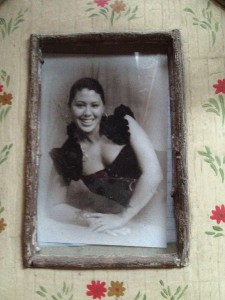
Michelle LaRose Clark was raised in a military family and moved to Alaska as a child. She loved the outdoors, the Denver Broncos and her pit bull, Adak. She joined the Alaska Army National Guard at age 27.
“My sister wanted to be like my dad,” said Clark’s sister, Angela LaRose of Anchorage.
She remembers she shopped at the Eagle River Wal-Mart the day her sister died. She drove nearly in view of her sister’s condo, where paramedics found Michelle that evening, unconscious on the bedroom floor.
“So she was dying while I was out there,” LaRose said. “That’s something hard to deal with because if I would have just stopped by … I might have found my sister.”
Angela, her brother and her parents are heartbroken over Clark’s death and plagued by the thought that someone is getting away with murder. They think Clark may have been killed because she was about to blow the whistle on sexual assaults and drugs in her Guard unit.
A special state investigator hired to examine the Guard highlighted the death as a case that deserves further review.
Clark’s brother, Randy LaRose of Wasilla, said the family needs answers. He wishes he had the money to offer a reward.
“I even thought about standing out there on the Seward Highway,” he said, “like they do in protests: ‘Justice for Michelle. Justice for Michelle.’”
He has already tried a more aggressive approach. Two days after his sister died he stormed over to confront her husband, accusing him of murder. Randy was arrested on assault charges. The husband later said in court Randy’s accusation against him was frightening and unfounded.
“From that anger, I was paralyzed. Because I was like, there’s no way this dude is saying this kind of stuff,” Clark’s husband told a magistrate.
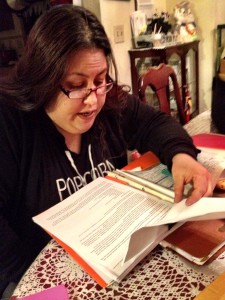
The husband is a pharmacy technician and an Army reservist who met Michelle when they were both deployed in Kosovo in 2009. They were married for six months. (He did not respond to a note APRN left on his door recently, and we are not naming him because he has not been charged with a crime.)
Michelle Clark’s family doesn’t like that her husband is named as the beneficiary of her military life insurance policy, which has a $400,000 payout. But they have no evidence tying him to homicide or any conclusive evidence that it even was a homicide.
The authorities, on the other hand, have not assured the family, or the public, that Clark’s death has been thoroughly investigated.
The Anchorage Police Department opened a case when Clark died in January 2011. In May of that year, they wouldn’t discuss the case with an attorney representing Clark’s mother. And they won’t describe the extent of their efforts now. A police spokeswoman said the case is still open, so the files can’t be released, and she can’t talk about it.
On the autopsy report and death certificate, Clark’s cause of death is listed as “undetermined.” That’s a rare outcome in autopsies of adults, said pathologist Gary Zientek, now the state’s chief medical examiner.
“But there’s a small percentage of cases where we just don’t find a cause of death,” he said.
Zientek signed Clark’s autopsy report. According to a copy provided by Clark’s family, he found no evidence of trauma or disease that could have killed Clark. Toxicology tests showed no drugs or alcohol, and further screening months later found only caffeine and a substance found in chocolate.
Zientek said state law prevents him from releasing information about any autopsy to the public, or to a reporter, but he spoke generally about inconclusive autopsy results.
“It’s frustrating for us,” he said of not finding a cause of death. “It’s very frustrating for families.”

Zientek said sometimes a natural cause of death leaves no mark on the body. It can happen when a young adult is struck by seizure or arrhythmia. Or, he said, a spasm of the coronary artery can last long enough to kill, but then relax, leaving nothing to find at autopsy.
He said in those cases, toxicology usually helps. If the basic screen turns up nothing, Zientek said he’ll order an expanded toxicology panel, to test for other 100 or so less common substances.
“They pick up a lot of prescription drugs,” he said of the toxicology screenings he typically orders. “There are some drugs that they don’t pick up, and some drugs that we have tried to find somebody to test for and we have not been able to.”
Clark’s family believes the toxicology testing was inadequate. They want to exhume the body. Her sister, Angela LaRose, said she’s heard of lethal compounds that can’t be detected, but she thinks more specialized tests could yield results.
“You can’t just run a regular toxicology test and think that this is coming out … If you’re looking for a certain (drug,) you have to look for that thing,” she said.
Clark’s mother, Sun LaRose, hired a California pathologist to review the autopsy report and medical records. He concludes Clark likely died of complications from high blood pressure. Records of Clark’s prenatal care show that in her second trimester her blood pressure hovered above the threshold for high blood pressure. But the final reading in her chart, within three weeks of her death, shows her blood pressure was back down, in the pre-high blood pressure range.
Randy LaRose believes it can’t just be a coincidence that on her final workday his sister told a Guard officer she feared for her life.
“Two days before her death she comes to (Lt. Col. Ken) Blaylock and said ‘Sir, they’re going to kill me. I need to talk to you, but not here.’ And then she’s found dead?” LaRose recounts. “There’s something more to it. I mean, there has to be.”
Alaska Army National Guard Staff Sgt. Michelle Marie LaRose Clark is buried at a cemetery on Fort Richardson, where she worked.