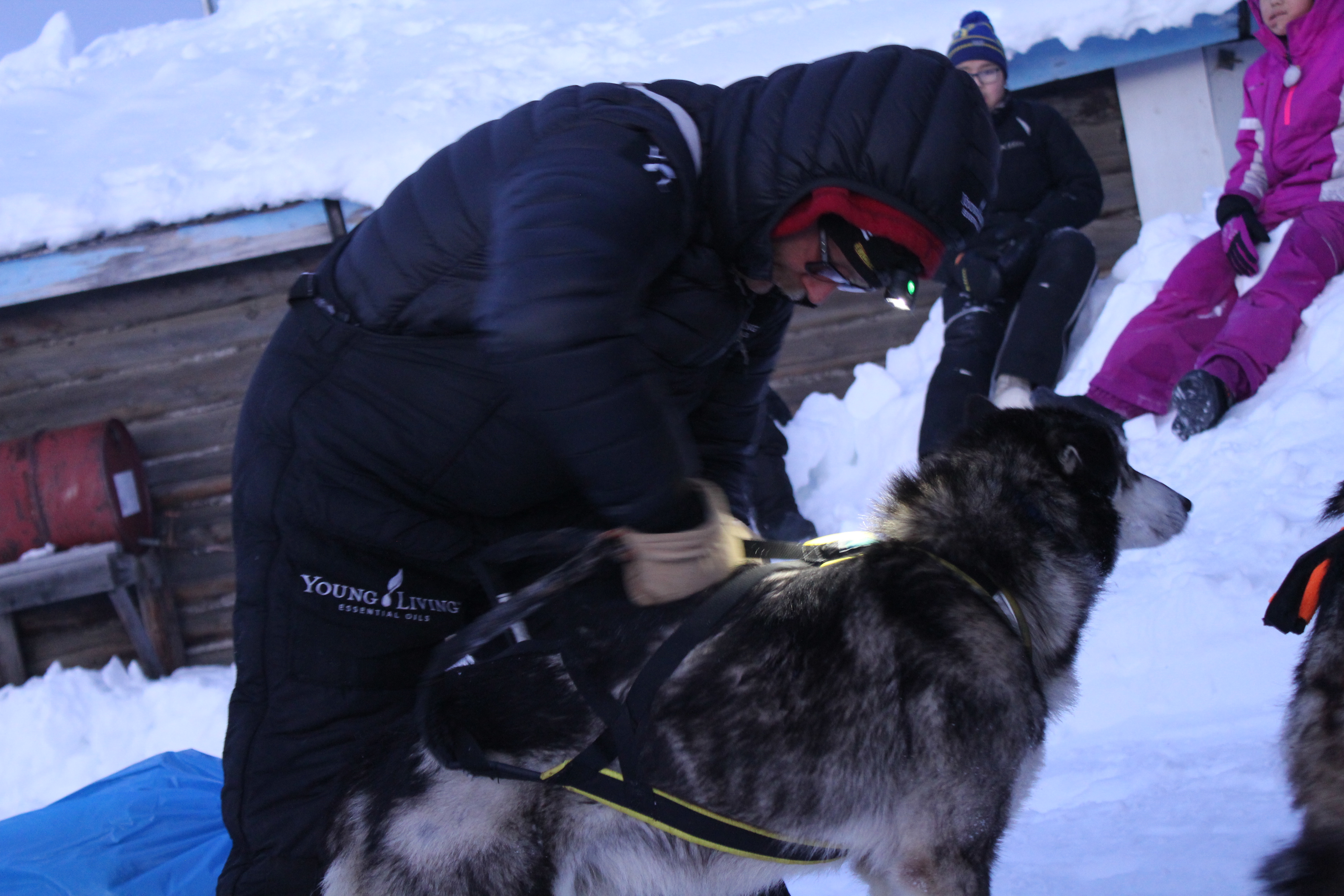
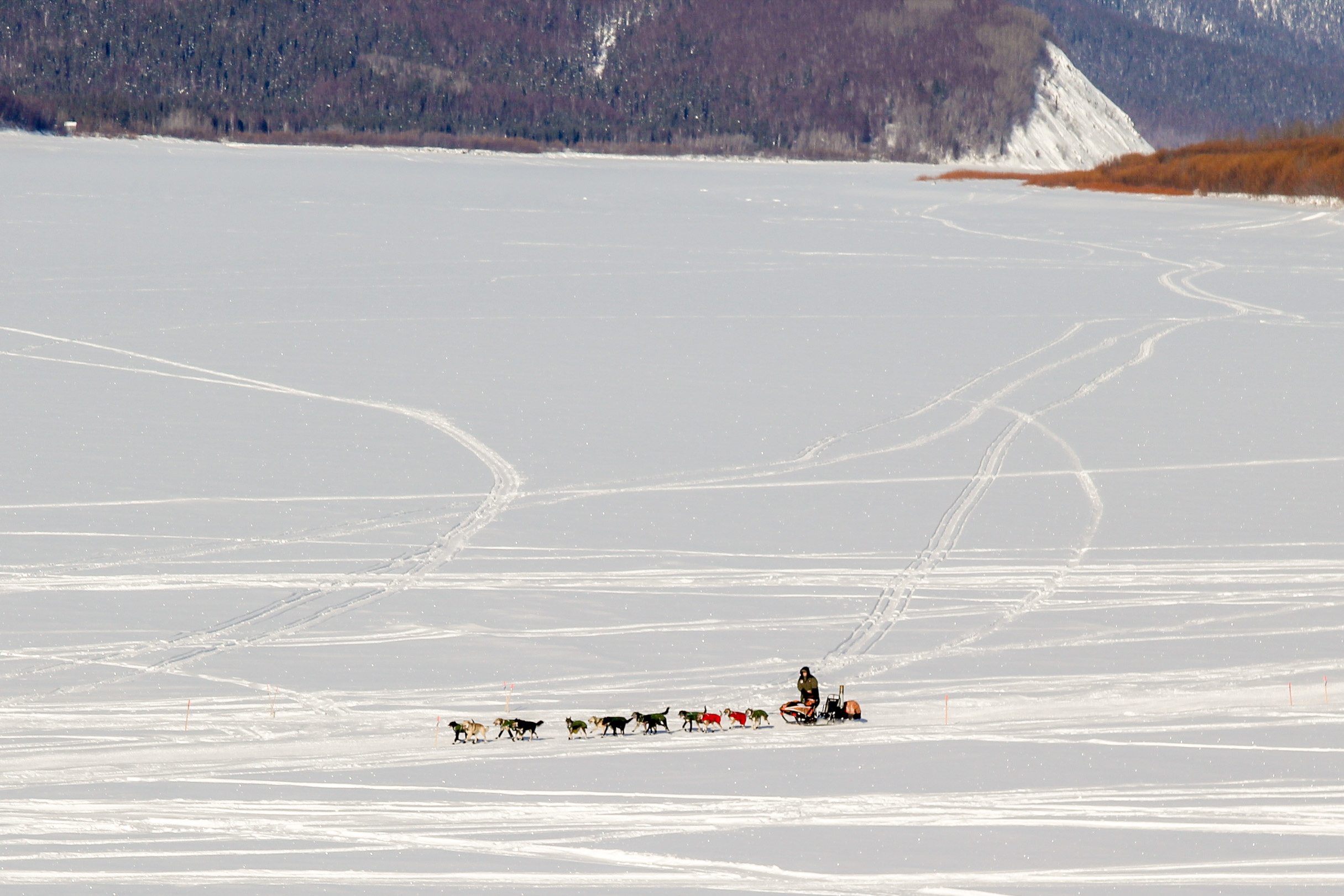
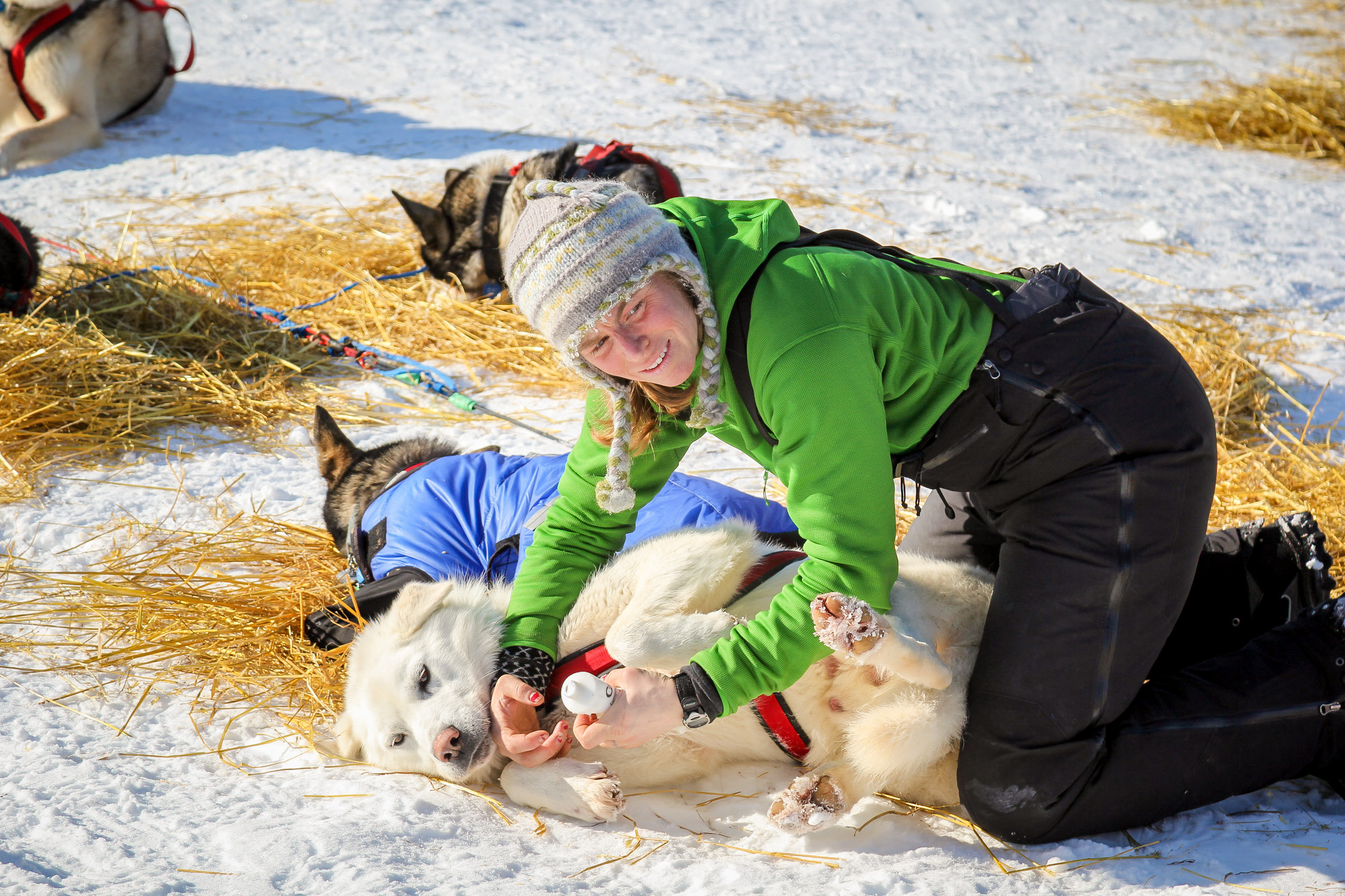
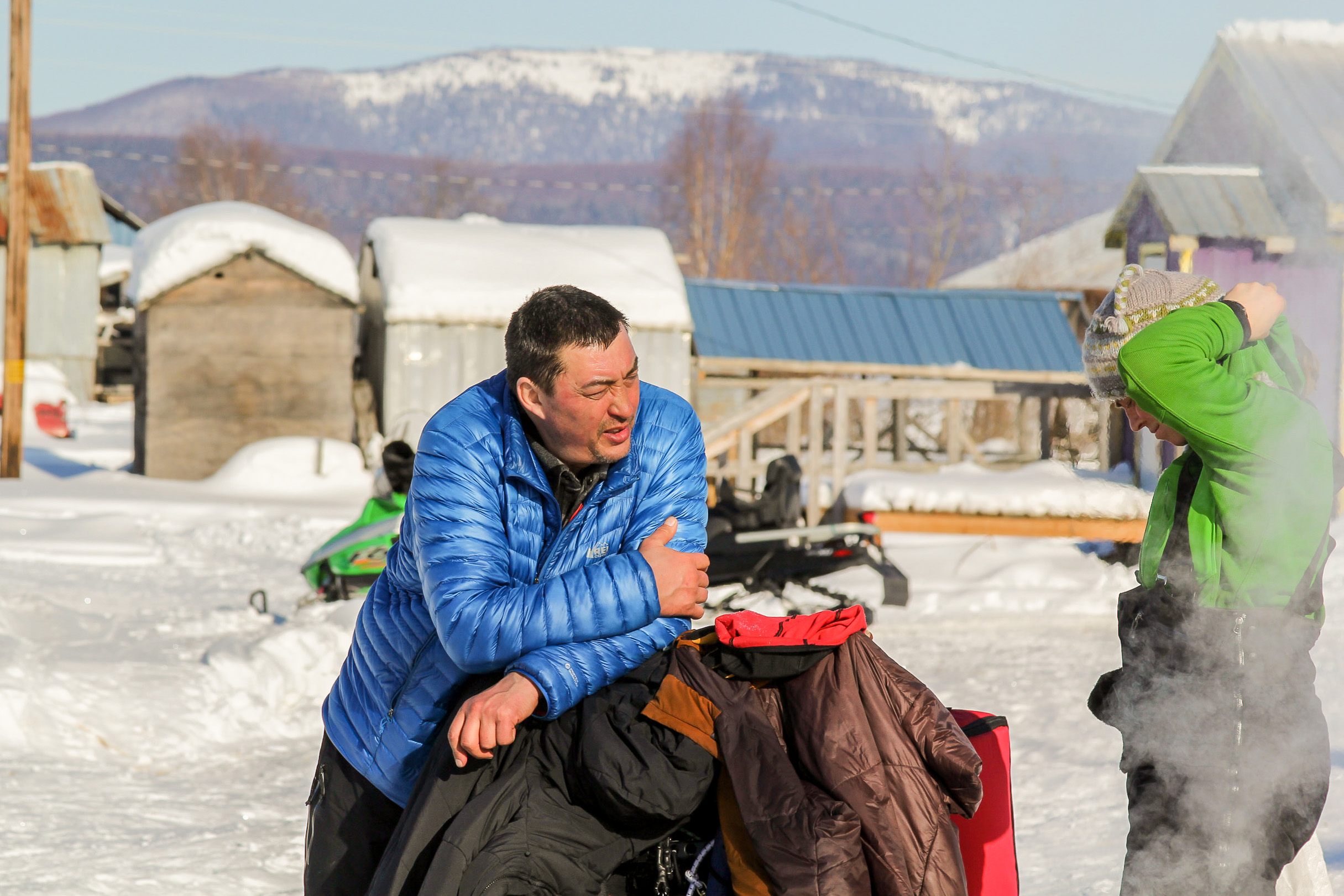
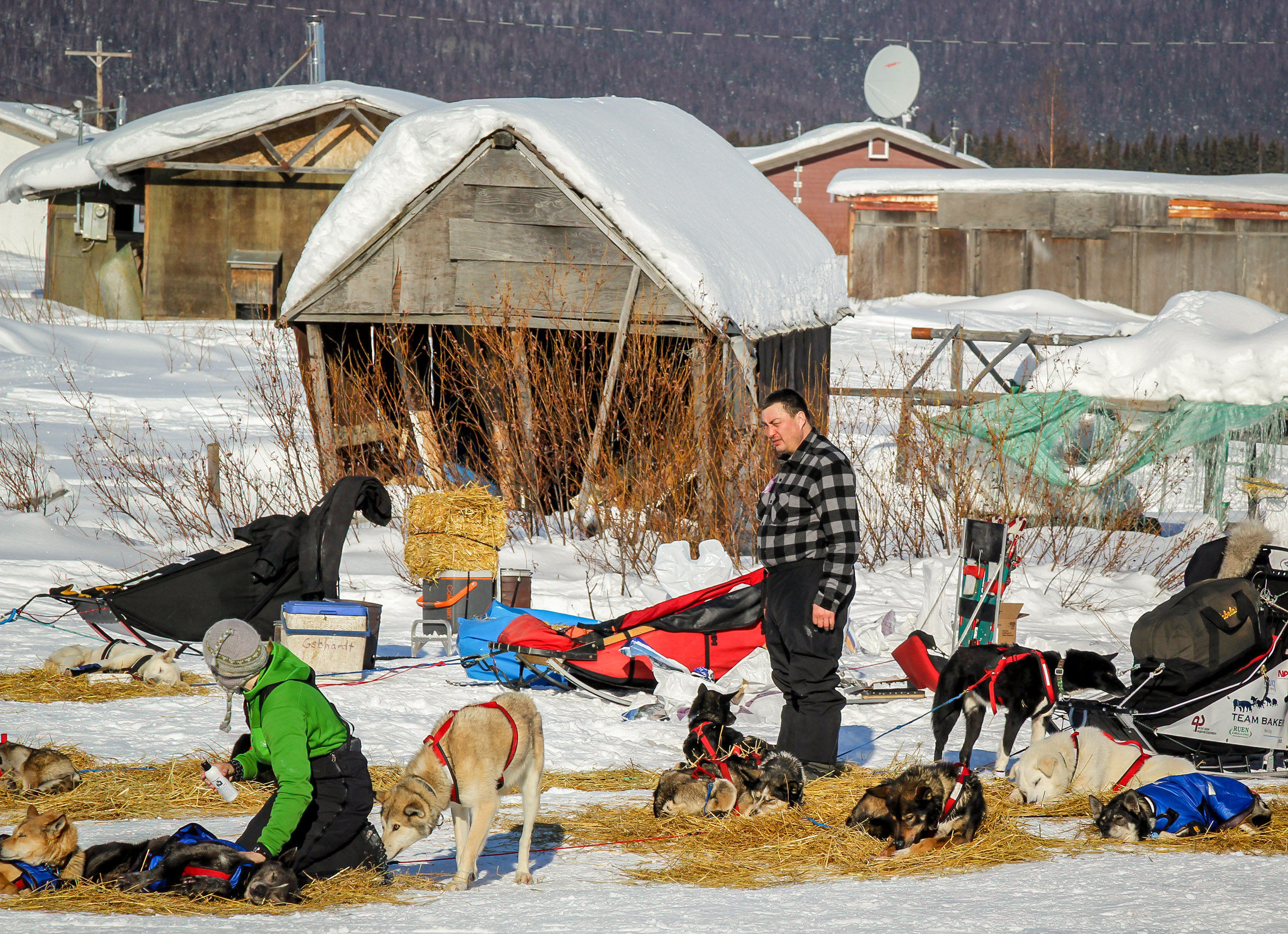
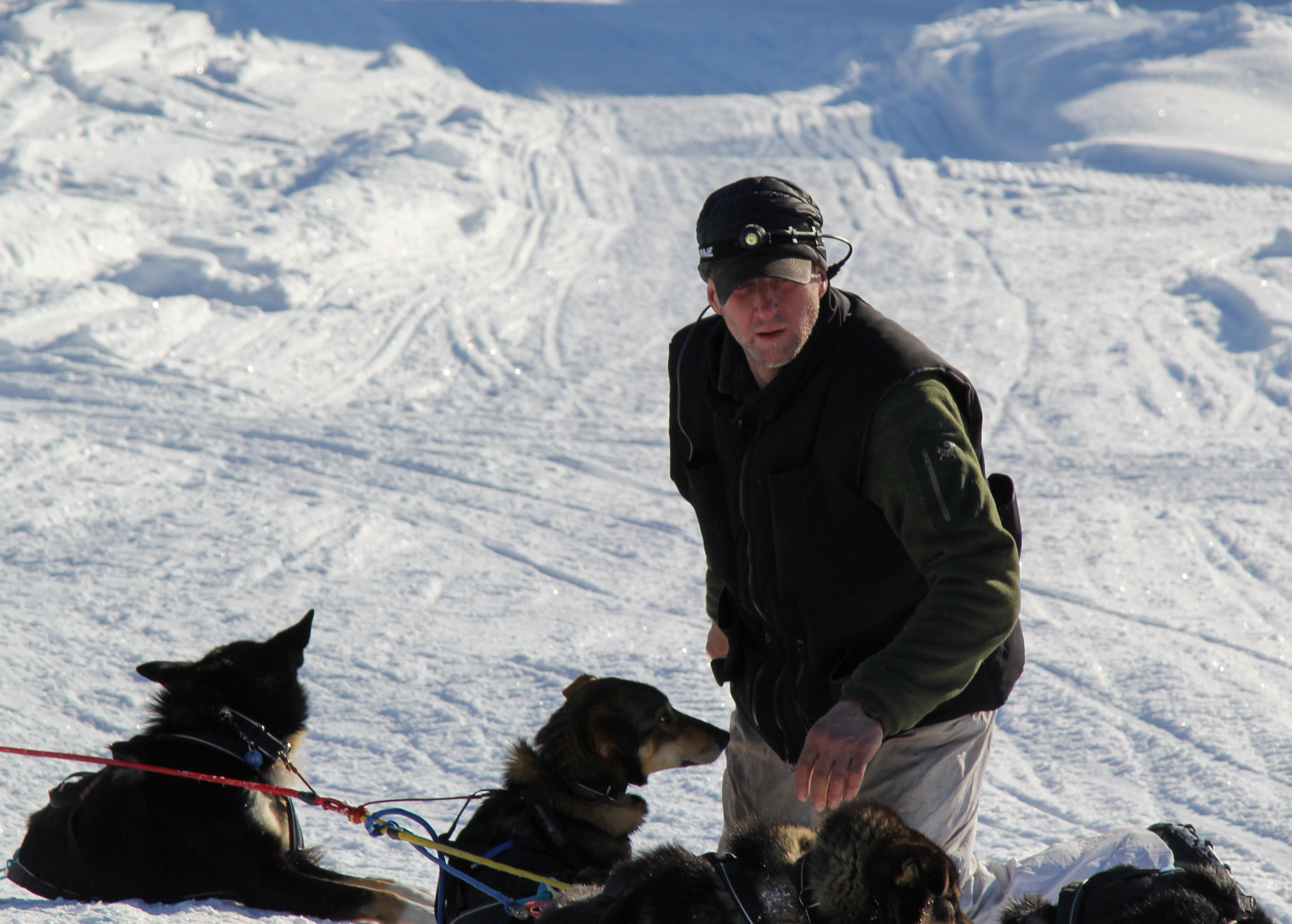
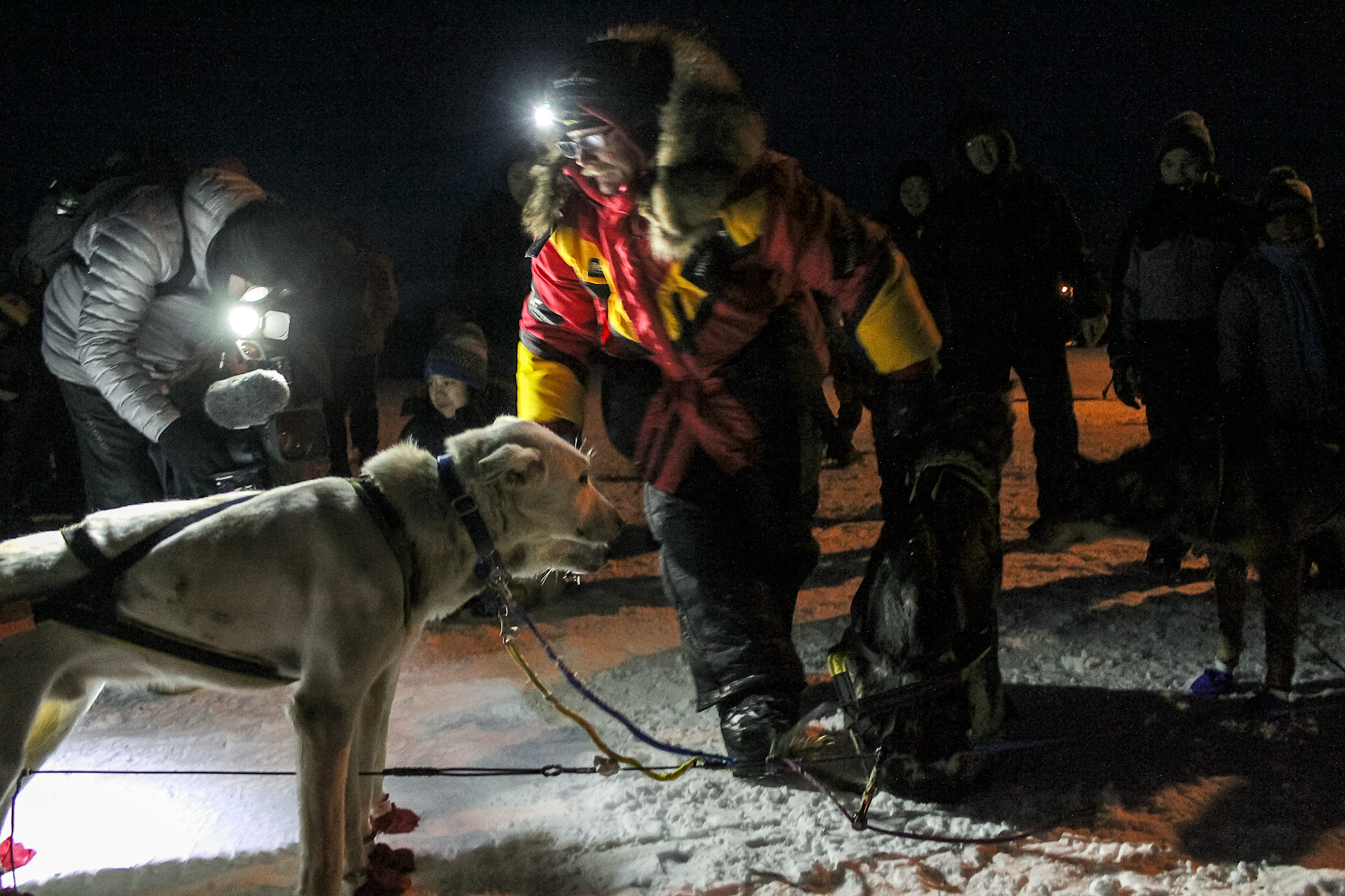
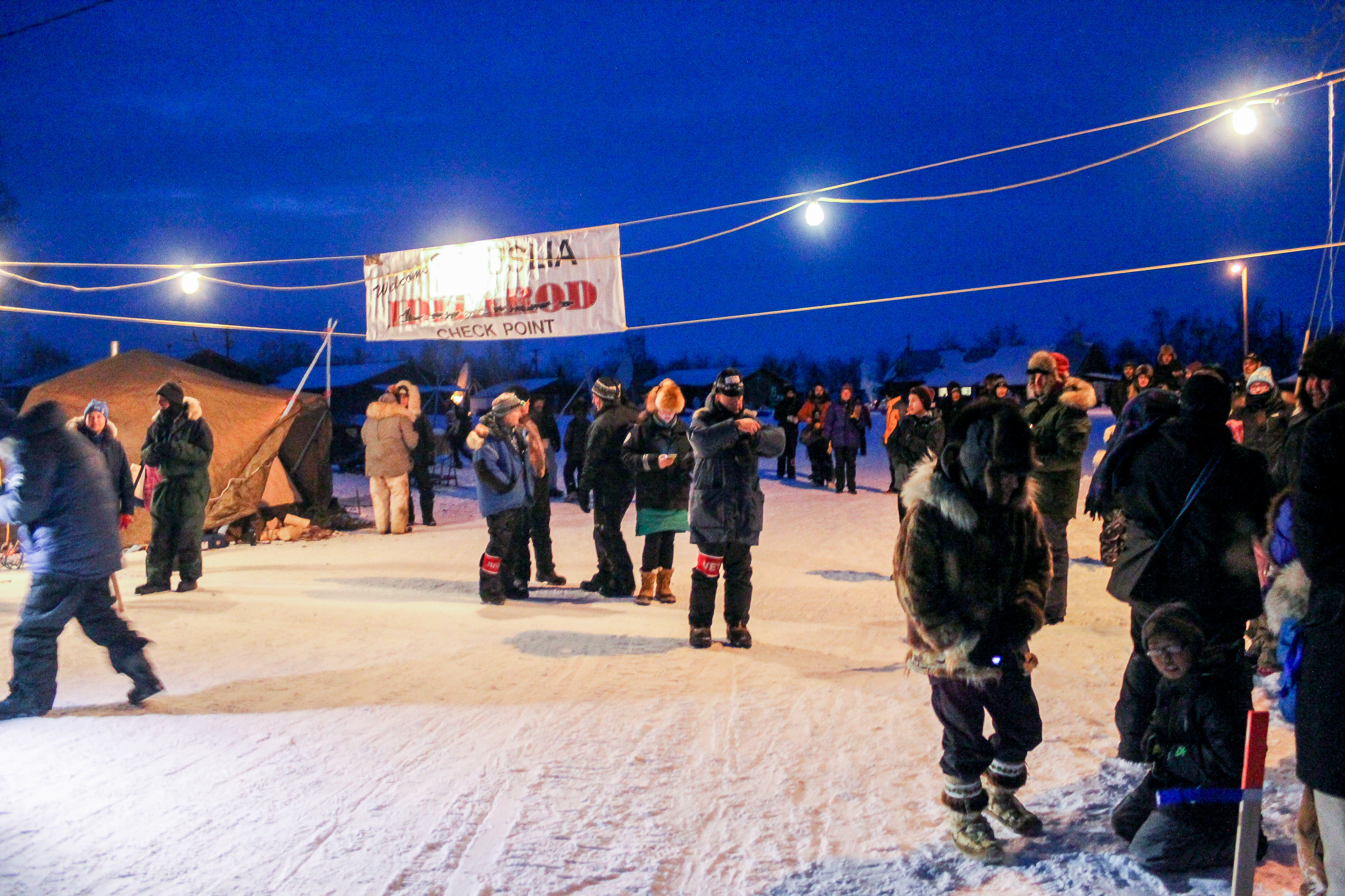
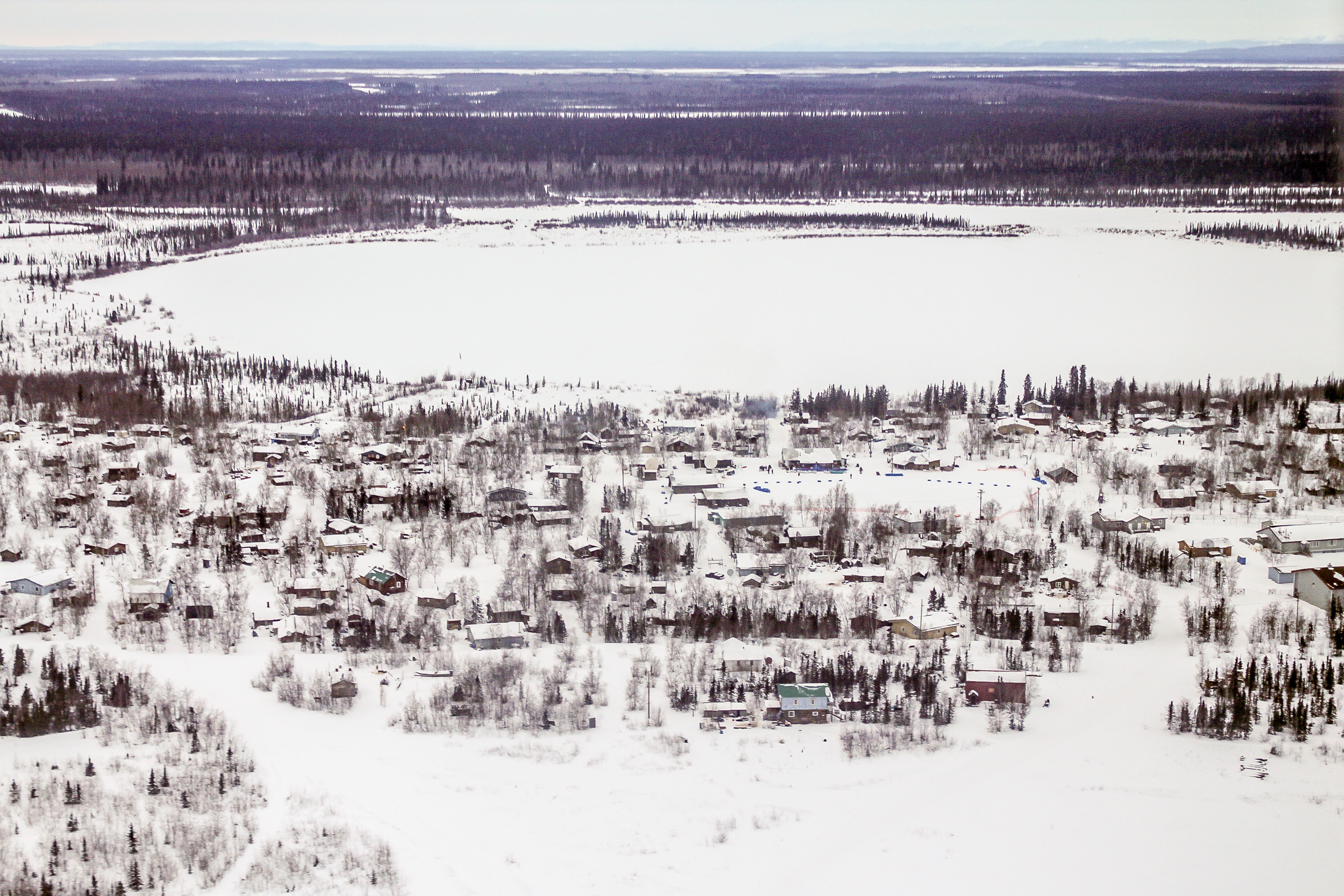
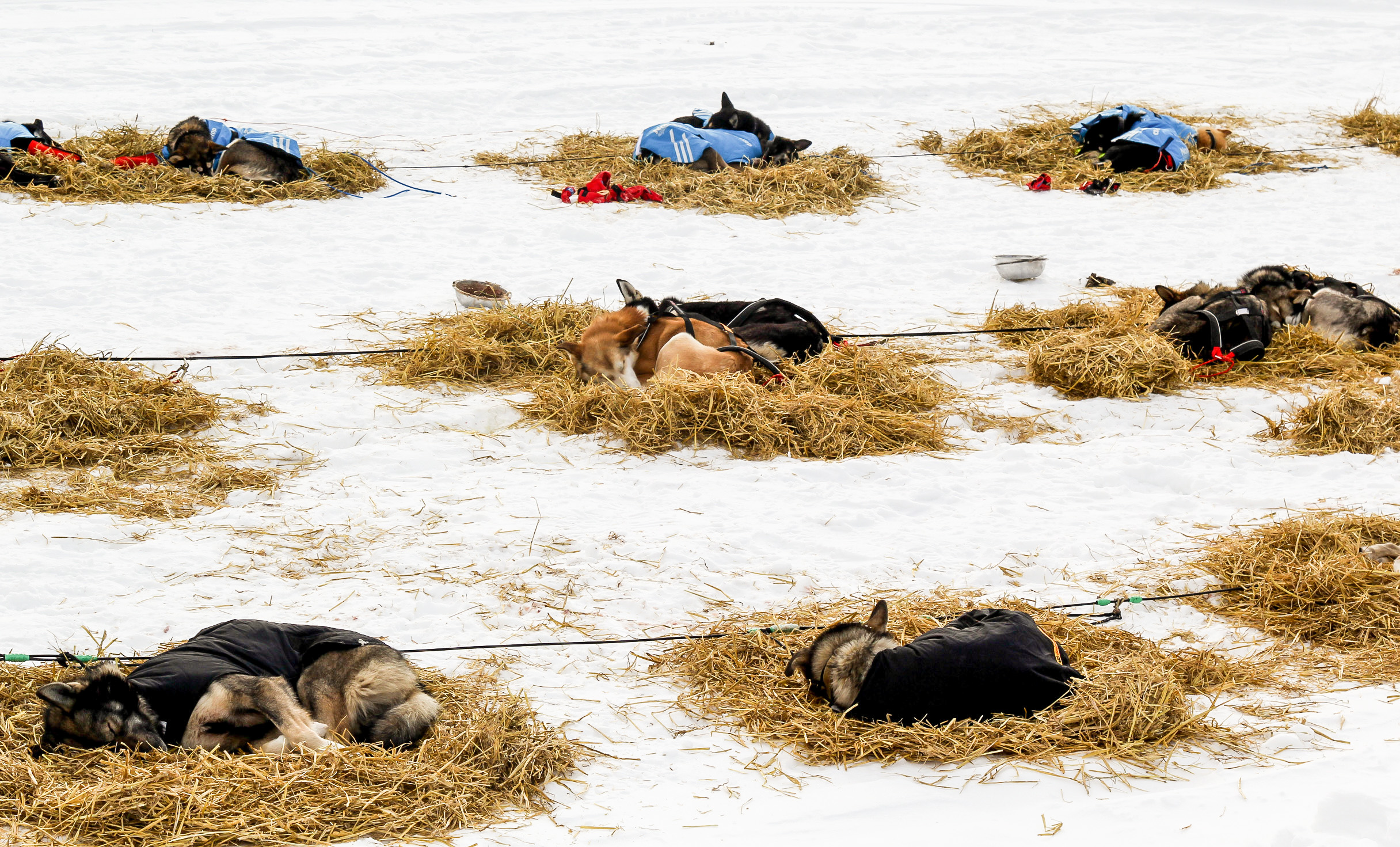
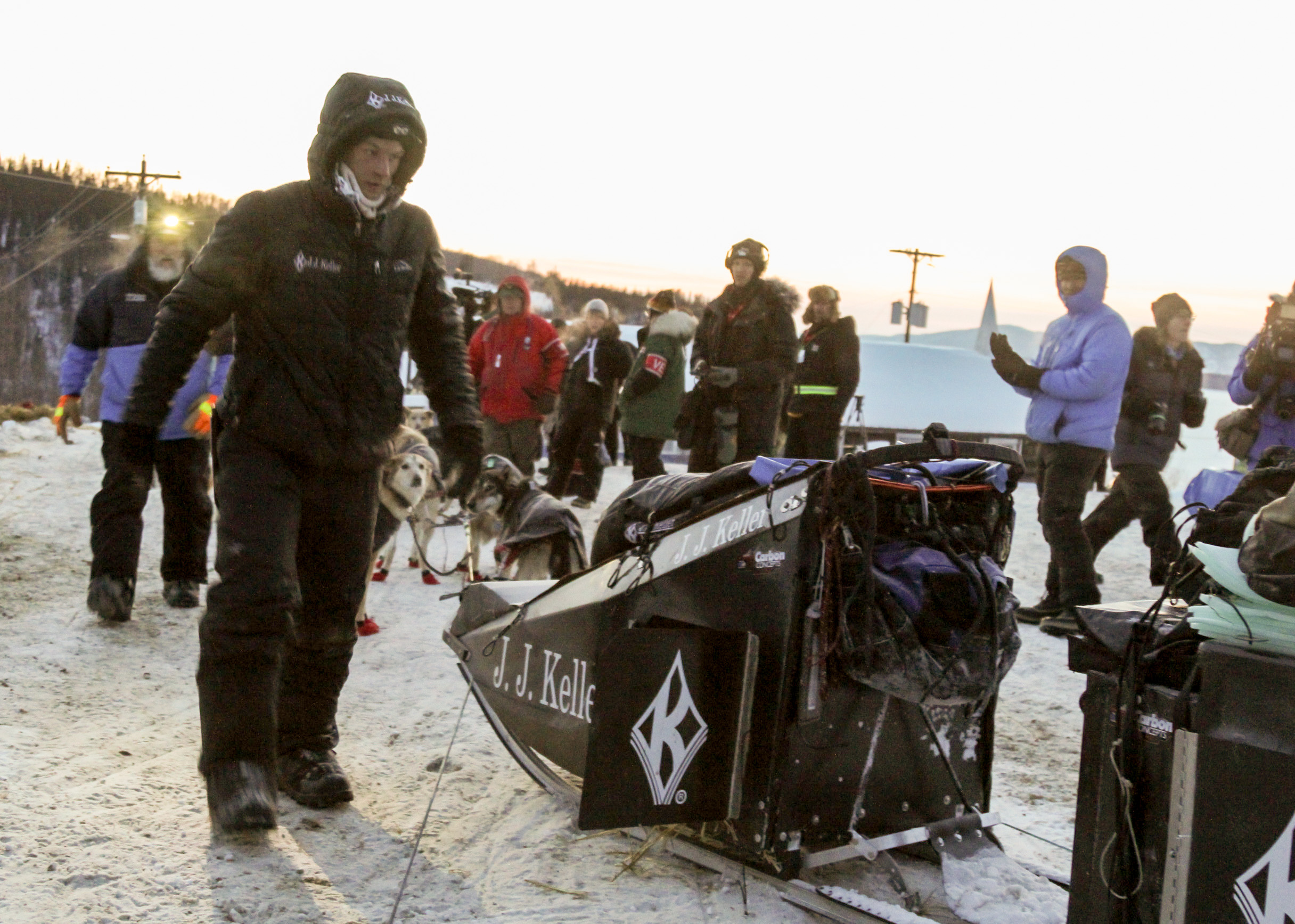
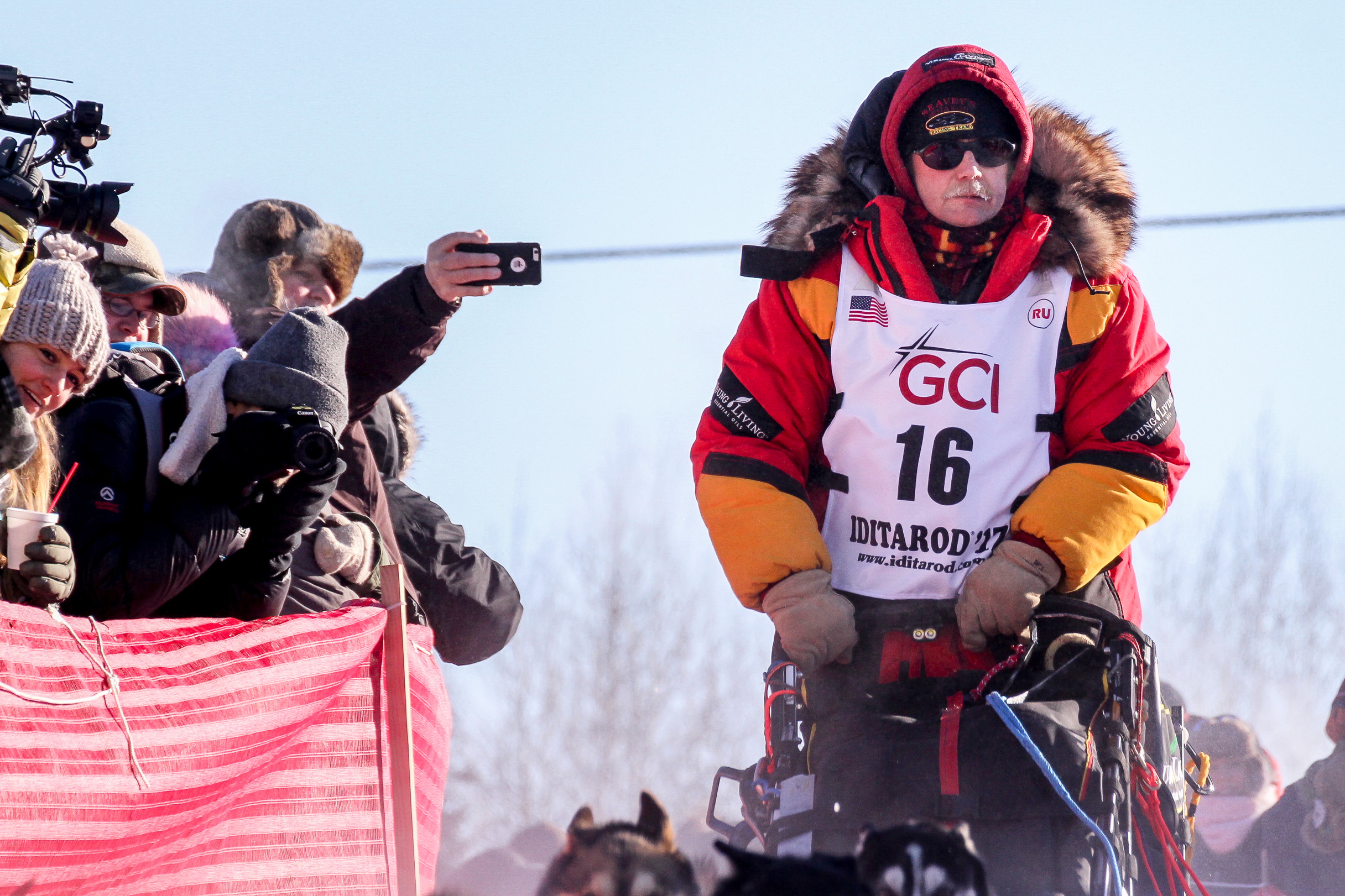
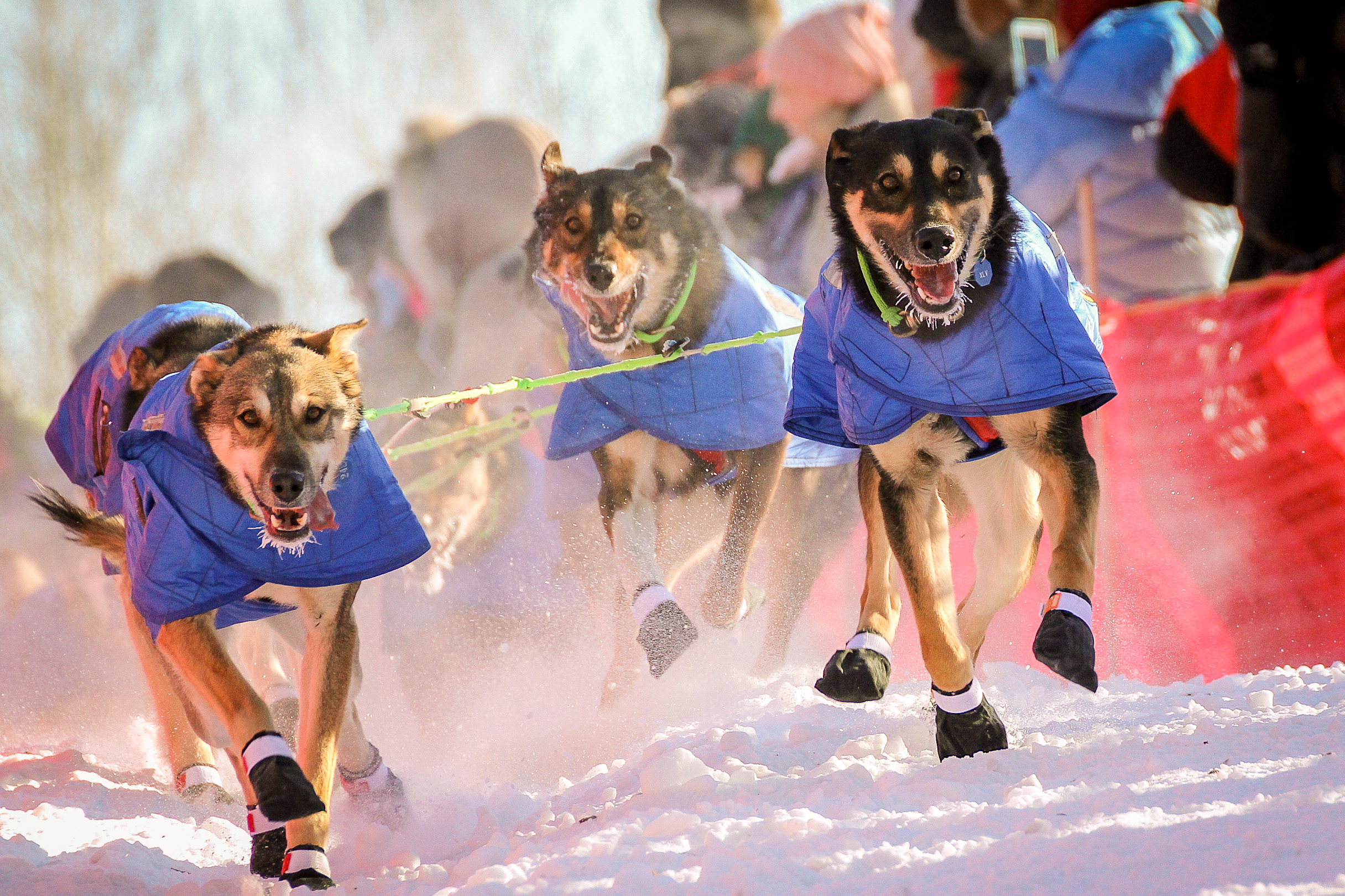
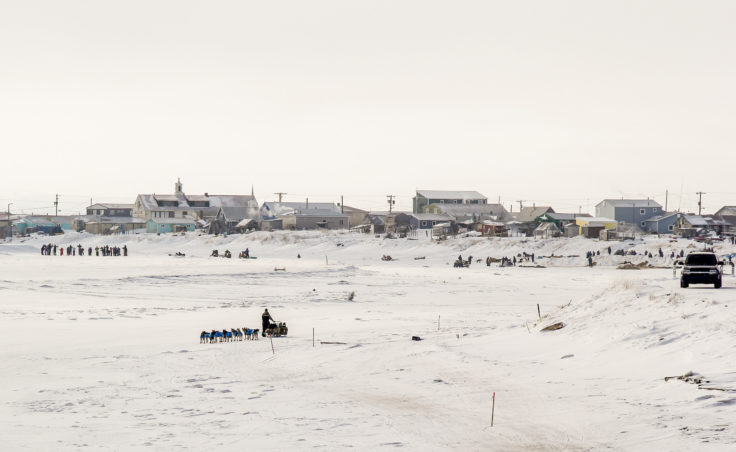
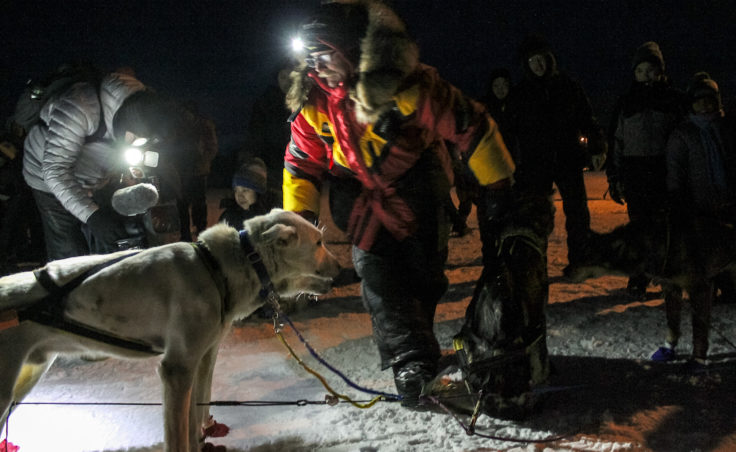
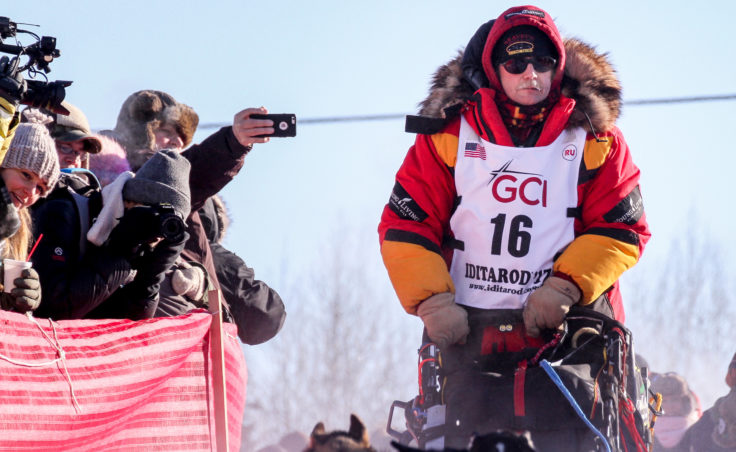
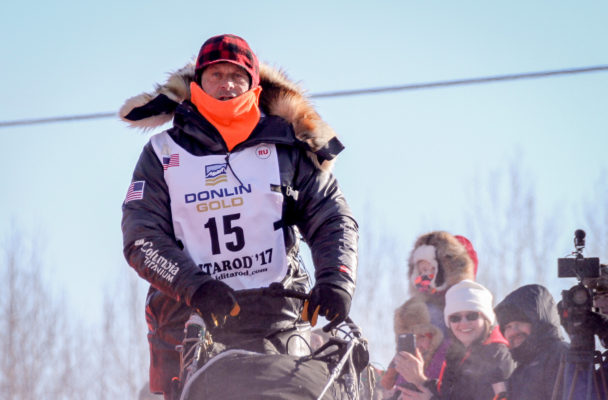
Mitch Seavey beds down his team in Kaltag during the Iditarod. Seavey was expected to finish in Nome sometime Tuesday evening. (Photo by Ben Matheson/KNOM)
Updated | 2:11 p.m. Tuesday
Mitch Seavey’s speed continues to exceed expectations. With Seavey out of the Safety checkpoint at 1:10 p.m. Tuesday, an arrival in Nome as early as 3:30–4 p.m. is now possible.
Original story | noon Tuesday
Nome may be less than 24 hours away from its 2017 Iditarod finish.
Assuming no unexpected complications or changes in his pace, Mitch Seavey could arrive under the Burled Arch as this year’s Iditarod champion by about 7 p.m. Tuesday — perhaps slightly earlier.
The elder Seavey, currently Iditarod’s race leader, departed the Elim checkpoint at 6:13 p.m. Monday with 12 dogs, having spent two hours 47 minutes resting there.
A good rule of thumb for approximating an Iditarod champion’s finish is to add 24 hours to his or her departure from Elim.
This would, therefore, place Mitch Seavey in Nome at about 6:15 p.m. Tuesday.
Another, slightly more complicated means of reckoning places Mitch Seavey in Nome around the same time.
In 2015, when the Iditarod ran the same route as this year, Dallas Seavey, the eventual champion, arrived in Elim at 11:51 p.m. on the Monday a week after the race start. This year,
Mitch Seavey arrived in Elim about eight and a half hours earlier than Dallas in 2015. Both men — Dallas in 2015, Mitch in 2017 — rested in Elim for about 3 hours. If Mitch Seavey matches his son’s 2015 pace from Elim to Nome — which may be a reasonable guess, given that both Seaveys have similar mushing mentalities, similar dogs and, of course, come from shared mushing backgrounds — we might expect Mitch to arrive eight and a half hours earlier than Dallas did, which would place him in Nome at 7:45 p.m. Tuesday (8.5 hours earlier than Dallas’ 2015 arrival at 4:15 a.m. Wednesday).
Nome could see an early evening finish 6:15-7:45 p.m.
Of course, these estimates assume the absence of unpredictable factors like strong winds or other disruptions on the trail to Nome.
Certain areas near Safety, such as Topkok and “the Blowhole,” are especially notorious for their unpredictable, sometimes-suddenly-blustery weather.
Such a storm — in a remarkable series of events — derailed the Iditarod run of Jeff King in 2014, pushing Aliy Zirkle to second and giving Dallas Seavey the first of his (so far) three-in-a-row Iditarod victories.
But if Mitch Seavey’s current pace continues, the 2017 race seems to be his to win or lose. And if he does win, Nome might expect him around dinnertime Tuesday.
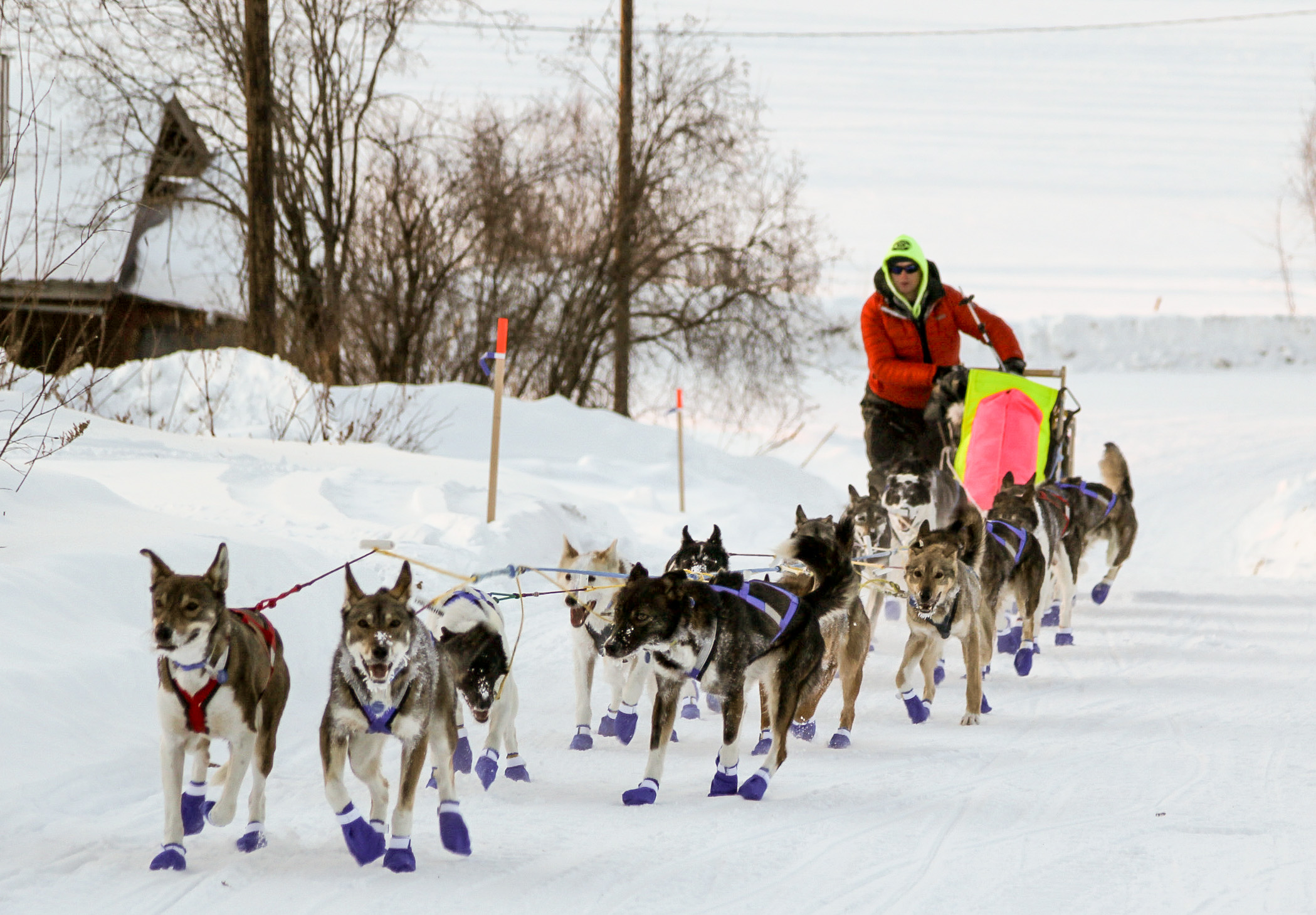
Rick Casillo mushes out of Unalakleet during the Iditarod. (Photo by Zachariah Hughes/Alaska Public Media)
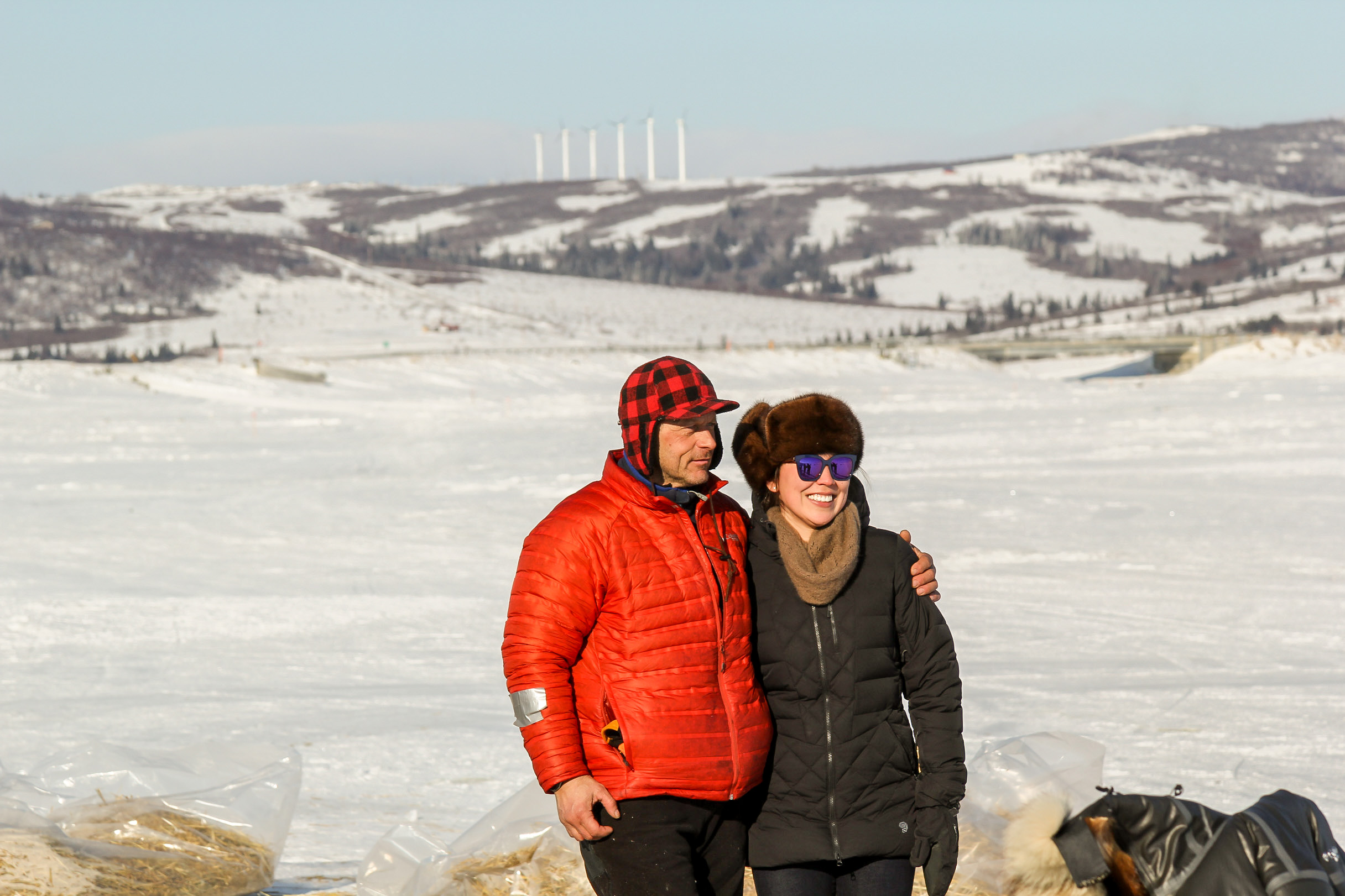
Martin Buser poses with a fan in Unalakleet during the Iditarod. (Photo by Zachariah Hughes/Alaska Public Media)
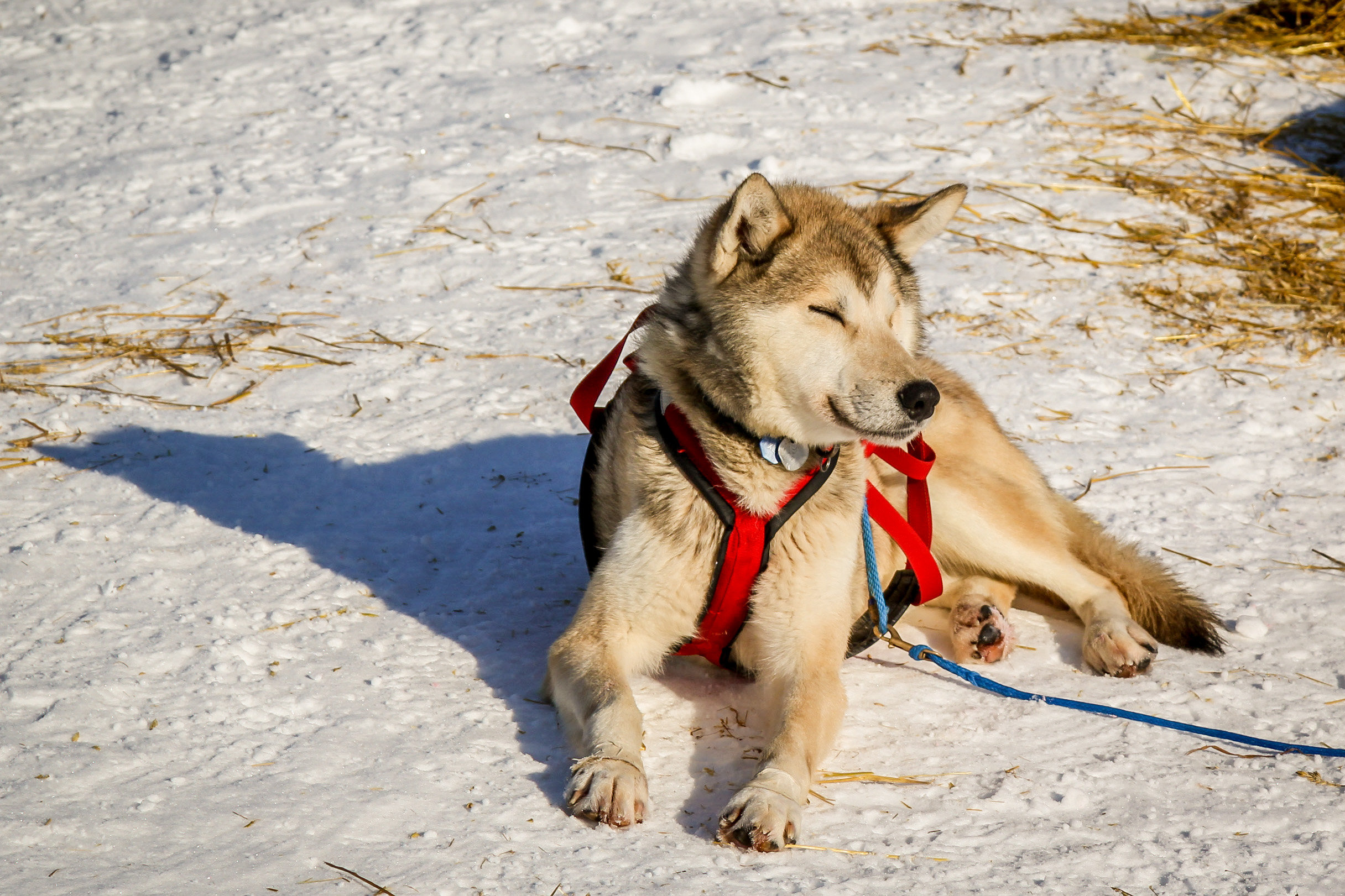
A sleepy sled dog lays down in Kaltag during the Iditarod. (Photo by Zachariah Hughes/Alaska Public Media)
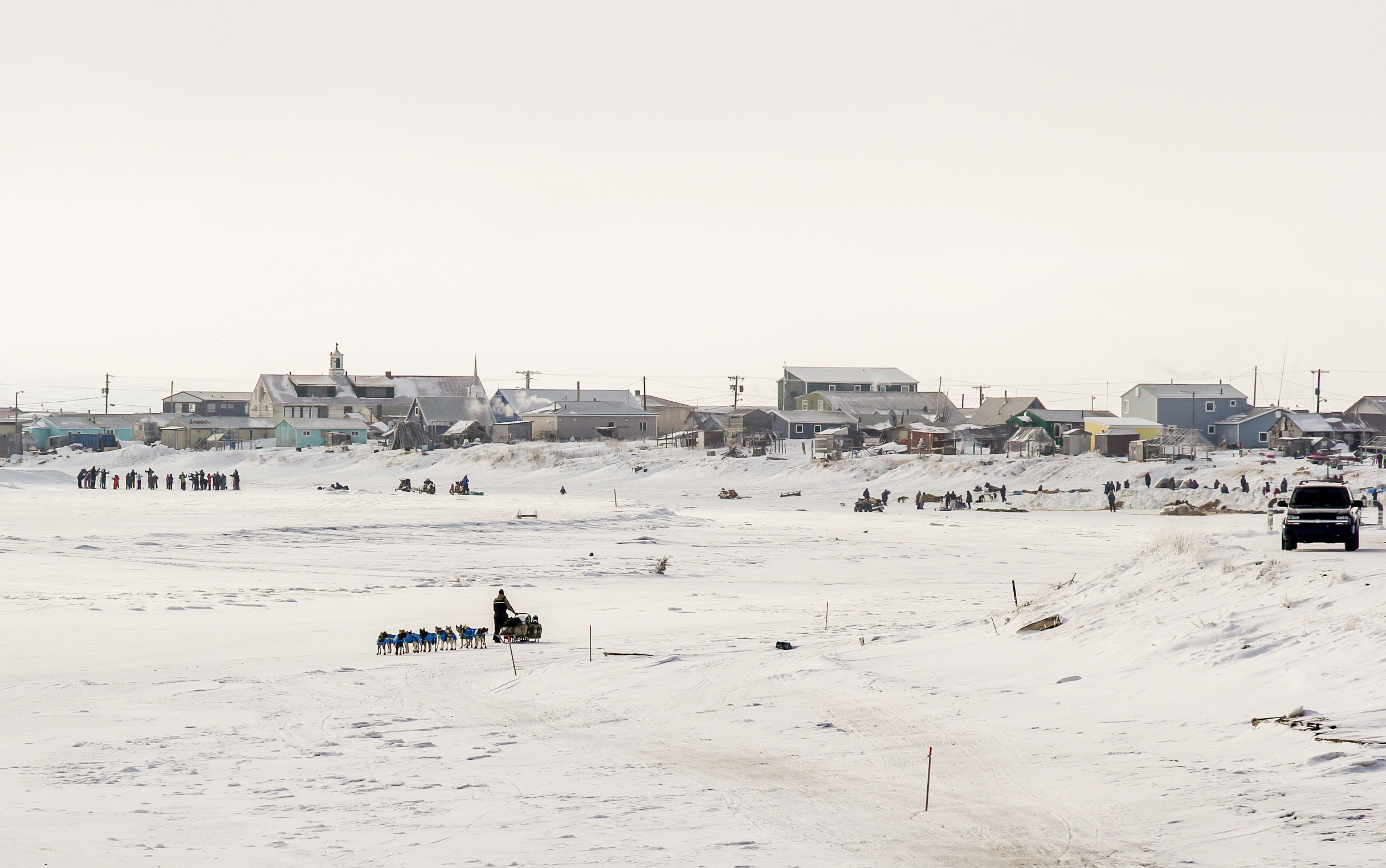
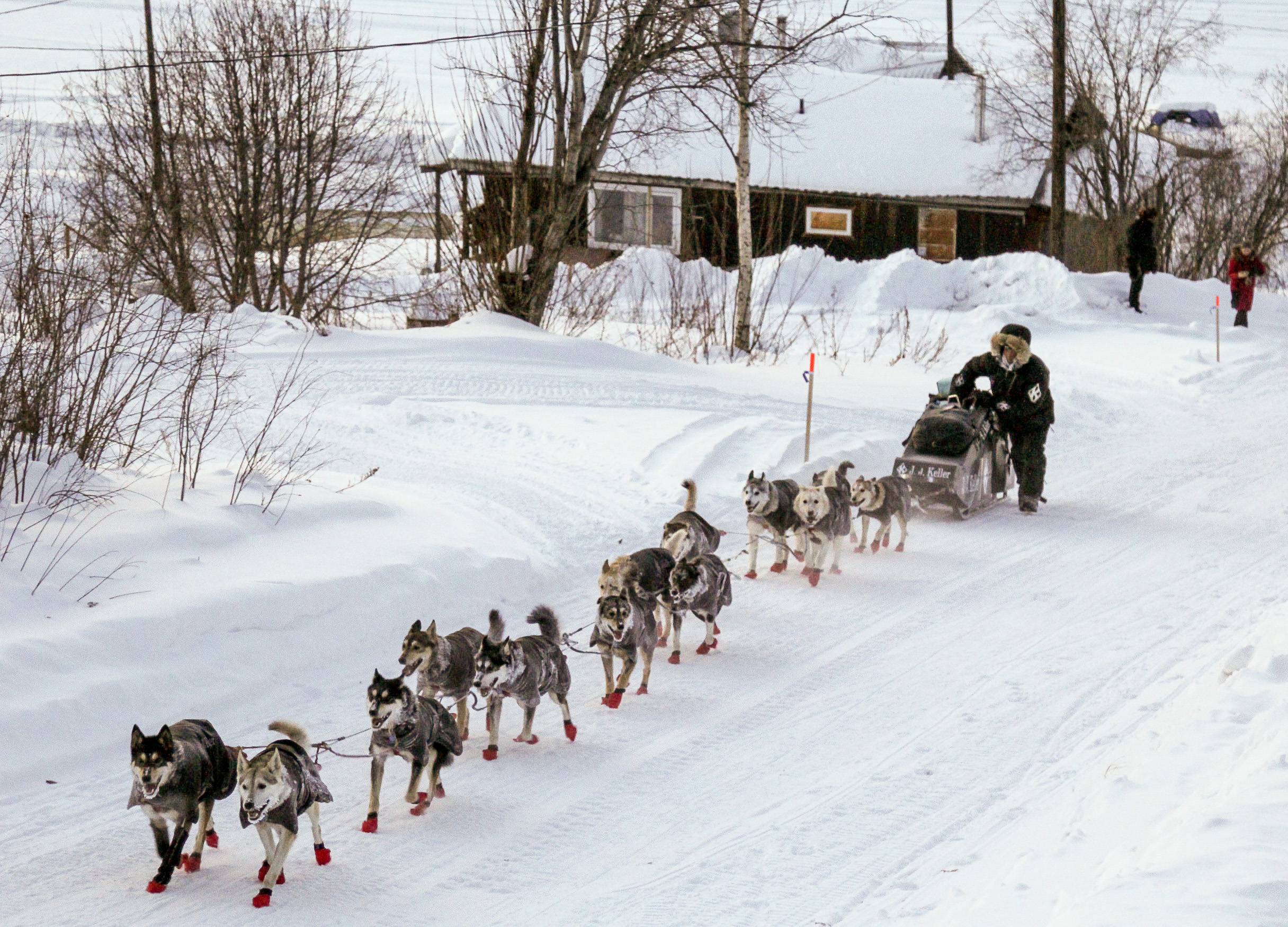
Jeff King mushes into Kaltag in the Iditarod. (Photo by Zachariah Hughes/Alaska Public Media)
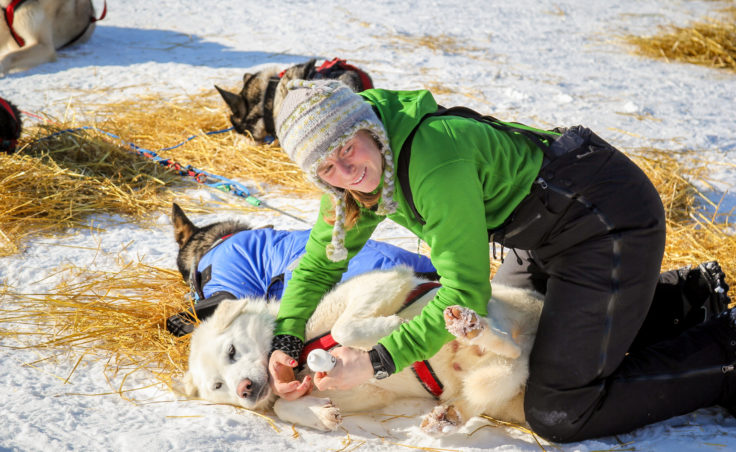
Katherine Keith tending to her dogs in Kaltag before departing for Unalakleet during the Iditarod. (Photo by Zachariah Hughes, Alaska Public Media)
John Baker and Katherine Keith talk at the checkpoint in Kaltag in the Iditarod. (Photo by Zachariah Hughes, Alaska Public Media)
Jon Baker and Katherine Keith in Kaltag during the Iditarod. (Photo by Zachariah Hughes, Alaska Public Media)
Scott Smith at the checkpoint in Galena during the Iditarod. (Photo by Zachariah Hughes, Alaska Public Media)
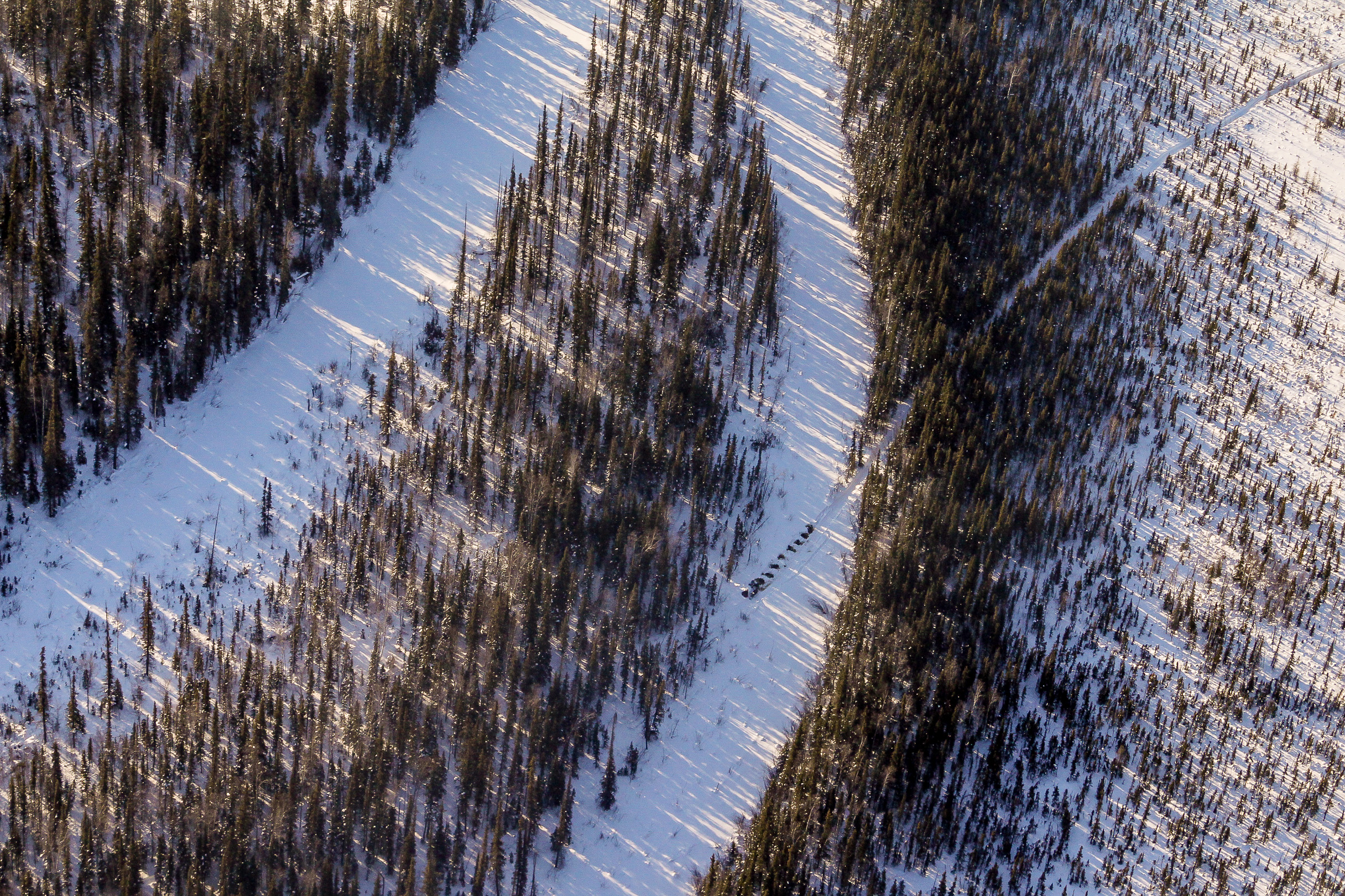
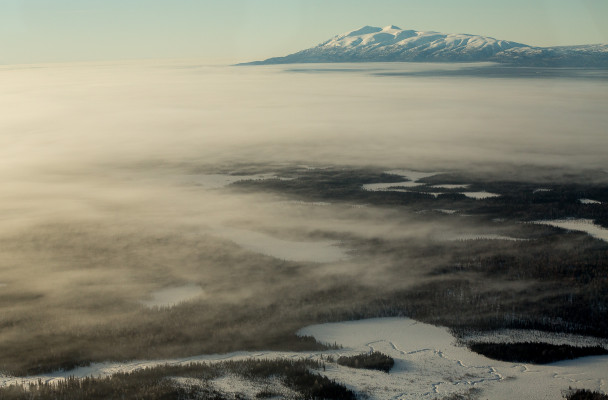
An aerial view near the Alaska Range. (Photo by David Dodman/KNOM)
Mitch Seavey was the first musher to reach Huslia on Thursday night, March 10, 2017, during the Iditarod. (Photo by Ben Matheson/KNOM)
Huslia residents came out in force to welcome the first musher, Mitch Seavey, on Thursday night, March 9, 2017, during the Iditarod. (Photo by Ben Matheson/KNOM)
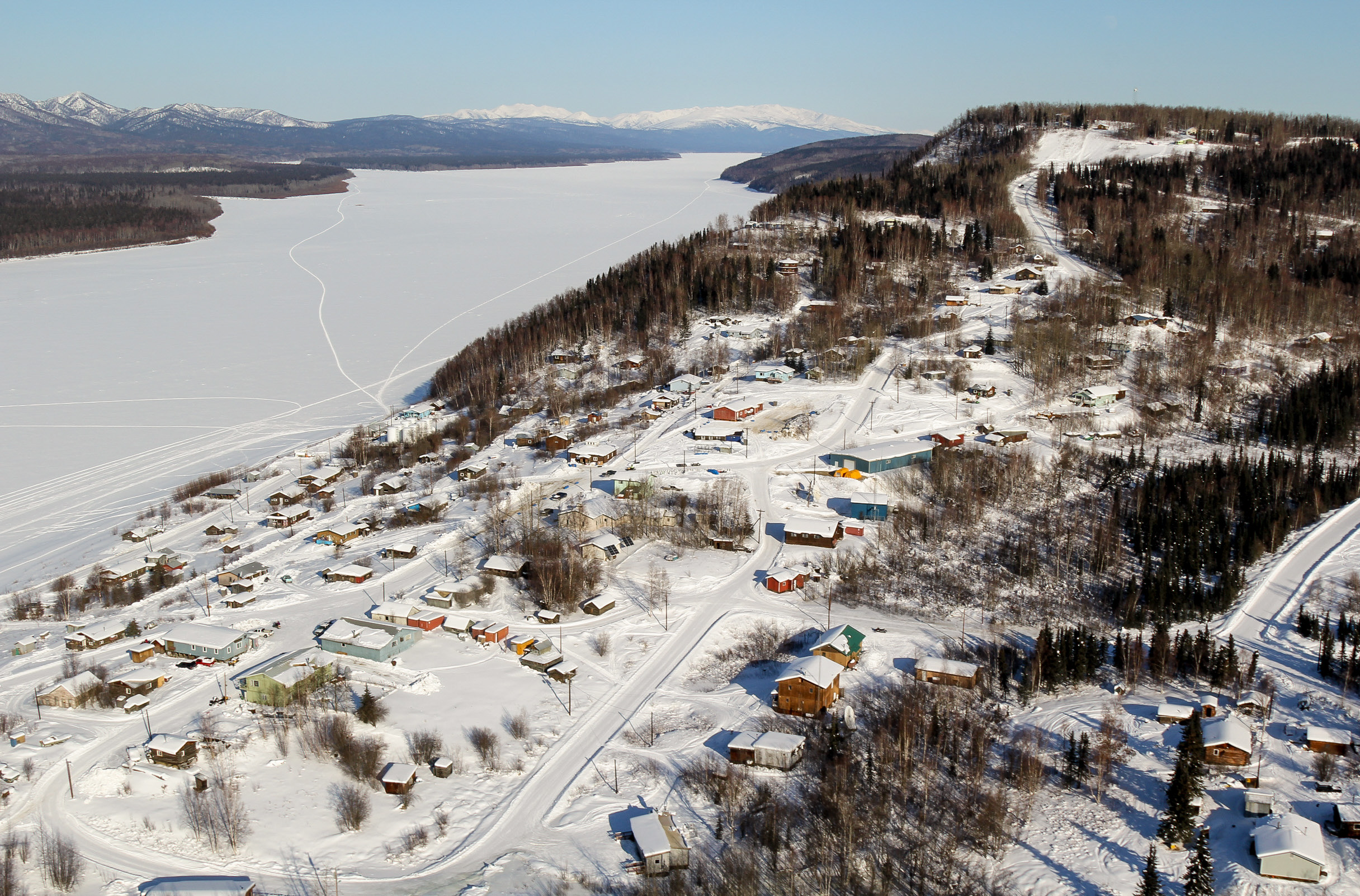
Huslia is hosting the Iditarod race for the second time in history. (Photo by Ben Matheson/KNOM)
Sleepy sled dogs belonging to Pete Kaiser, Ray Redington, Jr., and Jason Mackey rest at Galena during the Iditarod. (Photo by Zachariah Hughes/Alaska Public Media)
Michelle Phillips mushes toward the Galena checkpoint Thursday during the Iditarod. (Photo by Zachariah Hughes/Alaska Public Media)
Wade Marrs was the first musher to reach the Ruby checkpoint of the Iditarod, coming off the Yukon River into town at sunset. (Photo by Zachariah Hughes/Alaska Public Media)
Dallas Seavey arrives second to Ruby just after the sun set Wednesday night during the Iditarod. (Photo by Zachariah Hughes/Alaska Public Media)
Ruby, on the south bank of the Yukon River, seen before mushers started arriving Wednesday during the Iditarod. (Photo by Zachariah Hughes/Alaska Public Media)
Upon arriving in Ruby, Dallas Seavey quickly attended to chores during the Iditarod. (Photo by Zachariah Hughes/Alaska Public Media)
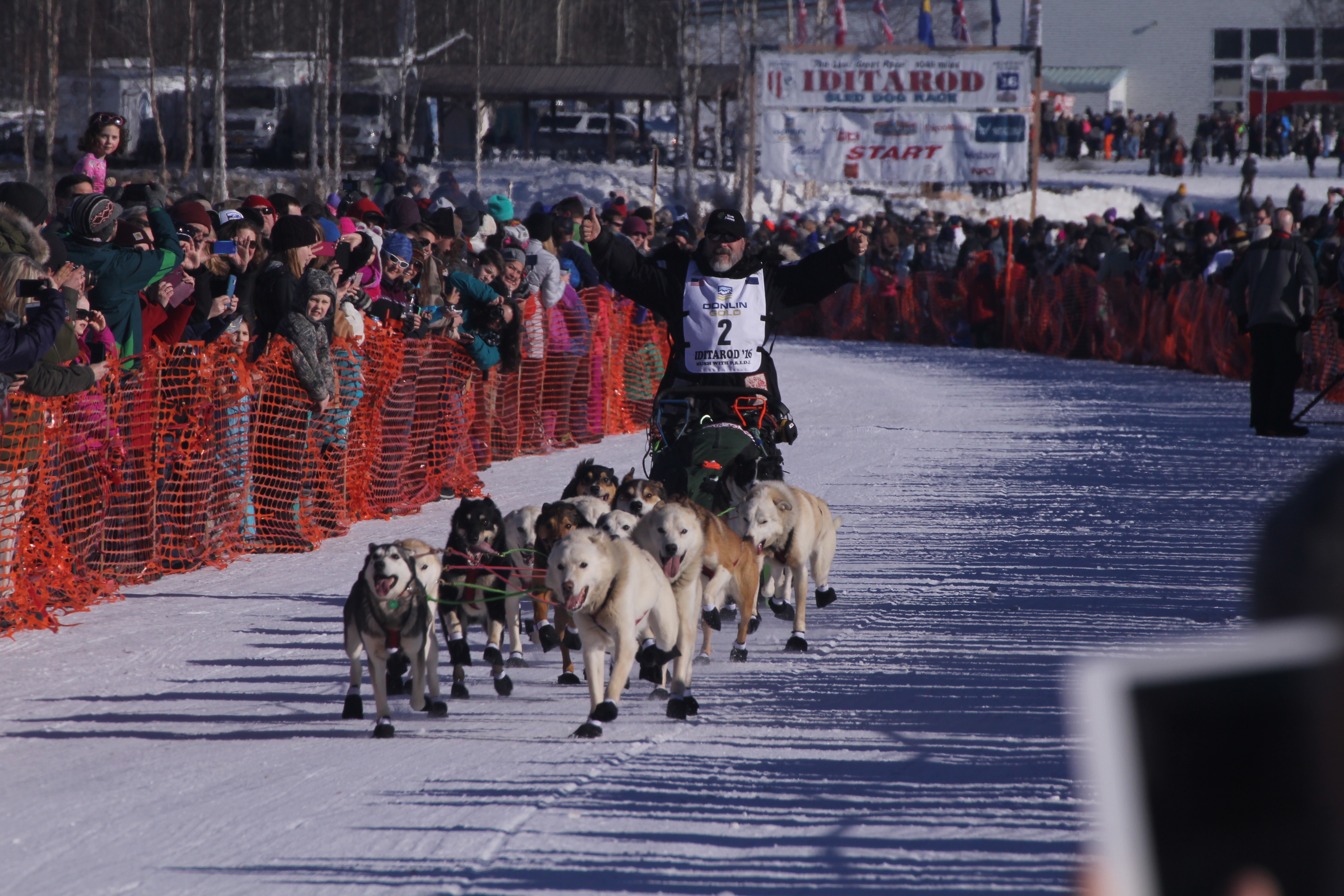
Two-time champion Mitch Seavey begins his Iditarod run at the Fairbanks re-start on Monday. (Photo by Ben Matheson/KNOM)
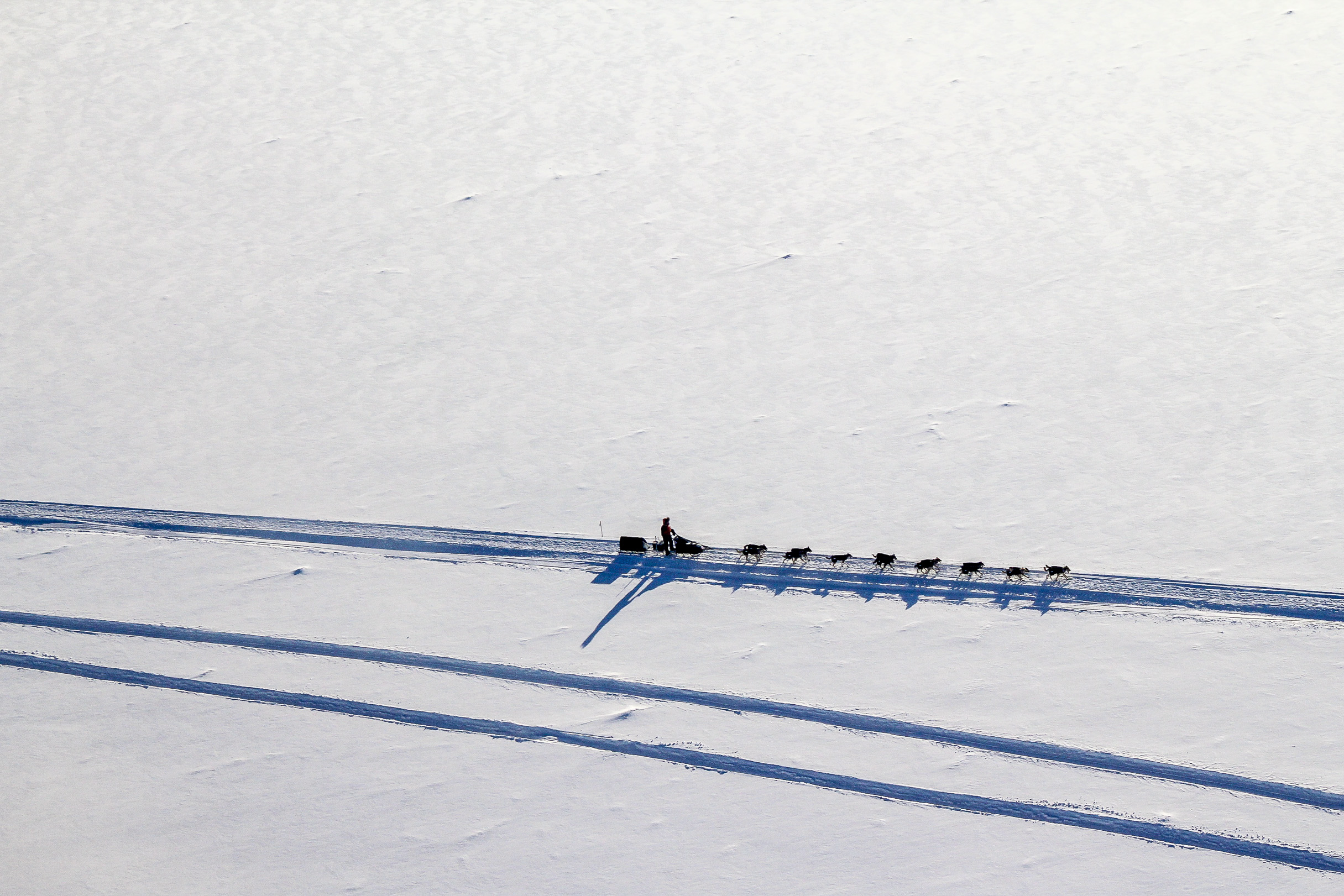
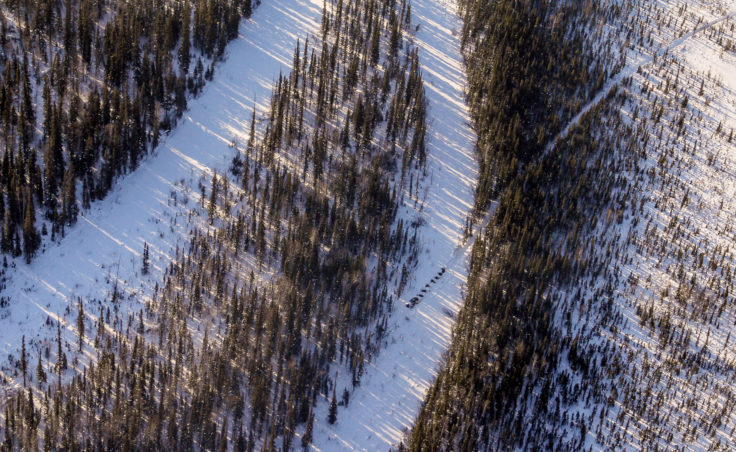
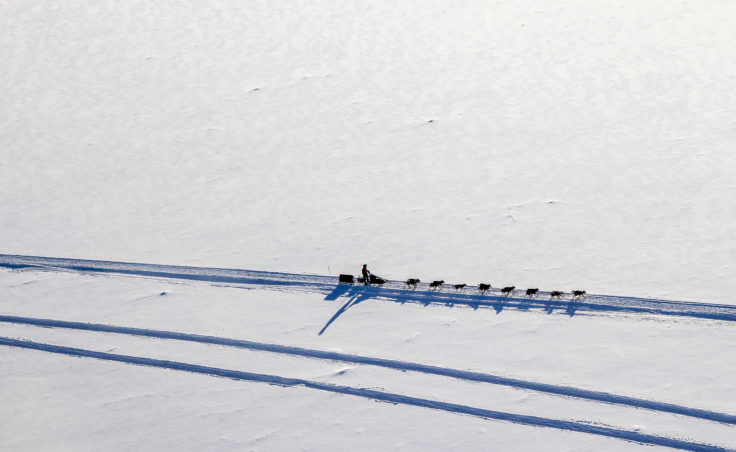
A team travels on the Iditarod trail to Manley Hot Springs. (Photo by Ben Matheson/KNOM)
A team travels on the Iditarod trail to Tanana. (Photo by Ben Matheson/KNOM)
Martin Buser is chasing his fifth Iditarod title in 2017. (Photo by Ben Matheson/KNOM)
Nicolas Petit’s Iditarod team begins its 2017 race in Fairbanks. (Photo by Ben Matheson/KNOM)
Annie Kelley is the Teacher on the Trail for the 2017 Iditarod (Photo by Wesley Early/Alaska Public Media)
Teams began the journey to Nome from the re-start at Willow Lake in Iditarod 44 . (Photo by Ben Matheson/Alaska Public Media)
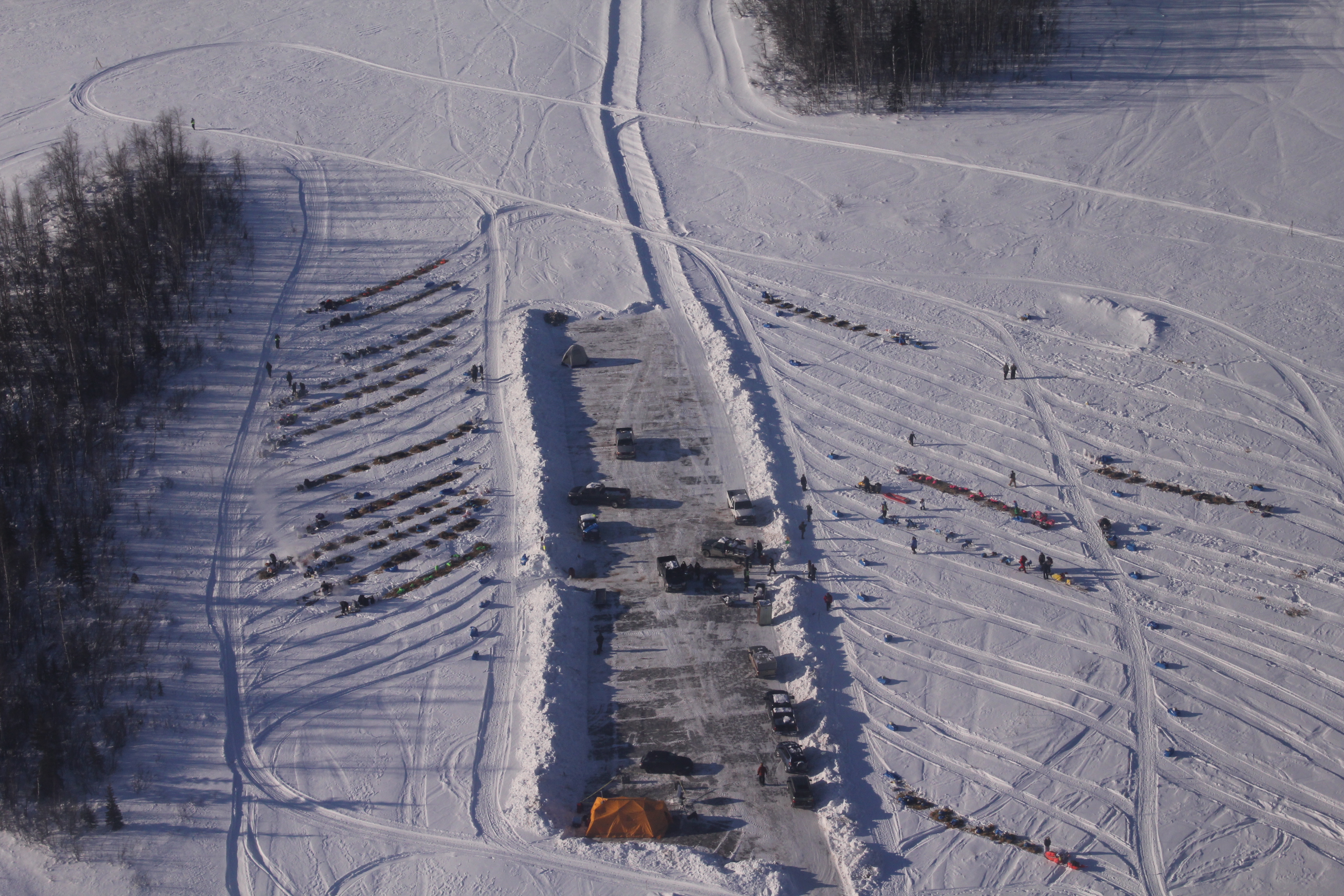
The Manley Checkpoint (Photo by Ben Matheson/ KNOM)
Sign up for The Signal
Top Alaska stories delivered to your inbox every week
Close
Update notification options
Subscribe to notifications
Subscribe
Get notifications about news related to the topics you care about. You can unsubscribe anytime.