Juneau’s population is aging, and unless more young people start moving to Alaska’s capital city, there may not be enough people to fill jobs and take care of its seniors.
That’s one of the takeaways from this year’s economic indicator report from the Juneau Economic Development Council.
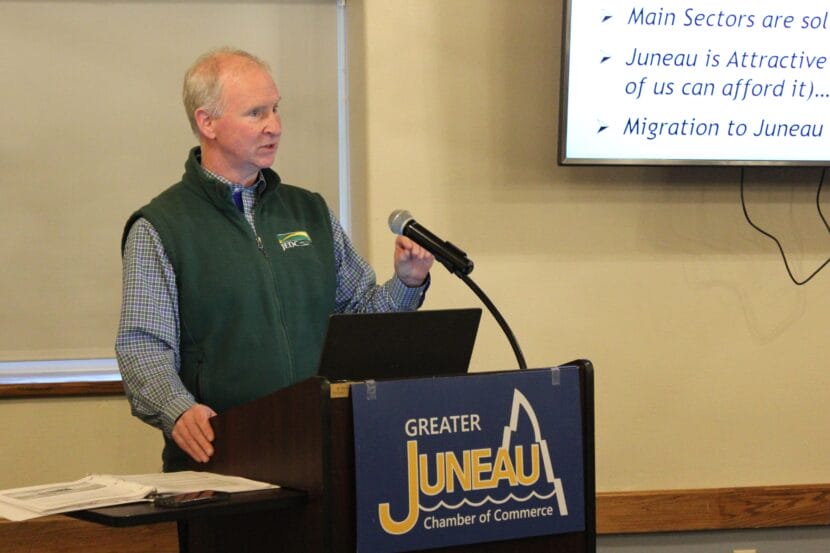
“For the first time in our history here in Juneau, the over-60 crowd outnumbers the under-20 crowd,” JEDC Executive Director Brian Holst said at a presentation to the Juneau Chamber of Commerce last week.
Juneau’s birth rate isn’t high enough to maintain its population size without more people moving here. But Robin Thomas, an attendee at the presentation, said now isn’t a good time for people to have kids in Juneau.
“If you’re looking at considering having a child, you have to look at the cost of daycare, medical expenses and housing,” she said in an interview. “There’s a lot working against people.”
If that trend continues, it could mean even fewer people having children, lower enrollment in the Juneau School District, a smaller summer workforce and an increased demand for senior services and health care.
“This is going to have a big impact on how we think about what we should do as a community,” Holst said.
Where did the new housing go?
Housing continues to be a major barrier for people looking to move to Juneau. Business owners in the region have said the lack of housing is the biggest challenge to hiring and retaining workers.
That’s despite Juneau adding around 1,500 units over the last decade.
“Our population increased by, basically, zero,” Holst said. “So where did all the housing go?”
Holst said some of it has become short-term rentals, which may have doubled in 2022.
“We also know that tourism companies, to call them out a little bit, have had to purchase a residence for their workers,” he said.
Juneau’s aging population is also affecting housing availability, as more seniors choose to stay in their homes. Holst said nearly 800 units are occupied by people over 65 years old who live alone.
The number of Juneau home sales continues to decline after reaching a peak for the decade in 2021. That year, nearly 550 homes were sold. Just over 100 sold in the first half of this year.
Efforts to increase housing availability are in the works.
City leaders increased the size of grants to help people build accessory dwelling units and are considering adding new housing to Telephone Hill. Tlingit Haida Regional Housing Authority plans to build housing at Juneau’s Pederson Hill subdivision and is helping tribal citizens become homeowners. And an assisted living complex opened this summer, providing a new option for seniors looking to leave their homes but stay in Juneau.
But for now, the market is extremely tight. Homes that do go up for sale aren’t on the market for long. In 2019, the average number of days that homes were on the market was 18 days. In 2020, it dropped to 8, then to 5 for the following two years.
“As houses come on the market, despite high interest rates, they are going really, really, really, really, really quickly,” Holst said.
High cost of living
So far this year, median prices have been $515,000 for single family homes. Renters in Juneau pay an average of $1,420 per month, and Juneau has a lower vacancy rate than the rest of the state.
“The vacancy rate and the price of an apartment are pretty tightly correlated,” Holst said. “If you don’t have a lot of competition, there’s not a lot of reason to lower your rent.”
And the prices of things like groceries and health care may also keep people from moving to Juneau. Juneau’s cost of living is higher than both Anchorage and Fairbanks.
Mining jobs pay the highest average monthly wages in Juneau, but Holst said many of those workers commute between Juneau and other places in the state or country.
“The wages are great. It would be great to have them. It would be great for our economy,” he said. “But they choose not to live in Juneau. Is cost of living part of that answer? I think it might be.”
Holst said Juneau has a lot of good jobs to offer, but potential employees won’t make the move if they can’t afford to live here.
“We have a lower population, lower workforce, increasing seniors who require services, and yet we have an economy that is actually really solid,” Holst said. “We have mining jobs, we have fishing jobs, we have tourism jobs, but we don’t have the workers.”