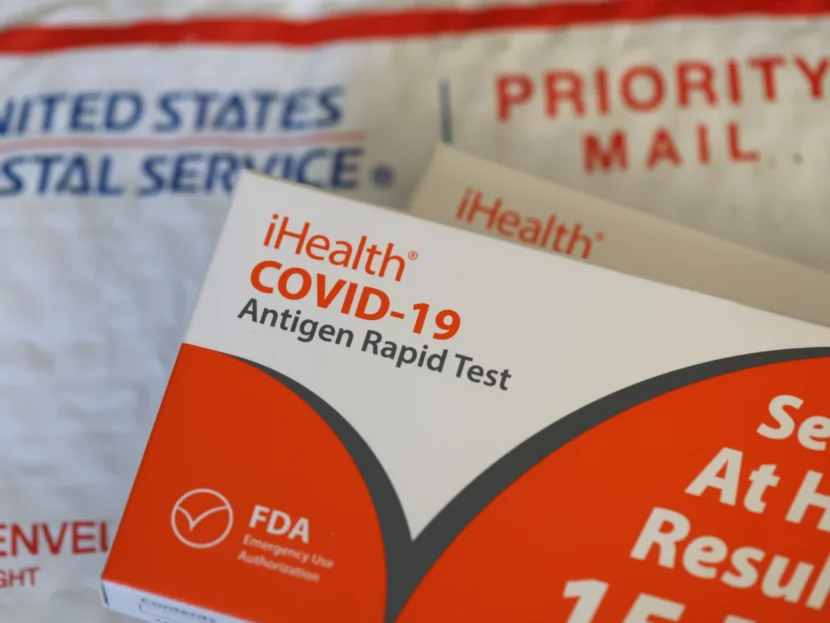
As much as we would all love to ignore COVID, a new set of variants that scientists call “FLiRT” is here to remind us that the virus is still with us.
The good news: as of last Friday, the CDC says that the amount of respiratory illness in the U.S. is low.
The not-so-great news: the U.S. has often flirted with summer COVID waves because of travel and air-conditioned gatherings.
Dr. Ashish Jha, the dean of the Brown University School of Public Health and former White House COVID-19 response coordinator, returned to All Things Considered to speak with host Ailsa Chang about what the new variants could bring.
Interview highlights
Ailsa Chang: So how concerned would you say scientists are about whether these FLiRT variants come with increased transmissibility or increased disease severity, compared to previous variants?
Ashish Jha: We’re seeing exactly what we have expected: The virus continues to evolve to try to escape the wall of immunity we have built up through vaccines and infections. Is this more transmissible? It is. That’s why it has become more dominant. But the really important question is, is it going to get people to become more sick than previous versions? And all the evidence right now we have is no. If you have been vaccinated, or you had previous infections – or you’re one of the majority of Americans who have had both – you are likely to have a mild infection and not get particularly sick. Obviously, we have to continue monitoring every new variant, but this is pretty expected.
Chang: Do you expect some sort of summer surge is on the way? And if so, do you have any advice for people who don’t want COVID to disrupt their summer plans, even if they get a mild infection?
Jha: Every summer since the beginning of this pandemic, we have seen a summer wave. And therefore, my expectation is we probably will get a summer wave. We spend a lot more time indoors in the summer – especially in the South, where it gets very hot – so we tend to see those waves to be a bit bigger down in the southern parts of the country. When I think about who’s at risk of having complications from these infections, it’s older Americans. It’s immunocompromised Americans. For them, the two big things are: first, making sure they’re up to date on their vaccines. Second, if they do get an infection, we have widely available treatments. Obviously, if you’re worried about getting infected at all, avoid crowded indoor spaces. You can wear a mask. Those things still work.
Chang: We’ve now had four and a half years to observe this virus as it has spread. I’m wondering what are some key patterns that you have seen over that time?
Jha: We are seeing pretty typically about two waves a year: one in the summer, one in the winter, all caused by ongoing evolution of the virus. We’re seeing the people who are landing in the hospital. There’s still a lot of people getting very sick from this. The other thing that’s worth thinking about is there’s always a chance that this virus could evolve in some very substantial way, so that it could really cause more disruption and more illness. We’ve got to continue monitoring and paying attention to that. I don’t expect that to happen. But if it does, we’ve got to be ready.
Chang: In the long run do you think we’ll be treating COVID much like we treat other seasonal respiratory illnesses? Like, there will be a new vaccine formulation every fall for expected seasonal surges and this is just what we are going to have to live with for the rest of time?
Jha: Yeah. The way I have thought about this is every year I go and get my flu shot. We have a new formulation. I will probably continue doing that for COVID. So I’m going to have flu and COVID shots. And at some point as I get older, I will probably need an RSV shot every year as well. It’s inconvenient. It can be a little bit annoying. But the bottom line is these are life-saving things and people should be doing them.