NPR News

KTOO is the NPR member station in Juneau. NPR offers its members radio and digital stories.

Alaska station that covered devastating storm cuts jobs

The village of Kwigillingok, Alaska is seen in October. The area was hit by the remnants of Typhoon Halong earlier in the month, which caused major damage to homes and displaced most of the residents. (Claire Harbage/NPR)

KWIGILLINGOK, Alaska – When the remnants of Typhoon Halong hit this Alaska Native village last month, Ryan David was at home with his four children. They felt the house shake in the wind, then as floodwaters came, the building floated away.

“I yelled at my kids to get up and group up here, on the stairs, just in case we tip over,” David said when he talked with public broadcaster KYUK. He and his children were still trapped inside. David says the home stopped floating when it hit a bridge. He talked with a KYUK reporter as he waited for rescuers to arrive.

A month later, as villages across the Yukon-Kuskokwim Delta clean up from the storm and make repairs, hundreds of residents remain evacuated to cities such as Anchorage and Bethel. Now they face another loss. One of the few sources of local news and native language programming — public radio and television station KYUK — has lost federal funding that was up to 70% of its budget and plans to make cuts in January.

Mathew Hunter, 26, works at KYUK in Bethel. Due to the funding cuts his position will drop from full-time to 10-15 hours on call. (Claire Harbage/NPR)

The station plans to severely cut staff and some programming as it tries to raise money to fill the budget gap.

The broader public media landscape is also experiencing a loss of federal funding, including at least some money for improving emergency alert systems, as human-caused climate change from burning fossil fuels is heating the planet and increasing risks from extreme weather.

In remote villages KYUK is “crucial”

KYUK broadcasts out of a small tan building at the base of a tall tower in Bethel, Alaska — about 400 miles west of Anchorage. Bethel is a hub community for 56 tribes spread across 48 communities. The station says its coverage area is about the size of Louisiana.

Darrel John is a lifelong resident of Kwigillingok and he says the news in Yugtun is especially valuable. (Claire Harbage/NPR)

KYUK has been on the air since 1971 and “is a Native American initiated public broadcasting joint licensee” — that means it has both a public radio and television stations. It also has a digital news website and serves a predominantly Yup’ik population of less than 30,000 people in the Yukon-Kuskokwim Delta. Many residents, especially elders, primarily speak the Yup’ik language Yugtun.

“It’s very crucial to have that KYUK network,” says Darrel John, a lifelong resident of Kwigillingok. He says the news in Yugtun is especially valuable. “A lot of great advice we listen to from the elders… Any updates from any other communities — you know what to look out for — and the upcoming events.”

Each weekday, as Morning Edition ends, there’s local news and the weather forecast in Yugtun.

“Weather is definitely one of the things that KYUK focuses on because it’s life or death,” says Sage Smiley, KYUK news director. In a place where there are few roads, residents sometimes drive on frozen rivers and need to know where it’s safe to do that. “Getting from community to community in a boat, on a snow machine, in a bush plane, the weather matters almost more than anything else,” Smiley says.

When it became clear the remnants of Typhoon Halong were headed toward the Yukon-Kuskokwim Delta. Smiley says reporters started including that in their reports to warn residents. She says fall storms and even flooding are common in the region, but Halong was different from most.

“This storm took a track that was unexpected, hit south of where it was expected to and in an area that was less prepared for the storm to hit,” Smiley says. “I think all of those factors went into what made it so devastating.”

Sage Smiley, KYUK news director, stands in the office in Bethel. (Claire Harbage/NPR)

Three people in Kwigillingok died because of the storm. Nearly every building in the village was damaged. Overall more than 1,600 people were displaced, many of them evacuated in helicopters.

Smiley also coaches the high school swim team and was at a meet in another city when the storm arrived.

“I was working remotely from a minivan with the swim team while the rest of the [news] team was working on the ground here,” Smiley says in the news department studio in Bethel. “And we had collaborators in Anchorage who were helping draft scripts and call communities to figure out what was happening.”

That’s part of being a news director at a small station, but soon KYUK will try to report the news with a third less staff, because in January Smiley’s position will be among those cut.

KYUK loses funding and makes cuts

KYUK was already navigating a loss in funding from the state of Alaska when President Trump targeted public media and Congress eliminated funding this summer. It was a big hit to the station’s finances because federal funding has been up the bulk of its budget.

Loading…

The federal money essentially paid for employee salaries and benefits.

“It’s a little over $1 million that we’re receiving each year from the Corporation for Public Broadcasting. Our salaries and benefits in FY 25 [fiscal year 2025] was also a little over $1 million,” says Kristin Hall, KYUK’s general manager.

The station had 10 full- time employees and 13 part-time or on-call workers, says Hall. “Beginning in January, KYUK will transition to four full-time employees and ten part-time and on-call employees.”

In deciding where to make programming cuts, Hall says preserving Yup’ik language programs was a priority. A daily interview program, Coffee at KYUK, will lose three episodes a week in English, but keep its weekly Yugtun episode.

KYUK broadcasts out of a small tan building at the base of a tall tower in Bethel, Alaska — about 400 miles west of Anchorage. (Claire Harbage/NPR)

The station’s technical director’s hours will be cut from 40 to 10 hours a week, something Hall says she’s particularly concerned about because that person trouble shoots engineering problems and helps the station manage power outages.

To bring in more revenue, Hall says the station is applying for grants, trying to sell more underwriting announcements and will hold two pledge drives each year instead of just one. The station also expects to receive one-time funding through a Trump administration promise to provide $9.4 million for tribal broadcasting.

Hall says the station will re-evaluate in March 2026 whether the workload is sustainable for the smaller staff. So, more cuts could still come.

Kristin Hall is KYUK’s general manager says in January the station will have a decrease of full-time and part-time employees. (Claire Harbage/NPR)

“My employment here was hanging on by a hair,” says Sam Berlin, a long-time host of the Yugtun language talk show Yuk to Yuk. “But the people, God bless them, they got together and we raised over $100,000 with our fundraiser.”

Just before Typhoon Halong hit the region, KYUK raised the money during its fall fundraiser. “It was our most successful we have ever seen in the history of KYUK,” Hall says. That helps, but doesn’t fill the funding gap.

Raising money in a region with fewer than 30,000 people and with a poverty rate that’s twice the national average is difficult. Hall says many people live a subsistence lifestyle, which means they may not have money to give.

Sam Berlin is the long-time host of the Yugtun language talk show Yuk to Yuk. (Claire Harbage/NPR)

“The encouragement that we get from local folks aren’t always in dollars,” Hall says. She says one person baked blueberry muffins to support the fundraiser and someone else dropped off salmon strips. Hall says an elder came to the station, and in an act of generosity, poured out her purse on the break room table. “And everything that fell out was less than $3. And she said, ‘I want you to have it.’ And it was literally everything in her purse.”

Hall says the station hopes its funding strategy will be enough to support the smaller team after January. If KYUK doesn’t exist, there’s no one else doing the station’s level of journalism in the Yukon-Kuskokwim Delta. “In terms of local news and information, and especially local news and information in Yup’ik, No, there is no one else,” Hall says.

Disclosure: This story was written and reported by NPR Climate Correspondent Jeff Brady. It was edited by Managing Editors Vickie Walton-James and Gerald Holmes. Under NPR’s protocol for reporting on itself, no corporate official or news executive reviewed this story before it was posted publicly.

The U.S. saw vivid northern lights as far south as Florida — and more could be coming

The Aurora Borealis lights up the night sky over Monroe, Wisconsin on Tuesday night.
The aurora borealis lit up the night sky over Monroe, Wis., on Tuesday night. The northern lights were visible as far south as Alabama and Florida (Ross Harried/NurPhoto via Getty Images)

Geomagnetic storms brought the northern lights to much of the U.S. on Tuesday night, painting the sky in vibrant hues of green and pink.

The Aurora Borealis was spotted in a large swath of states, including Idaho, Iowa, Missouri, New Mexico, New York, Oklahoma, South Dakota, Tennessee, Texas and Washington state. Northern lights were visible as far south as parts of Florida and Alabama, a relatively rare occurrence that highlights the severity of this week’s storms.

“Well, we had activity tonight — a lot of geomagnetic storm activity,” Shawn Dahl, service coordinator at the National Oceanic and Atmospheric Administration’s (NOAA) Space Weather Prediction Center, said in a video on X.

The aurora borealis glows above rural Monroe County, Wis., as a strong geomagnetic storm from recent solar activity pushes the northern lights unusually far south on Wednesday.
The aurora borealis glows above rural Monroe County, Wis., as a strong geomagnetic storm from recent solar activity pushes the northern lights unusually far south on Wednesday. (Jeremy Hogan | Getty Images)

A geomagnetic storm happens when charged particles from the sun’s atmosphere interact with the Earth’s magnetic field. In addition to creating dazzling displays of color, such storms can disrupt technology on Earth, from satellites and GPS to radio communications and the power grid.

Tuesday’s activity was the result of a phenomenon called coronal mass ejections (CMEs), massive blasts of plasma and magnetic field from the sun’s outer atmosphere that grow in size as they hurtle towards Earth.

Two CMEs arrived on Earth on Tuesday, Dahl said.

The aurora borealis lights up the night sky east of Denver on Tuesday.
The aurora borealis lights up the night sky east of Denver on Tuesday. (Trevor Hughes | USA TODAY Network via Reuters)

The resulting storm reached G4 levels, the second-highest on NOAA’s five-step scale, and created a magnetic field that was “not only eight times stronger than what’s normal but … also favorable for continued activity,” Dahl said in a later update.

Forecasters are awaiting a third and final CME, which they expect will arrive on Earth at midday Wednesday and be even stronger than the previous two.

“That was the most energetic and strongest of this activity out there in space,” Dahl said. “It was traveling significantly faster than these other two, and we think that’s going to pack even a stronger punch than what we’ve already experienced.”

The Space Weather Prediction Center says the aurora may become visible “over much of the northern half of the country, and maybe as far south as Alabama to northern California.”

The Met Office, the U.K.’s national weather service, says the aurora may also be visible over parts of Britain on Wednesday night, though it is likely to be obscured by cloud cover — as was the case in Michigan on Tuesday.

Luckily, Americans in northern states won’t have to wait long for another chance to get a glimpse.

NOAA's Space Weather Prediction Center 'aurora viewline forecast' shows the swath of the northern U.S. in which the northern lights might be visible on Wednesday.
NOAA’s Space Weather Prediction Center “aurora viewline forecast” shows the swath of the northern U.S. in which the northern lights might be visible on Wednesday. (NOAA’s Space Weather Prediction Center)

How to see (and photograph!) the northern lights 

A dark setting is essential to see the aurora, so it’s important to get away from light pollution if you want a good glimpse of the northern lights. It’ll be easiest to see between 10 p.m. and 2 a.m. local time, according to NOAA.

A person watches the northern lights over Hulah Lake in northern Oklahoma on Tuesday.
A person watches the northern lights over Hulah Lake in northern Oklahoma on Tuesday. (Andy Dossett | USA TODAY Network via Reuters)

It is difficult to predict the exact timing and location of the northern lights, but you can sign up for different services that alert you when an aurora may be visible in your area. For example, a citizen science platform called Aurorasaurus allows users to report when and where they see an aurora, and gives estimates on how visible an aurora is in a given area.

Another option is an app called My Aurora Forecast & Alerts, available for download on both iOS and Android devices. This is a location-based app that gives viewing probability and forecasts.

Smartphone cameras are better at capturing the full array of an aurora than our naked eye, so be sure to go out with your phone to view a fuller spectrum of colors. If your phone camera has a night mode option, it’s best to switch it on when photographing the northern lights. You can also switch your phone camera to manual mode and adjust the exposure settings to get the perfect picture.

The aurora brightens the sky over Putnam Lake in Patterson, N.Y., on Tuesday.
The aurora brightens the sky over Putnam Lake in Patterson, N.Y., on Tuesday. (Frank Becerra Jr. | USA TODAY Network via Reuters)

Why we are seeing more northern lights 

Auroras have been happening more frequently in the United States for a while, and will continue to do so for several months. This influx of shimmering colors comes because the sun is reaching the peak of its 11-year cycle and, therefore, its solar maximum. The solar maximum causes solar eruptions, and this increase of activity brings ions, or electrically charged particles, closer to Earth. This stream of particles is known as the solar wind.

As solar winds get closer to Earth, the charged particles collide with gases in the Earth’s atmosphere. When they collide, light is emitted. The light emits at various wavelengths, creating a colorful display throughout the night sky.

When the sun is at its solar maximum, the number of solar eruptions increases, which is why there are more auroras in the sky. Usually, this activity only takes place near the Arctic Circle, but since solar activity is strong right now, viewing areas have expanded to other regions, like the Midwest.

Senators take first step toward reopening the government after historic shutdown

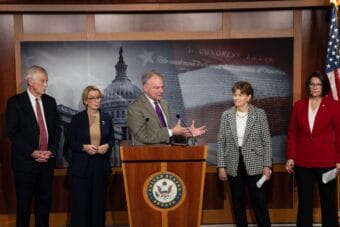
Sen. Tim Kaine, D-Va., speaks during a press conference following a vote on Capitol Hill on Sunday. The Senate convened for a rare Sunday session in an attempt to end the government shutdown.
Sen. Tim Kaine, D-Va., speaks during a press conference following a vote on Capitol Hill on Sunday. The Senate convened for a rare Sunday session in an attempt to end the government shutdown. (Anna Rose Layden/Getty Images)

A bipartisan group of Senate Democrats and Republicans reached a deal to reopen the government after the longest shutdown in U.S. history, voting on the first procedural step on the measure.

The agreement would fund the government through Jan. 30 and include full-year funding for a trio of appropriations bills, including full funding for the Supplemental Nutrition Assistance Program, or SNAP, through Sept. 30, 2026, or the end of the fiscal year.

The vote late on Sunday was 60 to 40, with seven Democrats and one independent joining with most Republicans to advance the measure.

It marked the first, but crucial, step towards passing the measure in the Senate. Once the bill cleared the 60 votes needed to overcome a filibuster, any remaining Senate votes need just a simple majority. However, the legislation still needs to pass the House before the shutdown would end, enabling air traffic controllers and other federal workers to get paid and federal food benefits to resume, among other things.

Senate Democrats had earlier voted against more than a dozen short-term spending measures in their fight to preserve health care subsidies. But as the pain of the shutdown continued to bite, some agreed to more modest changes in the latest framework.

The continuing resolution to fund the government until the end of January would also include language to reverse any reductions in force of federal employees that happened during the shutdown, as well as protections against further such layoffs through the end of the fiscal year, and backpay for all federal employees during the shutdown.

“I have long said that to earn my vote, we need to be on a path toward fixing Republicans’ health care mess and to protect the federal workforce,” Sen. Tim Kaine (D-Va.) said in a statement. “This deal guarantees a vote to extend Affordable Care Act premium tax credits, which Republicans weren’t willing to do.”

The agreement to reopen the government is also expected to include a Senate vote on health care by the second week of December, on a bill of Democrats’ choosing. That informal deal is not part of the legislative text.

Democrats are deeply divided about the compromise measure, which was opposed by Senate Minority Leader Chuck Schumer.

“I think it’s a terrible mistake,” Sen. Elizabeth Warren (D-Mass.) said of the deal. “The American people want us to stand and fight for healthcare.”

Democratic divisions over legislation

Several top Democrats in the House also vowed to vote against the bill.

House Minority Leader Hakeem Jeffries, D-N.Y., panned the agreement in a statement before the Senate vote.

“We will not support spending legislation advanced by Senate Republicans that fails to extend the Affordable Care Act tax credits,” Jeffries said in a statement. “We will fight the GOP bill in the House of Representatives, where Mike Johnson will be compelled to end the seven week Republican taxpayer-funded vacation.”

And Democrat Rep. Greg Casar of Texas called the deal a “betrayal” and a “capitulation” because it doesn’t reduce health care costs.

The House has not held a vote since Sept. 19, and previously passed a government funding measure without Democratic support.

The Senate deal on government funding comes after Democrats cruised to a series of electoral victories in the last week, giving some in the party newfound political confidence to continue to fight for health care extensions.

Many Democrats believed that keeping the government shut down gave them their only legislative leverage, with Republicans still in control of Congress and the White House.

Moderate Democrats defended their votes, with some telling reporters that it’s the best deal they could do.

Kaine, one of the Democrats who voted for the measure on Sunday, defended his support, saying Democrats would be able to put important health care legislation up for a vote.

“Lawmakers know their constituents expect them to vote for it, and if they don’t, they could very well be replaced at the ballot box by someone who will,” he said in his statement.

Far fewer Canadians are visiting the U.S. this year, new numbers show

A vertical black line on the inner wall of the Detroit-Windsor Tunnel marks the border between Canada and the United States. On the left side of the line is a Canadian flag, and on the right side of the line is an American flag.
The demarcation line marking the border between Canada and the United States is seen in the Detroit-Windsor Tunnel in May. (Dominic Gwinn/Middle East Images/AFP via Getty Images)

On a typical day at Bluff Point Golf Resort in Plattsburgh, N.Y., you used to be able to spot around 20 or 30 cars from Quebec or Ontario in the parking lot, according to owner Paul Dame.

But over the last several months, at the business just 25 minutes from the U.S.-Canada border, it has been more like one or two cars.

“It’s tough, because we’ve developed this relationship with the cross-border economy,” Dame said. “And now here we are, the rug getting pulled out from underneath us.”

New data confirms that far fewer Canadians are making trips south. Canadian residents made just 1.7 million return trips by motor vehicle back into their country from the U.S. in July, a nearly 37% drop from the same month in 2024, according to a report published this month by Statistics Canada.

The dip comes as relations are strained between the U.S. and Canada after President Trump vowed to make Canada a U.S. state earlier this year and imposed steep tariffs on his northern neighbor. Some worried that the tough political rhetoric — combined with a strong U.S. dollar — would damage an important source of U.S. tourism.

Data released by the U.S. government confirms a similar slide in Canadian travel. Canadians made just over 7 million visits to the U.S. between January and May, according to statistics published by the International Trade Administration. That’s a nearly 17% decrease compared with the same period in 2024, data shows.

The U.S. Travel Association said in an emailed statement to NPR that its “latest view continues to show a decline in travel from Canadian residents to the United States, consistent with the recent Canadian data released.”

Leah Mueller, vice president of sales and services at Visit Buffalo Niagara, said tourism companies in her region have been feeling the impact of a drop in Canadian travel too, from smaller tour groups to tour boats with fewer passengers.

“It’s a decline that’s not stopping things from happening, but it is affecting the revenue that people are collecting,” she said.

The U.S. saw 20.4 million visits from Canadians last year, making Canada the top source of international tourists to the United States, the U.S. Travel Association reported. The group said in February that those visits generated $20.5 billion in spending and supported 140,000 U.S. jobs.

There have been some efforts to soften the blow of the tourism slump.

In June, Maine Gov. Janet Mills made an official visit to Canada to urge Canadians to visit her border state. Maine, which saw nearly 800,000 Canadian visits in 2024, also installed new road signs welcoming travelers from the north, reading: “Bienvenue, Canadiens!”

Dame, the golf resort owner, said he has redirected some of his marketing efforts to other parts of New York and Vermont. But he said he hopes the U.S. and Canada can repair their relationship, and in the meantime he doesn’t blame his longtime Canadian customers for skipping their trips following the political attacks.

“It’s a very personal situation. They’ve been attacked personally, and it’s emotional,” he said. “It’s something that we would react [to] the same way if the opposite was happening to us.”

House votes to claw back $1.1 billion from public media

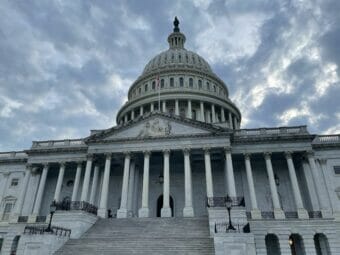
The U.S. Capitol building
The U.S. Capitol. (Liz Ruskin/Alaska Public Media)

The House of Representatives narrowly approved legislation Thursday to eliminate the next two years of federal funding for public media outlets.
It did so at the direct request of President Trump, who has accused NPR and PBS of bias against conservative viewpoints as part of his broader attacks on the mainstream media.

The measure passed largely along party lines, 214 to 212, with two key Republican lawmakers switching their votes from “no” to “yes” to push it over the finish line.

The legislation is the first request by the Trump administration for Congress to claw back money it already has approved through annual spending bills. The bill reflects a list of cuts totaling $9.4 billion that were requested by the Office of Management and Budget. The bulk of the cuts — $8.3 billion — are to foreign aid programs addressing global public health, international disaster assistance and hunger relief.

The remainder would slash $1.1 billion allocated to the Corporation for Public Broadcasting (CPB), which distributes nearly all of the funds to local television and radio stations, for the next two fiscal years. By law, that money is supposed to be approved in advance as part of an effort to insulate public broadcasting from political influence over fleeting issues. That spending had been approved by both Republican-led chambers of Congress and signed into law by Trump earlier this year.

CPB, which is privately incorporated in Washington, D.C., is suing the Trump administration over his efforts to exert control over its board. CPB, PBS and NPR put out separate statements decrying the vote. Executives from the two networks urged the Senate to put a stop to the legislation.

“Americans who rely on local, independent stations serving communities across America, especially in rural and underserved regions, will suffer the immediate consequences of this vote,” NPR Chief Executive and President Katherine Maher said in a statement. “If rescission passes and local stations go dark, millions of Americans will no longer have access to locally owned, independent, nonprofit media and will bear the risk of living in a news desert, missing their emergency alerts, and hearing silence where classical, jazz and local artists currently play.”

Similarly, Paula Kerger, PBS’s chief executive and president, said the fight to protect funding for public media does not end with Thursday’s vote. She said the services provided by public television “cannot be replaced by commercial media.”

“If these cuts are finalized by the Senate, it will have a devastating impact on PBS and local member stations, particularly smaller and rural stations that rely on federal funding for a larger portion of their budgets,” Kerger said. “Without PBS and local member stations, Americans will lose unique local programming and emergency services in times of crisis.”

A coalition of local public media officers, emergency readiness officials, Native American tribal representatives, educators and others had joined with listeners and viewers to lobby lawmakers against the bill.

Support for public media has, historically, been fairly bipartisan. But the idea of getting government out of the business of subsidizing public media has always struck a cord in more conservatives parts of the Republican party, and it has been increasingly resonant in recent years.

The Republican majority prevailed on Thursday with a paper-thin margin, however, relying on the flipped votes of Reps. Don Bacon of Nebraska and Nick LaLota of New York.

LaLota and Rep. Mike Lawler, both of whom represent the suburbs of New York City, have bucked party leadership over the separate issue of whether a new budget would return property tax deductions for pricey mortgages. LaLota could be seen on the floor conferring with House leaders just moments before reversing from “no” to “yes.” Lawler’s vote was among the last cast.

Heated partisan debate before the vote

When House Majority Leader Steve Scalise formally introduced the legislation last week, he said it “codifies President Trump’s cuts to wasteful foreign aid initiatives within the State Department and USAID, as well as woke public broadcasting, including NPR and PBS, at the Corporation for Public Broadcasting, which is a business the federal government shouldn’t even be in.”

Republicans attacked the programs they targeted for cuts in speeches Thursday before the vote. “Don’t spend money on stupid things and don’t subsidize biased media,” Ohio GOP Rep. Jim Jordan said.

Democrats defended public broadcasting as providing essential services. They cited the need for local information during natural disasters and balanced news coverage.

“NPR and PBS are targeted here today precisely because they are so good at delivering the truth,” Texas Democratic Rep. Lloyd Doggett said. He pointed to Trump’s social media attacks on the outlets, saying, “Trump doesn’t want a country of engaged, informed Americans. He prefers those who salute on command.”

House Minority Leader Hakeem Jeffries, who has accused Republicans of rubber stamping Trump’s agenda despite their own misgivings, held up a doll of Elmo, the Sesame Street character, on the House floor.

“The letter of the day is ‘C’. How appropriate because this bill is cruel, and it cuts children’s programs all across the country,” he said.

After the vote, Rep. Mark Amodei, a Nevada Republican who is co-chair of a bipartisan caucus supporting public broadcasting, condemned the outcome.

“Before we trigger major consequences for our local public broadcasting stations throughout the West and other rural areas, we need more discussion—rather than railroading folks over the East Coast’s editorials and indiscretions,” Amodei said in a statement. “I agree we must make meaningful cuts to shrink our federal deficit; however, I would be doing a disservice to the thousands of rural constituents in my district if I did not fight to keep their access to the rest of the world and news on the air.”

While a handful of Congressional Republicans have joined Amodei in supporting their local public radio and television stations, there is intense pressure on them to side with the president. Heritage Action, a grassroots conservative group, designated the vote on the rescissions bill as the first “key vote” included on their scorecard tracking lawmakers’ voting records this session of Congress.

Some of Trump’s supporters have been frustrated that Congress has not moved sooner to officially back the cuts recommended or put into motion already by the Department of Government Efficiency or DOGE, launched by Elon Musk. Musk initially vowed to cut $2 trillion from the federal budget, then scaled back to $1 trillion. The actual amount so far has been a small fraction of the trillion promised. But Musk’s imprint slimming down or gutting some federal agencies has already reverberated in fallout in the U.S. and around the world.

Musk’s recent departure from the administration and public feud with the president haven’t affected the plans of top GOP leaders on Capitol Hill to schedule votes to formally wipe out spending for the targeted agencies and programs. House Speaker Mike Johnson said Tuesday he expected additional votes on rescissions requests based on DOGE’s efforts.

After the heads of both NPR and PBS testified before a House oversight panel in March, the speaker argued in a statement on social media that NPR and PBS “have consistently and knowingly betrayed the public trust. Instead of fair and balanced reporting, they routinely ignore facts to advance a far left agenda.”

“The American people support the free press, but will not be forced to fund a biased political outlet with taxpayer funds,” Johnson said.

Conservative views on public media have changed

Two former Republican lawmakers say that the GOP sentiment toward public broadcasting has shifted over time — from frequent support to skepticism to open hostility.

“I always supported PBS on the rationale that ‘just because Barnes and Nobles sold books didn’t mean public libraries were no longer needed’,” former Oregon Sen. Gordon Smith, who served from 1997 to 2009, tells NPR. “But even in those days, I would admonish my friends in PBS to strive for better political balance. This, they haven’t done.”

Smith says he gave the same advice after later becoming chief of the National Association of Broadcasters, a trade group to which PBS and NPR do not belong. “Given the size of the public debt and PBS’s ability to find other financing and sell advertising, well, they’ve left themselves vulnerable,” Smith says.

Former U.S. Rep. Charles Bass came to office with former U.S. House Speaker Newt Gingrich’s big Republican wave. Bass went on to represent New Hampshire’s 2nd Congressional District for 14 years.

“The debate over whether to fund public television or public radio networks is more divisive than it was,” Bass says. “By that process, it is likely to be more imperiled.”

“To some extent it’s influenced by the perception that it’s more liberal than it actually is,” Bass says. “There is a bent to it, but it’s not as significant as the commercial networks — Fox and MSNBC on either end and CNN in the middle. They really are.”

Bass says public broadcasting stands apart for avoiding commercial priorities. But, he says, technological changes in how people consume media have raised valid questions about the need for federal subsidies.

He says that the shift in formats from music to all news and public affairs talk by many NPR member stations increased content that has proved controversial and attracted scrutiny by critics, especially on the right.

Yet he also says the lines have hardened within Republican ranks toward public broadcasting as cultural warfare has become increasingly important to the party faithful: first with Gingrich, then with the Tea Party, and now MAGA Republicans with Trump at the lead, each of which have sought to present public media as unworthy of taxpayer dollars.

“I would be pondering this seriously. I wouldn’t be a lock-step supporter or opponent of public radio or television funding,” Bass says. “That’s true even though I probably listen to [New Hampshire Public Radio] as a news source more than any other source of news.”

A bumpy history of public media funding

Congress created CPB, a private nonprofit entity, in 1967. President Lyndon B. Johnson signed the law making CPB the entity to oversee federal grants to more than 300 public television stations and more than 1,000 public radio stations.

In the early years, there were questions about the federal role for CPB. In 1969, Fred Rogers, the host of the popular children’s show “Mister Rogers’ Neighborhood,” testified about the benefit of continued federal funding. His defense of CPB was credited with changing the mind of a key senator, John Pastore, a Rhode Island Democrat who had pressed Rogers on the value of public television.

Rogers described themes in his half-hour program addressing children’s feelings and offering ways to handle them. He told the congressional panel, “I feel that if we in public television can only make it clear that feelings are mentionable and manageable we will have done a great service for mental health.”

Lawmakers from both parties frequently appear on their local public stations for interviews. They participate in debates hosted by local stations during House and Senate campaigns.

But for decades, Republicans in Congress have vowed to defund public media outlets. In 1994, then-House Speaker Newt Gingrich argued for zeroing out CPB’s budget. That didn’t advance, but in more recent years Republicans have included provisions in annual spending bills to strip all federal money for NPR and PBS. But these have failed to be included in final versions of government funding bills enacted by presidents of both parties.

In 2011, the GOP-controlled House approved a bill to bar NPR from receiving any additional federal funding, but that measure failed to advance in the Senate. Seven House Republicans voted against that bill, including then-Wisconsin Rep. Sean Duffy, who now serves as Trump’s transportation secretary.

More recently during years of divided government, GOP leaders had to rely on Democrats to approve must-pass funding bills to avoid shutdowns. The debate over the issue of federal funding for public media became more of a backburner issue. CPB received $535 million for 2025. The spending bill approved with bipartisan votes in the House and Senate and signed by Trump in March approved the same level for the next two years.

Just two months later, Trump issued an executive order to block funding for NPR and PBS. And this first effort by the Office of Management and Budget to ask Congress to rescind federal money lumped in public media with foreign aid — two areas the GOP base frequently holds up as priorities Washington needs to scale back or eliminate altogether.

Concern for rural areas

Earlier in the week, Amodei and Democratic Rep. Dan Goldman of New York released a joint statement urging the Trump administration to “reconsider” clawing back money for CPB.

The two pro-public broadcasting lawmakers touted public media’s news coverage and its role in communicating during emergencies, and pointed out that rural areas are “particularly vulnerable” if funding is cut.

“Public broadcasting represents less than 0.01% of the federal budget, yet its impact reaches every congressional district,” the two noted. “Cutting this funding will not meaningfully reduce the deficit, but it will dismantle a trusted source of information for millions of Americans.”

Goldman told NPR that Trump’s role in pushing this issue is “100%” making this a tough vote for GOP lawmakers to break with the president. “I think if they looked at the merits of it they would recognize it’s essential funding — and public media, independent journalism plays an essential role,” Goldman said.

He argued that Trump objects because “independent media that exposes facts that may look unfavorable to him is therefore somehow biased, but the First Amendment protects freedom of the press specifically because the press is an essential form of accountability in our democracy.”

Some Republicans have defended their own local public television and radio stations and expressed a willingness to work with Democrats to avoid cuts that would force them to scale back coverage or staffing.

Alabama GOP Rep. Robert Aderholt, pressed by Colorado Democratic Rep. Joe Neguse in a hearing on the bill on Tuesday, said Alabama Public Television “has not been subject to these woke policies that some of these other states have,” and suggested he could join a bipartisan effort to continue grants to local stations.

But Aderholt noted “NPR is in a different category” and said most GOP lawmakers have had concerns about the outlet for some time.

Even so, most of the cuts will fall on the local stations, which receive by far the lion’s share of the funds. Some of that money makes it back to PBS and NPR in the form of fees to run the networks’ programs on the air.

Public television and radio stations have mounted a grassroots lobbying effort to urge lawmakers to oppose the package. The Protect My Public Media campaign says more than 2 million messages have been sent to House and Senate offices. “This support is driven by the deep connections Americans have to their local public media stations and the essential services stations provide to their communities.”

The rescissions package now moves to the Senate. Under the rules, it needs a simple majority to pass and must be approved within 45 days of the president sending the request to Capitol Hill. That means if the Senate — where Republicans also have a slim majority — fails to pass the bill by mid-July, the administration would be required to release the $9.4 billion in funding for the foreign aid programs and CPB. Senate Majority Leader John Thune has indicated the Senate would take up the rescissions request soon.

Disclosure: This story was reported and written by NPR Congressional Correspondent Deirdre Walsh and Media Correspondent David Folkenflik.  It was edited by Deputy Business Editor Emily Kopp, Managing Editor Vickie Walton-James and Managing Editor Gerry Holmes. Under NPR’s protocol for reporting on itself, no corporate official or news executive reviewed this story before it was posted publicly.

Transfer to Alaska? Offer to health leaders called ‘insult’ to Indian Health Service

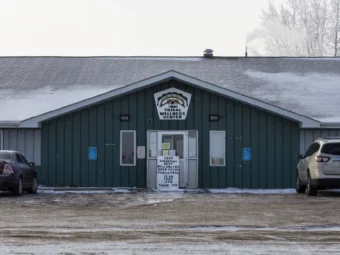
The exterior of a health clinic
The Cheyenne River Sioux Tribe Wellness Center is an Indian Health Service facility in Eagle Butte, South Dakota. This picture was taken in 2021 when the area was hard hit by the pandemic. (Dawnee Lebeau/Bloomberg via Getty Images)

The emails started arriving late on a Monday night.

“The Department of Health and Human Services (HHS) proposes to reassign you as part of a broader effort to strengthen the department and more effectively promote the health of American people,” the email read. “One critical area of need is in the American Indian and Alaskan Native communities.”

Amid the Trump administration’s massive layoffs at HHS, these reassignment emails accelerated an apparent purge of leadership at federal health agencies. Top officials in different parts of HHS were put on administrative leave with the option of relocating to a new job in Alaska, Montana, New Mexico or other postings within the Indian Health Service (IHS).

“I did not see this coming at all,” a senior executive at the Department of Health and Human Services told NPR. The executive asked not to be identified for fear of retribution from the administration.

William “Chief Bill” Smith chairs an organization that advocates for the IHS on behalf of tribes, the National Indian Health Board. “Any major leadership changes within IHS should be made in full consultation with Tribal Nations, as required by law,” Smith wrote in a statement to NPR. “Tribal Consultation is not just a procedural step—it is a fundamental responsibility of the federal government.”

“Utmost disrespect”

The number of health leaders who got the emails and the reasons for who was picked remain unclear. The email doesn’t specify what will happen to those placed on administrative leave if they don’t accept the offer.

HHS did not respond to NPR’s questions about the scope of the reassignment offers. NPR has confirmed nine leaders got the reassignment email; there may be more.

“The move displays the utmost disrespect for public service. It is clearly designed to force talented scientists and health experts to leave government,” says Richard Besser, CEO of the Robert Wood Johnson Foundation, a nonprofit philanthropy focused on health. “It is also an insult to those health care professionals in the Indian Health Service who dedicate their lives to providing health care services on tribal lands.”

It is unclear if anyone took the offer or plans to take it.

“I’m a career public servant. I’ve worked for Republicans and Democrats,” the HHS executive told NPR. “Public service is noble work and the ability to serve our country and impact entire populations just by coming to work is a gift. So there’s a sadness that comes with this.”

Connections to Fauci

At the National Institutes of Health (NIH), some sources who spoke to NPR suspect the targets were picked as retribution dating back to the pandemic.

Dr. Jeanne Marrazzo, who took over as the director of the National Institute of Allergy and Infectious Diseases after Dr. Anthony Fauci departed, got the offer, according to an email obtained by NPR.

So did Fauci’s wife, Christine Grady, the top bioethicist at NIH, along with two others close to Fauci, according to a source who was not authorized to speak about the situation.

Fauci, who left the NIH in 2022, became a hero to many during the pandemic, but has also been vilified by critics of the government’s response. Dr. Francis Collins, who also worked closely with Fauci as NIH director, was recently forced out of the agency.

The offer appears to be “an opportunity to try and say they’re not being let go, they’re being offered a new opportunity,” said Susan Polan, associate executive director of the American Public Health Association. But that “does not seem to be the ultimate goal. The goal really does seem to be to undermine the leadership in these agencies.”

IHS used as “a pawn”

Polan spoke during a briefing last week by public health advocates and officials decrying cuts of about 10,000 workers at the Centers for Disease Control and Prevention, the Food and Drug Administration, the NIH and other agencies.

“IHS needs are not being met and it is being used as a pawn in the game of forcing HHS staff to resign instead of being fired,” Polan added later in an email to NPR.

“It’s a way to try to get people to quit,” added Dr. Phillip Huang, director of Dallas County Health and Human Services, at the briefing.

The Indian Health Service provides crucial services and deserves to be adequately staffed with the most qualified workers, Huang and others at the briefing said.

The officials, who got the offer on Monday, March 31 or Tuesday, April 1 had until 5 p.m. on Wednesday, April 2, to respond to the offer, according to the email obtained by NPR.

The email reads: “This underserved community deserves the highest quality of services, and HHS needs individuals like you to deliver that service.” It is from Thomas J. Nagy Jr., deputy assistant secretary for human resources at HHS.

Reassignment locations

Nagy’s email gives the officials the options of working in a variety of places that are a mix of states, cities and reservations. They appear to correspond to IHS areas, an official designation, with some exceptions. This is the list from the email:

  • Alaska
  • Albuquerque [New Mexico]
  • Bemidji [Minnesota]
  • Billings [Montana]
  • Great Plains [South Dakota, North Dakota, Nebraska, Iowa]
  • Navajo [Arizona, New Mexico, Utah]
  • Oklahoma

“We would like to understand your preference across these potential reassignment opportunities,” the email says.

“Specifically, we would like to know which regions you would accept a voluntary reassignment and the order of your preference, if any, across the regions,” it states.

Health leaders offered transfer

According to sources who shared information with NPR on the condition of anonymity because they are not authorized to speak to the press, officials in addition to Marrazzo and Grady who received the IHS reassignment offer include:

– Dr. H. Clifford Lane, deputy director for clinical research at the National Institute of Allergy and Infectious Diseases, who had long worked with Fauci.

– Dr. Emily Erbelding, director of the division of microbiology and infectious diseases at the National Institutes of Allergy and Infectious Diseases.

– Renate Myles, director of communications for NIH;

– Dr. Eliseo J. Pérez-Stable, director of the National Institute on Minority Health and Health Disparities;

– Dr. Shannon Zenk, director of the National Institute of Nursing Research;

– Dr. Diana Bianchi, the director of the Eunice Kennedy Shriver National Institute of Child Health and Human Development.

– Brian King, director of the Food and Drug Administration’s Center for Tobacco Products.

IHS is a priority for RFK Jr.

The Indian Health Service was an early target of Elon Musk’s DOGE cuts, when 950 employees were fired in February. But HHS Secretary Robert F. Kennedy Jr. quickly intervened and said all of those staff should be rehired. “The Indian Health Service has always been treated as the redheaded stepchild at HHS,” Kennedy said at the time in a written statement to ICT, a nonprofit news organization that covers Indigenous people.

People i high-vis vests and masks speak to people waiting in cars.
A COVID-19 vaccination event organized by the Navajo area Indian Health Service in Gallup, New Mexico in March 2021. (Cate Dingley/Bloomberg via Getty Images)

Kennedy announced he would be visiting the Navajo Nation in a western trip Monday through Wednesday. Kennedy dubbed it a “MAHA tour” — referring to his Make America Healthy Again slogan. He will also go to Arizona and Utah and meet with tribal leaders, though HHS did not share a precise itinerary in a press release on the trip.

Indian Health Service and all HHS divisions have been ordered to cut contract spending by 35%, HHS spokesman Andrew Nixon confirmed to NPR.

Georges Benjamin, executive director of the American Public Health Association, says broader cuts to federal health programs affect tribal communities, too. “When they cut grants or close down CDC programs they also directly and indirectly cut IHS programs,” he says.

Benjamin says he doesn’t think the intent of the NIH reassignment offers was to “hurt or demean” IHS, but to “take a person trained in clinical skills that has not been practicing clinically is usually not helpful if the job is a clinical one or even a clinical manager job.” He added: “The most cynical view is this is a way to get senior people to quit.”

Smith, who is from Valdez in Alaska and who chairs the National Indian Health Board, says tribal leaders need the chance to weigh in on any changes.

“We urge the Department of Health and Human Services (HHS) to uphold this obligation and engage in meaningful Tribal Consultation before moving forward with any reassignments,” Smith wrote in the statement.

Other top federal health officials who have been recently forced out include Dr. Peter Marks, who was the top vaccine regulator at the FDA.

Site notifications
Update notification options
Subscribe to notifications