NPR News

KTOO is the NPR member station in Juneau. NPR offers its members radio and digital stories.
Thousands of fired federal workers must be offered reinstatement, a judge rules

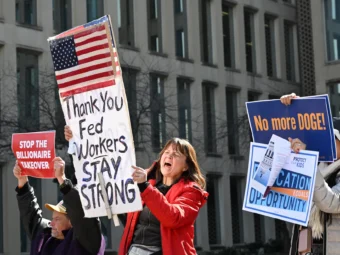
Protesters hold signs in solidarity at a rally in support of federal workers at the Office of Personnel Management in Washington, D.C., on March 4. (Alex Wroblewski/AFP via Getty Images)

Updated March 13, 2025 at 14:40 PM ET

Thousands of federal employees fired by the Trump administration must be offered job reinstatement within the next week, a U.S. district judge in San Francisco has ruled, because he said they were terminated unlawfully.

“It is a sad day when our government would fire some good employee and say it was based on performance when they know good and well that is a lie,” Judge William Alsup, an appointee of former President Bill Clinton, said before issuing his ruling from the bench.

The Thursday decision marks a significant stand against President Trump’s sweeping efforts to remake the federal government. An appeal is likely.

The administration’s job cuts targeted federal workers with probationary status, which usually means newer workers, and makes them easier to let go. Employees recently promoted into a new position can also be considered probationary.

Many probationary employees were fired for “performance reasons,” according to their termination notices, even though many employees had received positive feedback from supervisors.

“It was a sham in order to try to avoid statutory requirements,” Alsup said.

The judge also ordered the U.S. Office of Personnel Management (OPM) to prove within seven days that it had offered reinstatement to all fired probationary employees at the Departments of Agriculture, Defense, Energy, Interior, Treasury and Veterans Affairs.

Requests for comment were submitted to OPM and the agencies affected by the judge’s ruling. Spokespeople for the VA and the Interior Department said they don’t comment on pending litigation.

The decision comes as a result of a lawsuit brought by a group of unions and civic groups on behalf of workers fired from a host of agencies and sub-agencies.

In a charged, sometimes confrontational court hearing on Thursday, Judge Alsup challenged the government’s argument that OPM, which acts as the government’s HR department, had not directly ordered the termination of probationary employees but had left that decision to individual federal agencies and served merely as a coordinating body.

“The court rejects the government’s attempt to use these press releases and to read between the lines to say the agency heads made their own decision with no direction from OPM,” Alsup said.

The judge also bridled that OPM’s acting director, Charles Ezell, and his senior adviser, Noah Peters, did not attend the hearing.

“You will not bring the people in here to be cross-examined. You’re afraid to do so because you know cross-examination would reveal the truth,” Alsup said, addressing OPM’s legal team. “I tend to doubt that you’re telling me the truth.”

The American Federation of Government Employees is one of the plaintiffs in the case, and its president, Everett Kelley, said in a statement that AFGE is pleased with the reinstatement of “probationary federal employees who were illegally fired from their jobs by an administration hellbent on crippling federal agencies and their work on behalf of the American public.”

Earlier this month, the same judge issued a temporary restraining order in the same case, saying the firings were illegal but noted many federal agencies had yet to rehire probationary workers. “Maybe that’s why we need an injunction that tells them to rehire them,” he said Thursday.

Judge Alsup did make it clear that agencies are allowed to reduce their workforce, as long as it’s done legally.

NPR’s Andrea Hsu contributed to this report.

Alaska prosecutor describes alleged abuse by former Judge Joshua Kindred

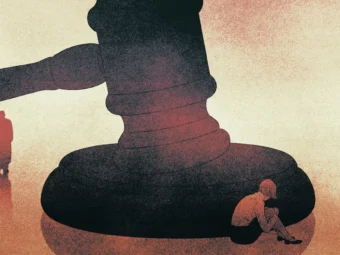
An NPR investigation finds federal judges have enormous influence with few checks on their power. Law clerks and other judicial employees are vulnerable to mistreatment and have few job protections. (Isabel Seliger/NPR)

This story includes descriptions of sexual abuse.

In 2020, as the coronavirus pandemic began its rampage, a recent law school graduate started a new job in Alaska.

She hoped the coveted post – as law clerk to a federal judge – would jump-start her career. Instead, it was almost derailed by harassment and abuse.

“The judge was the HR department, the judge was my boss, the judge was a colleague,” she said. “The judge was everything, he had all the power.”

The power imbalance between judges with lifetime tenure and the young law clerks who work alongside them is both vast and unique to the judiciary. People in the federal court system don’t have the same kind of job protections enshrined in law that most other Americans do.

The courts largely police themselves. That’s because judicial independence – and protecting the balance of power – give judges a tremendous amount of sway over their own workplace rules. At the same time, federal judges have emerged in recent weeks as the lone check on employment abuses elsewhere in the federal government.

A nearly year-long NPR investigation has found problems with the courts’ internal system – and a pervasive culture of fear about blowing the whistle. Forty-two current and former federal judicial employees spoke to NPR about their experience working for judges appointed by presidents from both major political parties.

One of them is the former clerk in Alaska. She’s not being named because she alleges she’s the survivor of sexual assault.

Early in her clerkship, the judge started testing her boundaries, with inappropriate conversations about his personal relationships. She thought it was part of her job to listen and help with anything in his life, she said.

“He had told me that I was a confidante and he had given me the title of career clerk and, you know, he had spoken to me about what an honor that was and… I mean this is ridiculous, but I thought I was doing a public service,” she said.

As the judge’s marriage came apart, he began to text her constantly, to the point where her phone felt like an “electric leash.” In one message, he said she looked like a “f****** Disney princess.” In another, he told her he liked her blue pants.

Things got worse by the summer of 2022, so she found a new job, as a federal prosecutor in Alaska.

About a week after she left the judge’s chambers, she ran into him at a party. He tried to get her to sit next to him on the couch there. Eventually she left, but she got a text from him saying he needed to talk to her.

It was cold that night, so the judge suggested they chat inside his apartment. Then, he insisted she come to the bedroom. At first, she sat on the corner of the bed, but he wanted her to lay down. Then, she told investigators, he grabbed her breast. She tried to pull his arm off, she says, but he was really strong.

“I just remember thinking like there’s nothing I can do about this,” she told the investigators. “This is about to happen.” The judge later told investigators it was consensual.

He took off her pants and performed oral sex on her.

‘No Legal Recourse’

Law clerks and other judicial employees are vulnerable to mistreatment and have few job protections.
Law clerks and other judicial employees are vulnerable to mistreatment and have few job protections. (Isabel Seliger/NPR)

A judge’s control over the future of a young lawyer in his or her chambers is real—and lasting. With only a phone call, a judge can open doors to a lucrative job at a law firm or shut them permanently.

Unlike people who work for private companies, nonprofit groups or Congress, the 30,000 employees of the federal courts usually cannot sue for mistreatment.

“The federal judiciary is outrageously exempt from Title VII of the Civil Rights Act of 1964,” said Aliza Shatzman, who launched The Legal Accountability Project to offer clerks a way to share feedback about their experiences on the job. “That means that if you are a law clerk and you are sexually harassed, fired, retaliated against by a federal judge, you have no legal recourse.”

Since 2017, when the #MeToo movement swept the country, the federal courts say they’ve done a lot to make sure workers are treated with dignity and respect.

“We believe that the changes put in place over the past seven years have had a positive impact on the Judiciary workplace, a belief that was validated by two independent studies,” a spokesperson for the Administrative Office of the U.S. Courts told NPR in a written statement. “We continue to make improvements as part of our efforts to foster an exemplary workplace for our employees.”

Court administrators said employees now have several ways to report problems. And, when it comes to abusive or hostile behavior, they said federal judiciary workers have more leeway to complain about their bosses than people who work outside.

But the clerk in Alaska never used the judiciary’s internal system to report the judge. She didn’t know it existed.

And that’s not uncommon. A study last year by the Federal Judicial Center and the National Academy of Public Administration found many federal courts failed to put required information on reporting misconduct on their websites. About one in 10 court websites have no information about workplace conduct.

People walk toward the James M. Fitzgerald U.S. Courthouse and Federal Building in downtown Anchorage, Alaska, on July 10, 2024.
People walk toward the James M. Fitzgerald U.S. Courthouse and Federal Building in downtown Anchorage, Alaska, on July 10, 2024. (Mark Thiessen/AP)

A person who once served as a resource for court employees seeking advice or information about filing complaints told NPR there are a lot of people trying to do the right thing. This person spoke anonymously, afraid of reprisal for talking about the system. They said it was a struggle just to get information updated on the court’s website, so clerks could find out whom they can talk to, if they had the courage to speak.

A widespread culture of fear surrounds talking about what happens in a judge’s chambers, from cases and decision-making to abuse and misconduct. And there’s a good reason for that.

James Baker is a former judge who also worked in the White House and the military.

“The location where I found the power differential the most distinct was when I was serving as a judge with law clerks, and I think that’s something worth noting,” said Baker, who worked on last year’s NAPA judiciary study.

Not only is the relationship between judges and clerks fraught, it often comes with a huge age gap; the average age of a federal judge is in the mid to late 60s, while law clerks tend to be in their mid to late 20s.

Here’s the way the system works now.

If a clerk has a problem, their first option is something called informal advice.

“Informal advice could be anything like, you know, talk to the judge, write down your thoughts,” said Gabe Roth, who pushes the courts to be more accountable through his group, Fix the Court. “It can be a lot of different sort of basic HR things that we’ve all spoken to HR people about.”

The next step, called an assisted resolution, is a little more serious. The courts say there are about 500 people across the system who are designated to hear about problems and offer advice. Much happens informally through mediation, where a clerk or other court employee can raise concerns and get an apology or even a job transfer.

Then, there’s the most serious option: making a formal complaint. Staying anonymous is not guaranteed. That’s a big problem for many of the clerks and law students who reach out to Aliza Shatzman. She operates a database where clerks can share honest feedback about judges: the good and the bad.

“I don’t take it lightly when I say the federal judiciary is the most dangerous white-collar workplace in America,” Shatzman said.

Hard data about misconduct in the court system isn’t easy to come by. For example, no one tracks the most commonly used way that clerks and other workers raise an alarm, that option to seek informal advice.

“There’s tons of stats; you want to know the birth year of some random judge in Missouri from 1897,” said Roth, of Fix the Court. “They have that. But the idea that they … have not successfully captured the most common type of complaint is very frustrating.”

The courts unveiled their first annual workplace conduct report last November. That report showed more court employees are using the dispute resolution process. But few of them are law clerks.

There are more than 1,400 federal judges with life tenure – and they each have at least two clerks. Just seven complaints came from law clerks between 2021 and 2023.

“The actual number of complaints that flow out of chambers misconduct is a very small number,” Judge Robert Conrad of the Administrative Office told reporters last year. “Wherever misconduct occurs in the judiciary, we need to be ready to address it in a serious way. But the notion that this is primarily a judge problem seems to be dispelled by the findings of the report.”

Shatzman, of the Legal Accountability Project, interprets those numbers very differently.

“When you see a low number of harassment and misconduct complaints in a workplace, typically that does not signal that it is a safe workplace,” she said. “Typically, it signals that the reporting mechanisms are broken and law clerks do not feel comfortable filing complaints.”

Sexual Harassment, Bullying, and Discrimination

Over nearly a year, NPR heard the stories of people whose self-confidence was shattered by judges who screamed so loudly others could hear from the hallways, and people who were fired after only a few weeks on the job, for no clear reason.

Some described sexual harassment, like in the case of the Alaska clerk. Many more shared episodes of bullying. Others said they faced discrimination or harsh treatment because they had a disability or were pregnant.

Jessica Horton is one of them.

When she graduated from law school, at age 24, she felt lucky to get a job as a law clerk to a new federal judge.

Horton said she disclosed her pregnancy a couple of months before she started work. And at the time it didn’t seem like it would be much of a problem for the judge who was herself a mom.

“She told me that she took off two weeks when she had each of her children,” Horton said. “And so she said, ‘You can expect the same.’ And at the time, I had no context for how little that is.”

Inside those chambers, the judge’s word is law. And Horton fell in line.

Several clerks shared they faced discrimination or harsh treatment because they had a disability or were pregnant.
Several clerks shared they faced discrimination or harsh treatment because they had a disability or were pregnant. (Isabel Seliger/NPR)

She worried so much about missing work that she told the doctor she wanted to avoid a C-section, because of the recovery time. She refused an epidural too, because she had read about complications with them.

“My judge at one point asked me how dilated I was,” Horton recalled. “And so she’s like, well, maybe when you go to your appointment, the doctor should check. I had no idea. Like, I mean, at the time, like I knew that that was wrong. Looking back, that is so incredibly inappropriate.”

Horton ended up back at a work event 11 days after her first child was born, still bleeding from birth, leaking milk, and completely miserable. She fought infections and bullying from another clerk.

The clerkship lasted a year — and to leave would be “career suicide,” she said. She started counting down the days on the calendar.

Starting out, Horton had been excited about learning from the judge, having a mentor, maybe someday even becoming a judge herself.

“But after this experience, I changed my mind and it, I think, kind of put the nail in the coffin of my legal career pretty early,” she said.

Her son is now 9 years old. Sometimes they drive by the courthouse and she reminds him, that’s where he slept underneath her desk as a baby.

Horton decided to talk on the record, in part because she’s left the legal profession.

Things can get pretty tough for clerks who speak out.

When the Alaska clerk reported the assault, she told a colleague in the U.S. attorney’s office who had been assigned to mentor her.

“When I reported to my mentor, she was also the person that had been sending him nude photos and immediately told him that I reported the sexual assault,” the clerk said.

The mentor later said in court papers that she also felt pressured to share nude pictures with the judge, given his power and authority, and because he told her he would have sway over a job she wanted.

The former clerk heard from friends that the judge was furious she’d told anyone. When she ran into him, in the hallway at the courthouse, she said he warned her to keep her head down and shut up. (The judge denied that.)

“The actual sexual assault was awful…completely awful and you know I’ve since sought therapy for that, and help. But what happened next was almost worse,” she said.

The court system ultimately launched an investigation into the judge, Joshua Kindred. What followed were multiple rounds of interviews with investigators who cross-examined her and stress-tested her credibility. The court investigation took more than a year, and all the while two other young women clerks in the judge’s chambers continued to work by his side.

Alaska lawyer Joshua Kindred speaks during a judicial nomination hearing at the U.S. Senate Committee on the Judiciary in Washington, D.C., in 2019.
Alaska lawyer Joshua Kindred speaks during a judicial nomination hearing at the U.S. Senate Committee on the Judiciary in Washington, D.C., in 2019. (U.S. Senate Committee on the Judiciary via Reuters)

At first, Kindred told investigators nothing sexual had happened between them. Much later, he said the experience was consensual and that he had no “sinister intent.”

Last July, a special committee for the U.S. Court of Appeals for the Ninth Circuit found the judge had deliberately lied. But the court committee found the judge did not retaliate against the former clerk and did not reach a conclusion about whether the judge sexually assaulted her.

Kindred resigned shortly before the report about his misconduct became public.

He did not respond to phone calls or messages to an email address and a phone number associated with him, or to messages sent to relatives.

A Patchwork Reporting System

Before the courts started to develop more formal systems for reporting abuse seven years ago, clerks sometimes had to figure out a solution for themselves — something that continues to this day.

That’s what happened with a woman we’re calling S, who worked for Judge José Antonio Fusté in Puerto Rico, just out of law school.

Chief U.S. District Court Judge José Fusté attends a press conference in San Juan, Puerto Rico in 2009.
Chief U.S. District Court Judge José Fusté attends a press conference in San Juan, Puerto Rico in 2009. (Andres Leighton/AP)

“We were working together on a very high-profile, high-stakes death penalty case,” she said. “I remember that I was in his chambers and we were sitting next to each other. And I remember that he put his hand on my thigh and I remember moving it off of my thigh and just being shocked.”

Things like that happened quite a few times, she said, including an incident when the judge returned from a trip and tried to kiss her on the lips. He also copied down a love poem and left it at her desk, she said.

S said she struggled with her options, including whether to leave the job early. Eventually, a new law clerk arrived, and S said the judge made advances on her too.

“This wasn’t about me personally. This was just a pattern and practice of behavior,” S said.

Together she and the other clerk developed some strategies for handling the judge, their boss. They never went into his chambers on their own, for starters.

“Kind of just tried to stay away from him as much as we could, which is a very unfortunate situation, because part of the reason one might choose to work for a federal judge is because you want to be able to interact with a federal judge,” she said. “So we just…got very cold to him and I guess strength in numbers is how it turned out.”

S said she and her fellow clerk — diligent young attorneys just out of law school — dug into legal research about sexual harassment and the ramifications of making a complaint about a federal judge.

Ultimately, they reached out to administrators in the Appeals Court for the First Circuit but S said they were told “there wasn’t anything that could be done.”

Fusté remained on the bench for years, until 2016, when he resigned after another clerk reported him to administrators.

A widespread culture of fear surrounds talking about what happens in a judge's chambers, from cases and decision-making to abuse and misconduct.
A widespread culture of fear surrounds talking about what happens in a judge’s chambers, from cases and decision-making to abuse and misconduct. (Isabel Seliger/NPR)

NPR attempted to reach Judge Fusté for comment, but he did not respond to phone calls or messages to an email address and a phone number associated with him, or to messages sent to relatives.

S knows Fusté has retired. But she’s still afraid of the damage it could cause her career if she identifies herself by name.

“He was able to retire with all of his federal benefits,” she said. “So I thought, ‘Well, this doesn’t really seem fair that all he has to do is kind of, you know, walk away and …he could have been ready to retire in any case.'”

Retirement stops any court investigation in its tracks. Often a judge under scrutiny will keep their benefits and sometimes still show up at the courthouse.

That’s how things went down in the most notorious case in recent years.

Sexual misconduct allegations against Judge Alex Kozinski shook the federal courts in 2017, after #MeToo complaints hit Hollywood, the business world, media and politics.

Ninth Circuit Appeals Court Judge Alex Kozinski attends a House Judiciary Committee hearing on March 16, 2017 in Washington, D.C.
Ninth Circuit Appeals Court Judge Alex Kozinski attends a House Judiciary Committee hearing on March 16, 2017 in Washington, D.C. (Justin Sullivan / Getty Images)

Kozinski apologized to his former clerks for making them feel uncomfortable. He said he had a “broad sense of humor.”

But even after he retired, Kozinski kept working in the law. He’s even filed court papers for clients with cases before the 9th Circuit, the same one he left amid a national outcry.

The Administrative Office of the Courts pointed out in a statement to NPR that three judges named in this story — Kozinski, Fusté and Kindred — are off the bench, and that two of them left before the #MeToo scandals erupted, and before the courts created a better reporting system.

A Push for Accountability 

For most people, the courts are where they turn for accountability when they have problems at work. But for the people who work in those very courts, their rights are not that clear. Protections for them are not set out under law, and a judge’s colleagues and friends can be the deciders.

Congresswoman Norma Torres, a Democrat from California, is trying to change that.

Last fall, she convened a group of experts on Capitol Hill to draw attention to the problem.

“I don’t need to be a lawyer to know that people in power with no oversight get to sweep people and problems under the rug,” she said.

Torres says the majority of judges behave properly, but the ones who don’t face little accountability. The courts operate in a patchwork, so no one is in charge of overseeing all the systems that employees use to report misconduct. Torres pushed for Congress to set aside money for two research studies to understand the holes in the system.

Gretta Goodwin led one of those efforts, for the Government Accountability Office. But Goodwin found she didn’t have the access to properly do her job.

“This report is about workplace misconduct,” Goodwin said at the congressional roundtable. “And we were not really allowed to talk to employees or get perspectives from employees. We were allowed to speak to one current and one former employee.”

The federal courts said the study validates the steps they’ve already taken to improve conditions for workers there.

But Torres said that’s not good enough. She’s committed to using the power of the purse — the appropriations power — to try to get the judiciary to do more.

California Democratic Rep. Norma Torres speaks during a press conference on Capitol Hill on June 13, 2024.
California Democratic Rep. Norma Torres speaks during a press conference on Capitol Hill on June 13, 2024. (Anna Rose Layden / Getty Images)

She and Georgia Democrat Hank Johnson also introduced the Judiciary Accountability Act. The bill would make clear that the civil rights laws — the protections against discrimination on the basis of race, gender, disability and other protected characteristics, as well as against sexual harassment and retaliation — apply to the 30,000 people who work for the federal courts.

“This is just one small step, but a very important step to bring about some accountability,” Johnson said.

Senator Lisa Murkowski, of Alaska, helped sponsor a companion bill in the Senate. But neither piece of legislation got a hearing before Congress left town last year. Republicans now control both chambers of Congress and reforms to the judicial branch are not expected to be a priority for them this year.

As for other avenues of accountability, the people who work for federal judges, probation departments and public defenders can’t go to the executive branch for help. And it’s not clear they can sue in the courts either.

In fact, NPR heard from a dozen current and former employees that it’s hard to even find a lawyer to give advice because these systems are so hard to understand, and because the lawyers worry about getting on the bad side of a federal judge who may decide their own cases someday.

Pressure to Remain Silent

Executives in the federal court system said they’re committed to improving the work environment and they’ve taken concrete steps to demonstrate that.

“This is not the systemic failure that some critics stuck in a six-year time warp have used to describe the judiciary’s efforts,” Conrad, of the Administrative Office of the Courts, said last year.

But clerks told NPR that people who run into trouble on the job still face tremendous pressure to remain silent. A negative reference from a judge can detonate a clerk’s career, while judges serve for life.

Judges who behave badly can be an open secret in a courthouse: NPR heard over and over again that the court security officers know, the longtime clerks know, their colleagues know. But a new batch of clerks, just out of law school, may not have heard those whispers.

“I can handle a tough boss,” said a former clerk who spoke anonymously for fear of reprisal. “I can’t handle an abusive boss. I just wish more people would talk about it.”

Were you harassed or bullied by a federal judge or do you know someone who was? We want to hear about your experience. Your name will not be used without your consent, and you can remain anonymous. Please contact NPR by clicking this link.

Barrie Hardymon, Monika Evstatieva and Krishnadev Calamur edited this story with help from Anna Yukhananov and Robert Little. Research from Barbara Van Woerkom, with art direction and photo editing by Emily Bogle. Production support from Casey Morell and Margaret Luthar.

National Park workers in Alaska say a Trump agency fired them illegally. A judge agrees

Eileen and James Kramer in Alaska’s Lake Clark National Park where they’ve worked for about the past decade. After getting promotions, they were both suddenly fired by the Trump administration earlier this month. (Courtesy of Eileen and James Kramer)

Two weeks ago, Eileen Kramer and her husband James each received termination letters in their email inboxes.

“They were saying we were underperforming, which isn’t true,” Eileen said.

The couple, who live and work in the sprawling 4-million-acre Lake Clark National Park in Alaska, may soon have to vacate the house they’re living in because it is owned by the Park Service.

“It’s more than just losing our job,” James said. “We’re losing our life.”

“We’ve given so much to this place and we’ve created a life here,” explained Eileen, “and that’s being taken away dishonestly.”

The couple has worked in Lake Clark for about 10 years. She’s in logistics, he’s a biological science technician. They were both recently promoted. Those promotions put them into probationary status in their new positions.

The Trump administration has fired tens of thousands of federal workers with “probationary” status, which usually means newer workers, and makes them easier to let go. But those workers still have some rights and protections, and many say the administration has used false pretenses to fire them.

On Thursday, a federal judge in San Francisco sided with the workers in a lawsuit brought by unions and civic organizations. The judge ruled specifically that the Trump administration’s Office of Personnel Management (OPM) exceeded its authority by directing federal agencies to carry out these mass firings. The government had argued it didn’t because each agency made its own decisions. But U.S. District Judge William Alsup, an appointee of former President Bill Clinton, said he didn’t believe that.

“Plaintiffs … have mustered a mountain of evidence that points in the other direction, from a broad range of federal agencies,” the judge wrote in his order.

It’s not yet clear exactly how the ruling is going to affect the thousands of workers who were already let go.

“ I got an award in efficiency last year”

A federal agency is allowed to fire a probationary worker for bad performance or conduct.

The OPM sent letter templates to agency officials in its guidance about firing probationary workers, and the administration fired many for poor performance — even though workers like James and Eileen Kramer say that’s a lie.

They obviously didn’t look at our personnel file because we have evidence showing that we’re great performers and we’ve exceeded expectations and we’ve received performance awards,” James said.

 I got a regional award specifically in efficiency last year,” Eileen said. “So it’s a little bit ironic to me that I’m being terminated as part of this government efficiency initiative,” referring to the Elon Musk-aligned Department of Government Efficiency.

The Trump administration has maintained that it is simply trying to root out waste, fraud and inefficiency among the federal workforce of 2.3 million people.

But the lawsuit filed in federal court in San Francisco on behalf of thousands of federal workers claimed that the only fraud here is being committed by the administration.

“[The Trump administration] in one fell swoop has perpetrated one of the most massive employment frauds in the history of this country, telling tens of thousands of workers that they are being fired for performance reasons, when they most certainly were not,” the lawsuit stated.

The White House hasn’t responded to that specific accusation of fraud, but the government had said in a court filing that the “probationary period is part of the hiring process; agencies are not required to hire every employee whose performance is ‘satisfactory.’ ”

In his order, Judge Alsup agreed that the firings were not in fact based on performance: “It is unlikely, if not impossible, that the agencies themselves had the time to conduct actual performance reviews of the thousands terminated in such a short span of time. … It is even less plausible that OPM alone managed to do so.”

Michelle Bercovici is a lawyer working on another legal effort to help probationary federal workers who were let go.

“They had good performance, a good relationship with their supervisor, and were terminated using the same letter,” Bercovici said. “This is an attempt to circumvent various procedures, policies or requirements designed to protect employees.”

Bercovici has petitioned a federal watchdog entity, the Office of Special Counsel, and managed to secure a stay forcing the rehiring of a small initial group of six federal workers. Working with the nonprofit Democracy Forward, she is hoping to expand the stay to reach thousands of other federal workers.

“We are trying to advocate for as broad a stay as possible,” Bercovici said.

Bercovici says if a government agency wants to do a mass layoff, that’s known as a “reduction in force” and there are rules that need to be followed.

“ It’s a fair, clearly laid-out process,” she said. “It requires a lot of planning.”

Eileen and James Kramer in 2019 by a National Park Service airplane after an aerial telemetry mission tracking radio collared caribou to estimate population. (Courtesy of Eileen and James Kramer)

At the National Park in Alaska, Eileen and James Kramer said there was no apparent planning behind the layoffs there. They said half the staff who live onsite at the park were fired, including a 20-year veteran employee at the park who they say was the one person who knew how to keep all the boats, heaters, trucks, snowmobiles and all sorts of other equipment running.

Since he recently became a supervisor they say he was in probationary status too.

“He’s also emergency response, he’s a boat captain,  he’s the one that’s gonna come rescue you if you get in trouble in the backcountry,” Eileen said.

James added: “The superintendent even said, ‘You can fire me, the park will still run without me, but without Warren, we can’t do anything.’ ”

The couple said none of these firings appeared to have anything to do with waste or inefficiency.

They say their former supervisors haven’t yet been told by the National Park Service if the ruling in federal court will result in them being reinstated to their old jobs.

“But we are heading into the weekend with somewhat lighter hearts,” Eileen said.

Eileen and James Kramer with Lota their Karelian Bear Dog, a breed they say is especially good at scaring off hungry bears in the wild and around their home in the park. The couple is feeling more hopeful that they may get their jobs back after a court ruling in San Francisco this week. (Courtesy of Eileen and James Kramer)

Have information you want to share about ongoing changes across the federal government? NPR’s Chris Arnold can be reached at carnold@npr.org or contacted through encrypted communications on Signal at ChrisArnold.07.

Sweeping cuts hit recent federal hires as Trump administration slashes workforce

U.S. Forest Service Juneau Ranger District headquarters on Backloop Road. (Photo by Heather Bryant/KTOO)

Federal workers have begun receiving layoff notices as the Trump administration moves ahead with plans to drastically downsize the government.

While the full scale of layoffs isn’t yet clear, the first round of cuts appeared to target employees who were recently hired and still on probationary status, according to multiple federal officials and staffers who spoke to NPR on condition of anonymity, because they were not authorized to speak to the press and feared retaliation from the Trump administration.

The firings are affecting a wide swath of federal workers, and include employees responsible for education, small business grants, and the nation’s nuclear weapons stockpile.

Probationary periods vary by federal agency but typically last one or two years. According to government data, around 220,000 federal employees had less than one year of service in March 2024, the most recent time period available. Another 288,000 had between one and two years of service at that time.

President Trump signed an executive order on Tuesday directing federal agencies to start preparing to, quote, “initiate large-scale reductions in force.” Trump and his advisor Elon Musk have said they want to cut what they say is excessive government spending.

Compensation for federal employees amounted to around 3% of the federal budget in the 2024 fiscal year, according to government data.

The Department of Energy began firing its probationary employees on Thursday, according to two officials at the agency who spoke to NPR on condition of anonymity because they were not authorized to speak to the press.

The employees, who have worked for less than two years in the federal government, were being let go without any notice or severance. Although a formal letter was being prepared, some employees were being fired verbally.

Mass terminations of probationary workers also swept through the National Nuclear Security Administration, a semi-autonomous agency within the Energy Department that oversees the nation’s nuclear weapons.

According to an NNSA employee, roughly 300 of the agency’s 1,800 staff had been fired after the agency was denied a national security exemption. The small organization is responsible for maintaining and upgrading America’s arsenal of nuclear weapons, combatting nuclear terrorism, and preventing proliferation around the world.

According to one Energy Department official, the Office of Personnel Management (OPM) had suggested the agency use a template that cited “performance reasons” as the cause of the firings. The official said the Energy Department letter had removed that phrasing because many of the employees had performed well during their probationary period. The Energy Department’s press office did not immediately respond to a request for comment.

Probationary employees at the U.S. Office of Personnel Management were also terminated on Thursday, according to an official with the American Federation of Government Employees, which represents more than 800,000 civil servants, including workers at OPM, the Department of Education, the Small Business Administration, and other federal agencies. The union official spoke with NPR anonymously in order to share internal discussions.

Over a Microsoft Teams call with about 100 people, OPM staffers were told the reason for their dismissal was that they didn’t take the Trump administration’s “Fork in the Road” deferred resignation offer, the union official said. That offer gave two million civilian federal employees the option to resign while retaining pay and benefits through the end of September, or remain in their positions with the caveat that their jobs would not be not guaranteed.

The affected OPM employees were given until 3 p.m. ET Thursday to leave the building, the union official said. AFGE officials were not given access to the building.

“This administration has abused the probationary period to conduct a politically driven mass firing spree, targeting employees not because of performance, but because they were hired before Trump took office,” AFGE president Everett Kelley said in a statement late Thursday.

“Agencies have spent years recruiting and developing the next generation of public servants. By firing them en masse, this administration is throwing away the very talent that agencies need to function effectively in the years ahead,” Kelley said.

Probationary staff at the Department of Education began receiving written notifications on Wednesday night that they were being terminated effective immediately, according to four employees who shared their notices with NPR on condition of anonymity for fear of reprisal.

At least 60 probationary staffers across the Education Department received termination notices, according to the union official.

“This is just devastating to me,” one department staffer told NPR on the condition their name not be used for fear of retribution. “When I took my oath, that was the proudest moment of my career.”

In response to a request from NPR to confirm the firings, a spokesperson said the agency does not comment on personnel matters.

At the General Services Administration, many probationary employees were called into meetings on Wednesday afternoon and told they would be let go, according to three GSA employees who spoke to NPR. Some were told they had a final chance to take the government’s deferred resignation offer, which was officially closed hours later. As of Thursday, many affected GSA workers still had not received formal termination notices in writing, the GSA sources said.

At some agencies, the notification process has been confusing and chaotic.

At the Small Business Administration, probationary staff received emailed termination notices last Friday, only to be told in another email on Monday that that was an error, according to the union official. Then, on Tuesday, the SBA staffers got another termination notice. The union official said dozens of SBA probationary employees were let go.

Termination letters emailed to probationary employees at the Consumer Financial Protection Bureau on Tuesday appeared to have been the result of a failed mail merge, according to two terminated employees who got the letters.

The resulting notices were missing personal details, reading: “MEMORANDUM FOR [EmployeeFirstName] [EmployeeLastName], [Job Title], [Division]”.

CFPB’s union has identified approximately 73 “bargaining-unit” employees in their probationary period who were terminated, according to Jasmine Hardy, the executive vice president for NTEU Chapter 335.

Have information you want to share about the ongoing changes across the federal government? Reach out to these authors: Shannon Bond is available through encrypted communications on Signal at shannonbond.01, Geoff Brumfiel is on Signal at gbrumfiel.13, and Andrea Hsu is on Signal at andreahsu.08

NPR’s Stephen Fowler, Jonaki Mehta and Laurel Wamsley contributed to this report.

White House response adds to confusion on federal funding freeze

President Trump is seen here after signing a range of executive orders on Jan. 23. (Anna Moneymaker/Getty Images)

The Office of Management and Budget has rescinded its call for a pause on payments for federal grants and other programs, the White House announced on Wednesday. But the administration said that only the original memo calling for the freeze had been rescinded — not its effort to review federal spending.

Details about the rescinded order were spelled out in a copy of an agency memo shared by Democracy Forward, which led a legal challenge over the effort. The new memo says the heads of executive departments and agencies should contact their general counsels “if you have questions about implementing the President’s Executive Orders.”

“Facing legal pressure from our clients and in the wake of a federal judge ruling in our case last evening, the Trump-Vance administration has abandoned OMB’s ordered federal funding freeze,” Democracy Forward said in a statement on Wednesday. “We are proud of our courageous clients — who represent communities across the nation — for going to court to stop the administration’s unlawful actions.”

But Karoline Leavitt, the White House press secretary, told reporters that the move simply meant a rescinding of the original Monday directive.

Efforts to “end the egregious waste of federal funding” will continue, according to Leavitt, who said the OMB memo was rescinded “to end any confusion on federal policy created by the court ruling and the dishonest media coverage.”

After widespread confusion from the initial memo calling for a halt in federal assistance, pending review, the White House tried Tuesday to further clarify which programs would not be affected, later specifying that the halt would not impact Medicaid and the Supplemental Nutrition Assistance Program, for example.

This latest statement from the White House is likely to add to the confusion rather than clarify it. Leavitt said the administration expects that rescinding the memo will end the court case against it, but that executive orders on funding reviews issued by President Trump “remain in full force and effect and will be rigorously implemented by all agencies and departments.”

Wednesday’s developments follow a federal judge’s order Tuesday that temporarily blocked the effort to pause federal payments for grants and other programs.

Under the original OMB memo obtained by NPR, a temporary pause in funding was set to take effect Tuesday evening, but a senior administration official said that the pause could be as short as a day if an agency determined its programs were in compliance.

The official said the directive should not be interpreted as a full funding freeze. The official, who was not authorized to publicly discuss the internal memo, said that agencies are supposed to review their grants, loans and programs to ensure that they align with the new administration’s priorities.

Administration officials have insisted that the impacts are misunderstood, but the actual text of the memo is far-reaching and the follow-up guidance has been criticized as vague. On Tuesday afternoon, the White House issued a fact sheet that said “the pause does not apply across-the-board” and that “any program that provides direct benefits to Americans” — like Social Security, Medicare and food stamps — “is explicitly excluded.”

The memo quickly drew legal challenges on Tuesday.

The nonprofit organizations that won the temporary stay Tuesday had claimed in their filing that the memo “fails to explain the source of OMB’s purported legal authority to gut every grant program in the federal government.” The groups also said that the memo failed to consider the interests of grant recipients, “including those to whom money had already been promised.”

Shortly after the decision by the federal judge on Tuesday, a group of attorneys general from 22 states and the District of Columbia filed a separate challenge in federal court.

Congressional reaction

The order provided an early litmus test for just how willing Republicans in Congress would be to cede their power of the purse in deference to the leader of their party — even temporarily.

The order came late Monday night, as House Republicans were gathered at an annual conference in Trump’s backyard at his Trump National Doral Golf Club.

As Democrats like Washington’s Sen. Patty Murray denounced the measure as “brazen and illegal,” most congressional Republicans who spoke about the memo said it was a means to an end to implement Trump’s agenda, which is his prerogative.

House Speaker Mike Johnson, R-La., called it “an application of common sense” and said it would “be harmless in the end.”

At least one person at the retreat, Rep. Don Bacon, R-Neb., said a heads-up would have been helpful.

“How are we supposed to defend [it] if we don’t know what’s coming out and what it really means? And I’ve got constituents calling, so it’s just part of life,” he said.

Back on Capitol Hill, Sen. Susan Collins, who chairs the Appropriations Committee, stopped short of criticizing the memo on Tuesday, saying she was “surprised by its breadth.” On Wednesday, she said she was pleased it was rescinded.

“While it is not unusual for incoming administrations to review federal programs and policies, this memo was overreaching and created unnecessary confusion and consternation,” she said in a statement.

As chair of the committee, Collins will be one of the lawmakers directly responsible for negotiating federal spending under Trump.

Another member of the appropriations committee, Democrat Chris Coons of Delaware, said the original order “caused alarm bordering on chaos in my state.” Coons told reporters on Wednesday he was waiting for the administration’s next move.

“We’ll see what the next order is. I’ll remind you that in the first Trump term, he issued a so-called Muslim ban. It was enjoined or overturned, so they reissued it,” Coons said.

“There is a persistent attempt at trying to sort of shake the system and see if savings can be identified,” he added. “I would have urged a profoundly different approach to that.”

Sen. Kevin Cramer, R-N.D., acknowledged that the move questions the authority of Congress, but said he wasn’t concerned.

“[Trump’s] testing his own authority,” Cramer told reporters Tuesday. “He’s getting some guidance that presidents have more authority than they’d traditionally used.”

Cramer said he supports a pause to reevaluate spending, but acknowledged the memo represented a “major test of separation of powers.”

Sen. Jim Risch, R-Idaho, put it more bluntly.

“For all of you who haven’t noticed, this is a different day in Washington, D.C.,” he told reporters Tuesday.

Judge pauses Trump’s federal funding freeze as confusion and frustration spread

President Donald Trump has promised to greatly curtail the federal government and a memo released Monday by the Office of Management and Budget aims to follow through on that promise by halting a large swath of federal grant programs. (Kent Nishimura/AFP via Getty Images)

A federal judge has temporarily blocked an effort by the Trump administration to pause federal payments for grants and other programs, suspending a plan that caused widespread confusion on Tuesday.

The order by U.S. District Judge Loren L. AliKhan ensures that federal agencies, states and other organizations that receive money from the federal government should continue to receive funds beyond a previously set deadline of 5 p.m. ET.

“This is a sigh of relief for millions of people who have been in limbo over the last twenty-four hours as the result of the Trump Administration’s callous attempt to wholesale shutter federal assistance and grant programs that people across this country rely on,” said Skye Perryman, president and CEO of the group Democracy Forward, which led a legal challenge to the policy.

The challenge included the groups the National Council of Nonprofits, the American Public Health Association, Main Street Alliance and SAGE. The judge’s pause on the order is in effect until Monday, Feb. 3.

What the order said

The Office of Management and Budget memo, obtained by NPR, had said that a temporary pause in funding would take effect at 5 p.m. ET Tuesday, but a senior administration official told NPR that the pause could be as short as a day if an agency determines its programs are in compliance.

The official said the directive should not be interpreted as a full funding freeze. The official, who was not authorized to publicly discuss the internal memo, said that agencies are supposed to review their grants, loans and programs to ensure that they align with the new administration’s priorities.

Administration officials have insisted that the impacts are misunderstood, but the actual text of the memo is far-reaching and the follow-up guidance has been vague. On Tuesday afternoon, the White House issued a fact sheet that said “the pause does not apply across-the-board” and that “any program that provides direct benefits to Americans” — like Social Security, Medicare and food stamps — “is explicitly excluded.”

The memo followed dozens of executive actions signed by President Trump over the past week. Those documents included calls for reviews of various programs and funding. Trump has explicitly said all DEI programs should be halted, for example, and is generally pushing for more government efficiency and less spending by the federal government.

The new administration is also seeking to make broad changes to the federal workforce.

Critics call the demand for a funding freeze unlawful because Congress has already approved the money to be spent, but the administration is arguing that this action is not full impoundment — and instead a temporary review.

Court challenges to the order are growing

The spending memo quickly drew legal challenges on Tuesday.

The nonprofit organizations that won the temporary stay had claimed in their filing: “The Memo fails to explain the source of OMB’s purported legal authority to gut every grant program in the federal government; it fails to consider the reliance interest of the many grant recipients, including those to whom money had already been promised; and it announces a policy of targeting grant recipients based in part on those recipients’ First Amendment rights and with no bearing on the recipients’ eligibility to receive federal funds.”

Several states, including New York, also signaled plans to challenge the policy in court. New York Attorney General Letitia James wrote on X: “These chaos cuts jeopardize resources that millions of Americans rely on.”

Confusion and concern from providers

White House Press Secretary Karoline Leavitt faced a string of questions about the memo during her first daily briefing for the press from the Brady Briefing Room of the White House. (Roberto Schmidt/AFP via Getty Images)

The order stirred confusion among the public, across government agencies and in Congress.

Oregon Democratic Sen. Ron Wyden said his staff confirmed that Medicaid spending portals were down in states across the country Tuesday, but White House press secretary Karoline Leavitt wrote on X that the “White House is aware of the Medicaid website portal outage. We have confirmed no payments have been affected — they are still being processed and sent.”

Experts said that a slew of federal programs, like community health programs and childcare, could be significantly affected by even a short pause in funding.

Rricha deCant — director of legislative affairs at the Center for Law and Social Policy, which advocates for assistance for people with low incomes — told NPR that it appeared many federal programs wouldn’t be exempt from this pause because funding first goes “to the states or to local entities, and then it’s distributed to the individual people.”

And even a short pause in funding, deCant said, could force providers to consider pausing some services.

“If people are not able to access the databases, if they’re not able to draw down funds tomorrow, I think that’s very, very disheartening because a lot of these places don’t have a lot of reserve funds for emergencies,” she said. “They rely on sort of the steady flow of federal dollars coming in and there’s not really a contingency plan.”

Sharon Parrot, the president of the left-leaning Center on Budget and Policy Priorities, said it’s likely some programs could face a long period without funding as agencies figure out what programs align with the recent executive orders. And the longer the pause, she said, the more likely some organizations will have to close their doors altogether.

“We could see services stop and we could see service providers be unable to make payroll, unable to pay their rent,” Parrott said.

Republican lawmakers face questions about separation of powers and impact of orders

Republican lawmakers gathered in Miami, Fla., at Trump’s Doral Resort on Tuesday for an annual issues conference. Republican leaders have not addressed the order freezing federal grants during Tuesday’s program, according to multiple GOP attendees. And as lawmakers left the various sessions, few, if any raised concerns about the legality or impact of the order.

The one House Republican who did raise concerns publicly, Nebraska Rep. Don Bacon, told reporters it “would have been wise” to notify Congress.

He said, “How are we supposed to defend if we don’t know what’s coming out and what it really means and I’ve got constituents calling so it’s just part of life.”

Bacon originally raised questions about the order, telling reporters, “There are real people that depend on these grants” and that his constituents were calling his office about the cuts.

Rep. French Hill, R-Ark., said he hadn’t read the order but that he believed that the president “under his executive order has the right to look at spending by category.”

Asked about whether the move amounted to impounding money already approved by Congress, Hill said, “I don’t think the courts have supported that over the years. Let’s wait and see. Let’s let him do his review and see what the result is.”

Rep. Ryan Zinke, R-Mont., backed Trump’s move to freeze grants, saying, “I think it’s a fair proposition that the taxpayers know where the money goes.”

Zinke, who served as interior secretary in Trump’s first term, said he reviewed grants then and as a member of the foreign affairs panel. He said it’s “shocking” that there is no database on foreign aid, and that grantees should agree to an audit and demonstrate there is no conflict of interest.

Asked about Trump taking away Congress’ power of the purse, Bacon said that the president “likes a little bit of disruption and we’re getting it.”

Democrats warn of a constitutional crisis

Senate Minority Leader Chuck Schumer, D-N.Y., speaks at a news conference on Capitol Hill on Tuesday. Senate Democrats blasted the administration’s plans, warning it would hurt groups and individuals who rely on federal funding, and damage the relationship between Congress and the president. (Anna Moneymaker/Getty Images)

Top Senate Democrats were warning about the massive potential impacts of a freeze — both for groups and individuals who rely on federal funding and for the relationship between Congress and the president.

“In an instant, Donald Trump has shut off billions, perhaps trillions, of dollars, that directly support states, cities, towns, schools, hospitals, small businesses and most of all American families,” Senate Minority Leader Chuck Schumer of New York said on Tuesday.

Schumer and other leaders emphasized that the move would affect American families in red and blue states who rely on federal funding.

Schumer specifically pointed to funding for disaster relief efforts, local law enforcement, rural hospitals, food assistance, aid to the elderly, infrastructure programs, cancer research and opioid addiction treatment, among other things.

“They need tax cuts for the ultra-wealthy, and these cuts they think will fund them,” he said.

Senate Democrats said their offices have been deluged with calls from people in a panic about what a lack of funding — even a temporary pause — would mean for their programs.

Sen. Patty Murray, D-Wash., vice chair of the Senate appropriations committee, called the administration’s action “unprecedented.”

“Last night, in a brazen and illegal move, the Trump administration is working to freeze huge amounts of federal funding passed into law by Republicans and Democrats alike,” she said at a press conference on Tuesday. “Trump’s actions would wreak havoc in red and blue communities everywhere. This is funding that communities are expecting, and this memo is creating chaos and confusion about whether these resources will be available to them.”

Murray said she is calling on the Senate budget chair, Republican Lindsey Graham of South Carolina, to postpone a committee vote on Russ Vought, Trump’s nominee to head the Office of Management and Budget. That vote is currently scheduled for Thursday.

“Republicans should not advance that nomination out of committee until the Trump administration follows the law,” she said.

This story has been updated with new information. 

Site notifications
Update notification options
Subscribe to notifications