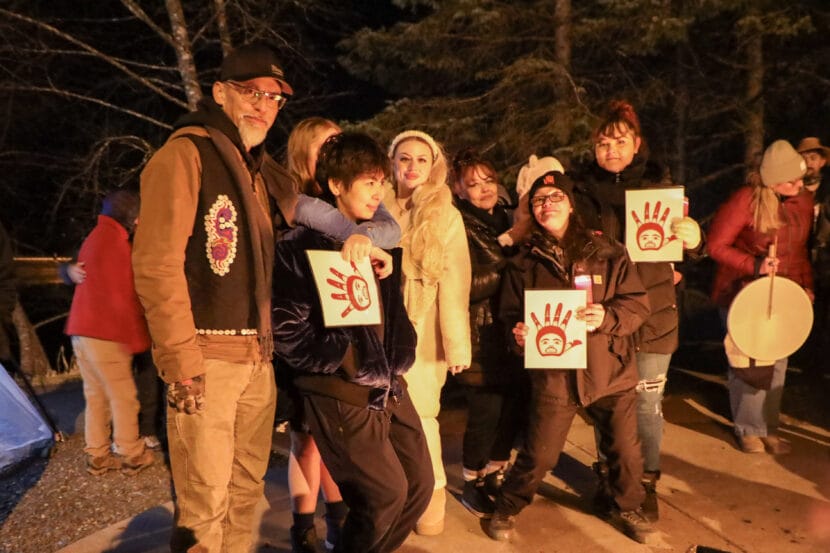
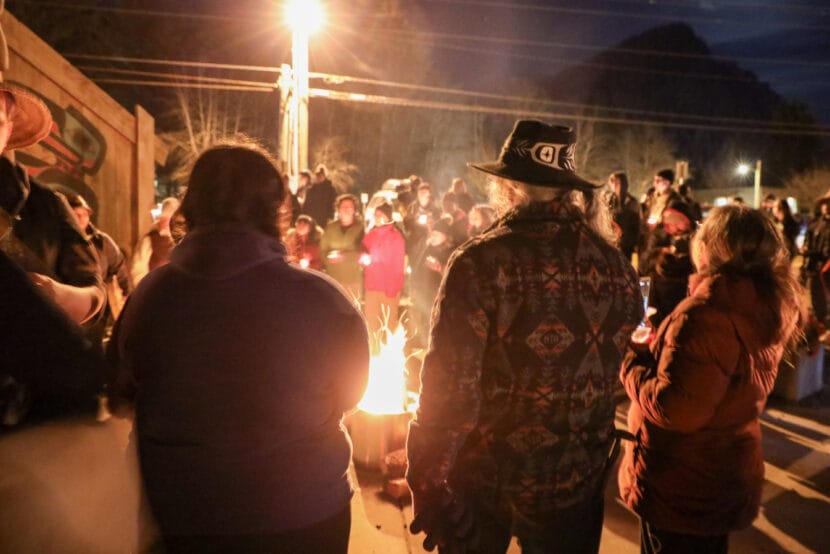
Juneau community members gathered for a candlelight vigil for Missing and Murdered Indigenous People on Thursday.
It was a space for healing after the remains of a missing Indigenous teenager were found in Arizona last month. That loss touched an emotion that crosses state boundaries — the loss that Indigenous communities everywhere feel about their relatives who were victimized by violence.
“We will never stop saying their names,” said Xeetli.éesh Lyle James, Lingít advocate and leader.
A fire crackled as dozens of people gathered under a lunar eclipse at the Kaasei Healing Kootéeyaa, a totem pole that represents healing from gender-based violence. James read the names of Indigenous women and children who have been murdered, or disappeared.
“The most recent: repeat after me, Emily Pike. Say her name,” James said.
Emily Pike was 14 years old when she went missing from her group home in Arizona in January. Her dismembered remains were found a month later.
This tragic story isn’t an uncommon one. Indigenous women and girls in the United States are three times more likely to be murdered than white women and girls. For that reason, the news touched members of the Juneau community, who gathered to honor, remember and heal.
“We’ve always known this: that when we speak their names, they’re standing with us,” James said.
James also named Ashley Johnson-Barr, a 10-year-old girl who was kidnapped and murdered in Kotzebue in 2018, and Tracy Day, a Lingít woman who went missing in Juneau in 2019.
Kaelyn Schneider is Day’s daughter. She said the kootéeyaa is a space for the families of missing and murdered Indigenous people who don’t have answers.
“There are so many family members that, like my mom’s case, we don’t have a grave site,” she said. “We have nowhere to mourn our loved one, you know. So I think this is really special.”
She said hearing her mother’s name lets her know that people in Juneau haven’t forgotten about her.
James introduced a song called “I x̱’ádudlitseen” – it means “you are precious.”
“All of you standing here this evening are precious,” he said. “All our loved ones that we lost too early, they are precious.”
Attendees holding drums got ready for the song, and he taught the words before it started, so the group could sing loudly together. He invited all to dance.
“And when you dance, stomp it into the ground, because we are tired of all our relatives disappearing and no explanation, no justice for our loved ones,” James said. “We are their voices. You are their voices. You are their strength.”
The kootéeyaa was carved by Master Carver Wayne Price. It was raised in 2022 at Twin Lakes to be a symbol of healing from domestic violence and child abuse.
“It’s a totem that probably shouldn’t ever have to be built,” Price said Thursday.
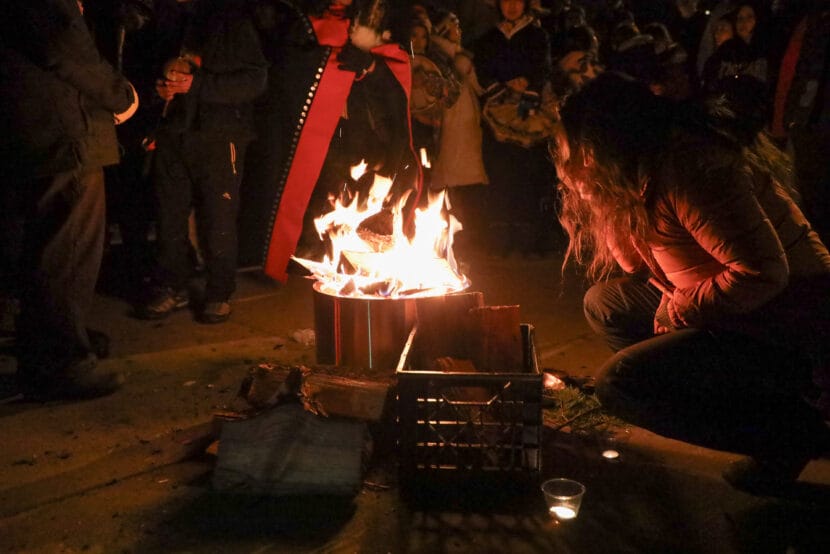
Later, people burned cedar chips in a small fire. Price carved the chips out of a dugout canoe. Organizers said each one represents a victim of violence. He said the fire was meant to heal the community — and he said he thinks it will.
“You know, that’s why we’re here, because we believe it’s going to work,” Price said.