The U.S. Department of Agriculture announced this summer it was moving to rescind the Roadless Rule, a 2001 law that protects large swaths of National Forest land from development.
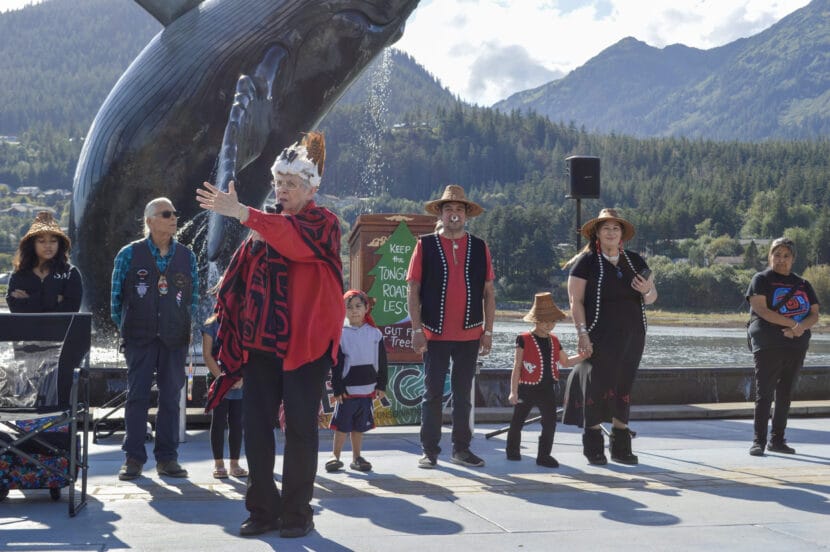
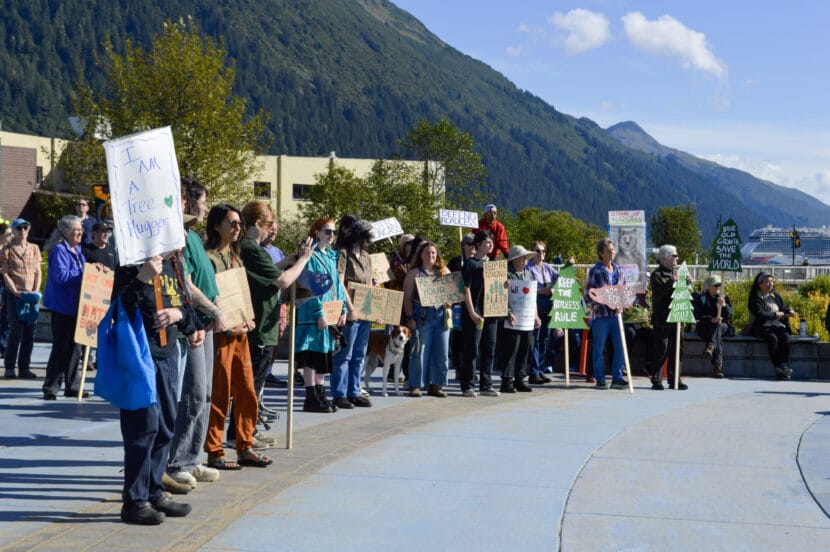
That includes more than half of the Tongass National Forest, where Juneau is located. On Saturday, more than 100 people gathered in the state capital to protest the move.
It’s not the first time protections for the Tongass have been in question. The first Trump administration repealed protections for the Tongass National Forest specifically, which were reinstated by the Biden administration.
The USDA’s announcement called the Roadless Rule “burdensome, and outdated.” It said the rule threatens livelihoods and stifles economic growth.
Alaska’s Congressional delegation unanimously supports the rollback of the Roadless Rule. U.S. Sen. Lisa Murkowski has said that most of the Tongass would still be protected without it — the parts of the forest that are already designated as wilderness. U.S. Sen. Dan Sullivan said rescinding the rule would open the door for economic growth in rural Alaska, and U.S. Rep. Nick Begch said the rule inhibits local management of forests.
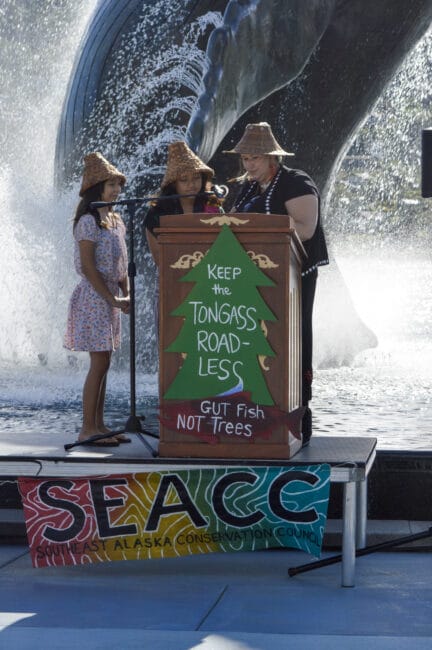
But protesters say Alaskans have more to lose in risks to the land and waterways than what they have to gain through further development. Lingít elders and fishing and tourism industry experts took the mic Saturday to deliver a message: the Roadless Rule should be left alone.
Kaatssaawaa Della Cheney told the crowd her mother had protested clear cutting on Haida Gwaii in Canada in the 1980s. She said when young people stepped up to form a blockade, their parents and grandparents came too.
“The elders showed up with their regalia and put the young people aside and said, ‘We are going to form the line to keep machines away from our lands, our trees, are ways of life,’” Cheney said. “And that’s what they did.”
Now Cheney said, as an elder herself, she is speaking up in favor of keeping the Roadless Rule.
Seikoonie Fran Houston is Áak’w Ḵwáan, who originally lived in Juneau. She said development threatens sacred salmon runs and Lingít burial sites.
“This was our territory, and it was taken away from us,” she said. “And now hundreds of hundreds of years later, here I am standing on the grounds of my ancestors fighting to try and protect what they had.”
Houston said the damage to sacred land isn’t worth the potential financial gain.
And others said the financial math doesn’t actually add up in favor of rescinding the rule.
Kate Troll has worked in fisheries and climate management in Southeast Alaska for more than 30 years. She says old growth logging, which the rule limits, is a very small piece of Alaska’s economy. And the rule protects resources the tourism and fishing industries rely on, which make up a far greater piece.
“If doing right by the numbers — right by our economy — was the real objective, we wouldn’t be having this debate,” she said. “If facts really mattered, the Trump administration would realize there’s absolutely no overall economic benefit to be gained by tossing the Roadless Rule out.”
She said the forests serve as irreplaceable carbon sinks, which combat the effects of climate change.
Xaawk’w Tláa Yolanda Fulmer advocated for the codification of the Roadless Rule, which is being considered by Congress. She said she wants the future of the Tongass to be guaranteed for her grandchildren.
“So we don’t keep going back and forth with this whiplash politics that keeps happening to us, where one day we’re feeling safer and we’re feeling protected,” she said. “And the next it’s being ripped from us, just like our trees are being threatened.”
Fulmer referenced a comment Rep. Begich made last month, saying that he’s heard Southeast Alaskans asking for the timber industry to be revived.
“You’re not listening to the people I’ve been talking to from Kichx̱áan all the way to Yaakwdáat that says, ‘Stay out of our lands. Leave our trees alone. Find another way,’” she said, using the traditional names for Ketchikan and Yakutat.
The public can comment on the proposed rescission of the Roadless Rule through Friday, Sept. 19 at federalregister.gov.