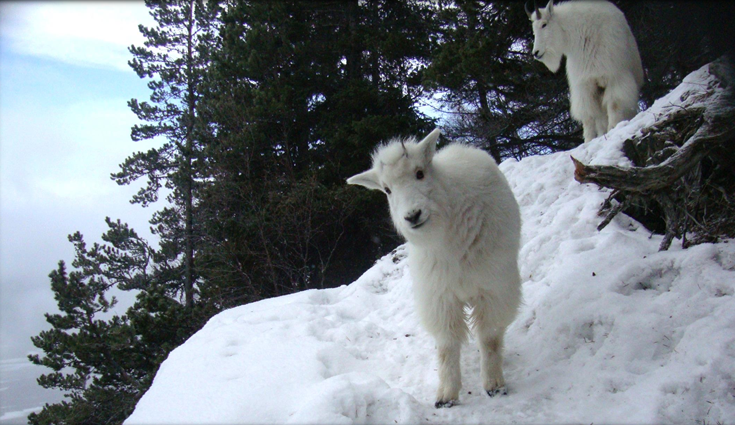
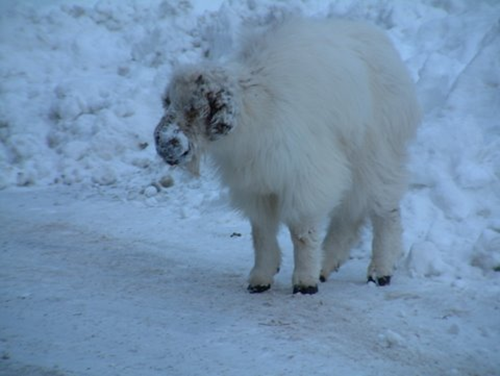
A Juneau resident took home a sick mountain goat kid with crusty skin lesions after hiking Perseverance Trail last weekend and contacted the Alaska Department of Fish & Game. Officials say the goat had a highly contagious viral skin infection that can transfer to humans and pets.
“It’s very important that people — if they see a sick or a dead wild animal — that they call Fish and Game, and not try to take it home themselves,” said Kimberlee Beckmen, the wildlife health veterinarian at ADF&G. “It’s also illegal to pick up wildlife and take it home.”
Beckmen said the goat had contagious ecthyma. It’s not always fatal in sheep and goats, but it’s usually more severe and deadly in lambs and kids. It causes skin lesions to develop around openings in the body.
“When it covers their face, their eyes, their mouth, they can’t eat,” she said. “This recent case — the poor animal was starving to death and was completely dehydrated. It could not see out of its eyes.”
She said the goat probably would have died from the infection within a couple of days, and ADF&G euthanized the animal over the weekend.
In people, the infection is called orf and it’s typically mild. A lesion usually appears within a week of exposure. Beckmen said it’s not fatal to humans or dogs, and the lesions typically go away on their own after several weeks. The virus can transfer when the scabs make contact with openings in the skin.
But Beckmen said hunters can still eat the meat of an infected animal if it’s handled properly.
“We recommend that people wear gloves when they’re harvesting their animal and butchering it, and if they see any lesions on the skin or anything unusual, they want to make sure that they clean their knives off before they cut into the meat,” she said.
ADF&G officials said they get calls about the infection popping up every once in a while. Carl Koch, the department’s area biologist in Juneau, said his team collected a dead goat kid with ecthyma near the Flume Trail in December. He said the department received a call in October about twin goats with the early stages of an infection, and thinks the two that died recently could be them.
Beckmen said this is not an outbreak or an unusual occurrence. Sporadic cases have appeared in Dall sheep and mountain goats across Alaska since the 1980s, and she said the state is not currently concerned about it affecting those populations.
ADF&G requests that people report ecthyma cases to the wildlife disease surveillance hotline at 907-328-8354, by emailing dfg.dwc.vet@alaska.gov or calling the local ADF&G office. People can also report sick or injured wild animals through the department’s web form.
Koch said the person who took the goat home last week had called the department and left a message while out on the trail, but didn’t get a response since it was Saturday. He said people can call the police non-emergency number at (907) 586-0600 if they don’t hear back from ADF&G about a time-sensitive wildlife issue over the weekend.