Listen:
The American Civil Liberties Union of Alaska came to Juneau last week to give training sessions on what to do if residents encounter immigration enforcement actions in town – whether you’re a bystander, an employer or someone getting detained.
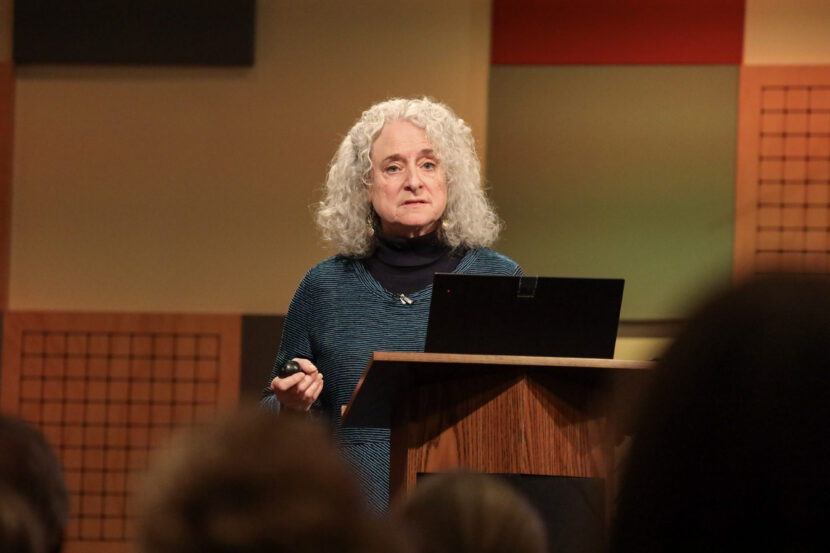
In a “Know Your Rights” session at the University of Alaska Southeast, ACLU Alaska Executive Director Mara Kimmel explained the legal nuances of immigration enforcement.
Kimmel pointed to the ACLU’s family safety planning guide, which loved ones can use to know what to do if someone is detained.
“That outlines all of the information that should be available to family members of people who might be picked up and detained,” she said. “So what to do with your kids? Where are your critical documents, like your passports or your bank accounts or your passwords and all of that?”
The ACLU trainings, held in partnership with community organization Haa Tóoch Lichéesh Coalition, are meant to help residents prepare for federal immigration officials coming to homes and businesses, or stopping people in public.
The information sessions come as federal agents have detained and removed multiple Juneau residents for immigration enforcement, and separated a family in Soldotna last month.
Kimmel said anyone picked up by federal agents has the right to remain silent and the right to an attorney. She advised people to document what’s happening with video, if they can do so safely, and to write down agents’ badge numbers.
For business owners, Kimmel advised clearly labeling private spaces in buildings and making sure documents are not in plain view.
If immigration enforcement officials come to a home or workplace, they need judicial warrants, not administrative warrants, to enter private spaces. And this information should be included in a written policy for businesses and organizations.
“Part of your developing a written policy is also to make sure that you’re practicing the magic words that you need to utter,” Kimmel said. “Which are, ‘I’m not going to let you in. This is a private space, and I will only let you in if you can show me a judicial warrant.’ If they do show you a warrant, you have to let them in.”
Kimmel said an individual who hides a person or aids someone resisting federal agents is putting themself at legal risk. And she said that organizations may consider making public events that could be targeted by immigration officials private, or invitation-only.
“I don’t know about Juneau, but I do know in other places, people are not gathering to the same degrees that they did,” she said. “There have been a lot of cancellations of public events that have happened over the course of the last year, and it makes me incredibly sad, because that’s how we come together as a community.”
In the second half of the training, Kimmel talked about bystander intervention.
She said one of the most important things a bystander can do is be safe and stay calm when encountering any kind of immigration enforcement action.
“One of the first things to do if you happen upon a law enforcement interaction is make sure that the person actually wants help,” Kimmel said. “Because the last thing you want to do is just get them into further and further hot water.”
If the person says they do want help, Kimmel said to ask for their name, and get as much biographical information as you can about the person – like their date of birth, country of origin and Alien Registration Number.
Then, she said the second step is to ask if there is anyone you can call for the person, whether that’s family or an attorney.
“The third piece is: try to document the enforcement action,” Kimmel said. “Again, do this safely. If law enforcement is being awful and egregious, back away.”
Kimmel said bystanders can legally record or film interactions and state the date, time, and location for the recording.
And lastly, she said, report the action to the person’s lawyer, if they have one, and the ACLU. She said the ACLU can help people find volunteer attorneys if they don’t have legal representation already.
During her visit in Juneau, Kimmel also gave a talk for the Juneau World Affairs Council. She mentioned the impact immigrant communities have on Alaska. She said, as of 2023, immigrants pay about half a billion dollars in taxes, and spend nearly $2 billion dollars in Alaska each year.
“That’s not chump change, especially for a state that has been struggling mightily recently with a budget,” Kimmel said. “This goes for all immigrants, including people who are here without documents in our state.”
Kimmel’s full presentation on immigration law can be found on KTOO 360TV’s YouTube channel. Future ACLU virtual and in-person trainings can be found at ACLUAK.org/events.