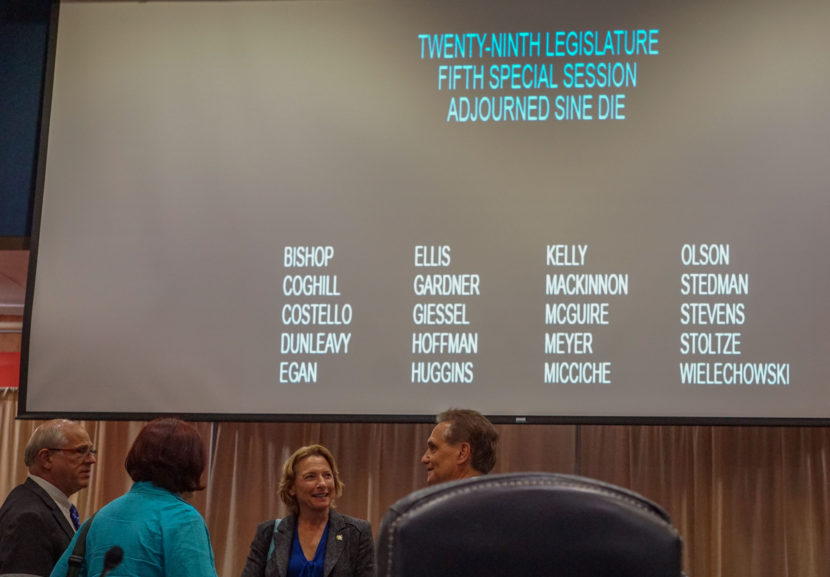
Three days after the House’s adjournment, the state Senate has also gaveled out, ending the latest special session in Juneau. In closing remarks, senators differed over how successful the body was in addressing the state’s legislative challenges this year.
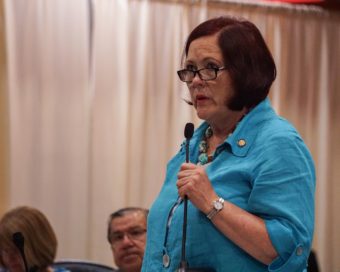
Democratic Minority Leader Berta Gardner of Anchorage said she was disappointed the legislature couldn’t agree on a comprehensive fiscal plan.
“It requires moving places where we … might have thought we would never go, and it’s what we had to do here,” Gardner said. “And we all knew that coming in, but we didn’t. And so to say I’m disappointed feels inadequate.”
For the third year in a row, Alaska’s government is projected to spend more than $3 billion more than it collects in revenue. At this rate, Gov. Bill Walker has warned the Constitutional Budget Reserve will be exhausted in two years, potentially leading to steep cuts in government services.
But members of the Republican-led majority say more attention should be paid to areas where the legislature passed bills. Sen. Anna MacKinnon, a Republican from Eagle River, pointed to agreements on Medicaid and criminal justice reform, as well as changes to Power Cost Equalization and community revenue sharing.
“The Senate and the other body, the minority and the majority, House members in the majority and minority, moved huge pieces of legislation,” MacKinnon said.
Although they might reduce spending by significant amounts in the future, neither the Medicaid nor corrections bills are expected to save much this year.
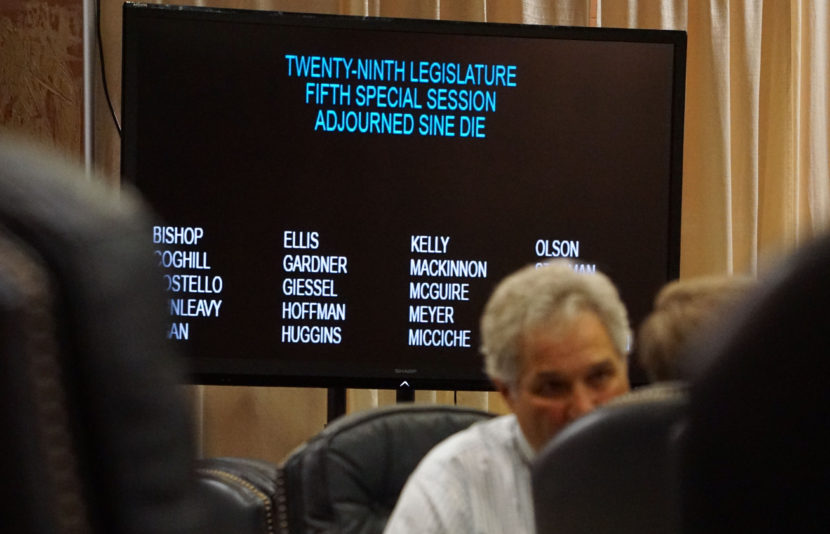
Fairbanks Republican Sen. Pete Kelly notes that the Senate passed its version of the state budget a month earlier than in previous years. The Senate also passed a bill restructuring the Permanent Fund earnings, a measure Walker sees as the centerpiece to a long-term fiscal plan.
But Kelly shied away from pointing blame at the House for opposing the Permanent Fund bill. He said constituents across Alaska rejected the legislation.
“Doing the job sometimes means that we just say no to these brilliant ideas that come out of the governor’s office or out of the Senate or the House,” Kelly said.
The special session could have lasted as long as 30 days, but it ended in a week.
The Senate Resources Committee is still scheduled for a meeting Tuesday to discuss the plan of development for Prudhoe Bay oil. Walker may call another special session, but if so, it would likely occur after the November election.