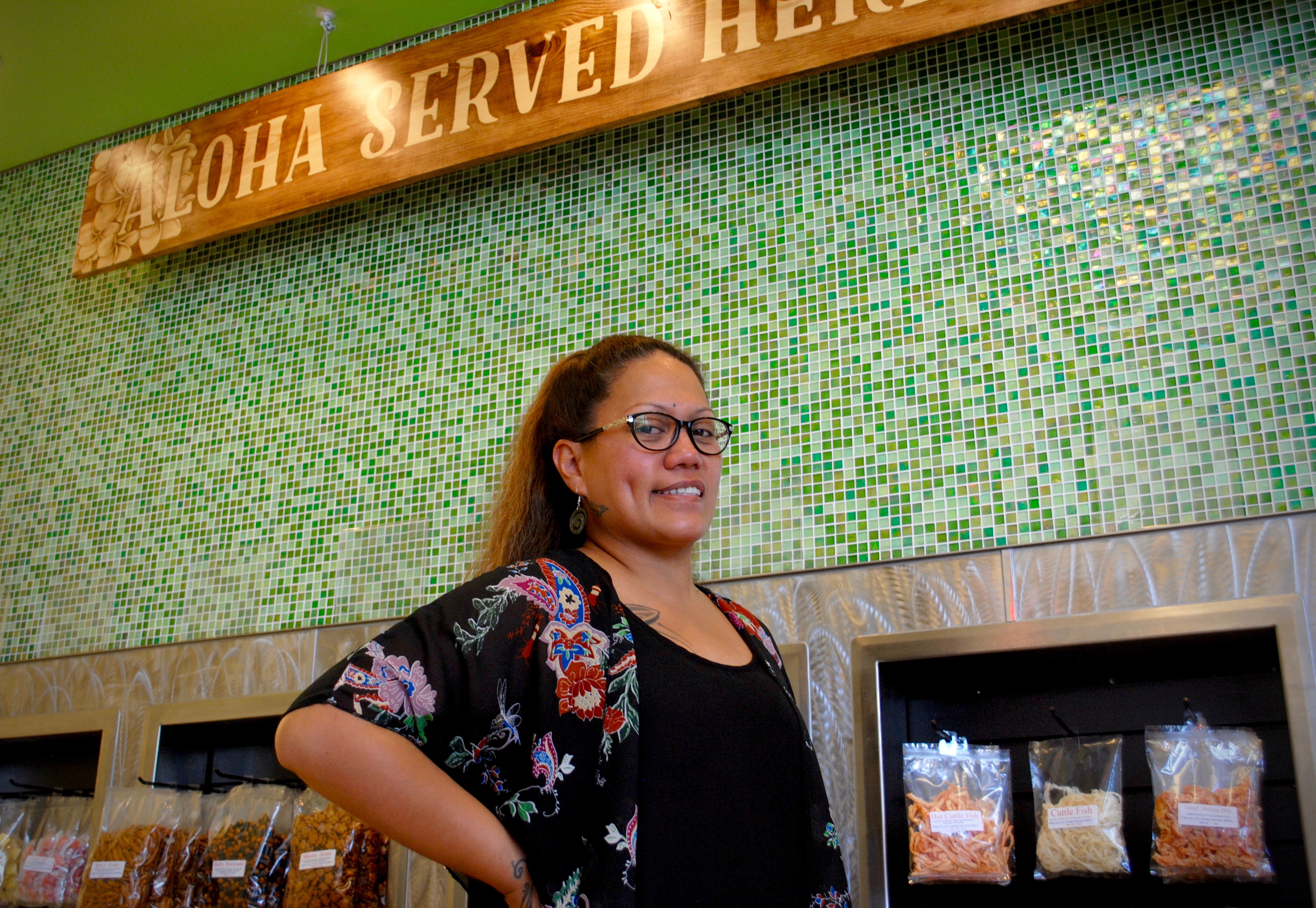
An Anchorage restaurant owner found herself in the middle of a national debate involving trademark infringement and cultural appropriation.
A letter from a Chicago-based chain sent in May demanded she change her restaurant’s name.
“I may be a little bias, but think we make some of the best poke in Anchorage here,” Kahele said, sitting at a table in her restaurant.
The Hawaiian word poke means to dice, cube or cut.
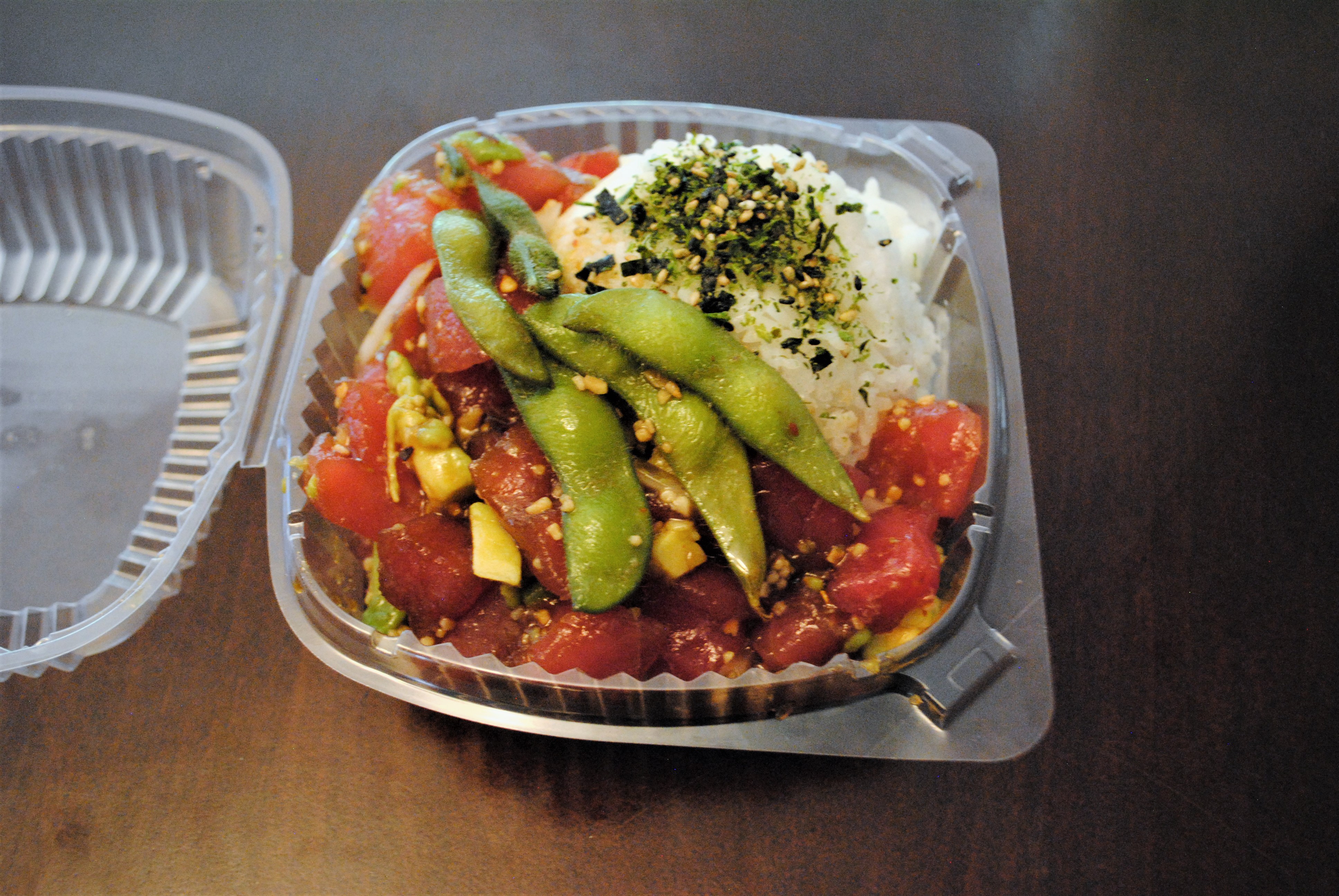
At Kahele’s shop, you can order cubed, raw fish with wasabi ginger, have it Hawaiian style with limu– the Hawaiian word for seaweed, even California style with avocado, crab and cucumbers.
Poke is a staple in Native Hawaiian culture.
“We have poke at our luaus,” Kahele said. “We have poke at our get-togethers.”
Another staple of that culture is the word Aloha.
“When you walk into a business that has ‘Aloha,’ and you have a Native Hawaiian family working in (the business), you can expect that kind of spirit, that kind of food, that kind of experience when you walk in the door,” Kahele said.
Weeks after opening, a lawyer representing the Chicago-based Aloha Poke Company, which is owned and operated by non-Hawaiians sent a letter to Kahele: “Your use of ‘Aloha,’ and ‘Aloha Poke’ must cease immediately,” the letter read.
Devastated, Kahele knew she couldn’t afford the legal fees to fight it.
“This is not our first business, so I understand the copyright (law), which is why we are so torn,” Kahele said. “We knew that we’d have to comply, but this is kind of different. (Aloha) was a word that they should never have been able to trademark or copyright, especially those two words (Aloha and Poke) together.”
A letter similar to Kahele’s was made public after it was sent to another Native Hawaiian business owner.
the letter spread online, creating a massive and angry uproar.
The Aloha Poke Company has since apologized on its Facebook page.
To those who care about Hawaiian culture, it said, “we want to say to them directly how deeply sorry we are that this issue has been so triggering.”
“It’s hard to accept an apology that doesn’t sound so genuine,” Kahele responded. “It leaves out a lot.”
On top of that, the company still is insisting it owns “Aloha” and “Aloha Poke” when used in connection with restaurants, catering and take-out service.
Kahele said it’s not right for a company to try to take ownership of her people’s Native language.
“I know some people are like, ‘(Aloha) is just a generic word, everyone says it,’” Kahele said. “But not to our people, it’s not. Aloha encompasses everything. We live aloha, we give it, we share it. It’s not to be restricted and I think that’s why it’s so triggering to people and it’s so offensive and it’s so hurtful. It’s hurtful – for our family it’s hurtful.”
For Native Hawaiians such as Kahele, though, this appropriation of her culture is not new.
“Hawaii has been commercialized and colonized and our culture has been appropriated in so many ways,” Kahele said.
Like, Kahele said, associating any Hawaiian style food with pineapple.
Customers will come into her shop and ask about her traditional style of poke.
“They’re like, ‘Oh, the Hawaiian-style poke – does that have pineapples in it? And I’m like, ‘No, it has a very traditional nut base – kukui nut base– that makes it Hawaiian.”
Kahele’s restaurant shows off her traditional food and Native culture.
Kahele chose to rename her family business Lei’s Poke Stop, after her daughter.
“If at another time we have to fight anyone for the name ‘Lei,’” Kahele said, “good luck.”
Clarification: The story incorrectly referred to copyright infringement. It is trademark infringement. This story has been updated to reflect the change.