"My mission is to hold Juneau’s elected officials accountable for their actions and how their decisions impact the lives of the people they represent. It’s rooted in the belief that an informed public has the power to make positive change."
When Clarise isn't working, you can find her skijoring with her dog, Bloon, or climbing up walls at the Rock Dump.
Radio infrastructure used by the Juneau Police Department. (Juneau Police Department)
The Juneau Assembly unanimously approved two ballot measures on Monday that could add nearly $23 million to the city’s debt for public health and safety improvements.
If passed by Juneau voters this fall election, the bonds would help fund upgrades to Juneau’s public safety communication system and the Juneau Douglas Wastewater Treatment Plant.
The public safety bond asks to borrow $12.7 million and the wastewater bond asks for $10 million. Following the Assembly’s vote last night, they’ll both be put to voters on the Oct. 1 municipal election ballot.
The $12.7 million bond measure will help cover the cost of replacing the radio system used by the Juneau Police Department and Capital City Fire/Rescue.
Police say the current system is outdated — it was only designed for an eight-year lifespan, and that expired a decade ago. Though it’s still operating, they say it’s causing dead zones and is no longer reliable. In total, the project is expected to cost around $25 million.
The other $10 million bond measure will help cover the cost of replacing the wastewater clarifier building at the Juneau Douglas Wastewater Treatment Plant. That plant services Thane, Downtown and Douglas.
City officials say the replacement is needed due to decades of erosion.
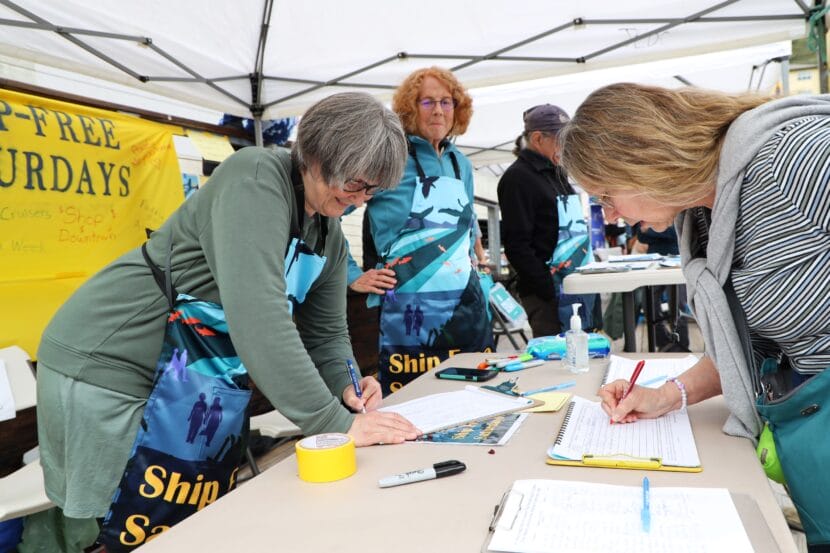
Karla Hart (left) helps a resident sign the “Ship-Free Saturday” ballot initiative at the Maritime Festival in downtown Juneau on May, 4, 2024. (Clarise Larson/KTOO)
An initiative asking voters whether Juneau should ban large cruise ships on Saturdays starting next year has qualified for the local ballot this fall.
The City and Borough of Juneau clerk’s office announced on Monday that the group leading the “Ship-Free Saturday” ballot initiative had secured enough certified signatures to get a spot on Juneau’s Oct. 1 ballot, unless the Juneau Assembly decides to take action on the issue before then.
Karla Hart is one of the activists who led the effort this spring. She said the support the initiative has seen so far goes to show how much people in Juneau want change.
“I think it says that Juneau really seriously wants some hard stops on cruise industry impacts in their lives, and that they haven’t received that from the city Assembly,” she said. “And that they don’t think that those hard stops are coming unless citizens take action.”
If the initiative is passed by voters, it would ban all cruise ships that carry 250 or more passengers from visiting Juneau on Saturdays and on the Fourth of July. But before it appears on the ballot, the Juneau Assembly has until Aug. 15 to decide whether to take its own action on the issue.
Though the initiative gained more than 2,300 signatures in support, plenty of people and businesses in the community oppose it, including Laura Martinson McDonnell.
She owns a gift shop downtown and is on the steering committee for a local advocacy group called Protect Juneau’s Future. The group is behind the orange signs hanging around town that discouraged people from signing the initiative.
“I’m absolutely voting against this initiative,” she said. “That’s because I would like to maintain the right to control my own business and have a say in how my business is operating.”
Martinson McDonnell said she believes the initiative is being led by a small minority of the community. And, she doesn’t think it actually has the support needed to pass in October.
Juneau Visitor Industry Director Alix Pierce said the city will likely share information on its website that explains what the initiative seeks to do and the facts surrounding it. But, she said the city does not plan to take a formal stance on the issue.
“People are always welcome to provide their own interpretation, but our duty as a local government is to provide accurate and factual information to our citizens,” she said.
Local initiatives similar to this one have popped up in recent years in other parts of Southeast and at other ports across the U.S., but many have failed to make it across the finish line because of legal barriers.
Late last month, a group of residents in Sitka submitted a ballot measure to city officials there. It would limit the number of cruise ship passengers that visit there each season. That initiative is currently undergoing legal review. Last season, Sitka city officials there denied a petition seeking a similar goal, saying the proposed legislation would be unenforceable under the Alaska Constitution.
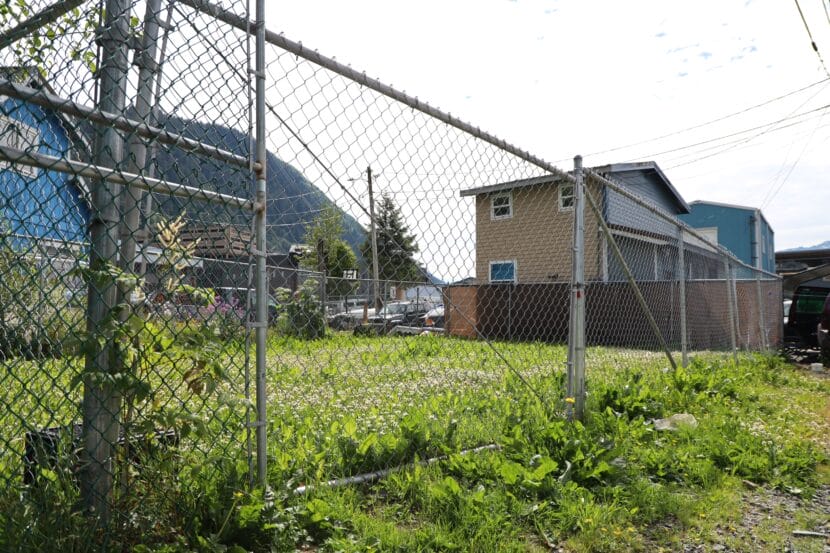
The piece of land that was attempted to be put into trust is a less than 800-square-foot lot near the corner of Capitol Avenue and Village Street in Juneau. (Clarise Larson/KTOO)
Last week, a federal judge in Anchorage ruled that tribes in Alaska may put land into trust, essentially allowing tribes to create “Indian Country” in the state. That’s something that had nearly been done away with since the Alaska Native Claims Settlement Act took effect 53 years ago.
Alaska Beacon reporter James Brooks sat down with KTOO’s Clarise Larson to talk about what the ruling really means, and why it matters.
Listen:
This transcript has been edited lightly for clarity.
James Brooks: This matters a lot because it allows Alaska Native tribes within the state to put land in the federal trust, protecting it from sale, from give away from anything that they don’t want — effectively. It’s a form of long-term protection that places this land under tribal law, rather than state or local law. The main idea is that putting land into trust is something that Alaska tribes haven’t been able to do since the Alaska Native Claims Settlement Act in the 1970s.
Clarise Larson: What is the Alaska Native Claims Settlement Act, and why is it influencing what is happening today?
James Brooks: We know that Alaska Natives have lived in Alaska for 10s of 1000s of years, since time immemorial, as the phrase goes. The Alaska Native Claims Settlement Act back in the 1970s was designed to settle what’s known as Aboriginal land claims, the idea that folks have been living here for so long, they should have title or right to the land around them — the land that they have used.
The Settlement Act was designed to settle those Aboriginal claims to land. But what it did was it didn’t give land to tribes, instead, it created corporations to hold that land. And those corporations have rights, but they’re not sovereign governments. And in the decades since then, there have been plenty of people who are unhappy with that result. Even though corporations received millions of acres of land and millions of dollars. It didn’t answer all of the problems that Alaska Natives have had with the current system. And so by putting land into trust, you can put land under the authority of the sovereign tribal governments allowing them to exert tribal law on that land.
Clarise Larson: In Alaska, who is going to be impacted the most by this?
James Brooks: It has the potential to impact virtually everyone in the state. There are almost 230 federally recognized tribes in the state. And until now, most of those tribes have had very small land bases. Now, tribes can take a greater influence in how land is administered here. And say, for example, Tlingit and Haida’s situation here in Juneau, they’re seeking to put a fairly notable part of downtown Juneau into trust. And that has the potential to impact all of the people who live around that plot of land.
Clarise Larson: But, the ruling wasn’t exactly cut and dry, right? Explain to me some of the intricacies of this particular ruling.
James Brooks: The ruling this week matters because it says that tribes can do this, but it wasn’t a complete win for the federal government or for Tlingit and Haida. Judge [Sharon] Gleason, who gave the ruling said that the process used in the particular case that was before her court was flawed and needs to be started over.
That while tribes and the federal government can do this process, the process that was used in the case under question wasn’t correct. So Tlingit and Haida is going to have to go back to the federal government, they’re going to have to restart this process. And it might take a little bit for that to happen. But in the end, the most important thing is that Tlingit and Haida, and other tribes will be able to do this process.
Clarise Larson: Why did the State of Alaska sue in the first place?
James Brooks: The state of Alaska through various governors, and various legislatures, has always been somewhat skeptical of tribal sovereignty of tribal land claims. And, in challenging tribes’ ability to put land into trust, this latest lawsuit was following in the state’s historical pattern. Because the state government, state governors feel they have a responsibility for all their state residents. And they worry that allowing tribes to put land into trust could create lots of patches of varying jurisdictions that might deprive different residents of their rights.
Clarise Larson: So, what’s next?
James Brooks: This decision could end up getting appealed to the Ninth Circuit Court of Appeals, it could end up reaching the US Supreme Court. And we could see changes if there’s a new presidential administration as well.
Policies on Native land claims and in putting landed the trust have varied from presidential administration to presidential administration. And so we could see that change as well. While this is an important step, it’s not the last word by any means.
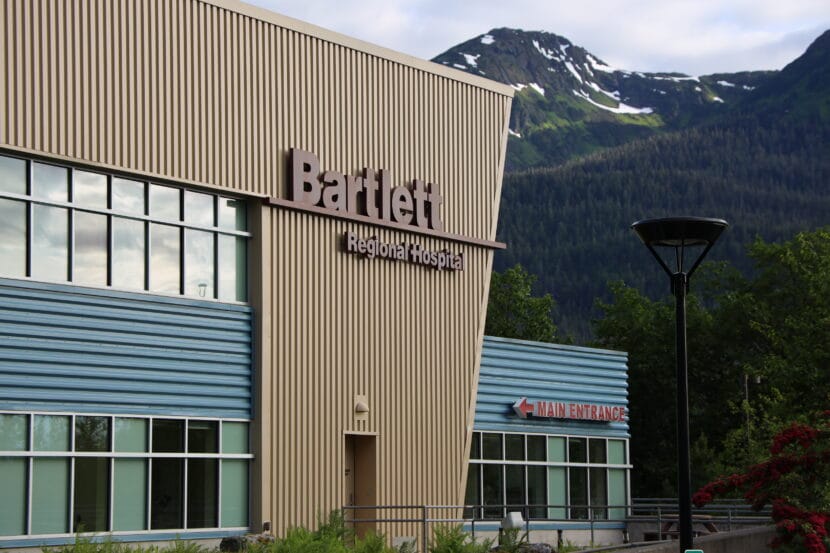
Bartlett Regional Hospital on Tuesday, June 25, 2024. (Clarise Larson/KTOO)
The board for Juneau’s city-owned hospital plans to seeksubsidies for services it says are contributing to a financial crisis that could close the hospital within three years.
Bartlett Regional Hospital’s board is giving itself just a handful of months to convince the city or other entities to subsidize some services that are draining money. If it can’t secure that money by the end of October, or find a third party to take them over, the services will be eliminated.
Max Mertz, the hospital board’s finance committee chair, explained the seriousness of the situation at a board meeting on Tuesday.
“We’re burning cash and we’ve got to do something to address that,” he said. “It’s urgent — this is not something that we can kick the can down the road on.”
The hospital hasn’t been making enough money to cover its costs since 2019. And since mid-2020, it’s been losing about $1 million a month.
Hospital leaders said that without significant cuts, Bartlett will run out of money within three years.
On Tuesday night, the hospital’s board unanimously voted to seek subsidies or third-party providers to take over services like the Rainforest Recovery Center, and adult and adolescent crisis services — services it says are losing between $800,000 and $1.2 million annually. It’s that, or else cut them come Oct. 31.
But Bartlett will keep running home health and hospice services, provided the hospital can come up with a five-year plan for getting the program’s finances back on track. That program was previously under consideration for closure.
Mertz said the decision didn’t come easy. Though no one gave public testimony at the meeting, the hospital got more than 60 pages of written comments, and dozens more in-person comments at previous public meetings. Most of that was in support of keeping the services alive in some form.
“The public has really weighed in on this and obviously there’s a lot of passion and support around these programs in the community and we’re left with, of course, a very hard decision,” he said.
The plan now heads to the Assembly, which will have to decide if — and how — the city should fund the programs.
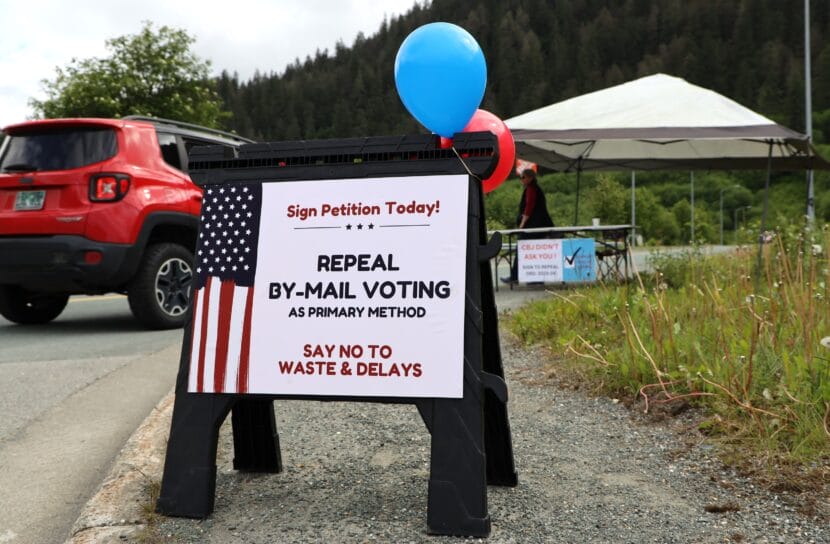
Petitioners gathering signatures to repeal Juneau’s local by-mail voting method collect signatures near Costco on Wednesday, June 12, 2024. (Clarise Larson/KTOO)
An effortto repeal an ordinance that made by-mail voting the default in Juneau has failed to gather enough signatures to get on the local ballot.
The group of residents behind the repeal needed to get nearly 2,400 signatures to put the question to voters this October. During the initial 30-day signature gathering period, they gathered less than 1,000.
The group tried to make up the shortfall during an additional 10-day collection period, setting up tables around Juneau with signs and information about their cause. Multiple petitioners declined to be interviewed by KTOO.
According to documents submitted to the city clerk’s office, the repeal effort took aim at an ordinance the Assembly adopted last year making by-mail voting the default for local elections.
Only five residents spoke against the idea at the meeting when the ordinance passed. They cited voter fraud and questioned whether it would actually improve voter turnout. Widespread voter fraud has been widely debunked by national experts.
By-mail voting has been used by the City and Borough of Juneau for the past four elections, since the start of the COVID-19 pandemic. In-person voting is still available at city vote centers.
Even if the ordinance had been repealed, the Assembly still could have directed the city to conduct a by-mail election.
Ballots will be mailed to registered voters starting on Sept. 12 and must be postmarked or returned by Oct. 1.
PJ Foy competes at the Alaska Swimming State Championships in April, 2023. (Photo/Kevin Tuning)
Recent Juneau high school graduate and soon-to-be collegiate swimmer PJ Foy competed in the U.S. Olympic trials in Indianapolis on Friday.
The Thunder Mountain High School alumni competed in the men’s 100-meter butterfly alongside some of the best swimmers in the country. He finished 49 out of more than 60 swimmers. That means he won’t compete for Team USA in the Paris games. But, he said just being at the trials was an amazing experience.
“It was so cool to see — I was able to see a lot of the swimmers that I’ve looked up to in years past,” he said.
Foy is just 18 years old and holds multiple swim records in Alaska. He’s headed to the University of North Carolina at Chapel Hill to study computer programming and compete on its swim team.
Last week, he traveled to Indianapolis with his family, who helped him get acclimated to the time change and get used to the venue. Foy said their support, along with the swimming community in Juneau, is what made this race so special to him.
“The only thing I wanted to say is thank you to everyone,” he said. “Like everyone who’s ever supported me in every little way. Whether or not it seems like it means a lot, it always means a ton.”
PJ’s mom, Catherine Foy, said he has received nothing but support from the swimming community across Alaska. Watching him compete on Friday was an extremely proud moment for her as a parent.
“I was so proud when he came out of that tunnel where they enter the stadium,” she said. “His head was up. And he was in full beast mode. He was ready to race.”
At the trials, Foy joined fellow Alaskan Lydia Jacoby from Seward. In 2021, she became the first Alaska-born swimmer to medal in the Olympics. This time around, she placed third in the 100-meter breaststroke and withdrew from the 200-meter breaststroke final, meaning she also won’t compete in the Paris Olympics.
But, in a statement on social media, she assured supporters that “I am not defined by my results. I am more than an athlete. I will be back. And I will be better.”
Close
Update notification options
Subscribe to notifications
Subscribe
Get notifications about news related to the topics you care about. You can unsubscribe anytime.