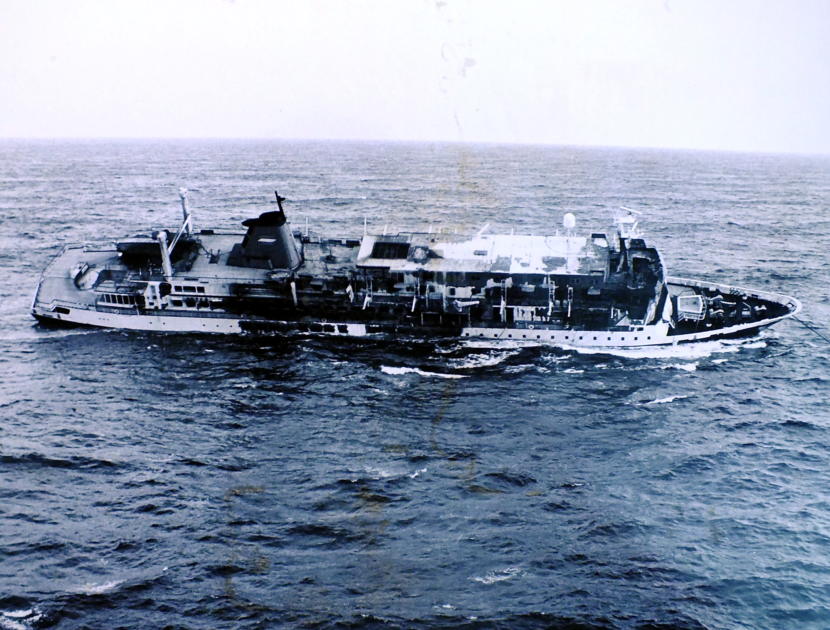
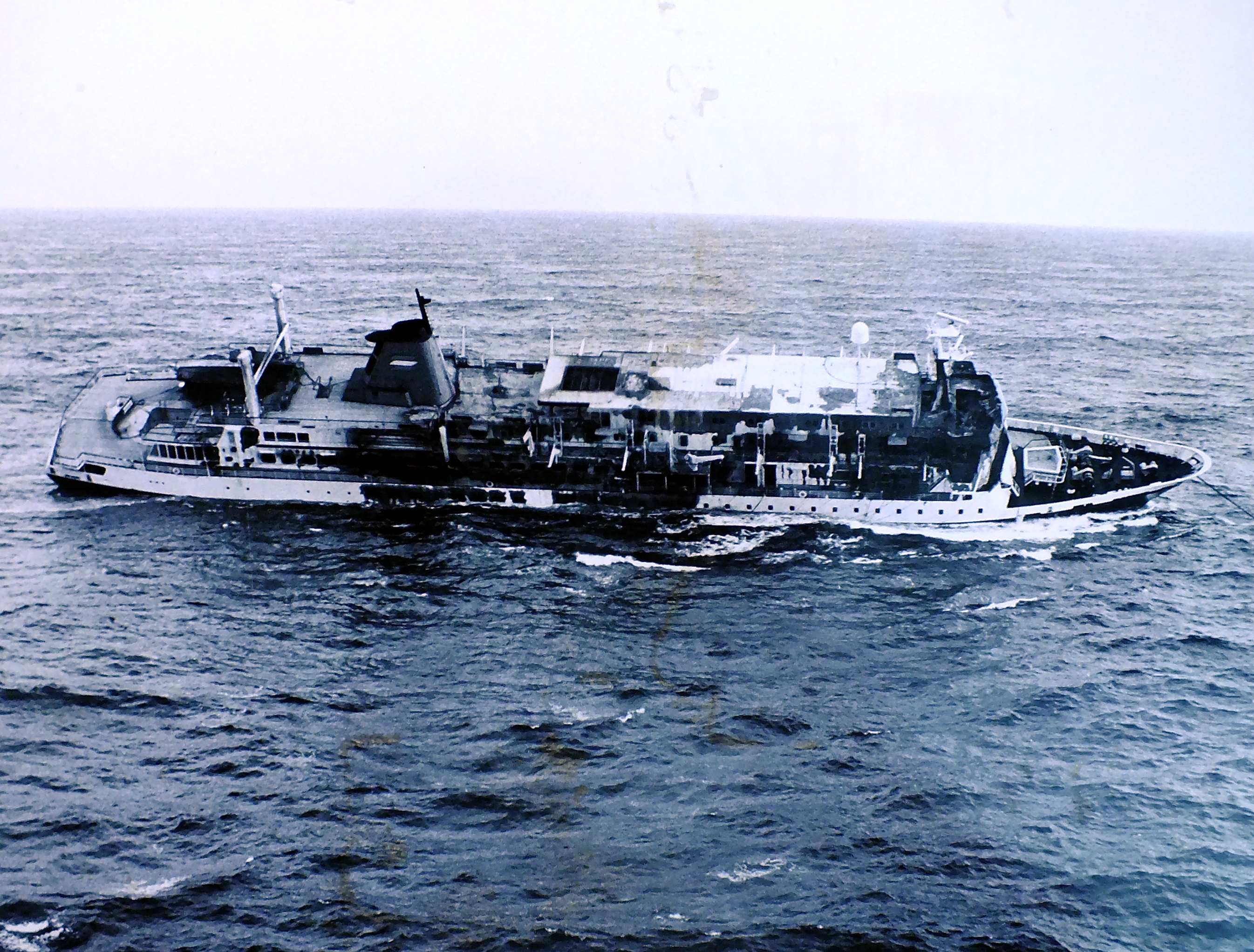
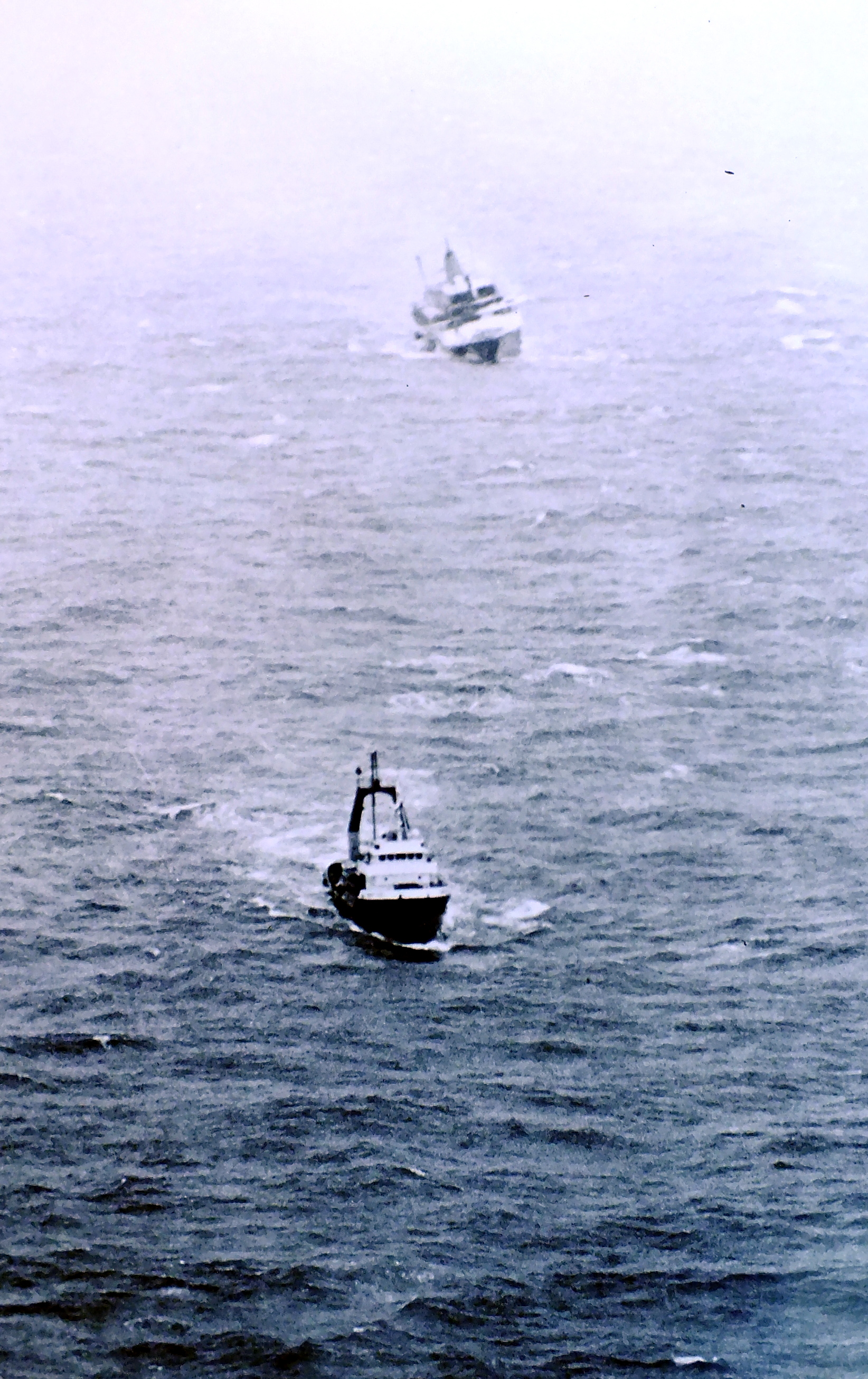
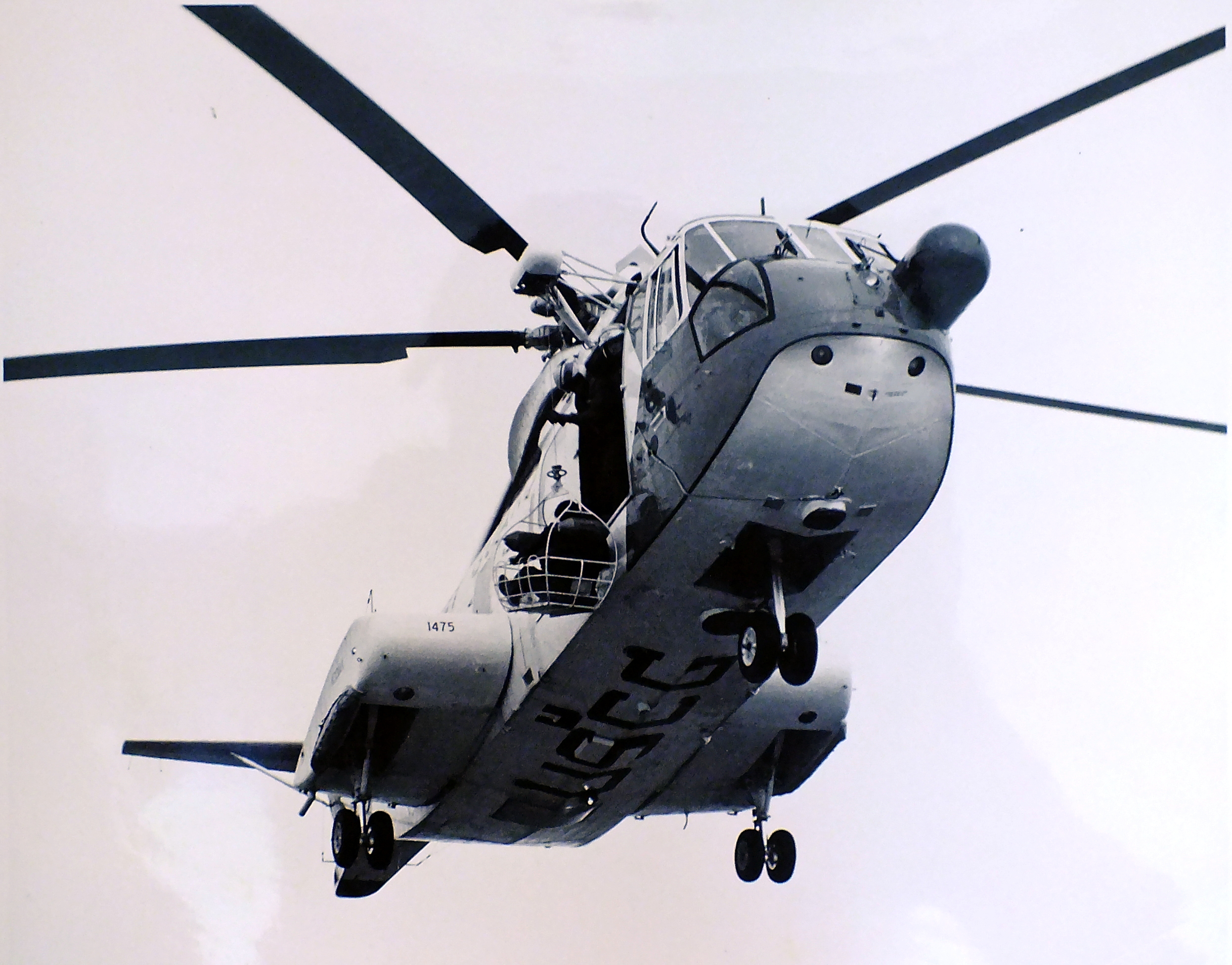
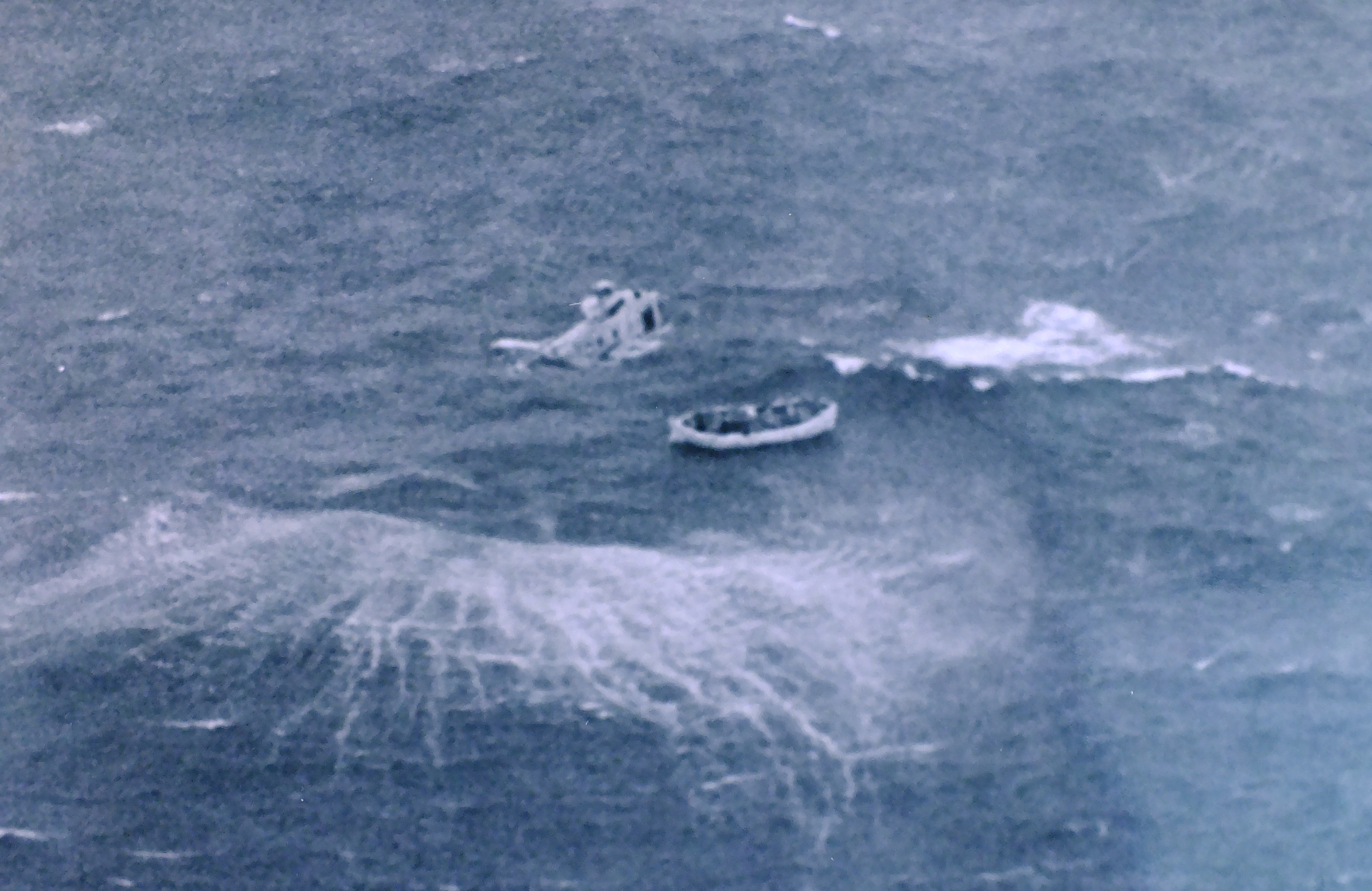
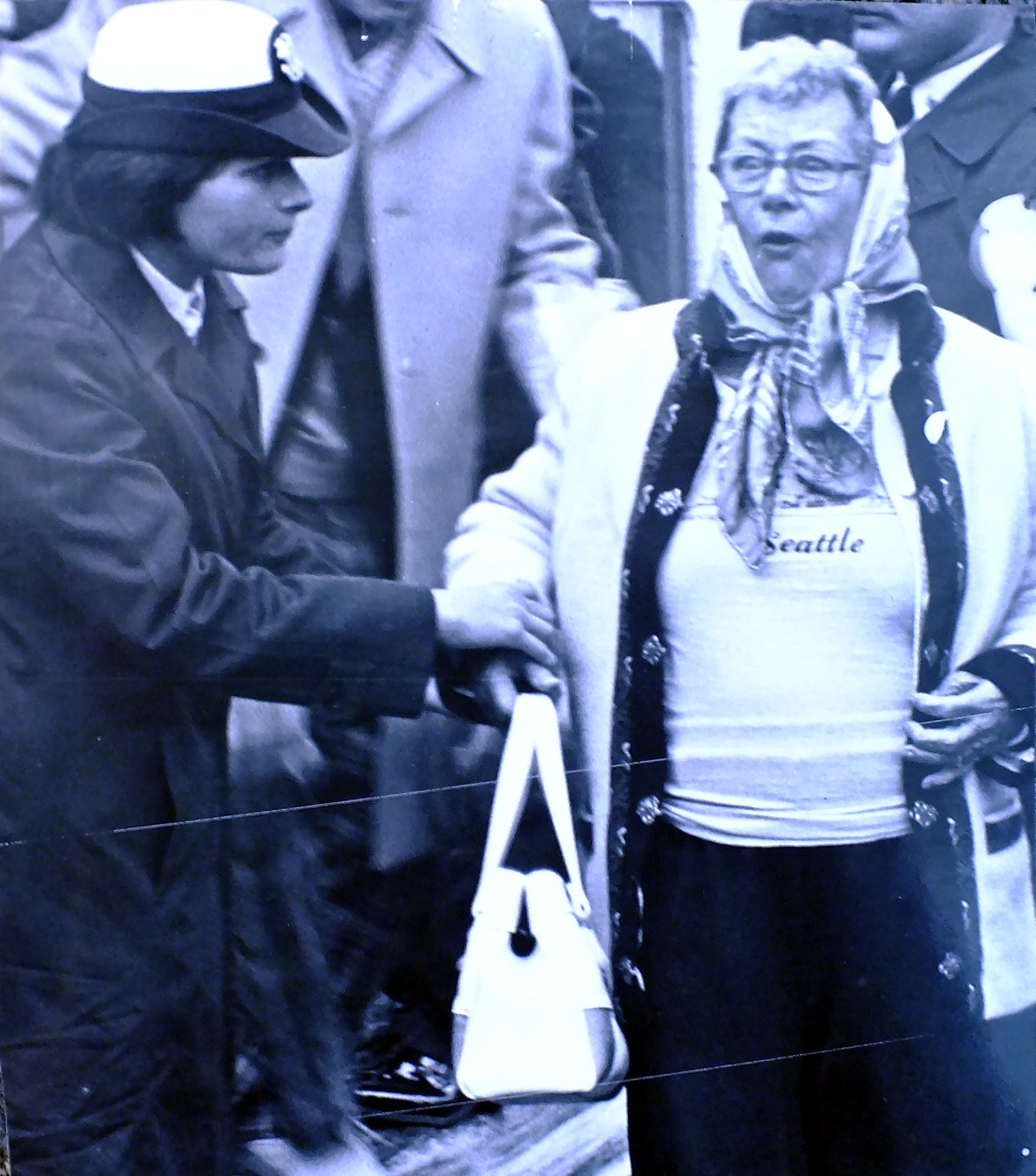
The Prisendam adrift in the middle of the Gulf of Alaska in October 1980. Passengers and crew evacuated the vessel after a fire crippled the Holland America cruise ship. (Photo courtesy of U.S. Coast Guard)
No discussion of cruise ships would be complete without talking about maritime disasters.
Yes, it’s morbid, but it’s hard not to think about what could go wrong when 5,000 people are trapped on a boat at sea — everything from ship-wide intestinal distress to people falling overboard. There was even a murder on a cruise ship in 2017 in the waters near Juneau.
The good news is, there are tons of safety measures in place.
In this episode, we talk to the people who have thought about how to prepare for the worst things that could happen — like if international superstar musician Yanni was stranded on a sinking ship, for example. (Yeah, that happened.)
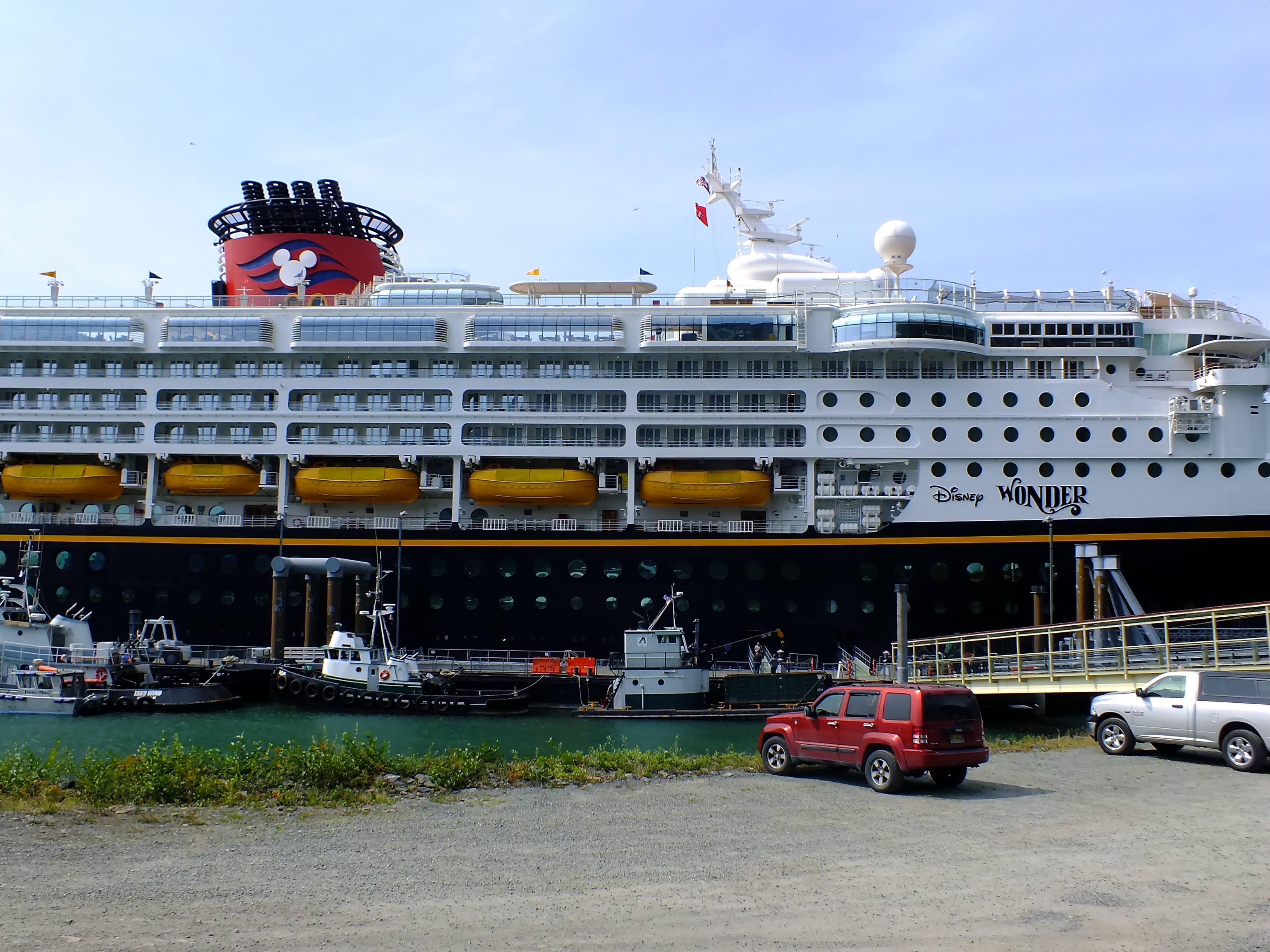
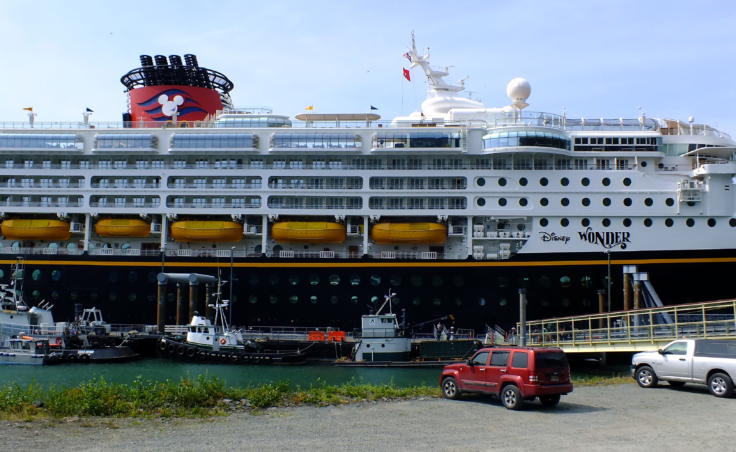
The Disney Wonder cruise ship – and its yellow lifeboats – stopped in Juneau on a regular basis in the summer 2019. (Photo by Matt Miller/KTOO)
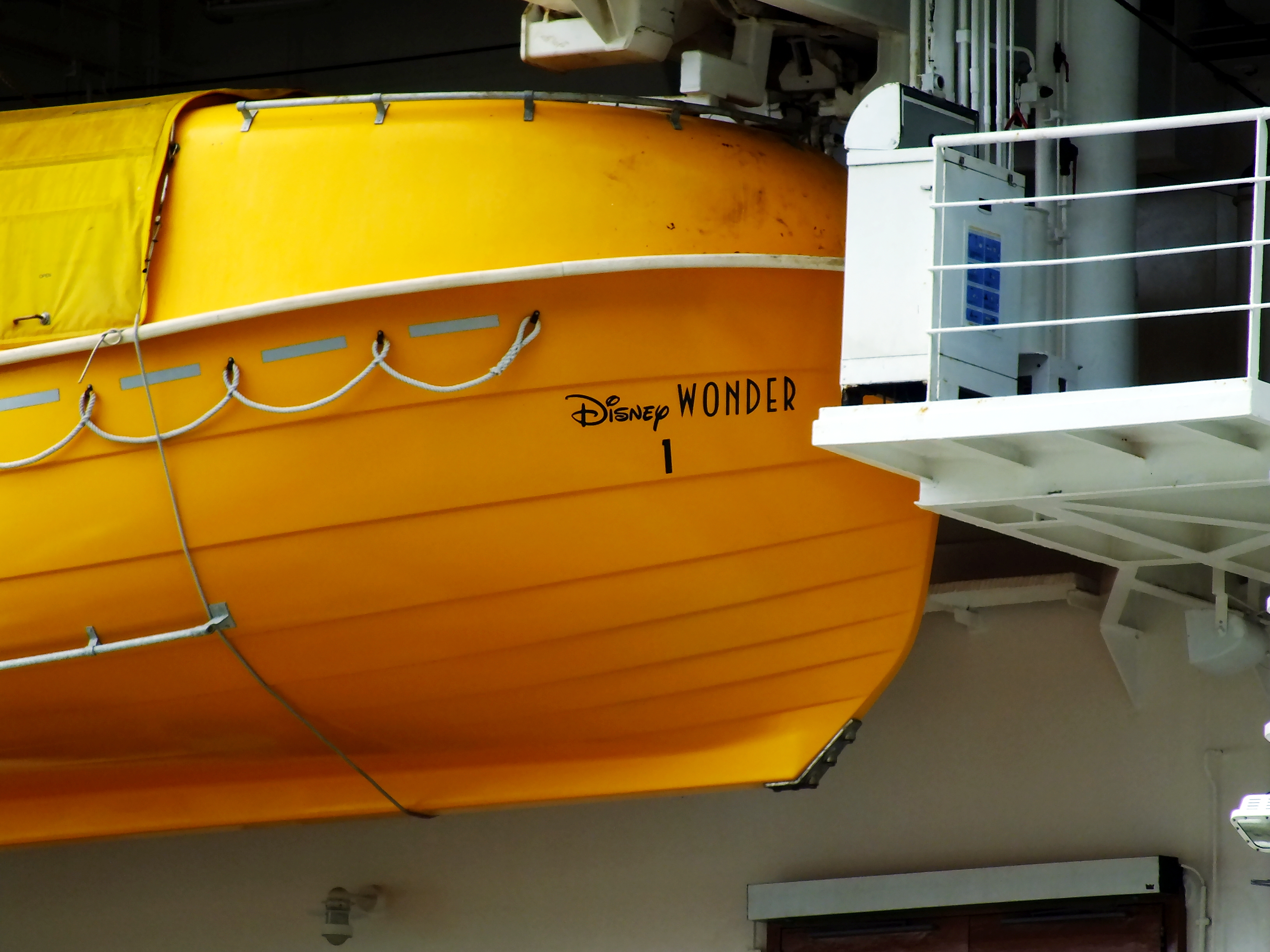
Disney had to get approval from international maritime authorities to paint their lifeboats aboard the cruise ship Disney Wonder to look like Donald Duck’s feet. (Photo by Matt Miller/KTOO)
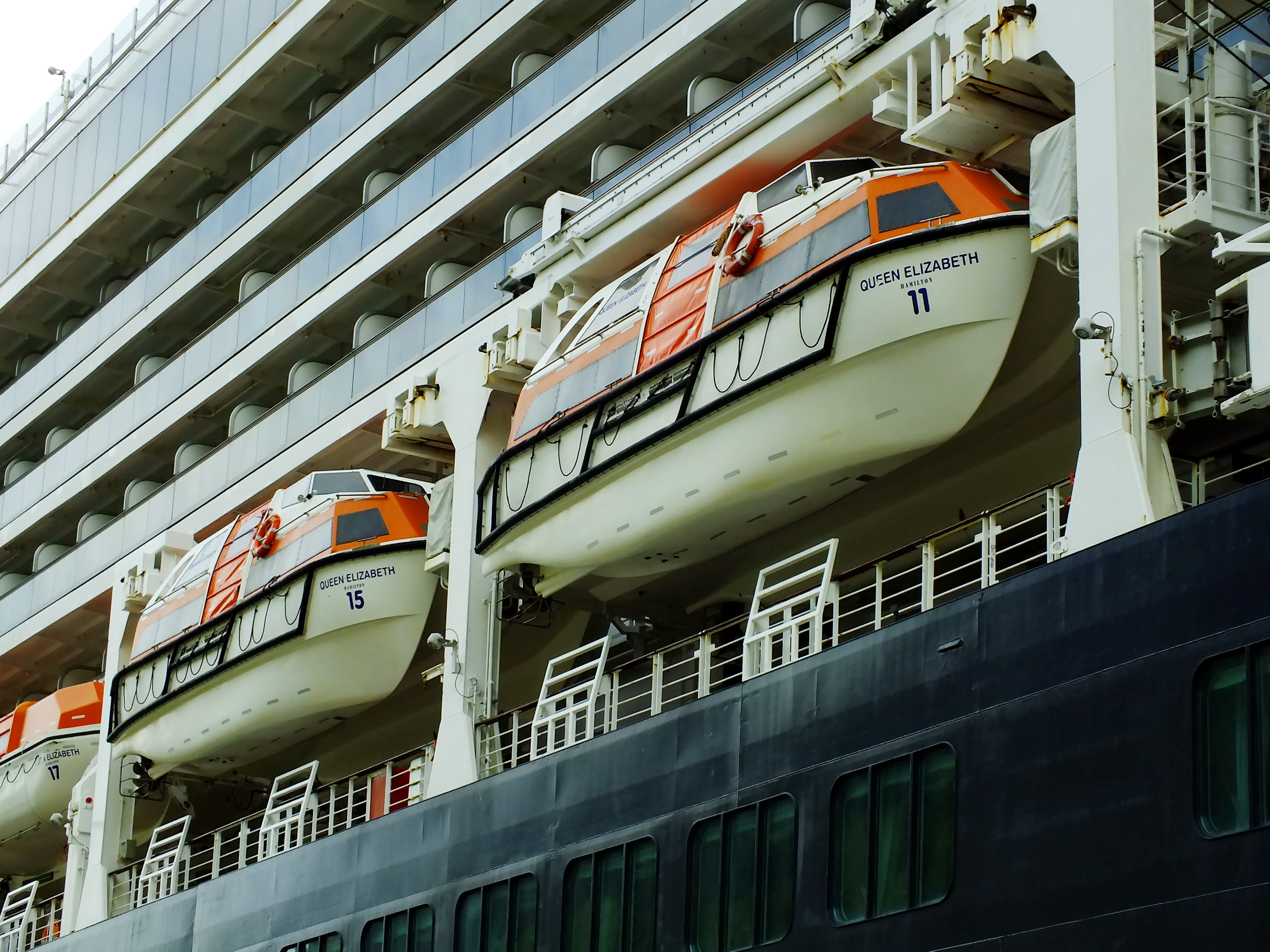
Tops of lifeboats for the cruise ship Queen Elizabeth are painted a color called international safety orange. (Photo by Matt Miller/KTOO)
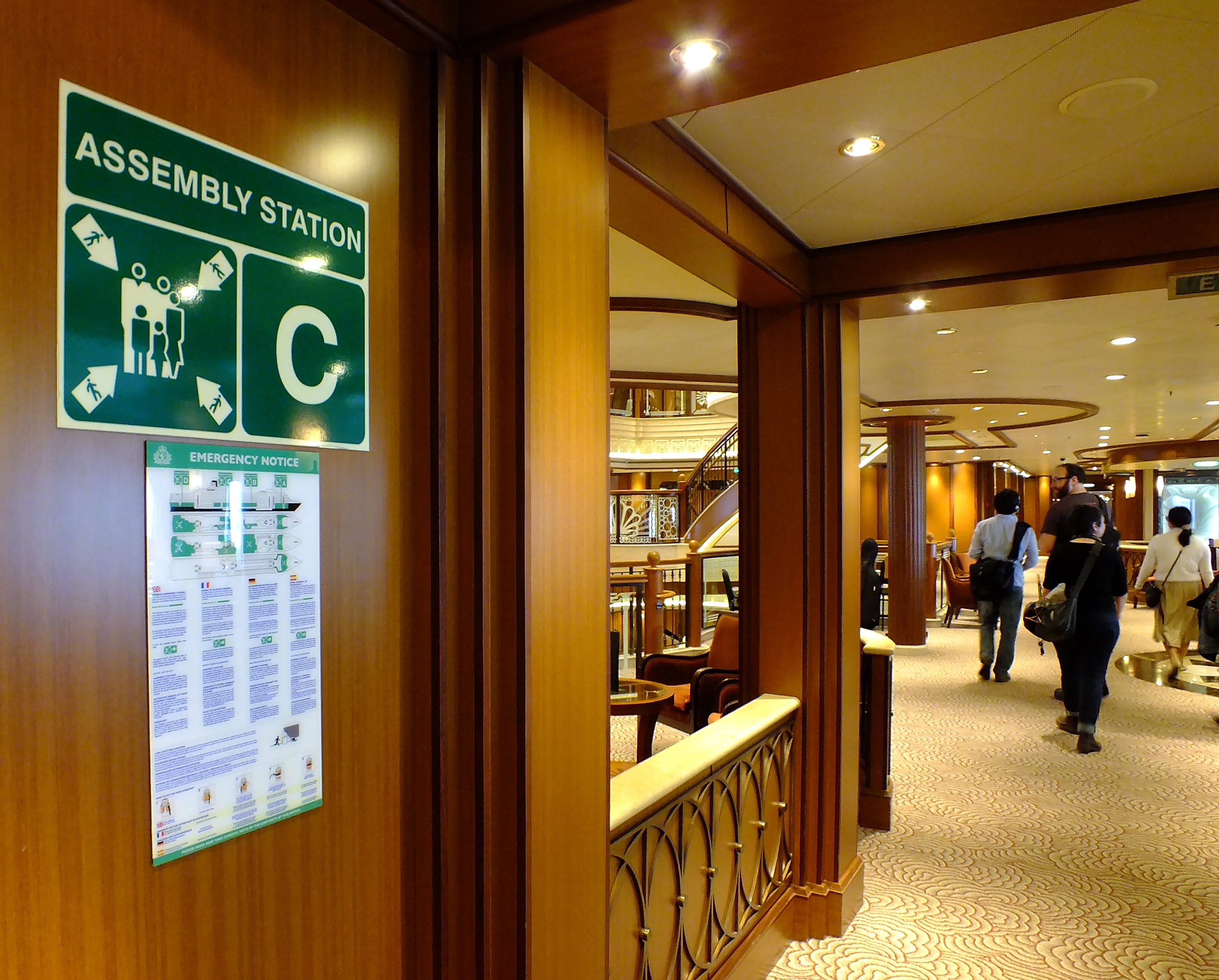
One of the many muster or assembly stations located on the cruise ship Queen Elizabeth. Passengers are supposed to assemble at these areas during a muster drill or a real emergency. (Photo by Matt Miller/KTOO)
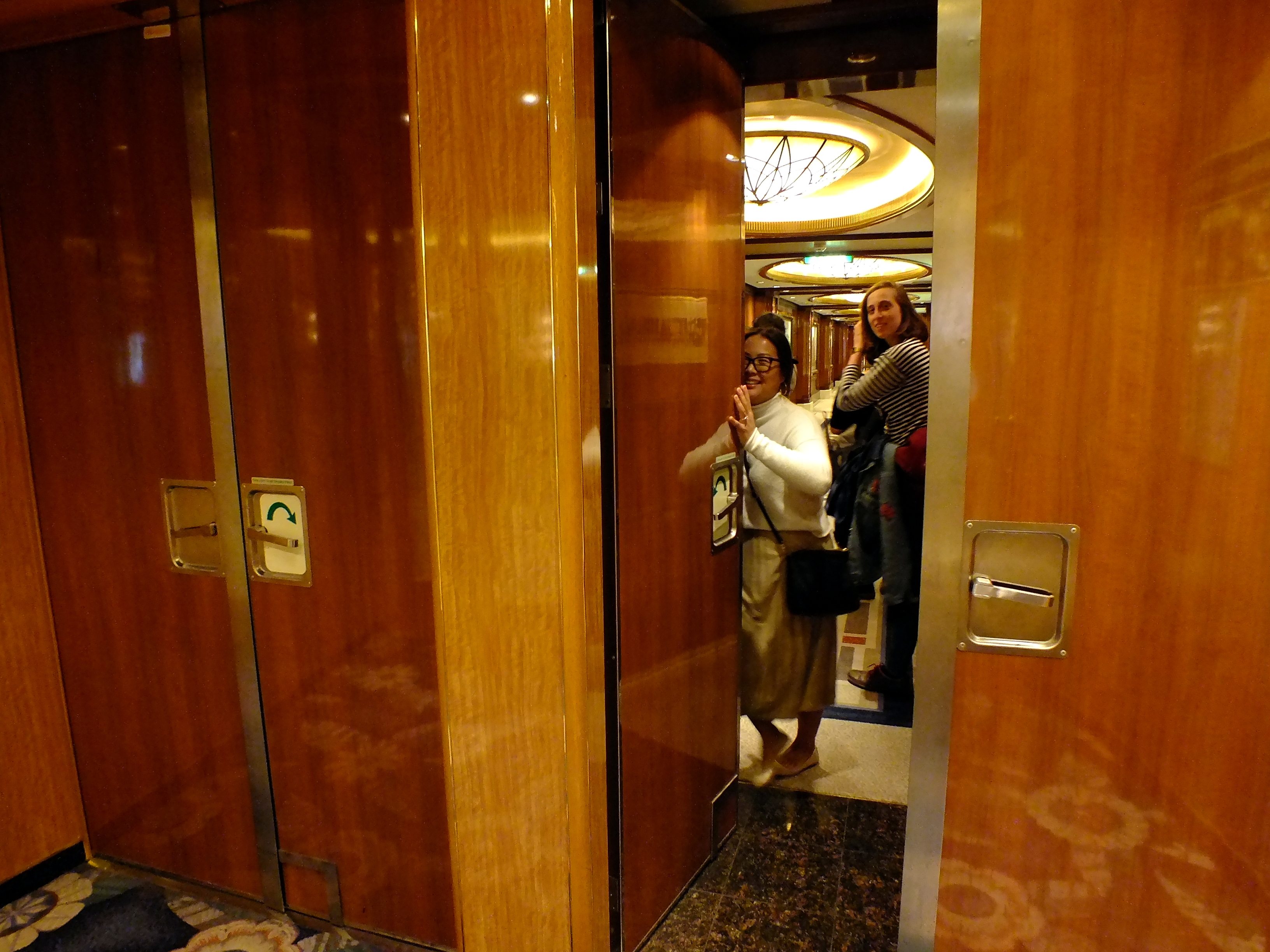
Fire screen doors – like these on the cruise ship Queen Elizabeth – are designed to stay closed to contain a fire, but they can be opened quickly to avoid trapping people. (Photo by Matt Miller/KTOO)
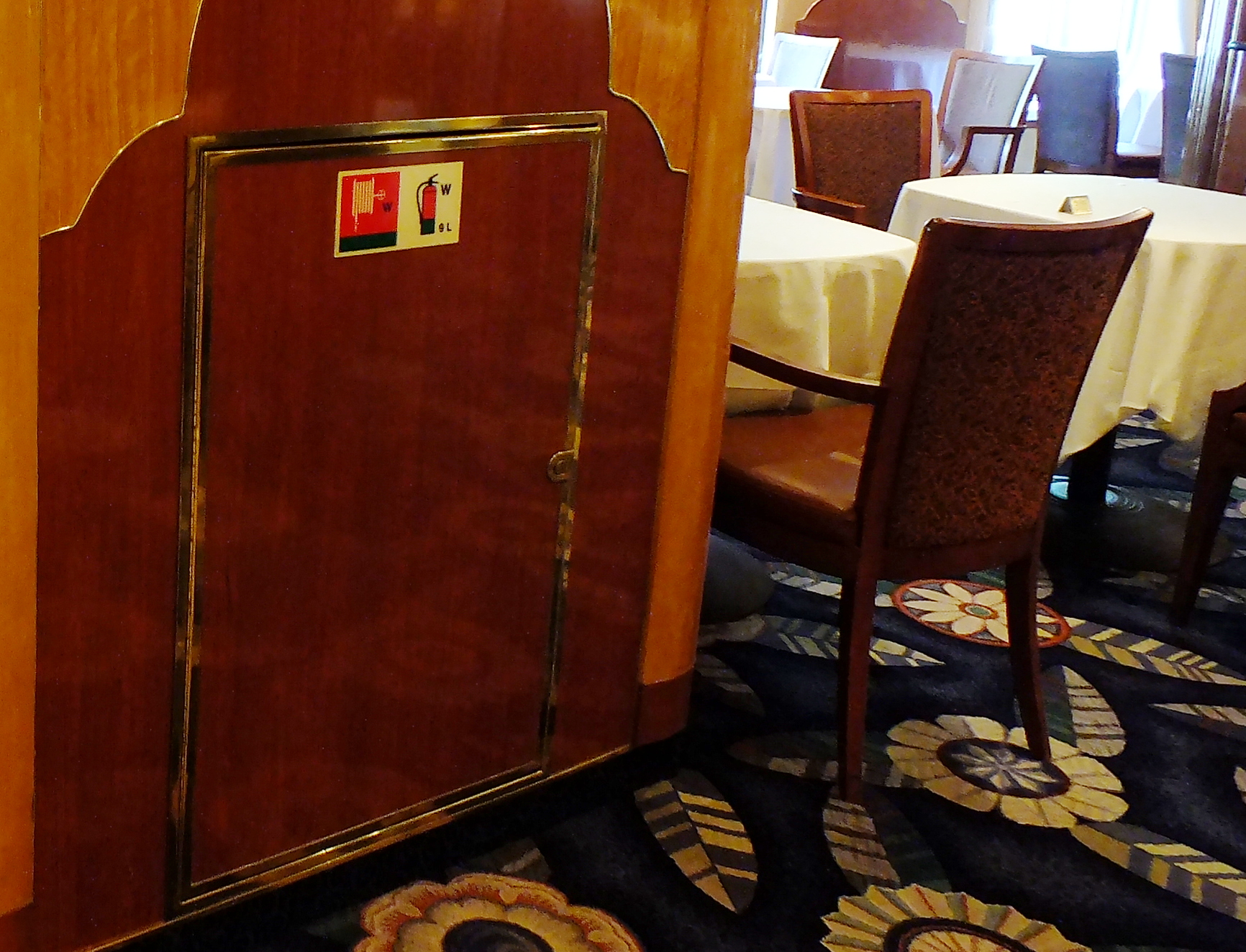
Firefighting resources are located all around the ship, sometimes hidden in plain sight in a dining room aboard the cruise ship Queen Elizabeth. (Photo by Matt Miller/KTOO)
The Prisendam lists and is adrift in the middle of the Gulf of Alaska in October 1980. Passengers and crew evacuated the vessel after a fire crippled the Holland America cruise ship. (Photo courtesy of U.S. Coast Guard)
Another ship takes the cruise ship Prisendam under tow after a fire crippled the vessel in October 1980. Headed to a potential port in the Pacific Northwest for repairs, it later sank. (Photo courtesy of U.S. Coast Guard)
U.S. Coast Guard H-3 helicopter hoists a survivor aboard during the Prisendam rescue in October 1980. (Photo courtesy of U.S. Coast Guard)
A helicopter prepares to rescue survivors from a life raft during the Prisendam rescue in October 1980. (Photo courtesy of U.S. Coast Guard
An unidentified member of the U.S. Coast Guard assists a Prisendam survivor after the vessel’s fire in the Gulf of Alaska in October 1980. (Photo courtesy of U.S. Coast Guard)
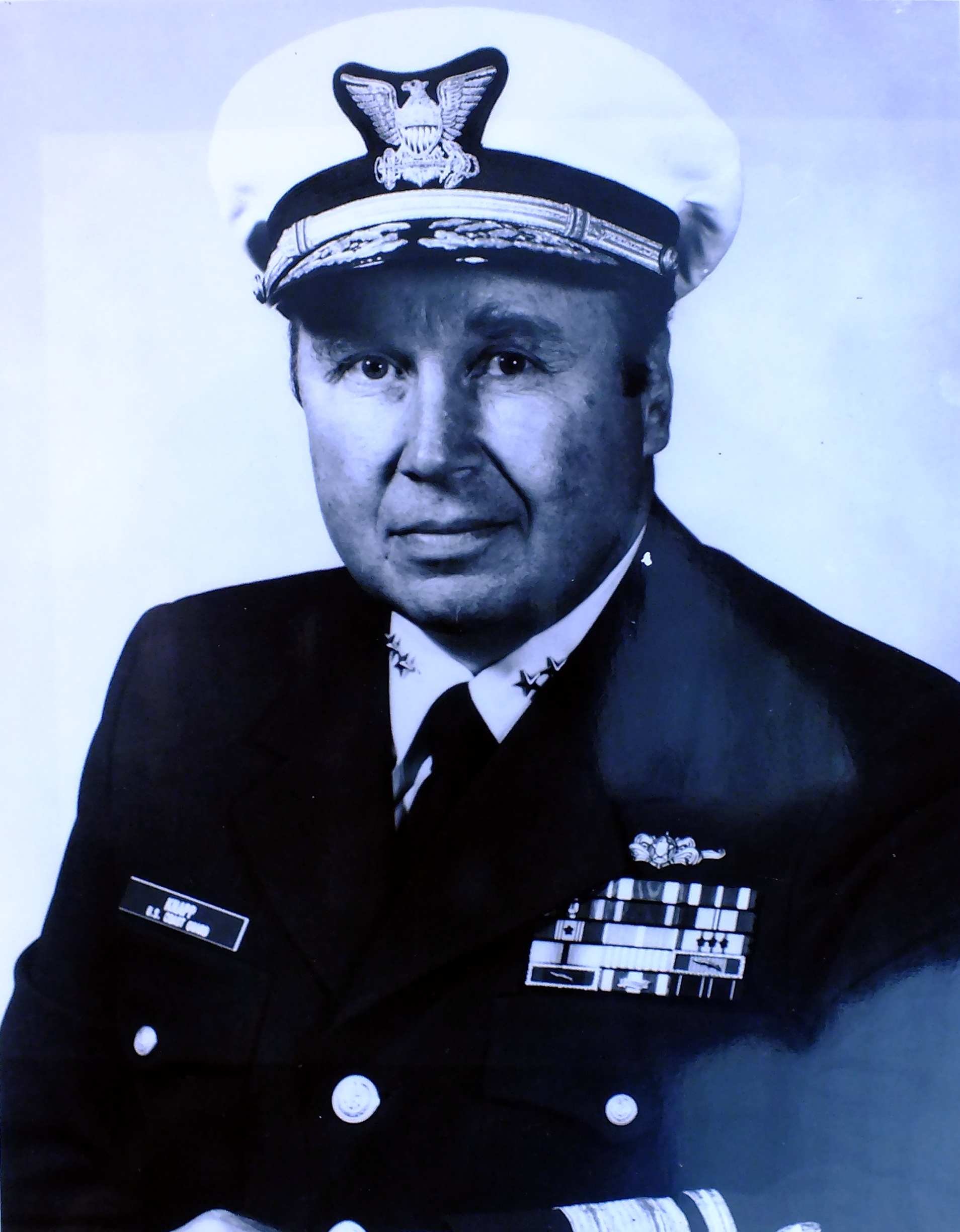
Rear Admiral Richard Knapp was in charge of the U.S. Coast Guard in Alaska during the search and rescue of the Prisendam passengers and crew. His final report highlighted the actions of the Air Force pararescue jumpers and provided the impetus for creation of a new rescue swimmer position within the Coast Guard. (Photo courtesy of U.S. Coast Guard)
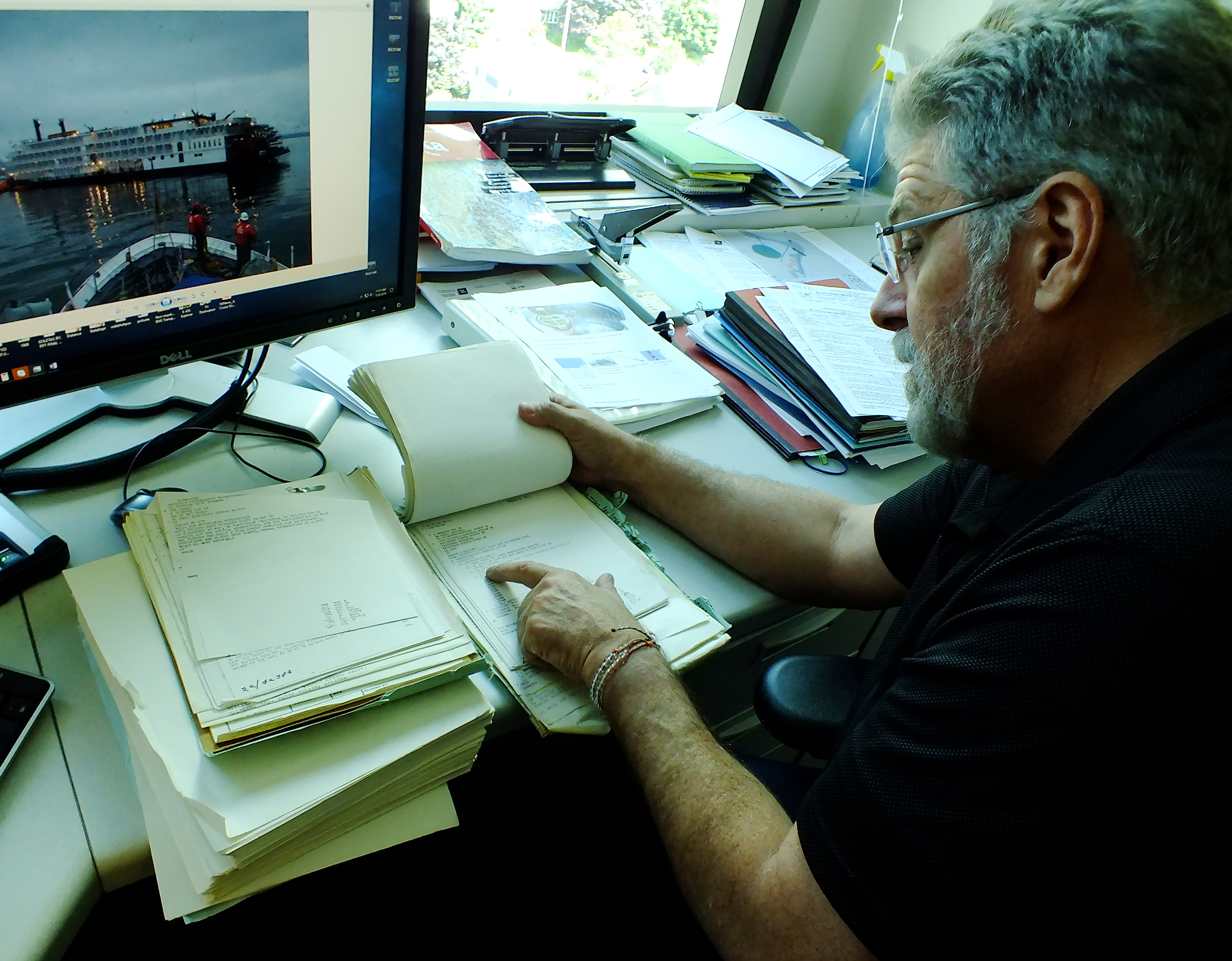
Paul Webb, who served aboard the U.S. Coast Guard buoy tender Woodrush during the Prisendam fire, goes through an archived file of documents preserved from the original search and rescue operation. On the computer screen in front of him is a picture of another cruise ship that encountered trouble in Southeast Alaska, the sternwheeler Empress of the North, which grounded on a rock near Juneau in 2007. (Photo by Matt Miller/KTOO)
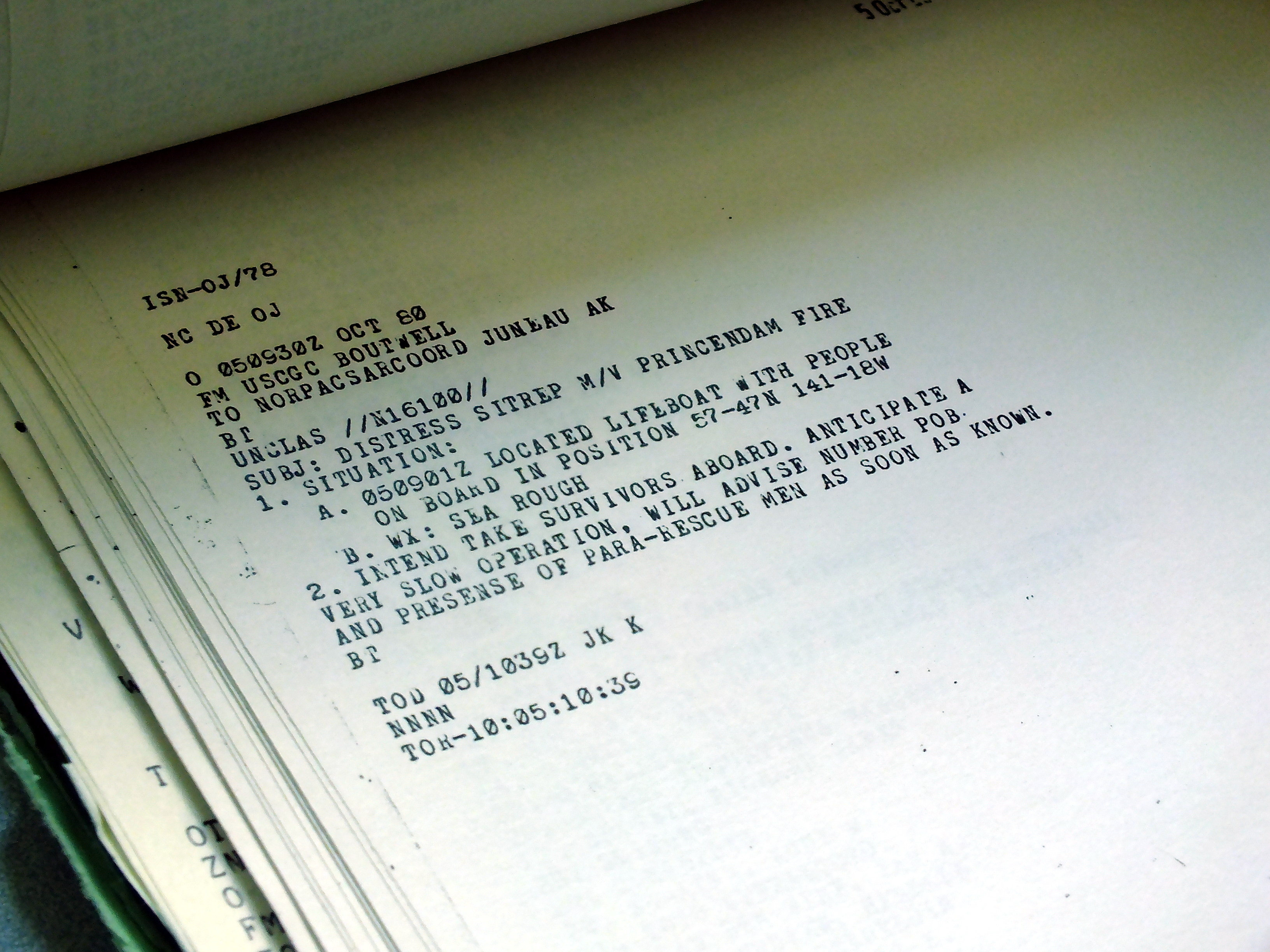
One of the last messages received from a U.S. Coast Guard cutter during the Prisendam search and rescue in the Gulf of Alaska in October 1980. (Photo by Matt Miller/KTOO)
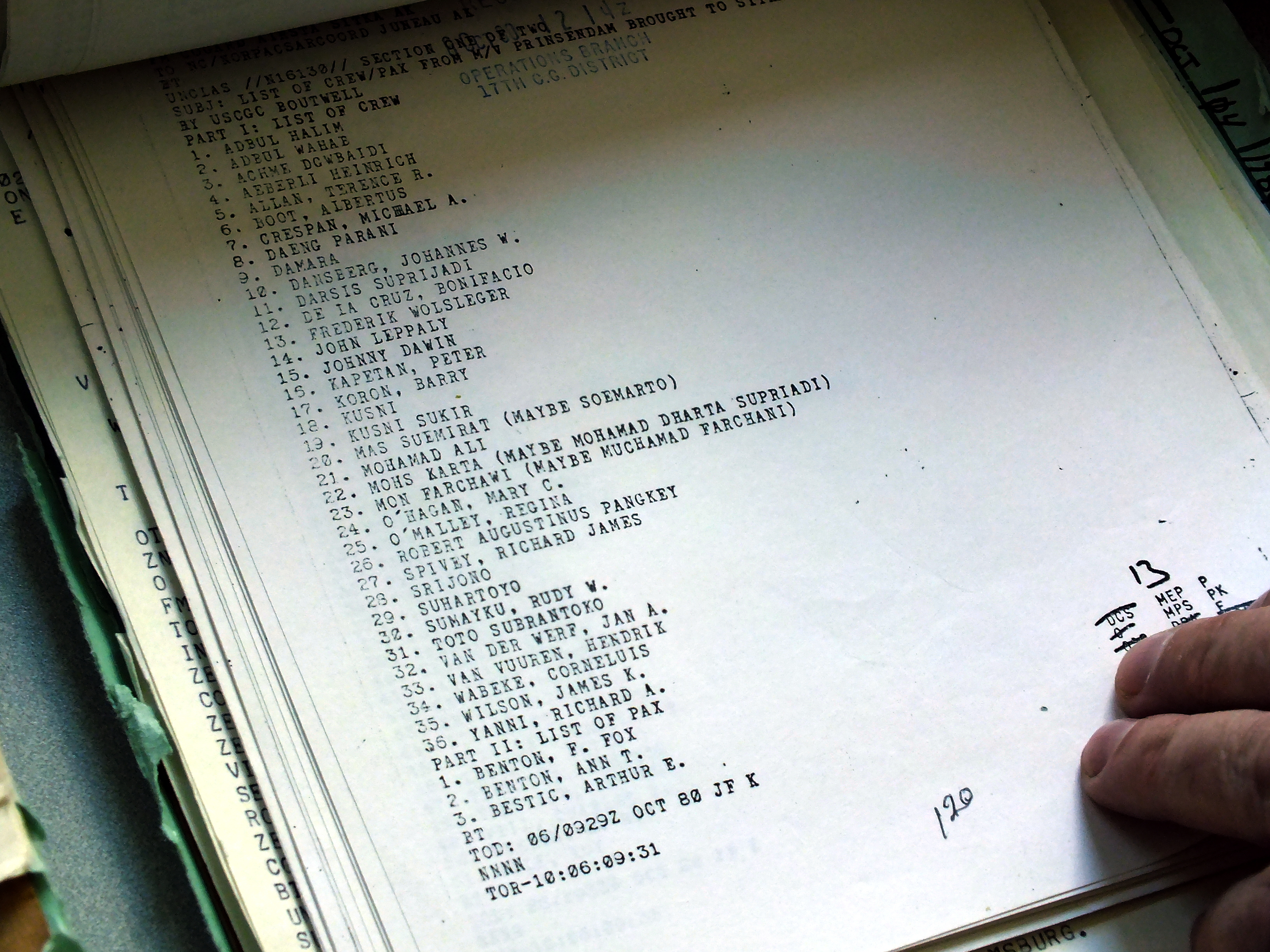
A list of passengers evacuated to Sitka, Alaska during the search and rescue of the Prisendam in October 1980. Is that really Yanni at number 36? (Photo by Matt Miller/KTOO)
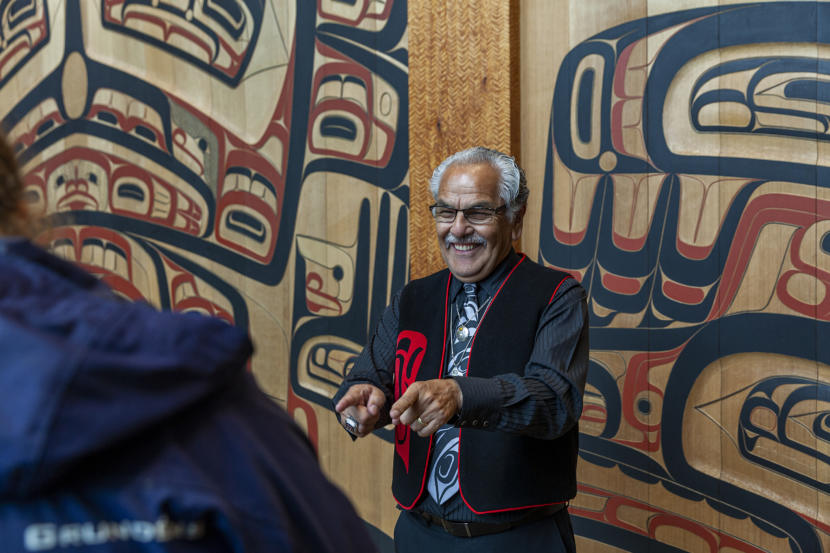
Sealaska Heritage Institute cultural interpreter John Lawrence talks to visitors at the institute’s Walter Soboleff Building in downtown Juneau, Sept. 5, 2019. (Photo by Rashah McChesney/KTOO)
The place we know as Juneau has been the home of the Aak’w Kwáan since time immemorial.
When the visitor center opened about four years ago, they were getting so many tourists walking in off the street, that they decided to hire cultural interpreters to help out. And these interpreters are so much more than tour guides. Their task is to explain their history, their culture, their art — their existence — to someone who just got off a cruise ship.
And that’s what this episode of Cruise Town is about.
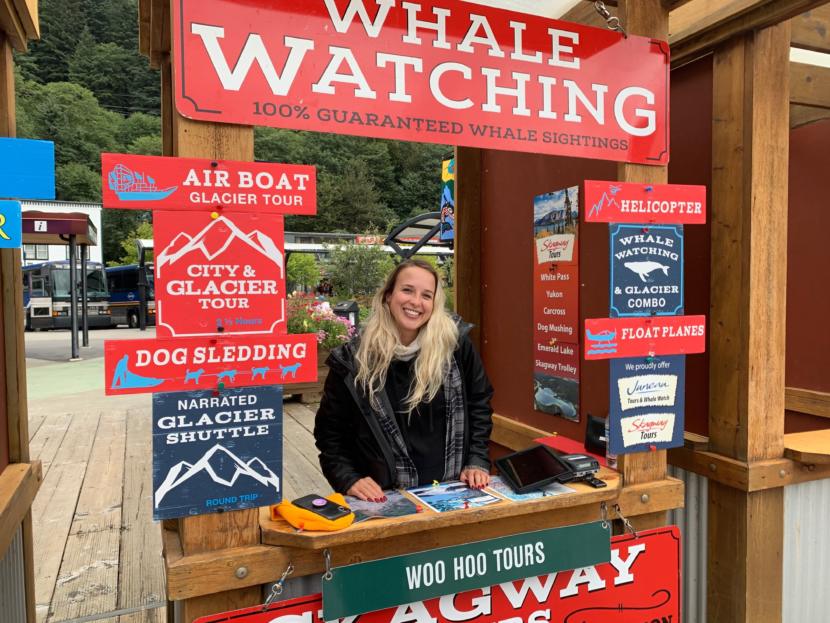
Natalie Constable spends the summer of 2019 in Juneau working as a dock sales representative. (Photo by Adelyn Baxter / KTOO)
The first thing cruise ship passengers see when they disembark in Juneau is a row of little covered booths. They’re made of wood and trimmed with corrugated metal and inside you’ll often find an attractive young person enticing you to book a tour.
Their official title is “dock sales representatives,” but we call them “hawkers” because they frequently yell out as they fight for attention and business from tourists as they get off their ships and plan their day of sightseeing in Juneau.
Sam is here from Utah for the season. It’s her second summer in Juneau. She’s selling glacier tours, whale watching trips, float plane rides and scenic helicopter tours.
In the off season, she works in tourism in Baja California, Mexico. She basically follows the whales.
“I see the exact same ones down there as up here,” she says. “We leave at the same time.”
Sam is one of the thousands of seasonal workers who come to Juneau to work in tourism. A lot of them are college students or college-aged, at least. They can make Juneau feel a lot like a summer camp.
The booth next door is occupied by Natalie from Dallas. She says there’s plenty of competition between sales reps in the booths, but they hang out after hours.
“We all go for drinks together very often,” she says. “We get to go on all the tours. We can go whale watching like, everyday if we wanted to.”
Juneauites are a lot like whales. Some are year-round residents — enduring or even thriving during the cold and wet offseason. But some migrate in for the summer — making a splash when they arrive and then leaving again, chasing prey or love or something else equally magnetic.
On this episode of Cruise Town, we meet some of the people who live here.
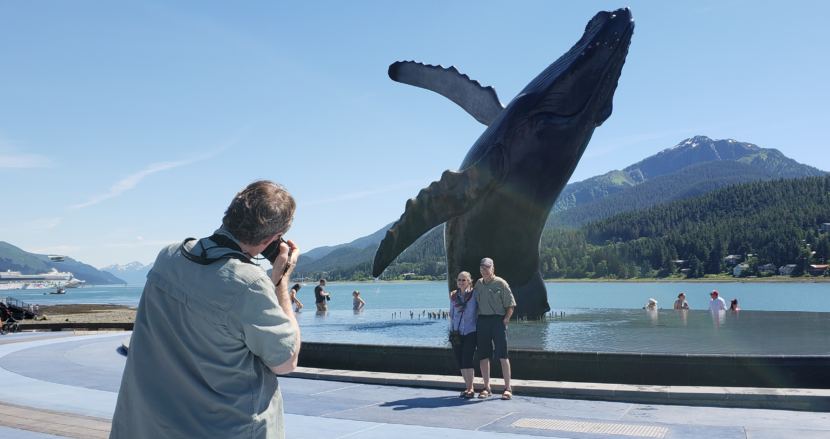
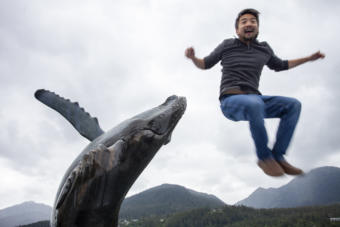
Herman Savikko of Douglas takes a photo of his sister Michele Savikko Bilyeu and her husband Larry Bilyeu of Salem, Oregon, at Overstreet Park in Juneau on July 3, 2018. (Photo by Jeremy Hsieh/KTOO)
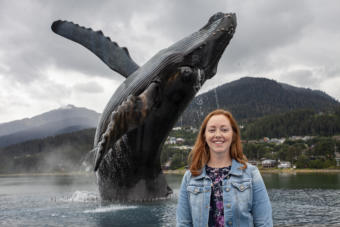
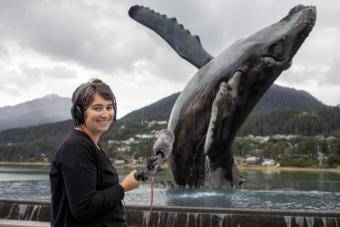
Tahku is a life-size statue of a humpback whale breaching from a reflecting pool, complete with water works. It’s a fairly new addition to Juneau’s waterfront, but it’s already iconic.
The statue is about a mile walk from the closest cruise ship dock — which is about a mile too far for some people. Because Tahku is basically a giant whale-shaped embodiment of Juneau’s relationship to the cruise industry.
The whale statue itself was privately funded, but the park where it lives and the restrooms, the cute cafe style tables and chairs and even the colored lights and the pump that runs the fountain were almost entirely funded by a controversial tax.
Juneau was one of the first places in the world to charge a per-person tax on cruise ship passengers. Then, the cruise industry actually sued the city over it, pointing its finger right at Tahku, singling it out as a prime example of the city’s irresponsible use of the cruise ship passenger tax.
So, in Juneau now, a whale statue is not just a whale statue: it’s a very large symbol for how Cruise Town benefits from hosting cruise ship tourists.
Jeremy Hsieh (Photo by Rashah McChesney / KTOO)Adelyn Baxter (Photo by Rashah McChesney / KTOO)Jennifer Pemberton (Photo by Rashah McChesney / KTOO)
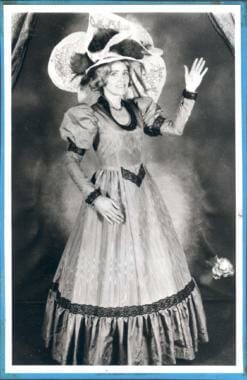
In 1984, Betty Breck, who dressed as a historical character named Belle Blue, sued the city over the proposed downtown parking garage. (Photo courtesy of Betty Breck)
Juneau is dwarfed by the cruise industry. In 2019, cruise ship passengers outnumbered locals 35 to 1.
The cruise ship docks and the few blocks of downtown right next to them come to life during the summer — we call it “the season” meaning the cruise season. But it’s more predictable than summer around here. And a lot longer — from late April until early October.
Most of this part of downtown looks like a tourist town with T-shirt shops, jewelry stores, a fudge shop and an old-timey bar called the Red Dog Saloon with squeaky swinging doors.
A lot of people call it the Disney part of town. Because it feels, frankly, fake.
But right in the middle of all of the gold rush facade is something that looks out of place: a concrete parking structure several stories tall.
And that’s where our story begins. Because it’s where a legal battle took place over old and new ideas about what the city should look like — for cruise ship passengers and the people who live in Juneau.
In the 1980s, a woman who dressed up like a turn-of-the-century dance hall girl sued the City and Borough of Juneau to prevent this parking garage from being built. She was fighting for authenticity and fairness at a time when the definitions of those terms seemed totally up for grabs.
On this episode of Cruise Town, we go back — not to the 1880s when Juneau was founded and steamships started coming north, but to the 1980s — when Juneau made a conscious decision to change its destiny.
KTOO reporter Elizabeth Jenkins will be our guide as we meet two people who were there when an old mining town embraced its history and transformed itself into Cruise Town.
For the people who live in Juneau, there’s a lot to love. It’s a small cosmopolitan capital city with a backdrop of almost-cliche scenery. We see whales and orca from our front porches and mountain goats and glaciers out the back. There are salmon swimming through town — bringing the bears with them.
But sometime in the 1980s, Juneau decided to become a Cruise Town — a destination that would open its port and its heart to what was then a hundred thousand people a year and is now… well over a million.
This year, cruise ship passengers outnumbered local residents 35 to 1.
Juneau was the first place in the world to let cruise ships turn off their diesel engines in port and plug into our municipal power supply — and use renewable hydropower. It was also one of the first places in the world to charge a per person tax on cruise ship visitors.
Juneau’s trying to get out ahead of this wave of tourists, but the fact of the matter is the community is dwarfed by the cruise industry. We can have up to six giant ships a day — each with thousands of passengers and crew. They’re taller than almost every single building in town and bring crowds of people that almost double the city’s population for the day.
The KTOO news team is excited to bring you Cruise Town, a podcast about how Juneau became a Cruise Town, what it’s like to live here and what the city’s future holds in light of the industry’s explosive growth.
Close
Update notification options
Subscribe to notifications
Subscribe
Get notifications about news related to the topics you care about. You can unsubscribe anytime.