More Alaskans are driving electric cars. The same is true for California, Oregon and Washington state. But many people continue to consider the vehicles as too small, difficult to use and no more than a novelty.
Northwest News Network Correspondent Tom Banse takes us to a recent gathering of electric car enthusiasts and policymakers in Portland, where they weighed how to spur consumer demand.
Eavesdrop with me for a moment on a focus group in Portland commissioned by the trade association Drive Oregon. A consumer research company has gathered a cross-section of local drivers to gauge their interest in going electric.
“Electric vehicles. First thing that comes to mind?” asked focus group moderator John Horvick.
Zina: “Expensive.”
Quana: “Gas saver”
David: “Too small.”
Doug: “They’re kind of a punch line, aren’t they?”
Many of the participants had a hard time naming even one electric car model. The majority tell moderator John Horvick they would not consider a plug-in car for their next vehicle purchase.
Rosie: “My family is all in Sacramento. That would mean stopping six times from 20 minutes to an hour waiting just to charge to get down there.”
Brenda: “The biggest thing is that replacement battery. I’ve heard so much bad stuff about that. That’s a factor.”
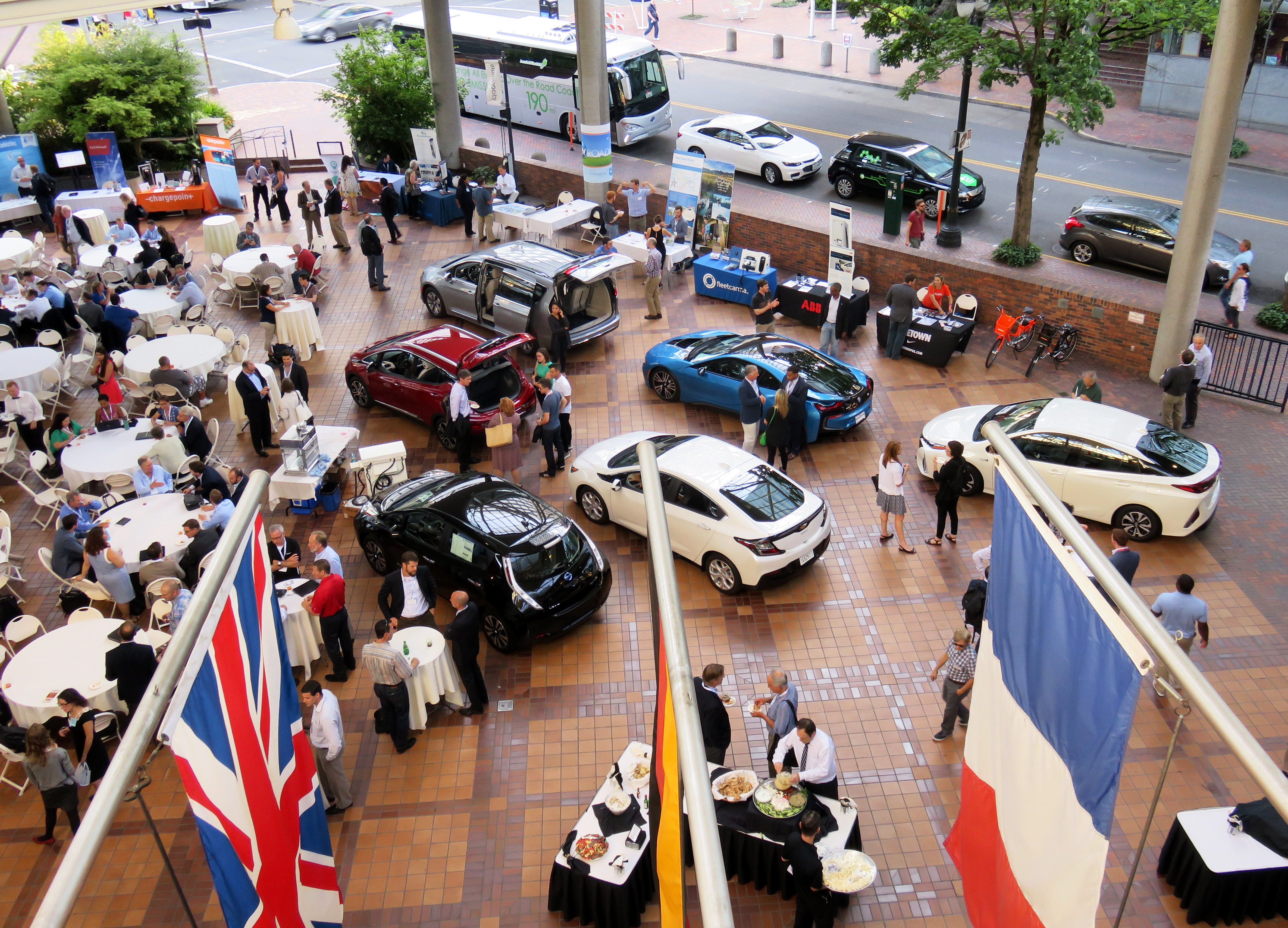
Attendees at an electric vehicle conference watched this unfold via a live video feed to an auditorium big screen. It’s a reality check about how little the average car shopper knows about driving electric, says advocate Jeff Allen.
Jeff Allen: “That’s a little bit depressing after five years of the Nissan Leaf and the Chevy Volt and dozens of other models available that we’re still there.”
Allen directs the electric vehicle trade association Drive Oregon. His nonprofit is prioritizing consumer awareness activities to help sell electric cars.
Jeff Allen: “It’s pretty basic. It’s just doing ‘ride and drive’ to get people exposed to the cars. There haven’t been nearly enough of those with new electric cars, but there have been almost none with used electric cars.”
And he thinks that could make a difference. Allen says a lot of electric cars are coming off leases this year and going on the used car market at “affordable” prices.
Mass market plug-in cars first appeared at Northwest dealerships in late 2010. Half a decade later sales of fully electric and plug-in electric hybrid cars account for less than two percent of all new car sales in Oregon and Washington and virtually none in Idaho.
Tonia Buell with the Washington State Department of Transportation says, “It’s still early in the game.”
“The state of Washington has a goal of 50,000 electric vehicles on our roads by 2020. We’re well on our way to reaching that. Right now, we have more than 16,000 electric vehicles registered in the state of Washington,” Buell said.
Buell says it was helpful that the Washington Legislature earlier this year expanded the range of plug-in models that qualify for a sales tax break.
In Portland, major automakers gave a pre-release look at some new battery powered models. Those included a plug-in hybrid minivan from Chrysler (2017 Pacifica model), a longer range, upscale plug-in hybrid Prius (the 2017 Prius “Prime”) from Toyota and the fully electric Chevy Bolt, a compact advertised to have a 200 mile range.
Nissan North America’s director of government affairs is Tracy Woodard. She says one thing that should help sales is that the plug-in cars are getting cheaper.
“Battery costs are coming down. Different models are coming out. I think right now incentives still do matter. We still have the federal tax credit. You’ve got a state incentive in a lot of these states. I think that definitely helps. I think small things like signage for charging infrastructure would go a long way,” she said.
Lawmakers in Oregon and California, but not in Washington state, have given environmental regulators the authority to fine automakers who fall short of a complicated “zero emission” vehicle sales threshold. Automakers are meeting the current targets, but the mandate ramps up to a much higher sales volume over the coming decade.
“It is going to be challenging,” said Woodard, diplomatically.
Similar to the focus group, an analysis of consumer attitudes by researchers from the University of California-Davis published earlier this year highlighted “lack of awareness” as the leading barrier to wider adoption of electric vehicles. That reason was accompanied by a host of secondary concerns and questions that cumulatively led prospective car buyers to pass over plug-in models. Among the other barriers were range, cost and the availability of charging stations.
Buell said plug-in vehicle infrastructure is getting attention in Washington state. She said an increase in the annual EV registration fee will fund grants to organizations to subsidize new charging station installations along major roadways. At the beginning of July, the cost to renew license tabs for an electric car in the Evergreen State went from $100 to $150.
A pending multi-billion dollar national settlement with Volkswagen to make restitution for its cheating on emissions controls may include significant set asides to promote transportation electrification and charging station deployments.
rg/post/electric-car-incentives-washington-state-expanded-more-models