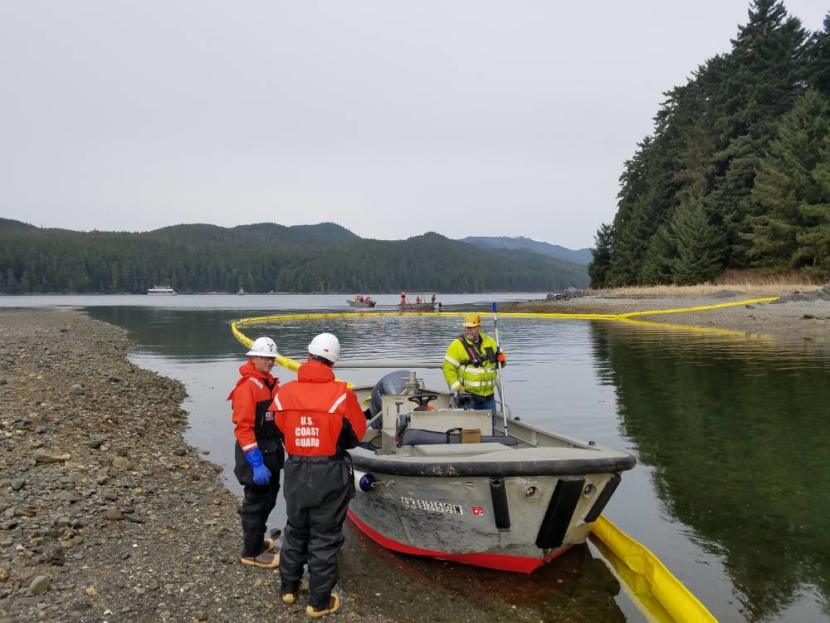
The EPA has updated its rules on the use of chemicals to disperse oil spills.
The rules for dispersants were last updated in 1994. That was just five years after a dispersant called Corexit was used in response to the Exxon Valdez oil spill in Prince William Sound. It was a highly controversial decision at the time, and the controversy arose again in 2010, when greater volumes of dispersants were deployed on the Deep Water Horizon spill, in the Gulf of Mexico.
Dispersants may break up an oil slick, sparing some birds and wildlife at the surface, but may increase the oil contamination for species that live lower in the water column. The toxicity of dispersants themselves is also a concern for cleanup workers and other wildlife.
A group of Alaskans filed a lawsuit in 2020 to force the EPA to rewrite the rules to take into account research on the long-term effects of dispersants in Prince William Sound and elsewhere.
The new rules revise the testing protocols before a chemical can be added to the list of approved products, require public notification of dispersant use and require more disclosure of the impacts on health and the environment. They go into effect in December.