Listen to this story:
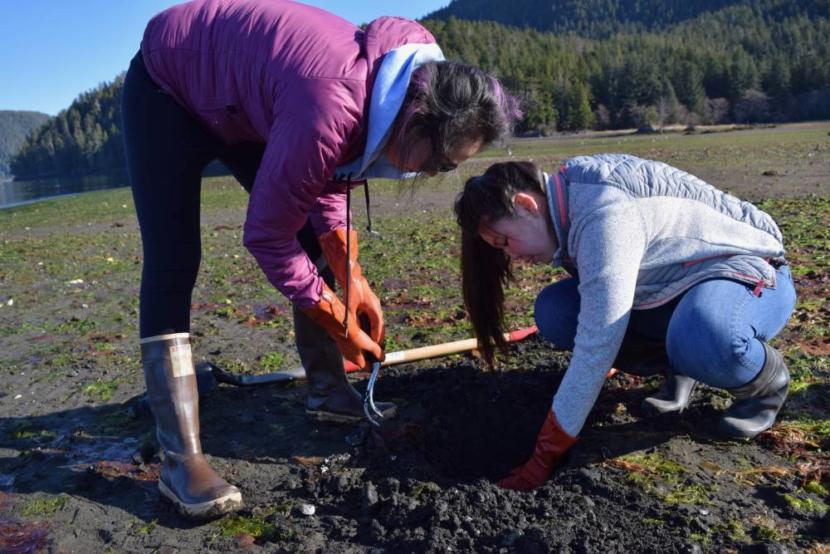
The Southeast Alaska Tribal Ocean Research network posted a paralytic shellfish toxin advisory for recreational and subsistence harvesting in communities across Southeast this week.
The advisory warns of high toxin levels in all shellfish species in Sitka, Skagway and Ketchikan and in butter clams in Juneau, Kake, Craig, Hydaburg and Kasaan.
John Harley, a shellfish expert at the University of Alaska Southeast, said that Sitka had a harmful algal bloom that led to high shellfish toxins in early April — the earliest since scientists started keeping a record in 2016.
“I think that the window in which we have to think about harmful algal blooms occurring is increasing,” he said.
An old adage was that months ending with the letter ‘r’ were safe for harvesting. Harley said researchers in this region don’t know whether that was ever a useful rule of thumb, since data only goes back about a decade in this region. But he said that as the ocean warms, blooms will likely become less predictable.
Jeff Feldpausch, the resource protection director for the Sitka Tribe of Alaska, said to never assume is safe.
“I wouldn’t recommend people eat shellfish unless it’s tested,” he said. “Other than that, you’re just going to be taking that risk.”
Feldpausch recommends tribal members and the general public send samples of their shellfish harvest to the Sitka Tribe of Alaska’s environmental research lab to test for toxins and wait to get results back before eating them.
Alaska has one of the highest rates of paralytic shellfish poisoning in the world. The state reported 132 cases between 1993 and 2021, including five deaths. That’s in part because Alaska is the only coastal state in the U.S. without a state-run toxin testing system for recreational and subsistence shellfish harvesting. Feldpausch said testing would be a heavy lift for the state.
“The state of Alaska has countless miles of shoreline and potential areas that they would need to sample,” he said.
In fact, Alaska has more miles of shoreline than all Lower 48 states combined. The state’s high rate of shellfish poisoning could also be due in part to a tradition of shellfish harvesting across remote communities where testing is less common.
Carol Brady, Alaska’s shellfish program coordinator, said the state does routinely test commercial operations, so store-bought shellfish is considered safe. The state ramps up testing in the spring and summer.
“Between May 1 to October 31 it requires testing of the first lot harvested each week, of each species,” she said.
An alga called Alexandrium catenella is responsible for paralytic shellfish poisoning. The alga produces a neurotoxin that builds up in clams, mussels and other shellfish that feed on it. There is more toxic algae for them to feast on when conditions are ripe for a bloom, meaning there’s plenty of sunlight, nutrients, calm seas and the water is warm enough. Once the toxin concentration in shellfish is above the federal regulatory limit, it’s dangerous for people to eat. Just one milligram can kill a person.
Symptoms of poisoning include tingling or numbing in the arms, legs and lips as well as nausea and difficulty breathing. People with these symptoms should seek medical care immediately.
To prevent foodborne illness, state officials recommend checking advisories before going out to forage, avoiding shellfish that are sitting in the sun, harvesting as soon as the tide goes out, putting the harvest on ice immediately and cooking everything thoroughly. While freezing and cooking won’t kill Alexandrium catenella, it can kill harmful bacteria like vibrio and norovirus.
To report paralytic shellfish poisoning cases, contact the Alaska Department of Health and Social Services at (907) 269-8000, or (800) 478-0084 after hours.