The Juneau Assembly is slated to tackle a marathon of critical financial decisions on Monday night.
The topics on the agenda include deciding on significant components of the city’s proposed budget for the next fiscal year and potential changes in how the city pays for glacial outburst flood mitigation.
Monday’s meeting is the final chance for residents to testify on the city’s budget for next year before the June 15 deadline to finalize it. The meeting is a culmination of months of back-and-forth while the Assembly found a way to plug a multimillion-dollar recurring budget hole due to the tax exemption on food and utilities and the cap on the city’s property tax rate that voters passed last fall. Those ballot initiatives created a roughly $10-12 million annual deficit going forward.
The Assembly will decide on Monday whether to finalize its proposed service cuts for the next fiscal year or potentially change course at the eleventh hour.
A key factor is whether the Assembly votes to raise the city’s sales tax cap on single-item goods from $15,000 to $30,000 — or potentially eliminate it entirely — which would bring in more revenue. They’re also considering several other tax changes that could yield more revenue as well.
If the Assembly votes to move forward with those ways to increase revenue, it may choose to reverse some proposed service cuts — like reducing funding to the Juneau-Douglas City Museum and grantees, and closing the Mount Jumbo Gym. Some Assembly members are already seeking to add back funding to the city museum on Monday night.
At the meeting, the Assembly will also finalize the property tax rate, also known as the mill rate, for next year. It is currently proposed to be 9.92 mills. That .92 is for debt service. The rate abides by the new property tax rate cap voters approved last election of 9 mills excluding debt service, and is lower than last year’s rate.
Separate from the budget, the Assembly will also vote on an ordinance that would undo a controversial funding decision that helped pay for the initial stretch of the Mendenhall River flood wall.
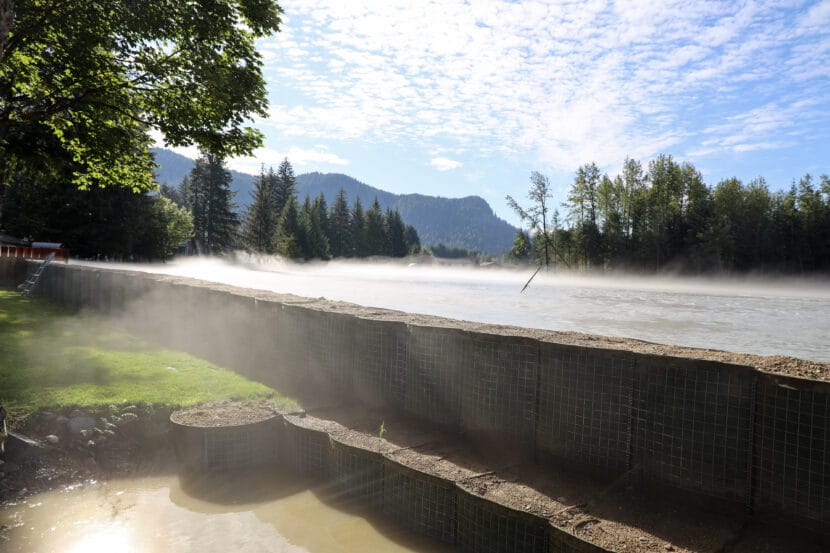
The city passed a funding scheme called a local improvement district, or LID, last year to split the original cost of building the HESCO barriers by a 60-40 ratio with around 400 landowners in the Mendenhall Valley flood zone. Most households would have to pay $6,300.
But after the flood wall sustained damage during the most recent glacial outburst flood in August, city staff said the LID isn’t made to care for ongoing costs, which have ballooned. Repairing and raising the wall this year alone will cost an estimated $14.8 million, and it’s expected to cost tens of millions of dollars more over the several years that it will remain in place.
The city allocated more funding, and other funds have come through the U.S. Army Corps of Engineers, Tlingit and Haida Regional Housing Authority, the Alaska Department of Environmental Conservation Revolving Loan Fund, and Congressionally Directed Spending.
Doing away with the LID would resolve issues of fairness, since many landowners who aren’t required to pay were likely protected from the record-breaking flood last year. It could also quash a lawsuit brought by two riverfront property owners hosting the barriers, who took issue with paying to lose some of their land.
Juneau residents have the chance to testify on ordinances on Monday’s agenda – as well as on non-agenda items – in person or online before the Assembly votes. People who want to testify online must notify the city clerk by 4 p.m. before the meeting. The meeting begins at 6 p.m. at City Hall.
KTOO’s Alix Soliman contributed to this article.