Listen to this story:
Juneau’s annual glacial outburst flood started Tuesday morning and is expected to peak Wednesday morning. Experts predict it could be the largest flood on record.
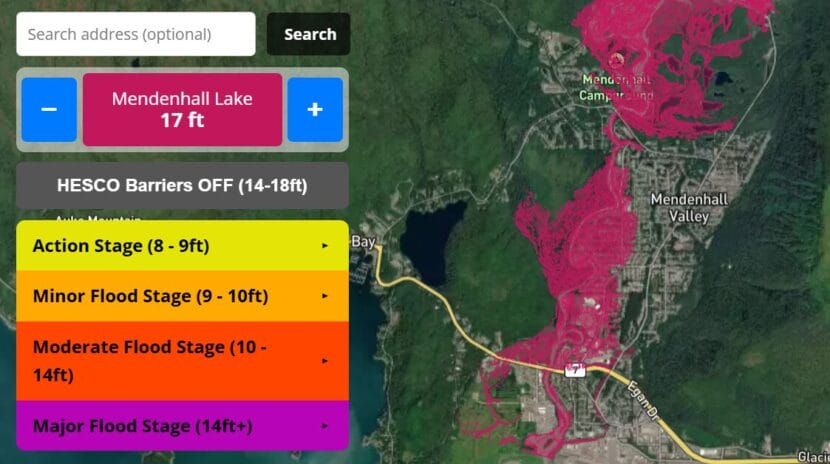
This year, the flood will test a temporary levee that the city installed this spring. But not every street in the flood zone is protected by the barrier.
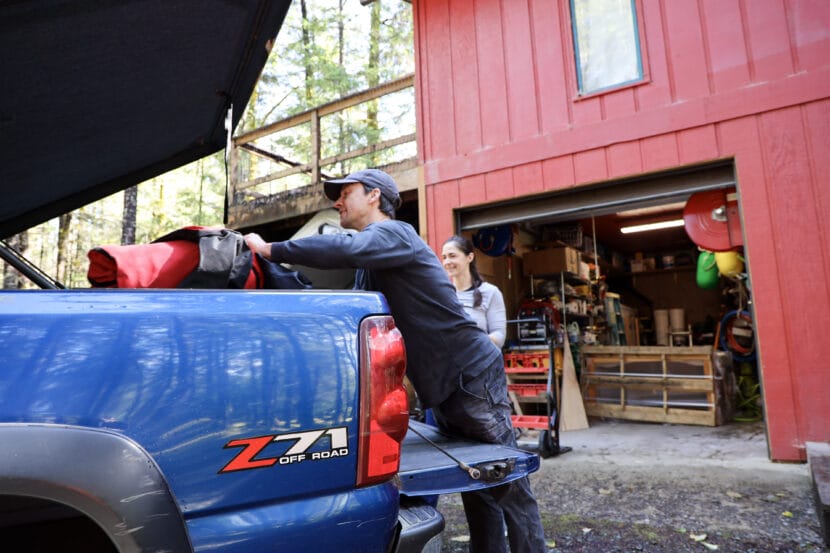
As Malachi Thorington and Elizabeth Figus packed their blue chevy truck Tuesday afternoon to stay at a friend’s house, the sound of the rising river rushes behind their house.
The first floor of their home flooded the past two years. Thorington said he knows the drill now.
“Just kind of dealing with the present, at the moment, basically going into damage mitigation mode. Try not to feel anything, just try to go as mechanical as possible,” he said. “There will be things that are lost, and I really hope that other people have taken this seriously.”
The City and Borough of Juneau issued an evacuation advisory Tuesday morning as glacial outburst floodwaters began to rise in Mendenhall River. Some residents are heeding the warning, but others are hunkering down at home. Everyone is waiting to see whether preparations made over the past year will protect their homes from a third catastrophic flood.
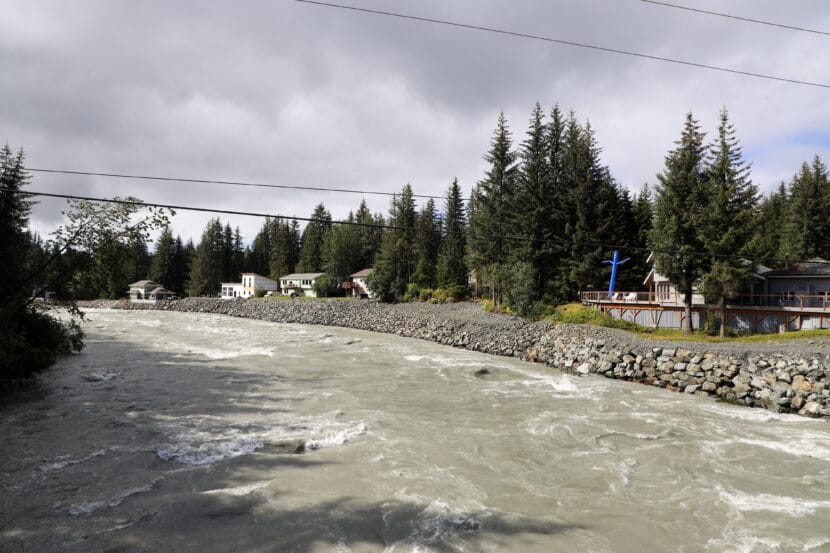
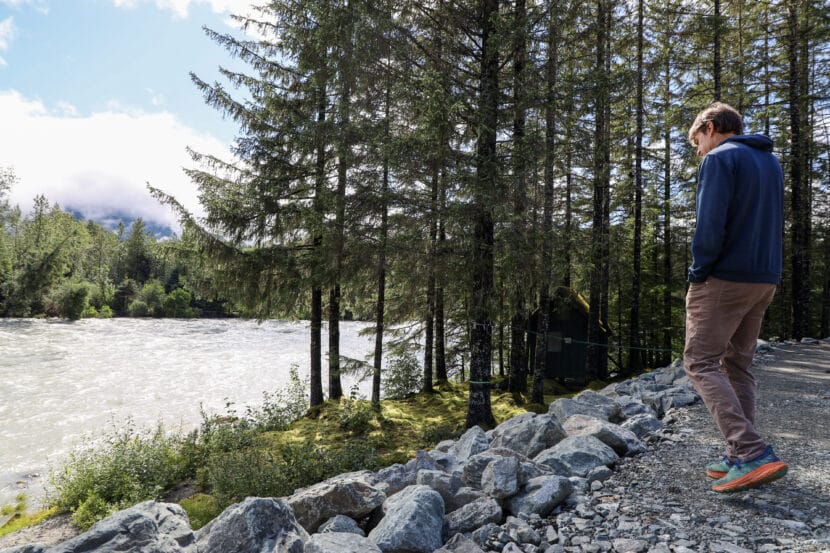
At the end of View Drive, a colossal man-made berm separates Carol and Don Habeger’s house from the cold rushing water.
Walking along the berm, they see a young spruce on the other side of the river crash into the torrent. Along with a couple of neighbors, the Habegers spent the past month erecting the levee around their home of more than 20 years. The city constructed a separate temporary levee farther downriver.
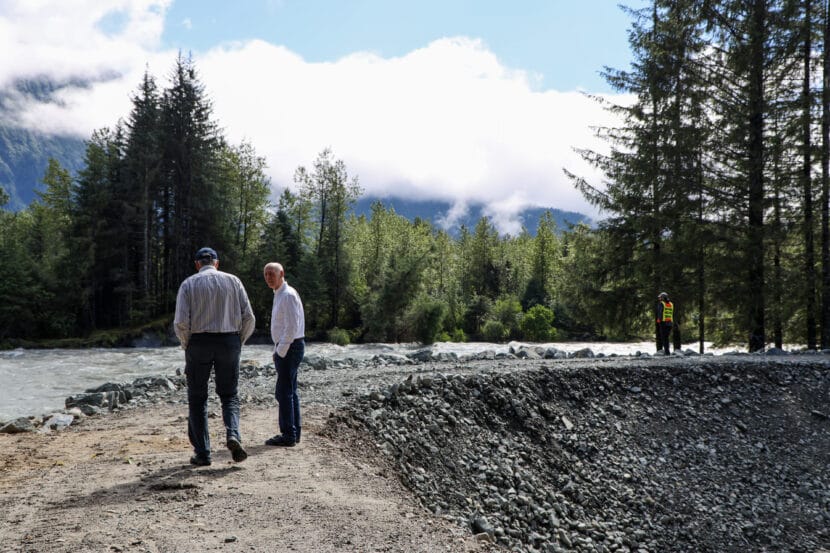
“We are trying to save our property — we are trying to save our equity,” he said.
Imagine 400 truckloads of boulders, rocks and fine sand stacked around 12 feet high. The couple plans to stay home, even as the river is projected to reach a record-breaking level of 16.6 feet.
“I was going to invite folks, but I don’t want the liability,” he said.
The Mendenhall River started flooding annually more than a decade ago, but for a while it was treated as more of a curiosity than a cause for concern. Then, in 2023, everything changed when a record-breaking 15-foot flood hit the Valley. A couple dozen homes flooded.
The 2024 flood broke the record again, this time cresting at 16 feet, and it was catastrophic. Nearly 300 homes flooded. The federal government declared it a major disaster.
Glacial outburst floods are not uncommon in Alaska, or in other places with glaciers around the globe. But Juneau, Alaska is the only city in the U.S. that lives beneath their threat.
Suicide Basin is the source. It’s a slurry of water, icebergs and silver silt that swells with rain and meltwater in the spring and summer.
Climate change has sharpened the risk of glacial outburst floods. In Juneau, their size has increased as the glacier has melted more rapidly. Scientists today are trying to figure out how big the floods can get.
At a press briefing Tuesday morning, Warning Coordination Meteorologist for the National Weather Service Nicole Ferrin said the river was already unusually high because of rain from the past few days.
“This will be a new record based on all of the information that we have,” she said.
The city is encouraging residents to evacuate the area, but it’s not a mandatory order. On Monday, the city hung nearly 900 informational door flyers in Mendenhall Valley neighborhoods in the flood zone and launched a flood information hotline.
Residents can see whether their home is in the flood zone by visiting Juneauflood.com. Though city officials say they’re confident the barriers will hold, they don’t want people to test it with their lives. The area includes homes along the river, down Riverside Drive to Safeway, past Glacier Highway and near the Juneau International Airport.
Capital City Fire/Rescue Assistant Chief Sam Russell said emergency responses will become more difficult as the river rises. He asked residents to stay away from the river and bridges as much as possible.
“As the flood goes up, our ability to navigate the waters goes down due to the debris that flows down through it makes navigating the river with a boat very, very difficult,” he said.
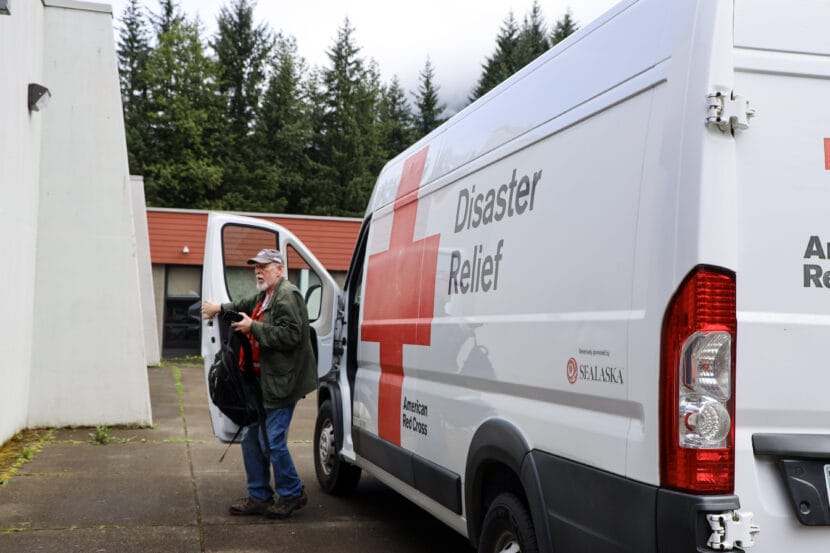
At the Floyd Dryden campus, the American Red Cross is prepared to receive people who follow the evacuation advisory.
Michael Downs is the Juneau district ranger for Tongass National Forest. He closed down the Forest Service campground on Mendenhall Lake this morning. The few RVs that were there are now parked at the campus.
He said the Forest Service is also managing disaster tourism in the area – people wanting to get an in-person glimpse of the flooding. He said all lakeside trails and roads by the Visitor Center and near Skater’s Cabin are closed. Anyone who violates that could face consequences.
“This year, we just did a Forest Order that they can be fined up to like, $5,000 so [it’s] got a little bit more teeth this year,” he said.
He said on top of being a safety concern, it’s to protect the employees.
“Their homes are impacted, and they work there, and people are oohing and ahhing about their disaster and it’s yucky,” he said. “I prefer people don’t come in there.”
Floodwaters are expected to peak Wednesday afternoon, and then drop through Thursday morning.
This story has been updated to add more context about glacial flooding and reflect the latest National Weather Service forecast.