Adelyn Baxter

Digital Content Director, KTOO

"I help inform KTOO listeners, viewers and readers by finding creative ways to bring our content to our audience wherever they are."
Two campers tested for COVID-19 at Juneau summer camp, prompting preventative closure

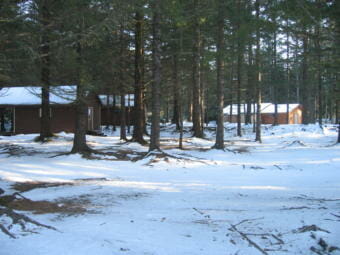
Camper cabins at Echo Ranch Bible Camp in winter. (Flickr photo by Kristin Harvey)

Echo Ranch Bible Camp has canceled all remaining summer camp sessions this year after two campers were tested for COVID-19. 

In a Facebook post and message sent to parents, staff wrote that two campers had become ill shortly after attending the camp. They wrote that parents of campers who attended at the same time were also being notified.

In a phone interview Monday, camp Director Randy Alderfer said they had learned one of the campers received a negative test result, but they were still waiting to hear about the other.

Alderfer said even though they still don’t have confirmation that COVID-19 was ever present in the camp, they canceled the final two sessions as a preventative measure.

https://www.facebook.com/echoranchbiblecamp/posts/3141110032610224?__xts__[0]=68.ARCaJmu1mw9o23794XuAnBEWhf6eHa5NRhYfXpFAtDNHs38e3GESPlnz4oAs_i7YVP7gZQ4IszQGzd7edIiyvRITA0xXzHl-5gKMkkbR4CeHfBLyGTP9BnsCtLgVUnvpiGR4GUMOEKo-Pwxz7EKqJxBJriB5LH15eHHcktvF-Go87GCUkdg6hJvGYP9xsI3rQVJ-be8lUNikRGduh1erzrThhGzSof8Rz84IJuFs34MjCo1DJDfNSwUijlrX_Az-xtcKDfQOCajMYrfQQaLx_cbkHPNcENgLPQU-thLjfdcheOjxSzOS46npWOki_spcDAHW3tgREXoOHhPuuHsE9w&__tn__=-R

The Christian overnight camp next to Point Bridget State Park canceled sessions earlier this year because of the pandemic, but re-opened in late June with a mitigation plan approved by the City and Borough of Juneau. 

That plan included extra sanitizing for surfaces and bathroom facilities and staggered meals and chapel services to lower the capacity indoors. It also says that any campers or staff showing signs of illness would be quarantined. 

The plan did not require campers or staff to wear face masks, but parents could provide one for their child if they wanted them to wear it. 

They held four one-week sessions before deciding to cancel the last two sessions.

Echo Ranch campers attend in age groups ranging from 7 – 9 to 14 – 18. They stay in cabins with groups of about 10 kids and two counselors.

Another 21 employees at Juneau seafood processor test positive for COVID-19

Workers unload large racks of frozen fish at Alaska Glacier Seafoods (Photo by David Purdy/KTOO)

Another 21 employees of Alaska Glacier Seafoods in Juneau tested positive for COVID-19 over the weekend. 

A total of 61 people who work at the processing facility have tested positive since the outbreak was discovered. Health officials traced the first case back to a Juneau resident. 
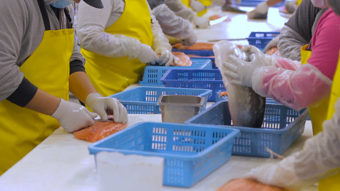
The City and Borough of Juneau tested about 100 employees on Wednesday. Forty results are still pending. 

Of the positive cases so far, 12 are Juneau residents and 49 are nonresidents. 

Alaska Glacier Seafoods Vice President Jim Erickson said last week the company had done everything it could to make sure workers arriving in Juneau earlier this year did not bring COVID-19 with them. 

He said they weren’t expecting the virus to come into the facility from the community.

They sanitized, screened, quarantined and they still got COVID-19

Workers remove the bones from salmon fillets at Alaska Glacier Seafoods’ Auke Bay processing plant in 2015. (Photo by David Purdy/KTOO)

The owners of a local seafood processor thought they did everything right to keep their business safely running during the pandemic.

But even with mandatory COVID-19 screening and two week quarantine for out-of-state staff, the virus still found its way into the facility.

On July 4, a Juneau resident who works at Alaska Glacier Seafoods started showing COVID-19 symptoms. He quarantined at home immediately and got tested.

“Unfortunately, you can be contagious for days prior to showing symptoms,” said Jim Erickson, vice president and co-owner of the company. “That’s what makes this disease so hard to get in front of.”

Health officials who investigated the case say it resulted from community spread — not from inside the plant.

“We’re not sure where he contracted it initially, because he’s probably not sure,” Erickson said this week. “I mean, let’s face it, you could pick it up anywhere.”

Within a week, that employee had tested positive and several coworkers on the same work crew had started to experience fevers and body aches.

Alaska Glacier Seafoods employs close to 150 people during the summer season and processes more than 10 million pounds of crab, fish and prawns a year.

But all of that came to a halt last week, when that initial case set off a domino effect that led to at least 40 staff members getting sick. Most are non-residents. Erickson says none of the cases have been serious.

They’ve tested about 130 employees total.

Until they can resume normal operations, other seafood processors in the region are picking up the slack.

Erickson said the seafood industry in Southeast Alaska agreed before the season began to help one another out if anyone experienced an outbreak. So Alaska Glacier Seafoods is buying from fishing tenders, then delivering the products to other processors instead of processing it at the Juneau plant.

“It’s been seamless for our fishing fleet. It hasn’t been so seamless for us,” he said.

But the most frustrating part of this process has been waiting for test results to come back.

Employees have to quarantine for up to a week while they’re waiting for results. That’s effectively shut down the plant and made it hard to plan.

“On average, a five to seven day turnaround for testing makes it very, very difficult to get in front of this as a company and as a community,” Erickson said.

Public health officials say there are a number of reasons test results can be delayed.

There are backlogs at state labs in Anchorage and Fairbanks and private labs out of state.

In Southeast Alaska, where all tests have to be flown out, weather can also cause delays.

Erickson believes it shouldn’t be this hard to get results quickly. An employee who traveled to Seattle a few weeks ago for work was told he needed to test negative within 24 hours before a business meeting.

“This individual on a Monday got tested at noon at a drive up testing stand in Seattle and was emailed his negative results by 4:30 p.m. the same day,” Erickson said. “My question is, why can’t we have that in Juneau?”

The City and Borough of Juneau has discussed buying equipment to process tests locally.  But because of high demand around the country, the waitlist is several months long.

Erickson said all they can do for now is continue testing and sanitizing and hope there isn’t another outbreak.

But it feels like they already did everything they could to avoid this in the first place.

“If you would have asked me, ‘Hey, if you get COVID-19, where are you going to get it from?’ I would have said, ‘Well, from somebody we brought in from out of state, most likely.’ But that wasn’t the case,” he said. “We weren’t expecting it from community spread, to be quite honest.”

Some of the people who initially tested positive have already recovered. And they’re going to continue testing staff who already tested negative as a precaution.

Editor’s note: Shortly after this story published, another 21 employees of the plant tested positive for COVID-19. 

Person jailed briefly at Lemon Creek Correctional Center tests positive for COVID-19

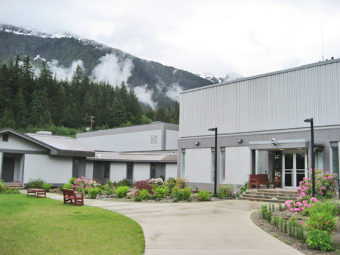
Lemon Creek Correctional Center. (Photo courtesy Alaska Department of Corrections.
Lemon Creek Correctional Center. (Photo courtesy Alaska Department of Corrections)

A person who was jailed briefly at Lemon Creek Correctional Center in Juneau tested positive for COVID-19 this week. 

The city’s emergency operations center reports that the person was isolated during their time at the facility, but the positive test result came back after they were released.  

Department of Corrections spokesperson Sarah Gallagher said the person was released Wednesday. Public health officials have since ordered them to isolate from other people. 

A police officer and a correctional center employee, who both had contact with the person, are also quarantining while they await test results.

Gallagher said no other inmates at the facility have tested positive recently. The facility previously saw an outbreak of COVID-19 among staff in April and May.

As COVID-19 cases rise, three states say travelers from Alaska should quarantine

Travelers disembark a plane from Seattle at Ted Stevens Anchorage International Airport
Travelers disembark a plane from Seattle at Ted Stevens Anchorage International Airport on Friday, June 5, 2020. (Tegan Hanlon/Alaska Public Media)

Alaska has been added to travel advisory lists for three East Coast states. 

Travelers arriving in or returning to New York, New Jersey and Connecticut from Alaska must now self-quarantine for 14 days. 

The travel advisories apply to states where positive COVID-19 test rates are on the rise. The restrictions for Alaska travelers took effect Tuesday.  

Alaska’s total number of resident COVID-19 cases rose by more than a quarter last week. 

All travelers arriving in Alaska from out of state still must either quarantine for two weeks or test negative 72 hours before their departure and again when they arrive.

Juneau Assembly passes emergency mask mandate, effective immediately

Traffic moves down Marine Way past Juneau City Hall on Sept. 25, 2017. (Photo by Jeremy Hsieh/KTOO)

Updated Post — 8:10 p.m. by Adelyn Baxter, KTOO

During a special meeting Monday night, the Juneau Assembly passed an emergency ordinance mandating face coverings in public. The mandate takes effect immediately and lasts for 90 days, unless the Assembly decides to end it earlier. It includes exemptions for people with hearing or breathing issues and young children.

Twenty-two people testified during the public hearing for the ordinance. More than half were in favor of a mask mandate.

Juneau resident Chris Sperry is a member of the Alaska Pharmacists Association. He said scientific evidence clearly supports masks as a means of limiting the spread of COVID-19.

“This is a very simple thing. We don’t have medication for this disease. We do have masks,” he said. “So I am pleading with you to please approve this, to have an ordinance where masks are required.”

Kelly Fishler testified against the ordinance, saying face masks can be triggering for victims of sexual assault and will cause people with breathing issues who choose not to wear them to be bullied.

“I have been harassed, already, in town by people that had no idea what was going on,” she said.

The Assembly passed the ordinance unanimously. Several members said they felt mandating face coverings was the best way to keep businesses open and make it safe for schools to reopen next month.

Juneau has seen relatively few serious cases of COVID-19. But a recent outbreak at a local seafood processor was on many people’s minds during Monday’s special assembly meeting.

Mayor Beth Weldon, who contracted and recovered from COVID-19 earlier this summer, said she did not want to mandate masks. But she said she felt it was the best course of action considering the fears expressed by the public that increasing cases could force businesses to close again.

“In order not to close the businesses, increase the community transmission, I would reluctantly vote for this,” she said.

Weldon asked the community not to shame people for not wearing masks. The city will not require anyone with a disability or health condition exempted under the ordinance to carry proof with them.

The ordinance says people are allowed to remove face coverings to eat and drink, and that violators will be subject to fines of up to $25.

Original Post — 5:00 p.m. by Jeremy Hsieh, KTOO

The Juneau Assembly is taking public testimony this evening on two hot-button issues in two separate meetings.

First, the Assembly will consider imposing a public mask mandate through an emergency ordinance. Public testimony on that ordinance will happen during a special meeting that’s set to begin at 5:30 p.m.

The emergency mask ordinance needs at least six of the nine members of the Assembly to vote “yes” for it to pass. It would take effect immediately, and last for up to 90 days.

If the emergency ordinance fails, a parallel, non-emergency version is on tonight’s committee meeting agenda following the special meeting. It could advance to public hearing and final vote at the next regular Assembly meeting on Aug. 3. Regular ordinances require a simple majority to pass, but don’t take effect until 30 days after adoption.

With some exceptions, most people would be required to wear a face covering in public indoor spaces and communal spaces outside the home.

Separately, the Juneau School District adopted a mandatory mask policy for people at its facilities and events at a board meeting last week.

During the committee meeting, the Assembly is taking public testimony on an ordinance to establish a systemic racism review committee. That committee would review the city’s proposed ordinances and resolutions for systemic racism, and present potential fixes.

The Assembly is holding both meetings over Zoom video conference, and both will be streamed on the city’s Facebook page and on this post. Instructions on how to testify are available in the meeting packets.

Site notifications
Update notification options
Subscribe to notifications