Adelyn Baxter

Digital Content Director, KTOO

"I help inform KTOO listeners, viewers and readers by finding creative ways to bring our content to our audience wherever they are."
State begins testing everyone at Lemon Creek Correctional Center for COVID-19

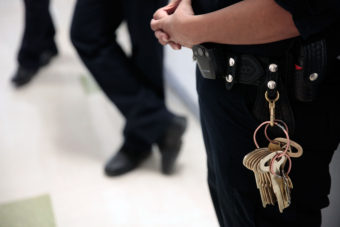
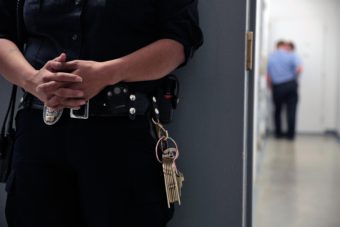
Corrections officers wait outside of a cell during a weekly inspection at the Lemon Creek Correction Center on June 18, 2016 in Juneau, Alaska. (Photo by Rashah McChesney/KTOO)
Corrections officers wait outside of a cell during a weekly inspection at the Lemon Creek Correctional Center in Juneau on June 18, 2016. (Photo by Rashah McChesney/KTOO)

State officials say every staff member and inmate at Lemon Creek Correctional Center in Juneau will be tested for COVID-19 starting Thursday.

That comes after two more staff members tested positive for the disease this week, more than a month after the first case was detected at the facility. So far, 10 staff members at the facility have contracted the virus.
Department of Corrections spokesperson Sarah Gallagher wrote in an email that the tests arrived in Juneau Wednesday and medical staff and public health nurses began testing at the facility Thursday morning. They estimate it will take three days to finish testing everyone.

Sgt. Randy McLellan is the president of the Alaska Correctional Officers Association and works at Hiland Mountain Correctional Center in Eagle River.

He said the union has repeatedly asked the department to test everyone in facilities with confirmed cases, but has received little to no response.

“They’re giving the appearance that they’ve got concern and they take measures to protect staff, inmates and the public, but they’ve genuinely not put forward effective measures to do so at this time,” McLellan said Thursday.

According to numbers updated daily by the Department of Corrections, about 5% of inmates across the state have been tested as of Thursday morning. One test has come back positive since testing began. An inmate at Goose Creek Correctional Center in Wasilla tested positive last month.

“So that’s a really small percentage of our population that’s been tested, especially when we’ve had positive cases in our facilities,” McLellan said.

Last month, ACOA asked the state to help find alternative housing where correctional officers in Juneau could stay while waiting on test results or if they were worried about exposing their families.

At the time, the Department of Corrections responded that temporary housing was available for any staff who had tested positive or who had been identified as a close contact of someone who had.

But McLellan said as far as he knows, no officers have taken advantage of it.

“I’m not sure if it’s because the officers are choosing not to or there’s again, just a lack of communication or lack of information, informing the officers that this option exists for them,” he said.

Attempts to reach correctional officers and staff at Lemon Creek Correctional Center on Thursday were unsuccessful.


10 staff members at Lemon Creek Correctional Center have tested positive for COVID-19

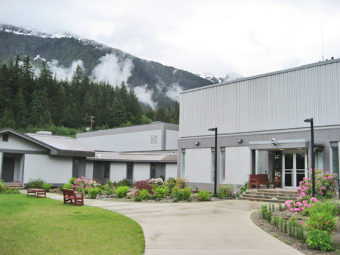
Lemon Creek Correctional Center. (Photo courtesy Alaska Department of Corrections.
Lemon Creek Correctional Center. (Photo courtesy Alaska Department of Corrections)

Update (May 17, 5:58 p.m.) — Lex Treinen, Alaska Public Media

The Alaska Department of Health and Social Services reports that an 11th staff member at Juneau’s Lemon Creek Correctional Center has tested positive for COVID-19. (Read more)

Original story

Juneau’s two newest confirmed cases of COVID-19 are both staff members at Lemon Creek Correctional Center. 

The City and Borough of Juneau announced Tuesday that after weeks with no new cases, two people tested positive for COVID-19. Both were the result of secondary transmission, meaning they had come into contact with someone who previously tested positive for the disease.

City Manager Rorie Watt confirmed Wednesday that the new cases are Lemon Creek Correctional Center staff. 

Alaska Department of Corrections spokesperson Sarah Gallagher wrote in an email Wednesday that 10 staff at Lemon Creek Correctional Center have now contracted the virus. 

That’s a jump from last month, when DOC reported that seven staff members at the facility had tested positive for the virus. 

Gallagher did not respond to follow-up questions asking why DOC did not announce the three most recent cases at the Lemon Creek facility.

It’s also not clear how many inmates in the facility have been tested so far. 

According to DOC, only one inmate in Alaska has tested positive for COVID-19. That was at Goose Creek Correctional Center in Wasilla last month. More than 250 tests have been administered to inmates statewide. 

City discusses reopening public facilities, but pools likely to remain closed

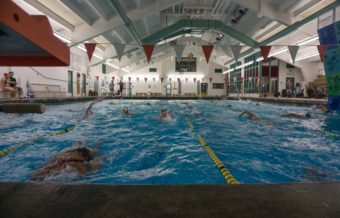
The JDHS swim team practices at Augustus Brown Swimming Pool, Aug. 19, 2015.
The JDHS swim team practices at Augustus Brown Swimming Pool, Aug. 19, 2015. (Photo by Jeremy Hsieh/KTOO)

Juneau’s public pools aren’t likely to open anytime soon, but the libraries and city museum could open as soon as next week.

Now that Phase II of Gov. Mike Dunleavy’s reopening plan has gone into effect, pools and libraries across the state are permitted to reopen.

During a special Assembly meeting Monday, Deputy City Manager Mila Cosgrove said that even before the closures happened, downtown’s Augustus Brown Pool was scheduled to close June 15 for renovation.

“It didn’t make sense to us to ramp it up and then ramp it back down, though we are certainly happy to have that discussion with the Assembly,” Cosgrove said.

Dimond Park Aquatic Center will not be ready to reopen until at least June 1 since it’s in the middle of a deep clean.

“Because of course nobody expected the governor to open the pools this quick,” Cosgrove said. “That was a bit of a surprise to us.”

She said there are also a number of health guidelines and restrictions that need to be examined. The state guidance for pools says staff capacity shouldn’t exceed 50 % and patrons should observe social distancing in and out of the water.

Cosgrove said some of the restrictions may not make it cost effective to reopen Dimond Park.

Assembly member Michelle Hale said she’s worried about seniors and people with physical disabilities who rely on the pools for exercise.

“I’m pretty acutely aware of some of the mental health and emotional effects of this, you know, this hunkering down that we’ve been doing and not seeing people,” Hale said. “And also, the very real health effects of people not able to get exercise because they’ve lost that avenue.”

As for Juneau’s three public libraries and the Juneau-Douglas City Museum, Cosgrove said staff are still working on reopening plans, but may be able to open by next week.

“They too have some cleaning requirements that they need to work around and some capacity issues,” Cosgrove said.

The Dimond Park Field House, the Zach Gordon Youth Center and the Mount Jumbo Gym remain closed.

City parks and the Jensen-Olson Arboretum are still open to the public.

During the meeting, most of the Assembly appeared to support following the Governor’s reopening plan as long as it makes sense for Juneau and the community doesn’t see a spike in cases of COVID-19.

It also agreed to allow Mayor Beth Weldon and Deputy Mayor Maria Gladziszewski to write a letter to the Governor detailing their thoughts about travel in and outside of Alaska and other aspects of his plan.

They will present the letter to the rest of the Assembly on Wednesday during the Finance Committee meeting for approval.


Record-breaking temperatures across Southeast Alaska raise fire risk

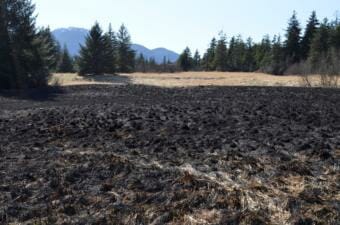
An area of grass approximately 400 feet by 400 feet caught fire Sunday afternoon near the corner of Sunset Street and Alaska Avenue in Lemon Creek. (Photo courtesy of Capital City Fire/Rescue)
An area of grass approximately 400 square feet that caught fire last summer in Lemon Creek when warm, dry weather persisted. (Photo courtesy of Capital City Fire/Rescue)

Communities across Southeast Alaska saw record-breaking high temperatures over the weekend.

The warm, dry weather also means increased fire danger.

According to the National Weather Service, temperatures in Ketchikan, Craig and Juneau broke records on Saturday. Sitka and Hoonah saw new high temperatures Sunday, while Haines, Juneau and Petersburg tied their records. Yakutat hit new highs both days.

“We might have chances at some of the records today, but we’re keeping an eye on them,” meteorologist Brian Bezenek said Monday. On average, Bezenek said Juneau sees 17 days of 70 degrees or above each year.

But last year, the capital city had a record-setting 47 days with temperatures in that range.

“The average date for 70 degrees at the airport is May 28, based on our records that go back to the mid-1940s,” Bezenek said.

A weather station north of Ketchikan also recorded the first 80 degree temperature for the state this year on Saturday.

Bezenek said the dry weather should continue across Southeast until Wednesday, when clouds will start spreading north from the southern part of the panhandle. Thursday should bring some moisture, but not enough to erase fire danger going into the weekend.

“We’re still not going to add a whole lot of precipitation yet, so the grasses will still be dry, it just won’t be as warm,” he said.

The National Weather Service issued a special weather statement Sunday warning of continued fire danger for the entire region due to warm temperatures and low humidity.

A wildfire broke out just north of Juneau on Saturday. More than 15 acres burned by the time Forest Service firefighters contained it.

The Alaska Division of Forestry is allowing controlled burns in Southeast communities despite a statewide suspension on permits, citing the region’s typically wet conditions.

A spokesperson for the division said it could still suspend permits for the panhandle if conditions are dry enough.

Alaska Native leader and former Lt. Gov. Byron Mallott dies at 77

Lt. Gov. Byron Mallott speaks during grand opening of the Father Andrew P. Kashevaroff Library, Archives and Museum Building on June 6, 2016.
Lt. Gov. Byron Mallott speaks during grand opening of the Father Andrew P. Kashevaroff Library, Archives and Museum on June 6, 2016. (Photo by Matt Miller/KTOO)

Byron Mallott, the Alaska Native leader who served as lieutenant governor under former Gov. Bill Walker, has died unexpectedly at age 77.

Walker confirmed Mallott’s death in a phone interview Friday, saying he’d been in touch with Mallott’s family. The Anchorage Daily News reported that Mallott suffered a heart attack in Juneau late Thursday before being flown to Anchorage.

Mallott, a Democrat, and Walker, an independent, both ran for governor in 2014 before merging their campaigns. They went on to defeat the Republican incumbent.

“You don’t see that in partisan politics,” Walker said on Friday. “He loved Alaska much more than he loved politics.”

During their term in office, Walker and Mallott developed a close personal relationship.

Mallott resigned shortly before the 2018 election after making what Walker described at the time as inappropriate overtures to a woman. Walker suspended his reelection campaign shortly after.

Despite the way their campaign ended, Walker said he and Mallott remained close, regularly talking on the phone and having dinner with one another’s families. 

He remembers Mallott as a tireless advocate for equality, justice and public safety in rural Alaska. 

“After all he has done for Alaska, Alaska is a better place because of him,” Walker said.

Mallott was known as a skilled public speaker. Claire Richardson was Mallott’s chief of staff as lieutenant governor. Before his abrupt resignation, she said she was struck by his “uncanny ability to speak eloquently and passionately” without notes — she said it was like he had a teleprompter in his head. Mallott told her it came from overcoming a stutter during his childhood in boarding schools. 

Richardson said she was impressed with his willingness to listen to Alaskans, even those that vehemently disagreed with him, and forge friendships. And his willingness to set aside personal interests for the state’s. Richardson said the circumstances of his resignation shouldn’t overshadow the rest of his life. 

He took immediate responsibility for his actions and did something that I’ve never seen a man in that situation do before, which is do the right thing and resign immediately,” Richardson said. “I think that that has a good lesson for women in Alaska, to know that there are men who make mistakes, and the ones who actually own up to it are the ones that I think we can look at and remember not just that moment, but the 50 years of public service and the good that he did for so many people.”

Mallott was Tlingit of the Raven moiety and a clan leader of the Kwaashk’i Ḵwáan. He was raised in the Southeast coastal community  of Yakutat.

After serving as mayor of Yakutat as a young man, he went on to hold a number of high-profile positions in business and government throughout the state. He was president and CEO of Sealaska Corp., Southeast Alaska’s regional Native corporation, and served briefly as the mayor of Juneau before resigning in order to focus on his job as executive director of the Alaska Permanent Fund Corporation.

Marlene Johnson is a former chairman of Sealaska Corp. whose friendship with Mallott goes back nearly 60 years. Johnson fondly remembers working with him to convince federal leaders to pass the Alaska Native Claims Settlement Act.

“He spent his whole life working for the people and for the state of Alaska,” Johnson said.

President of the Central Council of Tlingit and Haida Indian Tribes of Alaska Richard Peterson said he was shocked to learn the news of Mallott’s death Friday. Peterson considered Mallott a friend and mentor from the time he himself was a young mayor in Kasaan.

“He could be a fierce, you know, fighter for what needed to be fought for, but at the same time, he could be that person that gave you the hug and encouraged you and uplifted you,” Peterson said.

Peterson said Mallott’s death will leave a tremendous void in the lives of those who knew and loved him, but his legacy of leadership will continue on.

Gov. Mike Dunleavy and Lt. Gov. Kevin Meyer expressed their condolences to Mallott’s family and friends Friday. The Governor ordered flags to be flown at half-staff for seven days in Mallott’s honor.

This story has been updated. 

KTOO’s Jeremy Hsieh contributed to this report. 

Correction: A previous version of this story incorrectly stated that Mallott resigned as Juneau mayor to take a job at the Alaska Permanent Fund Corporation. In fact, Mallott already worked there when he was elected mayor.

Juneau pools, libraries and city museum to remain closed for now

The Augustus Brown facility includes two pools, a sauna and an exercise area. (Photo by Aaron Russell)

Juneau’s city museum, libraries and pools will remain closed for the time being.

The first phase of Gov. Mike Dunleavy’s reopening plan went into effect April 24 and allowed some nonessential businesses to reopen with limited capacity while following health guidelines.

Phase II of the plan was announced Wednesday and goes into effect Friday. It allows gyms, bars, theaters and libraries to reopen with 25% capacity and pools to reopen at half capacity. Other retail businesses and restaurants already operating with restricted capacity can now increase it to 50%.

But according to a release from the City and Borough of Juneau, the Juneau Assembly needs more time to review state guidelines before deciding how to move forward with reopening public facilities.

On Monday, the Assembly will hear from state Chief Medical Officer Dr. Anne Zink at 1 p.m. The Assembly will then hold a meeting at 5:30 p.m., where it will discuss reopening public facilities.

Both meetings will be streamed live on Zoom and on the city’s Facebook page. KTOO will air the 5:30 p.m. meeting.

Local governments have some say in what restrictions are lifted. At an Assembly meeting last week, the Assembly discussed a resolution limiting group sizes to remain at 10 people or fewer after the state raised the limit to 20. It ultimately decided to follow the governor’s lead by a 7-2 vote.

In its release, the city encourages business owners planning to reopen Friday to proceed cautiously.

Juneau has seen 27 confirmed cases of COVID-19 since March. Only five of those cases have been identified as resulting from community spread.

The last positive case of COVID-19 in Juneau was announced two weeks ago.


Site notifications
Update notification options
Subscribe to notifications