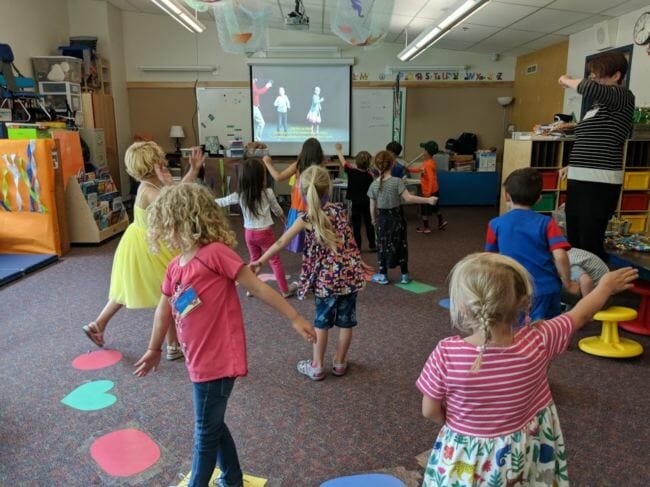
Children practice the “brain dance” at Kindergarten Boot Camp at Harborview Elementary School in summer 2018. (Photo by Molly Hillis/Juneau School District)
The Juneau School District will expand its preschool programs this school year and enrollment is still open.
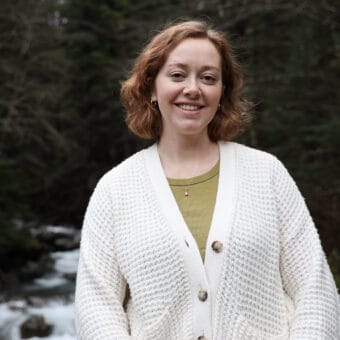
The district’s Kinder Ready program will now have sites in the Mendenhall Valley, she said.
“We know that early intervention pays off, so if we’re going to commit a dollar to education, the earlier we do it the more we get for that dollar,” Weiss said.
The program runs Tuesday through Friday throughout the school year in morning, afternoon or full-day sessions.
The district ran the program out of Harborview Elementary School last year.
Thanks to additional funding from the Juneau Assembly, the program will now exist at Mendenhall River Community School and Glacier Valley Elementary as well.
“We have some room for sure left in each of those places, and so if anybody is interested they can call either Mendenhall River, Glacier Valley or Harborview and we’ll get them steered in the right direction,” Weiss said.
The cost of the program is $200 per month for half-day sessions or $400 for full-day sessions. Scholarships also are available to families with economic need.
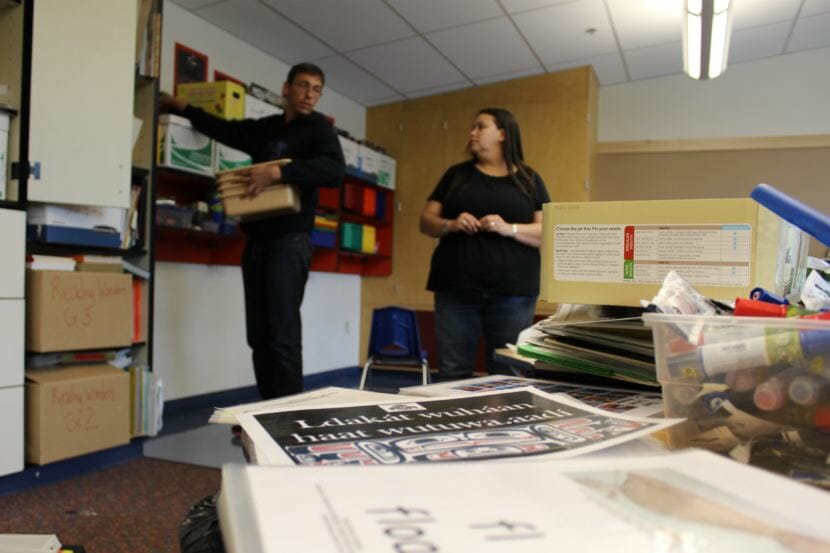
Naakil.aan Hans Chester and Seiǥōot Jessica Chester set up a classroom at Harborview Elementary School on Friday, Aug. 17, 2018. (Photo by Adelyn Baxter/KTOO)
For teachers and students, the countdown to the start of school is a mixture of excitement and stress.
Early projections from the Juneau School District put the number of students walking through the doors on Monday just under 4,700.
There’s a lot to get done before they arrive.
While students were making the most of their last few days of freedom, teachers spent most of last week at school, in faculty meetings and finalizing lesson plans.
Scott Grant is one of the district’s newest teachers.
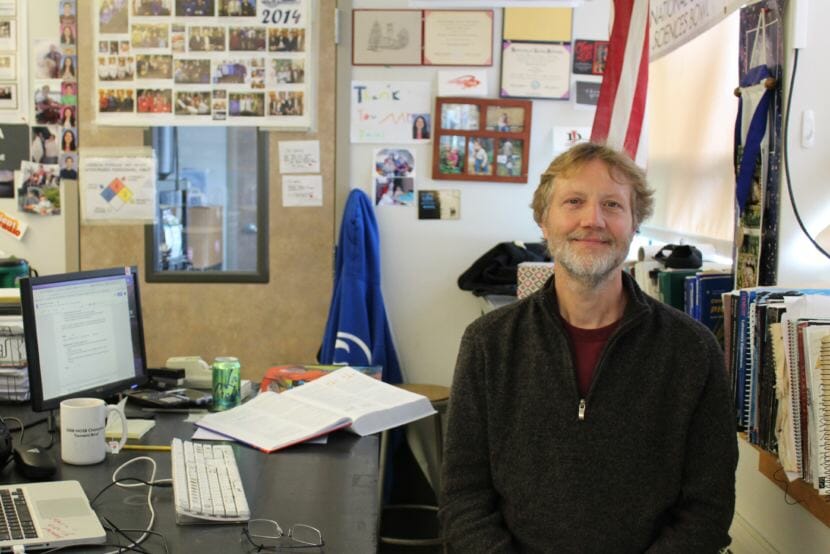
On Friday, the ninth and tenth grade English teacher was surrounded by the blank white walls of his new classroom at Juneau-Douglas High School.
“It is kind of exciting that I get to fill it up,” Grant said. “So I get to have them create things and over time that stuff will kind of take up all this space.”
Grant did his student teaching at Juneau-Douglas three years ago.
He’s worked for the district for several years. But this is his first time teaching English in his own classroom.
He said that’s a little intimidating.
“They’re going to be as aware as I am that, like, I’m new and some things we’re going to try and they’re not going to be super great and some things are going to be hopefully awesome. So, it kind of bubbles over as excitement right now,” Grant said.
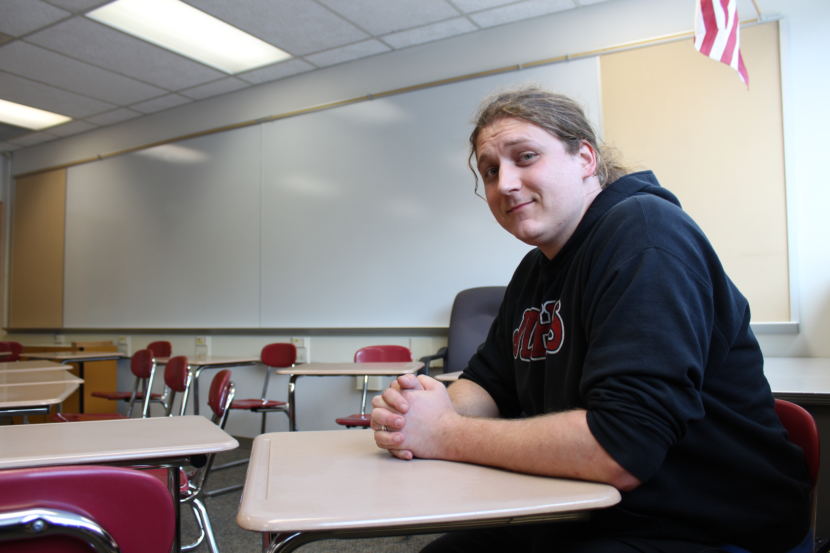
Science teacher Ben Carney sits in his classroom in Juneau-Douglas High School on Friday, Aug. 17, 2018. (Photo by Adelyn Baxter/KTOO)
English teacher Scott Grant sits in his classroom in Juneau-Douglas High School on Friday, Aug. 17, 2018. (Photo by Adelyn Baxter/KTOO)
Just upstairs, science teacher Ben Carney was putting the finishing touches on a chemistry lab.
“I’ll most certainly be working this weekend,” Carney said. “And I’ll be here early Monday, too. Probably by 6:30, that’ll be my goal.”
The walls of Carney’s classroom are a lot busier than Grant’s. He’s been teaching for more than 20 years. That means Monday’s approach is slightly less intimidating for him.
“It certainly gets easier because you have a lot more tricks in your back pocket, if you will,” Carney said.
This year, Carney has six classes. He’s taught all of them before, so he has plenty of experience to fall back on.
Still, he expects time management will be his biggest challenge this semester.
“But I’m not stressed as to, ‘How am I going to do this?’ I don’t have that stress. A first-year teacher has that. That doesn’t exist for me anymore,” Carney said.
Down the street at Harborview Elementary, teachers are busy decorating and getting classroom supplies organized.
Naakil.aan Hans Chester is a new teacher for the Tlingit Culture, Language and Literacy program.
“Organizing all of the things I brought with me so I can start setting up my systems, so I can teach those systems to the students,” Chester said.
Chester grew up in Juneau. He said he’s looking forward to teaching in his hometown and collaborating with other teachers in the program.
That doesn’t mean he won’t miss vacation.
“We only have 181 more to go and then I can start my next summer,” he joked.
Grades one through 12 start school Monday. Kindergarten starts Thursday and the district’s preschool programs begin Aug. 28.
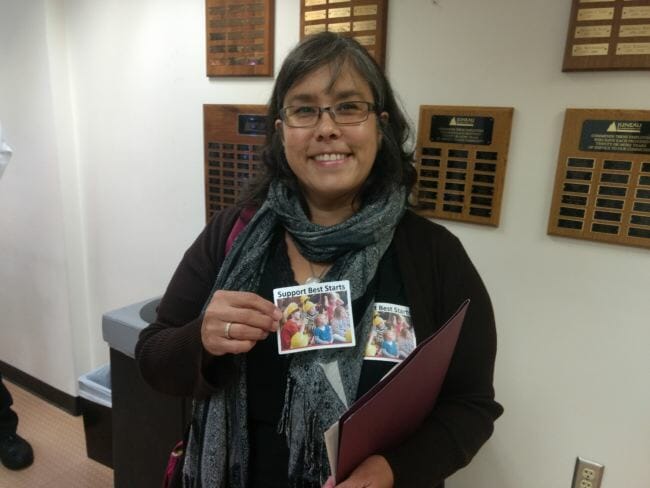
Nikki Love of the Southeast Alaska chapter of the Association for the Education of Young Children was among scores of Juneau residents who turned out to Monday’s Juneau Assembly meeting to support Best Starts, a subsidized child care initiative. (Photo by Jacob Resneck/KTOO)
Residents packed Assembly Chambers with an overflow crowd upstairs watching on closed-circuit TV as supporters made their case.
Joy Lyons, executive director of the Southeast chapter of the Association for the Education of Young Children, addressed the Juneau Assembly before the vote.
“There is no more important issue before you than the critical years of young children during birth to 5 and how we support them in our community,” Lyons said.
The Assembly was voting on whether or not to put an advisory question about child care on the October ballot. Specifically, it would have asked voters if they’d support up to $2.8 million to expand child care availability in Juneau with higher property taxes. For a house assessed at $300,000 — annual tax bills would increase by $174.
Mayor Ken Koelsch opposed the wording of the measure. He said he felt the advisory question would tie the hands of future Assembly members.
“I could support this if we would take out the portion of the resolution concerning property tax and also the cost,” Koelsch said. “That, to me, puts the next Assembly in a situation I would not like to see them put in.”
The Assembly was short-handed. Two members resigned to run for mayor leaving seven for the vote.
How did they vote?
The yeas were Rob Edwardson, Maria Gladziszewski, Loren Jones and Jesse Kiehl.
The nays were Ken Koelsch, Jerry Nankervis and Mary Becker.
The ballot initiative failed with three “no” votes and four “yes” votes. It marked the third attempt in two years for supporters to get Assembly support.
After 12 years in the child care business, Samantha Adams closed her center down earlier this year citing high overhead costs. She said reluctance to put the question to voters was puzzling.
“For the number of times that we’ve come before the Assembly to ask for their support on this matter, there’s always that, ‘Hey, here’s one more thing we need you to do.’ Or ‘here’s one more hoop that needs to be jumped through.’ And really, I think at this point it should be up to the community to decide these things,” Adams said.
The next Assembly will be markedly different with at least four new members. Mayor Koelsch won’t seek another term and two members are running for state office in addition to the two who resigned to run for mayor.
But Maria Gladziszewski’s term doesn’t expire until 2020. She said the question should be put to voters.
“I think we’ve heard from lots of people who say, ‘Support daycare.’ Many, many, we’ve gotten certainly over 100 emails. But the question for me is, ‘Will you be willing to raise revenue to support this?’ And I think that people in this city should have a chance to vote on it,” Gladziszewski said.
She asked the vote be brought back to the Assembly in the near future. Depending on the October polls, the vote could go the other way.
Kevin Allen poses for a portrait in 2016 outside the Father Andrew P. Kashevaroff Building in Juneau. Allen is running for Juneau School Board for a third time. (Photo by Quinton Chandler/KTOO)
College student Kevin Allen will make a third attempt to win a seat on the Juneau School Board in the Oct. 2 municipal election.
Allen, 20, graduated from Thunder Mountain High School in 2016. He previously served as a student representative to the school board during his senior year.
He ran unsuccessfully for the board in the last two municipal elections, but said he decided to run again after realizing this year’s race would be different.
“I realized there’s no one else signing on right now, and I thought, ‘Well jeez, this is going to be a very transformational year.’ There’s no incumbents running and there’s going to be three brand new faces on that board.”
Allen is currently studying accounting part-time at the University of Alaska Southeast. He serves as president of the Alaska Native Sisterhood Glacier Valley Camp 70 and on the community council for the Central Council Tlingit & Haida Indian Tribes of Alaska.
He said he admires the board for its style of debate and discussion, and hopes to learn about how to approach complex issues.
“They’re really just listening carefully and intentionally to who they may disagree with and try their best to understand where they’re coming from. I noticed that when I was a student rep in 2016, and I just want to keep that up.”
Allen hopes to focus on more collaboration with the statewide Alaska Association of School Boards, responsible spending on technology education and attendance issues, among other things.
The deadline to file for Juneau’s local election was 4:30 p.m. Monday.
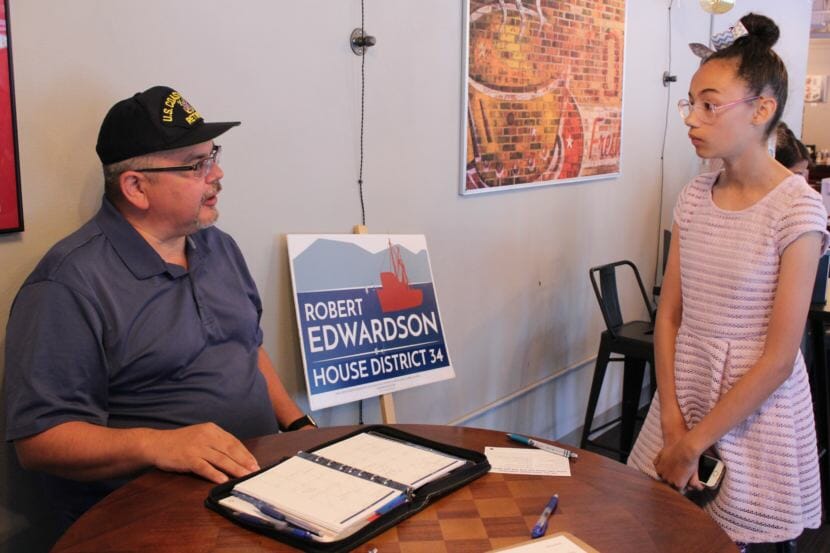
Candidate for state House Rob Edwardson speaks with Isis Reilly as Sacred Grounds Cafe during a campaign meet-and-greet. (Photo by Adelyn Baxter/KTOO)
When he announced he would not seek re-election, Alaska state Rep. Justin Parish said he found a better candidate — his former chief-of-staff Rob Edwardson — to run in his place.
The independent House District 34 candidate will face Andi Story in the Aug. 21 Democratic primary.
Edwardson hadn’t seriously considered running for state office until Parish approached him.
Even his decision to run for Juneau Assembly didn’t require a huge amount of forethought — he decided to run last May and went on to win a seat in the October election.
He held “Coffee With Rob” at Sacred Grounds Cafe for voters to come by and talk about the issues.
An important part of why he got into politics is to remind voters that representatives work for them, he said.
“I wanted to do what I could to maybe open it up. I encourage mothers to bring their children,” Edwardson said. “It should be something normal, that people petition and speak to their elected officials.”
Edwardson was born and raised in Ketchikan, and in salmon processing as a teenager.
As a 22-year-old, he enlisted in the U.S. Coast Guard and moved to Juneau in 1990.
His wife and two young children followed soon after.
They moved around for different postings until Edwardson retired from active duty after 20 years.
The Coast Guard was formative in shaping his ideas about leadership and what it means to serve.
“Leadership tends not to be what people think leadership is,” he said. “Leadership is actually using different tools to create an environment where your team can excel.”
Before joining Parish’s team, Edwardson worked as a regional manager for the Department of Natural Resources and then for the Legislative Affairs Agency.
Edwardson considers himself nonpartisan, which is why he decided to run as an independent.
He still would have run as an independent even if the decision by the Alaska Supreme Court had not opened up the Democratic primary to other candidates.
“I don’t align 100 percent with Democrats and it seemed kind of disingenuous to put a ‘D’ behind my name just to be in the primary,” Edwardson said.
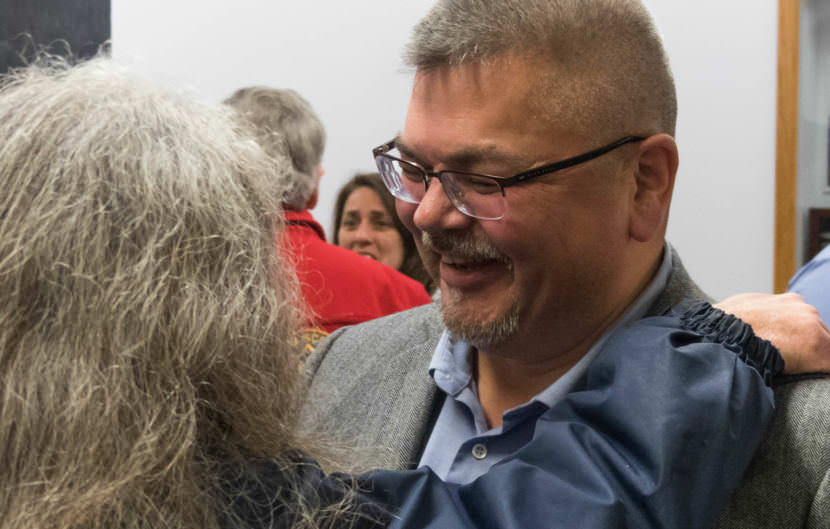
Rob Edwardson accepts congratulations after unofficial returns showed him winning a seat on the Assembly. (Photo by David Purdy/KTOO)
While he’s served less than a year on the Assembly, topics like Admiralty Island annexation have given him a chance to broaden his connections in the region.
Edwardson believes he brings a particular set of skills to the table.
“I believe that for the seat that I’m seeking I am the candidate with the real-world experience in energy and natural resources and conservation and budgeting,” Edwardson said.
He’s been hearing a lot of concerns from voters about the state’s economy and jobs.
“The state has cut about 44 percent of the budget and along with that, hundreds of Juneau jobs,” he said. “I would like to see it not be cut anymore, and if there’s any jobs that come back I would like to see them come to Juneau.”
He supports the income tax proposal put forward by the House Majority Coalition during the 2017 session.
He also agrees with the Legislature’s decision on a one-time draw from the Permanent Fund Dividend to pay for state services.
If elected, Edwardson would like to work toward more reliable school funding.
He wants to see a method put in place where the Base Student Allocation — the amount of money the state sends school districts per typical student — will rise with inflation.
“What that would provide is more certainty to the school districts, to the teachers and to the parents as far as funding goes rather than kind of the yo-yo effect that goes on now, where there might not be a BSA increase for years,” he said.
Richard Peterson recently endorsed Edwardson on KINY.
The president of the Central Council of Tlingit and Haida Indian Tribes of Alaska said it was a personal endorsement and not on behalf of the tribe.
His Haida heritage a point of pride, Edwardson has been active in culture and language preservation with his family.
In his free time, he also dances with local dance group Woosh.ji.een. He grew up dancing with his grandparents in Ketchikan.
“Like any dance group it’s more than just a dance group that gets together, it’s more of a family group,” Edwardson said. “You celebrate victories and you grieve with people,”
Edwardson’s campaign had raised about $4,400 as of July 23, according to campaign filings.
Early voting in the Democratic primary begins Aug. 6.
For more candidate profiles and election information, visit ktoo.org/elections.
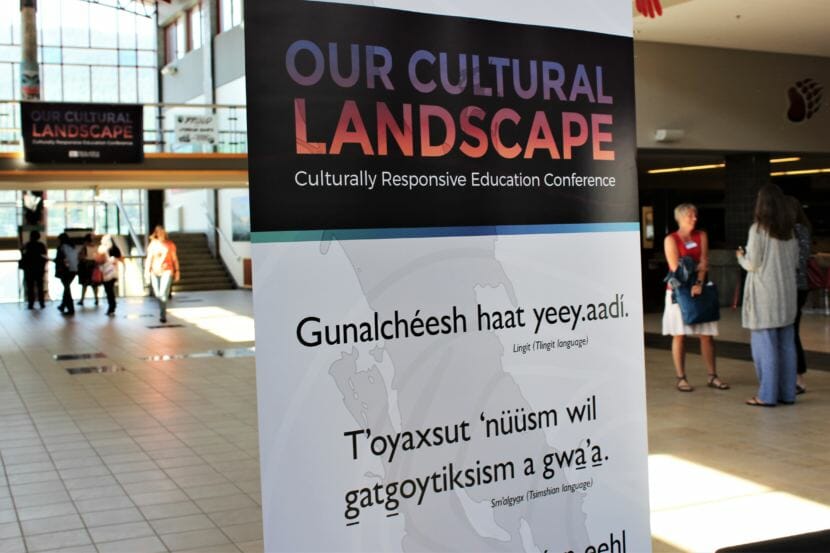
A sign at Juneau-Douglas High School welcomes educators to the Our Cultural Landscape conference on Wednesday. (Photo by Adelyn Baxter/KTOO)
A conference on culturally responsive education kicked off in Juneau on Wednesday with more than 200 educators expected to attend.
This is the second year Sealaska Heritage Institute has held the Our Cultural Landscape conference. They invited teachers, experts and school administrators from across the region and country to Juneau-Douglas High School for three days of discussion and learning.
The goal is to help educators bring more culturally relevant and place-based learning into their classrooms.
The conference organizers say studies show these practices can improve attendance numbers, test scores and graduation rates for Alaska Native students.
“With that being the case, we wanted to bring the expert to our teachers so they could learn this is why we’re doing this, this is how we’re doing it,” said Kevin Shipley, education director for SHI.
Although many attendees are local, a good number are from other parts of Alaska and around the country. Three came from outside the U.S.
Jasmine Bayou-Young teaches at a visual and performing arts high school in Los Angeles.
She’s originally from Seattle and is a Sealaska shareholder. She heard about the conference via shareholder emails and decided to take advantage of the opportunity.
“Because in Los Angeles the diversity there is so vast — we have students at my school that come from every background, every different background that you could think of — and being able to individualize education is incredibly important.”
Keynote speakers include Randall Lindsey, a professor emeritus at California State University, Los Angeles and published author on cultural proficiency. Lindsey’s work on cultural standards is used in teacher evaluations around the state.
“To me, the number one thing for them to take away is the fact that all children can learn and what we’re doing is, what do we need to learn to be able to educate all kids? So if we start with the assumption that we build our education program as seeing their cultures as assets, then what is it we need to learn to be able to do that?”
Lindsey said Alaska is in many ways leading the nation in terms of culturally informed teaching that ensures better educational access for all students.
The conference includes three days of breakout sessions on topics like cultural appropriation and historical trauma, led by educators from Alaska and elsewhere.
Educators from nearby partner school districts were given travel scholarships to attend.
Close
Update notification options
Subscribe to notifications
Subscribe
Get notifications about news related to the topics you care about. You can unsubscribe anytime.