Heather Bryant

Review doubts science on sea lion protection

Three independent reviewers are questioning the science behind a decision to restrict commercial fishing to protect endangered Steller sea lions in Alaska.

The reviewers say a federal biological opinion doesn’t support that restricting fishing in the Aleutian Islands will help sea lion survival.

The western population of Steller sea lions was listed as endangered in 1997. The National Marine Fisheries Service says their numbers fell sharply from 250,000 in the early 1970s and remained at just 49,000 in 2008.

State of Alaska attorneys in an unsuccessful court case argued against fishing restrictions and said the population of western Steller sea lions is growing.

Fisheries Service spokeswoman Julie Speegle says the agency is reviewing the independent report and will determine whether follow-up actions are warranted.

Shell begins petroleum drilling in Chukchi Sea

Royal Dutch Shell has begun drilling in the Chukchi Sea off Alaska’s northwest coast.
Company spokesman Curtis Smith says preliminary work for an exploratory well began Sunday morning.

Interior Secretary Ken Salazar announced Aug. 30 that Shell would be permitted to begin preparation work at the site even though the company’s spill response barge has not been certified and is not positioned nearby.

The company is authorized to drill narrow pilot holes down to about 1,500 feet below the ocean floor and roughly 4,000 feet above an anticipated petroleum reservoir.

The company also is authorized to drill a 40-foot deep mud-line cellars that will hold a blowout preventer.

Shell Oil Co. paid $2.1 billion for Chukchi leases in 2008.

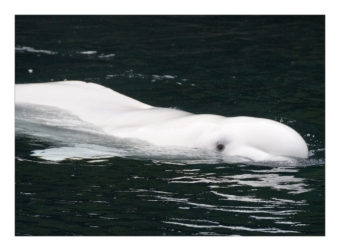
Scientists search for reason of Cook Inlet beluga decline

Photo courtesy of NMFS National Marine Mammal Laboratory

Scientists studying Cook Inlet belugas have watched the dramatic decline of their numbers from 1,300 in the 1970s to only 300 now.

Biologists, state and federal officials, commercial fishermen and oil and gas developers all speculate about why the belugas haven’t rebounded after they were put on the endangered species list in 2008. But there are no concrete answers.

David Martin is the President of the Cook Inlet Drift Association or UCDA. Martin has been fishing in Cook Inlet for more than 40 years. He thinks food availability for the whales isn’t the issue, saying there is plenty of salmon and eulachon for them to eat. He thinks the decline started with over harvest by subsistence hunters in the 1990s that took the animals too far down.

“And in that same time frame the orca whales, which feed on belugas were increasing in numbers, and the combination of the two, I think have kept the beluga numbers at a low level,” Martin said.

But National Marine Fisheries Service biologist Barbara Mahoney says while there are records of some predation by orcas on beluga whales, there’s nothing that indicates it happens frequently. Instead, NMFS is looking into a wide range of other possible causes of the Beluga’s decline, including industrial development in the inlet that causes noise and possible habitat impacts during calving time. She says they have studied pollutants in the whales bodies but the tests don’t point to a smoking gun.

“For most of the contaminant load study, they are lower than the healthy population in the Chukchi Sea belugas,” Mahoney said.

Bob Shavelson is the advocacy director for Cook Inletkeeper. He says contaminant tests need to search for drugs being flushed down toilets and making their way into the bay.

“One of the concerns is what are called emerging pollutants and these are things like pharmaceuticals and birth control pills and Viagra and even in very, very low amounts these pollutants can have adverse effects on marine life,” Shavelson said.

Shavelson says the EPA’s secondary treatment exemption for the Anchorage Sewage system that allows the city to essentially screen out the solids and add chlorine to the effluent before discharging into the Inlet is a problem. He says the EPA should not treat Cook Inlet like an ocean.

“EPA has failed to characterize Cook Inlet as an estuary. An estuary is a place where fresh water and salt water meet, I mean clearly it meets a definition of an estuary, which brings about an entirely different set of rules, instead EPA says ‘oh no, it’s an ocean and as an ocean it can assimilate a lot more pollution.’ It all comes down to legal definitions and basically a predetermined outcome,” Shavelson said.

Creative Commons photo by Claude Robillard

Shavelson also has concerns about toxins being dumped into the inlet from the oil and gas development industry. But Barbara Mahoney says all of the studies that have been conducted on Cook Inlet belugas and their environment are not conclusive and the reasons behind the lack of a rebound are just not clear.

“You know it’s a great mystery and I think everyone would like to have one point and say this is it and if we fix this we would have the animals recovered, recovering but it could be just a blend of possibilities of why. Everything adds a little more weight to why they can’t recover right now or maybe it’s just taking longer or there might be something that we don’t know at this time and we’re hoping to find out,” Mahoney said.

Funding is a problem and NFMS is working to get more money to investigate the belugas in greater detail. The annual survey results on the estimated numbers of the whales will be out in November. A new report looking at contaminant loads is also due later this year.

Troopers: 2 Alaska moose hunting fatals

Alaska State Troopers say a woman was fatally shot by her male hunting partner as they looked for moose near the community of Dot Lake off the Alaska Highway.

Troopers spokeswoman Beth Ipsen says the man told troopers that Tuesday’s shooting with a high-powered hunting rifle was an accident.

Neither the man nor the woman was identified Wednesday.

The man called 911 and responding medics found the woman dead. Ipsen says the woman’s body has been sent to Anchorage for an autopsy.

The Anchorage Daily News says troopers are releasing few details. Ipsen says the death remains under investigation.

In another moose hunting fatality, KTUU-TV reports that troopers say a 26-year-old Trapper Creek man named Cody Parry died Sept. 1. Troopers say a hunting companion identified as Kyle Strong accidentally discharged a rifle he had cleaned into Parry’s leg at a cabin off the Parks Highway. KTUU says no foul play is suspected.

7 jets diverted to Fairbanks

Seven passenger jets were diverted to Fairbanks from Anchorage to avoid the high winds in Alaska’s largest city.

Fairbanks International Airport spokeswoman Angie Spear tells the Fairbanks Daily News-Miner that 740 unscheduled passengers were at the facility.

Several airlines had flown out of Fairbanks by early Wednesday morning. Alaska Airlines spokesman Paul McElroy says all passengers from his airline’s four diverted flights had reached Anchorage by mid-afternoon Wednesday.

Man gets community service for PFD fraud

A 71-year-old former Alaskan will perform community work and pay $8,000 restitution after his conviction for defrauding the state for a permanent fund dividend check.

The Department of Revenue says in a release William F. Ristow will serve 720 hours of community service for the PFD violation and for illegally obtaining resident hunting tags. The service is in lieu of 90 days in jail.

Ristow is a former North Pole resident. Alaska Wildlife Troopers began an investigation following a tip from other North Pole residents that he was claiming residency for an undeveloped property in Fairbanks, where he parked a trailer.

Prosecutors say he now lives in Washington and Arizona.

Site notifications
Update notification options
Subscribe to notifications