Lisa Phu

Managing Editor, KTOO

"As Managing Editor, I work with the KTOO news team to develop and shape news and information for the Juneau community that's accurate and digestible."

Juneau birders photograph rare Long-billed Curlew

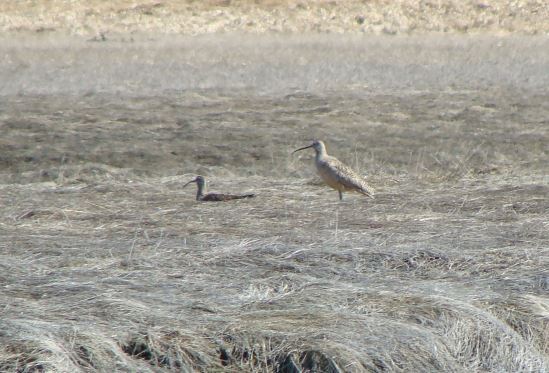
Doug Sanvik took this photo of a Long-billed Curlew on May 3. To the left of it is a Whimbrel. (Photo by Doug Sanvik)

A Juneau couple has likely made the first verified sighting of a Long-billed Curlew in Alaska. North America’s largest shorebird, rarely seen in this part of the country, may become No. 502 on the Checklist of Alaska Birds.

Martina Kallenberger and husband Doug Sanvik were bird watching at Boy Scout Camp on May 3. Kallenberger says they started around 11 a.m. walking the trail and beach and were going through the meadow around 1:30.

“We were actually watching a flock of Lapland Longspurs when we noticed these two shorebirds on a little rise by the stream and one of them was a Whimbrel, which we recognized, and the other one was just shockingly different,” Kallenberger says.

Kallenberger and Sanvik watched the bird for at least an hour, taking pictures and referring to guidebooks. They had an inkling it might be the Long-billed Curlew.
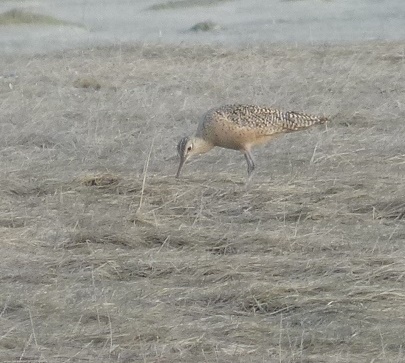
Gwen Bayluss went to Boy Scout Camp after the initial sighting and also so the Long-billed Curlew. (Photo by Gwen Bayluss)
Gwen Baluss went to Boy Scout Camp after the initial sighting and also saw the Long-billed Curlew. (Photo by Gwen Baluss)

“During the course of the time we were sitting there I was going through the bird book thinking, ‘Well, gosh it can’t be this, it could be— No…’ And I kept coming back to the Curlew, and Doug and I were both like, ‘It sure looks like a match but, gosh, it just doesn’t seem right.'”

They had reason to be hesitant.

“It is very rare,” says Steve Heinl.

Heinl is a lifelong birder and sits on the University of Alaska Museum’s Alaska Checklist Committee, which maintains and decides what goes on the official list of birds documented in Alaska.

“There had only been three previous reports of a Long-billed Curlew in Alaska, but none of them were photographed,” he says.

This is what makes Kallenberger and Sanvik’s sighting a likely entry on the list. Heinl says a sighting can be verified with photographs or a specimen.

Sightings of Long-billed Curlews on the unsubstantiated list first took place in 1973 near Juneau’s Eagle River, not again until 1992 on the Stikine River near Wrangell, and most recently in 2008 on the Situk River in Yakutat.
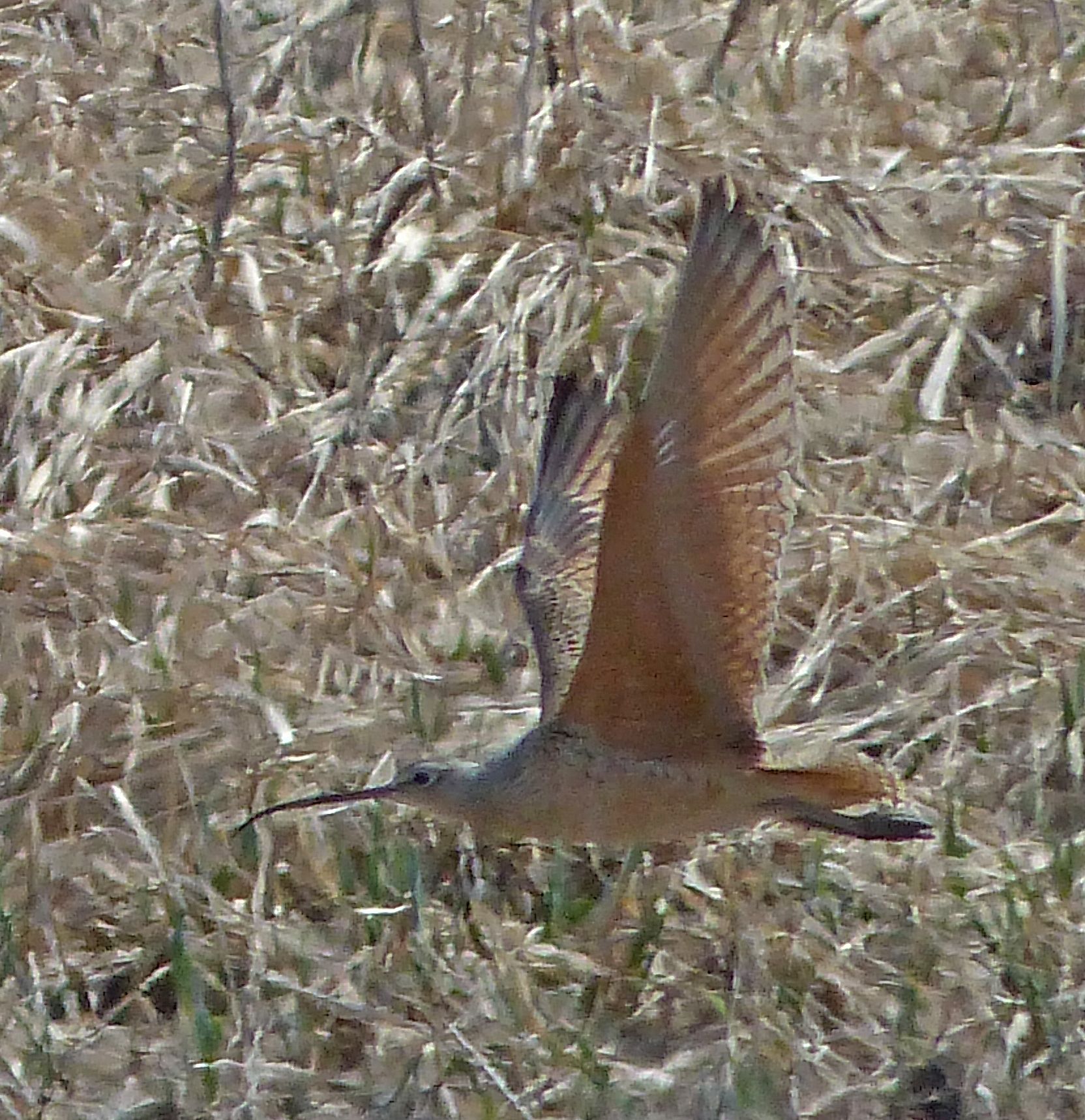
Bob Armstrong captured the Long-bill Curlew in flight. Steve Heinl says the bird is most distinctive this way because its underwings are cinnamon colored. (Photo by Bob Armstrong)
Bob Armstrong captured the Long-billed Curlew in flight. Steve Heinl says the bird is most distinctive this way because its underwings are cinnamon colored. (Photo by Bob Armstrong)

Long-billed Curlews spend winters in Mexico and on the west coast of North America. They breed throughout the West from southern Canada to New Mexico.

Heinl says the bird in Juneau likely flew farther than it needed to.

“I think it overshot its normal breeding range, which means it migrated too far north. Often birds that migrate to the wrong place are younger birds so it perhaps was on its first northward migration,” Heinl says.

That’s part of what makes watching birds so great, Heinl says, and why the Checklist of Alaska Birds will likely never stop growing.

“They have wings and they fly off in the wrong direction and there’s always potential to see something you’ve never seen before,” he says.

Kallenberger and Sanvik are proof of this. Kallenberger says they’ve spent many hours birdwatching at Boy Scout Camp and never imagined they’d see a Long-billed Curlew.

“Anytime I see a new species, it’s just hugely exciting,” Kallenberger says. “But to see something as unusual as this bird in this place was even doubly so.”

For Kallenberger and Sanvik, it was a matter of being in the right place at the right time.
Juneau honors officers killed in the line of duty

Five Juneau police officers will represent the department at the memorial service of Sgt. Patrick “Scott” Johnson and Trooper Gabriel “Gabe” Rich, the two Alaska State Troopers killed last week in Tanana.

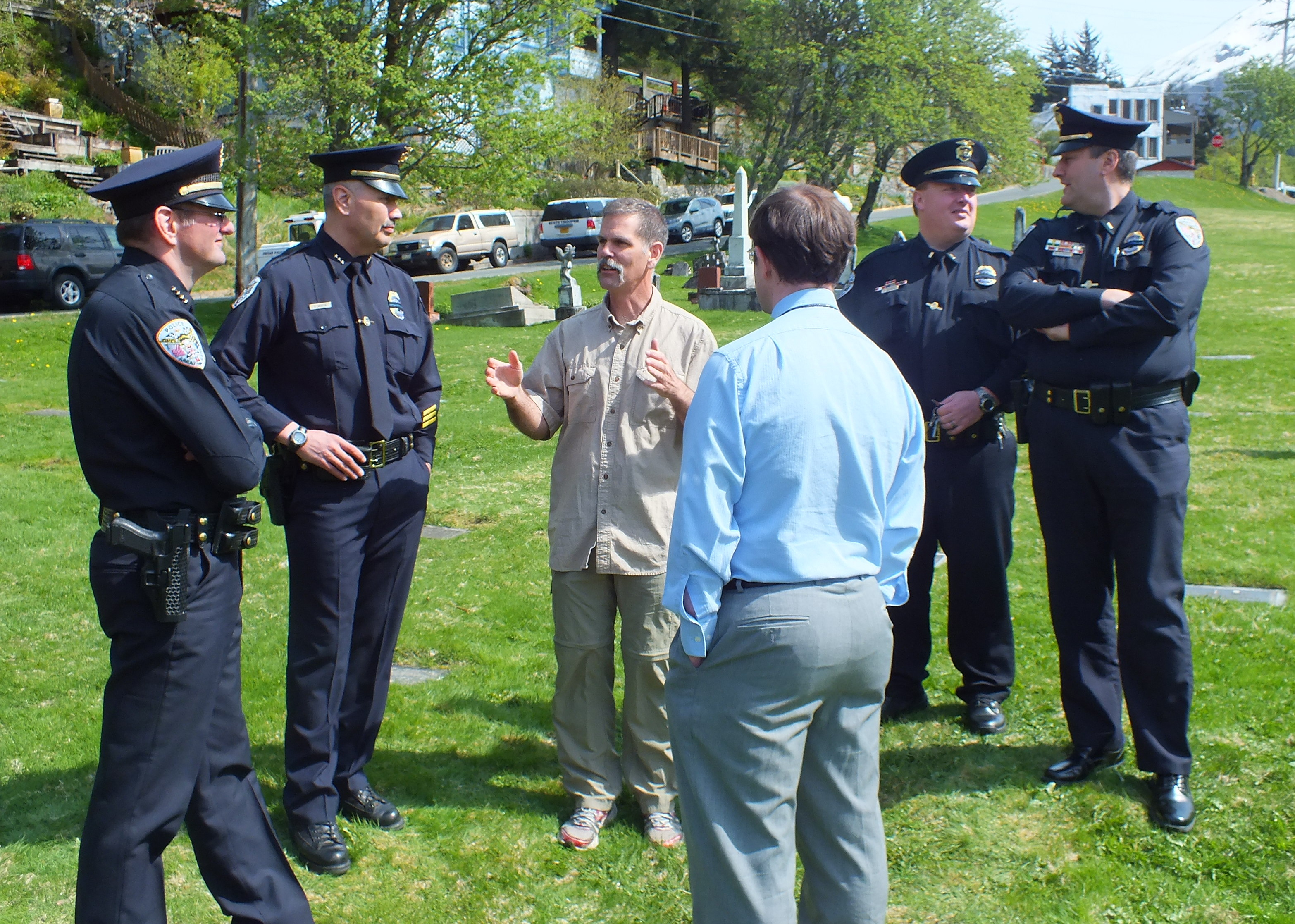
Chief Bryce Johnson, Dep. Chief Ed Mercer, Lt. Kris Sell, Officer Jeff Brink and Officer Kathy Underwood will attend the service Saturday in Fairbanks.

Lt. David Campbell says it’s important for members of Juneau Police Department to attend.

“Even though it’s a big state, it’s a small community of law enforcement officers. We work with people, we know people. And it just kind of serves as a wake-up call to the people here that you just never really know when you might go to a situation that might escalate into a life or death struggle,” Campbell says.

Peace Officers Memorial Day is May 15 and Juneau held its first event in honor of the week yesterday.

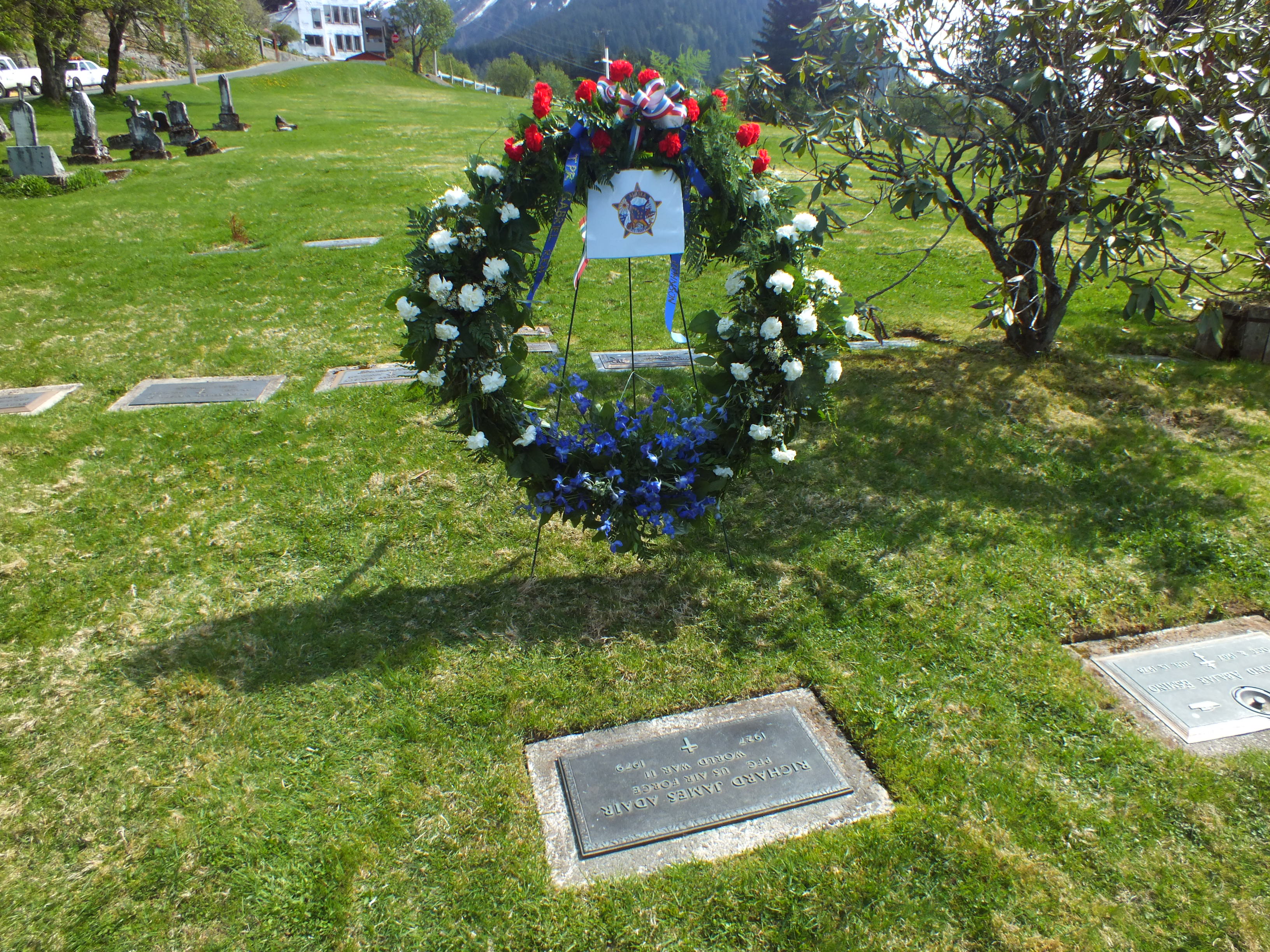
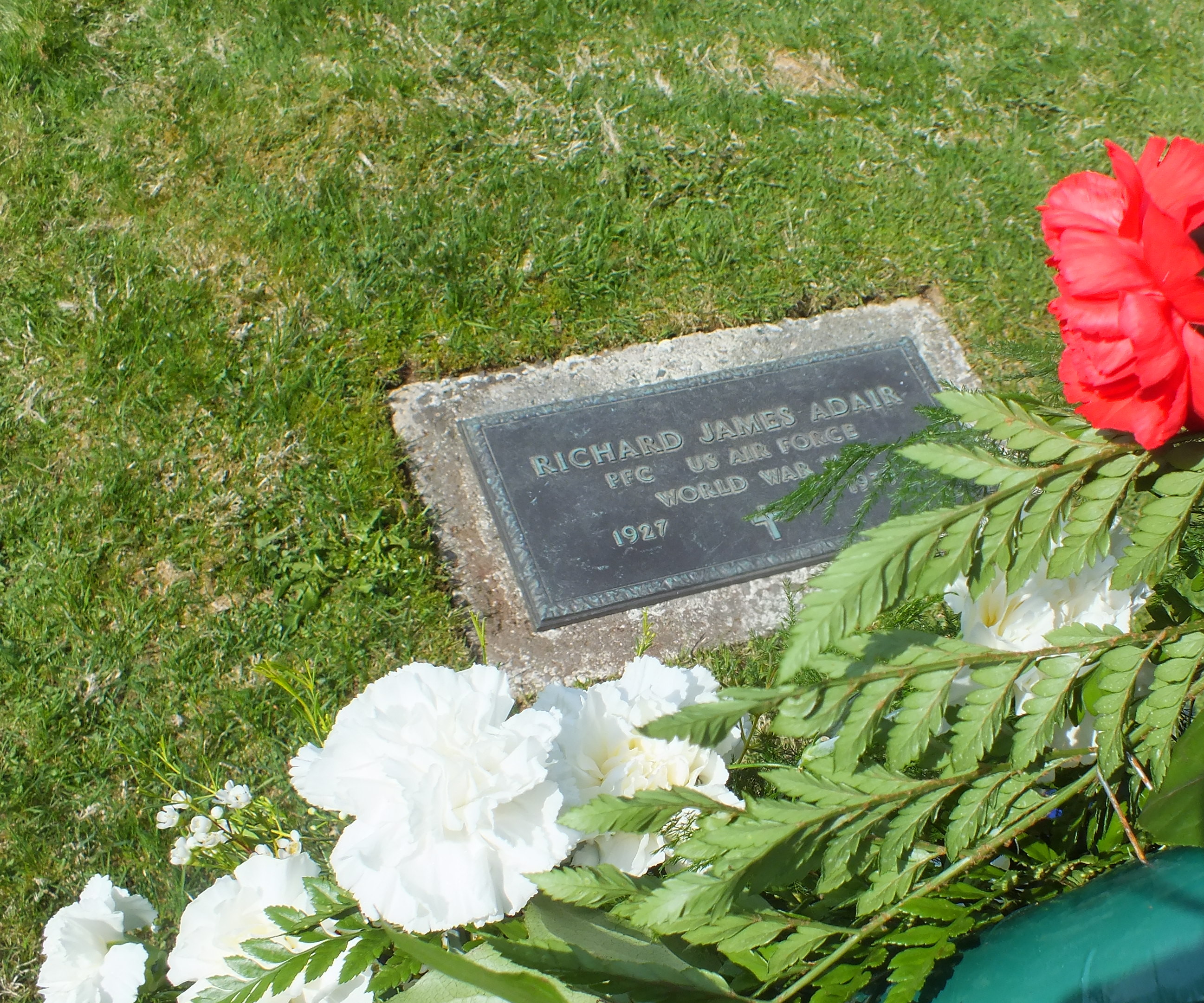
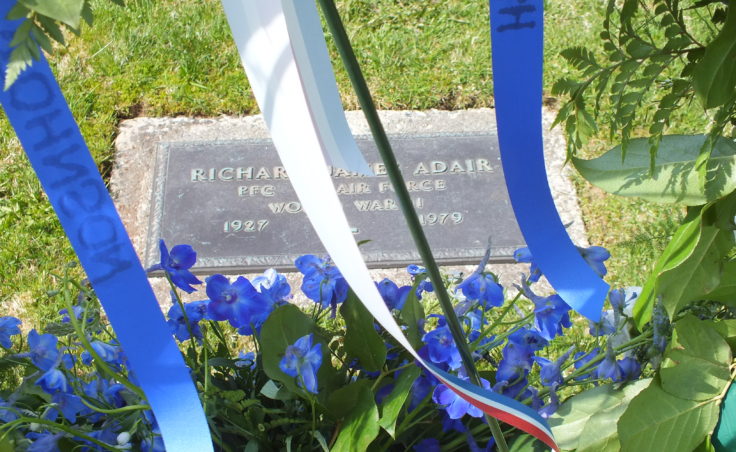
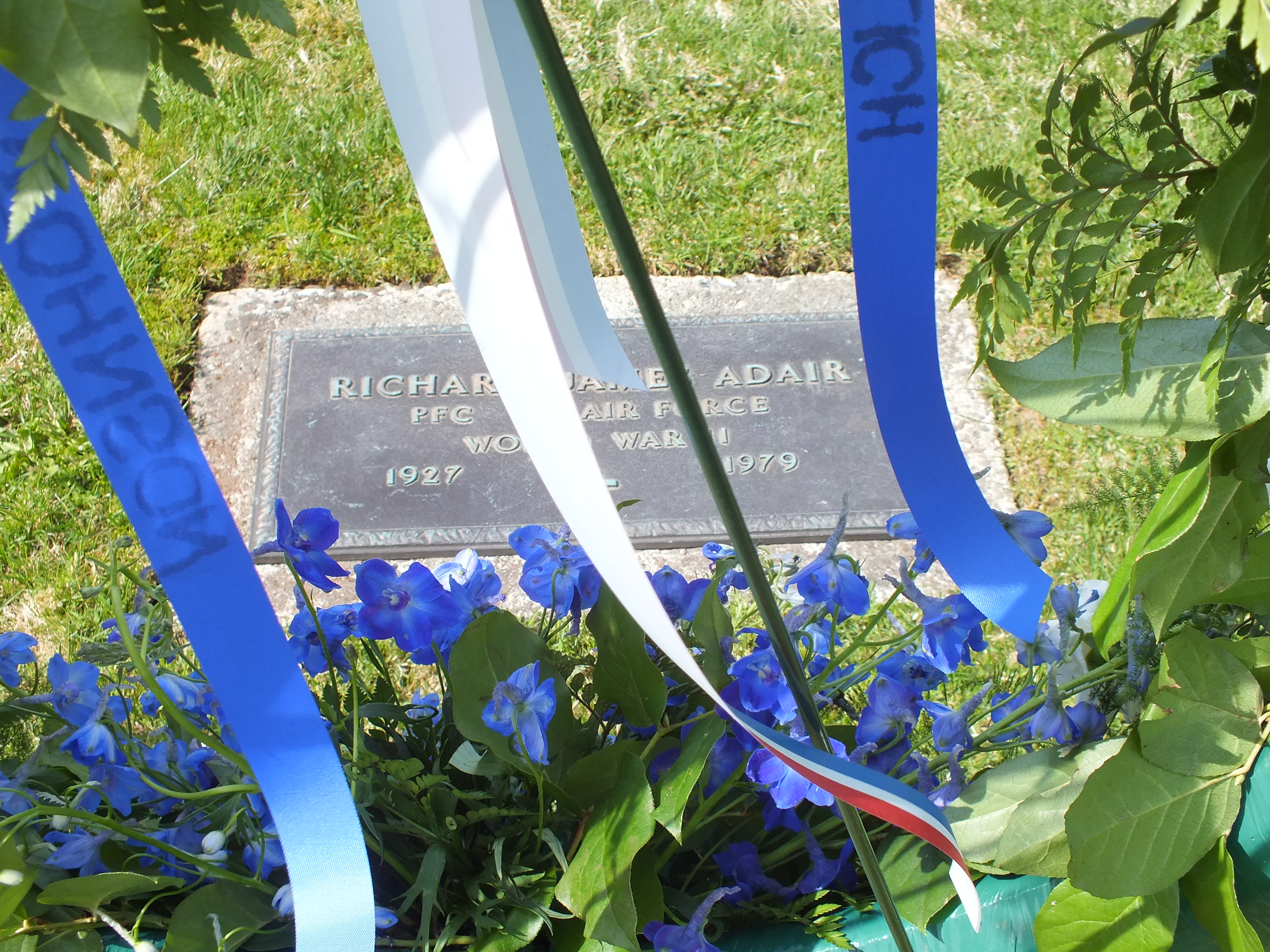
Around 50 people – officers and civilians – attended the ceremony at Evergreen Cemetery. It took place at the gravesite of Richard Adair, a Juneau police officer who was killed in the line of duty April 1979.

The second ceremony is today at 5:30 p.m. at Thunder Mountain High School.

The ceremony will recount the lives of three enforcement officers who were killed on duty in 2013. They were Alaska State Trooper Tage Toll, Village Public Safety Officer Thomas Madole, and Coast Guard Petty Officer Travis Obendorf.

Trooper Sgt. Johnson and Trooper Rich also will be honored.

NOAA special agent Frank Bonadonna organized the event. He says we need to remember that officers are real people.

“They have families. They have children who are left behind who are, in many cases, irreparably scarred from their deaths. And that really just doesn’t affect the families; it affects the whole community because police officers are men and women who take an oath to protect you and me and everyone else and they do so at their own peril and many times at the risk of their own lives,” Bonadonna says.

President John F. Kennedy signed a proclamation designating May 15 as Peace Officers Memorial Day in 1962. All of next week is considered National Police Week.

Education bill boosts Juneau Community Charter School

The Juneau Community Charter School wants to use part of the additional funding to improve its building. The school leases one and a half floors of commercial space downtown. (Photo by Lisa Phu/KTOO)

The Juneau Community Charter School is getting a 56 percent increase to its budget through an upcoming change in state law.

New mandates in House Bill 278 give charter schools more parity with other public schools.
The Juneau Community Charter School opened in 1997 with 40 students in first to fourth grade. Since then, the school has grown. It now has 110 students in kindergarten through eighth grade.

Prior to the Alaska Legislature passing House Bill 278, the projected budget for the Juneau Community Charter School was close to a million dollars. Now, the school is looking at a budget of more than one and a half million dollars.

HB278 increases state funding for charter schools of a certain size. Of the 27 charter schools in the state, this only affects two – Juneau Community Charter School and Homer’s Fireweed Academy in the Kenai Peninsula Borough School District.

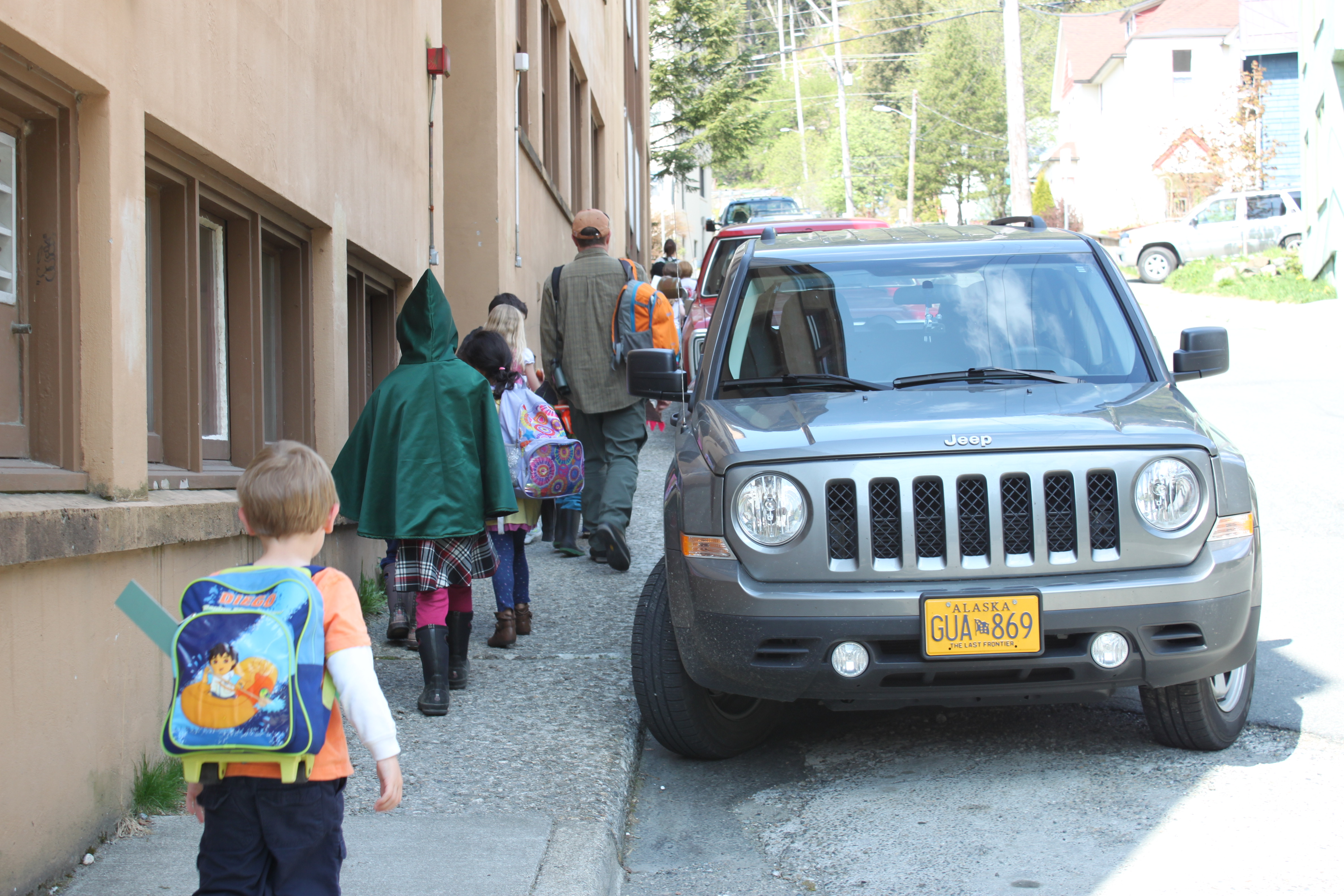
Every Tuesday, the kindergarten and first grade students go on a nature hike up Basin Road. (Photo by Lisa Phu)
Every Tuesday, the kindergarten and first grade students go on a nature hike. (Photo by Lisa Phu)

“In the past a school would’ve had to have been 150 students to get the same level of funding as many of the other schools in the state that are not charters,” says state deputy education commissioner Les Morse. “And now it allows that school to start off at 75 students and still get the funding equitable to other schools.”

Under HB278, in addition to state money, school districts will be mandated to support charter schools with local government funds. Some districts were already doing this; some weren’t.

“In the past, we’ve only passed on money that we received from the state for the Juneau Community Charter School,” says David Means, director of administrative services for the Juneau School District. “Under HB278, because we have a local match from the City and Borough of Juneau over and above our state money, we have to pass on a share of that money onto the Juneau Community Charter School as well.”

This accounts for about $300,000 of the charter school’s new money, which would otherwise go to other district schools.

“I think we want to try to keep our education dollars as equitable as possible among all of our students, whether they’re charter school students or students in one of our regular traditional schools,” Means says.

Matt Jones is a charter school parent and vice president of the committee that manages the school.

“At this point we’re now on the same footing as all the other neighborhood schools in the district. Whereas we’ve been operating for the last 15 years on significantly lower funding than most schools do, about 30 percent less than most schools,” he says.

Jones is also the treasurer of the committee. He says half the additional funding will likely go toward new staff – a facilitating teacher, a special education teacher, and a paraeducator or reading specialist.

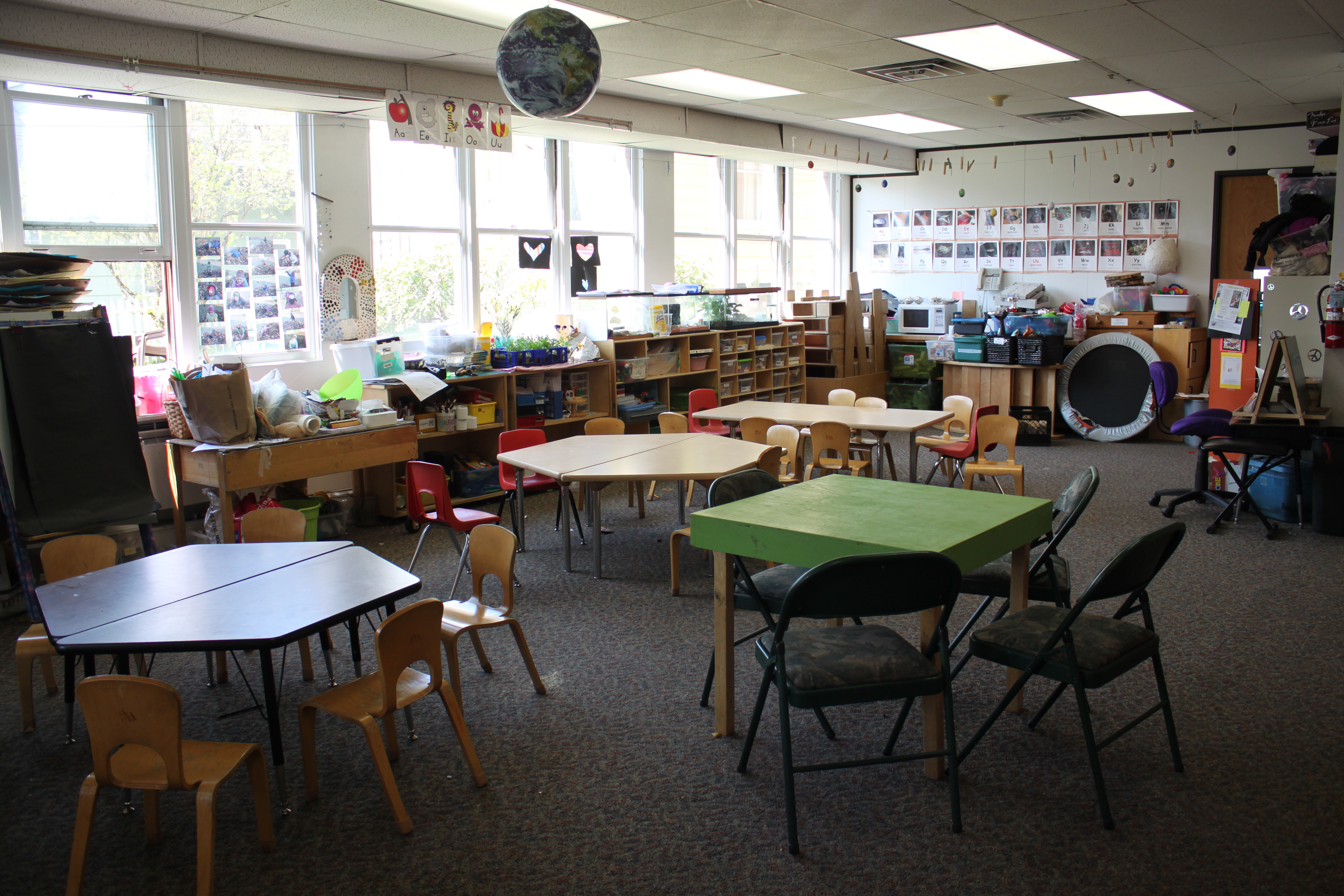
There are 23 students in the combined class of kindergarten and first grade. The Juneau Community Charter School has a total of 110 students in kindergarten through eighth grade. (Photo by Lisa Phu/KTOO)

Another big issue is the school building. The charter school leases one and a half floors of a commercial building. It’s located downtown, walking distance to libraries, museums and trails, but Jones says the space isn’t set up for students and classrooms.

“There’s not a lot of space in the halls for students and for lockers and things like that. There’s no gymnasium. There’s basically no room outside the main classroom area that we rent and we’re spread out across a couple of floors in this building that has other tenants in it,” Jones says.

Instead of a cafeteria, the charter school serves lunch in a narrow hallway. The students go to the Capital Park playground because they don’t have their own. The school’s facade is discolored and chipping.

Jones says ultimately they’d like to move into a new space, potentially leasing from the school district. That would keep the money in the district instead of going to a private company. In the meantime, Jones says they’ll spend a little to improve the space they’re in now.

HB278 also requires school districts provide or pay for charter school students’ transportation and offer extra classroom space to charter schools first.

The bill provides a one time, $500 per student grant for new charter schools and limits what districts can charge for administrative services. It also establishes an appeal process for charters that don’t get approved by the local school board.

Deputy education commissioner Morse says HB278 is the biggest change to the charter school law since it was created in 1995.

“In some communities, certainly a charter would not have made sense and now with some of these structural changes, it could make sense and it could give new opportunities for kids and families,” Morse says.

The governor is expected to sign HB278 into law.

Juneau woman found off Salmon Creek Trail dies

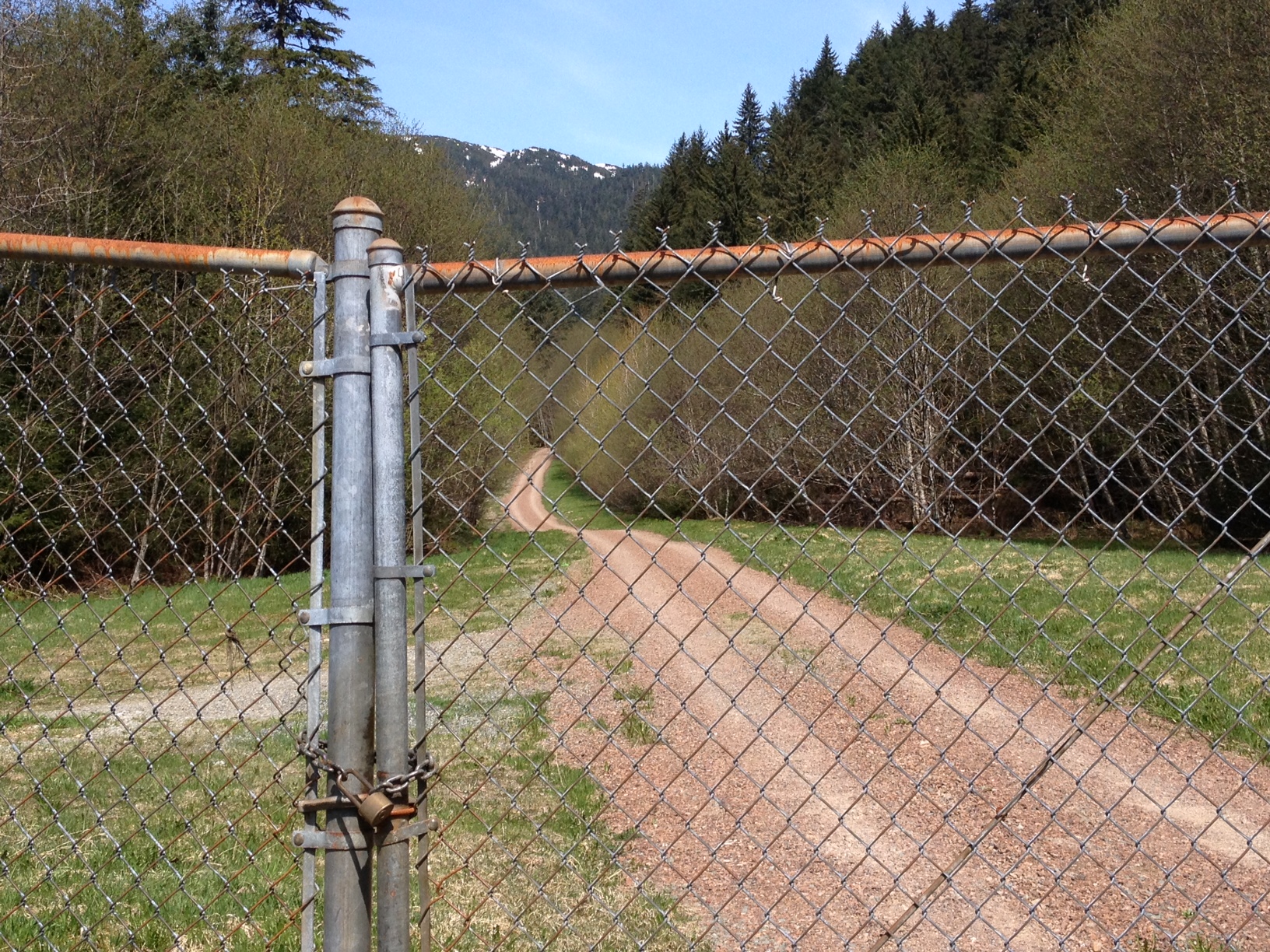
Sandra Gelber's body was found in the water off Salmon Creek Trail about a mile from the gate. (Photo by Lisa Phu/KTOO)
Sandra Gelber was found in the water off Salmon Creek Trail about a mile from the gate. (Photo by Lisa Phu/KTOO)

A 61-year-old woman died after being found in the water off Salmon Creek Trail on Sunday afternoon. Her body is being sent to the State Medical Examiner Office in Anchorage for an autopsy.

Bartlett Regional Hospital employee Sandra Gelber was a physical therapist in the Rehabilitation Services Department.

Capital City Fire/Rescue responded at 4 p.m. to a 911 call about an unconscious woman, says Assistant Chief Ed Quinto.

“A couple hikers reported to dispatch that they were on Salmon Creek Trail, that they found a female in the water along one of the creeks along the trail. It was approximately about a mile up from the gate. She was in the water. They brought her up, started doing CPR and they called us,” Quinto says.

Quinto says Gelber was found approximately 100 yards past where the road is washed out, and about 40 feet off the trail downhill. He says she was unconscious and in critical condition.

It’s unknown how long she was in the water before she was found.

“It appears like she was either hiking or jogging up there. She was dressed in jogging clothes and we don’t know how she got into the water,” Quinto says.

An ambulance transported Gelber to Bartlett Regional Hospital. She was pronounced dead there around 4:30 p.m, according to the hospital.

Bartlett spokesman Jim Strader says Gelber arrived at work Sunday morning and was done with her shift at 3 p.m.

“We’re kind of in shell shock to be honest. She was very, very well loved by all of her coworkers and her patients as well,” Strader says.

Gelber joined Bartlett in 2009. Prior to that, she was at Sitka Community Hospital. A statement sent to hospital employees by interim CEO Jeff Egbert described Gelber as “an avid outdoors person” and “she died doing what she loved best; out on the trail, appreciating the beautiful place we call home.”

Gelber leaves behind husband Tim Riley and two college-aged children.

AEL&P closed Salmon Creek Trail at the end of January when an 80-foot section of the road was washed out. AEL&P put an orange safety barrier around the slide and reopened the trail last week.

Record number of students graduate from UAS

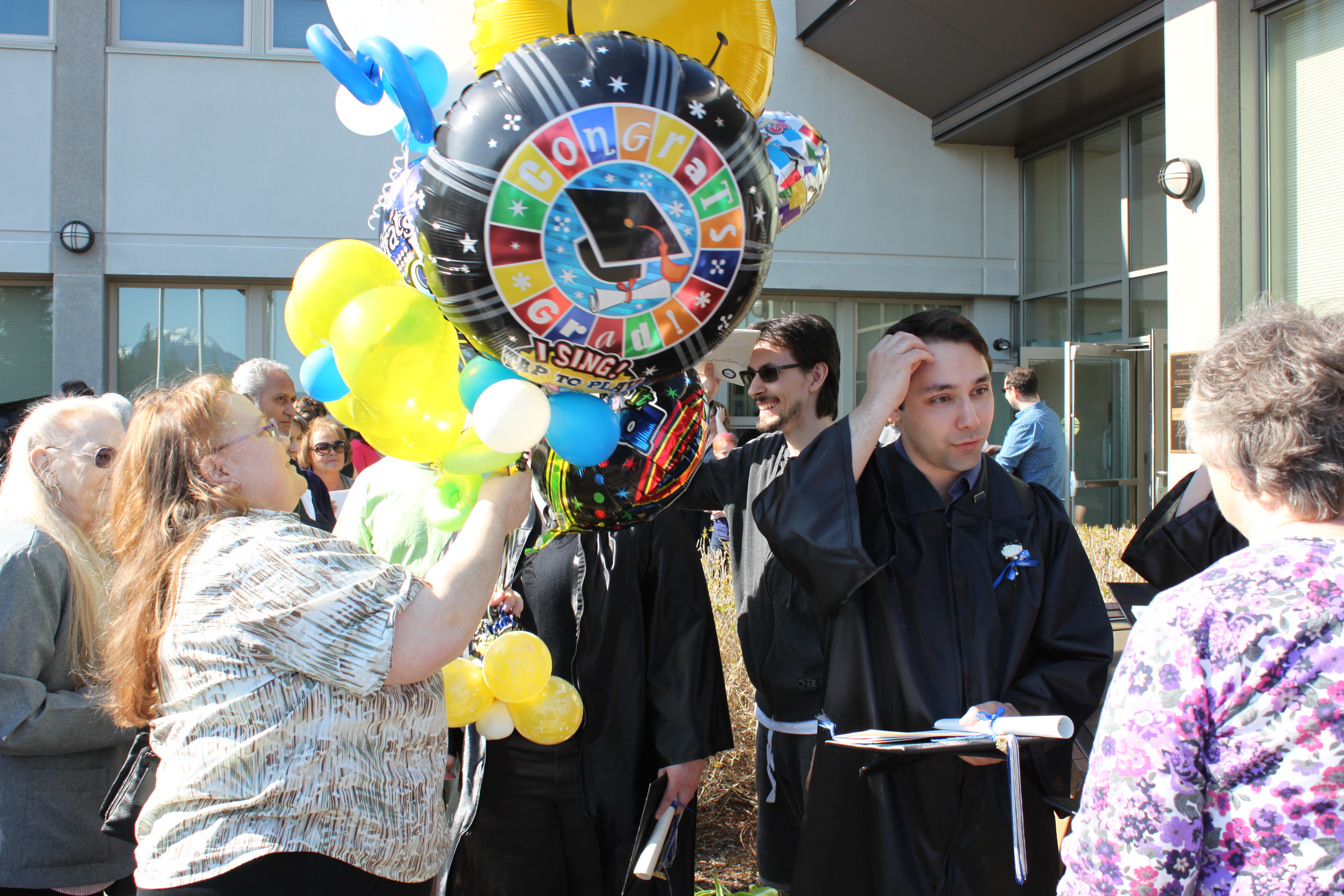
A record number of University of Alaska Southeast graduates were honored this weekend during commencement ceremonies in Juneau, Ketchikan, and Sitka. Six hundred and eighty-five students received awards including bachelor’s and graduate degrees, occupational endorsements, and certificates.

The Juneau campus held its 43rd annual commencement ceremony Sunday at the UAS Rec Center.

Emily Rose King gave the student commencement speech to a packed audience. She spoke about not being afraid to fail.

“A college degree doesn’t ensure success. But I’m pretty sure that it means you know how to fail. It means that when presented with difficult readings, math problems, lovers, crazy people, you can figure out how to proceed. After we take off these really, really interesting hats, we’re going to have every opportunity to potentially succeed and fail and we should probably take them,” King said.

Juneau playwright and screenwriter Dave Hunsaker received an Honorary Doctorate of Humane Letters for his contribution to literary and dramatic arts in Alaska.

He’s known for the play “Yup’ik Antigone” which toured in Alaska, New York, France and Greece. Hunsaker was adopted by Tlingit elder Austin Hammond, Sr., of Haines into the Luxaax.ádi Clan.

As the commencement speaker, Hunsaker described his connection to the Native community which began as a school music teacher in Tyonek, an Athabascan community on Cook Inlet.

“Since that beginning it has been my extraordinary privilege to be associated in my work and life with the Native people of Alaska and their ancient cultures that are so inextricably tied to this land,” Hunsaker said.

Hunsaker gave this advice to the graduating class of 2014:

“Keep and cherish your identity as an Alaskan always, however you define it, however it has shaped you. It is a proud legacy that we all share. Let it give you stature in the wide world and pride. Congratulations everyone and good luck. Gunalchéesh. Thank you.”

About 90 percent of UAS graduates are from Alaska. Nearly 12 percent are Alaska Native or American Indian. This is first time UAS has had graduates with a Bachelor of Liberal Arts in Alaska Native Languages and Studies.

Detroit company takes over food sales at Juneau airport

Prior to the new concession stand in the Juneau airport, the only options for travelers' to purchase food or beverage in the departure lounge was  from vending machines (Photo courtesy of Juneau International Airport)
The concession stand in the Juneau airport departure lounge. (Photo courtesy of Juneau International Airport)

Detroit-based Jacobsen/Daniels Associates, or JDA, started operations at Juneau International Airport on Thursday after a short-term contract with Marlintini’s Lounge owner Ethan Billings ended.

The transition comes as the airport goes through a small remodel of the lounge area, most recently known as Brandi’s Airport Bar. Airport manager Patty deLaBruere says the lounge will be closed for May. When it reopens in June, the area will be divided into two sections accommodating a lounge with a limited menu and a coffee shop.

The Juneau airport lounge is closed for May and will reopen in June. (Photo courtesy of Juneau International Airport)
The Juneau airport bar is closed for May and will reopen in June. (Photo courtesy of Juneau International Airport)

The airport restaurant will remain closed.

“That area is slated for remodel. That and the whole kitchen,” deLaBruere says. “The kitchen is part of the oldest section of the airport and there were a lot of inefficiencies in that area. And so this is kind of an interim step until we can finalize plans of where we’re going with the next phase of food and beverage concessions, couple years down the line.”

The new concession stand inside the departure lounge opened last month and deLaBruere says it continues to be busy under the new company.

“They’ve got grab-and-go sandwiches, some of the more gourmet sandwiches. And they have nice salads, fresh fruits, snacks, and they’ve got the traditional coffees and espressos,” she says.

JDA is in the process of getting a liquor license. In the meantime, deLaBruere hopes the traveling public will be patient.

“As long as they know that something is going to happen. I know it doesn’t do anything for the person right here and now that’s traveling this day if they were hoping to grab a beer before they left, but we hope that people understand that this is a transition and we want to get through it as quickly as possible,” deLaBruere says.

The contract with JDA lasts through September 2016 with an opportunity to renew.

Site notifications
Update notification options
Subscribe to notifications