Lisa Phu

Managing Editor, KTOO

"As Managing Editor, I work with the KTOO news team to develop and shape news and information for the Juneau community that's accurate and digestible."

Minecraft in the classroom: When learning looks like gaming

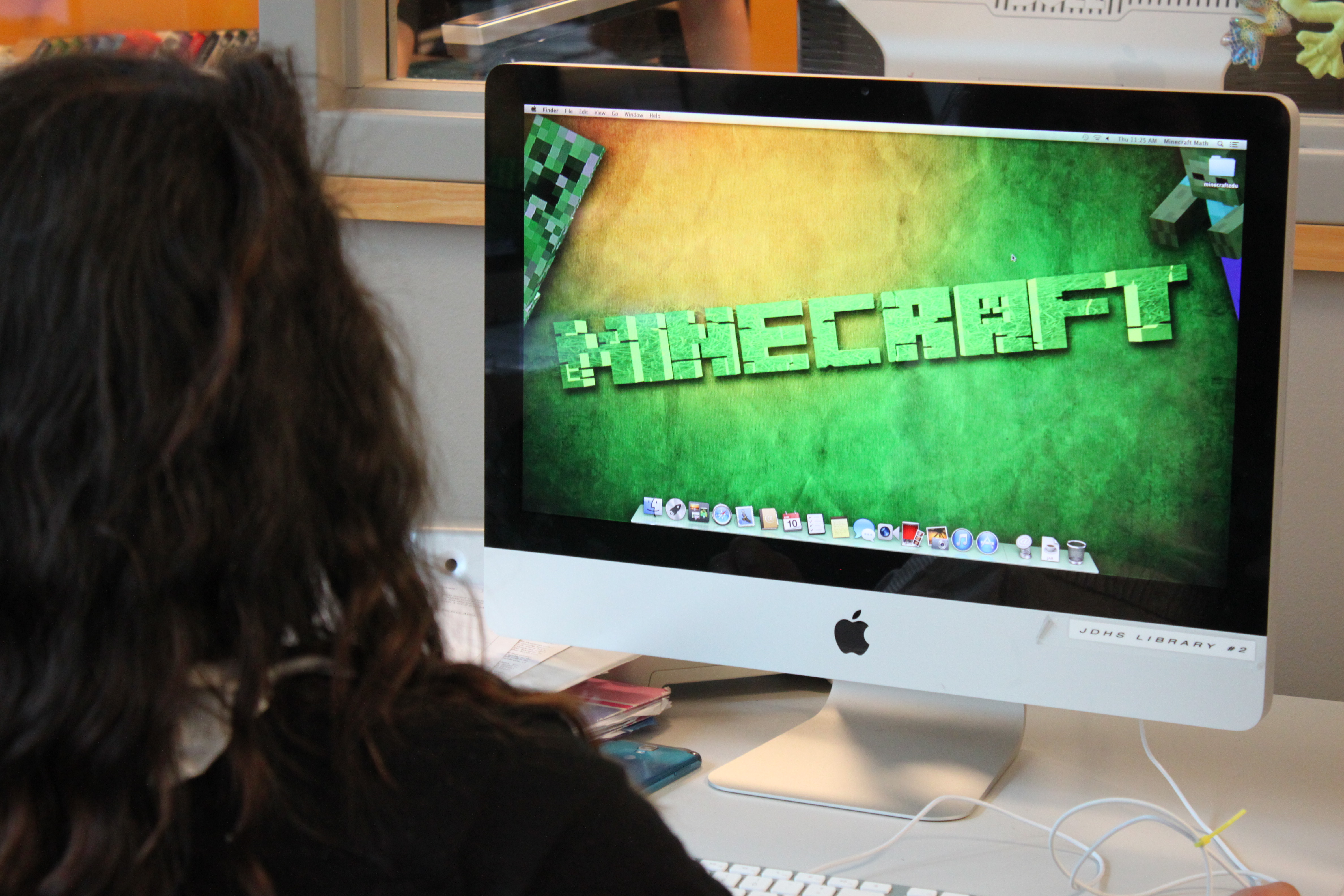
Minecraft could help engage students in science, technology, engineering, and math. (Photo by Lisa Phu/KTOO)
Minecraft could help engage students in science, technology, engineering and math. (Photo by Lisa Phu/KTOO)

The popular video game Minecraft has found its way into Alaska classrooms.

A graduate education course at the University of Alaska Southeast is showing teachers from across the state how to implement the game in their classes. Course professors say it could help engage students in science, technology, engineering and math.
Solving a real problem inside a virtual world

Lori Sowa is assistant professor of engineering at the University of Alaska Southeast. She heard about Minecraft from her kids.

“My son, his first day of first grade, he came home and the first thing he asked me was, ‘Mom, what’s Minecraft?’” says Sowa.

Minecraft is a popular video game that allows you to build elaborate structures, gather resources and fly, among many other things. Some people call Minecraft virtual Legos.

For Sowa and her teaching team at the University of Alaska Southeast, Minecraft is also a way to get kids to think critically, collaborate and solve problems, which is why they’ve made Minecraft part of a graduate education course. Development of the course was supported by a pre-college grant from the Alaska Space Grant Program and a Mathematics and Science Partnership Grant from the Department of Education and Early Development.

The goal is to help teachers brush up on science, technology, engineering and math content but teaching Minecraft has also been part of it.

“Most of the students – you know, the teacher students – coming into this had probably heard of Minecraft but hadn’t actually played it, so we have spent some time working with the teachers to help get them up to speed on their gaming skills,” Sowa says.

The professors are teaching Minecraft through the context of a real life problem that’s taking place in Northwest Alaska about 40 miles north of Coldfoot. Sowa and her colleagues call it the “Monster Lobe.”

“It’s this mass of partially frozen soil and rock and woody debris and ice that’s moving down the hillside, but it’s moving very slowly. With warming temperatures it’s starting to move at a faster rate towards the Dalton Highway and the pipeline is right in that area,” Sowa says.

The challenge is for the teachers and their students to figure out how to protect the Haul Road and the pipeline from the Monster Lobe. And to do it inside Minecraft.
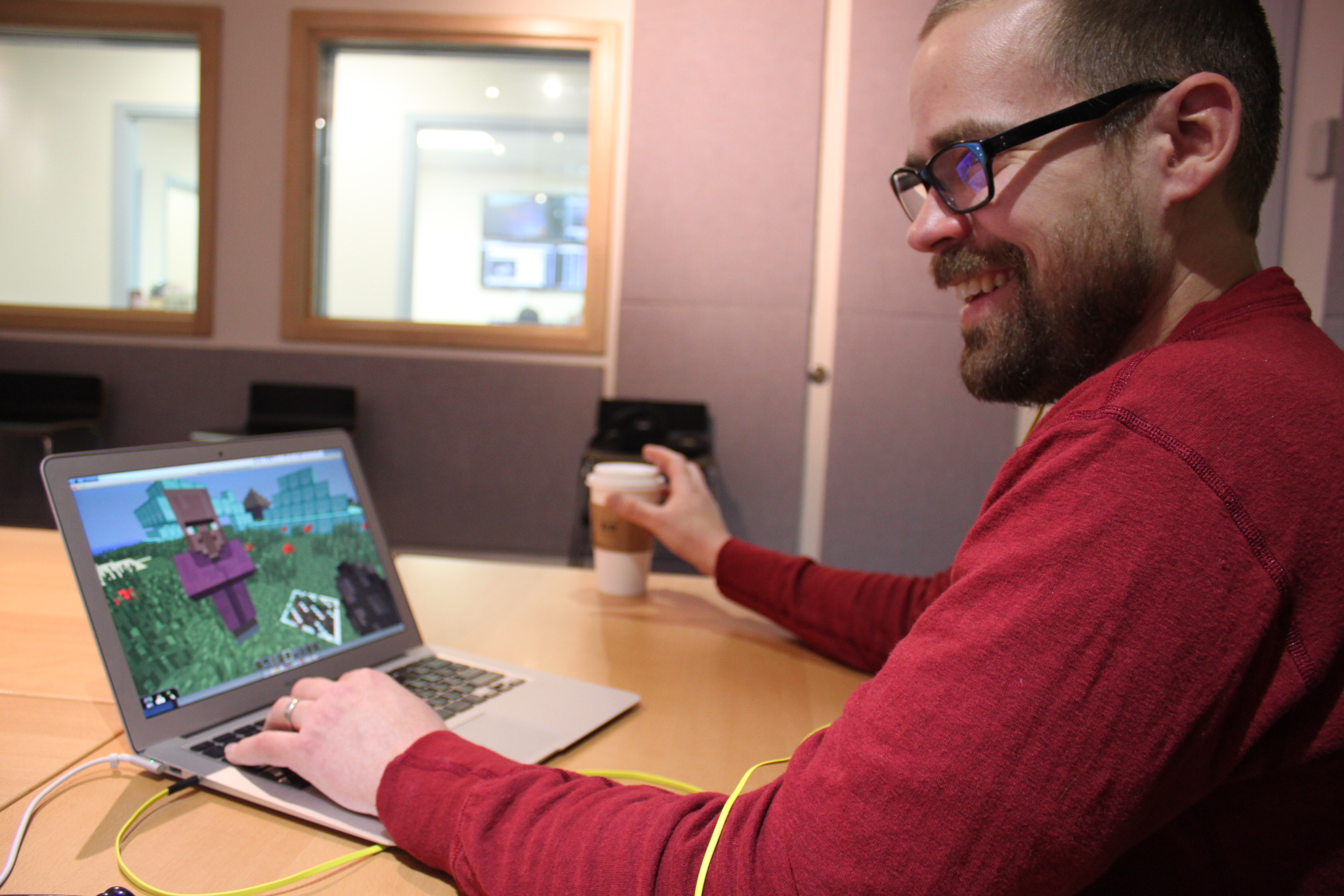
UAS graduate student Colin Osterhout recreated the area of the "Monster Lobe" inside Minecraft. He's also built Juneau and Douglas in the virtual world. (Photo by Lisa Phu/KTOO)
UAS graduate student Colin Osterhout recreated the area of the “Monster Lobe” inside Minecraft. He’s also built Juneau and Douglas in the virtual world. (Photo by Lisa Phu/KTOO)

UAS graduate student Colin Osterhout is helping to teach the class. He created the Monster Lobe in Minecraft.

“On the screen right now is the topography of an area north of Fairbanks along the Haul Road. I added in all this texture along the landscape, so all this stuff is sliding down the mountain. So, like, one idea students might come up with is, ‘Well maybe we should put dams here, there, and there,'” Osterhout says.

Since everything in Minecraft is a one-by-one meter block, “you can really easily measure your distance from here to there, measure what your solution is going to cost in terms of amount of yardage, cubic yardage of material,” he says.

Without even realizing it, by brainstorming solutions the students start to think like engineers.

“Alaska in particular is suffering a shortage of engineers. A third of Alaska’s engineers don’t live in Alaska,” says UAS assistant professor of education Chip McMillan, who’s also teaching the graduate class.

The goal of trying to solve a complex problem like the Monster Lobe inside Minecraft isn’t necessarily about churning out engineers. McMillan says it’s about building qualities such as “grit, perseverance, this ability to stick with a problem and that’s something that I think we’re steadily losing.”

It’s also about meeting students where they are. McMillan’s research indicates that 85 percent of students in second to eighth grade are playing Minecraft.

“They’re preoccupied with this medium, so, you know, if your kids love baseball then you try to frame some physics problems in terms of baseball. You’re always trying to leverage what their natural interest is,” McMillan says.

Some teachers in McMillan’s class were leery about learning Minecraft. They now use it in the classroom. Parents have taken an interest in the class.

“The line is always the same: My kids are obsessed with this game and I hear you’re doing something,” he says.

In practice

During fourth period at Juneau-Douglas High School, Lexie Razor’s ninth grade Algebra 1 class is using the library computers. Minecraft is on the screens.
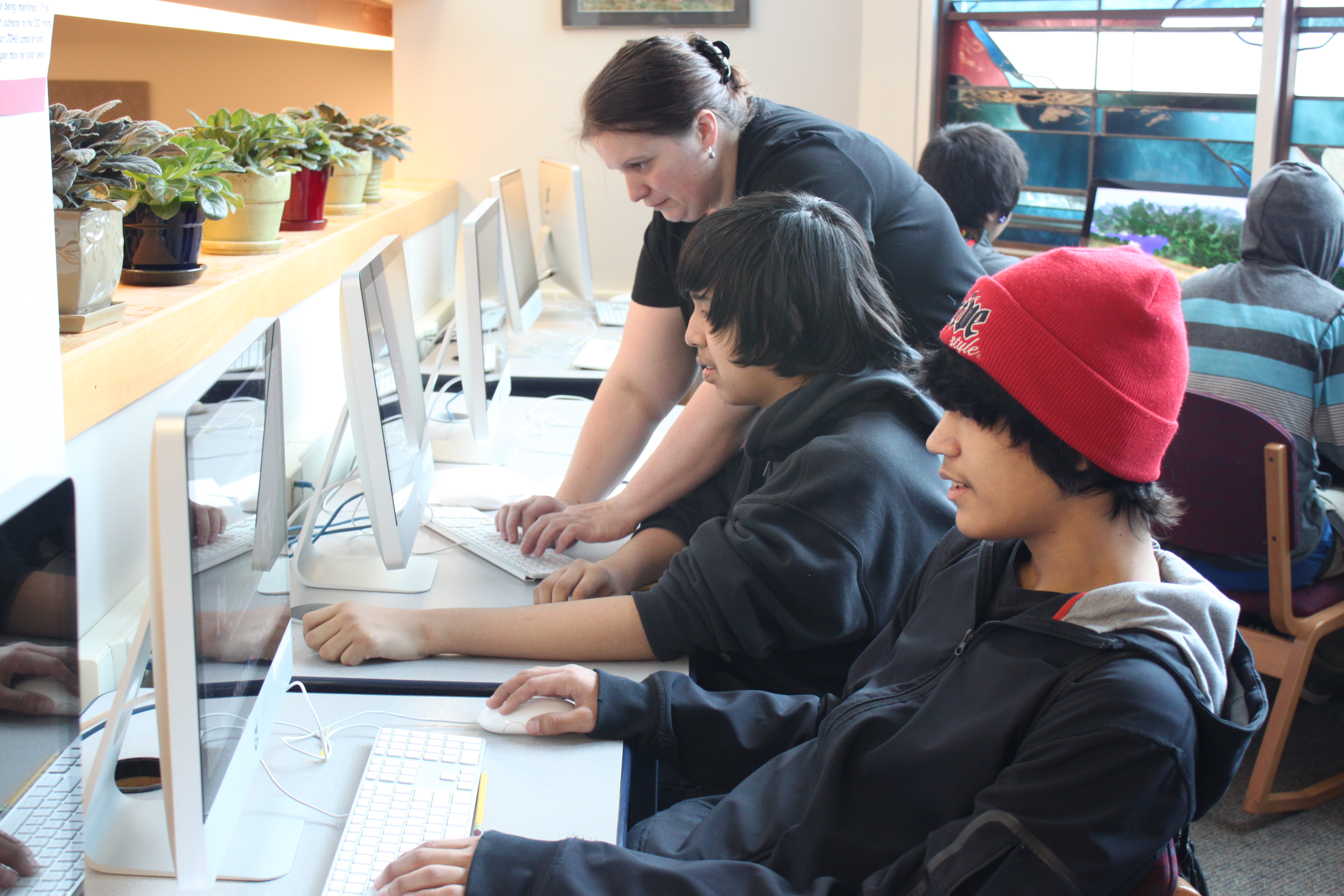
High school teacher Lexie Razor uses Minecraft to teach math. (Photo by Lisa Phu/KTOO)

“Everybody should be in the building and you need to go to the different structures and start calculating the volume and the surface area,” Razor announces over the buzz of students settling down.

The class is part of CHOICE, an alternative learning program for students needing extra support in order to graduate.

15-year-old Mackenzie Biddinger and a classmate are working on finding surface area and volume of different shapes, but Mackenzie is more excited to talk about a different Minecraft project they recently did – building a 3D model of a plant cell.

She says the model included all the different parts of a cell.

“There’s the chloroplast and the mitochondria and what was the other one? Chlorophyll? The cell wall, the cell membrane, and the cell itself,” Mackenzie says.

Mackenzie enjoyed collaborating with other students for the project.

“You learn from each other and you learn other people’s strategies and stuff like that and it’s better to be social and I think it’s a lot more fun. It helps me a lot,” she says.

Mackenzie has Minecraft at home, but doesn’t find it appealing “to build random things out of pixilated blocks.”

But in class, she’s a fan.

“It’s better than doing actual, like, just writing on paper. I think this is a better way of learning than the usual way. It’s fun and you actually learn from it,” Mackenzie says.
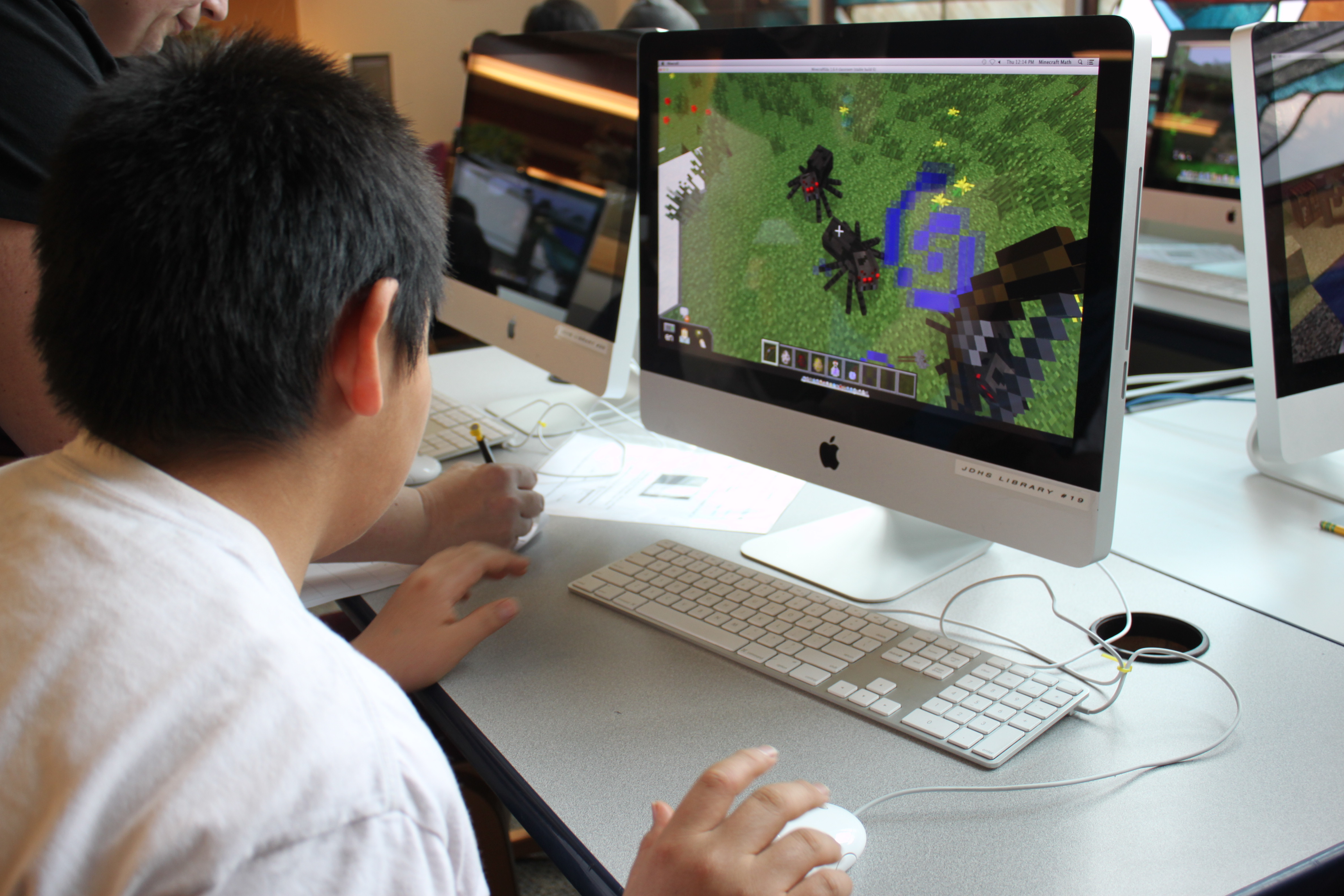
For the last few minutes of class, Lexie Razor allows the class to play Minecraft in creative mode. (Photo by Lisa Phu/KTOO)

For 15-year-old Evan Okpik, Minecraft is a way to stay engaged in academic work he often finds boring.

When asked what he’d be doing in class if he wasn’t on Minecraft, Okpik says, “Probably trying to sleep, listening to music. It’s what I do when I hate a class.”

Three months ago, teacher Lexie Razor didn’t know how to play Minecraft, let alone teach it in class. But after taking the UAS graduate education course, she’s happy to have another tool to use in the classroom.

“It just helps them to do things in ways that they’re interested in and so they may put forth more effort and understand it more because it’s something that they can relate to,” Razor says.

The students, she says, exhibit academic traits associated with science, technology, engineering and math – subjects collectively known as STEM.

“They just think that they’re playing but when we were doing the project, listening to the groups and how they talked and how they were problem-solving and how they needed to fix the things that they built — that’s STEM and they don’t even realize that they’re doing it, but they’re practicing those things,” Razor says.

Razor plans to use Minecraft in her geometry class as well. She says it’s important to connect the game to the curriculum.

“I’m trying to come up with some kind of project where I’m going to give them a certain amount of volume and they have to build some structures or do something so that they can use Minecraft, ‘cause they’ve heard that I’ve been using it and they’re pretty jealous,” she says.

Toward the end of class, 12th grader Colin McClung walks over to the computer area.

“I was actually just sitting over there and I saw somebody playing Minecraft and I was like, ‘Is somebody slacking off in class?’ and I came over here and everybody had Minecraft open.”

McClung says he’s happy to see a teacher has realized that video games can be used as teaching tools and aren’t just a waste of time.


Coaching Boys into Men training in Juneau

Supporters of the Coaching Boys into Men project carry a sign down Main Street in Juneau during rally on March 27, 2014. The campaign aims to reduce domestic violence in Alaska. The state leads the nation in domestic violence rates. (Photo by Skip Gray/Gavel Alaska)

Forty athletic coaches from across Alaska are gathering at the Juneau Arts and Culture Center today to receive training on Coaching Boys into Men, a domestic violence and sexual assault prevention initiative.

The all-day session shows coaches how to help young male athletes promote respect and gender equality.

The training will feature a panel of students and coaches currently involved in the program, including John Blasco. Blasco is head coach of boys basketball at Thunder Mountain High School. With the help of AWARE, he started implementing Coaching Boys into Men in 2010.

In a previous interview, Blasco said the program opens dialogue on issues that may not always be talked about.

“From respect, to the language that we use with one another, to how we communicate via text and Twitter, and then, more seriously, the sexual relationships with whomever we’re with at the time,” Blasco said.

Coaching Boys into Men became part of Gov. Sean Parnell’s Choose Respect campaign in 2012. More than 150 coaches throughout the state have already received training.

Delta vs. Alaska: Dueling airlines benefit Juneau

Delta Air Lines performs a test flight into Juneau on Wednesday in preparation for daily service to Seattle starting May 29. (Photo by Doug Wahto)

Delta Air Lines begins daily flights between Juneau and Seattle on May 29. For a long time, Alaska Airlines has been the only one flying that route.
Alaska travel analyst Scott McMurren says the power of competition goes a long way in lowering airfares.

“The moment that Delta’s rubber hits the tarmac in Juneau, fares will be at historic lows. The moment Delta leaves the market, fares will immediately return to their previous level. This is a great opportunity for Juneau travelers, and that great opportunity will last as long as Delta flies there and not a moment longer,” McMurren says.

An online spot check of round-trip flights between Juneau and Seattle in early June showed the airlines offered the same fares, $487.40. In September when Delta service ends, flights on Alaska Air Lines jump $80.

Adding service to Juneau is part of Delta’s expansion in Seattle. Right now, the airline makes 35 daily departures out of Sea-Tac Airport. By August, Delta hopes to increase that to 86 departures.

“We are reaching out to markets that are key travel markets for us that allow us to carry passengers both into Seattle as well as connect them onto international flights. We’re adding a significant amount of international service. We just added London Heathrow at the end of March and we are going to add Hong Kong and Seoul in June,” says Anthony Black, Delta spokesman.

The airline already flies from Seattle to Amsterdam, Paris, Beijing, Shanghai and Tokyo.

Connecting to international destinations is what Black says will set Delta apart from Alaska Airlines, which only flies internationally to Canada and Mexico.

Between Juneau and Seattle, Delta will be flying a Boeing 757. Alaska Airlines uses 737s. Black says a 757 can carry more passengers and has more powerful engines.

He also says Delta’s prices are competitive and, so far, Delta is pleased with bookings.

Marilyn Romano, regional vice president for Alaska Airlines, says she feels very secure with Alaska’s position in Juneau. She says Delta’s one flight a day between Juneau and Seattle during the summer doesn’t compare with Alaska’s eight flights a day.

“That’s our standard operating business coming in and out of Juneau and that doesn’t include all the other flights that we have – Anchorage to Juneau, or Juneau to other cities in Southeast Alaska – so as far as competing, I think we feel like we’ve been operating daily service into Juneau for over four decades,” Romano says.

Plus, there’s free baggage if you’re a member of Club 49, the airline’s program for Alaska residents, and bonus mileage, like last summer. Travelers flying on Delta from Juneau to Seattle will still get Alaska Airlines miles, though.

While Alaska and Delta are now competing in Juneau, the two airlines are partners for other destinations.

“At times, the competitive nature of our business is bigger than at other times and this is probably one of those times. We’re doing what we need to do to grow our business and Delta will do what Delta feels they need to do to grow their business, and at the same time, we are partners, so it’s a unique situation,” Black says.

Juneau International Airport manager Patty deLaBruere says competition is good for Juneau’s economy.

“Alaska Airlines, I think, has taken very good care of people up here but Delta may add a different flair on what they’re going to do for the travelers. So choice is good,” says deLaBruere.

That also means more revenue for the airport, an enterprise of the City and Borough of Juneau. Renting space for a check-in counter and offices, flying in and out, and parking its plane overnight in Juneau for the summer will cost Delta about $90,000.

Douglas Inn: New look, old name

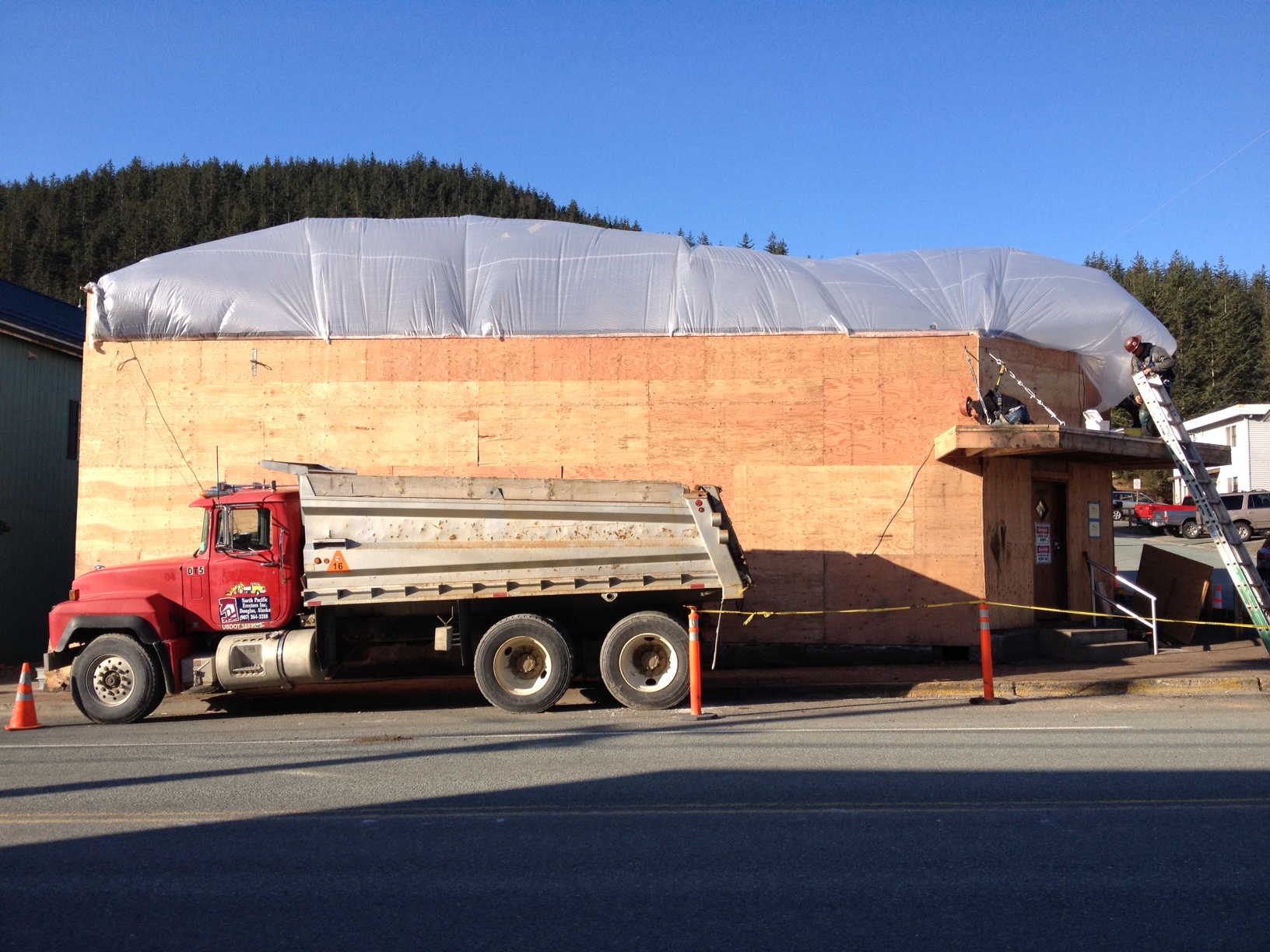
North Pacific Erectors, Inc. is doing the remodeling work on the former PP's Douglas Inn. It'll reopen this summer as Louie's Douglas Inn. (Photo by Lisa Phu/KTOO)
North Pacific Erectors, Inc. is doing the remodeling work on the former PP’s Douglas Inn. It will reopen this summer as Louie’s Douglas Inn. (Photo by Lisa Phu/KTOO)

The bar formerly known as PP’s Douglas Inn is getting a new look and returning to an old name – Louie’s Douglas Inn.

Co-owner Abby Trucano, who worked six years as a bartender at the Red Dog Saloon, will run the bar. She says it’s receiving a full remodel.

“New siding, new roof. We’re putting in new flooring. We’re going to do a whole new bar. We’re going to have a walk-in cooler. We’re going to have beer on tap. New bathroom. We’re going to get a brand new pool table,” Trucano says.

Trucano and her parents, North Pacific Erectors, Inc. owners James and Arbe Williams, successfully bid on the bar for roughly $145,000 during a public auction last August.

PP’s Douglas Inn was seized by the Internal Revenue Service almost a year ago after the previous owner, Patrick Peterson, failed to pay almost a million dollars in back taxes since 1999.

Trucano says the process of remodeling the bar is a lot of work, but worth it.

“I’m excited on how nice it’s going to be and I’m excited for all the Douglas locals that had their bar taken away from them. It’s basically been my dream for a very long time. I’m happy that it’s finally coming true,” Trucano says.

For the interior look of Louie’s, Trucano says she’s getting inspiration from Douglas’s mining history.

“It’s going to have wood, brick. We’re going to have copper. We’re just trying to incorporate lots of warm, but industrial sort of products, to kind of go back to the mining days,” she says.

When it reopens, Louie’s will accept credit cards and have an ATM, and customers will see longtime employee Sherill Baxter behind the bar.

Trucano acquired a liquor license formally used by David Sanden at the Triple F Bar and Grill in the valley.

Trucano hopes to reopen Louie’s Douglas Inn at the end of May.

Origami peace peacock finds a home in the state capitol

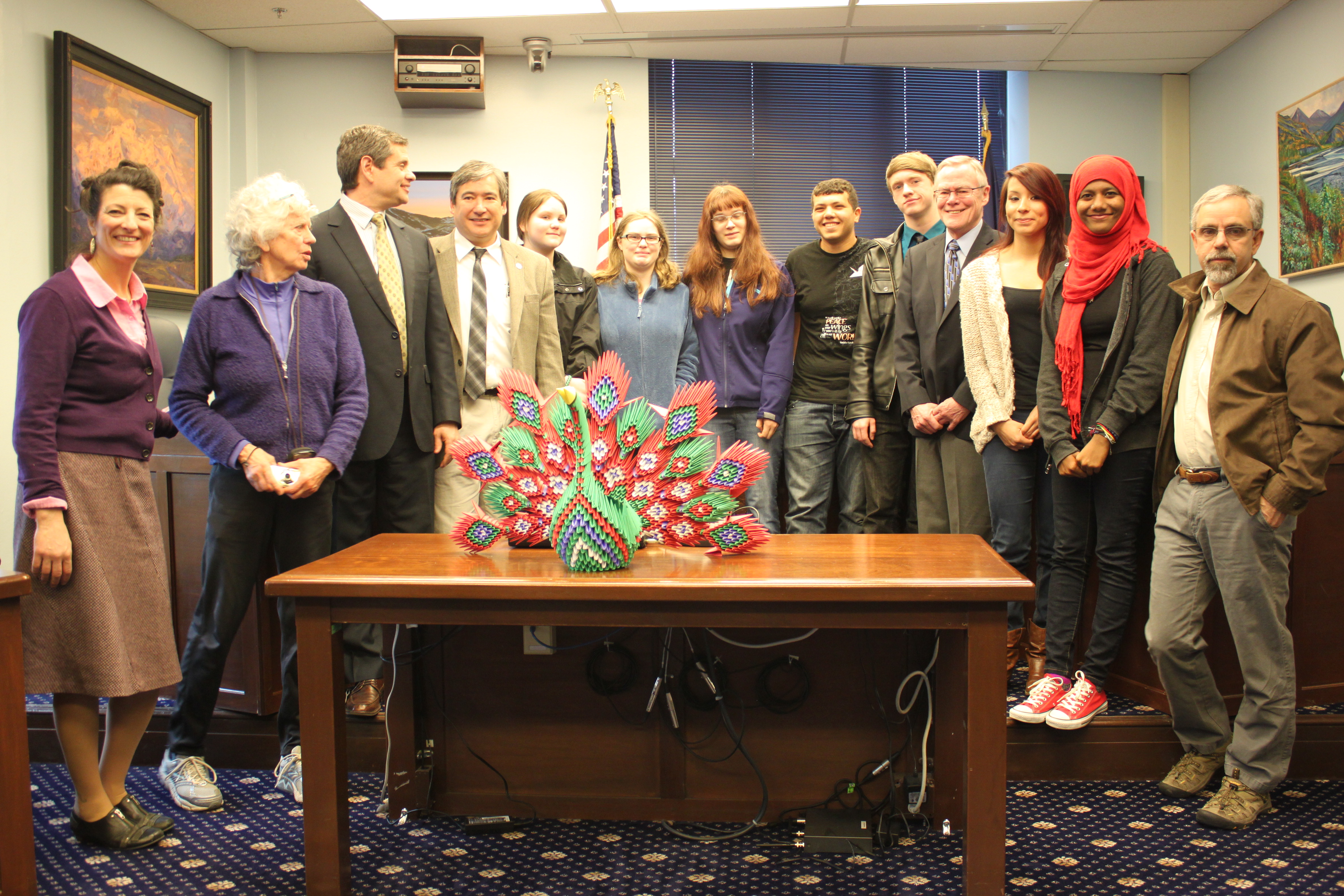
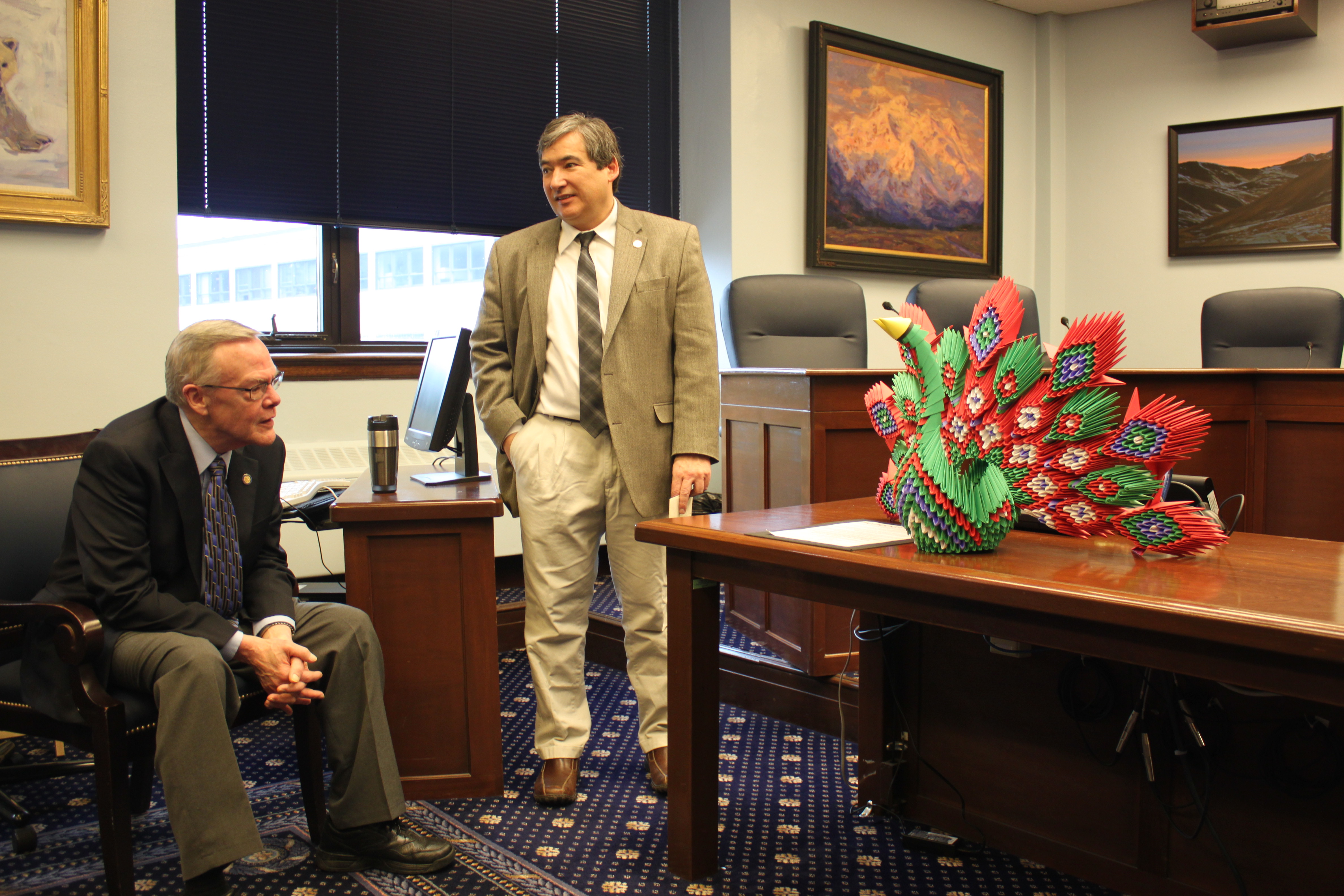
Middle East exchange student Haytham Mohanna and the Thunder Mountain High School Art Club presented an origami peacock of peace to the Alaska State Legislature on Monday. The peacock is made of more than 2,000 pieces of folded paper.

Mohanna says the peacock represents the dreams of the people of Gaza, his home country.

“I hope this peacock, which symbolizes the peace, go in each mind and each heart, and really rise our mind about the wars and conflicts,” Mohanna says.

Mohanna is studying at Haines High School through an exchange program funded by the U.S. State Department.

He learned how to make an origami peacock from a teacher in Gaza and taught the process to Thunder Mountain art club students while he was visiting Juneau. It took the club three months to fold more than 2,000 pieces of paper. The peacock is about three feet wide and two feet tall.

Art club coordinator Heather Ridgway says she didn’t immediately know where the peacock should be displayed. She wanted it to be in a place where it could inspire people.

“It was like, ‘Oh, of course, we’ll take it to the capitol. They are working on major issues that require everyone to commit time and attention and do a careful job and work together and be patient, just like making this peacock. Let’s give it to the legislature,'” Ridgway says.

Juneau Sen. Dennis Egan calls Mohanna an artist and says the peacock will definitely inspire visitors to the capitol and lawmakers.

“I can guarantee you that people will reflect on it and hopefully bring good things and remember that, you know, we’re all trying to come in peace,” Egan says.

Until a permanent place can be found for the origami peacock, it’s temporarily displayed in the House Speaker’s Chambers.

New hospital CEO to start in May

Bartlett Regional Hospital (Photo by Heather Bryant/KTOO)

Bartlett Regional Hospital has hired Charles “Chuck” Bill of Durango, Colo. as its new chief executive officer.

Bill is assistant administrator of physician development at Centura Health Physician Group. He’s previously held other CEO positions at hospitals in Arizona, California and Colorado that have lasted anywhere from one to 11 years.

Bill says he’s had experience working in two publicly owned hospitals and is used to the public process.

“I’m comfortable working in that environment and in the legislative environment with advocacy issues and that sort of thing and, really, I’m passionate about smaller, sole community kind of hospitals that are such a critical resource for their community,” Bill says.

Bill’s mother grew up in Juneau and he says he’s familiar with the capital city.

“I’ve still got a cousin that lives there in town so we’ve got a little bit of family connection and have been up there, so we’re not total strangers to Juneau.”

His first major step as CEO is hiring a permanent chief financial officer. Since Ken Brough resigned at the end of 2013, Bartlett has had two interim CFOs – Cynthia Brandt and now Alan Germany.

Bill says other priorities include building an environment of trust at the hospital and being involved in the community. He plans to be active in groups like Chamber of Commerce and Rotary Club, and says he’ll be accessible to the media.

“My goal would be at some point in time that the stories from Bartlett are basically feel good stories instead of adversarial kind of stories and that’s going to take building those relationships and building that trust,” Bill says.

Bill plans to start the job in mid-May, which hospital board president Kristen Bomengen says will overlap with interim CEO Jeff Egbert.

She says the board offered Bill a three-year contract with a possibility of renewing.

“None of us had any difficulty with that as a starting point. We feel reasonably assured that the intention here is to make Juneau home and we’re hoping that we’ll be able to introduce some longevity and stability in our management team,” Bomengen says.

Bill’s annual salary will be $315,000. Bomengen says, for Bartlett’s size, that figure is in the 75% percentile of what other hospital CEOs in Alaska receive. Former Bartlett CEO Chris Harff’s salary was $260,000. Harff resigned after being in the job for 13 months.

Bill will move to Juneau with his wife Sue, who’s a registered nurse and works from home. They have three grown daughters.

Site notifications
Update notification options
Subscribe to notifications