"As Managing Editor, I work with the KTOO news team to develop and shape news and information for the Juneau community that's accurate and digestible."
Public comment on projects at the Lena Beach Recreation Area, the West Glacier Spur Road and Treadwell Ditch Trail are due in a week.
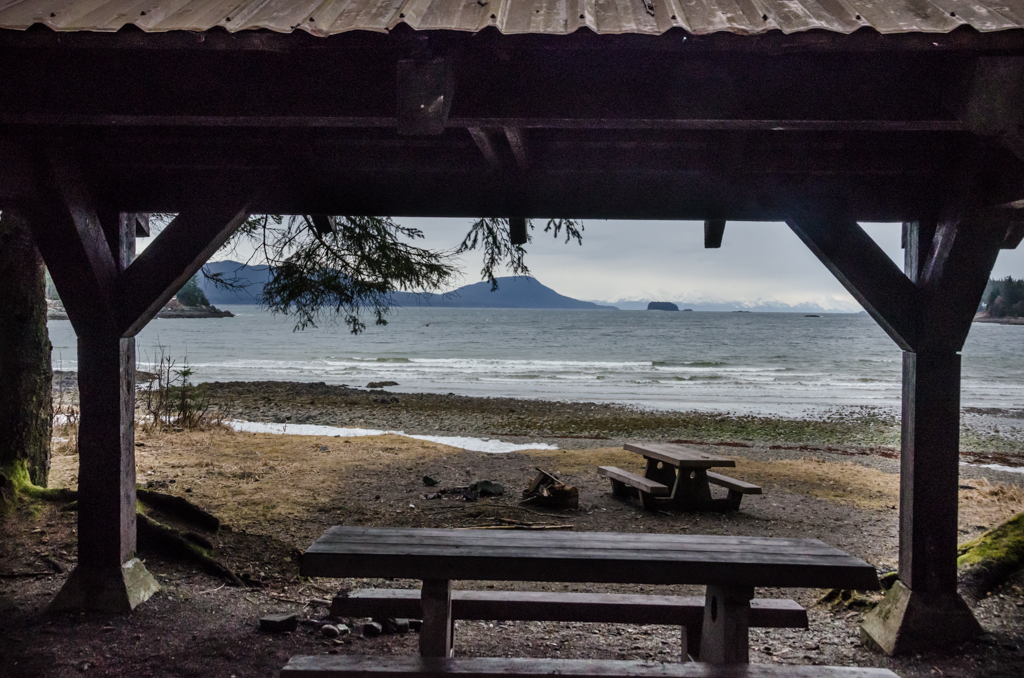
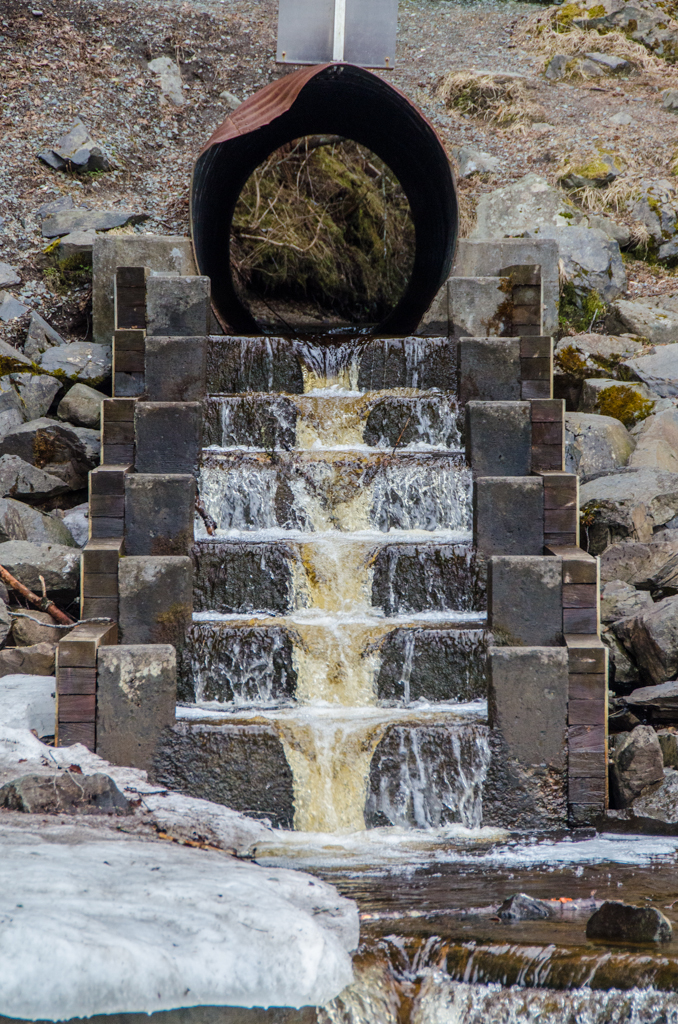
Lena Beach improvements include rebuilding five shelters, upgrading outhouses, paving the road and making it one-way, and improving the fish passage up Picnic Creek.
Ed Grossman is the recreation manager for the Juneau Ranger District. He says the shelters at Lena Beach were built in the 1950s. Besides routine maintenance and repairs, the Forest Service has not done any major improvements in a long time.
“We consider it a very tired, old recreation site and there’s been no significant enhancements there in 20 years, at least,” Grossman says.
The fish passage up Picnic Creek will be updated as part of the plan. (Photo by Heather Bryant/KTOO)
The Forest Service also wants to implement volunteers who live at the site, which Grossman hopes will reduce ongoing issues that occur at Lena Beach.
“Drug dealing, vandalism of shelters, burning of pallets which are not allowed there, dumping litter on the beach, dumping garbage, televisions, vehicles off the road – you name it and it probably happens there. Many people aren’t aware of it because it happens well after dark and we clean it up,” Grossman says.
On the West Glacier Spur Road, the Forest Service plans to extend the bike and pedestrian trail a half mile. Grossman says up to 30,000 tourists participate in activities, like bicycle and kayak tours, off the Spur Road.
“And what’s happening is all these people are pouring out into the roadway near the campground along with all the buses and vans and other vehicles servicing the industry, plus the locals,” Grossman says.
The Forest Service also wants to hear from the public on various improvements to the Treadwell Ditch Trail, including hardening the section above the Bonnie Brae subdivision.
Money for the projects comes from the Federal Lands Access Program through the Federal Highway Administration, with matching funds from the Forest Service.
Construction is expected to begin in 2015 and last up to two years.
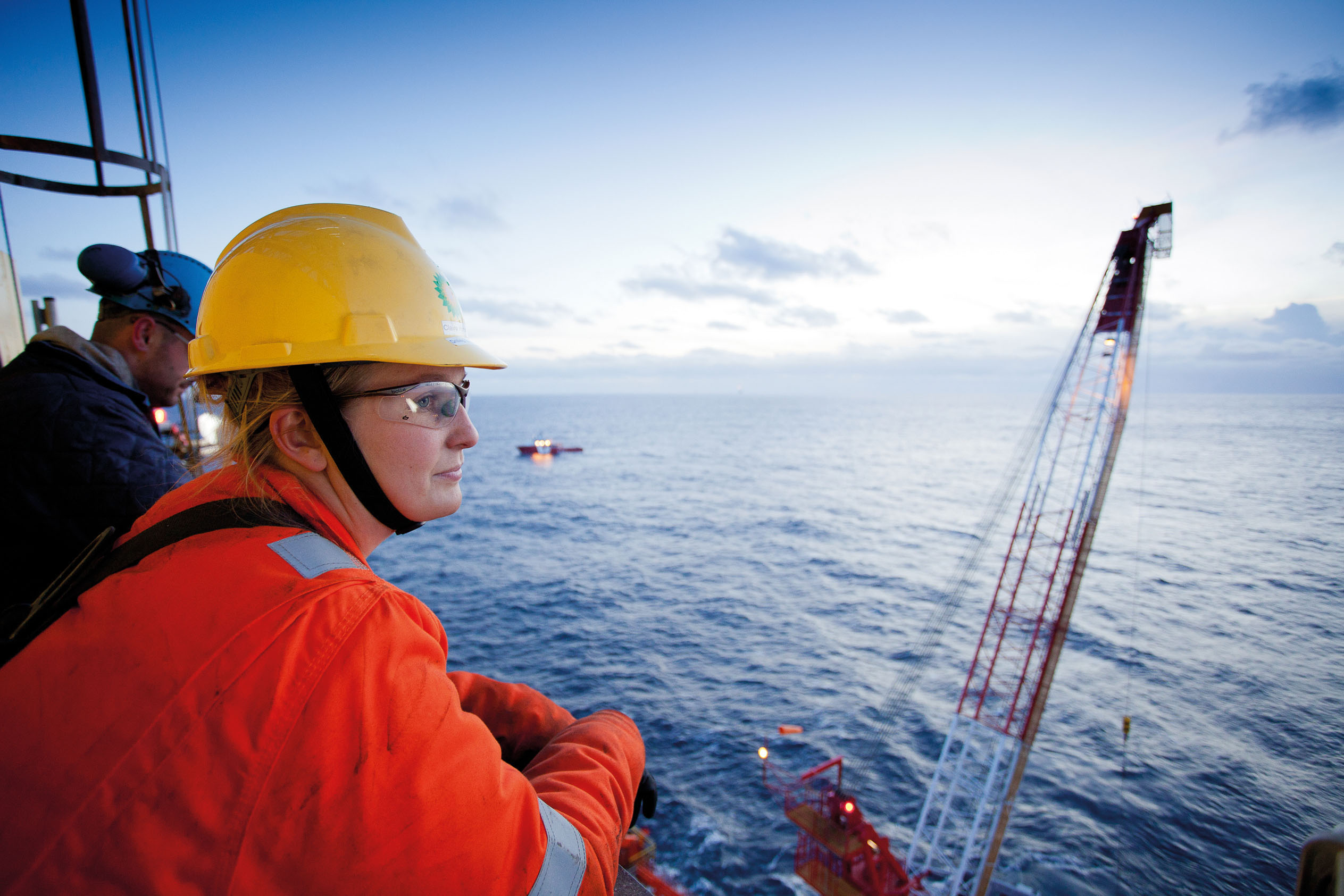
Engineers make some of the highest salaries in the state, but only 18 percent of them are women. (Photo courtesy of BP p.l.c.)
President Obama signed executive orders on Tuesday that aim to tighten the pay gap between men and women.
The president’s actions took place on National Equal Pay Day, a day symbolizing how long women have to work into 2014 to catch up with what men earned in 2013. The day originated in 1996 to raise public awareness of the wage gap.
In Alaska, a statute prohibits employers from paying females less than males for the same work. But there’s still a pay gap – for every dollar a man in Alaska earns, a woman earns roughly 67 cents.
State Labor Economist Caroline Schultz says occupation and industry selection is the main reason behind the pay gap.
“Women are never going to earn as much as men if women don’t choose to pursue high paying occupations,” Schultz says.
Engineers make some of the highest salaries in Alaska, but only 18 percent of them are women. They’re making on average $72,000 a year while their male counterparts make close to $96,000.
Supervisors in oil, mining and construction industries also make high salaries. Only 5 percent of them are women, and on average they earn less than half what men make in the same position. These 2012 figures from the Department of Labor represent total annual earnings and don’t distinguish between full- and part-time work.
Schultz says work flexibility is another factor in the gender pay gap. Alaska has a predominance of jobs in natural resources, often in remote work sites.
“That can sometimes be more of a challenge to women, because women traditionally take on a larger burden when it comes to family care. So, you know, if they need to leave early to pick up the kid from school, a woman is more likely to take a flexible job, maybe that pays a little bit less, than a man is,” Schultz says.
What women can do about it
Tamiah Liebersbach is the Women’s Economic Empowerment Center coordinator for YWCA Alaska. She says discrimination is a contributing factor to the pay gap, even if it’s not done on purpose.
“Some sort of idea that maybe a woman isn’t as committed to her career, if she has a family – those kinds of stereotypes do play a role, I think, in not just the wage that a woman gets, but the opportunities that she’s given to build her career,” Liebersbach says.
YWCA Alaska will host a Women’s Economic Empowerment Summit for the first time on May 5, Alaska’s Equal Pay Day. The summit includes a session on the art of negotiation. Wage disparity is also a focus of the Alaska Women’s Summit, established last year after state Sen. Lesil McGuire commissioned a report on the status of women in Alaska.
Barbara Belknap is a Juneau activist working on the issue of equal pay for women. She’s also an Alaska delegate to Vision 2020, a national coalition focused on women’s economic and social equality.
Belknap says negotiating salary is one way for women to take the matter of pay disparity into their own hands.
“Before you go into the interview, understand what the pay scale is for what you’re applying for, know what the going rate is, do some research,” Belknap says.
A couple of years ago, Belknap made a YouTube video demonstrating how to successfully negotiate pay.
Through the video, Belknap is spreading a message she never got. She says it never occurred to her to negotiate salary when she was appointed executive director of Alaska Seafood Marketing Institute in 1997.
“They said, ‘Well, we were paying your predecessor too much money, so your salary is going to be this much money.’ And I remember the little thought bubble in my head going, ‘Oh really, really?’ But I didn’t say anything,” Belknap says.
Belknap received pay increases over time, but says her starting salary was $8,000 less than the starting salary of her male predecessor.
State economist Schultz says whatever the reasons may be for the pay gap, the result is the same – women have less money:
“At the end of the year, at the end of a lifespan, at the end of a career, women have earned less money consistently through 25, 30, 35 years of working. And that really adds up.”
And this fact, Schultz says, leads to other questions.
“What does it mean for Alaska’s economy and what does it mean for women in Alaska, that in general, they have less money than men do? How does it affect their spending? How does it affect child care? How does it affect children?”
Schultz doesn’t know the answers. She also doesn’t know what happens in corporate offices during salary talks, but as an economist, she’ll continue to collect and present the data that could lead to decreasing Alaska’s pay gap.
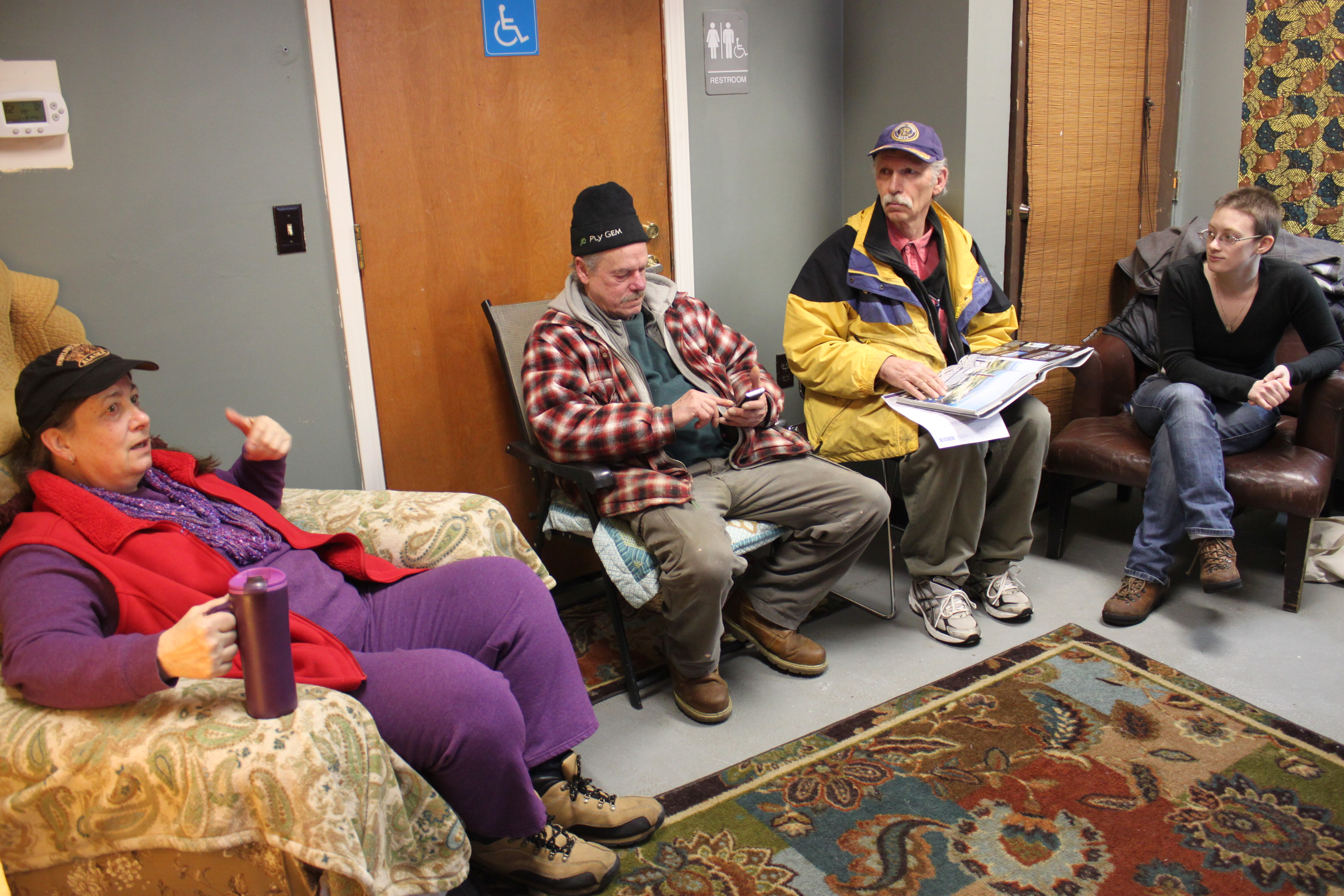
Several people at Juneau’s downtown shelter and soup kitchen The Glory Hole are part of a new club. Every Tuesday, they come together on the second floor of the facility to discuss a different topic. The club is helping to build a different kind of community within the homeless shelter, a community not based on need, but on the exchange of ideas.
Sheila Higgins (left) has been to every session of The Glory Hole Book Club, which started in January. (Photo by Lisa Phu/KTOO)
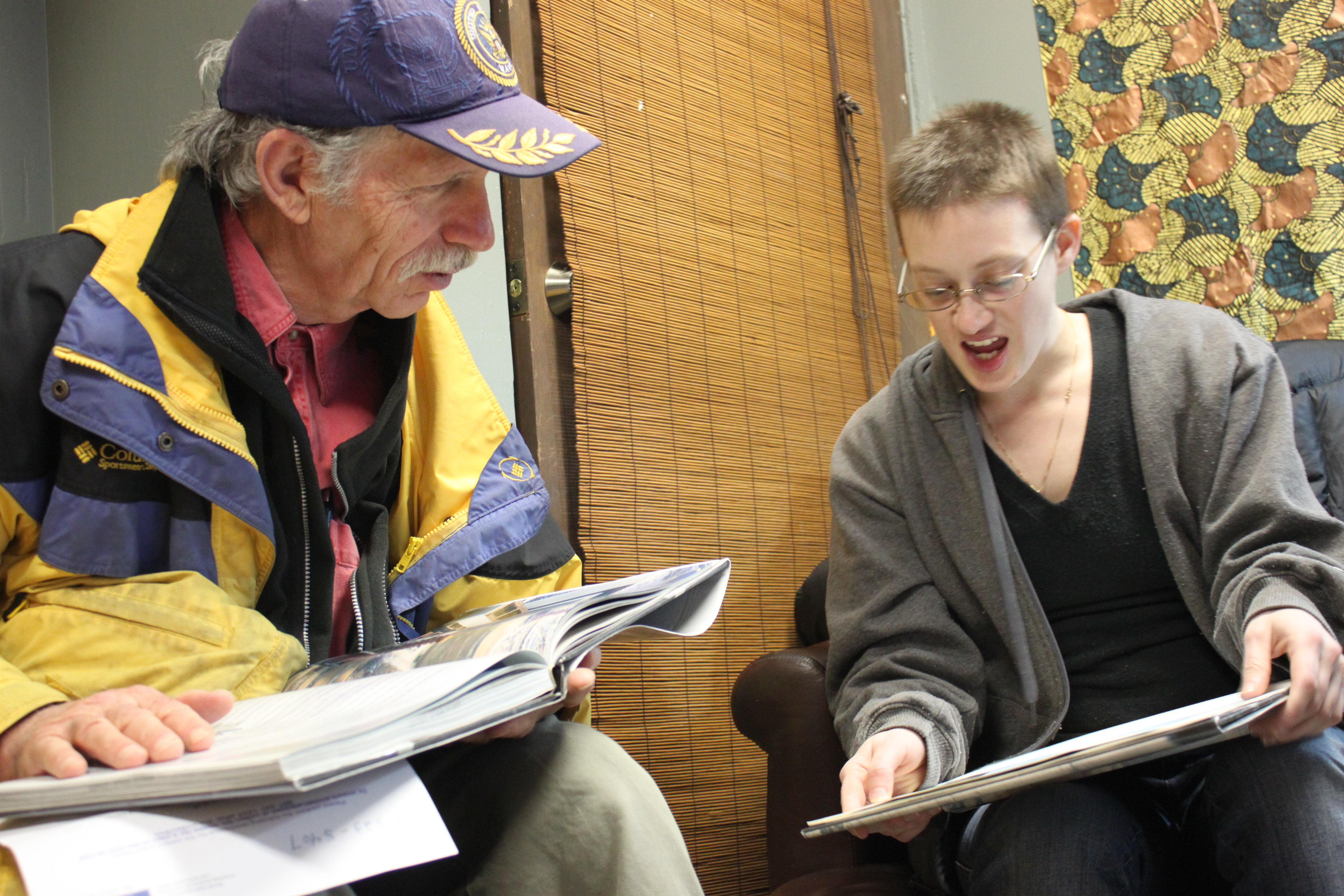
Community outreach librarian Andrea Hirsh points something out to club member Mike Ricker. (Photo by Lisa Phu/KTOO)
Steve Albright is a member of The Glory Hole Book Club. (Photo by Lisa Phu/TKOO)
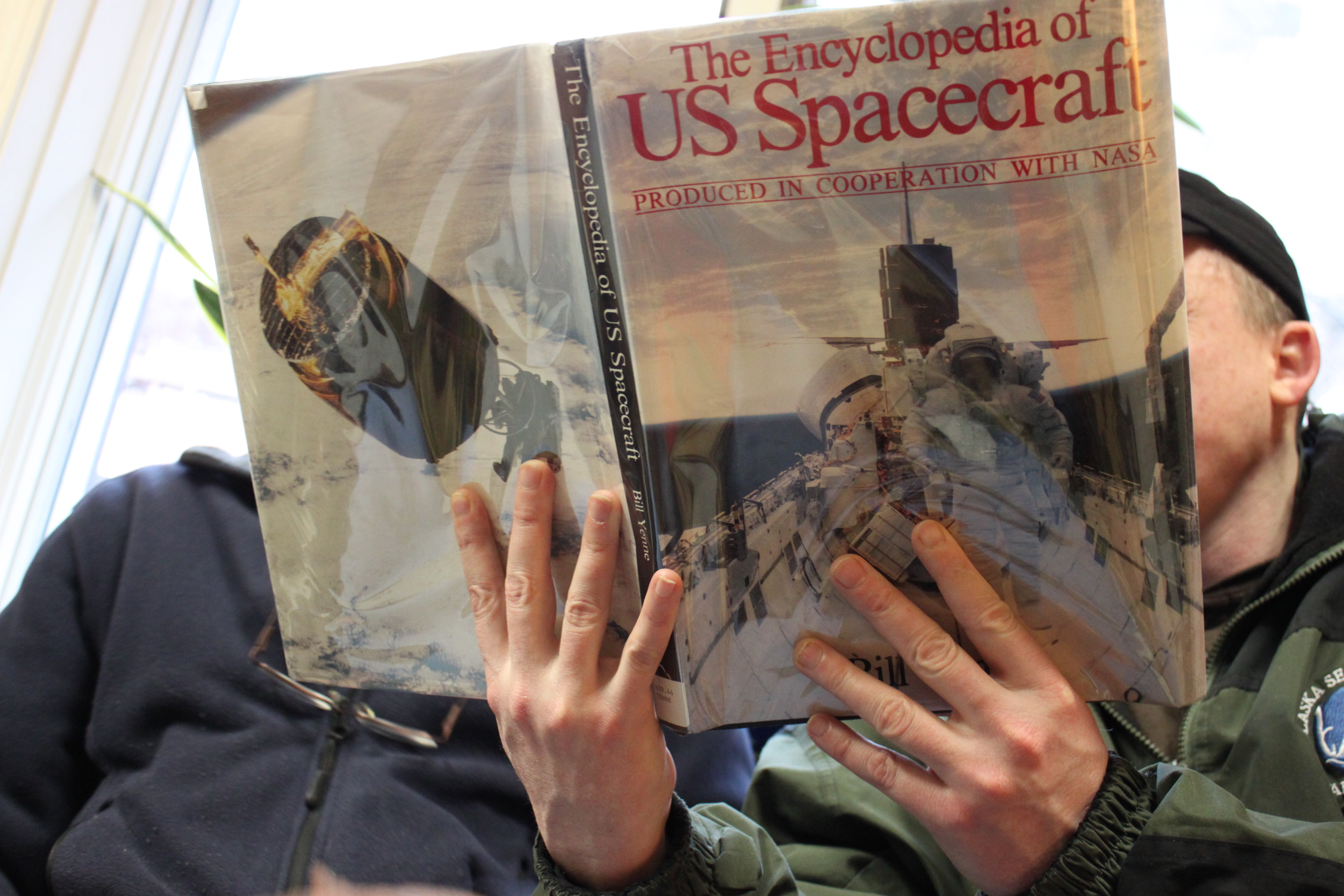
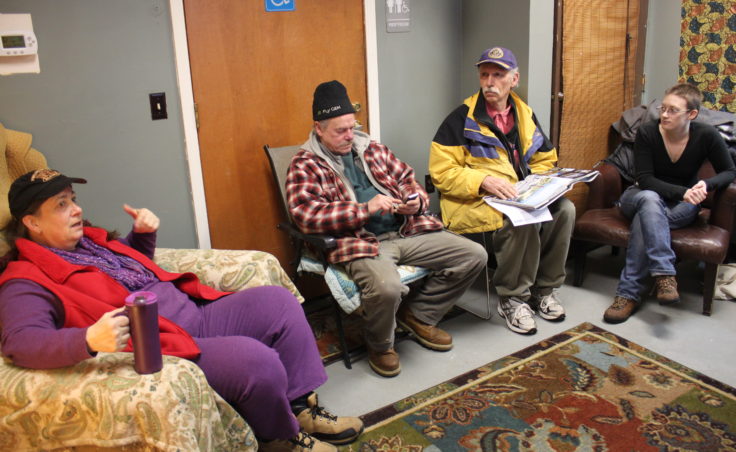
Topics for The Glory Hole Book Club change every week. This session, the club discussed the space program. (Photo by Lisa Phu/KTOO)
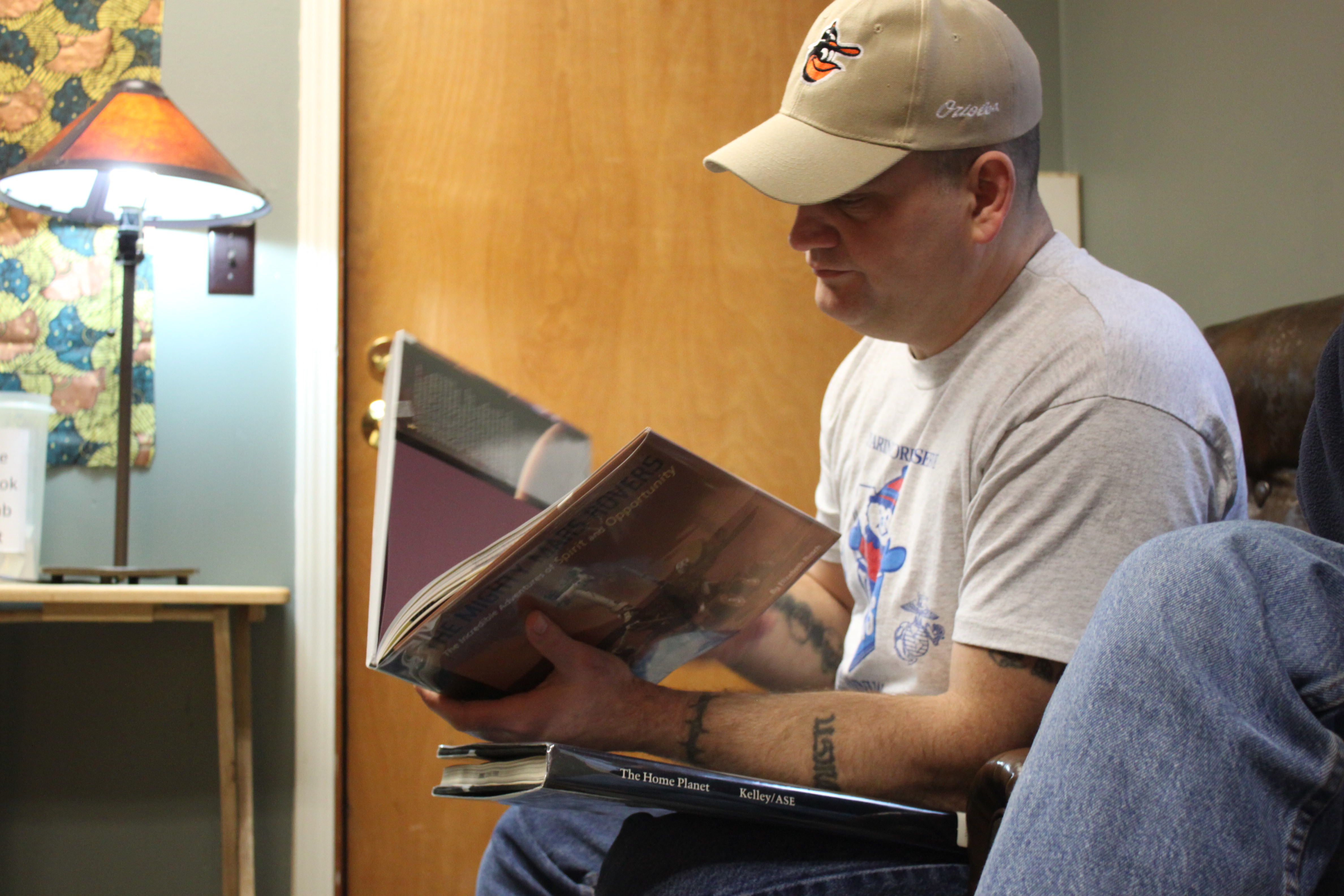
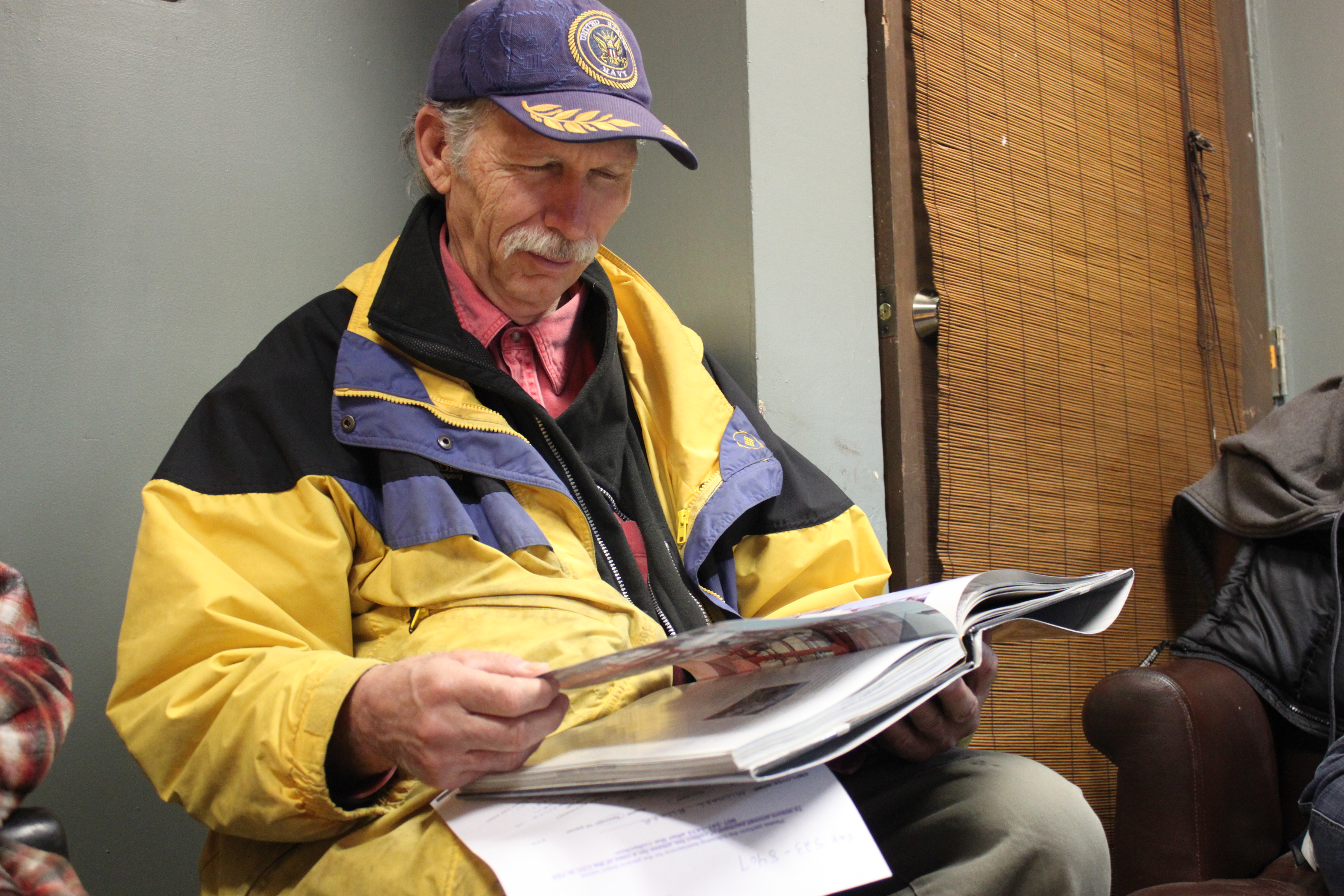
Club member Mike Ricker looks through a library book. (Photo by Lisa Phu/KTOO)
The club meets upstairs in The Glory Hole every Tuesday morning. (Photo by Lisa Phu/TKOO)
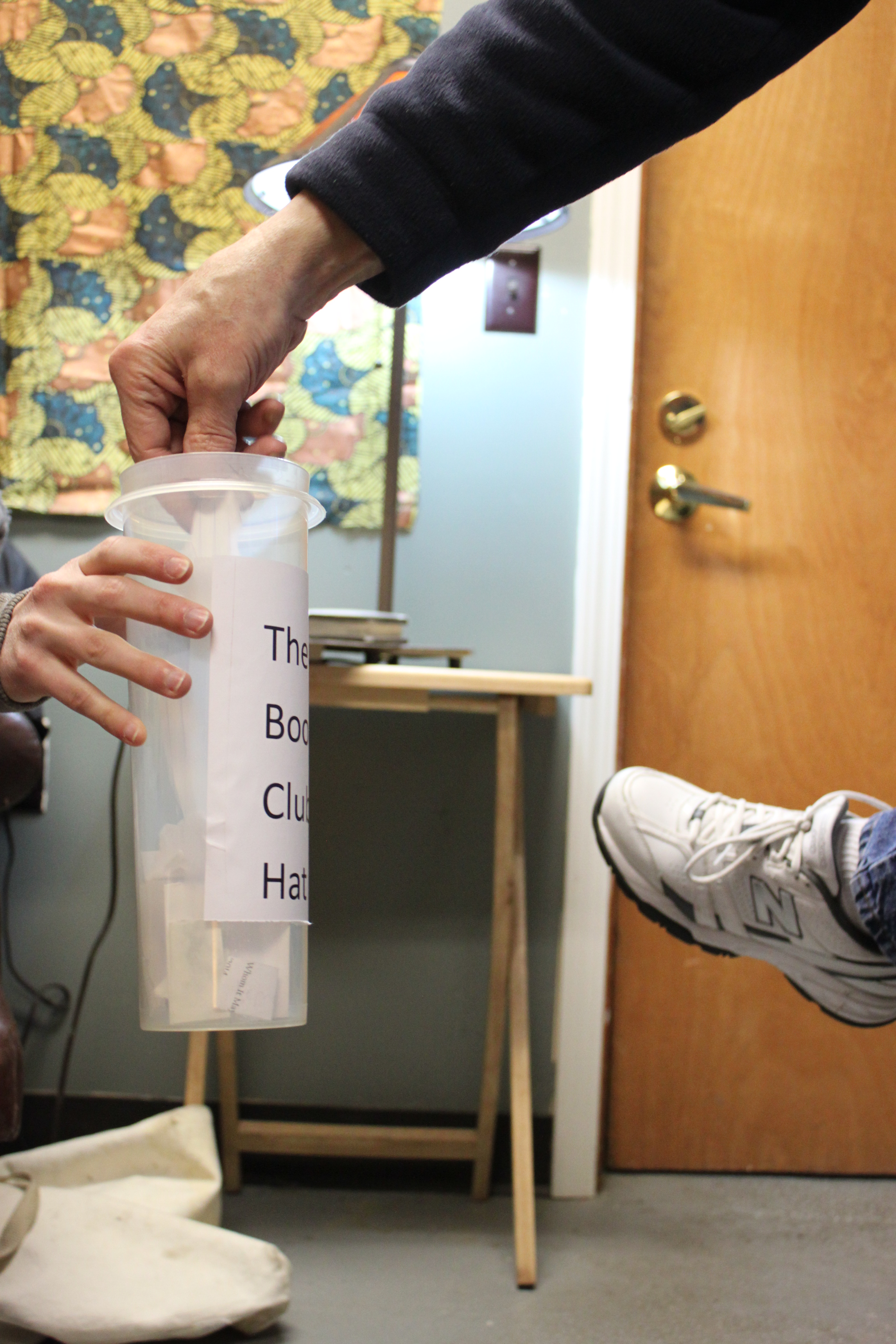
At the end of every club session, a member pulls out the topic for next week. (Photo by Lisa Phu/KTOO)
It’s called The Glory Hole Book Club, but it’s really more of a discussion group. Instead of everyone reading the same book, community outreach librarian Andrea Hirsh says there’s a theme that everyone comes prepared to talk about each week.
“The first day, everybody who was here wrote down five ideas of stuff that they thought would be so neat to talk about and we threw them in a hat, and then we pulled it out. And it works really well because it makes it open for anybody who wants to come,” Hirsh says.
Topics range from philosophy to fantasy. Hirsh says book club members can relate the topic to an article they may have read or a movie they watched. Oftentimes, group discussions stem from personal experience.
“We pulled, like, agriculture once and I thought, ‘That one is going to be terrible.’ But we talked a lot about animal husbandry and, like, growing crops, and most of the people here have worked in agricultural fields. It was a great topic,” Hirsh says.
Six people, who have come to this club session, sit in a circle of chairs. All eyes are on Hirsh as she holds up the book “Packing for Mars.”
She talks about a test performed on want-to-be astronauts:
“They have, like, eight candidates and they keep them all in one room and they’re monitored 24/7. They have no privacy and they can’t leave each other because they’re simulating, like, what’s going on in the international space station.”
The Glory Hole Book Club was a test as well when the shelter paired up with Juneau Public Libraries to try something new.
“I did not think that The Glory Hole Book Club would be a very successful activity but I think it’s really wonderful for people to have an opportunity to not think about the fact that they’re homeless and that they’re struggling and they need to get out of the situation,” says shelter director Mariya Lovishchuk.
Club member Sheila Higgins was a psychic for 25 years out of Fairbanks and Anchorage. She also spent some time working on the North Slope. When she moved to Juneau in 2012 for a different job, things didn’t work out. She’s lived at the Glory Hole for about a year.
Since the club started in January, Higgins has gone to every session. She says those that attend have become closer.
“I think we get to know each other on a different level. We don’t see ourselves as homeless people here. We just see each other as brother and sister.”
The book club also adds another dimension to The Gory Hole. Most of the action takes place in the day room on the first floor, where all the meals are served.
“That’s kind of their forum down there, the people who run the place. Up here it’s ours, OK? It’s ours. This is our club,” Higgins says.
Club members freely share their opinions and listen. After several weeks of this, Higgins says they’re grown to respect and support one another.
“Nobody’s here because they want to be, you know. We’d all rather be in our own homes living different lives, but as long as we’re here, we’re going do the best we can for each other,” she says.
For Kidd Perez, the book club is also just fun.
“It’s spontaneous for sure and it’s just a tight knit group. We all are acquainted well enough here to just let it go, let it ride. You can comment and say pretty much what you think. It gets kind of crazy sometimes, but that’s part of the fun,” Perez says.
Perez is an auto mechanic. He says he goes where the money is. With summer approaching, he has hopes of moving out of the shelter.
“Could be sometime this month, because the season’s coming around and that means more work for a lot of people this time of year, so we’ll see what happens,” Perez says.
But as long as Perez is at The Glory Hole though, he’ll continue going to the club.
As the session on the space program wraps up, Hirsh holds out “The Book Club Hat.”
“Why don’t you pick out our topic for next week,” she says to club member Mark Trammell.
“Oh wow, psychology,” Trammell announces to the group.
Chatter and laughter break out among club members as they get up to leave, their minds already on next week’s club theme.
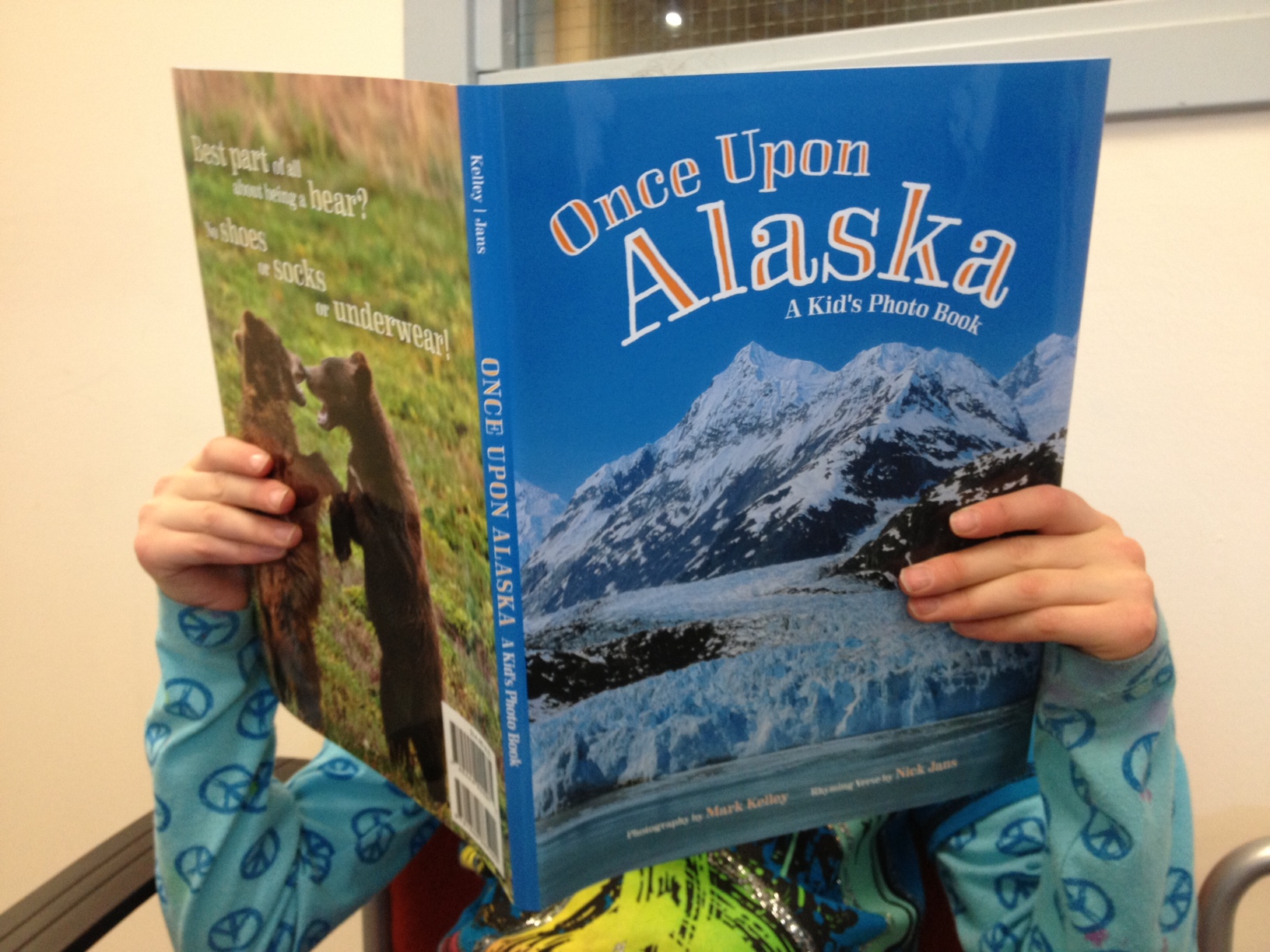
“Once Upon Alaska, A Kid’s Photo Book” is a collaboration between writer Nick Jans and photographer Mark Kelley. (Photo by Lisa Phu/KTOO)
Longtime Alaska photographer Mark Kelley and writer Nick Jans have teamed up to create a children’s book.
Jans is a contributing editor to Alaska Magazine and has written several books. But this is his first time writing for kids, something Jans says intimidated him.
“It took me nine books to get up the nerve to finally write a kid’s book ‘cause kids are the toughest audience there is,” Jans says.
“Once Upon Alaska” is written in rhyming verse. While Jans is most known for descriptive prose, his first publication was poetry, which appeared in Rolling Stone Magazine. He also studied poetry in graduate school at the University of Washington.
“My parents read to me Rudyard Kipling, Shakespeare, Longfellow, Wordsworth, Coleridge– you name it. And I grew up hearing that and my mom was a musician, too, so I always had the music of words going in my head,” Jans says.
“Once Upon Alaska, A Kid’s Photo Book” features 25 photographs by Kelley that were shot mostly in Southeast over several decades. One photo dates back to 1976.
“So it spans a large portion of my life and some of my pictures of my kids are in there. They happen to be in there ‘cause that’s who I shot and I wanted to put kids in a kid’s book. They were seven or eight in those pictures and now they’re 25 and 27, so it’s a long span of pictures, including three or four pictures that I shot last summer,” Kelley says.
“Once Upon Alaska” is a new children’s book, released today, written by Nick Jans, photographed by Mark Kelley, and designed by Heidi Reifenstein. All three – former and current Juneau residents – will be at the Juneau Artists Gallery for First Friday.
Jim Calvin of the McDowell Groups says this is the first of many opportunities the community will have to weigh in on Juneau’s economic development plan. (Photo by Lisa Phu/KTOO)
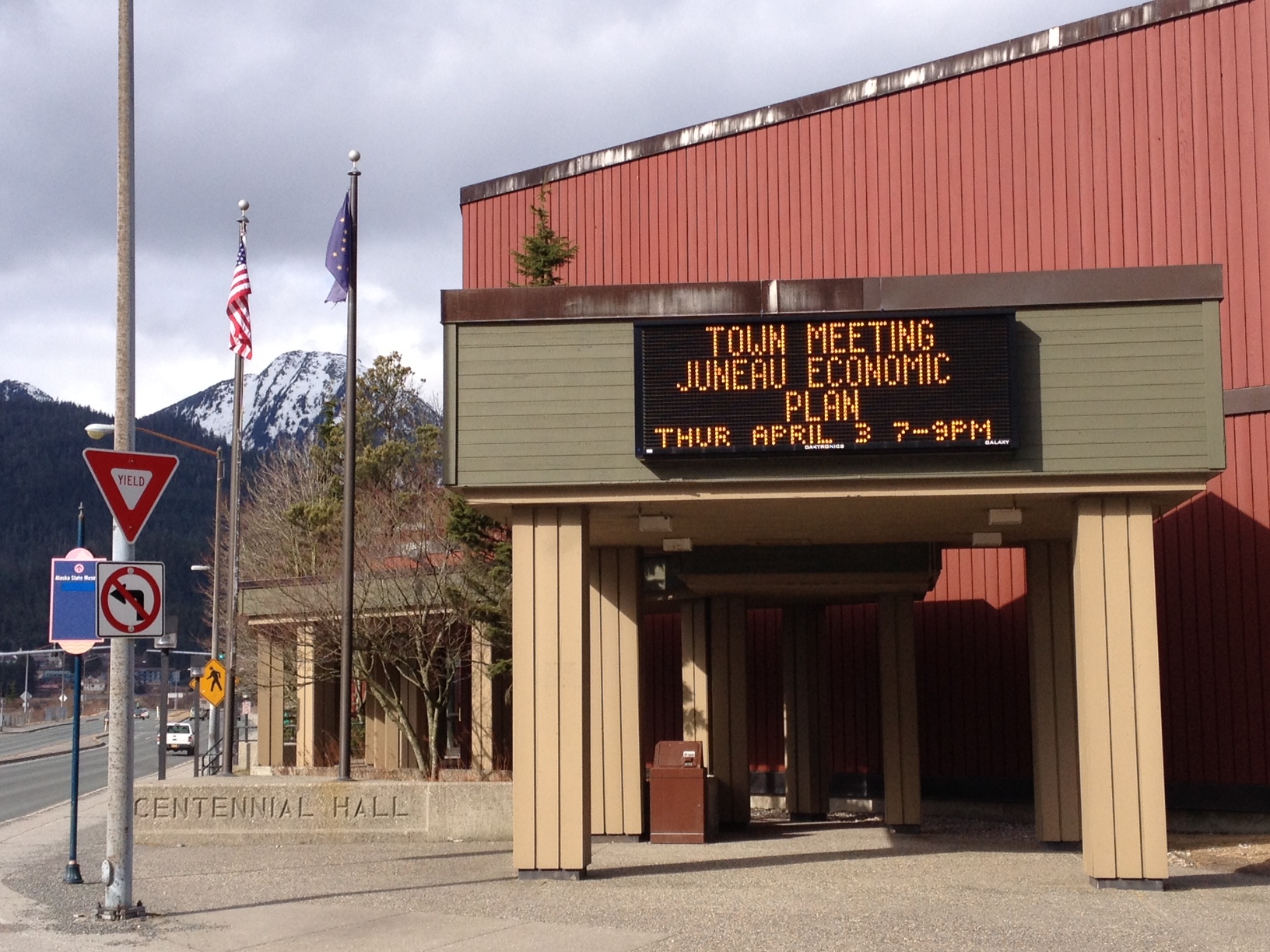
Besides conducting telephone, online and business surveys, the research firms invite the community to an economic plan town hall meeting 7 p.m. Thursday at Centennial Hall.
Jim Calvin of the McDowell group says economic development means many things.
“It certainly is infrastructure development. It’s also business retention, business expansion, business recruitment. It’s labor force development. It’s developing access to capital. It’s–you name it. It’s a broad thing and we want to leave it broad now. We want people to be thinking very big picture, very creatively about what opportunities they might see,” Calvin says.
Besides presenting information on the current state of Juneau’s economy, Barbara Sheinberg says the town hall meeting will feature an interactive poll and participants will see instantaneous results.
“We’ll ask people some question about some of the data just to see how many small businesses do they think there are in Juneau and what do they think is happening with wages here. But also then really ask some bigger picture questions about the economy and where they want to go. And people actually can text, or tweet or go online,” Sheinberg says.
The Juneau Assembly set aside $100,000 for an economic development plan, which is scheduled for completion in December.
Tonight’s economic plan town hall meeting starts at 7 p.m. at Centennial Hall. Bring a mobile device or laptop computer to participate.
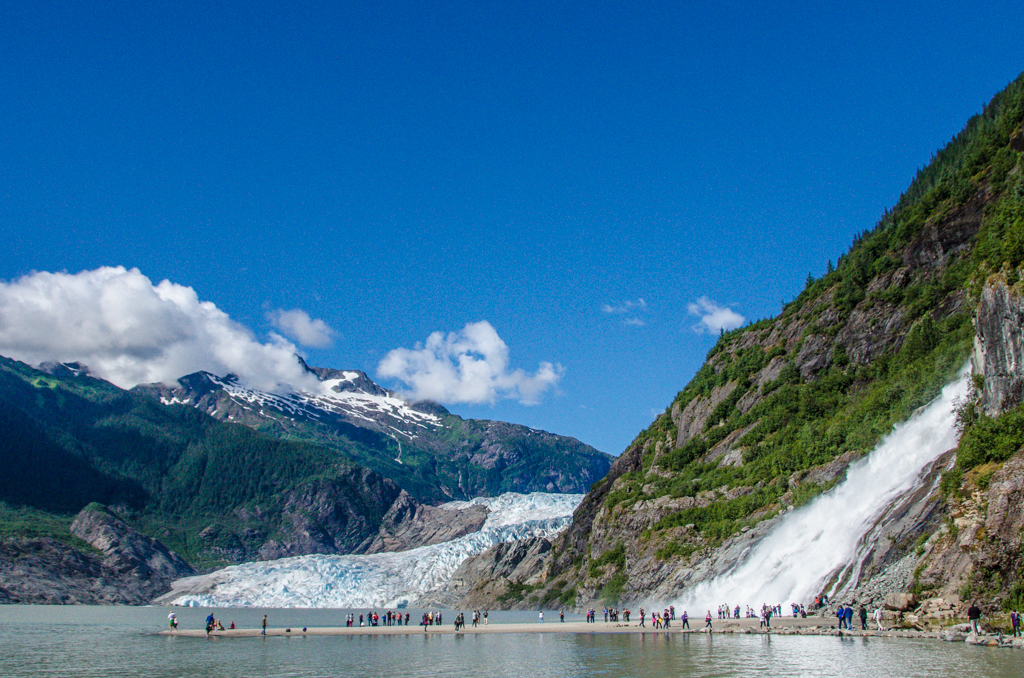
Summer tourists surround Nugget Falls during a visit to Mendenhall Glacier. (Photo by Heather Bryant/KTOO)
Nearly half a million cruise ship tourists visited the Mendenhall Glacier last year.
John Neary is director of the glacier’s visitor center, run by the U.S. Forest Service. He’s trying to figure out how to maximize enjoyment of the glacier as both a National Forest destination for tourists and a city park for locals.
Neary says part of that involves informing people about climate change and its effect on the glacier.
“How can we give people a message about sustainability? How can we motivate the community and others to step forward and say this looks like a great opportunity to affect half a million people a year with a very proactive message about, ‘What can I do to help climate change?’” he says.
Neary wants to start creating a master plan for the Mendenhall Glacier and its visitor center. He’s speaking at the Mendenhall Glacier Visitor Center at 7 p.m. tonight about “Changes Coming to Your Backyard Glacier.” He says it’s an opportunity for people to say what they want the visitor center and surrounding area to look like in the next couple of decades. Community input in the plan is critical, including from local residents who participate in tourism, like bus and taxi drivers.
“I would hope that the industry leaders, the company owners would come out to the table. I would hope that the agency representatives that represent the bears or the salmon or the birds or all the wildlife that has no voice – I would hope they would come to the table to advocate for those resources,” Neary says.
Each year, 465,000 cruise ship visitors are allowed to visit the glacier, a limit imposed by the Forest Service. Permitted tour companies are each allocated a certain portion of that total.
Neary says the tourism industry would like to bring more visitors, but there are limitations, including current infrastructure and complying with environmental regulations.
“Until we have better traffic flow and better parking and better restrooms, more stalls – until we have those things in place, we can’t just offer more, more, more. We’re saying it’s a community response we need to this and we don’t have the funding, so we have to come up with other solutions,” Neary says.
Meanwhile, the public can expect to see a change at Mendenhall Glacier as early as this summer. Neary says, for the tourist season, temporary rubber speed bumps will be placed on the last half mile of road leading to the glacier.
Close
Update notification options
Subscribe to notifications
Subscribe
Get notifications about news related to the topics you care about. You can unsubscribe anytime.