Lisa Phu

Managing Editor, KTOO

"As Managing Editor, I work with the KTOO news team to develop and shape news and information for the Juneau community that's accurate and digestible."

State employees prepare to move from Douglas to Bill Ray Center

Lauren Sill didn’t make the end-of-February deadline to rid her office space of personal items.

“I have pictures of my daughter and I have calendars and just different notes and pictures and decorations tacked to the walls and a bunch of coffee cups – I think those we’re allowed to keep until we move, those probably don’t have to go quite yet. And plants, I have plants,” Sill says. 

Sill is a subsistence resource specialist for the Department of Fish and Game. She’s been mostly out of town the past few months for work and plans to start packing when her field season ends in a couple weeks.

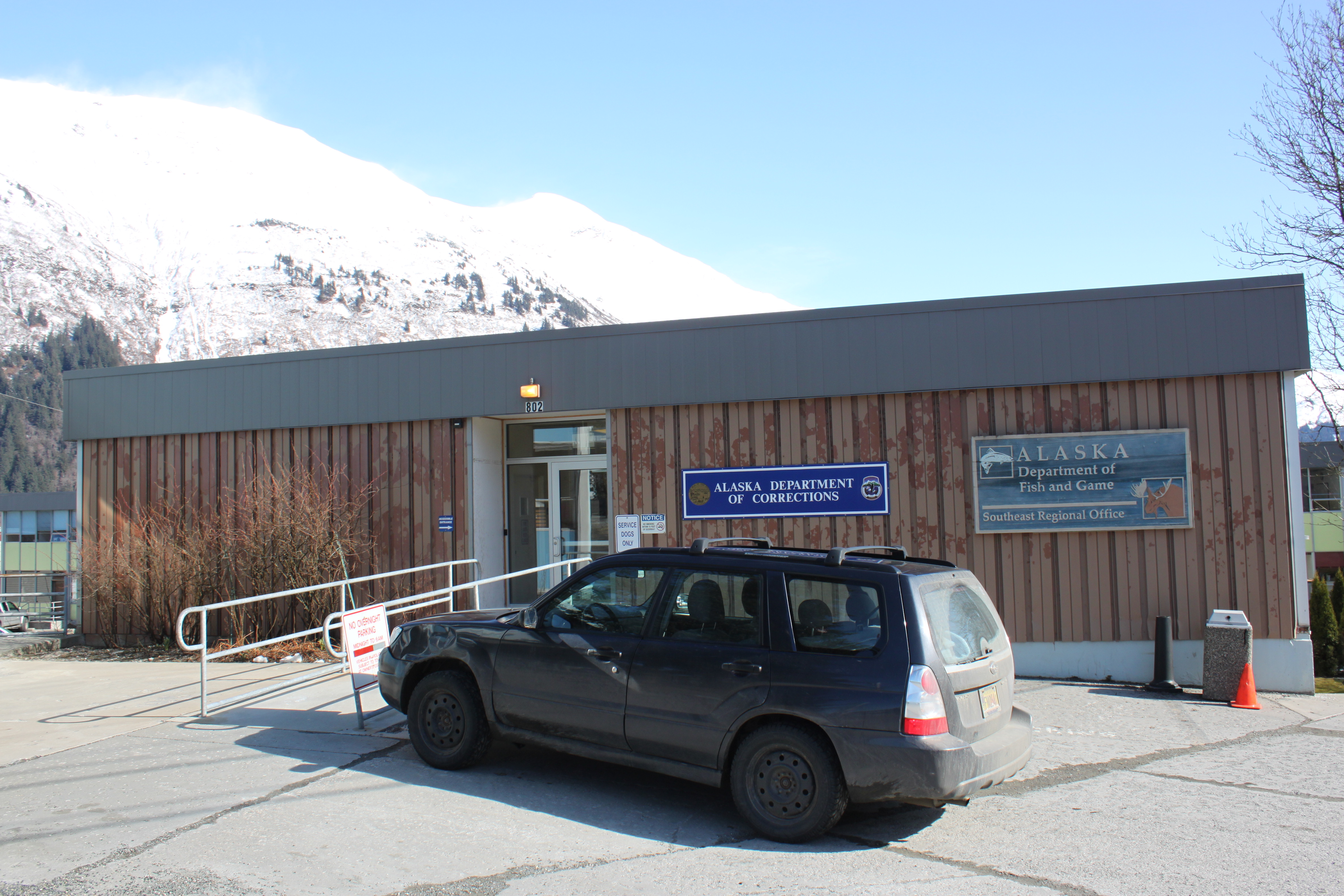
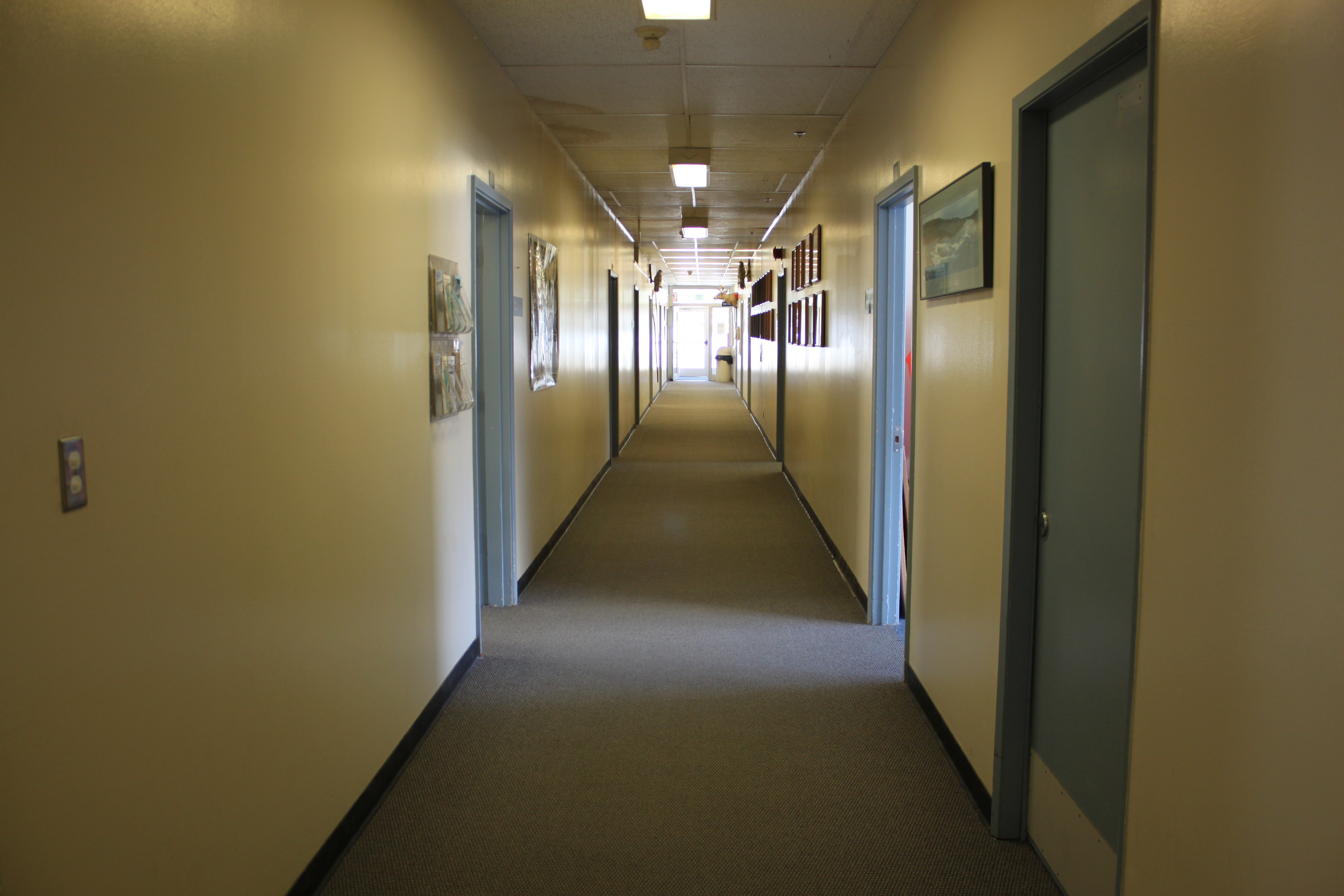
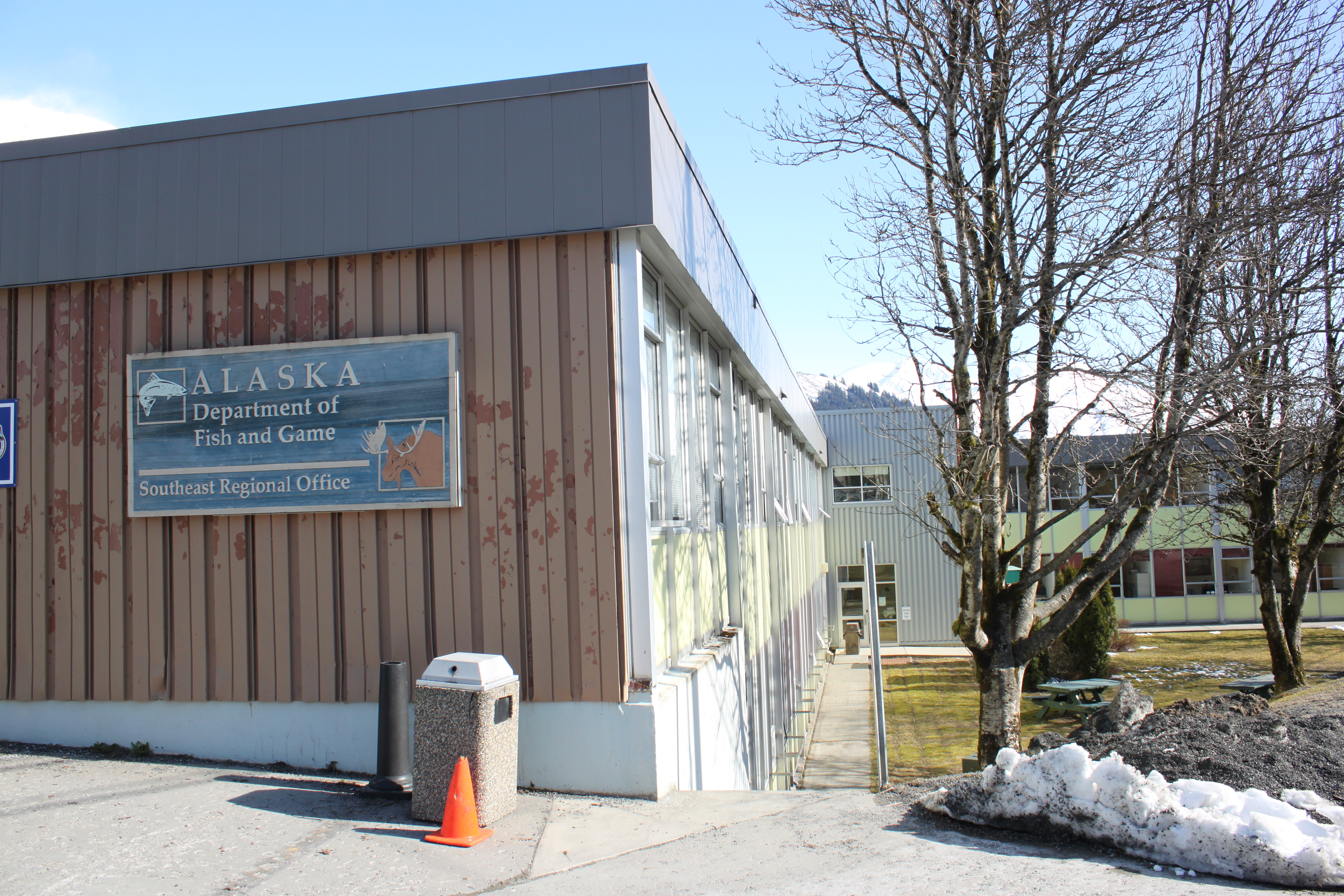
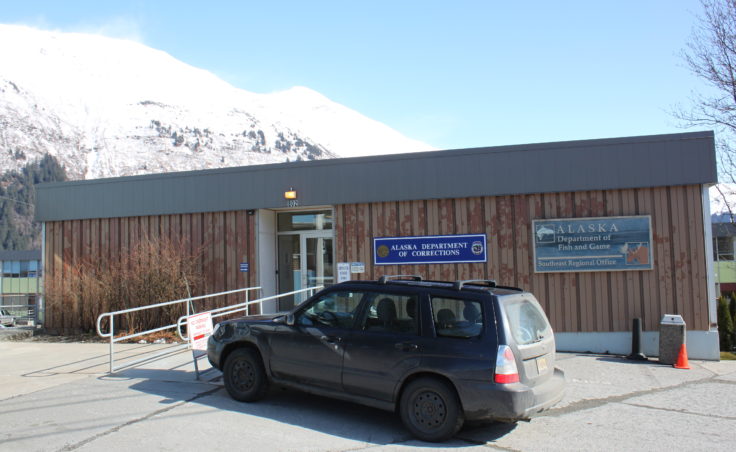
About 160 state employees in the Douglas Island building will temporarily relocate to the Bill Ray Center in downtown Juneau starting in April. The move will accommodate the state’s $18 million remodel of the Douglas building. 

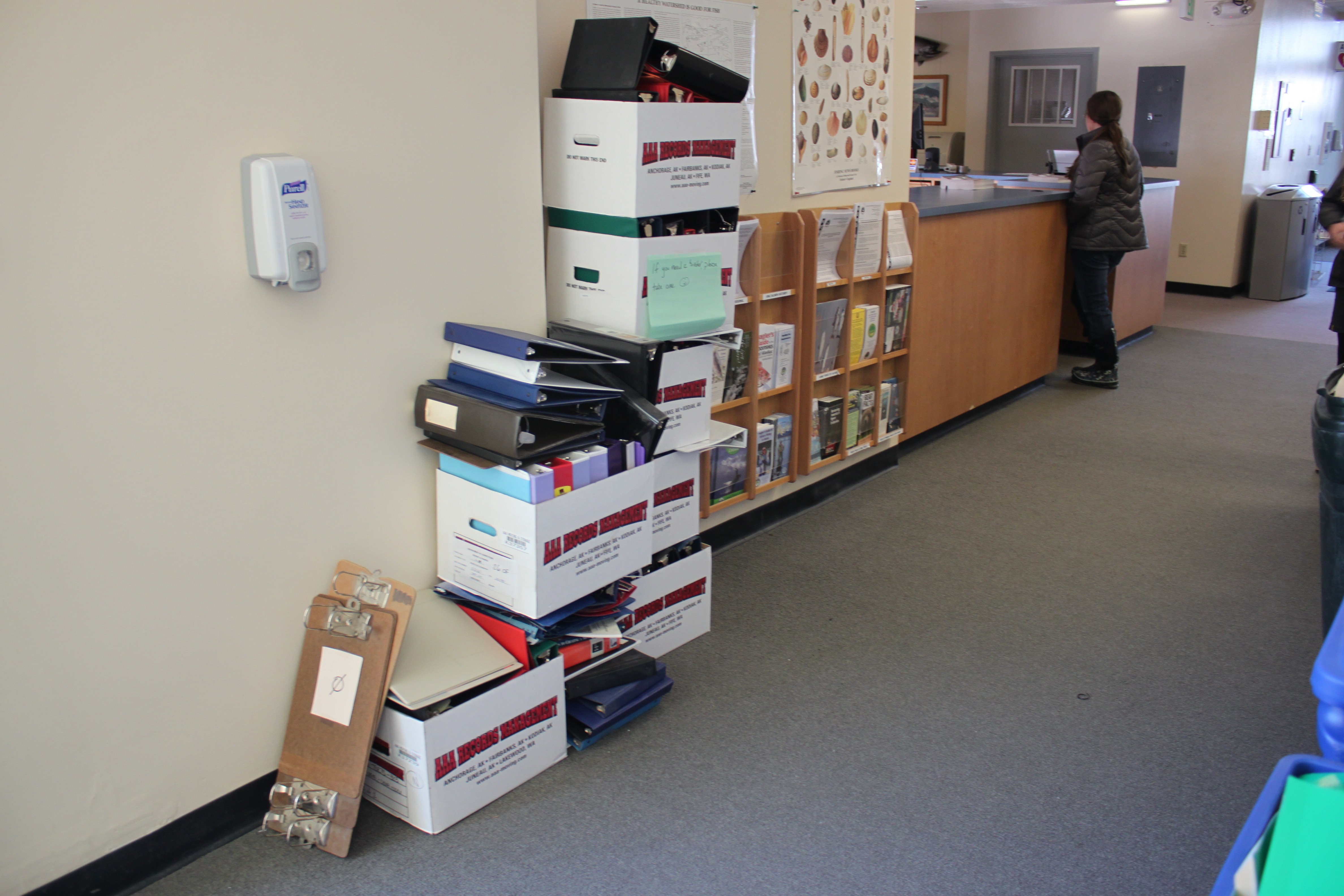
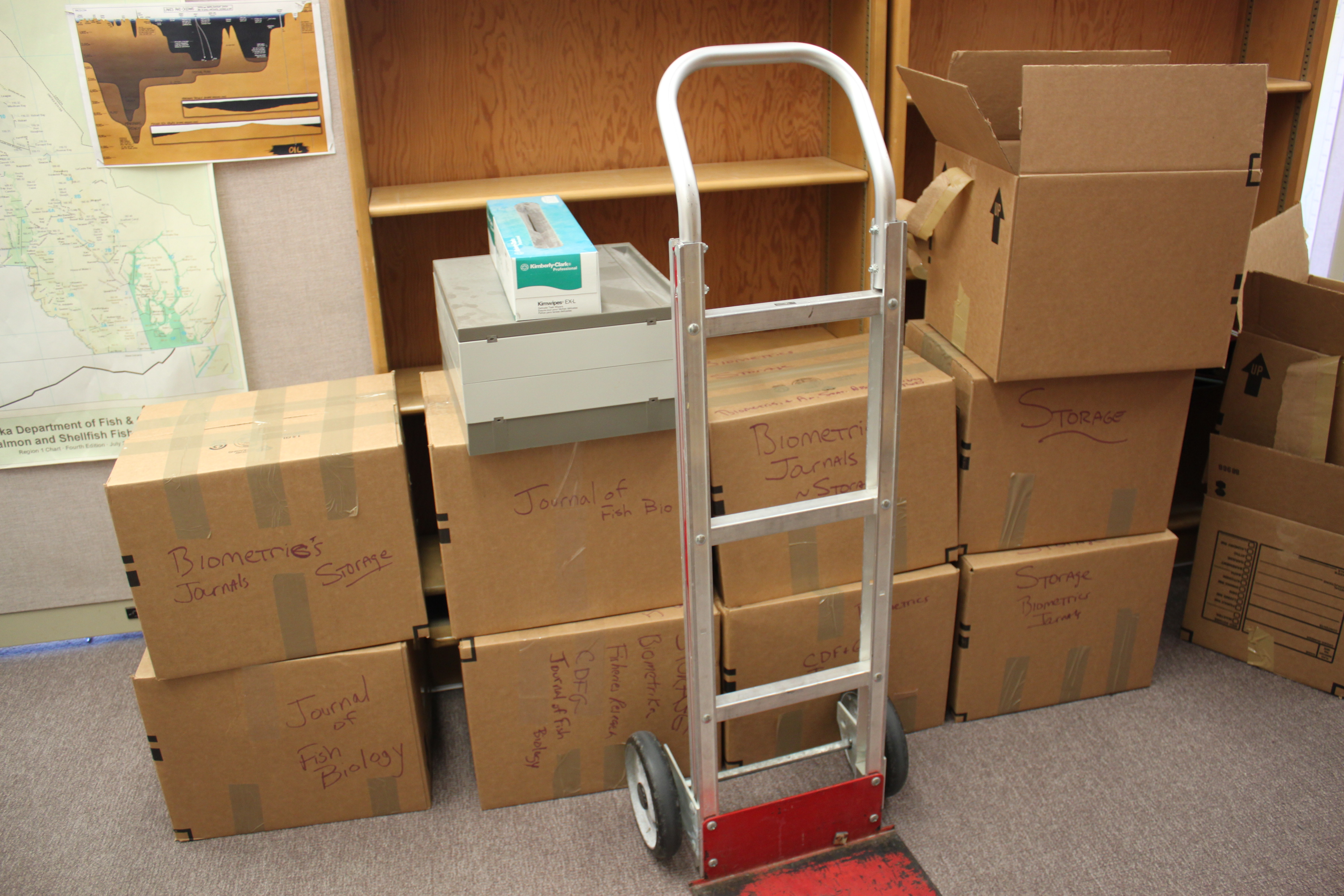
“We have a lot less space in the Bill Ray Center so a lot of things are going to storage, so just trying to figure out our files and our books and things that we’ll need for the next little while and pack it up,” Sill says. 

Her officemate Rosalie Grant is further along in the moving process. Last month, she took items off her wall, like artwork, maps and family photos. Her fish tank went home and she gave away her plants.

“My office is looking pretty bare right now,” she says.

More than 100 fish and game employees and 43 from the Department of Corrections are relocating to the Bill Ray Center in waves. Corrections moves in the beginning of April. Fish and Game goes next in four phases. Renovation is scheduled to begin June 1.

Down the hall from Sill and Grant’s office, biometrician Kray Van Kirk is really close to having his office entirely packed up.

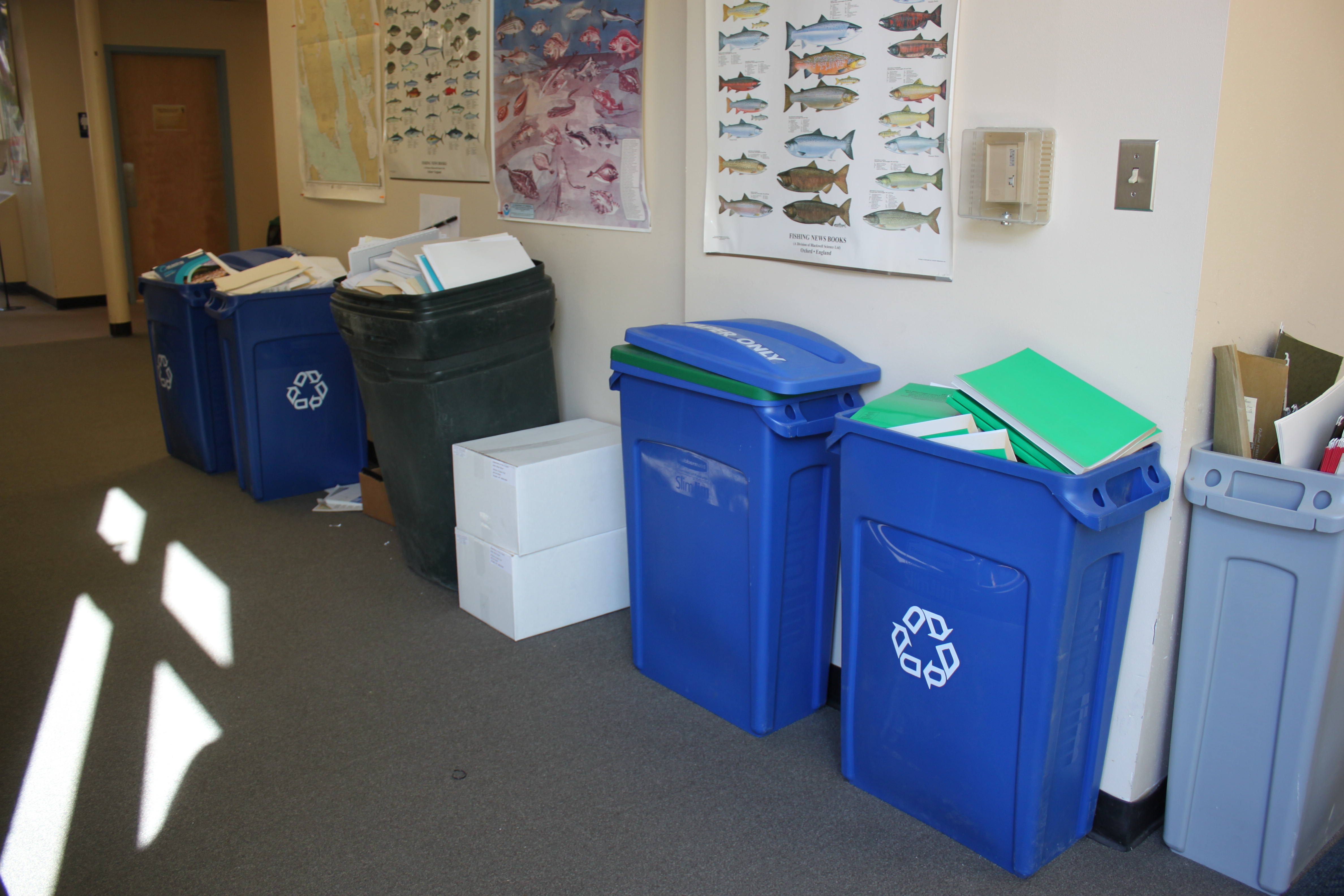
We got rid of a lot of stuff. We were purging manuals from, like, 1995 and old Windows 95 disks and things, and ‘how to’ use this and ‘how to’ use that,” Van Kirk says.

Unlike everyone else at the Douglas building, Van Kirk and two others are not moving to the Bill Ray Center. They’re temporarily going to fish and game headquarters located across the Douglas Bridge, but will return to Douglas when the renovation is complete.

“We’ve already – two years out – picked our desk formations and how they fit together along with our little pen holders and cups and everything,” he says. 

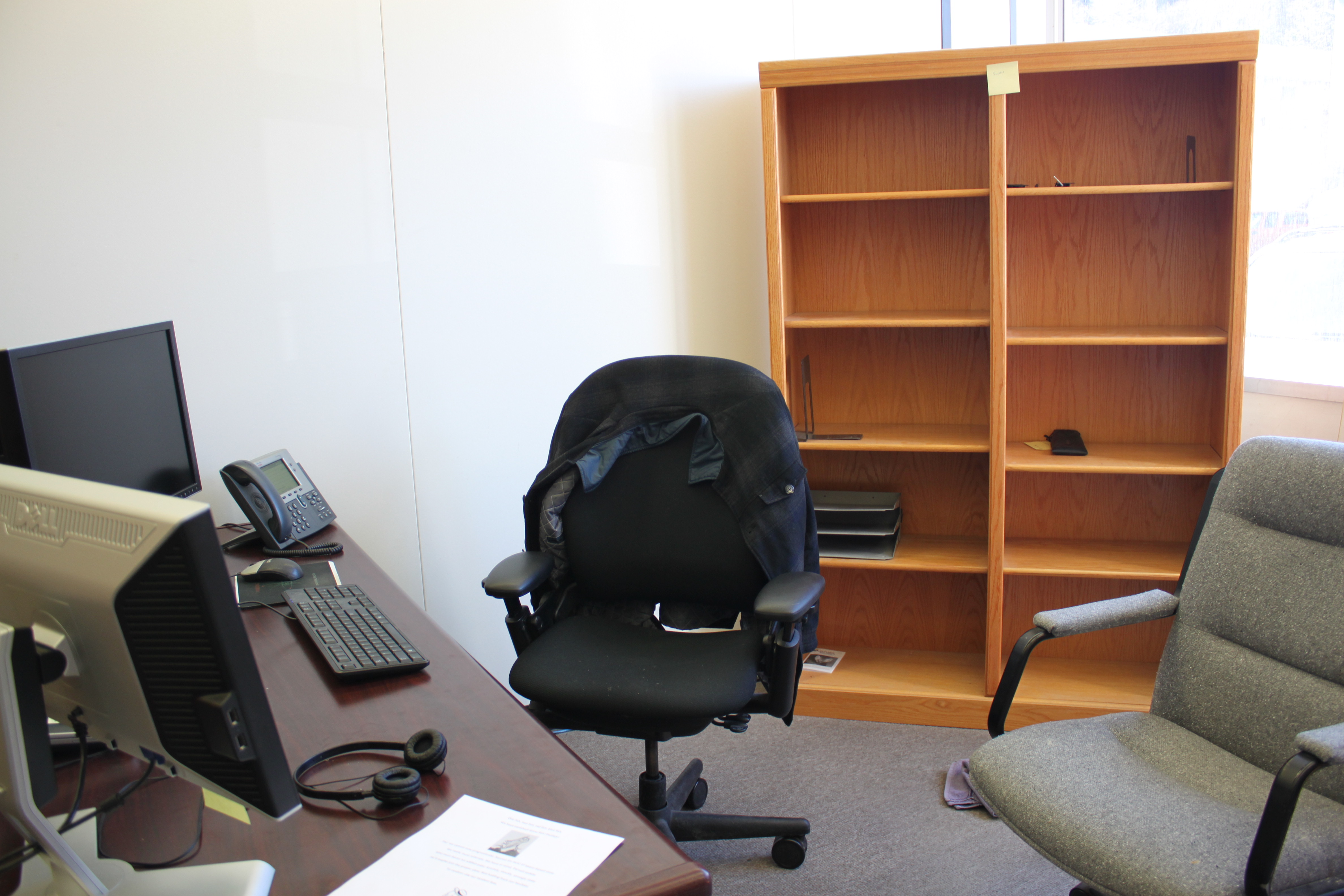
In the remodeled Douglas building, fish and game employees will all be in 6-by-8-foot cubicles as part of the universal space standards being unrolled in state buildings throughout Alaska. None of the fish and game employees in Douglas will have an office anymore.

Van Kirk says he has reservations about the open office model. He’s gotten used to talking loudly with other biometricians in his office.

“If we want to work on a stock assessment model and we have a particular issue and one of us says — ‘Hey, what do we do with this catch curve analysis?’ — we can all sit here and jabber and make a bunch of noise. In a large area like that I think we’ll be more hesitant to do that because we don’t want to bother somebody who’s sitting 20 feet away who doesn’t have anything to do with what we do,” he says.

Leon Shaul has worked in the Douglas building since 1984. He’s not looking forward to relocating to the Bill Ray Center, but sees it as inevitable.

“The building obviously needs some work as far as retaining heat. It’s built to 1960s standards. So I think that part’s necessary and to accomplish that, I guess we have to move,” Shaul says.

The state is leasing the Bill Ray Center from First National Bank Alaska for $49,000 a month. The renovation is expected to take 16 months.
Front Street Community Health Center to serve all

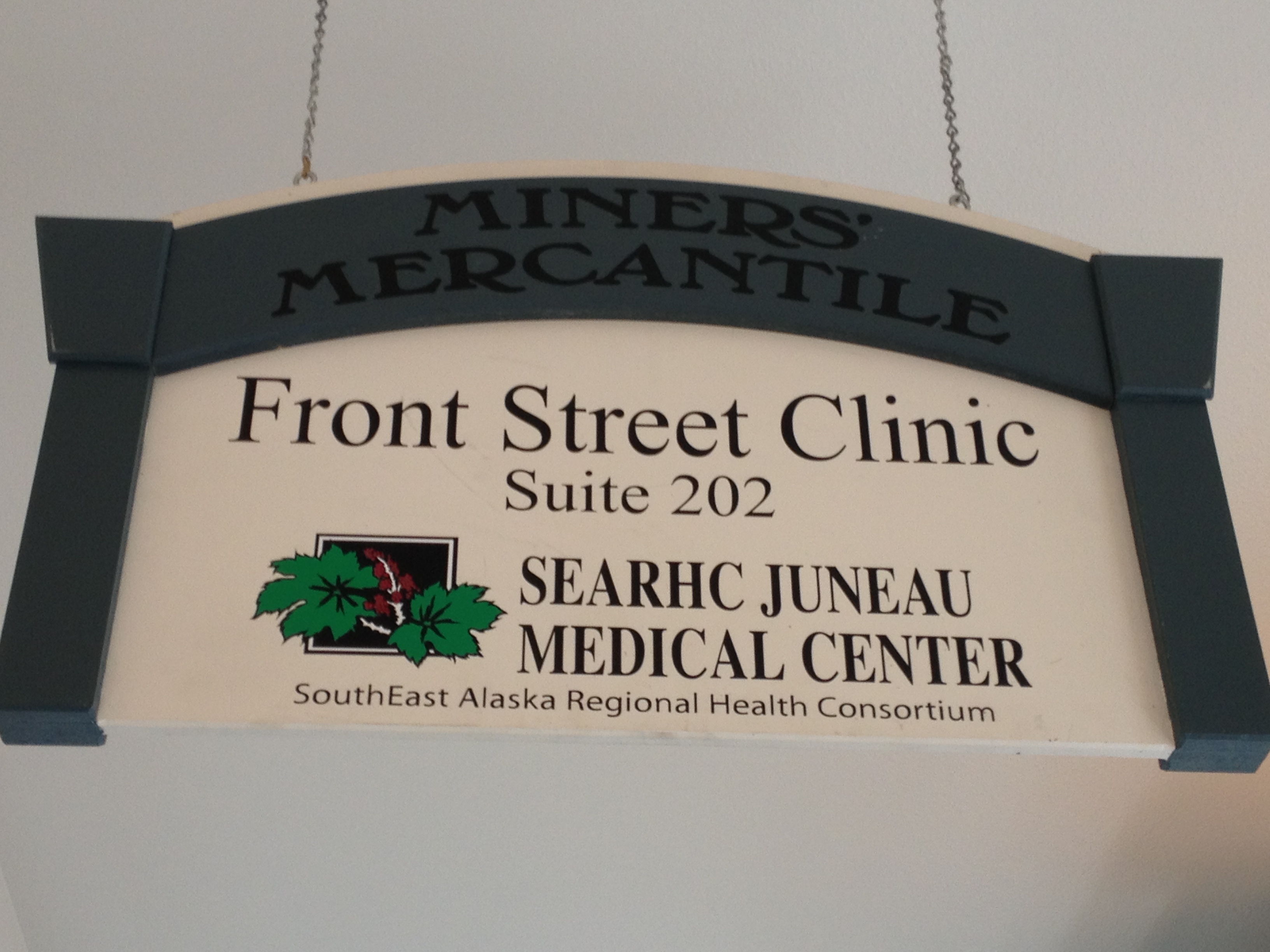
As of May 1, SEARHC will not longer be operating Front Street Clinic. (Photo by Lisa Phu/KTOO)

Front Street Clinic will soon be open to everyone, instead of just serving individuals experiencing homelessness.

The medical, dental and mental health provider will also be renamed the Front Street Community Health Center on May 1.

Mariya Lovishchuk is president of the board taking over management of the clinic.

“If you don’t have insurance, you definitely are eligible to receive services at Front Street on a sliding fee scale. If you have insurance, you should also go to Front Street because the idea is that if we serve people of all sorts of insurances, then those who have insurance can actually support those without insurance somewhat,” Lovishchuk says.

If you’re not a current patient of Front Street Clinic, but are interested in becoming one after April 30, email frontstreethealthcenter@gmail.com.

Southeast Alaska Regional Health Consortium currently manages Front Street Clinic, but decided last September to cut funding due to budgetary constraints. The community raised more than $120,000 to keep the clinic open until the April 30 transition.

Lovishchuk is relieved her patrons still have a place to go for health care needs; she’s also executive director of the downtown shelter and soup kitchen The Glory Hole.

“It’s really nice to say, ‘OK, let me just walk you over three blocks,’ as opposed to saying, ‘Oh yeah, go to the hospital and get a $850 bill for, you know, five minutes of being seen for whatever is wrong with you,’” Lovishchuk says.

Lovishchuk says making Front Street available to everyone is a positive addition to the community. She’s already planning to have her next physical there.

Why mental illness is the ‘no-casserole’ illness

Pam Robinson calls mental illness the “no-casserole illness,” even though she says it’s just like any other physical illness, like cancer or diabetes.

She recalled the reaction when two people close to her were hospitalized.

“One person was hospitalized with cancer. The other person was hospitalized with a mental illness. The person with cancer, I had almost too much support. I had to thank people and say, ‘Please, no more casseroles. I have no room in my refrigerator.’ And I was so grateful for all of that. Not so much with the person diagnosed with mental illness. We call mental illness the ‘no-casserole illness.'”

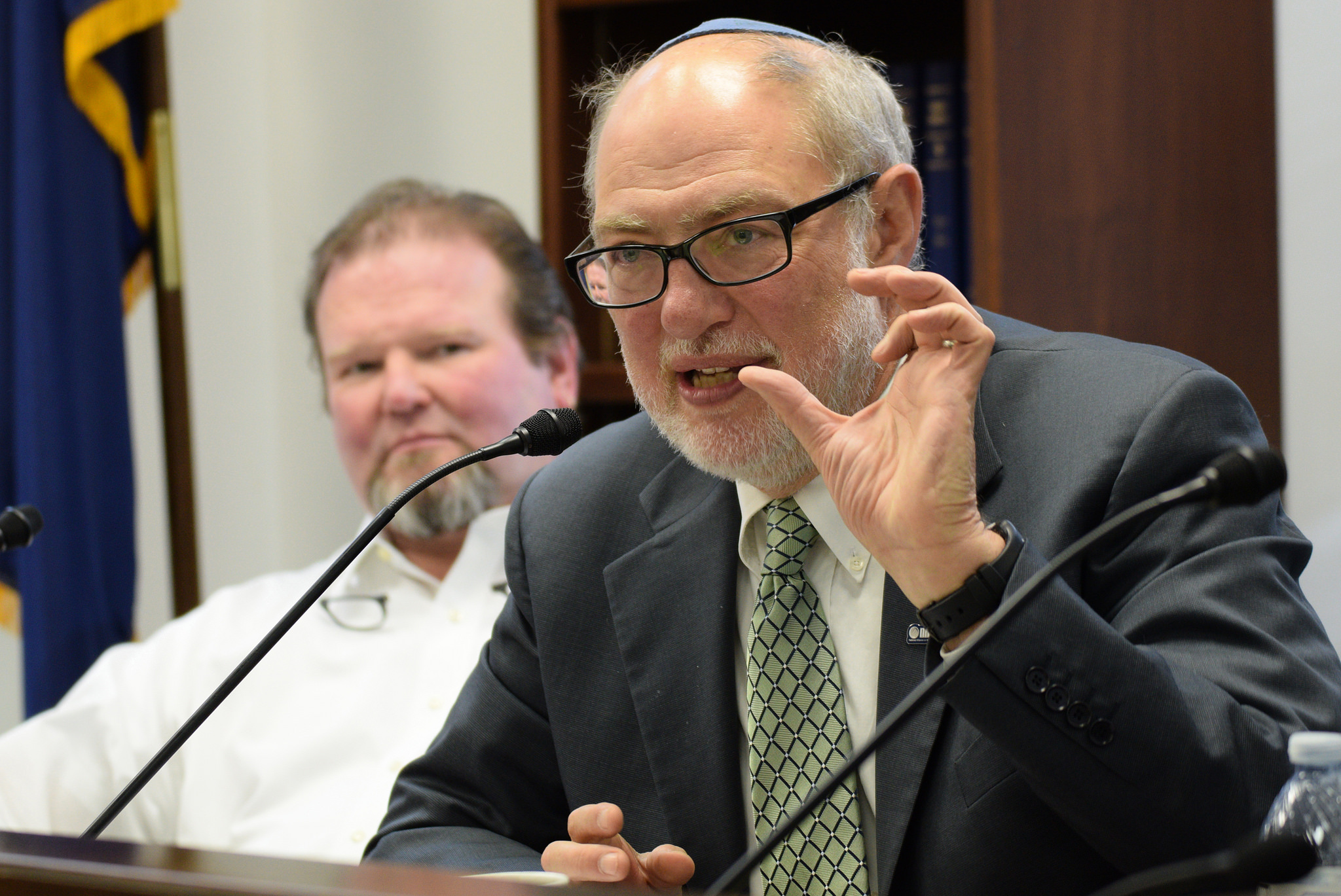
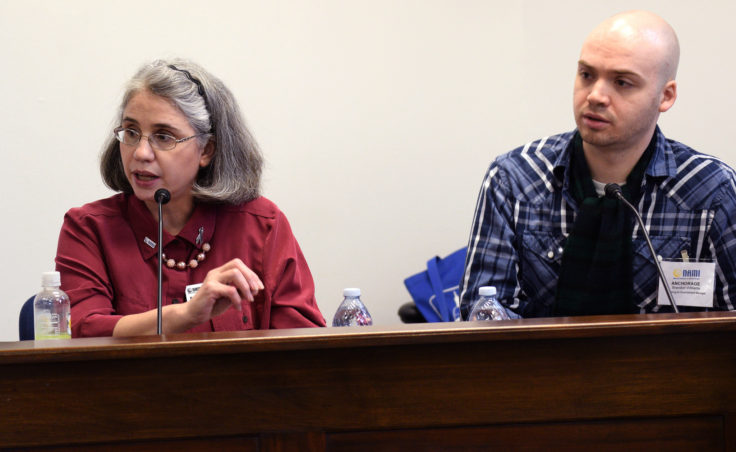
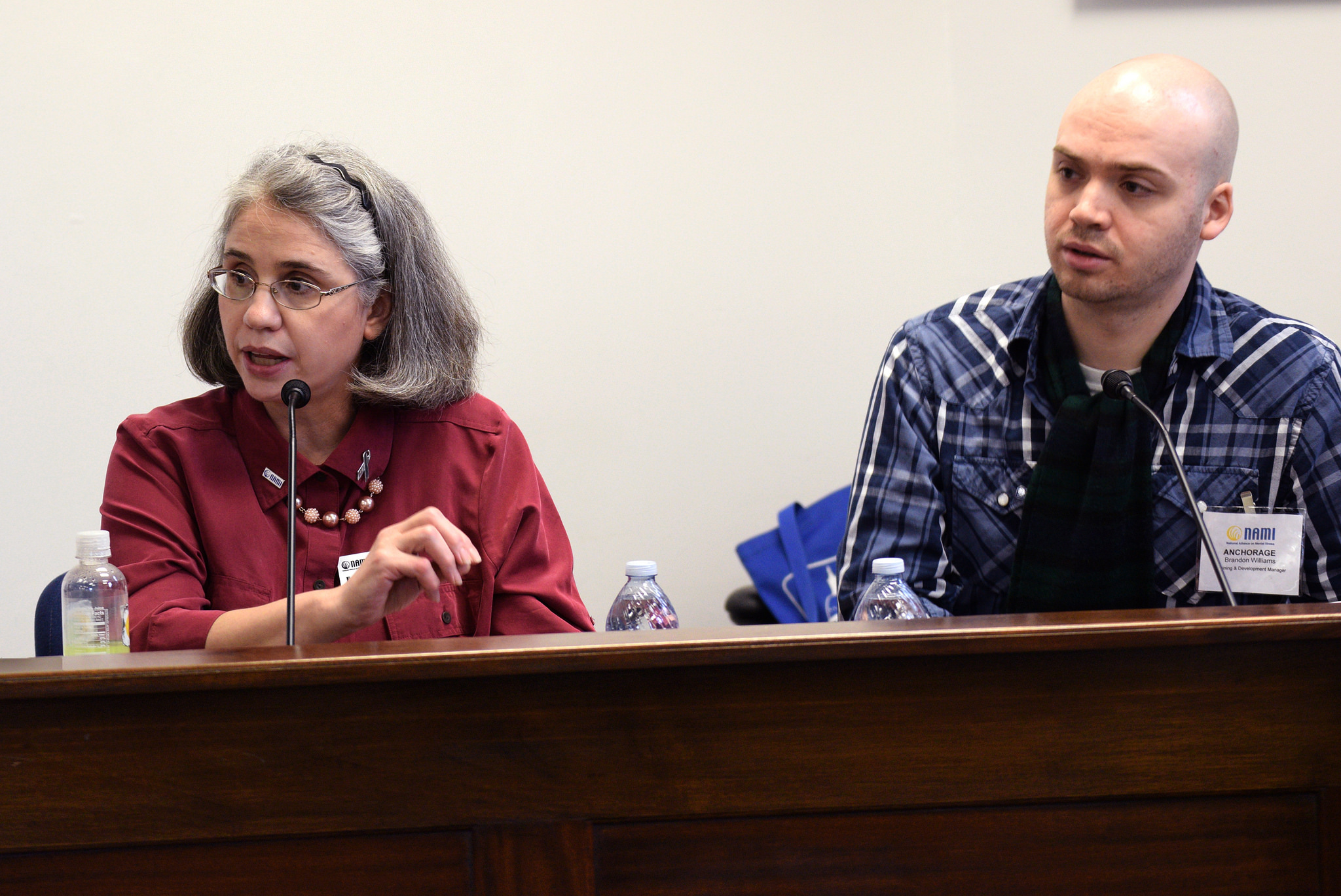
Robinson is a psychologist and president of the Anchorage affiliate of the National Alliance on Mental Illness. She was part of a panel discussion Wednesday in the State Capitol Building where NAMI advocates shared firsthand accounts of living with mental illness, turning extremely personal matters into public ones.

When Brandon Williams was in his early teens, his mother was diagnosed with severe bipolar disorder.

“When you have a mom with bipolar disorder, you don’t always know which mom you’re going to get. You know, sometimes you’re going to get the mom that’s on top of the world, ready to conquer everything – ‘What school assignments do you have? Let’s knock them out.’ And sometimes you get the mom that’s just so low and inconsolable that there’s nothing that can bring her out of it,” Williams said.

After numerous visits to the doctor, which didn’t fix anything, his mother eventually found the resources and services that started to help.

“She found NAMI where she found peer support, where she found people that understood and that she could actually talk to about what she was going through without being isolated or ashamed or alone, which was life changing and revolutionary,” Williams said.

NAMI specializes in peer-driven support and education. Groups and programs are led by trained individuals who have experienced mental illness or family members of people who’ve experienced mental illness.

Through a combination of NAMI resources, mental health education and medication, Williams said his mother recovered.

“My mom finally got to a place where she was someone that was completely controlled by her illness to having complete control over her illness. Our family didn’t fall apart,” he said.

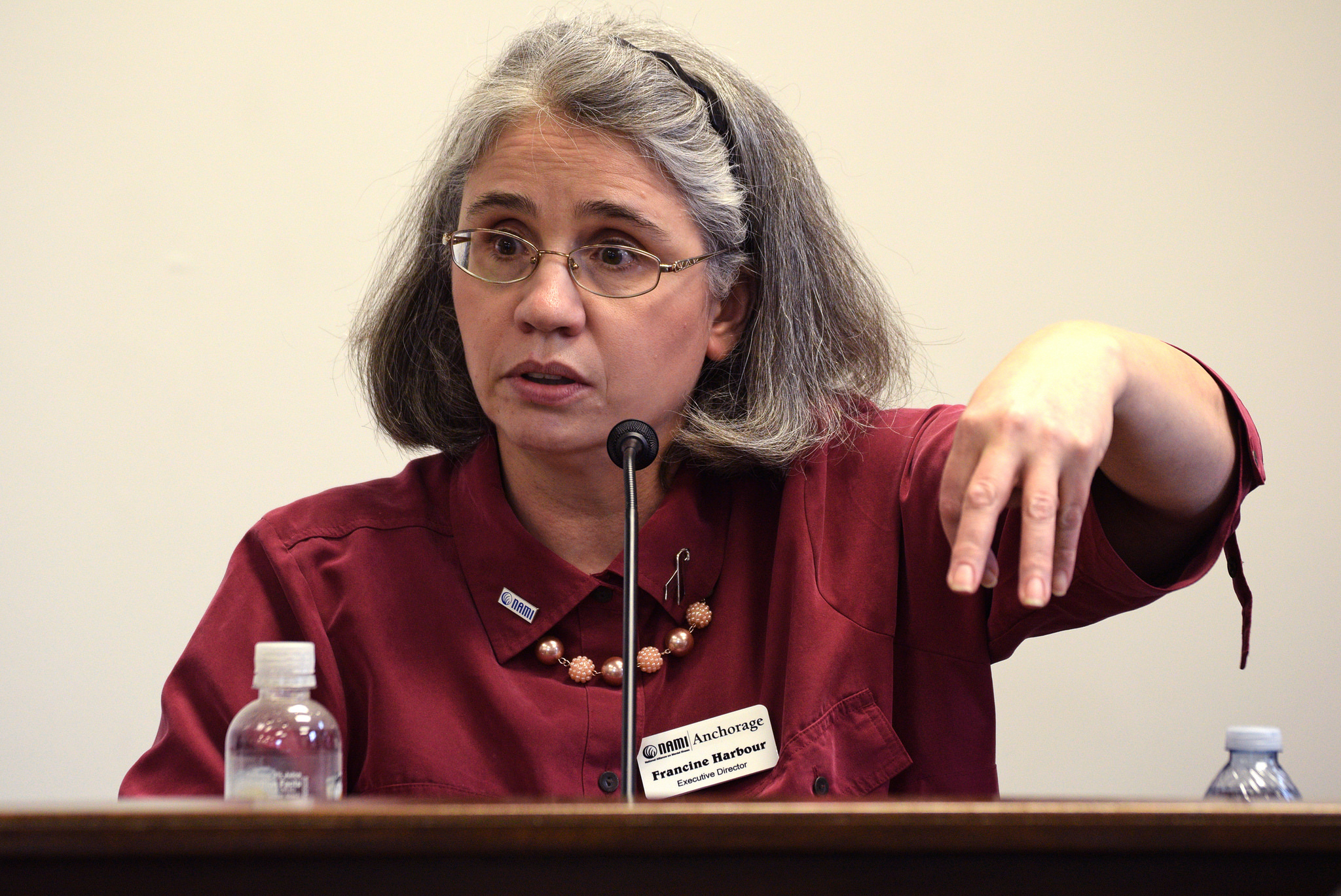
Williams is an adult now. He’s the training and development manager for NAMI Anchorage. His mother, Francine Harbour, is the executive director.

“Talking about mental illness is difficult,” Harbour said. “People look at me now and say, ‘Really? You were that sick?’ And I go, ‘Yeah.'”

Harbour said state grants are crucial to making mental health treatment available. The problem, she said, is most legislators don’t often hear from people suffering from mental illness.

“Because of the stigma, most people who have experienced recovery don’t want to come out and say it, because they don’t want to be associated with that past,” Harbour said.

Susan Boegli is a pastor at Aldersgate United Methodist Church in Juneau. She said she isn’t afraid of the stigma and made the decision to out herself.

“I am bipolar. I’ve suffered from depression since I was a teenager. So I’m here in front of all of you and saying, ‘Yes, I am a leader, a spiritual leader in the community and I do, too, suffer from mental illness.'”

Boegli doesn’t consider herself recovered, but through the support of her family and NAMI resources, she’s managing her illness.

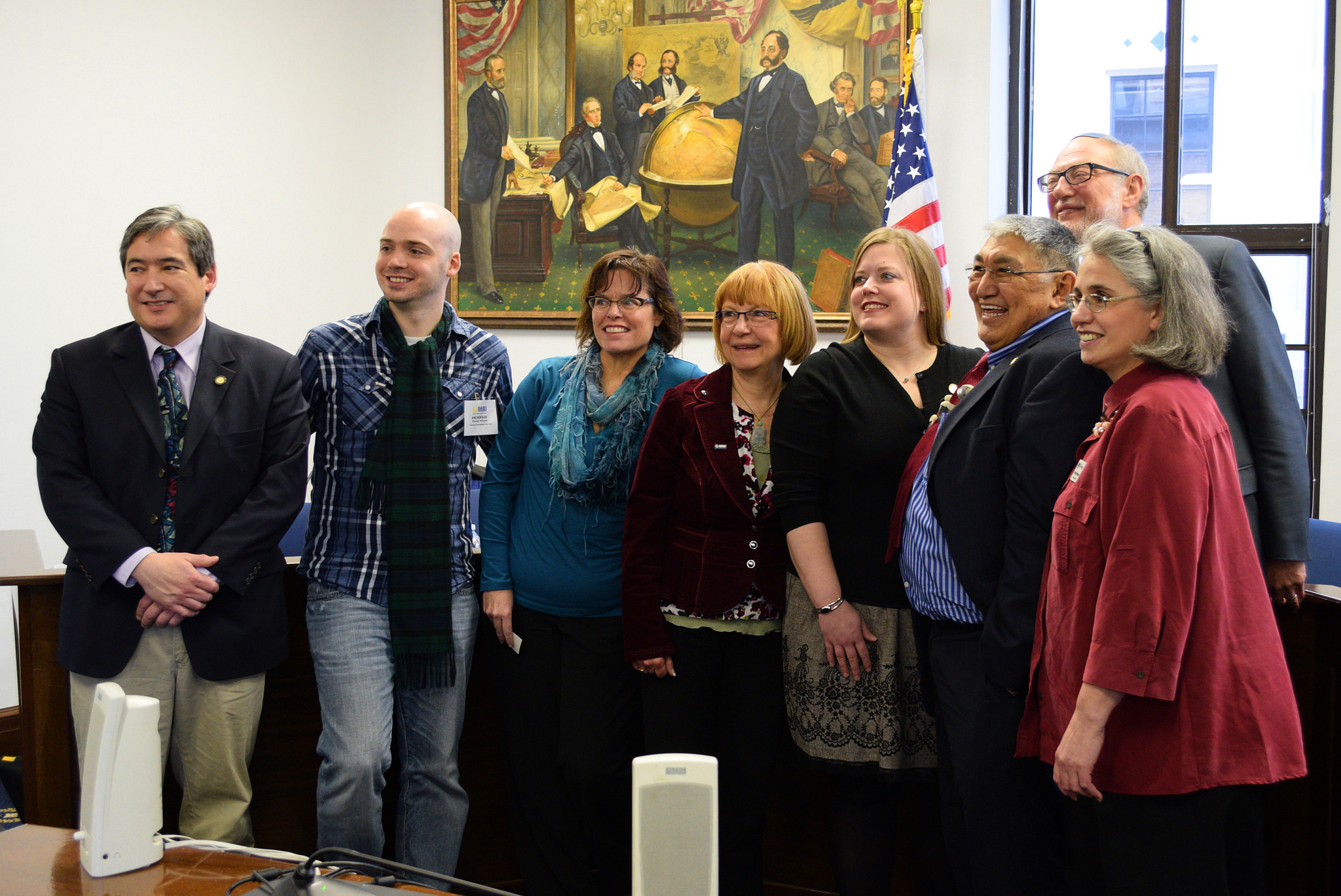
NAMI advocates spent several days this week in the Capitol. It had been several years since their last organized appearance there.

What Alaska Natives need to know about the Affordable Care Act

For most Americans, the deadline to sign up for health insurance under the Affordable Care Act is March 31. For American Indians and Alaska Natives, the process is a little different.

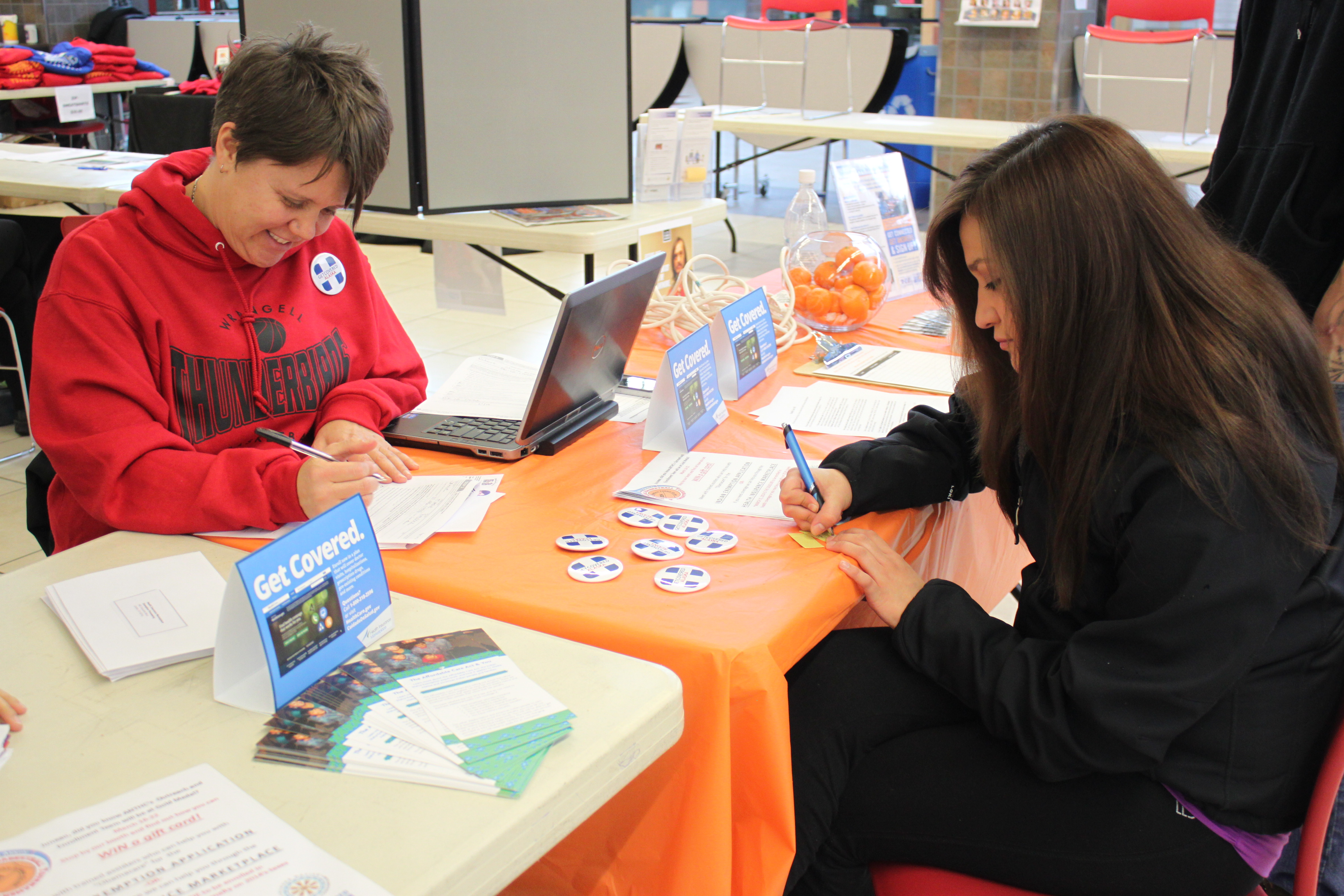
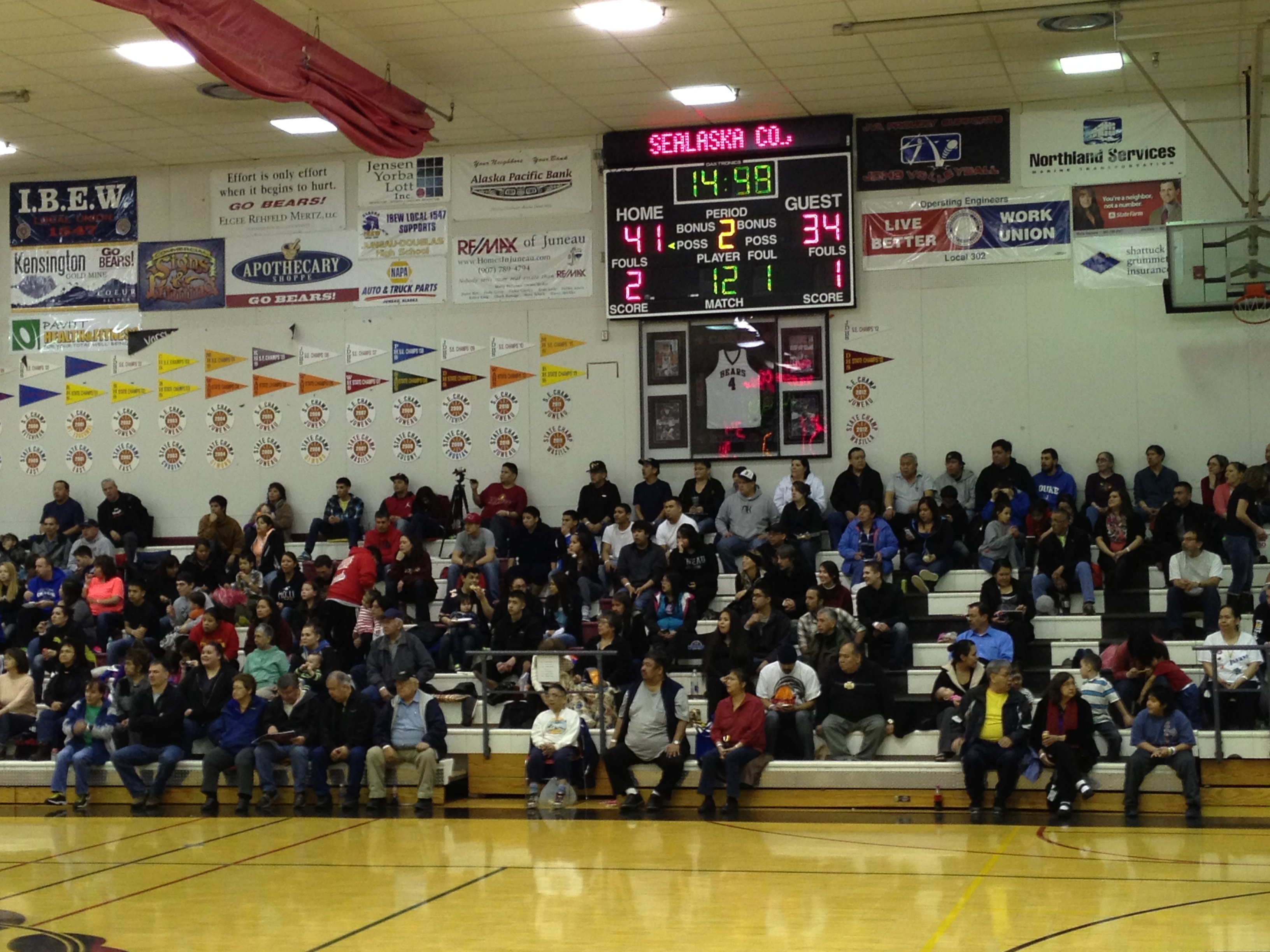
Alaska Native Tribal Health Consortium, United Way, and the Southeast Alaska Regional Health Consortium have teamed up at Juneau’s Gold Medal Basketball Tournament to inform as many Alaska Natives as possible.

Jamie Paddock traveled from Hoonah to cheer on her hometown team. Attending Gold Medal is an annual tradition.

In between games, she visits a health care information table.

“My grandfather told me I might win a gift card if I sign up here,” Paddock says.

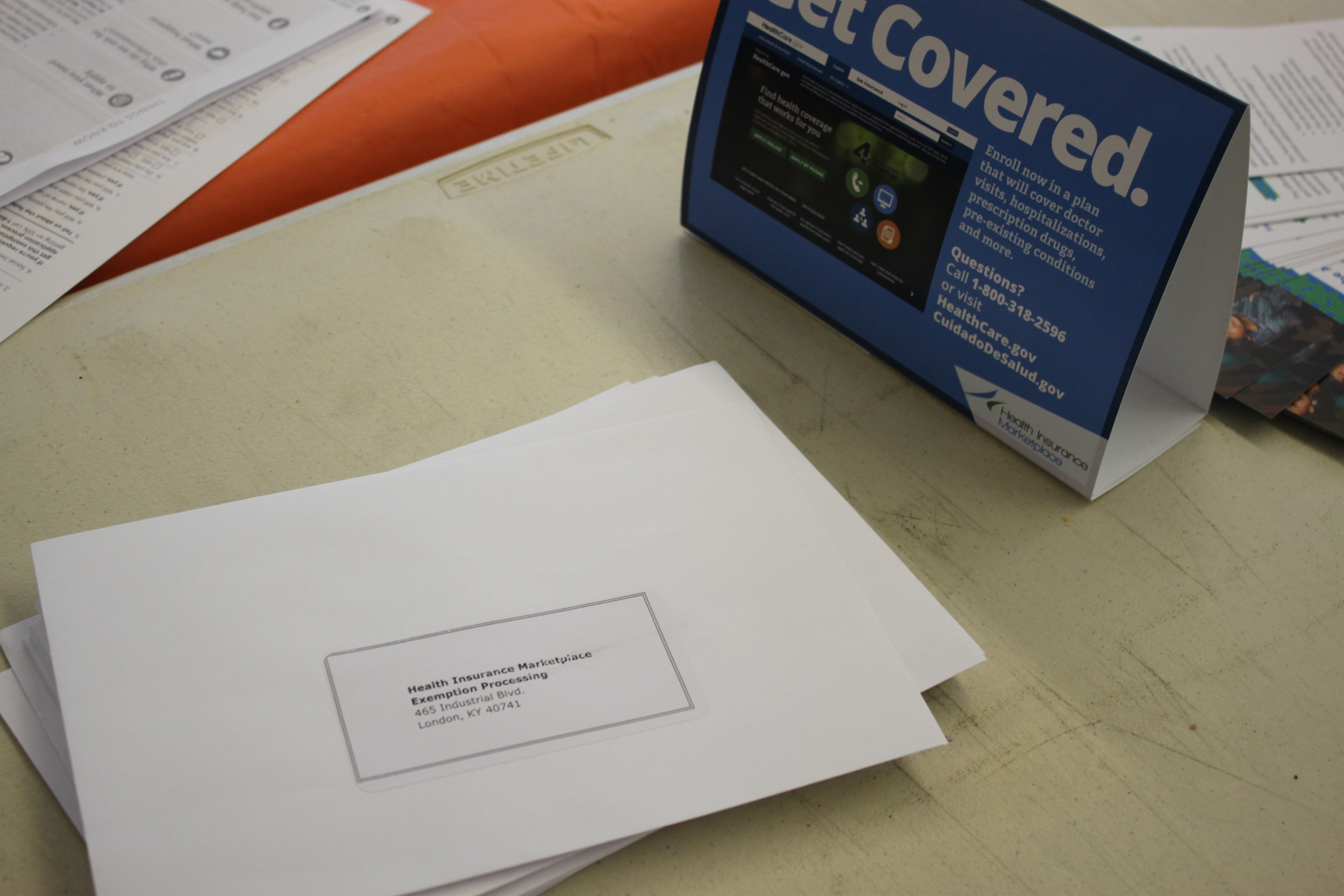
Paddock isn’t actually signing up for anything. She’s filling out an Indian Status Exemption form.

“It’s a little bit of a complicated form even though it’s pretty short. It’s only three pages but there are some tricky questions,” says Monique Martin with the Alaska Native Tribal Health Consortium. “And it just means that if you don’t have health insurance you could face a tax penalty and if you send in that exemption that gives you a lifetime exemption from the requirements of the Affordable Care Act.”

Paddock’s heath care provider is Southeast Alaska Regional Health Consortium, which doesn’t require insurance. But she does have Blue Cross as well as Medicaid.

“We have a very robust tribal health system in the state of Alaska. The exemption is to acknowledge that Alaska Natives and American Indians have access to tribal health and Indian Health Services to get their health care needs met,” Martin says.

Alaska Native Tribal Health Consortium is targeting almost 50,000 Alaska Natives without insurance. They’re the ones who could face a tax penalty.

“The exemption form does not eliminate your ability to get insurance either at healthcare.gov or through an employer. It just covers you in the case that you have a gap in your insurance coverage,” Martin says.

So far, the tribal health consortium has helped fill out more than 2,200 Indian Status Exemption forms. One form can cover an individual or family.

“We’ve also sent out thousands of emails or also we print them up and mail them to people in rural parts of our state,” Martin says.

Only a paper version of the exemption form is available this year. You print it, fill it in, and mail it. Or have it all done at Gold Medal.

“Don’t forget to include a copy of either a tribal enrollment card or some proof that you’re an ANCSA shareholder or a copy of your Certificate of Indian Blood card issued by the Bureau of Indian Affairs. If you don’t, the feds will send you back a letter saying your application is not complete,” Martin explains.

A health care information table will be at Gold Medal through Saturday.

“We’ve been from Barrow to Ketchikan, from Bethel to Fairbanks, Iliamna, Dillingham, Kotzebue, Nome. We’ve been to lots and lots of places to spread the word,” Martin says.

Open enrollment for Alaska Natives interested in getting health insurance is ongoing; there is no deadline.

And Alaska Natives have until the end of the year to submit an Indian Status Exemption form, although if you do it at Gold Medal, you could win a gift card.

Juneau starts to map out its future

The McDowell Group's Jim Calvin presented a number of statistics on Juneau's economy during Thursday's Juneau of Chamber Roundtable Lunch. (Courtesy of Jim Calvin, McDowell Group)
The McDowell Group’s Jim Calvin presented a number of statistics on Juneau’s economy during Thursday’s Juneau of Chamber Roundtable Lunch. (Courtesy of Jim Calvin/McDowell Group)

Where should Juneau be in 10 years? That’s the big question prompting the development of the Juneau Economic Plan, which will lay out the capital city’s economic future. Jim Calvin of the McDowell Group explained during last week’s Chamber of Commerce Roundtable Lunch how he and his team will figure out the answer.

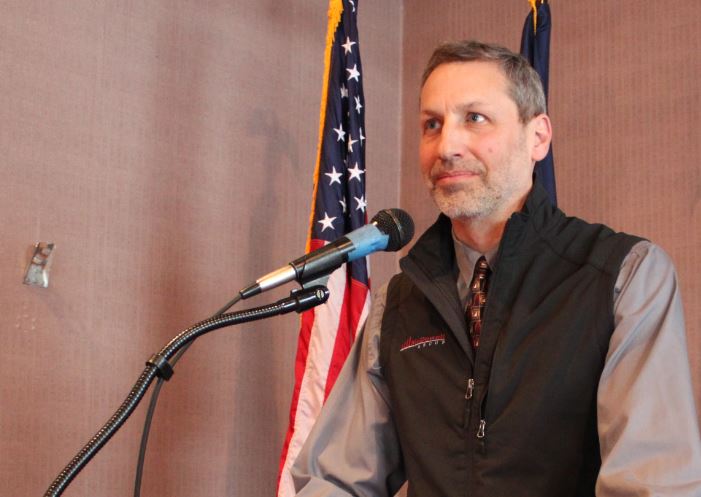
Jim Calvin, economic analyst for the McDowell Group. (Photo by Lisa Phu/KTOO)

Economic analyst Jim Calvin says in order to plan for the future, you need to know where you are today.

“You need to understand what forces are at work, what trends are shaping things as we go forward. We need to understand that left to its own devices, where are we headed? If we don’t try and be proactive, if we don’t try and control to a degree what we can control in our economy, where are we likely to end up?”

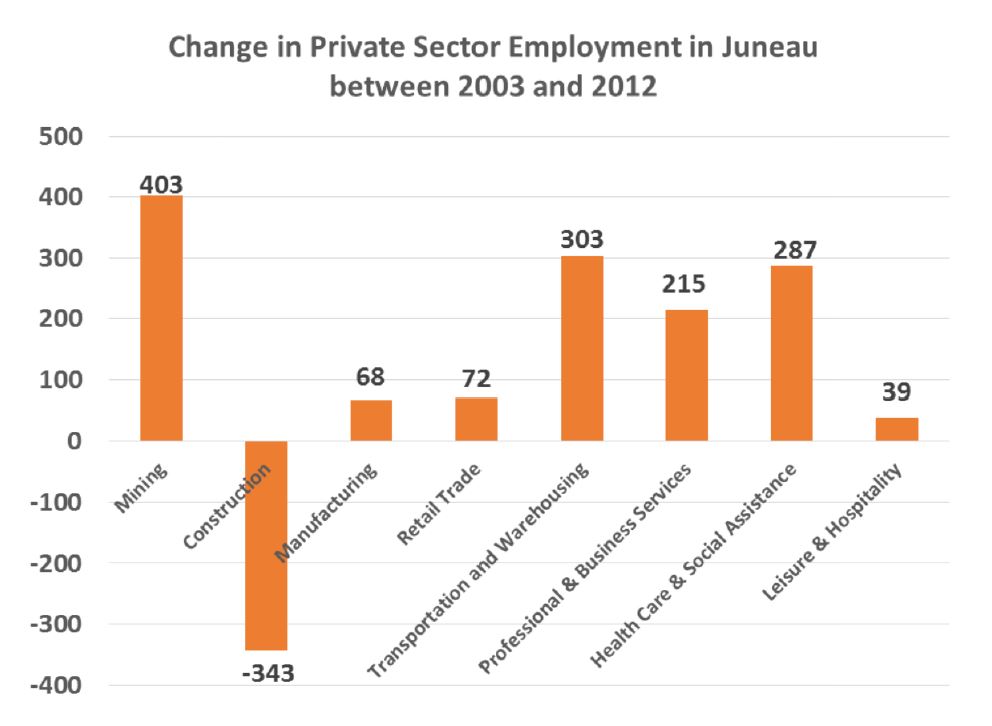
Based on preliminary analysis, Calvin says employment has grown less than one percent each year in the last decade. Between 2003 and 2012, Juneau gained 1,300 new private sector jobs, but lost 400 government jobs.

Of those new jobs, a third of them are in mining.

“The lion’s share of growth in the private sector in Juneau over the last decade has been in the mining sector. These are $90,000, $100,000 a year jobs. That’s good news,” Calvin says. 

Juneau also gained 300 new jobs in health care, but lost 300 construction jobs. Calvin says there will likely be an uptick in that sector with construction of the State Library, Archives & Museum project and the Walter Soboleff Center.

The local workforce has seen a decline of participation from Juneau residents and a growth of nonresident participation. Numbers show that in the past decade wages to those living outside of Juneau have gone up $70 million.

“Obviously nonresident labor is going to be an important part of our labor force no matter what because we have a fairly significant seasonality in our economy and local residents want to work year-round so they’re less inclined to take seasonal jobs. But still, $70 million of money leaking out of the economy is something we have to look at as we think about long-term economic development planning. What can we do to get more residents to earn some of that income?” Calvin says. 

Working with Sheinberg Associates, McDowell Group plans to engage with the community as much as possible when developing the plan.

“We really need to understand what’s important to us as a community. What are we trying to accomplish with this effort? What metrics are we going to use to measure progress. It is important that we start thinking about where we want to be in 10 years,” Calvin says.

Since Juneau has more older people compared to the rest of the state, Calvin says we need to consider the aging population. Ten percent of Juneau residents are age 65 and older. That percentage will double in ten years.

“What can we do as our population ages? What do we need to do in terms of senior services to keep more of that retirement income in the community instead of having it leak out as people go to Arizona or wherever else people decide to retire?” Calvin asks. 

And despite having fewer younger people, Calvin says they will reach out through social media for input from the youth as well.

“We’re actually going to be in the high schools doing some student surveys to get a perspective of young people. After all, this really is a lot about the kind of community that we want our kids to grow up in, so we need to hear from young people,” he says. 

The Juneau Assembly set aside $100,000 for the economic plan, which is scheduled for completion in December. Assemblyman Loren Jones says it’s critical for the assembly to have an economic road map.

“And then we as a city have to look at what can we do to enhance that, what do we need to be careful about in terms of either our taxing policies or our regulatory policies, and what the community wants us to do. But it also points to what the private sector needs to do in the way of helping us and helping the economy of Juneau,” Jones explains.

For Jones, he wants to see a Juneau where families don’t have to struggle to live, recreate and thrive.

What about you? Where do you want to see Juneau in 10 years?

(Editor’s note: This story has been updated to correct the increase in the amount of wages going to nonresidents. The amount is $70 million, not $7 million.)

Alaska RadioShacks stay open

The RadioShack at the Mendenhall Mall will remain open. (Photo by Greg Culley)
The RadioShack at the Nugget Mall will remain open. (Photo by Greg Culley)

Juneau’s two RadioShacks are not going the way of a thousand others nationwide that are shutting down due to low quarterly earnings.

Neither are the 16 others in Alaska according to Bob Nedzwecky, the manager of Ketchikan’s RadioShack. He says Alaska RadioShacks are franchise-owned. The stores that are closing are corporate.

Nedzwecky says the flexibility of being a franchise allows the shop to bring in products that customers want.

“Listen to your consumer. If your consumer wants this, bring it in, sell it. Corporate stores don’t do that. Corporate stores let the corporate decide what they’re going to carry and they stick with it.”

Ketchikan’s RadioShack is owned by Peninsula Electronics, a RadioShack franchisee out of the Kenai Peninsula, which has six other locations in the state.

Charlene Kerr says RadioShack remains relevant in Alaska due to lack of competition. Kerr manages the Juneau RadioShack that has been located inside Western Auto Marine for the past 25 years.

“It’s basically the only place you can get parts and pieces for electronics. We sell a lot of computer cables, computer adaptors, TV cables, and there’s no place else where they can do that,” Kerr says. 

Instead of losing business to competing forces like Amazon, Kerr says part of her RadioShack’s business is mail orders. Kerr sends electronics all over Southeast Alaska and even to the Lower 48.

Site notifications
Update notification options
Subscribe to notifications